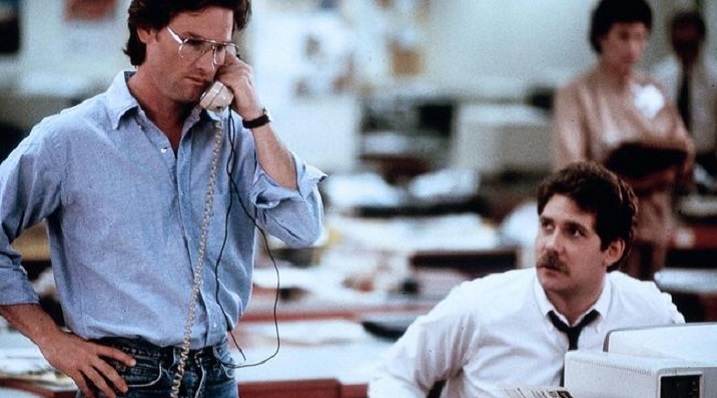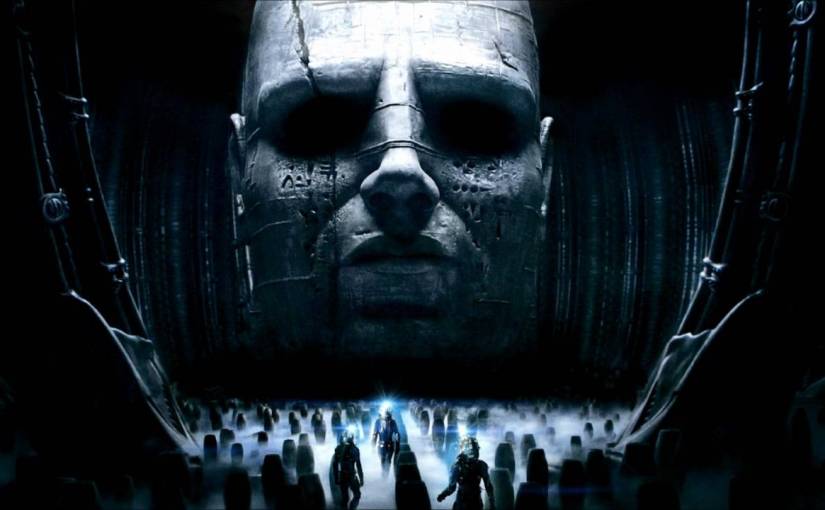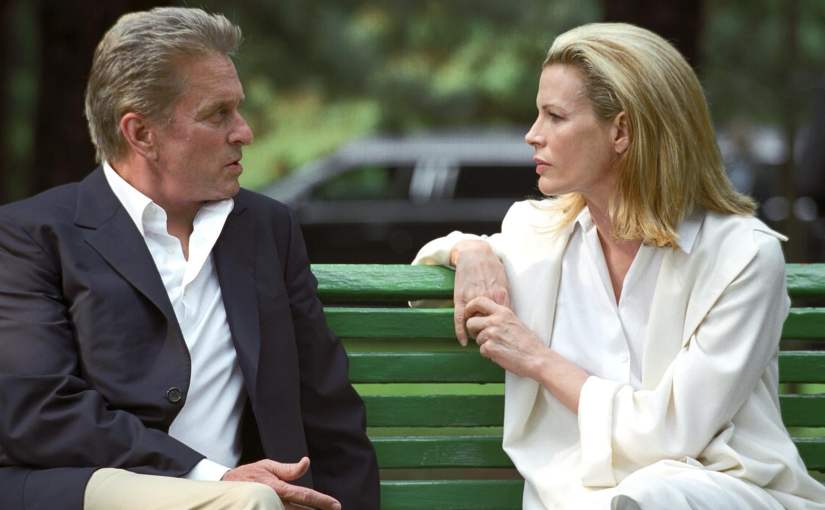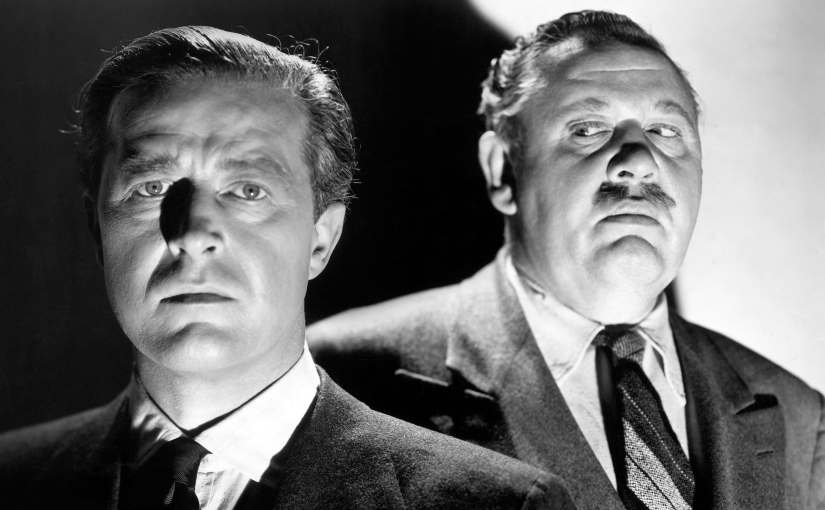
THE IMPOSSIBLE (Spain, 2012)

by Miguel E. Rodriguez

DIRECTOR: J.A. Bayona
CAST: Naomi Watts, Ewan McGregor, Tom Holland, Geraldine Chaplin
MY RATING: 9/10
ROTTEN TOMATOMETER: 81% Certified Fresh

PLOT: The story of a tourist family in Thailand caught in the destruction and chaotic aftermath of the 2004 Indian Ocean tsunami.


The Impossible, directed by J.A. Bayona (The Orphanage, Jurassic World: Fallen Kingdom), is one of the best true-to-life survivor stories I’ve seen since Touching the Void.  No doubt some liberties were taken here and there at the screenplay level, as always happens with movie adaptations, but while the film played out, the story was as gripping as any book by John Krakauer.

It’s 2004, and the Bennett family is on Christmas vacation in Thailand, at a beautiful beachside resort that has only been open for a week.  (In a nice little detail, we see that the protective plastic film has not yet been removed from their light switch panels.)  Henry (McGregor) and Maria (Watts) enjoy Christmas Eve and Christmas day with their three sons, Thomas, Simon, and Lucas (Tom Holland in his cinematic debut, already doing cartwheels and backflips on the beach).  On the morning of December 26th, an unthinkable catastrophe occurs when a tsunami, triggered by a massive seaquake offshore, slams into the beach.  The visual effects during this sequence are as convincing and terrifying as anything I’ve ever seen.  As the wave sweeps over everything in its path, the Bennett family is separated.  Maria and her son Lucas manage to find each other in the immediate aftermath, but there is no sign of Henry and her other two sons.

What follows is a story that gives new meaning to the words “hopeless” and “hope.”  While the outcome is somewhat predictable – SOMEONE survived to tell this story, after all – the filmmakers have managed to put together a film that generates suspense and cheers despite what we may or may not know about this family.  There are scenes of people missing each other in hospital hallways by seconds.  In a lesser film, it might have been comic.  In THIS movie, those scenes generated groans of empathetic frustration from the audience (that is, me).  By that time, we had followed various Bennett family members through many highs and lows, and I desperately wanted the right people to be found at the right time.  It was unexpectedly effective.

That sentiment applies to the movie as a whole, not just that one scene.  I have seen so many disaster movies that I was primed to expect certain cliches and tropes, even though this movie was highly rated and recommended when it came out.  To be fair, this movie does indulge in those tropes.  I mean, by nature, it HAS to.  The difference with The Impossible is that these stereotypical events and scenes all felt way more real than expected.  Credit to the screenwriter and director for molding these cliches into something more compelling than yet another reworking of The Day After Tomorrow.  When the finale of The Impossible arrives, it feels uplifting and inspirational instead of hackneyed and obvious.  It’s a neat little magic trick that I wish I could explain better.

An interesting self-reflective thought occurred to me during this movie.  There is a scene where Henry, the father, is huddled with a group of English-speaking survivors in a bus station.  Someone offers Henry his cellphone, even though he is trying to save his battery in case his own family tries to reach him.  Henry reaches someone in England, but because he still cannot find his wife, he breaks down and hands the phone back to the stranger.  The stranger looks at Henry, looks at his phone, and hands it back to Henry: “You can’t leave it like that.  Call him back.”

My entire life, my favorite sub-genre of science fiction has been anything dealing with an apocalypse or set in a post-apocalyptic future, like The Matrix or World War Z or the superlative HBO series The Last of Us.  One of the things many of the movies in that genre have in common is the inherent tendency for humans to turn on each other or behave selfishly when the chips are down.  You know what I’m talking about, right?  Somebody finds water in the desert, and instead of helping mankind, they sell it to the highest bidder.  Or someone discovers that the invading aliens will give them preferential treatment if they help round up more humans themselves.  That kind of thing.

Well, here is The Impossible, based on a true story, and here is a man who desperately needs to save the battery power on his cellphone, but whose compassion will not allow him to let Henry’s short conversation go unfinished.  “You can’t leave it like that.”

I have no way of knowing if this moment really happened or if it was manufactured.  All I can report is that scene, in a movie full of hard-hitting emotional beats, is probably my favorite scene.  Here is an apocalyptic situation in the truest sense of the word.  Here is a person who could have been justifiably selfish, but his empathy won’t allow him to turn his back on someone who is suffering.  It even got me wondering: would I do the same?

If this scene was taken from real life, then maybe all those post-apocalyptic movies got it wrong.  Maybe, when the chips are down, people are inherently good.  Is it possible?  I’d like to think so.  I’d like to think I’d do the same.

Long story short: The Impossible takes you on an unforgettable ride made even more remarkable due to it being based on a true story.  It’s full of great performances and astonishing visuals, but you may never want to stay at a beach resort again…

P.S.  According to the real-life woman played by Naomi Watts, the biggest “lie” in the movie was the color of the ball her children were playing with just before the tsunami struck…it was yellow, not red.  Do with that information what you will.

MARTHA MARCY MAY MARLENE (2011)

by Miguel E. Rodriguez

DIRECTOR: Sean Durkin
CAST: Elizabeth Olsen, Hugh Dancy, John Hawkes, Sarah Paulson
MY RATING: 10/10
ROTTEN TOMATOMETER: 90% Certified Fresh

PLOT: Haunted by painful memories and increasing paranoia, a damaged woman struggles to re-assimilate with her family after fleeing an abusive cult.


My feelings about Martha Marcy May Marlene are all over the map right now.  It angered me, shocked me, mesmerized me, saddened me, and thrilled me, all at once.  A despicable cult lies at the center of it, and having recently watched the second season of HBO’s The Vow, I noticed it shared many similarities with NXIVM, an even MORE despicable cult, which just angered me even more.  The movie’s saving grace is Elizabeth Olsen’s character, Martha, who escapes the cult after the opening credits and tries her best to adapt into real life after being brainwashed for two years.  But even with Martha as the star (and it’s a terrific performance from Olsen, by the way), Martha Marcy May Marlene dances recklessly on the verge of being a movie featuring people so abhorrent that I wanted to turn it off.

I’m glad I stuck with it, though, don’t get me wrong.  It’s a powerful, provocative film that asks lots of questions, and had me wondering about myself.  If my sister disappeared for two years, then wandered back into my life with no money and no home, then behaved erratically and sometimes dangerously around my friends and loved ones…how much of that could I take before I started making inquiries about psychiatric institutions?

Martha’s sister, Lucy (Sarah Paulson), does her dead level best to make Martha comfortable and keep the peace between Martha and her husband, Ted (Hugh Dancy), who does his best, but resents her for “invading” his 2-week vacation.  Lucy knows Martha is hiding something, but she senses it’s unwise to try to drag it out of her.  But every time the opportunity arises for Martha to give some insight, she either backs away or turns it into a verbal attack.

This was one of the things that infuriated me during the film.  I even paused the movie and asked Penni about why it made me so mad, thinking I needed a woman’s point of view.  Why, oh, WHY does this young woman, who has clearly been traumatized in some way, not implicate the people who mistreated her for so long?  Clearly, I’m not a psychiatrist.  I’m sure someone would be able to provide me with a concise answer that makes Martha’s behavior understandable.  The movie, however, does not provide such an answer.  Ultimately, that’s one of its strengths.  If it had ended with a Psycho-style expository monologue that gave clear-cut reasons for everything Martha does, it would have felt anti-climactic.

Patrick (John Hawkes), the cult’s leader, is not movie-star handsome by any stretch of the imagination, but he possesses that innate, infuriating ability to say exactly the right things at the right time.  One trick is to give all the women new names; he re-names Martha “Marcy May” the first time he meets her.  As a result, every woman in the compound is devoted to Patrick.  How devoted?  Whenever a new female member is introduced to their “family”, one of the first things the older members do is feed her a shake with a sleeping pill blended into it.  Then, when the new girl falls asleep, Patrick can come in and rape her while she sleeps.  The word “disgusting” doesn’t begin to approach this tactic.  But the fact that the women will talk with the new member after that first encounter, and convince the newbie that it’s all good, it’s all fine, we wouldn’t be here if it was bad, you’re sooo lucky…I mean, if I had popcorn, I would have thrown it at the screen, I was so mad.

Martha Marcy May Marlene is not just about the rage it instilled in me, though.  It asks us to empathize with Martha, and it succeeds, even when she behaves unpredictably.  One night, Martha crawls into Lucy’s bed…while Lucy’s having sex with Ted.  Lucy and Ted are understandably freaked out, but Martha seems dazed by their anger.  “Why would you do that, Martha?!”  Her reply: “I couldn’t sleep.”  At that point, I could clearly see both sides of the situation.  Lucy and Ted had every right to be angry, but Martha simply didn’t know any better.

The flashbacks to Martha’s days with the cult start out fairly normal, but as the movie progresses, we finally start to see some of the other incidents that finally drove her to run away.  One particularly ominous scene shows Martha and another girl having target practice with one of the other young men in the cult.  Patrick shows up with a live cat in a sack and abruptly tells Martha to shoot the cat.  When she refuses, he tells her to shoot the young man.  The man starts to walk away, and Patrick, in a voice raised ever so slightly, tells him, “Don’t you walk away from me.”  And he stops.

The cult members practice periodic home invasions to gather needed supplies, since the farm they’re working on isn’t fully functional yet, and you can only get so much money by selling blankets in town.  They do their utmost to avoid contact with the residents, but sometimes, things just…don’t work out the way you want them to, you know?

Martha Marcy May Marlene qualifies as a great film because it simply presents the facts of the story and doesn’t editorialize, doesn’t preach.  I can report that it’s a stunning character study/thriller, and I can tell you that the performance from Elizabeth Olsen is superb (her movie debut, by the way).  I can say that the filmmaking strategy is on point – kudos to director Sean Durkin.  And I congratulate it on eliciting the kind of emotional response from me that I’ve only felt once in my entire life.  It may not be the same for you.  But there you have it.

KALIFORNIA (1993)

by Miguel E. Rodriguez

DIRECTOR: Dominic Sena
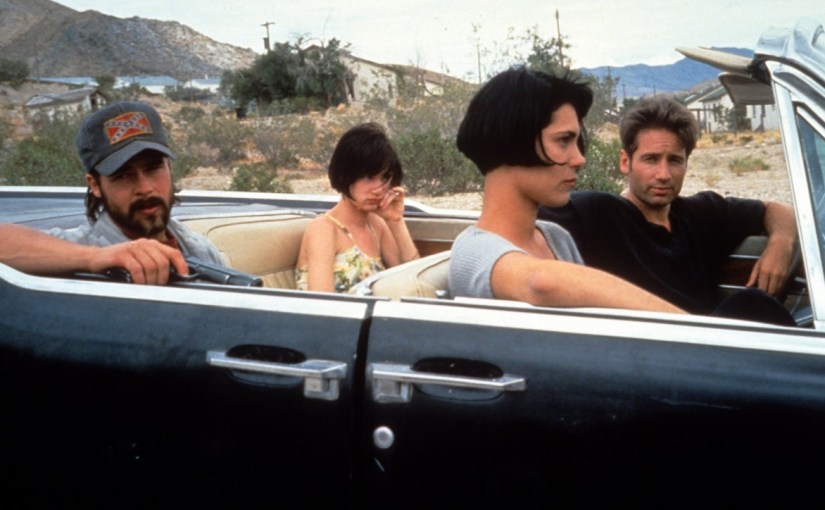
CAST: Brad Pitt, Juliette Lewis, David Duchovny, Michelle Forbes
MY RATING: 9/10
ROTTEN TOMATOMETER: 58%

PLOT: A journalist duo go on a tour of serial killer murder sites with two companions, unaware that one of them is a serial killer himself.


Ask any movie fan for names of actors who played memorable serial killers in film, and you’ll get a lot of obvious ones (Anthony Hopkins, Charlize Theron, Anthony Perkins) and you might get a few not-so-obvious ones (Michael Rooker, Andrew Robinson, Peter Lorre).  But I’m willing to bet no more than one person in 20 will name Brad Pitt, whose performance as the skeevy Early Grayce dominates Kalifornia, the 1993 directorial debut film of music video director Dominic Sena (Gone in 60 Seconds, Swordfish).  Pitt is so convincing and deliberately off-putting that I came close to switching the movie off and returning it to the thrift store where I found it.  Why would I want to keep watching a film where I’m repulsed by one of the main characters nearly every second he’s on screen?

Kalifornia may be predictable to some, but I was blown away by the story development.  Brian (David Duchovny) and his longtime girlfriend, Carrie (Michelle Forbes) are embarking on a cross-country road trip from Pittsburgh to California.  He’s an author writing a book on serial killers.  During their trip, he will visit infamous murder sites to gather material, and Carrie, a professional photographer, will take pictures for the book.

(The first time we see Brian, he’s mixing drinks at a party and holding forth about how the government should rehabilitate killers instead of executing them.  They are products of their environment, their upbringing, they’re not ultimately responsible for their own actions because they simply don’t know any better, and so on.  Over the course of the movie, his beliefs will be put to the test.)

Brian is short on cash until he finishes his book, so he places an ad on a university message board looking for people willing to split gas and food costs on a cross-country road trip to California.   One of the most incisive moments in the movie comes when Brian and Carrie drive to a meet-up point and spot their new travel companions: Early and his girlfriend, Adele (Juliette Lewis), a young woman whose mental development seems to have been arrested at about a 13-year-old level.  Carrie whispers to Brian, “Look at them, they look like Okies.”  Meanwhile, Adele whispers to Early, “Oh, Jesus, Early, they look kinda weird.”  The movie seems to be setting us up for an awkward odd-couple road-trip movie where, uh oh, one of them is a serial killer!  But you ain’t seen nothing yet.

During their road-trip, and in between visits to famous murder sites, Early and Brian start to bond a little, much to Carrie’s dismay.  Brian has a theory about why the Black Dahlia killer was never found, but Early has another: that he’s alive and well in a trailer park somewhere, “thinkin’ about what he’s done, goin’ over it and over it in his head, every night, thinkin’ how smart he is for gettin’ away with it.”  Ohhh-kay…

One night when Brian and Early are at a bar, Carrie and Adele get to talking, and Adele reveals that she doesn’t smoke because “he broke me of that.”  Carrie asks her if Early hits her, and her reply is as heartbreaking as it is terrifying: “Oh, only when I deserve it.”

This and several other red flags get to be too much for Carrie, and she gives Brian an ultimatum: “Either they get out at the next gas station or I do, your choice.”  What happens at that next gas station I would not dream of revealing, but it ignites the slow burn of the previous hour and turns Kalifornia into a tense, bloody thriller that rivals anything by David Fincher.

I’ve given so many establishing plot details above (I left some juicy bits out, trust me) because I’m trying to convey how this film, which starts out like a slightly amped-up basic-cable movie-of-the-week, shifts into another gear in the second hour.  Unsuspecting viewers like me, who have only heard of the movie but never even seen the trailer, will watch the first hour wondering where the good movie is.  But have patience, it’s coming.  The payoff is worth the wait.

[Author’s note: by the way, don’t watch the trailer for this movie.  It gives away WAY too many plot points that I haven’t mentioned, both before and after the gas station incident mentioned above.  Just the worst.]

Visually, I didn’t see a lot of the music-video camera pyrotechnics that director Sena would later employ in Gone in 60 Seconds, etcetera.  The movie is content to let the dread sort of speak for itself.  The various murder sites they all visit seem even creepier and uglier than they need to be.  Slick editing brings little details into focus that heightens the tension.

Ah, I can’t think of any way to explain how great this movie is without giving away more plot details, and this movie is best seen in a vacuum, knowing as little as possible.  So trust me.  If you’re a fan at all of serial killer movies or documentaries, this movie will not only entertain, it will give you a lot to chew over.  Kalifornia belongs in the serial killer movie pantheon with The Silence of the Lambs, Psycho, and Henry: Portrait of a Serial Killer.  Especially that last one.

TIME AFTER TIME (1979)

by Miguel E. Rodriguez

DIRECTOR: Nicholas Meyer
CAST: Malcolm McDowell, David Warner, Mary Steenburgen
MY RATING: 6/10
ROTTEN TOMATOMETER: 87%

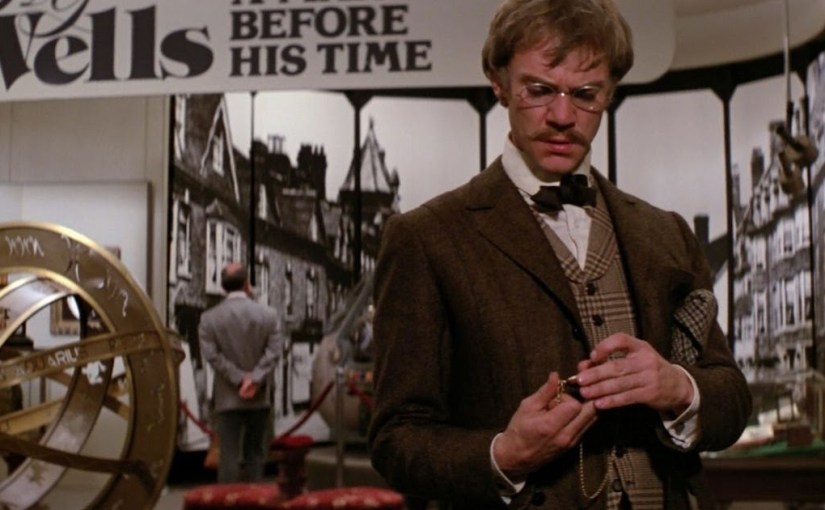
PLOT: Before he wrote any of his famous novels, H.G. Wells pursues Jack the Ripper to the 20th Century when the serial murderer uses the future writer’s time machine to escape his time period.


There are two scenes in Time After Time that are genuinely shocking from a story perspective.  One involves a newspaper headline.  The other involves a bloody crime scene.  The first I should have seen coming, but the second I never would have guessed in a million years, and I literally yelled at the TV when it happened.  That’s good plotting.

Those two scenes are the only things that prevent me from giving Time After Time a lower score.  That, and the fantastical, thought-provoking nature of the story itself.  Too bad both those scenes and the plot are buried under layers and layers of hackneyed dialogue and the kind of forced situational comedy that would be more at home in Three’s Company than in a sci-fi adventure.

First, the good stuff.  After a credits sequence that looks inspired by countless grade-Z movies before it, the story starts back in London, 1893, two years before H.G. Wells would write his first novel, The Time Machine.  A prostitute is murdered in a dark alley, victim of the infamous Jack the Ripper.  Later that night, Wells hosts a dinner party at his house for some friends and shows them something he’s been building in his basement: a fully functional time machine.  It doesn’t quite resemble the famous machine from the 1960 classic The Time Machine – it looks more like a ride vehicle from an amusement park than a chair with attachments – but the Victorian details are all there.  There’s some talk about a vital key needed to return to their present and a VERY important device that is discussed without being precisely explained, at least not to my satisfaction.  When it makes a reappearance late in the film, I was still mystified as to its actual purpose other than a convenient deus ex machina.

Suddenly, Scotland Yard appears.  Turns out they tracked Jack the Ripper to Wells’ doorstep.  Tricky Jack awaits his chance and uses the time machine to escape…though, without that handy key mentioned earlier, the machine returns to its point of origin on its own, leaving Jack stranded in a world 86 years in the future.  Wells feels duty-bound to bring Jack to justice, so he follows Jack, setting up the meat of the next few reels: a man from 1893 London struggling to adjust to daily life in 1979 San Francisco.

(It must be noted that the bulk of this film’s budget was clearly NOT devoted to the visual effects department.  The effects on display as Wells travels through time are cheesy at best.  I’d try to describe them here, but my words cannot possibly do them justice.  I couldn’t even find a decent still shot to embed here that would accurately convey just how low-rent they are.  I recently watched 1974’s execrable Zardoz, and I’m here to tell you, from a VFX perspective, Time After Time makes Zardoz look like Interstellar.)

H.G. Wells chasing Jack the Ripper through time?  This is a great plot from a sci-fi perspective, a thrilling “what-if” tale.  I had heard about this film for years but was never able to find a copy until recently.  The scores on IMDb and Rotten Tomatoes are decent.  Not stellar, but decent enough that I was pretty sure I would enjoy it.  The movie was directed and co-written by Nicholas Meyer, the mind behind The Day After, Star Trek II: The Wrath of Khan, and Star Trek VI: The Undiscovered Country.  That’s not a bad track record.

But, man oh man…for most of the film’s middle section after Wells arrives in 1979, the movie’s brain goes on sabbatical.  Example: he walks into a McDonald’s, takes careful note of how the customer in front of him orders a meal, then does his best to literally impersonate the customer.  He doesn’t just order what he orders…he gives an impersonation of the customer’s voice and accent.  Why?  He doesn’t do that at a pawn shop or a bank.  No, it’s just there because someone thought it would be a laugh to see Malcolm McDowell do a broad American accent.

I can’t deny that the potential is there for real humor.  I couldn’t find it.  I thought these scenes were completely at odds with the tone of the first third of the film.  Wells meets a bank teller, Amy, (a very young Mary Steenburgen) who inexplicably falls in love with him at first sight.  She’s so taken with him she impulsively asks him to lunch, an act that, in 1979, was directly at odds with 99.99% of all other screen romances, so kudos to that, I guess.  But why?  I’m not saying Malcolm McDowell is an affront to the concept of human beauty, but…really?  As Wells, he’s the 19th-century version of a science nerd.  Amy is not a character so much as a cardboard placeholder to be moved and manipulated according to the whims of the plot.

The dialogue is clunky, to say the least.  There is a foot-chase between Wells and Jack that is devoid of suspense.  The score by Hollywood legend Miklós Rózsa feels utterly out of place, as if someone simply lifted Rózsa’s score from some other film and plugged it in where necessary.  There is simply no romantic chemistry between McDowell and Steenburgen, as evidenced in a painfully unfunny scene when they sit on a couch and she declares: “Herbert, if you don’t take me into your arms, I’m going to scream.”

Another actual line of dialogue: “My mother was rather an atrocious woman in her own way, but her many failings did not include raising mentally deficient sons.”  That’s not a real person talking, that’s a writer trying to imitate George Bernard Shaw.

No doubt someone out there will tell me I missed the boat with this movie somehow.  Perhaps Rózsa’s score is intentionally “retro” to make the whole movie feel as temporally displaced as its characters.  Perhaps the intention was the same with the hopelessly amateurish visual effects.  Who knows.  It’s possible.  Maybe there’s a better movie here somewhere and I’m not equipped to find it.  I doubt it, but it’s a possibility.  In the meantime, I’m going to keep this movie in my collection as an example of how a great story can be derailed by poor execution.

And maybe I’ll bring it out if my fellow Cinemaniacs are in the mood for a “So-Bad-It’s-Good” movie day.

[P.S. Keep your eyes open for the screen debut of an 8-year-old Corey Feldman.]

PLAY MISTY FOR ME

By Marc S. Sanders

Before Fatal Attraction and countless other stalker/possessive lover thrillers that continue to monopolize all kinds of entertainment mediums, there was Clint Eastwood’s directorial debut, Play Misty For Me.  Watching it for the first time in modern day, I can say that it pushes all the standard buttons of this kind of thriller formula.  The over enthusiasm of the mentally disturbed stalker, the uninvited appearances at inopportune times, the late night phone calls, and of course the knife wielding.  Nevertheless, I remain impressed with Eastwood’s interpretation.

Eastwood also headlines the cast as a late-night disc jockey named David.  Each night he gets a call from a devoted fan named Evelyn (Jessica Walter) requesting he play the jazzy tune, Misty by Erroll Garner.  Included in Dave’s regular programming are stanzas from poetry that he reads to his listeners and endorsements of favorite hang outs and bars that he frequents within the breezy coastal town of Carmel-By-The-Sea, California.  (Years later, Clint Eastwood would be elected Mayor of this community.)  Naturally, Evelyn shows up at one such regular hangout and the two have a one night stand under the presumption of no strings attached.  Of course, there would not be much of a film if Evelyn adhered to that policy.  Thus, the pattern begins.

Evelyn follows Dave around town.  She shows up uninvited at his house ready to prepare a steak dinner.  She’s knocking on his door in the middle of the night, naked under an overcoat.  There are phone calls along with disturbing, unexpected outbursts as well.  Complicating matters for Evelyn is that Dave is on his way to rekindling a romance with a former flame named Tobie (Donna Mills).  Then, it really gets frightening.

For a first time director, Clint Eastwood really shows some expert skill in Play Misty For Me.  The film opens with an overhead shot above the cliffs adjacent to the coastline, and then the camera circles around through the sky and finally zooms in on Eastwood standing on a veranda looking out to the sea.  It’s a glorious scenic shot and the director carries this theme throughout the course of the film.  A locale that impresses me is The Sardine Factory.  It is where Dave and Evelyn first meet, and Eastwood’s friend, mentor and often director, Don Siegel makes an appearance as a bartender.  The Sardine Factory is still there to this very day. 

Eastwood seems to offer a tourist guide and a photographic devotion for this quiet little town, and it contrasts well with the disturbing storyline.  Carmel-By-The-Sea seems like a comfortable and trusting area to live.  Therefore, it is all the more easy for an intruder to lay claim within the unguarded setting.  This film might be from 1971, over fifty years ago, but it makes me want to go visit.  We are treated to live footage at the Monterey Jazz Festival, and it does not overstay its welcome.  Eastwood’s film work is gorgeous throughout the whole picture. Particularly during a midway music sequence featuring Roberta Flack’s The First Time Ever I Saw Your Face, playing over footage of Dave and Tobie spending time and making love together. 

Jessica Walter is especially good in her role as the menace to this man’s livelihood.  She’s alluring and relaxing with her first encounter with Dave.  Then, she’s upended by the disruption and unwelcome halt of her romantic tryst and outbursts come from out of nowhere.  Eastwood lives up to the thriller characteristics of the film by the way he shoots Walter in close ups that appear with no build up.  He includes shots of her face and brunette hair in nothing but darkness with an agonizing scream.  It’ll shiver you.  It just makes Evelyn’s appearances even more shocking. 

The film that comes to mind when I watch Play Misty For Me, is Adrian Lyne’s Fatal Attraction from 1987.  I think that would be the go-to response for most viewers today.  However, it would be unfair for me to say I know what happens next.  Yes, I did know where everything was leading to.  However, Eastwood’s film is the pioneering installment, released years ahead of the other film.  I’ve always had mixed feelings about Fatal Attraction honestly.  I can’t take my eyes off it, especially because of the performances from Michael Douglas, Glenn Close and Anne Archer, but I frown heavily on the slasher ending that was pasted on to film.  Glenn Close did too.   Now that I’ve seen Eastwood’s movie, it astounds me how much Lyne’s picture lifts from the 1971 thriller.  Both films incorporate references to Madame Butterfly.  There’s a suicide attempt for attention.  There are phone calls and knocks on the door in the middle of the night.  There’s another lover who may be in harm’s way.  There’s an abundance of similarities in both films.

I have to wonder.  Should I now go back and revise my review of Adrian Lyne’s film? 

NOPE (2022)

by Miguel E. Rodriguez

DIRECTOR: Jordan Peele
CAST: Daniel Kaluuya, Keke Palmer, Brandon Perea, Michael Wincott, Steven Yeun, Keith David
MY RATING: 7/10
ROTTEN TOMATOMETER: 83% Certified Fresh

PLOT: Residents of a lonely gulch in inland California bear witness to an uncanny and chilling discovery.


After watching Nope, the third feature from Jordan Peele (Get Out, Us), I found myself curiously unable, or unwilling, to sit down and write a review for it.  What more can I add, I thought, to the volumes that have already been written about it?  What insights can I share that aren’t revealed in the making-of documentary on the Blu-ray?  How can I analyze a movie that can literally be boiled down to, “What if Close Encounters turned into Jaws?”  What good would it do to figuratively take this movie apart and critique its individual components?  It’s a roller-coaster, pure and simple, much like Jurassic Park III [2001].  How do you review a roller-coaster ride and try to compare it to other roller-coaster rides in terms of a review?

“I found the first hill of Rip-Ride Rocket much more intense than the slingshot approach of Hulk or Rock-N-Rollercoaster, but each has something to offer in terms of inversions, smoothness, and on and on and on…”

It just feels pointless, for reasons that are proving themselves difficult to pin down.  So, instead of a “normal” review, here are random thoughts, in no particular order:

  • The “true” nature of the UFO – oops, sorry, UAP, I had to look that up – stretched my disbelief suspension to the limit, but I will admit, it’s certainly original.  I can’t think offhand of any other movie or book I’ve watched or read that even considered that explanation for all those unexplained sightings in the books.  Once that was established, every successive appearance of the “spacecraft” became even more ominous and/or menacing.
  • I loved how the movie is littered with clues or easter eggs that either give a hint to the film or sort of comment on what we’ve seen before.  There is an early scene when OJ (Kaluuya) and Em (Palmer) are walking outside with a magnificent setting sun behind them behind the clouds, and hand to God, I remember noticing one particular cloud that looked…off.  Also, there’s another scene when a horse runs off and OJ watches it through the gaps of a wooden shed, and the visual impression is that of a zoetrope, the machine that made the opening images of the running horse possible.  Or even look at the screenshot at the top of this article…quick! What does that lampshade look like to you?
  • There was something about the design of the UAP that bugged me throughout the movie, not necessarily in a bad way, but it just seemed weird.  Why would something that is [SPOILER REDACTED] need what looks like fabric when seen up close?  Is it a sail?  That seems most likely.  In the latter stages of the movie, the “anomaly” doesn’t seem quite as mobile or speedy as it did when its “sail” was intact.  It’s an interesting design concept.
  • One of the scariest moments for me had nothing to do with the UAP itself.  It’s the scene in the exhibition area where the lights seem to be turning on by themselves.  The payoff for the scene seems predictable in hindsight, but as the scene progressed, I was BESIDE myself.  You can ask my best friend, Marc, who watched it with me.  When that shapeless mass by the light switch suddenly started to “unfold”, I echoed OJ: “Nope!  Gotta go, goodbye!”  It is a brilliantly executed scene.
  • I’ll need to watch the movie again to fully understand how that little parachute managed to scare off the UAP.  I assume it has to do with actual horse training, and with some research I could find the answer myself, but the movie does very little to explain it to the viewer.  Or maybe it does.  Like I said, I need to watch it again.
  • I loved how the flashback with the chimpanzee seems utterly incongruous at first.  And I loved how creepy and horrifying it is.  It’s a brilliant framing device (if I’m using that term right) that kept me guessing as to its real purpose right up to the end, or CLOSE to the end.  And did I mention how horrifying it is?  That moment when it’s resting…and then looks RIGHT AT THE CAMERA…chilling.
  • Someone somewhere had said that Keke Palmer was robbed of an Oscar nomination.  With all due respect to Ms. Palmer…she did an admirable job, but I didn’t see anything in the film that would have had me reaching for my Oscar ballot.  But I will give her props for her opening speech to that film crew.  The special features on the Blu-ray reveal that she delivered MANY different variations (fourteen, according to IMDb), much like you see so many other actors do in broad comedies, just to find the exact right version or take.
  • Much like Us, Nope feels like it bit off a little more than it could chew when it comes to the resolution of the film.  Everything leading up to the last 10 minutes or so is gangbusters, honestly, even the silver-helmet guy.  But as everything started to wrap up, I began to feel as if I’d seen all this before, just in different ways, in many different films.  Perhaps I’m being unfair.  Perhaps I’m criticizing the movie for what it isn’t instead of reviewing what it is.  I don’t know.  As it is, also like Us, Nope is one helluva roller-coaster ride that ends, not with a bang, but with a “pop.”
  • Allow me to shamelessly quote Roger Ebert, again: “If you have to ask what something symbolizes, it doesn’t.”

BOUND (1996)

by Miguel E. Rodriguez

DIRECTORS: The Wachowskis
CAST: Jennifer Tilly, Gina Gershon, Joe Pantoliano, Christopher Meloni
MY RATING: 10/10
ROTTEN TOMATOMETER: 89% Certified Fresh
Everyone’s a Critic Category: “Watch an Independent Film”

PLOT: A petty thief and a mobster’s girlfriend get romantically involved and plan to steal $2 million from the mobster, but, as with all simple plans, complications arise.


My girlfriend and I have found ourselves walking out of a lot of movies over the last 5 or 6 years talking animatedly with each other about how we would have done something differently.  For example: At the end of Avengers: Infinity War, we came up with an amazing lost opportunity to have Black Widow be one of the characters who got “blipped.”  Then, when Bruce Banner discovers her fate, his shock triggers him to finally “hulk out” again, but out of grief instead of anger.  Now THAT would have been a tearjerker.

By contrast, Bound is one of those letter-perfect thrillers where the plot has been worked out so neatly, so thoroughly, and everything proceeds with such perfect logic, that it’s impossible to see how anything in the movie could have happened in any other way.  I can see no way how this thriller shot on a shoestring with such exquisite creativity could have been improved by a bigger budget or bigger stars.  It recalls the heyday of film noir – Double Indemnity, The Big Sleep, Pickup on South Street – but it also feels fresh and modern, due in no small part to the fact that the protagonist couple is composed of two women.

But before I get to the nuts and bolts of the movie, let’s talk about that same-sex plot device for a second.  Corky (Gina Gershon) is a petty thief fresh out of the slammer.  Violet (Jennifer Tilly) is arm candy for a mid-level Mafia hood named Caesar (Joe Pantoliano).  I can vaguely remember when this movie came out in the mid-‘90s, and this lesbian relationship caused a minor sensation.  It even included – gasp! – a sex scene.  An explicit sex scene!  Not pornographic, mind you, but nothing more or less explicit than the coitus featured in other notorious sexy potboiler/thrillers, like say, Basic Instinct or Fatal Attraction or Jagged Edge.

One of the things that makes Bound so cool is that the whole lesbian angle, even though it’s a huge part of the plot, is never really…what’s the word I’m looking for…exploited in any kind of way that might now be described as progressive or, dare I say, woke.  There are no melodramatic scenes showing anyone getting fired because they’re gay, or being bullied because she’s gay.  Nor is the movie making any kind of statement that that kind of ugly behavior doesn’t exist.  To me, Bound is simply saying, “Here is a great thriller, and the two romantic leads are women.  We are showing people that it’s possible for a movie to be a superior genre film with two clearly gay characters as the leads.  Let’s get on with it.”  If the main couple had been a man and a woman, the overall effect of the movie might have been diminished to a degree, but the underlying story is so good, the movie might still have worked.

Then again, it probably wouldn’t have the notoriety that turned it into a cult classic, so what do I know.

Anyway, the movie.  In a tale as old as noir itself, Corky and Violet hatch a scheme to steal $2 million from Caesar.  How that plan leads to an astonishingly tense scene with a trio of corpses in a bathtub and two policemen in the living room standing on a blood-soaked carpet is only one of the delicious little joys on display in this film.

Take the little details.  The $2 million in question gets unexpectedly splattered with some unlucky bastard’s blood.  Caesar is forced to literally launder the money, then steam-dry every single $100 bill with an iron and hang them up throughout the apartment like the most expensive load of laundry in history, resulting in one of the coolest, most surreal shots in any neo-noir I’ve ever seen:


Then there are the wicked little visual innuendos scattered throughout the movie as subtle – and sometimes not-so-subtle – references to Corky and Violet’s sexual preferences.  At one point, Corky visits a lesbian bar called…wait for it…The Watering Hole.  That’s one of the not-so-subtle jokes, but one which I did not “get” until maybe the third or fourth time watching the movie.  Sometimes I am not…smart.  Or how Corky is unscrewing the pipe in the U-bend under a sink to retrieve an earring.  As Violet, wearing a tight skirt, stands provocatively close to Corky while she works, we get a close-up of Corky’s hands as water from the sink suddenly splashes onto them.  Or note the shot that slowly pulls out from inside the barrel of a revolver.  (You know, maybe NONE of these visual jokes are subtle…I might just have been really dumb when I first saw the movie…)

And the dialogue…if there were a way for me to phoneticize a chef’s kiss in prose, I would.  (<mwah>…that’ll have to do.)  It puts a modern spin on the best of the old film-noir tough guy talk, that heightened kind of realism that really only exists in the movies.  Take this bit when Corky is talking to Violet, formulating her plan to steal the money from Caesar:

“For me, stealing’s always been a lot like sex.  Two people who want the same thing: they get in a room, they talk about it.  They start to plan.  It’s kind of like flirting.  It’s kind of like…foreplay, ‘cause the more they talk about it, the wetter they get.  The only difference is, I can f*** someone I’ve just met.  But to steal?  I need to know someone like I know myself.”

Nobody actually talks like that, but that’s one of the greatest passages in any crime movie, ever.  I could cite example after example, but I don’t want to ruin any surprises.

Another beautiful example of how well this screenplay was constructed is how it plays with your expectations, especially if you’re a fan of the classic noir genre.  In classic noir, a hero or heroine comes up with a plan, only to be betrayed by random chance or their own hubris.  Sometimes someone who seemed trustworthy at first reveals themselves to be nothing but a conniving opportunist.  Bound addresses that concept head-on in a conversation between Corky and Violet, where they talk about trust and ask each other very specific questions.  “How do I know you won’t just run once you get the money?”  “How do I know you didn’t just plan this whole thing to get me to do your dirty work for you?”  In classic noir, these kinds of questions usually lead to mistrust, betrayal, and a very non-Hollywood ending, and so the Wachowskis almost seem to be telegraphing what’s going to ultimately happen.  But believe me: nothing in this movie telegraphs anything.  Not even those snatches of conversation we hear in Corky’s head at the very top of the film when we first discover her bound and gagged in a closet.

And even THAT’S not really giving anything away…that’s how inventive this screenplay is.

I would be remiss if I didn’t also mention the sound design of Bound.  Watching it the first time around, it’s subtle enough to be unnoticeable.  Watch it again, though, and really listen, and you can hear the unmistakable way the Wachowskis manipulate sound effects to create a unique atmosphere in the same way they would go on to do in the Matrix trilogy.  There are many instances where, for example, in the two or three seconds before a phone rings, you’ll hear the ring in a crescendo, quiet at first, then peaking at the exact second the phone rings.  It’s a little hard to describe in a review but trust me.  Watch it at least once while paying attention to the sound, and you’ll hear a lot of things that sound exactly like The Matrix.

(Which might mean that Bound actually takes place in the Matrix universe…?  …nope, not pulling on that thread.)

There’s quite a bit more I could say about Bound, but I think I would start spoiling some of its real surprises if I did.  Put it this way: I recently compiled a list of my 100 favorite movies of all time, as a “challenge” from one of my fellow cinemaniacs.  Bound wound up at #73, ahead of movies like The Lord of the Rings: The Return of the King, The Dark Knight, and Finding Nemo.  I don’t know if that cuts any ice if you haven’t seen Bound yet, but if you haven’t, it’s my sincerest hope that I have encouraged you to seek out this movie on Amazon or Ebay and make it part of your collection.  You won’t regret it.


QUESTIONS FROM EVERYONE’S A CRITIC

Why did you choose this particular film?
One, I’m not sure a lot of people realize this was an independent film (released through Gramercy Pictures, now defunct), and two, it’s a movie that doesn’t get mentioned enough, or at all, when folks list their favorite crime dramas.  This movie deserves way more recognition than it currently gets, in my opinion.

Best line or memorable quote:
“You know what the difference is between you and me, Violet?”
“No.”
“Me, neither.”

THE MENU

By Marc S. Sanders

Whether you’re the storyteller or the viewer/reader, you take a chance with satire.  The darker the satire is, the even greater the risk you take. A film like The Menu, from director Mark Mylod, is one such example. You’ll hate it…like my wife did, despite the lively conversation we had afterwards.  On the other hand, you might love its invention to strike back at an upper class that lacks any clue or respect for the talents of others. Then again, you just might only like it.  Well…at least I liked it.

Ralph Fiennes’ résumé has earned a reputation to intimidate an audience. He is a superb actor who can be absolutely frightening as a Nazi in Schindler’s List, or heartbreaking as a torn affiliate of a deceitful plot like in Quiz Show. He can also go toe to toe as a Greek god against Liam Neeson, or he can demand that James Bond “Stand down!” and strike with snake like glee at Harry Potter. He can also teeter along the antics of the devil himself as he portrays the world’s most esteemed chef in The Menu.

A collection of guests is escorted by boat to a remote island where the finest restaurant is located and run by Chef Slowik (Fiennes), with assistance from Elsa (Hong Chau).  There’s Tyler (Nicholas Hoult), a die-hard fan of the chef’s craft with his date Margot (Anya Taylor-Joy), who is nowhere near as impressed.  Tyler has to remind Margot not to smoke, otherwise it’ll destroy her palette for taste.  There’s an older couple who has frequented the Chef’s dining establishments before and are back for another visit.  There are a pair of restaurant critics. There’s a movie star (John Leguizamo) with his young assistant.  Finally, there is a trio of sophomoric, yuppie businessmen who are here because their last monthly commission likely afforded this exclusive opportunity, and their favorite hockey team was out of town.

When the guests arrive on the island, Elsa gives them a tour ahead of the restaurant where they will eventually dine.  A cabin is displayed to show how the meats are aged over a period of 152 days. Quite specific! One of the yuppies has the audacity to ask what happens if you age it to day 153. I don’t recall Elsa’s response.  I do remember her disdain for the question though. They walk through the lodge where Elsa explains that the entire staff reside and sleep in the one room together. One cot for each person. Odd, but okay. Moving on is a quick pass by the cottage where the Chef resides, and no one is permitted to enter. Oooo!!!! I know one thing I expect to happen.

It is important to note that I opted not to read up on anything The Menu was about.  I didn’t know if I was to see a comedy, drama or horror film.  As this tour continued though, I had eerie recollections of the film Midsommar, directed by Ari Aster. That movie still gives me the bejeebees.  So much so that I could not bring myself to write an article about it.  Like that film, our cast has become isolated in a desolate locale, and the guide could not be more unsettling.  When they arrive at the restaurant, a large horizontal door is thunderously closed behind them. Margot gives a quick look back over her shoulder. This cannot be good.

Lending to the structure of the film, courses are presented with a startling clap of the hands from Chef Slowik. Mark Mylod executes a nice pattern of gracefully displaying text across the screen describing what the next featured course is, along with its fine ingredients.  It is elegant but also only partially revealing of some of the guests. Tyler isn’t the kind of fan that Chef would welcome.  After a request has been made not to take pictures of the dishes, he does so anyway.  He is uncouth with his commentary and clumsy as well.  Additionally, bewildering for Chef Slowik is the presence of Margot. He was not expecting her to attend. Yet, here she is and he cannot understand why.

The Menu does not deviate from its intent to be strange. A bread dish is presented without any bread! Only the dips. Tyler is absolutely impressed. Margot thinks it is ridiculous. By the time, the fourth course has arrived, a shocking presentation is exhibited to the guests and that is where the film takes a graphic turn.

It’s best not to reveal much about the movie.  Its features work if you share the perspective of the guests, particularly Margot. What you are left to decide though is if you accept that dark satirical nature of the piece.  You will or you won’t.

I did not find The Menu to be very symbolic, allegorical, or even a reflection of the natures of social classes who partake in exclusive high-end cuisine.  Chef Slowik has prepared a specific plan for this assortment of guests. The execution and outcome cater to his personal satisfaction and no one else’s.  I guess that’s why I only liked the wit behind the message of the film.  I just could not fully embrace its invention.

My experience with satire typically allows me to think about how people behave and what they can learn from outrageous proposals or extreme actions. Network explores how the world responds to what is proposed for satisfying television audiences while generating business profits.  A film like The Menu delves into grandiose, unheard of actions that will satisfy the one puppet master behind everything you are seeing.  Maybe I was looking for the message the Chef delivers to include my own misgivings and sins and temptations in his overall delivery.  Instead, his machinations rely on these specific guests on this particular night, and so I kind of felt left out of the circle. As the guests are specifically affected by the developments of the evening, I can’t say I had any care or sense of suspense for them.  Nor did I care for Chef’s own satisfaction as the evening carries on.

The cast is a terrific eclectic assortment. Anya Taylor-Joy is a smart and forthright hero against Ralph Fiennes’ antagonist. A well written conclusion that made me applaud is included by her character’s deductive reasoning. The other players though are not given much fat to chew on in terms of dialogue or scenes.  Their purpose is specifically explained, and then they are left to watch and wait for the climax of the film. I like the veil that is lifted from Margot’s character.  I would have welcomed a little more subtext on the other characters, however. Again, their purpose is laid out, but I think the film, which clocks in at around an hour and forty-five minutes, could have dug a little deeper into the guests sitting at the other tables. Not to mention those few who also serve on the Chef’s cooking staff.

The Menu is an unusual film, like an episode of Tales From The Darkside or The Twilight Zone.  It is limited like a TV episode. I just think it needed two or three more courses to savor just a little more meat on the bone.

BREAKDOWN

By Marc S. Sanders

The southwest region of the United States can be brutal.  The desert landscape is scorchingly hot and the end of the world seems like an eternity away…no matter how fast you drive or how far you go.  Worse yet could be the truckers and locals who could care less about who you are, where you came from or where you’re going.  So, you better be sure your well equipped Jeep Cherokee has enough gas in the tank and your oil dipstick comes up black.  For Jeff and Amy Taylor, though, nothing they do will matter.  Their car is destined to break down anyway.

Jonathan Mostow wrote and directed a taut thriller called Breakdown that builds on a Hitchcockian formula for a road picture.  When Jeff and Amy’s (Kurt Russell, Kathleen Quinlan) car breaks down on a long, lonesome highway in the middle of the desert, a friendly trucker stops by (JT Walsh) to lend a hand.  He offers to take them to the next stop where they can call a tow truck.  Jeff agrees to stay with the car.  Amy hitches a ride to call for the tow.  Shortly after, Jeff realizes that Amy has mysteriously disappeared.  When Jeff catches up with the trucker, the situation gets even stranger because this guy claims to have never met Jeff before or even know who his wife is.  It gets even weirder and more frightening from there.

Kurt Russell is very good in a relatively simple, but effective story that only needs its ninety minutes to get your heart racing.  As Jeff learns of the conspiracy playing against him, the panic builds in Russell’s performance.  A really effective moment occurs when Jeff is forced to go to a local bank and withdraw ransom money.  While the banker is executing the money transaction, Jeff enters the restroom.  In this short moment, Mostow keeps a good close up on a very sweaty, beaten and nervous Kurt Russell.  Jeff is looking for something to use as a weapon.  Now, we’ve seen this many times before.  What kept me absorbed in the suspense of the film is how Kurt Russell evokes his thought process without having anyone to talk to.  In this bathroom, he involuntarily walks in circles, seemingly asking himself “what am I going to do?”.  Mostow never breaks the shot, allowing his lead’s performance to send home the paranoia.  I was right there with this poor guy.  What is Jeff going to do?

JT Walsh was an under the radar character actor; one of those guys that you recognize from dozens of films (Good Morning, Vietnam, A Few Good Men), but you just never knew his name.  He passed away too soon.  I’d wager eventually he’d get some kind of awards recognition.  This is a magnificent villain in Breakdown.  A good antagonist is one you can trust at first.  So that when the veil is lifted, your jaw drops a little.  Walsh accomplishes that here.  He turns on the good guy and he betrays the viewer.  He really plays a guy with two masks on.  Friendly and helpful at first.  Later, a toothless scowl is across his face as he terrorizes Jeff.  The big rig truck that Walsh drives becomes reminiscent of what Steven Spielberg accomplished with his first film, Duel.

While a Jeff Taylor character may have appeared in an Alfred Hitchcock film, as the common man caught up in an outrageous plot he was never looking for, Jonathan Mostow has modernized the method with well edited action scenes.  This is a road picture but there really are not car chases to behold.  Instead, there are moments where like any of us, we will increase our speed on long stretches of road.  When we take our eyes off the highway for a split second, we never expect what will pop out and startle us.  As well, when we try to pass ahead by cutting into the opposite lane, a head on collision may come our way.  The film goes for those pressure points first before another overly used car chase.  This is where the environment fights back against the protagonist.  

The location shoots of Breakdown are superb.  An old diner, in the middle of nowhere, has some locals who could care less about a polite out of towner, clearly concerned about his missing wife.  They just look straight ahead while nursing their beers.  The bartender has also had enough of this guy to the point of threatening him with a gun to get out of the joint.  A passing by police officer (Rex Linn of Better Call Saul, another great character actor) devotes no more than five minutes of his time to poor Jeff’s concern, and then he moves on.  The desert and the people who occupy the area serve only apathy to a helpless stranger.  The setting of Breakdown is a villain all its own.

This thriller works simply because a scenario like this could happen to any of us.  It was released in 1997, just ahead of the cell phone age, and there’s acknowledgement of that time.  Jump to today and this situation could still happen.  Technology is not always going to help us, no matter how many bells and whistles we have on a car or how many bars show on our handheld devices.  In the desert, any one of us can be a victim unto ourselves.  In the middle of nowhere, a bad guy can use an opportunity to his advantage at the expense of any persons leaving themselves unguarded.

Breakdown shows that our worst nightmare could be to drive into an endless daylight void, where any one of us can get stuck, only to later get caught.  It’s scary as a desert hell, and it’s a fantastic nail biter right until its bang-up conclusion.

GET OUT (2017)

by Miguel E. Rodriguez

Director: Jordan Peele
Cast: Daniel Kaluuya, Allison Williams, Catherine Keener, Bradley Whitford
My Rating: 10/10
Rotten Tomatometer: 98% Certified Fresh
Everyone’s a Critic Category: “Watch a Low-Budget Blockbuster” [Budget: $4.5 million.  Worldwide Gross: $255 million.]

PLOT: A young African American visits his white girlfriend’s parents for the weekend, where his simmering uneasiness about their reception of him eventually reaches a boiling point.


Many years ago, I attended a wedding in New York.  After the ceremony was over, I stepped outside to watch it snow.  After a couple of minutes of me standing outside alone wearing a tux, a very polite man walked up to me, held out his keys, and said something like, “The blue Buick in the second row, please.”  After I explained to him that I was not, in fact, the valet, he apologized profusely and went back inside, clearly embarrassed.  (I’ve always regretted what I should have done: just taken the keys, gotten in the car, and driven it out of the parking lot while waving goodbye. Yes, I would have returned it, but imagine the look on that guy’s face…!)

I have been lucky and, yes, privileged enough that, in fifty-one-and-a-half years of living on planet Earth, that is only the second time I have ever been the target of overt racism, intentional or not.  I will never ever know what it’s like to have to think twice before walking alone at night while wearing a hoodie.  I’ll never know what it’s like to literally fear for my life when a cop signals me to pull over.  The beauty of Jordan Peele’s Get Out is that it addresses the issue of what it’s like to be African-American today in a way that is so entertaining that the subtlety of the screenplay is only apparent when you watch the movie a second or third time.  Unless you’re African-American, in which case the symbolism and sly satire is not so subtle.

After a brief terrifying prologue, we meet Chris Washington (Daniel Kaluuya in his breakout role) who is about to visit his girlfriend’s parents for the first time.  His girlfriend, Rose (Allison Williams), is white.  He wonders if her parents are aware he’s black: “I don’t wanna get chased off the lawn with a shotgun.”  Rose casually dismisses his concerns: “First of all, my dad would have voted for Obama a third time if he could’ve.”

On the drive to her folks’ house, a startling and intensely creepy incident/accident occurs followed by a tense moment involving a white police officer asking to see Chris’s driver’s license even though he wasn’t driving.  Rose valiantly tells the officer off for profiling, and he lets them off with a warning.  This is just one of the many ways the screenplay probes and exploits the inherent fears of the average viewer.  Even if Chris had been white, it would still be a foreboding scene.  Because of the additional racial tension, the scene crackles with suspense.

Things get progressively weirder from there.  Chris meets Rose’s parents, Missy (Catherine Keener) and Dean (Bradley Whitford), along with their groundskeeper and maid, Walter and Georgina, both of whom are black.  Walter and Georgina’s behavior is just plain odd.  Their sole purpose seems to be to make Chris (and the audience) say, “What the f**k” repeatedly.  Dean directly addresses Chris’s apprehension: “I know what it looks like: a white family with black servants.”  His explanation of why they’re there answers Chris’s questions without really answering them if you follow me.

It would be unfair of me to describe any further plot details.  I’m sure those of you who’ve seen the movie would agree.  But I will issue a SPOILER WARNING for the remainder of the review.  Consider yourself warned.

Get Out is one of the most original, most effective modern horror films I’ve seen since The Descent (2005) and The Babadook (2014).  I have rarely been so glued to a screen.  The way director Jordan Peele ratchets up the creepiness levels is virtually unparalleled.  Here is a first film that rivals M. Night Shyamalan’s The Sixth Sense (1999) in terms of how to manipulate an audience.  Look at the moment when Chris sneaks out of the house for a cigarette, looks around, and suddenly spies Walter, the groundskeeper, running towards him in the night.  No, not running…sprinting.  Silently.  When I watched this for the first time on my own, I literally said, out loud, “What the s**t…???”  I can’t remember when I’ve seen anything like that in a suspense film.

Take the moment when Chris gets involved in a late-night discussion with Missy (Rose’s mom) that turns into an impromptu therapy/hypnosis session.  When Missy calmly says, “Sink,” and Chris actually does, and we see him floating in some kind of limbo, I felt the same kind of transfixed curiosity that I felt while watching Under the Skin (2013).  I had absolutely no clue what was happening or why, and I couldn’t wait until I could get answers.  When those answers come, they are both gratifying and suitably horrific.  Remember those old commercials for the American Negro College Fund?  The tagline was, “A mind is a terrible thing to waste.”  You will never think of that line the same way again after watching Get Out.

Peele was wise enough to include some comic relief in the form of his best friend, Rod (Lil Rel Howery), who works for the TSA and ironically gets closer to the truth of what’s going on at Rose’s house than he or anyone else realizes.  If the movie has a single weak spot, though, this might be it.  Rod is so comic it feels as if he was lifted directly from a romantic comedy.  Sometimes his delivery and dialogue feel a little too much like he’s trying for laughs rather than just being himself.  This is a minor quibble, though…he is funny as hell, especially during a phone conversation between him and Rose.

The bottom line, as if you couldn’t tell, is that Get Out is a sensational movie, containing more levels than “Super Mario Bros.” and more food for thought than a Judd Apatow dramedy.  It’s one of those movies where, if I hear anyone hasn’t seen it, not only do I recommend it unreservedly, but I immediately ask if I can watch it while they watch it for the first time.  Just to see their reactions.


SELECTED QUESTIONS FROM EVERYONE’S A CRITIC

  1. Do you feel a larger budget would make this film better or worse?
    …that’s a tough question.  As you can see from my 10/10 rating, the movie is just about perfect as it is.  What might change with a larger budget?  A more realistic-looking deer corpse?  A wide-angle shot of…something…burning?  Maybe they wouldn’t have gone with Daniel Kaluuya, or maybe Rose would have been played by, I dunno, Emmy Rossum or Lily James.  So, I guess my answer is, a bigger budget would make this film worse.  The filmmakers made the choices they made because of their limitations, and those choices resulted in a masterpiece of the genre.  It’s like Salieri says in Amadeus when describing Mozart’s music: “Displace one note, and there would be diminishment. Displace one phrase, and the structure would fall.”
  2. Were you surprised by the ending?  What would you do differently?
    Because of how the very ending of the film is structured, yes, I was surprised by the ending.  In fact, on the blu-ray, we can see the original filmed ending, and it’s what I feel might have been a more realistic ending.  As it is, the new ending is very satisfying on an emotional level, but I will always wonder how that original ending might have been received by general audiences.  Probably not well.  Imagine putting your hero up a tree, story-wise, then setting the tree on fire…but instead of getting him out of the tree, firemen chop the tree down and the hero is falsely arrested for arson.  Something like that can work – look at Body Heat (1981) and the original director’s cut of The Descent.  But Get Out provides a much more cathartic resolution and gets a smile on your face when you walk out the theater instead of shaking your head ruefully.


On the next “episode” of Everyone’s a Critic: “Watch a Film Starring Animals.”  I’m leaning towards The Black Stallion, but stay tuned…