REBEL WITHOUT A CAUSE (1955)

by Miguel E. Rodriguez

DIRECTOR: Nicholas Ray
CAST: James Dean, Natalie Wood, Sal Mineo, Jim Backus
MY RATING: 7/10
ROTTEN TOMATOMETER: 91% Certified Fresh

PLOT: After moving to a new town, a troublemaking teen forms a bond with a troubled classmate and falls for a local girl who is the girlfriend of a neighborhood tough. When the new kid is challenged to a dangerous game of “chicken,” his real troubles begin.


To begin with, yes, Rebel Without a Cause is dated.  It is lurid, obvious, and heavy-handed, leaving very little to the audience’s imagination when it comes to the film’s message.  On the other hand, there are some not-so-subtle references to even deeper issues at play that make this dated, hammy film still relevant today.  I had always thought Rebel was simply about a troubled teenager pleading for compassion from an uncaring society.  Who knew it also dealt with a forbidden homosexual attraction and implied incest?  For a movie made when the Production Code was still being enforced, that is a LOT of subtext to unpack.

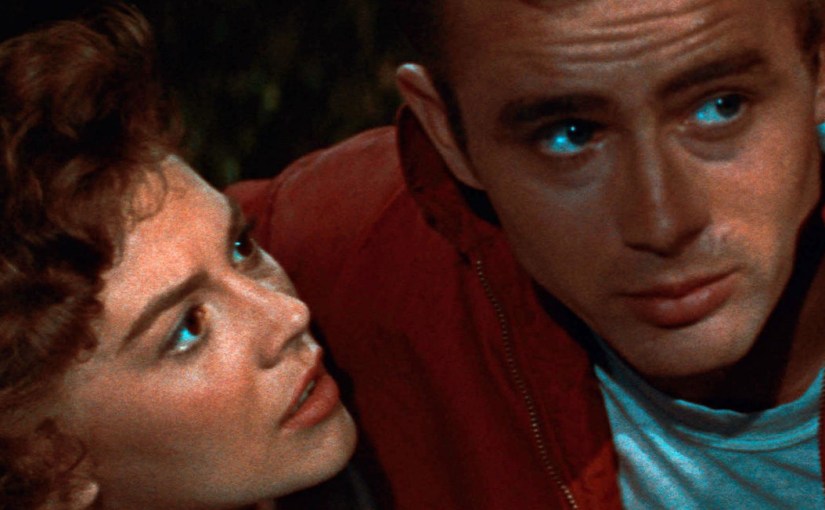
Jim Stark (James Dean) opens the film being hustled into a police station for public drunkenness in the wee hours of the morning.  Here, he will cross paths with two other teenagers: Judy (Natalie Wood) and Plato (Sal Mineo).  Over the next 24 hours, Jim will change their lives irrevocably just by trying to stay out of trouble, which has no problem finding him.

It’s here, when Jim’s parents arrive to bail him out, that Dean delivers his immortal line, “You’re tearing me APAAART!!!”  I’m kinda glad we got that out of the way so early so I didn’t have to anticipate it for the rest of the movie.  We also get the first of the film’s heavy-handedness, as Jim converses with a sympathetic cop, Ray (Edward Platt), who asks him the kinds of probing questions that only a psychiatrist would ask.  They become unlikely friends as they bond over the foolishness of Jim’s parents, who are so clearly out of touch with his inner turmoil.

During a field trip to the Griffith Observatory (the movie takes place in Los Angeles), Jim winds up in a knife fight with a local tough guy, Buzz, whom he eventually overpowers.  (The reason: Buzz called him “chicken,” just like Marty McFly…just throwing that in there.)  Buzz wants another chance, so he challenges Jim to a “chickie-run.”  That night, the two of them will drive a couple of stolen cars at high speed towards a high cliff drop; first one to bail out of their car is a chicken.

Before that can happen, we get the first of two surprising plot devices.  Jim runs into Plato at school, and it becomes instantly clear that Plato is attracted to him.  I promise I’m not reading too much into it.  The fact this wasn’t toned down even more in a movie from the mid-‘50s is a little shocking to me.  Plato looks at and hangs around Jim the way a girl with a crush latches on to the object of her desire.  Plato even has a fan-photo of Alan Ladd in Shane hanging in his locker.  It’s so obvious that I found myself wondering whether the movie would go so far as to let Plato try to kiss Jim.  Later, the screenplay makes it clear that Plato was just looking for a father figure, but dude.

Later that night, after the fateful “chickie-run”, Jim tries to explain to his parents what happened, but they’re unable to respond with anything but disbelief, and his mother even threaten to move again.  It’s abundantly clear that Jim’s parents are out of touch, a point that his hammered home again and again.  This approach at first seems overpowering, but director Nicholas Ray apparently was trying to lend the film an emotional, operatic sensibility to give the lead characters more of a mythic stature.

This is also conveyed through the film’s use of color Cinemascope, creating a frame that is just begging to be seen on the big screen where the colors and figures wouldn’t just pop, they’d EXPLODE.  If this was not a popular drive-in movie, it should have been.  That might actually be the best way to watch this movie, if at all possible.

There’s also a curious scene involving Judy’s home life that implies something unsavory is going on.  Judy approaches her father at the dinner table and tries to give him a kiss hello, but he rebuffs her: “Aren’t you getting a little old for that kind of thing?”  She feels hurt and tries again and gets a slap on the face for her trouble.  She runs out of the house and the father says something like, “She used to be so nice, now she’s nothing but trouble!”  A father who can’t accept an innocent kiss from his daughter has more going on underneath than the daughter, I can tell you that.  It’s an eyebrow-raising moment that does more to shed light on Judy’s behavior than anything else in the film.

The message of the film is simple, and it’s directed squarely at the parents: listen to your kids.  The parents in this movie do nothing but express sadness and dismay at their kids’ behavior, and never once do we see any real compassion, except when Jim’s dad (wearing his wife’s apron – more subtle coding?) tries to comfort him before the “chickie-run.”  But his words are hollow and meaningless, because he doesn’t take the time to ask the real questions that need to be asked.  Rebel Without a Cause was released at a time when popular opinion said that juvenile delinquency was largely a product of kids raised in slums or ghettos.  Rebel demonstrated that it didn’t matter where the kids were raised, it’s HOW they were raised that caused their problems.

I give the movie a 7 out of 10 because, while I acknowledge its place in film history, especially with regard to its star, I do feel the dated qualities hard.  But I give it props for delivering an important message, in a film that was powerful enough to lead some communities to ban screenings at local theaters for fear it would give the youth community bad ideas.  Talk about not seeing the forest for the trees…
TRAIN DREAMS

By Marc S. Sanders

Clint Bentley directs a script he co-wrote with Greg Kwedar, based on Denis Johnson’s novella, Train Dreams.  It’s a gorgeous looking picture that covers an early 20th century logger and railroad worker within the dense woods of Washington state.

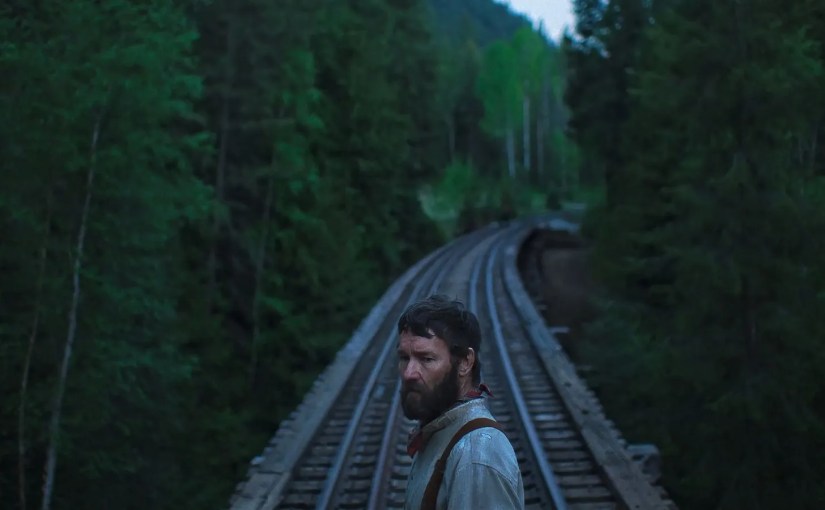
Joel Edgerton is Robert Grenier, a bearded logger with an unknown background. The soothing voiceover narration from Will Patton tells us that Robert never knew his parents and is unsure of his exact age.  

Unexpectedly, he quickly falls in love with Gladys (Felicity Jones).  They envision an idyllic life together in a log cabin next to a peaceful lakeside.  They have a daughter and could not be happier.  Yet, during logging season, Robert must leave his family behind to cut down trees for industry supply of a quickly evolving western civilization.  He takes other jobs laying down railroad tracks that lend to the conveniences of transportation and shipping (before the reliance of air travel), including the logs he cuts down. His purpose is circular to a thriving country.

His committed work is not always pleasant.  As a means of revenge, a friend is gunned down right in front of him.  The casualness of the act is the most shocking element of this moment.  Still, there is no time to grieve.  

When he’s working on the railroad, he bears witness to the cruel treatment that others deliver to a Chinese immigrant.  He can not stand up to these behaviors.  He has money that needs to be earned.  So the work takes precedence.

A mentor and demolition expert (William H Macy) meets an unfortunate fate, as well.

Tragedy personally befalls Robert upon his return home following a job. Now, the man is left to resort to isolation where little human interaction exists among the wooded areas.

It’s hard to take your eyes off Train Dreams, now playing on Netflix, and one of ten films Oscar nominated for Best Picture.  The screenplay speaks like a Robert Frost poem.  That’s a compliment and a shortcoming for me.  Will Patton says so much when there’s not much to be said.  Rather, Bentley’s film works visually as you watch a concentrated Edgerton focus on his character’s hallucinations and especially the loneliness he endures in the second part of the film.  

Regrettably, this movie is also a little boring.  Sometimes it feels like I’m watching one of those short nature films you look at while in a museum that a documentarian provided.  When I’m a tourist, a ten minute film like this can show the trees getting chopped as they make their slow tumble to ground.  Frankly, when it’s too hot outside is when I go into these theaters to get some air conditioning and a quick snooze.  Train Dreams teeters on that experience.  

There’s no denying how solid the film is considering the subject matter.  Technically it’s very impressive with expansive forest fires and artificial trees masked as tall pines to demonstrate the sawing of hundreds year old barks.  When the camera is pointing up through the green leafed branches into the wide blue expanse of sky, you want to freeze frame and perhaps paint a scenic skyline.  Adolpho Voleso’s cinematography is rich in color.  Definitely worthy of recognition.

I found it interesting how much I took Robert’s perspective for granted.  He uses a floppy aluminum saw that is pulled and pushed to cut through the wood.  As he gets older, a fellow woodsman relies on an battery powered chainsaw, thus making Robert’s skills more obsolete.  

Later, he meets a woman (Kerry Condon) who has been recruited to oversee the treatment of the forests from a high-rise lookout post; she just might the coming of the forest rangers.  Robert only knew of trees from what was way over his head.  Now he can look down upon them.  The ending goes even further and demonstrates how Robert’s self-absorbed isolation held him back from keeping up with a developing age of technology like automobiles and airplanes, far beyond the trains that had been the faster way to travel along the tracks that he built.

Train Dreams is an interesting issue of a National Geographic that I’d never have picked up had the Oscars not given it some recognition.  Now that I’ve seen it, it’ll go back on top of the tall stacks of magazines in my grandmother’s basement.

GILDA (1946)

by Miguel E. Rodriguez

DIRECTOR: Charles Vidor
CAST: Rita Hayworth, Glenn Ford, George Macready, Joseph Calleia
MY RATING: 8/10
ROTTEN TOMATOMETER: 90% Certified Fresh

PLOT: A small-time gambler hired to work in a Buenos Aires casino discovers his employer’s new wife is his former lover.


Admit it: we’ve all known a couple like these two: Johnny Farrell (Glenn Ford) and Gilda (Rita Hayworth).  They’re the kind of couple that inspire lifelong celibacy.  You see them together, and you think one of two things: “Why is SHE/HE with HIM/HER?”  Or, “Well, at least they’re saving two other people.”

The irony of Gilda is that they’re not even a legitimate couple, at least not for very long.  The fact that the movie sees fit to give them a semi-happy ending fits more with the period when it was made than with the characters themselves.  Watching them go off together at the end feels…off.  I know there are exceptions to this rule (see Bound [1996], spoiler alert), but this film noir fairly screams for a tragic ending of some kind, appropriate to the genre.  Instead, the two leads get off the hook just a little too easily, for my money.

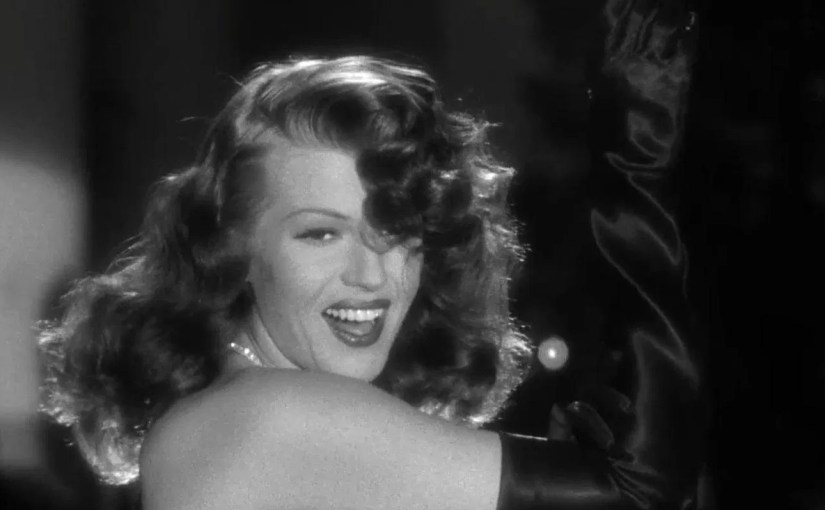
But I’m jumping ahead.  In case you didn’t know, Gilda is the 1946 seamy/steamy film noir that forever turned Rita Hayworth into a Hollywood sex symbol.  Humphrey Bogart turned down the lead role (that went to Glenn Ford instead) because he figured, with Hayworth on the screen, no one would be looking at anyone or anything else.  He wasn’t kidding.  From the moment of her iconic entrance to the film (hair flip…“Me?”), Hayworth dominates every moment she’s onscreen, as effortlessly as Monroe, Dandridge, or Loren, assisted by those legendary Jean Louis gowns and costumes.  Especially the famous “Put the Blame on Mame” number, with the slinky black strapless “sleeve” dress, and those long black elbow-length gloves that she peels off ever so slowly…

The story!  Right, the story…

Johnny Farrell is a low-rent gambler in Buenos Aires who is hired by casino owner Ballin Mundson – one of the weirdest character names ever – to watch over his operations while he tends to other business in and around post-war Argentina.  One day Mundson returns from a business trip with a new wife: Gilda, whom he married after a whirlwind one-day romance.  Gilda is as tempestuous as they come, brazenly flirting with Johnny in front of her new husband, who can’t help but wonder why Johnny seems so icy towards her…

It doesn’t take a rocket scientist to figure out Johnny and Gilda knew each other a lifetime ago.  Their chance meeting in a foreign country ranks right up there with Ilsa wandering into Rick’s Café Américain in North Africa: unlikely, but it makes for a helluva story.

Glenn Ford holds his own in the film as the scruffy, no-nonsense enforcer who can more than hold his own in a fistfight, but whose physical prowess can’t compete with the psychic hold Gilda still has on him.  Of course, the fact that Gilda mercilessly pokes and teases Johnny indicates she’s just as fixated on him.  It’s easy to see how this material could almost become a standard-issue rom-com, but Gilda is made of darker stuff.  Look at it from a certain angle, and there are hints that Johnny and his boss, Mundson, might share a relationship that goes beyond employer/employee, that Gilda knows this, and is using that knowledge to stick the knife even deeper into Johnny’s stomach, just to watch him squirm.

So, Gilda becomes a psychological battle of the sexes, evoking The War of the Roses at times.  Gilda tosses off some zingers that would have made Mae West blush.  (“If I’d been a ranch, they would’ve named me the Bar Nothing.”)  Johnny gets off a couple of his own.  (“Pardon me, but your husband is showing.”  …and, “Statistics show that there are more women in the world than anything else.  Except insects.”)  In between zingers, the plot moves on in the background, but it’s only a clothesline on which to hang the arguments between Gilda and Johnny.  In that respect, it’s like a John Wick film: you’re not there for the plot, you’re there for the action.  It’s entertaining as hell, don’t get me wrong, but they are so good at being despicable to each other that I found myself hoping they DIDN’T wind up together.  Talk about a match made in hell.  Do they deserve each other?  Discuss.

Gilda robustly lives up to the film noir tradition, in style, substance, and story, RIGHT up until the last two or three minutes, when the darkness gives way to the major-chord strings of “happily ever after.”  For that, I personally can’t call it perfect.  But holy black strapless gown, Batman…as they say at Passover, for that alone we should be grateful.

A STREETCAR NAMED DESIRE

By Marc S. Sanders

Blanche Dubois emerges from the steam of a New Orleans bus depot.  She looks worn and lost, but she once felt confidence in the glamour she evoked in and out of her family’s Mississippi estate called Belle Reve.   Now, with the aid of a chivalrous Navy shipman, she’ll board A Streetcar Named Desire to visit her sister Stella and her husband Stanley Kowalski.  The estate is no longer owned by the Dubois family, and Blanche has given up being a teacher.  Blanche will be staying in the French Quarter ground floor apartment for quite some time, though no one knows how long.  Her life is stuffed in a large trunk with some fashionable suitcases in tow, and an infinite variety of colorful storytelling.

Tennessee Williams’ Pulitzer Prize winning play was a smash on Broadway and though it is checkered with, at the time, questionable topics ranging from mental illness to domestic abuse and rape, it was a smash hit on Broadway.  Other than Jessica Tandy, the majority of the play’s cast was hired for Elia Kazan’s film adaptation.  Marlon Brando, not yet a box office star, is the brutish and sexually appealing Stanley Kowalski, arguably one of his top five best performances.  Kim Hunter presumed her role as Stella, the meek wife against Stanley’s hulking build.  Karl Malden played Harold “Mitch” Mitchell.  Hunter and Malden won Oscars for their performances.

Vivien Leigh was the top billed actor, replacing Tandy, in the Oscar winning role of Blanche.  Leigh is working very hard throughout the course of the picture with long winded rants about what became of her teaching career and Belle Reve, along with her tales of conquests with all sorts of men.  At times she reaches into her trunk for the guise of a southern genteel lady with enormous amounts of experience behind her.  

Stella is concerned with her older sister’s behavior, but tolerant if it brings her comfort.  It’s clear that Blanche is not well.  

As he tries to uphold his drunken control over Stella while hosting Mitch and the guys for nightly poker games, Stanley is only agitated by Blanche’s intrusion.  He sees through all of his sister in law’s stories and is certain, as a husband to Stella, he has earned the right and proper possession of whatever monies and assets were collected from the ownership transfer of Belle Reve.

As the rundown two-bedroom Kowalski apartment is intentionally small and cramped, Kazan’s film often operates like a stage play.  There are some editing tricks like weaving echoed voices and triggering sounds to stimulate Blanche’s paranoia, along with a sleepy soundtrack to deliver a quiet, sticky, muggy jazz ambience, normally associated with the Square.  Even in the black and white photography of the film, you don’t have to try looking for the perspiration on Stanley and Mitch’s shirts and brows.  The heat also works towards Blanche’s moments of delusion.  

Early on, I had problems with Vivien Leigh’s portrayal.  She’s talking a mile a minute and had I not read Williams’ original play ahead of time I’d be listening to her with no idea of what she’s talking about.  I realize that’s the point, however.  When Blanche arrives, Stella is as confused because her sister is going off in so many fast-talking directions all at once.  Kim Hunter’s Stella is trying to keep up but fails to stay with Blanche.

Even though, his portrayal has been satirized too often (“STELLA!!!!”), Marlon Brando gives one his best performances.  He’s a giant on screen with a stylish, messy, short mousse-soaked hairstyle and t-shirts that adhere to his large torso.  This performance is unforgettable. Kazan’s set up of the apartment has old junk strewn about the place, but Brando can easily find a prop to vent his frustration or deliver frightening in-your-face anger and tantrums. As patterned mentality so often demonstrates, Brando is very skillful at turning his animalistic behavior into false regret and whiny need for his wife Stella to embrace his hulking mass and stay with him. As long as Stella comes back and holds him, he can carry on with his abuse and dominance. I never joke about Brando’s famous scene. It’s raw and natural. For Stella’s sake, it’s also terribly offensive and inappropriate. Yet, that’s Stanley. Marlon Brando knew that too well.

Elia Kazan had artistic challenges with this film.  Religious boards were insisting Warner Bros remove the film from distribution.  The studio’s compromise was to edit the film to appeal to organizations and general audiences. To his dismay, Kazan was unable to deliver the Final Cut as he envisioned.  At last, however, the film company recanted that order and in the late 1980s. Kazan’s original picture was released as intended.  

So interesting to watch Tennessee Williams’ story unfold for everyone to see.  As Stanley is a former Marine, I believe Williams was striving to show the never discussed diagnoses of PTSD.  Compared to today’s standards, the violence primarily committed by Brando’s character is nothing alarming and yet it builds tension every time he’s on screen.  To a movie going public, this is unfamiliar territory.  

Kazan deliberately made the set of the apartment smaller as filming persisted. This tactic evoked a cramped and claustrophobic lifestyle for Blanche and Stanley under one roof.  Making it smaller and smaller as the making of the movie went on, showed the troubled characters feel more pressured and inhibited, trapped among each other’s poisons. The characters cannot help but live practically on top of each other.  The tension amplifies with each passing scene until it all comes to a shocking boil.

Stanley Kowalski and Blanche Dubois are a dangerous cocktail of different abnormalities clashing together with a helpless Stella caught in the middle and a shy, introverted Mitch looking in the wrong direction for a healthy dose of companionship.  These characters are very complicated with sudden shifts in mood and behavior.  Often, Kazan will have the characters emerge from dark voids into straight up-close frames.  One moment characters feel like they’ll pet you.  Other times, they look like they’re about to strike. Kazan strategically knows how to use the dark shadows of black and white photography to emote an assortment of personality.  It’s amazing, and something much more overt here than on stage or within the script.  Even when Blanche takes advantage of a young man who arrives on the Kowalski doorstep, we see the animal instincts of the woman about to pounce on innocent, unsuspecting prey.  Since it is often challenging to comprehend Blanche’s actions and rambling dialogue it’s all the more shocking to witness how she takes advantage of the young man when no one else is around.

The palpable discomfort of A Streetcar Named Desire upholds Tennessee Williams’ famous play.  Exploring the film in present day, his work defies changes in culture and mutual treatment because people are much more open and less remorseful about their sins.  Statutory rapes committed by teachers are reported nearly every month.  Alcoholism has never changed since the addiction first occurred long before this was a movie.  Here, the disease serves as a fuel to engines of tempers and weaknesses. 

Elia Kazan and Tennessee Williams knew what buttons to push, resulting in an ending that still feels too hard to accept.  During the epilogue of the story, two strangers appear at the Kowalski home.  Who could they be and what are their intentions?  

For 1952, all of the gratuitous natures of the characters seem extreme and disturbing.  Tame compared to any kind of material coming out in 2026, following Presidential administrations where sex is weaponized and psychological research has been researched with viable proof for specific ailments.  Kazan’s film with Williams’ script seems pioneering.  How many other storytellers were going this far with their projects?

A Streetcar Named Desire will always be a classic passed down to future generations.  It’s fair to say that other than the black and white cinematography, very little of the film feels outdated.  Sadly, much of what is shown is authentic to details of domestic violence with smashed dishes, broken radios and torn t-shirts.

Tennessee Williams never explores why these people are this way.  Instead, he demonstrated that people are this way, and outside stimulants will only exacerbate personal challenges.  

A vehicle, such as a city streetcar trolley, of any form or embodiment will deliver a fly in an ointment.  People have all kinds of ways to respond thereafter, and some will never be able to find that vehicle to drive them back towards a peaceful salvation.  That is the sadness of A Streetcar Named Desire.

ONE BATTLE AFTER ANOTHER

By Marc S. Sanders

Not one of Paul Thomas Anderson’s films are alike.  In each picture, the characters speak differently.  They specialize in areas completely separate from anything else.  The porn industry is a far cry from oil drilling for example, and neither has any commonality with that of independent American revolutionaries, as featured in One Battle After Another.

Leonardo DiCaprio plays Pat Calhoun, a determined underling of a revolutionary band known as the French 75. Their will is to free illegal immigrants from a California fenced lock up, or plant mild explosives in government buildings or rob banks as modern day Robin Hoods.  It’s all one battle after another. Each mission seems to be executed more for the excitement and thrill, rather than any kind of just cause.

Together with Perfidia Beverly Hills (Teyana Taylor, and yes, that is the character’s name, Perfidia Beverly Hills) he bears a daughter named Charlene (Chase Infinity).  Though Pat wants to assume a new identity and settle down, Perfidia opts to continue with her purpose.  When she is apprehended, she is persuaded to disclose the whereabouts of her fellow comrades.  In exchange, Perfidia is granted witness protection. Exactly, who and what did the figurehead of one Perfidia Beverly Hills stand for?

One Battle After Another carries a long prologue that sets up all of these characters.  Once they go in different directions, Anderson’s film jumps forward sixteen years later when Charlene is an optimistic teenager yearning to be a regular student at public school.  The school dance is on her mind. Her father Pat is paranoid of her being out and does not take kindly to the kids she’s hanging with. Despite the weird makeup and piercings, there’s really nothing wrong with them. At least Charlene is not so apt to take any of her dad’s paranoia seriously.

Colonel Stephen J Lockjaw (a great character name for an antagonist), played by Sean Penn, carries an intimidating, militant focus.  He leads the charge against the French 75.  He ensures capture or death in the field to halt their activities.  His vice, though, is specifically his obsession with Perfidia.  Yet, the tryst he shared with her can never be revealed if he is to pass the recruitment test for entry into the very exclusive, white supremacist organization known as The Christmas Adventurers Club.  

Pat has trained his daughter to respond to certain codes, and to be alert if a pocket device should ever light up as an emergency.  Ironically, Pat, now known as Bob, can’t even remember all of the code speak.  Too much pot smoking and laziness has numbed his senses.  Lockjaw has zeroed in on Pat, and particularly Charlene who actually may be his daughter.  It’s important he locate her because her skin color could compromise his reputation and his chances of joining the Club.

I was eager to see One Battle After Another when it was first released in theaters.  It had been getting very good word of mouth, and other than a few exceptions, I’ve been a big admirer of Anderson’s work.  Regrettably, in a comfortable Dolby theatre with the best sound system available, I could not help but fall asleep.  When I watched the film on HBO MAX, a few months later though I was exhilarated.

The film seems to start in the middle of an already long-winded story.  The prologue hops around from one mission of the French 75 to another and there is minimal character development.  None of the dialogue is special either. On a first viewing I think it’s challenging to piece together who is who, what they stand for, what they mean to one another, and what becomes of them.

When the script jumps sixteen years later, the picture serves like a straight out chase story with a callously cold “Javert” seeking out his “Jean Valjean” who hides with his adopted “Cosette.” The last two thirds of One Battle After Another seem to start an entirely new movie.  

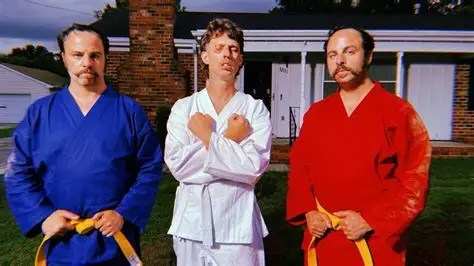
A common tactic of Anderson is to rapidly swing his camera with a kinetic and urgent pace; minimal cuts.  This especially drives his film as the pursuit is depicted with fear, desperation and unintended comedy.  Poor Pat, or “Bob” cannot recall how to accurately reply to the code speak on the other end of a telephone line.  He’s separated from Charlene, and Lockjaw is figuring everything out beginning with discovering underground tunnels located in the rendezvous town that many former members of the French 75 have taken up shelter. Benicio Del Toro, as a karate instructor, is one of the people. He’s a mentor for young Charlene.

I’m not sure if Paul Thomas Anderson is trying to deliver any kind of thought-provoking message.  Though he associates Sean Penn’s character with white supremacists, I cannot naturally accept that Anderson is saying this gang of powerful, tuxedoed men of a wealthy one percent adhere to any political party or agenda.  As well, Anderson does not seem to be applauding the actions of Perfidia, Pat, or the French 75, whose mantra especially falls apart when an innocent casualty is killed by one member’s hand.  

One Battle After Another could simply be a blender mix of ideas with blind missionary work from all of these different sects.  None of these soldiers serve a greater good.  Their arguments only work to hammer back at whoever has disdain for the other.  No one is inspiring anything that will promise a better future for America.

As I write this review, it occurs to me that perhaps Paul Thomas Anderson demonstrates that whatever action people like Pat and Perfidia or Lockjaw commit, it’s all but defeatist. Eventually, the cause wisps away, but the battle must persist. The battle is all these people have and live to serve, not a resolution or even a conquest. Fight, accomplish, and now what’s next?

One Battle After Another is not Paul Thomas Anderson’s best work, though it is exciting to watch with outstanding editing as a car chase arrives near the end of the story. I cannot say I was taken with any of the performances. Penn and DiCaprio are living up to the demands of their characters but there’s nothing outwardly sensational in what they are doing here. I’m also perplexed by the raves that Del Toro is getting for this film. It’s a small role with little to do. I do not recall one moment of acting greatness, nor a memorable line from his part.

Teyana Taylor and Chase Infiniti deliver breakout performances, however. Infiniti, in the role of the daughter, shows vulnerability, and later strength, when the story calls for it. Watch the fear and drive when she reunites with DiCaprio’s character on a barren road in the desert. She’s got a real intensity in her eyes and expressions. Taylor seems like she’s a heroine yanked from a Tarantino picture. A really impactful performance whose biggest contribution is in the beginning of the film. Sean Penn is a good scene partner for her.

Released in 2025, One Battle After Another seems like it would be ripped from the everyday headlines of ICE activities, government protests, and the revolts against those missions. I feel like Anderson’s film only gives a small glimpse into these very complex worlds, though. Other pictures like Boogie Nights, Magnolia and Phantom Thread are much more expansive with their universes of unusual industries like pornography, Hollywood social stature and the demands of dress making artistry.

I guess I’m saying I really didn’t learn much from One Battle After Another. So, forgive for saying that I’m underwhelmed.

SONG SUNG BLUE

By Marc S. Sanders

Films that are based on true stories will always take theatrical liberties with the storytelling.  Look at Oliver Stone’s JFK.  Sometimes, if it is so skewed you absolutely should not approve of it.  Consider Bowling For Columbine which starts out with an offensive, bold-faced lie to draw you in.  

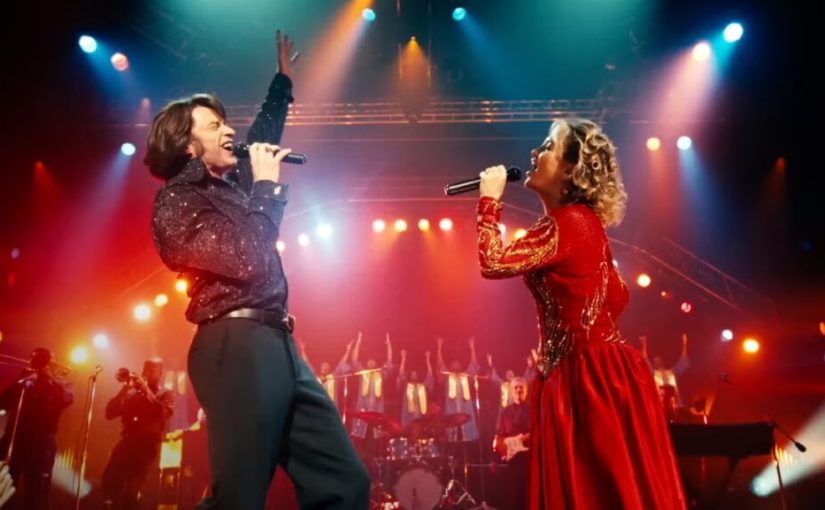
On other occasions, the alterations made justifiably serve the picture to obtain an emotional reach from the audience.  Craig Brewer wrote and directed Song Sung Blue, which he calls an incredible true story.  The set ups seem too perfect to convince me some of these events actually happened.  However, the major highlights ring absolutely authentic and with an entertaining pair like Hugh Jackman and Kate Hudson leading the picture, this is a magnificent experience.  The audience I saw it with on Christmas Day was so wrapped in what was put on screen, with organic comedy, tragic setbacks and toe tapping harmonized energy from the two actors doing outstanding “impressionism” of Grammy winning singer Neil Diamond.  

Mike and Claire Sardina (Jackman and Hudson) meet while working as tribute performers at a local fair.  She’s doing Patsy Cline.  He’s refusing to be Don Ho.  They quickly fall in love, like literally on the next night after they meet, and brainstorm with his guitar and her piano how they can become a musical act on their own.  Mike wants to emulate someone that lives up to his energy and persona. He declares to an AA group that he’s a “superhero of music.”  He’s Lightning.  She’s Thunder.  Claire thinks Neil Diamond is the perfect facade.  Mike agrees so long as the unfavorable “Suleman” opens their shows, and they resort to other numbers besides “Sweet Caroline.”

Soon they are married while his daughter Angelina (King Princess) befriends her daughter Rachel (Ella Anderson).  Her son Dana (Hudson Henley) takes to video recording their performances.  One happy, blended family.  

Like most musician biographies, Lightning and Thunder get off to a rocky start performing in seedy venues with audiences who would rather they play Lynyrd Skynyrd.  Naturally, a following and a stride eventually build, and the act is somehow opening for a popular grunge band from the 1990s.  I won’t spoil who it is because Mike and Claire never heard of this headliner. This delivers a great gag.

Song Sung Blue is a warm comfortable journey through its first act.  It’s hard not to love anyone occupying this picture, including supporting turns from Michael Imperioli, Fisher Stevens and an unrecognizable Jim Belushi.  Once you’re settled into the story the dramatic weight of the piece enters, and it becomes heartbreaking for Lightning and Thunder.  Only after this unexpected change is introduced does the need for triumph work as the story’s conflict, and there is a lot to contend with for the couple, and particularly Rachel.

These characters are so likable that you’re apt to feel proud of them and Brewer does good work at showing the struggle.  Kate Hudson, with a Midwest accent, is especially effective.  She goes from offering a welcome personality to being cold, bitter and angry.  I wouldn’t object if she got an Oscar nomination.

Hugh Jackman is a magnificent entertainer.  Unlike his Wolverine films, his real age with wrinkles and grey hair deliver a twenty-year sober alcoholic living with a chronic health issue. However, Mike has an unstoppable drive of positivity through music with a microphone, a strumming guitar, and his flowing hair to compliment his colorful and sparkled stage outfits.  Brewer allows room for Lightning’s weaknesses, both physically and mentally.  

There’s a nice balance of both characters at the top of their game as well as far beneath the bottom rung of the ladder.

Song Sung Blue is very absorbing in the moment.  Only after I walked out did I question some of the set ups and wonder if certain events truly happened as assembled into the final edit.  I’m skeptical if the conclusion for one character truly played out like it did.  It’s just too neatly wrapped up like a Hallmark film or a soap opera episode.  That being said, the manipulations worked on me and the audience.  So, why should it bother us?

A twisted irony also happens though, which I had no choice but to believe.  It’s just simply too outrageous that Craig Brewer would work it into this story if it wasn’t true.  My wife exclaimed “No way!  You’ve got to be kidding me!”  Without knowing anything about the real Mike and Claire or seeing the documentary film this picture is based on, my gut insists this has got to be true and a reason why Song Sung Blue merits a movie presentation featuring two Oscar nominated actors.

When you see Song Sung Blue I urge not to frown on the film if you notice some of the truths are stretched a little.  Instead, absorb the outstanding performances of Hugh Jackman and Kate Hudson doing electrifying interpretations of Neil Diamond’s collection of hit songs including “Better In Blue Jeans” and of course “Sweet Caroline.”

Song Sung Blue is marvelous entertainment.

YOUNG GUNS

By Marc S. Sanders

In the late 1980s a novel idea hit the screens.  An MTV interpretation of the Old West with a rock anthem soundtrack of electric guitars and drums. A far separation from Ennio Morricone’s unbeatable spaghetti western approach.  

The film was Young Guns, featuring handsome stars like Emilio Estevez, Kiefer Sutherland, and Lou Diamond Phillips.  They were each different kind of gunslingers in their own right while delivering stand out personalities.  The film has some problems in editing, and some sequences do not work.  Yet, it remains stylish with impressive set designs, props, costume wear, and an especially appealing array of performances from the whole cast.  

Billy The Kid aka William H Bonney is one of the most notorious outlaws in American history.  Emilio Estevez brilliantly turns the gunslinger into a quick draw joker with an addictive cackle and an adorable smile.  William is taken in by the mentoring John Tunstall (Terence Stamp) who already oversees a collection of orphaned young men.  He’s teaching them to bear responsibility on his farm while they learn proper manners at the dinner table and how to read.

A neighboring industrial enemy, L.G. Murphy (Jack Palance) commissions his men to gun down Tunstall.  Billy and the rest of the gang are then deputized by the local Sheriff to issue warrants for the arrest of the killers.  However, Billy repeatedly exercises his own form of justice by killing one guy after another with his pair of six shooters.  Soon after, the boys are on the run by horseback while creating a whole bunch of mayhem.

I never considered Young Guns to be a perfect film, but I like it a whole heck of a lot.

There are moments that serve no purpose, like when the men get high on peyote, introduced by the Navajo, Chavez Y Chavez (Lou Diamond Phillips).  It’s not amusing.  It’s not quotable and the scene runs too long as we watch the cast walk and talk while in daze.  Frankly, most movie scenes of just watching people get high are boring.  Often, they go nowhere and I’m not sure how to respond. It’s like I’m the designated driver fiddling with my car keys at a drunken binge fest. This is no different.

As well, there seem to be gaps within the body of the story. I know it is inspired by the Lincoln County War, but it’s never entirely clear why Tunstall and Murphy are at odds with each other.  We just have to accept that the two elderly men of equal proportions are against one another.  Still, Palance versus Stamp is a very inviting conflict to look at. (Supposedly, the real John Tunstall was only in his mid-20s.)

Young Guns has a very cool polish.  These cowboys are downright attractive, sexy like Hollywood movies tend to offer, and I love how they handle each other, their horses and their pistols.  Every time a six shooter whips out of a holster and clicks, the movie becomes more alive.  The guys look well-worn within this environment, close to the Mexican border of the 1870s.  The image is just as effective as Clint Eastwood appears in his various assortment of westerns.  

Billy The Kid, over this film and its sequel, is Emilio Estevez’ best role of his career.  The actor has such a cocky, nervy way about him and his over-the-top laugh is impossible to forget.  A favorite scene in all of movies emerges when Billy toys with a bounty hunter in a saloon.  Estevez delivers much fun before gunning the guy down. I never tire of watching that moment.

Kiefer Sutherland is second in line with a graceful sensitivity as the educated and poetically romantic Doc Scurlock.  You worry about him and his courting affair with a young Chinese concubine that is owned by Murphy.  Lou Diamond Phillips specializes in knife throwing as Chavez, the token Navajo.  His presence belongs here as an unpredictable sidekick.  

The best surprise is delivered by Casey Siemaszko as the virginal, boyish illiterate Charlie.  Some gunslingers were afraid to ever become outlaws.  Charlie is ugly and dirty, bumbling and sweet, reminiscent of Fredo in The Godfather films.  Siemaszko never became as established as the others in the cast, but he’s a good performer who delivers panicked fear and brings the glamour of Young Guns down to a semblance of reality.  

Young Guns is a style over substance product.  It has potential for a stronger storyline, but the dialogue works and the cast is stellar, which also includes Dermot Mulroney, Terry O’Quinn and Charlie Sheen.  The sequel is actually better as it commits closer to the intrigue of Billy The Kid.  

Not perfect, but this is a fun escapist western experience.

TALKING “TAPAWINGO” WITH ACTOR JON HEDER

Tapawingo is available for download now on Apple TV, Amazon Prime, and Fandango at Home.

PASSCODE: #q^!ZRe6

https://us02web.zoom.us/rec/play/vjVdJK988eeN_NR8VjRAAV8cvNNZM_Mocag42xqZldfH2k_jpIvY6AEFfDsYv_hnLKutG_Usp2HhXylQ.uLRSwy3Hv0BNKxSJ?eagerLoadZvaPages=sidemenu.billing.plan_management&accessLevel=meeting&canPlayFromShare=true&from=share_recording_detail&startTime=1765567555000&componentName=rec-play&originRequestUrl=https%3A%2F%2Fus02web.zoom.us%2Frec%2Fshare%2FgXskQpd-4zfm9YQOI6kXZfjImgeZcB3PpEKRSk23xTehlK1o1n0rdvteli3m2C0R.ycr7CAcb8myE4QKo%3FstartTime%3D1765567555000

Catch my review here: https://2unpaidmoviecritics.com/2025/11/26/tapawingo/

RAMBO: FIRST BLOOD PART II

By Marc S. Sanders

David Morrell’s literary character Rambo (no first name in the book, First Blood) cinematically survived his first post Vietnam adventure to spill buckets of bloodshed for many more follow ups.  Sylvester Stallone hit box office gold when he signed up for Rambo: First Blood Part II.  The Vietnam War was long over leaving an endless supply of storyline threads for Hollywood.  Who better to go back there with a ripped upper torso, a bow and arrow, a bayonet knife that won’t carve your steak but will hack up the cow, and a lot of firepower?

Green Beret John Rambo is specially recruited by his former C.O., Colonel Trautman (Richard Crenna) for a solo mission into a Viet Cong camp where American POWs might be held captive.  He’s got thirty-six hours to get in and out.  There’s a catch though.  A mercenary led operative named Murdock (Charles Napier), who hides behind a desk, a white collar and necktie specifically instructs Rambo to only survey the area and take photographs.  Under no circumstances is he to engage the enemy or escort any prisoners back to his rendezvous point.  Thing is that Rambo is not much of a photographer.  

James Cameron is credited as one of the screenwriters and apparently Stallone modified the script from there.  This bloody sequel is entertaining but I always found it a little mundane despite all the action.  

Just as the movie is about to grow a brain and intelligently debate with itself about how so many American soldiers were disregarded following the war, it stops talking and only resorts to one action set up after another.  Crenna and Napier potentially engage in a worthy debate focusing on government mistrust and moral servitude before the moment is cut short.  Trautman is the easily assumed ally of Rambo.  Murdock is the antagonist, but truly I have to ask why.  What is the motivation not to side with Rambo’s efforts to literally rescue half a dozen abandoned soldiers?  First Blood Part II cuts the argument short and never returns to settle the discord. 

There is perhaps only 5 or 6 lines in the last forty-five minutes of the picture.  There’s a melodramatic closing monologue from Stallone’s morose character.  Otherwise, this movie would prefer not to think.  Sadly, there is a lot to consider here, but the explosives and machine-gunning filibuster, insisting on holding the floor.

The action is categorized in a series of episodes.  A five minute section offers a variety of ways Rambo covertly takes out Russian military soldiers who are maintaining a stronghold with the Viet Cong.  It’s clever how one guy is taken by surprise when a mud caked Rambo guts him with his knife.  For another stooge, he’s literally sucked away into the mouth of a cavern.  You don’t even see Rambo.  How does the hero get around with enough time to set up these sophisticated traps?  This is all cool to look at but I would have liked to have learned more about how the Russian General (Steven Berkoff) formed an alliance with the Vietnamese.

Later, Rambo uses his endless supply of arrows to blow away acres and acres of marsh and tall grass.  I buy one man army tropes in movies.  Yet, I still question how a guy on two feet can set ablaze the equivalent of five football fields worth of territory.  How does he always manage to get in range? 

A war copter hovers over a river.  The henchman riddles the surface with bullets, and Rambo LEAPS from the depths INTO the chopper.  I mean he flies up like Superman.  Another moment has him submerged and then he pops out of the water with perfect aim to mow down a mob of men.  How did he know where to shoot?

I guess all of this is entertaining.  I just don’t relish it like I’m expected to because I’m asking too many “how does he…” questions.  My suspension of disbelief doesn’t have a high level of tolerance for what Rambo is apparently capable of.  David Morrell’s character was somehow blessed with superpowers, practically!  

With Rambo serving our country, how in the hell did we ever lose the Vietnam War? Seems damn near impossible.

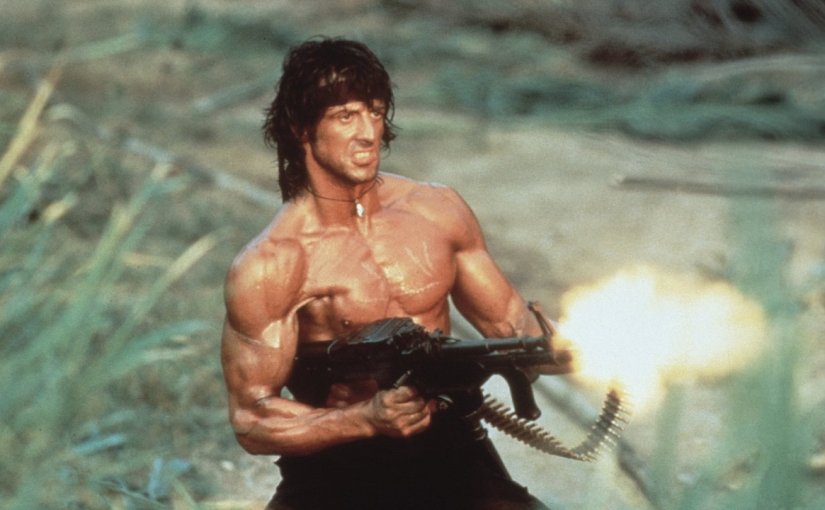
First Blood embraced a common problem with veterans who were disregarded by the institutions they swore to defend and serve.  It’s a terrible blemish on our country’s patriotism.  An awareness was offered in that film amid all of the believably capable action scenes.  Part II clearly shows a lack of concern.  POWs get rescued but they are not even given an opportunity to reflect and speak.  Their bearded and malnourished figures speak for them in close ups.  I didn’t think enough was delivered for any semblance of a message that was asking to be heard.  Instead, we get a Stallone showing off a bronze, ripped chest, red bandana and a slew sophisticated weaponry. Rambo looks sexy here, and that does not sit right with me.

I can rewatch Rambo: First Blood Part II.  I just can’t feel for any of it.  I think I was entitled though.  Moreover, those that served in this awful conflict are deserving of a product that would better honor their sacrifices.

BEFORE THE DEVIL KNOWS YOU’RE DEAD

By Marc S. Sanders

When it comes to crime – New York crime – few directors come as close as Sidney Lumet to make an audience feel the authenticity of its trappings.  Maybe only Martin Scorsese can stand next to Lumet.  Either with crime on the streets (Dog Day Afternoon, Serpico) or within the courtrooms (Find Me Guilty, 12 Angry Men), or both (Night Falls On Manhattan), Sidney Lumet hones directly upon how the plans should operate and when everything should unfold or derail.  

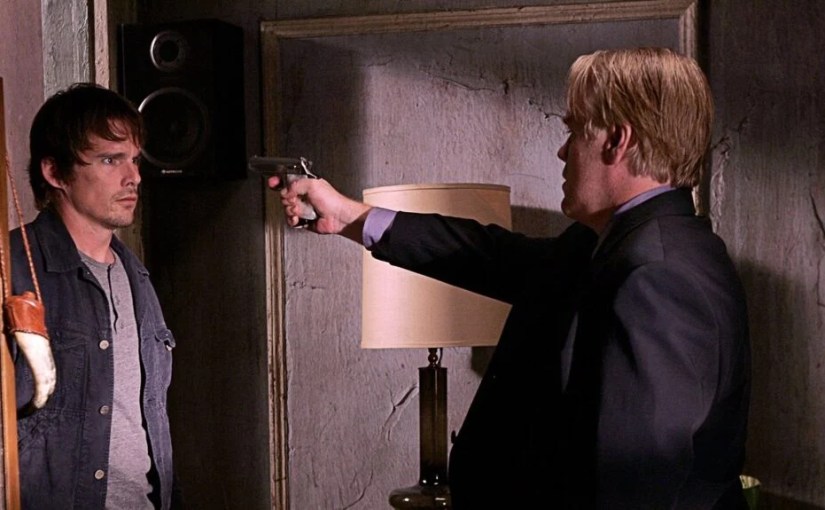
With the last picture before his death, Before The Devil Knows You’re Dead zeroes in on crime within an educated Irish family nucleus.  Andrew (Phillip Seymour Hoffman) has it laid out perfectly for his younger brother Hank (Ethan Hawke) to commit the perfect robbery. No one will get hurt and the insurance company will cover any loss.  The approximate take is around six hundred thousand. These guys carry their own desperate reasons for even considering such an idea, but Andy knows nothing can go wrong.  Hank has some trepidation though, because the target is mom and dad’s jewelry store.

Kelly Masterson’s script shows how quickly everything comes undone with bloodshed and unaccounted for details that could lead straight back to the two brothers.  It’s all told through three different perspectives – Andy, Hank and their father Charles played by Albert Finney.  Often, Lumet will return to the very same scene you saw moments earlier to show two sides of a phone call or in what direction one character goes versus that of another following a particular action that has occurred.  The timeline even jumps back in time a few days to show the direct perspective of any of these three particular characters ahead of showpiece scene – the robbery. Charles was retaking his driver’s license test. Elsewhere, Hank was struggling to pay spousal and child support with an angry ex-wife (Amy Ryan). Andrew was scheming and committing other clandestine acts both at work and in his free time.

However, Masterson’s script weaves all of these side details into how much more complicated this botched robbery becomes in the aftermath. All of what they commit following the robbery compounds into potentially making it worse for everyone involved.

Some of the breadcrumbs don’t carry enough water at times though. You might have to tolerate the characters being more intuitive than they likely should be.  Andrew leaves a business card with a side character.  When the film circles back to this item, it seems a little too easy for someone else to get wise about what has transpired.  I just chose to go with it.

Marisa Tomei is also part of the cast, caught in a love triangle as Andy’s wife and Hank’s mistress.  Tomei is really good, lending some authenticity with unscrupulous nudity in scenes with both Hoffman and Hawke.  This storyline serves as character exposition and only briefly scrapes against the crime drama at play.  It could have been excised from the film, but because the dialogue and scenario is written and performed so well, it effectively held my attention.

Albert Finney is magnificent as the patriarch owner of the store.  Simply his devastated, echoey breathing and the way he fumbles to put his eyeglasses on to learn more about what has occurred is absolutely genuine.  A late middle-aged man discovering horrible truths.  Finney plays it beautifully.  That being said, I wish the film offered more backstory to his character.  There are few hints suggesting how he regarded Andy as the first born who needed be thrown to the wolves and learn to fend for himself.  Contrarily, Hank is the younger and more disappointing son.  Yet, the script is short on material that further explores the relationship between the father and his sons.  I felt the film demanded more because Charles is quite significant to the conclusion of the story, which carries an unexpectedly abrupt ending.  

The acting and assembly of time and perspective are so finely tuned by the whole cast under Lumet’s direction.  Still, Before The Devil Knows You’re Dead needed another twenty to thirty minutes of storytelling.  One character runs out of frame with an unfinished storyline.  Another, seems too hasty in making a final decision with an easy convenience.

Don’t get me wrong.  I strongly recommend this last effort from Sidney Lumet.  It’s a unique crime yarn with an especially conniving Phillip Seymour Hoffman doing some of his best work.  The set up had me riveted and I couldn’t wait to see how all these terrible scenarios were going to fix themselves or make things horribly worse.