OBSESSION

By Marc S. Sanders

Curry Barker is a director that I intend to enthusiastically follow just as I did when Quentin Tarantino and Christopher Nolan were building their astonishing careers. Those guys reshaped the conventions of filmmaking.  Curry Barker has done the same by simplifying the horror genre, hiding his subjects in eerie darkness, holding his shots and relying on very, very good young actors, capable of comedy, drama and absolute unpredictable terror.  He’s done all of this for under a million dollars.

The more often I stick to my guns and not read or watch anything about an upcoming film before seeing it, the likelier it is I walk out immensely satisfied.  With Obsession, I only knew it has become a monster, must-see sleeper hit and it’s a horror movie.  The title implies another Fatal Attraction rehash. Yet, it is something else entirely.  It operates like a short story ghost tale whispered around the campfire and stretches a long, long way.

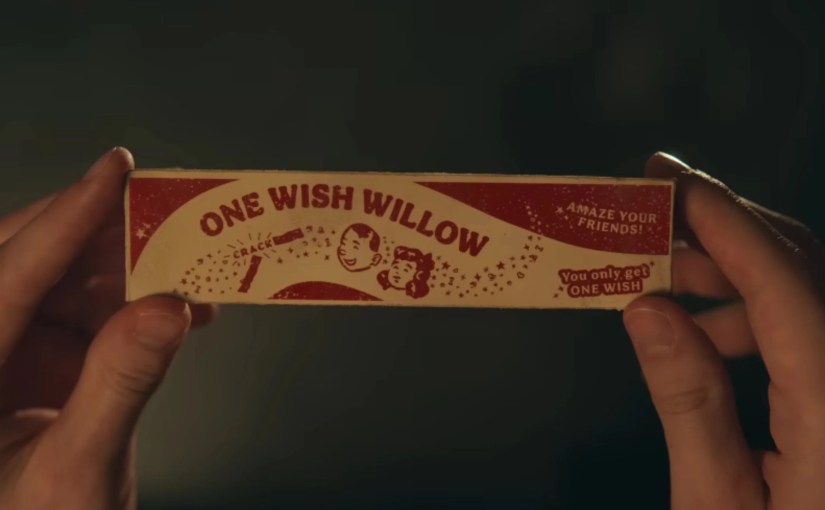
Barker directs his script that covers a shy and geeky twenty something kid named Bear (Michael Johnston) who lacks the gumption to profess his love for his co-worker Nikki (Inde Navarrette).  He enters an unusual charm shop looking for a token of his affection for her and comes upon a novelty item called a “One Wish Willow.”  Take it out of the box, make a wish, snap it in half.  

Bear still can’t find the words to talk to happy go lucky Nikki, but he uses the opportunity to make his own wish. Instantly, things take effect and Nikki develops an unexpected attraction to Bear that surprises him and their friends.  Yet, the fondness Nikki has seems to enhance with extreme oddity while gradually becoming terribly unhealthy.  Bear loves this instant attention, but he’s got to set some boundaries that he and Nikki should abide.  If only Nikki could understand, but she cannot help but whine about her extreme wants and desires, and when I say whine, I mean WHIIIIIIINE!!!!!!  However, a wish is a wish.

Like most horror movies, a supernatural entity or monster drives the threat.  In slasher schlock, the horny, teenage would-be victims run and cry while Jason or Michael pursue them with a machete.  They can’t be reasoned with because they don’t speak.  They only hack and chop and bloodlet.  Nikki functions on personality disorders that run wild.  You can talk to Nikki, and she’ll smile and nod and lovingly agree, but it may not be enough.  Nor it will not contain other abnormal behaviors.  Bear can try leaving for work in the morning.  The door is right in front of him and Nikki is only wishing he has the best day ever, but what has Nikki done to the door???? Anyway, she’s packed him a delicious lunch.  

The first ten minutes of Obsession are a bit of a chore to get through.  I did not think the characters were carved out well at the start and Barker directs and writes Johnston’s character, Bear, with an excessive amount of stuttering and bashfulness while not allowing much to happen with Nikki.  Yet, once the wish is made every moment of the rest of this film performs with dread, shock and surprising uneasiness.  

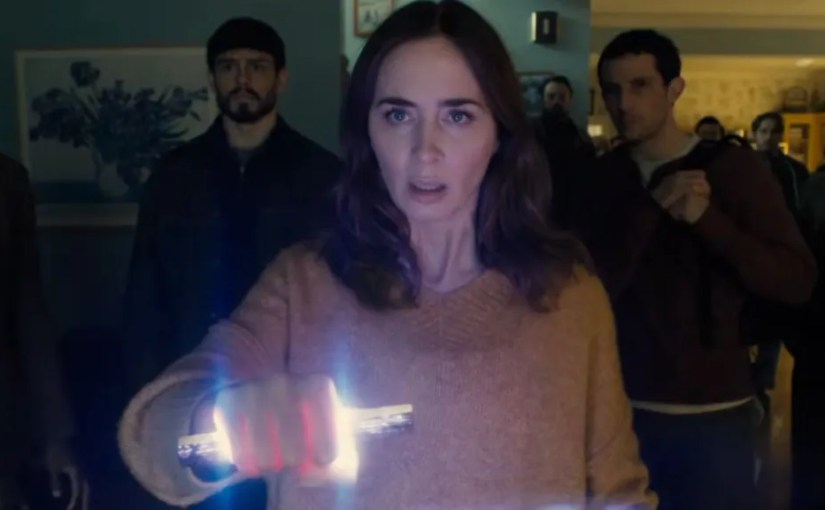
Barker finds simple ways to shoot Inde Navarrette in silhouette from the neck up with darkness in the background.  Her eyes will then illuminate through black.  Unusual body language on the far side of the bedroom implies that something is amiss.  Navarrette is a superb character actress who can shape shift facial expressions and maintain concentrated stares as well as Jim Carrey.  Barker holds his camera on Navarrette for long close up takes that make you feel awkward, nervous and scared.  She has an ability to work with her dimpled cheshire cat smiles and EXTREME frowny faces that quietly scream abnormality.  This is an astonishing introduction for a developing new actress capable of doing heavy drama and broad comedy.  I would not be surprised if the Farrelly brothers or Judd Apatow seek her out for their notable raunch/riot fests.  Momentum of awards consideration for her performance is building and rightly so.  Inde Navarrette is as compelling and strong as recent Oscar winner Mikey Maddison in Anora.  Between Emily Blunt (Disclosure Day), Rachel McAdams (Send Help) and Inde Navarrette, actress categories for this year could consist of horror/sci fi contenders, making it hard to single out one from the other.  

Michael Johnston gets better as Barker’s script carries on.  His character is not meant for great accomplishments, and the actor is quite good at showing helplessness with limited intellect and instinct.  I imagine this fresh faced actor is much smarter and wittier than the craft of his character.  At least, Barker’s writing gets stronger with this dweeb after the first few pages of the screenplay.

Obsession works like a disturbed antithesis to an animated Disney movie, and reinvents the deal with the devil motif.  I read that the writer/director recruited his father to write a monologue for possessed Nikki that references the Grimm elements of Hansel & Gretel.  It’s no wonder that story about the children who are lured into an enticing gingerbread house is rarely adapted.  Inde Navarette beautifully captures your fear as Barker allows her all the time in the world to express Nikki’s descriptive, yet nonsensical, mindset.

The suspense in Obsession holds through the entire course of the movie and I was asking simple questions to resolve Bear’s dilemma.  Eventually Curry Barker logically offers satisfying answers.  He abides by the rules of his supernatural fiction and doesn’t cheat the audience with a quick escape plan or a Hail Mary invention to wrap up his hanging threads.  Jump scares consistently serve the story, with one especially pulpy and unforgettable moment that should leave you screaming with horror and laughter.  This new filmmaker has thought everything out with dark and murky photography and a shrilling assembly of sound meant to chaotically startle you.  Again, everything technically found in this picture, made on shoestring budget, effectively builds and enhances the story.  The whole of everyone’s crafts and specialties show beautifully.

I saw Obsession a week ago and have not stopped thinking about it since.  

Try to see this in theaters.  It deserves your attention with a great surround sound system inside the darkest viewing arena you can find.  The more crowded the theater is the better the experience should be.  

Obsession is one of the best pictures of the year.  

DISCLOSURE DAY

By Marc S. Sanders

A day before I saw Steven Spielberg’s latest sci-fi project, Disclosure Day, I witnessed the aftermath celebration of the New York Knicks’ NBA championship win.  People of New York City took to the streets to celebrate.  By and large it appeared jubilant, loud and celebratory.  However, to no surprise, there was a faction of miscreants who used this momentous occasion as an opportunity for property damage and chaos.  School buses and police cars were destroyed and burned while fists and flames happily flailed in the air.  Sixty-Five people were arrested. You can easily find all of the footage online because our present age allows us to witness every action of newsworthiness.  This was a response to a basketball championship, fifty-three years in the making; my whole lifetime thus far.  I’m happy for the Knicks and their fans, though I could care less.  I don’t watch basketball.  Comparing this to the end of Spielberg’s new film, I’m skeptical the real-life response would be as similar and inspiring as the film’s breathtaking, epic conclusion.

Disclosure Day is seeped in government conspiracy and the revelation of extra-terrestrial life discovered on Earth.  Spielberg’s concept was shaped into a screenplay by David Koepp and it hinges on many of the same story beats that Close Encounters Of The Third Kind delivered.  A few different walks of life suddenly find themselves on the run while an antagonistic entity will go to great lengths to censor or eliminate these individuals before reaching their end goal and destination.

Josh O’Connor is who we first meet as a young scientist named Daniel Kellner.  He seems to have arrived from a prior film because he carries a MacGuffin in his backpack after escaping from a clandestine organization headed by a sinister Englishman named Noah Scanlon played by Colin Firth. Noah urges Daniel to handle the item he carries delicately.  The slightest amount of pressure could be dire.

Funnily enough, we first see Daniel under duress as he sits in the stands at a violent, caged match wrestling competition.  This film was released two days before Donald Trump’s absurdly notorious UFC event on the White House lawn.  Assembly in barbarianism.  I dunno.  Just seems too ironic when you witness the ease of this film’s wrap up on an opposing end of the spectrum.  Watch the film and perhaps you’ll understand the sad irony.

Jane is Daniel’s girlfriend, played by Eve Hewson (daughter of U2’s Bono).  She was once studying to be a nun and as she learns more about Daniel’s drive, she questions her faith and the validity of religion, particularly Christianity.  I like this angle the same way I appreciated it in Robert Zemekis’ Contact.  Has God created life elsewhere in this endless environment we call the universe?  Heck, I’ve always wondered why there were never two dinosaurs boarding the ark ahead of the great flood.  Is the bible THE BIBLE?  Cuz if so, where’s the T-Rex?

Elsewhere, a cheerful and manic meteorologist named Margaret Fairchild (Emily Blunt, who is now a front runner for an Oscar), broadcasting locally out of Kansas City, Missouri, is suddenly exhibiting a variety of strange phenomena following the arrival of a cardinal who lands on her kitchen table.  She can read the minds of people she encounters and can fluently speak any foreign language including Russian, Korean and an indescribable clucking/chirping dialect just before fainting on live television.  From there, all she knows is that she must find a way to hit the road and drive.  Where?  Even she doesn’t know.

An ominous phone call from a man named Hugo (Coleman Domingo, one of my favorite character actors) tries to comfort a terrified Margaret as he insists she make the trip to see him.  Hugo has also filled Daniel in on Margaret’s experience.  Whatever these men know, they now have assurance that what they must share with the world has to happen now.  Margaret is the last remaining piece of the puzzle.  Jane and Margaret’s boyfriend Jackson (Wyatt Russell) are the skeptics.

There’s a lot to recognize in Disclosure Day.  Yet, the mystery of why we are running with these characters and what secrets they carry feels positively fresh and captivating.  When the wrap up arrives, I’m exhilarated and I want to know more, and see as much as possible.  Across the fictional globe of Spielberg and Koepp’s story with an apparent Cold War threat on the horizon, no one standing in front of a cell phone or television can look away and therefore I yearn for a united response as imagined here.  

Chatting with Miguel after the film we both wonder what would truly happen.  Sadly, radicalism would factor and pillaging would abound.  It’s part of human nature to resist one another and push against campaigns.  After all, it happens following presidential elections and sporting victories.  A newly released podcast with Spielberg discussing Stanley Kubrick informs that the eccentric director filmed the first landing on the moon.  Has to be true apparently because 2001: A Space Odyssey was released a whole year before that historic moment.  Right? PEOPLE PLEASE!!!!

Within the confines of this story, the unheard-of revelations display an assembled united response.  Not likely. Nevertheless, I’m not complaining.  For now, this is science-fiction.  Talk to me in a hundred years and perhaps Close Encounters… and Disclosure Day will be prophetic, like Network is for reality TV and modern-day journalism.  The real question, based on the harshness of mankind, will it always be a fantasy? Sadly, I think I know the answer.  Optimism can only go so far.

So, there’s a lot to think about, and Disclosure Day captured me quite emotionally with fear and curiosity.  It’s been a while since I was so deeply interested in the direction a movie was taking me.  I recognized the tropes of Spielberg and all the Twilight Zone stimuli, but I was also wise enough not to read or view much advance press for this movie.    

Beyond the enigmas, this is a superb and thrilling adventure.  Spielberg directs action scenes that feel newly inventive.  You have seen heroes stuck in a car on the tracks with the train bearing down on them.  However, in Steven Spielberg’s hands this feels new and exhilarating.  I was literally slamming my hand on the armrest as this blaring centerpiece prolongs. This scene alone earns accolades in visual effects, stunt work, editing, cinematography, and sound editing.

Another moment shows a random extra zapping out of existence when he picks up a significant prop.  The audience I was seated with gasped with complete shock.  Steven Spielberg always finds a way to incorporate his visuals with the means to advance the story.  He threatens me with props.  He stuns with sight and sound like few directors can offer. He uses another original score from John Williams to build and uphold tension with atmospheric lens flares and bold, dark hues from his resident cinematographer, Janusz Kaminski (Oscar winner for Schindler’s List).

The cast is doing superb work here. My wife, a big fan of The Devil Wears Prada, saw the sequel just three weeks prior and somehow didn’t recognize Emily Blunt in this picture.  It lends to how well the actress hides behind a mid-western American accent with a character buried in startled confusion.  Margaret’s special talents come through seamlessly as she diverts from speaking English to Russian and Korean without dropping a beat.  Blunt interacts with nearly every extra that appears on screen to demonstrate her character’s special talents, and each exchange appears unique from the rest.  She exhibits a wealth of tempos.  Blunt serves as another way the film’s mysteries unravel.  Soon, she might have all the answers to share.

Josh O’Connor is quite good as the running man and shares an effective chemistry of nerves with Eve Hewson.  Colin Firth makes a welcome return as a determined villain.  Initially, he comes off as the man with a drive of no compromise to stop the hero.  His antagonism shows in expressions of pain and great lengths he executes while maintaining a pursuit.  Later, he provides weakness and passion in his quest.  Coleman Domingo is reminiscent of Francois Truffaut from Spielberg’s first alien exploration. He’s the man who knows answers exist. He’s the lynchpin to how everything fits into place.  A man who tells the principal characters to operate on blind faith while he prepares for their arrival.  All of these actors enhance the dialogue of Koepp’s script with intrigue and engaging drama.

Disclosure Day is a wonderful experience of suspense with a passionate hunger for curiosity.  Though it all looks familiar, the film grabbed me on a personal level. It is fondly reminiscent when my twelve-year-old self would happily escape from government agents on my bicycle or find solace in the elements of a popular tune from a Walt Disney picture.  This movie convinced me that whatever answers are out there, they are valuable enough to uncover by even leaving your loved ones behind and trusting a calm, unfamiliar voice or an innocent, indescribable creature to lead you to a salvation.  

Is this fiction?  Not to me.

About the only thing that doesn’t seem real is when people stop what they’re doing to watch and listen together.  Once again, though, Steven Spielberg gives you hope.

FIVE EASY PIECES

By Marc S. Sanders

Some films simply focus on the internal struggle of a character.  There might side component figures, but those are not fully formed because they exist to shape the main character we are directed to observe.  In Taxi Driver, Paul Schrader and Martin Scorsese scrounge up several people from a seedy New York City underbelly to intrude upon the life of isolated and angry Travis Bickle, the Vietnam war veteran.  All walks of life enter his cab and leave it.  Travis sums up the various individuals by his own twisted meter.  Some he’ll follow.  Some he’ll abandon.  Eventually, he’ll even protect someone vulnerable to the salacious world he occupies.  

Bobby Dupea, played with heartbreaking brilliance by Jack Nicholson, the main character of Bob Rafelson’s Five Easy Pieces, journeys down a similar path.  However, he’d be apt to abandon everyone.  One problem is he can’t escape from himself.  He could leave his personal jacket behind in a restroom and face a bitter cold, but he’ll never be able to shed his own skin.  

Bobby lives with an airhead hick waitress named Reyette (Karen Black in an Oscar nominated role), but he doesn’t value her.  He cheats and boozes around with the next dingbat woman who approaches him in the local bowling alley (Sally Struthers). Whatever is currently in Bobby’s life is one more chapter that’s left behind as a means to gain further mileage away from where he originates.  It’s hard to comprehend how Bobby, a young man with the potential to be a celebrated concert pianist, could flee from a past and dwell within a mundane life as a worker in a California oil field.  Otherwise, all he’s doing is bowling and drinking at night with his buddy Elton (Billy Green Bush) while never thinking about Reyette. Bobby is a problematic guy, never wanting to challenge complexities in relationships or advance his gifts of talent.  Bobby Dupea is never destined for self-comfort or pleasure.

Carole Eastman’s script, with input from Rafelson, examines what I believe many people are too proud or reluctant to admit.  Try as they might they cannot come to grips with the life handed to them, albeit with extraordinary talent or simplicity.  Reyette is happier to be a greasy spoon waitress with a penchant to sing the songs of Tammy Wynette.  Bobby has so much more potential but he’s that much more unsatisfied than Reyette.  

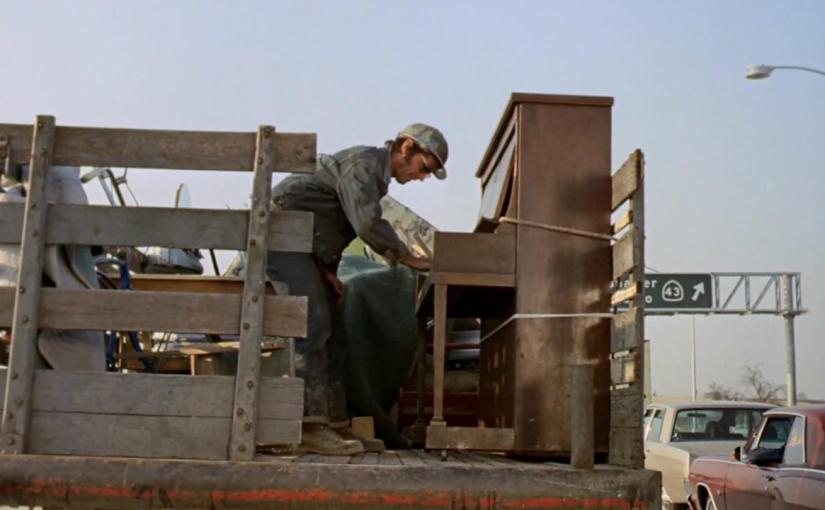
Often within the film there are visual allegories to Bobby’s struggle.  He nurses a bottle of booze while driving on the freeway with Elton.  Traffic is at a standstill.  No one is going anywhere.  There’s no escape, and about the only action anyone can take in this stationary position is to honk their horns with intolerable impatience.  Bobby can’t even settle for that, however.  He storms out of the driver seat to wail at the other cars.  When he sees an old piano resting on a moving truck, he climbs aboard and starts to play.  Nicholson’s body language doesn’t show a man at peace with the instrument though.  Bobby appears like a crazed madman using the piano as a means to drown out the bellows of the automobiles and he does not even show care when the truck exits the freeway leaving Elton far behind.  Bobby Dupea has no sense of direction.  

Elton has a child with his wife and there’s a moment where he displays his paternal affection.  Elton possesses value for someone.  Bobby, however, is beyond feeling.  Reyette tries to hold on to Bobby and find purpose in a life with him.  She’s uneducated and uncultured in art.  Yet, she’s ready to bowl with Bobby and accompany him in life.  Bobby is only content, never happy, unless he’s frustrated with her.  She gutters the ball down the lane all night and only on the last round does she finally get a strike?  Why should Bobby celebrate?  The strike was for naught.

When Bobby’s sister tells him that their father has suffered a stroke leaving him handicapped and mute, he’s conflicted about making the drive to Washington state to see him.  It’s a return to a life he could never find comfort in despite the musical talent he earned from a lineage of artists.  The people who live there are eccentric and maybe too philosophical. There’s nothing there that Bobby finds enriching.  He certainly doesn’t maintain a relationship with his father.  Yet, he decides to make the drive up the coastline by almost making a clean getaway from Reyette who he reluctantly welcomes to tag along.  Now he’s trapped in a car with someone he feels he has to be with but never wants to be around.  How does he resolve his dilemma? He picks up two women stuck on the side of the rode, only to find one uniquely irritating by harping on the filth of the environment as she attempts an escape to the apparent purity of Alaska.  Bobby knows this woman won’t find her utopian salvation, just as he will never get there either.

Bobby fights against standards.  The well-known diner scene (one of my favorites in all of movies) has him revolting against a server’s adherence to menu policy with a crass comment directed at her followed by a chaotic clearance of the drinking glasses on the table.  This man can’t decide what makes him happy, but he also cannot endure the tolerance of how others live in this world.  Nothing offers salvation for him.

At the Washington home, he comes across a student named Catherine (Susan Anspach) who is married to a dweebish fellow – a violinist with a sprained neck.  Catherine appreciates Bobby’s calm interpretation of playing Chopin, but she knows she cannot go further than that with him.  Bobby can’t confound her reasoning.  The answer for Bobby has always been to leave everything behind.  Why can’t Catherine do the same?

He also can’t find a way to connect with his father.  His sister assures him that dad can hear him, but the bearded expression stays the same and the best that Bobby can do is say he can’t stay in anything he’s at.  The monologue that Jack Nicholson performs to his mute father is such a departure from so many of his other crazed roles peppered within his body of work.  This is a weak man; a man who can deliver an endless number of communicative notes on the piano but cannot find the words to express himself, because he’s at a loss of what to say and uncover what he wants. His devices leave him to either rage or let it be, or maybe it’s best if he leaves.

Bob Rafelson’s choices for this film must be praised.  For a film about a pianist, there’s more selections from the twangy tunes of Tammy Wynette than there are from the piano.  Quite a contrast of Midwest country music against the eloquence of classical pieces that the main character was raised on.  

When Bobby finally sits to play Chopin for Catherine, you never actually see Nicholson play the piano.  Rafelson turns his camera away from Nicholson to pan over the various photographs hanging on the walls of the room. The long ancestry of the Dupea family is shown.  Yet, because there is no passion from Bobby, there is nothing to see. Rafelson never shows Bobby’s hands touching the keys.  When he boards that truck to play while sitting in traffic, Rafelson shoots Nicholson from the car positioned behind the truck.  The camera never boards the truck with Bobby.  I don’t recall ever seeing even a glimpse of eighty-eight keys during the entirety of the film.  The piano haunts Bobby Dupea.  It never compliments him.

Five Easy Pieces arrived after Jack Nicholson’s scene stealing comedy in Easy Rider demonstrated how well the famed actor could carry a picture.  This guy was a dynamo.  He could be loud and brash on the back of a motorcycle, or he could evoke crazed lunacy through outbursts or torturous, quiet solitude.  Nicholson’s performances are magnetic because he uses his fellow actors to enhance his characterizations.  Actors like Karen Black, Billy Green Bush and Susan Anspaugh serve as sounding boards for Bobby’s struggles.  Other than the monologued confession that he delivers to his father, all others aid Nicholson to convey his assortment of frustrations in scene after scene.  

With an astute vision from Bob Rafelson, the director effectively shares how Jack Nicholson’s Bobby Dupea knows nothing is as simple as the five easy pieces beginners use to learn to play the piano.  

Once a master, but always enslaved.

SEND HELP

By Marc S. Sanders

The best way to get back at your boss?  I guess you could hope for the slim possibility of surviving a plane crash with him. Then he has no choice but to surrender to your survival instincts on a desert island off the coast of Thailand.  That might deliver a more effective act of vengeance than bad mouthing him online or deleting a promising report that could advance his Fortune 500 company into greater profitability.

In Sam Raimi’s latest horror/slapstick adventure, it’s a blessing for the mousy computer nerd known as Linda Liddle (great name for Rachel McAdams’ character) that she didn’t end up in a skyscraper with twenty terrorists on Christmas Eve.  She likely would not have been as resourceful as she is within the dense jungles of an island populated by wild boar, bugs, and assorted feastings with conch and berries.  Linda is a huge fan of Survivor.  She even went as far as submitting an audition tape demonstrating her abilities to live off of the outdoor elements. She didn’t get on the show, but her efforts are about to pay off.

Bradley (Dylan O’Brien) is now her boss after inheriting the position from his deceased father.  He’s a chauvinistic and conniving jerk.  He disregards Linda and overlooks her for a deserved promotion following seven years of accomplished desk work under dad’s leadership.  The frat buddy who’s only been with the company for six months, and steals credit for Linda’s hard work, cuts in line.

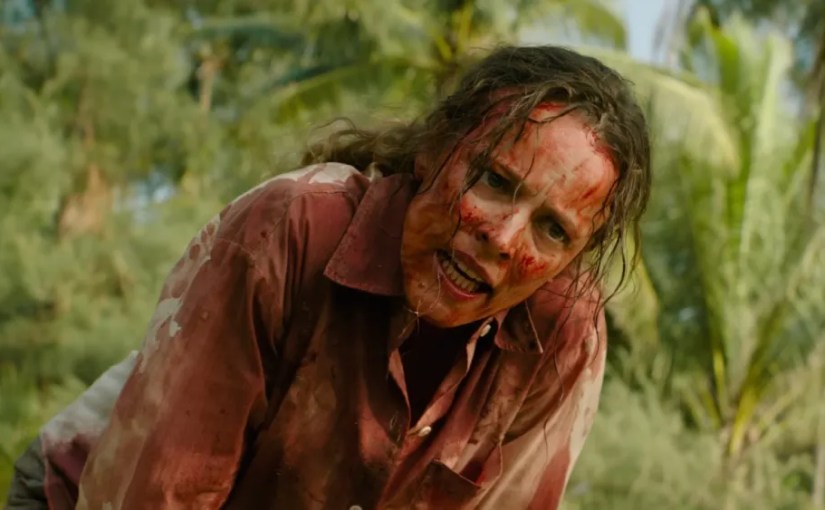
A business trip aboard a private jet nosedives into the ocean leaving only Linda and Bradley as the washed up survivors.  He has a badly injured leg and no knowledge of working in the outdoors.  On the other hand, Linda quickly builds a fire and shelter while also rummaging for various sources of food and water, including a bloody hunt for wild boar.  

From this point, Sam Raimi has lots of fun with his signature scare jumps and zoom-ins to startle you, prompting screams of laughter like you did when you saw Evil Dead and Drag Me To Hell.  This thriller veers down paths least explored. A premise like this could never occur so conveniently in real life, but I had a blast watching Send Help, particularly because this bonkers script from Damian Shannon and Mark Swift can never, ever be trusted.   With Raimi as director, these guys rely on your expectations that stemmed from a million other pictures like The Blue Lagoon or Castaway.   Though I was surprised not to hear a single reference to Tarzan or Gilligan’s Island.  Standard romance and crazed killer material has hardly ever been served up like it is here. The creators of Send Help manipulate you with fresh and shocking ideas.

Bravo to Rachel McAdams, the marquee actress listed above the title, for braving a tremendous, completely unglamorous role. She is stunning at going against type.  She presents a clumsy, insecure outcast with no fashion sense and an ugly mop of a mess of hair.  She’s even got a hideous looking zit on her cheek.  Mean Girl Regina George would have a field day tormenting poor Linda.  This script gives the actress so much to do.  An incredible monologue at the midway point leans towards the twisty ending, but also allows for an illustrious recollection, on an intense level comparable to Quint’s USS Indianapolis anecdote from Jaws.  McAdams is truly one of the most unsung actresses working today.  Just a skilled performer with a wide berth of range and no two of her characters ever look the same.  In Send Help, she’s offering hard hitting drama and suspense as well as ridiculous comedy.  She goes to limits that Jack Nicholson and Gene Hackman provided during their careers. Rachel McAdams is the second coming of Kathy Bates from Misery

Dylan O’Brien is a new actor for me. He’s a perfect cad, with a silver spoon of privilege wedged deep down in his throat.  You hate this bastard he plays right from the start bringing what sounds like a ho hum script to alert life.  Against McAdams, there are echoes of Michael Douglas and Kathleen Turner in both Romancing The Stone and The War Of The Roses. This new couple go to both extremes of those opposite sides of a romantic face off.

Sam Raimi builds a playground for these pawns to roam around in where they get poisoned, vomited on, attacked, splattered with blood, and put in various stages of peril. He’s almost playing a board game as he uses Linda and Bradley to spell out the rules and boundaries that must be observed while they wait to be rescued. To win will mean they either work together or go against each other.  

Send Help veers in so many different directions that it’s nothing but outlandish fun where you ask what could possibly happen next.  You think you’ve seen this movie a dozen times before, but then it is daring enough to invent its own twists.  With only a cast of two you’re conflicted by who you should root for.  This story is completely expansive in imagination, and daring in execution.

Having recently seen Backrooms, I applauded the idea, but I frowned on a stapled conclusion that settles for the monster chasing the poor victim.  Send Help breaks conventions set up in the first half.  It was such a pleasure to not have everything figured out, where the filmmakers took me on a ride far beyond a merry go round.  The scenario is implausible, but the character instincts and circumstances are marvelously intelligent, compelling and totally surprising.

This might be on my top ten list for 2026. 

MASTERS OF THE UNIVERSE (2026)

By Marc S. Sanders

You should never expect much from a movie about a hero who calls himself He-Man and allies with guys known as Ram Man and Fisto.  If you are demanding too much, it’s not the movie.  It’s you. 

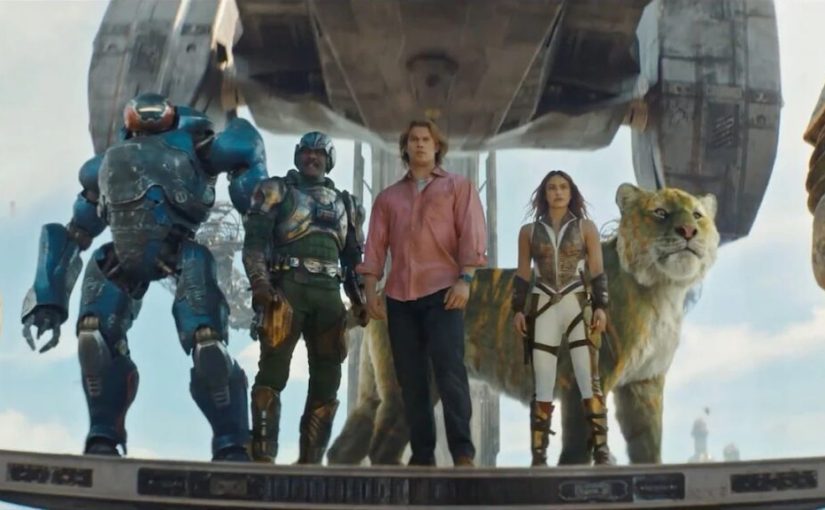
Based on the famous Mattel toy line and after school cartoon of the 1980s, an updated cinematic interpretation of Masters Of The Universe arrives in theaters.  It’s fun, designed for all ages and is proudly self-deprecating and stupid.  I mean all of this as a compliment.  The MacGuffin is the well-known power sword.  Why does the villain, Skeletor, want possession of the weapon and control over all of Eternia?  Teela, the warrior goddess, played by Camila Mendes sums it up perfectly.  “He’s bad!” 

Okay, then!

Director Travis Knight clearly wants to salute all of the action figures and animated episodes that never weighed heavily into drama and concluded with a valuable lesson.  Prince Adam, who is destined to be He-Man, the most powerful man in the universe, is never mired in unbearable anguish like Bruce Wayne or Peter Parker.  This invented fiction has the powerful Sorceress of Castle Greyskull (Morena Baccarin) sending young Adam to Earth after Skeletor and his minions besiege Eternia. He’s played by Jared Leto, who you’d never recognize behind an effective hooded skull head with beady red eyes.

On Earth, Adam (Nicholas Galitzine) is separated from the power sword, and years go by where he is relegated to a dead-end cubicle job.  He hopelessly searches for the item online while reminiscing of where he came from.  Shortly after he finds the sword, a beast of a man attacks him on the city streets and then he’s escorted back to Eternia by Teela.  Once Adam is caught up with everything that’s occurred in his absence, he must find a way to wield his sword so that he can be transformed into the heroic He-Man and rescue Eternia back from the clutches of the vile Skeletor.

Masters Of The Universe never hesitates to poke fun at itself. Skeletor delivers an evil laugh and when no one joins in, he whines about it.  He exacts his frustrations with his underlings but it equates to terminology on a nincompoop level.  Sidekick Evil Lyn (Allison Brie dressed bewitchingly) offers up apologies but she never gets slinky and sly like Michelle Pfeffer would. 

You just gotta laugh at all of this.  Either that or walk out and see the Brendan Frasier WWII film Pressure in the theater next door.  This fantasy is especially designed for its longtime fans and the children they passed their toys and playsets down to.  It is unfair to expect anything more.

Idris Elba is here as mentor Man At Arms.  He’s doing comedy. Elba is not trying very hard because nothing in this script demands impactful dialogue or emotions.  At best, he’s a depressed, hungover drunk who has lost his way.  That’s fine.

Camila Mendes does the best work of the bunch.  She looks primed for a promising career, and I would not be surprised if she earns her own action franchise one day. 

Nicholas Galitzine is likable but he’s not effectively dorky enough with the part.  It could be because he’s not as strong an actor as a Chris Hemsworth or a Channing Tatum.  At the start of their careers, they would have taken this material further.  Galitzine is fine but not as talented or endearing as those other guys.  His physique does not promise a “He-Man” either.  He’s not tall enough. He’s too petite to be the actual He-Man – the MOST POWERFUL MAN IN THE UNIVERSE.  It’s forgivable but it could have been better, stronger, and more imposing.

The designs in makeup, costumes and set pieces are wonderous.  The vehicles make sense for fantasy and look familiar enough for the toy collectors. The names of people like Trap Jaw, Tri-Klops and Moss Man, earned by the appearance of these silly warriors and the aesthetics, all work nicely.  Eternia is not as breathtaking as Thor’s Asgard, but there’s plenty to take in. Castle Greyskull is not as colorful as the memorable toy but it’s a giant of a structure. I would have liked to explore more of it actually. Have the drawbridge come down. Show me the trap door in the floor.  Skeletor’s lair, Snake Mountain, is magnificent and brooding. This might all be CGI, but the designs are magnificent. More features from both well-known settings would have been welcome though. When you see the internals of the Death Star in Star Wars, you see how things operate. The lairs of Eternia needed more of this.

Masters Of The Universe is a fun romp.  The film could have been at least a half hour shorter in run time by offering a little less on Adam finding his self-identity and purpose.  When the adolescence of this movie attempts to get in touch with its feelings, the movie (not the story because there isn’t a story) drifts. Try all you want, but I will not take any of this seriously.  So, abandon all the heaviness.  It does not work.  Some lines have a little sexual innuendo. Forgive it. Remember, there are characters named Ram Man and Fisto!!!! To ignore that would have been a disservice.

Travis Knight keeps the movie engaging when he circles back to the various battles and ships and swords and laser guns and silly Loony Tunes dialogue.  You realize this when dorky Adam raises the sword and declares “BY THE POWER OF GREYSKULL…” Every time that happened, a kid sitting in front of me raised both fists in the air, blocking my view for a second. I did not mind one bit. Masters Of The Universe touched someone.

Go see it.  It’s fun!

ENEMY (2013)

by Miguel E. Rodriguez

DIRECTOR: Denis Villeneuve
CAST: Jake Gyllenhaal, Mélanie Laurent, Isabella Rossellini
MY RATING: 8/10
ROTTEN TOMATOMETER: 72%

PLOT: A humdrum history professor seeks out his exact look-alike after spotting him in a movie.


Enemy is like a Twilight Zone episode written by David Lynch, and directed by Paul Thomas Anderson. The best thing about it: it kept me guessing right up until the hair-raising, goosebump-inducing final image. The worst thing about it: TOO MANY QUESTIONS LEFT UNANSWERED.

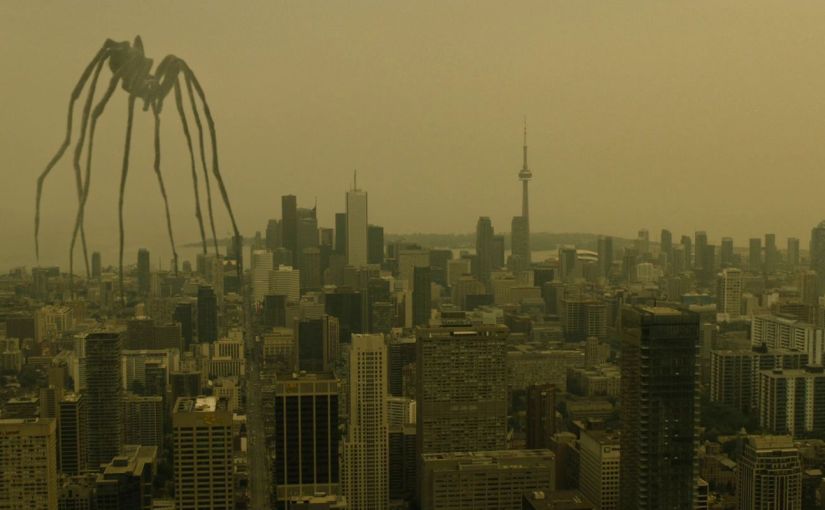
A surreal opening sequence involving a high-roller peepshow and a live spider sets the tone for this mysterious mystery full of mysteries. The premise is immediately captivating, at least for me: what would you do if you spotted your double in a film you’re watching? Not just a very close look-alike, your EXACT double, your doppelganger. How would you react? What would you think? Long lost brother? Insane coincidence?

Jake Gyllenhaal plays Adam, the man who is watching a movie and unexpectedly sees himself in a movie he’s rented. He tracks the actor down, calls him up. The actor, Anthony, is skeptical. Adam’s nervousness about the whole endeavor doesn’t help his case any. Anthony eventually wants to meet. What would you SAY to your double? How would you act? It’s all extremely intriguing.

Director Villeneuve paints the screen with images in pallid browns and beiges. City skylines are seen against murky, muddy, cloudless skies. Adam’s entire wardrobe seems to consist of white shirts, brown pants, and a brown sportscoat. Not really a spring man, apparently. There may be a reason for these color choices, there always is, but I’ll be jiggered if I can figure out what it is, aside from the effect it had of making everything feel…sludgy. To what end? No idea.

There are periodic shots or sequences recalling the peepshow from the opening sequence, and I’m not sure what THOSE are supposed to mean. It seems fairly obvious at first that it must have been Anthony, the actor, seen in the crowd at the beginning, even though we don’t know it yet. But, if that’s true, why is ADAM dreaming about it? Another weird touch: Anthony likes blueberries. Adam visits his mother, who tries to give him blueberries; he says he doesn’t like them, but his mother insists he does. A current of fear coils and slithers under the surface of this movie like a snake hiding under a rock, waiting for nightfall.

What’s going on here? Is Adam gaslighting HIMSELF? The movie is VERY cagey for a while, because the “Shyamalan” factor comes into play: what if they’re both the same person? For a while, the film never shows the two men together in the same shot, so the question hangs in the air. Even when we DO see them in the same shot, I found myself thinking: “Well, ‘Fight Club’ had them both in the same shot, and look what happened THERE.”

I won’t reveal the precise nature of what’s going on, because, at this point, I’m still not sure I understand it all myself. I can say that it kept me interested the whole way through, but it didn’t answer questions I really, REALLY wanted answers to. (No, I don’t require that all movies answer every question. The reason I love movies like “Prometheus” and “Under the Skin” is specifically BECAUSE a lot goes unanswered. But this one left me wanting more.)

And then there’s that last, completely out-of-left-field, borderline repellent final shot. What the HELL does it mean? Do these two men share a common psyche, separated only by physical distance? Is it intended ONLY to shock, with no real meaning? It worked on the level of shock, but upon reflection, I still can’t fathom its meaning.

So. If you Netflix this movie, give it a whirl. You’ll be captivated. You’ll be intrigued. It works on that level EXTREMELY well. Just don’t expect everything to be wrapped up in a nice bundle. This movie is designed to be discussed and debated afterwards.

BACKROOMS

By Marc S. Sanders

I just learned that a twenty-year-old kid named Kane Parsons was approached by studio A24 to turn his online experimental videos of quiet, empty stillness into a cinematic feature of bottomless madness.  The movie is Backrooms, the sleeper hit of 2026, and it is reminiscent of the unexpected impact The Blair Witch Project had back in 1999 when young filmmakers were inventive enough to rely on hand held cameras to obscure what an audience will see while also being convincing enough to ensure everyone was aware of an abnormal and haunting situation.  Backrooms works, but not as well as Blair Witch or Paranormal Activity, both of which offered intriguing exposition for the thinkers. 

A dated video tape from June, 1990 introduces an opening sequence that is entirely disorienting within an empty and seemingly endless office space blanketed in yellow wallpaper with the ear-worming hums of fluorescent ceiling lights.  Our guide is a terrified young man with a handheld video camera who is hopelessly lost within this labyrinthine maze of no escape.  There are odd placements of props, signage and furniture. Doors lead from one room to another, but there does not seem to be a final destination in sight.

I accurately predicted the “Juke Joint” of Sinners would eventually make it to Universal’s Halloween Horror Nights.  Well, it’s likely we will soon be invited to roam the terrifying office maze of Backrooms

Chiwetel Ejiofor is Clark, the owner/manager of Captain Clark’s Ottoman Empire.  He’s also the infamous pirate mascot who promises “No Credit. No Hassles,” at this furniture store that sells a large inventory of stools, sofas, beds and lazy boy furniture.  The kind of crap you’d find in waiting rooms or model homes.  The stuff looks cheaply crafted and easily affordable, but also easily unwanted.  He also lives in the store following a bitter divorce caused by a violent temper and a drinking problem teetering on excess.  

Clark regularly visits Mary (Renate Reinsve, Oscar nominee for Sentimental Value), a therapist and the author of a collection of cassette tapes to help people compartmentalize their personal problems.  These self-help tapes can be yours if you call the 800 number on your screen now. Operators are standing by!! Mary is dealing with her own personal trauma, which I was not entirely clear on.

Effective horror will usually leave you a little shattered while you reflect on what you just witnessed.  Essentially, horror is dark fantasy with a handful of hanging threads that depend on you tying them together long after you have left the theater.  As our main characters uncover a portal in the downstairs showroom of Clark’s furniture store, Backrooms depends upon how your mind regularly struggles with memories and personal pains. The residual imagery of what used to be right in front of you might appear a little distorted and even a little more the next time you recollect. Do I sound vague? Well, isn’t that what you expect from a horror movie?

Initially, Clark literally walks through a wall into what feels like another dimension – this labyrinth of lemon colored office space.  Nonsensical piles of furniture are discovered. Some objects are partially absorbed into the floors, walls and ceilings.  There’s even a STOP sign standing upright?!?!?!?  It’s funny that Clark mentions earlier how he wanted to be an architect and yet this strange dimensional world makes little sense from a geometric perspective.  Walls move uphill.  There are tiny doors.  Tunnels are discovered.  Sloping floors into darkness spark curiosity.  There are also narrow hallways.  A swimming pool? A musical cardboard cutout? To mess with our auditory system, random noises or nonsensical music chimes in at times. Dirty laundry is found with a repugnant smell. Amidst that pile of clothes might even be a familiar t-shirt.

Why?

A lot of what is seen is never explained and that’s okay.  This film is comprised partly of shaky, crackling handheld camera material, and standard shooting to aid with exposition and character development. I had recollections of story beats from the TV show Lost and films like The ShiningThe Cell and of course The Blair Witch Project and Paranormal Activity.  Even a moment from Willy Wonka And The Chocolate Factory came to mind.  (“Oh, you can’t go back.  You have to go forward to go back.”) 

I have never played Minecraft. What little I know makes me consider if this young director, now the youngest to ever have a film earn over $100 million at the box office, branched his storytelling ideas off of what he might have constructed in Minecraft, or some similar kind of software.

I went into Backrooms knowing nothing about the film.  I had not seen a trailer, commercial or read anything about it.  I knew only to expect some disturbing suspense.  The film starts out that way, and while I was as curious as Clark and Mary to cover more ground within this devoid maze, I started to become too relaxed with the picture.  I guess because there was not enough to uncover.  As plain as Kane Parsons’ bright environment of nothingness intends to be, I think it quickly exhausts itself of invention. 

The last third of the film starts to offer more than a series of blank walls.  Tangible evidence of what strings are being pulled present themselves. Unfortunately, Backrooms bottoms out into a tired “monster pursuing the victim” narrative.  I’ve seen too much of that, and while I won’t spoil the creature of this feature, the imagery looks like something yanked a show airing on the Cartoon Network at three in the morning.

Kane Parsons’ best work presents itself when he’s demonstrating the possibilities for why this discovered dimension offers obscurities.  His film begins to shred apart though when he needs to tell his story and table the showmanship.  

Backrooms will be a much better and more effective movie when I reluctantly walk through it at Halloween Horror Nights.