THE MANDALORIAN AND THE GROGU

By Marc S. Sanders

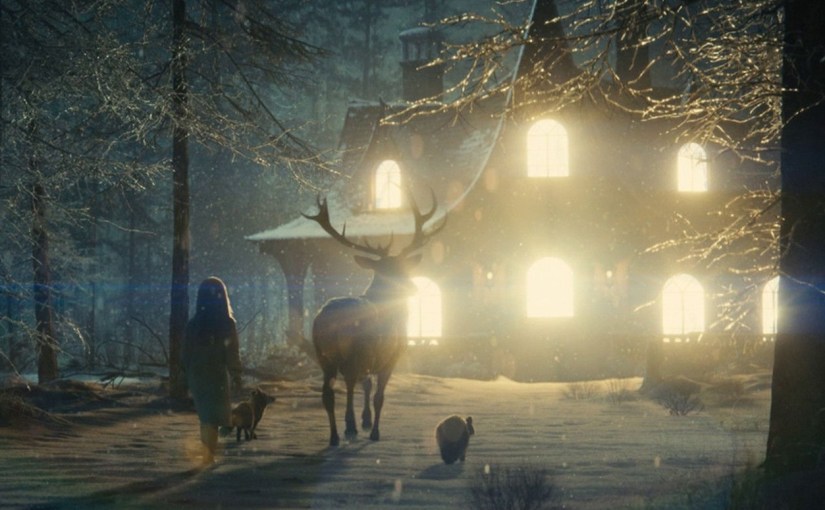
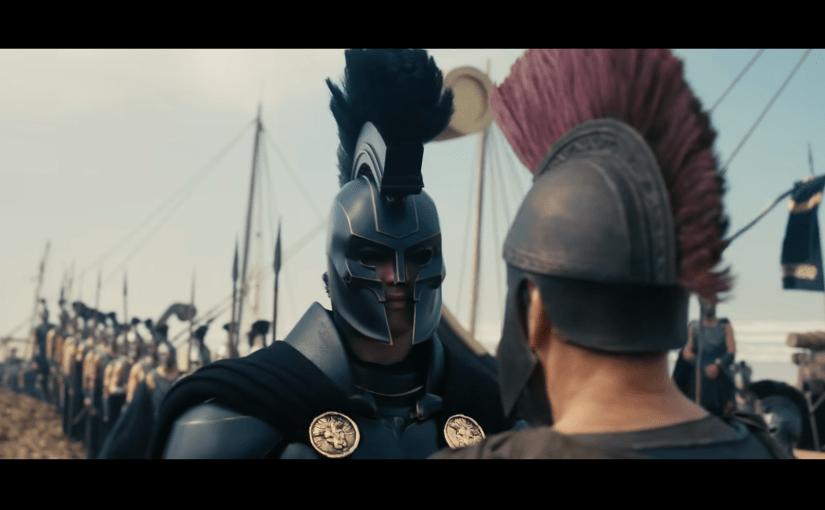
The Mandalorian And The Grogu is an absolutely fun, rollicking adventure with no demands to overthink or criticize.  The film that is spun off from the hit Disney + show more than serves its purpose to just entertain.  It does not require much background knowledge from other Star Wars properties, and it allows anyone to watch the movie without ever seeing an episode of The Mandalorian

The armored Mandalorian (Pedro Pascal) roams the galaxy with his little friend Grogu, the “baby Yoda” as many have monikered him, who bears force like levitating powers.  Together, they operate as independent contractors, or bounty hunters, primarily for the New Republic. 

Following a thrilling pre-credits opening complete with snow covered Imperial walkers and plenty of shootouts and explosive fireballs, X-Wing Pilot Colonel Ward (Sigourney Weaver) assigns them to first settle a deal with a pair of Hutt gangster twins who want to reunite with Rodda The Hutt (Jeremy Allen White), their nephew and Jabba’s son.  In exchange, they will provide information on the whereabouts of a rouge Imperial commander.  Mando is ready to abide by the plan even if it means participating in a thrilling gladiator match with Rodda on a neon city planet that looks like the futuristic earth of Blade Runner.  Alas, Mando goes off script. That’s when the gangsters respond unfavorably allowing episodic and combative thrills to uphold this new creation from sci-fi geek loving writer/director Jon Favreau (Elf, the Iron Man films). 

I will not deny that the material of this movie released wide for theaters is not a large step above any of the episodes found on streaming TV.  It does not get weighty in lore and mythical revelations. As well, some fans and keyboard warriors are more than happy to declare Star Wars as “dead” and disappointing and misguided and so on.  Nevertheless, so what?  Find another studio other than Disney that invests so much into sustaining the classic looks and feels of George Lucas’ galaxy from a long time ago in a galaxy far, far away, his “used universe” inspired by classic westerns with Asian influences.  The Stormtroopers of fifty years ago remain.  The ships look beaten up, dented and stained, with the exception of Mando’s newly awarded Razor Crest vehicle, sleek with yellow trim.  Mando and Grogu have that familiar look descending from the classic characters of Boba Fett and Yoda.  The blasters are part of the same family we all know.  So are the droids and cantinas and electronics and set designs. 

I’ve always been a die-hard Star Wars fan.  It has influenced my preferences for storytelling with imagination and invention.  I will not deny that my wish was that this new film was going to delve deeper into the myth of its title characters, especially the lovable Grogu with his baby talk expressions and puppy dog eyes.  I still feel like there is more mystery to uncover about the little fella and while he’s given a lot to do here, I want more from him than just the hop around jumps and waddles he performs in most action scenes.  As best that I can recall, only two other characters in the Star Wars universe bear a resemblance to him.  Where does Grogu come from and why is he so valued to other interested parties that the Mandalorian has had to contend with? 

Unlike most of the Star Trek films, this film does not take advantage of going for big revelations.  Perhaps that is wise so general audiences can enjoy the picture.  Think about it, you can’t necessarily follow along with some of the Marvel and Harry Potter films if you just jump right in the middle of them.  The fact that The Mandalorian And Grogu does not hinge too heavily on what’s come before allows a creative freedom to just make a new adventure.

Jon Favreau set up fantastic scenes of action and excitement with an array of unusual monsters and aliens.  My favorite is the pearl-colored Dragon Snake located beneath a trap door.  It is actually inspired by original artist Ralph McQuarrie who designed much of the original Star Wars trilogy and this creature is a nasty bugger, complete with long fangs, a wide-open maw and a long flexible body.

I really like the Mandalorian side story of this vast universe.  Clint Eastwood’s “Man With No Name” and other westerns clearly inspire the character.  He’s a loner who roams the galaxy’s Outer Rim surviving from job to job.  Even his house originally found on the third season of the TV show bears a similar resemblance to Eastwood’s William Munny’s farmhouse in Unforgiven.  His cape is reminiscent of Eastwood’s poncho in the Dollars trilogy.  Neither character talks much and their distressed earth-toned color schemes are similar.  Maybe I’m sounding a little too personal about this but as a lover of both Eastwood and the original Boba Fett mythos, Favreau’s creation is a brilliantly welcome combination.

Star Wars always works best when the unexpected occurs and Jon Favreau with his co-writer and modern day imagineer Dave Filoni deliver plenty of surprises. There are some fun Easter eggs to uncover for fans of the whole franchise and even collectors of the original vintage Kenner produced toy line.  Because so much was known of what was to come following George Lucas’ prequel trilogy, those films were somewhat paint by number.  This lone story, however, does not rely on what is known to occur at later times in the expansive story cycle of the galaxy. Therefore, it’s not limited by any boundaries.

The soundtrack is an orchestral variety that’s far from the familiar strings and horns of John Williams.  That’s a wise choice as it serves the western motif of these characters and the missions they follow.  Three-time Oscar winning composer Ludwig Göransson crafts a fantasy concert come to life within a Tolkien landscape.  Some numbers feel techno electronic.  Other pieces have a quiet, mysterious aura that complements the mask and body language of The Mandalorian. Newer material completes the expositions of new characters that may be friendly or demand caution upon approach.  All good, consistent stuff that tells a selection of stories.

Some of the dialogue is clunky.  Rodda The Hutt is a little corny in a pre-teen kid kind of way, but he’s also a hellava wrestler with his wormlike physicality.  Very creative fun with his visual designs and movements.  Jabba was lazily resigned to his throne room platform as a clear inspiration of Brando’s Vito Corleone (great stuff).  His son Rodda, flexes muscles, wields weapons and swiftly goes all over the place. 

A purple teddy bear-like guy called Zeb (Steve Blum) from the various animated Star Wars series is a likable comrade co-pilot for the heroes.  (Actually, McQuarrie’s initial concept for Chewbacca.) Like Rodda, he talks like he’s from a Saturday morning cartoon.  That’s okay though.  He’s fun for the kids.

Sigourney Weaver is not given anything to do and per her talents and legendary status with the Alien and Avatar franchises, I would not have minded if she had more impact to the simple story.  I mean this is Sigourney “Ripley” Weaver we are talking about. 

At least Martin Scorsese returns a favor to Favreau (The Wolf Of Wall Street) as a panicky hot dog street vendor with multiple arms and his signature bushy eyebrows. He’s fun.

What I was anticipating from this cinematic adventure is not all here but that did not hinder an exciting time at the movies again.  This Star Wars installment may be simplistic in its storytelling, but all of the images and thrilling action scenes feel fresh while also appearing familiar. That’s a wonderful balance.  It’s not a perfect film and yet I still loved my time with the whole experience, especially on IMAX.

The Mandalorian And Grogu might look just as good as any one of the TV show’s episodes on your flat screen at home, but this movie is so worth seeing with a cheering crowd in a darkened theatre and an immersive, booming audio system. The colors and sounds justify why going to the movies remains vital for our escapes into visual imagination.  Treat yourself to Star Wars again, where it serves its purpose best.  Go to the movies!!!!  You’ll be smiling for over two hours straight, and even on your drive home. 

This Is The Way!


THE DEVIL WEARS PRADA/THE DEVIL WEARS PRADA 2

By Marc S. Sanders

I love when a movie can teach me about an industry.  Network and Broadcast News dive deep into television news.  Boogie Nights lends a sneaky and empathetic eye to the porn industry.  The Big Short explores the pains of mortgage lending and investments.  Spotlight reveals unwelcome truths within the Catholic Church by way of the press.  The Devil Wears Prada offers brilliant wit that often will leave you uncomfortable while emphasizing the importance of high-end fashion at its centrally located heart in New York City.

I recall watching an episode of Judge Judy.  The cranky magistrate was making light over the dispute between two comic book collectors.  The Incredible Hulk #181, which features the introduction of Wolverine (famously played by Hugh Jackman in the movies).  Judy Scheindlin could not fathom the need for an argument over this item, nor how a mint first edition copy could demand an asking price in excess of $5,000.  The best scene in The Devil Wears Prada parallels this circumstance as the new temp assistant, Andy Sachs (Anne Hathaway in her forever breakaway leading role) scoffs at a meeting run by the infamous Miranda Priestly (Meryl Streep in probably her most memorable performance).  

An underling cannot decide which of two blue belts complement a new outfit.  Andy just doesn’t understand “this stuff.”  Miranda uses her response as a means to explain the purpose a fashion meeting stretches far beyond a belt selection.  The reason they are standing there is detrimental to the outcome of tens of thousands of jobs and a blue sweater is never just a blue sweater.  In fact, Crayola, in case you didn’t know, Andy’s sweater is cerulean.  Cerulean is never just blue, just as a particular Marvel Comic Book is never just 60 cent magazine you roll up and buy at the candy store.

It’s during this moment that director David Frankel provides a visual demonstration. A dress is not a dress without a belt.  A dress and belt are nothing without a jacket.  A dress, a belt and a jacket are not necessarily enough without a hat.  A process is assembled.  

I know Prada was a book first (which I’ve yet to read), but how better to show why the visual medium of film is so vital to exploring what many of us may never be familiar with?  Just as you might not comprehend the importance of the comic book industry, I do not have an appreciation for the fashion industry, but the people who work under Miranda Priestly’s Runway magazine better do so because it represents a “beacon of hope” for millions of women, aspiring designers, and industrialists worldwide.  The items on display may have asking prices in the thousands, but they dictate what all of us wear casually and formally and how affordable all “this stuff” is for our respective demographics.

Andy is a twenty-something Northwestern graduate striving to become a successful journalist in the city.  To make ends meet with her live-in boyfriend Nate (a miscast Adrian Grenier, looking like Hathaway’s little brother despite the midnight shadow), she accepts a temp offer to be second assistant for Miranda Priestley, the devil of this film’s title.  

The first assistant is Emily (Emily Blunt in her breakout role), a nervous and low tolerant British trainer for Andy.  Emily gets twenty minutes for lunch and the prospect of accompanying Miranda for fashion week in Paris.  Andy gets fifteen minutes, and if she’s lucky an invitation to a hideous skirt convention.  Andy is also a size 6, which is now the new 14.  Seriously, what is Andy doing here?

Nigel (Stanley Tucci, who should have been Oscar nominated for this performance) is the top fashion selector keeping up with trends that Miranda will support and approve in the Runway catalogue.  

Miranda, Emily and Nigel – they might as well be speaking a foreign language to Andy.  Perhaps that should be vice versa?

The Devil Wears Prada is a best-selling novel by Lauren Weisberger inspired by her experiences in the Andy role when she worked for Anna Wintour, the famed editor in chief of Vogue. Weisberger’s story lacks a mentor for the novice.  Andy has no choice but to find her way through the endless challenges of meeting insurmountable expectations while trying to balance a personal relationship and friendships as she holds out for a prized opportunity in journalism.  Working for Miranda Priestley or Anna Wintour and living to talk about it can only open doors to some of the most esteemed publications out there.  

The characters of this film, standing on the heels of comedy, are sketched beautifully with genuine realism.  Meryl Streep is so focused on being a demanding, unrelenting, quietly intolerant heathen who knows her job better than anyone.  She is the toughest and most intimidating. Yet, there is no denying she never stops reading the pulse of updated trends and fashion sense.  Miranda knows every significant designer and clothing manufacturer the world over.  If a brand needs to break through, they must know Miranda Priestly and only hope to earn her attention.  Success is earned especially by affiliation with Runway.  Miranda never tumbles from the mountain she stands upon while so few can even intrude within her shadow.  It goes further when you see Streep enter any room, building or show in the entire film.  She doesn’t belong in the settings.  Rather the settings race to surround her.  

I also recognize the expanse of the script by exposing this ultimate power’s concealed weakness.  A late scene in the film goes against the familiar current of Streep’s character and the actress pulls it off with utter heartbreak.  How often do we get to feel sorry for the villain?  Miranda is stripped of confidence, makeup, and fashion, simply at a loss to just be as human as those beneath her.  It’s a shocking and beautifully written scene that Streep shares with Hathaway, devoid of any other kind of familiar armor.

It’s important that Anne Hathaway runs with a looser and more scattered persona.  Andy must be so much more than just opposite of Miranda.  For this story to work, the two women cannot even communicate in the same way or ever share similar perspectives.  Andy has to fail if she is to succeed.  How can anyone be expected to fly Miranda out of south Florida during a hurricane?  How can anyone obtain a copy of the unpublished manuscript of the latest Harry Potter novel? To keep from drowning in any line of work you have to absorb yourself in its environment.  Function with its nature.  The crux of the film is observing if Andy can follow through.

A spin off film focusing on Stanley Tucci’s character would absolutely work.  Nigel comes off like a sidekick, but with a few choice pieces of dialogue.  In a third act revelation, the film paints the picture of Nigel as an endearing sore thumb in a home he was completely uncommon with while growing up.  Tucci plays this man of confidence and knowledge under the radar.  A friend to Andy while never being so overt.  The impression seems quite obvious that Nigel is gay, but his career is his main priority. The argument has come up that only homosexual actors should play gay characters.  Stanley Tucci’s performance is the best, most assured response to turn off that debate.  (He’s married to Emily Blunt’s sister.) How he dresses, walks, talks and carries himself through every scene demonstrates a man of expertise who lives above any prejudice.  He lends purpose to high end fashion, and his service builds the confidence of women who are meant to have power and authority. 

Emily Blunt is the antagonist to Andy but her panicked hysteria is also the comedy found in the film.  Anything Andy considers is unheard of in Emily’s eyes. While Miranda is short on words, Emily exposes how fearful this devil truly is ranging from pouring a glass of Perrier to hanging a coat in the correct closet.  

David Frankel assembles this film with energy.  I especially love the filler montages that start at the opening credits and drive the transitions of the story.  He captures Andy, the lovable ugly duckling, in contrast to every model attired woman making a career for themselves in New York and it works to show how much a fish out of water she is.  Later, after Nigel delivers a complete makeover to desperately hopeless Andy, a new montage of seamless edits has Hathaway’s character walking with utter confidence and determination.  Frankel applies sweeping edits showing Andy walking behind a city bus or building, reemerging on the other side in another fitting outfit of color and vibrancy.  All of these moments define the world of The Devil Wears Prada.  Frankel truly creates a darling visual masterpiece.

The Devil Wears Prada focuses on career opportunities and building poise in a niched industry that is constantly evolving while never waiting for the troops to catch up with the fleet.  It studies the interactions that not only occur in an office but beyond, with high end social gatherings where the best of the best must be caught up with people’s personal dramas while circumventing around competitors who look to reign and cut throats.  Designers intersect with publishers and writers, and we see the back-and-forth responses, especially when the acerbic Miranda frowns at a presentation.  Someone with power and influence has the means of success or failure for the next person who comes through a door.  

As the film moves past its exposition, Andy, the protagonist, is ready to be tested.  I might be describing a fantasy, unfamiliar to any of us, but David Frankel and Lauren Weisberger, with an adapted screenplay by Aline Brosh McKenna, choose to take every bar or gallery or on-site location seriously.  Because they go in a direction where morals, ethics and loyalties can be probed and embraced by an audience.  Personal values and priorities can be questioned either at home, in the field or in the office.  

The Devil Wears Prada goes beyond the clothes these people wear.  Its story justifies why these four primary characters adorn themselves in the garb selected for them, allowing them to command or earn authority.

The newly released sequel, The Devil Wears Prada 2, demonstrates that after twenty years much of the environments and practices of the original are outdated though the world of fashion is unmistakably necessary.  In a post Me Too era where the internet makes the world so much smaller, the industries of journalism and clothing design do not feel as global and exotic.  A tyrant dressed in Prada cannot be so demanding.  She must rely upon herself, and not so much her underlings to get her Starbucks or hang up her coat.  Flying coach, not even first class, might make for a good gag, but…well…that might be pushing it.  Yet, this latest installment offers good ideas and inventive challenges for Miranda Priestly to contend with.

Elsewhere, Andy Sachs might be a well recognized, award winning journalist but with print and article submissions becoming extinct at the mercy of second to second social media news, it’s never enough to hold on to a job.

Runway is in trouble for being associated with sweatshop practices overseas.  Miranda is the scapegoat.  That’s about all you see of that problem because it’s important to speed along to Andy and Miranda working together again.  The writer is quickly recruited for an image repair of the famed magazine and its editor.

Even though the sequel follows similar beats to its predecessor, there are an overabundance of narratives, and they are scattered brained.  It begins with the blemish to Runway’s reputation, then on to getting the gang back together again.  These episodes quickly fix themselves and now the magazine becomes an affected constituent to corporate controls and seizures for the remainder of the film.

Side dishes are too overloaded as well with an unwelcome romance storyline for the career driven Andy.  This bit screams of a producer insisting that Anne Hathaway have a love interest.  Never have the scenes with Hathaway and actor Patrick Bramell, as a high end city property owner, felt like opportunistic bathroom breaks.  

Andy is also given a peer to cope with by the name of Mack (I had to look up the name) played by Larry Mitchell. He wears a Yankees cap. Otherwise, what is he doing here?  Other than Hathaway, he does not share a scene with any other cast member, and he’s there for Andy to commiserate with.  Couldn’t moments like these be shared with Nigel or Emily?  It would only strengthen the script and the appearance of the four returning principal characters. Tracie Thoms makes a welcome return as Andy’s art gallery friend.  Additional moments with her seem inviting but not relied upon.

Kenneth Branagh is here to cash a paycheck as Miranda’s new husband.  I don’t think Meryl Streep ever makes eye contact with him.  The famed, Oscar winning actor/director/writer only serves as a reactionary post for Streep.  Again, a producer who wanted to feel relevant likely insisted that Miranda have a love interest.

These elements are disappointing to me.  Often we see the leading man drive through a career without the need for family or relationships.  Especially in the world of The Devil Wears Prada, where women are never held back from achieving their goals, why are these two self made ladies of influence anchored to answering to a man in their life? There’s enough material to further their fulfillments without these useless characters.

Emily Blunt returns with nothing to do as well.  Even with a twist, that serves no surprise to her character as the stuck-up Emily, she steps into Miranda and Andy’s paths when the film has to wind down with a last button to push.  She’s also wasted in dumbed down tryst with an airhead played by Justin Theroux. This accomplished actor who has an impressive line of work, deserves better.  With practically nothing to do, Blunt should have insisted on a rewrite because her character has become entirely unappealing.

BJ Novack (actor and writer of The Office) does okay with what the script deals to him as oil to water antagonist for Streep’s role.  Yet, he’s also an unnecessary new character; one which could have been covered by Blunt’s character.  

Stanley Tucci is also not given much to do.  However, the new film is wise not to experiment with new angles for Nigel.  What works should be upheld.  It was smart just to let this supporting character remain as is.  Tucci is always wonderful and the film lights up when it circles back to him.

I’ve heard some are disappointed with deviations applied to the Miranda character.  In the first film, she truly is the one you love to hate.  Here, Meryl Streep is ready to respond to a change of climate and thus, Miranda is not as free to be the uncompromising slave driver while also revealing some genuine feelings.  This is the best part of The Devil Wears Prada 2.  It exposes the humanity of a notoriously cold person.  Yet, a wiser choice would have been to dismiss the Branagh character and have Miranda share moments with her twin daughters briefly touched on in the first film but never mentioned here.

Though I never cared for Adrian Grenier in the role of Andy’s boyfriend Nate, the first film leaves open possibilities for their relationship to survive.  Nate was a budding chef which on principle opens a lot of doors for the Prada world. The new iteration could have circled back to Nate being requested to cater one of the many events that occurs in this film, even when the story diverts to Miranda’s Hampton getaway.  Instead, a forgettable guy fills that void for Andy’s perspective.  What was to gain from that?

I was skeptical a follow up movie would work.  Prada doesn’t demand new adventures like Indiana Jones or Batman.  Yet, the new film offers a lot of potential to apply Miranda and Andy to a new internet culture of harassment boundaries to contend with two decades after they first met.  A lot of good seeds left about in the first film are abandoned in lieu of newly irrelevant material and characters.  Had The Devil Wears Prada 2 condensed its ideas the pace and drive would have been much more novel and adorably reminiscent at the same time.  Alas, it’s a size 14 when it should be a size 6.  The Blu Ray release should have a special edition that excises all of this unwanted fabric and size up a dress that’s more sleek and form fitting.  

STAY IN THE CAR

By Marc S. Sanders

Calvin Ghaznavi directs a seven-and-a-half-minute short film called, Stay In The Car, that’s long on tension while limited on dialogue.  

Not much needs to be said to understand that a fifteen-year-old girl named Salem (Lara Hunter) is alert, yet terrified, while being left to her own abandon in the front seat of an El Camino.  It’s the middle of the night and her strung out mother (Ashley Alva) is on a mission with a stranger (Timothy V Murphy) sitting in the passenger side.  The title of this of this picture tells us what Salem is instructed to do.  The conflict is if Salem will oblige.  

Amanda Ross was inspired to write this haunting anecdote based on a real life experience.  Lara Hunter is her real life daughter reenacting the scenario.  Hunter’s expressions of fear and confusion are striking.  We only know so much as what she sees.  Perhaps Salem will become a witness brought in for questioning about this night where her mother and this stranger visited a hotel and returned with a bloody wrench.  At another stop, one less person returns to the car.  That’s all Salem knows.  That’s all we know.  

Ghazvani is very focused on primarily providing close ups.  We don’t know how the adults know one another or what they are striving for.  We don’t get to see the back seat of the car, or where it’s traveling to next.  All we know is that Salem likely relies on teenage fun like wearing colorful wristbands. The hula dancing ornament on the dashboard doesn’t belong in this scenario either. It was there from another time; maybe Salem and mom picked it up at novelty store during a happier time. It’s convincing that Salem does not belong in a tense filled situation like this.  Salem’s normality has suddenly turned nightmarish.

Stay In The Car does not so much explain a story as it offers a perspective where a child is submerged in a circumstance of darkness, wet roads, violent aftermaths, distant sirens and overwhelming uncertainty. Ghaznavi and Ross should expand on the seeds of what they’ve created.  There’s potential for a thrilling and thought-provoking story at play.  What happened before Salem (or Amanda) stayed in the car?  What happened afterwards?  With less than eight minutes to see for myself, I’m dying to know more.

MELANIA

By Marc S. Sanders

Self-absorption is an expense of time for the outsiders looking in.  At an hour and forty-one minutes, the time I spent to watch Melania Trump’s documentary, Melania, was a terrible cost.  

The First Lady’s exploration of herself covers her personal experiences in the twenty days before the second inauguration of President Donald J Trump on January 20, 2025.  Frankly, after the movie kicks off with a needle drop of The Rolling Stones’ Gimme Shelter (a favorite of mine), the mundane slugs on an endless runway.  

Brett Ratner, the director who nearly destroyed the celebrated X-Men franchise and delivered too many Rush Hour films, covers Mrs. Trump walking in slow motion…a lot…like way, way, way too much.  The first five minutes, even after the credits have finished, show Melania walk down hallways, step into elevators, step out of elevators and walk down more hallways into parking garages adorned with Trump campaign posters (great art direction) to get into a limousine that takes her to the airport to board a corporate Trump plane. Then we get to see her stride down the middle aisle that divides impeccable white leather, upholstered chairs.  It’s like…MELANIA IS REALLY DOING ALL THESE THINGS.  And I get to see it???? Me??? Really???

She’s a rock star or a superhero or perhaps she is simply MELANIA, because no one else could ever be THE MELANIA.

The main subject explains in monotone voiceover how she wants to cover the time she invests as a philanthropist and businesswoman in the days leading up to the inauguration.  So, we get right to the important things first like deciding if her evening gown is tight enough around her waist and neck, and if the lapels on her suit need to be bigger.  Hopefully, the designer can alter the collar on her white blouse.  Plus, how should the shoulders look?  There’s much to talk about.  So, Ratner is wise enough to return to these pressing topics later when Melania single-handedly decides that the white band around her infamous lampshade hat, worn on Inauguration Day, is not narrow enough.  Business! Philanthropy!

Staged interviews with young ladies looking to earn a position as Melanie’s personal assistant are weaved into the picture.  I learned that the job is simply not 9-to-5 work.  

I cannot say I’m a fan of Melania Trump.  I do not think I’ve been a fan of any First Lady.  I don’t know much about any of them.  Though I was impressed when Arnold, Dudley and Mr. Drummond got to meet Nancy Reagan on Diff’rent Strokes with her Just Say No campaign.  Reader, as an eleven year old it had an impact on me.  It was straightforward, simple and to the point. Plus, she was friends with Mr. T.  So, job well done Mrs. Reagan!  Now, I was curious what could I gain from our current First Lady.  Here was her opportunity to show us her very best.  

Melania does a zoom call with the First Lady of France to declare her push for her Be Best campaign.  The logo is written in blue crayon font.  It’s cute.  It’s eye catching and I never learn anything about it.  I’m guessing it is aimed at children, but what is it precisely doing to benefit children?  What tactics are being planned? What’s being executed?  What events are taking place?  Will Melania at least go to the Kids Choice Awards and get a pie in the face on Nickelodeon?  C’mon Melania!  Do it in the name of Be Best.

The most admirable moment in this self-described documentary is when Melania gets a visit from Aviva Siegel, an Israeli kidnap survivor from the Hamas attacks on October 7.  She wears a shirt that shows an image of her husband Keith who was still in captivity at the time of this filming.  This scene occupies about three and a half minutes of the entire movie.  Aviva is welcomed to cry on camera while Melania’s profile is shot from across the sofa in a New York high-rise apartment.  Melania doesn’t cry, doesn’t quiver, doesn’t ask a single question that I can recall serves any kind of consequence.  Yet, the one-time fashion model complements Aviva’s shirt and how it looks on the poor woman.  No promises or assurances are made in this brief moment.  They sit on a grey sofa.  Not a bed.  So, don’t expect bedside manners.

On to the party planning for the inauguration dinners and celebrations plus more wardrobe insight customized exclusively for the First Lady.  My wife watches reality shows showing home decor and reconstruction.  My parents would watch Lifestyles Of The Rich & Famous during the decadent 1980s.  What those programs accomplish that Ratner and Trump do not are the whys and hows.  Why did this millionaire need that kind curtain.  What drew them to those colors and patterns.  Why call the yacht this particular name, and so on. Melania simply goes for the gold trim in the napkins and tableware.  

She loves fashion designer Hervé Pierre’s evening gown, white with a black zig zag of fabric down the front and a high slit at the leg.  Now, let me tell you.  This is a dress!!!! It’s gorgeous and she looks gorgeous wearing it on the evening of January 20, 2025.  Yet, for a film that devotes so much to this object how about telling me something about the inspiration for the design.  If you’re going to invest so much into this piece of craftsmanship, then at least go deeper than having the woman literally look at herself in a mirror.

As the film is winding down a part of the country is on burning uncontrollably.  The California wildfires that displaced so many people were happening ahead of Trump’s inauguration.  Melania takes it upon herself to sit cross legged on a leather sofa in her ready room in front of a flat screen to watch the happenings unfold on FOX News.  An expensive piece of artwork dangles behind her head.  Her voiceover tells us that her heart breaks while Ratner gets close ups of her stunning blue eyes adorned in perfectly coifed mascara.  It’s ridiculous how hollow this looks.  An absence of emotion and sincerity.  You could have avoided making so light of this terrible period by just not having her reflect at all.  Melania is generous, however.  She allows her heart to break.

The First Lady’s husband makes appearances insisting to his wife that he won in landslides across various states.  We see him test one of his staffers who is unable to explain why championship sports are scheduled on the same day as the inauguration.  Is this anything that anyone can learn from?  Brett Ratner arguably has access to most of what the Trump staff and family can extend, and this is a nothing piece of nothing.

Melania mentions how her loving mother passed away a year prior and how she ran a fashion business that inspired her daughter to follow a similar path.  Where and when was this business in operation?  What was the name of it? The son in law Donald tells us that they loved her very much and she was a hell of a woman.  Melania’s dad will reside at The White House.  What else can we know?

Barron is Melania’s son with Donald.  He never speaks.  He’s shot from a distance. Never shows affection for mom and dad, but mom hopes he chooses a path that makes him happy.  Finally, a parent admits it!!!  

Melania’s attempt at bi-partisan openness has her attending Jimmy Carter’s funeral.  I’ll say he’s one of the worst Presidents in American history.  However, his philanthropic work following his service is second to none.  Unquestionably, a good soul.  Melania cannot even say that.  Brett Ratner is not insightful enough to prompt the First Lady for a few words about Carter’s contributions.  

Towards the end of the film, portraits of Jackie Kennedy, Eleanor Roosevelt and Mamie Eisenhower are shared.  Why?  I dunno.  I guess I’m supposed to gather that Melania Trump carries on a legacy.  Do Melania or Melania or these filmmakers know the specific contributions of Mrs. Kennedy, Mrs. Roosevelt and Mrs.  Eisenhower, and what they personally mean to them?  Truly, I can’t say off the top of my head.  However, I’m not a First Lady making a movie about myself or my esteemed position.  So, tell me what it means to you.  Allow me to learn more than how your hat or your suit or your gown should look on you.  

Be Best? How?  

Homes are burning?  Anything you gonna do about it?  

A husband remains missing?  Is there someone you can call?  I mean I’m aware of the obstacles that come with politics and international affairs, but maybe this worried wife could gain from prayer with a Rabbi and you by her side.  

I’m never expecting Melania Trump to singlehandedly fix the world.  All I’m asking for is what she declared herself to be.  A businesswoman and a philanthropist.  

Mrs. Trump is a Michael Jackson fan, and her favorite song is Billie Jean.  She barely flexes herself in the back of her limo to sing along.  So, I get it when that song comes on at the beginning of the film.  It might be the most genuine, insightful portrait of the whole documentary simply because it shows a small shred of natural humanity in the woman.  That being said, why open the movie with the Stones’ Gimme Shelter?  It’s gritty and gives me images of struggle, doom and grit.  A dirty, garage band kind of song.  The outer shell of Melania Trump is anything but a single riff or note of the Stones’ song. So why?  I guess because the rights to use the number must be expensive, and money is no object to this superhero’s fanbase.  The sacrifice this woman does from one outfit to another, from one limousine to another, from one estate to another.  

No!  Being First Lady is certainly not a 9 to 5 job.

Ratner concludes Melania by shooting his subject leaning on her fists against a glass table-topped desk for professional photos.  She looks like a superhero ready to take on the world.  Honestly, if Melania Trump were to enter a phone booth to change into her costume and don a cape, she wouldn’t be able to find the door to let herself out.  

FORGOTTEN FORTUNE

By Marc S. Sanders

Forgotten Fortune is a welcome film that brings attention to the unwelcome ailments of dementia/Alzheimer’s disease. Yet, what writer/director Esteban “Stevie” Fernandez Jr demonstrates is that a diagnosis does not end the value of life.

Brian Franks (Brian Shoop)  is a retired mailman.  One morning during one of his dementia induced walks, dressed in full uniform, he comes upon the aftermath of what looks to be a murder, committed by two men.  It’s hard for the local police and his adult children to believe his story though, considering his age and condition.

Only when clues are uncovered following the unexpected death of his best friend, Leo (Lou Ferrigno), does the reality of seeing these two men Brian insists on witnessing appear to convince everyone else.  Now it is up to Brian and his pal, Larry (Jimmie JJ Walker), to solve the mystery and catch the culprits.

Forgotten Fortune is produced with simplicity, not a lot of aggressive beats in suspense or action.  The attempts at humor want to go no further than PG rated material, with the most risqué beat stemming from someone peeing loudly while wired by the cops. 

Fernandez is interested in sending a message about how to live a new normal with the elderly in the family and he spices up his message with some adventure.  I appreciate the sensitivity devoted to dementia and Brian Shoop plays it well.  He’s likable as the straight man to this trio partnered with Walker and Ferrigno.  I do wish the undertaking relied more on the recognizable strengths of these fellows. 

Ferrigno, who I had the pleasure of meeting in person, is still the muscle man and he’s got comedic chops (The King Of Queens).  Jimmie Walker with his “dyn-o-mite” personality still transcends generations long after Good Times ended.  He might be pigeonholed to that role, but he owns it all by himself and no one can take that away.  These three guys are such an odd match up that there is real promise in blending their career defining histories together.  I wish Fernandez would have depended more on why these guys are truly beloved within the world of pop culture and their devoted fans. 

Forgotten Fortune stands out among a crowded assembly of films because of its focus on a very real and likely fate for many people.  Aging is the one thing that none of us can escape, and a large percentage of the world population experience the side effects of that situation.  Yet Alzheimer’s and dementia should not make any of us or our loved ones feel any less than what we once were.  Intelligence and instinct can remain and therefore trust and faith should be upheld.  That’s the forgotten fortune of this film.