12 YEARS A SLAVE

By Marc S. Sanders

I’m grateful for those brave filmmakers who defy what is so glaringly oppressive in order to uphold a truth.  Steven Spielberg accomplished this with Saving Private Ryan and especially Schindler’s List.  I own both films on 4K, but I’ve only watched them each a handful of times.  I recently completed my second watch of Steve McQueen’s 12 Years A Slave.  While Schindler may feel more personal to me as a Jewish person who has met several Holocaust survivors, McQueen’s movie is uncompromising in its cruelty to black people , recklessly referred to as n!gg@rs, being held as property within the southern antebellum confines of slavery during the mid 1800s just ahead of the Civil War.  It’s one thing to read about lynchings and whippings.  It’s another to see it visualized; to see the life being breathlessly taken from a human being.  Not a slave.  A human being.

From such an ugly period in American history, the isolated story of this film follows the North Eastern free black man Solomon Northrup (Chiwetel Ejiofor, giving the performance of his career – heartbreaking, smart, emotional, fearful and brave at the same time).  He is a happily married father of two who earns an honest trade as an entertaining violinist in a well to do upstate New York Community.  When his family leaves town for a few weeks, Solomon is approached by two happy, colorfully dressed charmers with top hats (Scoot McNairy, Taran Killam).  Solomon believes he is being recruited to perform for some events across state lines for a significant sum of money.  He’s wined and dined by the men for a few weeks.  However, following a lavish dinner among the three, he awakens to find himself in southern Georgia, chain shackled at his four limbs.  

Despite his protests, insisting he is a legal free man, he is slapped, screamed at and trudged along to Louisiana and sold to a wealthy Plantation owner (Benedict Cumberbatch), who is comparatively kinder than his property keeper (Paul Dano).  Dano especially stood out to me this time as I reflected on Quentin Tarantino’s regard for the character actor. I question if the director, infamous for tossing the n-word around in nearly all of his films, has even seen 12 Years A Slave and had an opportunity to observe Paul Dano’s appearance. Dano’s character is genuinely mean spirited and hateful with that southern redneck naive racism for the black man. It’s what is demanded of this piece. His performance cruelly teases the black slaves with a song that sounds like a nursery rhyme but chants like a horror film while his screams insist they clap along. McQueen is wise enough to edit Dano’s voiceover singing as the slaves are getting accustomed to the new property, they are forced to tend to and live upon. Later, Dano and Ejiofor will conflict with one another, and the scene is terrifying of what it implies will arrive. So, there’s my two cents on actor Paul Dano (also known for There Will Be Blood, The Batman, and Prisoners). I’ll throw two more cents around and ask Mr. Tarantino to go reflect on his meritless position on this fine actor.

This picture also features Paul Giamatti headlining a horrible scene, working like a car salesman as he slaps the naked physiques of Solomon and other black people. His purpose is to demonstrate the value and endurance of these “properties” for potential buyers.  The novelty of used car salesman tactics seemed to originate here.  With no regret, black children are torn away from a helpless, anguished mother.  McQueen with John Ridley’s Oscar winning adapted screenplay includes this scene to show how quickly a transition into slavehood occurs.  Solomon and many of these other folk were free moments ago.  Now, they are delivered off a boat and are being sold like cattle, to be used not just for work but for sexual appetites and playthings.

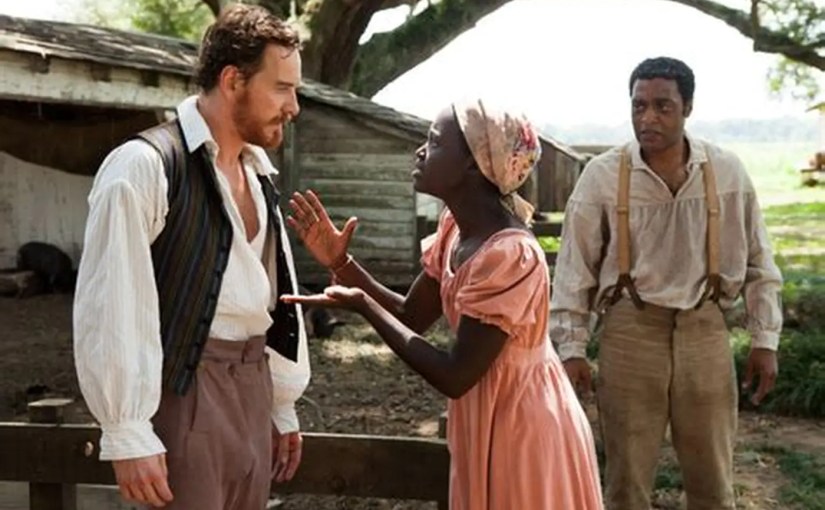
The second half of the story finds Solomon as a sold property slave of the viciously harsh Edwin Epps.  Michael Fassbender has never been more terrifying with intense rage that hides any other memorable performance in his impressive career.  He more than serves the antagonism of this film the same way that Ralph Fiennes did for Schindler’s List.  This is a monstrous individual.  Strong, oppressive, with no way to be endeared.  If he’s mad, for whatever reason, he’s going to be mad at his faultless slave workers who do nothing out of line and work solely to satisfy Edwin’s demands.

As the title implies, Solomon’s captivity carries on for twelve years with no access to his family or proper legal authority.  He also dare not reveal he can read or write, lest he will come up as a threat to those that violated his legal rights as a free northerner.  Solomon Northrup was always to remain trapped.  Even his talents with the violin are compromised as he’s awakened in the middle of the night to marshal the entertainment for Edwin as he compels his property to dance naked among themselves in his drawing room.  

As horrific as Solomon Northrup’s story is, later accounted for in his published book, it’s a fast paced and engrossing tale.  McQueen assures an understanding of how harsh it was to live within the dense, stale heat while picking pounds of cotton for the slave owners and their wives.  The whispers of flies and mosquitoes, along with tall grass and dragonflies often found in the south bring an awareness to the mundane and exhausting life of picking cotton from sunup to sundown.

The work was never the worst though.  The younger black girls were groomed to be continually raped.  A telling moment occurs when Edwin prances around the property in just a loose, sweaty shirt (no pants) with a child holding his hand. It is easy to grasp what’s to become of this girl, especially considering how Edwin treats Patsey, a teenage slave, who is repeatedly raped and beaten by him while infuriating the jealously of the Mistress Epps (Sarah Paulson).  

Lupita Nyong’o is Patsey, in an Oscar winning performance.  Nyong’o’s anguish matches Fassbender’s rage in equal fashion.  (He was Oscar nominated too.) Ahead of shooting days, the actors maintained rigid exercises together to preserve a direct trust during the abusive scenes.  Though thoroughly convincing in their dialects and performances of tears and brutal anger and screams, I cannot imagine it would be healthy for either actor to go full method here.  Had they actually done so, I’d argue they’d never return to a sense of acceptable balance, mentality and perception between one another.  What they do together, just like this whole cast, is hard, brutal work. Just look at how red faced Fassbender gets. See how glossy Nyong’o’s complexion gets behind the screams and tears. Not all of this is just makeup spray water.

Steve McQueen takes large sections of his two-hour film to demonstrate the carryover of time.  I’m not necessarily talking about twelve years.  Rather, minutes and hours.  One section has Solomon strung up from a tree by the neck.  The only thing keeping him from crushing his windpipe is to continually tip toe on the wet mud beneath his feet.  Morning turns into sweltering afternoon and into night.  McQueen does not rush this moment.  He wants the audience to realize that black slaves were regularly hung from oak trees.  It’s one kind of understanding to endure the hanging with literally no aid or sympathy to rely on.  What’s worse? A quick hanging that ends in blacked out death, or the kind that only dangles a person to the absolute brink of death?

The hardest sequence is an unbroken four and a half minute shot.  The director’s camera circles around Patsey’s scarred, bound, naked body, as she gets bloodier and bloodier by the unending whippings from Edwin’s unreasonable rage. When the taskmaster forces Solomon to take over, a sad irony is that Patsey begs Solomon to resume the whipping.  She’d rather take her punishment from him, than the slave owner.  

Paulson is in the background of this scene too.  She never flinches, always looks justified in permitting this action to carry on seemingly like a Lady MacBeth.  Nyong’o allows herself to be weakened to nothingness with horrifying screams.  Fassbender seems to never tire of flinching his arm with the whip in hand.  Ejiofor does not rush into what is forced upon him but once he begins, he’s out of breath with terrible suffering for what he is compelled to bestow upon this helplessly tied up woman.  Again, McQueen never breaks this into quick edits.  It is all one shot, as you see mists of sweat, blood and body heat emanate from Nyong’o’s back with every swiftly delivered lash.  It is so unfair.  That’s a terrible understatement, but it’s what comes to the forefront of my mind.  What person ever deserves this kind of treatment?  What reason could there ever be to whip a person into a bloody, stinging, charred up pulp?  This is never, ever fair.  

The scene is so harrowing that I have yet to discover how it was safely put together for filming purposes.  What these actors went through. It’s uncanny how real it looks.

None of what you see in 12 Years A Slave is ever forgivable. Long after these doers of evil are dead as well as their offspring and their offsprings, it remains as never excused and should never be offered repentance.  Some would actually say “Well you have to understand, that’s what it was like at the time.” To hell with that. Today, moments like these are actually being dismissed and erased from our institutions as attempts are made to “make America great again.” There are places in this world where this kind of treatment still occurs.  It’s fascinating that generations have not learned from the sins of ancestors.

McQueen’s film is assembled with amazing craftsmanship.  John Ridley’s screenplay contains a dialogue that performs with intellect, even if there are characters that we presume were denied formal educations.  Brad Pitt offers a cameo as a white man with a conscious devoid of prejudice.  Listen to his dialogue against that of Fassbender’s.  On a sweltering summer day on the plantation, these two sides of the slave ownership argument operate like a congressional debate.  Ridley incorporates vocabulary that lend to another time, long outdated, but telling of the limits that some people will never adopt. Ejiofor, as an educated Solomon, has been diminished to look like a censored man, but even his shredded, dirty slave wear does not prevent him from realizing there is a hope for common sense and good nature, even in this unseen corner of the world.

The antebellum plantations are vast and isolated from a civilization with architecture of tall posts on white porches.  These areas look like contained miniature empires; maybe adapted from grand landmarks of ancient Rome or Greece. The costumes deliver a wide contrast of social status.  The cast of slave actors perform scenes nude in dirty field settings, broken sheds and dark, smelly cattle barns. The white aristocrats are dressed in the finest fabrics.  12 Years A Slave does not just describe. More importantly, as a very well-done film, it shows how wide a berth these people are separated from one another.

This is a necessary, monumental biography to watch and explore.  In social media I continuously remind people that the Holocaust happened less than ninety years ago, and it could easily happen again.  The same is equally true for slave history.  If the acceptance of this mentality can be taught, it will be learned and then it will be executed.  It can happen so easily and so swiftly.

History is unclear of what became of Solomon Northrup after he wrote his book, ahead of his death, but his story will never be forgotten.  It’s fortunate that McQueen’s picture was bestowed an enormous number of accolades including winning the Oscar for Best Picture.  An Academy Award is not simply recognition for artistic greatness.  Its reputation allows a piece of filmmaking to constantly be recalled for years to come among an elite collection of accomplished achievements.  If anything, that should ensure the terrible chapters of American slavery are never, ever forgotten.

THE FABELMANS

By Marc S. Sanders

Often, coming-of-age stories are narrated through the eyes of the child on the cusp of becoming a teenager or a grown up.  It’s important you realize that I say through the eyes, however.  It’s what the protagonist observes that allows him or her to appreciate, and comprehend.  Steven Spielberg will tell you he came of age by learning how to make movies.  It stands to reason however, that he did not come of age by looking with just his eyes, but rather with his 8mm and 16mm cameras.  The Fabelmans is a fictionalized, loose interpretation of how the celebrated filmmaker transitioned from adolescence into young adulthood with dreams of telling stories with movie making inventiveness.

Sammy Fabelman (Gabriel LaBelle, the older version; Mateo Zoryan, the younger version – both performances are magnificent) is escorted for the first time to the movies by his parents Mitzi and Burt (Michelle Williams and Paul Dano) on a wintery New Jersey night in 1952, where he sees The Greatest Show On Earth.  For eight year old Sammy, what starts out as nervous fear of what to expect in a dark theater with a giant screen turns into exhilaration as a car does a head on collision with a locomotive.  Shortly thereafter, a series of eight Channukah gifts assemble a Lionel train set for Sammy.  It’s exciting to see it go around on an oval track.  It’s more electrifying to preserve it on film with a toy car driven by a Mordecai figurine crash right into the steam engine and the boxcars hitched to it.  That was Mitzi’s idea to capture it on film.  That way Sammy can get a thrill out of watching the accident over and over again without causing any further damage.

Sammy only progresses from there.  When Burt gets a job promotion, the family moves to Arizona.  The desert allows a teenage Sammy to continue with his love of filmmaking by shooting his family during the cross country trek and then making westerns and war films with his Scout Troop pals as the actors.  He sets up tracking shots by propping his camera on a baby carriage rolling along cardboard laid out on the ground.  Ketchup becomes blood.  Sammy is even inventive enough to poke holes in the actual film strip at precise moments when his sheriff and outlaws fire their six shooters.  Now it really looks like the cowboys are shooting real rounds of gunfire.  Mom and dad, his sisters, his teachers, and friends are all impressed. 

His Uncle Bennie (Seth Rogen) is also dazzled by Sammy’s natural talent.  Bennie is Burt’s best friend and co-worker, and per Mitzi’s insistence he moves to Arizona with the family.  By use of his camera and editing machine, Sammy will soon learn that Bennie actually means more to Mitzi than he does to Burt. 

With a script that Spielberg constructed with Tony Kushner, the director/writer depicts a kid, much like he was, who expressed his honesty and learned the truth about the people around him when his projector was on.  The camera doesn’t lie, ever.  A motion picture camera will even hold on to the final beats of a person’s pulse before they finally expire.  That one moment in time where there’s life and then suddenly there’s death can be eternalized on film, forever.  It’s through this storytelling device that allows The Fabelmans to stand apart from other coming-of-age films like Rebel Without A Cause or Splendor In The Grass or any of the John Hughes brat pack films.  The childlike quality yearning for adventure and fantasy shines through with Sammy’s westerns or John Wayne inspired war pictures.  Sammy also realizes though that he can pick up on real life and emotion with his 8mm, like on a family camping trip.

Michelle Williams gives an outstanding, sometimes ethereal performance.  It’s real.  She’s not doing fantasy.  Yet, she lives for the fantasy and adventure.  I recall a well known anecdote of Spielberg where he described in his youth, his father woke up the family in the middle of the night to watch the skies for a meteor shower.  (Watch The Skies was the original title for his film Close Encounters Of The Third Kind.)  In The Fabelmans, Mitzi enthusiastically takes her children in the car to pursue a tornado.  Later moments will have her dancing freely in her nighty in front of the car headlights while the family is camping; uncaring over the fact that her dress is see through.  Sammy will notice how awkward his father Burt feels, while at the same time seeing how enamored Bennie is at the sight.  Williams has a beautiful balance though of a woman trying her best to appear happy and collected for the sake of her children and husband, but not living the story she wants.  This will influence Sammy as he maps out his own future.  He’ll live the life he wants.  Learning the merits of algebra will never hinder his destiny to make movies.

Later occurrences will show evidence as to how well Sammy can capture reality with his camera.  Following a series of bullying and antisemitic teasing after the family transitions to northern California, Sammy is welcomed to shoot the senior ditch day at the beach.  A telling moment occurs when the film is shown at the prom.  The taller bully is overwhelmed by how championed he’s depicted in the film.  He’s bordering on furious with Sammy, though.  The mean kid knows he’s cruel to the scrawnier, Jewish Sammy, and it immediately eats away at him with guilt over his past treatment.  Sammy’s film has changed and disrupted this kid.  Another kid bully is shown to look like the jerk he is and nothing else.  He walks alone on the beach.  He’s not an athlete.  He’s nothing but a no talent, unlikable antisemitic jerk.  This kid is also changed because now he can see what he truly is as the viewer looking at his own cruel behavior shown on film for the whole world to see.  Movies will bring out what we harbor deep down, inside. 

Ironically, Sammy is so well versed with camera work and follow up editing that he is practically unaware of how durable his theme of honesty through the lens truly is.  What Sammy captures comes without even trying and it sends a raw emotion to the viewer, whether it’s a mean-spirited bully or even his own mother watching.

Steven Spielberg could never be anything else except a movie maker.  Yet, after over five decades he’s still introducing audiences to new kinds of accomplishments.  He started as a director with adventure and fantasy on his mind with the likes of monster trucks, killer sharks as well as swashbuckling treasure seeking and visitors from outer space.  Later, he had to reinvent his craft and think outside his fanciful dreams to show brutality and hope through horrifying moments in history like the abuses endured by black southern plantation dwellers, slavery, the Holocaust and the unglamorized harshness of war, political unrest, and terrorism.  Further on, he carried out the romance of stage musical performance and even learned to poke fun at his own past accomplishments.

In the short period of time that we get to know Sammy Fabelman, we see transfers of perspective in this young boy’s outlook through a camera.  Sammy goes from making silly mummy monsters of his sisters to intimate hand holding shared by his unhappy mother and the man she truly loves, a man who is not his father. 

Whether he is watching his own films, or it is his friends, or his mother, his father or even his tormentors at school, Sammy realizes that a film will always do one thing and never falter away from that one thing.  His camera will always, always, always tell the truth. 

Thankfully, a truly inspired epilogue moment, which left me with a big, enthusiastic grin, has Sammy still learning that as frank as his filmmaking may be, it’s important that it is also never boring.  I don’t think I have ever been bored with a movie made by Steven Spielberg.

THE BATMAN (2022)

By Marc S. Sanders

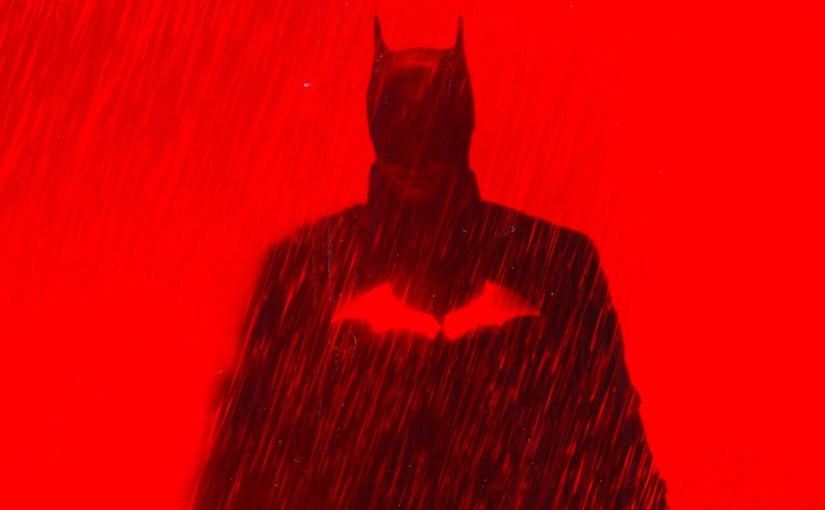
Another year at the movies, means another trip to see Batman on the big screen.  I think we are close to a dozen iterations, no?  Fortunately, the latest reinvention for March 2022, The Batman, is a refreshing interpretation that focuses on the detective skills of the masked vigilante hero who prowls from the rooftops of Gotham City.  Matt Reeves has written and directed a gripping and engaging film that doesn’t rely on simple paint by numbers.  He’s capitalized on using the mysterious Riddler (Paul Dano) as the main villain here, and Batman’s (Robert Pattinson) brains get more exercise than his brawn.   

It is the second year since Batman has introduced himself to the crime ridden city.  The man behind the mask, Bruce Wayne, keeps a journal of his exploits and observations, and through voiceover he questions if his actions have benefitted since it appears that crime has only increased since his first appearance.  A serial killer is taking responsibility for the grisly deaths of important people within the city and he’s leaving greeting cards for “The Batman” with a common scribble of “No More Lies,” along with a “?,” and a riddle for The Batman to solve.  Thanks to a strong partnership with Police Lt. Jim Gordon (Jeffrey Wright), Batman is given easy access to the crime scenes so he can attempt to reveal the mysterious villain and determine exactly what his endgame is. The Riddler doesn’t make it easy, though.

Mobsters like the Penguin (Colin Farrell) and Carmine Falcone (John Turturro) have a grip on the city, as well.  There’s also a possible lead from a woman (Zoe Kravitz) who’s managed to infiltrate the gangsters’ underground headquarters.  She also has the fighting skills and agility that’s comparable to the caped crusader, and maybe she’s a cat burglar as well.  Still, is she pertinent to Batman’s investigation or not?

It’s better not to spoil anything that occurs in Reeves’ film.  The mysteries that are uncovered are part of the fun, and it does take some time and exposition to get there, but I found it worth it.  Barring a few ingredients within the film that I recognized from the Christopher Nolan and Tim Burton films, the picture is worth seeing for a new formula on a character, that although is a favorite of mine, I feel has also been done to death on the big and small screens.  This is a Batman film where I appreciate the thinking approach of its craft, over the action.  When Batman is playing detective with Jim Gordon, it is much more enticing than just another Batmobile chase or another ham-handed fist fight.  This film is a test of Batman’s mental capacity and ability for analysis.

Reeves direction is also appreciated, though I’m expecting the naysayers.  The Batman is a very dark motion picture.  When it’s not dark, the photography is dim and blurred.  There’s lots of rain and dimly lit streets and garages.  There are strobe lit nightclubs.  Windows are blurred, so sometimes you can’t make out the image in front of you.  He makes the viewer work for the focus and that kept me alert.  I believe Matt Reeves was attempting to give the viewer the literal point of view of the characters.  It will not be a surprise, however, to find some movie watchers lose patience with the technique. 

The Riddler especially is most mysterious with a twisted and inspired Zodiac killer approach.  Often, Matt Reeves’ film feels especially reminiscent of David Fincher’s Seven.  I would not be surprised if Reeves wrote his script as a cop/detective story, and then added the Batman flavor to make his final draft.  This is not a picture of grand special effects or superpowers and gadgets. 

It’s definitely not the Batman film that everyone wants.  I foresee the response being very divisive.  Nonetheless, if you’re a Batman devotee like me who grew up on the character in the macabre storied comics (as well as the hammy tongue in cheek material), you’re going to be thankful for this “at last” interpretation.  I’ll definitely be seeing it again.

NOTE: The Batman is not a film for children under age 13. I truly believe that. There are disturbing images and threats within the story, and the violence depicted or left to the imagination is not for celebratory effect and amusement. This is definitely a film for mature audiences. Do not presume it’s meant for all ages based on its misleading marketing approach with companies like Legos and Little Caesars pizza.

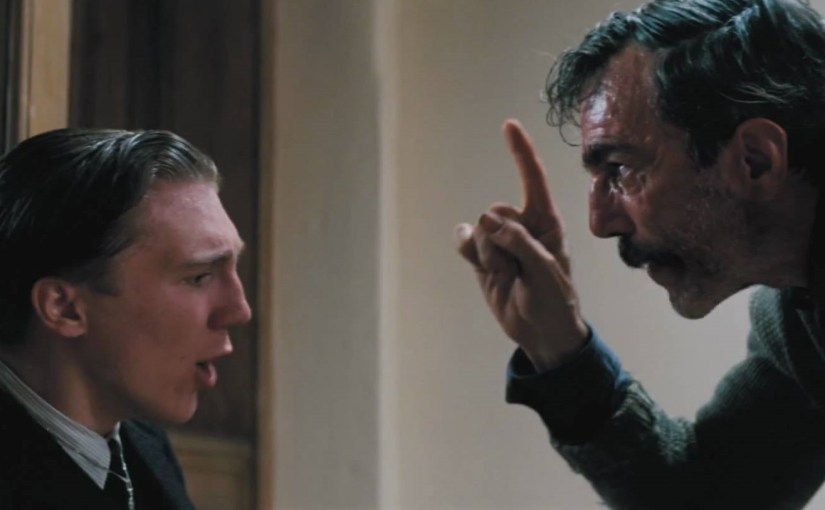
THERE WILL BE BLOOD (2007)

by Miguel E. Rodriguez

Director: Paul Thomas Anderson
Cast: Daniel Day-Lewis, Paul Dano, Ciarán Hinds
My Rating: 10/10
Rotten Tomatometer: 91% Certified Fresh

PLOT: A story of family, religion, hatred, oil, and madness, focusing on a turn-of-the-century prospector in the early days of the business.


My first draft of this review got up to nearly 1300 words before I realized I was just spinning my wheels.  This is quite simply one of the most original, most daring, most engrossing films of the new millennium that I have ever seen.  And after a while, my first draft became just a list, ticking off and describing scenes that I feel make it great, rather than a precise review.

So instead of giving a full film summary, which you can find elsewhere online, I’m going to try and instead give an actual review.  I’m going to gush a little bit (no pun intended), because it’s a masterpiece, but I’m just going to have to live with that, I guess.

When I first saw this movie (with my good friend Marc Sanders, as it happens, at a free preview), I remember leaving the theater feeling inspired.  Daniel Day-Lewis’s Oscar-winning performance in There Will Be Blood has, to this day, been in the back of my mind every time I’m on stage, whether it’s a drama, comedy, or whatever.  It genuinely makes me want to be a better actor.  Oh, I’ve seen great performances before from the likes of Nicholson, Hoffman, O’Toole, and the rest, but there’s something about the laser-like intensity of Day-Lewis’s performance as Daniel Plainview that had me gawping at the screen in awe as the film played out.  I can’t fully explain it.  It was, and remains, a religious experience to behold.

(For those of you unfamiliar with the story, Daniel Plainview is a turn-of-the-century prospector who thrives in the early days of the oil boom in America, but when his ambition crosses paths with a fire-and-brimstone preacher named Eli Sunday, things get a little testy.)

So, there you go, the acting is not just top-notch, it’s revelatory.

But then there’s the movie itself, exhibiting a level of craftsmanship I haven’t seen since the heyday of Stanley Kubrick.  The plot itself reads like one of those summaries of films that great directors dreamed of making, but were unable to for various reasons, like Kubrick’s unrealized biography of Napoleon.  I mean, who wants to see a 160-minute movie about oil drilling?  Why would anyone care?  Why should anyone care?

Director Paul Thomas Anderson’s ingenuity relies heavily on the acting and casting choices, and of course the ingenious screenplay, but any discussion of the film also has to mention the score.  As much as any other element, the film’s musical score creates and sustains a mood of dread and suspense over such banal scenes as pipeline being laid, oil derricks being built, men surveying land, etcetera.  The atonal and urgent score suggests that what we’re seeing is the prelude to some sort of apocalyptic event or incipient bloodshed.  It keeps you on the edge of your seat, as if around the corner an earthquake or mass murder is waiting.

(Sometimes the ABSENCE of the score is just as disturbing, as in the scene in a church when Daniel Plainview is reluctantly baptized, or most of the scenes in the finale, taking place in 1927.)

But ticking off these technical details still feels lacking.  This is the second draft of this review, and I still feel as if I’m not getting across how much this movie works on the viewer.  Or, at least, how it worked on ME.  This was only the third time I’ve watched the movie since first seeing it in 2007, and I was hooked all over again, right from the opening shot, with those dissonant strings playing over a panorama of sunbaked hills and scrub brush.

The movie just FEELS perfect.  It’s anchored by Daniel Day-Lewis, who is in literally every scene except two that I can recall.  But the artistry of everything else at play is just…I am at a loss for words.  It is, as another review puts it, “wholly original.”  There is just nothing else like it.  Sure, it’s definitely inspired by Kubrick, but it takes things to another level.

It’s one of the best films I’ve ever seen.