COYOTE VS. ACME

By Marc S. Sanders

It’s ironic and a bit reflective to think about how Coyote Vs. Acme eventually made it to theaters.  Along with an anticipated release of Batgirl, featuring another return for Michael Keaton as Batman, the Looney Tunes feature was abruptly shelved by Warner Brothers as a tax write off.  Corporate America was exercising its accountant’s bloody fist in order to amplify the books.  However, the people have spoken and the animated rascal would eventually have his day in court.  Batgirl seems to have not survived the Joker’s man-eating Venus Flytrap, however. (That was actually an episode from the ’60’s TV series that scared the bejeezus outta me when I was a kid…but Robin got eaten, not Batgirl.)

The mega-conglomerate known as Acme is arguably bigger than Amazon, Walmart, Disney, Apple and the world’s crop supply of Frozen Concentrated Orange Juice combined.  Why?  Well, because they have John Cena as their attorney with a bolo tie and cowboy hat to boot along with the shrewdest…I say…I say the shrewdest rooster known to mankind, Foghorn Leghorn as its current CEO.  One thing these guys know how to do is circumvent the faults of their products by executing small settlements or finding loopholes to escape from liability.

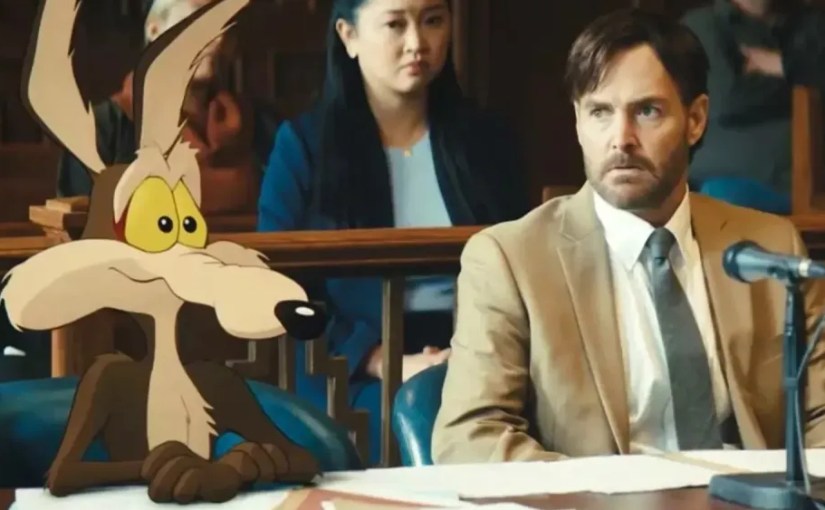
Wile E Coyote has had enough!  He’s invested hundreds of thousands of dollars in anvils, slingshots, gigantic magnets, rocket skates, and falling pianos.  Yet, his targeted prize – the meep, meeping Road Runner – evades captivity.  It’s time Acme bear some responsibility and pay.  So, he hauls all of his defective purchases into a handkerchiefed sack tied to a stick on his shoulder and hires an injury attorney for the cartoon community to represent him – a sad sack in a brown suit named Kevin Avery (Will Forte), assisted by his capably, confident, crusading niece Paige (Lana Candor).

The little man – ahem, rodent – is finally gonna sock it to Goliath corporation.  Suck it WB—-I mean Acme!!!!!

Coyote Vs. Acme is what you’d expect from Looney Tunes.  Everything is ridiculous and welcomes immense laughter with sight gags that only their brand of animation can offer.  No matter how many times poor Wile E. finds himself suspended in midair before suffering an enormous drop below, I love to see the dust cloud poof up and hear the “wampf” foley sound as he slams into the ground.  Being that the Road Runner/Coyote shorts were always my favorite of the Tunes, I never got enough of their routines.  The painted hole in the ground – you know to fall through? That’s here too.

None of the characters are reinvented.  They are just slotted into a courtroom liability suit that’s as familiar as what the Ford Corporation was culpable of when they knowingly left potentially explosive cars on the lots.  (See my review of Class Action found on this site.) 

Why? 

Because monetarily speaking the settlements would be more cost effective than a widespread product recall.  Well, as Wile E, Paige and Kevin will discover, Acme has a similar mindset for the cartoon community.  This makes for good courtroom drama such as the Tasmanian Devil’s raucous, indecipherable testimony (hilarious by the way) or the clandestine secrets that Tweety Bird and Bugs Bunny might be holding on to.  

Daffy Duck likely will not be a reliable witness, though.  DAMN YOU ACME!!!!

Coyote Vs. Acme is great entertainment that you can take your kids to while you laugh and nod your head at the newsworthy stories that inspired this plight of the plaintiff, Mr. Coyote.  Believe it or not, there’s a message mixed within all of the insanity.

I grew a little tired with the middle portion of the movie, and I could have welcomed some more antics within the courtroom that feature an underused Luis Guzmán as the judge.  The stakes of Kevin’s practice going under ring true of material from A Civil Action and Erin Brockovich as the case becomes more insurmountable.  Didn’t really need this frankly.  I don’t care about Kevin.  Just let Kevin do his job in court.  His insecure schlub slows the picture down some, even if Will Forte has cute chemistry with all of the characters.

I love that Tweety’s granny made it into the picture, but where was Sylvester? He’s in the background, having a catnap in the family room, but otherwise he’s got nothing to do.  That was a shame.  

Minor quibbles aside, Coyote Vs. Acme is refreshing animation combined with live action.  The artwork is thankfully not the newly updated computer graphics of Pixar and Minions fare.  I know the Looney Tunes were likely not hand drawn for this feature, but at least their images and actions are preserved in their original fashion.  If it ain’t broke don’t fix it and this is one thing that Acme, Warner Brothers and producer James Gunn keep intact.  Everything looks great with a perfect blending of human characters falling into complicated Looney Tunes traps. The conversations between the animated and human communities are seamless.  John Cena trying to decipher through Tweety’s speech impediment is winning.  I even applauded how the writers approach the now taboo character of the perverted and horny Pepe Le Pew.  The little stinker can actually still serve a purpose in a post Me Too climate.

I hope Coyote Vs Acme opens doors for more material.  Put the guys in a police station, or a hospital.  Have them enact a Law & Order episode.  Any one of them can run for President against Kelsey Grammar or Sean Penn or Mark Ruffalo for example.  These guys can easily operate in an internet world crowded with confusion and identity.  Keep the locomotive going, and if you get run over, dust yourself off, step off the tracks, and sift through the Acme catalog for the next novel invention.

Something has gotta work! Right Doc?

MEEP MEEP!!!

THE END OF OAK STREET

By Marc S. Sanders

I look at a movie like The End Of Oak Street and I think to myself didn’t we once have all that we needed?  As kids raised in suburban life, we had our share of turmoil when mom and dad wouldn’t stop bickering and the neighborhood bully wouldn’t leave us alone.  However, Superman bedding, books on dinosaurs and the solar system, and a dog named Starbuck, along with neighborhood barbecues and a local library made up for a lot.  Movies like Gremlins, The Goonies and E.T. from the early 1980s were spared the onslaught zombified characters brainwashed by the World Wide Web, delivered by means of portable electronic devices.  In order to escape danger, you ran or pedaled as fast as you could while screaming your head off.  When you had a moment of respite, you stretched your imagination to logically surmise why the science fiction you always read about was actually coming true.  

When I saw those movies in the theaters and later rented from the video store, I didn’t have to reflect.  These were fresh tellings of new adventures with honest and relatable issues that might have been happening in other homes, just like they occurred in my house.  The End Of Oak Street invites you to reminisce while welcoming today’s generation to look beyond their Play Stations and A.I. reliance.  It’s a simple and familiar film not out to challenge you like a complex standardized test.    Writer/director David Robert Mitchell only wants to thrill your discoveries as they follow a terrifying, inescapable journey.

The Platt family do their best to maintain a family nucleus.  Audrey and Brian (Maisy Stella, Christian Convery) are siblings who rely on each other while their parents, Denise and Greg (Anne Hathaway, Ewan MacGregor) seem like they are teetering on the unheard of D-word.  When I was growing up, only one kid in my school had divorced parents – far from what my daughter witnesses.  The family’s slivers of divide, along with that pesky bully and an irate neighbor who literally threatens to shoot Starbuck, take a back seat to strange occurrences of flashing lights at night and mounds of animal poop in the backyard.  There’s also plant life that grows quickly out of the ground, yet is of unknown origin. 

The day after the biggest flash happens, the Platts discover that their suburban neighborhood has been transported to prehistoric times when dinosaurs run amok.  Like a familiar franchise, these animals are ready to chase, roar and eat the neighbors.  The Platts seem to have the best luck at surviving though.  Now they have to figure out how to stick together, stay alive, hope that Starbuck comes home, and get back to present day, 1982.

The dinosaurs resemble the creatures of the Jurassic Park/World pictures.  David Robert Mitchell introduces some new breeds with toothlike delights, though.  My favorite was some kind of giant snake or eel that can gracefully enter a home from the upstairs bedroom and silently wind its way through the hallways, staircase and down to the kitchen before it quietly opens its wide maw with enormous fangs that are ready to bite down on Anne Hathaway.  Outstanding work!

There are triceratops and raptors and “veggies-saurouses,” and pterodactyls that claw and nibble and bite and roar and chase.  It’s nothing novel after twenty Jurassic movies.  Still, the time period and setting are new to this standard and the cast is genuine, well mostly.  Anne Hathaway hearkens back to the stressed suburban mom that Dee Wallace Stone delivered in E.T.  She’s a good housemaker at her wit’s end with a dream for another kind of life.  Ewan McGregor’s European dialect is hard to ignore.  So, he doesn’t exactly feel like that dad with the Adidas shorts, tube socks and white tennis shoes.  Greg delivers pizzas to make ends meet. It was hard to buy a guy with an accent designed for highbrow Shakespeare dropping off a large pie with everything on it. The character is drafted well as the paternal figure who is not the king of his castle and lacking all the answers. McGregor just feels more intelligent than Brian Platt is supposed to be.  In this movie, dad doesn’t drive.  Mom drives the car and wields the gun.  Craig T Nelson (Poltergeist) would never stand for that. Oscar Isaac was originally meant to play the role. He would have been a more appropriate choice.

The End Of Oak Street works like a rainy Saturday afternoon picture at the neighborhood theater when you’d be dropped off at the mall by mom while she ran her errands.  Bicycles and homemade bows and arrows fend your way through the made-up adventures in the woods or between the homes and within the backyards.  

Again, dinosaurs are nothing new or novel anymore, but David Robert Mitchell sets up a handful of shocking moments that will drop your jaw as some characters wind up in unexpected peril.  Other times you laugh as the Platts can only run across well mowed lawns, from one end of the street to the other.  It’s adventure, but this family also has time to come to grips with their hang ups while running out of food and avoiding being consumed by their unfamiliar environment.  

Anne Hathaway is especially right in this time period, and she only makes McGregor look more suitable in this middle Americana period setting.  When he speaks, I hear Obi Wan Kenobi and Trainspotting, but at least Hathaway keeps him engaged as a husband device for her performance as the frustrated, neglected housewife.  

The End Of Oak Street is a welcome passage of escape to a time when visual effects were being embraced as a means to tell wondrous stories of imagination.  It’s fortunate, that on the surface, its technology stops at the chapter of a once familiar now, when social media wasn’t needed to save your life, much less solve your problems. The family had to sleep on the family room floor together, and then assemble in a circle to talk to one another about whatever was bothering them.

JJ Abrams’ studio Bad Robot produced this film.  He also directed Super 8, a clear salute to Steven Spielberg’s alien adventures that’ll thrill you and make you ugly cry.  This is the director/producer’s specialty-to echo how much these films shaped so many of us into adulthood.  I hope Abrams and his production crew stay on this trajectory.  I’d like to play in the past a little more before I head back to my future.

BABYLON

By Marc S. Sanders

Director Damien Chazelle has come a long way since his first major motion picture, Whiplash, a small film about a young, tortured drummer.  Since that accomplishment, he seems to get more and more elaborate with each project.  Babylon certainly exceeds ambition in any select 3–5-minute scene it offers within its grand opus.  The main title card doesn’t appear on screen until after the first thirty minutes and by then you are exhausted, yet completely awakened.

Babylon begins in the mid-1920s, during the pioneering times of Hollywood filmmaking where silent films were fresh and were regarded outlets for escapism and entertainment.  Big studios like MGM were not quite on the scene just yet and movie makers experimented with their films having no regard for rule and caution while constructing them.  On a busy day of shooting at around 3:15pm, an open field sword and sandal battle might turn up an extra in an accidental death with an impaled spear.  No matter.  Must keep shooting before daylight is lost and everything runs off schedule. 

It was at this time that a star like Jack Conrad (Brad Pitt), rugged with a square jaw and dashing with a pencil thin mustache, offered greatness in movie houses that showed silent pictures.  A new discovery like Nellie LaRoy (Margot Robbie) who seemingly came in off the street captured producers and patrons alike with her wide-eyed expressions and lanky, yet appealing posture.  These were the first celebrities of the advancing twentieth century.  They were starlets that brought people back and back again to the cinemas to witness battles of roman conquest or dancing on top of a bar while batting their long eyelashes for a mug at the camera.  The filmmakers loved to work with them. 

These performers ruled Hollywood until the Talkies appeared on the scene.  Movies with sound revolutionized the industry, but these famed individuals couldn’t keep up with the evolution.  Audiences and filmmakers couldn’t accept a compatibility.  Try to imagine a Jack Conrad listen to a packed movie house chuckle at one of his romantic speaking scenes.  It’s heartbreaking to watch.  He was admired, but now he’s a joke.

When the sun would set, the parties soaked–make that drenched–in orgy and debauchery would begin and nothing was off limits.  Naked women would happily get high and drunk and tossed over a large crowd.  Prop penises would be inserted into one partygoer and then another and then another.  Fat ugly men would happily accept getting urinated on.  Endless amounts of liquor and especially cocaine would be gulped and snorted and the greatest dares imaginable would always try to top themselves.  Have you ever heard of a party getting so out of control that someone would go so far as to wrestle a rattlesnake in the middle of the desert?  Jack happily watched all this decadence go down.  Nellie joyfully became the outrageously intoxicated and fearless ringleader. 

I have offered only a sliver of description for Chazelle’s over three-hour film.  To sum up, Babylon offers a hard-edged response to the family friendly interpretation found in Singin’ In The Rain.  Both films delve heavily into the transition of silent filmmaking to talking pictures and those who were left behind.  Gene Kelly and Stanley Donen’s G rated picture will have you giggle at their Lina Lamont with the squeaky voice and pratfalls who’s all wrong for the next phase.  The heavy R rated dramatic interpretation is offered in Chazelle’s script with Margot Robbie’s Nellie LaRoy and her Jersey accent, accompanied by unrefined posture and behavior.  Her drug binges are no help either.  Margot Robbie is fearless in her performance.  She is messy, sloppy, harsh and frenzied with her character.  One thing that came to mind as she is snorting line after line of coke is that at that time, there was no such thing as a means for rehabilitation like today.  No one was even looking out for the harm that drugs and alcoholic binging could have on people.  People were left to their vices to just drown in their poison of choice.  For silent pictures, you could plaster them in makeup and costume and let them mug and bat their eyes for the camera.  It didn’t matter if their speech was slurred.  Talkies required much more concentration of their performers.

The main player of the film is newcomer, Diego Calva, as Manny Torres.  A Mexican who inadvertently finds himself in the Hollywood nightlife while pushing an elephant up a steep hill only to get shit on.  (The elephant serves no purpose except to make an appearance at one of these crazy parties.)  Manny has an instinct for what’s to come in the movies and builds himself up into a studio executive.  While he’s dangerously falling in love with Nellie, he’s also discovering next big things like a Negro entertainer who’s magnificent with a trumpet, Sidney Palmer (Jovan Adepo).  Manny is a good man who swims above the dangerous life of Hollywood partying and decadence.  He’s an innovator that’ll never receive credit for what he uncovers.  That’s for the white executives to profit from.

A minor but welcoming story is Sidney’s.  He’s soon hung on posters outside movie houses, and performing with big bands.  Hollywood awards him with riches he could never imagine and never asked for.  However, ironically, his complexion comes off too white against some of his other band players and the idea of caking himself in charcoal makeup is insisted.  How will Sidney respond to this humiliating request? The wealthy also have a particular regard for him.  His status as an entertainer.  Do they see him as a showboat clown or the artist he values himself to be?  How does Sidney want to be considered?

With all of the parties and drinking and drug use to go around, Babylon goes off in a hundred different directions before it finds an even keel outline that switches storylines from Jack to Nellie to Manny and Sidney.  Chazelle strives to one up what other filmmakers before have attempted.  I could not help but think about Paul Thomas Anderson’s Boogie Nights which follows the porn industry in the late 70s and early 80s.  Happiness abounds until time and technology and constant self-abuse cause everything to unravel.  Babylon follows a very similar trajectory.

A friend of mine found Babylon too be overly gratuitous.  She’s not wrong, but while she took it as a complaint with the film.  I take how superfluous the movie is as a major compliment.  There are long scenes where Chazelle will not surrender for the audience.  He shows how drug raged Nellie is when no one will fight that rattlesnake by having her violently pick it up, swing it around and thus it will eventually latch on to her neck while she’s running around amid a gang of naked partygoers.  Then we get to see another starlet cut the snake off below it’s head, rip its fangs out of Nelly’s skin and proceed to suck the venom out.  Oh, you’ll squint and squirm through the whole scene.  What do we learn from this?  Drugs are bad.  Really bad, and they will delude you into acting with no vices or boundaries.  So, let’s be completely honest about it.

When Nellie is recruited for a talking film, we see take after take after take of her trying to make her mark while it is shouted over and over again to the crew to shut the fuck up.  There can be absolutely no noise from anywhere that the mikes can pick up and it doesn’t matter if a crewman is getting dangerously overheated in a soundbox.  (No air conditioning could be allowed because the hum would be picked up by the microphones.)  It’s a brilliantly, well edited, long and tortuous scene of flaring tempers, sweat, heavy light and stress.

I remember reading an interview with Henry Hill, the mobster who was the focus of Martin Scorsese’s Goodfellas.  Hill said with no uncertainty that the characters portrayed by Joe Pesci and Robert DeNiro were not even close to how frightening and violent their real-life counterparts were.  So maybe even Scorsese glossed over how harsh that world ever was.  Damien Chazelle is a relentless filmmaker with Babylon.  Nothing is whitewashed.  Most of what you see is shock value, but that’s the message he’s conveying and per his research he must be convinced the life of this era was actually this outrageous and way over the top. He’s certainly not forgiving with how manic these people lived, particularly with Margot Robbie’s character.

At the same time, he calms the film down to offer a harsh truth to a quickly becoming has been like Jack Conrad, Brad Pitt’s character, no longer in his prime.  Jean Smart portrays a gossip columnist reminding Jack that the height of his career is long gone, but fifty years from now, new generations will be rediscovering his achievements.  He will be a legend for all eternity.  Chazelle is speaking to us, those that appreciate what Turner Classic Films and other formats like videotape and DVD offer to see the first of these kinds of pictures where it all began with legends like Jack and maybe Nellie and especially Chaplin. Chazelle was an important student of this later generation.  This is the best scene of the picture with a magnificently written monologue, and I won’t be surprised if Jean Smart gets an Oscar nomination that no one ever saw coming.  I’m inclined to declare she should just get the award.  It’s such a telling moment for all kinds of movies.

Chazelle loves to make films.  The epilogue to Babylon demonstrates his affection as his story jumps to twenty years later, and an older Manny watches Singin’ In The Rain in a theatre. From what he inadvertently brought to the fold all those years ago, movies have evolved and continue to develop into bigger scales of what we could never have thought possible.  Chazzelle edits in a sequence where it started with silent films like A Trip To The Moon and Keystone Kops over to grand musical ensembles and adventures like Ben-Hur and then on to special effects with quick cuts of Raiders Of The Lost Ark, Terminator 2, and Avatar.  Flashes of color appear on the screen and then quickly cut back to these captions in celebrated films and film stock.  I don’t believe any of this spoils anything of the film, but I like to recognize how Chazzelle takes inspiration from Stanley Kubrick’s bewildering conclusion to 2001: A Space Odyssey.  Movies are going on and on and on.  Whoever is hot now and presently significant will have to adjust to an ever-changing industry.  Once celebrated puppeteers working for guys like George Lucas have no value in an age of computer graphic engineering.  Big box office stars might not be able to uphold their careers during a time of streaming films that come to us by means of our flat screen TVs we can affordably buy at Walmart.  Kardashian girls are more widely recognized than maybe a Jack Nicholson or a Meryl Streep.  (Someone I know had no idea who Carol Burnette is.)

It’s hard to sum up everything captured in a film this big and ambitious and yes, gratuitous.  Perhaps, the best I can tell you is simply that a hard truth to accept is that casualties come from discovery in a film like Babylon. 

THE GIFT

By Marc S. Sanders

Blumhouse Pictures had a monster year in 2017 with the release of Jordan Peele’s smash hit thriller Get Out.  It was by no means some slasher film for cheap scares.  It built on those typical shocks to deliver a message over a well-crafted three act storyline that commented on present day race relations while the action of it all knocked the hell out of you.  Get Out was one of my favorite films of that year.  

Having just watched Joel Edgerton’s The Gift from 2015, I see a pattern from Blumhouse.  This is a company intent on making high grade material on very small budgets.  This company knows how to spend its money wisely, while showing you something that looks familiar but is altogether new.

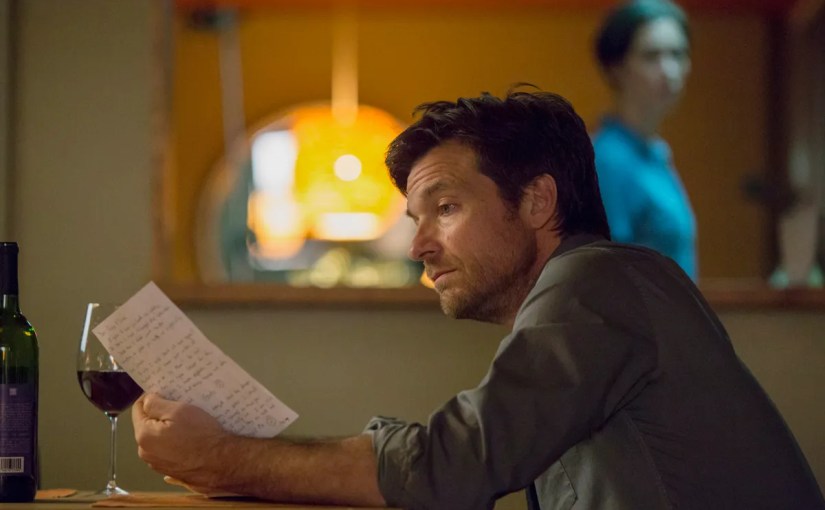
Edgerton wrote and costars in The Gift as a stranger who intrudes on the life of a happy couple with a promising future, played with great chemistry by Jason Bateman and Rebecca Hall.  

Casting Bateman and Hall was a smart move.  In other respective efforts from both actors, they are at their best by giving the less is more approach to their resume of performances.  In this film, they come off as nothing special really when the film begins; happy and minding their own business.  It’s important because it enhances the disruption of Edgerton’s character, Gordo “the weirdo.” All that Gordo is doing is being friendly by leaving gifts on the couple’s doorstep. Harmless, really, but I found my own instincts on alert. The question is, however, was I ever right to question my instincts in the first place.

The Gift is a top notch psychological thriller.  Do Edgerton and Blumhouse follow the same trite cliches of suspense films like this though? That’s what is eye catching about the film.  You really don’t know how developments are going to end up until the movie is completely over.  For the most part, this film is wildly unpredictable.

I really liked it.  It was a new kind of disturbed piece written with foreshadowed detail by Edgerton.  He writes with common, nervously laughable awkwardness for his couple to struggle with.  This new guy is only signing his cards with happy faces and leaving gifts.  What’s so wrong about that?  

Edgerton’s direction is just as fine with wide shots during the daytime suburban scenes to offer comfort for Hall’s housewife character, and a narrow lens to unsettle you as you peer down a dark endless hallway.  For cripes sakes, it’s only your house.  Is your new house really that scary?

The ending is satisfying for me even if I did predict an early scene would return to make its point later.  Narratively speaking though, I credit the screenplay for inventing something beyond a final fight that would probably include kitchen knives and crashes through windows followed by someone falling to his gruesome death from a great height, or drowning a villain in a bathtub before shooting him when he miraculously comes back to life. 

See, that’s what the other movies are doing. Films like The Gift and Get Out are completely doing something else entirely.

THE WOLF OF WALL STREET

By Marc S. Sanders

When a person carries on with his/her life knowing full well that practically every action is illegal, immoral and harmful, it’s a story that must be told. Jordan Belfort, The Wolf Of Wall Street is such a person.

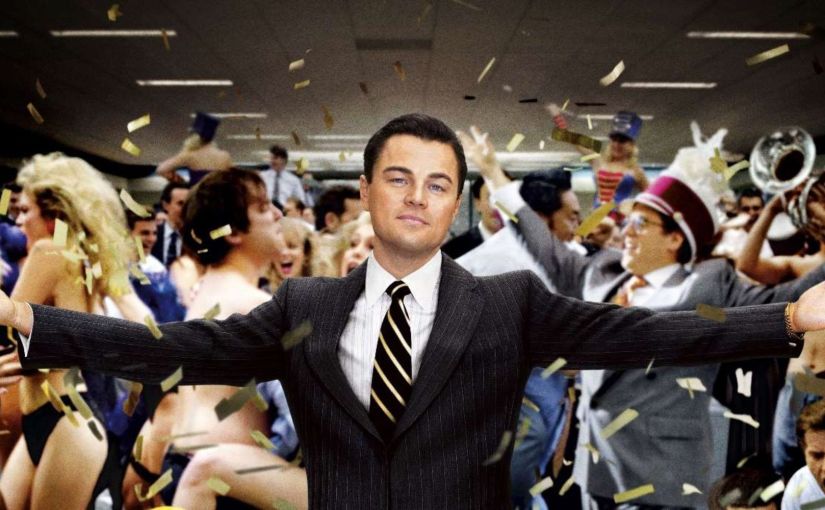
Leonardo DiCaprio explodes with rages of drug use, drinking, more drug use, banging prostitutes, even more drug use and pink slip stock trading along with some drug use. To get this manic, this wild, and this crazy requires a certain kind of energy to perform. The real Jordan Belfort must have had a massive amount of stamina to live this life. After all, he’s still alive today. DiCaprio, portraying the on-screen persona, throws himself into it. There’s no way he got to this pinnacle of hyperactivity on cue, with director Martin Scorsese’s call for action. DiCaprio had to thrust himself into this debauchery. It takes a certain skill to not let up on this. Pay attention to a hilarious scene where his quaaludes have paralyzed him to the point where he can’t even crawl to, much less open the door to his car. It’s a hilarious display of crippling physicality. DiCaprio maxed out on his Belfort portrayal, thereby earning his Oscar nomination. I thought he should have won that year. He lost to his cameo co-star, an excellent Matthew McConaughey for Dallas Buyers Club.

DiCaprio is so good that he yanks the entire cast into comparable craziness as well. Jonah Hill plays Jordan’s sidekick Donny: a buffoon of a guy who’ll whip out his member at inopportune times for attention and display. Hill doesn’t hold back either in his earned second nomination as well.

Scorsese, with a script by Terrance Winter based on Belfort’s book, is not concerned with necessarily showing a story arc where characters question their actions. Instead, he focuses on the hubris of all of this. Crashed helicopters, crashed cars, crashed planes and crashed luxury yachts not to mention endless office orgies, including one in first class on a commercial flight to Switzerland. It’s filmed very well, and while it is one over the top thing after another, it is nonetheless very funny and very entertaining.

The nerve of this guy, right? Yet that’s the thing about The Wolf Of Wall Street. Right from the get-go, Belfort is strongly urged to let up as the FBI easily closes in, and he doesn’t. It’s kinda crazy, really. Belfort put himself in an unwinnable situation and his addiction to money, drugs, ridiculous sex, and the ease by which he does it all calls to him to stay in the game until the lights just turn off.

This film marked the highly visible introduction of Margot Robbie as Jordan’s wife. She’s excellent with a New York accent (Robbie’s Australian) who loves the money and glamour but is not so stupid. Following up with a nominated role in I, Tonya (which she should have won against an aggravating Frances McDormand in Three Billboards…) and offering the best moments of Suicide Squad, it is easy to believe that she could go toe to toe with DiCaprio here. They have great arguments on screen together; funny but true.

Scorsese offers up his signature narrative voiceover from DiCaprio just as he did before in Goodfellas and Casino. His editor Thelma Schoonmaker is great at keeping the energy alive by taking advantage of the legendary director’s quick cuts and great music samplings.

The cast is just right with memorable moments from Jon Bernthal as Jordan’s tough guy friend and errand boy, Brad. (Bernthal is a great character actor all together. Check him out in Baby Driver, too.). Kyle Chandler is the modest element as the FBI agent who brings it all down. He knows he doesn’t have to exert himself too much. Belfort is doing all the work for him. Still, he spells it out harshly and honestly. No bullshit. He just cuts to the chase.

Other great appearances include Rob Reiner, Jon Favreau, Jean Dujardin, Joanna Lumley and I have to recognize Stephanie Kurtzuba. She offers a scene not widely recognized, as a disciple of Belfort’s team who is full of pomp, and confidence that far exceeds any of the guys alongside her. It occurs midway through and it’s an important moment because it really shows the power of influence Belfort had with his stockbrokers. He made them criminal millionaires overnight and to them he’s a Messiah. When Kurtzuba’s moment occurs, she solidifies the power of Belfort’s misdeeds.

It’s very easy to succumb to this lifestyle. Scorsese and Winter show how easily and quickly lots of unclaimed cash can be made at the expense of innocent people. It’s really fascinating. There’s no dimension to Belfort and his cronies of losers who would follow him anywhere despite the cost and the damage. That’s okay for me here. Simply because it fascinates me that he had the chutzpah to continue on with this immoral trajectory.

The Wolf Of Wall Street is a no holds barred, great film.