BARBIE

By Marc S. Sanders

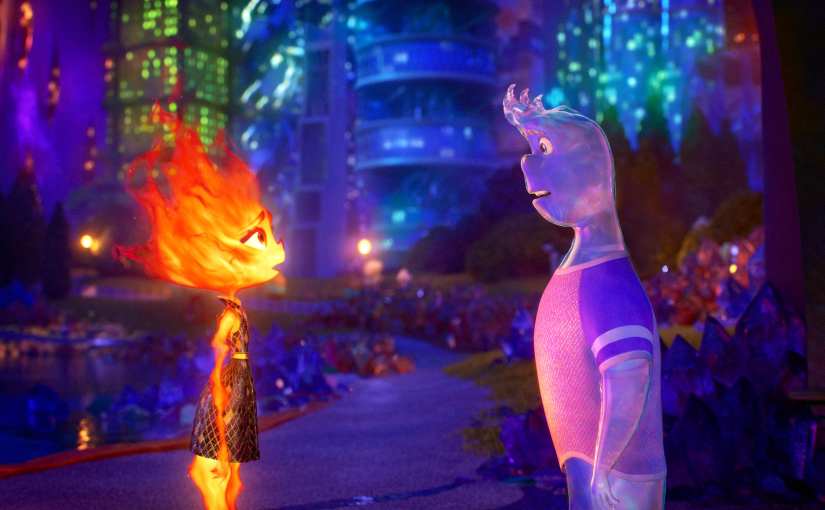
Having just returned from donning my pink t-shirt to watch Greta Gerwig’s box office smash Barbie, I am certainly relieved that I watched the film with my wife.  Just when I thought I understood everything I was watching in the movie, my better half explained to me that my perception was wrong.  Yet, I still believe Barbie was a magnificent experience that allowed me to reminisce about my pre-teen years occupied with my favorite toys (Kenner’s Star Wars figures and playsets).  I applaud this film for going even deeper than that though.  Barbie reflects on the patterns between men and women primarily in the fields of career, objectivity, and social stature.  As pink as the film is, and it is pinker than a truck load of Pepto Bismol, it is also observant and telling.

Someone commented on a Facebook post when I announced that I was seeing the film that Barbie is a “woke” movie.  I am so sick of that term, honestly, and it has nothing to do with which side of the political aisle I sit on, because I no longer sit on any side.  While watching Margot Robbie as the main “Barbie” of a whole community of “Barbies” in Barbie Land, I never recognized said “wokeness.”  Only afterwards did my wife have to explain where it likely exists within the film.  I still don’t think it’s a fair observation though.  Barbie and Ken dolls, Skipper and even the pregnant Midge doll and the lonely Allan doll and all their accessories are marketed by Mattel to a demographic for young girls.  Greta Gerwig’s script though questions what could threaten a Barbie Land.  Frankly, the only thing imaginable (besides opening the film on the same day as a biographical film about the man who invented the atomic bomb), is if the world of Barbie was no longer Barbie & Ken, but rather Ken & Barbie and a male dominated finish conquered Barbie Land following Ken (Ryan Gosling) reading up on some books about horses and machoism.  Very inventive, as well as comedically endearing to watch how Barbie and all the other Barbies undo what’s been done by Ken and all the other Ken variations.

A second storyline is really what rang true to me.  America Ferrara portrays Gloria, a mother in the Real World who has lost a bond with her daughter Sasha played by Arianna Greenblatt. Sasha has long outgrown spending time with Gloria and playing with Barbies together.  Sasha is a typical moody teenager.  This is crushing to Gloria and real-world thoughts enter the mother’s mind by the will of nature, including the uncertainty of death and even worse…cellulite.  Barbie (Margot Robbie) realizes the effect it has on her and with guidance from Weird Barbie (Kate McKinnon) embarks on a journey to the Real World to right what is wrong with the girl who plays with her.  Barbie is in for a surprise though. 

One day I will weave into one of my original plays about the time I showed my father my brand-new Star Wars TIE Fighter ship.  I demonstrated for him how the wings pop off.  His response was an artificial “Oh wow!” and then a return to his dinner with further discussion about his workday.  At six years old, I could even identify how uninterested he was.  This moment from so many years ago came back to me as I observed Ferrara’s emptiness.  The mother has lost her daughter, the same way my young self lost my father. 

Toys can draw out nurturing emotions of happiness, and perhaps disappointments, when we are young and imaginative.  As adults, a desire for a recapture of youth can blossom.  My generation yearns for the toys they played with and are even willing to pay enormous amounts of money for that tangible memory with what are now considered antiques.  Toys have always been a part of my life.  I was never an athlete.  I got much more pleasure out of playing with my action figures and my made-up car chases and shootouts in my bedroom. 

Gerwig’s script, co-written with Noah Baumbach, is quite intuitive.  Barbie and Ken (Robbie, along with wonderfully sweet and naïve Ryan Gosling) try to perfect what is imperfect about themselves and end up making things drastically worse for their respective existence within the Barbie World.  Barbie may fear bad breath and try to escape death, but how will that affect the pink, plastic world she stems from?  Ken tries to learn more from the Real World to enhance his noticeability with Barbie and deal with his insecurities against the other theatrical Kens he exists with. Does learning change Ken into a better version of himself, though?  Experience and exposure to foreign situations are necessary to enhance oneself but go a little too far and it might become a reminder to be careful what you wish for.

Mattel is even spoofed by means of Will Farrell and his posse of dark suit executives and the office’s grey cubicles representing white collar corporate America.  What Barbie and Ken have unleashed could have drastic consequences on the commodity of their bestselling dolls and playsets.  Honestly, I was waiting for an appearance by He-Man to enter the fold.  How would this carry over to the Masters Of The Universe??????

Barbie is more complex than the cheerful advertisements, the toy brand or even the bubbly appearances from Robbie, Gosling, McKinnon and the rest of the cast may appear to be. I’ve already heard it described as strange, and definitely not a movie for kids.  There’s a reason it is PG-13.  Mature themes are at play amid the sunniness of President Barbie, Astronaut Barbie, Supreme Court Justice Barbie, Mermaid Ken and Beach Ken.  Greta Gerwig didn’t want to settle for a just a happy go lucky fantasy.  The Barbie doll has existed for over fifty years and by now, nearly a quarter of the way into a new century, she better serve more purpose than a perfect smile, arched feet, and cheerful shades of pinks and yellows.  Gerwig sought to uncover the role Barbie has for girls and women at age 5, 8, 15, 30, 50 and on and on. 

I must recognize some of the attractions contained in the picture.  An inspired opening of the film had me rolling as Barbie answered the call of Stanley Kubrick’s classic 2001: A Space Odyssey.  (Makes me sad that I was the only one laughing in a full theater.)  Gerwig also took wise advantage of the multitalented Gosling with a collection of musical song and dance numbers.  I never really cared for the song “Push” by Matchbox Twenty, until Ryan Gosling and his Ken mates applied it as a substitute to Robbie’s Barbie and her Barbie gals’ adoration for “Closer To Fine” by the Indigo Girls.  Gosling puts such energy into his performance.  He’s certainly the go-to actor for musical films like Barbie and La La Land.  Those days on The Mickey Mouse Club truly paid off.

Barbie is a vibrant and very smart film.  I’m just not sure everyone will respond to it like I did.  It is no surprise that moviegoers resent that it is not catered for young children or that there’s an oddness to some of the stories.  You may not care for it.  Who knows?  Maybe you’ll find it to be “woke,” but I hope you’d look deeper than that.  I appreciate it on a personal level however, remembering back to my time as a kid with a toy or two that were more than just pieces of molded plastic.  Rather, my Boba Fett and Han Solo figures were often the best friends to spend time with and it’s only sad that dad may have missed out on what was truly special for his son. Still, even Barbie reminds me that none of us are perfect and that’s okay.

MISSION: IMPOSSIBLE FALLOUT

By Marc S. Sanders

Mission: Impossible Fallout is the best of the so far seven films in the series.  It is carried not only by the stunts that Tom Cruise insists on risking his middle-aged self to perform, for the sake of his fans. As well, the film’s casting and the puzzle twisting script from Christopher McQuarrie, writing with inspiration from his famed Oscar winning screenplay for The Usual Suspects is a treat for the eyes and mind.  If this were a novel, I’d quickly be turning each page to see what comes next.  Like McQuarrie’s well-known invention of Keyser Soze, this movie questions Who is John Lark?  Is Ethan Hunt (Cruise) John Lark? 

Hunt chooses to accept the mission of locating this unidentified Lark who is interested in purchasing enough plutonium to wipe one third of the world population, likely in and around Pakistan and China.  However, the CIA doesn’t trust Hunt’s cavalier instincts and insists he partners up with a hulking Henry Cavill playing an agent named Walker.  Benji and Luther (Simon Pegg, Ving Rhames) are back for hacking, field work and some clever mask trickery.  Ilsa Faust (Rebecca Ferguson), the dubious British MI6 agent from the prior film (Rogue Nation) is a welcome surprise and just as perplexing with her actions.  The big bad, Solomon Lane (a snake like Sean Harris), also returns.

Like all the M:I films, Fallout operates with the same kind of formula.  We have to accept the promise that there’s a world ending MacGuffin.  Ethan and the team are assigned to find who has it and who wants to buy it and can use it.  All of this is written outside of the lines of planning out the action scenes these pictures are recognized for.  It’s as if Cruise, with his producer hat on, sketches stunts with skydives, cars, motorcycles, trucks and helicopters and then assigns his writer/director to apply words for the donut filling within the movie.  Mustn’t forget a reason to include a running sequence for Ethan to perform on rooftops.  Fortunately, all of it works best here, more than in any of the other films.

What sells these pictures, and again Fallout is the best example, is the photography and editing applied to these scenes.  Two sequential car/motorcycle chases occur throughout the streets of Paris.  (Look!  I see our honeymoon hotel, The Hotel Regina located across from the Louvre, as Ethan races by in a BMW!!!!!)  A smashing three-person fist fight in an impeccably white men’s room is a brawl for the ages. 

The highlight of this installment is a helicopter chase above and within a mountain valley that first focuses on Tom Cruise himself climbing a rope up, up, up to a chopper and swinging his legs onto the railing to get a foothold.  There’s time dedicated to him falling and inching his way back into the vehicle.  Then it becomes a chopper chase followed by a collision that ends with the remains wedged within a narrow mountain crevice.  What a set piece this is!  Absolutely outstanding camera work.  The wide and close editing, sound and visuals work so perfectly in sync with one another.  I don’t want to watch the making of documentary for this picture.  The trickery of McQuarrie’s camera crew is such a treat.  I’d rather savor the finished product on repeat viewings.

Juxtaposing against this chopper fight are two other scenarios involving Ethan’s teammates.  This is where I’m especially grateful for Christopher McQuarrie’s writing.  Two bombs are rigged in line with each other, and a detonator also must be retrieved by Ethan.  The whole team has to work cohesively, otherwise it is sayonara to much of the Asian continent if both devices explode.  McQuarrie’s “impossible mission” is orchestrated beautifully with suspense cranked way up.  His imagination for adventure allows a magnificently edited third act.  To date, I consider the stakes here to be the highest in the entire series.

The presence of this collection of actors is marvelous with recognition deserving of Henry Cavill donning an untrusting mustache and looking like a brutal, blunt instrument against the superspy Ethan Hunt.  Cavill also plays CIA agent wisely.  He’s got a stoic expression for most of the film but that is because he trusts the audience will assume what a dangerous threat he can be.  Cavill occupies one of the best characters in the seven films.

Mission: Impossible Fallout is truly one of the most thrilling pictures you’ll find.  What’s most important is the action serves the story.  Action just for the sake of action is tiring like in the Fast/Furious films.  There has to be a cost and a tangible feeling to the speed, obstacles and pain that good action scenes serve their characters and the story as a whole.  When Ethan falls from a helicopter or has to jump out a window, I grip both arm rests and let out a collective bellow with the audience.  Films with the grandest of adventure must draw out responses like that.  Otherwise, it’s all just a ho hum journey to the end credits.  Fallout is anything but a stroll.  It’s an absolute balls to the wall, explosive crowd pleaser.

PRINCE OF THE CITY

By Marc S. Sanders

Sidney Lumet made an outstanding career of bringing attention to corruption within the halls of police precincts, amid the offices of politics and the inside the hallows of cherrywood courtrooms with manipulating lawyers and unsympathetic judges. His films are spellbinding with difficult conundrums for his protagonists to overcome and survive.  Prince Of The City is a perfect example.

A handsomely young Treat Williams stars as Danny Ciello.  He’s a famed cop working for the New York City Special Investigative Unit.  He’s part of a squad of partners who are also his best friends.  Jerry Orbach is the standout among the gang.  They make a huge difference in the big busts they accomplish.  In fact, some of them were part of the famed French Connection cocaine takedown.  Their celebrated careers lend to their monikers.  Danny is an especially accomplished “prince of the city.”  Proudly, they march into a crowded courtroom with a packed audience to announce another huge indictment with the criminals handcuffed together in a line.  However, these officers are also immoral in their daily practice. 

A bust of illegal immigrant drug dealers is made early in the film where over ninety-two thousand dollars is uncovered, and the team agree to share half among themselves.  A little later, Danny gets a desperate call in the middle of the night from one of his informants and to appease him he rips some heroin off another street user to give to the other one.  It’s a necessary evil to ensure progress as an accomplished detective.  The snatching of the monies? Well, as his brother frustratingly points out, that’s so he and his partners can live comfortably in furnished homes with nice clothes and jewelry. Yet perhaps all of this is no longer sitting right with Danny.

None of this is unusual for Danny but considering that an internal investigator (Norman Parker) has approached him about going undercover to reveal corruption that’s rampant throughout the police force, his conscience is weighing on him.  Danny agrees to go to work on this assignment.  However, he lays out one important condition. He’ll never give up his partners, including wearing a wire in their presence.  He lives with his wife, but he loves his partners.

Prince Of The City is a long film, but its running time is necessary because there are so many facets to Williams’ character.  Also, the residual effects of Danny’s work branch off in so many directions.  More than once, Danny is warned not to perjure himself.  Legal authorities find it hard to believe that Danny only broke his ethical code just three times in eleven years.  However, Danny insists that’s all there is.  He’s warned over and over it better be.  Otherwise, those that are working with him will later work against him.

Lumet is very good at showing realistic settings.  An abandoned post office is designated as a secret locale to store evidence and wiretap records that Danny collects.  In the beginning, the joint is empty, but over a progression of five years’ time, the shelves fill up quickly and a large staff is assembled, equipped with computers, typewriters and stuffed file cabinets.

Danny catches cops on the take.  He gets a crooked lawyer on tape.  He’s also taking big risks that amplify his stress.  Lumet showed the increasing agony of a cop against a police department in Serpico with Al Pacino.  I thought the actor was a little overdone in that film.  Here, Treat Williams could not be more authentic, and the transition from cocky detective to paranoid informant, working against his colleagues, comes through much more subtly as the film carries on.  Danny gets caught in a diner sting wearing his wire.  His quick instincts save him, but only after his shirt is torn open showing the wire, and a gun comes out of nowhere.  The sloppy struggle that ensues with a broken glass door and overturned tables loaded with food and dishes is frighteningly realistic.  Lumet shoots the moment with a documentary kind of feel.  Deliberately, there’s no special effect to the camera work here.  It’s all in Williams’ performance and the actors he shares the scene with.

Treat Williams performance is so wired that I am very surprised it did not lead to more recognizable and stand out roles later in his career.  Williams was unknown at the time of this film’s release in 1981, but his lead in this picture is as welcome as Ray Liotta in Goodfellas.

Danny Ciello is a fictional character based on the real-life narcotics detective known as Robert Leuci.  Leuci had a checkered background dating back to when he became an undercover cop informant.  Neither Danny or Robert wears the white hats of pure honor and loyalty.  That is what makes these men so challenging.  Because they are somewhat impure, there is a tipping scale to how they should be regarded. 

A marvelous part occurs in the last act of the film.  Danny’s transgressions as well as what he’s accomplished have all been laid out.  The costs of his partners’ careers have been considered.  The risks and dangers that Danny and his family with two young children have encountered are given their due attention.  Now, as the film is concluding, Lumet along with his co-writer Jay Presson Allen, assemble close to twenty prosecutors and district attorneys in a dark, slightly sunlit office to debate whether Danny Ciello should be charged for violations of perjury.  One prosecutor threatens to resign if Danny is prosecuted.  Another one cannot see how a police officer can be granted pardons for violating the very laws he’s been sworn to uphold. No one is right or wrong in this argument. The collection of actors in this scene is amazing. 

The Oscar nominated script from Lumet and Allen do not provide a straight answer as to whether Danny is a hero or a criminal.  Prince Of The City is never spoon fed to its audience.  Different perspectives and receptions have likely been generated from the picture.  I’d love to hear other people’s viewpoints.

Once again, I commend the running time of Lumet’s film.  Danny Ciello is a complicated man who sacrifices so much that the cost of everything needs to be acknowledged.  The rampant corruption that is uncovered among his colleagues is so extensive that the turnaround response must be depicted.  Some men committed suicide for their crimes.  Some swear they’ll never give themselves up or even Danny.  Danny is expected to do the same in return.  Danny lost friendships and trust over the assignments he accepted. His children and his wife (an excellent Lindsay Crouse) were undeservedly forced to live in fear for their lives, and upend their household, ironically feeling obligated to accommodate those assigned to protect them.  At one time, Danny is relying on men who are heading the investigation, promising to abide by his conditions and guarantee his safety.  Later, these men accept promotions that pull them away to other departments, leaving Danny to deal with people he cannot count on going forward, and who may work against him or refuse to honor original promises.

It’s quite unfair for Danny as he continues to make headway.  An uncaring portrayal by Bob Balaban (really good in everything he does) as a federal prosecutor forces Danny into uncompromising positions where he’s squeezed into offering up everything with little to no options.  Because Danny is no longer the conceited prince that he once considered himself to be, these authorities keep him beholden to his commitments, no matter the cost of his career, his partnerships or how it affects the lifestyle of himself and his family.

Prince Of The City is a very heavy film with much to address.  If this were to be remade, without the guidance of Lumet’s expertise, it could only work as a miniseries.  Though I doubt it would ever compare to Treat Williams’ performance or Sidney Lumet’s specialty in covering the complexities that organically stem from police corruption.  This is a fascinating film that I’m looking forward to watching again.  Because the weight of the material is so thick, I’m certain I’ll discover something new in a repeat viewing.  This is one of Sidney Lumet’s best films.

MISSION: IMPOSSIBLE DEAD RECKONING PART 1

By Marc S. Sanders

The object of the Mission: Impossible films is not to wow its audience with thought provoking questions of politics or Cold War intrigue or even daring and uncompromisingly evil villains (apart from Phillip Seymour Hoffman).  The elements of espionage coursing through the TV series are non-existent in the film adaptations.  I’m not watching a film based on a John LeCarre spy novel.  By the time the seventh installment has arrived, titled Dead Reckoning Part 1, the goal of the film series is to sketch out the set ups for one action piece after another.  Only they must be bigger, bolder, and seemingly that much more impossible to overcome for their hero, Tom Cruise (playing a guy named Ethan Hunt).  The action is once again top notch.  The glues that bind these displays of bravado together, you know where the characters have to talk and give us a semblance of a plot, is as nil as the scotch tape that assembles a stretch of film reel into a running time length of nearly two hours and forty-five minutes.

The locales are as grand as any travel getaway. We go through a labyrinthine airport.  A techno night club works as a meeting place for a bunch of characters. There are journeys to the Arabian Desert, Rome, Venice, and a beautiful ride along the famed Orient Express.  Shot on digital, this movie is a gorgeous travelogue.

Let’s get the problems out of the way, though.  The MacGuffin that Ethan Hunt and his trusty pals Benjy and Luther (Simon Pegg, Ving Rhames) have been assigned to recover is two parts of a specially designed key.  One part is supposedly with the disavowed MI6 agent Ilsa Faust (Rebecca Ferguson).  The other half is questionable as to who possesses it, but a thief known only as Grace (Hayley Atwell) may be significant in finding it.  Put the two halves of the key together and it will unlock something that no one seems to know of, or where it is located.  Here’s my first issue.  The audience does know what the key unlocks because it is shown in the first three minutes of the film.  So, while the cast of characters act dumbfounded, we know all along.  So, there goes any curious interest I may have for wanting to follow through with this. 

The other problem is that the same conversation happens over and over and over again.  Lines like (and I’m paraphrasing here, or maybe I’m not) “If this key gets into the wrong hands…” and “Whatever this does unlock, Ethan, could spell the end of the world…” or “It’s important that both halves of the key are not put together…”  or “Whatever this does unlock…”  (See?  Even I just repeated myself in this write up.) Except, we know what it unlocks!!!!!  The same exchange of dialogue occurs over and over.  The redundancy exhausts itself.  It occurs so much in fact that it’s writer/director, Christopher McQuarrie, relied upon the repetitive dialogue to stretch this next M:I chapter into two films instead of one (Part 2 is scheduled to be released in 2024).  I don’t recall the context of any of Ving Rhames’ lines going further than what I have presented here, for example.

The film is also a little too character heavy.  I never understood why two agents (Shea Wigham, Greg Tarzan Davis) are constantly pursuing Ethan.  Just was not clear for me. Heightened suspense?  That’s the best excuse I can think of.  The White Widow from the prior film (Vanessa Kirby) also appears.  Not much purpose to her.  Cary Elwes is the deputy director, there at the beginning and later towards the end, but again I was not entirely certain of his contribution to the story.  Even Ilsa Faust does not seem to have much value, except to work as a step in Ethan’s ongoing trajectory for the key.  I think Rebecca Ferguson had no more than five lines in the whole picture.

Finally, Ethan Hunt seems to be up against an omnipotent enemy, an AI program known as The Entity.  The humans doing the bidding of this phantom program consist of a goatee wearing Esai Morales and his henchwoman, played by Pom Klementieff.  She looks straight out of a James Bond picture and makes for a good car chase through the stone cobbled streets of Rome in a tank like Hummer.  Morales is as boring as most of the other the M:I villains.

What works for the film is what Tom Cruise really wants to impress you with though.  Riding a speeding motorcycle off a mountain and parachuting his way down.  That’s actually a near sixty-year-old Tom Cruise performing that feat.  Very impressive.  The car chase with a handcuffed Cruise and Atwell in a puny yellow Fiat versus an unbeatable Hummer and an army of Italian police vehicles is fun on the level of Roger Moore’s Bond films.  Most impressive for me is the final act where the famed Orient Express train tumbles off a bridge with a gap in the middle, car by car with all the furnishings, piano included, pouring out while Ethan and Grace hold on for dear life. 

It’s the high stakes stunts that work.  Whatever smidge of a story there is fails though.  The script by McQuarrie and Erik Jendresen lacks so much that the cliffhanger the film ends on doesn’t leave me yearning for more because it only hearkens back to the beginning.  The characters catch up to what the audience has known for the last three hours.  So, I’m not losing sleep wondering with what happens next.

Of course, I’ll go see the Part 2 installment.  Tom Cruise won’t let me down in whatever daredevil achievements he’s dreaming of doing next.  However, am I going to these movies to watch Mission: Impossible, or to watch an aggressively updated version of Circus Of The Stars?

MISSION: IMPOSSIBLE ROGUE NATION

By Marc S. Sanders

Mission: Impossible Rogue Nation is as stunt filled as its predecessor. Perhaps even more.  The difference for me though, is that it is better than Ghost Protocol.  The stunts and action are at least equal in both films, but Rogue Nation also plays with its characters while not stopping at certain points to explain what must happen next.  Sure, the movie talks, but it speaks with developments and surprise, rather than starting the story all over again from square one (a shortcoming for me with the prior film).  Much of that is thanks to a new character, a disavowed British Intelligence Agent named Ilsa Faust played with perfect unsurety and mistrust by Rebecca Ferguson.  She’s the actress keeping me interested beyond the magnificent action scenes because I want to uncover what her game really is all about. 

Rogue Nation opens soon after Ghost Protocol ended.  A hearkening back to the original TV series has finally introduced the nefarious and clandestine organization known only as The Syndicate.  No one has been identified as heading this mysterious group.  A face or name has yet to be linked.  None of the major governments, including America, even believe they exist.  Tom Cruise as Super Spy Ethan Hunt is the only one certain that this Syndicate is responsible for a series of terrorists’ attacks and government overthrows occurring throughout the world.  By the way, I always call him Super Spy, because nothing gets past Ethan Hunt.  Not only can he run fast enough to hop onto a cargo plane taking off a runway, but he even has a talent for drawing as well as reading lips in various languages. Amazing!!!!  Incredible!!! Astounding!!!! ETHAN HUNT – SUPER SPY!!!!!

Don’t ask how we get there, but Ethan recruits his trusty pal and computer hacker Benjy (Simon Pegg) to attend an opera in Vienna where the leader of this shadowy Syndicate may be.  Complications and fistfights, along with sniper rifle assassination attempts ensue backstage during a performance, and now Ethan has convinced Benjy that his hunches must be true.  Ilsa is also there, but is she trying to kill Ethan or just fend him off, or is she working alongside of him?  Ferguson plays the role with a perfect poker face, and it helps keep the movie running along while wanting to find out more information.

Every Mission: Impossible film has that one especially heightened action set piece.  This time, Ethan has three minutes of inhaled oxygen while he enters an underwater vault to hack into a “safe deposit box.”  Benjy gleefully sees the simplicity in this.  “Well you can do that!”  As an extra bonus, we are treated to a kinetic motorcycle chase through Morocco.  The sound editing alone with revving engines and cars screeching, machine gun fire, and horns blasting is impressive enough.  Accompany it with well placed camerawork (nothing is blurry or shaky like in many other action films) and you have a set piece that’ll keep you alert.  Who needs dumb Fast/Furious junk when this stuff tops it?  Kudos to writer/director Christopher McQuarrie.

There are some standard motifs to Rogue Nation.  Once again, there’s a government official or two who does not trust Ethan Hunt’s intentions and thus he’s number one on the Most Wanted list.  How many times has this guy saved the world, already?  Give him a break! Also like before, most recently in the last installment, the IMF team has been shut down.  That does nothing for me anymore.  I wouldn’t expect anything less.  No IMF team, but Ethan and Benjy still get a hold of the most inventive gadgets and tricked out cars they can find.  So what’s the big deal if the IMF is on the chopping block?  Still, I like how this picture wraps its storyline up and defeats the villain.  It’s different and a welcome surprise.  Ilsa Faust’s character arc tidies itself up nicely as well.

Amazing stuff happening in this fifth chapter of the film franchise.  As long as Tom Cruise and company get more daring and aggressive with the impossible missions that need to be overcome, the staying power of these films holds.  Mission: Impossible Rogue Nation is a fantastic piece of filmmaking.

MISSION: IMPOSSIBLE GHOST PROTOCOL

By Marc S. Sanders

When JJ Abrams took the reins of IMF adventures with Mission: Impossible III, he brought his penchant for meet cute romance between Tom Cruise’s super spy and his love interest Michelle Monaghan. It worked well as a new dynamic in the high-octane series. In the follow up film, noted Pixar director Brad Bird takes over with his own touch of tongue in cheek wry humor courtesy of Simon Pegg, as well as a little bit from Cruise and some side characters.

This is a great installment opening with a fun prison break moment accompanied by some Frank Sinatra in the background to earn your appreciative grin. An energetic credit theme sequence featuring Lalo Schifrin’s adventurous theme song follows with a spark on a fuse. I get so wired when I hear the Mission: Impossible Theme.  From there, Bird offers up challenges like putting a spin on the now familiar ID retina scan by any typical spy computer.  There are shootouts, of course. More running – lots of running courtesy of Tom Cruise – a sandstorm, a Kremlin covert operation and a climactic chase for a briefcase within a weird multilevel movable parking garage filled with cars to crash, bash, and drive off high level platforms.

The main centerpiece reaches for the sky however with the world’s tallest (I think) building, the Burj Khalifa in Dubai. I love this scene. Not just because Cruise is doing the stunt of climbing the glass tower himself, but it screams of hilarious moments that belong in Bird’s other great accomplishment, his Incredibles films.  The photography is unbelievable in this sequence even when watching it on a 4K flat screen at home.  This one scene can be taken out of the context of the film and treated like a short story adventure.  The goal that Ethan Hunt is trying to accomplish is to quickly hack into the building computer.  Seems so trivial for the enormous lengths he goes through, but then we wouldn’t get the scene!!!!  So, scale that glass Ethan and let’s see how you get yourself out of this one.  A highlight of not only the film series, but Tom Cruise’s amazing career.

Simon Pegg is hilarious against the reluctance of Cruise’s straight man along with an out of touch Jeremy Renner. There’s a sticky glove that won’t work for Cruise as he scales the outside of the building, but Bird milks the joke while also using Renner, who is of no help but invites nervous glee and desperation.

Especially with Ghost Protocol, the film seems to begin, conclude, and then begin again.  Over and over, the players are explaining what must happen or needs to be done, or what the next step in the mission is.  So, there’s a lot of stops and starts with exposition through the course of the film.  What does it all spell out?  I hardly care.  All I know is the heights of danger are that much bigger, because all IMF agents, including Ethan Hunt and team, are now disavowed following an attack on the Kremlin in Russia. 

I don’t try too hard to piece everything together in the M:I films. Other than Phillip Seymour Hoffman in Abrams’ film, the villains have not been altogether memorable. The breathtaking action is much more fun than the stories. Though this film talks a little too much, something is always happening. This occurs in nearly every installment of the franchise, save for John Woo’s short-changed Mission: Impossible II.

This is a franchise that hasn’t self-destructed.  Cruise and company choose to up the ante with each new installment.  I hope the films continue on that course.

TERMINATOR 2: JUDGMENT DAY SPECIAL EDITION

By Marc S. Sanders

Hailed as one of the greatest sequels ever made, James Cameron’s sci-fi extravaganza Terminator 2: Judgment Day remains revolutionary in its achievements in special effects that still hold up over thirty years later.  This was a major film in Arnold Schwarzenegger’s career, but Robert Patrick became a known character actor for his stoic expressions as a sinister android with the ability to shape shift out of a substance of liquid metal that consumes his entire body.  Neither of these actors have much dialogue and yet the hero versus villain element is so well defined with Cameron’s imagination and drive for effects enhancements. 

It’s ironic.  The first Terminator was a scrapy film with an interesting plotline of time travel to serve outstanding shoot out and car chase mayhem for an hour and forty minutes.  Stan Winston’s make up work was effective. Visual effects of the metal exoskeleton look like the work of Ray Harryhausen from his days working on the Sinbad movies.  Impressive, but they looked outdated.  It’s forgivable though because the storyline and the action were masterfully orchestrated.  Cameron’s sequel makes up for these shortcomings.  It was a box office smash.  The image of Schwarzenegger mounting a Harley Davidson with sunglasses and a black leather motorcycle outfit (shotgun in hand) became as iconic as his standard promise of “I’ll be back,” and just about everything in the film raised the bar that much higher for all vision effects to be produced thereafter.  Some of the imagery in this film remains absolutely astonishing.

In this 1991 installment, two Terminators from the year 2029 are sent back in time to protect a pre-teen John Connor (Edward Furlong in a wonderful and spirited debut performance), the leader of the human resistance in a futuristic war between man and machine.  There is Schwarzenegger as a new T-800 (a steel skeleton with living tissue and skin on top) designed with good intentions to keep John alive.  The T-1000 is the much more advanced liquid metal monster who can form sharp objects like knives and stabbing weapons.  It can also take the shape of any human it encounters.  So, it has the capability of deceit.  This thing is truly unstoppable. 

John’s mother, Sarah (Linda Hamilton), who was being hunted in the first film is now a bulked-up warrior imprisoned in a psychiatric hospital for her violent tendencies, making outrageous stories that predict a doomed future, and for the crime of blowing up a computer factory.  Hamilton makes a major departure from her hokey damsel in distress in the first picture.

James Cameron is a director with high standards.  With each film he has made in his storied career (Titanic, Avatar), he seems to be both the teacher and student of advanced filmmaking.  Every new film shows a new discovery on his part.  The dazzling special effects of Terminator 2 work because they serve the robotic characters.  The effects are the threats and superpowers meshed within the plotline.  The technology used, along with Stan Winston’s artistic make up imagery, serves the story.  The liquid T-1000 will get frozen in liquid nitrogen.  Cameron will show Robert Patrick breaking apart like chipped ice.  Schwarzenegger will shoot the frozen statue, breaking it into a thousand pieces.  Is the monster dead though?  Cameron applies another cool effect for a fast resurrection, and you see how it all functions and morphs into something new.  The T-800 will shoot a grenade into the head of the T-1000, and you’ll see it break apart and what it does next in response.  It’s groundbreaking.  More importantly, it is eye opening.  Absolutely marvelous work.

There’s a handful of cheesy dialogue in Terminator 2: Judgment Day.  That’s to be expected in many of James Cameron’s scripts.  I can’t help but roll my eyes when I hear Michael Biehn or Linda Hamilton deliver a line like “On your feet, soldier!”  I dunno.  It just doesn’t come off authentic to me in the same way a drill sergeant would demand.  Hamilton’s voiceovers never did it for me either and I think it’s a combination of the dialogue and the vocal performance from the actor.  The melodrama is a little too thick in these areas. I’ve often regarded faults like those of Cameron.  That doesn’t make his films any less watchable.  I’m looking at some of the greatest visuals ever to grace a screen.  I do wish that he would take his screenplays to a script doctor, though.

Terminator 2 is never boring.  I opt to watch the Special Edition found in a DVD set.  It’s a recut of the film with lots of extra footage that flesh out the functionality of these sci fi futuristic figures and lend to more character depth.  A dream sequence is included.  Sarah sees the return of Kyle Reece (Michael Biehn), John’s father, to push Sarah on her campaign to change the future and ensure the technology that soon develops in a future 1997 never comes to be, while also continuing to protect their son.  My favorite new addition comes in the final act when we see the T-1000 suffer from the cumulative damage done by the heroes.  That welcomes some new visuals not seen in the original theatrical cut.

No matter which edit you watch though, the set pieces are spectacular with lots of shoot ‘em up mayhem, truck and motorcycle chases, and bullets blazing all over the place, including bouncing off of Arnold Schwarzenegger, while being “absorbed” by Robert Patrick.  A helicopter collides with a SWAT team van.  An entire building explodes into a huge blaze. Cameron offers frequent nightmares for Sarah that depict a truly frightening end to nearly all of humanity with scorching white heat, fire and ash.  A playground never looked so scary.

I digress with a mild spoiler alert.  This most recent watch of the film was fun because I showed it to my fifteen-year-old daughter.  She had a different impression than most movie going audiences who saw the film in 1991.  Promotions at that time clearly demonstrated that Schwarzenegger was a good Terminator this time, while Patrick was the threatening bad guy.  My daughter had no idea.  So, a well edited suspense scene that builds in a shopping mall left her quite surprised when both Terminators meet face to face for the first time, with their guns drawn and John perched right between them.  Who was the protector and who was the killer?  See?  It pays not to watch the commercials and previews.

Terminator 2: Judgment Day is one of many outstanding achievements for James Cameron.  It enhanced a new visual effect introduced in an earlier film of his, the “water worm” in The Abyss, and made it a major story element.  He might not be the best dialogue writer, but Cameron repeatedly showcases the art of writing a solid storyline around the technology he toys with as he brings it all to perfection. 

INDIANA JONES AND THE DIAL OF DESTINY

By Marc S. Sanders

When a film director, the writers, and producers are trying to make a fifth installment of a franchise that spans over forty years, centered around one of the most iconic characters in history, it is important to consider every factor involved in the process.  My colleague, Miguel, commented that Indiana Jones And The Dial Of Destiny had four writers attached to the project.  Normally, I call that a shortcoming.  When you’re stumped for imagination, turn to yet another writer.  In this case, however, I believe it served to ensure they were providing a fitting send off to the famed archeologist in search of rare antiquities.  Dr. Jones’ final silver screen adventure hits all the right notes thanks to storytellers focused on imagination and sensitivity for the celebrated character.

James Mangold, a director who I don’t think gets enough credit for his accomplishments (Walk The Line, Logan, Ford Vs Ferrari, 3:10 To Yuma) takes over for a busy Steven Spielberg who occupies the producer’s chair this time.  The Dial Of Destiny has a modern Mangold gloss to the cinematography, compared to the distressed, washed out films of Indy’s earlier adventures.  However, it remains a very well-constructed film that should be recognized especially for some outstanding editing.  At the center of the film is a swashbuckling chase through Tangiers on three-wheel scooters and cars. It is as breathless as any of Mangold’s prior work or Spielberg’s pieces.  In fact, all the fined tuned action sequences function so beautifully.   Give the editors an Oscar nomination now!  The DC superhero films need to take a lesson from this esteemed house of Spielberg.

The film has a wonderful prologue worthy of being in the same fraternity with the other films in the series as Indy (a de-aged Harrison Ford) and his colleague (Toby Jones) come face to face with Nazis as Hitler’s reign is quickly collapsing.  The set up of the titled MacGuffin is introduced aboard a high-speed locomotive through German territory.  Flash forward to 1969 in New York City, and it is the eve of Dr. Jones’ retirement being overshadowed by America’s parade celebration of the moon landing.  Circumstances that our hero was never looking for occur and before you know it, Indiana Jones is riding horseback through a subway tunnel after being set up by his long-lost goddaughter, Helena Shaw (Phoebe Waller-Bridge).  Clandestine antagonists are hot on their trail, particularly a professor who goes by the name of Schmidt (Mads Mikkelsen). Then it is on to Morocco, followed by a diving expedition among a school of threatening eels. Sicily is next, and I dare not even reveal where the final destination takes place, but it’s a welcome and very appropriate surprise.  Bravo to the promotion machinists for not even hinting where this new film eventually escorts Indy and his pals.

When George Lucas invented the famed archeologist with the fedora hat, crackling whip, and leather jacket, I believe he was simply looking to arrange with Steven Spielberg to offer an update of the Saturday cliffhanging serials they watched as adolescents.  Indiana Jones was not a character in Raiders Of The Lost Ark.  He was a carving.  Harrison Ford occupied the well-worn image. Spielberg’s silhouettes of the man kept him thankfully recognizable.  Later films gave the world traveler more depth with back stories pertaining to his father (a timelessly memorable Sean Connery) and his one true love Marion (Karen Allen; isn’t she great?).  Indiana Jones is an archeologist by trade. Yet, in an age of advancing technology with television sets in every home during the 1980s and video games being updated quicker than people pay for them, the character is cinema’s greatest historian and one its most adoring adventurers.  The greatest achievement that The Dial Of Destiny offers is an absolutely perfect send-off to the character that movie goers have gotten to know since he first appeared in 1981, when he was the best alternative to James Bond.

Unlike the British secret agent, though, I truly believe only one actor can play Indiana Jones.  All five films demonstrate that Harrison Ford is irreplaceable.  Unlike Bond, who is written to adapt to the respective modern age in which every new film is produced, Ford has aged in line with Jones.  Indiana Jones is a traveler through the history of the twentieth century, researching and uncovering evidence of centuries past.  In his youth he’s fallible, and his improvisation to get out of a tight squeeze remains thematically the same during his elder years.  Time passes and evolves over the twentieth century, but Dr. Jones’ profession and vast intelligence lives in a past before evolution and technological advancement.  

This film features snippets of 60s rock music and references the moon landing.  Jones clearly is grumpily dismissive of these new discoveries.  They are not appropriate in his world. His best skills in the field to fend off what interferes with him are a weapon of ancient times (his whip), some hard-hitting punches and a six-shooter pistol.  Other than his researched knowledge, he doesn’t advance further than that.  So, the character ages physically and out of modern date, just as the man who portrays him does as well.  Ford goes shirtless in one scene.  The wrinkles, grey hair, pot belly and love handles show.

The cast is very welcoming in this latest movie.  Phoebe Waller-Bridge is especially fun and spunky in the same vein as Karen Allen.  She’s smart and instinctual.  Daringly adventuresome too.  I know she’s a newly celebrated screenwriter, but I’d love to see more of her in front of the camera as well.  Toby Jones is that character actor who always looks fitting for a period piece.  Mads Mikkelsen is who casting agents dial up for the quiet, yet scary, villain that the best heroes in film need to face off against.  He’s not doing anything we haven’t seen him do before, but he works well as a smart Nazi stooge.  Antonio Banderas is here, not doing much really.  A kid actor named Ethann Isidore joins the party, reminiscent of the Short Round character, and John Rhys-Davies as Indy’s trusty pal Sallah returns for a few scenes to welcome applause.

The cast is dynamic, and all have their shining moments, but the film belongs to Harrison Ford. I regard his latest performance with a warm smile as a salute to his distinguished career of playing those everyman roles without the bulked-up muscles or tough guy bravado.  He never had the skillful soldier like ease of getting out of any dangerous situation like a Stallone or Schwarzenegger.  Ford steers his characters to those pictures where none of them, including Indiana Jones, ever expect to get caught up in grand adventures.  Yet, when it happens his performances leave you yearning for him to triumph and win out in the end.  The best example is Indiana Jones, of course.  He carries his audiences with the smarts of the character and the pursuit of the unknown and what we can learn more about.  The Indiana Jones series is one of the greatest inventions to ever grace a movie theater.  Because they are born out of history, they will always remain timeless and priceless with each passing generation that discovers these wonderful films.

It’s good to have Indiana Jones back in theaters.  I can’t wait to see this movie again.

SHE SAID

By Marc S. Sanders

I get high off movies about journalism.  All The President’s Men and Spotlight are at the top of this pillar.  The main characters seem to be moving a hundred miles per hour even if they are reserved to their cluttered desks and phones, or if they are talking delicately, and slowly, with empathy as they carefully approach a potential, yet frightened source.  She Said is a 2022 film about how the New York Times reporters, Megan Twohey and Jodi Kantor (Carey Mulligan, Zoe Kazan), exposed the systemic process of sexual harassment and rape that was running rampant through Miramax Films.  The accused was always its CEO, Harvey Weinstein.

It’s extraordinary that this film got produced so soon after the MeToo movement and Weinstein’s downfall occurred.  All of it seems like it just happened yesterday.  In fact, Harvey Weinstein is still going through court procedure and trials for sexual crimes he’s accused of that occurred in London, New York and Los Angeles.  There might even be more locations.  New developments hit the internet all the time.  This guy just never stopped.  So, there’s much for the courts to process and try.  This was a terrible black eye, not only for Miramax’s reputation (at the time owned by Disney), but on the entire film industry in Hollywood.

She Said explores not only Twohey and Kantor’s relentless pursuit of the truth and various descriptions of Weinstein’s method with young women, but also how corrupt non-disclosure agreements (NDAs) were used.  The NDAs contained unreasonable demands for hush money provided.  Mandates such as speaking with a therapist or other professionals and close-knit relatives were never allowed lest they suffer consequences.  The victims would get paid, but would also be denied of a copy of the contract, and thus Weinstein found a way to allow his constant grooming and sick pleasures of perversion to carry on. 

The reporters concluded that these victims had no money or resources to stand up to the kind of bullying and harassing that Weinstein’s power exerted.  Quitting or getting fired for fighting for their rights or just refusing his advances left these women out of an industry in which they were trying to elevate their careers.  They lacked proof of the occurrences.  They had to fight a he said/she said scenario.  They were victimized by a man who associated with some of the most powerful people in the world.  It happened to known actresses like Rose McGowan and Ashley Judd (who plays herself in the picture).  It nearly happened to Gwyneth Paltrow (providing her own voice on the phone) as well.  Even worse, it happened to women who didn’t even have the luster of celebrity brand name recognition to help them in their cause.    Nevertheless, it practically destroyed McGowan’s reputation in Hollywood altogether as she was labeled a crazed pariah for declaring her truth.  The tolerance and strategic payoffs were perhaps just as overwhelming as the attacks by Harvey Weinstein.  (Forgive me, I say perhaps because there is no way I am qualified to empathize, measure, or relate to what these victims endured or continue to survive through.)

Maria Schrader’s film does a good job at explaining the risks these reporters take.  A brief prologue shows Megan Twohey getting death threat calls for her write up of Donald Trump’s accusations of sex crimes.  A very convincing Trump vocal impersonator even calls her to tell her she’s a disgusting human being and how he must be innocent simply because he does not know any of these women.  Reader, it bears repeating that many rapists and harassers never know their victims.  When Twohey teams up with Kantor, the intimidations don’t stop and their supervisors and editors in chief (Patricia Clarkson, Andre Braugher) lend support.

Paltrow’s ex-boyfriend, Brad Pitt, was a producer on this film and it’s gratifying to see him lend the support.  I recall reading how he confronted Weinstein following attempts of harassment upon Paltrow shortly after they began dating and making the film Seven together.  Looking back to those years of the mid-1990s, I’d argue that Pitt and Paltrow were taking enormous risks with their careers.  They were just becoming marquee names. Yet, they could have still been ruined within the industry.  This is an environment synonymous with putting blinders on to systemic offenses that occur while lending praise to those that’ll eventually grant them potential Oscar winning roles or twenty-million-dollar paychecks.  

When Matt Damon, Ben Affleck, George Clooney, and Quentin Tarantino say in interviews that I’ve seen that they had no idea what was occurring with Harvey behind closed doors, my reaction has always been skeptical to these claims.  At one point in this film, Twohey and Kantor refer to Harvey’s antics as the worst kept secret in Hollywood. It is sad to say that these marquee names will always owe their careers and success to Harvey Weinstein, criminal rapist or not.

I do have some reservations with She Said, though.  Often the reporters are typing and quick close ups or glances at their monitors are edited into the film, but I can’t read what they are documenting, and I believe the film was assuming I could.  At one point, Braugher’s character announces that Weinstein spoke to Variety magazine and another competitor to share his side of the story and declares “This is bad.”  Yet, we never find out what Weinstein said, and we just get the “Oh shit!” expression from Twohey and Kantor.  Why leave us in the dark on subjects like this?  Why is this so bad? 

The film is fast paced, but many of the scenes are identical to prior ones.  As the reporters speak with victims, they break down their own story.  I believe Weinstein practiced a similar method each time, but the dialogue in these accounts seems redundant.  I get that we are to understand how excessive his predatory actions were, but I was hoping for fresh angles to their ongoing investigation.

The cast is spectacular, particularly Mulligan and Kazan who make a great pair. I really like the dialogue written and delivered by Andre Braugher.  I always thought I don’t see that actor enough in films.  He’s sensational in everything he does, and he carries a real strength to his authority in the New York Times offices.  A championing moment occurs when he cuts in on Harvey’s call with the reporters to give an ultimatum and hangs up.  He just told Harvey, “ENOUGH ALREADY!”

She Said relies on prior knowledge that you must have before watching the film.  You must know who Harvey Weinstein was and the large space he occupied within Hollywood and the film industry.  You need to know who these actresses were, and you have to be familiar with the overwhelming female response to Donald Trump’s agendas which set up the picture.  Unless you’ve been hiding under a rock, it’s hard not to be aware of what’s occurred in the last 5-6 years. 

However, as this film is discovered by future generations, long after Weinstein and Trump, and these victims are passed on, future generations like our children’s children may not fully understand the terrible conspiracies that transpired. 

She Said is a good movie and it holds significant importance.  However, I imagine the book written by Twohey and Kantor provides more details and exposition that I wish the film adaptation offered.  The pace and performance of the picture work very well.  I’m just afraid the script relies a little too much on assuming we know the whole backstory as the film carries on to its triumphant ending.

Watch it anyway, though.  It’s a bravely daring film to say the least.

DEMOLITION MAN

By Marc S. Sanders

In the years since the Sylvester Stallone/Wesley Snipes futuristic action picture Demolition Man came out in 1993, bloggers have been giddy to post about how brilliant the satire is, especially since much of its fictional future set in a totalitarian San Angeles (formerly Los) in the year 2032 ended up becoming real to some degree.  Okay, fine.  I’ll go with what they say.  However, Reader, this is not on the same level as Paddy Chayefsky’s prophetical film, Network, and the legacy it has bestowed.  Demolition Man remains just as stupid as it was when it first came out.

In a mid-1990s prologue of fire, gunfire, and flames, a vicious killer named Simon Phoenix (Snipes), with a happy go lucky habit of giggling through the mayhem he unleashes, is apprehended by decorated cop John Spartan (Stallone).  However, both men are sentenced to decades of cryo-freeze imprisonment because the hostages that Phoenix held had perished and Spartan was found neglectful.

The film jumps to 36 years later. Phoenix has been released and immediately returns to his old habits.  The problem is the law enforcement of this period is not equipped to contain the crazed criminal.  So, Spartan is defrosted as well to go up against Phoenix.  This future is occupied by the cute smiles and charms of Sandra Bullock, Benjamin Bratt and Rob Schneider as the cops who happily sing the melodies made famous by radio and television ads.  Guns are entirely outlawed along with drugs, alcohol, spicy food, and obscene language.  Say a curse word and a machine is nearby, quick to charge you with the offense.  Touching and the exchange of bodily fluids are forbidden as well.  A high five with no contact was an uncanny precursor and is now reminiscent of the early days of the Covid crisis when it was strongly urged that people not even shake hands.  About the only favorable improvement of this future is that toilet paper is no longer used, and people resort to solving their hygiene problems with three seashells.  Regrettably, the technique is never demonstrated.

This film invests a lot of time in its satire, and I appreciate the attempt to find its humor.  The problem is the humor is delivered by Sylvester Stallone and he’s not Bill Murray or Aaron Eckhardt (check out Thank You For Smoking).  Satire is not a wheelhouse for Stallone to reside in.  Sandra Bullock on the other hand is cute in her response.  A memorable scene could have been so much better had Bullock had a more appropriate scene partner.  Lovemaking takes on a whole new method in this 2032 future.  Head devices are used to stimulate the mind.  Oddly enough, you could say that’s the direction that virtual reality has taken.  I appreciate the intuitiveness, but Stallone’s performance doesn’t.  What was intended to be a foreign experience for sexual gratification, comes off very clunky with Stallone.  Imagine what Ben Stiller or Paul Rudd could have done here.  Bruce Willis would have been marvelous in a scene like this.

Wesley Snipes is just as good an action star as Stallone or Willis or Schwarzenegger.  Unfortunately, his Simon Phoenix is so one note as a villain.  He’s a got a bleach blonde crew cut and a giggle and nothing else.  Stallone’s character describes Phoenix as a dirt bag, and the dastardly bad guy shoots guns and does quick kicks.  There’s nothing to know or learn about this guy.  He’s just a target for Sylvester Stallone to do his typical Sylvester Stallone with a shotgun and a handgun and his signature rahhhhhhh bellow that he’s provided in Rambo and Cliffhanger and Cobra and most of the rest of his career.  (Don’t get me wrong though.  Stallone does have a good repertoire of movies.  This one in particular is what doesn’t work.)

Denis Leary lends to the thin plot for a time.  Back in ’93, Leary was known for a few MTV ads where he did his infamous ranting monologue while popping a cigarette.  Because the script for Demolition Man is so nil, the angry comedian is granted opportunity to do his schtick here…twice!  It didn’t amuse me in ’93.  Now it’s just terribly outdated.

Back to the satire, I question the response of the players.  This film takes place only 36 years after a time of violent crime and cursing and smoking and drinking and all the debauchery that we were tolerated.  When Rob Schneider and the police look shocked and terrified at Simon Phoenix’ measure of violence, they are completely oblivious to what’s occurring.  I dunno.  Should they be that gullible?  This guy is only from a time that’s just over thirty years ago.  It hasn’t been that long.  Bullock even has a poster of Lethal Weapon 3 hanging in her office.  The response was hard for me to swallow, and that’s what killed the satirical attempts.  You can’t be that dumbfounded or naïve, can you?

There was a good idea here, but any kind of semblance of thought went out the window once that was jotted down.  The right player was not inserted into the main slot.  Stallone is miscast.  That’s the biggest problem.  Demolition Man hinges on the ho hum gunplay of any Sylvester Stallone actioner and stands on a sliver of irony with how dynamics have played out since the film’s release.  That’s not enough to consider it a fun kind of popcorn flick, though.  Demolition Man needs to remain frozen in time.