SOAPDISH

By Marc S. Sanders

To get inside the head of a character on a soap opera would best be portrayed by someone who’s literally living a soap opera off the set.  That’s the paramount theme of every member of the cast and crew of the daytime drama The Sun Also Sets.  Everyone is living through their own checkered background from the lead actress to the returning actor to the homeless deaf/mute extra on down to the trampy nurse and the buxom doctor on the show. By default, the program’s head writer and the producer fall into this category as well. 

The hilarity found in Soapdish gave me remembrances of classic films like All About Eve and Sunset Blvd. Ego and stardom are treasured commodities above all else and an actress’s greatest fear is being aged out of fandom and replaced by the new girl in town. 

Celeste Talbert (Sally Field) is a star actress with dozens of career awards but an insecurity with becoming past her prime. A diva concern is that the stories written for her are not worthy of her importance to the show.  David (Robert Downey Jr) is the young producer feeling the pressure to come up with something to boost the ratings before his boss, the always naturally funny Garry Marshall, replaces the program with game shows.  On David’s side for her own ulterior motives is Montana Moorehead (Cathy Moriarty) who plays the resident nurse and is ready to take the reins from Celeste and make the show her own.  She’ll seductively manipulate David into getting things to work out her way. 

In the meantime, Lori Craven (Elisabeth Shue) sneaks onto the set seeking an opportunity by way of Aunt Celeste.  Best she can get is to portray a deaf/mute homeless woman extra.  Head writer Rose (Whoopi Goldberg) has devised a new plot where Celeste’s character will be tried for murdering Lori’s homeless mute character.  Lastly, at least through the first thirty minutes of the film, Jeffrey Anderson’s (Kevin Kline) character who died on the show twenty years prior by an unfortunate beheading is recruited out of dinner theater by David to return to the program.  Both Lori and Jeffrey’s unexpected arrivals do not sit well with Celeste.

Following along okay, so far? Well…

SECRETS ABOUND on Soapdish!

This film was developed by the powers who delivered Steel Magnolias to the big screen a few years prior.  The original playwright and screenwriter, Robert Harling, teamed up with Andrew Bergman, to satirize the weepy material that daytime drama promises and which he embraced seriously with his beloved play.  The director of Magnolias, Herbert Ross, also serves as an executive producer on this film.  To add some extra authentic spice, Aaron Spelling is producer.  That’s right.  The guy who produced Dynasty, 90210 and Melrose Place.  Michael Hoffman directs. 

The look of this film is so odd and has a garish blood coated red appearance to the television studio where the show within the movie is set, as well as to the offices that hover above.  The set designer for the film, Eugenio Zanetti was inspired by Dante’s Inferno.  Makes sense really because no one is ever satisfied with how The Sun Also Sets develops from one atrociously delicious storyline to the next, and how it makes them look in the public eye.  Zanetti is quoted as saying the offices of the producers and writers hover above the set for the soap opera.  So, it looks as if the powers that be are staring down into the depths of hell that the cast and crew must work and reside in.  While it looks odd, after having seen the film, I can’t help but believe Zanetti makes sense.

There are moments here that are outright hilarious.  As a community theater actor and director, I can totally relate to Kline’s character being stuck in a retirement community steak/playhouse performing as Willie Loman in Death Of A Salesman while elderly patrons call for their waiters.  Poor Jeffrey also has to project that much louder for the old folks to hear him.  This scene stands as gold on its own. A whole farcical film could be developed on this side story alone. 

Soapdish does lose some of its comedic appeal before it reaches the middle of the picture when secrets are uncovered related to Celeste, Jeffrey, Lori and so on.  Sally Field goes for great physical comedy that lands perfectly with the skeletons that Celeste pulls out of the closet.  Kevin Kline makes for a hysterical arguing scene partner, and the craziness just gets bigger from there. 

Whoopi Goldberg is also very funny as the one with common sense and brains behind her character.  For once, she’s not going for the female Eddie Murphy equivalent.  I’m with Rose when she vents to David about how she’s supposed to write a believable return from the dead of a character who was killed when he lost his head.  Maybe a brain transplant?

Cathy Moriarty does a fine job of being the conniving seductress.  She’s a full-bodied intimidator of teased, frizzy blond hair and a buxom nurse’s uniform costume against Robert Downey, Jr.’s nervous preppy producer.

There’s satisfying moments for cameos from Carrie Fisher as a casting director as well as Teri Hatcher and Costas Mandylor as bubbleheaded supporting characters.  However, the best scene stealer is Garry Marshall. I don’t think a single line he’s given would be as funny if he was not providing them.  He’s just got that Neil Simon kind of delivery as the studio boss.  “The nurse is in the restaurant?  Was there a meeting I missed?”

Other than a few F bombs, I think Soapdish works as movie the whole family could watch the next time they are snowed in or hunkering down from a blizzard or hurricane.  Soap operas are designed for escape and the outrageous comedy of Michael Hoffman’s film reaches into outrageous areas that work with surprise and big laughs. 

This nonpaid critic, who endures his loving wife’s adoration for General Hospital each night before bed, is at least a fan of The Sun Also Sets and Death Of A Salesman dinner theater. 
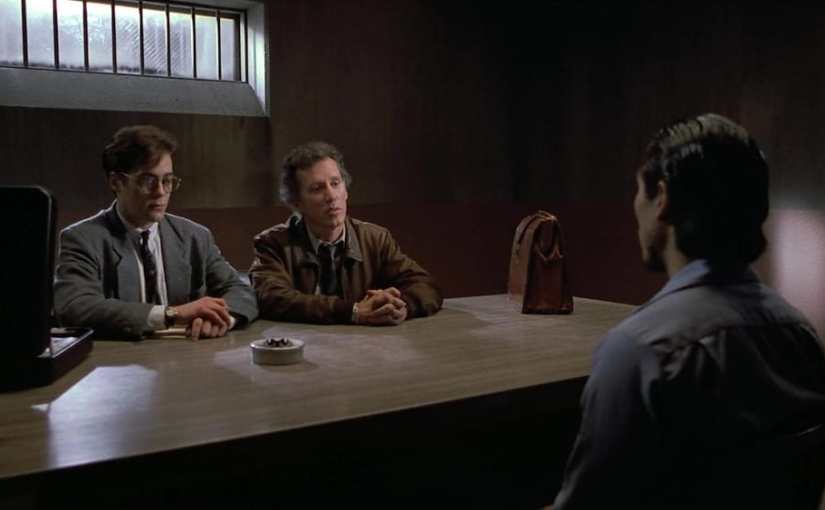
TRUE BELIEVER (1989)

by Miguel E. Rodriguez

DIRECTOR: Joseph Ruben
CAST: James Woods, Robert Downey Jr., Margaret Colin, Yuji Okumoto, Kurtwood Smith
MY RATING: 7/10
ROTTEN TOMATOMETER: 96% Fresh

PLOT: A cynical former civil liberties attorney, now reduced to “specializing” in defending drug dealers, becomes transformed by an eight-year-old murder case.


I don’t know if True Believer counts as a “forgotten” film in today’s world, but it’s certainly not a movie that I hear mentioned anymore.  Directed by genre-hopping journeyman Joseph Ruben, whose films are more recognizable than he is (Dreamscape, The Stepfather, Sleeping with the Enemy), and anchored by James Woods and Robert Downey Jr., True Believer is a solid entry in the crime/courtroom drama/thriller arena, at least in broad strokes.  However, there are momentary lapses of logic that strain credulity, and despite the momentum of everything around them, they were enough to affect my opinion/impression of the movie.

After a flashback and prologue that introduces us to his future client, we meet Eddie Dodd (James Woods), a fiery former civil liberties attorney who once defended Black Panthers and other social revolutionaries in the 1960s.  Now, at the tail end of the ‘80s, in the waning days of the “Me Generation”, he specializes in defending drug dealers and/or distributors under the guise of painting the government’s use of wiretaps and undercover agents as invasions of privacy…a shabby attempt at investing his sleazy client list with some sort of social nobility.  Into his life comes an aspiring attorney, Roger Baron (future Oscar-winner Robert Downey Jr., looking fresh and innocent during what must have been one of his infamous rough patches).  Roger idolizes the old Eddie Dodd, the idealist, and is severely disillusioned by the current Eddie, the opportunist.

Things change, though, when a Korean mother and daughter track Eddie down and ask him to defend their son and brother, Shu Kai Kim (Yuji Okumoto, The Karate Kid Part II, Better Off Dead), who is eight years into a prison term for a murder they say he didn’t commit.  The daughter says she tracked him down by going to all the courthouses: “They all speak of you, and they all say the same thing…you do cases cheap.”  He dismisses them with a vague promise to “review the material,” but after some predictable prodding from Roger, his new conscience incarnate, he takes the case.

What follows is a well-directed, well-paced mystery-slash-courtroom thriller.  It’s not fancy or especially slick, but it held my interest, which is all I ask of a mystery where I’m expected to keep track of a lot of information.  And there is a lot of information to keep track of.  Eddie and Roger, with the assistance of their P.I., Kitty (the invaluable Margaret Colin), uncover inconsistencies in witness accounts, inconsistencies from their own client, the involvement of the Aryan Army, a bona fide conspiracy theorist who believes the phone company killed Kennedy, and a possible link to an 8-year-old drug bust.  (That’s about all I can say about the plot without ruining the surprises of the evidence chain.)

As I said before, the movie is solid, but they made one major misstep: casting the talented Kurtwood Smith as opposing counsel, D.A. Robert Reynard.  From his first scene, no matter how nicely he smiles or how friendly he seems, he is obviously the bad guy, because it’s Kurtwood Smith.  Because of his mere presence, you know he’s not to be trusted and must be brought low, no matter how logical his courtroom arguments are.  He is clearly the villain, even if he’s not doing anything truly wrong.  So right away, any possible objectivity about who’s right and who’s wrong is skewed.  It would have been more interesting if the ostensible bad guy had been cast by someone who is at least a little ambiguous.  Just my two cents.

There are other issues.  As the investigation progresses, there is an anguished speech from Eddie to Shu Kai Kim that spells out exactly where the title of the movie comes from and ends with some tortured dialogue that must have looked good on the page, but just doesn’t feel right coming out of James Woods’s mouth.   In another scene, Eddie walks away from two armed men who have every reason to shoot him in the back but inexplicably choose not to, presumably due to a sudden attack of conscience.  Given what these two men had done just previously, this inaction seemed wildly improbable.  Then the D.A., whom we have seen is highly intelligent, allows himself to get cornered in the courtroom when he absolutely should not have.  Not the actions of a smart man…but certainly the actions of the clear villain, because it’s Kurtwood Smith.

Because of these inconsistencies, True Believer will probably never be mentioned in the same breath with Jagged Edge or The Verdict or any other great courtroom thriller.  But the performances from the leads are more than adequate (despite James Woods’s incongruous ponytail), and the mystery is fun to unravel, and Joseph Ruben’s direction is competent if not splashy.  In other words, it’s your slightly above-average ‘80s genre movie.  (And I am sometimes a sucker for ‘80s nostalgia, so…there you go.)

AVENGERS: INFINITY WAR

By Marc S. Sanders

Avengers: Infinity War is a really FAT movie. Like ORCA FAT (thank you Keyser Soze), because it is chock full of so much to see. If this equated to gorging on junk food, after two hours and forty minutes, I would have a diabetic cardiac arrest immediately following the credits. Is this a film that is worth that handicap, however? You bet it is.

There is an ensemble of top Hollywood talent portraying a huge cast of characters, once again, and thus another installment has surfaced in the franchise that allows them to have various moments to shine. Producer Kevin Feige with all of Disney’s support, has mastered the formula to ensemble casting and production, as good as when George Clooney and company performed under Steven Soderbergh’s direction in the Ocean’s 11 remake. Thousands of special effects shots do not overpower the stage presence of the actors. The Marvel movies succeed because a story is always written first. Then witty dialogue comes thereafter, and then valid, convincing shock value. The special effects are the final ingredient. This is what the Transformers franchise and (yes, I’ll even own up to it) the Star Wars prequel trilogy (about ¾ of it) failed to achieve. This successful formula gives merit to the (at the time) biggest opening weekend ever, worldwide, and Avengers: Infinity War deserves the accolades.

How good is it? Well, reflecting back to May 1980, when sitting in a crowded theatre watching the ending to The Empire Strikes Back, by comparison I think audiences have finally been served up a cliffhanger (10 years in the making) that is just as effective. How is this all going to wrap up from here? How is this all going to be resolved? Reader, I don’t know if the next chapter will be satisfying. I don’t know if we will feel cheated like Annie Wilkes from Stephen King’s Misery. Presently, however, I’m turning an ending like this over in my mind; the same way I did with my pals in 1980 debating the survival ratio of Han Solo and if Darth Vader has told the truth, and if that was Vader’s brain or head that I saw, and who is this “another” that Yoda referred to….and that, my friends, is what makes a spectacular film. I don’t care if it gets watered down in the hype and McDonald’s promotions and toys. If you can mull over a movie long after it has ended, for days, even months and years, then a film like The Empire Strikes Back and Avengers: Infinity War has more than served its purpose.

Josh Brolin provides a villain with a justification to his madness. He’s not just twirling his mustache to be mischievous and sinister. He has a destiny to fulfill, and his portrayal of the mad titan Thanos does not compromise. This is a beast of a purple villain with size 52 boots and gold-plated armor with a chin that looks like it was clawed by Wolverine. Thanos cries, actually cries, while committing his crimes. He’s not just cackling. He flat out says that he executes his actions all so that he can relax and retire. Isn’t that what we are all trying to do, anyway? Nothing wrong with that. Guy sounds like a CEO to a large corporation. Maybe Thanos is updated to resemble an Elon Musk. 

All of the other actors from main staple Robert Downey Jr to Chris Pratt to Chadwick Boseman to Zoe Saldana and Chris Hemsworth, and so on, remain consistent to what we’ve seen of various prior installments. Their gimmicks continue to avoid becoming stale. Audience applause is cued by their appearances. These are well loved characters.

As an avid comic book reader of the silver age (1980s), Avengers: Infinity War presents itself as of one those annual limited series runs that were special because they were MAIN EVENTS!!!! My favorite back then was Marvel’s Secret Wars. Typically, a comic book from the 1980s would average about 18-22 pages with advertisements sprinkled in. Nearly every scene in this film equates to one issue of a limited run of a main event. That is a why a fat movie like this succeeds. The cast of characters are separated in various story lines. The scenes are given their time to flesh out and develop to move the subplots and overall story along. Each scene is like reading a new 18 page issue comic book. If I’m watching a comic book film, by golly, I want to see how a comic book is brought to life in a cinematic medium. Marvel’s films succeed greatly over DC’s films (produced by Warner Bros) because they rely on the source material. They know they got the goods. Cast it right, adapt it properly and go with that. If it ain’t broke, don’t fix it. A wealth of material (nearly 70 years) and Marvel/Disney uses it all. (How does DC/Warner Bros miss the mark so often?)

Of all of the Avengers films, Infinity War is definitely the best one. Ironically, I wasn’t expecting it to be. I was waiting for this stuff to get old and tiring. It just hasn’t faltered yet. It hasn’t gotten lazy yet. It all seems so fresh still. It’s a fantastic cinematic accomplishment. Sure, its main story is a guy chasing down six different colorful MacGuffins. So what! It’s simple. It allows the characters to stand out from there. An organized plotline like this doesn’t take much effort or time to explain its purpose. It states its conflict early on, and then the show stopping moments present themselves. One after the other after the other until a monster of an ending that is so jaw dropping, head shaking, thrilling and gasping, satisfyingly arrives. 

More importantly, the MacGuffin search drives the motivations and fleshes out the film’s main character, Thanos. This Marvel installment belongs to Josh Brolin as Thanos. Everyone else serves as his antagonists. What matters is that the bad guy wins this time, just like demonstrating that an Empire will strike back. Ironic that Spider-Man makes a humorous correlation to that celebrated franchise from almost forty years ago.

Avengers: Infinity War ended up in my top 10 list of 2018, and still holds as the best film in the Marvel Cinematic Universe.

OPPENHEIMER

By Marc S. Sanders

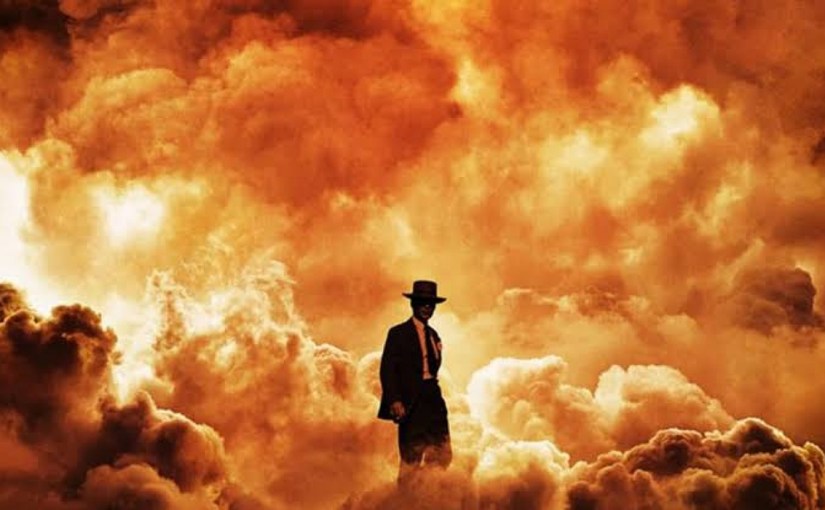
Christopher Nolan is one of the modern-day directors that you can rely on for brainy science fiction whether they are in embedded in dream subconsciousness, intergalactic space travel, transcendences of time, or even putting a fresh polish on a favorite superhero.  With Oppenheimer, he triumphs with exploring the actual prophets of science in the twentieth century, particularly its title character J Robert Oppenheimer, the brilliant physicist played convincingly well by Cillian Murphy.  Nolan doesn’t just stop at the assembly and discovery of science though.  He uncovers the consequences of Oppenheimer’s innovation and genius insight.  Dr. Oppenheimer might have been the man who knew too much and arguably that cost him quite a bit, personally.  Additionally, the so-called lab rat of his atomic bomb, namely the planet Earth, suffered the expense of a, at the time, troubling present day, and a still ongoing future. 

This movie seems to start right in the middle of its story and as a viewer you need to claw your way through the dense foliage to find its beginnings and what comes afterwards.  The first two scenes of the movie are titled “Fission” and “Fusion.”  There are no time periods specified by a font caption, however.  The differences in various points in history are distinguished by where J Robert Oppenheimer is located during select points in his life.  For seconds at a time, the film will change its photography from vibrant color to black and white, for example.  The characters will either look more aged with grey hair and some wrinkles or during more youthful time in their lives.  At one point Oppenheimer is being recruited by Lewis Strauss (Robert Downey, Jr) to head the department of a new kind of weapon development.  Work the science to make a difference.  There’s another time period where he’s being interrogated in a small room by a governmental suit and tie committee.  Oppenheimer is also in his classroom or debating and working with colleagues.  Another story observes his progress with building the atomic bomb among a collection of other engineers and scientists in a desert town, Los Alamos, specifically built at his own request, under the order of the nothing but militant Colonel Leslie Groves (Matt Damon), to conduct his work and research while hiding in plain sight. 

The film also covers Oppenheimer’s association with possible suspects of the Communist Party during the stressful pre-cold war era of McCarthyism.  Questions arise if his reliable brother Frank (Dylan Arnold) is a communist or even his mistress (Florence Pugh).  Does that in turn make Oppenheimer a communist as well?  If that is the case is J Robert Oppenheimer, the man tasked with ultimately ending World War II in favor of the Allies, sharing secrets with Russia and/or the Communist Party?

Nolan’s film gets easier to watch as it moves along, but you must get used to his pattern of filmmaking.  If you have never seen a Christopher Nolan film, I do not recommend you start with Oppenheimer.  His work is recognized for fast paced edits of different time periods and conversations.  There is much information to decipher. As well, there’s a very large collection of welcome characters to sort through, who worked with or against Oppenheimer.  Having only seen it once, I was captivated with the picture, but I know that I need to see it again.  The quick edits, working beautifully against the soundtrack orchestrations of Ludwig Göransson (nominate him for an Oscar, please), happen a mile a minute.  I appreciated this method because it enhanced the urgency of Dr. Oppenheimer in the eyes of the world, first as the savior of the united Allies against the last remaining superpower of the Axis countries, Japan. Then later focus is on whether it is in the United States’ best interests for the regarded physicist to have security access to the country’s most secret weapons and technological progress in a post war age.

People have been cajoling about how they know the ending to Oppenheimer.  They drop the bomb, of course!  (Twice actually.)  However, they do not know the entire story adaptation that Christopher Nolan as director and screenwriter presents. 

Cillian Murphy is perfectly cast. Give him an Oscar nomination.  He serves the confident, assured scientific leader who becomes envious of competing powers who achieve the impossible, like splitting the atom, while also admiring peers and mentors like Niels Bohr and Albert Einstein (Kenneth Branagh, Tom Conti).  All these men are interested only in what can be accomplished.  The superpowers that fight in war, though, are interested in how these accomplishments of modern science can be used to their advantage at a cost of collateral damage.  It is these conflicts of interests that Nolan admirably demonstrates over the course of the film. 

A telling scene for me, that I won’t forget, is when Robert Oppenheimer meets Harry Truman (Gary Oldman, doing an unforgettable cameo).  As the physicist exits the Oval Office, having shared his concerns and scruples with the Commander in Chief, Nolan includes a throwaway line delivered by the President, that I won’t soon forget.  It will not be spoiled, here.  Yet, the dialogue speaks volumes of what the United States held important regarding the servants who did the country’s bidding.  The scene closes like a stab in the heart, and suddenly science is no longer just facts within our planet.  Science is now questioned on whether it should ever be acted upon. Those questions certainly have remained as long as I’ve been alive to read about our never-ending world climate.  These inquiries will be here for many generations after I’m gone as well; that is if men and women’s recklessness with science doesn’t destroy the Earth before then.  At one point, Oppenheimer shares a small fraction of possibility for the end of the world when they activate and test their first atomic bomb. Matt Damon’s Colonel Groves’ asks for a reiteration of that observation.  Is this finding worth even the smallest, most minute risk?

Emily Blunt portrays Kitty Oppenheimer.  She’s marvelous as a lonely alcoholic wife to Robert, and a mother minding a home built in the desert while her husband serves an important purpose.  I didn’t take to her presence in the film until her grand moment arrives during an interrogation scene.  As the character gives her testimony regarding Oppenheimer’s communist ties, Blunt locks herself in for a wealth of awards in late 2023/early 2024.  Once you’ve watched the movie, you’ll likely know which scene I’m referring to and you can bet it’ll be that sample clip shown on all the awards programs.  This might not be Blunt’s best role, because it is rather limited within crux of the film, but I’d argue it is her greatest scene on film that I can remember.

Oppenheimer is a three-hour film, and it demands its running time.  There are so many angles to the man that few really know about.  Many know it was he who instrumentally built the atomic bomb that to date has only been used twice within a period of four days.  Thankfully never since.  Nolan emphasizes how unaware we are of how carefree the doctor’s government supervisors performed with the weapon he agreed to build.  Don’t just drop the bomb once.  Send a message to Japan by dropping it twice so they know to no longer engage in this ongoing war.  Choose the area where an army/government official didn’t honeymoon though.  It’s too beautiful a region.  Tens of thousands of men, women and child civilians perished immediately following the strikes.  Many others died weeks later following exposure to the nuclear effects that followed.  All issued as a horrifying cost to end a war that was already being won now that Hitler was dead.

Mechanically, Christopher Nolan does not disappoint either.  I watched Oppenheimer in a Dolby theater and I highly recommend it over a traditional one.  However, beware of the sound.  It is a LOUD!!!!!  Your seat will rattle early in the film when Cillian Murphy is shown in close up imagining the collision of atoms, protons, and neutrons.  How a star naturally dies in space runs through Oppenheimer’s consciousness as well, and then we see how a black hole forms.  Nolan offers a Cliff’s Notes edit of science doing its job.  Murphy performs so well when he’s not speaking and cut against the quick edits of Nolan’s visual and sound effects of science at play.  It shows how an educated scientist thinks beyond what is documented on a chalkboard or in a textbook.  J Robert Oppenheimer used to teach about the building blocks and natural destruction that occurs within the universe.  Regrettably, what he learned about natural function soon becomes manufactured capability when the professor accepts the task of building scientific destruction with his bare hands. Man stole fire from the Gods.

Oppenheimer is so dense in the scope of science and the scientist behind it.  That’s a huge compliment.  It’s an engaging film with much to tell, and a lot more to think about afterwards.  It accomplishes what the best movies do.  It leaves you thinking long after the film has ended.  More importantly, it’ll leave you frightened for the future based on the behavior of this planet’s past. 

Oppenheimer is one of the best films of the year.

CAPTAIN AMERICA: CIVIL WAR

By Marc S. Sanders

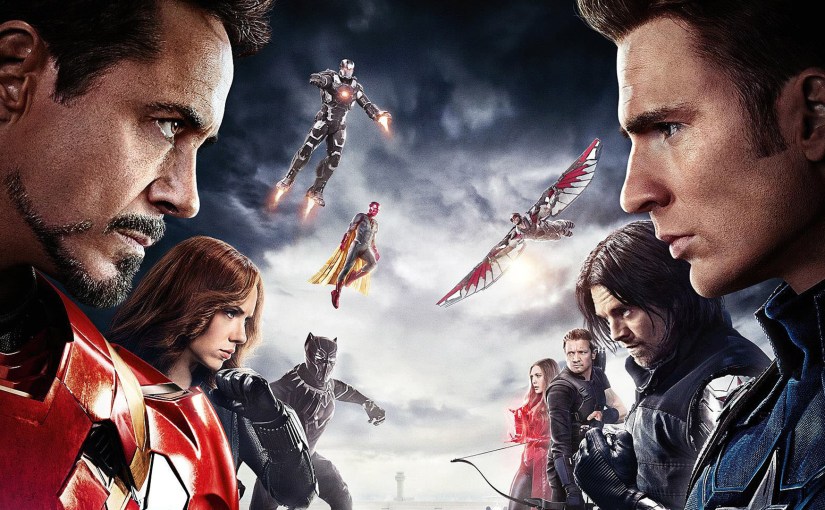
I think the Civil War chapter must be one of the best installments in the Marvel Cinematic Universe. The action ranging from fight scenes to car chases to shootouts and explosions are so well executed and edited.

This film lives up to what makes each Marvel character special in their own way, and while most of the attention is naturally focused on Chris Evans’ Captain America and Sebastian Stan’s Winter Soldier (aka Bucky), the large cast is respectively given numerous moments to shine individually with well-conceived backgrounds and traits beyond just their superpowers.

Interestingly, until the late scene where all the characters collide against one another, the film was very shy of any intentional humor and focused more on what is morally correct in this fantasy world. There was a debate to grapple with, and a threat to both sides of the moral compass. All good layered dimensions, my favorite vice of effective storytelling.

Anyone who says popcorn movies like Avengers are nothing more and simply brainless would fail at recognizing good analysis and dimension. More often than not the MCU succeeds at setting up a dilemma to keep a viewer hooked. Once they are taken…then the storytellers will do something bold like destroy the headquarters, or an airport, or a whole city or Iron Man’s armor, and on and on. Too many other franchises (Transformers, Fast/Furious or DC) bring the buildings down before the cement is dry and the windows are Windexed. That’s when story is neglected for showmanship. There’s no weight to the loss. What do I care who died? You just destroyed the village in order to save it. Disney and Marvel know this and steer clear of those habits.

The cast is so perfectly assembled in Civil War. They interact very well with line exchanges, debates and fisticuffs.

Much of this film was a blur during my first viewing. These are Marvel movies. There are so many now, the scenes all seem to blend together. Yet now I see this particular film is special. Good set pieces, costumes, makeup, visual effects and great performances lead to a great, fun presentation. I’m sold.

SPIDER-MAN: HOMECOMING

By Marc S. Sanders

Spider-Man: Homecoming makes some enormous strides with the most recognizable of all the Marvel Corporate Mascots. I’m just not sure I care for the approach.

The Web Slinger has always been best written when he learns from his mistakes such as grappling with his lack of responsibility that leads to the murder of his beloved Uncle Ben, or washing his red and blue suit with the whites.

In director John Watts film, episodes like these are never discussed. Instead, we witness Spidey foil an ATM robbery. It’s a fun scene straight out of the Saturday morning cartoon, but it ends with a beloved neighborhood mom and pop store going up in flames. The scene plays like a great house party until the parents arrive home early from their out-of-town trip. Now it ain’t so fun anymore. There are a few moments like this in the film that kinda suck the air out of a what’s supposed to be lighthearted script.

Tom Holland as the hero, Peter Parker, aka the high school genius with insecurity, is suitably cast in the role. He looks much more like a kid than his predecessors and he’s got great comic delivery of one liners. Tom Holland is right for the MCU fraternity. He plays well with others.

So Holland really makes sure every action scene is fun but Watts and his screenwriting team of 8 (EIGHT!?!?!?) people pull the rug out because they must insist that the Web Head screw up again and again. Problem is the screw ups are not fun, and they spoil the thrilling set pieces including a well done sequence within the elevator shaft of the Washington Monument. Same goes for a Staten Island Ferry attack. I just kept asking myself, why we can’t we celebrate Spider-Man. Must we be so hard on the guy? Even Tony Stark (Robert Downey Jr) disapproves. It doesn’t seem fair, I guess.

There is a moment during the 3rd act that salutes a very popular comic issue that truly conveys the hero that Spider-Man must become. As a comic nerd, I was grateful for that. The filmmakers didn’t forget its roots.

Michael Keaton is scary good as Adrian Toomes, the winged villain called The Vulture. He’s not even playing for laughs. Rather he’s playing for fear. I liked it. Keaton is just good in almost anything.

Supporting players are all good as well featuring Marisa Tomei, Jon Favreau, Jacob Batalon (an especially amusing sidekick pal for Peter), Zendaya and Robert Downey Jr because a little Iron Man/Tony Stark interaction can go a long way.

However, this installment is huge step up from the Andrew Garfield clunkers but not as solid as Sam Raimi’s first two films which remain the best and most loyal to the original vision of the pop culture favorite. Raimi has no difficulty displaying the super hero’s every day faults and mistakes. What he did was make us feel sad about Peter’s errors in his ways, and we cheered when he overcame his obstacles. In Spider-Man: Homecoming, I shake my head with disappointment at the carelessness of Peter, not the mistakes he’s made.

See, to be reckless is not the same as human error. Watts’ interpretation is judged with disdain. Raimi’s is simply empathetic and relatable. That’s the difference in the two interpretations.

PS: My hat off to a great gag with Captain America as a lesson reminder in safety and well-being. It’s not as well remembered that Chris Evans has been hilarious in other films before his superhero days. That’s all brought back with great material for Cap to use. Really smart thinking here.

WEIRD SCIENCE

By Marc S. Sanders

John Hughes, as a writer, stretched his imagination far at times. Really far!!!!! You’d have to, to build up your confidence to make a ridiculous comedy like Weird Science come to life. The movie is blatantly absurd, outrageous, a little crude and outright nonsensical. It’s Frankenstein meets Pretty In Pink. It’s alive!!!!!

Double, maybe quadruple, Uber Nerds Gary and Wyatt (Anthony Michael Hall, Ilan Mitchell-Smith) spend their Friday night in front of the computer to create the hottest woman ever. With the help of a Barbie doll and some Playboy centerfolds, nothing on earth will compare to this creation for the XX chromosome community. They give her a brain as well by scanning in photographs of Albert Einstein, of course. From there, “Lisa” (Kelly LeBrock), with the toned body that SCREAMS SEX, plots out the boys’ weekend at a blues club, then the mall and later a party at Wyatt’s house where the boys’ reputations are enhanced almost as well as Lisa’s chest.

Lisa helps Gary and Wyatt overcome their insecurities with their popular girl crushes and teaches Chet, Wyatt’s idiot green beret brother, to lay off. Chet is played by Bill Paxton. Can you imagine anyone else playing Chet?

There’s a cuteness to Weird Science. However, the slapstick gags are what really wins. Either you like this silliness or you don’t. I get amused watching all the furnishings of Wyatt’s house, including the Baby Grand piano, get sucked out the chimney along with a half-naked girl. I love it when Lisa freezes the blue blood grandparents in the pantry closet or when she erases the memory of Gary’s father. I also like how Chet is reduced to a big blob of literal shit. Then there’s the nuclear missile that rises out of the floor, up through the roof.

Take off your cap of sophisticated maturity, and just appreciate silly, sophomoric comedy for a change. It’s all harmless, anyway. Lisa makes sure everything is back in its place by the end, only now it’s better and funnier than before.

AVENGERS: AGE OF ULTRON

By Marc S. Sanders

The character of Ultron, a terrorizing cyborg, has been a favorite Marvel Comics villain of mine ever since I discovered him in 1984 during the Secret Wars 12 issue limited run. He looked sinister with a devilish face in the shape of a metallic claw. His sonic blasts appeared more destructive than anything else ever drawn on the page. Ultron was a badass!!! (“Language!”). That being said, the cinematic interpretation is quite different, yet he’s modeled on a much more grown up sculpt.

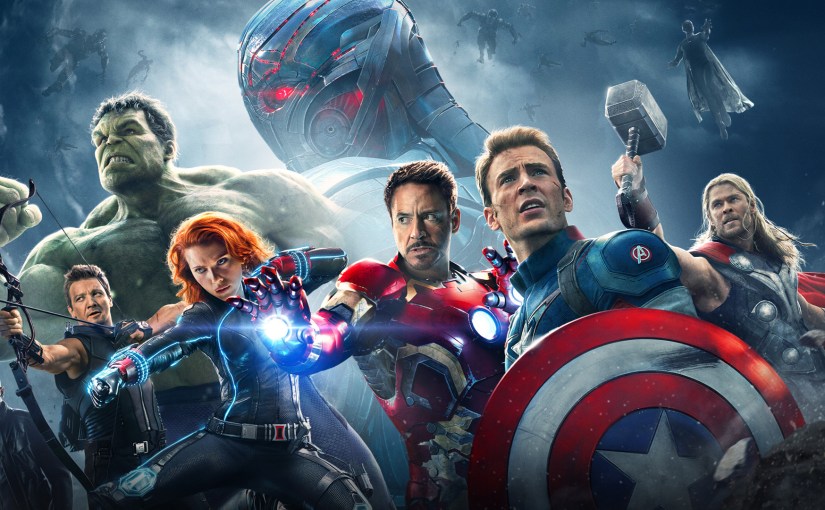
Ultron is still a terrorist bent on utter destruction, but now he has a disregard for man. He’s written quite inventively as a direct contradiction to arguably the favorite of all the Marvel cinematic characters, Iron Man aka Tony Stark. How fitting that James Spader is cast opposite his former brat pack cast mate (Less Than Zero), Robert Downey, Jr. It is really uncanny how the dialect of Spader’s limitless Ultron can sound just like Downey’s genius Stark but with a means of annihilation; “All of you against all of me.” Ultron is smart first, powerful second. He’s not just a monochromatic android. There’s a means to his end and an inventive science to his purpose; uproot a country high in the sky and then DROP IT BACK DOWN INTO THE PLANET, like an anvil flattening Wile E. Coyote. It’s actually more novel than I’m giving it credit for.

Most Marvel afficianados from the blogs, and fellow colleagues as well, do not care much for this chapter in the MCU. I have yet to understand why. Again, each character is really drawn out beautifully by Joss Whedon with a respective storyline. Finally, Jeremy Renner’s Hawkeye is given some oomph to his back story. So is Paul Bettany as the other cyborg, Vision, formerly J.A.R.V.I.S, the artificial intelligence.

Vision/J.A.R.V.I.S. outshines Data (“Star Trek: TNG,” apologies to my friend, Jim Johnson), but will never top C-3PO. I like how he’s introduced as an amalgamation of all of the film’s main characters’ abilities. Bruce Banner and Tony Stark, Thor, Ultron, Scarlet Witch, some brilliant doctor friend, and even the nation of Wakanda. They all have a piece of themselves in Vision. It’s a better story than the comics ever suggested. Maybe I’m biased having grown up on these stories, but the Vision element makes me want to clap every time I see it. So inventive and economically told for a two-hour film with a ginormous cast. Vision’s introduction is one of the best scenes in all of the Marvel Cinematic Universe.

A great device to unhinge most of the Avengers comes through by means of Elizabeth Olsen’s Scarlet Witch (identified as Wanda Maximoff) who cripples them with mind control. How else should a sorceress take out a whole lotta muscle? It works and it gives Olsen conflict to play with. The visual effects surrounding her are also pretty cool. Sure, it might be just some neon red mist, but the cinematography and CGI surrounding her look gorgeous.

This installment also serves as neat set up for what’s to come. Quick Easter Egg in Age Of Ultron: Tony Stark Name drops the term “Endgame.” Oooooooo!!!!!!

It is really admirable what Marvel and Disney have done with the MCU, and especially watching this film. It’s ironic how filmmaker James Cameron made a statement hoping for “Avengers fatigue” so the phenomenon can die down in movie houses, etc. Funny! For me, seeing all of Ultron’s toys and wit seemed to outshine quite a bit of the residuals spawned from Cameron’s Terminator franchise.

Whedon wrote and directed a film with much more intelligence, wit, at least as much action, and threat than I ever got from Cameron’s reputation of clunky dialogue and plot hole time travel storytelling. It would do Mr. Cameron well to maybe not throw stones at the glass Avengers towers. I’m skeptical that his upcoming FOUR Avatar films will carry the smirk inducing cues the MCU has used to its advantage.

IRON MAN 3

By Marc S. Sanders

The third chapter of the armored superhero, Iron Man, is an improvement on the second installment. Still, that’s not much of a compliment.

Action director Shane Black takes the reins from Jon Faverau, and gives himself a writing credit as well. I’ve always liked Shane Black’s writing style. Like this film, a lot of his works take place during Christmas. Lethal Weapon is a well-balanced picture that over thirty years later shows a nice offering of character background and action. When the action occurs, you are already invested in the characters. So, suspense is capable of holding some weight to an action movie. I only wish I saw some more of that here with Iron Man 3. Oh well!

First, let’s get the most obvious problem out of the way. Once again, Gwyneth Paltrow is there to wear sharp looking ladies suits, carry a brief in her hand and yell “TONY” a lot. You could make up a drinking game around that bit. Just when the Marvel films got it right with Hayley Atwell as Agent Peggy Carter in Captain America: The First Avenger, they revert back to their old ways yet again. If you are going to have female characters in your films, give them something weighty to work with that is evenly matched with the guys.

Robert Downey Jr is another problem, I’m afraid. He is so cherished in the role of Tony Stark by now. The first Iron Man really offers a great performance by him with a good arc. The prior film in the MCU, The Avengers gives him some great play with the other titanic superheroes. However, the writing is not thoughtful in Iron Man 2 or Iron Man 3. The first installment left you feeling that Tony was open to accepting care and tenderness from other people. His cockiness became subdued following a traumatic capture and escape.

Then the cocky monster within seemed to resurface in #2 and #3. Did Downey (who improvises a lot of his material) and the writers forget where they left off? Black literally has Tony Stark give away his address on live television to the bad guys, headed by a mysterious terrorist known as The Mandarin (Ben Kingsley). How stupid is this? Batman doesn’t give away where his Bat Cave is. Why would Iron Man do that?

From that point, we are treated to an attack on Tony’s ocean view, cliff side home from helicopters. Reader, Shane Black wrote a sequence like this twice before, in Lethal Weapon and Lethal Weapon 2. It’s been done before. The filming appears clunky in this centerpiece scene with camera shakes and uneven sound editing and lots of ceiling and wall dust. It’s a little hard to follow.

I’ll give credit to Black for throwing in a twist that comes out of nowhere. To my knowledge, this moment has left viewers very divisive. For me, I admire the effort but the development comes off wimpy. It involves Ben Kingsley as The Mandarin who promises to be a real threat to the film. Yet, the character’s motive turns out to be something else entirely. It’s odd, but it kept me engaged during the film. When the film ended, I was left wishing it was something else altogether. For the first two thirds of the film, Kingsley is very good with a hard, edged, roughly intimidating voice as he shares disturbing newscasts of threats to the President and the world. He was a different kind of villain that we hadn’t seen before, much like Heath Ledger’s Joker. Then the rug is pulled out on that attraction.

One really bright spot comes from Ty Simkins, as a kid named Harley that winds up assisting Tony when everything is against him. He is a fun, spunky kid who has some good exchanges with Downey’s well recognized, zippy delivery. He’s more fun to watch than Gwenyth Paltrow. That’s for sure.

Guy Pearce is another adversary who leads a team of baddies. Their bodies heat up to extremely hot and orange looking temperatures. (Forgive my poor English! That’s what comes to mind. Oh well!) Amazingly enough, their clothes don’t burn off while they easily can singe any Iron Man suit they come in contact with. Should I be focusing on that inconsistency? That’s one main problem with the film. It’s too apparent. I know this is all sci fi, but don’t make the fiction of the fiction so obvious, please. Pearce is fine in the role but he’s overshadowed by what his super villain powers are capable of. So, basically cast iron metal burns, but clothing fabrics do not. Got it! Check!

I’m not sure if Iron Man 3 is really worth a watch. Probably not, actually. Maybe so, if you want to marathon through all the Marvel films like I do. Yet, it really offers nothing significant to the films yet to come and shows nothing new to carry forward from the prior films. Much like Iron Man 2, it’s a pretty meaningless.

MARVEL’S THE AVENGERS

By Marc S. Sanders

Phase One of the Marvel Cinematic Universe concludes with Marvel’s The Avengers. This is a real treat and a feast for the eyes. It’s not my favorite of all the Marvel films because it gets a little too Saturday morning cartoon like at times, but it’s enjoyable to watch for good escapist popcorn fun.

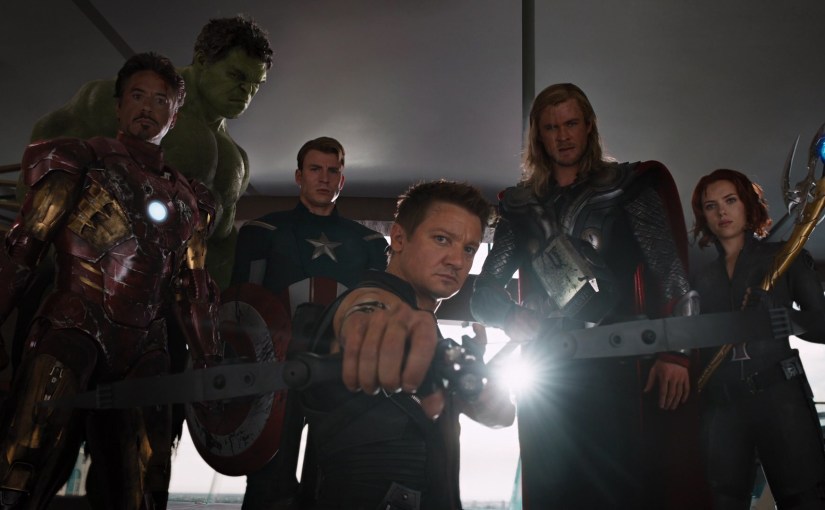
Movie goers were salivating for the year 2012 to arrive which would finally assemble Thor, Iron Man, Captain America and the Hulk on screen. Thanks to writer/director Joss Whedon that wish had finally come true and Whedon does not try to reinvent the wheel. When you assemble a team of heroes, you pit them against a large army and watch every variation imaginable of how the Hulk can smash, or what Iron Man’s armored suit can launch.

By now, you all know how I feel about the actors portraying their respective roles. Best to just say the chemistry works among them. They find reasons to squabble and Whedon provides moments for them to use their given talents against one another. So you get to see what happens when Thor smashes his hammer against Cap’s shield.

The actor who finally gets his moment in the sun is Samuel L. Jackson as Nick Fury, the orchestrator behind this team up. Jackson is more subdued than his other well known characters from the Tarentino films or Snakes On A (Mother effing) Plane. He does get to say “stupid ass idea” at one point and there’s the Samuel L. Jackson we all know and love! In comics, the Nick Fury character was reinvented before any of the films to harbor the appearance of Jackson. This film proves why the writers went that route. He’s great. He’s fun to watch. He makes for a great leader of the secret agency SHIELD. In tow with him is Clark Gregg as Agent Phil Coulson, a welcome cameo guy before this film, Gregg gets in a few scenes that show his endearment, and offer some dramatic weight as well. The guy could be waiting on hold while Black Widow takes out a couple of thugs, and you are cracking up at Gregg as Coulson, not necessarily Black Widow. He’s so likable that well…heck…he should get his own Marvel TV show….wait….nevermind….I digress.

Again, however, the women of the MCU are not drawn well for the screen. Scarlett Johansson makes her second appearance as Black Widow. She’s got a great, funny early fight scene while tied to a chair in a sleek black dress, but that’s all for show. She hints at a checkered past but this film does not offer much to expound on that. I understand. There’s a lot going on here. So there’s not much here for her to do. It’s time she got a film of her own, however. I’ll sign the petition. Wait! Nevermind! Colbie Smolders is a waste as Agent Maria Hill. She is nowhere convincing as a bad ass agent. Her line delivery seems forced. Her role seems unnecessary. Her scenes should have been on the deleted floor. It would have allowed more time for Johannson to play up her character. How is Maria Hill different from Black Widow in this film, anyway? She’s not. Therefore, cut out Maria Hill.

Jeremy Renner is given nothing to do but shoot arrows as Hawkeye, and work against the Avengers while under a spell from Loki.

Speaking of Loki, the great Tom Hiddleston is back. Hiddleston just elevates the Marvel films to more than just a comic book movie. His glee as the God of Mischief is different than say any version of the Joker’s. Pay attention Syndrome (from The Incredibles)!!! When Hiddleston monologues, you want to listen, unless you are the Hulk.

Whedon does an awesome job with the action scenes as he gradually destroys an aircraft carrier when chaos takes hold among the various heroes, and then later he destroys New York City in a fun amusement park like battle through the streets, subways and skyscrapers. It’s a little reminiscent of Richard Donner’s (or Richard Lester’s) Superman II, and Ivan Reitman’s Ghostbusters. It’s fun to watch the Hulk run through a building only to come out the other side and leap upon the head of a gigantic, flying centipede to bring it down on to the top of a building. Who cares how this all gets cleaned up? The greatest city in the world always figures out a way.

Whedon sealed the pop culture significance of superheroes in the early 21st Century. He’s done what guys like Michael Bay beg to do with other toy/comic book franchises. Marvel’s The Avengers stands out as an important impact in cinematic filmmaking. It’s not best picture worthy, but it is nonetheless important to how blockbuster films are conceived and created. Sadly, some people still don’t get it right, all these years later.