MIGUEL’S 100 FAVORITE MOVIES OF ALL TIME: #75-51

by Miguel E. Rodriguez

Part Two of my answer to Jim Johnson’s challenge to rank my 100 favorite movies of all time. To recap from my previous post: this was more or less arbitrary, I have WAY more than 100 favorite films, these rankings are not set in stone, but since this is how lists work, here we go.


75. THE LORD OF THE RINGS: THE RETURN OF THE KING (2003) – The third chapter gets the edge because of its epic battle sequences during the Battle of the Pelennor Fields. It’s with this movie that Peter Jackson brings all the story threads together for one of the greatest wrap-up films in history. (What’s that, you say? Too many endings? That’s just, like, your opinion, man…)

74. SKYFALL (2012) – While the new Casino Royale (2006) firmly established Daniel Craig as the new Bond, Skyfall dove even deeper into the hitherto unknown origins of 007. It also upped the ante for any and all Bond films forever after with a memorable villain (a creepy Javier Bardem, whose interest in Mr. Bond may not be purely professional) and a series of plot twists that would surprise even Joss Whedon. If a perfect Bond film is possible, this comes closest to it. [All due respect to Goldfinger which, while laying the groundwork for every Bond film thereafter, qualifies as a GREAT film without necessarily being one of my FAVORITE Bond movies. Crucial distinction.]

73. BOUND (1996) – Before the Wachowskis wowed the movie world with the Matrix trilogy, they created one of the best pure thrillers in recent memory, one that shakes up traditional gender roles without making that fact a plot point. Two women, one a petty thief, one a mobster’s moll, get romantically involved and plan to steal $2 million from the mobster, but as with all simple plans, complications arise, leading to a scene with a corpse in the bathtub, two cops in the living room, and a blood-soaked carpet. Hitchcock would have LOVED this movie. [Unsolicited plug: you might also want to check out 1978’s The Silent Partner, not affiliated with the Wachowskis, but it’s right up that same alley, plot-construction-wise.]

72. LOST IN TRANSLATION (2003) – The genius of this movie is not in what is being said by the main characters, but in what ISN’T being said, the pregnant pauses punctuating their conversation, each one laden with the threat of tipping their relationship over the edge from casual acquaintance to mutual cheating. This is not everyone’s cup of tea, but I speak from experience when I tell you this movie gets the vibe and emotionally charged silences JUST right. (And Bill Murray has never been better.)

71. TOY STORY (1995) – Pixar burst onto the scene with this movie that made you forget it was all done on computers. In 1995, that was NOT easy to do…but that’s another column. The story of Woody and Buzz Lightyear – Woody and Buzz, uh-huh-huh, huh-huh – trying to get back home after getting lost struck a chord with audiences and critics alike and began a remarkable string of box-office successes that continues to this day. (Well…except for Cars 2 and Cars 3…but we’re not going to talk about them…)

70. WHO FRAMED ROGER RABBIT (1988) – In the same vein as Toy Story, Who Framed Roger Rabbit accomplished what was considered impossible at the time: make an entire movie where animated characters walk and talk side by side with human counterparts. While it’s a little more commonplace today, thanks to computers and motion-capture technology, in 1988 everything had to be done completely analog with hand-drawn animation and onscreen props and stand-ins that would be obscured by the animated characters. The result is an animation aficionado’s dream, with icons like Bugs Bunny and Mickey Mouse sharing a scene together, not to mention MY two favorite characters of all time in a piano duel. There will never be another movie like this one.

69. INCENDIES (Canada, 2010) – Before director Denis Villeneuve broke onto the Hollywood scene with Sicario and Arrival, he was creating smaller-scale films in Canada and France. One of those is Incendies, an intense character study of the extent of a mother’s love. Describing the plot might destroy the fragility of its structure, which leads you down a garden path to one conclusion, then neatly pivots into something else entirely. It’s a mystery, a melodrama, and an urgent plea for peace, all at once.

68. LIFE IS BEAUTIFUL (Italy, 1997) – Many attempts have been made to find humor in the unspeakable, some successful (Jojo Rabbit), some not so much (Jakob the Liar). Roberto Benigni’s masterpiece succeeds in ways no other movie can touch. It finds ingenious ways to present hilarious slapstick humor against a backdrop of impending doom, and then challenges itself to take its cinematic conceit all the way to its logical conclusion. When that final scene played out, I nearly wept with joy. NEARLY.

67. STRANGER THAN FICTION (2006) – Will Ferrell has never portrayed more depth of character than he did in this surreal fable about an IRS accountant who suddenly starts hearing a disembodied voice narrating his every move as if he were a character in a novel. The explanation for the voice, the heartbreaking subtext when he says, “I think I’m in a tragedy”, and how his favorite wristwatch is involved combine to create a movie experience that transcends its simple trappings and becomes rather profound.

66. THE SOCIAL NETWORK (2010) – Boy, did I not want to see this movie when it came out, even though it was directed by David Fincher. A feature-length commercial for how great Facebook is? No, thank you. Then the reviews started coming in, I went to see it anyway, and…wow. Aaron Sorkin’s rapid-fire dialogue combines with Fincher’s impeccable direction in ways I did not expect. The result is one of the most intellectually and visually stimulating biographies I’ve ever seen.

65. ROGUE ONE: A STAR WARS STORY (2016) – This movie worked WAY better than anyone, including me, expected it to. Partially bridging the gap between Episodes III and IV, Rogue One provides a thrilling backstory on the Rebel missions and operatives that delivered the Death Star plans into the hands of its most trusted messenger. From the new characters to the inspired inclusion of re-edited footage from Episode IV, Rogue One is a jewel in the crown of the Star Wars Cinematic Universe.

64. INSIDE OUT (2015) – Yet another Pixar success story. This one goes directly into the brain of a 12-year-old girl as she struggles to work out her feelings about her family pulling up stakes and relocating. Her feelings are portrayed as individual characters: Anger, Disgust, Fear, Joy, and Sadness. What sounds like a cutesy-tootsy Disney-marketable concept evolves into something heart-wrenching as Joy tries to suppress Sadness, with devastating results. Any movie that successfully argues for the necessity of sadness in one’s life deserves recognition.

63. EVERYTHING EVERYWHERE ALL AT ONCE (2022) – Much like Scott Pilgrim vs. the World, Everything Everywhere All at Once defies description. How many films have you seen or even heard of that combine surrealism, absurdism, comedy, science fiction, philosophy, slapstick humor, martial arts, and hot dog fingers? HOT DOG FINGERS, PEOPLE. There are virtually infinite ways this movie could have gone wrong. Its success is a testament to the actors and director, yes, but also to the editor, who deserves recognition at Oscar time.

62. READY PLAYER ONE (2018) – Okay, this movie isn’t particularly deep or insightful, but it stands as one of the most sublime movie-going experiences of my life. My entire childhood, or at least the pop-culture part of it, was put on display, and seeing it made me feel like a kid all over again. I saw it three times in movie theaters, and every time I had the most ridiculous grin on my face. (Hello, old friends…) I’m not sure how audience members who are not part of my generation feel about it, but I think it’s magical.

61. ROMA (Mexico, 2018) – I do so enjoy being wrong about a movie – at least when it works in my favor. Roma’s plot description makes it sound like a “spinach” movie: good for you, but not the best meal ever. But right from the opening credits, Alfonso Cuarón’s semi-autobiographical period piece sucked me in and kept me involved until the final credits. The experience of watching Roma is like looking through someone’s old family album of black-and-white photographs and seeing them come to life and walk and talk. Nostalgia at its finest.

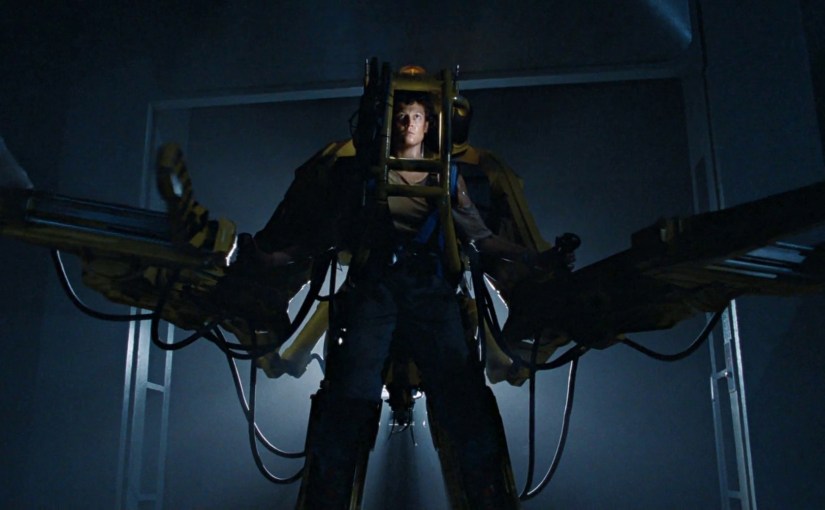
60. ALIENS (1986) – James Cameron’s 3rd-most-highly-anticipated sequel (after Terminator 2 and Avatar: The Way of Water) can make a legitimate claim to being the best movie in his filmography, especially if you have access to the Director’s Cut that brings even more depth to an already stacked movie. Ripley returns to the planet where she first encountered the bloodthirsty Xenomorph, this time with a squad of Colonial Marines in tow. What unfolds is one of the most successful exercises in sustained suspense and action ever made. To shamelessly quote Roger Ebert: “I’m giving the movie a high rating for its skill and professionalism and because it does the job it says it will do. I am also advising you not to eat before you go to see it.”

59. JAWS (1975) – Since I can’t give two movies the same rank, I’m putting Jaws just ahead of Aliens, but in my opinion they’re equals. Jaws gets the slight edge based on the technological limitations of its day, which makes its success as a suspense thriller even more admirable. Spielberg’s adaptation of Peter Benchley’s runaway bestseller performs a neat slight-of-hand that so many contemporary thrillers forget about: not truly showing the shark until the final reel. The result is a thrill machine that lodged in the collective subconscious of an entire generation…and scared a lot of them out of the water for good.

58. MAGNOLIA (1999) – One of the best films from a year that rivals 1939 as Hollywood’s best year of all time. (Seriously, look at 1999’s output some time.) Paul Thomas Anderson’s magnum opus tells the story of a group of characters whose connections are not immediately obvious to the characters themselves, each of them living their own lives and crossing paths with each other only rarely. It’s all capped with a meteorological event that is based on fact, but which struck many viewers as too improbable to believe. No matter. The acting and direction on display in Magnolia makes it feel like a Robert Altman screenplay directed by Martin Scorsese. Yeah. It’s that good.

57. FIGHT CLUB (1999) – So, yeah, remember what I just said about 1999 being a great year? Here’s more proof. I’ll leave aside the philosophical discussions (is it fascist? pro-social-terrorism? absurd macho posturing?) and I’ll just make the point that, when I first saw it, I had NO idea what it was about, and after intending to only watch the first hour, I was immediately sucked in and watched it all the way through. It was jaw-dropping and eye-opening. And funny. And irreverent. And transgressive. And arresting. I’ll never forget that first time watching it. And I won’t stop recommending it to anyone who hasn’t seen it.

56. THE STING (1973) – There has never been a screen duo as charismatic or who exhibited more chemistry than Paul Newman and Robert Redford. It’s one of the great cinematic tragedies that they only made two films together. But at least one of them is The Sting, a stunning period-piece comedy/drama about a couple of grifters who team up to take down a mob boss who killed a colleague of theirs. The costumes, production design, and top-notch acting would mean nothing without its clockwork script that carefully lays out the details, so nothing is overwhelming or left out. Well…ALMOST nothing is left out…

55. THE PIANO (New Zealand, 1993) – I know Jane Campion has had a long, illustrious career, but none of her films have had more of an impact on me than her semi-tragic romance, The Piano. The love story is basic enough, even a little soapy, and some viewers may be distracted by the occasional graphic nudity, but after the initial shock, I realized that those graphic scenes were entirely necessary to convey the shock the heroine herself feels in those situations. But what really got me was that final sequence with the piano and the rope…I still get a little goose-bumpy whenever I see it play out. On just about every level, The Piano is one of the cinema’s greatest romances.

54. THE APARTMENT (1960) – Many directors would figuratively kill to have Billy Wilder’s track record: The Lost Weekend, Double Indemnity, Some Like It Hot, Stalag 17, Sunset Blvd., etcetera, etcetera. The Apartment is one of his best, a romantic serio-comedy that daringly, for its time, involves a man who loans his apartment out as essentially a whorehouse, an emotionally abusive married boss who blackmails his employees and strings a poor elevator girl along in a pointless (for him) affair, and an attempted suicide. Credit the screenplay and the performances by Jack Lemmon and Shirley MacLaine for somehow making the combination of light and dark material work flawlessly. (For those keeping score, it also has one of the best closing lines in cinema.)

53. CROUCHING TIGER, HIDDEN DRAGON (Taiwan, 2000) – Director Ang Lee’s tribute to the martial arts films of his youth plays like the far-East version of Raiders of the Lost Ark. The surprisingly deep and affecting story is balanced by some of the most visually astonishing fight scenes ever created, with heroes and villains gliding over rooftops and balancing on bamboo stalks. Plus…probably the greatest girlfight since Ripley took on the alien queen, as Michelle Yeoh and Zhang Ziyi face off with a dizzying assortment of swords, sticks, and knives for what feels like 10 minutes. Stellar entertainment from top to bottom.

52. ONE FLEW OVER THE CUCKOO’S NEST (1975) – Milos Forman’s adaptation of Ken Kesey’s novel, a touchstone of ‘60s counterculture, is as life-affirming as it is depressing, if that makes any sense at all. The gruesome violence in the final reel is justified and tempered somewhat by the fact that (SPOILER ALERT) McMurphy is unable to achieve his goal. Anyway, that’s just the final reel. Everything leading up to that moment is pure gold. There have been many, many films about a lone voice rebelling against an oppressive system, but few are as funny, poignant, and provocative as this one.

51. DOUBLE INDEMNITY (1944) – Billy Wilder’s definitive film noir. While Bogey and The Maltese Falcon essentially jump-started the genre, Double Indemnity clarified it, refined it, and disturbingly succeeded in getting audiences to root for the bad guy, like Hitchcock would do to even greater effect in Psycho, sixteen years later. This movie has everything: the voice-over, the flashbacks, the cheesy tough guy talk (“She was a tramp from a long line of tramps”), and, per the Hays code, the bad guys eventually getting what they deserve. But don’t fool yourself into thinking that makes the movie predictable.

…to be continued…
MIGUEL’S 100 FAVORITE MOVIES OF ALL TIME: #100-76

by Miguel E. Rodriguez

This is the first part of my answer to a “challenge” from my friend, Jim Johnson, to me and my other Cinephiles: Thomas Pahl, Anthony Jason, and Marc Sanders. The challenge: in the wake of the most recent Sight and Sound listing of the 100 Greatest Films of all time, to create my own ranked list of my 100 favorite movies of all time.

This list was not created without some major heartbreak, and I reserve the right to say, at any point in the future, that my ranking has changed. By nature, these lists are intended to engender discussion and (ahem, Marc) argument.

I make no claim that these are the GREATEST films of all time. These are merely my FAVORITE movies of all time. You won’t find much Bergman or Italian neo-realism or anything like that on my list. These are movies that reached into my soul and stirred something there like few other films have.

These 100 films do NOT represent ALL of my favorite films by any stretch of the imagination. (A rough estimate of ALL of my FAVORITE films goes to about, oh, let’s say 1,207.) But since the challenge is to pick only 100…sacrifices had to be made. As my fellow Cinephiles have heard me say multiple times: I REGRET NOTHING.

Anyway, here’s the first 25. Numbers 100 to 76 of my 100 Favorite Movies of All Time.

100. I, DANIEL BLAKE (Great Britain, 2016) – A heartbreaking evisceration of the unnecessary bureaucracy in the British social services system. This movie made me sad and mad at the same time.

99. AVATAR (2009) – Say what you will about the screenplay, this is one of the best big-budget visual effects extravaganzas in years. Turn up the volume, adjust the brightness, and leave your brain behind.

98. STAR TREK (2009) – Purists may and will squawk, but J.J. Abrams’ re-imagination of Gene Roddenberry’s timeless universe punches up the visuals (and the lens flares) without sacrificing what made Trek timeless in the first place: a damn good story.

97. JOKER (2019) – Speaking of reimagining a classic, Joker mixes Taxi Driver, The King of Comedy, and Batman and, against all odds, winds up with a brilliantly compelling take on what drives the greatest comic book villain of all time. (Joaquin Phoenix’s Oscar-winning performance is stunning.)

96. ATONEMENT (2007) – Part love story, part redemption story, Atonement is a sumptuous period piece that performs one of the greatest “head-fakes” since Psycho: making us think it’s about one thing when it’s really about something else. I won’t say anymore lest I give anything away. If you know, you know.

95. LOVE ACTUALLY (2003) – One of the very few romantic comedies on my list, and for good reason: it combines the inherent corniness of being in love with the devastating effects of love gone wrong. Haters can debate that sequence with the “flashcards” all they want. This movie is a warm blanket and a hot cup of cocoa on a cold day.

94. LOGAN (2017) – In the annals of comic book films, few characters have been given a better final curtain than the one provided to Hugh Jackman’s iconic interpretation of the Wolverine. At last, we get to see the real effects of those adamantium claws on human flesh and bone, but the blood-soaked action is tempered with a real story. (gasp!)

93. SCOTT PILGRIM VS. THE WORLD (2010) – This gets points for its non-stop humor and pure originality at just about every level. I defy anyone to accurately describe the plot and style in 25 words or less. (“Bread makes you FAT?!”)

92. HEREDITARY (2018) – It wasn’t until about 2 weeks after seeing this movie, when I couldn’t get its imagery out of my head, that I realized Hereditary is one of the most effective and flat-out frightening movies I’ve ever seen. The very end may be a bit of a head-scratcher, but so what? I guarantee you’ll still be thinking about that last sequence for days.

91. LITTLE MISS SUNSHINE (2006) – You just want to hug this movie after it’s over. Or maybe hug the filmmakers in gratitude for providing one of the warmest, funniest family comedies – with an edge! – in years. You may never hear “Super Freak” the same way again.

90. FINDING NEMO (2003) – One of Pixar’s major triumphs, evoking no less than Bambi in the opening scene, and evolving into a road/odd-couple movie for the ages, with Ellen DeGeneres’ Dory stealing every scene she’s in. EVERY. SCENE.

89. HOOP DREAMS (1994) – One of the most celebrated documentaries ever made (that got shut out of the Oscars, Google that story if you’re unfamiliar with it). Filmmakers follow two inner city kids and their families for years – YEARS – as they each pursue that elusive dream of one day playing in the NBA…with varying results.

88. DARK CITY (1998) – A man wakes up in a hotel bathroom with no memory, blood on his forehead, and a dead woman in the bedroom. What follows is a visually stunning sci-fi tale that continually surprises and entertains. (Avoid the original cut…find the Director’s Cut if you can, the one that eliminates the spoiler-laden voiceover at the beginning.)

87. THERE WILL BE BLOOD (2007) – One of a precious handful of films that genuinely inspire me to be a better actor. The movie itself is hypnotic and entertaining, but it’s the Oscar-winning performance from Daniel Day-Lewis that propels the film into the stratosphere. One of the greatest acting performances of all time.

86. RUN LOLA RUN (Germany, 1998) – Call it an MTV-esque illustration of “The Butterfly Effect”. Franka Potente and her shocking red hair sprint through city streets three separate times, each with subtle variations that have enormous consequences on the outcome each time. Sounds ridiculous, but the overall effect is greater than the sum of its parts.

85. MONTEREY POP (1968) – This landmark concert film captures the last gasp of “The Summer of Love” before Woodstock and Altamont ushered in the ‘70s. Here in Monterey, in a veritable sea of peace symbols and “longhairs,” Jimi Hendrix lit his guitar on fire, Pete Townshend SMASHED his, Janis Joplin put herself on the map, and Ravi Shankar gave one of the most electrifying musical performances ever captured on film. Seriously. It’ll give you goosebumps.

84. A SEPARATION (Iran, 2011) – Another great “head-fake” movie: what starts out as a simple domestic drama morphs into a powerful statement about what happens when religious ideology gets tangled up with law enforcement. The final scene where a difficult choice must be made is one of the most powerful finales I’ve ever seen.

83. DARK DAYS (2000) – This little-seen, little-known movie is a masterpiece of documentary filmmaking. Director Marc Singer (no relation to the actor from Beastmaster) followed the lives of several homeless people who live in the train tunnels underneath New York City. The ingenuity of these people must be seen to be believed: they have access to fresh water (albeit very COLD), electricity, building materials, pets…and wait till you hear what single item they sell the most of to make some cash. If a “regular” movie ended the way this documentary does, it would be accused of shameless manipulation. Look it up.

82. HEARTS OF DARKNESS: A FILMMAKER’S APOCALYPSE (1991) – The ultimate behind-the-scenes DVD extra. Eleanor Coppola – Francis’s wife – shot hours and hours of home video on the various sets of Apocalypse Now during its long, troubled production. After judicious editing, she emerged with one of the most intimate portraits of a director, and a film, and a cast, in crisis. After watching Hearts of Darkness, you’ll wonder how Apocalypse Now ever made it to screens.

81. THE DARK KNIGHT (2008) – Christopher Nolan raises the stakes and the spectacle with this, the best of the Nolan Batman trilogy. While the story and actors get their due (especially Heath Ledger as maybe the creepiest Joker ever), the real draw here are the sensational action sequences, starting with that bank heist and reaching a thrilling apotheosis with the Batpod chase. Comic book movie bliss.

80. PROMISING YOUNG WOMAN (2020) – To make a thriller that not only thrills but also has something relevant to say is never easy. Screenwriter and first-time director Emerald Fennell made it look easy. I defy anyone who watched the movie to claim they saw that ending coming. Nuff said.

79. HOTEL RWANDA (Great Britain, 2004) – This gets on the list, not just because of its message of hope, but also because of the disturbing reality of some of the most frightening scenes. Set during the horrific ethnic cleansings in Rwanda in 1994, a hotel manager turns his hotel into a haven for Tutsi refugees, at extreme risk to himself and his family. As he talks his way out of one tense situation after another, the sense of imminent danger is palpable in a way few other films have accomplished. Philip Seymour Hoffman may have won the Oscar that year, but I personally believe it should have gone to Don Cheadle for his career-best performance as Paul Rusesabagina.

78. THE BABADOOK (Australia, 2014) – A ghostly creature terrorizes a widowed mother and her precocious, borderline autistic son. At the end of the film, the mother’s method of dealing with this creature is one of the great revelations in horror movies because it resolves the story AND makes a compelling statement about the nature of grief: it is necessary and must be given a voice…before it consumes you. And, oh yeah, by the way, the movie is SCARY AS ALL HELL.

77. GET OUT (2017) – Jordan Peele takes the basic structure of all the best Twilight Zone episodes and applies it to another one of those ingenious “head-fake” movies that make you think they’re about one thing and turns out to be something altogether different and creepier. Its buried – well, maybe NOT so buried – subtext about race relations and phobias in America may not occur to you until watching it for a second time. When it hits…its as potent as any Spike Lee movie.

76. WHIPLASH (2014) – Watching a music teacher with distasteful methods berate and belittle his students for nine-tenths of a movie’s running time may not sound like a good time, but it’s all necessary to accommodate that whopper of an ending, which I did NOT see coming. The beauty of the movie is, the teacher uses that same logic to justify his abusive methods, asking the question: can great art only be achieved through great suffering? Whiplash has provided an answer. Is it THE answer? Discuss.

To be continued…

THE WORST PERSON IN THE WORLD (Norway, 2021)

by Miguel E. Rodriguez

Director: Joachim Trier
Cast: Renate Reinsve, Anders Danielsen Lie, Herbert Nordrum
My Rating: 9/10
Rotten Tomatometer: 96% Certified Fresh Fresh
Everyone’s a Critic Category: “Watch a Film with Subtitles”

PLOT: The chronicles of four years in the life of Julie (Renate Reinsve), a young woman who navigates the troubled waters of her love life and struggles to find her career path, leading her to take a realistic look at who she really is.


I love “what-if” scenarios.  There is a whole line of comic books, Marvel and DC, dedicated to intriguing “what-if” questions.  What if Peggy Carter took the super-soldier serum instead of Steve Rogers?  What if Bruce Wayne’s parents had not been killed?  And so on.

Joachim Trier’s The Worst Person in the World is a what-if scenario for film geeks.  What if…Woody Allen wrote a romantic comedy about a woman in her 30s on a road to self-discovery?  And then what if Ingmar Bergman took a crack at the screenplay and decided it was too happy, so he added some material about death?  And then…what if David Fincher directed it on 35-mm film with the bare minimum of CG effects?

Julie (Renate Reinsve, who won Best Actress at Cannes for this role) is a 30-something woman who cycles through career paths before finally settling on photography.  She meets, falls in love with, and moves in with Aksel (Anders Danielsen Lie), a comic-strip creator and author in his 40s.  They are happy together, share deep conversations, discuss kids (he wants them, she doesn’t), and spend time with his family at their lake house.

But then one night Julie walks home from a business function with Aksel and, for reasons she doesn’t quite understand, crashes a fancy party.  Here she meets Eivind (Herbert Nordrum), a charming fellow with a broad smile.  They talk.  There is a clear connection, but they are both in committed relationships.  They decide they will not cheat.  But…what defines cheating?  Does drinking from the same bottle of beer constitute cheating?  What about sharing a secret?  What about smelling each other’s sweat?  How far this little game goes, I will not reveal, but it did not end where I thought it would.  Their meet-cute ends with them walking home in opposite directions, neither giving the other their last names so they won’t be tempted to search for each other on Facebook.  Will they meet again?  Don’t make me laugh.

The Worst Person in the World is brain candy.  I am on the record as stating that I have been, somewhat unsuccessfully, avoiding films with heavier subject matter over the years.  (I can think of no situation in which I would willingly sit and re-watch The Conformist [1970], for example, to see what I missed the first time I slept through it.)  However, over the years I have seen and reviewed some heavy films that were highly rewarding: Amour [2012], Incendies [2010], and Nomadland [2020], to name a few.  The Worst Person in the World is not quite as gut-punching as those other films, but it was intelligent and funny and startling in all the right places, and what more could you ask for in a romantic comedy/drama?

The David Fincher element I alluded to earlier comes from the visual style of the film.  Director Joachim Trier loves to include primary colors, especially white, in his compositions, which is apparently a big no-no when it comes to cinematography.  The result of this choice is that anything containing colors of any kind really <pops> on the screen, while lending a kind of antiseptic feel to some of the scenes, as well.  For some reason, I associate that combination of clinical distancing with popping colors with Fincher.  (The Girl with the Dragon Tattoo [2011] comes to mind.)

There’s also a celebrated sequence in which Julie, still in a relationship with Aksel but unable to stop thinking about Eyvind (especially after bumping into him again unexpectedly), conjures a fantasy in which she runs to meet him where he works while the entire world around her remains frozen in place.  The effects in this sequence are flawless, especially when you realize that the only CG effects were those removing visible supports that kept a couple of bicycles and human limbs suspended in midair.  Everything else was done 100% real, in-camera, with real people simply frozen in place.

The effect of this scene is magical.  It evokes that giddy period we (hopefully) all remember when a brand new love has taken hold of us, and the rest of the world goes on hold while we hold hands and kiss and share a sunset and talk and walk and kiss again and time stands still, or goes too fast, depending on your point of view.  The brilliance of this movie is that it evokes those glorious feelings…and the whole time, in the back of the viewer’s mind, is that reminder: “But they’re cheeeatiiiing…”

The movie’s title immediately made me think Julie was the titular “Worst Person”, and for a while it seems to be true.  She can’t decide on a career, she knows she doesn’t want kids with Aksel but can’t really explain why, she impulsively flirts with Eyvind, she writes an internet-famous/infamous article wondering how a woman can be considered a feminist if she engages in oral sex.  But after watching the movie, I don’t believe that’s the movie’s intent.  I think we’re supposed to see how other people, including myself, might make the mistake of thinking Julie is a terrible person.  On the contrary, she’s just as confused and inarticulate about relationships and feelings as I am, as any of us are.  As she breaks up with someone, she makes what might sound like an emotionally cruel statement: “Who knows?  Maybe we’ll get back together again in the future.”  But in reality, she’s just refusing to rule anything out.  Badly phrased?  Perhaps.  But she is being as honest as she knows how to be.

(I haven’t even discussed the sequence where Julie ingests some “magic” mushrooms and goes on a drug trip for the ages, involving cartoon characters, aging, a touch of body horror, and the kind of face painting you’ll NEVER see at a theme park.  The movie even pokes fun at the shock of some of this imagery by inserting a shot of a movie theater full of people visibly cringing…a neat bit of meta-humor/commentary on the value of shocking your audience.)

The Worst Person in the World is worth your time if you’re a fan of love stories that don’t pander in any way, shape, or form.  Director Joachim Trier has gone on record as saying it’s a “romantic comedy for people who hate romantic comedies.”  That’s about right.  Don’t look for a conventional happy ending or a conventional main character.  These are just people searching for connection, who even when they’ve found it, never stop looking.  For better or worse.


QUESTIONS FROM EVERYONE’S A CRITIC

Best line or memorable quote?
JULIE: If men had periods, that’s all we’d hear about.

How important is it to you to watch a film in its native language?
Very. But not always. For example, I would not have wanted to watch a dubbed version of The Worst Person in the World. However, I have no issue with watching a dubbed version of something like Akira [1988] or Spirited Away [2001]. It comes down to the medium. For live action, I feel it’s most important to know the precise meaning behind what the characters are saying, and it’s difficult to get that from watching someone’s lips not moving in synch with the sounds coming out of their mouths. However, with animation, I want to drink in the visuals as much as possible, and that’s not as easy to do when you’re trying to read subtitles.

Do you feel subtitles lessen the overall movie experience?
Not at all. Look at Tarantino’s Inglourious Basterds [2009]. In that film, subtitles were absolutely essential to the plot, especially the opening sequence at that French farmhouse. There are those who disagree, but that’s my opinion. (But don’t get me started on those who insist on watching English films with English subtitles on…that’s another story.)

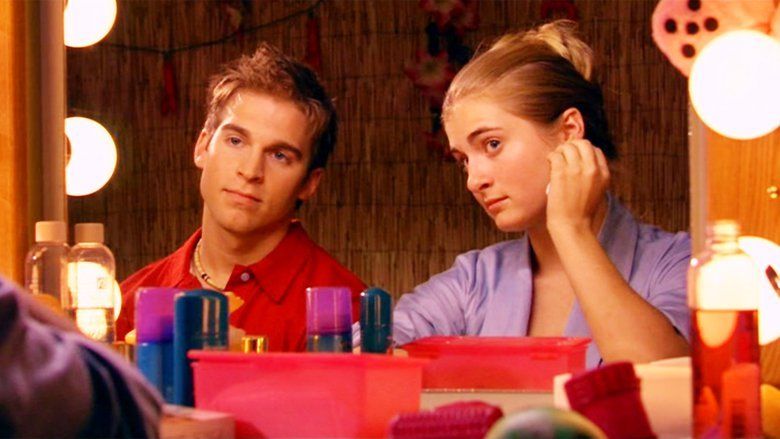
CAMP (2003)

by Miguel E. Rodriguez

Director: Todd Graff
Cast: Daniel Letterle, Joanna Chilcoat, Robin De Jesus, and introducing Anna Kendrick
My Rating: 8/10
Rotten Tomatometer: 64% Fresh
Everyone’s a Critic Category: “Watch an Early Film of a Famous Actor or Actress”

PLOT: Teen drama enthusiasts attend a summer drama camp and perform in several productions while dealing with an alcoholic musical director and their own messy lives.


Todd Graff’s film Camp plays like Meatballs [1979] crossed with Waiting for Guffman [1996].

A bunch of theatre-geek teens attend Camp Ovation, a summer drama camp where the campers rehearse and perform a different show every two weeks.  And I’m not talking Aladdin Jr. or Annie.  Among this camp’s productions are Follies, Promises Promises, and a color-blind presentation of Dreamgirls.  (It’s exactly as weird as it sounds.)

A brief prologue introduces the main characters, including Michael (Robin de Jesus), a gay boy who gets beaten up by classmates when he attends his junior prom in full drag.  Ellen (Joanna Chilcoat) is a plain-but-pretty girl with a self-image problem exacerbated by the fact she has to beg her brother to be her date to her own prom.  The appropriately-named Vlad (Daniel Letterle) is a handsome young man who doesn’t seem to have any overt personal problems.  At his camp audition, when he accompanies himself on guitar while crooning “Wild Horses”, one of the camp counselors is beside herself: “An honest-to-God STRAIGHT boy!”

There’s also the introduction of a mousy young lady named Fritzi, played by a 16-year-old Anna Kendrick in her film debut.  We all know how attractive she is in real life, but when we first meet her, she is in complete “Princess Diaries” mode: long straggly hair, flannel skirt, and acting as personal flunky for Jill, the blond camp floozy who doesn’t let anyone forget how pretty and talented she is.

Vlad is the eye of the storm at Camp Ovation.  Ellen is attracted to him, Jill wants to make out with him, Michael is burning to know if he’s gay or straight, and he’s not afraid to speak his mind.  He’s also an emotional demon-child, an incurable flirt in both directions, so everyone is off-center around him.  That’s the “A” story.

One of the flaws of Camp is that there are one too many “B” stories.  Maybe two too many.  There’s Bert Hanley, who composed a musical decades ago that is still performed today, but who has not written anything since.  He’s coming in to assist with the camp’s productions, but things look grim when he shows up two days late, drunk, and with a suitcase full of booze bottles.

There’s Michael’s ongoing issues with getting his unsupportive parents to attend one of the camp’s performances.  One of the movie’s high points occurs when Michael is performing in Romeo and Juliet, sees the empty chairs in the audience where his parents are supposed to be, and launches into his own interpretation of Shakespeare’s tale.  Bernstein and Sondheim would have approved.

There’s a hilarious subplot that is never fully explored where the camp introduces a sports counselor.  At a drama camp.  This bit is granted two brief scenes, then never heard from again.  Alas.

There’s Jenna, a young girl whose parents wanted her to attend “fat camp” instead of drama camp, so they compromised: Jenna will attend Camp Ovation with her jaws wired shut.  I will leave it up to you to discover how she performs onstage through clenched teeth.  (This subplot does get a very satisfying resolution by movie’s end, it must be said.)

Most of these subplots are good enough to support an entire movie by themselves.  In Camp, however, you get a little whiplash going from comedy to drama to teen angst to revenge back to comedy to performance and so on and so on.  While watching it again, I noticed more than ever how many times the editing seemed to be working around chunks of dialogue that probably had to be cut for time.  Somewhere out there is Todd Graff’s 3-hour director’s cut of this movie, in which every story is given enough time to breathe, expand, and evolve.

So…why do I give this movie an 8/10 rating with so much not going for it?  Purely personal reasons.

Camp is a movie about theatre geeks, made by theatre geeks, for theatre geeks.  The film’s director, Todd Graff – who coincidentally played “Hippy” in The Abyss [1989] – was a drama camp counselor himself, and the film is loosely based on his experiences.  There is virtually zero crossover appeal for this film.  Near the beginning of the film, Fritzi is trying to jog Jill’s memory where they’ve met before: “We were in Night Mother last summer, remember?”  That joke only lands if you know how many people are in the cast of Night Mother, and what the plot is, and how ludicrous it is to imagine that show being performed at a summer camp.

For all his shortcomings, Vlad has a scene that speaks directly to me.  He confesses to Michael that he has OCD.  Without medication, he counts the letters in the words in people’s sentences.  (I count syllables.)  He talks about how his affliction is “always there.”  But when he’s performing onstage…it’s not.  Not only does that speak to me directly regarding OCD, it’s also a metaphor for anyone who has felt like an outsider for some reason or another.  Offstage, you might have self-image problems or obsessive behavior or shyness.  Onstage, those things magically fall away.  I don’t use that term lightly: “magically.”  I don’t know how else to describe what happens in that boundary between offstage and onstage.  Anyway, that’s cool to me, personally.

The movie has a suitable climax, but for me, the real centerpiece of the movie comes when a group of the kids and some of the adult band members meet in secret to rehearse and perform a song that Bert Hanley (remember him from earlier?) wrote but never published.  As they perform, the cynical Hanley overhears it and struggles with himself whether to let them play or to walk in and stop the performance.  It’s a cliched moment, to be sure, but the song itself is rousing and borderline inspirational, and when the scene’s payoff occurs, it’s almost cheer-worthy.

And let’s not forget what happens between Fritzi and Jill.  After some harsh words are said, Fritzi exacts her revenge and performs a show-stopping number from a Sondheim musical.  It’s here where Anna Kendrick’s screen and stage presence are both on full display.  For years afterward, Penni and I would see her in other movies and recognize her based solely on her performance in this movie, and particularly this scene.  (Of course, we couldn’t remember her name for a while…she was always “that girl from Camp.”  It wasn’t until after she appeared in Scott Pilgrim vs. the World [2010] that her name finally stuck.)

And, of course, there’s that cameo from a surprise audience member at the camp’s final production.  (Hint: their car’s license plate reads 4UM.)

Camp may not have the name-recognition of so many other teen comedies, but this one speaks to me directly.  I’m not any one of those kids at this camp, but there’s a part of me in all of them.  I loved the musical numbers.  I enjoyed the theatrical in-jokes.  (“There’s this new thing called ‘drums,’ you’ll love it.”)  And maybe there’s also a part of me that wishes I had attended one of these camps in the summer instead of Bible camp two years in a row.  Just sayin’.

THE BLACK STALLION (1979)

by Miguel E. Rodriguez

Director: Carroll Ballard
Cast: Kelly Reno, Mickey Rooney, Teri Garr, Clarence Muse, Hoyt Axton
My Rating: 8/10
Rotten Tomatometer: 90% Fresh
Everybody’s a Critic Category: “Watch a Film Starring Animals”

PLOT: After being shipwrecked off the coast of Africa in the 1940s, a boy bonds with a magnificent Arabian stallion and trains him to race after their rescue.


Horses are great, but they are not my favorite animals.  That honor goes to the great white shark.  (They fear nothing; the only things they are even cautious around are larger great whites…but I digress.)  I always hear and read about how magnificent and majestic and spiritual horses are.  I have never denied their intelligence, but I never jumped on the bandwagon with folks who believe they are angels on four legs.  And I’ve never really gotten into horse racing, at least not on an ongoing basis.

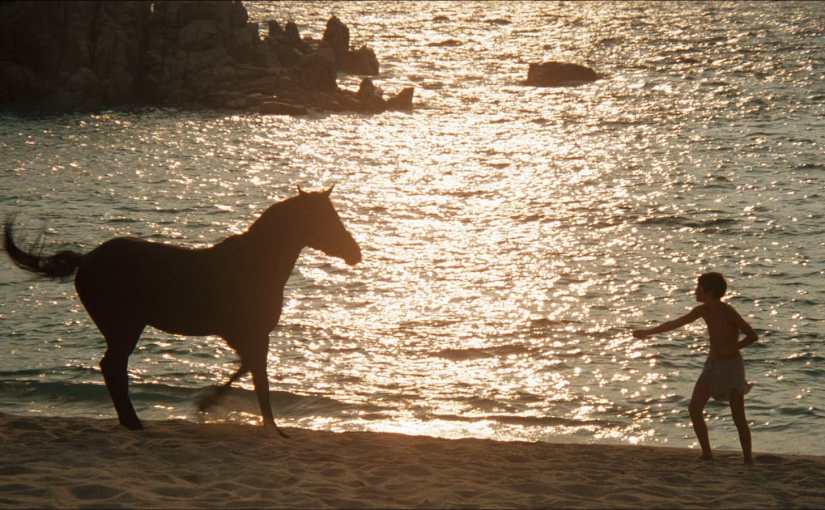
But there is one movie that combines the mystique of horses and horse racing with poetry, grace, and true art.  Carroll Ballard’s The Black Stallion is one of the most beautiful films ever made.  The visuals are so good and well-edited that fully 28 minutes of the movie are presented with zero lines of dialogue spoken.  After a fearsome shipwreck, Alec Ramsay (Kelly Reno) finds himself stranded on a desert island along with a magnificent unnamed black stallion whom he later simply calls the Black.  During this shipwrecked portion of the movie, all dialogue is dropped, and we simply watch as Alec and the Black overcome their initial fear of each other and bond.

It is in these scenes that The Black Stallion truly shines.  There is one particular sequence that will stick in my memory forever.  After some days and weeks alone, Alec tries to get the Black to eat food directly out of his hand.  In a nearly unbroken take, we watch as the Black warily approaches Alec, then turns away, snorting and stomping, then turns back, taking one cautious step after another, getting closer and closer…and it all looks completely organic.  It’s one of the greatest acting performances by any animal in any film I’ve ever seen.  In that scene, the Black exhibits more proficiency at acting on camera than I’ve seen in a few human actors I could name.

When I first saw this movie at 8 years old, I couldn’t fully appreciate the ingenuity of this portion of the film.  All I cared about was how invested I was in seeing Alec bond with the Black.  I didn’t care about cinematic theory and editorial processes and visionary cinematography.  But it’s all there in full view, presenting a visual story clearly and cleanly.  Buster Keaton would have loved this movie, I think.  (At least, the silent portions, I would imagine.)

The Black Stallion piles on one visually exhilarating scene after another involving Alec gradually gaining enough trust from the stallion to the point the Black allows Alec to ride him.  And then they are both rescued and returned home to America, and it’s here the movie seems to stumble just a bit.  After the grand vistas of their desert refuge, the white picket fences and tree-lined avenues of 1940s suburbia is a tad underwhelming.  When the Black gets spooked by garbagemen and runs off, we do get a nice contrast of seeing this semi-mythical creature of a bygone age galloping past storefronts and hurdling fruit crates.

Alec chases the Black and eventually finds him in a seemingly deserted barn owned by one Henry Dailey, an ex-jockey played to utter perfection by Mickey Rooney.  To say Rooney’s performance in The Black Stallion is “natural” is an understatement.  And to older audience members familiar with Rooney’s performance as a jockey in the 1944 film National Velvet, this must have been like seeing the remaining members of the Ghostbusters reunite in Ghostbusters: Afterlife (2021).  When he trains Alec how to ride the Black, you get this incredible sense of a man tapping a massive reservoir of knowledge for the benefit of the next generation.  I don’t know if I’m accurately describing this facet of Rooney’s performance, but if you watch the movie, you’ll see what I mean.

As do so many other movies featuring horses (not all, but many), The Black Stallion culminates with a horse race, this one pitting the Black against the two fastest horses in the country.  As we are fed information about how and why this race comes about, I particularly noticed how one phrase was repeated at least twice: “They’ll never let him run…he doesn’t have any papers.”  No doubt there are horse enthusiasts who know what that means.  I haven’t the foggiest clue what they’re talking about, but the cool thing is…it doesn’t matter.  It doesn’t matter now, and it certainly didn’t matter when I saw it as a kid.  It’s enough to know that “papers” are something other horses have, but the Black doesn’t, and that seems pretty important to some people, no matter how fast he runs.  It’s just another way The Black Stallion is constructed to appeal to audiences of all stripes, be they equestrian aficionados or rank amateurs.  There are not a lot of films that can do that, and I don’t know if The Black Stallion gets recognized enough for that accomplishment.

The climactic horse race ends exactly how you would expect it to end.  Formulaic?  Of course.  But what a race!  The cinematography, editing, Oscar-winning sound design, and carefully restrained use of the musical score all combine to create a moment every bit as thrilling as any NASCAR race.  Even now, watching the movie for this review, I fell into the moment all over again, smiling with delight as Alec and the Black pound their way around the track, hooves thundering on the dirt, pumping my fists when Alec discards that pesky helmet and goggles, and those other horses ahead of them get closer and closer…

Any lover of horses owes it to themselves to find and watch The Black Stallion.  Kids will get a kick out of it, but adults will, too, perhaps on another, more nostalgic level.  (That could just be me projecting based on my own childhood memories, but I stand by it.)


QUESTIONS FROM EVERYONE’S A CRITIC

  1. Which character were you most able to identify with?  In what way?
    Well, for me, there’s no question I identify with Alec.  I still remember how I felt watching this movie for the first time.  I mean, I didn’t necessarily want to BE Alec, but he was my entry into the world of the movie.  I knew how he felt when he was trying to convince his mother to let him ride in a race.  I knew what he must have felt at the very beginning of the movie when his curiosity about the Black overcame his very real fear of such a powerful animal.  And I thrilled when he raised his hands in triumph during the horse race.  (Kind of an easy answer, to be honest, but…there you go.
  2. If you were to make a movie starring animals, what animals would you choose, and why?
    …well, as I mentioned before, great white sharks are my favorite animals, but they are notoriously difficulty to film, as shark cinematographer “Three-Fingers” Joe will tell you.  I’d have to go with dogs.  Much easier to train, plus every day they see you arrive on set, they’ll treat you like they thought you’d be gone forever.  My film would be a comedy/sci-fi story involving a cat’s brain being transplanted into a dog’s body.  Maybe get Paul Rudd to do the voice of the dog.  …it’s a work in progress.

GET OUT (2017)

by Miguel E. Rodriguez

Director: Jordan Peele
Cast: Daniel Kaluuya, Allison Williams, Catherine Keener, Bradley Whitford
My Rating: 10/10
Rotten Tomatometer: 98% Certified Fresh
Everyone’s a Critic Category: “Watch a Low-Budget Blockbuster” [Budget: $4.5 million.  Worldwide Gross: $255 million.]

PLOT: A young African American visits his white girlfriend’s parents for the weekend, where his simmering uneasiness about their reception of him eventually reaches a boiling point.


Many years ago, I attended a wedding in New York.  After the ceremony was over, I stepped outside to watch it snow.  After a couple of minutes of me standing outside alone wearing a tux, a very polite man walked up to me, held out his keys, and said something like, “The blue Buick in the second row, please.”  After I explained to him that I was not, in fact, the valet, he apologized profusely and went back inside, clearly embarrassed.  (I’ve always regretted what I should have done: just taken the keys, gotten in the car, and driven it out of the parking lot while waving goodbye. Yes, I would have returned it, but imagine the look on that guy’s face…!)

I have been lucky and, yes, privileged enough that, in fifty-one-and-a-half years of living on planet Earth, that is only the second time I have ever been the target of overt racism, intentional or not.  I will never ever know what it’s like to have to think twice before walking alone at night while wearing a hoodie.  I’ll never know what it’s like to literally fear for my life when a cop signals me to pull over.  The beauty of Jordan Peele’s Get Out is that it addresses the issue of what it’s like to be African-American today in a way that is so entertaining that the subtlety of the screenplay is only apparent when you watch the movie a second or third time.  Unless you’re African-American, in which case the symbolism and sly satire is not so subtle.

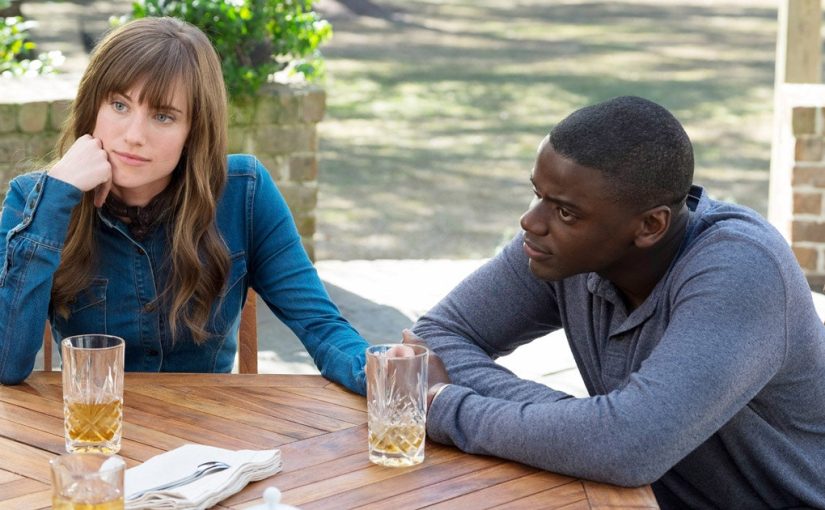
After a brief terrifying prologue, we meet Chris Washington (Daniel Kaluuya in his breakout role) who is about to visit his girlfriend’s parents for the first time.  His girlfriend, Rose (Allison Williams), is white.  He wonders if her parents are aware he’s black: “I don’t wanna get chased off the lawn with a shotgun.”  Rose casually dismisses his concerns: “First of all, my dad would have voted for Obama a third time if he could’ve.”

On the drive to her folks’ house, a startling and intensely creepy incident/accident occurs followed by a tense moment involving a white police officer asking to see Chris’s driver’s license even though he wasn’t driving.  Rose valiantly tells the officer off for profiling, and he lets them off with a warning.  This is just one of the many ways the screenplay probes and exploits the inherent fears of the average viewer.  Even if Chris had been white, it would still be a foreboding scene.  Because of the additional racial tension, the scene crackles with suspense.

Things get progressively weirder from there.  Chris meets Rose’s parents, Missy (Catherine Keener) and Dean (Bradley Whitford), along with their groundskeeper and maid, Walter and Georgina, both of whom are black.  Walter and Georgina’s behavior is just plain odd.  Their sole purpose seems to be to make Chris (and the audience) say, “What the f**k” repeatedly.  Dean directly addresses Chris’s apprehension: “I know what it looks like: a white family with black servants.”  His explanation of why they’re there answers Chris’s questions without really answering them if you follow me.

It would be unfair of me to describe any further plot details.  I’m sure those of you who’ve seen the movie would agree.  But I will issue a SPOILER WARNING for the remainder of the review.  Consider yourself warned.

Get Out is one of the most original, most effective modern horror films I’ve seen since The Descent (2005) and The Babadook (2014).  I have rarely been so glued to a screen.  The way director Jordan Peele ratchets up the creepiness levels is virtually unparalleled.  Here is a first film that rivals M. Night Shyamalan’s The Sixth Sense (1999) in terms of how to manipulate an audience.  Look at the moment when Chris sneaks out of the house for a cigarette, looks around, and suddenly spies Walter, the groundskeeper, running towards him in the night.  No, not running…sprinting.  Silently.  When I watched this for the first time on my own, I literally said, out loud, “What the s**t…???”  I can’t remember when I’ve seen anything like that in a suspense film.

Take the moment when Chris gets involved in a late-night discussion with Missy (Rose’s mom) that turns into an impromptu therapy/hypnosis session.  When Missy calmly says, “Sink,” and Chris actually does, and we see him floating in some kind of limbo, I felt the same kind of transfixed curiosity that I felt while watching Under the Skin (2013).  I had absolutely no clue what was happening or why, and I couldn’t wait until I could get answers.  When those answers come, they are both gratifying and suitably horrific.  Remember those old commercials for the American Negro College Fund?  The tagline was, “A mind is a terrible thing to waste.”  You will never think of that line the same way again after watching Get Out.

Peele was wise enough to include some comic relief in the form of his best friend, Rod (Lil Rel Howery), who works for the TSA and ironically gets closer to the truth of what’s going on at Rose’s house than he or anyone else realizes.  If the movie has a single weak spot, though, this might be it.  Rod is so comic it feels as if he was lifted directly from a romantic comedy.  Sometimes his delivery and dialogue feel a little too much like he’s trying for laughs rather than just being himself.  This is a minor quibble, though…he is funny as hell, especially during a phone conversation between him and Rose.

The bottom line, as if you couldn’t tell, is that Get Out is a sensational movie, containing more levels than “Super Mario Bros.” and more food for thought than a Judd Apatow dramedy.  It’s one of those movies where, if I hear anyone hasn’t seen it, not only do I recommend it unreservedly, but I immediately ask if I can watch it while they watch it for the first time.  Just to see their reactions.


SELECTED QUESTIONS FROM EVERYONE’S A CRITIC

  1. Do you feel a larger budget would make this film better or worse?
    …that’s a tough question.  As you can see from my 10/10 rating, the movie is just about perfect as it is.  What might change with a larger budget?  A more realistic-looking deer corpse?  A wide-angle shot of…something…burning?  Maybe they wouldn’t have gone with Daniel Kaluuya, or maybe Rose would have been played by, I dunno, Emmy Rossum or Lily James.  So, I guess my answer is, a bigger budget would make this film worse.  The filmmakers made the choices they made because of their limitations, and those choices resulted in a masterpiece of the genre.  It’s like Salieri says in Amadeus when describing Mozart’s music: “Displace one note, and there would be diminishment. Displace one phrase, and the structure would fall.”
  2. Were you surprised by the ending?  What would you do differently?
    Because of how the very ending of the film is structured, yes, I was surprised by the ending.  In fact, on the blu-ray, we can see the original filmed ending, and it’s what I feel might have been a more realistic ending.  As it is, the new ending is very satisfying on an emotional level, but I will always wonder how that original ending might have been received by general audiences.  Probably not well.  Imagine putting your hero up a tree, story-wise, then setting the tree on fire…but instead of getting him out of the tree, firemen chop the tree down and the hero is falsely arrested for arson.  Something like that can work – look at Body Heat (1981) and the original director’s cut of The Descent.  But Get Out provides a much more cathartic resolution and gets a smile on your face when you walk out the theater instead of shaking your head ruefully.


On the next “episode” of Everyone’s a Critic: “Watch a Film Starring Animals.”  I’m leaning towards The Black Stallion, but stay tuned…

THE WAR OF THE WORLDS (1953)

by Miguel E. Rodriguez

Director: Byron Haskin
Cast: Gene Barry, Ann Robinson, Les Tremayne
My Rating: 7/10
Rotten Tomatometer: 89%
Everybody’s a Critic Assignment: Watch a Movie “Classic”

PLOT: A small town in California is attacked by Martians, touching off a worldwide invasion.


I admire the 1953 version of The War of the Worlds most when I try to imagine myself back in that era as someone seeing it for the very first time.  For me, 69 years is still an almost unimaginable gulf of time.  In 1953, TVs were not quite a luxury item anymore, but a color TV definitely was.  Little kids still wore coonskin caps and watched The Howdy Doody Show for fun.  The very concept of UFOs was only six years old.  And the Cold War was a direct threat to our national security and our general peace of mind.

Into this culture came a film that, while thoroughly cheesy by today’s standards, nevertheless captured the paranoia of a nation.  Unstoppable creatures from another planet!  Wreaking havoc wherever they go!  Not even the mighty A-bomb can defeat them!  And who could resist those terrifying movie posters?  “A mighty panorama of earth-shaking fury!”  I would have been BEGGING my parents to give me ticket money.

Is a plot summary even necessary for this classic story?  A fiery meteor plunges to Earth near a small California town, but instead of making a crater, it carves a gully as it slides to a stop.  A scientist hypothesizes it might be hollow inside.  Presently, an alien spacecraft emerges from the meteor, bearing a fearsome weapon that looks like a cobra’s head and rains destruction and death on anything in range.  Forsaking Wells’ original vision of Martian tripods, this version presents sleek, manta-ray-shaped spacecraft supported by nearly-invisible electromagnetic currents.  Or something like that. Reports start coming from around the globe of other meteors and other spacecraft, and it quickly becomes apparent they’re not interested in friendly negotiations.  To paraphrase the stentorian commentary that bridges some scenes, this is the beginning of the end of civilization as we know it.

The heroes of this film are Dr. Clayton Forrester (Gene Barry) and Sylvia van Buren (Ann Robinson).  To put it kindly, their acting skills are…adequate.  To be fair, they weren’t working with a stellar screenplay, but the filmmakers wisely decided the real star of the movie should be the Martians and the Oscar-winning special effects.  As a result, Clayton is reduced to either giving scientific explanations of the Martians, while Sylvia’s main purpose is to look scared, scream loudly, and fry some eggs for Clayton in the middle of a war zone.  (I’m not making that last part up.  It’s not exactly Aliens.)

Regarding those special effects, sure they’re dated, but consider that, at the time, Hollywood studios regarded effects-heavy films as financial losers.  At least, that’s what they thought before The War of the Worlds.  It did so well that one of the head honchos at Paramount – one Cecil B. DeMille – presented the extraordinarily effects-heavy The Ten Commandments (1956) just three years later…and it broke box-office records.  The current trend is to blame Jaws (1975) and Star Wars (1977) for singlehandedly creating our insatiable appetite for special-effects extravaganzas, but look back far enough and there’s plenty of blame to go around, in my opinion.

Full disclosure: I still prefer Spielberg’s whiz-bang 2005 remake of War of the Worlds with its actual tripods and its CGI explosions and its callbacks to the 1953 original, including a cameo by Barry and Robinson, to satisfy cinephiles.  But this version, while dated, still has enough charm to remain effective.  Mostly.  (My favorite part is when the “hatch” on the meteor starts unscrewing; right about then is when I would’ve bought a ticket to Australia.)


QUESTIONS FROM EVERYONE’S A CRITIC

  1. Best line or memorable quote?
    When Dr. Forrester speculates how the Martians’ death ray works: “It neutralizes meson somehow. They’re the atomic glue holding matter together. Cut across their lines of magnetic force and any object will simply cease to exist! Take my word for it, General, this type of defense is useless against that kind of power! You’d better let Washington know, fast!”  It’s formulaic nonsense that’s only once or twice removed from calling an alien mineral “unobtainium”, but it’s delivered with the kind of conviction that only exists in the movies.
  2. What elements of this film do you feel have helped it become a movie classic?
    On a surface level, I’d say the quaintness of its visual effects.  Comparing them to the films of today is like comparing a paper airplane to the space shuttle.  But its also how the film captures the pop culture of the day.  The War of the Worlds fed on the fears and paranoia of a nation and stuck in the minds of millions of moviegoers and continues to do so today.  The 1953 film was influenced by the Cold War.  Spielberg’s remake was at least partially fueled by a nation’s fear of global terrorism.  Perhaps in another 20 or 30 years, some other enterprising filmmaker will once again send Martians to Earth to lay waste to its cities as a commentary on some future phobia or event.  …perhaps a global pandemic…?  Nah, too on the nose…

THE DEER HUNTER (1978)

by Miguel E. Rodriguez

THE DEER HUNTER (1978)
Director: Michael Cimino
Cast: Robert De Niro, John Cazale, John Savage, Christopher Walken, Meryl Streep
My Rating: 10/10
Rotten Tomatometer: 86% Certified Fresh

PLOT: An in-depth examination of the ways in which the Vietnam War impacts and disrupts the lives of several friends in a small steel mill town in Pennsylvania

[Author’s note: This will be the first in an ongoing series of reviews inspired by a book given to me as a birthday present by my long-suffering girlfriend.  Entitled Everyone’s a Critic, it challenges readers to watch a movie a week within a given category, then answer questions like, “Why did you choose this particular film” or “Do you feel this film deserved the award? Why or why not?”  Clearly designed to inspire discussion.  This category was “A Film That Has Won Best Picture.” This format is a work in progress, so I hope you’ll bear with me on future installments.

I am going to assume, for the most part, that most readers will have seen the movies being reviewed in this series.  Therefore, some spoilers may or will follow.  You have been warned.]


Once about every couple of years, I like to pick up and read Stephen King’s The Stand in its original uncut version.  My paperback copy runs to 1,141 pages, not including King’s foreword and a brief prologue.  Even Tolstoy would look at that thing and go, “Dude…edit yourself.”  But having read it numerous times now, I cannot imagine what could possibly have been excised from the edited version of King’s novel.  Every detail of that apocalyptic saga feels necessary.  Reading it is like falling into a fully realized alternate universe.

That’s what watching The Deer Hunter is like.  I can still remember the first time I watched it.  I knew its reputation as one of the greatest Vietnam War movies ever made, had heard of its harrowing Russian Roulette scene, and was intensely curious.  I popped it into the VCR, hit play…and for the first 70 minutes I got a slice-of-life drama about steel workers in a tiny Pittsburgh town (Clairton, for the detail-oriented) where, mere days before three friends ship off to Vietnam, one of them is getting married.  And the centerpiece is the wedding reception.  Ever watch a video of a wedding reception?  How high do you think a young teenager would rate its entertainment value on a scale of 1 to 10? 

I could not appreciate, as I do now, how vital this scene is.  Relationships are stated, expanded upon, and brought to a kind of cliffhanger.  Take the mostly non-verbal interplay between Linda (a luminous young Meryl Streep) and Michael (Robert De Niro).  Linda is clearly in a relationship with Nick (Christopher Walken), but it is painfully obvious that Michael and Linda have eyes for each other.  Mike watches intently from the bar as Linda dances at the reception, and whenever their eyes meet you can almost hear their hearts stop beating.  The oblivious Nick even pairs them on the dance floor while he visits the bar himself.  The awkwardness as Michael forces small talk and Linda shyly reciprocates is palpable.  And…is that Nick giving the two of them the eye at one point…?

As a kid, I wondered why this soap opera nonsense was necessary in a Vietnam film.  Of course, I didn’t know what was coming.  That’s the beauty and wonder of The Deer Hunter.  It challenges you to follow along with this miniature melodrama to give meaning to what comes next.

There is a key moment during the reception when an Army soldier wearing a green beret stops by the reception.  Mike, Nick, and Steven (John Savage), who are gung-ho about serving their country, yell their support and let him know how much they’re looking forward to killing the enemy.  The steely-eyed soldier raises his glass, looks away, and says, “Fuck it.”  It’s not terribly subtle, but the ominous nature of this moment always fills me with a sense of foreboding, even having seen the film many times by now.

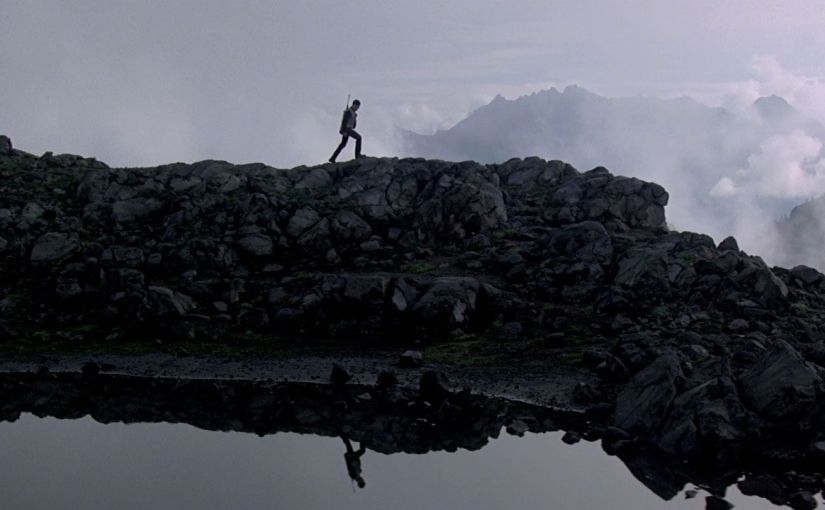
But even after the reception is over, there is one more small-town pit stop to make before the movie gets to Vietnam.  (In fact, The Deer Hunter spends surprisingly little time in Vietnam.)  Michael and a group of friends including Nicky and Stan (John Cazale) go hunting for deer in the mountains as a kind of ritual before Nick, Mike, and Steven are deployed.  It is in this sequence that Oscar-winning cinematographer Vilmos Zsigmond’s talents are put to stunning use.  We are shown vistas of the Allegheny Mountains that are simply breathtaking, with Mike and his friends seen as mere dots in the mountainsides.  Choral music with a men’s choir singing in Russian is heard on the soundtrack, giving the sequence a majestic aura that must be seen and heard to be believed.

Then the hunt is over, and the boys all have one last drunken night at the bar owned by another friend, John (George Dzundza in an under-appreciated, realistic performance).  Here they all sing along to Frankie Valli and listen somberly as John plays a sad classical tune on his piano.  And then, in one of the film’s masterstrokes of editing, we slam-cut immediately to the jungles of Vietnam – no boot camp, no footage of them being trained or flown over there, just suddenly they’re there and the contrast between the carnage we experience in the first few minutes of Vietnam versus the rhythms of their lives in Clairton could not be more extreme.

In a horrific but mercifully brief sequence, we watch as a Viet Cong soldier calmly walks into a burned-out village, discovers a hidden pit holding terrified villagers, and remorselessly tosses a grenade inside.  We then watch as Mike, now a battle-hardened soldier, emerges from a hiding place with a flamethrower and burns the VC soldier alive.

The effect of this scene cannot be understated.  To witness Michael torching a soldier, even after that soldier committed a brutal act himself, is jarring.  And why is it so jarring?  Because we have seen Mike as a civilian, as a friend, as a would-be lover, during that lengthy sequence at the wedding reception and while hunting with his friends.  Admittedly, you got the sense that he could or would get violent if necessary.  (He’s clearly the alpha male of his “clique.”)  But this…I mean, damn.

Then, in one of those Hollywood conveniences that never get old, Mike is unexpectedly reunited with Nick and Steve who just happened to arrive at that very same village with another platoon of US soldiers.  And then, immediately after being reunited, they are captured by enemy forces, imprisoned with several enemy combatants in a riverside compound, and forced by their sadistic keepers to play Russian roulette with each other as the guards bet on the outcome.  Michael comes up with a horrifyingly logical escape plan: convince the guards to put THREE bullets in the chamber instead of one.

Much has been made regarding the historical inaccuracy of this scene.  To those arguments, I say: who cares?  As someone once said, riffing from Mark Twain, “Never let facts get in the way of truth.”  The truth of the matter is, the Vietnam experience was a modern-day horror show, leaving physical and psychic scars on its participants and on our country.  In my opinion, the Russian roulette scene can be interpreted as a symbol of how those soldiers, or ANY soldiers, must have felt every single day.  Going on a routine patrol in the jungle could have potentially lethal circumstances.  They rolled the dice every time they called in an airstrike, betting they didn’t get firebombed themselves.  Booby traps were everywhere.  How is life in a war zone that much different from being given a one-in-six chance at living or dying?

I’ve already gone into far more spoilers than I am accustomed to, so let’s just say this happens and that happens, Michael winds up making it back home, Steven is grievously wounded in the escape attempt, and Nick goes AWOL when, after making it back to a military hospital in Saigon, he wanders the streets at night and discovers an underground ring of lunatics who run a high-stakes game of Russian roulette.  And we’re still just at the mid-point of the film.

When we see Michael back home, the earlier sequences establishing the rhythms of small-town life and his feelings towards Linda, for example, all come into focus.  We need that reception and the hunting scenes so we can see how much Michael has changed.  For example, when Michael is arriving back home by taxi, still in full military dress, he spots a huge banner: “WELCOME HOME MICHAEL”.  He tells the driver to keep going.  In a hotel room later that night, he sits on the edge of his bed and rocks back and forth, winding up crouching against the wall.  He is completely unable to process how to deal with people anymore.  Or, at least, he doesn’t trust what he will or won’t say.  I watch that scene, and I feel such intense sympathy and empathy.  What he’s feeling, what he’s been through, what he’s seen, is so huge that he knows he’ll never be able to explain it to anyone who hasn’t been there.  He knows he’ll get questions like, “What was it like?  Did you kill anyone?  How are you feeling?  Where’s Nicky?”  I’ll never know what it’s like to fight in a war, but if I had gone through what he’d gone through, I wouldn’t have stopped either.

There is a heartbreaking scene where Linda, who is more than a little distraught that Nicky is AWOL, hesitantly suggests to Michael that they go to bed.  “Can’t we just comfort each other?”  Mike rebuffs her, but in a way that makes it clear he’d like to, regardless.  De Niro’s performance here is staggering.  As he walks out, he makes a statement, showcasing how much he is feeling but also how unable he is to articulate it: “I feel a lot of distance, and I feel far away.”  I knew exactly what he was talking about.

The very end of The Deer Hunter is one of the most emotionally shattering finales of any movie I’ve ever seen.  It ends with a simple song, first sung as a solo, then joined by everyone else at the table.  I will not reveal what happens to get us there.  Is it shameless manipulation?  Yes.  Does it work?  Yes, so I can forgive the “shameless” part.

One of the criticisms I’ve read more than once about The Deer Hunter is how “one-sided” it is.  To which I say, “Well, duh.”  The Deer Hunter is not presented as a history lesson or a lecture on the internal politics in the country of Vietnam during the war.  The Deer Hunter is intended to make us feel something.  It wants to show us what happens to a person who is exposed to the very worst side of human behavior and lives to talk about it.  It wants to remind us that a country can wave a flag and stand for what’s right and be willing to sacrifice its best and brightest souls for a righteous cause…but it must also be prepared for the aftermath.  The Deer Hunter is a somber prayer that our country remembers the cost it demands, and that it will take care of its own when the dust settles.

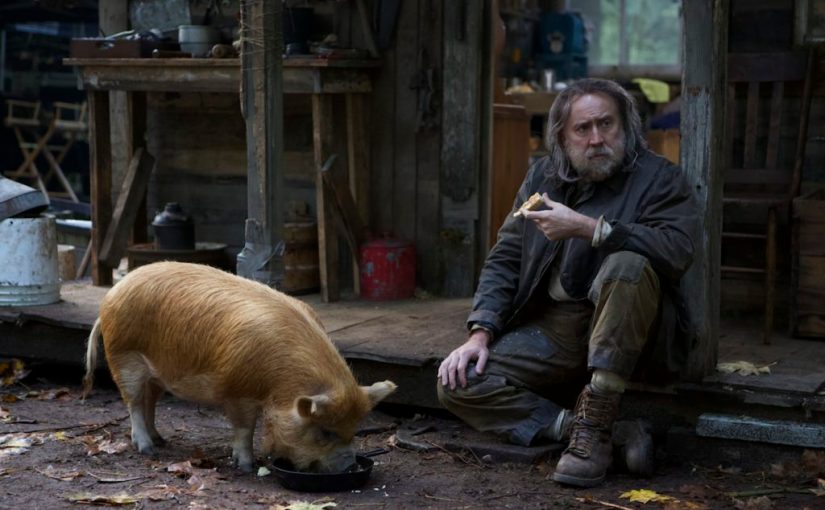
PIG (2021)

by Miguel E. Rodriguez

Director: Michael Sarnoski
Cast: Nicolas Cage, Alex Wolff, Adam Arkin
My Rating: 9/10
Rotten Tomatometer: 97% Certified Fresh

PLOT: A truffle hunter who lives alone in the Oregon wilderness must venture to urban Portland in search of his beloved foraging pig after she is, I guess, pig-napped.


Gotta tell you, that plot summary is one of the most bizarre summaries I’ve ever typed out.  To me, it’s on par with, “A file clerk working on the 7th-and-a-half floor of an office building discovers a portal that transports you into the brain of John Malkovich for 15 minutes before spitting you onto the side of the Jersey Turnpike.”

Who read the elevator pitch for Pig and thought it was worth filming?  Nicolas Cage himself is credited as one of the producers, so that’s a partial explanation, I guess.  The film has twenty other credited producers and executive producers, so it’s clear the financial burden was spread around.  But still…a movie about a guy looking for his stolen pig?  Is this a movie you should run out and rent/stream/buy?

Yes.  Yes, you should.  Oh, but let me tell you why.

Cage plays a scraggly fellow named Rob who lives in the aforementioned cabin with his pig, whose name is never spoken throughout the movie.  (Although when it was over, I had one or two guesses of my own, each as unlikely as the other.)  This pig excels at finding valuable truffles hidden in the shallow forest soil.  How valuable?  Well, the ones we see in the movie are black, and the current market price for winter black truffles runs from $300 – $1,300 per kilo, depending on the variant.  So…yeah, pretty valuable.  Rob apparently funds his meager existence by selling his truffles to a high-end buyer named Amir (Alex Wolff, Hereditary [2018]), a slick customer who drives a banana-yellow late-model Camaro.  I’m not sure how many Portland restaurateurs can afford Camaros, but it didn’t bother me until this precise moment, so I’ll let it slide.

One night, unknown parties break into Rob’s cabin, beat him up, and steal his pig.  At this point, I was reminded unavoidably of the opening scenes of John Wick (2014), and I thought we were in for another kill-crazy-rampage film like Mandy (2018).  But I was very pleasantly surprised.

It turns out Pig isn’t a revenge movie, or a weird Spike-Jonze-esque journey into absurdity, or a mind-numbing Bergman-esque examination of the human condition.  Ultimately, it’s about food.  Yeah.  Or the transformative properties of food.  Or maybe it’s just about cooking food.  It feels like the kind of movie Anthony Bourdain would have loved, if that’s not being too presumptuous.

Once he gets a line on who the thieves might be, Rob convinces Amir to help him track them down by driving him into the city.  First stop is a sketchy-looking guy who rebuffs Rob’s request for information and asks Amir, “Do you even know his real name?”  That leads to a hidden restaurant under another restaurant where we learn Rob’s full name…a name that brings shock and awe to the eyes and faces of everyone who hears it.  Who is this guy?

One thing I noticed during this film was the great economy of the storytelling.  Scenes that might involve pages of dialogue in other movies are handled in seconds with either terse dialogue or sometimes none at all.  For example, there’s a scene in Amir’s apartment.  Rob wakes up on the couch to the sound of a fire alarm.  The camera tilts up and we see Amir standing on the counter trying to fan smoke away from the alarm.  Cut immediately to a kitchen table, Amir slides a plate in front of Rob, and he says sheepishly, “I don’t cook a lot.”  I can easily imagine that scene in some other movie involving a setup showing Amir trying to cook, burning something, trying to put the fire out, all very comic and probably well-done…but ultimately unnecessary.  Asking the viewer to do the occasional heavy lifting is not the worst thing in the world.  Pig is full of moments like this.  It’s a welcome change when it’s done right.

The screenplay is brilliant in other ways.  It convincingly leads you down one path where you think you can guess what’s about to happen, and then it throws a curveball or neatly sidesteps your expectations.  At least, it did mine.  Rob visits the house where he used to live, where he has a conversation with a small boy.  Where are the parents?  Who knows?  Doesn’t matter.  Amir talks about his family life, about his very successful father who doesn’t believe Amir can cut it in this business.  Later, there’s a scene where Rob and Amir cook a fancy meal for Amir’s father, and the dinner service for that food has a huge emotional payoff I did not expect, and which is worth the price of admission all by itself.

Is Pig a good movie just because it’s unique?  No.  But unique it is, and it is VERY good.  Cage gives one of his most understated performances in forever, so if you have been avoiding this one because you didn’t think you could take more Cage-ian histrionics, you don’t have to worry.  He’s very low-key.  There are a couple of moments where you can see the anger boiling deep within Rob, or when you might expect him to overturn a table or throw a glass of wine in someone’s face.  But it doesn’t happen, and that works for this unexpectedly touching film.

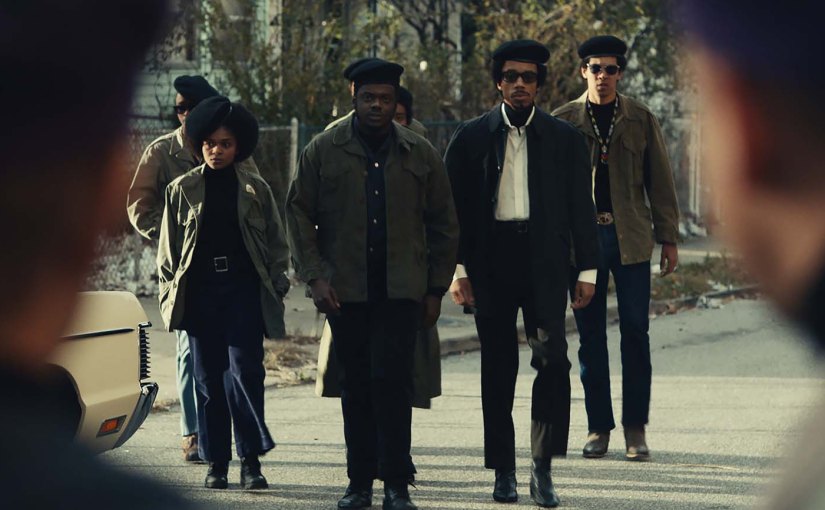
JUDAS AND THE BLACK MESSIAH (2021)

by Miguel E. Rodriguez

Director: Shaka King
Cast: Daniel Kaluuya, LaKeith Stanfield, Jesse Plemons, Martin Sheen
My Rating: 9/10
Rotten Tomatometer: 97% Certified Fresh

PLOT: In the late ‘60s, William O’Neal, offered a plea deal by the FBI, infiltrates the Illinois chapter of the Black Panthers to gather intelligence on party Chairman Fred Hampton.


By the time it was over, Judas and the Black Messiah made me think of that scene in Psycho (1960) where Norman is cleaning up after his mother and the car starts to sink in the swamp and then stops…and Norman gets nervous.  At that moment, I started rooting for Norman, getting in his headspace: “C’mon, car, sink.”  I was empathizing with the bad guy.  Neat trick.

That’s how I felt during Judas and the Black Messiah.  Instinctively, I know I’m supposed to be rooting for one character, but the movie empathizes with the “villain” character so well that I found myself rooting for him, too.

In the late 1960s, Fred Hampton’s star was on the rise in the black community.  As portrayed in a sensational performance by Daniel Kaluuya, Hampton is a fiery, charismatic, passionate public speaker who publicly advocates armed patrols of Black Panthers in black neighborhoods to keep an eye out for harassment from white cops.  When he is made Chairman of the Illinois chapter of the Black Panthers, the FBI takes an interest.  Well…Hoover takes an interest, which pretty much means the FBI followed suit regardless.

Meanwhile, a petty thief named Bill O’Neal (LaKeith Stanfield) is arrested by the FBI, who gives him a choice: serve a 5-year stretch for impersonating an FBI officer, or…go undercover into Fred Hampton’s Black Panther chapter and bring out good intel that will help them arrest Hampton.  O’Neal agrees, and what follows is an exercise in classic cinematic storytelling and misdirection, done up with glossy modern cinematography that looks like the best movie Oliver Stone never made.

(…actually, “misdirection” is not the right word.  I’m not sure what the right word is.  I’ll explain.)

Fred Hampton is clearly meant to be the hero of the film.  Hoover even refers to Hampton as a “messiah” of the black movement.  This all takes place a few years after both Dr. King and Malcolm X had been assassinated.  (If things had turned out differently, Fred Hampton’s name would be synonymous with King and Malcolm X, but it’s not, and based on this movie, that seems distinctly unfortunate and unfair.)  He boldly walks into a local meeting of white supremacists and, incredibly, turns them around to his way of thinking, using a brilliant metaphor of America as a house on fire.  If that moment is not based on fact, it should be.

So, if Hampton is the hero, then O’Neal is clearly meant to be the villain.  Hampton is the messiah of the title, so O’Neal is Judas, the traitor, the informer.  As a direct result of his intel [SPOILER ALERT], the FBI makes several arrests, including Hampton himself, and eventually initiates a raid during which Hampton is killed in his bed with his pregnant wife in the next room.  (This is all a matter of public record, though it’s interesting that it took this movie to really make me aware of it.)

But it’s easy to make a movie with a two-dimensional villain.  Judas and the Black Messiah does something much more difficult.  It asks us to empathize with both Hampton AND O’Neal.  We see the conflict in O’Neal’s face when Hampton promotes him to chief of security for their chapter.  We see O’Neal’s fear when he is recognized by a member of a local gang.  We see how few choices he really has in his various meetings with his FBI handler (Jesse Plemons), who constantly reminds him that, if he runs, they will find him and put him in jail.  Hampton says numerous times in the film that if he were to die for the cause, it would be a life well spent.  O’Neal has no such ideals.  I’d go as far to say that, if that were me in O’Neal’s shoes, I might do the same thing to stay out of jail.  I know my limits.

So, the entire film, I was pulled back and forth between admiration for Hampton and his cause and feeling anger towards O’Neal; and feeling terribly sad for O’Neal and what he’s essentially being forced to do by the FBI.  In other films depicting the Jesus story, I felt no such sympathy for the Judas character.  Director Shaka King accomplishes what so many other films do not: total alignment with one viewpoint while also demonstrating that not everything is so – forgive me – black and white.

Frankly, for me, the movie is worth watching just for the closing epilogue alone.  We get a glimpse of the real Bill O’Neal being interviewed for a real PBS documentary in 1989, and he is asked what he might tell his son about his role in the events surrounding Fred Hampton’s death.  His answer feels like something he’s rehearsed and said all his life.  And then there’s a closing subtitle…and it’s devastating.

I feel like there is more I could say, but it would involve getting into much more detail about several plot points, and I would prefer to leave them for the viewer to discover on their own.  Judas and the Black Messiah is worthy enough to stand with Spike Lee’s Malcolm X (1992), Ava DuVernay’s Selma (2014), and Steve McQueen’s 12 Years a Slave (2013) as one of the best films ever made about the black experience in America.