BEFORE THE DEVIL KNOWS YOU’RE DEAD

By Marc S. Sanders

When it comes to crime – New York crime – few directors come as close as Sidney Lumet to make an audience feel the authenticity of its trappings.  Maybe only Martin Scorsese can stand next to Lumet.  Either with crime on the streets (Dog Day Afternoon, Serpico) or within the courtrooms (Find Me Guilty, 12 Angry Men), or both (Night Falls On Manhattan), Sidney Lumet hones directly upon how the plans should operate and when everything should unfold or derail.  

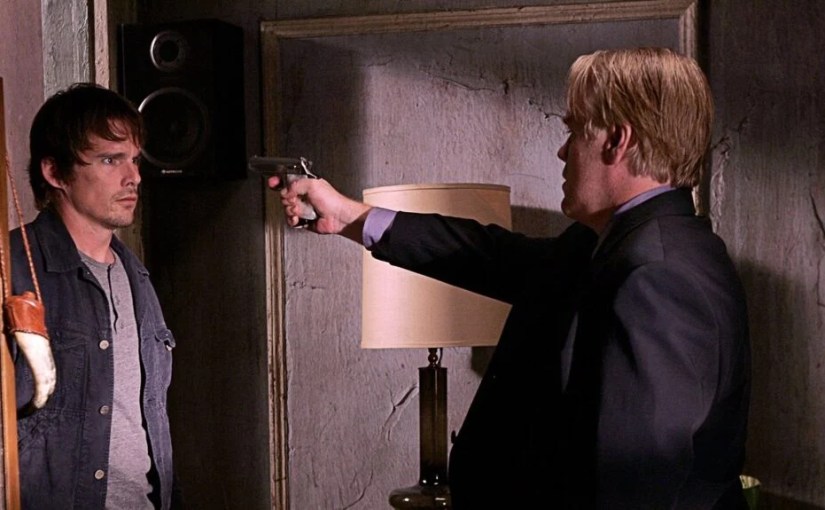
With the last picture before his death, Before The Devil Knows You’re Dead zeroes in on crime within an educated Irish family nucleus.  Andrew (Phillip Seymour Hoffman) has it laid out perfectly for his younger brother Hank (Ethan Hawke) to commit the perfect robbery. No one will get hurt and the insurance company will cover any loss.  The approximate take is around six hundred thousand. These guys carry their own desperate reasons for even considering such an idea, but Andy knows nothing can go wrong.  Hank has some trepidation though, because the target is mom and dad’s jewelry store.

Kelly Masterson’s script shows how quickly everything comes undone with bloodshed and unaccounted for details that could lead straight back to the two brothers.  It’s all told through three different perspectives – Andy, Hank and their father Charles played by Albert Finney.  Often, Lumet will return to the very same scene you saw moments earlier to show two sides of a phone call or in what direction one character goes versus that of another following a particular action that has occurred.  The timeline even jumps back in time a few days to show the direct perspective of any of these three particular characters ahead of showpiece scene – the robbery. Charles was retaking his driver’s license test. Elsewhere, Hank was struggling to pay spousal and child support with an angry ex-wife (Amy Ryan). Andrew was scheming and committing other clandestine acts both at work and in his free time.

However, Masterson’s script weaves all of these side details into how much more complicated this botched robbery becomes in the aftermath. All of what they commit following the robbery compounds into potentially making it worse for everyone involved.

Some of the breadcrumbs don’t carry enough water at times though. You might have to tolerate the characters being more intuitive than they likely should be.  Andrew leaves a business card with a side character.  When the film circles back to this item, it seems a little too easy for someone else to get wise about what has transpired.  I just chose to go with it.

Marisa Tomei is also part of the cast, caught in a love triangle as Andy’s wife and Hank’s mistress.  Tomei is really good, lending some authenticity with unscrupulous nudity in scenes with both Hoffman and Hawke.  This storyline serves as character exposition and only briefly scrapes against the crime drama at play.  It could have been excised from the film, but because the dialogue and scenario is written and performed so well, it effectively held my attention.

Albert Finney is magnificent as the patriarch owner of the store.  Simply his devastated, echoey breathing and the way he fumbles to put his eyeglasses on to learn more about what has occurred is absolutely genuine.  A late middle-aged man discovering horrible truths.  Finney plays it beautifully.  That being said, I wish the film offered more backstory to his character.  There are few hints suggesting how he regarded Andy as the first born who needed be thrown to the wolves and learn to fend for himself.  Contrarily, Hank is the younger and more disappointing son.  Yet, the script is short on material that further explores the relationship between the father and his sons.  I felt the film demanded more because Charles is quite significant to the conclusion of the story, which carries an unexpectedly abrupt ending.  

The acting and assembly of time and perspective are so finely tuned by the whole cast under Lumet’s direction.  Still, Before The Devil Knows You’re Dead needed another twenty to thirty minutes of storytelling.  One character runs out of frame with an unfinished storyline.  Another, seems too hasty in making a final decision with an easy convenience.

Don’t get me wrong.  I strongly recommend this last effort from Sidney Lumet.  It’s a unique crime yarn with an especially conniving Phillip Seymour Hoffman doing some of his best work.  The set up had me riveted and I couldn’t wait to see how all these terrible scenarios were going to fix themselves or make things horribly worse.
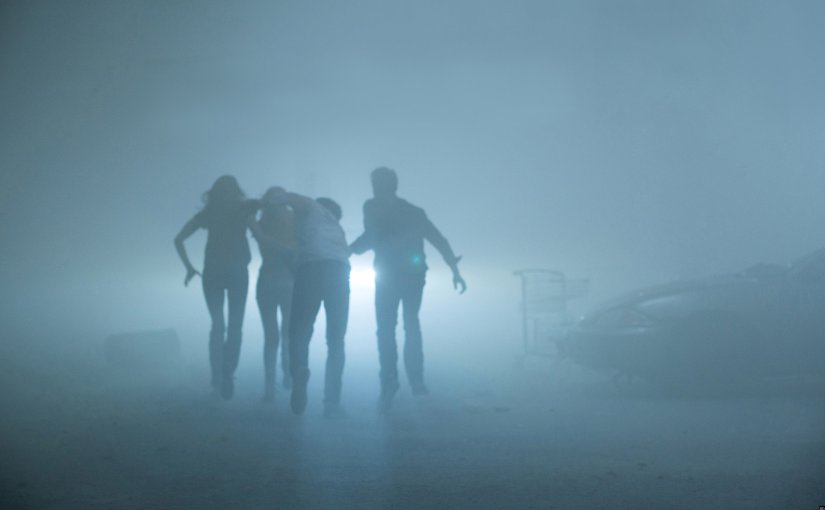
THE MIST

By Marc S. Sanders

I’m tough to satisfy when it comes to monster movies.  Too often they all look the same, or they behave with similar instincts and motives.  There’s a new dinosaur movie coming out this year where they apparently stalk a military unit.  So!  I’ve seen seven Jurassic Parks.  About the only monster that still gets under my skin are the acid pumping, knives for teeth xenomorphs of the Alien franchise.  Everything else is been there, done that, and this includes the insect like pests found within the mist of Steven King’s The Mist, directed by Frank Darabont.  Fortunately, there’s a better and much more engaging attraction to this eat ‘em up blood fest.

Within another small fictional town in Stephen King’s version of Maine, a dark and stormy night kills the power within the area.  The next morning large fallen trees appear to have damaged the homes of David Drayton and Brent Norton (Thomas Jane, Andre Braugher).  Phones and power remain out, but a curious cloud of mist grows over the lakeside area.  

The gentlemen decide to go into town for supplies with David’s son Billy (Nathan Gamble) in tow.  The checkout line of the supermarket is crowded with tourists and residents when a similar mist envelopes the building and clouds up the expansive front window of the shop.  An elderly man runs through the parking with a bloody nose and urges the shoppers to lock the doors because there are things within this unwelcome mist that are terrifying and bloodthirsty.  I’ll spoil this for you. The old coot is right.  The creepy crawlies are thirsty for blood and hungry for flesh.

You’ve seen much of what Darabont’s screenplay adapts from King’s novella in similar iterations of horror.  The wheel is not reinvented here and though an explanation of this mist and the organisms it conceals is spelled out, nothing is jaw dropping.  Seems similar to how King’s The Stand opened.  The cast of this B movie is what needs to be talked about.

Sure, there are doubters of things terrorizing the community just before the blood is spilled.  Some characters make hard decisions despite the urging of others not to leave the store.  Yet, when these flesh eaters become evident, then the end of days gospel of Mrs. Carmody (Marcia Gay Harden) permeates through the populace of the supermarket.  That’s when The Mist grows a brain to demonstrate the power of fear, threat, and especially influence.  The disturbing Mrs. Carmody exaggerates the purpose of this phenomenon with select biblical scripture both documented and I believe conjured on the fly by her.  Now I am reminiscing back to tenth grade English when I studied Lord Of The Flies.  A tribe forced to live together will ultimately divide.

Darabont so wisely reads a collection of different walks of life forced to either work together or work against each other, both sides with desperate means to survive.  William Sadler is a dimwit mechanic who goes through three different modes of purpose during the film.  He starts with a tough guy mentality, then on to timid fear and regret, and lastly, he’s reawakened to echo the call of Marcia Gay Harden’s religious zealot.   Truly insightful because I often wonder how any person can so easily succumb to the influential beliefs of someone else.  I mean you would have to be dense to allow that to alter your mindset, right? Well Stephen King and Frank Darabont remind me that there’s more dense people on this planet than wise.  A dread of cabin fever only exacerbates to succumb to what someone will tell you. Therefore, let’s observe how the morons respond to the dominant personality.

The action for the sake of jump scares and expected horror does not disappoint too much.  There’s screaming. There’s lots of blood. There’s lots of running too, and monsters and webs and teeth and claws.  A sneak away trip to the pharmacy next door is neat centerpiece, but you’ve seen stuff like this so many times before. Frances Sternhagen gets the opportunity to use a makeshift, bug zapping, flame thrower that made me laugh and cheer.  

The jump scares are not very effective, though.  One bug thuds against the window pane. Otherwise, there’s monster stuff to absorb like tentacles, claws, teeth and webbing. I don’t go for slasher flicks and endless bloodletting gore like most movie makers of this genre attempt to achieve.  Too much blood is boring and a sign of a lack of story.

I was invested in uncovering why this all started.  I was taken with how a small group of people quickly engages in a mob mentality because their individual desperations refuse to satisfy. What instincts will undo people when hope dwindles and your companions turn on you?  Darabont presents some effective moments for these questions. However, once the exposition was out of the way, I didn’t care who lived or died.  My concern was knowing how whoever survives gets out of this dilemma.

The answers come and there is an unexpected ending tacked on by Darabont that is not recounted in King’s work.  Trust me when I say I’ll never forget the conclusion of The Mist.  Same as I’ll never forget the ending to The Sopranos.  That’s not necessarily a compliment though because I think Frank Darabont was only adding unnecessary insult to injury. He resorts to using a terrible psychological epidemic for one last twist of his gleeful, mischievous knife in my back.  I am not spoiling anything for you dear reader, but James Cameron went this route during a sequence in Aliens and it made much more sense, while offering convincing justification.

While you might like the chills and thrills of The Mist, be warned that it’s the ending that’ll leave you angered for days and nights thereafter. I had a furious urge to throw my popcorn at the screen.  

Popcorn can be found on aisle 5 by the way.  Bug spray on aisle 9.

GONE BABY GONE

By Marc S. Sanders

Ben Affleck’s directorial debut, Gone Baby Gone, is crime drama mystery thriller that never offers easy answers and concludes with great debate.  You’ll ask yourself if right decisions were made.  You will argue with your best friend or significant other about the endings.  What’s undeniable though is that the film, adapted from Dennis Lehane’s novel, is full of an array of characters, most operating with the best of intentions, and yet they wind up doing everything wrong or against their sworn principles.  In order to work the problem, these people will have to betray themselves. 

One of Affleck’s many best decisions was casting his brother Casey Affleck in the lead role of private detective Patrick Kenzie.  With his girlfriend, Angie Gennaro (Michelle Monaghan), they specialize in tracking down missing persons in and around the Southeastern Boston area.  The brothers’ pairing is especially effective as Boston, Massachusetts is where they were born and raised.  They know this setting intimately. Unpolished multi-floored tenement neighborhoods near seedy watering holes are where the crimes of Gone Baby Gone occur.  Casey can ensure that his character, Patrick, can speak the slang, use the thick dialect, and feel comfortable amid a crowded and overpopulated area. As director, Ben ensures the setting is captured in great detail from Red Sox caps to beat up cars and dirty unkept apartments and secret hang outs.

In the middle of the night a little girl has gone missing and her deadbeat, drug addicted, careless mother Helene (Amy Ryan) is unmotivated to offer the police much to go on. Helene’s brother and sister-in-law (Titus Weliver, Amy Madigan) take it upon themselves to hire Patrick and Angie to find their niece.  The only leads that Patrick, Angie and the police (Ed Harris, John Ashton and occasionally Morgan Freeman) have to go on are Helene’s contacts within the drug peddling underground.  Someone within that community might have taken the girl or know someone who did.

Gone Baby Gone may feel like a Law & Order episode where red herrings are offered early and then dismissed for the actual truth.  However, Lehane’s story twists much deeper beneath the surface.  Not one character is wasted in this film.  Each serves a purpose to how and why this crime ever occurred.  Mysteries get resolved but the answers are not simple because they are multi-layered with many different people spinning twice as many plates.

Ben Affleck seems nothing like an amateur director here.  He does not always rely on dialogue to describe a scenario because he films quite a bit of a disheveled room or kitchen, or an outdoor area.  A daylight scene will take place in a darkly lit bar where only people need to hide from their troubles on an ordinary workday, or maybe they are in there to suppress something uglier.

The cast is outstanding.  While the characters belonging to Freeman, Harris and Ashton seem familiar from much of their other career films, they look like they lived within this environment of three-story houses bordering the harbor, across town from Fenway.  You believe these guys know every alleyway, street corner or contact among the city’s small-time deadbeats. 

Amy Ryan was nominated, and perhaps should have won, for her trashy Bostonian performance as Helene, the missing girl’s mother.  This actress is buried so deep in this role, from her worn out facial features to her New England dialect that blends so well.  She is completely believable, which is why you would not be able to stand sharing the same space with her.

Titus Welliver dons a thick, wide Irish mustache.  I read he had to keep it because he was shooting his HBO series, Deadwood, at the same time.  Nonetheless, it builds his character into the blue-collar working man whose greatest achievement is getting out of the life of small-time crime in order to put food on the table, while his sister could not.  His wife played by the great Amy Madigan, an actress that does not get enough coverage, is perfect.  Just her facial expressions with a pale, freckled complexion, tight chin and pinched lips show her biting her tongue while in the same room as her loser sister-in-law.  It sickens her that a sweet little girl like her niece is missing.  Everything is read on her face.  I know Madigan best as Kevin Costner’s midwestern cheerful wife in Field Of Dreams.  She played this role almost two decades later and she absolutely hides herself.  You forget you are watching her.  An outstanding character actress.  (I’m glad she’s getting new recognition with 2025’s hit horror movie Weapons.)

Michelle Monaghan as the girlfriend Angie is the sidekick to Casey Affleck’s Patrick.  Yet, she makes the horror of this movie convincingly real.  Early on, Angie is reluctant to accept the case because she doesn’t “want to find a kid in a dumpster.”  Now this isn’t some Dirty Harry or Lethal Weapon cop showcase.  It’s not glamourized with Hannibal Lecter glee.  This has not become much further materialized.  I don’t want to see a horrifying outcome for a child either, but Ben Affleck’s direction does not make any promises.  There are some repulsive, scary people in this world, right outside the front doors where people listen to the game on the radio and kids play stickball in the street.  Monaghan seems like that young woman who came from another place in the country with a fine upbringing and fell in love with Affleck’s character. With her brains, instincts and empathy, Angie took up the cause as a fellow crusader.  None of this is spelled out in the film and I have not read Lehane’s books, but I can see it in Michelle Monaghan’s performance.

Casey Affleck is a perfect surprise.  He dons the appearance of a thin, shrimpy kind of kid (supposedly age 31), and yet no matter who he is coming face to face with he never shows any sort of apprehension.  I truly believe that Patrick is not afraid of his work or the people he has to confront while trying to solve his various mysteries.  If a large gun is introduced into a scene, Patrick’s reaction is an act of “whoa, what’s this?”  Another character in another film would tighten up and hold their breath, or they would knock the weapon out of the way for an action scene.  Patrick has put this kind of act on before to outlast a situation.  Angie has definitely seen it before. 

Casey Affleck is great at just listening.  Shortly after he accepts the case, Patrick and Angie are in one of these darkened bars trying to collect information.  Ben Affleck shoots his camera above Casey sitting in a booth with a beer.  The actor keeps his head tilted as if he is listening to nothing spewing from a possible lead sitting across the table.  When a gun is pulled though, Casey stands three feet taller than his posture implies and controls the scene.  That is Dennis Lehane’s character Patrick Kensie completely defined because Casey Affleck has a full understanding of this guy.  Someone like Patrick knew that if he was going to take this kind occupation on full time, he had better be aware he would not survive on brawn that he cannot show.  It’s a confidence that has to come through. 

Gone Baby Gone is a gripping and engaging thriller shown with varying degrees of light and perfect cinematography to offer genuine on-site locations of Boston and the surrounding areas.  Ben Affleck chose not to compromise any of his set pieces.  With handheld cameras, when a missing person’s search is happening, it feels like a documentary of procedure is being shown. 

The various directions and endings are entirely unexpected and yet very, very plausible.  This is a smart, sensational crime drama that deserves a resurgence of attention nearly twenty years after its release.

AMERICAN GANGSTER

By Marc S. Sanders

My favorite kind of crime dramas are the ones that tackle the grit.  The screenwriters and directors go for where the itty-bitty stuff scrounges up into something bigger for either the career criminal or the low-level cop.  These guys start out as butterflies flapping their wings and before you know it their legacies and pursuits are as big as hurricanes.  Movies like The French Connection or Heat operate on these trajectories.  How did we get from there to HERE?

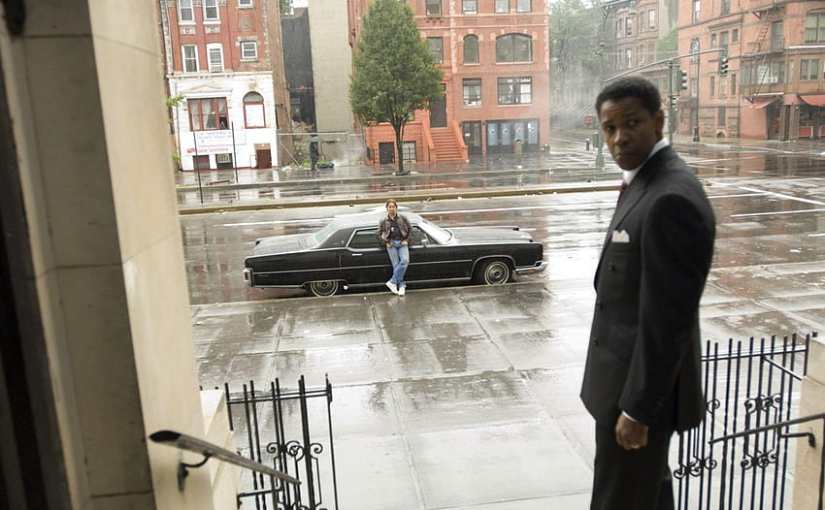
Ridley Scott went in an unconventional direction away from his science fiction eye and ancient history recollections when he directed American Gangster with a screenplay by Steve Zallian based on the true stories of Harlem drug kingpin Frank Lucas (Denzel Washington) and narcotics detective Richie Roberts (Russell Crowe).

These two sensational actors don’t share one scene together until the epilogue of this always interesting three-hour opus.  Yet, in their second film together their pairing is as classic as DeNiro and Pacino or Newman and Redford.  I hope before they retire, these men pair up for at least one more film.  

Ridley Scott and his nominated art directors, Arthur Max and Beth A Rubino, capture a gritty urban, crime ridden Harlem of the 1960s/70s.  The streets are filthily here, as well as in the five New York boroughs and all the way across the bridge into New Jersey.  Frank’s markets carry a very wide berth. The buildings are distressed and cracked.  The clothes are of the hippie era with polyester suits.  This is where Frank Lucas moves his imported contraband, white powder heroin, labeled exclusively as “Blue Magic.”  The film provides a convincing source locale deep within the jungles of Vietnam where thousands of kilos are shipped to Frank for sale on the street.  The purity of the drug is beyond compare.  Scott and his art designers place you directly in this time period of dingy grime and among the sweaty Viet Cong and rivers to finally arrive at the crop Frank purchases his products from.

Once he finds his footing by eliminating the competition and recruiting his brothers and cousins to run his business, Frank invests in creature comforts with a furnished penthouse apartment for himself and a beautiful mansion for his mother (Ruby Dee in an Oscar nominated performance that comes off so naturally; you’d think she’s sitting at the Thanksgiving table with you).  He marries a beautiful Puerto Rican wife that he treats like a princess. Frank is smart.  He stays under the radar by wearing conservative suits and not making many waves like going out at nights and showing himself around the social scene.  He knows famous athletes like boxer Joe Lewis or the staff on the New York Yankees that could give his nephew a shot at being a pitcher. Still, his profile manages to stay low. Like his mentor, he just operates a business with a viable commodity.  He tells his younger brother (Chiwetel Ejiofor) that the loudest one in the room is the dumbest and the most likely to get caught.  So, mind how you carry yourself, how you dress yourself and how you flaunt yourself.

A separate story has no business intersecting with Frank’s plight until something gives.  Richie Roberts is a good, honest cop. Though he’s also a lousy husband and father. He has been assigned to head up a task force that will bust the top of the assorted drug empires.  He needs those rare breed cops who are not on the take and follow a strict policy of law enforcement ethics.  His team will not bust a common street hustler.  They will be looking for the kingpins with unquestionable evidence to put them away for good.

American Gangster follows two separate stories for most of its running time.  At least during the first two acts of the film, Frank and Richie are unaware of one another.  It’s only through some gradual surveillance that the cop finally gets a whiff of an idea and starts to move methodically towards a conclusion. The methods are the fascinating parts the movie.

When Denzel Washington plays a villain it’s always memorable and contrary to popular opinion, Frank Lucas is my favorite of his antagonists, especially compared to his Oscar winning work in Training Day.  Watch how he walks or sits on a sofa and broods over how his family and his business are functioning.  He’s the only African American actor I can see playing this guy because I’m always convinced that whoever Denzel Washington portrays, it’s a character who will never be intimidated.  This guy faced down Gene Hackman during a threat of nuclear holocaust. Not many other actors can do that so authentically.

Russell Crowe works like that hero who doesn’t want to wear the cape.  Richie Roberts succeeds on so many levels where his peers surrender to their inhibitions.  This cop passes the bar exam while fighting for custody of his kid on top of going after the empirical criminals who litter the streets in drugs and murder.  I’m reminded of his role in The Insider, where he used a similar American accent.  Richie is not as temperamental or hard wired as that guy, but he is at least as focused on doing what’s right regardless of threat or distraction.  Russell Crowe has a way of getting audiences to admire the concentration needed for many of his complicated characters.  You have as much tunnel vision as he wants the men he’s portraying to have. You are zoned in with what his characters live by.  You only trust their standards.

There are signature staples within the construct of this true story adaptation.  There are gunfights.  Punches are thrown.  The guy at the top beats up one of his cronies when he gets out order.  Yet, what stands this material apart from others is that now I’m watching how Denzel Washington and Russell Crowe handle everything.

The truth behind the story of a black gangster defying the dirty cops and the Italian mobsters who were thought to run the metropolitan undergrounds is amazing.  It’s so interesting to see how novel Frank is with smuggling the product from one side of the world to the other. Then, you see how he uses his family members to distribute to the consumers and collect the monies. Ridley Scott provides all the breadcrumbs in an easy-to-understand fashion.  

Painted against the landscape of an unwinnable Vietnam War that just won’t end, power is acquired and thus the best police officers are forced to change their approach.  So again, you see two different stories that start out small and undetected.  Frank and Richie are the most careful and meticulous of guys in their respective fields.  Therefore, it only makes sense that their paths don’t cross until their missions are nearly over.

There’s much to learn from American Gangster.  

You get an idea of how the harm of the war was not exclusive to just what was happening over in Vietnam.  There were more indirect effects to that crisis impacting the streets of New York and New Jersey.  

You see what subtleties an investigation will collect upon before pouncing on to a bigger stake.  You also learn how to handle a criminal empire with trust and dignity rather than announcing your immorality. You witness the sheer defiance of a righteous guy in what is supposed to be a law-abiding field. Steve Zaillian’s script is not just good guy vs bad guy. It’s each of these guys holding on to the top while trying to catch up with or stay away from each other.

American Gangster is a very thorough and well-planned biographical thriller.  

FRACTURE

By Marc S. Sanders

When director Gregory Hoblit was shooting this film, did he ever wonder how preposterous this courtroom mystery is?  

This ridiculous effort featuring a tired Anthony Hopkins as a suspect representing himself, and a very green Ryan Gosling as the prosecuting attorney proudly boasts a centerpiece storyline of simply finding a gun used in an attempted murder.  That’s it really.  No nuances.  No subtle riddles.  Just a “what happened to the gun?” plot line.  

It’s any wonder that I had never heard of this movie until I found it on Netflix.

Take my advice.  Find something else on Netflix.

THE BOURNE SUPREMACY, THE BOURNE ULTIMATUM, THE BOURNE LEGACY, JASON BOURNE

By Marc S. Sanders

Sometimes the same old thing is all we want, right?  It’s like comfort food.  That’s what the Jason Bourne films offer.  The first time (The Bourne Identity) it is original.  The second time (The Bourne Supremacy) it is familiar.  The third time (The Bourne Ultimatum) it is what we expect.  When you get to the fourth and fifth time (The Bourne Legacy and Jason Bourne), well then perhaps you’ve overstayed your welcome.

The second and third films in the Matt Damon action series function as one long four-hour film.  They are absolutely gripping in high octane, fast cut editing, pulse pounding music from James Newton Howard, and taut direction from Paul Greengrass.  They work because at least two thirds of the material is shown through the eyes of the former assassin Jason Bourne who is trying to learn of his past and who he worked for and why.  Plus, though he may hide deep undercover on the other side of the world in places like populated India, he only resurfaces when he discovers someone is trying to kill him.

The other third of these two pictures function on the other side of the coin with clandestine departments within the CIA who only consider Bourne being alive as a threat to the integrity of their black operations.  He must be eliminated.  There are great acting scenes with Joan Allen first up against an intimidating Brian Cox, and later she’s going toe to toe with David Strathairn.  If you are not part of the chase for Bourne, then you are engrossed in the cause these three supporting players offer with government politics and debate.  With each passing film, it’s an old, grey haired white gentleman in a suit who is insistent on eliminating Bourne and anyone who he associates with.  This started with Chris Cooper in the first film followed by Brian Cox (my favorite) over to David Strathairn.  The baton is then passed to Albert Finney.  A new film moves over to Edward Norton and then Tommy Lee Jones.  Scott Glenn and Stacy Keach are in the recipe too, but they are not as prominent.  All these guys start to look alike and when you watch the films in succession, one after the other, like I recently did, you start to question when this actor and this actor entered the fold.  Best way to describe it is that it is a ladder climb.  There was one guy in charge, then another above him and so on.

The appreciation for the Bourne series comes mostly from its action and the absolute cleverness of its hero.  Jason Bourne functions with ease about staying one step ahead of those trying to kill him.  They think they have a lead on him, but in reality, he has the lead on them.  Do you know how satisfying it is when he calls these people to talk to them and they play dumb? Jason will simply say “If you were in your office right now, then we would be having this conversation face to face.”  Moments like this are what gets an audience to clap and cheer.  The old white guy has been duped.

The action works because, once again I lay claim to the lack of CGI.  So, the overabundance of car chases seems nerve wracking like they are supposed to.  That door on that car is actually getting bashed in.  That taxi cab is really getting t-boned and turning into a 360 tailspin.  Jason can grab a seatbelt, lie down on his side and when the car careens over the barrier onto the landing fifty below, upside down, I’ll believe he gets out with only just a slight limp and a dribble of blood on his brow.  Only Jason Bourne can drag a wrecked rear bumper on a stolen police car through a busy Times Square and bash an SUV into a concrete barrier.

Fight scenes are not just fight scenes in the Bourne films.  It’s not just fists and punches and karate kicks.  Creatively speaking, the films construct their fight scenes to have the hero arm himself with a ball point pen or a magazine that’s wrapped up ready to wallop an opponent in the nose.  I’ll never forget when my colleague Miguel and I saw Ultimatum in the theatres and witnessed Jason punching a book into the face of a dangerous bad guy.  How many times have you seen a guy get punched in the face?  How many times have a seen a guy punch a book into the face of another guy?  There’s a difference. 

Matt Damon has been quoted as saying he believes the Bourne films carried the least amount of dialogue for him to memorize.  Yeah.  That’s likely true.  These films are visual feasts.  They rely on watching Damon move.  They are paced by how he walks, drives a car or tinkers with props.  Even how he listens and observes move with a kinetic progress. 

The locales are spectacular, spanning the globe from India, to Russia, to London, to Morocco, to the Philippines, and on to New York City and Las Vegas.  Following the first film, Paul Greengrass directed three of the next four.  (Writer Tony Gilroy directed the fourth film, The Bourne Legacy with Jeremy Renner taking the lead while Damon’s character was only talked about.) Each film takes every advantage of the atmosphere, using the overpopulated extras as obstacles and means to hide and weave away from the antogonists while on foot, behind a steering wheel or saddled upon a motorcycle.  Greengrass practically invents the concept of putting the viewer so much within the environment, you can almost smell the diesel or the food trucks within the area.  Zoom in overhead shots offer quick glances of the playground and traffic we are engrossed in.  Approximately twenty-five minutes within the center of The Bourne Ultimatum go by with no dialogue as Jason Bourne pursues a bad guy through a labyrinth of apartment tenements and rooftops, while the bad guy pursues actor Julia Stiles.  Finally, when all three catch up to one another, with a leap through a window, do you let out the deep breath you never realized you were holding on to. 

The first three films in the series (Identity, Supremacy and Ultimatum) work as a tight trilogy.  Each film ends with hanging threads to consider and lend to the next film.  By the time Ultimatum concludes, you feel as if all that needed to be told has been covered.  The next two (Legacy and Jason Bourne) function as cash grabs for the studio.  Legacy is entertaining and it boasts a good cast with Jeremy Renner and Rachel Weisz trying to outrun the government adversaries.  It hinges on operating as parallel material that occurs in the prior Damon installment.  While Jason Bourne is being pursued, this is happening over here.  It’s not unwatchable, but it is also truly unnecessary as it doesn’t advance the universe of the series at all.  A thrilling motorcycle chase closes out the film, but it’s a retread of what we’ve seen before.  It gets old quickly.  The film demonstrates that guys like Jason are trained to become dependent on drug enhancements for their highly trained arts of warfare and instinct.  Renner’s character is just another kind of Jason Bourne.  I was more impressed when I thought Jason was just a highly skilled fast learner to all that he’s capable of.  If you tell me blue and green pills lend to what he’s capable of, well then, he’s not much of a superhero in my eyes anymore.

With the final film, Jason Bourne, Greengrass returned to the director’s chair and Damon agreed to come back (paycheck had to be right, I’m sure), though he was significantly greyer and older than his prior films.  It was a weak return.  Just when we think Bourne has learned everything he needed to know and he could now live comfortably underground as a street brawler for bucks, he is informed that his deceased father knew and did some things for these secret agencies that put Jason on this path of special operations.  It doesn’t hold much weight and the payoff is nothing special.  Another car chase occurs in Vegas that appears nearly shot for shot similar to what we already saw in Damon’s prior installments. 

I wrote in an earlier review of The Bourne Identity, that Matt Damon works so well in the role because he’s such an unexpected surprise.  He’s not the muscle guy like Stallone or Schwarzenegger.  He comes off common.  In the first three films, he’s simply a kid.  When you place him in action or see how he gets the drop on a bad guy who is surveilling him, it is so satisfying.  The Bourne films work best with the locales they choose to shoot from.  Bourne will spy on his pursuers from a rooftop building across the street from where they are.  This is inventive filmmaking not just found in the pages of the script.  Paul Greengrass strategically shoots his players.  Director Doug Liman planted the seeds for this series’ potential (The Bourne Identity), very loosely based on the Robert Ludlum novels with creative adaptations from Tony Gilroy, primarily.   Greengrass enhanced the characters and their motivations by use of scenic locales, skillful shaky cameras to make it look like the audience is running at the same pace of Bourne and his adversaries, and quick cut, real time editing.  He applied this approach to his 9/11 film United 93.  The last two films are good even if they seemingly peter out the series, but overall, the four sequels hold up very well. 

If you’re asking, the best of the series is The Bourne Ultimatum, followed very closely by The Bourne Supremacy.  Either way, no matter which film you’re watching, you’re in for a good time when Jason Bourne shows up on the grid.

THE DARJEELING LIMITED (2007)

by Miguel E. Rodriguez

Director: Wes Anderson
Cast: Owen Wilson, Adrien Brody, Jason Schwartzman, Amara Karan
My Rating: 8/10
Rotten Tomatometer: 69%

PLOT: A year after their father’s funeral, three brothers travel across India by train in an attempt to bond with each other.


In one of the bonus features on the Criterion Blu-ray for Wes Anderson’s charming The Darjeeling Limited, film critic Matt Zoller Seitz compares it to Stanley Kubrick’s 2001: A Space Odyssey because (I’m paraphrasing here) it is the perfect distillation of the director’s method, mood, and style.  I would reserve that distinction for either The Royal Tenenbaums or The Grand Budapest Hotel, myself, but The Darjeeling Limited certainly does capture everything that is typical of a Wes Anderson film: charm, whimsy, troubled souls, a quest of some kind, attention-grabbing camera moves, frequent slo-mo (but not too much), cameos, light and dark material jockeying for position, and a denouement that may signal the end of the film but certainly not the final arc of the main characters.

Meet the Whitman brothers: Francis (Owen Wilson), Peter (Adrien Brody), and Jack (Jason Schwartzman).  A year ago, their father died, and for the first time since that day, they’re about to meet each other and speak to other on board The Darjeeling Limited, a train that will take them across India on a spiritual journey.  Francis, the eldest, is the eager organizer of this little pilgrimage, providing everyone with laminated daily itineraries that are produced by Brendan, his personal assistant who is also travelling in a separate train car.  Francis will spend much of the film wearing bandages on his head and face that make him look as if he lost a fight with a honey badger.  What caused these injuries is not for me to say.

The ostensible reason for this journey is spiritual awakening and reconnecting with each other.  “I want us to become brothers again like we used to be and for us to find ourselves and bond with each other,” says Francis.  Peter and Jack are skeptical and not exactly psyched for this little trip, each for their own reasons.  Peter has a wife back home, 7-and-a-half months pregnant, who has no idea he’s in India.  Jack, a writer, has broken up with his girlfriend, but he obsessively checks her voicemails remotely because he still has the code to her answering machine.  (Hey, this was made in 2007 when you could still do that.)  He has his own return ticket in case he wants to leave the trip early.  Of course, he’ll find that difficult without his passport, which Francis has confiscated.  “For safety,” he argues.  Yeah, right.

There is an ulterior motive for the trip, having to do with who did and didn’t attend their father’s funeral, but ultimately the ins and outs of the characters, while engaging, kind of take a back seat to the trademark Wes Anderson visual style.  This is not a bad thing.  I am not a fan of Anderson’s first film, Bottle Rocket, because I felt it was all posturing with no meat to the story.  However, with each successive film of his, I become more and more endeared and captivated with his trademarks, especially when he uses it to tell stories that I would never have thought would “mesh” with his style.

For example, near the halfway point of the film, an extremely unexpected crisis occurs.  Because the movie has been happy and bouncy and witty up to now, it comes completely out of left field.  But remarkably, in the middle of this action, Anderson’s camera remains as “Anderson-esque” as ever, still performing quick pans and push-ins and keeping me involved in the story.  This crisis might have felt contrived in another film, a plot device to inject some needed drama into the story.  Not here.  Anderson’s storytelling methods made the event feel as random as anything life might throw at us on any given day: the death of a parent, the birth of a child, a snake getting loose in your train compartment, etcetera.

With one or two obvious exceptions (I think), the entire film was shot in India.  The trusty IMDb trivia page informs me the train scenes themselves were filmed inside a moving train travelling from Jodhpur to Jaisalmer.  The beautiful Indian locations are a major feature of the film.  They visit temples, marketplaces, a monastery, and hilltops overlooking vast Indian vistas.

And all the while, Francis, Jack, and Peter struggle to come to grips with their differences and their brotherhood.  “I wonder if the three of us would’ve been friends in real life,” Jack asks at one point.  Great question.  Given what we see in the film, it’s sometimes hard to believe they ever loved each other.  At one point, Francis and Peter get into a wrestling match and Jack has to step in: “I love you, but I’m gonna mace you in the face!”  That’s real love right there.  Right?  I guess…

I’ve heard that if you’re ever not sure what a book or a movie is about, just look at how a character has changed at the end of the story as opposed to what they were like at the beginning.  In The Darjeeling Limited, that’s not so easy to pin down.  I can see that Francis has grown a bit (he eventually relinquishes his brothers’ passports).  But when it comes to Jack and Peter…I’m not sure much has changed with them at all.  Does that make this Francis’s movie through and through?

I’m not sure it matters.  I mean, yes, the story is fun to watch, and I wanted to see where this journey would lead each one of the three brothers.  But for me, the element, or factor, or whatever, that makes The Darjeeling Limited so fun to watch is the directorial style of Wes Anderson.  In this film, as in so many of his films, it’s not about the destination.  It’s about the journey.

[Trivia note: the Criterion Blu-ray also contains a short film called Hotel Chevalier which is intended as a kind of prologue to The Darjeeling Limited.  Don’t make the mistake I did…if you get the Blu-ray, be sure to watch the movie with the prologue.  Don’t wait until after watching the main feature.]

[Super-nerdy trivia note: every musical cue in the film was cribbed from the early films of James Ivory and Satyajit Ray; Wes Anderson wanted to pay tribute to the filmmakers who influenced so much of his style.]

LIONS FOR LAMBS

By Marc S. Sanders

Robert Redford directed a huge, glossy looking misfire of a political thriller in 2007 with a film called Lions For Lambs, written by Matthew Michael Carnagan.

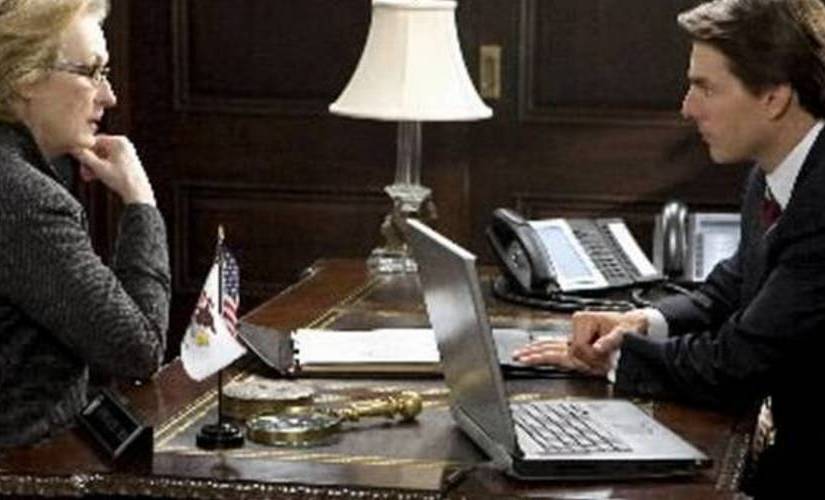
Preachiness is never fun when it labors on for an hour and a half. I don’t care if it’s Tom Cruise or Meryl Streep or even Robert Redford doing the preaching. If these powerhouse celebrities called me up and asked if they could come to my house for coffee and talk, and when they got there, all they did was spew in circles a political platform of “right and wrong” and “why” and “don’t” and “can’t” and “yes and no,” I’d call the police and have them arrested. Time for you to leave, Meryl! Tom, it’s been real.

In 2007, during the late half of Bush 43’s second term, questions of war with the Middle East was at the forefront during a post 9/11 age. Redford, with Cruise producing, thought it’d be interesting to show three different stories (actually two long winded conversations set around desks, and two stranded soldiers) occurring. A political professor (Redford) tries to open the eyes of a student (Andrew Garfield) with great potential but no drive to make a difference. A Republican Senator (Cruise) sets up his own interview with a liberal leaning reporter (Streep) to boast of a new secret mission he’s championing, and two special forces ops are left stranded (Michael Pena & Derek Luke) in the cold of Iraq, the most interesting of three narratives.

Carnagan’s script goes in circles and it’s likely the politics he questions all lean left. Yet the conversations (Redford & Garfield; Cruise & Streep) become just a lot of back talk. A character makes a point, and the other character makes a counter point. I was hoping for a line like “Meryl, you ignorant slut!” Where are we going with all of this?

The soldiers are the mission planned by the Senator that has now gone awry and follows their outcome as they are left wounded and surrounded by Iraqi forces in the snowy darkness. We learn they were students of the professor who wanted to make a difference by enlisting in the Army. See the connection now; the very thin uninspired connection?

Here’s something for ya. In case, you can’t recognize easily enough, Redford dresses his characters in either shades of Red or Blue. Nice touch with Garfield’s frat boy wearing a RED Hawaiian shirt while Redford has the BLUE denim button down. Cruise gets the shiny RED coffee mug for a prop. Does the film have to be THIS transparent? If so, couldn’t the dialogue have been as well?

Lions For Lambs talks A LOT and tells me nothing. Streep’s reporter is a disappointment. Yet Redford portrays her as noble. She loathes the platform of the Senator she just interviewed and is adamant about not writing the quite revealing story he just laid out for her. How can she be that way? She’s a reporter!!!! Tell the truth. Inform the public, even if it’s not pretty, and yet Redford will have a viewer believe it is righteous of Streep to figuratively break her pencil and unplug her computer while she gripes to her editor in chief. No! This is an absolute betrayal of journalistic integrity. What is Robert Redford, the once producer and star of All The President’s Men, thinking here???

You wanna talk about betrayal? The final moments with Streep really had me puzzled. She takes a thought-provoking cab ride that drives past the Capital, Arlington National Cemetery, the Supreme Court, and The White House (right, dab, in front of it no less). Reader, I’ve been to Washington DC a number of times as recent as this past summer. Where the hell is this cabbie driving to, and what route was he taking????

NO COUNTRY FOR OLD MEN

By Marc S. Sanders

Joel and Ethan Coen have an odd collection of films under their belt. No Country For Old Men, an adaptation of Cormac McCarthy’s novel is no exception. You’re likely to meet the oddest hit man you’ve experienced in a film. (Reader, I’m going under the presumption you’ve never encountered a normal or odd hit man in real life. If you survived long enough to read this passage, you are truly blessed.)

Anton Chigrh follows a discipline that likely no one ever taught him. His code is to continue until he finds what he’s looking for and dispose of any lead in his ongoing quest. His weapon of choice-an air gun hose connected to an oxygen tank. It’s instant in serving its purpose. Its sound is quick and jarring.

Javier Bradem delivers an Oscar winning performance as Chigrh in search of $2 million when Llewelyn Moss (Josh Brolin) takes possession of it after coming upon the sight of a drug deal gone bad.

Tommy Lee Jones is perhaps one of the old men in the title. A Texas sheriff not surprised by the carnage he comes upon, but not of much use either. I think he regrets that he can never do more or better and simply can only surmise what’s already been done. I gathered that especially from a scene depicted in a hotel room during the third act of the film. His approach on the scene and his need to sit down translate that for me. His periodic anecdotes during the course of the film seem to say so as well. This sheriff has likely never rescued anyone from harm despite how intuitive he may be.

The Coen Brothers are never shy with blood. A lot of directors are not, really. Yet with the Coens, it seems the bloodshed is disturbingly honest. The instant splatter and flow following another act by Chigrh couldn’t be more truthful. They tell this tale very well, never concerning themselves with how unsettling they can be. Sun filled deserts are not comfortable. Evenings are sleepless. Blood is dark, thick, sticky, messy.

Moss is a hunter who has no idea what he’s up against. Brolin plays him with quiet reservation. He could not resist the urge to take the bag of money, but he also knows he’ll pay for it as well. When he realizes there’s no way to escape, by even crossing the border, he can only try to kill the devil incarnate. He’s likely aware of how this will all play out though.

Among this trio of fine actors (with Woody Harrelson also briefly in the fold), the film is nevertheless celebrated for Bardem. Whenever the story returns to Chigrh, you sit up in your chair a little more alert. He’s got disturbing dialogue exchanges with those he encounters and Bardem’s method makes you wish you never have to decide your fate with a coin toss.

No Country For Old Men is not an action film. The pace takes its time, invested in three men with respective histories who cannot change what their meant for. No incident will change their lifestyles. They are meant to be an assassin, a washed-up lawman, and a poor country hunter. Until they die, no moment in time will alter their caricatures. That’s what I took from the Coens’ Best Picture winner.

I appreciate its honesty.

THERE WILL BE BLOOD (2007)

by Miguel E. Rodriguez

Director: Paul Thomas Anderson
Cast: Daniel Day-Lewis, Paul Dano, Ciarán Hinds
My Rating: 10/10
Rotten Tomatometer: 91% Certified Fresh

PLOT: A story of family, religion, hatred, oil, and madness, focusing on a turn-of-the-century prospector in the early days of the business.


My first draft of this review got up to nearly 1300 words before I realized I was just spinning my wheels.  This is quite simply one of the most original, most daring, most engrossing films of the new millennium that I have ever seen.  And after a while, my first draft became just a list, ticking off and describing scenes that I feel make it great, rather than a precise review.

So instead of giving a full film summary, which you can find elsewhere online, I’m going to try and instead give an actual review.  I’m going to gush a little bit (no pun intended), because it’s a masterpiece, but I’m just going to have to live with that, I guess.

When I first saw this movie (with my good friend Marc Sanders, as it happens, at a free preview), I remember leaving the theater feeling inspired.  Daniel Day-Lewis’s Oscar-winning performance in There Will Be Blood has, to this day, been in the back of my mind every time I’m on stage, whether it’s a drama, comedy, or whatever.  It genuinely makes me want to be a better actor.  Oh, I’ve seen great performances before from the likes of Nicholson, Hoffman, O’Toole, and the rest, but there’s something about the laser-like intensity of Day-Lewis’s performance as Daniel Plainview that had me gawping at the screen in awe as the film played out.  I can’t fully explain it.  It was, and remains, a religious experience to behold.

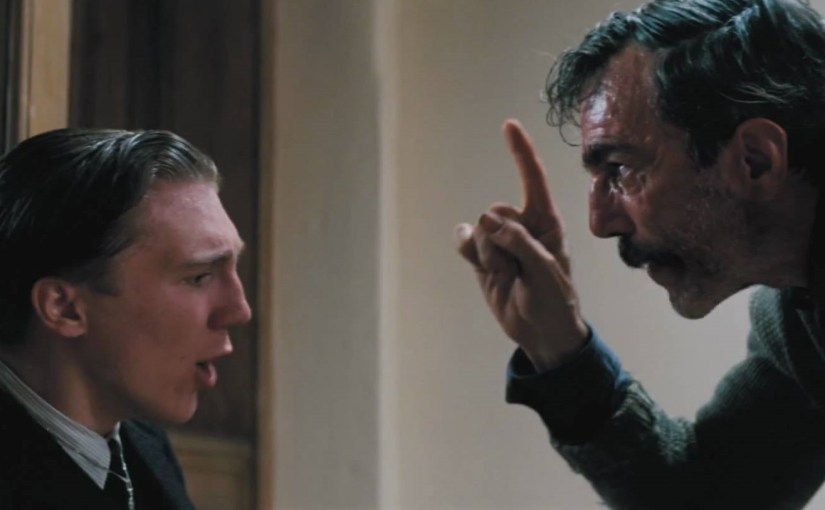
(For those of you unfamiliar with the story, Daniel Plainview is a turn-of-the-century prospector who thrives in the early days of the oil boom in America, but when his ambition crosses paths with a fire-and-brimstone preacher named Eli Sunday, things get a little testy.)

So, there you go, the acting is not just top-notch, it’s revelatory.

But then there’s the movie itself, exhibiting a level of craftsmanship I haven’t seen since the heyday of Stanley Kubrick.  The plot itself reads like one of those summaries of films that great directors dreamed of making, but were unable to for various reasons, like Kubrick’s unrealized biography of Napoleon.  I mean, who wants to see a 160-minute movie about oil drilling?  Why would anyone care?  Why should anyone care?

Director Paul Thomas Anderson’s ingenuity relies heavily on the acting and casting choices, and of course the ingenious screenplay, but any discussion of the film also has to mention the score.  As much as any other element, the film’s musical score creates and sustains a mood of dread and suspense over such banal scenes as pipeline being laid, oil derricks being built, men surveying land, etcetera.  The atonal and urgent score suggests that what we’re seeing is the prelude to some sort of apocalyptic event or incipient bloodshed.  It keeps you on the edge of your seat, as if around the corner an earthquake or mass murder is waiting.

(Sometimes the ABSENCE of the score is just as disturbing, as in the scene in a church when Daniel Plainview is reluctantly baptized, or most of the scenes in the finale, taking place in 1927.)

But ticking off these technical details still feels lacking.  This is the second draft of this review, and I still feel as if I’m not getting across how much this movie works on the viewer.  Or, at least, how it worked on ME.  This was only the third time I’ve watched the movie since first seeing it in 2007, and I was hooked all over again, right from the opening shot, with those dissonant strings playing over a panorama of sunbaked hills and scrub brush.

The movie just FEELS perfect.  It’s anchored by Daniel Day-Lewis, who is in literally every scene except two that I can recall.  But the artistry of everything else at play is just…I am at a loss for words.  It is, as another review puts it, “wholly original.”  There is just nothing else like it.  Sure, it’s definitely inspired by Kubrick, but it takes things to another level.

It’s one of the best films I’ve ever seen.