
THE PRINCESS BRIDE

By Marc S. Sanders

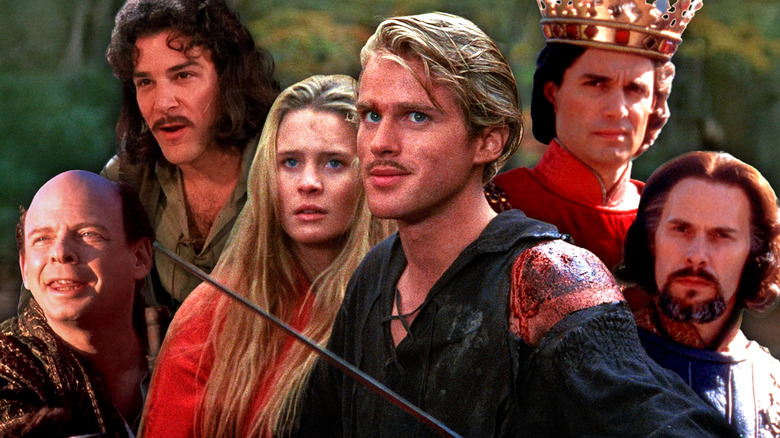
The Princess Bride, Rob Reiner’s whimsical storybook fantasy come to life by means of a grandfather (Peter Falk) reading to his bedridden grandson (Fred Savage), has taken on an everlasting life of its own.  Though it’s not my favorite movie, it’s way up there for my wife, adjacent to Grease 2. I find it to be cute, but lacking a pulse on occasion.  Sorry, but for me a lot of the characters and moments are simply sleepy.  Maybe it’s literally too much of a bedtime story. Still, I do not frown on its pop culture touchstones since its release forty years ago.

Famed screenwriter William Goldman adapts his book that includes heroics and romance, along with swordplay and fire swamps haunted with R.O.U.S’s.  

A beautiful girl called Buttercup (Robin Wright, in her debut role) falls in love with a farm boy named Westley (Cary Elwes) who tends to any of her demands by responding with the simple catchphrase “As you wish.”  Though, just as the pair confess their affections for each other, Westley is thought to be killed by pirates.

Five years pass and Prince Humperdinck (Chris Sarandon) has declared that Buttercup is to be his bride.  The lady has no say in the matter and stands fast that she will never love again as long as Westley is gone. 

Buttercup is taken captive by three strangers. Vizinni, proud of his brilliant mind, Inigo Montoya an expert swordsman bent on avenging the six fingered man who killed his father, and Fezzick, the lovable giant.  (Respectively portrayed by Wallace Shawn, Mandy Patinkin, and Andre The Giant). 

But wait!!!! A masked man dressed in black takes up pursuit to rescue the kidnapped girl.

Everything looks familiar in The Princess Bride.  What has made the film so special is the attempts for comedy based on one liners and puns.  Billy Crystal is Miracle Max, the old healer, but with his Jewish New Yorker schtick for a personality.  Carol Kane compliments him well as the nagging wife.  Prince Humperdinck has people to kill and frame and a kingdom to overthrow, all while planning to marry Buttercup.  He’s swamped!  I love the sermon focused on “MAAWIDGE” delivered by the kingdom’s clergyman (my introduction to Peter Cook).  These moments of dry comedy make up for some unexciting leading characters.

Try as I might I have trouble understanding what Andre and Patinkin are saying beneath their dialects.  That’s an issue that takes me out of the movie. Patinkin moves gracefully with action, but his personality is sleep inducing.  Even with a Spaniard’s accent, he comes off very flat.  Christopher Guest is also here as Humperdinck’s right-hand man.  With This Is Spinal Tap! and his own mockumentaries, especially Waiting For Guffman, Guest’s appearance here is a bit of a letdown.  The guy is a perfect comic but he’s so dry and unexciting here.

Cary Elwes is dashingly handsome with his blond locks and a wry grin.  The sword fight with Patinkin is one for the ages, despite the blah music behind it and the artificial looking rock like set.

The soundtrack plays like a kid’s electric keyboard and the sets, while decorated impressively, still look like they are residing in a soundstage warehouse.  The beauty of fantasy is the escape.  The imagery must look convincingly like another world entirely.  Here I could never get past the fact that nearly everything from the fire swamp to the pit of despair and the castle looks like something from my fourth-grade play.  The costumes work.  The environments look too crafted out of spray-painted cardboard and paper mache, though. 

Robin Wright is the princess.  She’s beautiful, but there’s not much demanded of her from Goldman’s script except for a graceful English accent.

My favorite is Vezinni.  Wallace Shawn is simply doing Wallace Shawn and that’s absolutely fine by me.  The bratty Jewish guy with the lisp who operates with the most energy in the cast next to Crystal and Cook.  The best scene of the whole movie doesn’t include the screaming eels or a sword fight.  It’s actually when Shawn shares a moment with Elwes in a battle of wits.  Goldman writes his best dialogue here as Vizinni explains layers upon layers of logic because anything that Westley can think of can only be “INCONCEIVABLE!”  This scene plays like the best of Saturday Night Live or The Daily Show.  Truly one of my favorite comedy moments ever.

I like The Princess Bride.  I just don’t love it like so many ardent fans.  My hang ups just keep me out of the picture, and I think about what I want for dinner rather than where my full attention should be – the rescue of Buttercup.

Nevertheless, I love Rob Reiner for making such a film.  Too often the standard princess in the castle formula is reserved for Disney blueprints.  Goldman and Reiner colored outside the lines to lend comedic self-depreciation to the regular tropes.  I only wish they heightened their efforts a little more.

I miss Rob Reiner.  It’s a terrible loss and the tragic fate he shared with his wife is not only unfair to them but to the world of moviegoers and beyond.  He delivered bi-partisan opinions on politics, always looking to improve his country.  The height of his career might have been in the 1980s & 90s (This Is Spinal TapStand By MeThe Princess BrideA Few Good MenMisery, The American PresidentWhen Harry Met Sally…) but he always remained a treasured filmmaker and occasional actor in surprising roles (The Wolf Of Wall StreetSleepless In Seattle).  He’ll also always be “Meathead.”  Sadly, when I return to these special and often groundbreaking movies, there’s now a tragic mark on the experience.  How can I not think about what Reiner would still have contributed to the world had his life and ongoing legacy not been ripped away so brutally and unnaturally? 

It’s truly inconceivable.
THE HOT ROCK

By Marc S. Sanders

I’m a sucker for a good caper.  Capers play like strategy games.  An object (Hitchcock called them MacGuffins) needs to be acquired.  It doesn’t matter so much what the object is.  The importance falls within the pursuit. 

William Goldman wrote The Hot Rock, adapted from a novel by Donald E Westlake who penned a series of books focusing on the ex-convict John Dortmunder and his further adventures.  In the film, he’s played by Robert Redford. 

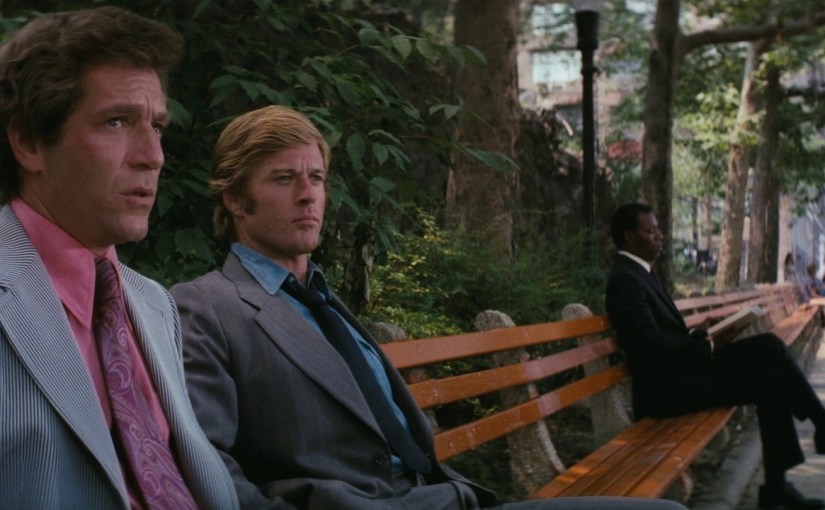
On the day that John is released from a New York state prison he’s picked up by his inept brother-in-law Kelp (George Seagel) who escorts him to Central Park.  Kelp wants John to be the fourth member of a team and steal a priceless diamond.  A man by the name of Dr. Amusa (Moses Gunn) sits about five feet away from them on a park bench.  Amusa breaks it down for the men, but they get interrupted by an elderly woman who sits between them to feed the pigeons.  This is what you can expect from The Hot Rock, a film structured under one pesky inconvenience after another.

This rock is currently on display at the Brooklyn Museum, on loan by an African country who has no business having possession of the valuable.  The stone belongs with Amusa’s country and he’s ready to pay Kelp and his crew $25,000 each to pull of the heist.  He’ll also, reluctantly, front some funding monies ahead of the theft for preparations. 

Like in all of these kinds of movies, John is ready to do one last job.  Then he’s out for good.  However, one last job turns into four last jobs.  Without spoiling too much, the rock gets relocated from one place to another.  So, a late-night heist at the museum turns into a break in a prison, and then it’s somewhere else and somewhere else after that.

As Hitchcock describes, you never care about the MacGuffin.  For movie purposes, you see it on display in its majestic glory, encased in a glass box right in the center of the museum, but so what.  The question is to uncover how the guys are going to get it out of there.  The Hot Rock doesn’t work nice and neatly like Ocean’s 11 or The Score.  In those movies, there are things that don’t go according to plan.  In The Hot Rock, nothing goes the way it should. Honestly though, it should be funnier than it really is. 

I recall there was a movie called Quick Change with Bill Murray doing his best to get out of New York City following a bank robbery.  It was comedic all the way through and maybe that’s because it was Bill Murray of Caddyshack and Ghostbusters fame, not to mention Saturday Night Live.  Robert Redford is the rugged actor of the time in 1972, though.  Not a comic and he plays Dortmunder like a serious kind of thief, even with his famous blond locks and toothy grin.  George Segal along with Ron Leibman and Paul Sand are bumbling chatter mouths, but are they funny?  Segal’s character steals a car to pick up John and we see him trying to figure out how to drive the dang thing, nearly running over Redford.  I never believed he did not know how to not drive the car. 

BY THE WAY: Ever notice in movies that they’ll show someone does not know how to drive a car by having them accidentally turn on the windshield wipers?  That’s all that is done.  That and having the car drive in S shape patterns as if the steering wheel suddenly took on a life of its own.  Then the scene comes to a halt with a startling slam on the brakes.  Never fails.  This happens over and over again in the movies.

Zero Mostel appears as the father/attorney for Paul Sand’s character.  It’s Zero Mostel, but Goldman’s script doesn’t give him much material to play with.  It’s not a silly caper flick because suddenly Zero Mostel of The Producers makes an appearance.  Look at Ocean’s 11, and see what Carl Reiner is doing.  There’s an organic affection for Reiner’s character that Mostel never achieves here. 

Peter Yates directed The Hot Rock a couple of years after the car chase thriller, Bullitt with Steve McQueen.  He impressed audiences with what two cars pursuing one another across the hilly streets of San Francisco could accomplish.  In this film from the early 1970s, Yates attempts to dazzle the audience with a few more speeding car stunts but they just don’t cut the corners.  Everything on screen looks like Yates and his crew are trying too hard.  There’s a helicopter sequence and much time is devoted to seeing how the chopper flies low over the Hudson River and then soars above the Twin Towers, still under construction at the time.  Look everyone!  Ron Leibman is flying a helicopter and Robert Redford and the rest look woozy about it all.  Thing is that James Bond movies were already doing this kind of schtick (with special effects) year after year by this time.  Peter Yates just doesn’t offer up anything that looks like a new sensation.

I’m actually surprised The Hot Rock has not been remade like Ocean’s 11 or The Italian Job.  In this film, the tools and skills are left to the guys and their cons. There’s no computer overrides or laser sensors to assist them.  Today, all of the techno stuff would be there with lots of closeups of fingers tapping away on a keyboard and then data entries appearing on a monitor.  In between, would be the comedy and would you believe of all people, I thought Will Farrell would be the guy to play the straight man and lead the charge.  The comedy of the situations would remain, but the thieves would be nerdy geniuses, each having their unique abilities and quirks. 

The set up is there for a remake.  Who you cast and what is done with it is up to the filmmakers. 

DEATH WISH (1974)

By Marc S. Sanders

I never saw the original Death Wish before.  Never felt I needed to having already watched Death Wish II and Death Wish 3.  Yes!  The inconsistency in the numbers (Roman vs numeral) is how the “saga’s” films are titled.  Sometimes self-described writers and studio marketers do not pay attention to the minute details.  If you’re gonna be stupid with your five film franchise, then be sure to strive for a complete lack of intellect.

Now before I get back to discussing the original film which I finally watched last week, I offer you this confession.  In 1985, there were two films I saw five times each in theaters.  Oh God, You Devil and Death Wish 3.  I guess Out Of Africa and Prizzi’s Honor did not appeal to my twelve-year-old mentality.  Death Wish 3, however, had a hideously violent gang making social progress because they consisted of whites, blacks and Hispanics.  A couple of punk girls too.   A welcome melting pot of deranged animals operating under an equal opportunity philosophy.  They were all pals and they pillaged, robbed, vandalized, murdered and raped the helpless neighbors of the destitute projects in New York.  Happy times.  More importantly, have you ever seen that shootout that occupies the last thirty minutes of Death Wish 3?  It is one for the ages and worth your time to watch on repeat.  Dare I say it’s as good as anything in a Stallone, Schwarzenegger or Eastwood actioner.  

Here’s where my endorsement stops with this article, though.  Skip the first two trashy Death Wish films. Unless you want to see Laurence Fishburn try to shield himself from a Charles Bronson bullet by covering his face with a boom box and then drooling blood and radio parts out of his mouth before collapsing dead on the pavement.  That glorious moment occurs midway through the second installment.

Stay with me, now.

Having experienced the happy bloodshed of the third of five films in the Charles Bronson franchise, I am surprised to learn his city architect character Paul Kersey begins the original film as a “bleeding heart liberal” who would prefer to stay away from guns.  What a departure for Bronson’s most famous role.  All that being said, director Michael Winner likely started filming this piece with a need for a message about justifiable homicide or vigilantism, but unfortunately it very quickly drowns in repulsive ugliness.

I’ll say this for Michael Winner.  He’s keen enough to show Paul and his wife (Hope Lange) vacationing in beautiful Hawaii.  Then as they return home, an overhead shot of a bloody sun-soaked New York City appears on screen with the title of the picture DEATH WISH in big block letters, accompanied by some sinister sounding music.  Hawaii is heaven.  Home is hell.  John Milton was never this poetic.

Paul Kersey’s wife and adult daughter are attacked in their home.  Interesting tidbit! One of the slimeballs is Jeff Goldblum in his first film role.  Though there’s nothing for him to be proud of here.

Kersey’s wife dies.  The daughter is brutally raped, and I mean brutally.  It’s a disgusting scene that offers no sense of sadness or fear or awareness.  It also looks as if Winner and his crew and cast never even rehearsed the scene.  The poor girl’s clothes are ripped off of her, she’s pulled against one of them from behind by her throat, and then the attackers spray paint the center of her bare anus in orange as a “target” for where to penetrate.  Another thug paints a swastika on the wall. What is that supposed to tell me? Then we are treated to seeing Goldblum and company baring themselves and mounting the actress who was awarded this unfortunate role.  Reader, I’ve seen just about everything there is to see in films.  When I consider the point of delivery that Jodie Foster offered in her Oscar winning role in The Accused, what is smeared across Death Wish is exploitative garbage. Any shred of cinematic artistry is entirely devoid in this picture.  In this case it was not just another movie.  It’s just truly sickening.

Anyway, Bronson has never been a great actor.  Nor has he been charismatic.  Yet, there’s a tough guy and dark presence to what the camera found in him.  A client gifts Paul a modern-day Colt handgun and considering the high level of violence that occurs within the streets of New York, he takes it upon himself to seek out or bait would be muggers and criminals.  He never catches up to the hooligans that tormented his family, but he takes on the mission of cleaning up the streets while a useless police force amounts to little results.

After Paul’s first shooting, he comes home to vomit.  I can only guess the liberal cannot stomach what he’s committed.  This is about the only dimension we get out of this guy.  Paul has boring conversations with his son in law.  Poorly acted scenes with actor Steven Keats; poorly acted, poorly directed, poorly written, poorly filmed.  Paul hardly ever shares a scene with his traumatized daughter who goes in and out of catatonic states when she appears in the film.

As the body count piles up, a detective played by Vincent Gardenia starts the investigation around town and wrangles up his police force posse to be on alert. Hey, look who is giving a run down on a progress report.  It’s Gardenia’s Moonstruck wife, Olympia Dukakis.  Pretty neat to see this. Still, Death Wish is not recommended for your Vincent Gardenia/Olympia Dukakis movie marathon.

Death Wish is tone deaf.  I’d be interested to see how a liberal, who shutters at violence, transitions into a vigilante.  That’s a story with an eccentric transformation. However, Michael Winner and his writers are not even aware or interested in talking to you about that.  I only know Paul Kersey starts out as a liberal because his co-worker mockingly calls him one, and again he vomits after his first shooting.  How humane of Paul.

I won’t disclose the entire ending, but I’ll share this with you.  Paul relocates to Chicago and upon arrival, Michael Winner freeze frames on a grinning Charles Bronson pointing a finger gun at a couple of harassing punks who are tormenting some citizens in a train station.  What do I gather from this hint of subtly?  I guess Paul Kersey registered with a different political party when he became an Illinois citizen.  Quite the message!