So this may be director Brett Ratner’s best film, but that doesn’t make it a great film. Ratner directs Anthony Hopkins as Hannibal “The Cannibal” Lechter in this prequel film to The Silence of The Lambs.
Hopkins does his best with a script that lacks the wit of the original Lambs script. The puns are lacking this time as he plays mind games with Edward Norton’s FBI agent who is trying to apprehend “The Tooth Fairy,” a deranged killer of families played by a disturbing Ralph Fiennes.
Red Dragon boasts a who’s who of a great cast; Hopkins, Norton, Fiennes, Harvey Keitel, Emily Blunt, Mary Louise Parker and Phillip Seymour Hoffman. Yet, every player is incredibly boring. It’s as if they memorized their lines and just recited them at the call of action. There are no nuances. No fear or fascination within their interactions, and thus what’s at stake seems awfully minimal. We get a LOT of Norton just talking to himself or a tape recorder. It’s all very flat.
Ratner’s art director should be commended for effectively duplicating Hannibal’s prison from Lambs. That’s where the eye-popping stops, however. Hannibal’s infamous muzzle mask also makes a return.
I remember loving this book by Thomas Harris. It was so imaginative and descriptive. Very fast reading. Ratner gets all the important scenes in his film as well as some additional fodder for Hopkins but it’s all color by numbers. Nothing is here to carry a swell of emotion. No close ups. No lighting technique.
The best that Ratner comes up with is to chain Hannibal to a steel cable like a wild animal. He lunges for Norton and the chain rattles. Meh. A cat jumping out of nowhere has given me worse nightmares. Ratner forgot to cast the cat, however.
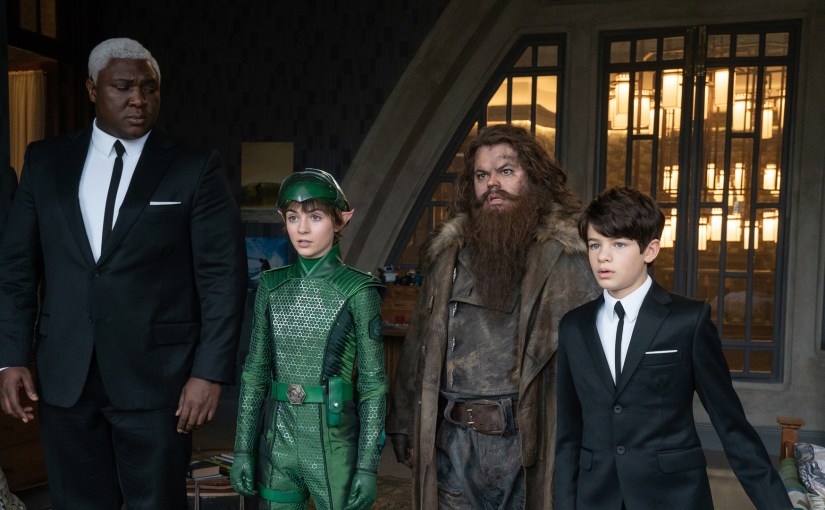
Why can’t Disney adapt a good book anymore? They massacred A Wrinkle In Time. Now they’ve taken a hatchet to Artemis Fowl, a Disney + byproduct that was shamelessly shelled out during the height of the pandemic.
There had to have been a more fleshed out, extended film here. Scenes are taped together with no bridge. All I can imagine is some suit insisted on cutting the guts out of director Kenneth Branagh’s film to ensure that its target kid audience would sit still, at least for 95 minutes. The same line of thinking had to have been applied to Ava Duvernay’s A Wrinkle In Time. Both films introduce characters that serve no purpose or make no sense. One character here shows up just to shout “Artemis!”
Speaking of the title character, what is he really? We are told by the narrator known as Mulch Diggums (Josh Gad) that Artemis Jr (an uninteresting kid actor named Ferdia Shaw who must’ve gotten the part cuz he looks good with sunglasses) is one of the greatest twelve-year-old geniuses of all time. He literally has an answer for any question that comes his way. So we’re told! Fact is, all this kid does is shoot a laser gun and wear a black Tarantino suit and tie. Never once in this film did I see Artemis Fowl demonstrate any of his genius, mind bending abilities. He surfs in the ocean outside his Ireland mansion. Does that merit the aptitude of a genius?
Artemis Sr (Colin Farrell) is apparently believed to be a thief of rare, priceless collectibles. After telling his son about some tale involving fairies that live in an underworld, he is soon kidnapped. It is now up to Junior with his trusty butler (Nonso Anosi) to rescue him. This butler doesn’t measure up to Batman’s Alfred. All this butler does is introduce young Artemis to a basement he was never aware of. Mulch also explains that if you call him Butler, he’ll snap you in two. Too bad we never got to see that. (Why tell us, dammit????) Then….AND I AM GOING TO SPOIL THIS SURPRISE….he dies. Tears must flow of course, but all I ever thought of was that gee, I hardly knew this guy.
Artemis Jr must recover a MacGuffin called the “Auculus.” How many times must I hear the word Auculus in a span of an hour and a half? The Auculus. The Auculus. THE AUCULUS!!!!!! Enough already. The filmmakers must believe that the more you say it, well then the more important the Auculus must be. My question: WHAT IN THE HELL DOES THIS AUCULUS EVEN DO?????
Judi Dench is here but only for the purpose of wearing a green leather trench coat that appears to weigh her down and doing what I think is likely a terrible enunciation of an elderly Irish lady’s accent. She plays the General of the fairy army. Dench is awful in this role and appears as lost in the effects as I was. Half the time I didn’t know what was going on. All of the time Judi Dench didn’t know what was going on.
The one main fairy is Holly Short (Lara McDonald) sent on a mission to go to Artemis’ mansion. Once she gets there, I truly lost track of why she was there to begin with. However, she seemed to have more activities to do than the title character is ever given. Once again, the super genius Artemis just shoots a gun. Holly at least gets to fly around with her motorized wings; yes, this is a fairy with an engine to activate her wings.
Artemis Fowl is a gorgeous looking picture. The special CGI effects are truly dazzling to look at with incredible color, but only if I’m watching a fireworks display at Magic Kingdom. Within a story, I have no clue what purpose any of the visuals serve or what possible results could come of anything. Nothing is explained here; much like this Auculus I talked about earlier.
The culture of the film is a failure as well. We are shown that this story is rooted out of Ireland. Where’s the Irish inspiration though? There’s no sense of inspiring traditions to learn from or appreciate. The soundtrack is hardly Celtic. Truly criminal is casting a Jewish Josh Gad and an English Judi Dench. For authencity’s sake, couldn’t actual Irish talent have been used instead of terrible dialects from marquee names?
There had to be a better film here. I’m talking a 2 1/2 hour film with solid, interesting exposition with mystery and questions like the first Harry Potter film. Nothing is of any consequence or comprehension here. How could I be so lost with this film?
This is a pattern for Disney of late. They acquire the rights to some wonderful children’s stories and then just mix some kind of slop in a slow cooker. A Wrinkle In Time, John Carter, and now this dreck. I don’t understand though. If the studio is so committed to packing so much into Avengers and Star Wars movies then why can’t they do the same with its other properties? I promise that kids will sit engaged with a longer film if it’s constructed with care. I know it.
Artemis Fowl is a squandered opportunity. They had the beloved novel by Eoin Colfer to springboard off of, and I know, without even reading the book, that they disregarded almost everything that made this story so special. It couldn’t be more apparent.
Artemis Fowl is a textbook example of when Hollywood does a complete disservice to its author as well as its target audience. It’s a criminal adaptation. It’s a betrayal of the intelligence that kids really come equipped with. It’s a terrible violation of culture and it’s an awful, awful, awful film.
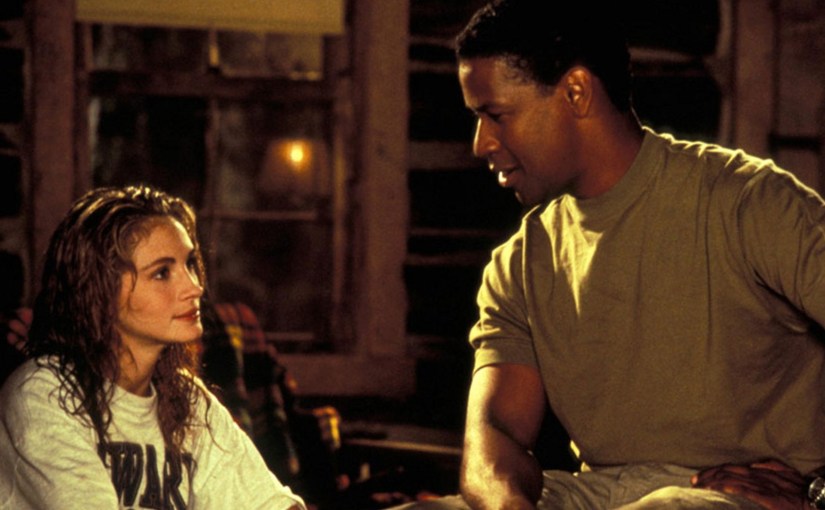
Tulane Law Student Darby Shaw (Julia Roberts) is unbelievably lucky. She can find herself being pursued by one white guy in a suit after another over the course of a two hour movie and will be fortunate enough to escape every threat by sheer chance. It’s only to her benefit when she is being chased by two assassins in a creepy downtown parking garage that someone left an angry doberman in a car to startle the killers. As well, it’s really a blessing that Darby has caught on that if an engine sputters when turning the ignition it can only mean one thing – car bomb! GET OUT!!!!!
Darby is the main protagonist of The Pelican Brief directed by Alan J Pakula, adapted from John Grisham’s best-selling novel. When the eldest and the youngest Supreme Court justices are murdered, Darby conceives of an outrageous conspiracy stretching all the way to the President and documents the whole rundown in the so-called Pelican Brief. She shares the document with her law professor who shares it with his government friend who shares with the CIA who shares it with…and so on and so on.
Pakula is an under celebrated director when you consider his better thrillers like Presumed Innocent, Klute, and especially All The Presidents Men. Here though, I think he got a little lazy with his screenplay and direction. The Pelican Brief is a little too paint by numbers.
Sure, the film has suspense. I think Grisham’s story has some convincing weight to it where wealth and government won’t stand for the platforms of environmental causes and therefore people have to die. Still, while the meat of that story eventually surfaces, we are left with A LOT of buildup before Darby gets involved. Just a lot of white guys in different office buildings walking down hallways, entering doorways and talking on the phone. Every so often we come across a DC crack reporter, Grey Grantham (Denzel Washington) who gets a phone call from a potential informant. When that guy gets scared and hangs up, thank goodness Darby just happens to call two seconds later regarding the same story. Good on you Grey for being by that telephone.
That’s my problem here. Pakula just works in the lucky conveniences to keep Grey and Darby on the trail. Neither of them ever truly escape a bind on their own. Neither of them ever truly dig the hole any deeper without something COMING UPON THEM to help them along at just the right moment.
We learn a safe deposit box belonging to a dead character exists. Darby just strolls into the bank and posing as the widow, who is not a signer on the box, is just asked for her address and phone number. No proper identification necessary. Why didn’t anyone ever tell me it’s that easy? Folks, hide your valuables because I’m gonna be robbing you blind.
Pakula will even set up a good scenario where Darby thinks she’ll be meeting someone who can help but it’s an assassin ready to kill, only suddenly the assassin is killed while holding Darby’s hand in a crowded courtyard. Wow!!! Lucky again, Darby. I’m still fuzzy on who actually killed the guy. That didn’t concern Pakula though. It’s explained in a quick throwaway line before the credits roll. Pakula only had to get Darby out of danger again. So let’s see he’s got the barking doberman for something else, the engine sputter will be used later on. Hmmmm??? Meh!!! we’ll just have someone randomly kill this guy. Now run, Darby. RUN!!!
Notice I haven’t talked about performances. Well, there’s not much to them. The Pelican Brief boasts an impressive cast of character actors like Sam Shepherd, Anthony Heald, John Lithgow, Stanley Tucci, Robert Culp and John Heard. Yet, these guys, along with Roberts and Washington are flat. Just reciting their lines when the cues call for them. There’s nothing very exciting to any of them really. Very monotone. Roberts is beautiful yet depressing even before she gets caught up in the mystery. Washington, while handsome, does not seem to have the gusto that Pakula’s reporters did when he directed Hoffman & Redford. Grey is too neat, physically fit and tailored for an always on the job, aggressive reporter looking for a scent.
There was a better movie to be made here, thanks to some convincing motivations that were started with Grisham’s novel. Unfortunately, Pakula just didn’t devote enough respect to the original author’s imagination.
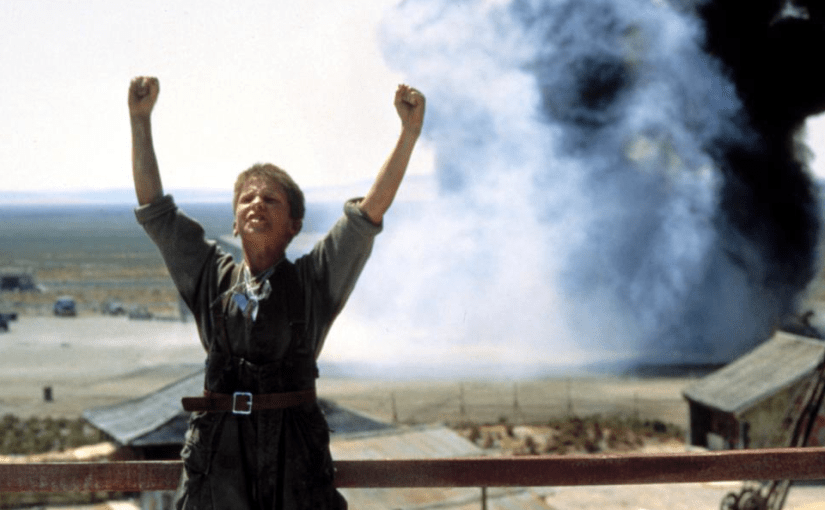
Empire Of The Sun is a marvelous film. Finally, I got to see it, and now I consider it to be Steven Spielberg’s transition film within his storied career. It’s also one of his best cinematic achievements.
Other than The Color Purple, the majority of his directorial work up to this point in 1987, consisted of adventure and escapism found in cliffhangers and children with the innocent curiosities to uncover what is underneath. Empire Of The Sun contains all of these elements, but as the film progresses, it matures and grows up right before your eyes.
Christian Bale makes his introductory role a performance to remember as young Jamey Graham. He is a British child of unlimited privilege living in Shanghai with his parents, naïve and sheltered from the gradual Japanese occupation taking place in 1941 when China and Japan were in conflict with each other. Jamey happily plays and gets into adventures with his model airplanes and his imagination of heroics. One day, while at a costume party, he discovers a crashed war plane and then envisions his fantastical heroism. Shortly thereafter, the fantasy becomes real when he comes upon a Japanese battalion, just yards away. With his parents, they make a desperate escape from the city they and their ancestors have called home. However, Jamey becomes separated from them amid the chaos within the surmounting crowds. Now, this young child with no sense of self reliance has no choice but to become resourceful if he is to survive and reunite with his mom and dad.
Eventually, Jamey meets up with two Americans named Basie (an outstanding John Malkovich) and his sidekick Frank (Joe Pantoliano). The three are sent to a Japanese Internment Camp forced to live and survive on bare necessities as the second World War rages on with the Americans joining the fight.
Spielberg treats his protagonist the same as he did with the Elliot character in E.T. The Extra-Terrestrial. Jamey happily lives in his own imagination until it is disrupted by an intrusion. For films like Close Encounters Of The Third Kind and E.T., an alien of fantasy interrupts the protagonist’s lifestyle. For Jamey, however, the reality of war harshly takes over. It fascinated me how Empire Of The Sun, with a screenplay adaptation by Tom Stoppard of J.G. Ballard’s biographical account, seems to follow a familiar formula to Spielberg’s other pictures, and yet it reinvents itself with reality as opposed to fantasy.
Furthermore, Steven Spielberg does not abandon one of my favorite tropes of his as he makes the unseen the antagonist of the film. When the veil is lifted, you can’t help but gasp. Everyone knows he followed this approach in Jaws. I also like to think he did this effectively with the German tank in Saving Private Ryan. Here, he caught me completely off guard. Young Jamey is dressed like Sinbad for Christmas jubilation at a costume party. He’s happily tossing around one of his model planes and then when it flies out of sight over a grassy ridge, he runs over to the edge and finds something shocking beyond his treasured toy. It’s a moment that happens early in the film and immediately tells me that this story will be bigger and more frighteningly real than meeting a cute, strange friend from another planet willing to eat my Halloween candy.
Spielberg’s production value is eye opening with thousands of extras within the scenes of mass exodus from Shanghai or within the internment camp. Especially impressive is how he directs his extras to seem so overwhelming against young Christian Bale. The child actor really followed direction, but more importantly it’s easy to see how method Bale might have been even at this young age. He gets pushed and pulled and tugged on like I can only imagine an unforgiving circumstance of war would present itself. Cinematics often praise Whoopi Goldberg’s debut in The Color Purple as one of the greatest introductions ever. I have to put Bale’s performance up there as well. The character arc that young Jamey experiences is well drawn out within Stoppard’s script, but Bale really performs the gradual change of a spoiled brat forced to become resourceful for not only himself but his comrades within the camp. A director can tell a child actor where to walk or to sit or to stand. A director can discuss the motivations of a particular scene. With Christian Bale though, his performance throughout the film seems to remember where his character left off earlier in the story, where it has currently arrived and where it hopes to end up. This young actor is so in tune with his character’s story.
You may say John Malkovich serves as the staple mentor that every child protagonist has in so many other stories. Basie is not that simple though. A child will be quick to trust anyone he comes in contact with. Spielberg and Stoppard know it’s not that easy though. Malkovich is that dynamic actor who never seems forthright with his portrayals. There’s something he always seems to hide from the audience. Is he a snake ready to strike? Is he a gentle pup ready for an embrace? I never trusted how Basie would end up with Jamey by the film’s conclusion. Malkovich delivers unpredictability so well.
Miranda Richardson is credited as a once wealthy friend to Jamey’s parents. She’s not given much dialogue or scene work, but with the times she appears on screen Spielberg gradually breaks her down. At first, she is well dressed in her finest linens insisting that her husband explain who they are to the Japanese forces. Later and later in the film, the strength of her proud stature slowly crumbles. It’s nice work and it’s crushing to watch.
Notable “tough guy” Joe Pantoliano goes through a similar transition. A capture of him with Spielberg’s camera eventually focuses on a weeping and weak man. Like much of the film, it is so unexpected.
There are epic overhead shots of panic and riots within the streets of Shanghai. There are amazing moments where aerial attacks coming from nowhere with Jamey depicted running in a parallel line along the trajectory of a bi-plane. It’s such a sweeping, personal story but the visual effects and camera work are so impressive as well. The photography is striking in bright sunlight amid fireball missile strikes. It is dazzling to watch.
As I noted earlier, Empire Of The Sun is Steven Spielberg’s transitional film. Once again, he focuses on the innocent, young and unaware hero who is forced to become wise and most especially sensitive to a change in setting and circumstance. With Empire Of The Sun, Steven Spielberg demonstrated that he could mature himself away from fantasy and embrace reality.
I think Empire Of The Sun is an absolute masterpiece.
The first MCU movie that makes the biggest departure from any of the other installments in the franchise.
Doctor Strange operates on a level beyond punchy powers as Avengers director Joss Whedon noted. The film explores a very far, very fictional belief in the mystical arts and magic. So much so that sometimes characters like The Ancient One and Mordo speak in an English that is so foreign and so confusing. Still, I’m not complaining.
I enjoyed this film immensely. Benedict Cumberbatch is so right in the role of Stephen Strange. His character’s arrogance is not over the top, but necessary and evident. I really liked his transition from expert surgeon to a permanently damaged physical person and then onto The Sorcerer Supreme complete with the Cloak of Levitation, a better and more deserving way to describe it than just another cape.
The morphing of city landscapes and neighborhoods into arced and flipped and reverse mazes are really fun and change shape with crisp sound editing and music.
Good supporting work is also on display from Rachel McAdams, Chiwetel Ejiofor and especially Tilda Swinton. My one wish is that the villain played by the very capable Mads Mikkellsen was fleshed out more. He’s an actor who can handle heavy roles. Regretfully, I don’t think the script gives him enough to do here.
This Marvel chapter stands on its own with little reliance on the other films. However, the green infinity stone at play here is easier to understand now that I’ve seen Avengers: Infinity War. I’m talking about The Time Stone, of course!
Doctor Strange is a solid film; one that I would love to watch again a year from now and likely feel just as entertained.
NOTE: stay away from the 3D Blu Ray discs. Watch it in 2D. Having seen the 3D in theatres the first time, I clearly remember not enjoying the film very much. It was blurry and dark. At times the picture didn’t look crisp. The 3D effort was a nuisance and a terrible distraction. Less is more. Stick with 2D.
In 1998, Elmore Leonard’s best-selling novel, Out Of Sight, was adapted by director Steven Soderbergh, where Federal Marshall Karen Sisco (Jennifer Lopez) falls in lust with Bank Robber Jack Foley (George Clooney), which leads to ridiculous, albeit logical set ups as a high stakes diamond heist is planned along the way.
I know years after Steven Soderbergh’s film was released an ABC tv series based on the Sisco character was produced. That was a misfire. Simply because the beautiful, sexy and most importantly under appreciated and intuitive portrayal that Lopez mastered was a role that could have led to another great film franchise of sequels to come. Carla Gugino played author Leonard’s heroine in the tv show. If you are saying “Carla who?” then ‘Nuff said. Sisco belongs to Jennifer Lopez.
Lopez and Clooney have great chemistry amid gorgeous cinematography on location in sun filled Miami and snow blanketed Detroit. Soderbergh shoots a great scene midway through where the two characters, on opposite sides of the law, throw caution out the door as they seduce each other in front of a hotel window view boasting beautiful midnight blue sprinkled with falling snow. It is one cool and very hot scene.
Sisco is always a step ahead of Foley. Her problem arises when after being held hostage by him in the trunk of her car following his escape from prison…well, she just can’t resist him.
My apologies. Out Of Sight is a far better film than I could describe here thanks also to a boastful cast featuring Dennis Farina, Ving Rhames, Don Cheadle (how many films has he done with Clooney?), Steve Zahn, Albert Brooks (simply great as a hairpiece wearing white collar criminal), Michael Keaton (two Batmans in a film for the price of one) and finally a master of cameos reserved for a smirk inducing final scene. Make an educated guess of who I could be talking about.
Lopez and Clooney should have done more films together over the years. They are as classic a couple as Tracey & Hepburn, Beatty & Dunaway, Hanks & Ryan or Gere & Roberts.
This was a gem of a movie I mistakenly found boring when I saw it in theatres. What was I thinking? On a second viewing, 20 years later, I laughed, smiled and just couldn’t take my eyes off it. It’s just great fun.
Without Out Of Sight, Soderbergh, Clooney and Company would probably never have made an Ocean’s 11. Check out what became before their more successful collaborations to come.
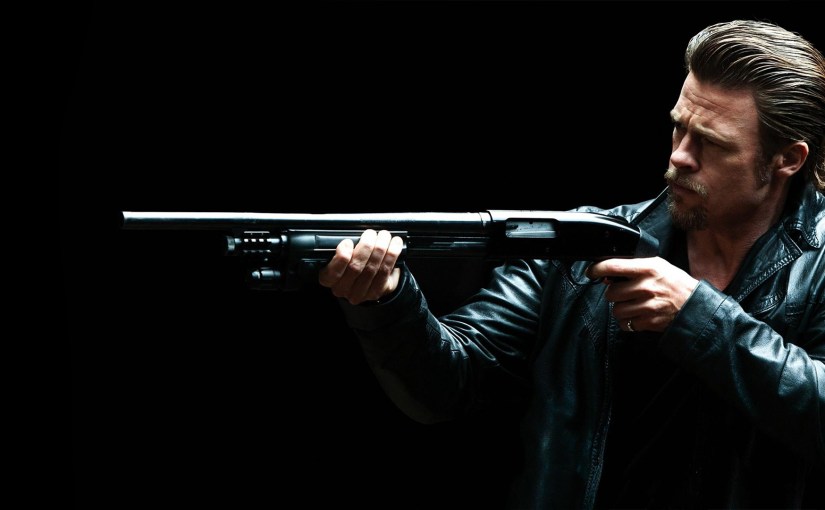
What did I just watch? A mob movie, or a 2008 Presidential debate where the candidates are no shows, and their respective commercials are aired in their place? Andrew Dominik directs Killing Them Softly, with Brad Pitt who also produces.
Reader, I don’t get the appeal. Maybe it’s the outstanding cast which includes Pitt, as well as James Gandolfini, Ben Mehndelson, Richard Jenkins, Scoot McNairy and Ray Liotta. Sadly, these guys are given next to nothing do of any consequence.
After it is revealed that Liotta’s character, Marky, ripped off his own mob poker game a few years back, an idea is presented to two street addicts played McNairy & Mendehelson to do the same thing because, heck, they’d never be suspected and logic dictates that Liotta must have done it again. So, he’ll be the one to blame and get whacked. The game is robbed and now Brad Pitt’s hitman character is on the job. Simple enough story, almost like a Guy Ritchie picture.
Killing Them Softly is an adaptation of a 1974 novel by George V Higgins. I never read the book, but I’m curious if it contains any kind of relation to Andrew Dominik’s idea of editing recurring speeches and ads, compliments of Obama, McCain and Bush 45. Truly, what was the point of this recurring theme? A two-sentence piece of dialogue finally acknowledges this in the final minute of the film, but I’m still lost on the significance. Somehow Dominik made a dirty, cold, rain-soaked picture that has an omnipotent viewpoint from our most prominent politicians, and I don’t know what one thing has to do with another.
As well, Gandolfini arrives in the story and I never could gather what was his purpose. I think he is a hitman who is washed up, never getting his ass up to carry out the job and just monologues about nothing like the hooker he pays off; topics that Quentin Tarantino might’ve thrown in the editing trash bin.
Mendelsohn looks incredibly convincing as an addict living off the streets, yet his storyline has no end. He’s arrested. Then what happens? What does that mean for everyone else? Liotta has a long drawn out sequence of getting the shit kicked out of him by two mob foot soldiers. The scene goes on and on and on. His face cracks and bleeds, and bleeds some more. Brad Pitt? Well, he’s the hitman who just looks cool. Yeah, the black leather jacket he wears looks very cool on him. That’s about it.
There’s no development to Killing Them Softly. No surprise or twist. The guys you expect to get killed, get killed, and there’s no good dialogue.
This film is just an empty void of poorly, uninteresting violence.
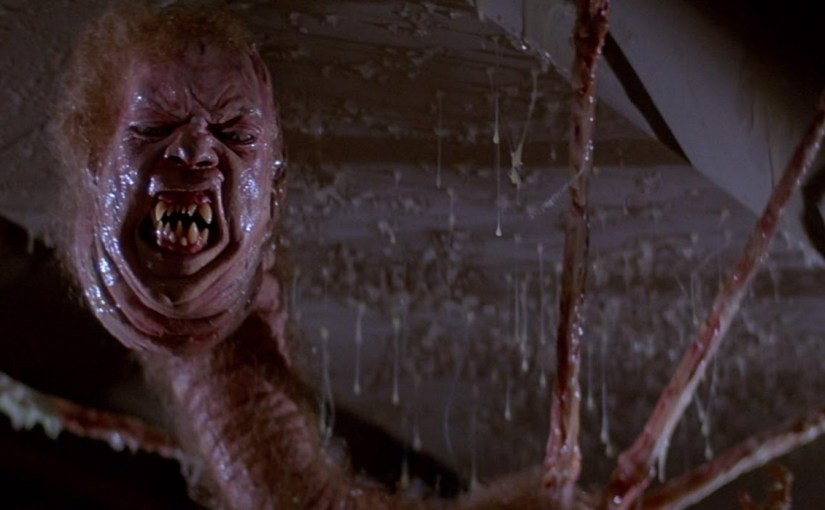
Often, a great beginning to a film offers an intriguing question. So as I finally watched John Carpenter’s 1982 interpretation of The Thing, I was especially curious as to why a sniper aboard a fast moving helicopter was targeting a dog running across the open plains of Antarctica with a pulse pounding beat from legendary film composer Ennio Morricone. The film has me hooked and none of the gory horror to come, compliments of creature effects wizard Rob Bottin, has even presented itself yet.
Gore never did anything for me in horror, and horror has never been my most favorite genre of film. Rather, suspense always held my attention and kept me thinking long after the movie was over. Carpenter’s film is full of Bottin’s imaginative gore but the paranoia and mistrust among a crew of science operatives is the real centerpiece here. Whether it’s the innocence of a dog or the star power of Kurt Russell, I never trusted the narrative of The Thing and that’s the point.
An exceptional scene on the same level as the dinner scene in Ridley Scott’s Alien occurs following a crew man suffering a heart attack. The defibrillator is brought out, “CLEAR” is shouted and the man is zapped. Then something else happens. I won’t spoil the moment. Yet, this is where imagination was put to work; where effects and storytelling work cohesively. Thankfully, moments like these become a running theme throughout The Thing. You never know what to expect from an unmeasurable and incomprehensible enemy. The fact that resources are scarce and escape is impossible traps our characters and the viewer as well.
Convenient, fast learning knowledge only tells you that this entity can duplicate anything it comes in contact with. So, you might just be sidling up to the thing itself and you won’t even know it until it’s too late.
Isolation, lack of trust, fear, paranoia – all of these elements work towards the advantage of superb imagination and storytelling in Carpenter’s piece.
The Thing was always a movie that eluded me. I’m now so grateful to have witnessed it. It makes me yearn for better storytelling in today’s films beyond remakes and superhero exhaustion.
John Carpenter’s The Thing is an absolute must see motion picture. Watch it with friends and watch it with the lights turned off.
For a movie that focuses a lot on showers, men’s locker rooms and bare chested sweaty and chiseled volleyball players, it’s a wonder that it is called Top Gun. Maybe the title has another indirect meaning to it, other than a moniker for a Navy fighter pilot school of the elite. Maybe these guys are elite for a different reason.
The Tony Scott film that is supposedly about the top one percent, the best of the best, American fighter pilots in the Navy is arguably the most important film in Tom Cruise’s career. It launched the actor into a superstar sensation that has hardly faltered since the movie’s release all the way back in 1986. But is it a good movie? Well, yes and no.
I’ve always loved Tony Scott’s filmmaking technique. Sure, his sun-soaked film shots are constantly repeated. He always relishes in enhancing the beaded glow of sweat drenching his actor’s faces, arms and chests. It’s seen in nearly every moment of Top Gun, as well as other celebrated pictures like Crimson Tide, Beverly Hills Cop II and True Romance. Orange sunlight blankets palm trees and beach lined streets. Bar saloons and military headquarters are lit in sexy blues and greens. It may lack originality after seeing a few of his films, but it just makes the movie all the more sexy.
Tony Scott is also a well-versed director in action sequences. He’ll get your pulse racing and Top Gun is the best example. The fighter jet sequences in this film are masterful in editing, sound and speed. It’s fantastic to see how the planes will twirl around and then shoot themselves straight up into a vertical trajectory in the sky and finally cut in on actors Tom Cruise, Anthony Edwards and Val Kilmer for a “WOO!” moment in the cockpit. This stuff still holds up.
Yet, unlike other modern-day films that focus on cadets or students in our armed forces, Top Gun doesn’t concern itself with the discipline of what it takes to serve in the Navy. This is the informal, class clown version of An Officer And A Gentleman. You only need look as far as Tom Cruise’s character’s pilot call name, Maverick. The name itself is a one-word thematic description of what you are watching. So, the kid who learned to say “what the fuck” in Risky Business, went on to do daredevil flybys while disobeying orders.
Maverick’s real name is Pete Mitchell. He has no family except that of his co-pilot, Goose (Anthony Edwards). The disappearance of his Navy pilot father remains a mystery…because it is sexy and cool to have a mystery for your handsome hero in a film like this. Call it DRAMATIC HEFT!!!!
When Maverick and Goose get the opportunity to attend “Top Gun” – a fighter school specializing in training the best pilots in the world in aerial dog fighting – they are intent on getting their names on the plaque for the best of the best of THE BEST. Competition comes in the other prettiest of the pretty boys with Iceman (Val Kilmer). These are all great likable characters. Yet, even when I saw this film at sleepaway camp at age 13, I couldn’t help but notice how distracted it gets with the abundance of erotic machoism on display here. What would serve as dramatic dialogue in another film is presented in a steam room area allowing opportunity to see the male cast wrapped in towels around their waists with wet spiky blond and black hair. It truly doesn’t matter what they are talking about in this scene. When you are watching it, all that you are hearing is the sound of Charlie Brown’s unseen and indecipherable school teacher. “Waa waa. Waa waa waa waa!”
That’s not enough though. The infamous volleyball scene keeps you awake. I don’t care if you are hetero or homo or bi or pan or plus, the beach volleyball scene keeps you alert as one of Kenny Loggins’ many movie songs plays in accordance. Tony Scott doesn’t just go for tossing the ball around. Slow mo captions are offered of each guy just posing with their chiseled arms and chests. You may not take your eyes off of it, but oh my…what does this have to do with the discipline of attending Navy fighter pilot school training?????
The romance is second to none. Truly! These days, people talk about Jack and Rose in Titanic or Ross and Rachel on Friends. For me, it’s Maverick and Charlie (Kelly McGillis). Cruise and McGillis really light up their scenes together. It’s an absolute perfect pairing of sex appeal and it is really when Top Gun performs at its smartest level. The dialogue is strongest during their scenes. The romance isn’t rushed but nicely flirted with, and when tragedy strikes within the thin storyline of the overall film, the relationship goes in another supportive and appreciated direction. When I was a kid, with hormones being discovered for the first time, my buddies and I would elbow each other during the midnight blue sex scene between McGillis and Cruise with the Oscar winning song “Take My Breath Away” from Berlin playing. I look at this scene now and it is modern romance at a beautiful best. A fantastic scene from Tony Scott.
Charlie is the unexpected, well-versed contractor for the Navy giving counsel to the pilot students on how best to operate the jets. In the 1980s, action blockbusters normally held the women as the barely dressed damsels to be rescued, and nothing more. The female characters didn’t have brains and the only brawn to go around was saved for Princess Leia or Marion Ravenwood (Raiders). Charlie is an exception though. McGillis plays the character as someone who is aware that these testosterone-filled guys will regard her as a piece of meat, until they realize otherwise. The irony of Top Gun is that the nearly all male cast, Cruise included, are the pieces of meat. The one main female role is actually the brains of the whole operation. McGillis was a marvelous actress back in the day. Go look at Witness and The Accused to see what I mean. With her help, Cruise elevates above the hokey dialogue of the Top Gun script. Kelly McGillis really could act well in almost anything. I wish her career went further, honestly.
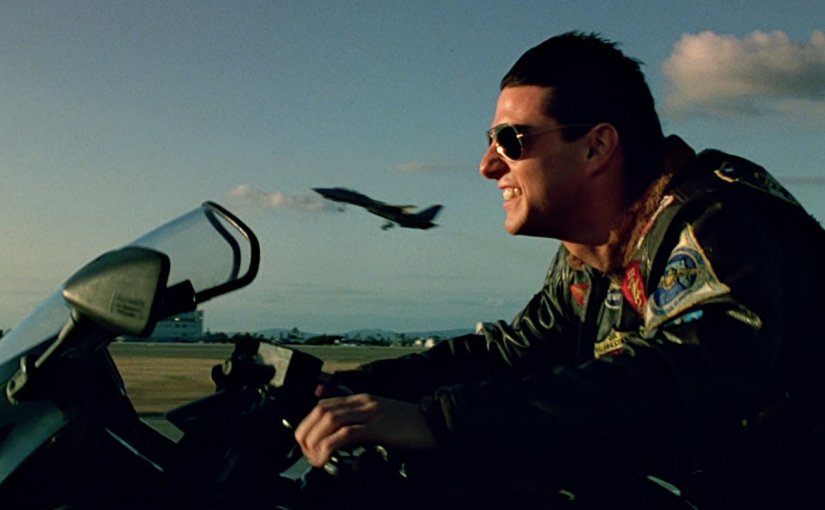
Top Gun remains a mainstay in 1980s pop culture. If the VH1 channel is doing a documentary on the decade of Madonna, Michael Jackson, parachute pants and neon pastels, Top Gun is also brought up in the mix with a close up of Tom Cruise’s toothy grin and his aviator sunglasses. We were never watching Oscar winning material here, but somehow the film that introduced all of us to Tom Cruise still feels like a day at the beach with the twenty something boy toy in his tight jeans and leather bomber jacket riding his Kawasaki Ninja motorcycle at top speed or breaking the sound barrier in his fighter jet with his shiny navy-blue helmet on his head. Top Gun and Tom Cruise demonstrated that it’s a party to serve in the Navy. Why not? Vietnam was behind us and the decade was not embroiled in war. Join the Navy!!!! It’s fun and you get to shower with the best-looking guys in the world. You’ll even get to play volleyball with them and date your sexy flight instructor.
A lot of the dialogue and the storyline may sound like an adult, military interpretation of Saved By The Bell, but you can’t break away from the sexy allure of what Tony Scott with Cruise, Kilmer, McGillis and Edwards put on the screen. It’s always been there and somehow a sequel was never made.
LION (2016) Director: Garth Davis Cast: Sunny Pawar, David Wenham, Nicole Kidman, Dev Patel, Rooney Mara My Rating: 9/10 Rotten Tomatometer: 84% Certified Fresh
PLOT: A five-year-old Indian boy is adopted by an Australian couple after getting lost hundreds of kilometers from home. 25 years later, he sets out to find his lost family.
It’s as if Charles Dickens came back to life and concocted the plot of Lion.
In 1986, in Central India, a young boy named Saroo, lives with his family, hovering on the knife edge between poverty and desperation. He and his older brother, Guddu, steal coal and redeem it for two bags of milk. Their mother asks where they got it, but they do not answer, and she tactfully does not press the question. One day, Saroo begs Guddu to take him on a week-long job. At the train station, Guddu leaves Saroo on a bench while he goes to make sure the job is still waiting. Saroo dozes off, and when he awakes, the station is empty…and Guddu is nowhere to be found. Saroo wanders onto a decommissioned train and curls up for another nap. But when he wakes this time, the train has left the station far behind. He winds up in Calcutta, 1,600 kilometers from his village, with no way to get home or contact his family. (The end credits inform us that 80,000 children vanish in India every year.)
Plot-wise, there’s not much to distinguish Lion from any number of similar films. The dreaded words “soap opera” came to mind as the movie progressed. We get a nice little wrinkle when, after several months of wandering Calcutta and winding up in a government orphanage-slash-prison, Saroo is adopted by a loving Australian family, John and Sue Brierly (David Wenham and Nicole Kidman), who also adopt another Indian boy, Mantosh, two years after adopting Saroo. Then we jump to 2008, Saroo is now a strapping young man (Dev Patel) who leaves home to go to university in Melbourne, but the unforgettable smell of a specific Indian pastry brings back memories of his childhood, and he decides to find the family he lost.
So, yeah, just another movie-of-the-week on your basic third-tier cable channel, right? Not exactly. What distinguishes Lion is its storytelling. Just like in comedy, it’s all in the delivery. This was director Garth Davis’s first feature film, but you wouldn’t know it. The whole movie feels slick and polished. The establishing or transitional shots between scenes are intentionally reminiscent of the new online research tool that was all the rage at the time: Google Earth. It’s very subtle, but it’s there, like it was designed to not be noticed until the movie is almost over.
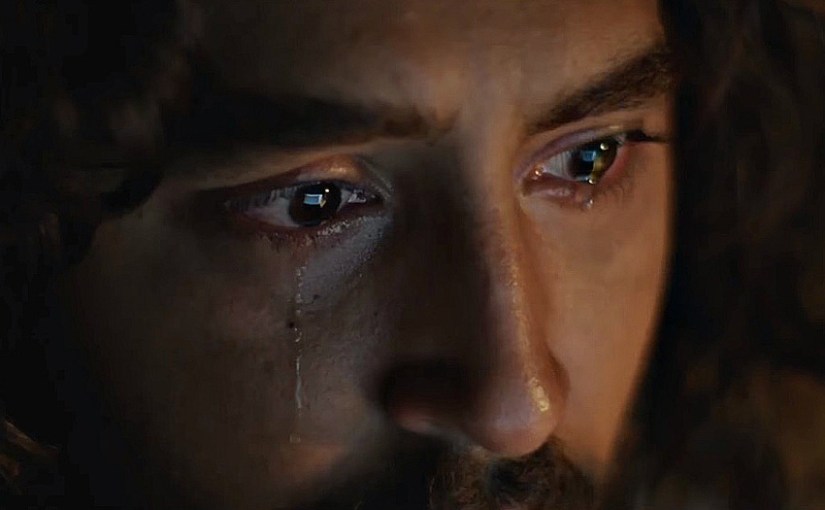
The performances from the adult cast are all great, but what stood out to me was the boy playing young Saroo. His name is Sunny Pawar. He was 8 years old during filming, but he is so small he looks 5 or 6. His story, from introduction until he grows up into Dev Patel, occupies nearly half of the film’s running time, and during that time he must make us feel sorry for him, empathize with him, and root for him every step of the way. In the hands of an experienced child actor, we might have viewed his performance as just that: a performance. But Sunny was a non-actor when he was selected for this part, and that makes all the difference. The look on his face when he finds himself lost is indescribably real. There’s a scene where he is trying to make himself understood to a ticket agent (he speaks Hindi, but in Calcutta everyone speaks Bengali). The adults try to move him out of the line, but for a brief instant, he gets furious and shoves the adult hands and bodies away from him. The rage in that tiny face and in his body language was utterly convincing. I think it was that moment when I felt I was watching something a little more elevated than a cable melodrama.
Although the story is a bit trite as far as movies go, there’s something to be said about the universality of its message. There isn’t a soul who can watch Lion without completely understanding Saroo’s desire to find his real family, along with his desire to keep his adopted mother in the dark about his obsession. I’m not a parent, but I know some close friends who went the adoption route, and I found myself thinking of them and their children, and how they might feel if they found out their kids were actively searching for their real parents. Lion addresses this heartbreaking scenario in a marvelous scene between the adult Saroo and his mother, Sue, in which she reveals the real reason she decided to adopt.
Saroo’s girlfriend, Lucy, brings up a terrible, but probable, scenario: what if Saroo completes his search, finds his village, and travels to India…only to find his family isn’t there? It’s been over 20 years. He believes his mother and brother searched for him, but he can’t really know that for sure. Maybe they moved away. Maybe they’re dead. Saroo doesn’t care. For him, that chapter of his life must be closed one way or the other or he will feel lost and adrift for the rest of his life. Closure is everything.
This is another one of those movies where, as an audience member, we’re put through the wringer for about 100 or so minutes so we can experience the full emotional impact of the film’s climax. At some point, we can surmise that, yes, Saroo is eventually going to travel to India. What he finds there, I would not DREAM of revealing. I think it’s safe to say that many people I know would be reduced to tears by the time the final credits roll. The finale justifies the overall melodramatic tone of the film, especially because of how well the damn thing was made.
Lion is one of the few true-blue melodramas that I would wholeheartedly recommend, even and especially to anyone who doesn’t think they like soap operas. Dickens would have approved.





 2 UNPAID MOVIE CRITICS!!!!