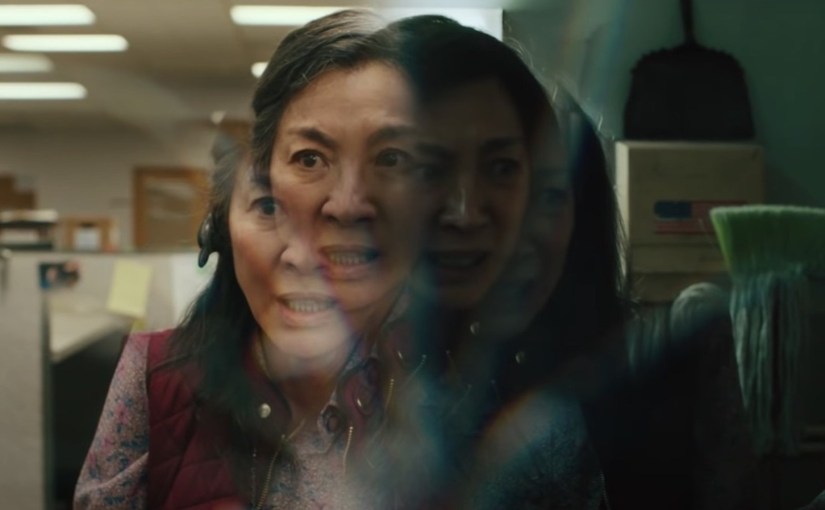
EVERYTHING EVERYWHERE ALL AT ONCE (2022)

by Miguel E. Rodriguez

Directors: Dan Kwan, Daniel Scheinert
Cast: Michelle Yeoh, Stephanie Hsu, Ke Huy Quan, James Hong, Jamie Lee Curtis
My Rating: 10/10
Rotten Tomatometer: 96% Certified Fresh

PLOT: A middle-aged Asian woman tries to do her family’s taxes with mind-bending results.


Every once in a while, a movie comes along that is so daring and original that any attempt to accurately describe it feels futile.  Scott Pilgrim vs. the World was one of them.  Being John Malkovich was another.  And now comes Everything Everywhere All at Once, a sci-fi action brainteaser that feels as if it were written by Terry Gilliam and Quentin Tarantino and directed by Stephen Chow (Kung Fu Hustle, Shaolin Soccer…two movies that also meet that “indescribable” criterion).  It feels like an episode of Black Mirror crossed with Jackie Chan and a dash of David Lynch and Terrence Malick.  If you can’t find anything to like in this movie, check your pulse.

Evelyn Wang (Michelle Yeoh) opens the film trying to do her family’s taxes.  She and her husband, Waymond (Ke Huy Quan – “Short Round” from Temple of Doom!!), carry stacks and stacks of receipts to their local IRS branch and try to explain to their case worker (a dowdy Jamie Lee Curtis) how a karaoke machine can be deducted as a business expense.  However, before that can happen, after a series of very strange events involving Waymond and a pair of Bluetooth headsets, Evelyn finds herself immersed in a trans-dimensional battle between the forces of good, led by an alternate-universe version of Waymond – the “Alpha Waymond,” if you will – and someone called Jobu Tupaki, a being or person who is hunting for Evelyn in every conceivable parallel universe.  All Evelyn has to do is use these weird headsets to access the infinite multiverse and harness the skills learned by the infinite Evelyns before Jobu Tupaki can track her down and kill her.

To access the multiverse in such a way, one must commit random acts of…randomness, which leads to bizarre scenes of individuals doing some very weird things to access special skills.  What kind of weird things, you ask?  Things involving…sticks of lip balm, putting your shoes on the wrong feet, saying “I love you” to a stranger, or wiping someone else’s nose for them and…well, use your imagination.

That’s seriously just scratching the surface.  I haven’t even mentioned Evelyn and Waymond’s daughter, Joy; their laundromat; Evelyn’s elderly grandfather, Gong Gong (veteran character actor James Hong – 450 film and TV credits and counting); or the divorce papers Waymond has on his person.

This movie is a trippy, joyous, tightrope-walking masterpiece.  There are moments where you can sense it tap-dancing on the line of self-parody, then jumping over it and daring the audience to go along with it.  If there are some people that say they were unable to follow where this movie leads, I can’t really say I’d blame them.  Not many movies would ask you to take it seriously, then include a scene involving two rocks having a conversation via, I guess, ESP.  Or where the two lead characters turn into piñatas.  Or where Jamie Lee Curtis staples a piece of paper to her own head.  Or where the fate of the world might hinge on who gets their hands (in a manner of speaking) on a trophy shaped like…a very specific kind of toy.

HOT DOG FINGERS, people.  HOT.  DOG.  FINGERS.

I’m frankly amazed this movie didn’t collapse on itself.  There are so many ways it could have gone wrong, and so much it wants to say, while trying to be simultaneously massively entertaining and heartbreakingly poignant.

From a technical standpoint, I think it’s the frontrunner for the Best Film Editing Oscar for 2022.  This movie jumps from one parallel universe to the next and the next and back again so frequently that I got whiplash, BUT it was never confusing or mystifying.  It was always crystal clear what I was watching and why I needed to see it.  I could list any number of films or TV shows that have attempted this kind of thing on a much more modest scale and failed.  This is like the Who Framed Roger Rabbit of film editing.  It has been done so well and on such a grand scale that it seems unlikely anyone will try to tell this kind of story in the same way again.

Some may quibble at the mildly melodramatic resolution of the conflict among Evelyn, the “Alpha” universe, and Jobu Tupaki.  I can understand that viewpoint, but honestly, I just rolled with it when it came around.  And so did the theater audience I was with the night I saw it.  We all laughed uproariously on cue, sometimes for something funny, sometimes in sheer disbelief at what we had just seen.  But when the wrap-up started to come together, we all hushed and waited to see what would happen.  Even when it involved a parallel universe with something called Raccacoonie.  (It’s a long story…)

I hope I’ve conveyed how crazy good this movie is while preserving some of its best surprises.  I haven’t felt this urgent about getting the word out about a great movie since I saw Roma.  To call this an entertaining night at the movies does a serious injustice to the words “entertaining” and “movies.”  It’s more than entertaining and, not to get too hyperbolic, this is more than a mere movie.  It’s a masterwork, a collision of grand ambition and even grander moviemaking.  I plan on seeing it at least once more in theaters, if only just to see what I may have missed the first time around.  (And maybe also to tune more carefully into audience reactions at key moments, like the performance trophies, or those two rocks.  Who knew two rocks could be funny?  Like REALLY funny?)
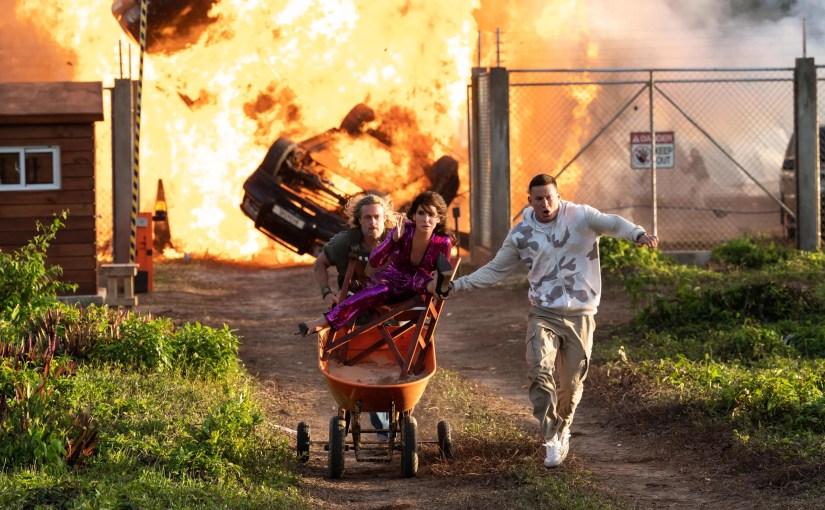
THE LOST CITY

By Marc S. Sanders

Sandra Bullock’s film The Lost City is nothing more than rollicking fun at the movie theater.  A popcorn movie.  You can simply focus on gorging yourself with endless amounts of popped kernels and large fizzy drinks and you’ll never find yourself lost in a complex plot.  It’s a screwball adventure in the same vein of Romancing The Stone.  What I appreciate is that it is not a duplicate blueprint of Romancing The Stone.  Maybe just the opening scene, but no matter.

Bullock is Loretta, a reclusive romance novelist, who knows that her books are nothing more than cheesy pulp material to the umpteenth degree.  Her agent Beth (Da’Vine Joy Randolph) keeps a positive attitude as she encourages a book tour to promote Loretta’s newest installment in a series that follows the adventures of Loretta’s fictional swashbuckler.  That hero is preserved on the covers of her novels in the image of fashion model, Alan (Channing Tatum) – a Fabio inspiration.  Alan dons the gorgeous blond locks wig with the beefcake chest and the fans seem to go wild for him more than they do for Loretta’s work.  Even the glittery purple jumpsuit with stiletto heels that Loretta dons for an appearance at a book fair doesn’t deter the screaming fans away from Alan’s muscular build and chiseled chin.

When Loretta is captured by a spoiled brat of a villain known as Abigail Fairfax (Daniel Radcliffe), she finds herself having to research the location of a lost city on a remote island rumored to possess treasures beyond anyone’s wildest dreams.  Somehow, within Loretta’s fiction she implied the actual location of this place.  Abigail needs her to delve even further towards the destination.

This all sounds cliché.  It is, actually.  So what!

What saves The Lost City is the screwball comedic approach to the film.  Bullock and Tatum are nearly twenty years apart in age.  Yet, they make a great pair in the same way that Hepburn and Grant did in Bringing Up Baby.  I could care less about the actual lost city and whatever treasure was there.  The symbols etched on an old piece of parchment that Loretta attempts to decipher never mattered to me.  Two days after seeing the movie, I don’t even remember what the lost city revealed when they eventually got there.  I did like the endless pratfalls of Tatum and Bullock, however. 

Channing Tatum looks like the adventurer of a romance novel.  Yet, he’s nothing more than a pretty boy or a “mimbo” as Jerry Seinfeld might describe him.  He’s actually got a crush on Loretta and upon determining that she’s been kidnapped, he recruits the legendary problem solver Jack Trainer (who could only be encapsulated in the form of a gorgeously blond, tan and muscular Brad Pitt) to rescue Loretta.  It’s important to Alan, though, that he gets recognized as the savior.  So, he kind of learns as he goes. 

Adventures in the jungle abound.  There are bad guys on motorcycles.  Guns, of course.  Fires within Alastair’s luxury SUV. Rock climbing.  Rivers with leeches.  Dark caverns and on and on and on.  Yeah.  I’ve seen this all before.  Again, I say so what!  It’s just a fun time at the movies that brought me back to the fast-paced escapades found in the 1980’s films I grew up on.  Yet, it has its own spin thanks to the relationship of Alan and Loretta.

Daniel Radcliffe and his beard are also great characters.  It’s a nice departure from the shoe horned role that’ll never leave him as a certain boy wizard who will not be named here.  He just brings out his fun bratty side.  His beard seems to wink along with him.

A better side story could have come with Da’Vine Joy Randolph though.  As the agent goes from one traveling step to the next as she attempts to find Loretta herself, Randolph just doesn’t look comfortable in the role with her sky-blue pant suit and big breasted physique that is intentionally in your face.  Where’s the slapstick that should be accompanying her?  She’s specifically made up to look like diva luxury and you’re waiting for one disaster after another to befall her. Beyond having to fly on a puddle jumper plane carrying farm animals, she simply survives her trek unscathed.  Either this storyline should have been excised all together, or it should have been rewritten to be just as silly as what Bullock and Tatum are delivering.  A flop in the mud or a slip in the river would have helped this plotline. 

The Lost City is just a cute film for Sandra Bullock and Channing Tatum to look…well…cute together, and in a world where celebrities are slapping each other silly on live television, isn’t this a much better escape on a Saturday afternoon?

TURNING RED (2022)

by Miguel E. Rodriguez

Director: Domee Shi
Cast: Rosalie Chiang, Sandra Oh, Wai Ching Ho, James Hong
My Rating: 10/10
Rotten Tomatometer: 95% Certified Fresh

PLOT: A 13-year-old girl named Meilin wakes up one morning with the rather inconvenient power to turn into a giant red panda whenever she gets too excited.


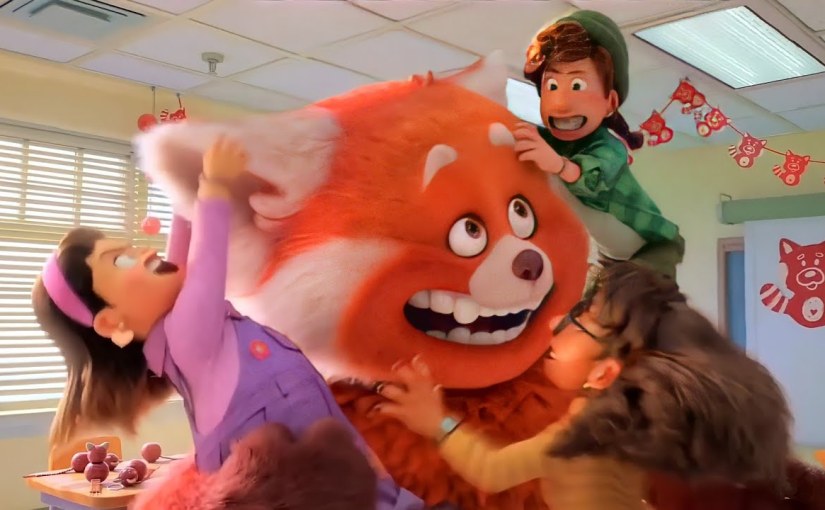
Disney/Pixar’s Turning Red is one of the best, funniest animated movies I’ve seen since Inside Out.  Or The Lego Movie.  Take your pick.

If you’ve seen the trailer, you know the plot.  A 13-year-old Chinese-Canadian girl named Meilin [may-LINN] discovers one day she has the (inconvenient) ability to turn into a giant red panda.

Details: Meilin’s relationship with her mom, Ming (Sandra Oh), is complicated enough without this new tangle.  Ming encourages Meilin to excel at everything and has enlisted her help with running and maintaining a small Chinese temple devoted to an ancient ancestor of theirs who supposedly channeled the power of the red panda to defend her children thousands of years ago.

When Meilin learns to control her newfound power to a certain degree, she decides to use it, not to fight crime, but to earn some money to buy a ticket to see this awesome boy band, called 4Town (even though they have five members), with her three besties.  Like, Oh.  Em.  GEE!

Complications ensue, Meilin tells a crucial, heartbreaking lie at one point, and previously unsuspected powers are unleashed.  That’s all you’re getting out of me, story-wise.

While the story was great, and worthy to stand with Pixar’s finest films, what made Turning Red stand out for me was the humor.  It is just plain laugh-out-loud funny.  I was laughing through almost the entire movie.

Through a completely believable misunderstanding, Meilin’s mom, Ming, thinks she knows what’s behind Meilin’s strange new behavior and asks her, ever so delicately, “Did the scarlet peony bloom?”  There’s a brilliant moment when Ming chases Meilin to school and, in front of an entire classroom, holds up an item she forgot to pack in her bag: a box of pads.  That’s right out of a John Hughes movie, man!  I laughed like a maniac.

Meilin’s three friends are a treat, especially the little spitfire named Abby, whose face seems to be permanently stretched into a fierce scowl.  There’s a moment when she catches one of those red playground balls with her teeth.  Maybe SHE’S the monster.

As with all the best Pixar films, though, the humor, as effective as it is, is just window-dressing for the real thrust of the story.  The exploration of the mother-daughter relationship hasn’t been done this well since Brave.  And I’ve gotta say, it was refreshing to see how real the character of Meilin was.  Because she’s rooted in the real world (of 2002 Toronto), her attitude felt more authentic somehow.  Sure, in Brave, Merida had the same rebelliousness and determination to forge her own path despite an imposing mother figure.  But with Turning Red, everything was more grounded.

There’s a moment when Meilin has turned into a panda and is running down a city street trying to hide.  She passes a convenience store where a cute guy works the counter.  She is desperate to get out of sight…but she stops just long enough to glance through the window at the cute guy, stomp her foot like Thumper, and yell, “Ah-OOO-gah, ah-OOO-gah!”  Another big laugh.  And I thought to myself, “See, that’s normally what you would see GUYS do in a movie.  Who makes a Disney film about a girl obsessed with boys?  What a treat!”  (I know, I know, the early Disney princesses weren’t exactly models of modern feminism, I’m talking about more recent films, stay with me here…)

Naturally, there’s a lot of symbolism with Meilin being thirteen, coming of age, and suddenly going through all sorts of changes.  What’s great about the storytelling is that the symbology is secondary, at least initially.  There’s the usual very well-executed denouement where all the emotional threads come together.  But before we get there, it’s just a story about a young girl with a weird problem.  And I have to say again, it is doggone FUNNY.

I took a glance at the “rotten” reviews at rottentomatoes.com, and I kept seeing one repeated phrase among several of them: the lead character was “irritating.”  I am at a loss to explain this point of view.  Meilin is a 13-year-old girl.  Of COURSE, she’s irritating.  AND obnoxious.  What were you expecting?  Meilin is endearing precisely because she’s portrayed as someone who isn’t perfect, even though she’s trying hard to be.  She lies to her parents.  When she has to think of something to calm herself down, she doesn’t think of her mom…she thinks of her best friends.  She feels bad about it, but what are you gonna do, she’s thirteen.

Further pontificating from me seems pointless.  Take it from a lifelong Pixar fan.  Turning Red is one of their finest moments.  It’ll make you laugh, and if you’re not careful it’ll make you cry.  It might make you remember what it was like to scream like crazy at a rock concert.  It’ll make you remember your first real best friends.  And it’ll make you wonder why more people don’t make movies like this.  Because they should.

THE BATMAN (2022)

By Marc S. Sanders

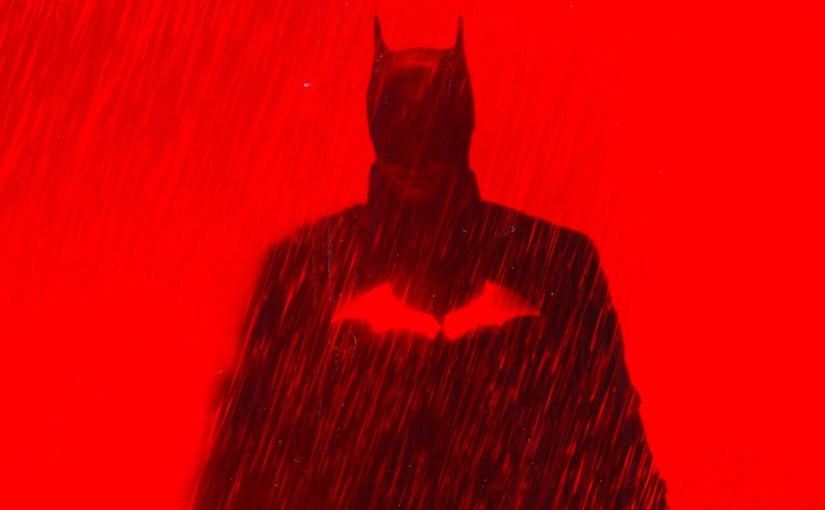
Another year at the movies, means another trip to see Batman on the big screen.  I think we are close to a dozen iterations, no?  Fortunately, the latest reinvention for March 2022, The Batman, is a refreshing interpretation that focuses on the detective skills of the masked vigilante hero who prowls from the rooftops of Gotham City.  Matt Reeves has written and directed a gripping and engaging film that doesn’t rely on simple paint by numbers.  He’s capitalized on using the mysterious Riddler (Paul Dano) as the main villain here, and Batman’s (Robert Pattinson) brains get more exercise than his brawn.   

It is the second year since Batman has introduced himself to the crime ridden city.  The man behind the mask, Bruce Wayne, keeps a journal of his exploits and observations, and through voiceover he questions if his actions have benefitted since it appears that crime has only increased since his first appearance.  A serial killer is taking responsibility for the grisly deaths of important people within the city and he’s leaving greeting cards for “The Batman” with a common scribble of “No More Lies,” along with a “?,” and a riddle for The Batman to solve.  Thanks to a strong partnership with Police Lt. Jim Gordon (Jeffrey Wright), Batman is given easy access to the crime scenes so he can attempt to reveal the mysterious villain and determine exactly what his endgame is. The Riddler doesn’t make it easy, though.

Mobsters like the Penguin (Colin Farrell) and Carmine Falcone (John Turturro) have a grip on the city, as well.  There’s also a possible lead from a woman (Zoe Kravitz) who’s managed to infiltrate the gangsters’ underground headquarters.  She also has the fighting skills and agility that’s comparable to the caped crusader, and maybe she’s a cat burglar as well.  Still, is she pertinent to Batman’s investigation or not?

It’s better not to spoil anything that occurs in Reeves’ film.  The mysteries that are uncovered are part of the fun, and it does take some time and exposition to get there, but I found it worth it.  Barring a few ingredients within the film that I recognized from the Christopher Nolan and Tim Burton films, the picture is worth seeing for a new formula on a character, that although is a favorite of mine, I feel has also been done to death on the big and small screens.  This is a Batman film where I appreciate the thinking approach of its craft, over the action.  When Batman is playing detective with Jim Gordon, it is much more enticing than just another Batmobile chase or another ham-handed fist fight.  This film is a test of Batman’s mental capacity and ability for analysis.

Reeves direction is also appreciated, though I’m expecting the naysayers.  The Batman is a very dark motion picture.  When it’s not dark, the photography is dim and blurred.  There’s lots of rain and dimly lit streets and garages.  There are strobe lit nightclubs.  Windows are blurred, so sometimes you can’t make out the image in front of you.  He makes the viewer work for the focus and that kept me alert.  I believe Matt Reeves was attempting to give the viewer the literal point of view of the characters.  It will not be a surprise, however, to find some movie watchers lose patience with the technique. 

The Riddler especially is most mysterious with a twisted and inspired Zodiac killer approach.  Often, Matt Reeves’ film feels especially reminiscent of David Fincher’s Seven.  I would not be surprised if Reeves wrote his script as a cop/detective story, and then added the Batman flavor to make his final draft.  This is not a picture of grand special effects or superpowers and gadgets. 

It’s definitely not the Batman film that everyone wants.  I foresee the response being very divisive.  Nonetheless, if you’re a Batman devotee like me who grew up on the character in the macabre storied comics (as well as the hammy tongue in cheek material), you’re going to be thankful for this “at last” interpretation.  I’ll definitely be seeing it again.

NOTE: The Batman is not a film for children under age 13. I truly believe that. There are disturbing images and threats within the story, and the violence depicted or left to the imagination is not for celebratory effect and amusement. This is definitely a film for mature audiences. Do not presume it’s meant for all ages based on its misleading marketing approach with companies like Legos and Little Caesars pizza.

UNCHARTED

By Marc S. Sanders

None of what is said in the film Uncharted matters.  The film opens in the middle of a death defying, albeit CGI, action scene with heartthrob Tom Holland dangling from a cargo net that’s hanging outside of a plane thirty thousand feet above the ground.  He apologizes as he kicks a couple of faceless thugs out into the great wide open, and he rolls his eyes at an oncoming sportscar driving off the plane’s ramp in his direction.   But it’s not like he’s worried that the car will mow him down and kill him before the fall would even do so.  That’s because even here he’s just charming Tom Holland who’s never afraid to die.  I guess that was my problem with this escapist film, based on a popular video game.  No one was ever afraid they’d die.  So, why should I be?  Excuse me while I refill my popcorn.  You don’t have to tell me what I miss.  I’m sure I’ll catch on.

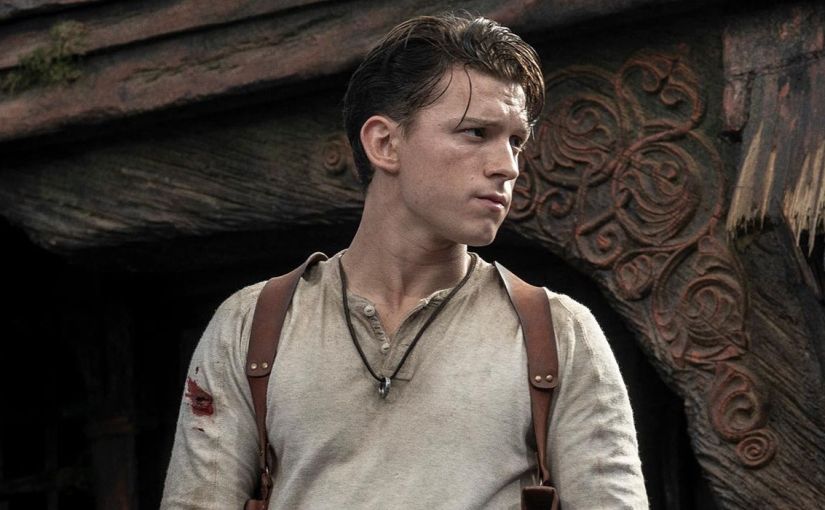
Holland portrays treasure seeking adventurer Nathan Drake.  Early on, it is established that his brother is being held captive somewhere.  Nathan is receiving postcards from him, with statements written on them that seem more like riddles.  Hmmm!  Is his brother sending him clues, do you think?  One of their last conversations while they were living in an adoption house was something about gold hidden by Magellan.  The conversation went on longer than I cared, honestly.  I gave up on the details.  These scholars weren’t going to tell me anything intriguing.  That’s the best way to approach Uncharted.  Just watch for the CGI stunts, Holland’s agility on bannisters and bar counters, and see how all the secret doorways open. 

Soon after the exposition, Nathan is accompanied by a slightly older adventurer named Victor Sullivan, or Sully (Mark Wahlberg).  Holland and Wahlberg toss some smart alec zingers at one another.  See they’re only supposed to get along so much. 

The guys attend a black-tie auction where I knew Nathan was gonna be dangling from those hanging ceiling lamps somehow, and then they are on their way to Barcelona.  Oh yeah.  A diary helps them out as well with some clues that turn up only when they have to conveniently turn up.  A map will help them too, only when it’s conveniently there.  I’m not interested though in watching Tom Holland and Mark Wahlberg trace their fingers across a map.  There’s also the beautiful adventurous girl, Chloe (Sophia Ali), who we are supposed to trust or maybe not trust.  The bad guys are Antonio Banderas, who’s really given nothing to do except have his name listed in the credits.  Look at that!  PlayStation Studios actually contracted Antonio Banderas to be in their movie!!!!!!  I did say bad guys, right?  Sorry.  The other one is an Asian woman named Braddock (Tati Gabrielle), who’s only interesting trait is the blade she carries is in the shape of a scythe.  It’s only held and hardly gets used.

Are you starting to recognize that all I’m describing is surface material here?  There’s no depth to anyone.  Uncharted is so afraid to swim in the deep end, that it doesn’t even connect our hero Nathan with his long-lost brother.  Like ever!!!!  The film acts like a video game and thinks like a video game.  So why not just leave it as a video game?  If you want to make a movie, then the filmmakers should have gone a lot deeper.

It’s easy to compare this modern update on the adventure film to Romancing The Stone or any of the Indiana Jones pictures.  What continues to set those forty-year-old movies ahead of this fare, is that we actually feared for the characters.  Kathleen Turner’s apprehensive motive for going from New York City to the rain swept jungles of Cartagena was to rescue her kidnapped sister while trying to uncover a priceless treasure along the way. Her sister could be fed to the alligators at any given moment, or worse Turner could be brutalized by vicious Columbians on her tail.  When the famed archeologist, Indiana Jones, gets trapped in an underground room full of snakes or is left dangling over a bottomless pit, he looks terrified.  He has no rope to hang from and there really is no way out, and he knows it.  This could be the end. 

Nathan Drake, however, knows it’s never the end for Nathan Drake, and that’s…well…that’s boring. 

What can I say?  I’ve always gotten bored quickly with video games.  I know.  I know.  You’re gonna debate with me that this is BASED ON A VIDEO GAME.  Fine.  I agree.  Yet, I paid for a movie.  At times Uncharted moves like a video game character that walks in place when confronted with a wall.  Your joystick can’t figure out how to turn the guy around so he can trot in another direction away from the edge of your flatscreen TV.  It just doesn’t go anywhere until, how do you like that, Sully and Nathan turn to the right page in the diary or read the right post card from the long-lost brother that we never get to see.  Wait!  Let’s look at the map!

I really like Tom Holland.  He’s charming and handsome and athletic.  Spider-Man has demonstrated that he’s a good actor too, beyond the comic book action.  He’s definitely cut out for a tongue and cheek action picture.  Mark Wahlberg is ready to be the mentor.  He’s fine as well.  He’s just done it better in a film like The Italian Job.  They look like a great pair of partners.  Unfortunately, they are given nothing to demonstrate how good a pair they really could be.  Put a little fear in these guys.  Make believe they’ll actually drown or fall to their death from a helicopter.  Put them at the wrong end of a gun or a sword.  Heck, when you give them a sword, allow me to believe they aren’t so proficient with it.  I mean Holland is only 25 or 26 here.  How much could he have learned already.  Let them get shot in the arm, and still carry on.  Give them a limp.  Cut their lip or bruise their temple.  Uncharted doesn’t do any of that.  It only jumps to the next level, and as soon as you dispose of a baddie, they fade away out of the scene…like in a video game.

It’s not terribly bad.  Uncharted is like going over to your friend’s house, though.  He shows off his PlayStation by popping in the game and he promises he’ll let you have a turn to play.  Only your turn never comes, and while you sit there gazing at the posters and trophies in his room, your friend thinks he’s entertaining you for hours as his game goes on and on and on.  So, uh…when’s it my turn to use the controller??????

DEATH ON THE NILE (2022)

By Marc S. Sanders

It’s time for the murder mystery to maintain an ongoing trend in modern films.  They’re just fun to watch and play with and deduce.  Why do you think the board game Clue has lasted so long in so many households?  Films like Rian Johnson’s Knives Out and a recent retelling of Murder On The Orient Express have already whetted our appetites for the “who done it?” tales.  Endless variations of Sherlock Holmes continue to appear.  Even Steve Martin and Martin Short have gotten in on the mystery circuit.  Adam Sandler with Jennifer Aniston, too.  Kenneth Branagh’s second time as Hercule Poirot (following …Orient Express), in an adaptation of Agatha Christie’s Death On The Nile, is proof positive that the sleuth is the next super hero that movie goers should follow.

Branagh returns to direct his detective character in Egypt, aboard a privately rented boat occupied by the newly engaged couple, Lynette Ridgeway and Simon Doyle (Gal Gadot and Armie Hammer).  As the luxurious yacht makes its way down the majestic river Nile, the couple suspects that someone, particularly Simon’s recent ex-fiancée, Jacqueline (Emma Mackey), is determined to cause harm or even murder towards them.  They ask for the sleuth’s services in uncovering who is scheming against them.  Poirot is on vacation, however, and tells them his services cannot be made available as no crime has been committed.  Yet, he accepts their invitation to board the boat and attempt to relax and recline. 

Naturally, a murder will eventually occur.

Hercule Poirot was not even a character in Agatha Christie’s original novel.  Yet, Branagh seamlessly weaves the detective into an elegant page turner on screen, with a script from Michael Green.  Branagh is a skillful actor/director. 

As this is a murder mystery, there are a wealth of characters with possible motives and red herrings to keep the journey down the Nile tense and engaging.  There’s the doctor (Russell Brand), an aunt (Annette Benning), a nephew (Tom Bateman, returning from Orient Express), Lynette’s housemaid (Jennifer Saunders), a speakeasy blues singer and her niece (Sophie Okonedo, Letitia Wright), as well as Lynette, Simon and Jacqueline, and on and on.  Branagh wisely moves his camera repeatedly at times across the boat panning over the faces of the cast, as if to the remind the viewer of who are the suspects.  There’s a wealth of information to take in, but this is not going to feel like you are cramming for a final exam the next morning. 

Because everyone could have a motive and/or a background with the murder victim, each actor within the colorful cast has various moments to shine.  There are some great acting scenes going on here that the players share with Branagh, and they don’t come off with similar formulas from one moment to the next.  Each character actor is thankfully unique in both appearance and personality.  It’s not hard to keep up, and while I may have known the ending before seeing the film (having read the book and seen stage adaptations over the years), I don’t believe it’s easy to deduce and solve as a viewer.  Different characters and moments that never occurred in the source material turn up.  There might even be few unexpected deaths along the way.  Branagh also keeps the picture alive with outstanding blues numbers that begin in an underground speakeasy bar in Paris and then play over transitional moments throughout the film.  This picture has a great period soundtrack.

Beyond the well diversified mystery, Branagh treats the viewers to gorgeous scenery aboard the boat, but even beneath the surface of the river and within the pyramids and sphinxes of Egypt.  There are spectacular starry night skies and breathtaking sunrises and sunsets to take in with palm trees and wildlife in the desert frames.  Sure, I imagine most of it is CGI, but it’s well done and nothing looks artificial.  Costume work is also magnificent as they lend to the distinctiveness of the suspects.  Whether it is evening wear, or casual garb for post-World War I, each character looks so intriguingly lively and different.

Michael Green’s script even delves further into the Poirot character.  There’s a background to that infamous mustache and tiny goatee.  I recall how people responded to the outrageously grotesque facial hair that Branagh donned in his first film as Poirot.  I appreciated it, however.  His appearance was as unforgettable as the red and yellow “S” on Superman’s chest.  Yet, why go to such great lengths, even if this is the early 1900’s amid an exaggeratingly glamourous murder mystery, to grow a mustache like that? Thankfully, there’s reason given here that draws out a dimension to Hercule Poirot both within a ten-minute prologue, and then implied periodically during the course of the film and wrapping up in a bluesy epilogue before the credits roll.  All I’ll say is that absurd mustache delivers a humanity to the film’s protagonist.

Death On The Nile has already suffered from negative publicity involving controversy with some of its cast members.  Its release was also postponed a number of times due to the pandemic.  Finally, it has arrived in theatres and what a refreshing experience it is to see on a big screen.  It opened to a modest box office response in its first weekend, though it finished at number one.  Normally, I don’t care about rankings at the box office.  How much money a film makes does not lend to the merits or faults of a piece.  However, for this film, I think I do care a little.  I hope it becomes a profitable success only to allow more films of the mystery genre to appear on screen in the future.  I’d certainly welcome another gripping yarn from Agatha, out of service from Kenneth Branagh.  Could And Then There Were None… be next?  That’s the real mystery.

THE 355 (2022)

by Miguel E. Rodriguez

Director: Simon Kinberg
Cast: Diane Kruger, Penélope Cruz, Jessica Chastain, Lupita Nyong’o, Bingbing Fan
My rating: 5/10
Rotten Tomatometer: 25% (…oof…)

PLOT: When a highly advanced technological googah falls into mercenary hands, a wild card CIA agent joins forces with three international agents on a mission to retrieve it.


I can’t speak for my colleague, Marc, but sometimes it’s harder for me to write about mediocre films than about films that are either outstanding or truly terrible. It’s harder to muster up the motivation to break down a movie that’s not bad or great, but merely so-so.

That’s the situation in which I find myself, sitting down here to write about The 355, a female-led action-thriller from director Simon Kinberg, whose previous writing credits are like a roll call of woulda-shoulda-coulda superhero movies: xXx: State of the Union, X-Men: The Last Stand, Jumper, X-Men: Apocalypse, the ill-fated 2015 reboot of Fantastic Four, and so on. (Full disclosure: he did write the 2005 comedy thriller Mr. & Mrs. Smith, which I believe is highly underrated, but that might be due more to the onscreen chemistry of Angelina Jolie and Brad Pitt than the script.)

The 355 (the title is explained only in the film’s final five minutes, so be patient) is standard Bond/Bourne stuff: an advanced technological doodad has surfaced and every bad guy on Earth wants it. It’s a fancy-looking USB drive that, once connected to any laptop in the world and properly decrypted, can access literally any network and/or mainframe in existence. As proof, the device’s inventor uses it to first crash a military transport jet flying overhead and then, as an encore, cuts the cable to his house. Personally, I would have reversed that lineup, but that’s just me.

(If this plot device sounds familiar, well, that’s because it is, as anyone who remembers the movie Sneakers will attest…but whatever.)

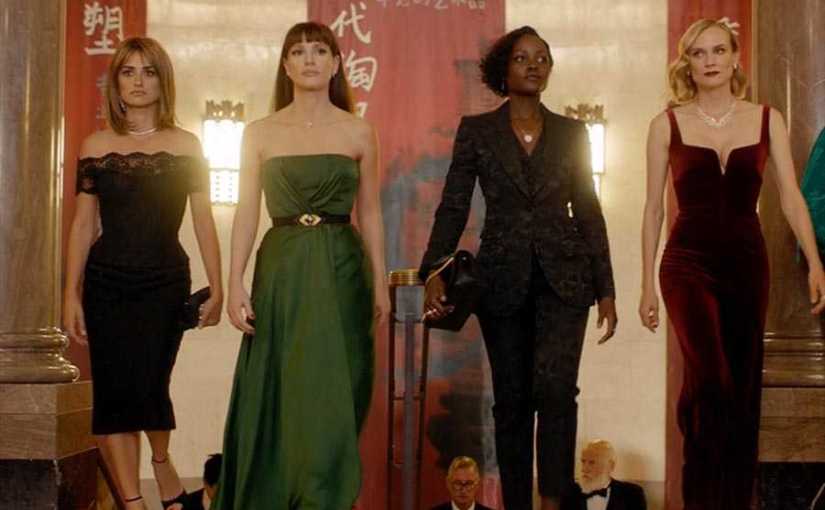
The device is stolen, and the good guys need to get it back before the bad guys do. Enter the main characters of the film: Mason Browne (Jessica Chastain) for the CIA, Marie Schmidt (Diane Kruger) for German intelligence, Khadijah Adiyeme (Lupita Nyong’o) for MI6, and poor Graciela Rivera (Penélope Cruz), a therapist who is in the wrong place at the wrong time. There’s some nonsense about them fighting each other at first, then banding together when they belatedly realize they’re on the same side.

The first major action scene is really well done, I have to say. There’s a foot chase through Parisian streets and subways that is as well done as any similar chase in the Bourne trilogy or any given Bond film. For that matter, ALL of the action scenes are competently executed…but that’s about it. There’s no flash or style, no real sense of originality.

There’s one sequence in particular that takes place in and around a fish-packing warehouse that, after a few minutes, became extremely muddled, and I lost track of who was chasing whom, and why, and how. The camera just seemed to be recording the action without getting me invested. It was curiously bland and detached.

The story itself was vaguely disappointing and unsatisfying, as well. It serves as the very definition of “by-the-numbers.” Virtually every cliche from better spy films are evident. The partner (Sebastian Stan) who’s dead…or is he? The trustworthy boss…or is he? The villain (Bingbing Fan) who lurks in the background…or is she a villain?

Now, there are uncountable films that have used these cliches to better effect, but it’s especially disappointing in The 355 because, throughout the movie, the story felt as if it was on the verge of talking about some truly interesting topics, specifically as it relates to women. There are subplots about how Mason, the CIA agent, has no personal attachments, while Khadijah, the MI6 agent, has a lover, and Graciela, the therapist, has a whole family waiting at home for her. Marie, the German spy, has some REAL problems that I won’t get into here. The story dances around the social perception of what women should or shouldn’t do with their lives. You want to be a secret agent full time? Okay, but you’ll get judged for not wanting to start a family. You want to start a family? Okay, but you’ll get judged for not being as professional or as dedicated as others in your line of work. You want to try to do both? Fine, but just when you think it can work, it doesn’t, so you should have come down on one side or the other. It’s a no-win scenario, and it happens all the time.

The movie dances with exploring this concept further, and then dances away in favor of more cliches and unnecessary plot twists. There’s even a whole sequence that feels as if it was lifted directly from one of the Ocean’s movies. Any one of them, take your pick.

There is also a moment when, out of NOWHERE, the stakes are raised in dramatic and horrifying fashion, so much so that it felt completely out of place. I was reminded, oddly, of a scene in the 2006 remake of The Hills Have Eyes where one of the mutant baddies slowly waves a gun over an infant in a crib. To me, it felt like overkill, and that’s the feeling I got with this off-putting twist. Was it necessary? It was shocking, true, and effective, but was it necessary? I don’t believe it was. I would have believed these women were motivated enough without bringing in outside pressure. And, to be honest, it felt like it was punishing those women who dared to have a life outside of their profession and rewarding those women who didn’t. No doubt there are other interpretations, but that’s how I saw it.

All in all, The 355 wasn’t downright unpleasant or super thrilling. It wasn’t exactly a waste of time, but it didn’t exactly blow my hair back, either. I don’t think it’s quite as bad as that Tomatometer would suggest, but…

Yeah…wait for streaming.