THE HUNGER GAMES

By Marc S. Sanders

Some of the worst atrocities in history have often spawned some of the greatest stories.  I’d expect it would at least leave us feeling melancholy, but I hope it shapes a future that learns from humanity’s worst offenses.  That’s what came to mind as I watched the film adaptation of Suzanne Collins’ dystopian best-selling novel The Hunger Games.

In what was once a supposed North America, the continent is now called Panem and it is divided into twelve districts, with each specializing in some means of living.  Districts 1 and 2 are the upper-class wealthy.  Districts 11 and 12 are the starving destitute.  To maintain a semblance of order, President Snow (a chillingly older Donald Sutherland) oversees the nation’s Annual Hunger Games where a boy and a girl from each district is selected to compete in a dangerous competition of being the last one to outlive their competitors.  May The Odds Be Ever In Your Favor!  In the 74th edition, expert hunting archer Katniss Everdeen (Jennifer Lawrence in her most celebrated role) volunteers herself from District 12 to spare her younger sister from danger and selection.  She is paired up with the District 12 boy, Peeta Malark (Josh Hutcherson). 

Like any sporting competition, Collins’ story takes time to hype up the event.  The youths are fashioned up in the most glamourous adornments and interviewed for television by Caesar Flickerman portrayed by a delicious, yet unsung Stanley Tucci in bright blue hair and sparkly suits, doing his best Griffin, Carson, Letterman, Leno, and O’Brien.  With every white molar revealed in Tucci’s broad smile, he appears even more sinister in the purpose he serves for the Games, Panem, and President Snow.

Jennifer Lawrence gives a faithful portrayal to the Katniss character found in the pages of Collins’ series of young adult novels.  A new hero has been conceived – the rebel who stands along other well knowns like Luke Skywalker, Robin Hood and Harry Potter.  Katniss is not looking to be a savior but with influence from a prior Hunger Games champion (Woody Harrelson, doing his drunken best) and a calm, but humble fashion designer (Lenny Kravitz) she finds herself elevated towards a promising future.  Katniss Everdeen inherits the moniker known as “The Girl On Fire” with a three finger salute and a somber three note battle cry harmony.

I’ve likened the setting of The Hunger Games to the Holocaust and the early twentieth century European Nazi occupation.  (It seems more apparent in the next film, Catching Fire.)  If I had to compare the real-life period to this fictional one, then they are not anywhere close.  Yet, Suzanne Collins and director Gary Ross’ film depict hardship and oppression from a ruling upper class gleefully using their young for savage sport entertainment, while being forced to dwell in concentration camps with no permission to escape or run free, lest they suffer terrible punishments for themselves or those they care most about.

The Hunger Games values the themes of sacrifice while some characters inadvertently become heroes for a people against a domineering force.  It’s fantasy.  It’s adventurous.  It’s sprinkled with romanticism for Katniss and the triangle she’s pitted within for her care of Peeta but also her loving affections for another District 12 resident named Gale (Liam Hemsworth).   Frankly, the romance angle is a little weak in the films and books.  Ultimately though, it is harsh for the young characters in the story, which is why my wife refuses to invest her time.  I empathize with her position.  However, I find the story inspiring.  It’s also a hell of a thriller.

As a film, Gary Ross assembled a strong and alive production of gaudy, bright colors within the capital against morose grays found in District 12.  The clash of the two settings is no more apparent than when squeaky Effie Trinkett in her garishly loud facial makeup and wardrobes arrives in District 12 to host the Reaping, also known as the selection of the child contestants.  So many actors in this cast are memorable.  An unrecognizable Elizabeth Banks is no exception.  As Effie, her personality that publicly represents a hesitant Katniss and Peeta is deliberately inappropriate and further demonstrates how demonically twisted the mentality of The Hunger Games truly is. 

When it is time to finally arrive at the manufactured arena where the contestants will do battle to the death, Gary Ross effectively incorporates the inventive surprises offered by Collins’ source material.  Some competitors are brutal in their combative skills, but environmentally speaking the forest like jungle is dangerous as well.  Especially notable is a hive of stinging tracker jackers that’ll leave the viewers shaken. 

Suzanne Collins’ first installment of her series persists in leaving its ending completely questionable.  Will all these children, some of them who are noble and good, actually die?  Could a good soul like Katniss follow through with what the Games demand of her like killing Peeta for example?  I appreciate the imagination that went into the ending, leaving a subsequent tale to be told beyond this film.  

My one complaint is common in action films.  Gary Ross does really well with the edits and filming of his movie.  However, one of the last scenes develops into a hand-to-hand combat moment taking place in darkness with very shaky camera work and uneven grunts, punches, and kicks.  I abhor when filmmakers go this route.  It’s lazy work.  I can’t tell who is hitting who or where.  I’m just supposed to accept the final struggle that the hero is having with the bad guy and feel a sense of urgency and suspense as they supposedly cast a harsh blow to their enemy and fall over. I might as well close my eyes during moments like this because it’s all just blurry streaks in midnight blackness with sound editing filtered into the sequence.  This tiring approach happens so often in movies, and it becomes a let down for me time and again.   I love a well-made, thought-provoking thriller but the filmmaker hacks it all up near the end and it looks like he’s got to meet a deadline for the final print to get out to the theaters.

There’s much to discuss and think about in The Hunger Games.  Suzanne Collins’ idea stemmed from how television viewers soaked up the drama found in reality tv shows like Survivor and Big Brother.  It’s not so much the fate of the contestants that we care about, but how do they serve the producer’s crafted storylines.  Even American Idol steers the drama of the kids who get their shot at Hollywood fame.  The Super Bowl will position a star player like Tom Brady as a focus with questions of whether this is his final season, and how the championship games affect his marriage and family.  Does he get along with his coach?  None of this has anything to do with the points on the board.  Is all of this about the games, or is it about those tasked with playing the games, and for whose benefit of control, wealth, and power?  In this fantasy film, do the people of Panem cry at the drama spurned from the horrifying death of a child they got to know from Caesar’s colorful interviews, or are they in despair at the loss of another young life?  Whether it is real or fictional, is the drama of these gladiator games and competitions focused in the right direction?

The cast and production team under Gary Ross have put together an effective dystopian and bleak future reliant upon what the world focuses on more than anything beyond who they truly love or what they stand for.  The Hunger Games might seem inconceivable, but it is frighteningly relatable. 

CLIFFHANGER

By Marc S. Sanders

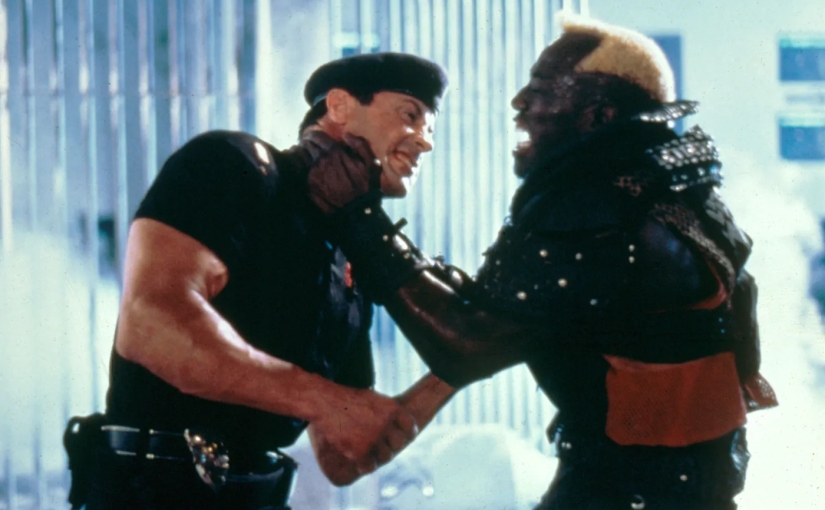
It’s an action picture.  What’s common?  Sylvester Stallone, the MacGuffin is money, and the villain has a European accent.  What’s uncommon?  The setting is a Colorado snow covered mountain. 

The movie is Cliffhanger directed by Renny Harlin.

This film deserves much praise for the photography it offers of Stallone and his sidekicks (Michael Rooker, Janine Turner) scaling steep rock formations while trying to evade brutal, but moronic, thieves who have foolishly lost their booty in midair. Now the bad guys must recover the stolen Federal Reserve bills which are scattered in three different locations within the mountain range.  When their plane crashes they force the heroes into leading them on an expedition to locate the money before they will surely kill them.  John Lithgow leads the villains.  Thanks to his slithery English dialect, he’s not bad in the part.

For a pinch of character depth, Gabe (Stallone) is haunted by the opening scene of the film where he failed to rescue the girlfriend of his buddy, Hal (Rooker).  Gabe and Hal will be awarded the opportunity to make amends thanks to this unexpected adventure.  Cliffhanger is not just a thriller.  It’s also a chick flick for guys. 

On a modern flat screen TV, it is quite discernable to recognize the CGI and handcrafted sets that make up much of the scenes.  However, the thrill of it all still holds up and as noted before, the overhead shots really look spectacular.  Stallone really is hanging from these bottomless heights with just one hand; at least that’s what it looks like.  If there is an illusion at play, then there are moments where I can’t tell if I’m being deceived.

The opening scene is the highlight of the picture as Gabe must zip line himself upside down over a wide crevice while attempting to save a hapless climber whose harness has given out.  It’s impossible not to sit still during a well edited and directed moment like this.  This is a masterful scene of terror and suspense.  Renny Harlin is certainly an undervalued director in the action genre.  (I wonder what he’s been up to these days.)

The bad guys are quite hapless though, as they freely bicker among themselves and give away how they’ll happily kill the heroes quickly, allowing one to warn the others.  They are dumb right from the start by killing the pilot of the plane they’re on before fully completing their mission and idiotically losing the money at play.  Then again, as my Unpaid Critic colleague would say, “Then there’d be no movie.”  True Mig!  Very true.

Still, the atmosphere of Cliffhanger is what works.  Blustery snow and wind come off convincingly as Gabe is forced to freeze and shiver with no layers to keep him warm while executing some daring escapes.  Rescue helicopter stunts and collisions are sensational.  There are obligatory shootouts and bloody slashes of skin from climbing tools.  There’s even a bat cave, with no superhero in sight, but it will give you the willies.

I’m hot and cold on many of Sylvester Stallone’s films.  Don’t get me started on Assassins with Antonio Banderas or The Specialist with Sharon Stone.  Those movies required some nuanced acting that the action star just wasn’t offering.  However, here the adventure makes the piece thanks to the director, and Stallone fits right into this environment where the role demands strength, stamina, and outdoor intuition.  Renny Harlin is the top hero here, allowing the marquee actor to look really good on screen.

LAWRENCE OF ARABIA

By Marc S. Sanders

The moment finally arrived where I was able to see David Lean’s epic, also regarded as my colleague Miguel’s favorite film, Lawrence Of Arabia.  It truly is an eye-opening spectacle, and one of the most beautiful pictures I have ever seen, especially enhanced by an up-to-date Blu Ray restoration.  With a near four hour running time there is hardly an element or sliver of film that does not appear out of place.  Far ahead of the conveniences of dazzling special effects and CGI to arrive later in the twentieth century and beyond, Lawrence Of Arabia must be one of the greatest cinematic achievements ever created. 

When you factor in what David Lean made with an earlier picture, The Bridge On The River Kwai, it is fair to say that he was the James Cameron of his time – a bold, daring film director who did not surrender until every shred of a masterpiece was included in a final cut.  What puts a man like Lean ahead of Cameron perhaps, is that he depended on the resources of thousands of human extras and animals, broad desert landscape locations, painstaking architecture to set designs and buildings, along with authentic explosions and battlegrounds while delivering the story of British Lieutenant T.E. Lawrence and his efforts to aid an Arab nation into battle against the Turks during World War I. David Lean was persistent in bringing as much natural quality to his finished product as possible.  In fact, Miguel informed me that Lean was seeking out any possible way to point his cameras at the desert sun to heighten the feeling of the sweltering, unimaginable heat endured by his cast of characters.  It likely pained Mr. Lean that he had to settle for an optical illusion.  Nevertheless, when I was watching the movie, it did not occur to me once.  I was still appreciating his strive for absolute authenticity.

Peter O’Toole is the title character in his unforgettable film debut.  A daring, handsome, charming blond leading actor poised for adventure.  Lawrence is assigned to ally with the Arabs during the war to hold on to the necessary access of the Suez Canal which is a through way for oil, supplies and territory.  His determination for crossing wide, endless desert plains under a sun drenched open blue sky turn him into a leader, and a hero to the Arab soldiers, particularly represented by Sherif Ali (Omar Sharif).  They are a small band of fifty men, but Lawrence proceeds with the intent of gaining fifty more as he begins a long trek from one side of the desert to the other with persistent walking or by riding camel.  Lawrence won’t even leave a single man behind.  His resolve is courageous but could be costly later.

The technical construction of Lawrence of Arabia is likely what many notice and remember first, but the film comes with a well-set character arc for its protagonist.  Peter O’Toole was a perfect casting selection for this role.  Lawrence changes over the course of the film and it’s not a celebratory transformation.  Oft times, it seemed ironic to consider him the villain; perhaps a hero who falls from grace.  His derring-do is impressive, but likely also his undoing.  Lawrence allows strength and confidence to awaken a weak Arab nation who only survived for themselves with what little they held onto before their encounter with him.  Yet, the monster Lawrence creates within his own psyche may have also spawned a challenging threat from the Arabians for many years to come, long after this war is over and further generations come into play.  Bless a people with power but be aware of how that gift is used thereafter.

Lawrence accomplishes what has been regarded as seemingly impossible and now the Arabs adorn him in heroic white cloths (which must be one of the memorable costumes in film history).  He is who they look up to as the giver of their strength and confidence.  However, like most heroes that we find in the best of stories, T.E. Lawrence is weighed by fault, particularly his own hubris.  After his conceit gets him captured and tortured, it is not so easy to return to his home country who insist he continue to carry out his leadership.  Madness is invading his mindset and the hero we have borne witness to for well over two hours of film is now significantly diminished.  Parallel to that is the overconfidence and newfound freedom a political leader like Prince Faisal (Alec Guinness) absorbs for his Arabian people.  The end of David Lean’s film seems to imply what came of T.E. Lawrence’s contributions to the Arabs.  Was the world better or worse for what he achieved with his pioneering, yet dedicated military efforts?  What about Lawrence?  How did he fare, personally?

Forgive my incessant urge to compare David Lean to James Cameron.  I look at a film like Avatar and I see the monies and efforts invested to make that piece.  Yet, I feel like I walk away with little substance.  The films of Cameron not only fall short of story, but often lack texture as well.  I could never reach out and shake the hand of a “Pandoran.”  When I see Lawrence Of Arabia, though, I can feel the sweat and heat that O’Toole and Sharif experience.  Both are big films, not made on the fly. Rather, time and stress and a means to improve and show what’s never been seen or done before are offered.  David Lean might have been given all the monies in the world or the keys to kingdom to make his masterpiece.  However, it’s how he used these resources to painstaking perfection that lend to longevity in reputation for his career and Lawrence Of Arabia.

A train explosion near the start of third act is very impressive.  Lawrence and his men detonate a planted bomb on the tracks, and we see the locomotive derail onto its side, plowing into the hot desert sand.  We feel the immense weight of that steam engine.  We can detect the sand cloud that forms from the crash.  The collision of the cars being ripped apart and burned black thus create a new setting as Lawrence’s Arab followers rush to loot the train.

Grand battle scenes on horse and camel backs are meant to be seen at least ten times over in order to capture every piece of activity from the numerous extras and animals occupying a thousand different corners of the screen.  The bigger the screen, the better enhanced is the viewing experience. 

Long walks and camel rides in the desert may seem tedious for some, but not for me.  I was accompanying T.E. Lawrence and Sherif Ali on this journey.  This is another film where its running time affects what Lean set out to accomplish.  A trek through the desert is impossible to rush and this film is a testament to that notion.  I can’t say I’ve hiked through a desert plain that bears no end in near sight, but now I can lay claim that I’ve watched Lawrence Of Arabia.

Having only seen David Lean’s picture once thus far, I know that on repeat viewings I’d likely see something new each time hereafter.  This film is so alive of its period setting and backdrop and the unforgettable original score from Maurice Jarre give definition to the sweeping adventure that awaits with T.E. Lawrence’s travels.  The cast is marvelous as well.  Peter O’Toole is positively engaging.  Omar Sharif and Anthony Quinn are scene stealing character actors, much like Robert Shaw would become known for a decade later with Jaws.  Alec Guinness may be doing a brown face appearance as an Arab leader, but I’ll just salute the performance.  A charming actor of grand, yet subtle, skill.  I’m glad I’ve discovered him all over again from beyond …River Kwai and Star Wars.

Movies like Lawrence Of Arabia must remain at the top of the broad lexicon of films to watch.  It’s length and scope may be challenging, but its edits, its score, its immense visuals, and the performances therein, are unmatched by most anything else available to watch. 

ENTER THE DRAGON (Hong Kong, 1973)

by Miguel E. Rodriguez

DIRECTOR: Robert Clouse
CAST: Bruce Lee, John Saxon, Jim Kelly
MY RATING: 8/10
ROTTEN TOMATOMETER: 95% Certified Fresh
Everyone’s a Critic Category: “Watch a ‘B’ Movie”

PLOT: A Shaolin martial artist travels to an island fortress to spy on an opium lord under the guise of attending a fighting tournament.


I have just finished watching the quintessential ‘70s chop-socky kung fu flick, Enter the Dragon, Bruce Lee’s fitting, if all-too-early, swan song.  I now sit in front of my computer terminal and try to figure out how to review this movie that screams low-budget, from its liberal use of zoom shots and slow-motion, to the gloriously cheesy score from Lalo Schifrin, interspersed with kung fu yells during the opening credits, to the cookie-cutter nature of the bare-bones screenplay.

I sit.  I ponder.  By any “serious” metric of film criticism, this is not a “good” film.  Sure, it was probably groundbreaking for its time, but in the years since its release, other movies have trumped it on many levels.  I’ve seen movies with WAY more kung fu action (Drunken Master II, Kung Fu Hustle), movies with way higher production values (Crouching Tiger, Hidden Dragon, Big Trouble in Little China), and movies with way better screenplays (Everything Everywhere All at Once, Kill Bill).

But Enter the Dragon has one thing those other movies don’t: the sheer charisma and magnetism of the master, Bruce Lee.  In every scene he’s in, Lee’s eyes always seem to be working, working, working, whether he’s having a conversation with a British official or defeating an opponent twice his size in a kung fu tournament.  His intensity radiates off the screen.  In one scene, he instructs a young pupil in short, clipped tones, exhibiting nothing but concentration and admonition.  Then later he wins a bet on an unusual animal fight – praying mantises – and check out his cocky smirk as he reaches out for his winnings.  He may not be subtle, but who cares.  He’s Bruce freaking Lee.

He is the single “x-factor” that elevates Enter the Dragon into the pantheon of hallowed action films.  If it had been made with another actor in the lead, it would have been forgotten a long time ago, the second half of a double bill for all eternity.  The story is decent enough, although it feels cribbed from more than one Bond movie, or maybe all of them at once.  The screenplay is…well, let’s say it doesn’t give its characters very good things to say.  One of my favorites is when Williams (Jim Kelly) looks at the vast squalor of the “boat cities” in Hong Kong Bay.  He shakes his head ruefully and says, “Ghettoes are the same all over the world.  They stink.”  It’s not exactly Tennessee Williams.

Then again, that may be one of the factors that works in the film’s favor.  We must come back once again to Bruce Lee.  With his imposing presence throughout the film, that fierce stare, that iconic yell, that chiseled physique, perhaps more realistic or polished dialogue wouldn’t quite fit.  If you’ve got an actor swinging for the fences, don’t try to hinder him, or anyone else in the film, with exquisitely crafted lines.  Accept the fact that all the characters, not just Lee’s, are intended, nay, EXPECTED to behave in very specific ways, and just switch your brain to “low-power mode.”  That’s where Enter the Dragon lives.

By the way, I’m a big Jackie Chan fan (he has a VERY brief appearance in Enter the Dragon as “Thug in Prison”).  I love the intricately choreographed, unbelievably long action sequences in his films.  Enter the Dragon has multiple fight scenes, but none of them are very long when compared to Chan’s movies.  Truth be told, some of the fights in Dragon feel a little…stagey.  But that staginess is balanced by, once again, Bruce Lee’s intimidating aura that brings believability to every scene because, by god, HE certainly believes it.

Is Enter the Dragon the end-all/beat-all of kung fu movies?  In my opinion, no.  That title goes to Jackie Chan’s Drunken Master II with its mind-boggling battles that go on forever.  However, Enter the Dragon is an excellent example of how any movie, however badly written or shot, can be improved with the right actor in the starring role.


QUESTIONS FROM EVERYONE’S A CRITIC

Best line or memorable quote?
[after watching an opponent trying to intimidate him by smashing a board in mid-air:]
“Boards don’t hit back.”

Why did you choose this particular film?
First, I had to Google search “notable B movies” to see what would fit the bill.  I’ve seen Birdemic, Troll 2, and the execrable The Room, but I don’t own any of them.  I saw a lot of 50’s monster movies on the lists I found, but I don’t own any of them, either.  Suddenly, pay dirt.  Turns out Psycho qualifies as a B movie…who knew?  But that movie is too darn good to be lumped with movies like The Blob and The Tingler.  I needed a movie that exhibited its low-budget restrictions on its sleeve and still managed to be unironically entertaining.  Voila: Enter the Dragon.

EXECUTIVE DECISION

By Marc S. Sanders

A commercial passenger plane carrying a bomb with enough explosives to wipe out the entire eastern seaboard of the United States has been hijacked.  Fortunately, Steven Seagal has come up with an idea to get his squad of commandos on board and contain the threat.  It’s also a blessing that in the first twenty minutes of Executive Decision, Seagal dies during the midair transfer.  There!  I spoiled it for you.  I’m not big on spoilers, but this is worth it because I believe it’ll entice you even more to watch this scrappy, under the radar action picture directed by Stuart Baird.

Before all of the action gets started, Kurt Russell makes his introduction attempting to land a small plane during a flying lesson.  I wonder if that’ll play into the story later.  Hmmm!!!! Russell plays David Grant, a consulting analyst for the US Army. Dressed in his tuxedo, he’s swept up from a dinner party and informed of the terrorist hijacking at play.  Grant is familiar with the lead terrorist and his ideals.  For whatever reason he’s instructed to board a specialized jet with Seagal’s crew.  This jet carries a tube that will attach to the hull of the captive plane in midflight. The soldiers will climb aboard and go to work.  Complications ensue though, and after that harrowing scene is over, four members of the elite squad (one becomes paralyzed) have made it on board along with Grant and the design engineer (Oliver Platt) of the jet.  Now the fun begins. 

Baird invests a lot of moments with the commandos (led by John Leguizamo) sneaking around, and drilling small holes in the ceiling and floorboards of the plane to insert tiny cameras and get a look at the activity going on.  Every so often the terrorists threaten or give scary looks and we hope they don’t look down that hallway or in the elevator shaft.  The bomb also has to be deactivated but it’s never as easy as knowing to cut the blue or red wire, and there’s a “sleeper” passenger who can detonate the bomb by remote.  Where on the plane is that guy, though?  As well, the government debates with shooting down the plane of 400 passengers before it reaches America.  So, there’s a lot going on here.  Kurt Russell is especially good as a “work the problem” kind of leader who manages to earn the assistance of a flight attendant (Halle Berry).  We may know how this standard story will end up.  However, that doesn’t mean the journey can’t keep us on pins and needles. 

Executive Decision is never boring.  It’s engaging from beginning to end, even if we’ve seen this very basic formula countless times before.  Credit has to go to Stuart Baird and his lengthy experience as a film editor (the Superman and Lethal Weapon films), as well as the cast.  Kurt Russell is always reliable with upholding the tension of a situation.  Like Harrison Ford, he’s really good at playing the everyman caught up in a jarring, nerve-wracking situation.  Look at his film Breakdown for further evidence. 

Beyond Seagal’s early demise, the most amusing part of Executive Decision is watching Marla Maples Trump as another flight attendant emoting the worst panicked expressions for Halle Berry to act off.  Marla never delivers a single word of dialogue.  Even in 1996, long before the Trump name became regarded for many other reasons I need not discuss here, this likely unintended joke generated so much amusement for me, personally.  It must be seen to be believed.

That being said. Don’t watch Executive Decision just for Marla Maples Trump and Steven Seagal.  Watch it for the taut, suspenseful story it is, with a fantastic lead role performance from Kurt Russell, a solid supporting cast and a gripping assembly of tension from Stuart Baird.

ANT-MAN AND THE WASP: QUANTUMANIA

By Marc S. Sanders

Ant-Man And The Wasp: Quantumania is a fun frolic through the Quantum Realm, another dimension that was uncovered in previous chapters within the Ant-Man series of films.  I’m not watching a potential Best Picture nominee for 2023.  I’m watching a glorious kaleidoscope of colors and visual effects with likable characters, and the setup of a new big bad villain for upcoming installments for the Marvel Cinematic Universe.  It’s not a perfect movie.  It’s corny and hokey at times, but I was with the picture the whole way.

I do believe these sci fi superhero franchise films are getting way too diluted.  I think there are more Marvel films now, all working within a shared universe, then there are episodes of single seasons of television shows.  A lot of these films do not stand apart any longer and hinge on events or hanging threads that occur in prior installments.  It makes for a lot of homework and time spent on the consumer to keep track of everything, and where everyone was last left off.  With Disney + adding in multiple Marvel streaming series to watch as well, I’m sorry but my days feel like they need to be extended beyond the standard 24 hours.  The economic term known as “The Law Of Diminishing Marginal Utility” hearkens back to me at this point, all these years later after we first met Robert Downey Jr. as Iron Man in 2008.  Are viewers getting tired of the superhero phenomenon?  Superhero movies rule the box office these days.  Westerns did it four or five generations ago.  How many new westerns do you now see each year?

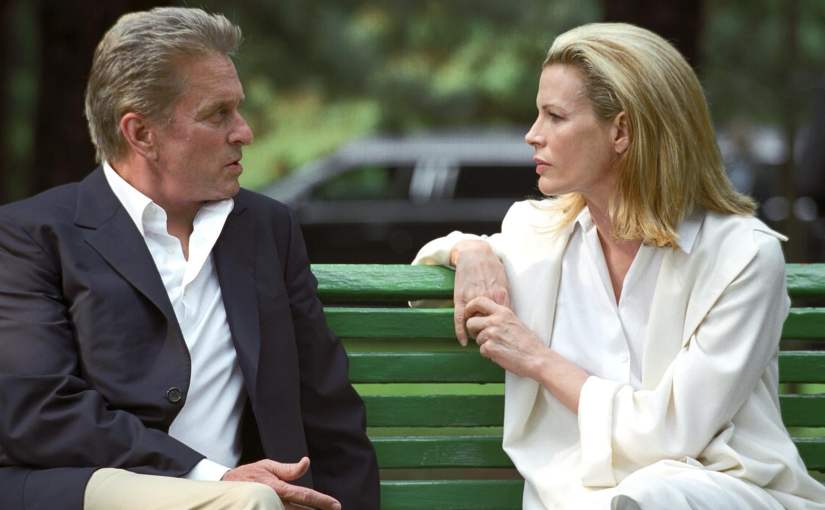
The blessing of Quantumania is that it does not rely abundantly on other material in the Marvel Cinematic Universe.  Scott Lang (Paul Rudd) reintroduces himself in a very adoring Paul Rudd-like way with a voiceover and thereafter, he is unexpectedly sucked into the Quantum Realm, along with his daughter Cassie (Kathryn Newton), his current partner Hope Van Dyne (Evangeline Lilly), aka The Wasp, and his mentors Hank Pym and Janet Van Dyne (Michael Douglas, Michelle Pfeiffer).  The gang must primarily depend on Janet to navigate them through this world of inconsistency and oddball inhabitants where no two characters seem to look alike.  Janet was marooned in the Quantum Realm for thirty years before finally being rescued.  What concerns her the most is one who is first referred to as “The Conqueror,” and later identified as the frightening superman known as Kang (Jonathan Majors), who was mysteriously exiled to this place.  As Janet describes, Kang has made the prison of the Quantum Realm his empire and now he wants to use the technology that our heroes possess to break free of this dimension and cause all kinds of chaos in the real world and other parallel universes.

The best assets to the film are the scenes between Jonathan Majors and Michelle Pfeiffer.  Granted, their dialogue could apply to any other kind of movie.  A lot of ping pong arguments between the villain and hero, which if I remember correctly go something like “You don’t understand.” and “I’ll never let that happen.”  This verbiage could also be suitable in a Meryl Streep tearjerker or a courtroom drama.  It’s pretty standard.  We’ve seen discussions like this a million times before.  Fortunately, my state of mind was not demanding of thought-provoking conversation.  The magnetism of their acting in front of the expansive CGI environment kept me hooked.   Jonathan Majors simply looks like a very frightening threat.  He’s calm at one point and later raging like a lunatic.  The man has levels.  If he were reciting the ingredients of chocolate chip cookies, I’d be on pins and needles. 

I do not think Quantumania is going to wow most audiences.  In fact, it’ll be a divisive film.  It’ll go half and half.  Though I really do not like to rank films any longer because it feels so pointless, I got into a debate with my wife and daughter about which one was better.  Quantumania or Wakanda Forever.  Both films have their merits, but I left the latest Black Panther film feeling a little depressed and exhausted.  That was a long time to feel morose for a superhero film.  The ladies, however, appreciated the story of that film over this one.  (I wanted to see the Black Panther suit a lot sooner.  I wanted a handful of people to be cut from the film, and I thought the Namor character was very boring.  Look for my review on this site.)

With Quantumania, audiences are either going to like the weirdness that is splashed all over the screen.  Splashed is not a strong enough word.  Try SPLATTERED!!!! Everywhere you look there is something abnormal to see from one corner to the next.  On the other hand, viewers will think the Quantum Realm and its inhabitants are just too bizarre, and the Marvel filmmakers are scraping the bottom of the barrel in imagination.  Sorry, but I got a kick out of the tall stilt guy with a spot light lamp for a head.  I thought the pink goo guy was cute.  I also giggled at the fat head henchman, with scrawny arms and legs, known as M.O.D.O.K. (with Corey Stall, making an MCU return).  The functionality of this character is deliberately lacking and comes off like Looney Tunes cutting room material, but that’s also why he is here.  If there was anything looking remotely normal in the Quantum Realm, well then it isn’t the Quantum Realm, I guess.  Bill Murray even shows up, but if you need a bathroom break, this is when you should go.  All of this looks way too stupid, yes!  Then again, stupid can be entertaining and stupid is often taken with subjectivity. So, I’m just one guy’s opinion. 

Quantumania is maybe the most unsophisticated of all the Marvel films.  More so than the Guardians movies, or the most recent Thor installment.  With a happy go lucky Paul Rudd, an army of ants and some of the most bizarre CGI extras found anywhere it proudly stands tall on that pedestal of ultra, ultra, ULTRA weird.  I think director Peyton Reed accomplished what he set out to do with this film.  The question is will the film win majority of approval within the nerd land of keyboard warriors like myself, who share their perspectives on the internet.  Well, the movie gets my vote at least.

THE GOONIES

By Marc S. Sanders

You know how there are some movies designed for that unexpected thunderous rainy, Saturday afternoon?  Maybe a Star Wars flick or an Indiana Jones.  James Bond or Marvel?  For me the best candidate is probably The Goonies, where the rascally kid in all of us comes alive, yearning for adventure like riding our bikes through the paths of the sleepy town we live in over to a hiding spot on the other side of the woods where a once long lost treasure map begins an unknown journey.  Quick on our tales though are the bad guys with the humped back, crooked nose and clicking revolver.

Richard Donner did more for The Goonies than I think a lot of people realize.  It’s no wonder to me that the film is officially inducted into the National Film Preservation Archives since 2017, the same year that pictures like Guess Who’s Coming To Dinner, Ace In The Hole and Titanic also received their recognition.  Maybe Donner had help from producer Steven Spielberg and screenwriter Chris Columbus.  Granted, ahead of the age of cell phone addiction, these guys knew how twelve and thirteen year old kids ticked.  The Goonies bond over insulting each other, shoving one another, telling each other to shut up and freely dropping the s-word.  It’s a rite of passage.  It’s how I bonded with my buddies at that age.  Heck, I still maintain contact with my best friend at the time, Scott, and we still trade barbs like that even if we live over a dozen states away from each other.

Sean Astin plays the asthmatic leader of the gang, named Mikey.  A son of actors Patty Duke and John Astin, he made his film debut with The Goonies, and I think it holds as one of the best child performances to grace a screen.  He’s such a genuine little guy, who is passionate about making any last ditch effort to save his house and home town from being bulldozed by greedy golf course developers.  On a rainy Saturday afternoon, Mikey’s buddies ritually come over to the house and with his older brother Brand (Josh Brolin, another celebrity son making his film debut) make their way into the attic and uncover a treasure map written by the infamous pirate from the 16th century, One Eyed Willie.  Soon after, Mikey along with Mouth, Data and Chunk (Corey Feldman, Ke Huy Quan and Jeff Cohen) embark on adventure that leads them to the underground caverns of an old restaurant off the Pacific coast.  Two high school girls, Andy and Stef (Kerri Green, Martha Plimpton) join the gang.  Andy and Brand have adorable puppy love crushes on each other. 

One Eyed Willie’s map supposedly leads to a treasure of enormous wealth that Mikey and the gang believe can save their small town of Astoria from being razed.  However, there are inventive booby traps along the way, and the nasty Fratelli brothers with their cranky old mother (Robert Davi, Joe Pantoliano and Anne Ramsey) are hot on their trail.  The Fratellis are straight out of those old Hardy Boys and Nancy Drew mysteries.  They are hilarious with their bickering, and scary at the same time. Anne Ramsey was a special kind of character actor with her ugly appearance and craggily voice. It eventually even got her an Oscar nomination (Throw Momma From The Train).  

We may know how the story will end up, but Donner, Spielberg and Columbus advance with one unpredictable scene after another.  Reader, when I feel the height of suspense in a film, I actually tear up and I get a very nervous laugh.  The shootout scenes in Heat (1995) and Lethal Weapon will do that to me every time.  The lightsaber dual in The Empire Strikes Back and the snake pit scene in Raiders Of The Lost Ark!!!!  I’ve been watching The Goonies since I was the age of most of these characters.  I still get this natural reaction when Andy has to play the correct notes on a skeletal piano to open a passageway.  Each time she plays the wrong note though, a tease of impending doom appears.  It works so well in the ensemble performance of the cast bellowing “Oh no!” and “Oh shit!” and “My God!” and “Hurry up!”  Edited with the quickly advancing villains getting closer, and the pulse beat music accompanied by composer Dave Grusin, and you are so caught up in their escapades now, that it feels like you are there.

All these kids become your best friend quickly.  Data is the inventor with the tripped out gadgets, inspired by James Bond, ready to set his own booby traps.  Mouth is the Spanish interpreter who gleefully causes trouble and mischief, but Feldman the actor is allowed some tender moments as well.  Jeff Cohen is like the Curly of The Three Stooges who gets sidetracked on his own adventure with a monstrous but loving, and sadly rejected son of the Fratellis.  A chained-up ghoul named Sloth (John Matuszak).  Cohen might have the best comedic moments in the film.  When I moonlight in Community Theater, I still must remind myself that just once I’d like to audition with his hysterical crying monologue where he confesses to stealing his uncle’s toupee to use as a beard to dress up as Abraham Lincoln, while another time he used fake vomit to sicken an entire movie house.  Hilarious stuff! 

There are dropping boulders, rattling pipes, a waterfall wishing well, scary skeletons, that creepy piano, and fun water slides to circumvent around One Eyed Willie’s maze onward to his legendary treasure aboard the most spectacular pirate ship ever seen.  Rarely are kid’s adventures constructed like this anymore.  I dunno.  Maybe it’s the script.  More likely, maybe it is the cast of kid actors doing one of the best ensemble performances together on screen.  Their timing could not be more perfect among the seven Goonies. 

The Goonies is a much more honest and transparent look at how kids behave with one another than you might find in a bleached-out Disney flick.  These kids get dirty and unsophisticated, yet thoughtful.  They are not age 21 playing age 14.  They don’t have fashionable haircuts and designer clothing. They are not pop singers trying to be actors.  Most importantly, the conversations among the gang are more natural in pal around rudeness.  You’re not really a friend unless you are telling the kid next to you to shut up and exclaiming “Oh shit!” when another encounter with danger lurks ahead. 

The Goonies is just a fun ride to watch over and over again. It succeeds with its own interpretation of The Little Rascals, and it’ll give you all the feels as you watch Mikey plead with One Eyed Willie for the next clue, or when he stops to remind his Goonies that there’s more at stake than just a play date on a Saturday afternoon. 

My advice is to keep the rose colored glasses off your children’s eyes.  Let them know it’s okay to get in trouble and make mischief.  Make sure your kids know they should be the best Goonies they can be.

MAN ON FIRE (2004)

By Marc S. Sanders

A movie that has eluded me until now is Man On Fire featuring Denzel Washington in another Tony Scott film.  I say eluded because with this director/actor combination I’m usually satisfied with the finished product.  That wasn’t the case here, though.

Washington portrays a hard drinking bodyguard named John Creasy.  He’s recruited by his war buddy, played by an uninteresting Christopher Walken, to protect a young girl named Pida (Dakota Fanning), daughter of an automobile industrialist and his always fashionable wife (Mark Anthony, Rahda Mitchell).  Creasy is a cold fish at first who refuses to accept Pida’s friendship.  Jump to a couple of quick scenes later and he’s become her surrogate father and swimming coach.  In a matter of seven minutes of running time, I’m supposed to accept that this guy has turned into a cuddly teddy bear for this kid.  As soon as that happens, Creasy is ambushed and Pida is kidnapped following her piano lesson. We are not even a quarter of the way through the picture, but the remaining hour and forty minutes play like an awful how-to documentary on effective means of torture for bad guys before ruthlessly killing them.

Tony Scott is a director who always seeks to demonstrate that glossy film styles are more significant than the screenplays he directs or the characters who reside within.  (Two exceptions come to mind though, Crimson Tide and True Romance.  Maybe some of Top Gun too.)  Man On Fire is a frustrating watch as Scott’s camera performs like a narrator with attention deficit disorder.  It can never sit still.  The movie jerks around so much with ridiculous quick cuts and deliberately grainy and distressed cinematography.  Just when I’m trying to comprehend a new player who enters the fold, the camera jumps to something else like a street corner or a moving car or Denzel Washington’s sunglasses. There are subtitles for the Spanish speaking characters that appear in a block letter font that looks like it came from a karaoke machine.  There’s also subtitles for what somehow appear to be “important” or “powerful” statements.  A line like “pass the salt” might read like “PASS the SaLt…PLEASE!!!!”  Tony Scott is obviously going for some kind of MTV music video approach, but it’s awfully distracting and downright annoying.  As well, I must ask why.  Why go through all this effort? The cameramen must have been getting motion sickness while fumbling and shaking around their equipment to shoot this picture.  So why bother?

The most interesting plot point happens in the first three seconds of the movie.  A statistic pops up describing how often kidnappings occur in Mexico (one every sixty seconds), and how as many as seventy percent of those incidents end up with a dead victim.  That’s a shocking dilemma, worthy of attention. Through his career, Washington’s selection of scripts has allowed him to tackle important issues with moments of debate and smart dialogue, as well as suspenseful action if there is a call for it.  However, Tony Scott and screenwriter Brian Helgeland are not interested in using these facts as a springboard with Man On Fire

Once the expected kidnapping occurs, and following a very quick healing – as in less than two days – of multiple gunshot wounds to the chest and back, John Creasy goes on a war path of revenge when he learns that Pida is dead.  Creasy doesn’t get to perform with much intellect here.  Having only a partial license plate number, he’s able to follow the breadcrumbs that lead to a crime syndicate notorious for winning millions in ransom demands.  Creasy simply goes up the food chain from one member to the next until he gets to the top of the pyramid.  That’s the movie!  That’s it!

He’ll cut a guy’s fingers off and cauterize them with a car cigarette lighter.  He somehow has access to a rocket launcher to use within the city.  Sadly, the most novel technique is to stick a rectal detonator (yes, I said rectal) up a man and set a timer for the guy to come clean with information before it goes off.  We can thank Tony Scott for putting up a countdown digital clock on the screen to gauge how close this thug is to his demise.

My past experience with movies like these have taught me that there’s always a traitor.  Someone set the plan in motion to abduct the little girl.  That’s not hard to figure out.  Once the character appears on screen, it could not be more obvious.  The motivation is just as ridiculous.

Man On Fire is only imaginative in how the protagonist dispatches one guy after another.  It lacks any effort in creativity towards its hero.  The guy drinks. He torments his enemies.  He’s got nothing interesting to say.  There’s a neglect for a very real and common problem within the country of Mexico.  The only design that is given attention is “artistic style” that Tony Scott adopts to mask away what is not there in any of the writing or character development.

I’d like to learn more about how the Mexican government responds to these kidnappings and maybe the experience that survivors endured.  Show me the torment that the families go through.  Can I see the method to the kidnappers’ plots or how they select their next target?  A very real predicament was offered with Man On Fire, but then it was tossed aside so I could see the effectiveness of an explosive suppository.  Now, is that really a movie that any of us want to see?

BLACK PANTHER: WAKANDA FOREVER

By Marc S. Sanders

Marvel does it right.  DC doesn’t.  Black Panther: Wakanda Forever  is not a perfect film, but it’s not Black Adam.  The latest Marvel production offers sharp visual effects and action scenes, along with thought provoking moments that reflect on loss.  Black Adam offers a crusty, yellow lightning bolt on the chest of The Rock.

Director Ryan Coogler was faced with a terrible challenge to make the follow up to his smash hit, Black Panther.  The star at the center of the film, Chadwick Boseman, unexpectedly passed away from colon cancer.  A screenplay for the film’s sequel had to suddenly be rehashed.  A unified cast had to work with a hole in its structure.  Coogler opted not to recast the role of T’Challa, the King of the fictional African nation, Wakanda.  That was a smart choice.  Boseman’s portrayal was so embraced in that film, as well as three other Marvel chapters, that he was seemingly irreplaceable.  T’Challa was not just another James Bond or Batman.

I liked most of Wakanda Forever.  First and foremost, the primary cast is mostly female and Marvel’s early reputation with female characters left a lot to be desired when all they would do is flirt with the action star and scream for help.  As well, none of the women characters were very diverse.  The African influence of the Black Panther characters demonstrate that the Marvel universe is unlimited in appearance and style.  (Star Wars productions of late prove that as well.) 

The design of the picture is also gorgeous.  I still yearn for Wakanda to be a real locale that can be toured.  I’m sure Disney is already giving this some thought.  At times, it was hard to know what overhead locations were mere CGI and what was real.  The backdrops are seamless.  The whole movie is gorgeous. 

The sensitivity to the loss of Boseman is especially handled beautifully.  The opening sequence is a ceremony we have all been waiting for since the actor’s death two years prior to the release of the film.  Some of the customs and practices might be fictional, albeit inspired by what has been researched in other factual nations and observances, but it is also endearing.  The silence of the Marvel logo montage will especially grab you.

Wakanda Forever is carried primarily by Letitia Wright as Shuri, T’Challa’s sister.  The film takes place one year after T’Challa has passed away from a disease and she is not ready to burn the funeral garb she wore when his soul was sent off to the ancestors.  However, while Wakanda was once thought to be the sole resource of Vibranium, the most powerful element in the world, a new character is introduced from under the ocean.  Namor (Tenoch Huerta) is the mutant who leads a nation of underwater dwellers with their own source of Vibranium.  He proposes that his nation works in conjunction with Wakanda to protect what they possess from other nations (like the United States and France; though why must Marvel show these countries in a bad light?) who could potentially use this commodity for nefarious purposes. 

From this seed in the storyline, subplots are branched out.  They just don’t work, though.  Wakanda’s American ally, Agent Everett Ross (Martin Freeman), is brought back into the fold.  He only adds unnecessary running time to a very long film.  First, he provides a lead on to a new character, that’s expected to fill the hole left by Robert Downey Jr’s Iron Man.  A character named Riri Williams (Dominique Thorne) who I have learned becomes the super hero Iron Heart with a new Iron suit.  After that Ross is left to watch Anderson Cooper on CNN as we have already seen the plot unfolding for ourselves, and have conversations with a character named Valentina Allegra de Fontaine (Julia Louis Dreyfus, looking at her most uninteresting and boring).  I know. This character serves as teaser fodder for what the MCU promises in future installments, but why is it necessary?  I believe this is her third appearance between the films and Disney + shows.  All she does is drag the stories down.  Wakanda Forever is a 2 hour and 40-minute film, that could have saved thirty minutes without the characters from Freeman and Dreyfus, and likely Thorne as well.  Let’s just stick with the Wakandans and forget about advertising what’s coming next from the Marvel factory, please.

Another issue with the film is the delay of showing the new Black Panther.  That’s what we ultimately paid for.  The middle section of this long running time had me yearning for when I could see the new suit in action, and who was going to wear it.  When it finally arrives in the third act, I gotta say I was let down.  While there’s a newly inventive design, like each time there was with Iron Man, we don’t see much of what’s new in action and there’s hardly anything that’s novel about it.  Does this Black Panther suit offer any new tricks? 

What’s fortunate for the film is the cast.  Letitia Wright has a good balance of youth segueing into maturity as she toils with loss.  I love this angle in the same way I appreciated the cancer storyline written for Natalie Portman in Thor: Love And Thunder.  Superpowers do not shield us from what slowly dwindles our lives away.  Angela Basset remains a very strong actor after an over forty-year career as the surviving Queen of Wakanda.  She commands a powerful presence of authority.  Danai Gurira as the spear wielding acrobatic Wakandan warrior Okoye is absolutely cool in action scenes.  She also has well written scenes to perform with the other two leads, as her character’s commitment to country is tested. 

Ironically, the Namor character is one of the oldest Marvel characters in print, introduced long before Spider-Man or the Hulk came on the page.  I was never a fan of the character though.  He just didn’t have a cool enough costume for me as it was only a bathing suit and he had wings on his ankles.  Meh.  I feel the same way here.  The back story of the character is altered to fit the mold of the script, and that’s okay, but I didn’t feel for this antagonist’s plight.  In the prior film, I was more on the side Eric Killmonger’s (Michael B. Jordan) cause than I was on T’Challa’s.  In this film, Namor is just a guy to do battle with while he flies and swims.

Ryan Coogler is a detailed director.  When I’m in Wakanda, I want to explore every building and hop aboard each vehicle that hovers overhead.  He leaves no stone unturned.  I would have chosen for some of the action scenes to be shot in the daytime so I could get a better look at what goes on.  I feel that way about all action and adventure films.  However, a darkened action scene in nearly any Marvel film is much more articulated than any scene, daylight or otherwise, in Black Adam from DC.

Black Panther: Wakanda Forever is a good film, but not great, mostly due to its overstayed running time.  What should have been cut from the final reel is obvious.  Yet, good writing and acting allows for the film that many Marvel fans needed after one of their heroes left us.  Losing Chadwick Boseman likely equates to how we lost our Superman, Christopher Reeve.  It seemed so unfair that someone who offered such heroic optimism and joy could be taken from our reach so early in life.  At least, the loss of Boseman was thankfully not washed over with a replacement that could never fill his void.

BREAKDOWN

By Marc S. Sanders

The southwest region of the United States can be brutal.  The desert landscape is scorchingly hot and the end of the world seems like an eternity away…no matter how fast you drive or how far you go.  Worse yet could be the truckers and locals who could care less about who you are, where you came from or where you’re going.  So, you better be sure your well equipped Jeep Cherokee has enough gas in the tank and your oil dipstick comes up black.  For Jeff and Amy Taylor, though, nothing they do will matter.  Their car is destined to break down anyway.

Jonathan Mostow wrote and directed a taut thriller called Breakdown that builds on a Hitchcockian formula for a road picture.  When Jeff and Amy’s (Kurt Russell, Kathleen Quinlan) car breaks down on a long, lonesome highway in the middle of the desert, a friendly trucker stops by (JT Walsh) to lend a hand.  He offers to take them to the next stop where they can call a tow truck.  Jeff agrees to stay with the car.  Amy hitches a ride to call for the tow.  Shortly after, Jeff realizes that Amy has mysteriously disappeared.  When Jeff catches up with the trucker, the situation gets even stranger because this guy claims to have never met Jeff before or even know who his wife is.  It gets even weirder and more frightening from there.

Kurt Russell is very good in a relatively simple, but effective story that only needs its ninety minutes to get your heart racing.  As Jeff learns of the conspiracy playing against him, the panic builds in Russell’s performance.  A really effective moment occurs when Jeff is forced to go to a local bank and withdraw ransom money.  While the banker is executing the money transaction, Jeff enters the restroom.  In this short moment, Mostow keeps a good close up on a very sweaty, beaten and nervous Kurt Russell.  Jeff is looking for something to use as a weapon.  Now, we’ve seen this many times before.  What kept me absorbed in the suspense of the film is how Kurt Russell evokes his thought process without having anyone to talk to.  In this bathroom, he involuntarily walks in circles, seemingly asking himself “what am I going to do?”.  Mostow never breaks the shot, allowing his lead’s performance to send home the paranoia.  I was right there with this poor guy.  What is Jeff going to do?

JT Walsh was an under the radar character actor; one of those guys that you recognize from dozens of films (Good Morning, Vietnam, A Few Good Men), but you just never knew his name.  He passed away too soon.  I’d wager eventually he’d get some kind of awards recognition.  This is a magnificent villain in Breakdown.  A good antagonist is one you can trust at first.  So that when the veil is lifted, your jaw drops a little.  Walsh accomplishes that here.  He turns on the good guy and he betrays the viewer.  He really plays a guy with two masks on.  Friendly and helpful at first.  Later, a toothless scowl is across his face as he terrorizes Jeff.  The big rig truck that Walsh drives becomes reminiscent of what Steven Spielberg accomplished with his first film, Duel.

While a Jeff Taylor character may have appeared in an Alfred Hitchcock film, as the common man caught up in an outrageous plot he was never looking for, Jonathan Mostow has modernized the method with well edited action scenes.  This is a road picture but there really are not car chases to behold.  Instead, there are moments where like any of us, we will increase our speed on long stretches of road.  When we take our eyes off the highway for a split second, we never expect what will pop out and startle us.  As well, when we try to pass ahead by cutting into the opposite lane, a head on collision may come our way.  The film goes for those pressure points first before another overly used car chase.  This is where the environment fights back against the protagonist.  

The location shoots of Breakdown are superb.  An old diner, in the middle of nowhere, has some locals who could care less about a polite out of towner, clearly concerned about his missing wife.  They just look straight ahead while nursing their beers.  The bartender has also had enough of this guy to the point of threatening him with a gun to get out of the joint.  A passing by police officer (Rex Linn of Better Call Saul, another great character actor) devotes no more than five minutes of his time to poor Jeff’s concern, and then he moves on.  The desert and the people who occupy the area serve only apathy to a helpless stranger.  The setting of Breakdown is a villain all its own.

This thriller works simply because a scenario like this could happen to any of us.  It was released in 1997, just ahead of the cell phone age, and there’s acknowledgement of that time.  Jump to today and this situation could still happen.  Technology is not always going to help us, no matter how many bells and whistles we have on a car or how many bars show on our handheld devices.  In the desert, any one of us can be a victim unto ourselves.  In the middle of nowhere, a bad guy can use an opportunity to his advantage at the expense of any persons leaving themselves unguarded.

Breakdown shows that our worst nightmare could be to drive into an endless daylight void, where any one of us can get stuck, only to later get caught.  It’s scary as a desert hell, and it’s a fantastic nail biter right until its bang-up conclusion.