NOSFERATU (2024)

by Miguel E. Rodriguez

DIRECTOR: Robert Eggers
CAST: Lily-Rose Depp, Nicholas Hoult, Bill Skarsgård, Aaron Taylor-Johnson, Willem Dafoe
MY RATING: 8/10
ROTTEN TOMATOMETER: 85% Certified Fresh

PLOT: The true OG vampire movie gets a fresh coat of paint in this gothic tale of obsession between a haunted young woman and the terrifying vampire infatuated with her.


Allow me to begin, as so many great films do, with a couple of flashbacks.

2018: The indie band Weezer records and releases their polarizing cover of Toto’s stone-cold classic “Africa.”  While recorded and produced with all the modern techniques at their disposal, fans of both bands say, correctly, that this new version is virtually identical to the original…so what was the point?  Couldn’t they have put some kind of new spin on it, like (for better or worse) UB40 and their cover of “Can’t Help Falling in Love”?  Why bother?

1991: Orion Pictures releases The Silence of the Lambs, an adaptation of Thomas Harris’s terrifying psychological thriller.  It goes on to win the coveted “Big Five” at the Oscars: Best Picture, Director, Actor, Actress, and Screenplay (Adapted).  Having devoured the book during one summer vacation, I go to a screening expecting to be wowed.  But…because the filmmakers stuck SO closely to the book (with some minor exceptions), there is little to no suspense for me.  While I am genuinely floored by how well-made and well-acted the film is, I do not experience any of the thrills and chills felt by those viewers who had NOT read the book.  I knew ahead of time what they would find in the corpse’s throat in the funeral parlor, how Lecter would escape from the courthouse, and how Starling would stumble upon Buffalo Bill’s house.  Don’t get me wrong, it’s a stellar movie.  But it was never truly scary for me.

Which brings me to Robert Eggers’s long-gestating remake of THE original vampire movie, Nosferatu.  Based on the immortal silent classic of the same name from 1922, directed by F.W. Murnau, the story will be familiar to any serious film/horror buffs, especially since Murnau “borrowed” liberally from Bram Stoker’s novel, Dracula, without first obtaining legal permission from Stoker’s estate.  How liberally?  Here’s a quote from IMDb: “All known prints and negatives were destroyed under the terms of settlement of a lawsuit by Bram Stoker’s widow.”  The only way the film survived was via 2nd-generation copies from other countries around the world.  Plagiarism?  Or homage?  I would normally say here, “You be the judge,” but the courts seem to have answered that question pretty definitively.

I mention this because every version of the Dracula mythology, starting with Nosferatu all the way through the semi-campy Hammer films to Coppola’s famous “low-tech” version and beyond – all of them tell the same story with only minor changes.  Consequently, the thing I look for in those films is not WHAT they’re telling me, but HOW they’re telling it.  Any student of pop culture knows Bruce Wayne’s origin story, so Batman Begins [2005] holds no surprises there, but the story is told extremely well, and so you roll with it, you know what I mean?

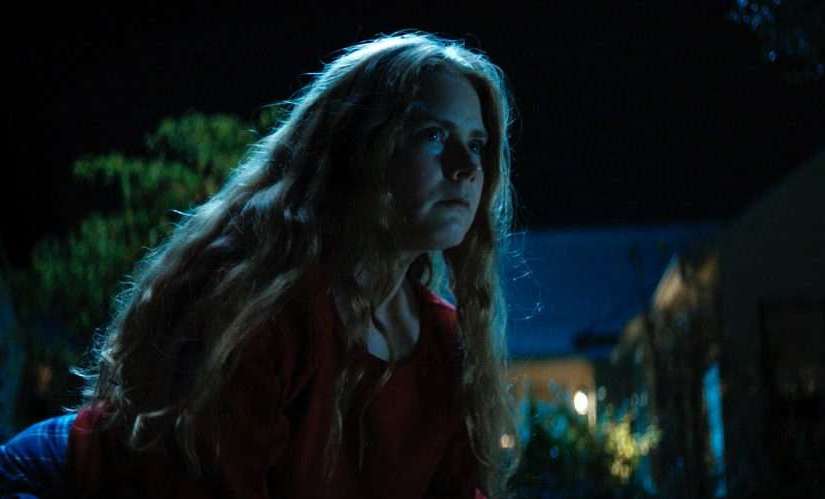
With Eggers’s Nosferatu, the production values on display are magnificent.  Eggers gets the mood and tone of a genuinely gothic horror story exactly right, as I knew he would, based on his previous films, especially The VVitch [2015].  The colors are muted to recreate the vibe of a black-and-white film, which paradoxically makes some of the scarier scenes even scarier.  The performances all around are top notch.  Poor Nicholas Hoult is saddled with the thankless Thomas Hutter role, stuck in straight-man mode the entire film; but Lily-Rose Depp had me thunderstruck with her performance as Ellen, Thomas’s wife, and the dependable Bill Skarsgård delivers the goods as Count Orlok, with a proper Transylvanian moustache (right out of the history books, haters) and an accent thick enough to tar ten miles of a country road with.

But let’s think about this for a second.  Those of you unfamiliar with the story of Nosferatu might be thinking to yourselves, “Who’s Thomas Hutter?  Who’s Ellen?  Don’t you mean Jonathan Harker and Mina?”  Well, naturally, those are the names the vast majority of filmgoers are going to be familiar with, not Thomas and Ellen and Count Orlok (which for my money is a much creepier name than “Dracula,” but I digress).

And therein lies part of the problem with this film.  I was so thoroughly familiar with the Dracula story that, even though this new film is a wonder to behold, it held very little suspense for me, since I knew exactly what was going to happen next, beat for beat.  There are, of course, cosmetic differences here and there: Thomas’s visit to a Romani village before he arrives at Orlok’s castle…Orlok’s straight-up possessions of Ellen…the highly effective jump-scares with the dogs here and there.  But I’ve seen it all before, MANY times.

(By contrast, I just recently watched one of the greatest slasher movies I’ve ever seen, X [2022], and it has virtually every slasher-movie-trope imaginable, and yet it somehow managed to transcend its own genre and become some kind of crazy masterpiece.)

In fact, in a very unexpected twist, there actually were two genuinely scary/creepy moments for me, and neither of them featured Count Orlok himself, at least not in the flesh.  They both involved Ellen, Thomas’s new wife, who becomes literally possessed by Orlok’s influence in scenes that legitimately give The Exorcist [1973] a run for its money.  Ellen thrashes about, rolls her eyes into the back of her head, speaks in an unnaturally guttural croak, bends backwards impossibly far – is Lily-Rose Depp a contortionist on the side? – and generally scares the bejeezus out of her husband and the audience.  On the strength of these two scenes alone, in addition to the general excellence of filmmaking craft on display, I would have no hesitation in recommending Nosferatu to moviegoers.

So, yes, despite my disappointments at the story level, given there were virtually no surprises plot-wise, I still give the movie a favorable rating just because it’s so well made.  If it had been created in a vacuum, if there had never been a vampire movie before this one, I believe I would have been creeped out to a much greater degree than I was, and this would have been hailed as an instant masterpiece.  But it is darkly beautiful to look at and wonderfully moody; there are many shots that are very nearly duplicates of shots from the original, which I enjoyed on a film-geek level.  I look forward to Robert Eggers tackling purely original material again.  He knows what he’s doing.

X (2022)

by Miguel E. Rodriguez

DIRECTOR: Ti West
CAST: Mia Goth, Jenna Ortega, Brittany Snow, Kid Cudi
MY RATING: 10/10
ROTTEN TOMATOMETER: 94% Certified Fresh

PLOT: In 1979, a group of young filmmakers set out to make an adult film on a rural Texas farm, but when their elderly hosts catch them in the act, the crew find themselves fighting for their lives.


I like great horror, but I have never enjoyed slasher films, with the clear exceptions of Halloween [1978] and Psycho [1960].  They tend to fall too easily into the formulas lampooned in Scream [1996] and The Cabin in the Woods [2011] and lose all suspense when the stories cave in to ancient tropes and traditions.  You’ve seen one bloodthirsty masked strangler/slasher/axe-murderer jump from behind a tree at night, you’ve seen them all.

So, how do I explain my delight and gushing praise for X, the indie horror phenomenon that turned Mia Goth and director Ti West into industry darlings?  I can only report that, despite following timeworn traditions of the genre, this film somehow found a way to ratchet up the tension to almost unbearable levels.  I’m not exaggerating.  The night I finished watching it, I found it impossible to fall asleep right away.  My mind was racing and rehashing what I had just seen.  It is the creepiest, scariest horror film I’ve seen since Hereditary [2018], and I freaking LOVE Hereditary.

The plot is right out of Slasher Films 101.  The year is 1979.  An aspiring group of wannabe porn stars pile into a van and head to a rural Texas farm where the crusty owner has agreed to rent out his barn and guesthouse, ignorant of this motley crew’s true motives.  The composition of the group reads like the beginning of a dirty joke: a cowboy, a film school graduate, his mousy girlfriend, two strippers, and a black guy (Kid Cudi…yes, that Kid Cudi).

Upon their arrival on the farm, ominous music and occasional breathy noises on the soundtrack tip us off that something just ain’t right…not to mention the blood-soaked prologue.  The elderly farmer, Howard, has an elderly wife, Pearl, but we don’t see much of her at first.  There’s a magnificently tense scene when one of the strippers, Maxine (Mia Goth), skinny dips in the lake behind the farm, unaware of the gator eyeing her from the opposite bank.  It slithers into the lake just as Maxine starts to swim back to the dock.  An overhead shot shows Maxine swimming leisurely, and the gator getting closer and closer, and…I mean, I’ve seen scores, if not hundreds of movies with similar scenes, and very few of them evoked the kind of terror I felt as that gator closed in on Maxine.

Why?  This isn’t even a monster movie about a killer gator, it’s a – let’s be honest – formulaic movie with creepy old people and a slew of young people just waiting to be dispatched in hopefully creative ways.  But something about how Ti West directed this film got right under my skin, in a good way.  Even in the gloriously retro scenes when the ersatz film crew is shooting a sex scene, there is still an undercurrent of unease over the whole enterprise.  (And by the way, if I were to make a list of things I didn’t think I’d ever see in a movie, a topless Brittany Snow in a brief-but-raunchy sex scene would be really close to the top.)

It’s hard for me to describe the intensely creepy atmosphere in writing, especially because I want to preserve the film’s surprises for anyone who hasn’t seen it yet…and boy, I wish I could be there to watch it with you.  There’s the scene in the farmhouse between Maxine and the farmer’s elderly wife, Pearl, where you have absolutely every reason to believe it’s about to turn all Texas-Chainsaw, and then the scene abruptly pivots.  Pearl looks like your stereotypical crazy old lady; that’s the best way I can put it.  I seem to remember a few characters who looked like her in the background of Shutter Island [2010].  We learn a little bit about Pearl’s past, and we can see that she’s sharper than she looks…or maybe she’s just crazy.  I’m not sayin’.

When things heat up around the halfway mark, the tension factor skyrockets.  I learned a phrase a while ago that captures it perfectly: the film becomes a stress sandwich.  Situations arise that we’ve all seen before, but in this movie I was on the edge of my seat waiting to see what would happen next.  When Jackson (Cudi) searches the lake at night and makes a creepy discovery right out of Hitchcock.  When “Don’t Fear the Reaper” plays at a critical moment.  When Lorraine (Jenna Ortega…yes, that Jenna Ortega) goes to the cellar looking for a flashlight.  When a soundly sleeping Maxine gets some unwanted physical contact from a nocturnal visitor.  (That sound you just heard is me shuddering.)

I could write more about the plot, but I would give something away, I’m sure.  To call the film’s finale satisfying is a vast understatement, right down to the very last line that, in my book, is as perfect as “Nobody’s perfect!” or “Tomorrow is another day!”  Ti West has created a slasher movie for people who hate slasher movies, and it’s one of the best modern examples of the genre that has ever been made.

(P.S.  Don’t spoil this for yourself by Googling it or anything if you don’t already know, but make sure you watch the closing credits.  When I saw the name of the performer who plays “Pearl”, my jaw dropped.)

BLACK ORPHEUS (France, 1959)

by Miguel E. Rodriguez

DIRECTOR: Marcel Camus
CAST: Breno Mello, Marpessa Dawn, Lourdes de Oliveira
MY RATING: 8/10
ROTTEN TOMATOMETER: 88% Certified Fresh

PLOT: The Greek myth of Orpheus and Euridice is translated into a modern-day story (with an all-black cast) set in during Carnaval in Rio de Janeiro.


In the first two-thirds of Black Orpheus, there are scarcely more than 2 minutes strung together at a time without some kind of music or sound effects thumping away in the background.  This gives the film a subtle real-world backdrop, which is good, because Black Orpheus is a fantasy through and through.  Critics, now and at the time of its release, complained that French director Marcel Camus ignored the reality of the Brazilian favelas, or slums, in favor of depicting Rio as a non-stop party.  This is a valid point.  However, I believe that, in this movie, reality has no place.  This is a love story, a myth, a tragedy, and a travelogue all rolled into one.  Reality must take a back seat in movies like this.

(And, heck, somebody must have liked it because it won both the Palme d’Or at Cannes AND the Best Foreign Film Oscar that year, a rare feat.  True, there were extenuating circumstances [numerous French critics had problems with the emerging French New Wave], but let’s not turn this into a classroom, shall we?)

If you’re familiar with Greek mythology, then the plot of Black Orpheus is nothing new.  Orfeu (Breno Mello, a non-professional actor) is a streetcar conductor engaged to the sexy, vivacious Mira, but he is not exactly thrilled about it.  Meanwhile, Eurydice (Marpessa Dawn, who actually hailed from Pittsburgh, not Brazil) gets lost in the city on the way to visit her cousin, Serafina, who lives in a ramshackle favela neighborhood.  She asks Orfeu and his boss, Hermes, for directions, and for Orfeu it’s love at first sight.  The rest of the movie will involve Orfeu wooing Eurydice, who worries about a strange man who might be following her, while trying to ditch Mira, with Serafina’s help.  Also assisting Orfeu, while acting as a Greek chorus in miniature, are two street urchins, Benedito and Zeca, who envy Orfeu’s lovely guitar playing, which Orfeu claims is what makes the sun rise every morning.

Apart from the story itself, the things I noticed at the outset were the presence of riotous colors in the costumes and the Brazilian countryside, and the music.  Lots and LOTS of music, but not a great deal of songs.  Black Orpheus is billed as a musical, but I’d have to say it’s a quasi-musical.  In a standard musical, characters break out into song, and no one notices because otherwise we’d be watching a play.  In Black Orpheus, every song is diegetic…someone asks Orfeu to play a song on his guitar, for example, or the Carnaval participants sing a rousing song while on parade or at a huge dance.  And I want to mention again that, while Orfeu is singing a quiet song to Eurydice, the constant percussion of the Carnaval pulses behind it, completely at odds with his song.  You would think it would become a cacophony, but it doesn’t.  It makes his quiet song much quieter, which may sound counterintuitive, but it works.

The mythic tone of the story keeps the film from flying off into ridiculous territory amid all the revelry.  Without mythology, Black Orpheus would be a soap opera.  A pivotal scene occurs during a massive dance contest, as Eurydice has disguised herself as her cousin, Serafina, so Mira doesn’t recognize her.  But Mira sees through the disguise and threatens to kill Eurydice.  Mira chases her, and unseen by anyone else except Eurydice, a man dressed all in black wearing a skull mask follows them both.  This is Death.  Earlier he had nearly chased Eurydice off a cliff, but Orfeu had saved her.  “I am not in a hurry,” he said, “we shall meet soon.”  With that in mind, his presence during this second chase is tinged with suspense.  It’s a very Hitchcockian element, the threat of danger juxtaposed with a dance or a party.  Good stuff.

So, it’s fair to say I enjoyed this movie a little more than I expected to.  But the bonus features on the Blu-ray brought up an interesting point.  Detractors of the film pointed out that, despite taking place mostly in a slum, the actual reality of those slums (both then and now) is anything but festive, no matter how much bossa nova music you play or how many songs you sing.  It’s highly unlikely these people would have had the wherewithal to create such stylized, colorful costumes while having to deal with the reality of poverty, all while looking down the mountainside at the distant concrete high rises of the higher classes.

Does Black Orpheus ignore reality?  Well…yes, it does.  Myths, by definition, have little to do with reality in the first place.  Would it have been possible to tell this mythical story, retaining its coincidences and absurdities and supernatural elements [especially towards the end], while also keeping its feet firmly on the ground and making a socially conscious statement about the horrible living conditions in Brazil?

I don’t think so.  Or, if you did, it wouldn’t be held together very well.  Black Orpheus is simply re-telling a very, VERY old story and re-imagining it as if the Greek gods had lived atop Sugarloaf Mountain instead of Olympus.  When you start with that kind of premise, reality goes out the window.  You have to focus on the story’s emotional beats, the pleasant assault on the senses and, occasionally, logic.

This opens a whole separate argument: is it a film’s responsibility to BE authentic, or just to FEEL authentic?  For example, Titanic [1997] feels authentic to me, a layman, but I’m sure historians and other experts could point to any number of things that were simply not true in the film.  Fair enough, but that doesn’t affect my enjoyment of the film as it was presented to me.  It FELT authentic, and that’s enough for me.  The only way to make a movie like that 100% authentic would be to turn it into a documentary.

Black Orpheus FEELS emotionally authentic to me, a layman, who is not a social anthropologist.  I look at the colors and vibrancy on display, visually and in the story itself, and while a small part of me acknowledges, “This isn’t real life”, another part of me says, “Well, if I wanted real life, I wouldn’t be watching a movie, would I?”

CARMEN JONES (1954)

by Miguel E. Rodriguez

DIRECTOR: Otto Preminger
CAST: Harry Belafonte, Dorothy Dandridge, Pearl Bailey, Brock Peters, Diahann Carroll
MY RATING: 8/10
ROTTEN TOMATOMETER: 75% Fresh

PLOT: The Bizet opera Carmen is translated into a modern-day story (with an all-black cast) of a sultry parachute factory worker and a GI who is about to go to flying school during World War II.


Otto Preminger’s Carmen Jones will be (or OUGHT to be) remembered for many things, but the thing I will remember it for the most is the dynamic presence of the sexy, sultry Dorothy Dandridge in the titular role.  She may not have done her own singing – nearly all the major characters’ singing voices were dubbed by opera singers – but, by God, she knew how to own a role.  In the first five minutes, she steals the movie lock, stock, and barrel when she performs that first aria in the mess hall.  It’s like watching a Marilyn Monroe film: everything around her pales in comparison to her sheer magnetism, although with Dandridge (at least with the character of Carmen), you can see an intelligence behind the sexiness.  Dandridge thoroughly deserved her Oscar nomination.  A quick Google check shows she had some stiff competition that year: Grace Kelly, Judy Garland, Audrey Hepburn, and Jane Wyman…although how Kelly pulled out a win over Dandridge AND Garland will forever remain a mystery to me.

ANYWAY.

In this modern retelling, Carmen Jones is a factory worker during World War II, making parachutes for the war effort.  During the opening aria, she sets her sights on Joe (Harry Belafonte), a naïve GI in love with a country girl, Cindy Lou, from his hometown.  If I’m being completely honest, nothing in the film matches the simmering sexual energy of this opening number.  Carmen slinks from table to table in the mess hall, modestly dressed, but with complete knowledge of exactly how to work with what’s available.  She flirts shamelessly with Joe, right in front of Cindy Lou.

Later, Carmen gets in a knock-down, drag-out catfight with Frankie (Pearl Bailey, the only principal actor whose singing voice WASN’T overdubbed) and is arrested by the MPs.  Joe, who was just about to elope with Cindy Lou, is ordered to drive Carmen to a town some 50 miles away, since the Army can’t put civilians in jail.  This sets up another opportunity for Carmen to flirt with Joe, as she does everything but unbutton his pants during their drive.  The more he resists, the more she wants him.

…but I don’t want to simply summarize the plot, which was a mystery to me since I have never seen a production of Carmen.  (The ending is mildly pre-ordained, because, hello, it’s an opera.)  I want to express my admiration of this film, particularly for its ambition.  I’m no film scholar, but I’m prepared to bet that in 1954, there weren’t an awful lot of big studio films being directed by A-list directors featuring an all-black cast.  The fact this film exists at all is, I think, a minor miracle.  I won’t attempt to put words in the mouth of anyone in the black community, but at that time in cinematic and American history, I have to believe this was seen as a giant leap forward, AND a giant risk.  (There is probably MUCH more to this story, but I do not want to turn this article into a research paper.)

Otto Preminger’s directing style in Carmen Jones also deserves recognition.  A factoid on IMDb trivia states: “This film contains just 169 shots in 103 minutes of action. This equates to an average shot length of about 36 seconds, which is very high, given the 8-10 seconds standard of most Hollywood films made during the 1950s.”  This is important because those longer shots create, in many places, an illusion of watching a stage performance.  For instance, if I remember correctly, that opening aria that I keep going on about – Dandridge is SMOKING – runs for about 4-5 minutes and has only three total shots.  Towards the middle of the film, there’s an astonishingly long take that travels from a bar across the room to a table, following a group of five people, all singing simultaneously at multiple points.  The shot lasts just under five minutes, but it feels much longer.  It’s a brilliant piece of work.

The tragic arc of Carmen Jones may seem inevitable, as I said before, but it remains an entertaining watch.  You can see the dominos falling, and you bemoan the choices Joe makes as he falls under Carmen’s spell, but I mean, LOOK at her.  There’s a scene that I’m sure would bear the Tarantino stamp of approval as Carmen paints her toenails and coyly asks Joe to blow on them for her so they can dry faster.  Dayum.  Show me a straight man who wouldn’t fall for that kind of treatment from a woman who looks like Dorothy Dandridge and I’ll show you a dead man.

If I wanted, I could get nitpicky about Carmen Jones.  Has it aged well?  Not exactly.  Does it feature great acting aside from Dandridge?  Not exactly.  Does it look natural to hear an operatic tenor burst forth from Harry Belafonte’s mouth?  Not exactly.  But Carmen Jones is a landmark of black cinema in an era when schools and government buildings still had segregated water fountains and restrooms.  Based on that fact alone, I consider Carmen Jones to be a vital step in Hollywood’s painfully slow racial evolution. (It is also a painful reminder of a career that might have been; Dandridge died 11 years later at only 42.)

MONTE WALSH (1970)

by Miguel E. Rodriguez

DIRECTOR: William A. Fraker
CAST: Lee Marvin, Jeanne Moreau, Jack Palance, Mitchell Ryan
MY RATING: 7/10
ROTTEN TOMATOMETER: 89% Fresh

PLOT: An aging cowboy realizes that the West he knew and loved will soon be no more – and that there will be no room for him, either.


Based on this film, Monte Walsh, and the other two films he directed, A Reflection of Fear [1972] and The Legend of the Lone Ranger [1981], I think it would be charitable to say that William A. Fraker’s best films are the ones where he served instead as director of photography, such as Bullitt [1968], WarGames [1983], and Tombstone [1993], among many other notable movies.  Am I saying Monte Walsh is a bad film?  No, but it’s certainly not as bad as Gene Siskel’s 1-star rating, nor is it as stellar as Roger Ebert’s 4-star rating.  I give it a 7-out-of-10 on my scale because of the way the second half of the film builds and builds so that the outbursts of violence feel earned and motivated instead of cliched.

Monte Walsh (Lee Marvin, grizzled as ever, even with a handlebar moustache) and his friend and partner, Chet (Jack Palance in a rare non-villainous role), come down off a mountainside after a rough winter keeping watch on Mr. Brennan’s herd of cattle, only to get news that Brennan’s ranch has been purchased by a corporate entity, Consolidated Cattle.  Brennan offers them a steady job, which they reluctantly take, but deep inside they know this means their prairie-roaming way of life is coming to an end.  Chet is prepared to accept this, but Monte chafes at the idea.  “I ain’t doing nothing I can’t do from a horse,” he warns Brennan.

We get entertaining glimpses of the ranch hand life, complete with the saloon fights and the stinky cook.  Monte dallies with a French madame, Martine (played by the exotic Jeanne Moreau).  At one point, Monte and Chet ride out and meet a weathered old ranch hand who is “riding fence,” or inspecting every foot of fence around the ranch for repairs…the only work he’s cut out for anymore.  “Looks like his life is over with,” they say, and you can tell they’re looking into their own future.

The thrust of the film is one I’ve seen in many other westerns before this one: “The old West is changing, and there’s no place in it for people like us anymore, so we’d better evolve or die.”  This theme is present in Once Upon a Time in the West [1968], Butch Cassidy and the Sundance Kid [1969], and especially The Wild Bunch [also 1969]…seemed to be a trend for westerns at the turn of the decade, for some reason.  Monte Walsh handles it in an episodic format, kind of like another Lee Marvin film, The Big Red One [1980].  It doesn’t quite tell a straightforward plot with a pre-determined story arc.  It skips around a little bit, painting a picture without telling a conventional story.

There can be a sense of freedom in this kind of storytelling.  Unshackled by traditional story beats – at least for the first half – the movie is laid back, asking the viewer for a little patience as it slowly lays down building blocks for the finale.  However, I must report that I found this section of the movie a little slow.  I grew impatient.  I felt I was being set up for something, but pretty soon I just wanted the movie to get on with it.  Butch Cassidy sort of works that way, but you had two of the most photogenic stars who ever lived as the two leads.  I struggled to care the same way for Jack Palance as I did for Paul Newman.

But then an unexpected scene of violence occurs, setting into motion a series of events that culminate in a tragic series of deaths that, I must admit, had me glued to the screen as they unfolded.  Because of the gangbusters nature of this section, I am inclined to forgive the film’s shortcomings in its first half.  Here, we see, yes, Monte must evolve or die, and even if it’s never in any real doubt what he will choose, it’s entertaining to watch him make that choice.

If not for the second half of the picture, I might not even be writing about Monte Walsh.  I didn’t care for the opening song (even if it WAS sung by Mama Cass), some of the movie felt ripped off from several other westerns, and I was borderline bored for the first half.  But if you stick with Monte Walsh until the end, I think you’ll agree it’s worth a look.

UMBERTO D. (Italy, 1952)

by Miguel E. Rodriguez

DIRECTOR: Vittorio De Sica
CAST: Carlo Battisti, Maria Pia Casilio, Lina Gennari
MY RATING: 8/10
ROTTEN TOMATOMETER: 98% Certified Fresh

PLOT: An elderly man and his beloved pet dog struggle to survive on his government pension in Rome.


The greatness of Vittorio De Sica’s Umberto D. is something I was only able to appreciate after it was over.  As the film plays out, I was waiting for something more to happen, something to add to the paper-thin plot of an elderly man struggling to make ends meet in a city whose government has forsaken him and thousands or millions like him.  When the screen faded to black at the end, my first thought was, “That’s it???  Well, what happens next?”  The fact that the film prompted me, not only to ask the question, but to attempt to come up with an answer, is probably one of the reasons why this film is widely regarded as a classic.  Not many films can claim to keep the story running forward in your head after it’s over.

Umberto Domenico Ferrari is an elderly man living in post-war Rome.  The film opens with him joining a crowd protesting the city government’s policy of cutting their pensions.  Umberto is in dire straits.  He’s behind on his rent, low on cash, his landlady threatens eviction, and he must somehow still feed his beloved dog, Flike (rhymes with “like”).  The film will follow Umberto’s tribulations over the course of several days as he berates his landlady, tries to get some cash by selling some of his books and other possessions, dines at a soup kitchen while furtively feeding scraps to Flike, and befriends the young maid in his building who has problems of her own.

Umberto D. is as good an example as any, and better than most, of Italian post-war neo-realism, a cinematic movement in which Italian film directors aimed to paint the silver screen with portraits of everyday life in their country, which was wracked with poverty and unemployment at the time.  Rather than provide an escape from such hardships, these directors felt it was their civic duty to bring the everyman (or everywoman) into the spotlight, to remind the audience that movies could be more than escapist entertainment.  They felt obliged to say, “There are more stories of despair and hardship ten feet out your front door than can be imagined by any Hollywood screenwriter.”

There are pros and cons to this approach, at least in my opinion.  On one hand, the neo-realist movement created such immortal classics as La strada [1954], Bicycle Thieves [1948, also directed by De Sica], and a little later, Rocco and His Brothers [1960]; these are films that have stood the test of time and will continue to do so for decades to come.

On the other hand, a quote from Roger Ebert comes to mind: “A man goes to the movies; the critic must admit that he is this man.”  In other words, learn to say exactly what you think about a film as opposed to what you think you should think.  And when it comes to Italian neo-realism, I’ll say this: give me a choice between a De Sica retrospective and a Christopher Nolan marathon, and it’s the Nolan marathon seven days a week and twice on Sunday.  Yes, I am aware of the place that neo-realism films have in cinematic history, and I can appreciate their greatness on a cerebral level.  However, on a gut level, I can usually only watch them once or twice, with very few exceptions.  La strada, for example, is heart-wrenching, but in such a way that I want to revisit it just to relive those emotional gut-punches at the end.

Umberto D. didn’t quite deliver those gut-punches, at least not during its running time.  …okay, there IS a moment when Flike runs away, and the possibility arises that he may or may not have been put down by the local pound.  There is a cringe-inducing scene when we watch hardened men roll a cage full of stray dogs into a large box where the dogs will be gassed; we are spared the sight of the actual procedure, but we see enough of it to get the picture.  Umberto watches the box with fear in his eyes.  Another man wants to retrieve his captured pet, but he falters when he lacks the money to pay for his return.  The look on his face as he repeatedly asks, “So, if I don’t take him, you’ll kill him?”  THAT is a scene where my emotional juices where stirred up.

(Okay, there is ONE other scene that got me a little riled up emotionally, but it happens near the film’s climax, so I can’t describe it without spoiling something.)

Aside from those very rare moments of heightened emotion, the film is mostly pedestrian, giving us more details of Umberto’s daily life as he tries and tries to find a way to get enough cash to pay his rent.  In one pathetic scene, he debates whether he should resort to panhandling like so many other men he sees on the streets.  At first, he tries it himself, practicing holding out his hand on a street corner, but when someone actually turns to give him some money, Umberto pretends he was just stretching – he just can’t bring himself to accept handouts from a stranger.  He tries to enlist Flike instead, getting him to hold his hat while sitting on his hind legs, but that doesn’t work out either.  He reaches out to former friends, to no avail.

As I’ve said before, DURING the film, these scenes, and others like them, didn’t stir me up the way I felt the director was shooting for.  It was only afterwards that I found myself pondering those scenes and Umberto’s actions.  I used to own a dog, a very long time ago.  If my dog were my only remaining connection, with no family or friends to reach out to in times of need, how would I feel if I learned he might have been captured and put down?  If I suddenly had no means of income, no way to pay the rent/mortgage/whatever, and nowhere to go if I got kicked out of my apartment/house/whatever, how would I manage?  Would I manage?  Late in the film, Umberto makes a couple of hard choices.  Would I make the same choices in his position?

As FINE appears on the screen, Umberto D. invites us to wonder about Umberto’s fate.  The last scene is, on the surface, a happy one, but somber music plays over it, and the scene does not address or solve Umberto’s situation.  This is in the neo-realist tradition.  If De Sica were asked, “But what happened to him at the end?”, I can imagine him saying, “The same thing that happens to all such men.”  If he was told, “But I don’t know what happens to such men,” De Sica might say, “Well, now you have something to think about.”  Q.E.D.

[Trivia: The lead actor, Carlo Battisti, was not a professional actor, but a professor of linguistics. Umberto D. would be his only film, and not many people can claim that kind of legacy with just one film.]