POOR THINGS

By Marc S. Sanders

A sexually explicit rendering of Mary Shelley’s Frankenstein is brought to life by Yorgos Lanthimos’ film, Poor Things.  The strongest element of the picture is certainly Emma Stone’s uncompromising performance as Bella Baxter.  It’ll at least get an Oscar nomination.  The film will likely collect an abundance of nominations as well for it’s fantastical imagination in art direction, garish costuming and makeup and directing.  Maybe there will be some accolades for Willem Dafoe and Mark Ruffalo as well.  The adapted screenplay of Alasdair Gray’s novel, written by Tony McNamara, is a contender too.  It’s already being hailed by many outlets as a top 10 picture for 2023.  Yet, I grew tired of the novelty, and bored with the excessive sexual exploits of Bella.

Bella was once a pregnant woman who deliberately plunged herself off a London bridge to escape her misery.  Godwin Baxter (Willem Dafoe), who Bella appropriately recognizes as simply God, discovers her lifeless body in time to conduct an experimental procedure.  Replace Bella’s brain with that of the unborn child she carries and raise her from there.  God is scarred and altogether bizarre, and recruits a medical student named Max (Ramy Youssef) to observe the reborn girl’s progression and behavior; a grown woman with that of an infant who is learning to speak, walk, eat, and behave for herself.  After a while it is decided by God that Max will become engaged to Bella.  However, another man enters the picture, Duncan Wedderburn (Mark Ruffalo), who convinces Bella to accompany him on a sojourn.  God permits the idea as an opportunity for Bella to learn what is out there and not restrict her.  It is at this point, that Lanthimos’ film transitions from a blue tinge monochrome photography to vibrant color as Bella and Duncan travel to destinations such as Lisbon, Alexandria, and Paris, where Bella abandons a destitute Duncan to join a Parisian brothel.  Bella sees opportunity.  She can earn money for allowing men to put their things inside her.

I could not help but think of films like Forrest Gump, The Curious Case Of Benjamin Button and even Pinocchio while watching Poor Things.  An unwise subject discovers an independence to witness how a world around her functions.  As she learns, she matures, and she realizes she does not need to be held down by any party.  Shelley’s monster also broke free of its master’s clutches, tried to acclimate itself, but was revolted against for its grotesqueness on the outside and simply for being misunderstood.  Bella does not encounter such a fate.  Instead, she discovers acceptance but only at what she’s worth monetarily speaking with a simple attraction limited to individual thought.

Poor Things is constructed in the narrative themes of Yorgos Lanthimos’ preferred way of filmmaking.  Just like The Favorite, it’s deliberately weird and proud of it.  Nothing appears conventional.  You could substitute the settings for Paris, London and even the cruise ship that Bella and Duncan travel on for set pieces in Wonka.  It’s all fantasy with an adoption of real-world locales.  I surmise Lanthimos excuses these outlooks as a perception of Bella.  The settings look like they were spawned from a pop-up children’s book.  It’s all so different but I found it to be tiring. If someone were to argue that it is inventive as opposed to another stale backdrop of London Bridge or the Eiffel Tower, I wouldn’t debate them. Yet, I was growing tired of the piece. 

Moreover, the second act of the film concentrates abundantly on Bella’s adventures within the brothel.  Bella discovers the comfort of self-pleasure.  Later, the sensation is enhanced by the possibilities of getting satisfied by the company of a man.  The audience chuckled.  So did I, but I also squirmed quite a bit.  Bella insists to God that she wants to “go adventure,” and God allows her his blessing.  Yet, I found these series of sexual encounters to be overly exploitive.  Nothing is held back on what Emma Stone performs for the camera as a concubine for one needy, stinky, and ugly gentleman caller after another.  She takes it the traditional way, the oral way, the way from behind and much more.  She is captured with S & M straps across her nude body and the Oscar winning actress goes all the way to sending the scenes home.  It’s as if Yorgos Lanthimos needs to deliver his point, but it’s not enough to try it once, twice, or even three times.  I get it already.  Bella is used for whatever fetishistic imagination the male mind can fathom and more importantly she thrives off of the stimulation. She happily recounts how a pineapple can be used in the bedroom.  It’s even better that she can get paid for this lifestyle.  It sounds amusing while I type this all out, but I was not entirely comfortable watching it either.  I’ve seen enough porn in my day to not be shocked, and I wasn’t shocked.  Yes, I was amused at times.  Look, I don’t have ice water running through my veins.  Eventually, though, I was just bored.

Godwin Baxter is an interesting character as played by an always reliable Willem Dafoe.  Early on, we see how in addition to his experiment with Bella, God has toyed with the ideas of blending different breeds of animals together.  Roaming his estate are the likes of a dog crossed with a chicken and a pig crossed with…you know what I can’t even remember after seeing the film only once.  There was also a duck crossed with something.  Kind of sophomoric material and I think Lanthimos would accept that observation as a compliment.  Oh yeah, there was a goat crossed with something too; was that the pig?  What I think lacks from Poor Things, however, is to probe if these kinds of experiments should even be conducted and I cannot recall a conversation that goes in that direction.  Max seems taken aback by what he witnesses but he never investigates further.  This is all most unusual (a serious understatement) and it’s hardly ever questioned. Even Jeff Goldblum tossed a contrary opinion at the idea of Jurassic Park.

I suppose I wanted more from Poor Things.  Beyond sexual pleasure and what can be gained from it, isn’t there anything else that naïve Bella has to learn about?  I guess in conjunction, she also learns how to earn a wage and a gumption to stand up for herself.  What about love and the fear of death?  What about what else occurs within the world around her?  What about loss, or betrayal?  As well, Godwin’s occupations never go further than what we see he is capable and daring enough to do.  How do others consider his experiments?  What residual effects stem from his accomplishments?

I’m glad I saw Poor Things.  I think I’d like to see it again actually because I may gain a greater understanding from the attempts the script strives for in accordance with Lanthimos’ vision.  I know this film is not for everyone, though.  It’s proudly peculiar, but its plodding in its glee to step very far over a line that most filmmakers wouldn’t dare go.  It has my salute for what it has set out to do.  Nonetheless, I’m not sure I’m a fan of the material it served, though.

THE DEER HUNTER

By Marc S. Sanders

After watching the 1978 Best Picture winner, The Deer Hunter, I followed up by reading some of the trivia about the film on IMDb.  Please do not think I’m a terrible person, but the racial overtones within the portrayals of the Viet Cong never occurred to me.  I guess I can only surmise that war is hell, and I suppose that when any one of us are being held in captivity our prejudices go out the window, and the hatred we feel towards another human is directed at the ones who are exercising their sadistic torment upon us.  It does not matter where they come from or what they look like or even if they are related to me.  Being held prisoner and forced to participate in games of Russian Roulette must allow my seething abhorrence. 

Another important factor that was questioned in Michael Cimino’s film is whether games of Russian Roulette were in fact forced upon POWs during the Vietnam War.  Many veterans insist it wasn’t, therefore holding a strong grudge against the filmmaker.  Cimino argued that he had testimony and photographic evidence to its validity.  I will not even give you an opinion.  I do not know enough about that terrible conflict, and I will not disrespect the service that so many men and women devoted during its time.  I can only focus on the context of the three-hour film. 

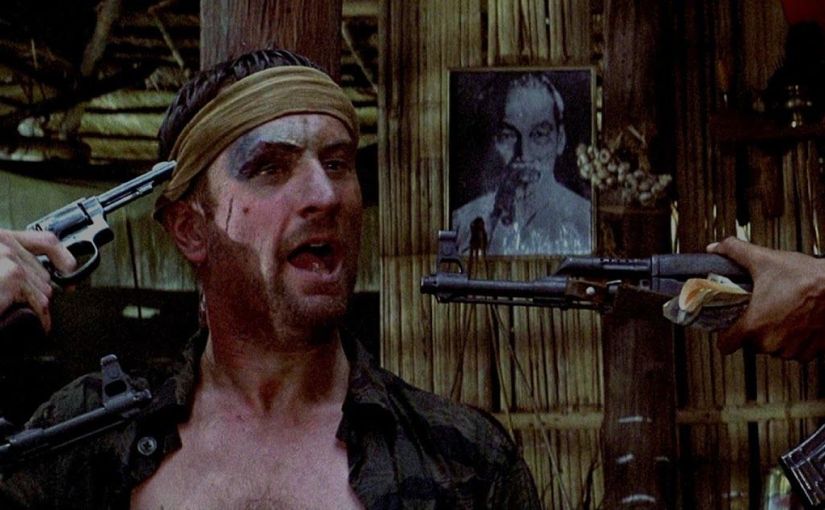
In this movie, I see a perspective of three buddies from a small Pennsylvania steel mill town who voluntarily enlist in the army in the late sixties to serve in the Vietnam War.  Thereafter, they are held as prisoners of war, confined in submerged bamboo cages infested with rats and mosquitoes.  They are only let out to compete against one another in face to face Russian Roulette by a forceful unforgiving Viet Cong.  Upon escape, the three men are separated with different measures of terrible destinies to live with afterwards.

Mike, played by Robert DeNiro, is the Green Beret Army Ranger who returns home to a lifestyle he can no longer lead.  Steve (John Savage) has been permanently traumatized both mentally and physically as he has lost both legs.  Nicky’s (Christopher Walken) whereabouts are unknown.

Before any of this occurs, there is a lengthy first act to The Deer Hunter.  The three men are celebrating their send off to serve, but more specifically Steve is getting married.  Michael Cimino takes much of his time focusing on the ceremony, which contains orthodox Russian traditions, and the party with an enormous amount of wedding guest extras (probably the whole town) to carry out endless, drunken celebrations. 

The first time I saw this film I grew bored with the wedding footage.  It seemed to be overly long and tiring.  Pointless, even.  On this most recent view, however, I found it completely absorbing.  There’s an unbeknownst future to all of these people, not just the three eventual servicemen.  None of the people in this Pennsylvania town live extravagantly.  It’s special for the ladies to wear their formal pink bridesmaid dresses but they run through the wet streets of the town on their way to church.  The men throw on their tuxedos that they likely wore only one time before during their prom.  Once the reception begins for Steve and his wife, Angela, everyone is sweaty and out of breath, happily drunk and wobbly.  They lean on one another in a sloppy way for a group photo. They never stop drinking.  More importantly, they never think about how scary or horrifying the Vietnam War could be for them.  They are celebrating a happily wedded future for their buddy Steve and their soon to come legacies as American war heroes.  Nicky even takes a boozy moment to propose to Linda (Meryl Streep).  Already an abused woman, she immediately accepts.  Mike can only gaze with inebriated amazement at a uniformed serviceman who is disturbingly quiet as he sidles up to the bar.  Mike insists on buying him a drink. 

Late into the night and onto the next morning, the guys are doing their traditional favorite activity with a ride into the mountains for some deer hunting.  They change out of their tuxes and into their hunting gear as they tease one another and gorge themselves on Twinkies with mustard.  None of these boys have a care or worry in the world, except for nerdy Stan (John Cazale) who has once again left his hunting boots behind.

There’s a relaxation and calmness to these people; to the men who are staying behind, to the ones getting ready to leave and to the women who share in their lives.

Regardless of the questions of racism or authenticity, Michael Cimino, with a joint screenplay written with Deric Washburn and Louis Garfinkle, show how the war not only directly changes those that served but also the ones who welcome them home.  Steve’s wife is not only separated from him but also appears mute and inactive.  Linda attempts to move on with her life but is absent of comfort from Nicky, the man who proposed to her on a whim.  Mike is not capable of being the drunken party leader or precise deer hunter he used to be.  The deep scars of the three also draw scars for everyone else back home.

The Deer Hunter is a very difficult film to watch.  The picture ends leaving you feeling traumatized because it stretches from innocent celebration and debauchery over to some of the worst images that could ever be fathomed.   Wars end in a truce, a victory or a defeat, but the conflict does not cease for many of those who participated as pawns for a governing power. 

Nicky never comes back to Pennsylvania.  He tries calling home, but he can never follow through.  He has been changed permanently by his time as a killing soldier and captive who was being forced to use his life for stakes.  Mike returns dressed in his uniform with his medals signifying his achievements but as soon as he sees the “Welcome Home Mike” banners he insists the cabbie drives on by and he does not enter Linda’s trailer home until he sees all the guests leave the next morning. 

There’s a haunt that Cimino’s film ends with as the remaining members of the group assemble following a funeral and segue into singing “God Bless America” together.  I don’t ask this question as a means to minimize anyone who has served or lives as an honored citizen of our country; should these folks who must endure loss from now on be chanting about blessing America, or should they be pleading for a blessing upon themselves? The characters of The Deer Hunter struggle internally and are desperate for a salvation and peace. 

War may be a chaotic, unforgiving hell, but living thereafter is another kind of hell that you cannot escape from.

GLADIATOR

By Marc S. Sanders

Ridley Scott’s Gladiator is a terrifically sweeping sword and sandal epic adventure.  It contains well drawn characterizations of its heroes and its one tyrannical villain, along with superbly bloody hack n chop violence and action that live up to its title. 

Rome has finally finished its campaign of conquer throughout at least one quarter of the world.  General Maximus (Russell Crowe) is ready to return to his wife and son to live out the rest of his days as a farmer and family man.  However, the dying Emperor Marcus Aurelius (Richard Harris) begs him to take over his position so the Roman Empire may carry forth with prosperity.  If Maximus does not take over, the empire is at risk of being inherited by Marcus’ spoiled son Commodus (Joaquin Phoenix).  While Maximus ponders the request, Marcus dies and Commodus quickly takes over, and orders the immediate deaths of the celebrated General and his family.  Maximus and Commodus will eventually circle back with one another, however.

Gladiator feels like an epic film in the vein of a David Lean picture that would require time and work to follow through its various developments.  Maximus certainly goes through a widespread arc.  One of the advertising bylines described it as the man who was General, who became a slave, who became a gladiator. Russell Crowe is right for this role.  Not only is he lean and built for the part, but he brings a empathetic approach to the character.  Maximus is loyal to his country, but he also carries pain and longing for his family and when he is wronged, Crowe does very well at displaying his character’s plot of  vengeance against Commodus with strategy and skill.

Joaquin Phoenix rightly earned his first Oscar nomination as a wonderful villain.  The screenplay from David Franzoni, John Logan and William Nicholson offer memorable pieces of dialogue for the bratty son.  “I feel vexed. I am very vexed.”  – a line that sounds so minimal and yet when Phoenix delivers it, it’s only more terrifying.  This little monster captured in an adult body can respond to anything that slightly irks him.

The battle between Commodus and Maximus is hardly physical.  Maximus realizes through his companions that a better and wiser form of revenge is to win Rome’s admiration away from its ruler.  Commodus lives off his ego.  So, when Maximus is encouraged by his slave owner to “win the crowd” amid the games performed in the famed coliseum, it not only lends to the gladiator’s ongoing survival, but it tears away at Commodus’ rule.  A great subplot is included focusing on the ruler’s nephew, Lucius (Spencer Treat Clark).  The expression on Joaquin Phoenix’ face when young Lucius role plays as the great Maximus works like a frozen moment in time.  Imagine a famed quarterback’s child cheering for the defensemen who performs an unforgivable sack during the final ten seconds of a game.  It’s terribly bruising.

When Gladiator was first released in theaters, I found the CGI to lack texture and it appeared very dark like a bad 3D film.  It looked too animated.  This most recent viewing was on a restored 4K transfer and the picture quality is astounding.  Every element of the broad landscapes within the battlefields and especially in the gold sheen photography of the coliseum battles blend perfectly.  If you still don’t understand the importance of 4K, turn to this film to uphold the argument. 

Ridley Scott does not waste a shot in this picture.  Reactionary sequences are just as effective as the cuts to the action.  Blades and barbaric weapons shed gorgeous splashes of blood. Every thrust and parry are easy to see. I’ve never forgotten when a chariot rider is cut in half at the torso from an oncoming blade attached to rolling wheel.  The choreography and editing of the battles are thrilling with sound editing that compliments the moments. 

Beyond Russell Crowe and Joaquin Phoenix, the cast is wonderful.  I’ve always admired Richard Harris’ quiet approach in the twilight years of his career.  He never had to do much to offer a presence.  Connie Nielsen portrays Lucilla, Commodus’ sister who he has affections for.  Her subtle resistance allows Joaquin Phoenix more opportunities to feel “vexed.”  Oliver Reed passed away during the making of this film. Fortunately, Ridley Scott and company did not opt to cut out his role as the gladiator/slave trader, Proximo.  He works well as a kind of mentor to Maximus and the band of other warriors, coaching them on how to stay alive and rise above Commodus’ monarchy.  “Win the crowd and you win your freedom.”  Djimon Hounsou is a loyal sidekick to Crowe’s character. Derek Jacobi is once again that guy you have seen before allowing his expert craft in Shakespearean performance to flesh out the political angle of the story among the Senators.  Every actor serves a valuable purpose in the film.  None of these performances feel like walk on roles.  So, the overall casting of the picture must be commended.

Gladiator is a crowd-pleasing film. Though it is based in ancient history, there remains a fantasy element to the movie when you look at grand designs of the settings, costumes, and dialogue.  Storylines of politics and tyranny hold relatable to modern current events.  What can occur when one man takes over everything for his selfish purposes?  Pointless displays of theatrics can occur at the behest of others who were once heroes, instrumental in placing a despot atop a throne.  I presume Ridley Scott’s film is just one more example of the inherent nature found in humans.  Some of us are destined to rule and control.  That alone is cruel and selfish.  It is even worse when this totalitarian mindset is unleased upon those that put these rulers in their place.  History and especially modern times demonstrate that loyalty is only fleeting.  The ability to possess totalitarian control, however, is hopefully even more short-lived.

PLATOON

By Marc S. Sanders

Oliver Stone’s Oscar winning Platoon takes place in the late 1960s, somewhere on the Cambodian border during the Vietnam War.  Many of the chaotic happenings the film presents are based on Stone’s own experiences after he voluntarily enlisted to fight.  However, while there is an unwinnable war occurring for the American troops, there is just as horrifying a battle going on within the ranks of the platoon the film focuses on.

Charlie Sheen echoes a lot of his father’s, Martin Sheen, voiceover narration, and performance in Francis Ford Coppola’s Apocalypse Now.  He portrays Chris Taylor, a college dropout who voluntarily enlisted for a one-year tour of duty to serve.  After only one week within the harsh, humid, and wet jungles, he’s writing his grandmother a letter asking what the hell was he thinking.  Chris is quite virginal to the harshness of war and that won’t work to his advantage when needing mentoring and support from his fellow soldiers.  The newest enlistees are the ones at the front point.  They haven’t devoted enough time to sit in the back and because of their lack of experience with war, they are not as valuable for the ongoing campaign in battle.  Platoon is not the heroics depicted in John Wayne movies.  This was one reason that Oliver Stone wanted to make this picture.  Platoon is a bitter retort to Wayne’s celebrated movie, The Green Berets.

There is an angel and devil flanking Chris in the form of Elias (Willem Dafoe) and Barnes (Tom Berenger).  Berenger is the cruel side of the conflict with his battle-scarred face.  He gives his underlings the impression that because he’s seen so much fighting and endured being shot seven times, that he must be invincible.  Elias is a fighting soldier, but he adheres to the rules of war and when it is time for rest, he joins his fellow troops in a unified vigil of drug-induced relaxation.  Chris warms up to Elias easily despite his initial fears of being a soldier with no experience or knowledge of how to survive, much less fight alongside his fellow men.

What drives the conflict between Barnes and Elias occurs following the first act of the movie.  The infantrymen come upon a Vietnamese village.  Some men, including Chris, get wildly abusive with the unarmed people, burning and pillaging their huts.  Only after Chris gets control of himself does he realize the wrongs he’s capable of by serving in this war.  He prevents a group of men from gang raping a child.  Furthermore, he witnesses Barnes commit the illegal murder of a defenseless village woman, shot at point blank range.  Elias has his bearings though and will file the proper reports when the opportunity permits.  Nothing in Platoon is easy though.  This war rages on and the possibility of an investigation and court martial is held off while the fighting continues. 

An interesting take on Oliver Stone’s direction is that he never really shows any close ups or lends any dialogue to the Viet Cong.  I believe Stone is confident that people know who our battalions were supposed to engage with.  However, as another favorite picture of mine stated (Crimson Tide), the true enemy of war is war itself.  The enemies of Elias, Chris, and Barnes as well as the rest of the platoon permeate within and among themselves and it lends to the chaos of the brutal combat scenes depicted in the film. Stone doesn’t offer much opportunity to see who any of the soldiers are shooting at or who is shooting at them.   There is much screaming and hollering but who are any of the characters shouting at and can they even be heard or understand what is being said amid the gunfire?  Platoon demonstrates that a Vietnam war picture is not one of heroics with grandstanding trumpets and a towering John Wayne who takes a hill.  War is disorganized, messy, and terribly bloody. 

This may be Charlie Sheen’s best film of his career.  As he represents the fictional account of Oliver Stone’s personal experiences, we see the trajectory of his change.  He is supposed to be there for 365 days, and he, along with his buddies, count down to when their tour will be complete.  However, this one short year will be the longest he ever encounters, and it will change him permanently, assuming he survives.  Chris is always tested of his tolerance.  He’s always subject to respond to how Barnes commands or how Elias mentors and leads. 

Oliver Stone is so convincing in his often-documentary approach to Platoon that it is at least understandable to see how the men in this picture behave and carry themselves.  Why do they refer to the Vietnamese as “gooks.”  Why do they bully with intent to commit rape.  Why do they quickly pounce to kill when for even a moment there is no threat.  Moreover, why they are willing to turn on each other.

They were never the decision makers for this conflict.  These soldiers are depleted of sleep and rest.  They are the pawns of a higher power, and they have been left to their own devices in a dense environment infested with bugs, snakes, unbearable humidity, and bodies that infest the waters and land while armed men appear out of nowhere ready to ambush.  Some ensnarements might occur within their own regimen.  None of these men are justified in their actions.  Yet, it is not hard to understand where their motivations stem from.  They are not programmed for heroics.  Keith David portrays a likable soldier who tells Chris that his mission is just to survive until he’s summoned home.  Survive among those you march and sleep with.  Outlast this hellish environment and overcome those that are trying to mow you down in machine gun fire.  Everything else around here is “just gravy.”  When you are an infantryman, you are not making a statement any longer.  You are not fighting for a cause anymore.  You are only trying to stay alive.

Platoon is such a shocking film of unconventional madness and turmoil.  Oliver Stone is relentless in the set ups he stages.  This picture came out in 1986, long before the strategic methods of the modern “shaky camera” approach.  It’s beneficial to watch the film as Stone must be positioning his camera on a track as the platoon hikes through the forest, parallel to his moving lens.  We are walking alongside them.   Early morning overhead shots depict the carnage of battles that occurred in the dark of night. Flares and sparks come from nowhere.  I think you could watch this movie ten times and still not know when to expect gunfire to intersect with the story or when the bombs to go off.  It’s hectic hysteria like I can only imagine these young men experienced before they spilled their blood on the battleground and either died right there or returned home physically and mentally crippled for life.

Platoon is one of the best and most frightening war pictures ever made.

THE KING’S SPEECH

By Marc S. Sanders

A man can carry the title of Duke Of York, but that doesn’t make him a super man.  After all, he is just a man like any other, and he can possess annoying hinderances like a stammer for example.  However, when you are part of the Royal Family with a historical lineage of thousands and thousands of years, celebrated and honored in majestic paintings and medals, the inconvenience is never acceptable. 

Colin Firth is Prince Albert George (and forgive me but he has assumed two or three other first names as his birthright that I can not recall.  Phillip, as well I think).  The King’s Speech opens when Albert has been tasked by his father, the King of England, to deliver a speech at Wembley Stadium.  Director Tom Hooper never made a small staircase, a microphone or an audience appear so fearful.  As Albert addresses the crowd, the words do not come out and the only one who can lovingly empathize with him is his devoted wife Elizabeth (Helana Bonham Carter).  The archbishop (Derek Jacobi) puts his head down in disappointment along with all the other formally attired spectators.  It’s a heartbreaking beginning of a story for a well-dressed crippled hero.

Following advisors and doctors who offer ridiculous remedies that allow no alleviation, Elizabeth finally finds an Australian speech therapist who just might be the best last resort for her husband.  Albert is stubbornly reluctant to visit with Dr. Lionel Logue (Geoffrey Rush) who insists that their sessions occur in his office.  Albert does not like that he will also not be addressed formally by Dr. Logue.  Lionel will call him Bertie. 

An unorthodox approach, at least for royalty, is what Lionel insists will aid Bertie.  It is certainly better than his doctor’s recommendation of smoking cigarettes directly into his lungs.  Bertie will lie and roll on the floor.  He’ll hum and bellow unusual noises.  He’ll have to loosen up his physique and even allow Elizabeth to sit on his belly to help him with breathing exercises while working his diaphragm.  The art of swearing is especially helpful.

An interesting fact that Lionel shares with Bertie is that no infant is born with a stammer.  It develops from another source.  Perhaps it is abuse or neglect as a child.  When you are a child of royalty you are not necessarily loved directly by your parents.  A nanny is likely closer to you; maybe even more abusive. 

The King (Michael Gambon) is respected by Bertie, but he is fearful of the future of his monarchy.  The older son, David (Guy Pearce) is next in line to assume the throne, but he is an immature bedhopping playboy, and the threats of Hitler and Stalin are becoming more prominent.  The King begins prepping his Albert by insisting he deliver radio addresses.  The father is not the encouraging type, though.  His disdainful demands are not the cure for Albert’s debilitation.

The King’s Speech advances a couple years during the 1930’s towards the precursors ahead of World War II.  The King has died.  David is behaving just as expected and Albert still suffers with his ability to speak, but Lionel has therapeutically made advances with his student and friend.  He just can’t lose his student.  Otherwise, Bertie will not overcome.

The film’s strength relies on a solid friendship that develops between a common civilian and a man of Royalty.  Geoffrey Rush and Colin Firth work marvelously together.  They are very different personalities with backgrounds that could not be more apart from each other.  The chemistry is a beautiful duet of dialogue from an Oscar winning script from David Seidler. This was Seidler’s first script he ever wrote at the age of eighty. 

The entirety of the picture has a set design from Eve Stuart and Judy Farr that is absolutely grand.  Every room of the palace has the most beautiful furnishings and wallpaper designs.  Tom Hooper uses wide distant lens’ that show the enormities of each room of the castle as well as Prince Albert’s home.  Sometimes he shoots from the floor above, pointing his camera at Albert and Elizabeth.  The majesty of royalty looks down upon the Prince and his speech impediment.  It’s an absorbing setting for the film.  Exterior shots also look authentic with the cars and the dreary coldness of the country and London cobblestones.  I love the hardwood floors that the characters walk upon in the picture, particularly in Lionel’s office.  The resonances of their dress shoes speak more clearly than the Prince. It all seems to echo the overwhelming conflict that our protagonist must overcome, and Colin Firth is terrific at demonstrating his frustrated insecurities.  It’s an Oscar winning performance not only earned for the well-timed stammer but also the mournful facial expressions that are caught in close ups.

The triumphant moment at the end of the film occurs after Albert has succeeded the throne from his incapable brother. He is obligated to address his country in a world-famous speech that eventually brought a defiant England into the second world war to fight off Hitler’s undoubted tyranny.  Tom Hooper’s camera follows a strong hearted, yet nervous Colin Firth walk from one room of the palace to the next until he finally reaches the small makeshift studio where his friend Lionel accompanies him to offer assurance as he speaks to his people and allies across the seas.  I don’t simply see a coach or one who lends confidence.  I see a friend working with another friend.  Again, Geoffrey Rush and Colin Firth make a wonderful pair in a long line of cinematic mentors and their students.

As history has taught us, the King’s speech was simply the beginning of a very dark and bloody experience.  The speech itself became a success, but the real challenge was yet to come.  However, confidence is what allowed a generation to survive.  The irony of The King’s Speech is that the hero a people needed lacked confidence in himself.  By the end of this picture, he is sending his faith, his trust, and his own assurance over to his constituents, who needed it the most in spite of a hindering stammer.  It’s a doubly blessed occasion that a lifelong friendship formed out of a troubling time.

MURDER ON THE ORIENT EXPRESS (1974)

By Marc S. Sanders

When considering Sidney Lumet’s admirable body of work, many would likely connect him with covering corruption within police precincts and the legal jargon of courtrooms.  Fortunately, on occasion, he experimented outside of those genres, and we are all the better cinematic viewers because we were treated to an all-star cast, devouring up the scenery in an adaptation of Agatha Christie’s celebrated mystery Murder On The Orient Express.

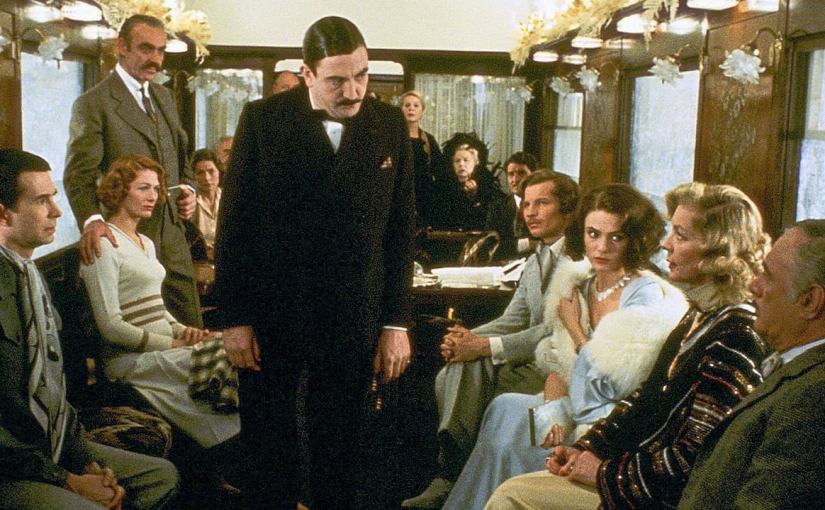
Lumet abandons his penchant for the metropolitan jungles of conflicted souls and high stakes drama to offer up a deliciously fun who done it, with Albert Finney gleefully playing the oddball, mustached Belgian (not French) detective, Hercule Poirot.  Despite a cast that features Sean Connery, Lauren Bacall, Jacqueline Bisset, Vanessa Redgrave, Martin Balsam, Richard Widmark, Michael York, John Gielgud, Anthony Perkins, and an Oscar winning performance from Ingrid Bergman, it is Albert Finney who makes the film wonderfully delightful.  His stature that seemingly hides his neck within his stout torso, along with a shoe polished, flattened hairstyle and a thick, echoing dialect tempo are an absolute combination of pleasure.  He makes the glossary of Tim Burton’s bizarre characters seem rather straightlaced.

He’s strange, but funny.  Before the expected murder gets underway, we observe an unrecognizable Finney performing Poirot’s nightly routines, including applying cream to his hands and unique mustache, as well as donning a kind of strap beneath his nose to keep his signature trait in its proper shape.  Batman maintains care of his cowl.  This crime fighter must preserve his facial hair.  It’s completely normal for Hercule.  While these mundane tasks of his are executed, the great inspector is also alert to several rumblings and bustles going on in the nearby cabins aboard the famous train in the title. Lumet ensures we see how smart and observant Mr. Finney chooses to portray Poirot; unique, and instinctively wise without limits.

An impolite and bossy man named Ratchett (Widmark) is discovered dead with multiple stab wounds to the chest.  It doesn’t make much sense considering the other passengers should all be complete strangers to one another.  Or are they?  Each one has an alibi, and their respective personalities couldn’t be more different.  Who would have the motive to kill a stranger aboard a moving train?

There appear to be twelve suspects for Poirot to consider.  That’s quite a list.  The standouts for me include Bergman, Bacall, and Perkins, but Lumet allows at least a scene or two for each celebrated actor to shine.

Ingrid Bergman dresses down to portray a shy, nervous, homely Swedish woman.  Sidney Lumet knows to back off on directing inventions when working with talent of such magnitude.  In one uncut take, Bergman controls an interrogation scene with Poirot and the camera stays fixed on her never diverting away and very subtly tracking behind Finney to stay with the actress’ nervous portrayal and expression.  The question is, should we trust this person? If Ingrid Bergman is putting on a façade, she’s awfully good at it.

Lauren Bacall carries such a strength on screen.  She walks with square shoulders and utter confidence that makes it seem like she’ll be impenetrable to Poirot’s inquiries.  Bacall’s booming signature voice would make me back down at any given moment.  She commands the supporting cast and appears to defy intimidation.

This film was made fourteen years after Psycho and yet Anthony Perkins portrays Mr. McQueen, a secretary of the murder victim, with youthful naïveté.  His stutter is perfectly timed and authentic, and he’s got body language that flails from one direction to the next when put to the test, not just by scenes he shares with Albert Finney, but anyone else in the cast as well.  His character is clearly unrelaxed.

I decided to watch this picture for reference.  In September of this year, I will be portraying Hercule Poirot in a stage adaptation of Agatha Christie’s story, written by Ken Ludwig.  My colleague Miguel Rodriguez is in the production as well, occupying Martin Balsam’s role.  They’re brilliant with magnificent energy by the way; Balsam and Rodriguez.  I had to watch Lumet’s film twice to appreciate the gleeful nuances he offers with this celebrated cast, including the actual train which serves as not only a claustrophobic setting but a character as well, stuck in a snowdrift, trapping the guilty party with no means to escape.  The dialogue flies fast and many of the various accents (Belgian, Russian, Scottish, Italian, Swedish, Hungarian) are challenging to decipher on a first watch, particularly Finney’s performance.

On a second watch, I was more wide-eyed to the detective’s behavior and how he breaks down a suspect during an interrogation.  No two interviews of suspects are even remotely similar.  Finney alters his way of approaching a scene partner each time.  I’ll credit the screenplay’s dialogue from Paul Dehn for that achievement as well. 

When a cabin door is opened to reveal the deceased victim, Finney’s odd mannerisms drastically change as he enters the room knowing what to say and look for immediately.  Sidney Lumet characteristically will position his camera pointing up at his actors, so the audience is the perspective of the subject being looked upon.  Albert Finney is gifted a wide scope within a narrow quarter to react as the famed detective.  This filming technique was an inspired choice by the director. Hercule Poirot is built up to be the foremost detective and now we see him demonstrating his specialty for examining a crime scene, and thus where to begin with his examination.  Albert Finney received an Oscar nomination for this role and it’s because of the skills he orchestrates under a guise of heavy makeup with a thick incomprehensible dialect.  All are meant to be taken as winning compliments from me.

The art design of the train is breathtaking.  The exteriors are magnificent too, particularly the train station located in Istanbul where the Turkish merchants crowd each cast member as they enter the film for the first time ready to board the Orient Express.  In one spot, a steward is inspecting the food cargo.  Another area has a merchant spilling over a carriage of oranges.  Locals crowd Bacall, Bissett and York with trinkets to buy.  Lumet captures the whole exotic tapestry.

Richard Rodney Bennett’s musical score is unforgettable.  A sweeping, romantically uplifting waltz accompanies the locomotive’s ongoing trajectory.  Then it gets more brooding when the journey comes to an unexpected halt in a chilling snowdrift, with the thought of a dangerous killer nearby.

Sidney Lumet is to be applauded for stepping back to allow his who’s who of legendary cast members play with Agatha Christie’s famous mystery.  He’s done this on other occasions including his outstanding cast in Network and Paul Newman’s career best performance in The Verdict

Those who are not familiar with the Agatha Christie’s tale are fortunate to experience the wonderfully twisted ending that serves the story’s continued appreciation.  Lumet deserves credit for the final touch though.  It’s not often that a film boasts such a collected caliber of talent together.  So, the best way to cap it off is with a charmingly giddy champagne toast.  It’s Sidney Lumet’s perfect little garnish to wrap one of greatest literary mysteries to ever be published and adapted for the stage and screen.

OPPENHEIMER

By Marc S. Sanders

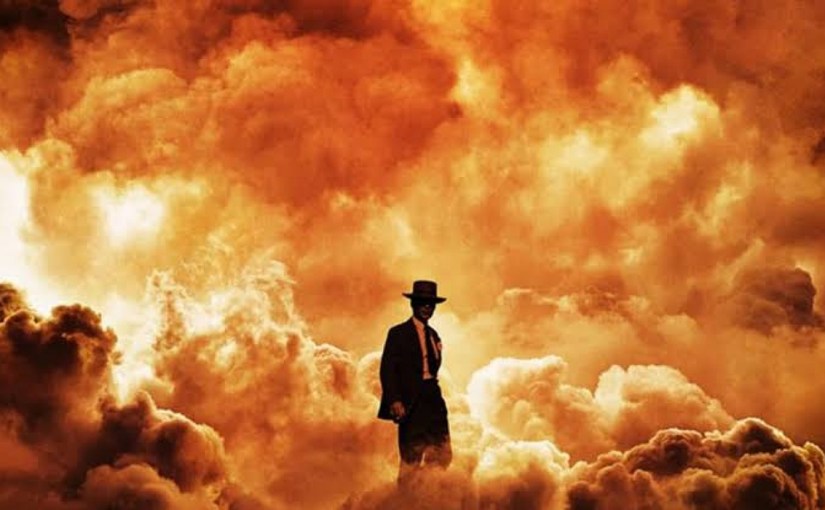
Christopher Nolan is one of the modern-day directors that you can rely on for brainy science fiction whether they are in embedded in dream subconsciousness, intergalactic space travel, transcendences of time, or even putting a fresh polish on a favorite superhero.  With Oppenheimer, he triumphs with exploring the actual prophets of science in the twentieth century, particularly its title character J Robert Oppenheimer, the brilliant physicist played convincingly well by Cillian Murphy.  Nolan doesn’t just stop at the assembly and discovery of science though.  He uncovers the consequences of Oppenheimer’s innovation and genius insight.  Dr. Oppenheimer might have been the man who knew too much and arguably that cost him quite a bit, personally.  Additionally, the so-called lab rat of his atomic bomb, namely the planet Earth, suffered the expense of a, at the time, troubling present day, and a still ongoing future. 

This movie seems to start right in the middle of its story and as a viewer you need to claw your way through the dense foliage to find its beginnings and what comes afterwards.  The first two scenes of the movie are titled “Fission” and “Fusion.”  There are no time periods specified by a font caption, however.  The differences in various points in history are distinguished by where J Robert Oppenheimer is located during select points in his life.  For seconds at a time, the film will change its photography from vibrant color to black and white, for example.  The characters will either look more aged with grey hair and some wrinkles or during more youthful time in their lives.  At one point Oppenheimer is being recruited by Lewis Strauss (Robert Downey, Jr) to head the department of a new kind of weapon development.  Work the science to make a difference.  There’s another time period where he’s being interrogated in a small room by a governmental suit and tie committee.  Oppenheimer is also in his classroom or debating and working with colleagues.  Another story observes his progress with building the atomic bomb among a collection of other engineers and scientists in a desert town, Los Alamos, specifically built at his own request, under the order of the nothing but militant Colonel Leslie Groves (Matt Damon), to conduct his work and research while hiding in plain sight. 

The film also covers Oppenheimer’s association with possible suspects of the Communist Party during the stressful pre-cold war era of McCarthyism.  Questions arise if his reliable brother Frank (Dylan Arnold) is a communist or even his mistress (Florence Pugh).  Does that in turn make Oppenheimer a communist as well?  If that is the case is J Robert Oppenheimer, the man tasked with ultimately ending World War II in favor of the Allies, sharing secrets with Russia and/or the Communist Party?

Nolan’s film gets easier to watch as it moves along, but you must get used to his pattern of filmmaking.  If you have never seen a Christopher Nolan film, I do not recommend you start with Oppenheimer.  His work is recognized for fast paced edits of different time periods and conversations.  There is much information to decipher. As well, there’s a very large collection of welcome characters to sort through, who worked with or against Oppenheimer.  Having only seen it once, I was captivated with the picture, but I know that I need to see it again.  The quick edits, working beautifully against the soundtrack orchestrations of Ludwig Göransson (nominate him for an Oscar, please), happen a mile a minute.  I appreciated this method because it enhanced the urgency of Dr. Oppenheimer in the eyes of the world, first as the savior of the united Allies against the last remaining superpower of the Axis countries, Japan. Then later focus is on whether it is in the United States’ best interests for the regarded physicist to have security access to the country’s most secret weapons and technological progress in a post war age.

People have been cajoling about how they know the ending to Oppenheimer.  They drop the bomb, of course!  (Twice actually.)  However, they do not know the entire story adaptation that Christopher Nolan as director and screenwriter presents. 

Cillian Murphy is perfectly cast. Give him an Oscar nomination.  He serves the confident, assured scientific leader who becomes envious of competing powers who achieve the impossible, like splitting the atom, while also admiring peers and mentors like Niels Bohr and Albert Einstein (Kenneth Branagh, Tom Conti).  All these men are interested only in what can be accomplished.  The superpowers that fight in war, though, are interested in how these accomplishments of modern science can be used to their advantage at a cost of collateral damage.  It is these conflicts of interests that Nolan admirably demonstrates over the course of the film. 

A telling scene for me, that I won’t forget, is when Robert Oppenheimer meets Harry Truman (Gary Oldman, doing an unforgettable cameo).  As the physicist exits the Oval Office, having shared his concerns and scruples with the Commander in Chief, Nolan includes a throwaway line delivered by the President, that I won’t soon forget.  It will not be spoiled, here.  Yet, the dialogue speaks volumes of what the United States held important regarding the servants who did the country’s bidding.  The scene closes like a stab in the heart, and suddenly science is no longer just facts within our planet.  Science is now questioned on whether it should ever be acted upon. Those questions certainly have remained as long as I’ve been alive to read about our never-ending world climate.  These inquiries will be here for many generations after I’m gone as well; that is if men and women’s recklessness with science doesn’t destroy the Earth before then.  At one point, Oppenheimer shares a small fraction of possibility for the end of the world when they activate and test their first atomic bomb. Matt Damon’s Colonel Groves’ asks for a reiteration of that observation.  Is this finding worth even the smallest, most minute risk?

Emily Blunt portrays Kitty Oppenheimer.  She’s marvelous as a lonely alcoholic wife to Robert, and a mother minding a home built in the desert while her husband serves an important purpose.  I didn’t take to her presence in the film until her grand moment arrives during an interrogation scene.  As the character gives her testimony regarding Oppenheimer’s communist ties, Blunt locks herself in for a wealth of awards in late 2023/early 2024.  Once you’ve watched the movie, you’ll likely know which scene I’m referring to and you can bet it’ll be that sample clip shown on all the awards programs.  This might not be Blunt’s best role, because it is rather limited within crux of the film, but I’d argue it is her greatest scene on film that I can remember.

Oppenheimer is a three-hour film, and it demands its running time.  There are so many angles to the man that few really know about.  Many know it was he who instrumentally built the atomic bomb that to date has only been used twice within a period of four days.  Thankfully never since.  Nolan emphasizes how unaware we are of how carefree the doctor’s government supervisors performed with the weapon he agreed to build.  Don’t just drop the bomb once.  Send a message to Japan by dropping it twice so they know to no longer engage in this ongoing war.  Choose the area where an army/government official didn’t honeymoon though.  It’s too beautiful a region.  Tens of thousands of men, women and child civilians perished immediately following the strikes.  Many others died weeks later following exposure to the nuclear effects that followed.  All issued as a horrifying cost to end a war that was already being won now that Hitler was dead.

Mechanically, Christopher Nolan does not disappoint either.  I watched Oppenheimer in a Dolby theater and I highly recommend it over a traditional one.  However, beware of the sound.  It is a LOUD!!!!!  Your seat will rattle early in the film when Cillian Murphy is shown in close up imagining the collision of atoms, protons, and neutrons.  How a star naturally dies in space runs through Oppenheimer’s consciousness as well, and then we see how a black hole forms.  Nolan offers a Cliff’s Notes edit of science doing its job.  Murphy performs so well when he’s not speaking and cut against the quick edits of Nolan’s visual and sound effects of science at play.  It shows how an educated scientist thinks beyond what is documented on a chalkboard or in a textbook.  J Robert Oppenheimer used to teach about the building blocks and natural destruction that occurs within the universe.  Regrettably, what he learned about natural function soon becomes manufactured capability when the professor accepts the task of building scientific destruction with his bare hands. Man stole fire from the Gods.

Oppenheimer is so dense in the scope of science and the scientist behind it.  That’s a huge compliment.  It’s an engaging film with much to tell, and a lot more to think about afterwards.  It accomplishes what the best movies do.  It leaves you thinking long after the film has ended.  More importantly, it’ll leave you frightened for the future based on the behavior of this planet’s past. 

Oppenheimer is one of the best films of the year.

THE LOST WEEKEND (1945)

by Miguel E. Rodriguez

DIRECTOR: Billy Wilder
CAST: Ray Milland, Jane Wyman, Phillip Terry, Howard Da Silva
MY RATING: 8/10
ROTTEN TOMATOMETER: 97% Certified Fresh

PLOT: The desperate life of a chronic alcoholic is followed through a four-day drinking bout.


I don’t drink.  Like, at all.  I’ve never taken drugs, and I’ve never smoked a cigarette.  Luckily, I have never been gripped in the throes of a crippling addiction, unless collecting movies counts as an addiction, in which case I plead the fifth.  I say this, not to brag, but because a lot of my first impressions of Billy Wilder’s The Lost Weekend are tinted by the fact that I don’t know the first thing about being drunk or what it means to suffer from an addiction so crippling that it would force me to hang a liquor bottle outside my window to hide it from my brother.

As it happens, Don Birnam (Ray Milland) DOES suffer from this kind of mid-to-late-stage alcoholism.  We first meet Don as he and his brother, Wick (Phillip Terry), are packing for a long weekend to get away from everything and everyone, including alcohol.  Don is a would-be author who needs a break from…something.  (Whatever he went through is never specified, only hinted at: “It’ll be good for you, Don, after what you’ve been through.”)  Don’s plan to surreptitiously pack the hidden bottle of liquor falls through after the arrival of his almost unbelievably good-hearted girlfriend, Helen (Jane Wyman).  No matter.  He still has a plan, which he confides to the long-suffering but increasingly annoyed bartender, Nat (Howard Da Silva).  He’s bought two bottles of rye.  He’ll hide one badly in his own suitcase and another in his brother’s suitcase.  When Wick discovers the badly hidden bottle in Don’s suitcase, he’ll chew Don out, Don will act suitably contrite, and Wick won’t think about searching his OWN suitcase for a second bottle.  What could go wrong?

During these first few scenes, when Don lies and lies and drinks shot after shot in a bar and winds up missing the train for his getaway weekend, I found it difficult to sympathize with him.  Oh, he’s clever and loquacious when he’s either about to drink or while he’s drinking.  He has enough knowledge to quote Shakespeare at the right times and wittily proposes to Nat the bartender: “I wish I could take you along, Nat.  You and all that goes with you.”  Under the right circumstances, Don is a fun guy, always good for a laugh…until his seventh or eight or ninth shot of bourbon.  Then the other Don shows up, Don the drunk, Don the liar, the Don who gets so desperate for cash that he’ll walk 70 or 80 New York City blocks trying to find an open pawn shop so he can hock his typewriter for drinking money.

For some reason, it was harder for me to empathize with Don Birnam than it was to empathize with any of the main characters in Darren Aronofsky’s Requiem for a Dream (2000).  In that film, not a single leading character escapes the ravages of addiction, and yet even as they made their mistakes, I empathized with them and grieved when their bad decisions made things worse and worse.  With Don Birnam, however, every bad decision he made just made me like him less and less.  I remember thinking at one point, “He’s brought this all on himself, he deserves what he gets.”  Not a very Christian attitude, but I’m not gonna lie about it: that’s what I felt.

And his girlfriend, Helen…wow.  It’s almost like she needs as much of an intervention as he does.  She loves Don so unconditionally it’s almost unbelievable.  What’s the attraction?  Perhaps it’s symptomatic of the era in which The Lost Weekend was made.  She discovers Don’s alcoholism late in their 3-year dating relationship.  (What did people think in 1945 of someone who dates a man for 3 years?)  Instead of breaking up with him or giving him ultimatums, she devotes herself to “fixing” Don.  Not precisely the course of action I would recommend myself in today’s world, but there you have it.

Director Billy Wilder presents this first half of the movie in a very uninflected tone with little-to-no comic relief.  This flat tone becomes very effective at simply presenting the information without directly commenting on it one way or the other.  There are moments up to this point where the movie seems to side with Don (his struggle to find a bottle whose hiding place he’s forgotten is particularly pathetic), but it’s still not really passing judgment or giving him a pass.

And then…the turning point.  Don accidentally falls down a flight of stairs and knocks himself out after finagling some drinking money out of a young lady he flirts with at his favorite dive.  When he wakes up, he’s lying in a bed in the Alcoholic Ward of the local hospital, face to face with one of the strangest characters I’ve ever met in a Billy Wilder movie, and that’s saying something.  He’s a nurse.  “Name of Nolan.  They call me Bim.  You…can call me Bim.”  The closest I can get to describing Bim’s weirdness is to imagine an evil Waylon Smithers from The Simpsons as a male nurse.  On quaaludes.  To Don’s slowly increasing discomfort, Bim lovingly describes what Don is in for during his stay on the Alcoholic Ward, giving the inside scoop on the various repeat offenders and what to expect during his D.T.’s: “You know that stuff about pink elephants?  That’s the bunk.  It’s little animals.  Little tiny turkeys in straw hats.  Midget monkeys coming through the keyholes.”  This Bim…he has NO bedside manner, man.  “Prohibition…that’s what started most of these guys off.  Whoopee!”  (Nice little social commentary there…classic Wilder.)

Don manages to find his way home once again, having not had a drink for almost a day-and-a-half, if my memory is correct.  And it’s at this point that the movie, Billy Wilder, and Ray Milland finally got me in Don Birnam’s corner.

SPOILER ALERT, SPOILERS COMING.

Don finally has a bout of the D.T.’s.  It’s not turkeys or monkeys or elephants, though…it’s a rat.  A single rat chewing its way out of the wall in front of him.  Then, out of nowhere…a bat finds its way into the apartment and flutters around the room.  Don is understandably distressed.  But then the capper: the bat swoops down to where the mouse’s head is poking through the hole, there is a terrible squealing sound, the bat sort of trembles and scuffles…and a stream of thick blood starts to dribble out of the hole where the bat is presumably chewing the rat’s head off or something.

To say I was surprised is an understatement.  Don starts screaming his head off…and at long last I finally empathized with Don’s situation, and I no longer wanted him to wind up penniless and/or alone and/or dead.  I wanted the movie to find a way to fix him, like Helen tries desperately to do through the entire picture.  From then on, I was on his side, or Helen’s side, or whoever’s side, it didn’t matter, as long as he figured out a way to get out from under the disease that was slowly killing him.

I would not dream of revealing exactly how the movie ends.  It might go the way of Leaving Las Vegas (1996).  Or it might go the way of the vastly underseen Duane Hopwood (2005), featuring David Schwimmer as an alcoholic father on a path of self-destruction, but who manages to turn things around.  (Sorry if I spoiled that for you, but I’m betting it’s not a movie most people will want to seek out.)  I will say that it’s the ending of The Lost Weekend that really showcases the era in which it was made more than anything else.  But it could just as easily have gone the other way and still been just as successful.

The Lost Weekend cleaned up at the 1945 Oscars, winning awards for Best Picture, Best Director, Best Actor, and Best Adapted Screenplay (it was based on a novel).  At the time, it was the most unglamorous movie ever made about alcoholism.  Up to that point, drinking in movies rarely if ever led to hangovers and the D.T.’s and spending the night in the Alcoholic Ward.  It certainly belongs to be mentioned with Wilder’s greatest films.  But you’re gonna wanna watch something a little lighter afterwards.  Stalag 17, maybe.  Or Some Like It Hot.  A laughter chaser.

THE LOST WEEKEND

By Marc S. Sanders

Ever wonder why I write so many reviews?  It’s because I yearn to be a successful playwright/screenwriter.  I’ve directed three original plays that I’ve written over the years.  I will be directing a fourth for the holiday season later this year.  Had a few short plays I wrote performed locally as well.  Still, I suffer from a terrible ordeal that often grinds me into bouts of depression and internal rage.  Writer’s block! 

My father always told me that he stayed away from gambling and casinos. He said it was because he could have an addictive personality and he was not confident he could stop if he started.  I know what he means.  I have an addiction.  One that’s not commonly recognized, but I obsess over something every single day. Without fail, every damn day.  It’s my weakness.  Sorry.  I must keep that to myself, though.  Yet my pursuit of what preoccupies my mind taxes on my motivations to write and stretch the imagination needed for churning out one script after another.  So, a remedy is to write about movies that speak to me in lieu of my next great play. 

Billy Wilder’s Oscar winning drama The Lost Weekend demonstrates a writer’s inability to exercise his talent when an endless need for alcohol consumes his every waking moment.  Ray Milland delivers an Oscar winning performance as Don Birnam, an alcoholic wannabe writer of the worst kind.  When Wilder’s film opens, Don seems healthy and spry.  He’s clean shaven, well dressed, and ready to pack a bag for a weekend getaway that his brother Wick (Phillip Terry) has arranged for him along with Don’s girlfriend Helen St. James (Jane Wyman).  Wick implies to Don that this trip is just what his brother needs after what he’s recently been through, and he’ll have his typewriter with him to write in calming solitude.  Eventually we get an idea of what Wick has been referring to as Don attempts to sneak a bottle of rye that is strung outside the window of his New York apartment.  Wick catches Don in the act, pours the bottle down the drain and assures him that he won’t find another drop of liquor anywhere.  He doesn’t even have money to go to the corner bar.  So, Wick and Helen leave Don alone for a few hours before it’s time to depart. Don gets ahold of some cash though, and thus begins a spiral into a drunken binge over a four-day weekend.

I read that when this film was released, test audiences laughed at it.  I guess in 1945 people were not attuned or prepared to witness an account of a very real disease like alcoholism.  I’m not certain it was even diagnosed as a disease at that time.  Surely, the addiction was an ailment though, and Billy Wilder uses some effective cinematic devices to demonstrate the journey into madness and desperation for even just a tiny shot glass of gin or rye. 

A repetitive device is to show a tormented performance from Milland within the shadow of bars or fences.  He’s trapped in his own need for swill.  A telling moment occurs when Don is desperately trying to pawn off his typewriter just for some money to buy more alcohol.  Every store in the city is gated and closed on this particular Saturday though.  It’s the Jewish holiday of atonement for past sins, Yom Kippur.  I found that little detail to be interesting.  Surely, it’s a sin to harm yourself whether by alcohol or suicide, for example, and the holiday is a time for speaking to your inner self and Hashem (G-d) for your past transgressions.  Yet, that is no matter to Don.  He’s not ready or wanting to climb out of his dark hole.

Inanimate objects or props are also given much focus.  Early on, Don is seen at the local bar and Billy Wilder brings an inventive visual to explain just how much this character has consumed in under two hours.  The camera focuses on the wet rings on the bar top left by Don’s shot glass.  First there are two rings, then four and soon, fifteen.  Wilder also zooms his lens into the very bottom of the small glass filled with liquor to show how much the audience will drown in Don’s despair over the course of the film.

Other props also work towards Don’s paranoia such as a ceiling lamp bearing the shadow of a hidden bottle.  Milk bottles left in front of his apartment are not collected from one day to the next showing the passage of time for this weekend, and how even the most basic chore is dismissed so Don can extend his stupor.  A lady’s unguarded purse offers temptation.  A tossed lamp shade seems to glare at Don like a hole that he’s in, as he gets weaker and weaker. 

A magnificent scene, one that I can envision a skilled director doing today with quick cuts on digital film, occurs as Don recalls sitting in a crowded opera house watching the toasting scene of La Triviata; one of the most recognizable operas of all time.  Don is one of many in the audience, and yet he’s the only one alone with the production’s props of various drinking glasses and champagne bottles being used on stage that are mere inches away.  Very quickly into the scene, Billy Wilder skillfully draws focus from the opera singers and diverts towards the immense amount of liquor adorning the stage and the cast with quick cuts of Don salivating and perspiring alone in a chair of a crowded theater.  Everyone else is watching the performance.  Don is gazing at the alcohol.  I wouldn’t be surprised if Martin Scorsese had much admiration for such a sequence.

Phillip Terry is very good in his performance.  I’m surprised he’s not promoted as much as the other two stars of the picture.  Wick cares for his brother, but he’s ready to give up on him after six years of this ordeal, with one more transgression played out. He’s exhausted from lying to cover for Don’s weakness.  He represents the outsider of the dilemma who’s been affected by someone else’s ailment. Jane Wyman as Helen serves a nice purpose as well.  The one last hope for Don.  She’s the only one left who holds on to the faith that she can pull Don out of this nightmare.  Wilder presents these characters as side effects in the Oscar winning script written by him and Charles Brackett. 

Another haunting, but effective dimension comes when Don finds himself in the alcoholics’ ward at Bellevue Hospital, shot on location, and the first film to ever do so.  With an eerie use of a theremin in the soundtrack from Miklós Rózsa, Don is surrounded by dark shadows and tormented victims suffering from drying out just like him.  A nurse explains that he still has the DTs to experience like envisioning being surrounded by horrifying images like bugs crawling on him or something comparatively worse.  I recall from childhood seeing this symptom used on an episode of M*A*S*H.  Wilder invents his own kind of imagery and it’s pretty shocking in its grotesqueness.

I ask for forgiveness when I say that The Lost Weekend seems a little melodramatic. Maybe that’s because movies have built themselves into much more graphic and honest depictions of alcoholism since 1945.  The ending seems to welcome a stringy violin to accompany Ray Milland’s final scene with Jane Wyman.  However, I’m completely impressed with how pioneering this movie must have been for its time.  Billy Wilder didn’t shy away from the dramatic side of drinking. 

The Lost Weekend is certainly an effective and important piece on the study of alcoholism.  I’d recommend it as a visual reference to what can happen to the one who suffers, as well as those around him, including the bartender who deals with the regulars he easily knows by name.  While it’s certainly a movie of its time, the message remains the same.  Though I’m no expert on the effects of alcohol, I’ve seen enough friends who deal with the problem to know that the message in Wilder’s film still rings true.  An addiction to drink will dominate a life.

I always say that movies offer another valuable avenue to learn from.  There’s much to learn from The Lost Weekend.

SOPHIE’S CHOICE (1982)

by Miguel E. Rodriguez

DIRECTOR: Alan J. Pakula
CAST: Meryl Streep, Kevin Kline, Peter MacNicol
MY RATING: 10/10
ROTTEN TOMATOMETER: 78% Certified Fresh

PLOT: Sophie, a survivor of Nazi concentration camps, has found a reason to live with Nathan, a sparkling if unsteady American Jew obsessed with the Holocaust.


I have not seen a movie as stirring, as affecting, or as emotionally shattering as Sophie’s Choice in a very long time.  For years, I was aware of the film’s cachet and of Meryl Streep’s Oscar-winning performance, but the opportunity to watch the movie never presented itself until very recently.  I was intellectually aware of the slang usage of having to make a “Sophie’s choice”, meaning that one had to choose between two equally undesirable options.  I knew it had to do with the movie of the same name, but I had no other context.  And for decades, the real context of Sophie’s choice had remained unknown to me until now.

That fact is one of the reasons Sophie’s Choice had such a devastating impact on me.  The screenplay is another, and naturally, there’s Streep’s landmark performance.

The story opens with an older man’s narration while we watch his younger self onscreen.  This is Stingo, played as a young man by Peter MacNicol.  He’s an aspiring author, and he’s just moved into a large pink boarding house in a Brooklyn suburb shortly after the end of World War II.  On his first day there, he encounters the two people who will irrevocably change his life, Sophie (Streep) and Nathan (Kevin Kline in his film debut).  They appear to be a couple, but they are in the middle of a brutal verbal argument on the stairs, with Nathan yelling awful things to Sophie, calling her a Polack, saying how much he doesn’t need her.  He leaves in a huff, Sophie is in tears, Stingo instinctively goes to comfort her, they get to talking, and the next morning Nathan returns, utterly contrite, at first suspicious of Stingo, but when Sophie assures him Stingo is just a friend, Nathan is all charm and goodwill and has nothing but good things to say about Sophie.

At this point, in my head, I had the movie all planned out.  Okay, so we’ve got a love triangle with a writer/narrator coming between an unattainable beauty and the capricious brute who loves her.  And this, I imagined, is what Sophie’s choice would eventually come down to: the penniless aspiring writer who is “safe” or the roguish charmer with the turn-on-a-dime temper.  Ho hum, been there, done that, I thought, but wow, is Meryl Streep’s Polish accent spot-on or WHAT?  Guess I’ll keep watching just so I can say I watched it.

That’s the ingenuity of the screenplay I mentioned earlier.  It strings you along for close to an hour, making you believe it’s about the romantic relationship among the three leads.  And then the movie springs one of the greatest head-fakes in film history.  What started as a soapy melodrama becomes a character study of the limits of human endurance, with scenes as fraught with tension as anything written by Hitchcock or Tarantino.

(I am going to have to write very carefully from here on out because I want to convey how effective the movie is while preserving its revelations.  It worked so well for me precisely because I knew very little about the plot, and I want to make sure you have the same experience, dear reader.)

Any appreciation of Sophie’s Choice must include a discussion of Meryl Streep’s performance as the title character.  She reportedly begged director Alan J. Pakula for this role, even after he had lined up a Polish actress for the part.  We can all thank the cinema gods Pakula went with Streep instead.  This is, without a doubt, one of the top three or four performances I’ve ever seen by any actor, living or dead.  Even leaving aside her mastery of the Polish accent…well, actually, let’s talk about that for a second.  She learned to speak with a flawless Polish accent.  Then there are scenes where she had to speak fluent Polish, so she learned Polish.  Then there are scenes where Sophie also speaks German, so she learned how to speak fluent German with a Polish accent.  I mean…it took me two weeks to learn two sentences in French and say them fluently.  If there were a fan-fiction theory that Streep is really a magical drama teacher at Hogwarts, I’d believe it.

At times during Sophie’s Choice, Pakula’s camera simply stops and stares at Streep while she delivers a monologue about her days before the war, or about how she survived as a personal secretary to the chief commandant of Auschwitz.  Her delivery during these scenes feels about as naturalistic as you can get.  You don’t feel like you’re watching an actress give a performance anymore.  It’s more like you’re watching a documentary about a Holocaust survivor.  It’s a performance that simply must be seen to be believed.

Next to Streep, Kevin Kline as her beau, Nathan, is almost overdone, stagey, far too full of ebullience and rage and earnestness.  Nathan is Jewish, and he is obsessed with the idea of tracking down the Nazis who escaped justice after the war.  However, his antics are balanced by Sophie’s serenity and unconditional forgiveness.  I look at it as a yin/yang kind of thing.  It works.

There are questions, though, about their relationship, especially as the movie wraps up.  Why does Sophie put up with this lout who whispers sweet nothings to her and impulsively proposes marriage in one moment, and in another moment is given to vicious accusations of infidelity and collaboration with the Nazis, then swings back again in a fit of contrition?  Perhaps she was wracked with survivor’s guilt.  Her parents, husband, and children never emerged from the concentration camps.  Perhaps she felt it was her duty somehow to prop someone up and latch on to a soul like Nathan, someone whose outward cheerfulness masked internal demons.  Perhaps being a helpmate for such a person keeps her own demons at bay.  Just a thought.

When I’m watching a movie on my own, I can measure how effective it is by how many times I talk to myself or yell at the screen while it’s playing.  With Sophie’s Choice, I didn’t do a lot of yelling until it performed its head-fake and veered into territories not even hinted at previously.  After that, there was a lot of my Gods and holy craps and oh Jesus-es.  The end of the movie is a roller-coaster that may not end in the happiest place ever, but it’s the kind of earned emotional catharsis that doesn’t happen very often at the movies.  A movie like this is a treasure.  I hope, if you’ve never seen it, you’ll make it a point to hunt down a copy and see for yourself what all the fuss is about.

And don’t let anyone spoil it for you.