WINGS

By Marc S. Sanders

The first film to ever win the Oscar for Best Picture actually didn’t win Best Picture.  The category was called Best Production in 1927.  A year later the title was changed.  Wings was the film in question, directed by actual World War I flying ace William A Wellman, only ten years after the worldwide conflict had ended.

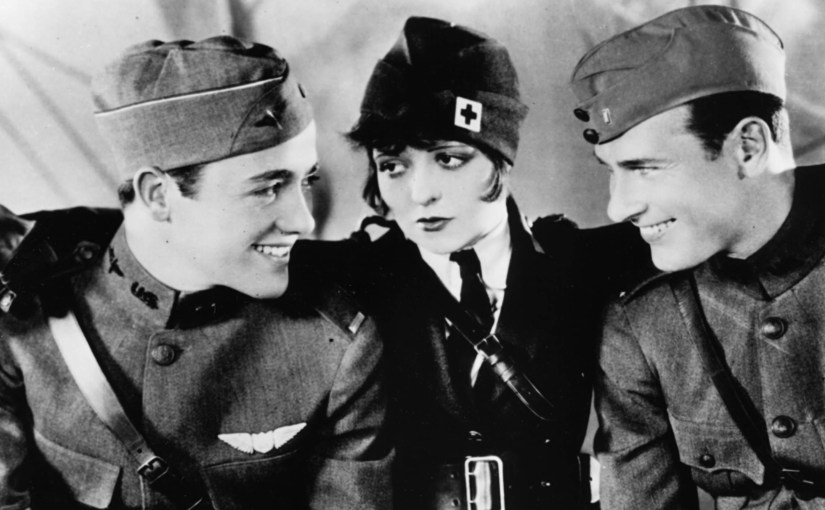
To watch this two-and-a-half-hour silent movie is an exhilarating experience.  The story focuses on two young men, Jack Powell and David Armstrong (Charles “Buddy” Rogers, William Arlen), who both pine for the affections of a local girl named Sylvia (Jobyna Rolston).  Their competition is put on hold as they enlist to train and serve as fighter pilots in biplanes against the German opposition.  A side relationship focuses on Mary (the adoring Clara Bow), and her affections for Jack who has no interest in her. 

Wellman’s film takes you through the regimen of enlistment with the calisthenics the men practice, through mentorship and then on to piloting the planes.  Jack and David set aside their differences to unite against the common enemy where they routinely say just before take-off “All set?” followed by “Okay!”  Reader, in a silent film with only a few frequent dialogue cards, this relationship was as effective as witnessing Maverick & Goose or Han & Luke.  (“I feel the need, the need for speed.” “Okay Chewie, punch it!”)

William Wellman captures outstanding dog fight footage and enormously vast battle scenes that look even more detailed than what I found in the graphically convincing 1917 from just a few years ago.  

Paramount Pictures invested in a 2012 restoration following the discovery of this film in a basement in France. I believe the restoration incorporated orange flames and sparks into the planes that get shot down, as well as from the cannons that fire from the pilots’ cockpits.  Yet, unlike CGI or quick edits, Wellman holds his camera in the skies above, often following the spiral trajectories of the downed planes with numerous ground crashes.  His camera is also teetered on the hull to capture engaging closeups of the pilots who are actually flying in air during the shooting of this picture.

Both Allied and German pilots get shot with blood pouring from wounds.  There are direct head shots as well as to the torso and appendages. Before Hitchcock, chocolate syrup was already being used as an effective substitute. Wings is action packed and one of the best war films I’ve ever seen.  These are not just random fight scenes captured on film.  A story comes from the developing dog fights. Suspense stems from what becomes of David while Jack wonders if his friend is even alive.

Wellmen’s film does not just resort to the battlefield and the skies above.  There’s a personal story going on for Mary, Jack and David.  Mary is enlisted as a traveling nurse for the troops and the director captures emotive moments from the silent film star Clara Bow as her character reunites with an intoxicated Jack on leave in Paris.  For a silent picture that must rely more on visuals, bubbles are incorporated to float away from the beverages as well as out of the actor’s mouths.  It looks silly like what Chaplin or Laurel & Hardy might include.  However, as Mary witnesses a drunken Jack, exhausted from the perils of war, there’s a sadness to seeing her literal despair for the one she loves. She’s even forgiving enough to accept Jack’s desperate need for immediate affections from a swinger girl.

Escapist comedy also comes into play. A character called Herman Schimpf (El Brendle) is the klutz of the regimen. He’s clumsy with the exercises and Brendle’s physical performance lives up to silliness of his character name. The drill sargeant can not even fathom a pilot named Herman Schimpf accomplishing the heroics expected of a world war flying ace. My extensive experience with late twentieth century films lent references to Goldie Hawn, John Candy and Bill Murray in an army lampoon like Private Benjamin or Stripes. Before these guys, there was Herman Schimpf.

I recommend you watch Wings like I did.  As with most silent films, there is a running loop of rag time piano music.  It’s terribly distracting and does not ever appropriately compliment the images on screen.  I turned my sound system off and watched in silence.  Oddly enough, there are so many explosive visuals to this piece with an enormous amount of artillery vehicles, planes and ammunition being fired, that I could subconsciously hear a sound system in my head as the film moved along with massive explosions, horrific crashes, rattling machine gun fire, and the screams of despair from the 5,000 American troops who were loaned by the United States military to complete the construction of the film. The U.S. hoped that Wings would serve as a recruitment piece for new enlistments.

I have no doubt Wings still serves as a seed for the future of filmmaking.  I easily found elements of hit modern films from Top Gun of course, to the romantic angles found in The Dark Knight, It’s A Wonderful Life, Titanic and It Happened One Night, and furthermore on to the regrets of serving in a destructive war as covered in Born On The Fourth Of July and 1917.

Standards in practice were also not enforced at this time. Wellman had the freedom to shoot graphic violence and even nudity that includes nude shots of Clara Bow and enlisted men going through their routine of living on an army base. Wellman had no hesitancy for offering the authentic.

It is a step back in time, when this film was produced just ten years after the first war ended. William Wellman provided convincing direct oversight from his experiences as an actual fighter pilot, practically reenacting what he went through.    He went so far as to relocate where he was shooting the aerial footage because the Texas skies had no clouds to offer clear composition of the acrobatically flying biplanes.  The clear blue skies could not highlight the planes well enough. He believed they looked like blobs on film. So, artistically, the director refused to settle.

Wellman also went so far as the shoot the actors up in the sky, actually flying the planes.  This allowed for a first-rate perspective as the hair blows in the breeze high above.  Forgive me as I do this again but it’s reminiscent of when I saw Christopher Nolan’s Dunkirk. Much of this kind of footage is identically found in Nolan’s film save for the black and white photography and the absence of sound.

I also have to credit Wellman as a pioneering filmmaker with how novel his camera work is during a speakeasy sequence in Paris.  Though it was not a steady cam, a camera is attached below a harness to allow a one-shot zoom over a half dozen bar tables at once with a crowd of extras occupying the spaces.  Before Scorsese, Wellman had already thought of this eye-opening approach. It is a one shot moment that belongs on any highlight reel.

Simply, there is so much to appreciate technically and theatrically in Wings. There’s a lot of groundbreaking material to uncover. The aerial footage is stunning.  This cast is superb.  The writing is compelling.  Wings has to be one of the most pleasantly surprising films I can recall in a very long time.  The feats that were accomplished here are magnificent.  

Wings is easily a must-see film for any film buff, and anyone who loves movies in general.

THE BRIDGE ON THE RIVER KWAI

By Marc S. Sanders

David Lean’s The Bridge On The River Kwai commits to a common theme.  The purpose of war means nothing to the pawns assigned to execute its actions.

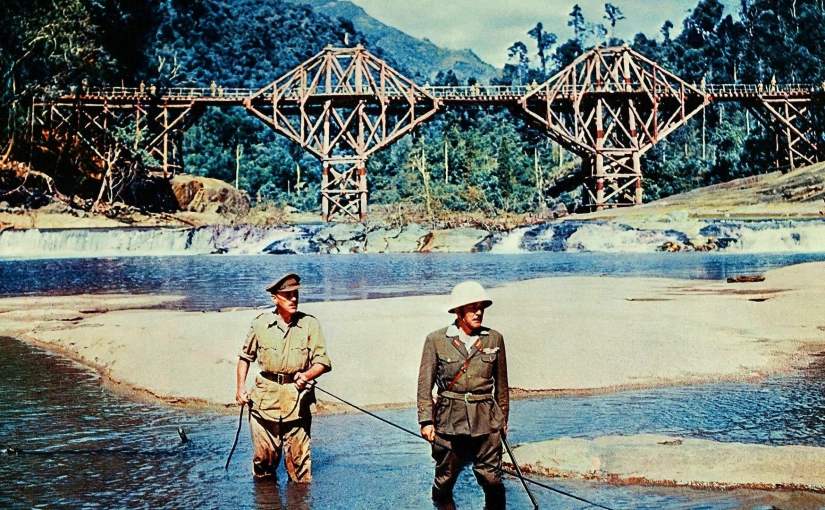
The film primarily takes place in Japanese occupied Burma during World War II.  A prison has just acquired a British platoon of soldiers, and the Japanese have mandated this squad to construct a railway bridge that will run over the Kwai river benefiting the Axis efforts in the war.  Colonel Nicholson (Alec Guinness, in a celebrated early career role) respects the rules of war that come with his battalion being held as prisoners of the Japanese enemy, and he is prepared to have his men begin construction.  However, as his copy of the Geneva Convention Agreement dictates, his officers are not obliged to join in the assignment.  

This is a far off deserted jungle however, that does not even need to be fenced off because an attempted trek to escape is bound to fail.  Therefore, the Geneva Convention Agreement has no value of authority out here in this bug infested, stilted and sweltering heat with minimal resources of food, clothing or medicine.  The Japanese commander Colonel Saito (Sessue Hayakawa) does not hesitate to swat Nicholson’s copy in the Englishman’s face.  Now, since the politics of war are no longer a factor, the stamina of these two men are what’s at stake.

Saito forces Nicholson into a cramped, isolated hot box with next to no food or water.  He’s lucky because his remaining officers are forced to share the other box together.  Saito will force them to comply, or he may just have to kill himself.

The Bridge On The River Kwai explores how productivity, leadership and endurance thrive, but at a startling cost of madness.  Before you realize it, none of these characters are speaking of their respective war efforts or even the mandates of war.  As Nicholson persists in his stance as a defiant leader, a remarkable tide turns within this prison camp.  Soon, the question arises as to who is running this camp and overseeing this bridge project. The enforcers or the prisoners? 

A separate storyline involves an American prisoner named Shears (William Holden) – one of the last men in his platoon to survive, and now only here to bury his fallen comrades.  He’s introduced to describe the harsh reality of what Nicholson and his men can expect.  Yet once Shears escapes the camp, he is caught in a twisted irony, being forced to return to the prison camp where he must destroy the bridge under the command of a British special forces leader named Warden (Jack Hawkins).  Warden goes through his own form of madness.  A badly injured foot becomes something worse than a bloody stump and still he insists on leading his small brigade into the jungle.  

Meanwhile, as Nicholson develops more control over the camp, with Saito realizing his own pitiful ineptitude, a faction of the British are now likely to engage with Nicholson’s newfound achievement as a leader over his own squad, as well as the human Japanese resources he’s also recruited to complete this solid foundation.

David Lean had a reputation for never settling for less on his pictures and The Bridge On The River Kwai is a perfect example.  I recently watched the film, for a second time, with my fellow Cinemaniacs.  Thomas and Miguel assuredly pointed out that one less than sturdy bridge was constructed by Lean’s crew to demonstrate its weaknesses and the lack of engineering the Japanese possess, before Nicholson fully takes over.  That structure collapses on film and thus lends to the next plight in the story, when Nicholson proves to Saito that he is more capable than his enemy counterpart.

Later, the actual bridge is finished leading to a nail biting ending that elevates in suspense as an oncoming Japanese train is heard approaching with its signature whistle and chugging overheard as Colonel Nicholson proudly walks across his success, newly minted with a plaque carved with his name.  Elsewhere in the area are Stearns and Hawkins.  What began with Japanese antagonism has shifted to one side likely to do battle with itself.  

Who is fighting who?  More importantly, what are they fighting for?  War or persistent, delusional madness?

The Bridge On The River Kwai is a magnificent adventure produced with sensational filmmaking.  The investment and risk that David Lean took to assemble this picture is astounding.  It was filmed within the actual jungles.  (Miguel said somewhere around Sri Lanka.) The costumes worn by the thousands of extras are tattered dirty scraps that certainly does not invite the sex appeal you’d expect in a modern film of this kind.  Moreover, the audacity of the filmmaker at least matches the nerve of the story’s cast of characters.  

The cast is marvelous, but it is Sessue Hayakawa and Alec Guinness who serve the impact of Lean’s film.  The movie comes close to a three-hour running time.  The first half of the film has Hayakawa positioned as the leading antagonist, but the second half has Guinness filling that spot.  They almost seem to mirror one another as their character arcs move in parallel but opposite directions working to accomplish their goals, while shedding any kind of humane concern for their underlings or the countries they serve.  

I consider this film to be groundbreaking.  It’s a spectacle, but it allows much to be examined in mental acuity, military allegiance and endurance.  The Bridge On The River Kwai tests how effective war can be for any side that participates.  My Cinemaniac comrade, Thomas,  informed me that the story, adapted from a novel by Pierre Boulle, is entirely fictional.  Still, I believe it garners an important message.  Are we supposed to truly embrace “rules of war?”  This is not Risk the board game.

These men might carry the titles and rankings issued to them by their governments. However, isolate them in the middle of nowhere and who is going to uphold any semblance of regulation?  War functions on efforts of violence.  When was the last time anyone had respect for violence?

TOM JONES

By Marc S. Sanders

Watching Tom Jones I wondered if the Monty Python troupe took inspiration from producer/director Tony Richardson’s film.  It’s all quite madcap.  With Albert Finney as the lead title character, there’s a zany quality to this eighteenth century piece adapted from Henry Fielding’s novel The History Of Tom Jones, A Foundling.

The film opens like a silent movie with title cards being used to emote dialogue.  The Squire Allworthy (George Devine) returns to his estate and upon retiring for bed, he discovers newborn Tom beneath the blankets.  Allworthy decides to raise the child. 

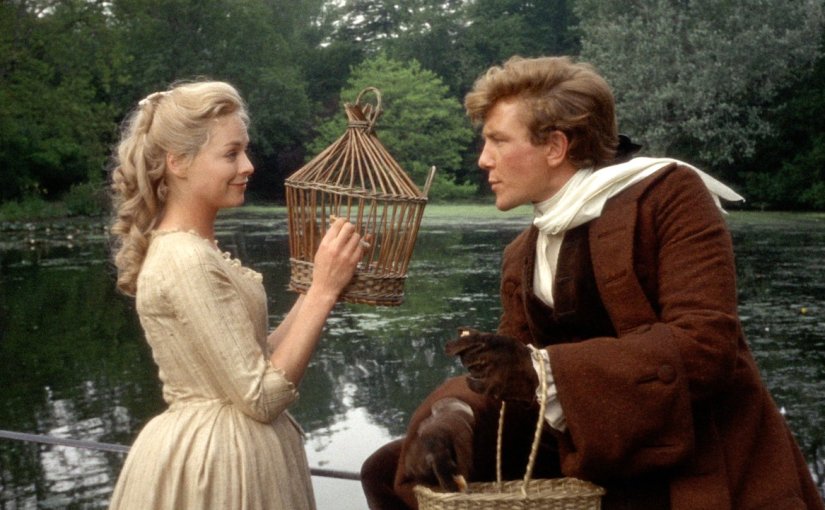
The film transitions to a talkie picture and Tom grows up to be portrayed by Albert Finney.  The orphan man gets himself into all kinds of predicaments, notably with an assortment of women but his true affections are directed towards Sophie (Susannah York), the daughter of the neighbor Squire Western. The cad known as Blifil (David Warner, in his very first film role) convinces Allworthy that Tom is a villain and thus he’s excised from the estate with cash to seek out his own fortune.  Interactions lead to unexpected circumstances for Tom, including being robbed penniless, crossing paths with the butler who was presumed to be his father, and being sentenced to death for murder after he rescues an endangered maiden from the assault of a British red coat (Julian Glover).

Tom Jones takes unexpected turns in its narrative, and it leads to big laughs.  Upon discovering that his wallet is stolen, Albert Finney breaks the fourth wall seeking the viewers assurance that he is not making it up.  Other characters are depicted in freeze frame silliness as they eavesdrop on Allworthy.  There’s lots of running around escapades as Tom flees from being caught with a couple of mistresses.  I was waiting for the Benny Hill music to cue in, though John Addison’s score suffices well to keep it all lighthearted during such times when the film speeds up with a Keystone Kops kind of pace.

A film like Tom Jones is not what I normally gravitate towards.  Going back and forth, there’s lots of screaming banter and deep English dialects that swallow the words being uttered.  Drunken debauchery is relied upon for Hugh Griffith as Squire Western; he was one of five actors nominated for the film.  At one point, Griffith falls off his horse and the animal lands on top of him.  Apparently, this was not stunt work as Griffith notoriously showed up drunk each day on set and the horse easily overtook him.

Albert Finney, though, is a comedy gem as he innocently portrays Tom with no ill intent.  Watching him here in his youth, he’s adorable with an occasional prince and pauper romantic interpretation of his performance. A memorably hilarious scene involves Tom and a lady mistress seducing one another from both sides of the table as they gorge themselves with a bevy of food including pheasant, pears, potatoes and so on. Without Finney’s fearlessness in leading this sloppy, drooling scene, I’m not sure it would have worked as well. Richardson elongates the moment between the two to build the laughter.

I’m impressed with much of the filmmaking from Tony Richardson.  Cameras must have been mounted on horseback to get up close pursuit during a sporting hunt of a deer that also included a large number of rabid dogs.  Still, I was a little queasy in the follow up scene when the deer is slaughtered amid the canines barking for a portion. Technically speaking though, the film works on many levels.

As well, I could not help but consider that a modern filmmaker like Yorgos Lanthimos (Poor Things, The Favorite) adopted some of Richardson’s comedic approach.  Tom Jones is proudly weird and obscure just like Lanthimos’ storytelling.

Yet, I cannot comprehend the praise awarded to this movie, including Best Picture and Director as well as the nominations in cast performances by critics, Oscars and BAFTAS.  I’m convinced of the period timing and what the script and actors lend to the film, but I’ll never say any of it left me enraptured in the novelty.  It’s a cute story, but that’s all.  Kind of like Arthur with Dudley Moore, where the innocent man child happily lives within his sophomoric mentality while uncovering who he truly loves.  There is likely more to take away from Tom Jones, but I didn’t recognize it.

If anything, as I continue my trek towards watching and reviewing every Best Picture winner in Oscar history, I’m at least glad I got Tom Jones checked off my list.  At times, it’s delightful and it’s also proudly oddball in its execution.  What constitutes it as the best film of 1963? Reader, I’m just not sure.  Yet, it is at least entertaining with much praise for Albert Finney and cast.

CASABLANCA

By Marc S. Sanders

I’ve always struggled with Casablanca.  It just does not have that hold on me that so many cinema lovers acquire upon viewing the celebrated film.  In the past, I’ve called it overrated, a bore, underwhelming, and plenty of other negative connotations.  Don’t worry reader.  I’ve been stabbed in the heart, back and eyes a thousand times over with the eyerolls, the verbal gasps, and the room exits from friends when I contribute to a discussion on this overall favorite.  I’ve tried.  Believe me, I’ve tried to love Casablanca.  Now, on this fifth viewing, or call it the sixth because I had to stop in the middle when my mind was wandering last week, I sincerely developed a semblance of appreciation for the picture.  Now be patient with me.

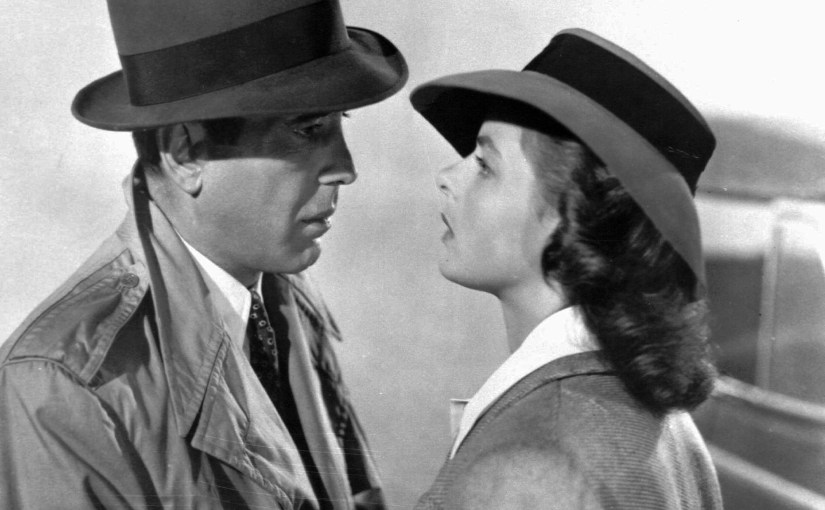
To absorb the classic film about Rick Blaine (Humphrey Bogart), the saloon keeper who keeps to himself, crossing paths with his long-lost love Ilsa Lund (Ingrid Bergman), I allowed myself to envision watching it in a movie house in 1942, when World War II was occurring on another side of the world and people were being forced to relocate or suffer captivity at the hands of the vile Nazi regime.  Casablanca, Morocco was the last hopeful exit to Lisbon, and then on to the Americas.  I had to embrace the setting and the time period in order to relate to the Oscar winning film. 

Rick runs the Café Americain near the airport of Casablanca.  All walks of life come through the doors each night to drink, gamble, smoke, flirt, and sing along with Sam the memorably charming piano player (Dooley Wilson). Most importantly, some patrons hope to score the necessary papers for passage out of this tiny desert port area that has yet to be Nazi occupied.  Rick is the expatriate who runs this gin joint and he has no interest in aiding anyone with an escape, nor with assisting the Nazis in rounding up their usual suspects they believe are enemies of the state.  He could care less about anyone’s cause or politics.  He just wants to run a respectable bar.

However, the past circles back on Rick when Ilsa arrives with a wanted Frenchman named Victor Laszlo, great name, played by Paul Henreid.  Victor has escaped the concentration camps and he is making efforts to reach the states so that he can continue his underground campaign of exposing the treachery and threats of the Nazis.  Rick has already been warned if Victor should make an appearance he must not be permitted to leave Casablanca.  The bar manager would rather not be involved.  Yet, it’s hard for him to resist thinking about his past love, Ilsa. Flashbacks soon reveal their time spent in Paris when they fell madly in love only for her to suddenly abandon him as they were trying to board a train exodus before the Nazis seized the territory.

Casablanca has a very simple plot and that lends to the strength of its finished product.  The love triangle of three good people, Rick, Ilsa and Victor, is where the complexity lies and there is no denying how memorable the main players are in their roles.  However, I can only surmise that the legendary status of the film tainted my open mindedness for an admiration of the piece.  The hype has always been too much for me, I guess.

Reader, I don’t think I am a big fan of Humphrey Bogart.  I’m very sorry.  It could be The Big Sleep or The Maltese Falcon.  Too often, I think he is quite bland in his signature, unforgettable caricature. No matter which film he’s in, Bogart is unique.  There is still no one like him with his chiseled face, dark hair and deep voice.  I’m not sure that’s even a fair description.  It’s hard to find the right adjectives for Bogie.  He was one of a kind.  However, there was little range to the star.  (I know.  I’ve seen The African Queen; great movie.) Rick is so closed off and predominantly on the same plane of emotions whether I am seeing him at the beginning of the film or at the end when he delivers his final speech to Ilsa before the plane departure.  He’s too one note for me. He’s just a boring guy and if I was at a table drinking alongside him, I would have to excuse myself very quickly.  Even to play chess with Rick would be excruciating.

Paul Henried is charming though.  He plays Victor as the adventurer or the daring swashbuckler, aware of his threat to the Nazis, but fearless in whatever he faces.  He just knows he serves a greater purpose to the world.  The loose knit, white suit and hat compliment his relaxed stature.  Even the scar over his right eye seems to tell a story.  In Casablanca, I find myself more concerned with what will happen to Victor Laszlo than anyone else.

Ingrid Berman is strikingly beautiful.  You can just recognize her exuberance through the black and white photography.  She was an actress that the camera loved and her performance is sensational as the woman caught in the middle, who mourned what she thought was the loss of a husband, only to find new love. Then the unexpected interfered with her desire for a promising new future.  Her best scene is when she stands up to Rick, no matter the stakes, to get him to help her rescue her husband Victor.  If it is not pleading, then she will use other means.  Frankly, I had forgotten what she tried next in this scene, which I will not spoil.  So, when the camera cuts back to her following another speech from Rick, my eyes went wide.  Ilsa is not just some pretty dame.  She knows she must be more than that, even more than a one night stand or some gentleman’s true love.

For so many years, I would hop on The Great Movie Ride at Disney/MGM studios and come across the famous final scene.  I heard Rick’s speech so many times, a hundred times more than I have watched Casablanca.  Take a scene like that out of context, and it waters down the power of the celebrated film.  What a difference it makes after you learn why Rick and Ilsa could not stay together following Paris, and why you learn their fates are destined for different paths perhaps.  “Here’s lookin’ at you kid!” has a deeper connotation when watching the film as a whole.  I know I’m pointing out the obvious.  Yet, I embraced Bogart’s improvised line that much more in addition to so many other well-known pieces of dialogue.  Other films have those special moments where you can isolate a scene on a work break and just take it in.  I know snippets of Casablanca are viewed that way, but there’s an emptiness to watching these scenes in that fashion.

In 1942, following the Japanese attack on Pearl Harbor, as Jews and gypsies and every other race or nationality or demographic were being bullied at the hands of an unforgiving Nazi regime, audiences must have regarded Victor, Ilsa and Rick as heroes.  True heroes!  They must have been considered the heroes who don’t amount to a hill of beans in this crazy, mixed-up world, but must therefore sacrifice what they hold so dear and personal.  It makes me wonder if Michael Curtiz’ film would have had the same kind of impact if it was released at later time in the century like the 1960s, long after the war was over and the Axis armies, particularly the Nazis, were wiped out.  In 1942, perhaps I would have had more of an appreciation for Rick and Ilsa if I watched the film then. 

My attention especially perked up during the competitive nature of the French and Moroccan patrons singing the anthem La Marseillaise against the Germans’ rendition of Die Wacht am Rhein.  It’s a scene that demonstrates promise during a very frightening and confusing period in time.  I imagine audiences applauded and cheered during this scene.  On the other hand, maybe they were afraid and apprehensive to do so during such a confusing time.  The fiction found in the Oscar winning script from twin brothers Julius and Phillip Epstein was daring enough to defy the power of Hitler’s fast rising influence.  Modern films from the likes of Spike Lee and Adam McKay attempt to circumvent their stories to present day crises and dare to footnote their films with real life news footage.  It’s admirable at times.  Sometimes their efforts are divisive.  Yet, they do not feel as meaningful as what the Epstein brothers and Curtiz accomplished.  For me, this moment near the conclusion of Casablanca is my favorite scene of the picture.  The slaphappy regulars of Rick’s Café  Americain were enthusiastic to join Sam for a rousing rendition of Knock On Wood, but when reality intrudes upon their escapism, another dimension to the people does not hesitate to stand up for a purpose.

So, it’s always been tough to win me over with Casablanca.  Still, I marvel at the picture for the absorbing settings of Rick’s Café along with the crowded Moroccan streets occupied with refugees and pickpockets under the authority of a party who threatens to stake its claim.  Sam turns the bar into a regular evening atmosphere to bond and escape while the drinkers yearn to be on the next plane to safety and freedom.  Tricks are turned where travel papers are the most sought-after commodity, and ultimately, beyond Rick Blaine, there are people who may strive for safe passage and will also unite against a tyranny if enough will take up their swords, people like Victor Laszlo. This is what I treasure from Casablanca

The cast consists of a colorful bunch including Claude Rains, Sydney Greenstreet, Peter Lorre and Conrad Veidt.  Plus, Rick and Ilsa will always have Paris, but that was always a tough relationship for me to connect with.  What is more meaningful is the harbor that Casablanca and Rick’s Café Americain offered those who were fleeing, hiding and surviving amid their desperations.

This will not be the last time I watch Casablanca.  For a film to have this much staying power after more than eighty years, there must be something else I have yet to uncover, and I cannot wait to find it.

I’ll play it again for old time’s sake. 

MILLION DOLLAR BABY

By Marc S. Sanders

Clint Eastwood has one of the most remarkable careers in Hollywood history.  As his appearance has aged, so have the roles he’s occupied. He’s got these long lines that run down his cheekbones and across his forehead that compliment his signature scowl and white hair.  These facial features lend to a background in many of the characters he’s portrayed over the last thirty years ranging from a “Frank” in In The Line Of Fire to a “Frank” in Million Dollar Baby, his second film to be a recipient Oscars for Best Picture, Best Director, and Best Supporting Actor.  A Best Actress Oscar was also garnered for Hilary Swank. 

Swank won her second Oscar as Maggie Fitzgerald, a backwoods product of a hillbilly upbringing, who only lives for one dream and that is to be a championship boxer.  When she’s not waitressing to collect coins and singles for tips, she is spending every waking moment at Frank’s boxing gym, The Hit Pit.  Maggie keeps to herself by punching a bag, but she is persistent at convincing a closed off Frank to become her trainer.  Frank has no interest in training a girl, but maybe there’s more to why he’s reluctant to take her on.  The lines on Eastwood’s face seem to metaphorically hint at a challenging past.

Frank’s best friend is Eddie, or otherwise known as “Scrap Iron,” played by Morgan Freeman in a very long overdue Oscar winning role.  Some may argue that Freeman was bestowed with an award for such an illustrious career.  That’s fine.  I still believe that this performance is just as worthy as his other celebrated works (Driving Miss Daisy, The Shawshank Redemption).  Eddie lives in a small room in the gym and manages the place by day.  Frank is a crank towards Eddie, but they’re the best of pals. Frank carries the responsibility for Eddie losing an eye in the ring while under his coaching. 

Frank also suffers from the loss of a relationship with a daughter.  He writes her but the letters come back “return to sender.”

Million Dollar Baby is a boxing movie but the film, written by Paul Haggis, serves a much deeper and intimate purpose.  Eastwood, as director, gives beautiful and sensitive focus towards a relationship between Maggie and Frank.  Maggie has an ungrateful family with a mother (Margo Martindale) who spits the gift of a purchased home back in Maggie’s face.  Hilary Swank offers silent, yet agonizing hurt at the rejection and Haggis writes a simple line for her to share with her coach by asserting “You’re all I have, Boss.”  In turn, without his daughter, Maggie is all Frank has.  Their commonality is “Scrap Iron” who is there to offer insight into what Maggie needs from Frank, and what Frank needs from Maggie.  As well, Scrap even suggests that Maggie seeks out another manager to salvage both of their souls.

Haggis and Eastwood go even further with the setting of The Hit Pit.  A mentally disabled kid who proudly identifies himself as Danger (Jay Baruchel) relies on the gym for his own personal glorification.  Danger is a kid with no experience and no business being a boxer, but he glorifies himself as the next all-time great champion while the other boxers (Anthony Mackie, Michael Pena) tease and jeer him.  Frank hems and haws at Scrap Iron to get rid of him.  Danger doesn’t belong here.  Scrap Iron just lets the kid come and go.  The two old guys are both protecting Danger.  One doesn’t want to see another kid get permanently injured, but the other is well aware this kid has nowhere to go.

Million Dollar Baby is a film of acceptance when every other direction leads to rejection for its characters.  Every main character is destined to serve a purpose for another character.  The surprisingly heartbreaking third act is an ultimate test for a dare-to-dream fighter and her coach, however. 

A grizzled old trainer like Frank will laugh in the face of one of God’s ministers with his daily visits to Mass to hide the guilt he feels responsible for, while a girl boxer who wasn’t even much of a fighter until Frank reluctantly accepted her is forced to question how useful she is for herself or Frank or Scrap Iron after she’s been trained to be an elite.

There is so much to appreciate of the sins and curses that weigh on Frank, Scrap Iron and Maggie.  Accompanied with their anguish is a quiet, tearful piano soundtrack composed by Clint Eastwood, himself.  To complete the picture is the dark shadowed cinematography from Tom Stern.  So often, Eastwood with Stern shoots the cast in silhouette. A narrow beam of white light points down on Maggie punching the bag with earnest, but no rhythm.  It could also be Scrap Iron looking from a window upon his friends who accept the pain they live with.  The characters show only a small portion of profile while they are involved in their character.  You’ll catch a glimpse of Frank’s chiseled lines, or Maggie’s black eye and broken nose, or the rough texture of Scrap Iron’s dark complexion.  Other moments, Eastwood follows himself walking through the front door of Frank’s home to find another letter on the floor coming back to him, unopened, returned to sender.  The pain never gets numb.  The darkness of Stern’s photography is haunting, and yet it’s blanketed as comfort for these lonely souls.

Morgan Freeman as Scrap Iron narrates this bedtime story, and we eventually learn who he’s actually speaking to.  It’s the last element of the picture needed to complete Million Dollar Baby.  Freeman is the best candidate for any kind of voiceover.  He only draws attention to these people, in this beat-up old boxing gym, who never acquired acceptance from who they once thought should matter most in their lives. 

This film takes place in and out of a boxing ring.  However, it’s not so much about the sport as it is about surviving through personal battles that’ll never be won. 

Million Dollar Baby is one of the best films Clint Eastwood directed as well as performed in, and it belongs at the top of Freeman and Swank’s career best as well.  It’s just a beautiful piece.

THE DEER HUNTER

By Marc S. Sanders

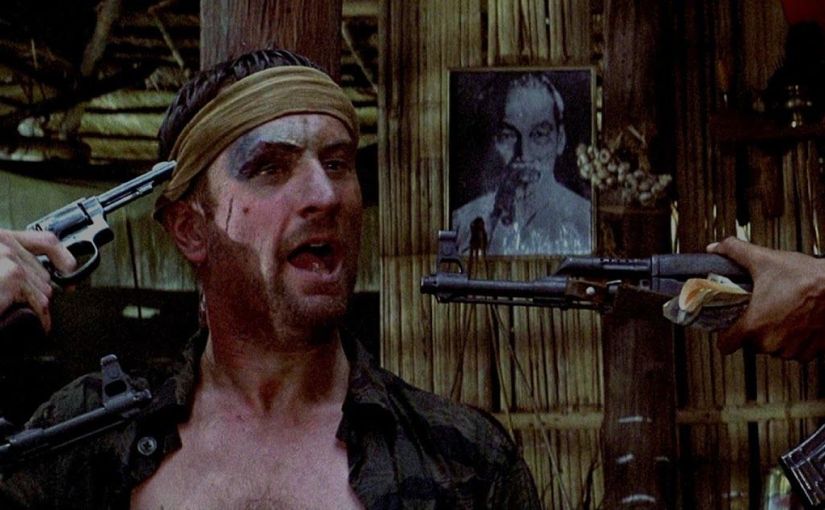
After watching the 1978 Best Picture winner, The Deer Hunter, I followed up by reading some of the trivia about the film on IMDb.  Please do not think I’m a terrible person, but the racial overtones within the portrayals of the Viet Cong never occurred to me.  I guess I can only surmise that war is hell, and I suppose that when any one of us are being held in captivity our prejudices go out the window, and the hatred we feel towards another human is directed at the ones who are exercising their sadistic torment upon us.  It does not matter where they come from or what they look like or even if they are related to me.  Being held prisoner and forced to participate in games of Russian Roulette must allow my seething abhorrence. 

Another important factor that was questioned in Michael Cimino’s film is whether games of Russian Roulette were in fact forced upon POWs during the Vietnam War.  Many veterans insist it wasn’t, therefore holding a strong grudge against the filmmaker.  Cimino argued that he had testimony and photographic evidence to its validity.  I will not even give you an opinion.  I do not know enough about that terrible conflict, and I will not disrespect the service that so many men and women devoted during its time.  I can only focus on the context of the three-hour film. 

In this movie, I see a perspective of three buddies from a small Pennsylvania steel mill town who voluntarily enlist in the army in the late sixties to serve in the Vietnam War.  Thereafter, they are held as prisoners of war, confined in submerged bamboo cages infested with rats and mosquitoes.  They are only let out to compete against one another in face to face Russian Roulette by a forceful unforgiving Viet Cong.  Upon escape, the three men are separated with different measures of terrible destinies to live with afterwards.

Mike, played by Robert DeNiro, is the Green Beret Army Ranger who returns home to a lifestyle he can no longer lead.  Steve (John Savage) has been permanently traumatized both mentally and physically as he has lost both legs.  Nicky’s (Christopher Walken) whereabouts are unknown.

Before any of this occurs, there is a lengthy first act to The Deer Hunter.  The three men are celebrating their send off to serve, but more specifically Steve is getting married.  Michael Cimino takes much of his time focusing on the ceremony, which contains orthodox Russian traditions, and the party with an enormous amount of wedding guest extras (probably the whole town) to carry out endless, drunken celebrations. 

The first time I saw this film I grew bored with the wedding footage.  It seemed to be overly long and tiring.  Pointless, even.  On this most recent view, however, I found it completely absorbing.  There’s an unbeknownst future to all of these people, not just the three eventual servicemen.  None of the people in this Pennsylvania town live extravagantly.  It’s special for the ladies to wear their formal pink bridesmaid dresses but they run through the wet streets of the town on their way to church.  The men throw on their tuxedos that they likely wore only one time before during their prom.  Once the reception begins for Steve and his wife, Angela, everyone is sweaty and out of breath, happily drunk and wobbly.  They lean on one another in a sloppy way for a group photo. They never stop drinking.  More importantly, they never think about how scary or horrifying the Vietnam War could be for them.  They are celebrating a happily wedded future for their buddy Steve and their soon to come legacies as American war heroes.  Nicky even takes a boozy moment to propose to Linda (Meryl Streep).  Already an abused woman, she immediately accepts.  Mike can only gaze with inebriated amazement at a uniformed serviceman who is disturbingly quiet as he sidles up to the bar.  Mike insists on buying him a drink. 

Late into the night and onto the next morning, the guys are doing their traditional favorite activity with a ride into the mountains for some deer hunting.  They change out of their tuxes and into their hunting gear as they tease one another and gorge themselves on Twinkies with mustard.  None of these boys have a care or worry in the world, except for nerdy Stan (John Cazale) who has once again left his hunting boots behind.

There’s a relaxation and calmness to these people; to the men who are staying behind, to the ones getting ready to leave and to the women who share in their lives.

Regardless of the questions of racism or authenticity, Michael Cimino, with a joint screenplay written with Deric Washburn and Louis Garfinkle, show how the war not only directly changes those that served but also the ones who welcome them home.  Steve’s wife is not only separated from him but also appears mute and inactive.  Linda attempts to move on with her life but is absent of comfort from Nicky, the man who proposed to her on a whim.  Mike is not capable of being the drunken party leader or precise deer hunter he used to be.  The deep scars of the three also draw scars for everyone else back home.

The Deer Hunter is a very difficult film to watch.  The picture ends leaving you feeling traumatized because it stretches from innocent celebration and debauchery over to some of the worst images that could ever be fathomed.   Wars end in a truce, a victory or a defeat, but the conflict does not cease for many of those who participated as pawns for a governing power. 

Nicky never comes back to Pennsylvania.  He tries calling home, but he can never follow through.  He has been changed permanently by his time as a killing soldier and captive who was being forced to use his life for stakes.  Mike returns dressed in his uniform with his medals signifying his achievements but as soon as he sees the “Welcome Home Mike” banners he insists the cabbie drives on by and he does not enter Linda’s trailer home until he sees all the guests leave the next morning. 

There’s a haunt that Cimino’s film ends with as the remaining members of the group assemble following a funeral and segue into singing “God Bless America” together.  I don’t ask this question as a means to minimize anyone who has served or lives as an honored citizen of our country; should these folks who must endure loss from now on be chanting about blessing America, or should they be pleading for a blessing upon themselves? The characters of The Deer Hunter struggle internally and are desperate for a salvation and peace. 

War may be a chaotic, unforgiving hell, but living thereafter is another kind of hell that you cannot escape from.

GLADIATOR

By Marc S. Sanders

Ridley Scott’s Gladiator is a terrifically sweeping sword and sandal epic adventure.  It contains well drawn characterizations of its heroes and its one tyrannical villain, along with superbly bloody hack n chop violence and action that live up to its title. 

Rome has finally finished its campaign of conquer throughout at least one quarter of the world.  General Maximus (Russell Crowe) is ready to return to his wife and son to live out the rest of his days as a farmer and family man.  However, the dying Emperor Marcus Aurelius (Richard Harris) begs him to take over his position so the Roman Empire may carry forth with prosperity.  If Maximus does not take over, the empire is at risk of being inherited by Marcus’ spoiled son Commodus (Joaquin Phoenix).  While Maximus ponders the request, Marcus dies and Commodus quickly takes over, and orders the immediate deaths of the celebrated General and his family.  Maximus and Commodus will eventually circle back with one another, however.

Gladiator feels like an epic film in the vein of a David Lean picture that would require time and work to follow through its various developments.  Maximus certainly goes through a widespread arc.  One of the advertising bylines described it as the man who was General, who became a slave, who became a gladiator. Russell Crowe is right for this role.  Not only is he lean and built for the part, but he brings a empathetic approach to the character.  Maximus is loyal to his country, but he also carries pain and longing for his family and when he is wronged, Crowe does very well at displaying his character’s plot of  vengeance against Commodus with strategy and skill.

Joaquin Phoenix rightly earned his first Oscar nomination as a wonderful villain.  The screenplay from David Franzoni, John Logan and William Nicholson offer memorable pieces of dialogue for the bratty son.  “I feel vexed. I am very vexed.”  – a line that sounds so minimal and yet when Phoenix delivers it, it’s only more terrifying.  This little monster captured in an adult body can respond to anything that slightly irks him.

The battle between Commodus and Maximus is hardly physical.  Maximus realizes through his companions that a better and wiser form of revenge is to win Rome’s admiration away from its ruler.  Commodus lives off his ego.  So, when Maximus is encouraged by his slave owner to “win the crowd” amid the games performed in the famed coliseum, it not only lends to the gladiator’s ongoing survival, but it tears away at Commodus’ rule.  A great subplot is included focusing on the ruler’s nephew, Lucius (Spencer Treat Clark).  The expression on Joaquin Phoenix’ face when young Lucius role plays as the great Maximus works like a frozen moment in time.  Imagine a famed quarterback’s child cheering for the defensemen who performs an unforgivable sack during the final ten seconds of a game.  It’s terribly bruising.

When Gladiator was first released in theaters, I found the CGI to lack texture and it appeared very dark like a bad 3D film.  It looked too animated.  This most recent viewing was on a restored 4K transfer and the picture quality is astounding.  Every element of the broad landscapes within the battlefields and especially in the gold sheen photography of the coliseum battles blend perfectly.  If you still don’t understand the importance of 4K, turn to this film to uphold the argument. 

Ridley Scott does not waste a shot in this picture.  Reactionary sequences are just as effective as the cuts to the action.  Blades and barbaric weapons shed gorgeous splashes of blood. Every thrust and parry are easy to see. I’ve never forgotten when a chariot rider is cut in half at the torso from an oncoming blade attached to rolling wheel.  The choreography and editing of the battles are thrilling with sound editing that compliments the moments. 

Beyond Russell Crowe and Joaquin Phoenix, the cast is wonderful.  I’ve always admired Richard Harris’ quiet approach in the twilight years of his career.  He never had to do much to offer a presence.  Connie Nielsen portrays Lucilla, Commodus’ sister who he has affections for.  Her subtle resistance allows Joaquin Phoenix more opportunities to feel “vexed.”  Oliver Reed passed away during the making of this film. Fortunately, Ridley Scott and company did not opt to cut out his role as the gladiator/slave trader, Proximo.  He works well as a kind of mentor to Maximus and the band of other warriors, coaching them on how to stay alive and rise above Commodus’ monarchy.  “Win the crowd and you win your freedom.”  Djimon Hounsou is a loyal sidekick to Crowe’s character. Derek Jacobi is once again that guy you have seen before allowing his expert craft in Shakespearean performance to flesh out the political angle of the story among the Senators.  Every actor serves a valuable purpose in the film.  None of these performances feel like walk on roles.  So, the overall casting of the picture must be commended.

Gladiator is a crowd-pleasing film. Though it is based in ancient history, there remains a fantasy element to the movie when you look at grand designs of the settings, costumes, and dialogue.  Storylines of politics and tyranny hold relatable to modern current events.  What can occur when one man takes over everything for his selfish purposes?  Pointless displays of theatrics can occur at the behest of others who were once heroes, instrumental in placing a despot atop a throne.  I presume Ridley Scott’s film is just one more example of the inherent nature found in humans.  Some of us are destined to rule and control.  That alone is cruel and selfish.  It is even worse when this totalitarian mindset is unleased upon those that put these rulers in their place.  History and especially modern times demonstrate that loyalty is only fleeting.  The ability to possess totalitarian control, however, is hopefully even more short-lived.

PLATOON

By Marc S. Sanders

Oliver Stone’s Oscar winning Platoon takes place in the late 1960s, somewhere on the Cambodian border during the Vietnam War.  Many of the chaotic happenings the film presents are based on Stone’s own experiences after he voluntarily enlisted to fight.  However, while there is an unwinnable war occurring for the American troops, there is just as horrifying a battle going on within the ranks of the platoon the film focuses on.

Charlie Sheen echoes a lot of his father’s, Martin Sheen, voiceover narration, and performance in Francis Ford Coppola’s Apocalypse Now.  He portrays Chris Taylor, a college dropout who voluntarily enlisted for a one-year tour of duty to serve.  After only one week within the harsh, humid, and wet jungles, he’s writing his grandmother a letter asking what the hell was he thinking.  Chris is quite virginal to the harshness of war and that won’t work to his advantage when needing mentoring and support from his fellow soldiers.  The newest enlistees are the ones at the front point.  They haven’t devoted enough time to sit in the back and because of their lack of experience with war, they are not as valuable for the ongoing campaign in battle.  Platoon is not the heroics depicted in John Wayne movies.  This was one reason that Oliver Stone wanted to make this picture.  Platoon is a bitter retort to Wayne’s celebrated movie, The Green Berets.

There is an angel and devil flanking Chris in the form of Elias (Willem Dafoe) and Barnes (Tom Berenger).  Berenger is the cruel side of the conflict with his battle-scarred face.  He gives his underlings the impression that because he’s seen so much fighting and endured being shot seven times, that he must be invincible.  Elias is a fighting soldier, but he adheres to the rules of war and when it is time for rest, he joins his fellow troops in a unified vigil of drug-induced relaxation.  Chris warms up to Elias easily despite his initial fears of being a soldier with no experience or knowledge of how to survive, much less fight alongside his fellow men.

What drives the conflict between Barnes and Elias occurs following the first act of the movie.  The infantrymen come upon a Vietnamese village.  Some men, including Chris, get wildly abusive with the unarmed people, burning and pillaging their huts.  Only after Chris gets control of himself does he realize the wrongs he’s capable of by serving in this war.  He prevents a group of men from gang raping a child.  Furthermore, he witnesses Barnes commit the illegal murder of a defenseless village woman, shot at point blank range.  Elias has his bearings though and will file the proper reports when the opportunity permits.  Nothing in Platoon is easy though.  This war rages on and the possibility of an investigation and court martial is held off while the fighting continues. 

An interesting take on Oliver Stone’s direction is that he never really shows any close ups or lends any dialogue to the Viet Cong.  I believe Stone is confident that people know who our battalions were supposed to engage with.  However, as another favorite picture of mine stated (Crimson Tide), the true enemy of war is war itself.  The enemies of Elias, Chris, and Barnes as well as the rest of the platoon permeate within and among themselves and it lends to the chaos of the brutal combat scenes depicted in the film. Stone doesn’t offer much opportunity to see who any of the soldiers are shooting at or who is shooting at them.   There is much screaming and hollering but who are any of the characters shouting at and can they even be heard or understand what is being said amid the gunfire?  Platoon demonstrates that a Vietnam war picture is not one of heroics with grandstanding trumpets and a towering John Wayne who takes a hill.  War is disorganized, messy, and terribly bloody. 

This may be Charlie Sheen’s best film of his career.  As he represents the fictional account of Oliver Stone’s personal experiences, we see the trajectory of his change.  He is supposed to be there for 365 days, and he, along with his buddies, count down to when their tour will be complete.  However, this one short year will be the longest he ever encounters, and it will change him permanently, assuming he survives.  Chris is always tested of his tolerance.  He’s always subject to respond to how Barnes commands or how Elias mentors and leads. 

Oliver Stone is so convincing in his often-documentary approach to Platoon that it is at least understandable to see how the men in this picture behave and carry themselves.  Why do they refer to the Vietnamese as “gooks.”  Why do they bully with intent to commit rape.  Why do they quickly pounce to kill when for even a moment there is no threat.  Moreover, why they are willing to turn on each other.

They were never the decision makers for this conflict.  These soldiers are depleted of sleep and rest.  They are the pawns of a higher power, and they have been left to their own devices in a dense environment infested with bugs, snakes, unbearable humidity, and bodies that infest the waters and land while armed men appear out of nowhere ready to ambush.  Some ensnarements might occur within their own regimen.  None of these men are justified in their actions.  Yet, it is not hard to understand where their motivations stem from.  They are not programmed for heroics.  Keith David portrays a likable soldier who tells Chris that his mission is just to survive until he’s summoned home.  Survive among those you march and sleep with.  Outlast this hellish environment and overcome those that are trying to mow you down in machine gun fire.  Everything else around here is “just gravy.”  When you are an infantryman, you are not making a statement any longer.  You are not fighting for a cause anymore.  You are only trying to stay alive.

Platoon is such a shocking film of unconventional madness and turmoil.  Oliver Stone is relentless in the set ups he stages.  This picture came out in 1986, long before the strategic methods of the modern “shaky camera” approach.  It’s beneficial to watch the film as Stone must be positioning his camera on a track as the platoon hikes through the forest, parallel to his moving lens.  We are walking alongside them.   Early morning overhead shots depict the carnage of battles that occurred in the dark of night. Flares and sparks come from nowhere.  I think you could watch this movie ten times and still not know when to expect gunfire to intersect with the story or when the bombs to go off.  It’s hectic hysteria like I can only imagine these young men experienced before they spilled their blood on the battleground and either died right there or returned home physically and mentally crippled for life.

Platoon is one of the best and most frightening war pictures ever made.

THE KING’S SPEECH

By Marc S. Sanders

A man can carry the title of Duke Of York, but that doesn’t make him a super man.  After all, he is just a man like any other, and he can possess annoying hinderances like a stammer for example.  However, when you are part of the Royal Family with a historical lineage of thousands and thousands of years, celebrated and honored in majestic paintings and medals, the inconvenience is never acceptable. 

Colin Firth is Prince Albert George (and forgive me but he has assumed two or three other first names as his birthright that I can not recall.  Phillip, as well I think).  The King’s Speech opens when Albert has been tasked by his father, the King of England, to deliver a speech at Wembley Stadium.  Director Tom Hooper never made a small staircase, a microphone or an audience appear so fearful.  As Albert addresses the crowd, the words do not come out and the only one who can lovingly empathize with him is his devoted wife Elizabeth (Helana Bonham Carter).  The archbishop (Derek Jacobi) puts his head down in disappointment along with all the other formally attired spectators.  It’s a heartbreaking beginning of a story for a well-dressed crippled hero.

Following advisors and doctors who offer ridiculous remedies that allow no alleviation, Elizabeth finally finds an Australian speech therapist who just might be the best last resort for her husband.  Albert is stubbornly reluctant to visit with Dr. Lionel Logue (Geoffrey Rush) who insists that their sessions occur in his office.  Albert does not like that he will also not be addressed formally by Dr. Logue.  Lionel will call him Bertie. 

An unorthodox approach, at least for royalty, is what Lionel insists will aid Bertie.  It is certainly better than his doctor’s recommendation of smoking cigarettes directly into his lungs.  Bertie will lie and roll on the floor.  He’ll hum and bellow unusual noises.  He’ll have to loosen up his physique and even allow Elizabeth to sit on his belly to help him with breathing exercises while working his diaphragm.  The art of swearing is especially helpful.

An interesting fact that Lionel shares with Bertie is that no infant is born with a stammer.  It develops from another source.  Perhaps it is abuse or neglect as a child.  When you are a child of royalty you are not necessarily loved directly by your parents.  A nanny is likely closer to you; maybe even more abusive. 

The King (Michael Gambon) is respected by Bertie, but he is fearful of the future of his monarchy.  The older son, David (Guy Pearce) is next in line to assume the throne, but he is an immature bedhopping playboy, and the threats of Hitler and Stalin are becoming more prominent.  The King begins prepping his Albert by insisting he deliver radio addresses.  The father is not the encouraging type, though.  His disdainful demands are not the cure for Albert’s debilitation.

The King’s Speech advances a couple years during the 1930’s towards the precursors ahead of World War II.  The King has died.  David is behaving just as expected and Albert still suffers with his ability to speak, but Lionel has therapeutically made advances with his student and friend.  He just can’t lose his student.  Otherwise, Bertie will not overcome.

The film’s strength relies on a solid friendship that develops between a common civilian and a man of Royalty.  Geoffrey Rush and Colin Firth work marvelously together.  They are very different personalities with backgrounds that could not be more apart from each other.  The chemistry is a beautiful duet of dialogue from an Oscar winning script from David Seidler. This was Seidler’s first script he ever wrote at the age of eighty. 

The entirety of the picture has a set design from Eve Stuart and Judy Farr that is absolutely grand.  Every room of the palace has the most beautiful furnishings and wallpaper designs.  Tom Hooper uses wide distant lens’ that show the enormities of each room of the castle as well as Prince Albert’s home.  Sometimes he shoots from the floor above, pointing his camera at Albert and Elizabeth.  The majesty of royalty looks down upon the Prince and his speech impediment.  It’s an absorbing setting for the film.  Exterior shots also look authentic with the cars and the dreary coldness of the country and London cobblestones.  I love the hardwood floors that the characters walk upon in the picture, particularly in Lionel’s office.  The resonances of their dress shoes speak more clearly than the Prince. It all seems to echo the overwhelming conflict that our protagonist must overcome, and Colin Firth is terrific at demonstrating his frustrated insecurities.  It’s an Oscar winning performance not only earned for the well-timed stammer but also the mournful facial expressions that are caught in close ups.

The triumphant moment at the end of the film occurs after Albert has succeeded the throne from his incapable brother. He is obligated to address his country in a world-famous speech that eventually brought a defiant England into the second world war to fight off Hitler’s undoubted tyranny.  Tom Hooper’s camera follows a strong hearted, yet nervous Colin Firth walk from one room of the palace to the next until he finally reaches the small makeshift studio where his friend Lionel accompanies him to offer assurance as he speaks to his people and allies across the seas.  I don’t simply see a coach or one who lends confidence.  I see a friend working with another friend.  Again, Geoffrey Rush and Colin Firth make a wonderful pair in a long line of cinematic mentors and their students.

As history has taught us, the King’s speech was simply the beginning of a very dark and bloody experience.  The speech itself became a success, but the real challenge was yet to come.  However, confidence is what allowed a generation to survive.  The irony of The King’s Speech is that the hero a people needed lacked confidence in himself.  By the end of this picture, he is sending his faith, his trust, and his own assurance over to his constituents, who needed it the most in spite of a hindering stammer.  It’s a doubly blessed occasion that a lifelong friendship formed out of a troubling time.

OPPENHEIMER

By Marc S. Sanders

Christopher Nolan is one of the modern-day directors that you can rely on for brainy science fiction whether they are in embedded in dream subconsciousness, intergalactic space travel, transcendences of time, or even putting a fresh polish on a favorite superhero.  With Oppenheimer, he triumphs with exploring the actual prophets of science in the twentieth century, particularly its title character J Robert Oppenheimer, the brilliant physicist played convincingly well by Cillian Murphy.  Nolan doesn’t just stop at the assembly and discovery of science though.  He uncovers the consequences of Oppenheimer’s innovation and genius insight.  Dr. Oppenheimer might have been the man who knew too much and arguably that cost him quite a bit, personally.  Additionally, the so-called lab rat of his atomic bomb, namely the planet Earth, suffered the expense of a, at the time, troubling present day, and a still ongoing future. 

This movie seems to start right in the middle of its story and as a viewer you need to claw your way through the dense foliage to find its beginnings and what comes afterwards.  The first two scenes of the movie are titled “Fission” and “Fusion.”  There are no time periods specified by a font caption, however.  The differences in various points in history are distinguished by where J Robert Oppenheimer is located during select points in his life.  For seconds at a time, the film will change its photography from vibrant color to black and white, for example.  The characters will either look more aged with grey hair and some wrinkles or during more youthful time in their lives.  At one point Oppenheimer is being recruited by Lewis Strauss (Robert Downey, Jr) to head the department of a new kind of weapon development.  Work the science to make a difference.  There’s another time period where he’s being interrogated in a small room by a governmental suit and tie committee.  Oppenheimer is also in his classroom or debating and working with colleagues.  Another story observes his progress with building the atomic bomb among a collection of other engineers and scientists in a desert town, Los Alamos, specifically built at his own request, under the order of the nothing but militant Colonel Leslie Groves (Matt Damon), to conduct his work and research while hiding in plain sight. 

The film also covers Oppenheimer’s association with possible suspects of the Communist Party during the stressful pre-cold war era of McCarthyism.  Questions arise if his reliable brother Frank (Dylan Arnold) is a communist or even his mistress (Florence Pugh).  Does that in turn make Oppenheimer a communist as well?  If that is the case is J Robert Oppenheimer, the man tasked with ultimately ending World War II in favor of the Allies, sharing secrets with Russia and/or the Communist Party?

Nolan’s film gets easier to watch as it moves along, but you must get used to his pattern of filmmaking.  If you have never seen a Christopher Nolan film, I do not recommend you start with Oppenheimer.  His work is recognized for fast paced edits of different time periods and conversations.  There is much information to decipher. As well, there’s a very large collection of welcome characters to sort through, who worked with or against Oppenheimer.  Having only seen it once, I was captivated with the picture, but I know that I need to see it again.  The quick edits, working beautifully against the soundtrack orchestrations of Ludwig Göransson (nominate him for an Oscar, please), happen a mile a minute.  I appreciated this method because it enhanced the urgency of Dr. Oppenheimer in the eyes of the world, first as the savior of the united Allies against the last remaining superpower of the Axis countries, Japan. Then later focus is on whether it is in the United States’ best interests for the regarded physicist to have security access to the country’s most secret weapons and technological progress in a post war age.

People have been cajoling about how they know the ending to Oppenheimer.  They drop the bomb, of course!  (Twice actually.)  However, they do not know the entire story adaptation that Christopher Nolan as director and screenwriter presents. 

Cillian Murphy is perfectly cast. Give him an Oscar nomination.  He serves the confident, assured scientific leader who becomes envious of competing powers who achieve the impossible, like splitting the atom, while also admiring peers and mentors like Niels Bohr and Albert Einstein (Kenneth Branagh, Tom Conti).  All these men are interested only in what can be accomplished.  The superpowers that fight in war, though, are interested in how these accomplishments of modern science can be used to their advantage at a cost of collateral damage.  It is these conflicts of interests that Nolan admirably demonstrates over the course of the film. 

A telling scene for me, that I won’t forget, is when Robert Oppenheimer meets Harry Truman (Gary Oldman, doing an unforgettable cameo).  As the physicist exits the Oval Office, having shared his concerns and scruples with the Commander in Chief, Nolan includes a throwaway line delivered by the President, that I won’t soon forget.  It will not be spoiled, here.  Yet, the dialogue speaks volumes of what the United States held important regarding the servants who did the country’s bidding.  The scene closes like a stab in the heart, and suddenly science is no longer just facts within our planet.  Science is now questioned on whether it should ever be acted upon. Those questions certainly have remained as long as I’ve been alive to read about our never-ending world climate.  These inquiries will be here for many generations after I’m gone as well; that is if men and women’s recklessness with science doesn’t destroy the Earth before then.  At one point, Oppenheimer shares a small fraction of possibility for the end of the world when they activate and test their first atomic bomb. Matt Damon’s Colonel Groves’ asks for a reiteration of that observation.  Is this finding worth even the smallest, most minute risk?

Emily Blunt portrays Kitty Oppenheimer.  She’s marvelous as a lonely alcoholic wife to Robert, and a mother minding a home built in the desert while her husband serves an important purpose.  I didn’t take to her presence in the film until her grand moment arrives during an interrogation scene.  As the character gives her testimony regarding Oppenheimer’s communist ties, Blunt locks herself in for a wealth of awards in late 2023/early 2024.  Once you’ve watched the movie, you’ll likely know which scene I’m referring to and you can bet it’ll be that sample clip shown on all the awards programs.  This might not be Blunt’s best role, because it is rather limited within crux of the film, but I’d argue it is her greatest scene on film that I can remember.

Oppenheimer is a three-hour film, and it demands its running time.  There are so many angles to the man that few really know about.  Many know it was he who instrumentally built the atomic bomb that to date has only been used twice within a period of four days.  Thankfully never since.  Nolan emphasizes how unaware we are of how carefree the doctor’s government supervisors performed with the weapon he agreed to build.  Don’t just drop the bomb once.  Send a message to Japan by dropping it twice so they know to no longer engage in this ongoing war.  Choose the area where an army/government official didn’t honeymoon though.  It’s too beautiful a region.  Tens of thousands of men, women and child civilians perished immediately following the strikes.  Many others died weeks later following exposure to the nuclear effects that followed.  All issued as a horrifying cost to end a war that was already being won now that Hitler was dead.

Mechanically, Christopher Nolan does not disappoint either.  I watched Oppenheimer in a Dolby theater and I highly recommend it over a traditional one.  However, beware of the sound.  It is a LOUD!!!!!  Your seat will rattle early in the film when Cillian Murphy is shown in close up imagining the collision of atoms, protons, and neutrons.  How a star naturally dies in space runs through Oppenheimer’s consciousness as well, and then we see how a black hole forms.  Nolan offers a Cliff’s Notes edit of science doing its job.  Murphy performs so well when he’s not speaking and cut against the quick edits of Nolan’s visual and sound effects of science at play.  It shows how an educated scientist thinks beyond what is documented on a chalkboard or in a textbook.  J Robert Oppenheimer used to teach about the building blocks and natural destruction that occurs within the universe.  Regrettably, what he learned about natural function soon becomes manufactured capability when the professor accepts the task of building scientific destruction with his bare hands. Man stole fire from the Gods.

Oppenheimer is so dense in the scope of science and the scientist behind it.  That’s a huge compliment.  It’s an engaging film with much to tell, and a lot more to think about afterwards.  It accomplishes what the best movies do.  It leaves you thinking long after the film has ended.  More importantly, it’ll leave you frightened for the future based on the behavior of this planet’s past. 

Oppenheimer is one of the best films of the year.