ARTHUR

By Marc S. Sanders

I would love to be friends with Arthur Bach. Sure I’d be wined and dined, living a lifestyle where money is no object, toy trains are at my disposal, and drinks on a serving platter are brought to me constantly. Arthur has got it all. Well, not all of it. He’s never been in love. He hates his cold hearted father and he only has one friend, his dependable butler, Hobson.

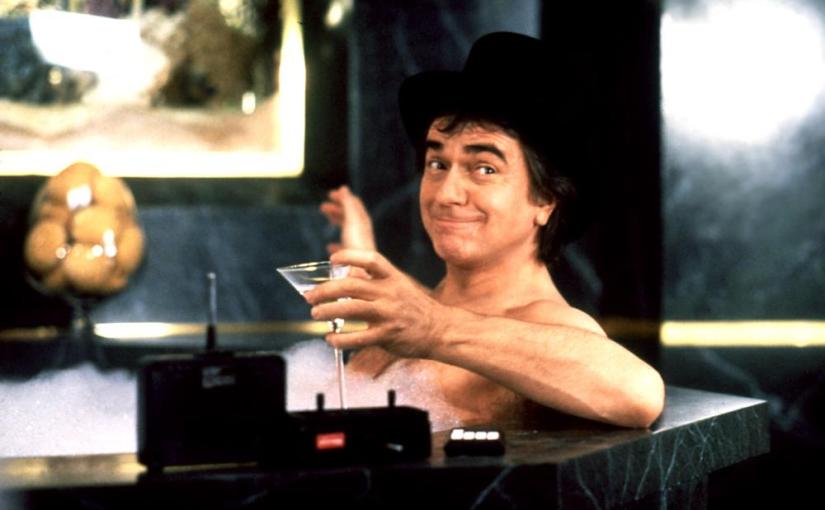
Dudley Moore’s greatest role is Arthur from 1981. The best protagonists in comedy are the ones who go against the order. Arthur is a spoiled kid in an adult’s body. He lives to smile and laugh and drink and play and drink some more and more. It’s easy when you are sitting on three quarters of a billion-dollar fortune. Imagine though if you could lose all of that money. The only way to hold on to wealth is to marry a woman named Susan (Jill Eikenberry) that you are not in love with, simply to merge two wealthy families together for even more industrial power. Arthur is made to be a pawn by his own unloving father, as well as Susan’s ruthless father (Stephen Elliott) who is proud to share how he killed a man when he was eleven years old. No matter. Arthur will just marry Susan and cheat on her, as his elderly grandmother Martha (Geraldine Fitzgerald) suggests.

All seems easy until Arthur becomes over the moon in love with a woman named Linda (Liza Minnelli) who is caught shoplifting a tie in Bergdorf’s in New York City. Arthur can’t stop thinking about Linda but the family would never approve. Linda is a waitress dreaming to become an actress, but lives a poor life with her unemployed father (Barney Martin).

Dudley Moore and Liza Minnelli have one of the best on screen chemistries ever in film. They look like they belong with one another, and their timing is perfectly solid. When they share moments together their on-screen laughter shows up naturally and intermittently. I imagine no matter how many times they rehearsed their scenes together it was never the same way twice.

As an individual performance, Moore works like a great stand up comic having the best show of his life. His drunkenness is hilarious with his slurs and infectious non stop giggles and outrageously loud laughter. He gives The Joker a run for his money in the laughter department.

Early on, he escorts a prostitute to dinner at The Plaza Hotel and his interactions with family members and those of the wealthy social circle are a great contrast in comedy. Throughout the film, Dudley Moore will use every prop he can get his hand on to make his inebriated state all the more funny from simply a telephone to a mounted moose head. Moore is also a helluva piano player.

The most special relationship though is Arthur’s connection to Hobson (beautifully played with blue blood dryness by Sir John Gielgud). A man like Hobson is not one you’d expect to associate with a man as immature and childish as Arthur, but you find a nurturing dimension to Hobson’s character. He’s Arthur’s surrogate father. He teaches Arthur to be practical about his good fortune. At the same time, he doesn’t dismiss Arthur’s happiness. Gielgud is at times surprising and positively touching. He also has some of the best lines in the film. After agreeing to run Arthur’s bath, he retorts with “Perhaps you’d like me to come in there and wash your dick for you, you little shit!” His impression of Linda: “Normally one would have to go to a bowling alley to meet a woman of your stature.”

As Hobson becomes ill, so must Arthur finally learn to grow up. The moment I lost my mother eight years ago, the very first thing that occurred to me was that I am no longer a child. I actually got my first grey hairs immediately after mom unexpectedly passed. No longer was there the protective guidance to make decisions and therefore as Hobson continues to deteriorate, Arthur becomes aware of tough decisions he must make regarding sobriety, wealth and most importantly love. With Hobson by his side, Arthur Bach is a beautiful character arc of comedy and sadness. As a kid growing up in the ‘80s, Arthur Bach was one of the first to demonstrate the change in a character’s arc for me. I really started to recognize depth and dimension; different angles and perspectives that a well written character faces.

The film is over 40 years old, but still has its magic to make you laugh and cry. Arthur is just an enormously touching comedy.
21 BRIDGES

By Marc S. Sanders

What a huge loss it is to no longer have Chadwick Boseman after being taken so early in life by cancer.  His heroic role in Black Panther is what is arguably celebrated most.  However, even a small, standard cop film like 21 Bridges is evidence of his magnetism on screen.

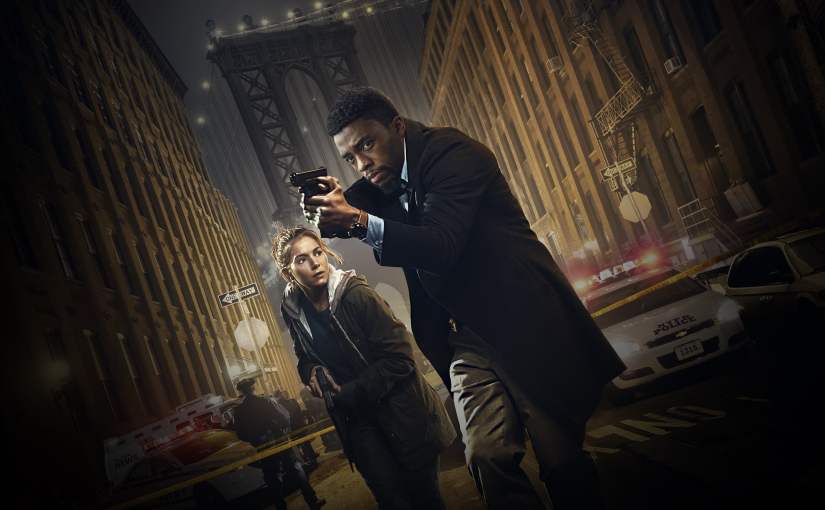
In this movie, Boseman portrays Andre Davis, a New York police detective who is under investigation by Internal Affairs for an abundance of shooting incidents.  Yet he is still on the beat.  When he is summoned to the aftermath of a violent crime scene after midnight in Manhattan, it is up to Andre and his new partner Frankie Burns (Sienna Miller) to track down two killers who ran off with a large supply in cocaine while taking out seven police officers in the getaway.   The best way to catch the bad guys is to shut down the twenty outlets off of Manhattan Island. That means all bridges, tunnels and ferries are closed off until sunrise.  Now it becomes a closed off maze to locate and apprehend the men.  One problem for Andre and Frankie is that the entire police force is looking to taking out the suspects as punishment for killing their comrades.  Andre is actually not the shoot first cop he’s unfairly being characterized as, though.  Sounds simple and familiar, yes.  However, Andre slowly realizes that there may be a complicated conspiracy involved. 

Directed by Brian Kirk, 21 Bridges won’t rank up there with Andrew Davis’ The Fugitive or even the best of the Dirty Harry installments, but the film moves at a brisk pace and the action is spectacular, and at times unexpected.  The early heist of the drugs from an underground wine cellar is fast and shocking when a shootout erupts that goes for a thankfully suspenseful long time.  Kirk doesn’t make it easy for the bad guys (Steven James, Taylor Kitsch) to make their escape.  When they do, the desperation is engaging. 

While this picture didn’t generate much box office success, there’s no question that Boseman would have been a go to leading man in the same vein as Keanu Reeves or Tom Holland has become. My theory: it should not have been released against blockbuster power hitters. Had it come out in January or February, this would have been a sleeper hit for sure. Boseman looks great as the hero and righteous cop, competing with the standard police veterans (JK Simmons) who remind the hero he doesn’t know what he’s talking about, etc.  We, the viewers, know better though.  Boseman looks very cool and athletic in his dark blue overcoat and drawn pistol, running through the streets of Chinatown or within apartment staircases and hallways as he maintains the chase.  Chadwick Boseman is just a solid leading man.  No question about it.

The script by Adam Mervis and Matthew Michael Carnahan is full of surprises that fit in the sense of the picture.  Nothing comes out of left field, but I wasn’t looking for surprises either.  So, when a new development presented itself, I appreciated it.  It kept the movie alive.

So again, Chadwick Boseman is huge loss within the Hollywood ranks.  I read that a sequel was considered.  I would have liked to see that with Boseman reprising his role because it’s a good part for him.   

If you have grown tired of watching the Marvel and Star Wars films and series for the 50th time and you’re looking for something new, seek out 21 Bridges.  It’s a first-rate solid crime thriller.

HOUSE OF GAMES

By Marc S. Sanders

David Mamet is one of the most renowned writers of the last fifty years.  The first film he directed was for his script, House Of Games, with his wife at the time, Lindsay Crouse, and Joe Mantegna.  It’s also important to point out that he recruited well known con artist and card trick player Ricky Jay to consult on the film and join the cast.  When you are constructing a film about the confidence game, a guy like Ricky Jay, who is widely known for his slight of hand and scam artistry, is important to ensure your story remains solid and airtight. (Note: seek out videos of Ricky performing eye popping card tricks and magic on You Tube.  He’ll make you believe that you’ve never seen a card trick before because not many come close to his mastery with a deck in hand.)

House Of Games plays like an instructional or “how to” video demonstrating how to be a successful con artist.  Crouse portrays a psychiatrist with a best-selling book titled “Driven” that focuses on obsessive behaviors.  One of her clients reveals that his compulsive gambling habits have put him $25,000 in debt with a card shark.  Crouse takes it upon herself to confront the card shark (Mantegna) on behalf of her frightened client.  Shortly thereafter, he’s got her acting as his wife to determine if the guy at the other end of a poker table is bluffing.  Then he’s introducing her to his con artist buddies, and she is becoming enamored, not only with him, but with the art of the con and the steal.  Her mundane life gives her the urge to see more.

The other Unpaid Critic, Miguel, recently reviewed this picture.  At the time of this writing, I have not read his review, but he forewarned me that the performances are stripped down to nothing.  Mantegna and Crouse are left bare to just delivering Mamet’s dialogue.  Miguel hadn’t liked this film the first time he saw it many years ago.  On my first viewing, this past week, I was engrossed.  However, I could foresee the ending as quickly as the film began.  I dunno.  Maybe it’s because I’ve seen several con artist films before like The Grifters and the granddaddy of them all, The Sting.  Films that focus on the best liars seem to always move towards a twist where even the viewer is scammed.  It’s fun to participate in the activity.

With House Of Games, the sequence of events move step by step.  Following the two characters’ introductions to each other, Mantegna is caught in the middle of doing another con but now he’s reluctantly forced to include Crouse in on the game.  This time it is seemingly much more complex and grander than the first time they worked together at the poker table.  It also gets all the more confusing when an unexpected murder is involved.  This con spells out a long night for the couple who are also falling for one another. 

Miguel is right.  The performances are most definitely stripped down and often the dialogue is wooden.  Crouse and Mantegna are deliberately flat.  I don’t even think they laugh or smile if I remember correctly.  It is likely because Mamet wants the viewers to follow along and pick up on how a successful con job is meticulous in its methods.  A con artist is not going to make waves with loud, angry monologues or passionate seductions and outrageous silliness.  What’s important is that everything that plays out seems convincing with no distractions that lead to doubt.  So, when the only African American in the cast (extras included) leaves a key on a hotel counter, you notice it.  It happened for a reason.  Later, when the characters come upon a BRIGHT RED Cadillac convertible, you are going to remember it.  A Swiss army knife with tropical artwork on the handle.  A gun metal briefcase with a large amount of cash.  A gun.  A murder.  Props and scenarios guide Mamet’s picture. Not the characters. 

Fortunately, the film remains very engaging.  As well, while I could figure out what was being played here during the entire course of the picture, as a viewer I had no choice but to feel proud of myself for uncovering the puzzles and riddles at play.  For me, watching House Of Games was like answering “Final Jeopardy” correctly when none of the contestants on screen had a clue. At least I was smiling by the end.

THE BATMAN (2022)

By Marc S. Sanders

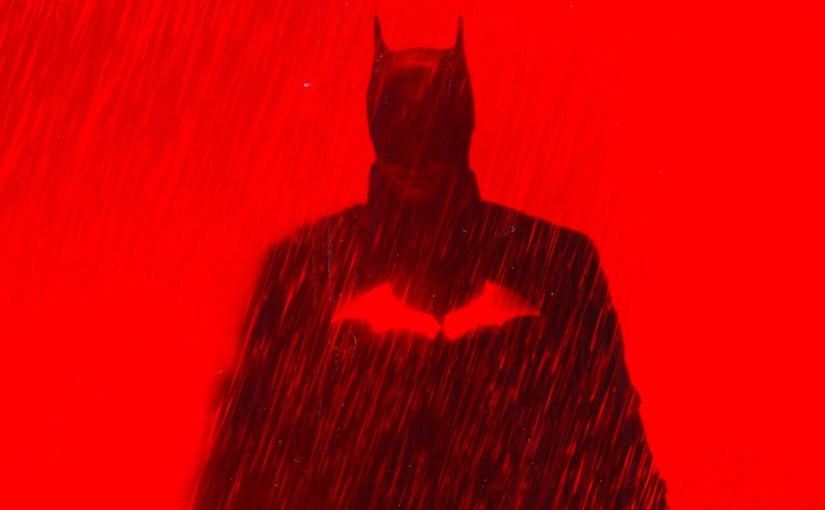
Another year at the movies, means another trip to see Batman on the big screen.  I think we are close to a dozen iterations, no?  Fortunately, the latest reinvention for March 2022, The Batman, is a refreshing interpretation that focuses on the detective skills of the masked vigilante hero who prowls from the rooftops of Gotham City.  Matt Reeves has written and directed a gripping and engaging film that doesn’t rely on simple paint by numbers.  He’s capitalized on using the mysterious Riddler (Paul Dano) as the main villain here, and Batman’s (Robert Pattinson) brains get more exercise than his brawn.   

It is the second year since Batman has introduced himself to the crime ridden city.  The man behind the mask, Bruce Wayne, keeps a journal of his exploits and observations, and through voiceover he questions if his actions have benefitted since it appears that crime has only increased since his first appearance.  A serial killer is taking responsibility for the grisly deaths of important people within the city and he’s leaving greeting cards for “The Batman” with a common scribble of “No More Lies,” along with a “?,” and a riddle for The Batman to solve.  Thanks to a strong partnership with Police Lt. Jim Gordon (Jeffrey Wright), Batman is given easy access to the crime scenes so he can attempt to reveal the mysterious villain and determine exactly what his endgame is. The Riddler doesn’t make it easy, though.

Mobsters like the Penguin (Colin Farrell) and Carmine Falcone (John Turturro) have a grip on the city, as well.  There’s also a possible lead from a woman (Zoe Kravitz) who’s managed to infiltrate the gangsters’ underground headquarters.  She also has the fighting skills and agility that’s comparable to the caped crusader, and maybe she’s a cat burglar as well.  Still, is she pertinent to Batman’s investigation or not?

It’s better not to spoil anything that occurs in Reeves’ film.  The mysteries that are uncovered are part of the fun, and it does take some time and exposition to get there, but I found it worth it.  Barring a few ingredients within the film that I recognized from the Christopher Nolan and Tim Burton films, the picture is worth seeing for a new formula on a character, that although is a favorite of mine, I feel has also been done to death on the big and small screens.  This is a Batman film where I appreciate the thinking approach of its craft, over the action.  When Batman is playing detective with Jim Gordon, it is much more enticing than just another Batmobile chase or another ham-handed fist fight.  This film is a test of Batman’s mental capacity and ability for analysis.

Reeves direction is also appreciated, though I’m expecting the naysayers.  The Batman is a very dark motion picture.  When it’s not dark, the photography is dim and blurred.  There’s lots of rain and dimly lit streets and garages.  There are strobe lit nightclubs.  Windows are blurred, so sometimes you can’t make out the image in front of you.  He makes the viewer work for the focus and that kept me alert.  I believe Matt Reeves was attempting to give the viewer the literal point of view of the characters.  It will not be a surprise, however, to find some movie watchers lose patience with the technique. 

The Riddler especially is most mysterious with a twisted and inspired Zodiac killer approach.  Often, Matt Reeves’ film feels especially reminiscent of David Fincher’s Seven.  I would not be surprised if Reeves wrote his script as a cop/detective story, and then added the Batman flavor to make his final draft.  This is not a picture of grand special effects or superpowers and gadgets. 

It’s definitely not the Batman film that everyone wants.  I foresee the response being very divisive.  Nonetheless, if you’re a Batman devotee like me who grew up on the character in the macabre storied comics (as well as the hammy tongue in cheek material), you’re going to be thankful for this “at last” interpretation.  I’ll definitely be seeing it again.

NOTE: The Batman is not a film for children under age 13. I truly believe that. There are disturbing images and threats within the story, and the violence depicted or left to the imagination is not for celebratory effect and amusement. This is definitely a film for mature audiences. Do not presume it’s meant for all ages based on its misleading marketing approach with companies like Legos and Little Caesars pizza.

MARGIN CALL

By Marc S. Sanders

Could it have been possible that a rocket scientist and a bridge engineer uncovered one of the biggest market crashes in American history?  Writer/Director J.C. Chandor’s first film, Margin Call, will have you believe that.  It makes sense when you think about it.  Numbers and bar graphs and pie charts and zig zagging lines become so complex with themselves that you have to wonder how people wearing $1500 designer suits and selling products over the phone could decipher such nonsense.  So, it would take a rocket scientist to unravel such an exceedingly large ball of rubber bands in only one night.  Yet, how does a rocket scientist and a bridge engineer come to encounter this predicament.  Easy.  It’s all about money.  You might be the greatest scientist in the world, but if the pay isn’t right, is the science really worth it? 

Zachary Quinto plays Peter Sullivan, the rocket scientist from MIT.  Stanley Tucci plays Eric Dale, the bridge engineer.  They abandoned their college majors and specialties to go where the earnings are much more lucrative.  They both work in the risk management department for a large, unnamed New York investment bank.  On a Thursday afternoon, along with a whole slew of other people, Eric is fired.  His company cell phone is immediately shut off and he’s escorted quickly out of the building along with his personal belongings.  Before he leaves, he’s able to pass off a computer file for Peter to have a look at.  Eric was close to completing something deeply impactful, but didn’t get a chance to finish.  When Peter stays late after work to download the file, a stunned look eventually appears across his face, and he’s quickly calling back his workmates at 10 o’clock at night.  Those guys were getting hammered at the nightclub downtown, celebrating that they were not on the chopping block earlier in the day.

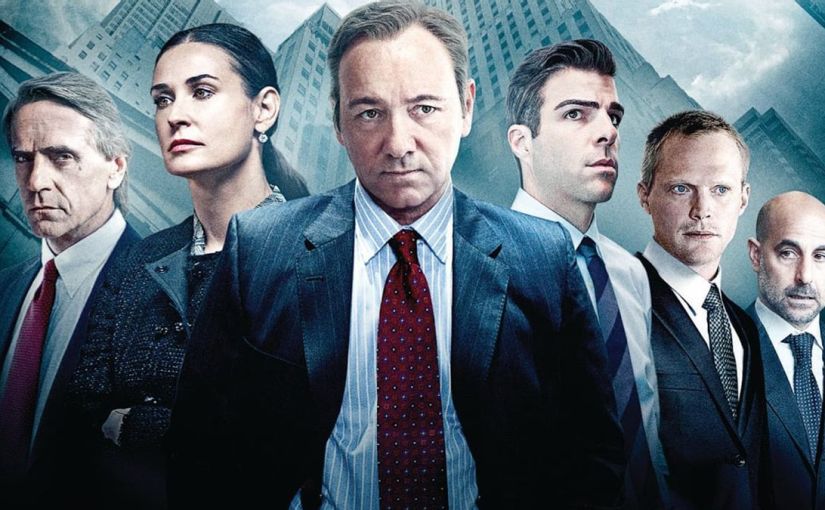
The cataclysmic results of Peter’s discovery is first passed on to his buddy Seth (Penn Badgely), then to the next level up which is Will Emerson, supervisor of trading (Paul Bettany).  Will then tosses it over to the higher risk supervisor, Sam Rogers (Kevin Spacey), who then passes it on to the Jared Cohen (Simon Baker), maybe the company’s second in command.  Jared assembles the men to meet with Sarah Robinson and Ramesh Shah (Demi Moore and Aasif Mandvi), who compute risk at even high level. 

Chandor is so genuine with his script and characters that as the earth-shattering news gets shared and then shared again and again, each higher up the food chain demands that it be explained to them in simple English.  By the time, Jared passes on this news to the head, HEAD Honcho, John Fuld (Jeremy Irons in a thankfully scene stealing performance), it is being requested of Peter to speak to John as if he were a golden retriever.  I guess in the corporate world, the sharper your clothes and hairstyle are, as well as the more formal your position title is called, the simpler the explanations need to become.  The ones who earn the big bucks don’t sit on the top floor to be belabored with charts and graphs that lack prestige and personality.

I want to point out a symbolic sequence here as well.  Each higher up seems to work on a higher floor than the other.  So, Seth and Peter accompany Will and Sam up an elevator to where Sarah, Ramesh and Jared are located.  After this meeting, Seth, Peter and Will go up on the rooftop of the building to smoke and commiserate.  Will even considers jumping.  They are then interrupted from an even higher level beyond the pinnacle of the building.  A helicopter arrives with John in tow.  God has descended at this inconvenient hour to tend to his prophets and their disciples.

Margin Call might sound like a complex assembly of numbers and math.  It really isn’t though, because Chandor approaches his film without ever really giving away how complex the issue is.  Instead, he demonstrates how deep it is.  Sam focuses on a computer screen and asks “Wait, is that number right?”  Peter’s nervousness is enhanced with his hands laced behind his head as he paces back and forth.  Will has been chewing on Nicorette gum up to this point.  Midway through the film, he’s back to smoking.  Seth understands that the mass firing he just survived hours earlier will inevitably catch up to him and all he can do is cry on the toilet.  Sarah comforts herself by asking Peter if the report he’s laid out is his work.  She wants to be excluded from being a cause of the crisis.  The best indicator of how serious and intense this has become is when an ice cool looking and handsome Simon Baker (even the blue tie he wears says icy cool) as Jared asks for the time.  It’s 2:15am.  He mutters to himself “Fuck me,” and then asks again for the time.  It’s 2:16. “Fuck me,” with a leap off the chair and a distant stare out the window.

The nature of the problem isn’t so important to grasp.  What’s necessary to take away from Margin Call, is that the gods of currency have irresponsibly and deliberately neglected the warning signs.  The returns have just been too damn good.  Now the boat has taken on too much water to stay afloat, though.  Chandor opts to focus on the response and behavior to the dilemma at hand.  There’s whispered blame to be exchanged.  There’s the need to stay silent.  When Jeremy Irons eventually comes into the fold, he holds a board meeting and calmly asks for someone to explain the situation.  Chandor points his camera on concerned close ups of middle age men not willing to speak up; messengers who truly believe they’ll be killed for delivering the dire news.  Even Jared can’t speak.

The sad outcome of the film is actually how the crash of 2008 with Collateralized Debt Obligations and Sub Prime Mortgage Defaults (see Adam McKay’s The Big Short) played out on the eve of its first day.  The investment bank in the film opts to sell off its worthless assets that enormously exceed the entire net worth of the billion-dollar company.  Chandor’s film reminds us that it’s legal to do so, and the buyers of this “odorous bag of excrement,” are John and Jane Q. Public.  At 9:30am, these brokers will put on the charm and sell at a price of $100/share knowing that by 2:00pm, it’ll be worth .65 cents/share, if they’re lucky.  Their customers paid for porterhouse, but went home with a cold burger in a doggy bag.  It’s the only way to survive. 

There are no heroes in Margin Call.  There are only profit makers.  Profits that are earned at the expense of everyone else on the planet.

BATMAN: MASK OF THE PHANTASM

By Marc S. Sanders

Batman: The Animated Series from Warner Bros was a hallmark in telling more mature stories that could still appeal to kids, but adults as well for the superhero genre. Due to the show’s success, following the release of Tim Burton’s successful live action films, the animated series spun off a film of its own for the theatrical medium, and it works.

Subtitled Mask Of The Phantasm, Batman finds himself to be the blame for some vigilante murders of high-ranking mobsters in Gotham City. Turns out there’s another shadowy caped figure causing the mayhem.

At the same time, Bruce Wayne (Kevin Conroy) is reunited with an old flame (Dana Delany) who has returned. Their history is told in flashbacks, and it could pertain to the appearance of this Phantasm. The Joker (Mark Hamill) is causing interference as well.

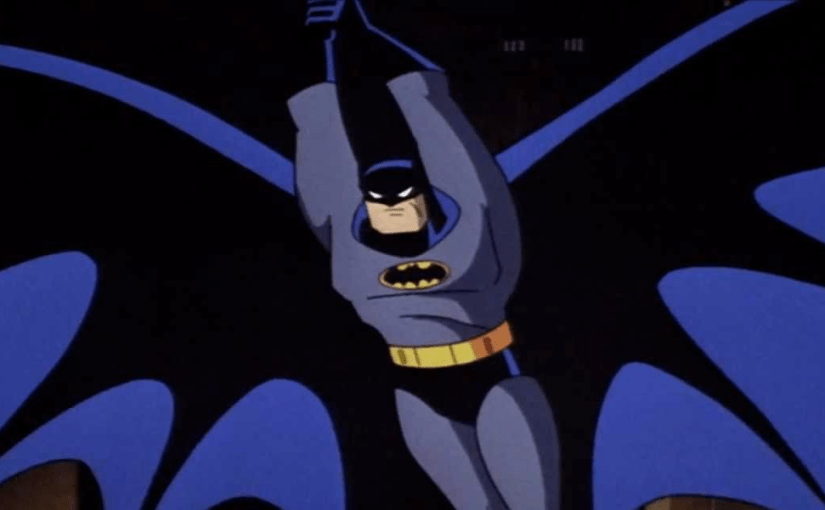
The animators and writers for Batman: Mask Of The Phantasm take their film completely seriously. From a story perspective, there are plot developments at stake along with the colorful cast of characters. Batman especially looks great as does his cave, Batmobile, Bat Cycle and Bat Plane. The Art Deco settings of Gotham City’s skyscrapers, and broad angles that enhance the vastness of the city are completely immersive. The voices work too.

The movie certainly ranks better than the Joel Schumacher Batman films, and at least just as good as Tim Burton’s second effort with the Caped Crusader, Batman Returns.

Batman: Mask Of The Phantasm is a great adventure steeped in mystery and big surprises. I really liked it.

PHANTOM THREAD

By Marc S. Sanders

I remember how much I loved Anderson’s 90s films Boogie Nights and Magnolia as well as the hauntingly genuine There Will Be Blood. (Let’s not talk about Punch Drunk Love.) Still, I never expected to like Paul Thomas Anderson’s Phantom Thread, but as soon as it began, I fell in love with it.

Daniel Day Lewis plays a perfectionist dressmaker adept at using women at his behest to sustain and elevate his craft. He’s a ruthless, maybe bipolar, villain and he will remain as one of cinema’s best actors for at least the next hundred years.

Anderson doesn’t just show his characters. He shows their specialties whether it’s dressmaking, porn, show biz or oil. The industry is its own character. Here he masterfully depicted the industry of clothes making.

Anderson offers a convincing education in dress design and fabric construction with the details and measurements it requires. Swatches of fabric never looked sexier amid a mid 20th century European backdrop. The dialogue is uncompromising in its humor, craft and cruelty both from and to its characters.

The ending was very obscure and strange though. Thankfully it happens quickly and is not dragged out, otherwise my opinion might be different.

This Best Picture nominee from 2017 is definitely worth a look.

THE SHAPE OF WATER

By Marc S. Sanders

I love fantasy and science fiction for one simple rule. A writer/director’s imagination can be limitless. Rules for a good fantasy are normally established in the exposition, and as long as those rules are not violated, a viewer will accept the narrative all the way to the end. The Shape Of Water is loyal to its set up.

Director/Co-Writer, Guillermo Del Toro continues his reputable streak of very adult (yet playful) fantasy. In 50 years, I would not be surprised if Disney/Pixar remade this film and Pan’s Labyrinth for younger PG audiences simply because the roots of the stories are so well played out.

Here is a Cold War love story between an alien and a good soul played by Sally Hawkins doing her best mute. Hawkins is bright eyed and wonderful. She’s a character that doesn’t judge and only recognizes despair for salvation. I thought she was great at conveying her performance through the limits of only facial expression, sign language, sex and self pleasure in a bathtub. Try to avoid snickers at that last description. It really is an honest, necessary reflection of a lonely innocent woman. I appreciated the writing and performance there.

Michael Shannon is back on screen playing a frightening villain…again. The reasons for his ruthless intentions were never clear to me, but either Shannon is that good an actor or he’s gotta be like this in real life. This is not a guy I’d ever want to cut in line at Starbucks, much less audit his books. He’s scary good.

Didn’t find much point to Richard Jenkins lonely neighbor except to drive a van, eat pie, be unemployed and be a token homosexual. Same with Octavia Spencer. Was she channeling a more subtle Whoopi Goldberg from Ghost? Don’t get me wrong. Jenkins and Spencer are fine actors here, and their characters are likable, but they don’t add much to the story except to be Hawkins’ sidekicks. Too much story was devoted to them though unnecessarily. Del Toro and his co-writer might have used them for too much filler.

Del Toro doesn’t stop with the new material as the two hours swim on by at a nice pace. We are treated to a wonderful Busby Berkeley song and dance moment that is just inviting to be spoofed by the Wayans or Zucker brothers, sensual nudity is there, not for perversion, but to send home the message that though this relationship is weird, it’s also the real deal. I bought it all the way through. Racism and gay prejudice are perhaps unnecessary in a film like this but there is key lime pie. Cats are consumed. Cold War espionage is on hand with Russian spies, dirty American government politics is there too, and oh yeah, there’s an amphibious alien who seems like any one of Spielberg’s extra-terrestrials we’ve seen before. Yet, I’ll take this one as well because he’s narrated into a very mature love story that is hard not to like.

As quick as the movie begins, you know how it is going to end. Again I don’t mind. Most of the execution rescues the story’s predictability.

Del Toro won Best Director and the film was awarded Best Picture at the Oscars. It’s not what I would pick, but there could be worse choices from that year’s selections.

I liked The Shape Of Water. Most of it at least.

MENACE II SOCIETY

By Marc S. Sanders

Sometimes I’ll come across a movie that I will not like until the very, very end; until literally the last 60 or 90 seconds. The Hughes Brothers’ film Menace II Society is one such movie.

There’s great skill at work here. I saw that from the film’s explosive beginning and then all the way through. This is a story centered in the California ghetto known as Watts, following the 1965 riots through the drug trafficking 70s and then quickly transitioning into present day 1993 when the film was originally made. Rodney King was fresh in the country’s psychosis.

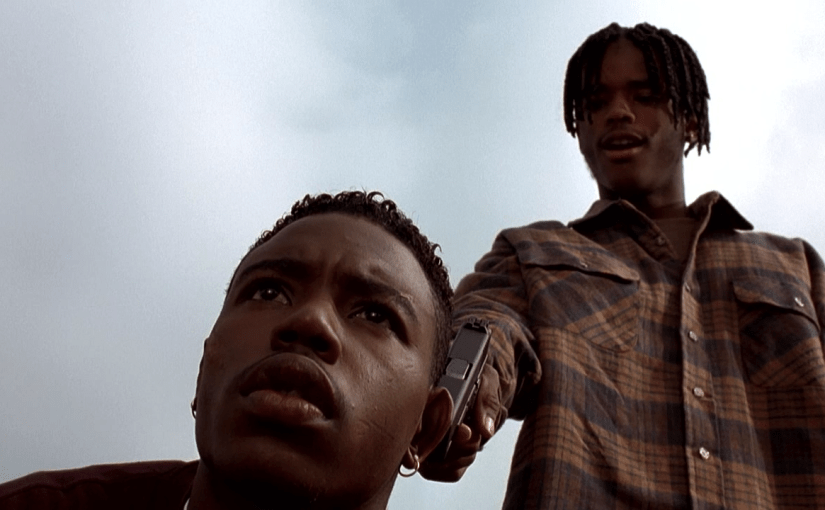
A kid named Caine (Tyrin Turner at the adult stage) is the central character. We see him at age 10 witness his father murdering a friend by shooting him across the kitchen table. (If you’re keeping score, that’s another Samuel L Jackson cameo.) Caine’s mother eventually dies from an overdose; his father we are told dies in a deal gone wrong. Caine is blessed to move in with his grandparents. He befriends a young woman with a 5-year-old, along with another friend who tries to influence the teachings of Islam, as well as a kid with a football scholarship. Then there are those who see no other way to live except to always be strapped and ready for a drive by or to rip off a car. Caine’s closest friend, O-Dog (Larenz Tate) will be more than happy and carefree to fire his pistol at anyone who says something disagreeable.

So what didn’t I like? Well, maybe it’s me, but I normally look for a transition in a main character. That special moment where a kid’s life will change; where it will occur to him to make a change. That doesn’t happen for Caine, and it frustrated me. He is impulsive to beat up someone, steal a car, get a girl pregnant, continue to deal and continue to disregard those that try to rescue him from the threat of living in the hood. Opportunities are offered and yet Caine never considers them as better alternatives.

Maybe that’s how it is in the hood. I will not even presume to understand. My upbringing was more advantageous to me and I’m not an authority on the despair and violence that exists in that world. Sad that it still must persistently exist at all.

So the film is quickly approaching its end, and STILL I’m asking what is the point if Caine is the same here as he was in the beginning. He’s no better. He’s no worse. He’s just the same with no change.

But, then…THEN…Caine’s last voiceover kicks in with some telling words accompanied by The Hughes Brothers’ wise choice to accompany it with some quick flashbacks, and now I fully understand and realize that what I watched was an insightful piece of shoestring budget filmmaking that left me thinking.

Second chances are fleeting. Life can easily be taken for granted with no reason to hold any value for it. There will be casualties and collateral damage because of your recklessness. Yeah, it’s all a recognizable “After School Special” but it still holds power here.

Forget it!!!!! Don’t even ask me to spoil what that epilogue literally recited or its relevance. Come back to me after you’ve watched Menace II Society. Then we’ll talk.

UNCHARTED

By Marc S. Sanders

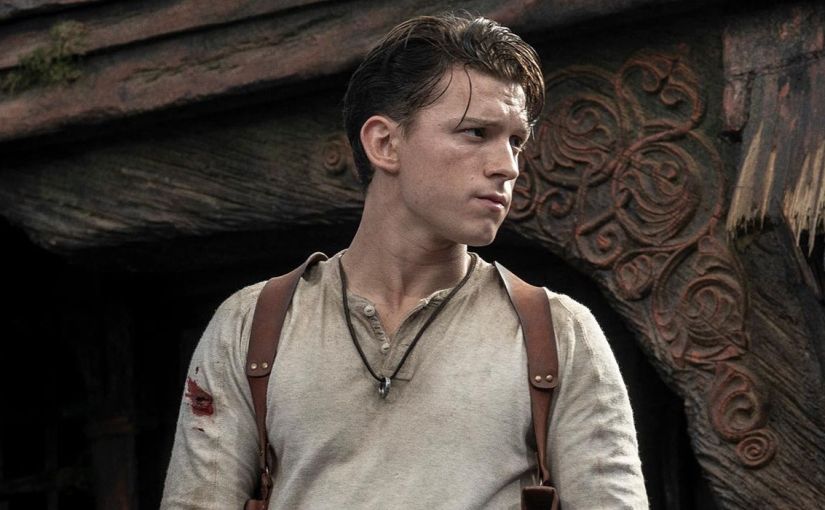
None of what is said in the film Uncharted matters.  The film opens in the middle of a death defying, albeit CGI, action scene with heartthrob Tom Holland dangling from a cargo net that’s hanging outside of a plane thirty thousand feet above the ground.  He apologizes as he kicks a couple of faceless thugs out into the great wide open, and he rolls his eyes at an oncoming sportscar driving off the plane’s ramp in his direction.   But it’s not like he’s worried that the car will mow him down and kill him before the fall would even do so.  That’s because even here he’s just charming Tom Holland who’s never afraid to die.  I guess that was my problem with this escapist film, based on a popular video game.  No one was ever afraid they’d die.  So, why should I be?  Excuse me while I refill my popcorn.  You don’t have to tell me what I miss.  I’m sure I’ll catch on.

Holland portrays treasure seeking adventurer Nathan Drake.  Early on, it is established that his brother is being held captive somewhere.  Nathan is receiving postcards from him, with statements written on them that seem more like riddles.  Hmmm!  Is his brother sending him clues, do you think?  One of their last conversations while they were living in an adoption house was something about gold hidden by Magellan.  The conversation went on longer than I cared, honestly.  I gave up on the details.  These scholars weren’t going to tell me anything intriguing.  That’s the best way to approach Uncharted.  Just watch for the CGI stunts, Holland’s agility on bannisters and bar counters, and see how all the secret doorways open. 

Soon after the exposition, Nathan is accompanied by a slightly older adventurer named Victor Sullivan, or Sully (Mark Wahlberg).  Holland and Wahlberg toss some smart alec zingers at one another.  See they’re only supposed to get along so much. 

The guys attend a black-tie auction where I knew Nathan was gonna be dangling from those hanging ceiling lamps somehow, and then they are on their way to Barcelona.  Oh yeah.  A diary helps them out as well with some clues that turn up only when they have to conveniently turn up.  A map will help them too, only when it’s conveniently there.  I’m not interested though in watching Tom Holland and Mark Wahlberg trace their fingers across a map.  There’s also the beautiful adventurous girl, Chloe (Sophia Ali), who we are supposed to trust or maybe not trust.  The bad guys are Antonio Banderas, who’s really given nothing to do except have his name listed in the credits.  Look at that!  PlayStation Studios actually contracted Antonio Banderas to be in their movie!!!!!!  I did say bad guys, right?  Sorry.  The other one is an Asian woman named Braddock (Tati Gabrielle), who’s only interesting trait is the blade she carries is in the shape of a scythe.  It’s only held and hardly gets used.

Are you starting to recognize that all I’m describing is surface material here?  There’s no depth to anyone.  Uncharted is so afraid to swim in the deep end, that it doesn’t even connect our hero Nathan with his long-lost brother.  Like ever!!!!  The film acts like a video game and thinks like a video game.  So why not just leave it as a video game?  If you want to make a movie, then the filmmakers should have gone a lot deeper.

It’s easy to compare this modern update on the adventure film to Romancing The Stone or any of the Indiana Jones pictures.  What continues to set those forty-year-old movies ahead of this fare, is that we actually feared for the characters.  Kathleen Turner’s apprehensive motive for going from New York City to the rain swept jungles of Cartagena was to rescue her kidnapped sister while trying to uncover a priceless treasure along the way. Her sister could be fed to the alligators at any given moment, or worse Turner could be brutalized by vicious Columbians on her tail.  When the famed archeologist, Indiana Jones, gets trapped in an underground room full of snakes or is left dangling over a bottomless pit, he looks terrified.  He has no rope to hang from and there really is no way out, and he knows it.  This could be the end. 

Nathan Drake, however, knows it’s never the end for Nathan Drake, and that’s…well…that’s boring. 

What can I say?  I’ve always gotten bored quickly with video games.  I know.  I know.  You’re gonna debate with me that this is BASED ON A VIDEO GAME.  Fine.  I agree.  Yet, I paid for a movie.  At times Uncharted moves like a video game character that walks in place when confronted with a wall.  Your joystick can’t figure out how to turn the guy around so he can trot in another direction away from the edge of your flatscreen TV.  It just doesn’t go anywhere until, how do you like that, Sully and Nathan turn to the right page in the diary or read the right post card from the long-lost brother that we never get to see.  Wait!  Let’s look at the map!

I really like Tom Holland.  He’s charming and handsome and athletic.  Spider-Man has demonstrated that he’s a good actor too, beyond the comic book action.  He’s definitely cut out for a tongue and cheek action picture.  Mark Wahlberg is ready to be the mentor.  He’s fine as well.  He’s just done it better in a film like The Italian Job.  They look like a great pair of partners.  Unfortunately, they are given nothing to demonstrate how good a pair they really could be.  Put a little fear in these guys.  Make believe they’ll actually drown or fall to their death from a helicopter.  Put them at the wrong end of a gun or a sword.  Heck, when you give them a sword, allow me to believe they aren’t so proficient with it.  I mean Holland is only 25 or 26 here.  How much could he have learned already.  Let them get shot in the arm, and still carry on.  Give them a limp.  Cut their lip or bruise their temple.  Uncharted doesn’t do any of that.  It only jumps to the next level, and as soon as you dispose of a baddie, they fade away out of the scene…like in a video game.

It’s not terribly bad.  Uncharted is like going over to your friend’s house, though.  He shows off his PlayStation by popping in the game and he promises he’ll let you have a turn to play.  Only your turn never comes, and while you sit there gazing at the posters and trophies in his room, your friend thinks he’s entertaining you for hours as his game goes on and on and on.  So, uh…when’s it my turn to use the controller??????