MAJOR LEAGUE

By Marc S. Sanders

Never seen it before!!!! Finally at the behest of my colleague Miguel Rodriguez and company I sat down to take in the view.

Tom Berenger was a B leading man of the 1980s. Rugged with shaggy hair and a hoarse voice in films like Platoon, Someone To Watch Over Me and Shoot To Kill (a secret favorite of mine). Here in Major League, he carries on that tradition as an aging ball player with bad knees. He’s not given many of the gags, but he sure is likable. I didn’t need the inevitable romantic subplot with Rene Russo. Nothing great there. When he’s playing the ball player in a catcher’s uniform though, Berenger is at his best.

Wesley Snipes shows the future of his albeit temporary star power. He’s not on the level of Eddie Murphy funny but he made me laugh nonetheless, as the base stealer. His entrance into the film is hilarious. A cross between a Bentley & Volkswagen Beetle perfectly sums up his character. Looks like class when really he’s got none.

Dennis Haysbert is one guy I never knew was featured. Now, this guy can bring the comedy as a Voodoo believer trying to get his idols to help him hit a curve ball pitch. He was my favorite.

Charlie Sheen is the Wild Thing. It’s not so much Charlie Sheen’s talent. It’s how his character is written that’s hilarious. Writer/Director David Ward (The Sting) doesn’t rely on dialogue for his 2nd billing star. Sheen doesn’t say much actually. Sheen brings the image of a near sighted, out of control, felon with a power arm teetering on 100mph. Throw in some nerd glasses, a punk haircut and an anthem song, and now you’ve got a gag to carry you through a good comedy.

Major League screams of an 80s picture, most especially with the synthesized keyboard soundtrack, Berenger’s Miami Vice sports jacket over a t-shirt, Bob Uecker (great timing as a sports announcer), and 80s mainstay Corbin Bernsen (TVs L.A. Law). Sure, it’s dated but I found the movie to be fun.

Not my favorite baseball film. That belongs to Bull Durham. Still, I’m glad I finally saw Major League.

Oh yeah. As in many sports movies, the team sucks (hey…it’s the Cleveland Indians), the owner wants to stay that way for profit and the team eventually unites themselves to victory.

Exactly!!!! Rene Russo has nothing to do with any of this.

DO THE RIGHT THING

By Marc S. Sanders

inally, after 30 years, I’ve caught up to a film that has eluded me, Spike Lee’s masterpiece Do The Right Thing. Here is a film from 1989 that really could have been made in 2019. At the very least, it should be rereleased in the theatres. We desperately need this film right now.

My view of Spike Lee has gradually changed over just the last year. It must be due to the current political and socioeconomic climate. I’ve become terribly sensitive to what I see in the news these days.

Following seeing BlacKkKlansman and now this film, Lee really is aware of how low humanity can go. Do The Right Thing offers just a little push that leads to an endless fall, however.

Lee’s film was shot on location in the Bedford-Stuyvesant neighborhood in Brooklyn. The story takes place on a day where the heat wave has reached a record high, so the predominantly black community has turned on the fire hydrant and Sal’s Pizzeria is open for business. Sal is played by Danny Aiello in an Oscar nominated performance. The main character that everyone knows is Mookie, Sal’s trusted delivery guy, played by Spike Lee. Mookie is well aware of Sal’s mild prejudices towards his customers; mild compared to Pino’s blatant racism (John Turturro), Sal’s older son who works for him along with Vito, the other son.

The film is a day in the life when it appears the same daily routines occur yet again. Mookie delivers pizzas while getting chastised by his son’s mother (Rosie Perez’ debut) for not making more of himself. The middle age men sit on the corner talking about anything random. The kids roam up and down the street goofing off and teasing. Da Mayor (Ossie Davis) seems a little crazy even if we can recognize a life of experience as he’s sipping on a bottle while trying to charm Mother Sister (Davis’ real life wife Ruby Dee) who stays perched on her window sill, and Radio Raheem (Bill Nunn) and Buggin Out (Giancarlo Esposito) are on their own mission to make sure black celebrities appear on Sal’s wall along with the Italian Americans, and “Fight The Power” is rightfully blasting on the boom box.

Each scene in the film plays like a vignette and Lee often times will be as direct as possible with his characters to honestly show what they stand for, whether they are racist or intrusive or even naively annoying. The heat index is nicely displayed through the random commentary from the local DJ portrayed by Samuel L Jackson, and it’s easy to grasp that the temperature serves as a threatening metaphor for what we fear will eventually happen. Our communal mentality is about to boil over.

I easily saw the still controversial ending coming. What’s sad is that it is no longer surprising in today’s era. It’s probably one of the best endings to a film that I’ve ever seen. That’s a bold statement but having watched the film just a week ago, I’ve repeatedly had an internal argument with myself. Who is right? Who is justified? Who is wrong? Why do these activities continue to happen? If I’m still turning this film over in my head after a week, then I can’t deny the impact Spike Lee accomplished. I’m angry. I’m annoyed. I’m sad. Don’t get me wrong. I was also entertained with the film. It’s a great script and a great cast.

Beyond the messages of Do The Right Thing, the film is an assortment of bright colors in costumes and backdrops within the neighborhood. Bedford-Stuyvesant really looks like a beautiful area. It looks clean and the residents really never appear terribly intimidating. Lee finds qualities in all his characters to like, even Pico the most racist of all. Mookie even tries to make a point to Pico about just how racist he seems. It’s a great conversation about the status quo of a black celebrity vs simply another “N-word” who walks into Sal’s for a slice of pizza. I found charm among most of the various conversations in the film. So much so that I said to myself, this is a film that truly could be adapted into a musical or a stage play. There’s so much to tell and so many ways to say it. I wouldn’t be surprised if Lee likely had a hundred more pages of dialogue and a dozen more characters that never made it into the final product.

In 1989, and all the years thereafter, I dismissed this film. I never cared for Lee’s commentary during public interviews. I can’t stand his response to certain issues, and admittedly I just do not like hip hop and rap music. I also may have naively thought that Spike’s viewpoints were a little over the top. I still do, at times. Nevertheless, I was blind, Reader. I truly was.

There’s a terrible truth to Do The Right Thing. A frightening truth. We are very, very far out of reach of racial harmony.

We learn best, only when we fall. Spike Lee’s film shows the shortcomings of the human spirit. Spike Lee’s film makes you think and debate. You have no choice but to question a moral compass.

Whether you have already seen it or not, watch Do The Right Thing today. More importantly, watch it with your children.

BELFAST

By Marc S. Sanders

Within the first three minutes of Kenneth Branagh’s Belfast, there is impactful transition that goes reverse in time.  Van Morrison supplies the music to the film and it opens in bright color capturing glimpses of the thriving city.  There are well paved highways with ongoing traffic.  Fresh painted construction cranes stand in front of a blue sky with a warm sun.  Buildings have beautiful architecture.  There are pieces of eye-popping art within the city.  It looks like the most gorgeous vacation destination.  Even the opening credits are stenciled in nice gold font.  Then Branagh’s camera lifts up over a wall and the screen reverses back in time to August, 1969 where it’s depicted in black and white.  A sweet blond-haired boy named Buddy (Jude Hill) is holding a stick and a trash can lid as he slays an imaginary dragon, but then reality dawns upon him and violent riots erupt on the street he lives on. Cars are set on fire, windows are smashed, bricks are thrown, and Molotov cocktails burst into flames.  What we see as prosperity now, had a history at one time, and history is not always something to embrace.  Belfast reminds us that it was ugly before it got better.

Belfast, Ireland in the late 60s/early 70s is shown through the eyes of Buddy.  Branagh never has Buddy be forced to grow up so fast, despite the inflamed conflicts between Protestants and Catholics living in Ireland.  He plays in the park.  He watches Star Trek on TV.  He does his math homework with his Pop (Ciaran Hinds). He’s a little bit of a troublemaker as he pockets chocolate from the local candy store.  He also escorts his grandmother (Judi Dench) to the movies and live theater.  He’s a happy little kid, but he’s also wise to the new world thrust upon his doorstep.  It’s hard not to see the make shift barrier walls of junk at the end of the block and the sometimes-questioning policemen.

His Pa (Jamie Dornan) leaves for two-week trips for work, but when he’s home, Buddy eyes upon his Pa’s childhood friend intimidating him to join the cause to rid the area of Catholicism.  His Pa is put into an “either you’re for us or you’re against us” dilemma.  Pa does not sway so easily. 

His Ma (Catriona Balfe) tries to keep things as normal as possible.  A surprising moment occurs when Buddy gets swept up in looting a grocery store with the rioters.  He runs home with a box of laundry detergent.  Ma will not stand for that and escorts him back to the store to return the item.  Ma gets a full account at this moment of what’s become of their hometown when all she wants to do is properly discipline and raise her child.

As tensions rise over the coming months, Ma debates with Pa about whether to leave Belfast for a new life in the United Kingdom.  I think this becomes more traumatic for Buddy than the random violence he periodically witnesses.  He’d have to leave his grandparents and his school and his friends.  As well, he’s been working so hard to keep his grades up so that he can sit at the front of class, next to the young girl he pines for.  They are working on a science project that recounts the historic first trip to the moon.

Belfast is a rather short film, but Branagh’s script offers much.  It focuses on a piece of mid-twentieth century European history that I was never familiar with.  The film gives you the minimum details through conversations and sound bites from news broadcasts.  That’s fine, but my attention span was waning at times.  It’s not fair for me to criticize the picture this way.  I just couldn’t relate to the culture of the community, and so I just was not engaged on this one and only viewing.

It’s clearly well-made, and Branagh presents a convincing depiction primarily of this one residential block that this family lives on.  While Buddy’s exploits are endearing and there are especially good performances all around, the riot violence is scary with harsh sound editing of screams and shattering window panes.  The cinematography is strong, especially when it contrasts with color.  The choice is made to depict a live performance of A Christmas Carol in color while the seated audience with Buddy and his grandmother stays in black and white.  Branagh does a cool effect by having bright orange stage lights reflect in Dench’s eye glasses which remain in monochrome.  When the family goes to see Chitty Chitty Bang Bang, the movie screen is in color like the film they are watching.  The characters of Belfast remain in black and white, though.  This family and others like them, remember these tumultuous times in a dull, gray perspective.  It was a non-celebratory and often harsh way to live.  The escapism they partake will always be preserved in promising and welcome colors, however.  This is a fantastic storytelling device.

As Kenneth Branagh wrote and directed the piece, it’s clear that he strove for his exact vision and he has a personal achievement he should be proud of.  There doesn’t appear to be any compromise to his picture.  It’s very well directed with its cast performances, the town extras and the technical choices made.  Yet, the film never grabbed me emotionally.  Belfast exists to simply to show how this family survived day to day with turmoil surrounding them.  If anything, at least I learned something new within the confines of Ireland from fifty years ago.

CODA

By Marc S. Sanders

CODA is a film directed by Sian Heder that focuses on a New England fisherman family known as the Rossis.  There is Frank, the dad, Jacki, the mom, Leo, the son, and then there is Ruby, the daughter.  Frank, Jacki and Leo are deaf. Ruby is not.  Ruby is the family interpreter by default.  She’s content with holding the title, but as she is close to finishing high school, it’s seeming less and less fair.  That’s the conflict at play with CODA.  At times, it’ll make you laugh hysterically and it’ll also make you cry for multiple reasons.  You’ll cry as Ruby breaks free from her reserved lifestyle and shyness, and you’ll also cry because Ruby seems likely to miss out on a lifetime of opportunity with her god given talent of singing.

Ruby is portrayed by Emilia Jones.  Watch out for this actor.  She will be the next big sensation.  It amazes me that she was not nominated for an Academy Award.  Jones operates on so many levels in this film.  She learned fluent sign language for the role, in addition to singing gorgeous harmonies, and operating a fishing boat.  Oh yeah.  She has to act the role too, and Ruby Rossi has got to be one of the best protagonists of the last 10 years in film.  She’s an absolute hero. 

Ruby follows a rigid routine of waking up at 3:00am every day.  She goes out on the boat with Frank and Leo to bring in fish to sell on the dock later in the day.  It’s practically necessary to have her there as the one hearing person out in the open sea.  From there, she races her bike over to school.  She’s only adding to her plate when she opts to join the school choir to be close to a school crush named Miles (Ferdia Walsh-Peelo).  

The problem is that Ruby is incredibly shy.  So, when the music teacher known as Mr. V (a brilliantly energetic Lonnie Farmer) requests she sing solo following a long line up of students ahead of her, she retreats in fear.  Mr. V knows there’s something there though, and he gradually uncovers the singing voice Ruby never realized she had.  Suddenly, he’s proposing the idea of preparing an audition where she could attend the Berklee College of Music.  Ruby is reluctant at first, but Mr. V instills confidence in her talents.  However, he doesn’t stand for her tardiness at private rehearsals either.  He demands she takes this seriously, even if she has to tend to her family.  He’ll also make her tough, not willing to let her surrender to those that tease and bully her at school.  I swear that Lonnie Farmer must be a music teacher on the side. What an inspiring individual he portrays.  He’s hilariously intimidating in his classroom, but loved by his students in this film.  He should have gotten an Oscar nomination as well, and he ranks up there with other celebrated teacher characters in film history.  Completely unforgettable.

The Rossis are in the middle of a crisis.  The dock where they keep their boat and sell their fish supply is charging outrageous fees to all of the fisherman.  What makes it harder for this family though is the communication barriers they encounter.  Frank (Troy Kotsur) relies on Ruby to speak on his behalf, even cursing them out when necessary.  In response to the challenge, Jacki (Marlee Matlin) starts to sell their fish privately to circumvent around the overbearing-imposed taxes.  Yet, she also depends on Ruby to speak on her behalf during a news interview or with customers.  On the other hand, Leo (Daniel Durant) insists that Ruby should follow her own path.  Leo reminds everyone that just because he’s deaf doesn’t mean he’s dumb and he can handle the business.

CODA is a coming-of-age picture.  While the title may stand for “child of deaf adults,” Heder’s film focuses further away from deafness being an obstacle as the film moves along.  It lends more attention to Ruby’s dilemma of not being able to be in three places at once.  She’s only living a different life than that of her family, and that’s a problem I’d argue happens for most of us.  Eventually, we all have to leave our nests   

It becomes problematic when she has to deal with doctor visits on behalf of her parents where she embarrassingly has to explain to them the doctor says not have sex in order to heal their jock itch.  Frank and Jacki have sex in the house, completely unaware of how loud they are while Miles is over to practice singing.  Frank loves to play gangster rap at a high volume to feel the beat of the bass.  Imagine how that looks for Ruby when he’s picking her up at school.  These issues are as inconvenient as any family makes someone feel.  Frank, Jacki, Leo and Ruby enjoy their lives.  It’s just hard at times to enjoy their lives together.  Isn’t that the case for any of us?

CODA is so aware of its subjects on singing, deafness, sign language, family, fishing and first love.  Ruby has a multitude of relationships that are explored.  She has to deal with her affections towards Miles.  She has her mentor, Mr. V, to answer to.  Ruby has to understand that Leo can depend on himself, and she has to balance what is best for her while questioning how much she can give of herself to her mom and dad.  What wonderful storytelling conflicts there are to explore here!  Sian Heder’s Oscar nominated script allows enough time in just under two hours to meet the demands of each angle presented. 

I’m always pointing out how much I love random singing or dancing that appears in non-musical films.  CODA is another perfect example.  Ironically, I just read that the film is actually going to be adapted into a stage musical.  It has to happen.  It’ll break through so many glass ceilings on the limitations people have presumed comes with deafness.  Deafness is never a limitation. In the film, however, each time Ruby sings either solo or as a duet with Miles, your pulse will race.  Emilia Jones has vocals that lift your spirits and make you appreciate the gift of actually being able to listen and hear.  So many of us take that for granted.  Sian Heder’s film will remind you not to.  Just watching Frank place his palms on his daughter’s throat while she sings to him, reminds you that the gift of sound, whether you hear it or not, is a beautiful thing.  Frank doesn’t hear the song.  Rather, he feels the vibration of song.

CODA is one of the best pictures of 2021.  When you watch CODA, it’s simply easy to just embrace CODA.

BOOGIE NIGHTS

By Marc S. Sanders

Boogie Nights was director Paul Thomas Anderson’s second feature following a very different and very quiet film debut with the gambling addiction piece Hard Eight.

Heck, it’s fair to say all of Paul’s films are very different; here is the seediness of porn while later in his career he will focus on the ruthlessness of a wealthy and angry oil man and then an obsessed dressmaker devoid of care for the models who parade his accomplishments. (See There Will Be Blood and Phantom Thread.). Paul was definitely striving for recognition with his familial depiction of life in the California pornographic film industry.

What I’ve always liked about Boogie Nights was Anderson’s intent to show the naive innocence of this large cast of characters. Filming blatantly oblivious awful porn scenarios can still be regarded as very proud efforts by its talent.

The main character is Eddie Adams (aka the amazing Dirk Diggler) played with macho pathos by Mark Wahlberg. It’ll likely be the best role of Wahlberg’s entire career. Dirk is proud of his natural talent in front of the camera. He’s even more proud of what God has gifted him. Don Cheadle is another porn star named Buck. He’s also proud of his accomplishments and simply a kind fellow looking to make country cowboy a trendy look for a black man while selling the “Hi-est Fidelity” in stereo equipment on the side. Julianne Moore is Amber Waves, the maternal porn mom of the bunch; very affectionate, very comforting and very reassuring when Dirk shoots his first porn scene. The one individual who really holds all of these misfits together is Burt Reynolds as Jack Horner, the porn film director. He’s the paternal one who believes in his artistic merits of shooting porn but with a story, and only with the integrity of film, and never the cheapness of videotape. So, Jack is like any artist who insists on a certain type of canvas. It might be smut, but he has principles, and he has pride.

Anderson is wise in how he divides up the developments. The film begins in the late 1970s during evening night life and decadence and everything seems fine and innocent and right despite the endless debauchery of reckless sex and drug use on a Disco backdrop. Wahlberg’s character is welcomed lovingly into this world, and nothing appears wrong. It all seems to stay that way for Dirk until New Year’s Eve, 1979. The 80s begin with a gunshot and then Anderson’s cast must pay for the revelry of their sins. A great moment presented on this night is where Amber Waves introduces Dirk to cocaine. Dirk has been thriving, making money, developing a following and now it is jeopardized in one moment thanks to his naivety. Julianne Moore is superb in this particular scene against Wahlberg. She’s the mentor with the peer pressure to pass on her high and keep it running.

Drug addiction, violence, sexual abuse and even changes in pop culture lead to hard times for these likable people.

It’s a hard life. It’s a complicated life. Yet it’s not all necessarily illegal. Morally, it might appear wrong, but it’s a life nonetheless.

Anderson was wise to use (at the time, relatively new) filming techniques of Martin Scorsese with rocking period music and fast edits along with savored moments of great steady cam work. One long cut especially works when the film first begins on the streets of Reseda and on into a crowded night club. This industry doesn’t sleep. So, neither will the camera that follows it. The music must also be celebrated. I do not listen to Night Ranger’s Sister Christian without thinking of firecrackers and a dangerously drug addled Alfred Molina playing Russian roulette. Though I know which came first, I also wonder if Three Dog Night’s Momma Told Me Not To Come and Spill The Wine by Eric Burton & War was written to enhance the celebratory introduction for Dirk when he attends his first party at Jack’s house. It’s another great steady cam moment from a driveway, followed by steps in and out of Jack’s house to simply a bikinied girl’s dive in the swimming pool. As a viewer I was absorbed in the California haze. Superior camera work here.

The cast of unknowns at the time were a blessing to this film. Anderson writes each person with care and attention and dimension. They have lives outside of this world like Amber’s child that we never get to meet, thanks in part to her lifestyle. She might be maternal but that doesn’t make her a good mother. Julianne Moore should have won the Oscar she was nominated for. Burt Reynolds’ own legacy seems to carry his role. His distinguished silver hair and well trimmed beard earn him the respect of every cast member and he performs with a quiet grace of knowledge, and insight, even if he will inevitably be wrong with how things turn out. Phillip Seymour Hoffman plays the dumb kid Scotty insecure and unsure of his homosexual attraction to Dirk. It’s not easy to play a dumb character when you are not doing it for laughs. Hoffman makes a huge impact with little dialogue but Anderson is wise enough to capitalize on him.

Boogie Nights offers one of the best cast of characters and assembled talents in any film ever made. An individual movie could be made about each of these people, and it’d be interesting and entertaining.

Try to avoid a blush and mock at the industry depicted because then you’ll see how another walk of life truly lives day to day. It might be porn. It might be smut. Yet, it’s still a thriving industry.

THE AMERICAN

By Marc S. Sanders

Director Anton Corbijn must have been terribly bored directing George Clooney in The American. All that his top billed star does is brood. He broods a lot, and sips coffee, reads a paper, drives his car, and constructs an assassin’s rifle for a beautiful woman.

Corbjin’s film opens with Clooney playing a man named Jack (no last name offered) who’s an assassin and about to be a target of Swedish men who share the same interest. It’s a good quiet start for a film, with an eye opening surprise to close it out before advancing the story.

Jack is instructed by his confidant to hide out in a small Italian town where a local priest encourages him to admit his sins. It’s not so easy, however, when Jack is busy bedding a local prostitute and building a dangerous weapon for pay.

I saw the ending coming. Yet, it’s a good ending. Getting there is the challenge. I think this was Clooney’s attempt to echo Matt Damon’s Jason Bourne. Brood, hardly speak, look at unusual people and cars in the vicinity, hide in plain sight without altering your appearance, sip coffee, drive a car, and brood some more. Brooding, however, begets boredom…at least for me it does.

The American drags itself slowly through an hour and forty-five minutes of countless close ups served up by Corbjin. There are so many close ups of Clooney that he obviously needed something to do besides appearing stoic all the time. So, he shifts his chin and bottom jawbone back and forth. I wanted to know if Clooney was chewing gum. That’s about all the film offers me to ponder at times. Is George Clooney chewing gum, or is he chewing his cud? Gotta go with the latter because I didn’t see a pack of gum anywhere within this town.

Yeah! That’s about all there is to say about The American. Corbjin gets some breathtaking shots of the Italian countryside, but I didn’t care about that. All I wanted to know was if George Clooney is a gum chewing assassin, or just an assassin, and because there will likely never be a sequel, I’ll never find out.

Darn!!!!

SNOWPIERCER

By Marc S. Sanders

Korean director Bong Joon-ho’s sci fi thriller Snowpiercer is a locomotive fast paced adaptation, that oddly enough is reminiscent of The Wizard Of Oz. There’s no yellow brick road however. Here, the on foot journey occurs on a massively long on going train that contains the last survivors of a frozen apocalyptic Earth.

Each car of the train separates the demographic classes of this populace. The one percenters live it up closer to the front of the train. The steerage and lower class are resorted towards the back, forced to live in filth and nourish themselves on protein bars made of vermin and waste. Chris Evans is the hero who leads the pack from the back to the front. They’ve had enough and they will not be restrained any longer. However, who and what resides up there? Let the journey into the unknown begin.

I liked Snowpiercer a lot, and mainly because the surprise of what was next kept me alert. An especially fun moment occurs when the gang comes along the car where elementary school is in session.

Characters are met along the way, including a warped performance from Tilda Swinton. She’s dressed in uniform regalia that David Bowie or Elton John might have worn to mock totalitarians. Her performance matches her wardrobe. She definitely makes her antagonist role her own with her pale complexion, short stark red buzz cut, weird dialect and large false teeth.

John Hurt is also a welcome surprise as the old wise one that is needed for these roles. He’s doing his basic John Hurt but that’s all we need.

Rounding out the cast is Octavia Spencer. She’s good too with lots of energy. A great pair up also comes from Song Kang-ho and Ko Asung as techies who can assist the band with opening doors from one car to another; allies that are encountered along the journey to see the wizard or the one in the engine car. I won’t dare spoil that surprise. The cameo was welcome in my eyes.

The journey is great.

The final moments of the film are a little short sighted though. It’s a great action set up but when everything settles down, not much is offered for a final statement on the grand outcome. I wanted more from that.

This is, however, worth checking out. Snowpiercer might consist of a ridiculous concept with all life residing on a never stopping train, but the set pieces are great fun, as are the characters.

GUARDIANS OF THE GALAXY

By Marc S. Sanders

Forgive me! I’m going into the woods or, rather, outer space a little on this review.

Director James Gunn brings new perspective to Marvel Studios’ Guardians Of The Galaxy, by recognizing the one instinct that every person possesses but is not acted upon often enough…the instinct to dance.

I love to watch characters (not part of a standard song and dance musical) break out into dance. It comes out of nowhere while it humanizes the person. I write my own plays that way, and I award my characters the opportunity to dance as well. I love it when I see it because it’s always a surprise and always welcomed with a smile. Think of that great moment in John Hughes The Breakfast Club, when the five kids let it all out after they’ve let it all out among themselves in confidence. Look at Eddie Murphy boogie in a night club in 48 hrs and Beverly Hills Cop, and look past the crappy script of Footloose for one of the silliest and most fun dance soundtracks to bop your head to. That last bit offered some inspiration for James Gunn especially. Dancing is needed in life. Dancing brings a surge of security as we shed our inhibitions for a fleeting moment. James Gunn reminds his audience of that. If you can’t smile and tap your toe to at least one fresh minute of GOTG then I worry for your soul.

Try not to smile when you first see lead hero Peter Quill aka Star Lord shake, slide and lip sync out by himself on a marooned, wasted planet to the melody of Come And Get Your Love by Redbone. Yes. Don’t deny it! Your head was shifting and your foot was shaking when you first saw this moment.

Gunn hit on all the right notes with a film that could have torpedoed straight to B class junk in another director/writer’s hands.

GOTG focuses more on the humor than any of the zippy outer space special effects. Everyone is having a good time, even the bad guys.

The story more or less focuses on the pursuit and take away/get back of a MacGuffin. Because that’s so simple, Gunn doesn’t have to concern his script with logic and over plotting. Instead, he can offer time for great naive one liners from brutish Dave Bautista as lovable Drax The Destroyer (do I really need to explain this character? ) and Rocket Raccoon (do I really need to explain this character as well?). There’s a giant tree named Groot who will happily tell you “I am Groot” in case that wasn’t clear to you, and a tough as nails, green skinned Gamora played by Zoe Saldana. She, along with Chris Pratt as Quill, have great chemistry together as they develop a caring friendship amid their competitiveness and wacky action. A pause in the play to allow a sway and flow dance for Saldana and Pratt to Elvin Bishop’s Fooled Around And Fell In Love is hypnotic as Gunn stages it against a gorgeous purple galaxy sky with random yellow sparkles raining down. I could stay in that scene forever.

Main focus goes to Quill who pirates the galaxy while not knowing much about his father and keeps the memory of his Earth mother alive with her “Awesome Mix Tape Vol 1.” He’s a lone pirate with no allegiance, and happily scavenges items for pay from the highest bidder. Pratt has fun with his breakout cinematic role. He laughs, he teases and yup, he dances.

On a first viewing, GOTG can leave you a little bewildered as you try to comprehend what weird name belongs with what weird character and what is everyone talking about. Your next viewing will feel like an invitation to a night club because you’ll realize whatever exposition Gunn’s script offers is really not significant.

James Gunn offers a pleasure piece of sights and musical sounds. One motif I like about his fictional galaxy is that no two characters look the same. It reminded me of George Lucas’ first Star Wars film. The famous cantina scene never shows two of the same species of alien. That’s all that’s needed to imply the vastness of the population. Unlike the Aquaman, James Gunn doesn’t feel the need to show you every inch of this universe to prove just how big it all is. He adopts the means of many extras all with their unique look.

The villain is Lee Pace, a guy who’d make a great Bond villain actually. He’s hidden behind a lot of costume and makeup as Ronan, and maybe he could’ve been given more to do. There’s not much one on team time between him and the Guardians.

Other fun moments abound though, including a ridiculous daylight chase through a busy planetary downtown, and a ridiculous prison break led by Rocket and Groot that reminded me of a lot of the Zucker brothers humor from their Airplane! and Naked Gun films.

James Gunn manages the biggest and bravest departure from the Marvel Cinematic Universe and it’s oh so right and necessary to keep the franchise alive and fresh.

Guardians Of The Galaxy is Marvel Studios’ answer to Looney Tunes and The Muppets. The great Mel Blanc and Jim Henson would have applauded a ridiculous film like this for years on end.

IN THE HEAT OF THE NIGHT

By Marc S. Sanders

In 1967, just before the assassination of Dr. Martin Luther King Jr, Norman Jewison’s film In The Heat Of The Night won five Academy Awards including Best Picture, Best Actor for Rod Steiger and Best Adapted Screenplay by Sterling Silliphant.  While it is easy to classify the movie as a crime drama/murder mystery/detective story, the setting and themes of racial prejudice overshadow who the killer is or the motive.  As the film progressed, I grew less curious of who bludgeoned white businessman Philip Colbert to death and why.  It was much more important to understand exactly why Steiger’s Mississippi Police Chief Gillespie is so quick to believe that a well dressed and cooperative black man who was simply apprehended for waiting at a train station would be the culprit.  The black man is Virgil Tibbs (Sidney Poitier), a Philadelphia police detective.

After Tibbs has an opportunity to identify himself, Gillespie shamelessly requests his services in solving the crime.  Murder doesn’t happen often in Sparta, Mississippi.  Tibbs’ supervisor speaks highly of his officer’s capabilities.  Tibbs knows how to look for signs of rigor mortis on the deceased.  He knows how to identify that the killer was right-handed and he knows that when another suspect is quickly brought in, that he can’t be the killer either.  Still, many of the heated conversations between Gillespie and Tibbs are the same.  Their back and forths even become redundant at times.  Gillespie, nor the deputies and other residents of Sparta, are apt to listen to a “colored” person.  At one point, Tibbs is put in a cell for not agreeing with Gillespie’s conclusions.  He’s also ordered on two or three occasions to get out of town.  Tibbs is not so willing to surrender though, even if he’s regarded with racial disdain.  The impression is that this murder will not be so challenging for Tibbs to solve, if only he had a little more time and cooperation.  So, the riddle of the crime is not the overall conflict of In The Heat Of The Night.  More so, it is the racial hatred that a deep south Mississippi town has for an educated and skillful black man from up north.  

I read that the film was shot primarily in Sparta, Illinois.  Poitier made that request for his own safety while a tense period within America was occurring against the backdrop of the civil rights movement.  Jewison’s film is quite brave.  In the face of racial divide within the United States, this film still got made.  Yet, it had to be produced with an abundance of caution. 

A telling scene happens in the middle of the picture.  Tibbs requests Gillespie escort him to a wealthy cotton plantation owner’s home.  As they drive up to the home, they pass by the black cotton pickers collecting the crops under the hot sun.  They meet in the estate green house with a Mr. Endicott, who comes off very cordial to Tibbs at first.  However, when a slight accusatory question comes from Tibbs, Endicott slaps him across the face.  Tibbs responds with a slap right back at him.  In Mississippi, a black man better know his place, even if the prime suspect of a murder is a wealthy white man, or more simply just white.  It’s a classic moment in film history.  However, it remains an important scene and maybe its significance should be all the more heightened in modern day 2022 with the Black Lives Matter mentality at the forefront; where police/African American race relations are being tested. 

Three white men were recently sentenced to life in prison without parole for the hate crime killing of a black jogger named Ahmaud Marquez Arbery in the state of Georgia.  All that Mr. Arbery was doing was jogging through a neighborhood.  He didn’t have a weapon.  He hadn’t come in contact with anyone to even slightly suspect a threat.  He was noticed by these three criminals, and because he didn’t belong in that area, he was brutally murdered for the color of his skin.  Evidence would reveal where these men stood with regards to black people as a history of various texts that were clearly racial in nature were later uncovered.  If it wasn’t going to be Mr. Arbery who was murdered, it was eventually going to be another black person who would fall victim to these men. 

Though Dr. King was murdered shortly after the release of In The Heat Of The Night, I’m cautiously optimistic that racial hatred has lessened and the generations that followed learned from the misgivings of their ancestors.  Still, the term “hate crime” is often used in news reports today.  The debate of the Confederate flag and its argument for keeping it flying still has to be pondered.  Fifty years later, I cannot understand why, though. 

I will never forget a vacation I took with my family to Stone Mountain in Georgia back in 2005.  It was fourth of July and we were picnicking on the lawn next to a couple of teenagers while waiting for the fireworks.  I struck up a conversation with a local teenage girl and the flag and the confederacy along with the carving of Confederate leaders (Stonewall Jackson, Robert E. Lee and Jefferson Davis) on the rock sight were brought up.  Her defense of these topics was “It’s history.  Not hate.”  I became much wiser in that moment.  I was just a naïve Jewish guy who was raised in New Jersey.  I was not aware enough.  Much still hadn’t been learned and a whole lot needed to be unlearned.  History is not a reason to celebrate.  History is not meant to honored.  History is meant to be remembered for our rights, and especially our wrongs.  Much of history should not be repeated, and yet that’s what happens all too often.

In The Heat Of The Night is another example of the power of films.  So much is debated about what is taught in our schools.  A proposal of law for “Don’t Say Gay” is likely to be passed in Florida where it’s deemed impermissible to discuss homosexuality in elementary schools.  Books are continuing to be restricted from availability in libraries.  So, if our institutions of learning are being censored, then we have to rely on other mediums.  Movies like Schindler’s List or In The Heat Of The Night or Do The Right Thing offer those opportunities.  Films open a window to view love and hate as well as tolerance and prejudice.  We can never afford to look at our world with rose colored glasses.

KATE & LEOPOLD

By Marc S. Sanders

Fish out of water stories will always be told. Kate & Leopold directed by James Mangold reminded me of the New York City based romantic comedy Big, which was a better variation on that formula.

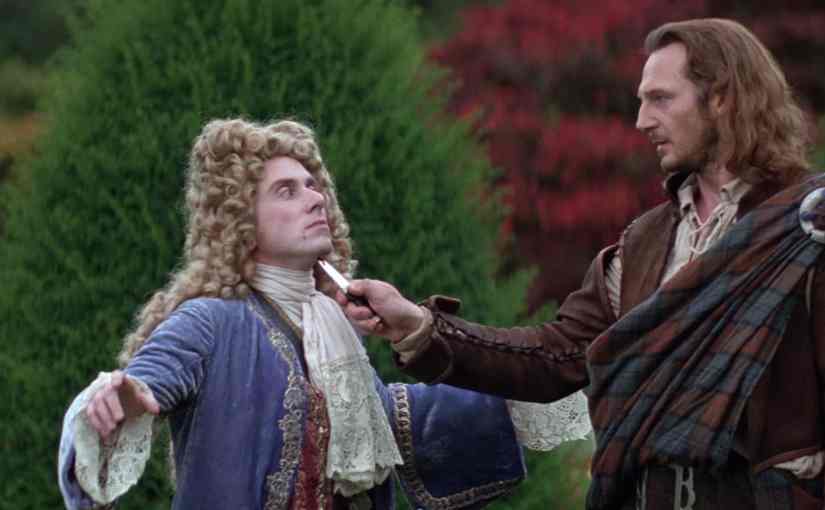
In Kate & Leopold, Hugh Jackman portrays the second title character also known as the Duke of Albany in the year 1876, and apparently the eventual inventor of the elevator. One night, he pursues a curious fellow who is attending an evening ball designed to find a bride for Leopold. The man runs and Leopold gives chase into the rain where they find themselves hanging from scaffolding of what will become the Brooklyn Bridge, designed by-you guessed it-Leopold. The moment of suspense ends with Leopold accompanying the fellow named Stuart (a very miscast Liev Schrieber) into present day New York; a New York unfamiliar to Leopold where manners of grace and elegance have gone out the window and you’re expected to pick up your dog’s poop following a walk.

Let’s get this out of the way, quick. Stuart has uncovered time travel. How does it work? Who cares? Move along.

Stuart’s ex-girlfriend and downstairs neighbor is played by the late 20th century staple resident of the Big Apple movies, Meg Ryan. She’s the Kate of the film’s title. Just like other romantic comedies of this nature, Kate is tense and stressed and trying to land a big account where she’s looking for the right spokesperson for a new butter spread commercial. You think Leopold, in his signature 19th century outfit, may fit the bill? I’m thinking you guessed correctly.

What else do you think happens? Yeah. You’re right. Kate and Leopold start to fall in love.

I grew tired of Kate & Leopold for a few reasons. There’s a side story meant for some slapstick kind of humor where Stuart, who is the “Doc Brown” of this picture, falls down an elevator shaft only to be relegated to a mental ward where he struggles to get in touch with the leads to explain what must be done from here. C’mon!!! A patient in a hospital should be able to make a lousy phone call.

Two, as Leopold romances Kate as well as coaches her brother (Breckin Meyer) in the ways of romance, how does he manage to find the financial resources for a violinist or the decor he uses to uphold his manners of refine? Reader, if I’m occupying myself with these trivial questions, then what do you think might be wrong here?

Chemistry!

Most importantly, the chemistry between Ryan and Jackman seems way off. I didn’t believe for a second these two were falling in love with one another. They speak two different variations of English and while Leopold is a man of great chivalry, I never found a moment in the film where he would be captivated by the modern-day Kate. What did Kate do anywhere in this picture that swept him off his feet? For Kate, when did she fall in love with Leopold? She’s hardly giving him the time of day and he’s really only a convenient opportunity to rescue her big account, but that’s not love for me. That’s not romance. That’s, at best, discovery. Like finding the next big talent or gimmick. If this is what love is, then who fell in love with Mr. Clean and how many years is the Jolly Green Giant married now? Did the Kool-Aid Man find his betrothed when he smashed through her kitchen wall?

In Big, director Penny Marshall found opportunities for the Elizabeth Perkins character to stop and look at the 12-year-old character version of Tom Hanks. Because she stopped and looked, she then still felt comfortable in her own skin. Hanks’ kid like character develops a first crush. A first crush may not be love, but to a 12-year-old, nothing is more confusing or self-occupying.

In Mangold’s film which he co-wrote with Steve Rogers, Leopold admits early on that he’s never been in love. Where’s the weight of his emotions here? I never uncovered those moments between the characters of Kate & Leopold, while a film like Big devoted a wealth of attention to it.

As well, like I said earlier, I could not take my mind off figuring out how Leopold is paying for this elegant rooftop dinner. Where did he get the money, in New York City, to pay for all this?

Know what Tom Hanks did in Big? He got a job!