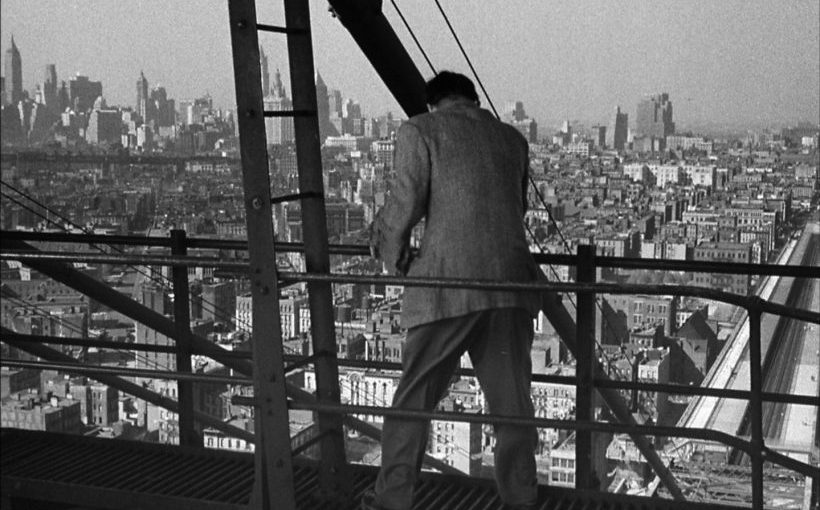
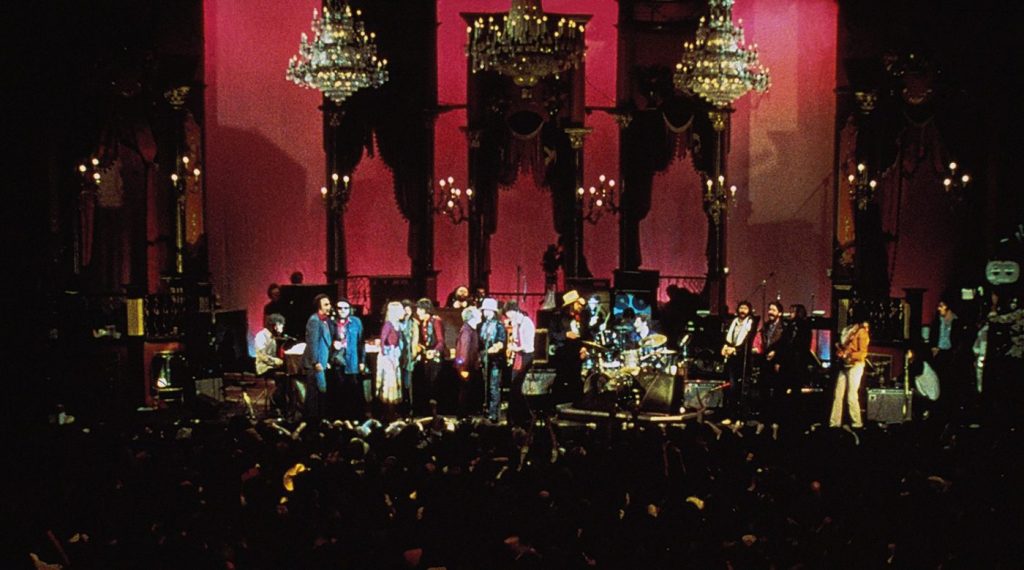
SCANNERS

By Marc S. Sanders

David Cronenberg’s Scanners, from 1981, is part of the Criterion DVD collection. So is Michael Bay’s Armageddon from 1998. Why? Beats the hell outta me, but what does that truly say about Criterion?

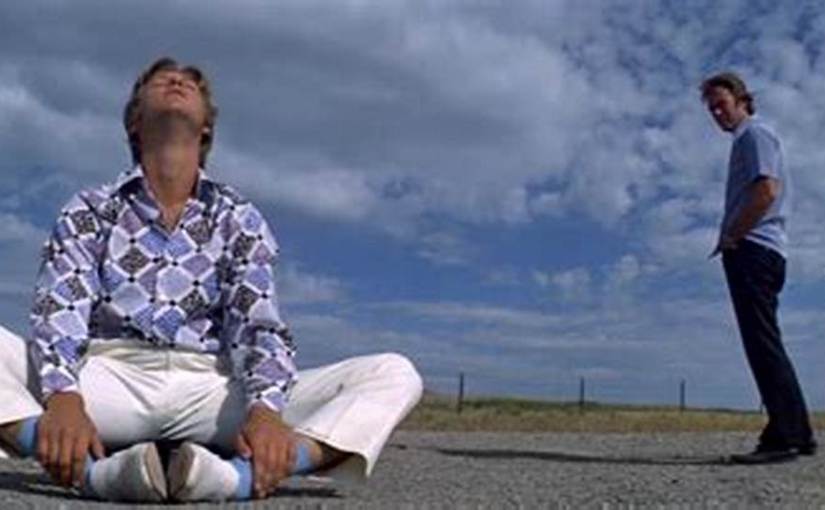
Scanners tells the story of people who are capable of mind controlling others. Some use this ability so powerfully that they can actually make a person’s head explode into what looks like what can happen when you leave a hot dog in the microwave too long. It’s likely how they achieved this visual effect, actually.

Well known cinematic henchman (with the cool voice) Michael Ironside plays a nasty scanner named Revok. In 1981, the best and most cheap way to display “scanning” was for Ironside to distort his face, roll his tongue back as well as his eyes and shake like he’s having a seizure or contending with intolerable constipation. Maybe in 1981, this would amaze and terrify me. In 2020, I wanna say “Michael, knock it off. Pick your toys up off the floor, and brush your teeth.”

There’s also Cameron Vale (Stephen Lack), a good guy scanner. He does the same kind of weird contortions though not as spastic as Revok. He’s been hired by some soft spoken scientist, Dr. Paul Ruth (Patrick McGoohan) – no, not THAT Dr. Ruth – to stop Revok from, I think, taking over the world. McGoohan, plays the role of mentor like he’s failing miserably at his audition for Obi Wan Kenobi.

A scan causes faces to convulse and squirt out blood that looks like Kool Aid. Maybe even your hands would catch fire. That’s about all Cronenberg offers here. Just a lot of schlocky, hamburger meat gore centered around Vale catching up to Revok. Eventually, we learn how a scanner became a scanner. It’s not very eye opening. The final frame does offer a twist but the credits roll too quickly thereafter to really relish that moment.

I can only envision that Scanners was one of those cheapie, mindless, B movie horror flicks on USA Up All Night with Rhonda Shear, during the late ‘80s & ‘90s.

Certainly mindless at least, and that’s the irony. A film about performing mind control and yet it doesn’t have a brain cell in its mix.

THE RIVER WILD

By Marc S. Sanders

Meryl Streep can do anything. Comedy, drama, accents, age defiance, make unbearable choices, even play opposite Roseanne; anything! She can even go white water rafting. She’s a real life James Bond.

In The River Wild, Streep takes a while to outsmart bad guys Kevin Bacon and John C Reilly, but she always maintains the raft through dangerous rapids while protecting her husband and son (David Strathairn and Joseph Mazzello).

See, according to Curtis Hanson’s adventure film, the best way to outrun the law following committing a robbery is to go white water rafting, even if you have no experience with the sport. That becomes a downer for Meryl Streep’s family getaway where tensions are high in her marriage to her workaholic husband. Fortunately, this setback might get them on the right track and Strathairn will find an appreciation for the dog that has come along. Reader, I won’t give it away but like I said, Meryl Streep can do anything. So, the odds on the family pet making it out of this alive are pretty favorable. Too bad Mazzello and the dog won’t listen to dad when it’s necessary.

The plot of The River Wild is very simplistic. Hanson quickly gets to the river following some exposition of familial discourse at home. However, just because he gets to the river so soon, doesn’t mean that the thrills begin right away. There’s a lot of beautiful nature footage here and everyone is happily getting along. Bacon connects with Mazzello much to Strathairn’s chagrin, and he flirts charmingly with Streep. Then lo and behold, oh my stars, Kevin Bacon is a bad guy??? What? The Footloose guy?????? Why he’s six degrees of any one of us!!!!!

Hanson gets some good action moments on the rapids. There close up shots against the rocks, and right into the water and down the impossible falls. The suspense is lacking though. Strathairn makes an escape in the woods. He’s got a good head start, and the best option he can come up is to climb a steep rock wall in plain sight with no coverage whatsoever. Kevin Bacon, what are you doing? Shoot the guy!!!! Mr. Hanson, you just brought your stride to a screeching halt.

That’s the problem with The River Wild. There’s a lack of thrill to it all. This is not a film brave enough to really endanger the dog, nor the kid, nor Streep. The worst that’s really done is a couple of punches to Strathairn and a cut above his eye.

Mazzello made it as the screamer kid star in his adolescent years in film (see Jurassic Park). Bacon seems like he wanted to get a little crazier in the villain role, but he held back. I wanted him to cross the line a little more, a lot more actually. He wasn’t dangerous enough for me. Reilly was just a bumbling, worried accomplice in tow.

Hanson has done way better than this with his supreme effort like L.A. Confidential and even Eminem’s 8 Mile. Thank goodness I can still respect the man’s career beyond this doused misfire.

BLACK PANTHER

By Marc S. Sanders

Ryan Coogler’s Black Panther is a stand out film among what has become an overpopulated Marvel Cinematic Universe.

It is a super hero film for sure, complete with the standard gadgets, super strength and abilities, action and over the top science fiction. Yet, this film did not have to be a superhero narrative to drive home the message of its story. This could have been an Oliver Stone film rooted in political quagmire. It could have been a John Hughes teen rip off film that takes place in a typical Wasp suburban school.

A question embraces this film. Simply, when is it appropriate to share?

Chadwick Boseman plays the title character also known as T’Challa, and following the recent death of his father he becomes the next king of the fictional African based country of Wakanda, a location hidden from the rest of the world so that no one else can take advantage of its most precious resource, Vibranium, which has allowed for the most sophisticated technology, weaponry and even medical advancements ever known. How it’s all lumped together, who knows? Pick up a Marvel Comics Encyclopedia for that answer. T’Challa is tasked with whether it is a moral obligation to share the resource with the rest of the world. However, if it is provided, will the Vibranium be taken advantage of for nefarious purposes?

(SIDE NOTE: Reviewing all of these Marvel films is getting to be trying, as I feel resorted to using the same terminology some times; words and phrases like “hero,” “villain,” “nefarious purposes” and “also known as.”)

His nemesis is Eric Killmonger played by Michael B. Jordan; this guy is going to get an Oscar one day. Killmonger is an educated, skilled soldier and cousin to T’Challa who was abandoned by Wakanda following his own father’s betrayal of the country. He grew up in the projects of Oakland, California. Killmonger returns to Wakanda with the purpose of becoming king and allowing the tech and resources Wakanda possesses to be used by the outside world, particularly by populations of African descent and people of color who have endured a history of suffering. Once again, Marvel Studios scores with a villain you want to root for and endorse. Just like Jeff Bridges’ Obidiah Stane in the first Iron Man film, you have to recognize the stance that Killmonger holds on his side of argument. That’s great writing. It’s not so much that Killmonger is a slaughterer. He really isn’t at all. Once he overthrows the hero, the mission is only just beginning as he wishes to right the wrongs of Wakanda for never providing in the first place. It’s ironic really. This guy sides on the fact that he doesn’t want a wall, while the protagonist is doing all he can to maintain a divider to the outside world. In 2018, was there another film that really reflected the sign of the times so succinctly?

Coogler makes a beautiful sweeping film of country and special effects. The Wakandan ships are very cool. Overhead shots of Africa and the camp bases of various tribes are astonishing. One particular tribe resides on a winter like mountainside and the leaders room is spectaculary decorated in horizontal lumber hangings. T’Challa’s staff of mostly female combat warriors and scientists led by Lupita Nyong’o are really exciting. At times the film takes inspiration from some of the best standards of the James Bond films, as his sister introduces her latest inventions for the Black Panther suit. Naturally, the Black Panther costumes are stand outs in the film, black with glowing power enhancements of purples and yellows.

Is Black Panther worthy of a Best Picture nomination and an abundance of awards attention? I’m still not sure. It’s a very strong piece that is light years ahead of any DC Universe film, but it has great characters and messages like most of the Marvel films and even some of the more recent Bond films featuring Daniel Craig. Maybe it is one of the best films of they year, and maybe it should be a Best Picture nominee, but perhaps only because 2018 did not offer a wealth of extraordinary film achievements to begin with. I found merits in all of the 8 Best Picture nominees in this particular year, but I also found problems with many of them too (don’t get me started on A Star Is Born); shortcomings that in another year with better films would keep many of these nominees from ever being considered for the grand prize.

Yet, as I document these thoughts, I think about Black Panther again. Truly, it does not have anything negative in its feature. Ryan Coogler directed and wrote a very focused and thought provoking film. Yup! It was truly one of the year’s best films.

MALIFICENT

By Marc S. Sanders

The wagon train of live action adaptations of Disney animated classics reached its pinnacle with 2014’s Maleficent. Much credit going towards Angelina Jolie’s portrayal of the title character. However, the visuals cannot be dismissed either. It’s a gorgeous film directed by Robert Stromberg.

Stromberg brings his wealth of experience in visual effects (Avatar and Master And Commander: The Far Side Of The World) to his directorial debut. The fantasy world of Maleficent’s forest, as well as the looming castle on its outskirts are dressed in gorgeous colors and vast dimension of pathways and caverns. The magical spells wafting in greens, golds, blues and reds, wielded by the characters, including the three protective fairies (led by a strong Imelda Staunton) is hypnotic and blends beautifully with the live actors’ performances. It’s as bold in the visual department as anything cropped up by Peter Jackson or James Cameron.

What makes this brisk 90 minute film special is a different point of view from the classic film Sleeping Beauty. Is there justification to a villain’s actions? Stromberg and Jolie certainly make a case for it. It’s a reminder that there are two sides to every story. Anyone ever consider that maybe Maleficent might have been betrayed at one point? I’ll be damned. At least that’s what I thought, after watching this film.

No one in life is born evil. I like to think people are made evil or perceived as evil. This film is a great example of that, much like the musical Wicked or the recent hit film Joker.

Jolie offers up the frightening aspects of the fairy dressed in black that we’ve been familiar with all these years. However, she’s fortunate that the capable script from Linda Woolverton offers up opportune moments to consider her soft, sensitive side. There are moments of no dialogue as Maleficent observes Princess Aurora (Sleeping Beauty) grow, and she develops a reluctant (it’s hard to resist calling her “Beasty”) affection for the child. Maleficent will even participate in a playful mud fight. There are more than just evil machinations going on here.

Unlike the other Disney live action iterations, Maleficent shows something new and unexpected. It harbors my appreciation for the film whereas Beauty And The Beast or Aladdin did not because they just churned out the same old thing.

If Stromberg’s film suffers from one weakness I’d say it could have used a stronger performance from Sharlto Copley (The A Team film adaptation) as the antagonist, Aurora’s father and Maleficent’s first love; the eventual king. There was not much threat from this guy. He was no match in character much less performance against Jolie.

Still, Maleficent is a great character film with lots of fun, whimsical visuals to explore.

COMMANDO

By Marc S. Sanders

Colonel John Matrix (HUGE ACTION STAR NAME WITH MUSCLE AND BULK AND SWEAT AND…AND…MUSCLE, because this is Arnold Schwarzenegger) lives a quiet life in the beautiful nature the mountains have to offer him, along with his 11-year-old daughter Jenny Matrix (Alyssa Milano). SIDE BAR: Imagine roll call at elementary school and that name comes up, Matrix, Jennifer Matrix. OKAY! BACK ON POINT: Father and daughter tickle one another, mash ice cream in each other’s faces and feed gentle deer from the palm of their hands. By and large, Commando is a beautiful after school special.

However, this is also a cheerfully bloody and fiery explosive R rated after school special adventure. Jenny is kidnapped and used as ransom to coax John, better known as Matrix, (cuz it’s cooler that way), into assassinating a foreign political leader. Though that’s not how this film is gonna go.

Matrix makes an escape from his watchful guard who ends up “dead tired,” by jumping out of a commercial airliner. He determines that he has eleven hours to find Jenny and blow everyone up real good. He gets help from an airline stewardess, a hilarious Rae Dawn Chong that pioneered what Sandra Bullock memorably did later in Speed. She conveniently has been taking flying lessons that will get Matrix to the private island where Jenny is being held. Thank goodness for that, or Jenny might never see daddy again. Everything happens for a reason.

Look, the chances this film would ever be Oscar nominated against the 1985 Best Picture winner, Out Of Africa, were slim for sure. However, all these years later and I’m still not exhausted of repeatedly watching Commando. It’s a comfortable crowd pleaser. The film is action packed to the teeth with bad guys getting impaled, razor saw disks being used as frisbees to take off a scalp or two, arms getting chopped off and big bunker houses being blown up into huge balls of fire. Thankfully, lots of blood gets to splurt all over the place.

This is an action film for the eyes and ears. For me, it’s better than any of the unfunny Rambo films with their minimal dialogue. In Commando, you get some fun at a shopping mall with elevators rolling across the floors and swings from balloon streamers. Matrix even pushes 10 security guards off him all at once. There are car chases. In a neighboring hotel room, he takes on another muscle head while a naked couple is going at it in the room next door. Commando is just too damn funny, for sure.

Schwarzenegger is a master of the one liner. He drops a bad guy off a cliff and tells his new stewardess friend “I let him go.” Well, he ain’t lying. Rae Dawn Chong is equally funny in her own way. I’d argue the script called for a nothing woman role and she brought something special to the picture. Her incessant complaints and screams at this ridiculous circumstance she gets caught up in are laugh out loud hilarious. Commando is not just action alone. The characters respond to the hyped-up scenarios.

No, the villains are nothing special. A potbellied cheesy porno lookalike Australian, named Bennett (Vernon Wells), with a chain mail tank top and tight leather pants is a former squad member of Matrix’ team from when they were military mercenaries. Bennett is no James Bond villain by any measure, but he’s pleasurably laughable, even if it is all unintentional.

This is a guy’s movie for the most part. It’s brawny and muscled out. It’s got machine guns, shotguns, handguns, and even more guns along with some grenades, detonators, knives and a rocket launcher that seems to become a character all its own. However, I think there’s an opportunity for chick flick adoring women to have a good time with Commando too, when I once again hearken back to Rae Dawn Chong. She is probably Schwarzenegger’s best female counterpart in any of his films. Yes! Above Linda Hamilton and Jamie Lee Curtis. The chemistry just works so well here.

There’s so much to like about Commando and I believe it remains as one of Arnold Schwarzenegger’s satisfyingly best films to date.

SOME KIND OF WONDERFUL

By Marc S. Sanders

I don’t get it. Why title a movie with the name of a popular song only to make the movie title seem arbitrary? Some Kind Of Wonderful is a rockin’ great song by Grand Funk Railroad that you turn the volume up on your car radio as you leave work on Friday afternoon. Maybe you get the bar patrons riled up on karaoke night. Some Kind Of Wonderful is also the name of a movie written by John Hughes that has no meaning or relevance to the song it’s named after. It’s as lacking in imagination as the film itself.

Why do you suppose John Hughes didn’t direct this film and left it for Howard Deutch to take over? Could it be that Hughes realized this script was nowhere near as insightful as The Breakfast Club or even Ferris Bueller’s Day Off?

The characters are positively boring in Some Kind Of Wonderful. In fact, they are so boring that they look bored with each other. They look half-awake when they are talking to one another. Unless, that’s how you look cool in the rebellious 1980s. I dunno. To me they all looked flat.

Eric Stoltz plays Keith. He’s a kid who avoids college discussions with his father (John Ashton) while pining over Amanda Jones (Lea Thompson), the popular girl who’s dating the popular jerk with the Corvette. We get to hear a song called Amanda Jones not once but THREE TIMES. Where’s the song Some Kind Of Wonderful, though? Why not just call the film Amanda Jones?

Unbeknownst to Keith, his tomboy best friend Watts (Mary Stuart Masterson) plays it cool, while carrying around her cool looking drumsticks, like she doesn’t love him when it couldn’t be more apparent. Keith is so unbelievably stupid that he can’t even detect the slightest crush that Watts has on him when she practices kissing him so he’ll be prepared for an upcoming date he has with Amanda. Now I’d buy this routine if Keith were at least playing dumb to Watts’ advances. However, Keith is not playing dumb. Keith is just dumb.

As a community theatre actor and playwright at times, even I follow at least a slight discipline of exploring character backgrounds. Watts and Keith are best pals yet I don’t recall one tender moment or discussion that even slightly recollects their history or friendship. Pretty In Pink offered plenty of moments that shaped the Molly Ringwald and Jon Cryer relationship. Not in Some Kind Of Wonderful, however. Every time Stoltz and Masterson meet up for a scene together it feels as if they never met each other before. They never look like they are familiar with one another and really know what makes the other tick. Are they acting with their stand in doubles?

I also was not so convinced of Keith’s attraction to Amanda. There’s nothing to this girl beyond Lea Thompson’s sultry looks. Granted, I recall having a day or even a month-long crush on a number of girls in high school simply based on appearance alone; girls who never gave me the time of day. Raging hormones naturally will do that to teenage boys but remember this is a movie. In a movie, I need to be shown why there is a crush. Not just told in a statement of dialogue.

Recently, I reviewed Can’t Buy Me Love. I didn’t like that film either. However, the popular girl in that film at least revealed a knack for poetry and a sudden interest in astronomy and an old airplane graveyard. The popular girl here only opts to go out with Keith to anger her jerk of a boyfriend. I don’t know anything about Amanda from beginning to end.

Keith only paints and draws images of Amanda. A talent for art is a springboard for sweet and sincere in a John Hughes movie, but it’s all Keith ever learns about Amanda. So it’s all we ever learn about Amanda. Great! You sketched a third picture of Lea Thompson. Sorry, but I already know what Lea Thompson looks like.

The date between Keith and Amanda tries to aim for cuteness and maybe some comedy. I say maybe because I’m not sure if the cast with Hughes and Deutch are looking for laughs. But see Masterson volunteers to be the limo driver complete with the hat and uniform, and drive the lovebirds around town. A limo uniform on a character can be funny like if Kramer in Seinfeld did it, or if it was one of the Three Stooges. Problem here is no one in this movie sees how funny it could be. So, it’s not funny. See how that works?

No one was at the wheel of this D grade fare teenage 80s flick. Beyond all that’s wrong with the story and characters and performances, ultimately again I ask, where is the song Some Kind Of Wonderful in the movie Some Kind Of Wonderful? If that doesn’t even occur to you, then I can’t have much faith the film will have any provocation of thought either…and it doesn’t!!!!!

SECRET IN THEIR EYES (2015)

By Marc S. Sanders

So here is a movie I thought I had figured out; the twist, I mean. Yet it’s ending didn’t turn out to be that way at all.

So, what did I get from Secret In Their Eyes? Well, I guess the confidence that I am probably a better writer than the ones who doctored this crap.

This is another mystery thriller, where everybody working in the same law enforcement department must remain divided and have animosity towards each other because if they didn’t have conflict they’d only get along and solve a very basic murder case.

See, it has to be this way.

The main character played by Chiwetel Ejiofor must play the obsessive (13 years obsessed!!!) FBI investigator prone to making dumb and impulsive mistakes because if he didn’t there’d be no movie.

Julia Roberts, effectively departing her glamour roles, as the cop/mother of a murdered daughter will only conveniently appear to make things awkward for Ejiofor and DA Nicole Kidman who is unnecessarily, overtly sexy to drive a subplot for more awkwardness. Oh, hi Julia. Didn’t expect you to step on to the elevator. Well, look who showed up at the office just as I get into town; things like that.

Nothing that these characters do seem very wise or necessary but we are supposed to believe these are some of LA’s best legal minds; break in and steal evidence without a warrant, solve a murder by looking at a picture from company picnic, beat a confession out of a suspect, and presume you found the killer again because a guy made parole 13 years later and the ages match up. He might have had a nose job, but that’s gotta be the guy. Ejiofor says it is. So it must be true. Stop arguing with me. Ejiofor says he’s right and you’re wrong. Case closed. Shouldn’t these great legal minds look a little deeper before they make their conclusions? There’s more concrete evidence in a game of Clue than anything I found in Secret In Their Eyes.

I guess now that I’ve watched the film and see that my predicted ending never turned up, maybe I’ll keep it to myself, jot it down on paper and sell my own screenplay. If this crap could attract a Hollywood budget with top talents to fill the roles, how bad could I do?

THE BOURNE IDENTITY

By Marc S. Sanders

Doug Liman’s The Bourne Identity is the story that occurs after the story, with a compellingly determined performance from its lead Matt Damon.

A man floating in the rain swept Mediterranean Sea is recovered by a fishing boat. Two bullets and a capsule containing a Swiss bank safe deposit box number are removed from his back. The man also has amnesia as he can’t recall his name or background or why any of this has happened. Yet, he does remember his fighting skills, weapon handling (even if it’s a BIC ball point pen) and strategic abilities. Eventually he recovers a lot of cash and passports from the box, but he leaves the gun. (No cannoli to take.)

The agency that does know what happened, code name “Treadstone” developed secretly by the CIA, is represented by a frazzled administrator named Conklin, played well by Chris Cooper. Apparently this mystery man did not carry out an assassination as orchestrated and now this assassin must be located and terminated or Conklin will have a lot of explaining to do to Abbott, another, more calm, authority played by favorite character actor, Brian Cox. However, this mystery man is Jason Bourne, and he is not going to be easy to kill or outsmart by the ones who essentially trained him.

Famke Potente portrays a gypsy that Bourne pays to escort him by car through Europe as he tries to remember and uncover the truth. She’s also very good, as the inevitable brief romance brings just the right dimension to the characters. Now there’s something at stake amid the danger.

There’s not much story to this film. In fact, there’s not much story to the sequels that followed. Liman set the standard for the Bourne films that director Paul Greengrass eventually took over. Just keep the pace at high octane. Crash the cars, break the bones, fire the guns. Only make sure Bourne just gets a cut on the head and recovers with a limp. Nothing more. We know that Bourne will never die. The fun is in how he manages to stay alive following one dangerous encounter after another.

Damon is surprising in this first entry in the series. Perhaps that’s because he’s not a repeat action star like Stallone or Schwarzenegger. He was Good Will Hunting!!!!! So, in this film, he’s got the college prep appearance and walks like a short lightweight boxer. I think that’s great. When we see him disable two policemen early on, it is literally jaw dropping. Liman presents the unexpected in Damon’s performance because the plot can’t offer much more development.

The Bourne films remain as one of the best action series of all time. If anything, I think the taxpayers are getting ripped off by the clandestine shenanigans happening within the CIA. The CIA was meant to be secret. However, “Treadstone” better be MORE secret. That way our secrets can hide our secrets. Right? Wait, what? Forget what I said.

As each movie is happy to demand from an authority in a suit, “Find me Jason Bourne!”

REAR WINDOW

By Marc S. Sanders

Alfred Hitchcock’s beloved classic Rear Window remains absolutely relatable today.  Before the age of the internet and reality TV, people already had a voyeuristic instinct about them.  Heck, movies are voyeuristic!  The audience watches the behaviors and actions of people on a large screen.  Snooping into the activities within your neighbor’s private apartments is not much different.  Though likely less ethical.

When photographer L.B. Jeffries, aka “Jeff,” (James Stewart, in one of his most famous roles) is bound up in a wheelchair with his broken leg wrapped in a waist high cast, there’s not much adventure like his traveling career demands.  So, he gets caught up in looking at the goings on of his Greenwich Village apartment neighbors like a beautiful hourglass figure dancer he dubs “Miss Torso,” or the newlywed couple and their never-ending sexual escapades.  There’s also an elderly couple who find comfort in sleeping at night on their outdoor balcony next to one another.  He can also take pleasure in a struggling musician trying to write his next piano tune while also entertaining a collection black tie guests.  Another woman he dubs “Miss Lonely Hearts,” for her desperate attempts at entertaining herself with imaginary escorts she’s “invited” for dinner, also leaves him curious to keep up with.

The most inquisitive occupants in this building are a husband (Raymond Burr) and his seemingly ill and often irritating and nagging wife.  Over one rainy night, Jeff takes notice of the husband leaving his apartment with a suitcase at three different times and the wife is nowhere in sight ever again thereafter.  Later glimpses of the husband handling a carving knife, a saw and some rope tied around a storage trunk are also eye opening.  Jeff recounts this sequence of events to his desperate love interest, Lisa (Grace Kelly, with a gorgeous on-screen entrance in one of costumer Edith Head’s legendary dresses) and his nurse caretaker Stella (a smart allecky and perfectly cast Thelma Ritter).  When the likelihood of murder has probably occurred, Jeff also lets his detective friend Tom Doyle in on what’s seen.  All seem skeptical at first. 

Now the action of murder is never seen by Jeff, nor by the audience, mind you.  For the most part, Hitchcock limits the viewer only to what Jeff sees with his own eyes or with the help of his binoculars and his long lens camera.  Midway through the film, the director allows Jeff to doze and gives us a glimpse of something the husband does.  Now, we the audience, have a slight edge of knowledge that our hero doesn’t.  This plays with Hitchcock’s approach to suspense.  We know there’s a “bomb” under the table.  The people sitting there don’t however.  It pains us to wonder if our protagonists will discover the bomb before it goes off.

I’m a big fan of Alfred Hitchcock movies because they never get too complex.  The stories he chose to direct normally place an everyman in a scenario he/she never expected to find themselves in, much less be invited to.  With a screenplay from John Michael Hayes, Hitchcock puts out only a few pieces of a puzzle.  Then, it’s up to his handicapped hero and the audience to solve it.

The voyeurism for Jeff seems like a harmless vice while his time at home slowly passes painstakingly by.  Hitchcock and Stewart do very well in assembling this film.  A close up of Stewart will have him turn his eyes to his right and then we will see what the newlywed couple are doing.  Then we will cut back to Stewart and see his reaction with a smirk.  A look down will cut to the dog, curiously digging away in a flower bed.  Then once again back to Stewart for a close up that maybe has him wondering if the dog is getting at something pertaining to this husband and his now missing wife.  The smirk leaves Stewart’s face.  Now, it’s an expression of puzzlement.

I noted earlier that Rear Window can easily be related to what drives people’s obsessions today.  We are people driven by internet surfing and television streaming and social media.  The known statistic that half of marriages end in divorce is still prominent.  (Maybe that percentage is even higher by now.) Stewart’s character of Jeff becomes so obsessed with keeping up with these people’s stories, that he hardly finds time or enthusiasm to accept the romantic gestures of Lisa.  It’d be fair to argue that technological devices of today serve as an equal distraction in relationships.

Grace Kelly is well cast here.  Arguably one of the most beautiful women to ever appear on screen, dressed in some of the most artistic and fascinating costumes provided by Edith Head, and even she can not divert Stewart’s attention away from the activities of others that Jeff doesn’t even have an intimate knowledge of.  Kelly begins her performance in the film with an approaching close up followed by a sensual kiss upon a sleeping Jeff.  She arranges a catered dinner, delivered by the renowned New York restaurant, Twenty-One.  It just doesn’t completely sway Jeff away from what he becomes obsessed with.  Much like people are with social media, Jeff has been addicted to his vice.  When Lisa tries to implore with Jeff to take their relationship further, James Stewart raises his voice to tell her to shut up and insists that her beautiful hairstyles, wardrobes and high heel shoes could never keep up with him on his travels to far off deserts, jungles and war-torn areas that he photographs.  Yes, Jimmy Stewart tells Grace Kelly to shut up.  It’s shocking.  However, maybe the film will eventually demonstrate that Jeff really doesn’t know anything about Lisa.  The everyman of cinema at that time has been corrupted by what he’s focused on, and in an Alfred Hitchcock film, it is bound to get him into more trouble than he ever expected.  More importantly, the one who cares for him may open his eyes to what he really can’t see as this mystery proceeds.  Broken leg or not, Jeff has never truly seen the real Lisa.

I recall visiting Universal Studios in Orlando, Florida when there was an Alfred Hitchcock attraction there.  I miss it.  It was taken over by a Shrek ride and soon it will be another Minions adventure.  Before ever having seen Rear Window, the attraction featured a look at the Greenwich Village courtyard setting of the film.  It was fascinating.  It was four floors of apartments directly across a courtyard that had a flower bed, folding chairs and the like.  There was also an alley that presumably led to a bustling New York City street.  Naturally, you couldn’t see much of the street.  Just a sliver.  Hitchcock arranged with Paramount Pictures to build the set this way.  Audiences would have wide open views of activities within the window frames of these apartments, the hallways beyond the front door of each dwelling and that one slim alleyway.  The viewer is as limited in what can be seen as Jeff.  This mysterious husband may be going somewhere at odd hours of the night, but once he passes that alleyway, there’s no way of knowing where he went.  Today, we might call something like this one of those “Escape Rooms.”  Solve the mystery, but only with what you can see and only from your one stationary position.  If something takes an unexpected direction, you could find yourself in danger without any means of escape.  That’s how Hitchcock sets up the limitations for Jeff.

As the film progresses, Lisa proves that she can be adventurous like Jeff claims that she isn’t.  In her beautiful gown, heeled shoes and coifed hairdo, she climbs into the apartment of the likely murder suspect looking for clues.  Jeff, however, can’t do anything but watch.  There’s not much he can do either even when the suspect returns while Lisa is still there.  He’s helpless to help her or even himself.  This assembly of direction again falls in line with the “bomb under the table” idea.  It’s one of many devices Hitchcock uses to keep Rear Window as suspensefully entertaining as it was for audiences in the 1950s.

Few directors still can’t keep audiences on the edge of their seat like Alfred Hitchcock.  He had such an intuition for knowing what would keep viewers engaged and wanting to know more.  Unlike other films from him, there’s not much of a twist to Rear Window.  The resolution falls in lifting the veils.  Jeff must reveal himself to this mysterious husband.  (When they come face to face finally, Hitch is smart to position Jeff as a silhouette in darkness.)  Lisa must show Jeff a side to her that he refuses to acknowledge in order to save their relationship. Most importantly, a mystery has to be confirmed.  You find yourself more and more breathless as the film moves on, and then more facts are revealed implying that Jeff is truly on to something.  When the picture finally ends, if you got caught in Hitchcock’s web of suspense, you’ll likely let out a satisfying sigh of relief.

WILD TALES

By Marc S. Sanders

Humans were meant to be distressed.  It just goes with the territory.  It’s in our nature to distress one another and respond with another layer of distress.  It’s also a cosmic element of practically any environment we find ourselves in.  Within our journeys of life, when we are striving to be better as a spouse, a parent or worker, it takes an acceptance of stress to get to where we want to be.  It’s only when we die that we can truly rest in peace.  Wedding planning or road rage or airline travel can be overly taxing. Your car could get towed, a person from your past could turn up or you can even become unreasonably extorted when faced with extenuating circumstances.  It all seems so unfair or inconvenient or intrusive.  So, I find it interesting that director Damián Szifron would provide the credits of the cast and crew for his film Wild Tales against a backdrop of wildlife animals.  Humans may be the dominant species, but even they have animal instincts that can spiral wildly out of control.

With writer, Germán Servidio, Szifron offers up six different short stories in this Argentinian film that was nominated for Best Foreign Language Film at the 2014 Oscars.  Each story focuses on an opportunity for revenge or an experience of high stress where people come in contact with other people.  Granted, some of the stories are so outrageous in circumstance, response and outcome that I’d find them hard to believe they truly happened if someone vouched for it.  For example, you likely never saw a wedding reception like the one staged in this film.  I don’t care who you are.  YOU NEVER SAW A WEDDING LIKE THIS!!!!  Still, this is a very entertaining film that left me curious with how each story was going to play out.

A truly engaging airline experience prologues the credits when a beautiful model strikes up a conversation with the elderly gentlemen across the aisle.  When a woman in the next row can’t help but eavesdrop on their exchange, a most unexpected event occurs.  Doom awaits!!!  More importantly, though, why does it await?  It’s a brilliant opening, likely never to occur in real life, but altogether unexpected and humorously shocking.

Following the credits, a question of morality and revenge plays out in an after-hours diner when someone from a waitress’ past enters for a late night meal.  This is the most incomplete vignette of the bunch, but the narrative remains interesting. 

Listed below the airline tale, my next favorite tale involves a road rage incident between the driver of a beautiful black Audi and someone who drives an old jalopy of a car.  Likely, it is the most relatable of all the stories.  We’ve all either experienced some form of road rage, or read about it, or have committed or been tempted to engage.  There’s a strong lesson to be learned from this story and it is rather incredible how this encounter between two descends into madness.

Stories of extortion and unfair city policies fill out the other slots, before finally closing on a wedding from hell.

What’s interesting is that while the stories may rely somewhat on their dialogue, I believe I could watch Wild Tales without knowing much of what is being said.  The cast is phenomenal in expression and response.  Szifron quickly sets up the scene and then has his various token characters react to what faces them.  We see the extremes a bride goes to when an unexpected guest appears at her reception.  We are the lone witness to how a driver will seize an opportunity when another driver is stranded on a lonesome highway with a flat tire.  We can understand the persistence a man will uphold in order to prove he did not commit a parking violation.  Wild Tales does not depend on crackling dialogue.  Instead, the visuals and the performances do a lot of the work.

Too often, I hear that people will not watch films with subtitles.  They cannot stand to “read” a film.  Come on!!!!  You have to allow yourself the opportunity to uncover amazing documents of cinematic escapism beyond the American fare.  No film hinges on the subtitles that flash across the bottom of the screen.  Like any movie, the primary element is the photography of the piece.  Since I am not much of a traveler, domestic or international, it is so refreshing when I’m reminded that cultures, behaviors and customs outside my comfort zone of the United States, are not any different from me or the people I surround myself with.  We are all capable of love, drama, humor, sacrifice, crime and an innate possibility of flying off the handle in very, very extreme ways, whether we are justified or not. 

I am not familiar with many foreign pictures.  Honestly, I don’t get motivated enough to seek them out.  I need to lighten my reluctance.  It is fortunate that my colleague, Miguel E Rodriguez, provided this entertaining, mischievously fun collection of devilish short thrillers to our Cinephile movie group for a Sunday viewing.  Damián Szifron has crafted a film that you can’t take your eyes off.  The photography is striking with amazing camera angles such as a point of view from inside an airplane luggage compartment or from the sidewalk ground level where an automobile owner discovers that his car has been wrongfully possessed.  Miguel says moments like these are Tarantino inspired.  Maybe.  I like to think I’m watching a film by Damián Szifron, an insightful and skilled director at the top of his game.