THE BOURNE SUPREMACY, THE BOURNE ULTIMATUM, THE BOURNE LEGACY, JASON BOURNE

By Marc S. Sanders

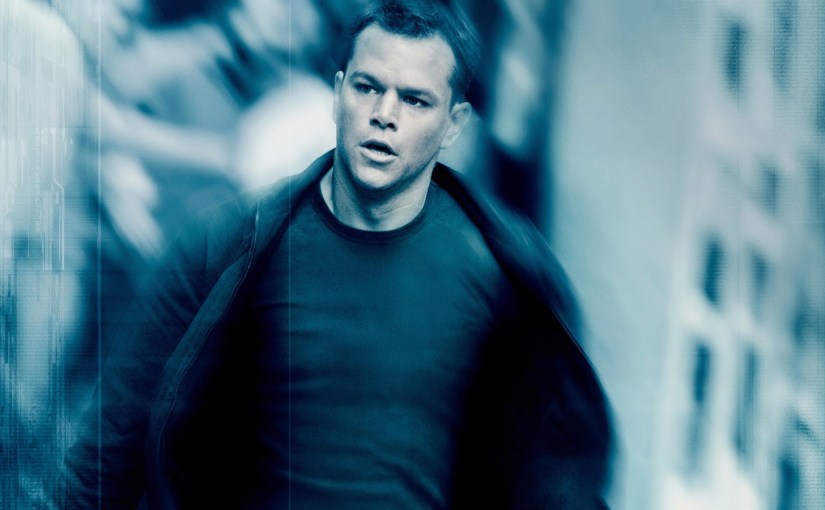
Sometimes the same old thing is all we want, right?  It’s like comfort food.  That’s what the Jason Bourne films offer.  The first time (The Bourne Identity) it is original.  The second time (The Bourne Supremacy) it is familiar.  The third time (The Bourne Ultimatum) it is what we expect.  When you get to the fourth and fifth time (The Bourne Legacy and Jason Bourne), well then perhaps you’ve overstayed your welcome.

The second and third films in the Matt Damon action series function as one long four-hour film.  They are absolutely gripping in high octane, fast cut editing, pulse pounding music from James Newton Howard, and taut direction from Paul Greengrass.  They work because at least two thirds of the material is shown through the eyes of the former assassin Jason Bourne who is trying to learn of his past and who he worked for and why.  Plus, though he may hide deep undercover on the other side of the world in places like populated India, he only resurfaces when he discovers someone is trying to kill him.

The other third of these two pictures function on the other side of the coin with clandestine departments within the CIA who only consider Bourne being alive as a threat to the integrity of their black operations.  He must be eliminated.  There are great acting scenes with Joan Allen first up against an intimidating Brian Cox, and later she’s going toe to toe with David Strathairn.  If you are not part of the chase for Bourne, then you are engrossed in the cause these three supporting players offer with government politics and debate.  With each passing film, it’s an old, grey haired white gentleman in a suit who is insistent on eliminating Bourne and anyone who he associates with.  This started with Chris Cooper in the first film followed by Brian Cox (my favorite) over to David Strathairn.  The baton is then passed to Albert Finney.  A new film moves over to Edward Norton and then Tommy Lee Jones.  Scott Glenn and Stacy Keach are in the recipe too, but they are not as prominent.  All these guys start to look alike and when you watch the films in succession, one after the other, like I recently did, you start to question when this actor and this actor entered the fold.  Best way to describe it is that it is a ladder climb.  There was one guy in charge, then another above him and so on.

The appreciation for the Bourne series comes mostly from its action and the absolute cleverness of its hero.  Jason Bourne functions with ease about staying one step ahead of those trying to kill him.  They think they have a lead on him, but in reality, he has the lead on them.  Do you know how satisfying it is when he calls these people to talk to them and they play dumb? Jason will simply say “If you were in your office right now, then we would be having this conversation face to face.”  Moments like this are what gets an audience to clap and cheer.  The old white guy has been duped.

The action works because, once again I lay claim to the lack of CGI.  So, the overabundance of car chases seems nerve wracking like they are supposed to.  That door on that car is actually getting bashed in.  That taxi cab is really getting t-boned and turning into a 360 tailspin.  Jason can grab a seatbelt, lie down on his side and when the car careens over the barrier onto the landing fifty below, upside down, I’ll believe he gets out with only just a slight limp and a dribble of blood on his brow.  Only Jason Bourne can drag a wrecked rear bumper on a stolen police car through a busy Times Square and bash an SUV into a concrete barrier.

Fight scenes are not just fight scenes in the Bourne films.  It’s not just fists and punches and karate kicks.  Creatively speaking, the films construct their fight scenes to have the hero arm himself with a ball point pen or a magazine that’s wrapped up ready to wallop an opponent in the nose.  I’ll never forget when my colleague Miguel and I saw Ultimatum in the theatres and witnessed Jason punching a book into the face of a dangerous bad guy.  How many times have you seen a guy get punched in the face?  How many times have a seen a guy punch a book into the face of another guy?  There’s a difference. 

Matt Damon has been quoted as saying he believes the Bourne films carried the least amount of dialogue for him to memorize.  Yeah.  That’s likely true.  These films are visual feasts.  They rely on watching Damon move.  They are paced by how he walks, drives a car or tinkers with props.  Even how he listens and observes move with a kinetic progress. 

The locales are spectacular, spanning the globe from India, to Russia, to London, to Morocco, to the Philippines, and on to New York City and Las Vegas.  Following the first film, Paul Greengrass directed three of the next four.  (Writer Tony Gilroy directed the fourth film, The Bourne Legacy with Jeremy Renner taking the lead while Damon’s character was only talked about.) Each film takes every advantage of the atmosphere, using the overpopulated extras as obstacles and means to hide and weave away from the antogonists while on foot, behind a steering wheel or saddled upon a motorcycle.  Greengrass practically invents the concept of putting the viewer so much within the environment, you can almost smell the diesel or the food trucks within the area.  Zoom in overhead shots offer quick glances of the playground and traffic we are engrossed in.  Approximately twenty-five minutes within the center of The Bourne Ultimatum go by with no dialogue as Jason Bourne pursues a bad guy through a labyrinth of apartment tenements and rooftops, while the bad guy pursues actor Julia Stiles.  Finally, when all three catch up to one another, with a leap through a window, do you let out the deep breath you never realized you were holding on to. 

The first three films in the series (Identity, Supremacy and Ultimatum) work as a tight trilogy.  Each film ends with hanging threads to consider and lend to the next film.  By the time Ultimatum concludes, you feel as if all that needed to be told has been covered.  The next two (Legacy and Jason Bourne) function as cash grabs for the studio.  Legacy is entertaining and it boasts a good cast with Jeremy Renner and Rachel Weisz trying to outrun the government adversaries.  It hinges on operating as parallel material that occurs in the prior Damon installment.  While Jason Bourne is being pursued, this is happening over here.  It’s not unwatchable, but it is also truly unnecessary as it doesn’t advance the universe of the series at all.  A thrilling motorcycle chase closes out the film, but it’s a retread of what we’ve seen before.  It gets old quickly.  The film demonstrates that guys like Jason are trained to become dependent on drug enhancements for their highly trained arts of warfare and instinct.  Renner’s character is just another kind of Jason Bourne.  I was more impressed when I thought Jason was just a highly skilled fast learner to all that he’s capable of.  If you tell me blue and green pills lend to what he’s capable of, well then, he’s not much of a superhero in my eyes anymore.

With the final film, Jason Bourne, Greengrass returned to the director’s chair and Damon agreed to come back (paycheck had to be right, I’m sure), though he was significantly greyer and older than his prior films.  It was a weak return.  Just when we think Bourne has learned everything he needed to know and he could now live comfortably underground as a street brawler for bucks, he is informed that his deceased father knew and did some things for these secret agencies that put Jason on this path of special operations.  It doesn’t hold much weight and the payoff is nothing special.  Another car chase occurs in Vegas that appears nearly shot for shot similar to what we already saw in Damon’s prior installments. 

I wrote in an earlier review of The Bourne Identity, that Matt Damon works so well in the role because he’s such an unexpected surprise.  He’s not the muscle guy like Stallone or Schwarzenegger.  He comes off common.  In the first three films, he’s simply a kid.  When you place him in action or see how he gets the drop on a bad guy who is surveilling him, it is so satisfying.  The Bourne films work best with the locales they choose to shoot from.  Bourne will spy on his pursuers from a rooftop building across the street from where they are.  This is inventive filmmaking not just found in the pages of the script.  Paul Greengrass strategically shoots his players.  Director Doug Liman planted the seeds for this series’ potential (The Bourne Identity), very loosely based on the Robert Ludlum novels with creative adaptations from Tony Gilroy, primarily.   Greengrass enhanced the characters and their motivations by use of scenic locales, skillful shaky cameras to make it look like the audience is running at the same pace of Bourne and his adversaries, and quick cut, real time editing.  He applied this approach to his 9/11 film United 93.  The last two films are good even if they seemingly peter out the series, but overall, the four sequels hold up very well. 

If you’re asking, the best of the series is The Bourne Ultimatum, followed very closely by The Bourne Supremacy.  Either way, no matter which film you’re watching, you’re in for a good time when Jason Bourne shows up on the grid.

SKYSCRAPER

By Marc S. Sanders

Dwayne “The Rock” Johnson helms a film stuffed with beefcake, gusto, an artificial leg, and LOTS OF DUCT TAPE. Even his world-famous chest tattoo makes a cameo.

Skyscraper is his latest action piece, and it makes no bones about how absurd its set pieces and stunts are.  This is a self-aware picture; self-aware of all its UN-likelihood.  It has to be.  

The writer of this piece, that is not a Die Hard ripoff, is Rawson Marshall Thurber (rolls off the tongue like Spielberg, Coppola and Scorsese) is also the director.  I can almost promise this guy wrote this script in airport terminals and secluded library corners with his iPad knowing how out of control this hostage/burning building film would be and just laughed hysterically, like a mad scientist, as he typed.  Heck, he probably took his old GI Joes out of the shoe box and used them to storyboard on the tall oak tree in his backyard.  This guy should be given all jobs first considered for Michael Bay.  He knows the audience will roll their eyes at everything they are seeing, and he goes even crazier with the next set piece.  

MILD SPOILER ALERT IF YOU HAVE NOT SEEN THE TRAILERS:

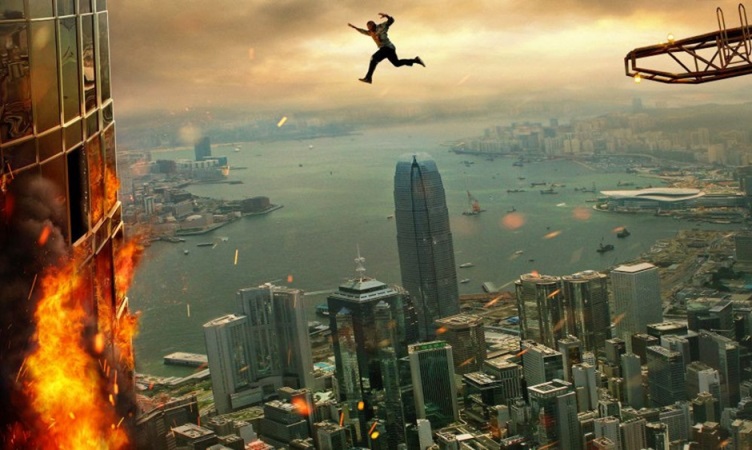
It’s not enough that Johnson, with an artificial leg, can climb a sky high crane while a skyscraper (hence the title) blazes to pieces next to him.  He then makes a ridiculous leap from said crane to said skyscraper through a broken window.  What?!?!? It could happen!!!!! Same as you can put sticky duct tape on your hands and shoes, and climb the outside of the building with the same artificial leg, like Spider-Man.

So, what do you think reader? Did I like Skyscraper?  You bet I did.  The edits are sharp.  I know The Rock isn’t going to perish, but when his hand slips from a ledge, you bet I jumped.  I laughed with such glee at each moment of ridiculous suspense. I loved the badassery of Neve Campbell playing the reverse of a distressed damsel wife to Johnson.  

On top of all that, this skyscraper, located in Hong Kong, and reportedly 5 times the size of the Empire State Building, is a gargantuan setting of the best technology.  Known as The Pearl, this is one super cool building of over 220 floors plus a fun house hall of mirrors dome at the top.  How that dome helps the world or even just the building beats the hell outta me.  It’s just amazingly cool and that’s why it’s there. 

So yes!!!!  Go see Skyscraper. Throw your logic and snobby intolerance for the absurd off the roof and have a great time at the movies.

MISSION: IMPOSSIBLE II

By Marc S. Sanders

Mission: Impossible II is undoubtedly the weakest installment of Tom Cruise’s series, adapted from the classic tv show. Action Director John Woo is normally regarded as “ACTION DIRECTOR JOHN WOO” because he can only direct action. He hardly ever directs story. There’s no dimension to his characters and nothing intriguing. It’s all just glitz and neon colors in his cinematography. No weight at stake in Action Director John Woo’s action.

A third act fist fight between Cruise’s Ethan Hunt and a very, very uninteresting villain played by Dougray Scott gets very tiresome, very, very quickly. Punch, kick, tackle, twirl, take off your jacket, get up in very slowwwwww motion, throw off your sunglasses, and do it again and again and one more time.

The MacGuffin of the picture is a virus and the anti-virus. Hunt recruits a sexy thief played by Thandie Newton to infiltrate Dougray Scott, her ex-boyfriend seeking to cash in on the prize at hand. Somewhere, lost in Robert Towne’s script, Scott’s character gets wise to the fact that of all the “M:I” agents out there, Ethan Hunt is the one onto him even though they never come in contact with one another until the middle section of the film is complete. So, the bad guy, at times, disguises himself as Hunt. Screenwriter Robert Towne thought he’d get one over on the audience with the disguise twists that the M:I franchise is known for. Sadly, it’s not subtle enough in this picture. All twists can be foreshadowed as early as the opening credits actually.

Action Director John Woo really fails with this effort. He makes a terrible habit of amping up the gloss of his film with an abundance of slowwwwww motion actions and reactions to accompany a mostly mandolin soundtrack from Hans Zimmer. Beautiful set pieces of music. Though none of it belongs in this film. Zimmer’s work here is better suited for something more genuinely romantic and exotic, without the revving motorcycle rides and bare-knuckle brawls in the final act of the film.

In addition, Action Director John Woo is not given much action to “action direct.” There’s a lot of bland talking in Towne’s script. So much so that we finally arrive at what the film promises, only it’s very late in Act 2, and then drags on very slowwwwwwwly in Act 3.

For a brief stint early on, you get the impression that Cruise is adopting a flirtatious James Bond approach with Newton’s character. They hide away cuddled in an empty bathtub and quickly bed one another, but Towne writes no sexual innuendo to go with Cruise & Newton’s grins, or their shiny, moisturized complexions.

There’s no humor either. There’s really no reason to like Ethan Hunt here. He has nothing to say. All he does is walk in slowwwww motion in response to Action Director John Woo.

Cruise, again as producer, makes the mistake of only allowing his hand in the cookie jar. No one gets to do anything of great importance except him. A team is assembled to just watch Tom Cruise play and walk slowwwwwly. Cruise hired his own fan club for this film, including Anthony Hopkins. Now here’s a charming chap playing Hunt’s supervisor. You see him appear for the first time early on. He returns in the epilogue, and when the film has concluded you realize that Oscar winner Anthony Hopkins next to nothing to do, really. He doesn’t debate or joke with Cruise. He, like most of the cast of the first two M:I films, just tells Hunt who to meet next. What potential for a great character played by a marvelous character actor and it’s regrettably squandered away.

Fortunately, the approach of the subsequent M:I films went in different direction following Action Director John Woo’s contribution. All elements of this short-changed story were abandoned for better material from better directors to later come.

ROMANCING THE STONE

By Marc S. Sanders

Robert Zemekis’ Romancing The Stone is one of those perfect Saturday afternoon rainy day movies. Since it focuses on best-selling author Joan Wilder (Kathleen Turner), it seems apropos that the movie feels like curling up with a good book.

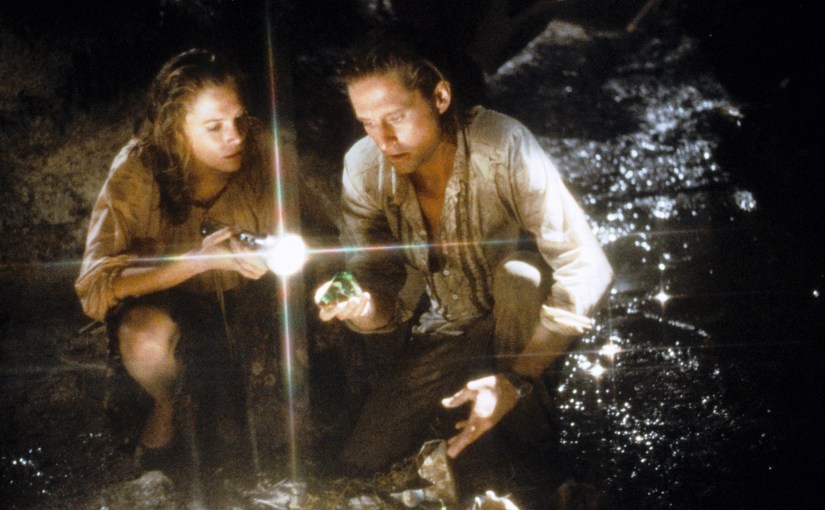
Upon discovering that her New York apartment has been ransacked, Joan gets a call from her terrified sister who has been kidnapped in Columbia. Joan is instructed to deliver a treasure map in exchange for her sister’s safe return. However, Joan is not as romanticized or adventurous as the characters in her novels. So, her three-piece suit and heels won’t serve well in the wet jungles in which she ends up completely lost. Fortunately, she meets a heroic, handsome guy in the form of Jack T. Colton (Michael Douglas). Together, they flee from the parties interested in the map, while trying to find the titled priceless gem.

Zemekis might have been taking an Indiana Jones route with this picture, but it finds its own identity, nonetheless. The fun comes with how Joan adapts to the outdoor elements and escapes the safe and lonely concrete jungles of city life. Turner is great as the one with no clue for travel or the instinct to stay out of a bad situation. It’s amusing to see her encounter and respond to one approaching cliffhanger after another.

There are great scenes here with mud slides, vine swinging, shoot outs and car chases. The best adventures never rely on CGI. A favorite sequence involves a meet up with a Columbian drug runner who helps the pair evade the bad guys in his 4 x 4 truck. That’s one of the many unexpected and wild moments offered here.

A third star is Danny DeVito fast on the trail of Joan and Jack. He’s here as the stooge more or less but he’s added comedy.

The one sad thing about Romancing The Stone is that it’s screenwriter Diane Thomas passed away shortly after her script was sold. Imagine what she could have done based on the promise of this film. This script has focus, fun and outstanding action sequences.

Romancing The Stone is just great escapism.

DAREDEVIL

By Marc S. Sanders

Mark Steven Johnson is probably a director you never heard of. He made two very bad movies based on Marvel’s character Ghost Rider featuring Nicholas Cage. Still Johnson has one redeeming quality and that is the very underappreciated Daredevil featuring Ben Affleck in the title role.

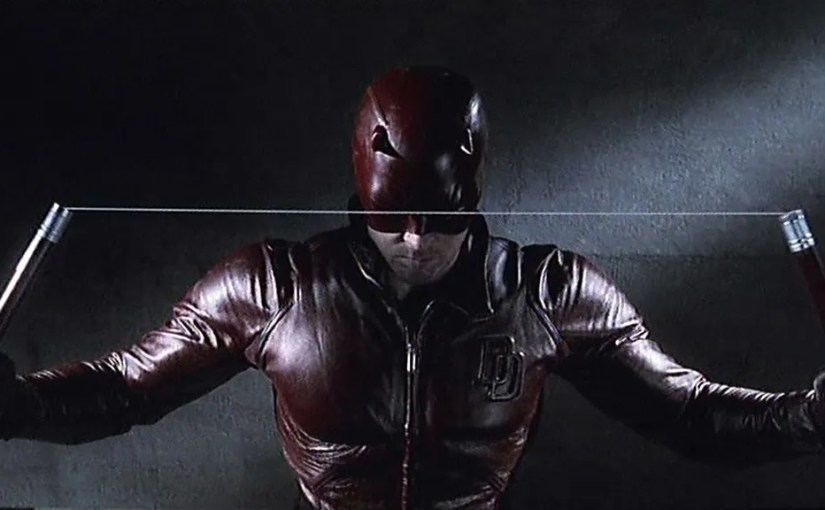
It’s not so much that Affleck is good in the role as blind lawyer/vigilante Matt Murdock aka the title character. More so, is that Johnson writes and directs a solid film very faithful to the source material. So, reader, what if you tell me you never read the comic books? My reply, so what! There’s still a lot of fun and colorful characters to get caught up in and you should have no trouble getting the hang of it.

Michael Clarke Duncan’s hulking physique was always his best attribute and serves him well as the crime warlord Kingpin aka Wilson Fisk, the puppet master of Hell’s Kitchen and the man responsible for the death of Murdock’s washed up boxer father. Colin Farrell chews the scenery (maybe little too much on my repeat viewing many years later) as Bullseye, a mercenary villain who can use any object as a precise throwing weapon, whether it be a card, a pencil, or shards of glass. It’s a ridiculous and unlikely talent but Farrell makes the most of it and the character serves as a perfect foil to the blind vigilante hero who uses his remaining four senses to skillfully fight and dodge and acrobat his way through rooftops over the city at night.

Jon Faverau (before directing Iron Man) is welcome relief as Murdock’s legal partner with some good humor material. Jennifer Garner is filler in the role of Elektra, a skilled fighter with trident weapons in each hand and the film’s standard love interest looking for revenge. Garner is nothing special. I’ll say it. She’s here based on her looks and her body and at the time she was the action go to gal (thanks to her TV show Alias) when Angelina Jolie was not available.

Affleck is fine in the part. He’s got the looks and physique. You can easily believe he’s a lawyer. If anything, I could have done without his voiceover narration. I think the film narrates itself fine without additional instructions. I’d argue that Affleck and Johnson could have taken this franchise further. At the time, it actually got good reviews. What did not help were the published exploitations of Affleck with his girlfriend at the time (now new bride), Jennifer Lopez (and later Garner), as well as his other poor choices of roles like Gigli and the insultingly embarrassing Pearl Harbor. (Main character Raif McCauley I have not yet forgotten!!!!)

Years later, some of the fight scenes look clunky. Some of the mid 2000’s alt rock is a little much (but Evanescence is always welcome, especially during a nicely dramatic rainy funeral scene). However, Johnson still has some tricks up his sleeve that work really well. He uses a great filming technique where Daredevil can see by means of sonic waves of sound thus making him more attuned to the trajectory of a bullet or where to find his adversaries. So, to pit a blind guy against the greatest marksman…yeah that’s a dual worth seeing. This gimmick was invented in the comics by Stan Lee and John Romita, yet very well captured in the medium of film. Another great bit is to translate how Daredevil can tell if a person is lying, a great skill for any lawyer to have. He can hear their heartbeat. Duh! Especially well done is how Murdock can see the facial features of Elekra during a brief escapade in the rain. Johnson CGIs it in midnight blue to leave an impression. Yes, Garner’s best moment comes when she’s animated in CGI blue.

The film offers a great theme of superimposing the devil image of the vigilante against the backdrop of the catholic church and other opportunities for a cross to intrude a scene. It hints that Matt Murdock is a religious catholic, but not enough. It seemingly questions the actions of its hero. Affleck even asks himself at one point “Am I the bad guy?” It’s a good additional dimension to the character; one I wish Johnson capitalized on a little more. When is a vigilante truly crossing over into the realm of sin?

Daredevil is worth watching and not worth comparing to the Netflix series. The product is served in two different mediums, one of which has the luxury of telling its story over a span of 10 hours each year. The original film, though, is condensed quite well in origin and character. Live with that and feel forsaken.

THUNDERBOLT AND LIGHTFOOT

By Marc S. Sanders

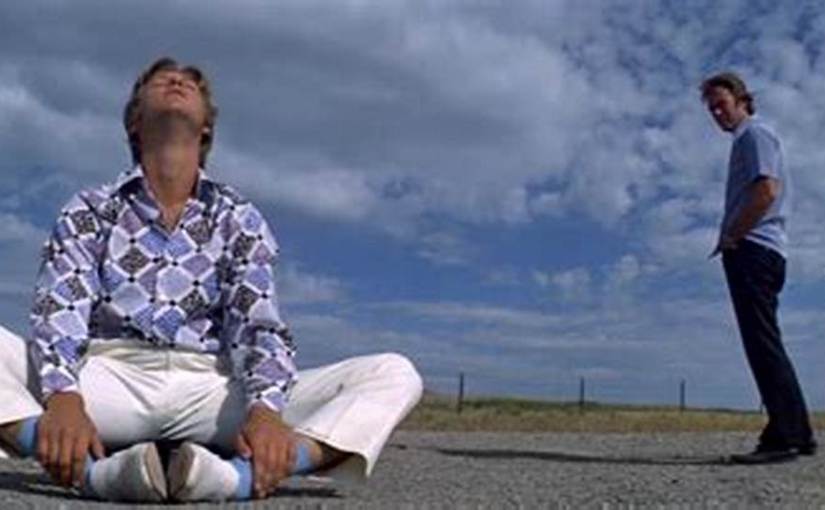
There are good Clint Eastwood films and there are bad Clint Eastwood films. You’d probably guess where I rank 1974’s Thunderbolt and Lightfoot (T & L).

I’m amazed. Director Michael Cimino, at the time, was really only known for polishing Eastwood’s Dirty Harry flick Magnum Force into a great crime drama of cop vigilantism. Then he does this picture, and how did anyone at Warner Bros trust him with The Deer Hunter a few years later? Sure, that film won Best Picture, but should anyone really have been surprised when the box office nuclear bomb, known as Heaven’s Gate came along, and bankrupted Orion Pictures? You think the producers of that turd said, “Fellas, we never considered Thunderbolt and Lightfoot. Hindsight 20/20. We shoulda known better.”

Back to the subject at hand. T & L is mindless of any coherence. Two criminals just happen to find each other randomly on some out of nowhere highway while running from the law (for Lightfoot) and a couple of bumbling henchmen (for Thunderbolt). Their respective crimes are unconnected. Eastwood’s quiet, familiar, tough guy demeanor (Thunderbolt) meets up with wild boy Jeff Bridges (Lightfoot) and then they eventually get to a plot of devising some kind of money heist with early adversaries George Kennedy and Geoffrey Lewis, former crime pals of Thunderbolt. However, they need to arrange to acquire a cannon, get on a job digging water lines for housing properties, work as ice cream delivery guys, hitch a ride in a redneck’s Dodge Challenger, and have Lightfoot dress in drag. There’s also a schoolhouse, no longer located where it once was, with a secret stash hidden behind a blackboard.

Doesn’t this seem like much too much effort for an ordinary bank heist in 1974? Security personnel and systems were probably not as sophisticated back then, no? Eastwood made an easier time of escaping from Alcatraz then all the work put in here.

The movie is sweaty, dirty, stupid, and it just doesn’t make sense really. Bridges actually got an Oscar nomination in the supporting actor category, up against nearly the entire cast of The Godfather Part II, for this film, and I’m…well…perplexed. How was that possible? Best guess, Cimino, who also wrote this dreck, decides to have Lightfoot die at the end. (There!!!!! I ruined it for you!!!!) Problem is I don’t know why or how. He’s not shot or wounded. There’s never an indication that he is ill. The script is too dumb to consider any kind of foreshadowing of his demise. The guys are just driving along with the money in backseat, and Lightfoot appears weak all of the sudden. Thunderbolt pulls over to the side and his partner just quietly dies in the passenger seat. Cimino cues up the Paul Williams music and the end credits appear. Bridges had a death scene. So, Bridges has to get a shot at Oscar glory. The math ain’t pretty but it’s the best logic that I can come up with.

CODE OF SILENCE

By Marc S. Sanders

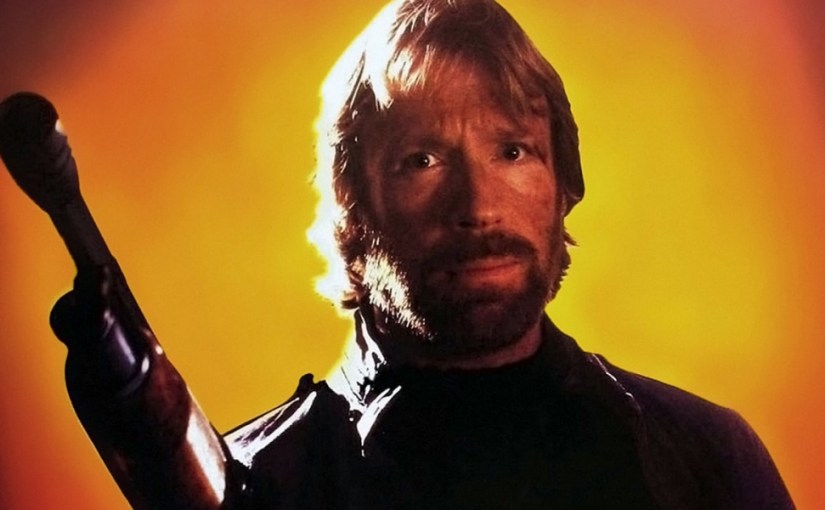
I must admit I have not watched many Chuck Norris movies. Just a handful here or there like The Delta Force, but on my radar to catch was always the cop thriller from 1985, Code Of Silence. I always intended to watch it someday as the film is highly endorsed by Siskel & Ebert. As well, it’s directed by Andrew Davis, the skilled filmmaker who would go on to direct The Fugitive and Under Siege.

Code Of Silence works in two ways; two stories that live up to the title. Norris is a Chicago cop named Eddie Cusack who heads a squad of under covers within the city. The film opens with what is supposed to be a well-planned drug bust that goes wrong when the one mob faction is overrun by another mob. Cusack’s informant as well as others turn up dead just before his band were to move in with arrests. Nearby, two of Cusack’s men come upon a young, unarmed man. The rookie officer witnesses the elder officer accidentally shoot the kid, and afterwards he plants a pistol in his hand to make it look like self-defense.

Now Cusack has to contend with a mob war in the streets where a boss’ daughter (Molly Kagan) is the only survivor of an attack and he must protect her. While at the same time he has to deal with his squad turning on him because he knows what the elder cop really did. The code of silence motif is expected to be honored in both camps. Personal vendettas and violations of police policy need to remain quieted.

The film belongs to Norris exclusively. Andrew Davis allows some of the action star’s kickboxing skills to work their way into the movie, and it all becomes a sidestep dance routine really. It always amuses me in these action pictures where the star will take on twenty guys at once yet he fights one or only two of them at a time. The other eighteen or nineteen thugs wait their turn. Why not just have all of them tackle Norris all together? No. Then we wouldn’t get his outstretched 360-degree roundhouse kicks in the air.

There’s also an unnecessary cop robot contraption that Norris pilots for the climactic action packed ending. This thing looks a rejected auditioner for the role of Johnny 5 in Short Circuit. The robot must have been too tall for the part and rather clunky. It has no relevance to either storyline and was obviously inserted for fun, campy violence of fireballs and explosions in the necessary old, abandoned warehouse where all of these actioners have to take place.

Fortunately, Code Of Silence has good story material to work with, and some thrilling stunt work including Chuck Norris pursuing a bad guy on top of a moving elevated train that makes its way with an eventual leap into the river. From what I could tell, that was really Mr. Norris himself in that whole scene. Good footage here.

Andrew Davis relies on what would become regular side characters that appear in many of his other films including Ron Dean and Joseph Kosala. They always make for good cop antagonists within the Chicago settings of his films. Norris is also good in a quiet Clint Eastwood kind of manner as he holds his own beliefs against the rest of his department who support the elder cop.

I like the conflicts that happen on both sides of the law in Code Of Silence. Sure, it’s got some silliness to it with the kickboxing and the gigantic, cop robot that shamelessly waddles along, but the two stories hold up by keeping me engaged of their outcomes.

Code Of Silence is a pretty effective thriller.

MISSION: IMPOSSIBLE III

By Marc S. Sanders

Remember that CW TV show called Felicity?  I’ve never seen an episode, but I remember the advertisements.  Beautiful, former child actor, Keri Russell with the golden, curly locks of love, was on her way to college.  Every commercial had that crisp, home like comfort feel voiceover.  It left me with an impression that this was a corny, yet sweeping exploration of coming of age while at college, and gaining independence.  The show came from JJ Abrams.  Abrams is a good director and writer.  He’s now one of the biggest producers in Hollywood.  Back in the early 2000s however, he wanted to nurture his characters.  Protect them.  Make them feel warm and content.  After Felicity, he went on to develop a spy thriller series called Alias with Jennifer Garner.  She was a college student with a lovable roommate by day and was super spy by night, or whenever the moment called for it.  Abrams went on to blending his coziness with that of stunts and explosions that modernized a series like, say…Mission: Impossible.  Naturally, when Tom Cruise recruited him for the third film of the high-octane franchise, we got the “Felicity Finish” applied.  Ethan Hunt is sweet and kind, and he’s ready for married life.  How precious!

Don’t get me wrong.  Mission: Impossible III is likely what kept the still running blockbuster movie series going.  Following a style over substance lackluster entry before, from action director John Woo, this third entry went in a completely different direction.  Ethan Hunt hugs a soon to be sister-in-law. Ethan Hunt cries.  Ethan Hunt has feelings.  Ethan Hunt has to rescue who he regards as his “kid sister,” Felicity…I mean adorable Keri Russell from being held hostage.  Ethan Hunt belongs on the cover of a Hallmark card with actress Michelle Monaghan.

I imagine JJ Abrams is not fond of the early James Bond movies.  I’d make a case that he watches them and wishes that someone, anyone would just give 007 a warm and sincere hug after he saves the world, and hold him close.  Superspies have emotions too, ya know?

The story of this third M:I chapter focuses on the pursuit of a MacGuffin known as the rabbit’s foot.  A powerful weapons dealer named Owen Davian (a brutally frightening Phillip Seymour Hoffman) is working to get a hold of it.  Following a first act rescue mission that Ethan and his IMF team (Ving Rhames, Maggie Q, Jonathan Rhys Meyers) engage in, the main hero finds reason to capture Davian and intercept the mysterious rabbit’s foot.  Complications get in the way because Ethan has fallen in love with an adorably beautiful doctor named Julia (Monaghan), who is unaware of her fiancé’s exploits.   

The action is superb in Abrams cinematic directorial debut.  Once it gets started after a sweet engagement party scene, it does not let up.  Everything is well edited and choreographed. An essential part of a Mission: Impossible movie.  An unexpected attack on a bridge crossing is spectacular.  The covert tactics are fun to watch as well.  When Ethan and team secretly invade The Vatican, the step-by-step maneuvers are carried out with gleeful ease.

There are twists and double crosses at play as well that you are not even thinking about looking for.  Frankly, they work more effectively here than they did in the original M:I film directed by Brian DePalma.  When the traitor is revealed to deliver a line like “It’s complicated,” it is not unreasonable to gasp.

Hoffman still remains the best of the villains in Cruise’s action franchise.  Maybe that’s by Abrams’ design because this is probably the most personal of all the films to date.  Phillip Seymour Hoffman is the guy who will be apprehended and braced to a railing on an airplane by the IMF team, and yet will still hold the upper hand.  A question like “Do you have a wife or a girlfriend?” has a much more sinister context when uttered by Phillip Seymour Hoffman.

I do recall when I first saw the film that the ending is not original.  It’s an opportunity for Tom Cruise to do another running scene, but it was first used in an episode of Alias where an operative is remotely giving directions to the hero while talking on a cell phone.  Clever the first time.  The second time seeing it, I was just calling it out.  So, Abrams needs to stretch his imagination a little.  No matter.  The pulse of the adventure races at high speed.

Mission: Impossible III might be unabashedly hokey and corny.  Everyone looks like they belong in a JC Penney commercial at Christmas time, or on a CW TV show like Felicity. However, it won’t deny you of what you are looking for which are big stunts in the sky and on the ground, along with the cool gadgets and those signature pull away masks that made the original series so memorable. 

I still realize that by the time film series reached this chapter, the franchise still belonged exclusively to Tom Cruise occupying every frame.  Once again, his team of IMF agents really don’t matter or carry any substance except to wear clothes.  At least this time, Tom Cruise cries over someone else.  So, he’s not as self-involved as the last couple of times, or even the last couple of dozen movies.  That’s a nice change of pace. 

THOR: LOVE AND THUNDER

By Marc S. Sanders

Taika Waititi’s Thor: Love And Thunder doesn’t just operate as a standard Marvel Super Hero movie.  I think it encapsulates what moviegoers treasure when watching a film, and that consists of a gamut of emotions with the opportunity to absorb the best in sight and sound.  Even if we are watching a guy fly through the skies with a cape that’ll be marketed into a million toys and t-shirts, sight and sound are nothing without brains behind a script.  It’s fortunate that a director like Waititi always works with that in mind.  Marvel overseer Kevin Feige knows how to recruit talent behind the camera and you just can’t go wrong with the architect of a spoof on the surface, yet an all too horrifyingly real film underneath, like the widely acclaimed Jo Jo Rabbit.

I’ve always laid claim to the fact that movies largely recognized as “tear jerkers” like Steel Magnolias and Terms Of Endearment are actually comedies first, and then dramatic sob stories second.  I’m serious about that observation.  Why?  Because if a film is going to go to great lengths to risk the outcome of one of its main characters, then it must get its audience to embrace and deeply love that person first.  The best avenue to that approach is to outrageously laugh and cheer that character on ahead of what’s to come.  Taika Waititi’s second film to center on the God of Thunder does just that.  The best reward I got from Thor: Love And Thunder is that I laughed quite often (as the trailers imply), but I also teetered on tears as well.  Good fantasy storytelling will incorporate an all too real conflict with its protagonists and then introduce the strange and unusual as an escape.  The best example may be The Wizard Of Oz, and the simple set up of Dorothy and the risk of her perishing with her dog Toto in a threating tornado.  More recently, I also think about Guillermo Del Toro’s Pan’s Labyrinth centering on a young girl in early twentieth century war torn Europe.  Again, Waititi’s coming of age during Nazi occupation opus, Jo Jo Rabbit, follows this formula as well.  Without spoiling too much from Thor’s latest adventure, Waititi presents an all too real and unforgiving circumstance for one of the film’s characters and then segues into his delightfully and never too weird assortment of settings and characters.

It’d be easy to think that by what may be the sixth or seventh time we’ve seen Chris Hemsworth in the garb of this character that anything inventive would have been exhausted by now.  Not so.  A new dimension in storytelling arrives midway through the film that presents a different crisis for the proud God.  Hemsworth really approaches it beautifully.  It was reminiscent of Christopher Reeve in the original Superman, actually.

A supporting cast of return players work well together, particularly Natalie Portman, who is given a much more fleshed out and well considered character arc than her two previous Thor films. (Early on, Marvel Studios was notorious for not writing good female characters in any of their pictures.  They were just presented as glamorous damsels in distress. Thankfully, that’s well behind them by now.)  Portman returns as the on again/off again love interest, Dr. Jane Foster, for Thor.  Even better though, Jane actually becomes Thor!!!!! (No spoiler there.  Just look at the trailer or marketing poster.)  There’s great on-screen interaction with Portman and Hemsworth, even when it’s a montage of past dating episodes like in ridiculous Halloween costumes or having a domestic squabble as any typical married couple might have.  Hollywood should reunite these two for a romantic comedy in the vein of Rob Reiner/Nora Ephron material.  Chris Hemsworth is a much better partner than Ashton Kutcher ever was in a past Natalie Portman film.  Put Chris Hemsworth together with Natalie Portman again and they could become as adoring as Tom Hanks and Meg Ryan did.

By the time the fourth movie comes, does it really matter who the villain is played by?  Well, when you are writing a smart script amid ridiculous visuals like Taika Waititi is known for, the answer is yes.  This film surprisingly opens on a downer prologue that necessitates good dramatic acting amid silly CGI and garishly loud costumes.  It’s fortunate that Christian Bale, who regularly performs on a method level comparable to Daniel Day Lewis, was available to portray the scrawny, pale and scarred Gorr The God Butcher.  Bale puts all his talents into what could’ve been a throwaway role like, say a Ghostbusters bad guy.  (Can anyone tell me who actually played Gozar in the 1984 film????)  This is another notch in Bale’s repertoire of outstanding credits that should not be overlooked.  You can sympathize with Gorr, as well as be frightened of him.  There’s much range in this character on the same level as the Thanos villain from earlier Marvel films.

Russell Crowe has a fun appearance as the God known as Zeus.  He looks over the top ridiculous and he works in antics that seem like they came out of episodes of Who’s Line Is It Anyway?  Put it this way, I haven’t forgotten how Crowe walks down a staircase yet.  If Russell Crowe is anything of an educated performance artist, then when he was getting sized up in wardrobe, I’m sure the wheels were turning and he was considering what tics could work for that of a God drowning proudly in his own vanity.

Tessa Thompson and Taika Waititi are thankfully back, respectively as Valkyrie, King of the fishing/tourist destination New Asgard, and the simply innocent rock guy buddy, Korg.  The Guardians Of The Galaxy are here too.  It’s a fun bit of material they have to play with.

In another director/screenwriter’s hands, any Thor film would likely get boring with its standard formal Shakespearean like vocabulary and artificial CGI.  Isn’t that an ongoing problem with CGI anyway?  So often it looks to fake.  Because Taika Waititi opts for bright colors and odd shapes and sizes of setting and background characters, nothing could look artificial, because the fantasy is always acknowledged as over the top by the very characters occupying the space.  A glass castle of pinks and purples that resembles gigantic glass Mary Jane bongs or science lab beakers is accepted in a Thor film, just as much as munchkin size, owl like creatures with small beaks are a terrorizing army in flying jet skis with mounted laser guns.  Mix in a blaring rock soundtrack and Waititi hits the notes where it’s okay to laugh at the silliness of it all. In other moments, he’ll invite his audience back in from recess to take in what’s hard and difficult to live with and endure.  Again, Waititi pleasantly surprised me with the balancing act of outrageous comedy against crushing drama when he made Jo Jo Rabbit.  The blend works so well here in not so typical Marvel fashion.

Thor: Love And Thunder left me thinking that it is the best of the superhero’s four films.  It’s measure of laughs and choked up drama kept engaged and I appreciated the experience.  Remember, I recalled Steel Magnolias and Terms Of Endearment in this write up.  If you don’t take that comparison lightly, then hopefully you’ll have the same experience I did with this installment of the Marvel franchise.

PS: Hats off to the trailers for not incorporating everything the film has to offer.  Within the first fifteen minutes of the movie, I was actually taken aback by an element I never considered or expected.  It only enhanced my perspective of the film.

PSS: Anyone that knows me, knows that I love Guns N Roses.  Consider me a born-again fan.  Particularly Sweet Child O’ Mine will always be one of my most favorite songs.  This film reminded me that it was the first song my daughter heard the day after she was born, when I sang it to her in the hospital room. 

THE RIVER WILD

By Marc S. Sanders

Meryl Streep can do anything. Comedy, drama, accents, age defiance, make unbearable choices, even play opposite Roseanne; anything! She can even go white water rafting. She’s a real life James Bond.

In The River Wild, Streep takes a while to outsmart bad guys Kevin Bacon and John C Reilly, but she always maintains the raft through dangerous rapids while protecting her husband and son (David Strathairn and Joseph Mazzello).

See, according to Curtis Hanson’s adventure film, the best way to outrun the law following committing a robbery is to go white water rafting, even if you have no experience with the sport. That becomes a downer for Meryl Streep’s family getaway where tensions are high in her marriage to her workaholic husband. Fortunately, this setback might get them on the right track and Strathairn will find an appreciation for the dog that has come along. Reader, I won’t give it away but like I said, Meryl Streep can do anything. So, the odds on the family pet making it out of this alive are pretty favorable. Too bad Mazzello and the dog won’t listen to dad when it’s necessary.

The plot of The River Wild is very simplistic. Hanson quickly gets to the river following some exposition of familial discourse at home. However, just because he gets to the river so soon, doesn’t mean that the thrills begin right away. There’s a lot of beautiful nature footage here and everyone is happily getting along. Bacon connects with Mazzello much to Strathairn’s chagrin, and he flirts charmingly with Streep. Then lo and behold, oh my stars, Kevin Bacon is a bad guy??? What? The Footloose guy?????? Why he’s six degrees of any one of us!!!!!

Hanson gets some good action moments on the rapids. There close up shots against the rocks, and right into the water and down the impossible falls. The suspense is lacking though. Strathairn makes an escape in the woods. He’s got a good head start, and the best option he can come up is to climb a steep rock wall in plain sight with no coverage whatsoever. Kevin Bacon, what are you doing? Shoot the guy!!!! Mr. Hanson, you just brought your stride to a screeching halt.

That’s the problem with The River Wild. There’s a lack of thrill to it all. This is not a film brave enough to really endanger the dog, nor the kid, nor Streep. The worst that’s really done is a couple of punches to Strathairn and a cut above his eye.

Mazzello made it as the screamer kid star in his adolescent years in film (see Jurassic Park). Bacon seems like he wanted to get a little crazier in the villain role, but he held back. I wanted him to cross the line a little more, a lot more actually. He wasn’t dangerous enough for me. Reilly was just a bumbling, worried accomplice in tow.

Hanson has done way better than this with his supreme effort like L.A. Confidential and even Eminem’s 8 Mile. Thank goodness I can still respect the man’s career beyond this doused misfire.