
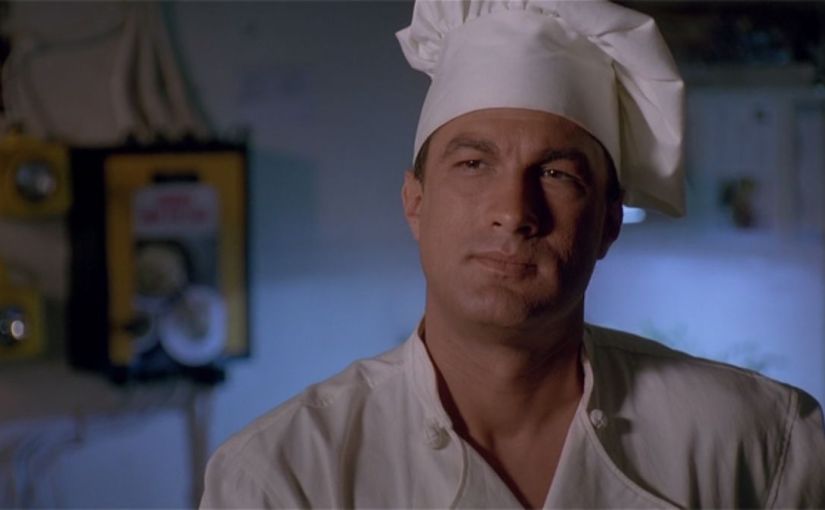
UNDER SIEGE

By Marc S. Sanders

Die Hard on a battleship is how to describe Under Siege, Steven Seagal’s best film.  His second best is Executive Decision, and (SPOILER ALERT) he dies in the first ten minutes of the movie.  What does that tell you? 

Before Andrew Davis scored big time with The Fugitive in 1993, he used a lot of the supporting players of that cast (nine in total) to build this action crowd pleaser.  Notably Tommy Lee Jones was selected to be the main villain alongside a kooky Gary Busey.  Jones is smart, silly, downright nuts and dynamic.  He sings, loves Saturday morning cartoons, and even plays the harmonica.  Seagal can’t do any of that, but he’s got some moments of deadpan humor because he sticks to the script by J.F. Lawton (Pretty Woman). 

The USS Missouri is ceremoniously being decommissioned as President Bush has delivered the executive order to have all nuclear missiles removed from naval vessels.  Real news footage opens the film to confirm this was actually happening at the time of the movie’s release.  

On its final voyage to Honolulu, Commander Krill (Busey with a real bad guy name. See you add an R to the word Kill and you great KRILL) is preparing a surprise birthday party for the ship’s colonel.  Krill is going entirely against regulations to welcome a chopper full of catering staff along with a rock band aboard for the festivities.  Playboy’s Miss July, Jordan Tate (Erika Eleniak, who actually was Miss July) is on board too but not so enthusiastic to jump out of a cake.  William Strannix (Jones with another bad guy name; You see if you end a last name with an X it sounds mad man like) is the rock star lead singer and he is just a balls to the wall energetic wild man.

Down in the kitchen is Casey Ryback, the ship’s muscle bronzed cook who doesn’t get along with Krill and his cronies.  As a result, he gets locked in the freezer and conveniently unaccounted for just as Strannix and the catering staff takes over the ship with Krill by his side.  Heavily armed, these guys mean business by imprisoning the ship’s crew while they construct a railing system to haul the vessel’s missiles onto an arriving submarine.  Strannix’ motivation stems from a longstanding gripe following his service as a specialized CIA assassin.  He means to make Honolulu “glow in the dark”.  However, if Ryback can get free, he’ll do everything in his power to thwart the bad guys’ plans, retake the ship, rescue the crew and deactivate the missiles before they reach their destinations.  Fortunately, besides being a talented chef, Ryback was also a decorated Navy SEAL. As the body count increases, Strannix and Krill realize this is not the work of a cook. A microwave bomb is a nice touch.

Under Siege is wholly entertaining and worthy of repeat viewing.  Andrew Davis directs a fast-moving workshop of organized activity that walks you through the various decks and cabins of the ship, actually shot on a Louisiana docked USS Alabama.  Davis had the challenge of manipulating his backdrops and overhead camera shots to make it look like the Missouri was coasting along the Pacific at night.  To me, it looks seamless.  Very impressive exterior work.

Tommy Lee Jones is the real attraction here.  Unlike Seagal, who he hardly shares any scenes with, Jones is just living it up as this guy in a leather jacket, sunglasses and tye dye shirt with a washed out and manic complexion and bulging blue eyes with his growly signature bellow.  He makes sure Strannix is unpredictable and funny too.  Tommy Lee Jones will always be at the top of the list of best antagonists.

Gary Busey is doing his regular thing.  He’s a brat.  The bit grows tired, but Jones makes up for it.

Seagal is just the same personality.  Not entirely ho hum though. He looks better here thanks to a script designed with strategy and tact.  Andrew Davis shows Seagal doing the work, not just slapping a guy into knockout submission with his notorious kung fu inventions.  You see Ryback cleverly build bombs and set up gauntlet approaches for the enemy.  None of his dialogue is anything special and when Ryback is finally face to face with Strannix, knife against knife, but, well, you know who controls the scene.  Jones delivers his natural talent for acting while talking to Seagal’s brick wall.  It works, but Andrew Davis and Tommy Lee Jones deserve most of the credit.

Under Siege is sensational action with a good supporting cast to compromise with Steven Seagal’s unfavorable public ego. It avoids making this picture a ridiculous one-man army, over the top showcase.  Ereka Eleniak is especially memorable, on the level with Sandra Bullock and Rae Dawn Chong in Speed and Commando, respectively.  Not as strong as them, but she has some good moments as she embraces the combat scenes.

There are some overlooked inconsistencies in editing that I caught on a second viewing. In one scene Strannix is wearing a sweatshirt. The very next moment he’s in his jacket again. Things like that. Yet, the stunt work, shootouts, knife fights and explosions are grand to watch. I also love the war room arguments among the military commanders and government officials who stay in touch with Ryback and sweat in suspense on behalf of the audience. Davis’ set up is a hearkening back to Dr. Strangelove.

I saw a prior film by Andrew Davis called The Package, a good thriller with Gene Hackman in the lead. Tommy Lee Jones was featured in that film but regrettably underused having minimal dialogue and no character buildup. You don’t ever stifle Tommy Lee Jones! Never!!!! Ever!!!! Davis atones for that in Under Siege.

This is an action picture that holds up. I miss Andrew Davis. Like Martin Brest, I wish he was continuing to make movies. These are really skilled craftsmen.
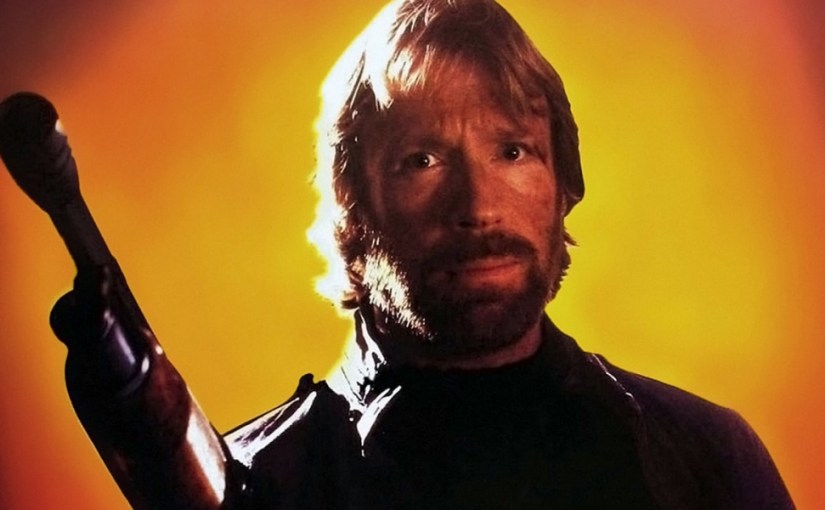
CODE OF SILENCE

By Marc S. Sanders

I must admit I have not watched many Chuck Norris movies. Just a handful here or there like The Delta Force, but on my radar to catch was always the cop thriller from 1985, Code Of Silence. I always intended to watch it someday as the film is highly endorsed by Siskel & Ebert. As well, it’s directed by Andrew Davis, the skilled filmmaker who would go on to direct The Fugitive and Under Siege.

Code Of Silence works in two ways; two stories that live up to the title. Norris is a Chicago cop named Eddie Cusack who heads a squad of under covers within the city. The film opens with what is supposed to be a well-planned drug bust that goes wrong when the one mob faction is overrun by another mob. Cusack’s informant as well as others turn up dead just before his band were to move in with arrests. Nearby, two of Cusack’s men come upon a young, unarmed man. The rookie officer witnesses the elder officer accidentally shoot the kid, and afterwards he plants a pistol in his hand to make it look like self-defense.

Now Cusack has to contend with a mob war in the streets where a boss’ daughter (Molly Kagan) is the only survivor of an attack and he must protect her. While at the same time he has to deal with his squad turning on him because he knows what the elder cop really did. The code of silence motif is expected to be honored in both camps. Personal vendettas and violations of police policy need to remain quieted.

The film belongs to Norris exclusively. Andrew Davis allows some of the action star’s kickboxing skills to work their way into the movie, and it all becomes a sidestep dance routine really. It always amuses me in these action pictures where the star will take on twenty guys at once yet he fights one or only two of them at a time. The other eighteen or nineteen thugs wait their turn. Why not just have all of them tackle Norris all together? No. Then we wouldn’t get his outstretched 360-degree roundhouse kicks in the air.

There’s also an unnecessary cop robot contraption that Norris pilots for the climactic action packed ending. This thing looks a rejected auditioner for the role of Johnny 5 in Short Circuit. The robot must have been too tall for the part and rather clunky. It has no relevance to either storyline and was obviously inserted for fun, campy violence of fireballs and explosions in the necessary old, abandoned warehouse where all of these actioners have to take place.

Fortunately, Code Of Silence has good story material to work with, and some thrilling stunt work including Chuck Norris pursuing a bad guy on top of a moving elevated train that makes its way with an eventual leap into the river. From what I could tell, that was really Mr. Norris himself in that whole scene. Good footage here.

Andrew Davis relies on what would become regular side characters that appear in many of his other films including Ron Dean and Joseph Kosala. They always make for good cop antagonists within the Chicago settings of his films. Norris is also good in a quiet Clint Eastwood kind of manner as he holds his own beliefs against the rest of his department who support the elder cop.

I like the conflicts that happen on both sides of the law in Code Of Silence. Sure, it’s got some silliness to it with the kickboxing and the gigantic, cop robot that shamelessly waddles along, but the two stories hold up by keeping me engaged of their outcomes.

Code Of Silence is a pretty effective thriller.

THE FUGITIVE

By Marc S. Sanders

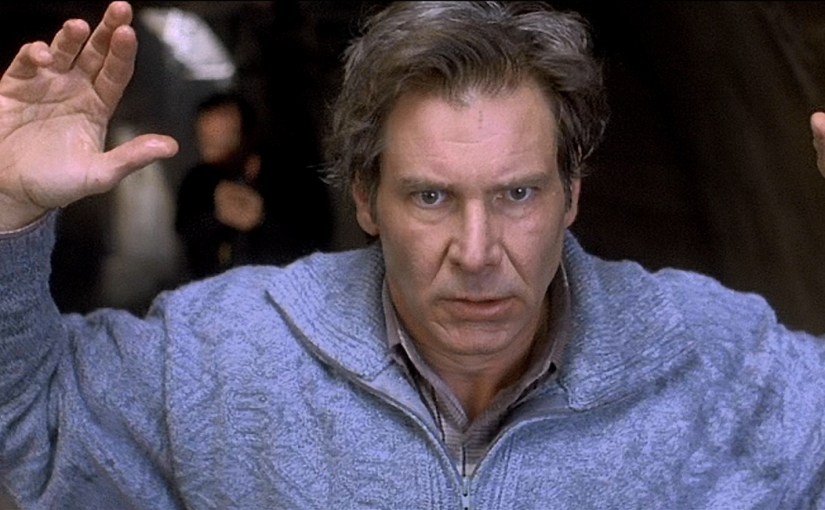
In 1993, Andrew Davis directed the best Alfred Hitchcock film that was not directed by Alfred Hitchcock. The Fugitive with Harrison Ford being pursued by Tommy Lee Jones was a runaway smash. As we now live in an age of cell phones and the World Wide Web, you’d think this film might be somewhat dated but it is the last thing on your mind while watching. This is a tense, taut thriller that never, ever lets up. Another favorite picture of mine.

The opening credits serve as a prologue, showing Dr. Richard Kimble struggle with a one armed man in his home after his wife (Sela Ward) has been assaulted and killed. Kimble becomes the accused and eventual guilty party who is sentenced to death.

Davis is now ready to show his first of many wonderful set pieces. As Kimble’s prison bus careens off the road landing on railroad tracks, an oncoming train collides with the bus. Kimble and another prison inmate now have the opportunity to escape and go on the run. Enter Tommy Lee Jones as Deputy Sam Gerard and his team of smart, intuitive misfits to catch up to Kimble who has made a mad dash into the dense Illinois woods. Because Kimble and Gerard are depicted to be incredibly smart, Kimble only remains a few steps ahead throughout the picture. Later in the film, Kimble makes his way back to Chicago to search for the one armed man and uncover exactly why his wife was murdered.

Location shots are masterfully done in The Fugitive. From the woods to a sewer system (a manufactured set I believe), to the streets of Chicago and Cook County Hospital.

The train crash is one of the all time best moments in film. No miniatures. No CGI. This is a fully loaded train crashing into a bus, and this is where you can not deny the craftsmanship of great filmmaking. Cameras were positioned at multiple angles to capture the mayhem in one take.

The other great set piece occurs during the actual St Patrick’s Day parade in Chicago. Gerard once again gets Kimble in his sights and Kimble manages to blend in with the parade marchers. The quick editing of improvisational camera work is spectacular here. Kimble and Gerard are literally in the same frame and yet Gerard can’t see what’s under his nose. Moments like these can’t be storyboarded. Andrew Davis’ production could not stop the actual parade for another take. It all had to be done on a now or never basis.

I watch The Fugitive and I always think back to Alfred Hitchcock’s best work like The Man Who Knew Too Much and North By Northwest. An innocent man is unexpectedly swept up in a conspiracy where he becomes the target and his adrenaline and instincts must kick in to save himself. The only thing he’s armed with is his mind. There’s also an unusually creepy antagonist, The One-Armed Man. This makes the film incredibly foreboding. I know the film stems from the legendary television series, but Davis treats this villain as if he’s among the ranks of Hitchcock’s use of Martin Landau or James Mason.

Harrison Ford is great at never glamorizing his role. He doesn’t suddenly become Rambo. He becomes a man of convincing desperation. Ford shines in roles like these such as his other films like Witness, Air Force One, and Frantic.

Tommy Lee Jones gives one of my most favorite performances on film. He plays Gerard with non stop adrenaline. He has exquisite chemistry with his team, including Joe Pantoliano. As well, Gerard is only interested in fetching what has escaped. He has no interest in guilt or innocence, until he realizes that Kimble has no interest in the consequences of escape. Kimble is interested in his innocence. Even Gerard becomes attuned to Kimble’s drive. Here is where the script is wise. There is no dialogue to imply what Gerard is thinking. Tommy Lee Jones has a way of giving a great close up to show what he’s thinking. He trusts the audience will presume what’s driving his intuition.

Davis pulls out all the stops with this film. There’s magnificent action shots of Gerard’s helicopter quickly flying over the ambulance that Kimble is racing away in. A great cat and mouse maze sequence happens within a sewer system. Lighting is perfect, there. Nothing is overly dark. There’s also incredible overhead shots of the dam and ravine that Kimble makes for a getaway with an absolutely surprising dive from an enormous height.

The Fugitive is smart and action packed to the teeth. You are in full focus while watching the ongoing pursuit. This film was nominated for Best Picture. Rare for an action film, but also a testament to its greatness. Tommy Lee Jones deservedly won the Oscar for Supporting Actor.

No doubt for me that The Fugitive is a must-see film for any kind of moviegoer. There are moments to feel scared, to laugh, and to cheer. When it is finally over and the story arrives at its satisfying conclusion, you cannot help but let out a deep breath. You feel like you’ve run a hundred miles, or at least as long as Richard Kimble ran towards his innocence. Your time will be well spent investing in the The Fugitive. An absolutely fascinating picture of great, mounting suspense.