SPEED

By Marc S. Sanders

Jan de Bont’s Speed is one of the best action thrillers ever made. It moves at a breakneck pace with huge suspense, big laughs and never-ending excitement. It’s also really smart with its crazy storyline.

A mad bomber (Dennis Hopper) manages to terrorize the city of Los Angeles by rigging a high-rise elevator with a bomb. Thirteen hostages need to be rescued and for an opening scene of a movie it does not get better than this. The heights and cramped space of the elevator and shaft are tightly claustrophobic, leaving you biting your nails. Small explosions come unexpectedly. This is what Hitchcock is always talking about. Putting a bomb under a table is suspense. The moment you detonate the bomb, the fear is over. De Bont blows up some bombs, but he leaves you hanging for when he’s going to set off the biggest bomb of all – the one that’ll put a hole in the world.

Later, the bomber does the same to a city wide transit bus traveling the freeway routes of rush hour traffic in the city. If the bus’ speed drops below 50 MPH, it’ll explode. Imagine pulling two tricks of Hitchcock all in one film. Imagine trying to never slow down a bus. This bad guy is destroying the city without even setting the big bomb off yet. This is great writing from Graham Yost. The whole scenario is tension at a maximum level.

The cop trying to stop the bomber is Jack Traven (at the time of release, an unlikely Keanu Reeves). Reeves is a perfect hero in this film. He allows the film to stand apart from being just another Die Hard rip-off by avoiding the Bruce Willis smart aleck stance. He’s a smart guy who keeps focus on just the situation at hand. He’ll get the bad guy later.

Sandra Bullock plays an adorable character named Annie who consequently has to drive the bus. This was Bullock’s breakthrough performance and I truly think it still holds as one her best. She’s funny, but she has some good dramatic moments as the tensions build up where Hopper’s crazed bomber makes things more difficult for Jack and the passengers. Bullock is good at crying on film, but she also knows how to deliver a line too.

De Bont does a great job at poking fun at the mundane trappings of traffic and intercity daily activity. As the bus careens through the city, pedestrian crossings are at risk, tow truck cars are problematic, cop cars are bashed up, and Annie is mindful enough to turn her blinker on as she careens around the corners. That last gag kills me every time. De Bont does what I always insist works in most films. He makes the setting of his film the character as well. This bomb rigged bus is stressing out the city of Los Angeles, for sure.

Seeing Speed holds a special memory for me. I saw it on its opening Friday night with some college buddies. Two days later, I insisted on taking dad to see it. Dad could not stop laughing through the absurdity of it all as street signs crash down, cars get totaled, and the fast editing blended with Annie’s laughable panic. Most especially, he loved a hapless driver (a scene stealing cameo from Glenn Plummer) in his gorgeous Jaguar convertible known as “Tuneman” by his license plate. Jack desperately hijacks his car as a means to catch up to the bus. As Tuneman’s car gets more and more wrecked, Dad could not get over it. He was in stitches. This is why movies can be so vital in our lives. I’ll never forget Dad’s nonstop laughing. I carry it with me forever, and I heard it again last night as I caught up with Speed. He’s gone now, but these are the moments I miss most about Dad.

A third act of the film is just as thrilling. Let’s see. We’ve done an elevator and a bus. How about a subway train? It’s a briefer sequence for the climax of the film, but it keeps the thrills ongoing.

Speed works on so many levels with a brilliant cast of B actors (at the time of 1994) that also include Joe Morton, Alan Ruck and a great Jeff Daniels as Jack’s partner with bomb experience. The action sequences cannot be complimented enough, and the Oscar nominated editing from John Wright with De Bont’s direction pair perfectly in timing.

Speed is an absolute thrill ride and a rocking great time at the movies.

IRON MAN 3

By Marc S. Sanders

The third chapter of the armored superhero, Iron Man, is an improvement on the second installment. Still, that’s not much of a compliment.

Action director Shane Black takes the reins from Jon Faverau, and gives himself a writing credit as well. I’ve always liked Shane Black’s writing style. Like this film, a lot of his works take place during Christmas. Lethal Weapon is a well-balanced picture that over thirty years later shows a nice offering of character background and action. When the action occurs, you are already invested in the characters. So, suspense is capable of holding some weight to an action movie. I only wish I saw some more of that here with Iron Man 3. Oh well!

First, let’s get the most obvious problem out of the way. Once again, Gwyneth Paltrow is there to wear sharp looking ladies suits, carry a brief in her hand and yell “TONY” a lot. You could make up a drinking game around that bit. Just when the Marvel films got it right with Hayley Atwell as Agent Peggy Carter in Captain America: The First Avenger, they revert back to their old ways yet again. If you are going to have female characters in your films, give them something weighty to work with that is evenly matched with the guys.

Robert Downey Jr is another problem, I’m afraid. He is so cherished in the role of Tony Stark by now. The first Iron Man really offers a great performance by him with a good arc. The prior film in the MCU, The Avengers gives him some great play with the other titanic superheroes. However, the writing is not thoughtful in Iron Man 2 or Iron Man 3. The first installment left you feeling that Tony was open to accepting care and tenderness from other people. His cockiness became subdued following a traumatic capture and escape.

Then the cocky monster within seemed to resurface in #2 and #3. Did Downey (who improvises a lot of his material) and the writers forget where they left off? Black literally has Tony Stark give away his address on live television to the bad guys, headed by a mysterious terrorist known as The Mandarin (Ben Kingsley). How stupid is this? Batman doesn’t give away where his Bat Cave is. Why would Iron Man do that?

From that point, we are treated to an attack on Tony’s ocean view, cliff side home from helicopters. Reader, Shane Black wrote a sequence like this twice before, in Lethal Weapon and Lethal Weapon 2. It’s been done before. The filming appears clunky in this centerpiece scene with camera shakes and uneven sound editing and lots of ceiling and wall dust. It’s a little hard to follow.

I’ll give credit to Black for throwing in a twist that comes out of nowhere. To my knowledge, this moment has left viewers very divisive. For me, I admire the effort but the development comes off wimpy. It involves Ben Kingsley as The Mandarin who promises to be a real threat to the film. Yet, the character’s motive turns out to be something else entirely. It’s odd, but it kept me engaged during the film. When the film ended, I was left wishing it was something else altogether. For the first two thirds of the film, Kingsley is very good with a hard, edged, roughly intimidating voice as he shares disturbing newscasts of threats to the President and the world. He was a different kind of villain that we hadn’t seen before, much like Heath Ledger’s Joker. Then the rug is pulled out on that attraction.

One really bright spot comes from Ty Simkins, as a kid named Harley that winds up assisting Tony when everything is against him. He is a fun, spunky kid who has some good exchanges with Downey’s well recognized, zippy delivery. He’s more fun to watch than Gwenyth Paltrow. That’s for sure.

Guy Pearce is another adversary who leads a team of baddies. Their bodies heat up to extremely hot and orange looking temperatures. (Forgive my poor English! That’s what comes to mind. Oh well!) Amazingly enough, their clothes don’t burn off while they easily can singe any Iron Man suit they come in contact with. Should I be focusing on that inconsistency? That’s one main problem with the film. It’s too apparent. I know this is all sci fi, but don’t make the fiction of the fiction so obvious, please. Pearce is fine in the role but he’s overshadowed by what his super villain powers are capable of. So, basically cast iron metal burns, but clothing fabrics do not. Got it! Check!

I’m not sure if Iron Man 3 is really worth a watch. Probably not, actually. Maybe so, if you want to marathon through all the Marvel films like I do. Yet, it really offers nothing significant to the films yet to come and shows nothing new to carry forward from the prior films. Much like Iron Man 2, it’s a pretty meaningless.

MIDNIGHT RUN

By Marc S. Sanders

Martin Brest’s Midnight Run is a perfect blend of comedy, action and sweet tenderness. Different facets of what two guys could potentially experience together, especially if they are on an unexpected cross country road trip, pop up unexpectedly. It’s a well-acted film with great exchanges in dialogue that surge with broad comedy and high-octane car chases and shootouts. Yet, there’s even some special quiet moments to appreciate as well. It’s another favorite film of mine.

Robert DeNiro is Jack Walsh, a disgraced former Chicago cop now turned bounty hunter who spends his days wrangling up criminals who skip out on their bail. When Eddie the bondsman (a great Joe Pantoliano) asks Jack to bring back Jonathan “The Duke” Mardukas (Charles Grodin) who skipped out on a $450,000 bond, something as simple as a “midnight run” turns into an excruciating journey from New York to California. The Duke doesn’t make it easy for Jack. He never shuts up and right from the start it doesn’t help that he’s afraid to fly. Well, there’s always the train, right? Plus there’s plenty of time because Jack has five days to get The Duke back into custody.

Not so fast. The mob, led by a silky smooth and threatening Dennis Farina, wants The Duke dead as revenge for embezzling millions of dollars from them, plus avoiding the risk of him testifying against them. The Duke unknowingly served as their accountant. The Feds, led by a just as awesome Yaphet Kotto, want The Duke as their material witness against the mob. On top of all that, Jack has to compete with Marvin (John Ashton), another bounty hunter who wants to bring in the The Duke.

There’s great action in Midnight Run and you can’t get enough of it, but it’s the comedic layers of complications the cast of characters bring on to themselves that serve the film best. Danny Elfman’s music accompaniment primarily on horns with guitar and piano bring out the fun in the best way possible. Great chases with a helicopter and various stolen vehicles while Jack and The Duke outrun endless squad cars are magnificent. Martin Brest (Beverly Hills Cop) is just an entertaining director.

Still, the action is not even the highlight for me. First, the chemistry among all the actors is fantastic. They have such brilliant exchanges of cursing each other out, getting on each other’s nerves, and especially listening to one another as well. It doesn’t matter if it’s a screaming match phone call between DeNiro and Pantoliano, or a one on one with Kotto getting frustrated DeNiro. It all works.

Most especially is the pairing of DeNiro and Grodin. They hate each other and then seconds later they’re laughing with each other. Grodin as The Duke, as pesky as he is, plays an unwelcome therapist at times to DeNiro’s Jack as the history of his failed marriage resurfaces and his fall from grace with the Chicago police department comes back to bother him. Jack doesn’t give in so easy to The Duke’s desire to share his feelings. He’d rather endlessly smoke, eat unhealthy food and tell The Duke to “shut the fuck up!” Nevertheless, a bond between the two forms and continues to reshape itself during the course of the film. A great moment occurs when they need to scam a barkeep out of some twenty-dollar bills. You’ll never forget “the litmus configuration” after you see Midnight Run.

I also want to call attention to one of my favorite of so many DeNiro moments in his long career. Midway through the film, Jack reunites with his ex wife and teen daughter that he hasn’t seen in nine years. Like many divorced couples, an argument breaks out among the parents only to be quickly silenced by the quiet intrusion of Jack’s daughter Denise (Danielle DuClos). As Jack waits for his wife to bring him money to help, Brest allows DeNiro to do some of his best acting with this young actress. They can hardly speak to one another. DuClos simply stares in disbelief that her estranged father came home. DeNiro can’t, in good conscience, make eye contact, knowing he’s been the absent parent. It’s too difficult. It is such a humane moment that it grabs me every time. It reminds me that dialogue is not always necessary for a great acting piece. Martin Brest really trusts his actors in this moment. It’s likely my favorite scene of the film and of DeNiro’s career. You can take this scene out of the context of the entire film and still be just as moved by it.

The best action films succeed when the filmmakers care about the characters. When the characters are given depth, then we worry about them. We hope they don’t get killed or taken or arrested, and simply make it home. Midnight Run is that kind of action piece. Had we not cared for Jack and The Duke, movie lovers never would have cared for Martin Brest’s film, now going on 34 years later. It’s a perfect film.

THE ITALIAN JOB (2003)

By Marc S. Sanders

F Gary Gray’s 2003 remake of The Italian Job is crackling with cool and sleek film coverage. It is a blend of wit and fast paced action delivering a solid heist thriller. The cast is terrific as well.

Donald Sutherland plays John Bridger, a near retired master thief and safe cracker. He is ready for one last job with his protégé, Charlie, played by Mark Wahlberg. They assemble a team specializing in different skills like Left Ear, played by Mos Def, who overlooks explosives, Lyle or “Napster”, Seth Green, as a computer hacker, and “Handsome Rob,” Jason Statham, the getaway driver. With another member named Steve (yeah, he’s just called…ahem…Steve) played by Edward Norton, they successfully rip off a safe containing $35 million in gold bars from a home located off the straits of Venice, Italy. However, Steve betrays the team leaving them for dead.

Jump to a year later and the team ventures out to Los Angeles with Stella (Charlize Theron), another safe cracker and daughter to John. They have an opportunity to even the score with Steve while also collecting what’s left of the gold bars. Early on, an idea is conceived to use light weight, speedy MINI Coopers to get in and haul away the booty. However, soon they learn that it’s not so easy to just take it from Steve’s house. They will have to apprehend the gold while in transit.

There’s nothing overly special about The Italian Job. I don’t think Gray was looking to achieve an iconic classic. He just made a solid caper flick that’s pure fun. Sure, the thieves would likely get busted. No, the timing of everything from sabotaging the downtown traffic lights and exploding a precise hole in the street for an armored car to fall through would never occur so perfectly. Who cares? This film is a pitch perfect dance in car chase choreography where we get a kick out of watching sporty little red, white and blue MINIs careen through a subway system, down public staircases and through cylindrical tunnels. It’s all done to get your heart racing.

The players are fun but they aren’t putting in much dimension. I doubt they did much research on the specialized skills their respective characters possess. Maybe Theron researched how to crack a safe. She amps up some nail biting in those sequences as Gray edits between high speed motorcycles approaching while she’s quietly trying to concentrate on the lock’s combination.

There are some cute inside jokes. The best being that Lyle insists he is the inventor of Napster (a little dated by now), and the idea was stolen from him by Sean Parker. The real Sean Parker makes a quick cameo as that scene is told in flashback. Seth Green is quite funny in a nerdy kind of way.

I like the cast. Norton plays a good jerk for villain; a real “Frank Burns.” I appreciate the story behind his character. Early on before he betrays the team, each member shares what they are going to spend their money on. Later, it’s revealed that Steve just used what he ripped off to buy everything the other guys had in mind. He’s a killer and he’s a jerk, but he’s also a guy with no imagination or creativity. I like that angle for a bad guy. He’s only just so much of a genius.

The Italian Job is a fun film that is never too intense, and offers great surprises in the step-by-step process of how to pull off a cinematic heist. If anything, it’ll make you wanna buy a MINI Cooper. I came…THIS CLOSE one time!

MARVEL’S THE AVENGERS

By Marc S. Sanders

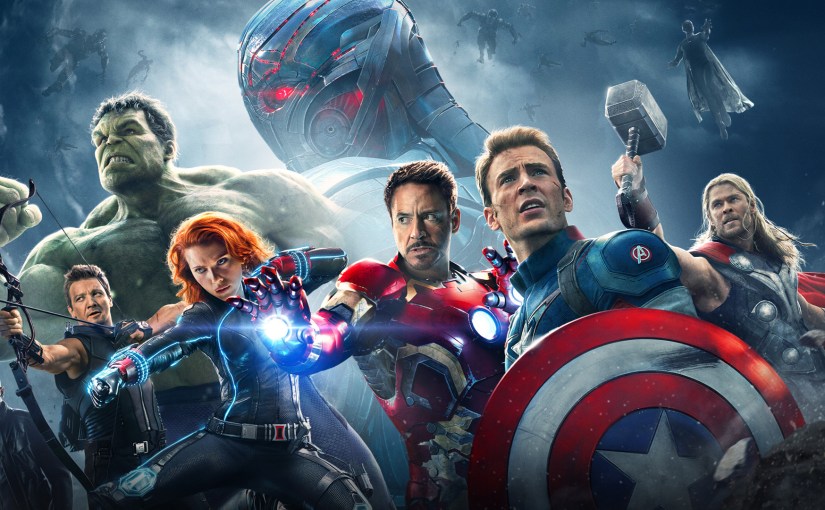
Phase One of the Marvel Cinematic Universe concludes with Marvel’s The Avengers. This is a real treat and a feast for the eyes. It’s not my favorite of all the Marvel films because it gets a little too Saturday morning cartoon like at times, but it’s enjoyable to watch for good escapist popcorn fun.

Movie goers were salivating for the year 2012 to arrive which would finally assemble Thor, Iron Man, Captain America and the Hulk on screen. Thanks to writer/director Joss Whedon that wish had finally come true and Whedon does not try to reinvent the wheel. When you assemble a team of heroes, you pit them against a large army and watch every variation imaginable of how the Hulk can smash, or what Iron Man’s armored suit can launch.

By now, you all know how I feel about the actors portraying their respective roles. Best to just say the chemistry works among them. They find reasons to squabble and Whedon provides moments for them to use their given talents against one another. So you get to see what happens when Thor smashes his hammer against Cap’s shield.

The actor who finally gets his moment in the sun is Samuel L. Jackson as Nick Fury, the orchestrator behind this team up. Jackson is more subdued than his other well known characters from the Tarentino films or Snakes On A (Mother effing) Plane. He does get to say “stupid ass idea” at one point and there’s the Samuel L. Jackson we all know and love! In comics, the Nick Fury character was reinvented before any of the films to harbor the appearance of Jackson. This film proves why the writers went that route. He’s great. He’s fun to watch. He makes for a great leader of the secret agency SHIELD. In tow with him is Clark Gregg as Agent Phil Coulson, a welcome cameo guy before this film, Gregg gets in a few scenes that show his endearment, and offer some dramatic weight as well. The guy could be waiting on hold while Black Widow takes out a couple of thugs, and you are cracking up at Gregg as Coulson, not necessarily Black Widow. He’s so likable that well…heck…he should get his own Marvel TV show….wait….nevermind….I digress.

Again, however, the women of the MCU are not drawn well for the screen. Scarlett Johansson makes her second appearance as Black Widow. She’s got a great, funny early fight scene while tied to a chair in a sleek black dress, but that’s all for show. She hints at a checkered past but this film does not offer much to expound on that. I understand. There’s a lot going on here. So there’s not much here for her to do. It’s time she got a film of her own, however. I’ll sign the petition. Wait! Nevermind! Colbie Smolders is a waste as Agent Maria Hill. She is nowhere convincing as a bad ass agent. Her line delivery seems forced. Her role seems unnecessary. Her scenes should have been on the deleted floor. It would have allowed more time for Johannson to play up her character. How is Maria Hill different from Black Widow in this film, anyway? She’s not. Therefore, cut out Maria Hill.

Jeremy Renner is given nothing to do but shoot arrows as Hawkeye, and work against the Avengers while under a spell from Loki.

Speaking of Loki, the great Tom Hiddleston is back. Hiddleston just elevates the Marvel films to more than just a comic book movie. His glee as the God of Mischief is different than say any version of the Joker’s. Pay attention Syndrome (from The Incredibles)!!! When Hiddleston monologues, you want to listen, unless you are the Hulk.

Whedon does an awesome job with the action scenes as he gradually destroys an aircraft carrier when chaos takes hold among the various heroes, and then later he destroys New York City in a fun amusement park like battle through the streets, subways and skyscrapers. It’s a little reminiscent of Richard Donner’s (or Richard Lester’s) Superman II, and Ivan Reitman’s Ghostbusters. It’s fun to watch the Hulk run through a building only to come out the other side and leap upon the head of a gigantic, flying centipede to bring it down on to the top of a building. Who cares how this all gets cleaned up? The greatest city in the world always figures out a way.

Whedon sealed the pop culture significance of superheroes in the early 21st Century. He’s done what guys like Michael Bay beg to do with other toy/comic book franchises. Marvel’s The Avengers stands out as an important impact in cinematic filmmaking. It’s not best picture worthy, but it is nonetheless important to how blockbuster films are conceived and created. Sadly, some people still don’t get it right, all these years later.

SPECTRE

By Marc S. Sanders

It’s fortunate that the success of Mike Myers’ Austin Powers franchise did not wash out the best features of the James Bond series. Had it done so, we wouldn’t have been treated to the outstanding production of Daniel Craig’s film, Spectre, with an opportunity to face off against a reinvented Ernst Stavro Blofeld played perfectly by Christoph Waltz. One of my few complaints however, is that we didn’t get enough material for the two-time Oscar winner.

Director Sam Mendes returns following Skyfall to reinvigorate the original traditions and blueprints that attracted audiences to 007 in 1962 with Dr. No. Blofeld lays in wait in his secret fortress of a lair housed within a desert crater (an upgrade from the volcano in You Only Live Twice), ready to offer exquisite hospitality to Bond and his love interest before providing an unrequested guided tour of his technology and hideous plots. No, he never had to show Bond anything. Yet Blofeld was never bashful, with or without his cat. Waltz is the right choice for this 21st century iteration of the staple villain. Gone is most of the camp presented in the character during the later Connery films. Most of the camp actually. He does still have the white cat after all.

Craig remains a great 007. The role is not a mimic of past Bonds. Craig is everything of the “blunt instrument” that author Ian Fleming described. Thanks to his physique and some great fight choreography, a marvelous fisticuffs scene occurs between him and brutish Dave Bautista aboard a moving train. Craig always looking great in the white dinner jacket tux, even while he’s getting pushed around.

Lea Seydoux is serviceable as the Bond girl, Madeline Swann, daughter of an old enemy of Bond with information necessary in the pursuit. Seydoux is not the best Bond girl. Others have offered more intellect beyond the beauty. Still, that might only be due to the limits of the script. She’s a good actor nonetheless.

Ben Whishaw and Naomie Harris are great as Q and Moneypenny. The roles have stepped up in frankness and skills that stretch out more than a traditional one scene cameo. Whishaw as Q is more of a know it all and Harris as Moneypenny reminds the audience that she has a life outside the office.

Ralph Fiennes is good too as M. Though I do wish his storyline was better here where he is dealing with an over abundant policy in complete government surveillance. The antagonist against Fiennes is nothing special and as quick as this storyline started, you knew how it was going to end. Still, I like watching Fiennes in the role.

Spectre has great scenes, most especially the signature opening taking place on the Day of the Dead in Mexico City that culminates in the destruction of a city block before Bond disables two bad guys aboard a spiraling helicopter. Steady cam and very clear edits make this a knockout.

I also appreciate the gag that not all things work accordingly for Bond. He orders his signature Vodka Martini, shaken not stirred, and is denied as he is at a bar located in an isolated strict health retreat. As well, his Aston Martin is not as reliable thanks to empty hidden machine guns hidden behind the logo in the trunk. Not everything comes as easy for Craig’s Bond, and that allows for some tongue in cheek humor.

I liked Spectre more on a repeat viewing. Mendes shot a gorgeous looking globetrotting picture of Mexico City, Rome, Austria, Tangiers and clear evening London.

Considering the next installment is likely to be Craig’s last film is disheartening. With Spectre, a summation of all the prior Craig films is assembled leading to what has been a great miniseries within the storied franchise. I’ve liked following this James Bond. There are revelations about the character including his orphan history, his faults and his coldness that only serves to protect the Queen’s country. The Daniel Craig Bond is the best following the very different albeit wry interpretation of Sean Connery.

Still, I’ll take what I can get, and once again happily look down the target scope aimed right for 007 before the blood comes pouring down.

SKYFALL

By Marc S. Sanders

Skyfall is a great James Bond film. One of the best. However, …it has one major shortcoming that always gnaws at me. Regrettably, it has a contrived middle section that steals some of the magic away from the film. Yes, for a moment, my suspension of disbelief is robbed from me.

Daniel Craig’s third outing as 007 has become a favorite among fans and movie goers. Craig is magnificent in a primarily dramatic turn in the part. Following a fantastic action packed opening where Bond pursues an assassin through the streets of Istanbul, Turkey (widely known as a favorite locale of Ian Fleming), the chase involves cars, motorcycles, rooftops, fruit stands and trains for well edited shootouts and fist fights. Alas, the assassin gets away and Bond is left for dead.

Following an attempt on the life of M (Judi Dench in her absolute best portrayal in the role), Bond returns for active duty. However, he’s not what he used to be. His aim is off and his body is worn. The question remains if Bond is ready to be back in the field.

The plot centers on a bitter former MI6 agent named Silva (Javier Bardem in a potentially Oscar worthy performance) out to seek revenge on M for the sins he believes she’s committed.

It’s funny. The Austin Powers films, and even film critic Roger Ebert, would always draw attention to the fact the villain would just longingly speechify when they have all the time in the world to just shoot Bond dead and move on with their devious plot. Silva is a response to that issue. He has a mutual respect for Bond, and you can see he’d rather keep him alive for the time being to allow the game to keep running. It’s not said outright, mind you. Yet that’s what I took away from the character. A superbly written monologue to introduce Silva at the midway point of the film compares him and Bond to the last of two rats surviving a trap. Which rat will win out?

It’s also quite special that Bardem shapes his villainous role with a homosexual tendency. Silva is fashionable and proudly dons a bleach blonde hairstyle. He gleefully rubs Bond’s legs and opens his shirt to examine his scarred chest, pronouncing that Bond must ponder his “training” at the moment. Silva is beyond the typical femme fatale. It’s different and it’s time the Bond franchise acknowledges the differences in people. A welcome trait for a major character.

The plot set up of Skyfall‘s devices are ingenious in simplicity with a basic revenge tale but also with broadening the legacy and responsibilities of the M character. What Casino Royale did for a story arc for James Bond, Skyfall does for M, and with Dench in the role it works beautifully. She must answer to superiors, like a very welcome Ralph Fiennes, for the death of several agents and a bombing of MI6 headquarters. She must resist the pressure of early retirement. This is the most that M has ever had to contend with personally, and it’s here at last.

My one reservation with the film occurs just after the midway point. Silva somehow arranged to get apprehended and then managed to escape, don a police uniform, travel through London’s tube, and time an explosion on a runaway train ready to crash into James Bond who is on his trail. Thereafter, he’s able to locate the interrogation session where M is making a public statement in her defense and try to kill her. There are way too many factors at play that work too conveniently to Silva’s advantage. It’s a tension filled sequence. It looks great. It has great action and effects, but it’s overly contrived. I wish the script from Neal Purvis, Robert Wade and John Logan made this middle section a little more believable.

Sam Mendes (American Beauty) directs a terrific, action-packed film filled with more drama and minimal tongue in cheek that the series is primarily known for. I was grateful for the more serious Bond. Like the other Craig installments as well as the Dalton films, Skyfall offers a different and fresher approach.

Granted the ending plays more like an Arnold Schwarzenegger action piece from the 1980/90s, but it’s highly entertaining, well edited and well shot, nonetheless.

I highly recommend Skyfall for its outstanding cast that also includes Ben Whishaw as a nerdy variation of Q, the gadget man, and Naomie Harris in a secret role that has a satisfying payoff. As well, the standard revenge story works quite well here when you have Bardem, Fiennes, Craig and most especially Dench doing some really top notch acting with terrific dialogue. Mendes is a stage director first, and it shows quite admirably here.

Again, Skyfall is not the best Bond film but it’s at least one of the best.

RAIDERS OF THE LOST ARK

By Marc S. Sanders

Raiders Of The Lost Ark remains as one of the greatest films of all time. There’s nothing not to like about it and the accolades go to Steven Spielberg, George Lucas, Harrison Ford, Lawrence Kasdan and John Williams, along with a sensational cast of still unknown actors that owned their roles with absolute authenticity.

Ford became a great action film star due to Indiana Jones and Han Solo. This film is an example of his best work. He’s the best at facial expression during high action moments. Watch the truck chase during the second half of the film. As he is careening a truck through the sand streets of Cairo, he winces in pain, evokes anger and dons a toothy grin as he shakes Nazis off the vehicle, and throws them through windshields.

He’s got the perfect delivery of lines as he love/hate banters with Karen Allen as tough broad Marion Ravenwood (Jones’ best gal pal of the series). Their chemistry is great because they are two loudmouths who work off insulting and shouting at one another. They are one of my favorite on screen couples; like two Oscar Madisons who belong together.

Recently Ford said no one else can play the role; the role dies with him. He couldn’t be more right. Indiana Jones is not an interchangeable part like James Bond or Batman. Those roles change with the times and technology. Jones remains in history with a trusty whip, a sign of the times fedora hat and a drive to uncover the great unknown. None of these films work unless Harrison Ford is Indiana Jones.

John Williams also needs recognition. Who isn’t familiar with the famous build up horns calling for adventure? His composition just puts a smile on your face. Dialogue isn’t at play much during one of Spielberg’s well orchestrated action scenes. So we rely on the march of Williams’ efforts to relish in the fun of a foot chase through a Cairo marketplace or to thrill at a fast rolling boulder chasing the famed archeologist after he snatches his prized booty.

Spielberg and Lucas always get praise for their brilliant imagination. I venture to guess how many people were aware of the occupation of archeologist before the film’s original release in 1981. Sure, this isn’t what the job realistically entails, but the film opens your mind to what is out there and what we can learn more about from our past.

A great moment in cinematic exposition is when Jones explains the power of the famed biblical Ark of the Covenant. The dialogue works great here, thanks to a winning script from the great Lawrence Kasdan, and it has the audacity to convince an audience that some MaGuffin we read about in Sunday school could actually make Hitler’s Nazi regime invincible. Seriously? What?!?!? When you blend Spielberg and Lucas’ bravado, Williams’ eerily quiet thinking music, and Ford’s professor obsessed role with Kasdan’s efficiency for description all in one scene…yeah…you believe this could be a very, very real threat.

Every scene is different. Snakes, truck chases, spiders, foot chases, bottomless pits, bar shootouts, Nazis, the power of God, and a wide variety of antagonists all used to build the structure of two of the best hours in a film. It’s all brilliantly weaved together with transitioning red lines across a traveling map on screen. This is great editing, people.

Nothing has ever come close to Raiders Of The Lost Ark. Nothing ever will. It is a perfect film.

“Trust me.”

QUANTUM OF SOLACE

By Marc S. Sanders

A writer’s strike never bodes well for a film. So the 22nd installment in the James Bond franchise, Quantum Of Solace, suffered because of it. Daniel Craig returns in his second film as Bond which begins as a direct sequel to my favorite film in the series, Casino Royale. Marc Forster (Finding Neverland) directs, but not very well.

Much of the action scenes are very shaky and choppy. Forster seems to have adopted Paul Greengrass’ technique that works so effectively in the Jason Bourne films and United 93. However, Forster does not make clear what is occurring. You can’t recreate Picasso with crayons.

The opening is a rush job of a car chase as Bond races away from enemies in his Aston Martin. Machine guns and heavy traffic and construction sites make way for his car to gradually fall apart but it’s hard to really see how the car becomes damaged in the first place. Just when exactly did the driver’s side door come off? There’s lots of spinning out of control and dirt flying with bombastic gun fire and engine revving. It’s all sensory overload to hide the preciseness in the high speed chase.

Later, Bond is attempting to rescue the girl Camille (boring name, boring girl) played by Olga Kurylenko when she’s held captive on a boat. He jumps into a motor boat and the chase is on. Bond fends off the bad guy by tossing a rope with a hook on it. Just tossing it up. Suddenly the bad guy’s boat flips over. What exactly happened here? How did the rope take out that boat? I didn’t see the connection. Film is visual. So show me the fundamentals from A to Z, please.

The story involves Dominic Greene (Mathieu Almaric) who appears to be an environmentalist with interest in a pipeline in Bolivia. (Bolivia????) At first Bond is under the impression this pipeline must be for oil. Later, it’s realized that Greene intends to charge the country enormous prices as he takes over the water supply. (Roman Polanski’s Chinatown did this all much, much better.). In exchange, Greene will assist a tyrannical Bolivian General in becoming President. This General raped and murdered Camille’s family. Naturally, she wants revenge. As Bond pursues Greene, he comes to learn that Greene is a member of a secret organization called Quantum. Hence the strange title.

Bond follows through with this assignment while trying to determine why his past love (Vesper Lynd from Casino Royale) was murdered, and after MI6 is infiltrated.

The story is kind of all over the place. It has a lot of interesting threads like Bond’s need for revenge, Camille’s need for revenge and a secret organization that MI6, nor the CIA, were ever aware of. Threads remain hanging as threads though if a writer’s strike interferes.

The story for Quantum Of Solace hardly gets fleshed out. We learn nothing of the organization, Quantum. When Bond finishes his mission with Camille, she just gets out of the car and walks away into the middle of nowhere. Where is she going exactly? The climactic battle takes place in a luxury hotel located in the middle of the desert. Unless this is Las Vegas, who goes to a hotel in the middle of the desert? I mean like ever?????

The film is a tremendous disappointment after the creatively artistic success of Casino Royale. Often sequels do not live up to their predecessors, but Quantum really goes off the rails. This film was a make-up as you go.

Craig is fine in the role of Bond; consistent with his first film. Almaric is okay as the villain, but never given much to do. A second woman comes into play, named Fields played by Gemma Arterton, assigned by M to bring Bond out of service. She seems to have a personality that the Camille character lacks, but she’s hardly given much screen time, save for a nightcap with Bond and later an image that harkens back to Goldfinger.

Jeffrey Wright (a great Felix Leighter, that I have not talked about yet) is belabored to share scenes with an obnoxious CIA partner played David Harbour. These two guys seem to be acting in a different movie.

Marc Forster was given a toolbox but didn’t know which end of the hammer to hold with Quantum Of Solace. There are too many things wrong with this film to justify any merits it may have.

Maybe the most interesting moment happens in the epilogue scene as we learn more about Vesper’s past. The scene has next to no relevance with much of the main story beforehand. Still, why couldn’t this film simply stay on this trajectory from the beginning? This is a thread worth pulling on and then tying off.

In other words, Vesper Lynd is far more interesting than the water supply in…ahem…Bolivia. 

CAPTAIN AMERICA: THE FIRST AVENGER

By Marc S. Sanders

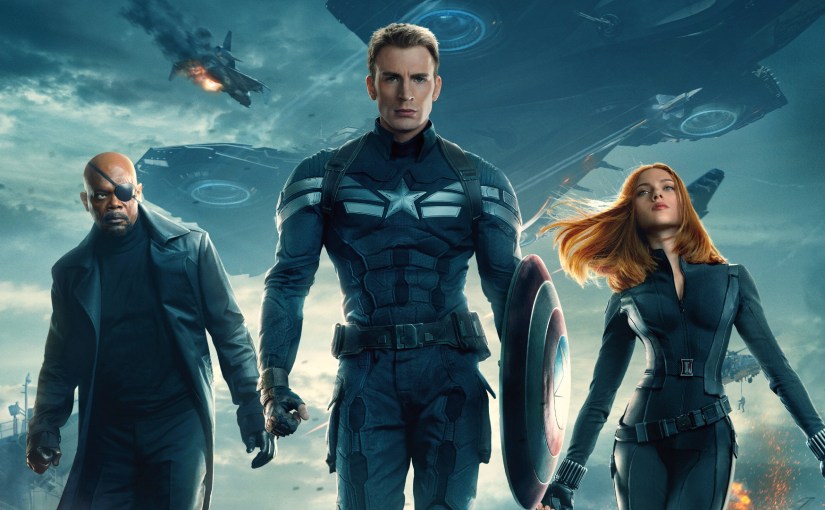
Admittedly, as a kid I read about the star-spangled hero, Captain America, on a frequent basis. In the ‘80s, to me he was nothing special; a guy with a shield, dressed like the flag who was very agile. Not many surprises were left for him to discover on the page. However, in his first MCU installment, Chris Evans, as Steve Rogers the weakling yearning to join the US Army during World War II and kill Nazis, is inspiring.

Director Joe Johnston ably introduces a character before revealing all the goodies. A fantastic special effect of downsizing Evans to a gaunt 95 pounds allows the motivation to become a hero all the more convincing. Following a series of being bullied and being rejected for service, Rogers is given the opportunity to become a lab rat for a “Super Soldier” experiment that will award him with instant fighting skills and strength. Stanley Tucci plays the doctor looking for the right candidate. Why Rogers? Because he sees he has the heart of a man only wishing to do well unto others. The experiment is a success before it becomes sabotaged, but Tommy Lee Jones, representative of the Army, is not entirely convinced. So, Cap only elevates himself to the role of a character logo, forced to sell the idea of buying war bonds across the country and entertaining the troops overseas. A rescue mission finally comes calling, and the boy in blue dons the shield and shows the world who he is and what he stands for.

Chris Evans is great in this part as a guy always on a path of “do good.” Never emoting cockiness, never in service for himself and never one to surrender to illogical and immoral mindsets. This is how Captain America should always be portrayed, a man who stands for the good of country and as the MCU films continue on, the good of the world and, well heck, lets just say the good of the galaxy. With his perfect haircut and clean shaven face, Evans never shies away from that platform.

Tucci is so good in a role that will never define his career. His brief appearance shows no hint of him being in a comic book movie. That’s a huge compliment. He takes the role of a German doctor seriously. He’s the scientist, but the film allows a nice scene for him with Evans showing that he is more so a friend. When his part exits the film, you miss him.

Finally, the MCU gets the female role right following the dismissive nature of characters like Pepper Potts (Iron Man), Betty Ross (The Incredible Hulk) and Jane Foster (Thor). Special Agent Peggy Carter played by the awesome discovery of Hayley Atwell makes the role her own. She plays the part like it is written, never relying on the title character for her cues. Atwell shows determination to stand out as a woman among a sea of men and never regarding herself as any different from those said men. She has some great scenes with Tommy Lee Jones debating the purpose and importance of Rogers. By the end of the film, you are not just paying attention to the fate of Evans’ character, but Atwell’s as well. Peggy Carter is written so well, you could write a TV series about her. Wait….hold on…. anyway I digress. Hayley Atwell remains the best female character of the MCU above those we’ve seen already at this point, as well as ahead of those to come in future installments.

The villain is really just a villain with Hugo Weaving as the Red Skull. The character looks great; looks just like the source material. He’s one bad dude, but not much to him. He stands to be more powerful than Hitler, yada yada yada.

Joe Johnston directs a film with a salute towards director Steven Spielberg. Try to convince me that the opening scene is not reminiscent of the opening to Close Encounters of the Third Kind. Indiana Jones seems to sprinkled about as well. Johnston doesn’t try to get cute with experimental camera shots and blurry CGI action. I think because he follows a paint by numbers approach to this film, it is all the better. He offers lots of good back story to Steve Rogers role, he gives a large cast of characters their own moments to stand out (like Bucky Barnes and the Howling Commandos) and he keeps Captain America likable and a guy to cheer for; a guy to be thankful for.

So, let’s give it up for Captain America!!!!