
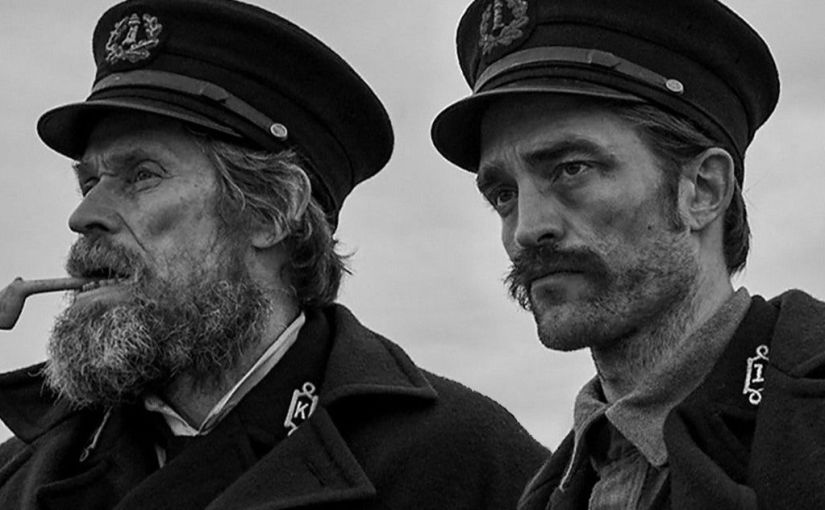
THE LIGHTHOUSE (2019)

by Miguel E. Rodriguez

Director: Robert Eggers
Cast: Robert Pattinson, Willem Dafoe
My Rating: 8/10
Rotten Tomatometer: 90% Certified Fresh

PLOT: Two lighthouse keepers try to maintain their sanity while isolated on a remote New England island in the 1890s.


tone poem
NOUN, a piece of orchestral music typically in one movement, on a descriptive or rhapsodic theme


As I watched Robert Eggers’ The Lighthouse, that term “tone poem” kept leaping to my mind.  It’s not told in a standard or familiar fashion.  There are scenes where we’re not sure, until they’re over, whether they’re real or not.  The Willem Dafoe character, Thomas Wake, makes references to behavior in the past by the Robert Pattinson character, Ephraim Winslow, that Winslow never committed…or did he?  We are certain that Wake is the character who is going mad, if he’s not there already.  But what if it’s the other way around?  Or are they both going mad?

The mood or tone of the piece seems to be insanity and how one might get there given the right circumstances.  In many ways, it has quite a bit in common with another sensational tone poem of madness, Stanley Kubrick’s The Shining (1980).

Two men, Wake and Winslow, are lighthouse keepers in the late 19th century.  They are brought to a remote island in the stormy waters off the New England coast and left to fend for themselves for four weeks until the next tender brings supplies.  Wake (Dafoe) is a crusty old veteran lighthouse keeper whose speech and mannerisms appear to be based on Long John Silver, right down to the gimpy leg.  Winslow (Pattinson) is a much younger and, let us be honest, handsomer gentleman who keeps to himself whenever possible.  He tends to his duties, sometimes grudgingly but mostly not, but wonders why Wake flatly refuses to share the duty of tending the actual light source at the top of the lighthouse.  That mystery lies at the heart of the film, but don’t expect all your questions to be answered by the time the credits roll.  Fair warning.

A key decision by director Eggers was to shoot in black-and-white and in a very old screen format, 1:19, so the picture area is a virtually square space in the center of the screen, with black bars on either side.  (The Coen brothers did something similar with their brilliant adaptation of The Tragedy of Macbeth [2021].)  This visual language creates a uniquely claustrophobic atmosphere, especially in scenes taking place in Wake’s and Winslow’s quarters.  The walls are closer together, the ceiling feels lower, and the actors’ faces seem much closer to the screen than normal.  Even exterior shots seem more constricted and confining.  Wide open sky doesn’t look as inviting as it might to someone essentially imprisoned on a storm-lashed island for four weeks.
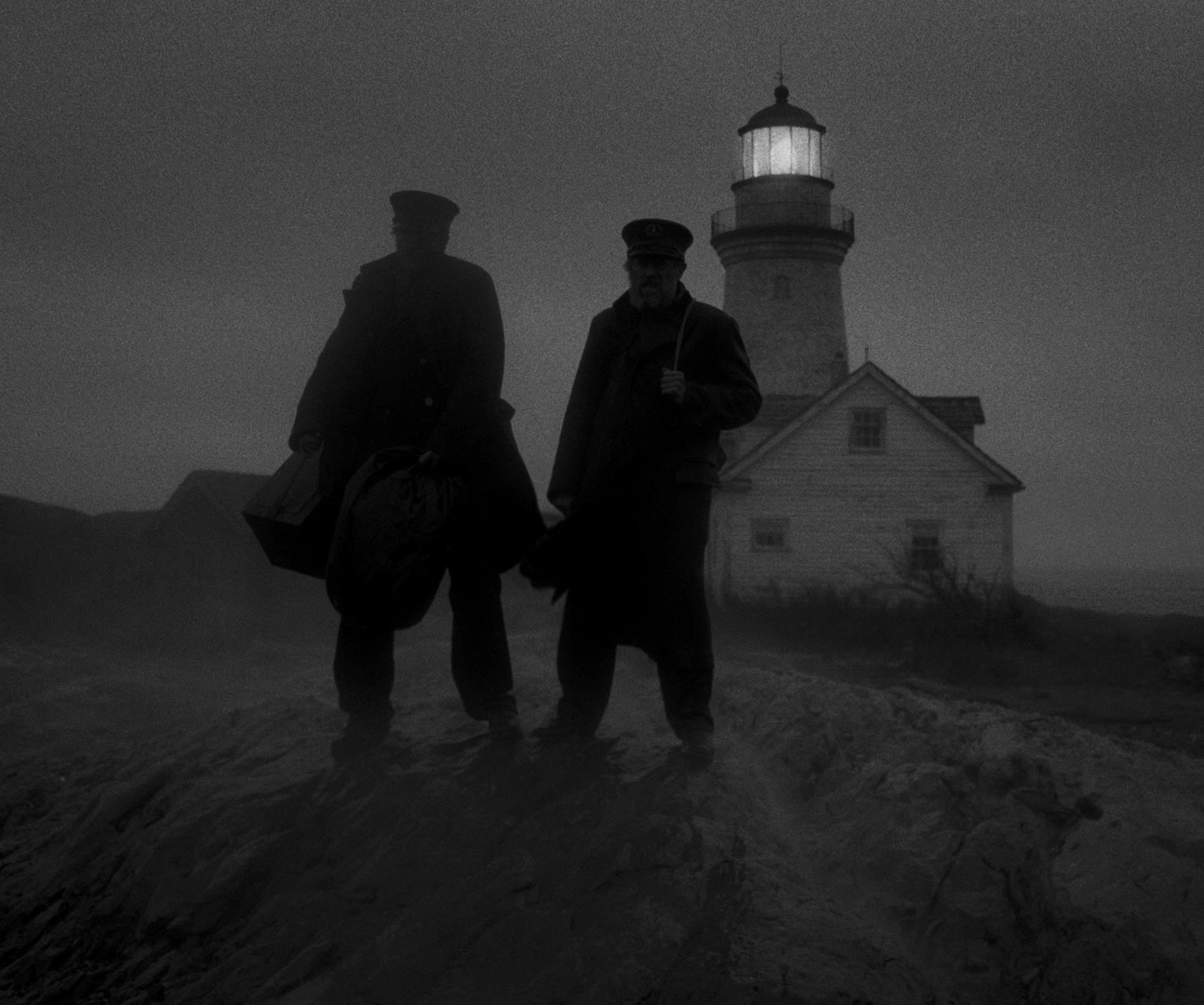

Like all the best films, The Lighthouse begins its descent into madness slowly and gains momentum as time passes.  Winslow discovers a mermaid figurine stashed inside his mattress.  That night he dreams about a mermaid in the surf.  Or was it a dream?  We glimpse Wake standing naked at the top of the lighthouse, almost as if he’s worshiping the light itself.  When Winslow tries to get a closer look at what Wake is doing up there, he glimpses something…supernatural.  Or does he?  The film is brilliant at not only portraying mounting madness on the screen, but also at conveying the tone of madness in the cinematography and editing.  If we’re not quite sure what is happening, even when we see it happening, that’s on purpose.  The audience is meant to be kept off balance throughout the movie to put us in the heads of the two main characters.

Another factor that I found riveting was the acting workshop on display from both Pattinson and Dafoe.  We’ve seen this kind of thing from Dafoe before.  He chews the scenery with Nicolas Cage-like gusto, spittle flying, prosthetic teeth flashing in manic sneers, and that crazy piratical accent.  If it had been revealed during the film that his character’s last name was Osborne, and that he was a distant relative of Norman Osborne from Spider-Man (2002), I would not have been the least surprised.

But equally impressive is Robert Pattinson’s performance, which must be seen to be believed.  Here is an actor who is set for life after being a part of two of the most profitable film franchises in history (Twilight and Harry Potter) and who has just rebooted a third (The Batman [2022]).  But in this film, he easily keeps pace with Dafoe’s quirkiness, which is not easy.  As his character descends into madness (or does he?), Pattinson dances a jig while singing a sea shanty that devolves into complete gibberish.  He laughs like a loon.  He, ah, takes some time for himself while fondling that mermaid figurine from earlier.  It’s the kind of performance that might be described as “courageous.”  He swings for the fences with abandon.  In so doing, he helps to make The Lighthouse one of the most unique movies I’m ever likely to see.

But what is really going on at the top of that lighthouse?  Why do seagulls pester Winslow so often, seemingly unafraid of him in any way?  Why does he continue to dream about mermaids?  IS he dreaming them?  Is Wake actually a merman?  Did real foghorns sound like that?  Why is one seagull missing an eye?

Well, come on, I’m not actually going to ANSWER those questions, but those are questions that occurred to me.  The movie does answer quite a few of them, but not all.  The point of the movie, like The Shining, isn’t about solving the mystery.  It’s about conveying the mystery, creating a mood of dread, and wallowing in it for a good 110 minutes.  It’s not the happiest movie I’ve ever seen, but it’s definitely one of the most original films of the last ten years or so.
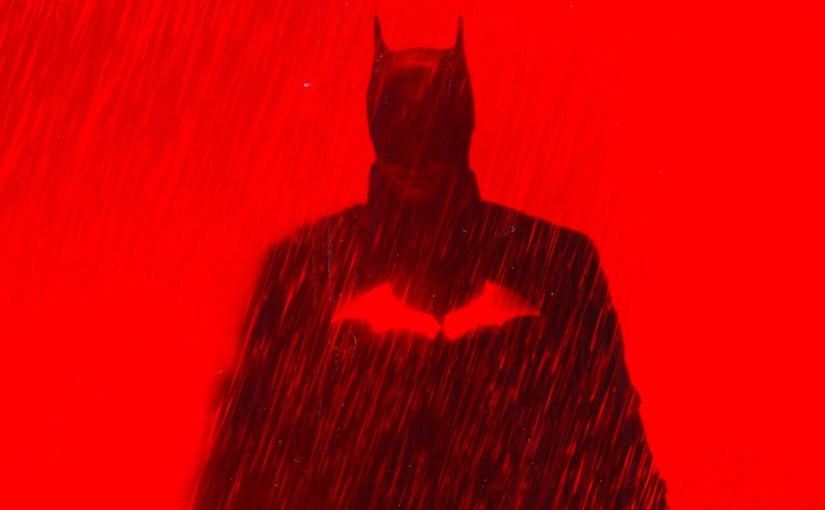
THE BATMAN (2022)

By Marc S. Sanders

Another year at the movies, means another trip to see Batman on the big screen.  I think we are close to a dozen iterations, no?  Fortunately, the latest reinvention for March 2022, The Batman, is a refreshing interpretation that focuses on the detective skills of the masked vigilante hero who prowls from the rooftops of Gotham City.  Matt Reeves has written and directed a gripping and engaging film that doesn’t rely on simple paint by numbers.  He’s capitalized on using the mysterious Riddler (Paul Dano) as the main villain here, and Batman’s (Robert Pattinson) brains get more exercise than his brawn.   

It is the second year since Batman has introduced himself to the crime ridden city.  The man behind the mask, Bruce Wayne, keeps a journal of his exploits and observations, and through voiceover he questions if his actions have benefitted since it appears that crime has only increased since his first appearance.  A serial killer is taking responsibility for the grisly deaths of important people within the city and he’s leaving greeting cards for “The Batman” with a common scribble of “No More Lies,” along with a “?,” and a riddle for The Batman to solve.  Thanks to a strong partnership with Police Lt. Jim Gordon (Jeffrey Wright), Batman is given easy access to the crime scenes so he can attempt to reveal the mysterious villain and determine exactly what his endgame is. The Riddler doesn’t make it easy, though.

Mobsters like the Penguin (Colin Farrell) and Carmine Falcone (John Turturro) have a grip on the city, as well.  There’s also a possible lead from a woman (Zoe Kravitz) who’s managed to infiltrate the gangsters’ underground headquarters.  She also has the fighting skills and agility that’s comparable to the caped crusader, and maybe she’s a cat burglar as well.  Still, is she pertinent to Batman’s investigation or not?

It’s better not to spoil anything that occurs in Reeves’ film.  The mysteries that are uncovered are part of the fun, and it does take some time and exposition to get there, but I found it worth it.  Barring a few ingredients within the film that I recognized from the Christopher Nolan and Tim Burton films, the picture is worth seeing for a new formula on a character, that although is a favorite of mine, I feel has also been done to death on the big and small screens.  This is a Batman film where I appreciate the thinking approach of its craft, over the action.  When Batman is playing detective with Jim Gordon, it is much more enticing than just another Batmobile chase or another ham-handed fist fight.  This film is a test of Batman’s mental capacity and ability for analysis.

Reeves direction is also appreciated, though I’m expecting the naysayers.  The Batman is a very dark motion picture.  When it’s not dark, the photography is dim and blurred.  There’s lots of rain and dimly lit streets and garages.  There are strobe lit nightclubs.  Windows are blurred, so sometimes you can’t make out the image in front of you.  He makes the viewer work for the focus and that kept me alert.  I believe Matt Reeves was attempting to give the viewer the literal point of view of the characters.  It will not be a surprise, however, to find some movie watchers lose patience with the technique. 

The Riddler especially is most mysterious with a twisted and inspired Zodiac killer approach.  Often, Matt Reeves’ film feels especially reminiscent of David Fincher’s Seven.  I would not be surprised if Reeves wrote his script as a cop/detective story, and then added the Batman flavor to make his final draft.  This is not a picture of grand special effects or superpowers and gadgets. 

It’s definitely not the Batman film that everyone wants.  I foresee the response being very divisive.  Nonetheless, if you’re a Batman devotee like me who grew up on the character in the macabre storied comics (as well as the hammy tongue in cheek material), you’re going to be thankful for this “at last” interpretation.  I’ll definitely be seeing it again.

NOTE: The Batman is not a film for children under age 13. I truly believe that. There are disturbing images and threats within the story, and the violence depicted or left to the imagination is not for celebratory effect and amusement. This is definitely a film for mature audiences. Do not presume it’s meant for all ages based on its misleading marketing approach with companies like Legos and Little Caesars pizza.

TENET

By Marc S. Sanders

Christopher Nolan is certainly the most imaginative director working today. Films like Inception and Interstellar welcome new kinds of science fiction dissimilar from most any other films. He is an incredibly inventive filmmaker. He’s so inventive, in fact, that I think he might have carried himself too far with his much anticipated sci fi spy thriller Tenet, featuring John David Washington and Robert Pattinson along with Kenneth Branagh in a James Bond villain role. Actually, there’s a lot of Bond inspirations here. Not surprising, as Nolan is a devoted fan with much admiration for The Spy Who Loved Me, in particular.

It’s hard to describe Tenet because it’s hard to fully comprehend Tenet. I don’t even have to worry so much about revealing spoilers because I likely wouldn’t know what I’m unveiling.

Washington is a good leading actor. This film along with BlackKklansman prove that. He plays The Protagonist (no name revealed) who is extracted from a hostage mission that opens the film at an opera house. Apparently the CIA liked how he handled himself in the field and now they want to assign him to the concept known as Tenet where time moves inversely with itself.

Try and stay with me here. If you fire a bullet out of a gun, the bullet can also be pulled back into the pistol if you are moving through time on a backwards trajectory. Sounds very Nolan, right? Sounds very cool as well and when the science of this is simplified early on it looks cool too. However, as the film moves on and objects and time traveling get more complicated Christopher Nolan seems to lose his way.

There’s a bomb out there made of technology that is unfamiliar yet. Why? Because that tech was perhaps invented in the future and brought backwards through time inversely to be detonated and literally destroy the world. The Protagonist has to prevent this from happening and so he’s partnered up with Neil (Pattinson) who is a handler with more knowledge about this mission and Washington’s character than he should know.

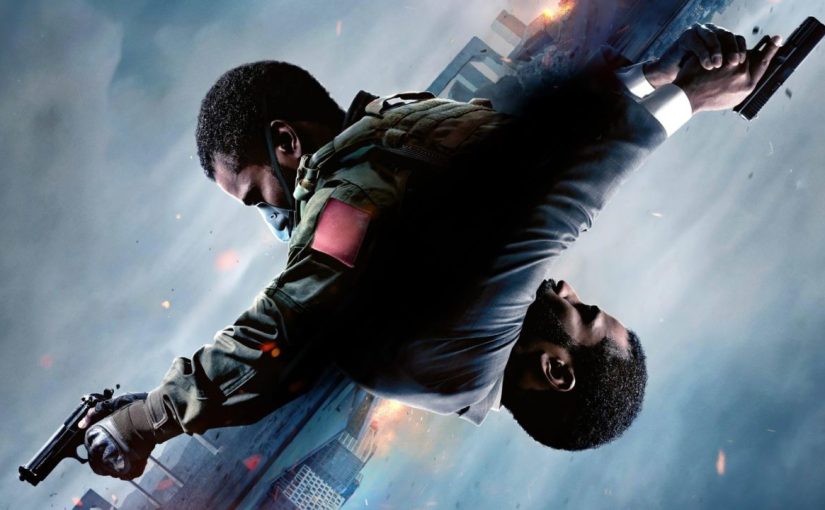
Tenet has some spectacular edits and footage of dazzling camerawork. It’s a contender for an amazing car/truck chase. Washington and Pattinson are good together. Branagh is fine as a vicious wealthy industrialist with a penchant for abusing his beautiful wife (Elizabeth Dibecki). CGI thankfully seems very limited as well. All of the gorgeous locales and vehicles are here. Warner Bros holds so much faith in Nolan’s works that his budget seems to not exist. There’s boats, yachts, helicopters, trucks, a fire engine and a BMW. There’s also a real life jumbo jet crash. It’s a gorgeous looking film and every dollar seems well spent. However, it’s not a well assembled film.

This is the first time I would NOT recommend seeing a movie in a Dolby theatre. The sound is obnoxiously loud. The musical score from Ludwig Göransson is POUNDING bass; so loud that I couldn’t even decipher any semblance of a tune. Much of the sound edits seem that way as well. It’s a headache to sit through this film. A terrible soundtrack and sound edit for sure. To watch Tenet on a technical level is to park your automobile next to that rebuilt Oldsmobile with the new gold rims and the maxed out speakers that shake your car while you’re at a red light. It’s terribly distracting and overly annoying.

Nolan also does not demonstrate his science very well here either. It’s hard to understand when someone is traveling normally through time versus inversely. Somehow it just occurs at times and you lose your way as to when it began. If you consider Inception, Nolan explains the tactical strategies of approaching someone’s mind by means of dreams and in sleep mode. Everything was spelled out nicely. You want to learn more and see more of the tricks. Tenet doesn’t leave you with that curiosity.

I didn’t hate Tenet. My wife did, however. There are close ups of arbitrary things early on that circle back later. So it kept me engaged when I uncovered some significance here and there. Still, it’s not enough.

Nolan conceived another brilliant and brainy idea. I only wish his delivery and the construction work of his crew, especially his sound and music staff, were more up to par.