SUPERMAN (2025)

By Marc S. Sanders

Once again the man in blue, red and yellow has returned to the big screen by means of director James Gunn who is intent on starting a whole new universe of DC comics characters.  The 2025 interpretation of Superman is zippy and fun even if it is a little too shallow of character development and dimension.  That’s regrettably ironic actually.  A man who dons two different personalities, Superman and mild-mannered reporter Clark Kent. Yet, neither has much to say or stand for in this two hour picture.

Gunn’s film is defiant to avoid any heavy exposition as this film begins.  There’s a slim foreword as the picture begins to describe this new universe that contains metahumans who arrived on Earth centuries ago, along with a little bit of Kal-el’s origin that many of us are familiar with.  Then we see the Man Of Steel crater into the Antarctic wounded from battle and aided by his feisty canine friend, Krypto, who drags him to his ice palace, the Fortress of Solitude.

Action commences thereafter back in Metropolis.  Lex Luthor (Nicholas Hoult) is pulling the puppet strings.  Lois Lane (Rachel Brosnahan) and the rest of the Daily Planet staff witness the mayhem over the city.

Then we get a bit of Clark looking a little goofy as he rushes into work, followed by some romantic interlude between Clark and Lois back at her apartment.  The two toe the line of their relationship when finally, the Superman persona allows his girlfriend to test his purpose for serving planet Earth along with his limits of authority and decisive action.  They go back and forth but none of the dialogue lands and the argument has no impact.  A missed opportunity to set up the Lois and Clark relationship.

The rest of the picture focuses on comic book episodes of endangering Superman while other metahumans make appearances – an obnoxious Green Lantern (Nathan Fillion), Hawkgirl, the shape shifting Metamorpho, and the surprisingly entertaining Mr. Terrific (Edi Gathegi) who seems to operate like Mr. Spock from Star Trek.  Of the four, the guy with the dumbest name actually serves the picture the best.

James Gunn’s film takes a huge departure from the recent films of Zach Snyder’s universe.  Nothing is dark and hardly anything is morose.  Some subplots seem to be ripped from the headlines of current events that’ll have you thinking about the Russian-Ukraine war.  None of it is overly heavy though because this picture is designed for families to watch together. 

Superman is pure escape with a red cape.

What I miss though is what both the Snyder and the Christopher Reeve pictures offered.  What does Superman mean to himself and the planet Earth?  The one conversation between Lois and Clark/Superman goes on long and while it feels like there is a purpose in that exchange, I cannot recall one kind of conclusion that stemmed from it.  For the rest of the film, Lois flies a spaceship and helps a weakened Superman find aid. When the two share any more scenes together it is for the action of the piece followed by a kissing scene.  I just didn’t respond to the puppy love or risks of their relationship that other iterations offered.  Their connection is just written a little too thin.  That’s a problem, because the Superman mythos always hinged on their relationship in the face of danger or true love or even journalistic integrity.

Am I being too serious and hardheaded?  Yes.  Nevertheless, even with a comic book/Saturday morning cartoon gloss, I wanted to see more weight to the relationship between the two characters.

The best attraction is Nicholas Hoult as a connivingly evil Lex Luthor.  He’s a raging madman bent on destroying Superman like everyone knows and the actor chews the scenery while primarily hiding in his glass headquartered command center for most of the film.  Anytime the movie diverts to Luthor, the picture just felt more alive.  This is a great Lex Luthor!!!!!!

Like he did with a smart aleck racoon in his other films, James Gunn introduces a toy line merchandise with the flying white terrier dog known as Krypto.  His intent is for audiences to cheer for him like other precocious creatures from past films such as any Disney movie or E.T. or Baby Yoda or Rocket Raccoon.  He’s cute and spirited.  When he’s in danger, the kids will be worried.  When he flies into the center of the screen with a bark or a yelp, everyone will applaud. 

David Corenswet is Superman.  He’s fine.  He definitely looks like the part.  He’s a happy go lucky Kryptonian.  He’ll never be as memorable as Christopher Reeve.  I also have more to appreciate in Henry Cavill’s performance.  I just didn’t see Corenswet do enough with this role.  I’ve yet to really see the dramatic chops he could offer.  Simply lying on the floor of a cell while falling ill to Krytonite is not urgent or frightening enough.  I hardly got to know this guy to care enough if he lives or dies.  I hope he’ll blossom some more within future installments of Gunn’s superhero universe.  That’s up to the writers though.  David Corenswet is pleasingly relaxed in a role that demands almost a hundred years of acceptance for a modern age.  I’m confident he can do it and that Gunn cast the right guy for the part.  While he’s acceptable, both Corenswet and Brosnahan would best be served better material for them to work together. 

As for Rachel Brosnahan, I guess she’s okay.  I don’t see her do much beside fly a spaceship.  Lois Lane is such an immense character of brains and gusto striving to always be the number one reporter.  Her only weakness is her love for Superman.  There’s not much I remember about her from this film.  I did notice that she primarily wears purple like the character did in 1990’s animated series.  Nice salute.  Come on James Gunn.  Rachel Brosnahan is good actress.  Give her something more to do.  Let her act a little.  (Let David Corenswet act a little too.)

It’s wonderful that an optimistic interpretation of Superman has arrived.  We need it.  It’s colorful and fun.  It could be more exciting, though, with higher stakes that just didn’t arrive quite right.  This film is not my ideal picture of the hero, but the universe to come, especially with a quick appearance from another character at the conclusion, offers promise. 

Despite my reservations, the new DC Cinematic Universe seems to be in the right hands once again, and James Gunn’s team will deliver something entertaining for the next few years to come.

AVENGERS: INFINITY WAR

By Marc S. Sanders

Avengers: Infinity War is a really FAT movie. Like ORCA FAT (thank you Keyser Soze), because it is chock full of so much to see. If this equated to gorging on junk food, after two hours and forty minutes, I would have a diabetic cardiac arrest immediately following the credits. Is this a film that is worth that handicap, however? You bet it is.

There is an ensemble of top Hollywood talent portraying a huge cast of characters, once again, and thus another installment has surfaced in the franchise that allows them to have various moments to shine. Producer Kevin Feige with all of Disney’s support, has mastered the formula to ensemble casting and production, as good as when George Clooney and company performed under Steven Soderbergh’s direction in the Ocean’s 11 remake. Thousands of special effects shots do not overpower the stage presence of the actors. The Marvel movies succeed because a story is always written first. Then witty dialogue comes thereafter, and then valid, convincing shock value. The special effects are the final ingredient. This is what the Transformers franchise and (yes, I’ll even own up to it) the Star Wars prequel trilogy (about ¾ of it) failed to achieve. This successful formula gives merit to the (at the time) biggest opening weekend ever, worldwide, and Avengers: Infinity War deserves the accolades.

How good is it? Well, reflecting back to May 1980, when sitting in a crowded theatre watching the ending to The Empire Strikes Back, by comparison I think audiences have finally been served up a cliffhanger (10 years in the making) that is just as effective. How is this all going to wrap up from here? How is this all going to be resolved? Reader, I don’t know if the next chapter will be satisfying. I don’t know if we will feel cheated like Annie Wilkes from Stephen King’s Misery. Presently, however, I’m turning an ending like this over in my mind; the same way I did with my pals in 1980 debating the survival ratio of Han Solo and if Darth Vader has told the truth, and if that was Vader’s brain or head that I saw, and who is this “another” that Yoda referred to….and that, my friends, is what makes a spectacular film. I don’t care if it gets watered down in the hype and McDonald’s promotions and toys. If you can mull over a movie long after it has ended, for days, even months and years, then a film like The Empire Strikes Back and Avengers: Infinity War has more than served its purpose.

Josh Brolin provides a villain with a justification to his madness. He’s not just twirling his mustache to be mischievous and sinister. He has a destiny to fulfill, and his portrayal of the mad titan Thanos does not compromise. This is a beast of a purple villain with size 52 boots and gold-plated armor with a chin that looks like it was clawed by Wolverine. Thanos cries, actually cries, while committing his crimes. He’s not just cackling. He flat out says that he executes his actions all so that he can relax and retire. Isn’t that what we are all trying to do, anyway? Nothing wrong with that. Guy sounds like a CEO to a large corporation. Maybe Thanos is updated to resemble an Elon Musk. 

All of the other actors from main staple Robert Downey Jr to Chris Pratt to Chadwick Boseman to Zoe Saldana and Chris Hemsworth, and so on, remain consistent to what we’ve seen of various prior installments. Their gimmicks continue to avoid becoming stale. Audience applause is cued by their appearances. These are well loved characters.

As an avid comic book reader of the silver age (1980s), Avengers: Infinity War presents itself as of one those annual limited series runs that were special because they were MAIN EVENTS!!!! My favorite back then was Marvel’s Secret Wars. Typically, a comic book from the 1980s would average about 18-22 pages with advertisements sprinkled in. Nearly every scene in this film equates to one issue of a limited run of a main event. That is a why a fat movie like this succeeds. The cast of characters are separated in various story lines. The scenes are given their time to flesh out and develop to move the subplots and overall story along. Each scene is like reading a new 18 page issue comic book. If I’m watching a comic book film, by golly, I want to see how a comic book is brought to life in a cinematic medium. Marvel’s films succeed greatly over DC’s films (produced by Warner Bros) because they rely on the source material. They know they got the goods. Cast it right, adapt it properly and go with that. If it ain’t broke, don’t fix it. A wealth of material (nearly 70 years) and Marvel/Disney uses it all. (How does DC/Warner Bros miss the mark so often?)

Of all of the Avengers films, Infinity War is definitely the best one. Ironically, I wasn’t expecting it to be. I was waiting for this stuff to get old and tiring. It just hasn’t faltered yet. It hasn’t gotten lazy yet. It all seems so fresh still. It’s a fantastic cinematic accomplishment. Sure, its main story is a guy chasing down six different colorful MacGuffins. So what! It’s simple. It allows the characters to stand out from there. An organized plotline like this doesn’t take much effort or time to explain its purpose. It states its conflict early on, and then the show stopping moments present themselves. One after the other after the other until a monster of an ending that is so jaw dropping, head shaking, thrilling and gasping, satisfyingly arrives. 

More importantly, the MacGuffin search drives the motivations and fleshes out the film’s main character, Thanos. This Marvel installment belongs to Josh Brolin as Thanos. Everyone else serves as his antagonists. What matters is that the bad guy wins this time, just like demonstrating that an Empire will strike back. Ironic that Spider-Man makes a humorous correlation to that celebrated franchise from almost forty years ago.

Avengers: Infinity War ended up in my top 10 list of 2018, and still holds as the best film in the Marvel Cinematic Universe.

MAESTRO

By Marc S. Sanders

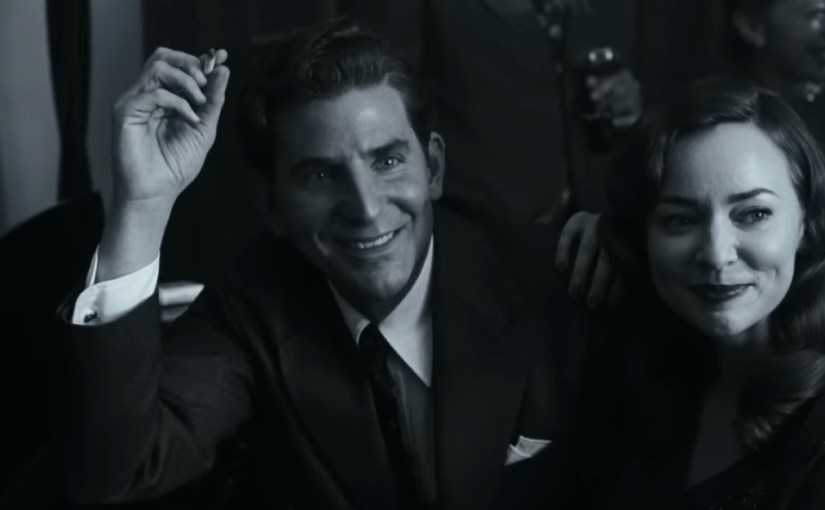
Bradley Cooper’s second directorial film suffers from the same ailments as his first film.  Like his interpretation of A Star Is Born, Maestro is not as good as the sum of its parts.

Constructively speaking Maestro is a gorgeous looking picture with a first half in a comfortable, historic black and white followed by its second half in vibrant colors.  The acting from Cooper, as Maestro Leonard Bernstein is well performed.  Carey Mulligan is sensational at no matter what age she is portraying actress Felicia Montealegre, the conductor’s wife.  Within the scenes they share together there is a beautiful rhythmic exchange of dialogue, written by Bradley Cooper and Josh Singer.  Cooper also looks powerful as he reenacts the conductor in front of his choruses and orchestras.  There are also inspiring shots that start out vague and unclear only to come into a full blossom as Cooper’s camera maintains an unbroken focus on an image. 

All that being said, none of it matters because the script from Cooper and Singer is muddied.  While Mulligan and the actor/director are in the midst of marital argument on Thanksgiving day, much is hard to understand as they naturally speak over one another, and what can be made out seems to mean nothing as they fight over people and issues that I do not believe are ever touched upon in the picture.  A scene like this looks like an actor’s dream piece, but it is hollow of substance. 

Like A Star Is Born, there are characters that enter Maestro for long winded scenes and then are never heard from again.  Either Bradley Cooper does not feel the weight of their importance, or he mistakenly presumes the audience will catch on.  An outdoor brunch with Felicia, Leonard, another couple and I believe a mentor or agent of Leonard’s seems well written, but I have no idea who those people are or what kind of influence they carry.  I was hoping to realize later, but those three amount to nothing.  Was the other couple supposed to be Leonard’s parents, and perhaps they were meeting Felicia for the first time?  I’m just not sure.

Bradley Cooper is a master with his camera.  An important moment in Bernstein’s life is when he gets the call to perform at Carnegie Hall when the other conductor calls in sick.  With its black and white imagery, a young and enthusiastic Leonard answers a phone call while a black square, with light from behind, occupies three quarters of the screen.  I was wondering if that was a stage curtain that needs to be lifted.  I was half right.  It’s a window curtain to the apartment Leonard shares with his gay lover.  The film moves into high energy as the would-be composer slaps his lover’s bottom and leaps down the stairs with a quick edit into the theater.  Mike Nichols would be proud. 

Another moment that struck me was Cooper pointing his camera up into the tall reaches of his apartment building staircase.  It’s quite dark.  You may have trouble realizing what you are looking at but then his son drops a paper airplane “good luck” note down to his father on the bottom floor.  These images blossom into something as alive as I would imagine the director/co-writer/actor regards Bernstein.

So, there is much to praise in Maestro.  Unfortunately, the assembly of these shiny, inventive, and magnificent pieces of film do not mesh very well together.  Bernstein led a homosexual lifestyle, even going so far as to welcome a lover into the home he shared with Felicia.  Carey Mulligan is excellent with expressions of resentment towards this other life that her husband follows.  However, the storyline never feels fully fleshed out.  We never get an opportunity to see the value or the menace of the other relationships that Leonard holds on to.  A so-so moment is accompanied by Bernstein’s saxophone opening to West Side Story.  The piece is used as a subtle tool of deceit and ignorant cruelty by Leonard while escorting his apprentice/lover in the home he shares with an angered Felicia in the foreground.  We presume the threat that Felicia likely feels, but it never comes to the surface. 

Bernstein’s career is glossed over as well.  Who pushed him to move on to bigger moments and acquire greater crescendos in his life?  I’d like to think it was Felicia, but I’m not certain.  Felicia has conversations with Leonard’s sister (Sarah Silverman) and other acquaintances, but what is she really alluding to or really talking about?

The most impressive moment in the film is when the Maestro conducts the London Symphony Orchestra at Ely Cathedral.  (I’ll own up and say I looked up what this scene was on IMDb.)  Bradley Cooper does a masterful reenactment of Berstein, dripping in shaggy grey hair sweat, dressed in a three-piece tuxedo with baton in hand.  This is a major multi talent working in films today.  Cooper studied film footage of the scene over a six-year period to get this six-and-a-half-minute unbroken moment caught on film.  It’s positively mesmerizing and I could watch this over and over again.  I’m waiting for the side-by-side comparison to appear on You Tube soon. It is reminiscent of what Rami Malek did as Freddy Mercury at the Live Aid concert at Wembley Stadium in the film Bohemian Rhapsody

Still, this scene much like a lot of the footage in Maestro seems to just be wedged in there.  There’s a balletic flow to some moments in Cooper’s film and then there are times that come out of nowhere and I’m left to wonder how exactly we arrived and what was truly going on in Bernstein’s life when he conducted at this historic moment time.  I’m watching a blazingly fine impersonation of Bradley Cooper doing Leonard Bernstein but I’m lacking the sub conscious dimension a biographical film should have at this point in a historical figure’s life.

Carey Mulligan is laying everything out to portray Felicia and her best moments come in the last third of the picture when the poor woman is struck with breast cancer that has spread to most of her body. We witness how she lives with the illness along with her separated husband by her side.  I’ve seen ill women before in films.  I know I sound crude by saying it’s nothing new.  I’m still allowed to be impressed though.  It’s a huge feat to bring a performance to this kind of level.

The makeup work is marvelous too.  Raw footage of the real Leonard Bernstein is shown before the end credits, and I’m impressed with how much Cooper looks in comparison.  The aging of him and Mulligan over the decades since the late 1930’s all the way through the mid 1980’s is perfectly captured.  At one moment, Carey Mulligan looks just like my mother.  I choked up a little bit when Felicia gazes upon Leonard at the Ely Cathedral.  Same hairstyle.  Same eyes.  Same expression.  Mom would have even worn a soft blue evening gown like that in the mid-1970s.

I wanted to like Maestro more than I did.  I almost feel guilty for not liking it as much.  There is magnificent camera work, sensational acting, wonderous music and perfect impressions on display, but the puzzle just did not have all of its pieces assembled together properly.  Sadly, Maestro lacks the focus it needs, either for the famed conductor’s amazing career or for his relationship with Felicia with his not so concealed homosexual lifestyle on the side.  Bradley Cooper put together a million magnificent moments, but it caused him to overlook the enduring structure of his subject.

MAESTRO (2023)

by Miguel E. Rodriguez

DIRECTOR: Bradley Cooper
CAST: Carey Mulligan, Bradley Cooper, Matt Bomer, Sarah Silverman, Maya Hawke
MY RATING: 8/10
ROTTEN TOMATOMETER: 80% Certified Fresh

PLOT: This love story chronicles the lifelong relationship of conductor-composer Leonard Bernstein and his wife, actress Felicia Montealegre Cohn Bernstein.


Bradley Cooper’s Maestro is a film of scope and depth and tremendous technical artistry, both in front of and behind the camera.  The performances from the two leads contain some of the best acting I’ve ever seen, especially their argument during a Thanksgiving Day parade.  But I cannot deny that, for reasons I’ll try (and probably fail) to explain, I did not feel emotionally invested in the story until the final two or three reels, when something occurs that, if it were fiction, could easily be dismissed as a shameless attempt at Oscar-baiting.  The fact that this really happened lends these final scenes an emotional weight that was missing from everything that came before.

The story is straightforward, but beautifully told, visually.  After a brief prologue, we meet a young Leonard Bernstein (Bradley Cooper), in bed with his male lover (hope that’s not a spoiler), as he gets an early morning phone call that will change his life forever.  This opening scene sets the visual tone for the first half of the film: standard 1:1.33 framing as opposed to widescreen to give it a classic feel, as well as gorgeous black-and-white cinematography.  Indeed, this opening shot alone looks like it could hang in a museum of modern art and not look out of place.

Everything proceeds breathlessly from there, with some conversations held at speeds that would make the Gilmore Girls dizzy.  After a series of early musical triumphs, he meets the woman that will become the polestar of his personal life: actress Felicia Montealegre Cohn (Carey Mulligan, in a performance that will almost certainly win her an Oscar nomination).  After some verbal sparring/flirtation, it becomes clear to them, and to us, that they are meant for each other, despite his later dalliances with male fans and hangers-on.

I especially liked a scene during this early section where Felicia and Lenny – as his friends and family called him – dine with some older friends (or family? I can’t quite remember), and an older gentleman gives him some advice: “They’ll never give Leonard Bernstein an orchestra in America.  But Leonard S. Burns…”  I loved that scene because I loved how Bernstein’s entire career is a rebuke to that well-meant but wrong-minded sentiment.

This gentleman advises Bernstein to give up writing scores for musicals, but Felicia disagrees.  That sets up a wonderful sequence where Felicia and Lenny watch a rehearsal of the stage musical On the Town, with sailors leaping balletically, and then in a fantasy reminiscent of The Red Shoes, Bernstein himself becomes one of the sailors, and the dance becomes a micro-miniature of their relationship and his early successes.  It’s a thrilling little cutaway that had me grinning the whole time.

From there, the movie jumps forward chronologically in leaps and bounds, giving only a cursory glance at the 1960s before settling more or less for the rest of the film in the mid-to-late 1970s, with Bernstein’s face becoming the craggy icon that I personally remember from my own youth, while Felicia Bernstein somehow looks just as beautiful as she did thirty years and four children ago.  I would blame that on movie magic, but I mean, we are talking about Carey Mulligan here, so they get a pass.  And then the last act of the film arrives and we get a glimpse perhaps of why Mulligan receives top billing over the actor-star-director Cooper.  And that’s all I’ll say about that.

As I said, the movie looks amazing.  Obviously the period décor and costuming are all spot on, but the cinematography and direction – what theatre or film studies majors would call mise-en-scène – are just incredible to behold.  Another shot that stands out in my mind is a scene where Bernstein is conducting, and we get an angle where we are looking into the wings, but his undulating shadow looms large, and standing in that shadow, but still illuminated, is Felicia.  Verbal descriptions won’t do them justice, just see for yourself.

But as I mentioned, I just wasn’t invested in the story from an emotional standpoint.  I felt like I was watching an extremely inventive and ingenious exercise in moviemaking.  I suppose I could compare it to the recent sci-fi film The Creator, if that doesn’t get me accused of hyperbole.  Both films show supreme confidence in staging, cinematography, and direction.  But like The Creator, Maestro feels like something is missing where its heart should be for the first 75% of its running time.  Things happen, arguments take place, children are born, Lenny gets a little sloppy with his paramours, but I never felt like any of it really meant anything to me as the viewer.

I tried asking myself, “What statement is the film making?”  And I couldn’t answer that question, aside from fulfilling its purpose in presenting the facts of a story in almost documentary-like fashion.  But the performances and cinematography are so stunning that I must acknowledge that fact with a higher rating than I would normally give a film that doesn’t really grab me emotionally.  (EXCEPT for the last 25%, I mean…I don’t want to give anything away, but the last reels are heart-tugging.)

So, do you want to see this movie?  Well, certainly not if you are an absolute acolyte of Leonard Bernstein.  You’ll see some pretty cool stuff musically, but Maestro does not paint an altogether flattering picture when it comes to his personal life.  But if you want to see one of the best-acted, best-directed, best-LOOKING films of the year…Maestro is your ticket.

THE MULE

By Marc S. Sanders

Earl Stone (Clint Eastwood) was once considered one of the best horticulturalists in the country.  In fact, he devoted more of his time to raising the most unique flowers and plants that anyone could find than he ever did to his wife, Mary (Dianne Weist) or his daughter, Iris (Alison Eastwood).  He even missed Iris’ wedding, to attend an award reception in his honor.  At age 90, though, Earl is quickly forgotten by his ardent fans thanks to the ease of ordering horticultural specimens off the internet.  There’s no longer value in meeting the maker.  Just as Earl never took account for his family like he did with his beloved occupation.

Clint Eastwood portrays Earl Stone in The Mule, which he also produced and directed.  Written by the Nick Schenk, this film is one of Eastwood’s best directing efforts.  It is inspired by a real life story where the forced to retire horticulturalist finds himself working as a drug mule for the Mexican cartel.  Earl is corralled into making easy money by driving a duffel bag across country.   At the destination, he leaves his truck and returns shortly thereafter to find large amounts of cash in his glove compartment for his trek.  

Earl is so naive to all this activity though that he doesn’t even know how to use the various cell phones the dealers give him for each new journey.  It’s only on the third drive that he opens the bag to find kilos of cocaine.  

Earl is a perfect front for the cartel.  The Don (Andy Garcia) sees the value of this camouflage.  Who’d ever suspect a frail ninety year old Korean War veteran, who’s never gotten a traffic ticket, of doing their bidding? Certainly, the sharp witted FBI agents (Bradley Cooper, Michael Peña) could only get as close as determining this mule is driving a black pickup truck.  Beyond that they are at a loss, despite the leeway and patience awarded to them by their superior (Laurence Fishburn).

This film boasts an outstanding cast from all four corners of its various stories.

The Mule works so well because of Eastwood, the filmmaker.  He offers thrilling overhead highway shots (with no car chases) of Earl’s pickup truck running parallel to a helicopter as well as how the cartel escorts follow behind.  There’s humor in how impatient they get with the old codger by how slow he drives and the old time music he listens and sings along to.  Wait until you see two tough armed Mexican cartel members relent to singing along to Dean Martin.  Eastwood cuts and stages these hilarious moments that are most welcome, even if they had no business being in a story like this.

Clint Eastwood’s performance is really shining through.  You recognize his signature scowl and his heightened walk despite his frail physicality.  The Earl Stone character is so well drawn and Eastwood, as director and especially actor, answers every demand of the script sharing celebrated scenes with Andy Garcia who treasures his prize mule and gifts him a couple of women to make him feel comfortable.  Other moments allow wonderful exchanges between him and Dianne Weist as Mary, Earl’s estranged and very ill ex-wife.

The Mule is a crime picture, sometimes lighthearted and on occasion heavily serious.  Yet, it’s also a well-drawn out family drama.  Earl is grateful for the rewards that come with being a drug mule.  He’s generous to his friends.  He modestly treats himself.  He lends attention to his adult and loving granddaughter (Taissa Farmiga).  He accepts Iris’ disregard for him.  Yet, none of these gestures buy back or exchange any time he’s lost with the family he never got to know.

The film plays like two different movies until finally a sacrifice must be made to appease one part of Earl’s life versus the other.  I almost wished for everything new that came upon Earl in his late life to remain on that trajectory.  Yet, like the best stories, interference will eventually get in the way.  It’s that much more crushing when Earl’s new pattern is upended.  Still, that’s what makes for good drama.

I highly recommend seeking out Clint Eastwood’s The Mule. It surprised me in the best ways possible.  I did not expect to be so impressed.  Eastwood continues to be an inspiration with the persistent longevity of his talents as an actor, a screen legend, and a gifted filmmaker.  The Mule shows he’s as sharp as he ever was before in some of the best films of his decades long career. 

AMERICAN SNIPER (2014)

by Miguel E. Rodriguez

DIRECTOR: Clint Eastwood
CAST: Bradley Cooper, Sienna Miller, Luke Grimes, Jake McDorman
MY RATING: 9/10
ROTTEN TOMATOMETER: 72% Certified Fresh

PLOT: Real-life Navy S.E.A.L. sniper Chris Kyle becomes the most lethal sniper in American history during four tours of duty in Iraq, but he finds it difficult to leave the war behind when he finally returns home.


I once called Katherine Bigelow’s award-winning The Hurt Locker the Deer Hunter for the Iraq War generation.  Having just seen Clint Eastwood’s masterful American Sniper for the first time, I must now amend my statement.  American Sniper presents its story concisely, almost tersely, states the facts of the matter, and leaves the audience to draw its own conclusions when the credits roll.  For myself, I was once again struck by the sacrifices of those men and women who have ever made, and will ever make, the choice to serve their country, for whatever reasons.

Chris Kyle’s reasons are made clear at the outset.  30-year-old Kyle (Bradley Cooper) is a skilled cowboy and rodeo rider when he decides to enlist in the military after seeing footage of the embassy bombings in 1998.  In a marvelously edited prologue (resembling a Scorsese film), we see Kyle’s father impress upon a school-age Kyle how people are either sheep, wolves, or sheepdogs.  Wolves attack the sheep, and the sheepdogs protect the sheep.  Kyle has lived his entire life with a sheepdog mentality and badly wants to do his part to protect his country against what he feels are the forces of evil.

Kyle enlists in the Navy S.E.A.L.s and, after a brutal training process, becomes a skilled sniper.  Shortly after graduation, he meets and falls in love with Taya (Sienna Miller).  The abbreviated exposition of their courtship and marriage contains little details that give a ring of authenticity that even The Deer Hunter lacks at times.  (After their first meeting in a bar, for example, Taya has to run outside and throw up after doing one too many shots.  Kyle follows and discreetly holds her hair back, as every gentleman should.  It’s the kind of scene you would normally see in a mid-level rom-com, but it feels as real as an autobiography.)

Kyle’s and Taya’s relationship at home is an important factor in the film, but the bulk of the story shows us Kyle putting his unique skills to use in Iraq, where he is sent shortly after the 9/11 attacks.  These scenes belong in some kind of war movie Hall of Fame.  Kyle’s first kills occur when he has to make a command decision whether or not to shoot a young Iraqi boy holding a grenade and running towards a US convoy.  The scene takes on an even more horrific dimension when the mother tries to pick up where her young son failed.  This horror is echoed in triplicate in a later scene when an even younger boy approaches an abandoned rocket launcher and appears ready to fire it at American troops.

Kyle goes on to much more “conventional” warfare later on (including a virtual duel between himself and another similarly skilled enemy sniper), but it’s scenes like the ones I mention above that elevate American Sniper into a masterpiece.  Watching them, I could not help but remember that this movie is based on a real person who went to real war zones during his lifetime.  I have no idea whether Kyle really did make those choices in real life, but the idea remains: whether Kyle did or not, it’s a foregone conclusion that someone had to make similar decisions at one time or another, not just in the Iraq War, but in other wars, many wars, ALL wars.  (I was perversely reminded of another superior war film, also based on fact, Jarhead, where the main character is also a sniper, except he never gets to fire his weapon in combat.  My respect for that character is no less profound.)

Speaking for myself, I don’t know if I have it in me to make that kind of call.  I have nothing but admiration and respect for those people who are making those calls every day in wartime, who are asked to put their lives and mental health on the line and do their duty no matter what.

Kyle’s compulsion to be a protector leads to his decision to become part of the teams “clearing” houses on the ground, as opposed to being the “overwatch” who protects them from the rooftops.  He sees too many squads being cut down by enemy soldiers inside the houses where he can’t see them from above.  “If I can’t see them, I can’t shoot them.”  One of his comrades disagrees with this decision.

“All these guys?  They know your name, and they feel invincible with you up there.”
“They’re not.”
“They are if they think they are.”

His decision puts him in even greater danger than before, but he can’t help himself.  Every death that he feels he could have prevented haunts him.  In another echo of another shattering war film, I was reminded of Oskar Schindler’s last scene in Schindler’s List when he breaks down thinking of how many more Jews he could have saved, instead of focusing on the ones he did save.  It’s impossible to say exactly how many lives Chris Kyle may have saved with his actions in Iraq, but in his mind, he was just doing the right thing, not the heroic thing, so he never felt comfortable accepting the title bestowed upon him by his grateful comrades: “The Legend.”

American Sniper is also very careful to depict the cost Kyle faced as the result of his job.  For one, the Iraqi insurgents put a $180,000 bounty on his head, making his job even more dangerous than it already was.  For another, he witnesses some things firsthand that would give Quentin Tarantino nightmares.  At one point, he tracks down an Iraqi enforcer nicknamed “The Butcher” who uses a drill to punish anyone who collaborates with American soldiers.  When Kyle raids his compound, he finds a freezer full of the Butcher’s “souvenirs.”  This is all on top of the various times he sees his teammates cut down by enemy fire, sometimes right in front of him.

The other cost comes during the brief periods at home between tours.  He loves his wife and children, but he finds it impossible to share the details of what happened to him in Iraq.  This reticence threatens his marriage to the point where Taya tells him flat out: “If you leave again [for another tour of duty], I don’t think we’ll be here when you get back.”  This kind of plot point is hardly new, but again, there is a ring of truth to it in this movie that makes it much more poignant than it normally is.  Kyle’s internal code can’t allow him to let someone else go to a war zone and do a job that he is eminently more qualified than anyone else to do.  “I have to serve my country.”  And that’s that.

(The film does have one drawback that compels me to score it as a “9” instead of a “10.”  There are scenes later in the film depicting more of Kyle’s troubles at home and as he speaks to a psychiatrist who recommends he go down to the VA and meet with disabled veterans as a way of “saving” soldiers without being in combat.  While these scenes are invaluable in terms of shedding even more light on Kyle’s character, even this late in the film, I did feel like there could have been a little more time spent with Kyle and those veterans so we could flesh that issue out just a little more.  There’s much more to it than could possibly be explored in just the last fifteen minutes of a movie.  I’m not saying it should have become Coming Home, but…that’s my opinion.)

In the event you don’t know Chris Kyle’s ultimate fate, I won’t spoil it here.  I had forgotten about it, and when the movie sprung it on me, it was as surprising as any other plot twist I can think of.  American Sniper proved to me, as if it needed proving again, that the people in our armed forces, especially those in combat zones, face unthinkable decisions, sometimes on a daily basis.  The morality of those decisions can, and will, be debated from now until such time (God willing) that armed forces are no longer necessary in this world.  This movie doesn’t pass that kind of judgement.  It merely says, “Here is what happened.  What do you think about it?”  How you answer that question is what the movie was really about.

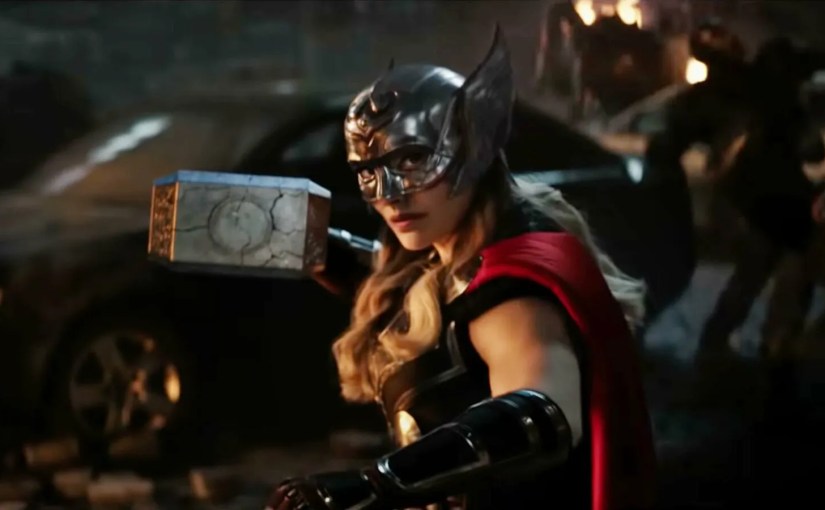
THOR: LOVE AND THUNDER

By Marc S. Sanders

Taika Waititi’s Thor: Love And Thunder doesn’t just operate as a standard Marvel Super Hero movie.  I think it encapsulates what moviegoers treasure when watching a film, and that consists of a gamut of emotions with the opportunity to absorb the best in sight and sound.  Even if we are watching a guy fly through the skies with a cape that’ll be marketed into a million toys and t-shirts, sight and sound are nothing without brains behind a script.  It’s fortunate that a director like Waititi always works with that in mind.  Marvel overseer Kevin Feige knows how to recruit talent behind the camera and you just can’t go wrong with the architect of a spoof on the surface, yet an all too horrifyingly real film underneath, like the widely acclaimed Jo Jo Rabbit.

I’ve always laid claim to the fact that movies largely recognized as “tear jerkers” like Steel Magnolias and Terms Of Endearment are actually comedies first, and then dramatic sob stories second.  I’m serious about that observation.  Why?  Because if a film is going to go to great lengths to risk the outcome of one of its main characters, then it must get its audience to embrace and deeply love that person first.  The best avenue to that approach is to outrageously laugh and cheer that character on ahead of what’s to come.  Taika Waititi’s second film to center on the God of Thunder does just that.  The best reward I got from Thor: Love And Thunder is that I laughed quite often (as the trailers imply), but I also teetered on tears as well.  Good fantasy storytelling will incorporate an all too real conflict with its protagonists and then introduce the strange and unusual as an escape.  The best example may be The Wizard Of Oz, and the simple set up of Dorothy and the risk of her perishing with her dog Toto in a threating tornado.  More recently, I also think about Guillermo Del Toro’s Pan’s Labyrinth centering on a young girl in early twentieth century war torn Europe.  Again, Waititi’s coming of age during Nazi occupation opus, Jo Jo Rabbit, follows this formula as well.  Without spoiling too much from Thor’s latest adventure, Waititi presents an all too real and unforgiving circumstance for one of the film’s characters and then segues into his delightfully and never too weird assortment of settings and characters.

It’d be easy to think that by what may be the sixth or seventh time we’ve seen Chris Hemsworth in the garb of this character that anything inventive would have been exhausted by now.  Not so.  A new dimension in storytelling arrives midway through the film that presents a different crisis for the proud God.  Hemsworth really approaches it beautifully.  It was reminiscent of Christopher Reeve in the original Superman, actually.

A supporting cast of return players work well together, particularly Natalie Portman, who is given a much more fleshed out and well considered character arc than her two previous Thor films. (Early on, Marvel Studios was notorious for not writing good female characters in any of their pictures.  They were just presented as glamorous damsels in distress. Thankfully, that’s well behind them by now.)  Portman returns as the on again/off again love interest, Dr. Jane Foster, for Thor.  Even better though, Jane actually becomes Thor!!!!! (No spoiler there.  Just look at the trailer or marketing poster.)  There’s great on-screen interaction with Portman and Hemsworth, even when it’s a montage of past dating episodes like in ridiculous Halloween costumes or having a domestic squabble as any typical married couple might have.  Hollywood should reunite these two for a romantic comedy in the vein of Rob Reiner/Nora Ephron material.  Chris Hemsworth is a much better partner than Ashton Kutcher ever was in a past Natalie Portman film.  Put Chris Hemsworth together with Natalie Portman again and they could become as adoring as Tom Hanks and Meg Ryan did.

By the time the fourth movie comes, does it really matter who the villain is played by?  Well, when you are writing a smart script amid ridiculous visuals like Taika Waititi is known for, the answer is yes.  This film surprisingly opens on a downer prologue that necessitates good dramatic acting amid silly CGI and garishly loud costumes.  It’s fortunate that Christian Bale, who regularly performs on a method level comparable to Daniel Day Lewis, was available to portray the scrawny, pale and scarred Gorr The God Butcher.  Bale puts all his talents into what could’ve been a throwaway role like, say a Ghostbusters bad guy.  (Can anyone tell me who actually played Gozar in the 1984 film????)  This is another notch in Bale’s repertoire of outstanding credits that should not be overlooked.  You can sympathize with Gorr, as well as be frightened of him.  There’s much range in this character on the same level as the Thanos villain from earlier Marvel films.

Russell Crowe has a fun appearance as the God known as Zeus.  He looks over the top ridiculous and he works in antics that seem like they came out of episodes of Who’s Line Is It Anyway?  Put it this way, I haven’t forgotten how Crowe walks down a staircase yet.  If Russell Crowe is anything of an educated performance artist, then when he was getting sized up in wardrobe, I’m sure the wheels were turning and he was considering what tics could work for that of a God drowning proudly in his own vanity.

Tessa Thompson and Taika Waititi are thankfully back, respectively as Valkyrie, King of the fishing/tourist destination New Asgard, and the simply innocent rock guy buddy, Korg.  The Guardians Of The Galaxy are here too.  It’s a fun bit of material they have to play with.

In another director/screenwriter’s hands, any Thor film would likely get boring with its standard formal Shakespearean like vocabulary and artificial CGI.  Isn’t that an ongoing problem with CGI anyway?  So often it looks to fake.  Because Taika Waititi opts for bright colors and odd shapes and sizes of setting and background characters, nothing could look artificial, because the fantasy is always acknowledged as over the top by the very characters occupying the space.  A glass castle of pinks and purples that resembles gigantic glass Mary Jane bongs or science lab beakers is accepted in a Thor film, just as much as munchkin size, owl like creatures with small beaks are a terrorizing army in flying jet skis with mounted laser guns.  Mix in a blaring rock soundtrack and Waititi hits the notes where it’s okay to laugh at the silliness of it all. In other moments, he’ll invite his audience back in from recess to take in what’s hard and difficult to live with and endure.  Again, Waititi pleasantly surprised me with the balancing act of outrageous comedy against crushing drama when he made Jo Jo Rabbit.  The blend works so well here in not so typical Marvel fashion.

Thor: Love And Thunder left me thinking that it is the best of the superhero’s four films.  It’s measure of laughs and choked up drama kept engaged and I appreciated the experience.  Remember, I recalled Steel Magnolias and Terms Of Endearment in this write up.  If you don’t take that comparison lightly, then hopefully you’ll have the same experience I did with this installment of the Marvel franchise.

PS: Hats off to the trailers for not incorporating everything the film has to offer.  Within the first fifteen minutes of the movie, I was actually taken aback by an element I never considered or expected.  It only enhanced my perspective of the film.

PSS: Anyone that knows me, knows that I love Guns N Roses.  Consider me a born-again fan.  Particularly Sweet Child O’ Mine will always be one of my most favorite songs.  This film reminded me that it was the first song my daughter heard the day after she was born, when I sang it to her in the hospital room. 

WEDDING CRASHERS

By Marc S. Sanders

Owen Wilson and Vince Vaughn make a perfect comedy pair close to the same vein as Bill Murray and Harold Ramis. Close, but not as legendary, and nowhere near the statures of Newman and Redford.

Wedding Crashers was the the first of their two collaborations to date. The movie works as it charges forth in its raunchiness and unabashed thrust to not hold back. Fortunately, a guy named David Dobkin directed a script from Steve Faber and Bob Fisher long before the age of “Me Too.” What a denial of a great idea we would have, had this film been made later. Reader, Wedding Crashers was never intended to be politically correct. If it even thought about it for a second, the entire production would have failed.

Just go with this. Wilson and Vaughn are John and Jeremy, practicing marital law mediators (I said go with it!), who relish in debauchery by crashing weddings as an opportunity to score one babe after another. Dobkin and crew assemble a fantastic early montage of various nuptials to show how well John and Jeremy play this field of formality. We get to see them in action in all of the different methods. At one time they are charming the parents. They are telling sob stories and crying false tears. They are making balloon animals for the youngsters as a means to catch the attention of a beautiful bridesmaid caught up in the sanctum of love. One after the other a braless gal pal is tossed onto a bed ready for John and/or Jeremy. Call it refreshing, but at least these players are equal opportunists; Jewish, Irish, Italian, Indian. Every kind of wedding ceremony imaginable is given attention. These guys are so fine-tuned at what they do that there is even a rule book, which you can reference on IMDB, or on the Blu Ray extra.

When Secretary Cleary’s (Christopher Walken with not nearly enough to do) daughter is getting married, one last hurrah before wedding season closes is upon them. John immediately becomes attracted to the bride’s sister, played spiritually by Rachel McAdams, while Jeremy oversteps himself with the youngest and overly clingy sister who makes sadomasochism seem G rated. She is played by Isla Fisher. To my surprise, following the success of this film, Fisher never really became more mainstream. She’s the scene stealer. When she begs Walken to let the men stay for the weekend at their New England island home, I lost it. I was dying at her antics. Fisher is so good. She had to have invented some of this material herself. An amazing comedienne. The stomping feet. The poutiness. This is comedy. Fisher never holds back in every scene she’s in and because of her, Vaughn as her lustful prey is all the better in his tormented state.

Another scene stealer is Bradley Cooper, playing McAdams bullying boyfriend. Cooper probably made this character bigger than the script intended. Again, I lost it as the family and guests warm up for a friendly game of flag football. Cooper is in his own element apart from the others as he goes through regiment drills of what equates to an unhinged Marine. He’s cruelly brutal but he’s terribly funny. Later in the film his part might get too sadistic though as he punches Wilson bare knuckled which truly sounds like a crack of his skull. There’s nothing really funny there. This is beyond a Three Stooges slap or eye poke. Sometimes less is more. Blame that on Dobkin.

Other parts are wasted though they start out promising like Jane Seymour as Walken’s wife and Fisher & McAdams mother, who serves as a sex craved Mrs. Robinson. She’s given a presence, though her story never really delivers. As well, there’s a resentful gay brother (Kier O’Donnell) who dresses in black and bears a striking resemblance to Gru from Despicable Me. The character makes a good entrance but is primarily there to further torment Vaughn in a quick bed hop scene. Then there’s not much else.

McAdams plays meet cute just fine with Wilson. Though with much interference from the rest of the characters during the course of the weekend you really don’t get a sense of how McAdams falls for Wilson as well as why Wilson goes against his Crasher Code and obsessively falls for her. Not much beyond dream like gazes at each other across the room. For the romance to really work, these characters have to talk with each other a whole lot more than just a token wave crashing beach scene.

The 3rd act is expected. The boy loses the girl. He takes lonely walks down the street, he becomes a slob and he makes one failed effort after another to win the girl back. For a raunchy comedy that was moving with lightning hilarity, this 3rd act really slows the movie down. It ran way too long.

Still, Wedding Crashers is a great comedy most especially thanks to the concept of taking advantage of what can typically happen at any wedding reception, and the uncompromising comedy of both Isla Fisher and most of Bradley Cooper’s material.

Put your morals aside and RSVP to the event.

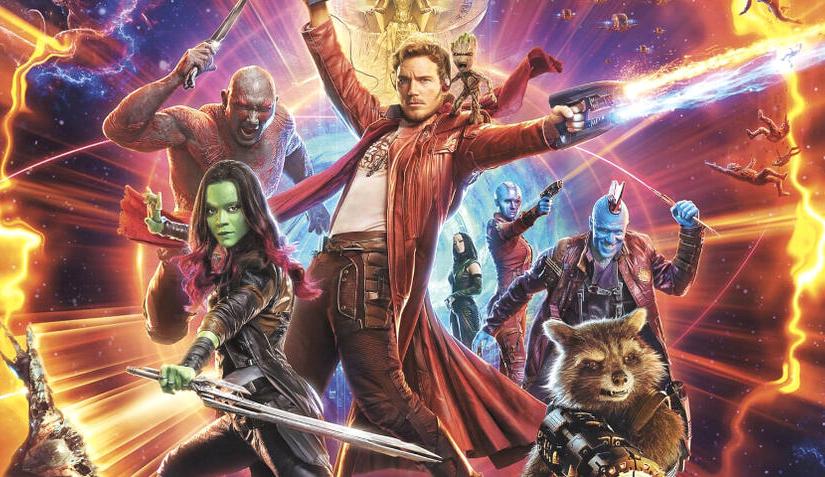
GUARDIANS OF THE GALAXY VOL. 2

By Marc S. Sanders

James Gunn continues his Looney Tunes odyssey helming Guardians Of The Galaxy Vol. 2. The silliness is grander, the story is weirder and the characters are now comfortably fleshed out.

Vol 2 is probably not better than the first installment. However, it is more inventive as Gunn takes his film along the hanging thread left over from before. Peter “Star Lord” Quill (Chris Pratt) meets his father at last in the persona of Kurt Russell who goes by the moniker Ego. This is all enthralling to Quill, though his love interest, Gamora (Zoe Saldana) sees beyond the facade.

Ego has invited them to his planet that he created. It pops with colors, serenity and cheer. This plays for a good story; maybe as a better and more developed Star Trek episode.

What differentiates this film from other Marvel films comes out in the third act. This does not consist of just space battles, laser swords and shootouts. The end is something else, something new, entirely. Thus, you are given the film’s greatest strength. I found it to be very imaginative.

Gunn however falls a little bit into his own trap along the way. There are too many relationships and characters that work as filler for side stories. Gamora vs her bitter sister Nebula. Drax (Dave Bautista) with a new, weird antenna on the head character named Mantis and Rocket Racoon and his big mouth with Yondu (Michael Rooker, in a bigger more significant role this time). Oh yeah! There’s also Yondu vs Sylvester Stallone (huh? why? how?) and Yondu vs his mutinous army, The Ravagers. It’s all a little too much for an already busy looking film.

I found it funny that The Ravagers reminded me of the motorcycle gang, The Black Widows, from Clint Eastwood’s Every Which Way… bare knuckle comedies. Those guys were much funnier than these Ravagers. Gunn overstays their welcome as they randomly cackle and heckle poor Baby Groot, the toddler tree thing. That gets old quickly.

Gunn approaches a special kind of humor here. Repeatedly, because these are outer space characters, it’s apparently funny to lend them explaining the punchline of a gag. So if Drax realizes that Peter has the hots for Gamora, he’ll belly laugh and explain literally how Peter feels and do it bigger and louder. Variations of that gag occur quite often among most of the characters. Sometimes it works. Sometimes it gets old.

GOTG Vol 2 is a fun watch. I don’t foresee this installment carrying the legendary status the first one did or even standing out among the best of the Marvel series, but I will give props to the outcome of what Ego truly is and what his intent depends on. (I won’t spoil that here, of course.)

The cast is great. Saldana is one of the stronger female characters in the MCU. She captures a background to Gamora that is blatantly absent from other Marvel ladies. Bautista has become a great character actor as well. He’s a smart guy with good timing. With his extensive child and adult film resume Kurt Russell is perfectly cast as Pratt’s father. Their personalities lend to some good chemistry.

James Gunn owns the Guardians films. No one else can capture his blend of humor and pop culture salutes. Yet, he overreaches a little trying to incorporate so much story and so many gags into one film. His vision is well defined, though.

Plus, Gunn stages another dance scene for Pratt and Saldana, and it’s great. As I noted in my Vol 1 review, that’s how you get to a viewer’s heart. Everyone loves to dance.

As well, Gunn accompanied his sequences with some tunes both fresh and familiar from Fleetwood Mac, Electric Light Orchestra and George Harrison to name a few.

James Gunn was always going to make sure never to take his films seriously. So, when you see a baby tree groove along while trying to detonate a bomb, I defy you to be so serious as well.

GUARDIANS OF THE GALAXY

By Marc S. Sanders

Forgive me! I’m going into the woods or, rather, outer space a little on this review.

Director James Gunn brings new perspective to Marvel Studios’ Guardians Of The Galaxy, by recognizing the one instinct that every person possesses but is not acted upon often enough…the instinct to dance.

I love to watch characters (not part of a standard song and dance musical) break out into dance. It comes out of nowhere while it humanizes the person. I write my own plays that way, and I award my characters the opportunity to dance as well. I love it when I see it because it’s always a surprise and always welcomed with a smile. Think of that great moment in John Hughes The Breakfast Club, when the five kids let it all out after they’ve let it all out among themselves in confidence. Look at Eddie Murphy boogie in a night club in 48 hrs and Beverly Hills Cop, and look past the crappy script of Footloose for one of the silliest and most fun dance soundtracks to bop your head to. That last bit offered some inspiration for James Gunn especially. Dancing is needed in life. Dancing brings a surge of security as we shed our inhibitions for a fleeting moment. James Gunn reminds his audience of that. If you can’t smile and tap your toe to at least one fresh minute of GOTG then I worry for your soul.

Try not to smile when you first see lead hero Peter Quill aka Star Lord shake, slide and lip sync out by himself on a marooned, wasted planet to the melody of Come And Get Your Love by Redbone. Yes. Don’t deny it! Your head was shifting and your foot was shaking when you first saw this moment.

Gunn hit on all the right notes with a film that could have torpedoed straight to B class junk in another director/writer’s hands.

GOTG focuses more on the humor than any of the zippy outer space special effects. Everyone is having a good time, even the bad guys.

The story more or less focuses on the pursuit and take away/get back of a MacGuffin. Because that’s so simple, Gunn doesn’t have to concern his script with logic and over plotting. Instead, he can offer time for great naive one liners from brutish Dave Bautista as lovable Drax The Destroyer (do I really need to explain this character? ) and Rocket Raccoon (do I really need to explain this character as well?). There’s a giant tree named Groot who will happily tell you “I am Groot” in case that wasn’t clear to you, and a tough as nails, green skinned Gamora played by Zoe Saldana. She, along with Chris Pratt as Quill, have great chemistry together as they develop a caring friendship amid their competitiveness and wacky action. A pause in the play to allow a sway and flow dance for Saldana and Pratt to Elvin Bishop’s Fooled Around And Fell In Love is hypnotic as Gunn stages it against a gorgeous purple galaxy sky with random yellow sparkles raining down. I could stay in that scene forever.

Main focus goes to Quill who pirates the galaxy while not knowing much about his father and keeps the memory of his Earth mother alive with her “Awesome Mix Tape Vol 1.” He’s a lone pirate with no allegiance, and happily scavenges items for pay from the highest bidder. Pratt has fun with his breakout cinematic role. He laughs, he teases and yup, he dances.

On a first viewing, GOTG can leave you a little bewildered as you try to comprehend what weird name belongs with what weird character and what is everyone talking about. Your next viewing will feel like an invitation to a night club because you’ll realize whatever exposition Gunn’s script offers is really not significant.

James Gunn offers a pleasure piece of sights and musical sounds. One motif I like about his fictional galaxy is that no two characters look the same. It reminded me of George Lucas’ first Star Wars film. The famous cantina scene never shows two of the same species of alien. That’s all that’s needed to imply the vastness of the population. Unlike the Aquaman, James Gunn doesn’t feel the need to show you every inch of this universe to prove just how big it all is. He adopts the means of many extras all with their unique look.

The villain is Lee Pace, a guy who’d make a great Bond villain actually. He’s hidden behind a lot of costume and makeup as Ronan, and maybe he could’ve been given more to do. There’s not much one on team time between him and the Guardians.

Other fun moments abound though, including a ridiculous daylight chase through a busy planetary downtown, and a ridiculous prison break led by Rocket and Groot that reminded me of a lot of the Zucker brothers humor from their Airplane! and Naked Gun films.

James Gunn manages the biggest and bravest departure from the Marvel Cinematic Universe and it’s oh so right and necessary to keep the franchise alive and fresh.

Guardians Of The Galaxy is Marvel Studios’ answer to Looney Tunes and The Muppets. The great Mel Blanc and Jim Henson would have applauded a ridiculous film like this for years on end.