BLACK PANTHER

By Marc S. Sanders

Ryan Coogler’s Black Panther is a stand out film among what has become an overpopulated Marvel Cinematic Universe.

It is a super hero film for sure, complete with the standard gadgets, super strength and abilities, action and over the top science fiction. Yet, this film did not have to be a superhero narrative to drive home the message of its story. This could have been an Oliver Stone film rooted in political quagmire. It could have been a John Hughes teen rip off film that takes place in a typical Wasp suburban school.

A question embraces this film. Simply, when is it appropriate to share?

Chadwick Boseman plays the title character also known as T’Challa, and following the recent death of his father he becomes the next king of the fictional African based country of Wakanda, a location hidden from the rest of the world so that no one else can take advantage of its most precious resource, Vibranium, which has allowed for the most sophisticated technology, weaponry and even medical advancements ever known. How it’s all lumped together, who knows? Pick up a Marvel Comics Encyclopedia for that answer. T’Challa is tasked with whether it is a moral obligation to share the resource with the rest of the world. However, if it is provided, will the Vibranium be taken advantage of for nefarious purposes?

(SIDE NOTE: Reviewing all of these Marvel films is getting to be trying, as I feel resorted to using the same terminology some times; words and phrases like “hero,” “villain,” “nefarious purposes” and “also known as.”)

His nemesis is Eric Killmonger played by Michael B. Jordan; this guy is going to get an Oscar one day. Killmonger is an educated, skilled soldier and cousin to T’Challa who was abandoned by Wakanda following his own father’s betrayal of the country. He grew up in the projects of Oakland, California. Killmonger returns to Wakanda with the purpose of becoming king and allowing the tech and resources Wakanda possesses to be used by the outside world, particularly by populations of African descent and people of color who have endured a history of suffering. Once again, Marvel Studios scores with a villain you want to root for and endorse. Just like Jeff Bridges’ Obidiah Stane in the first Iron Man film, you have to recognize the stance that Killmonger holds on his side of argument. That’s great writing. It’s not so much that Killmonger is a slaughterer. He really isn’t at all. Once he overthrows the hero, the mission is only just beginning as he wishes to right the wrongs of Wakanda for never providing in the first place. It’s ironic really. This guy sides on the fact that he doesn’t want a wall, while the protagonist is doing all he can to maintain a divider to the outside world. In 2018, was there another film that really reflected the sign of the times so succinctly?

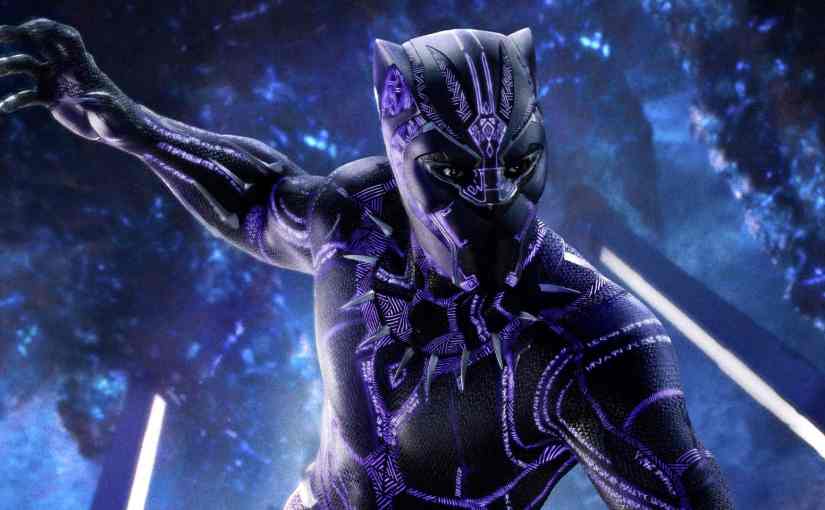
Coogler makes a beautiful sweeping film of country and special effects. The Wakandan ships are very cool. Overhead shots of Africa and the camp bases of various tribes are astonishing. One particular tribe resides on a winter like mountainside and the leaders room is spectaculary decorated in horizontal lumber hangings. T’Challa’s staff of mostly female combat warriors and scientists led by Lupita Nyong’o are really exciting. At times the film takes inspiration from some of the best standards of the James Bond films, as his sister introduces her latest inventions for the Black Panther suit. Naturally, the Black Panther costumes are stand outs in the film, black with glowing power enhancements of purples and yellows.

Is Black Panther worthy of a Best Picture nomination and an abundance of awards attention? I’m still not sure. It’s a very strong piece that is light years ahead of any DC Universe film, but it has great characters and messages like most of the Marvel films and even some of the more recent Bond films featuring Daniel Craig. Maybe it is one of the best films of they year, and maybe it should be a Best Picture nominee, but perhaps only because 2018 did not offer a wealth of extraordinary film achievements to begin with. I found merits in all of the 8 Best Picture nominees in this particular year, but I also found problems with many of them too (don’t get me started on A Star Is Born); shortcomings that in another year with better films would keep many of these nominees from ever being considered for the grand prize.

Yet, as I document these thoughts, I think about Black Panther again. Truly, it does not have anything negative in its feature. Ryan Coogler directed and wrote a very focused and thought provoking film. Yup! It was truly one of the year’s best films.
THE BATMAN (2022)

By Marc S. Sanders

Another year at the movies, means another trip to see Batman on the big screen.  I think we are close to a dozen iterations, no?  Fortunately, the latest reinvention for March 2022, The Batman, is a refreshing interpretation that focuses on the detective skills of the masked vigilante hero who prowls from the rooftops of Gotham City.  Matt Reeves has written and directed a gripping and engaging film that doesn’t rely on simple paint by numbers.  He’s capitalized on using the mysterious Riddler (Paul Dano) as the main villain here, and Batman’s (Robert Pattinson) brains get more exercise than his brawn.   

It is the second year since Batman has introduced himself to the crime ridden city.  The man behind the mask, Bruce Wayne, keeps a journal of his exploits and observations, and through voiceover he questions if his actions have benefitted since it appears that crime has only increased since his first appearance.  A serial killer is taking responsibility for the grisly deaths of important people within the city and he’s leaving greeting cards for “The Batman” with a common scribble of “No More Lies,” along with a “?,” and a riddle for The Batman to solve.  Thanks to a strong partnership with Police Lt. Jim Gordon (Jeffrey Wright), Batman is given easy access to the crime scenes so he can attempt to reveal the mysterious villain and determine exactly what his endgame is. The Riddler doesn’t make it easy, though.

Mobsters like the Penguin (Colin Farrell) and Carmine Falcone (John Turturro) have a grip on the city, as well.  There’s also a possible lead from a woman (Zoe Kravitz) who’s managed to infiltrate the gangsters’ underground headquarters.  She also has the fighting skills and agility that’s comparable to the caped crusader, and maybe she’s a cat burglar as well.  Still, is she pertinent to Batman’s investigation or not?

It’s better not to spoil anything that occurs in Reeves’ film.  The mysteries that are uncovered are part of the fun, and it does take some time and exposition to get there, but I found it worth it.  Barring a few ingredients within the film that I recognized from the Christopher Nolan and Tim Burton films, the picture is worth seeing for a new formula on a character, that although is a favorite of mine, I feel has also been done to death on the big and small screens.  This is a Batman film where I appreciate the thinking approach of its craft, over the action.  When Batman is playing detective with Jim Gordon, it is much more enticing than just another Batmobile chase or another ham-handed fist fight.  This film is a test of Batman’s mental capacity and ability for analysis.

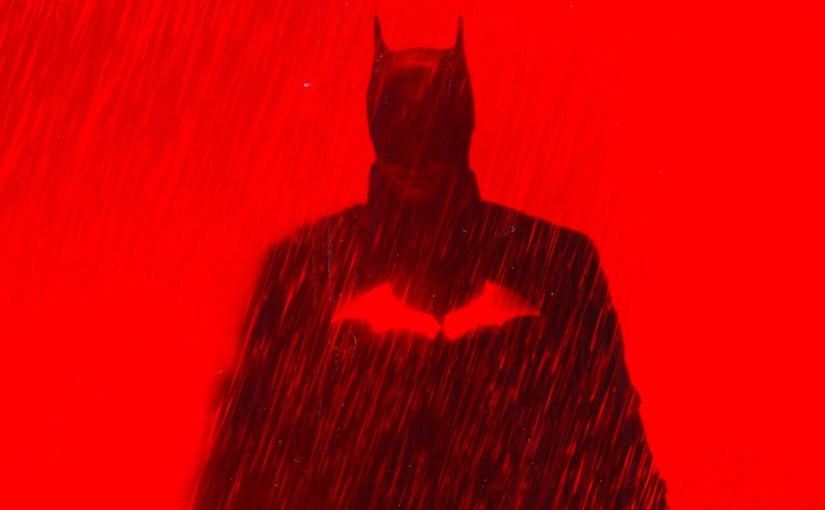
Reeves direction is also appreciated, though I’m expecting the naysayers.  The Batman is a very dark motion picture.  When it’s not dark, the photography is dim and blurred.  There’s lots of rain and dimly lit streets and garages.  There are strobe lit nightclubs.  Windows are blurred, so sometimes you can’t make out the image in front of you.  He makes the viewer work for the focus and that kept me alert.  I believe Matt Reeves was attempting to give the viewer the literal point of view of the characters.  It will not be a surprise, however, to find some movie watchers lose patience with the technique. 

The Riddler especially is most mysterious with a twisted and inspired Zodiac killer approach.  Often, Matt Reeves’ film feels especially reminiscent of David Fincher’s Seven.  I would not be surprised if Reeves wrote his script as a cop/detective story, and then added the Batman flavor to make his final draft.  This is not a picture of grand special effects or superpowers and gadgets. 

It’s definitely not the Batman film that everyone wants.  I foresee the response being very divisive.  Nonetheless, if you’re a Batman devotee like me who grew up on the character in the macabre storied comics (as well as the hammy tongue in cheek material), you’re going to be thankful for this “at last” interpretation.  I’ll definitely be seeing it again.

NOTE: The Batman is not a film for children under age 13. I truly believe that. There are disturbing images and threats within the story, and the violence depicted or left to the imagination is not for celebratory effect and amusement. This is definitely a film for mature audiences. Do not presume it’s meant for all ages based on its misleading marketing approach with companies like Legos and Little Caesars pizza.

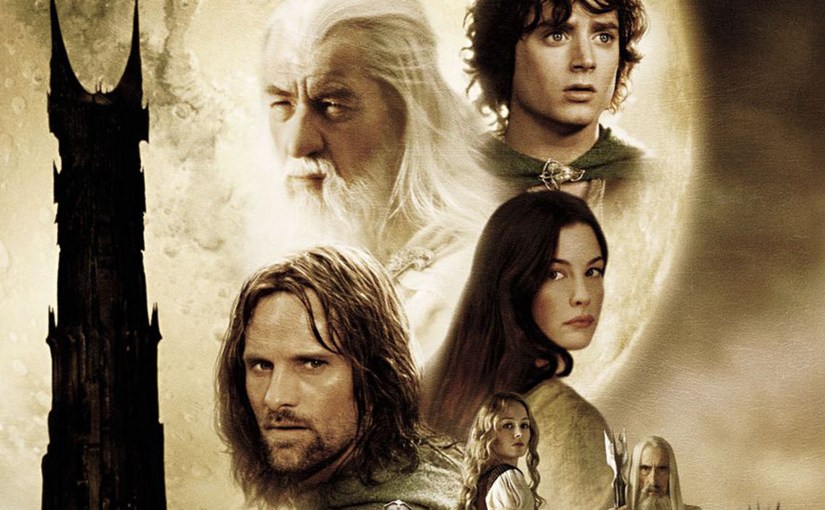
THE LORD OF THE RINGS: THE TWO TOWERS

By Marc S. Sanders

Peter Jackson’s second installment film adaptation of JRR Tolkien’s The Lord Of The Rings trilogy is The Two Towers. The captivating fantasy themes that audiences discovered in the first film continues.

Battle scenes with Orc armies are well edited and staged perfectly in digital settings. The film’s ending with a long, drawn-out battle located at the stone castle Helms Deep is stunning, full of heroic actions executed by favorite characters like Legolas the Elf (Orlando Bloom), Gimli the Dwarf (John Rhys-Davis) and especially Aragorn, destined to be King (Viggo Mortensen).

The Two Towers is almost marvelous with the exception of an overstayed welcome of the Ents – life size talking trees. Treebeard is the main Ent character, where the Hobbits Merry and Pippin take shelter by sitting on his branches. The effects of the Ents work. When the film returns to this storyline however, the narrative drags and the audience suffers. Treebeard converses in his own speak with the other Ents, the Hobbits ask “well?” and it’s supposed to be amusing that all they said was good morning. It’s not amusing. It’s boring.

The big centerpiece of the film belongs to Andy Serkis doing his full body animated effect to bring the untrustworthy, dual personality Gollum/Sméagol to life. Serkis should have received an Oscar nomination as he piggy backs on the continuous journey that Samwise Gamgee (Sean Astin) takes with the ring bearer Frodo (Elijah Wood). Gollum can’t resist what he once owned for himself-the “precious” Ring. Frodo’s good instincts insist upon not harming Gollum or Sméagol while Sam has strong reservations.

Jackson’s second film offers up a heightened urgency on all fronts. He’s good at showing the weight of the ring upon the psyche of Frodo and Gollum and he leaves time for other stories where Saruman’s (Christopher Lee) army conquers more lands-allegorical to the period of time when Tolkien wrote his novels following Nazi occupation within Europe.

Jackson is a completist and no stone is left unturned. A large portion of the film is appreciated even when you consider that you can take a bathroom break anytime Treebeard shows up.

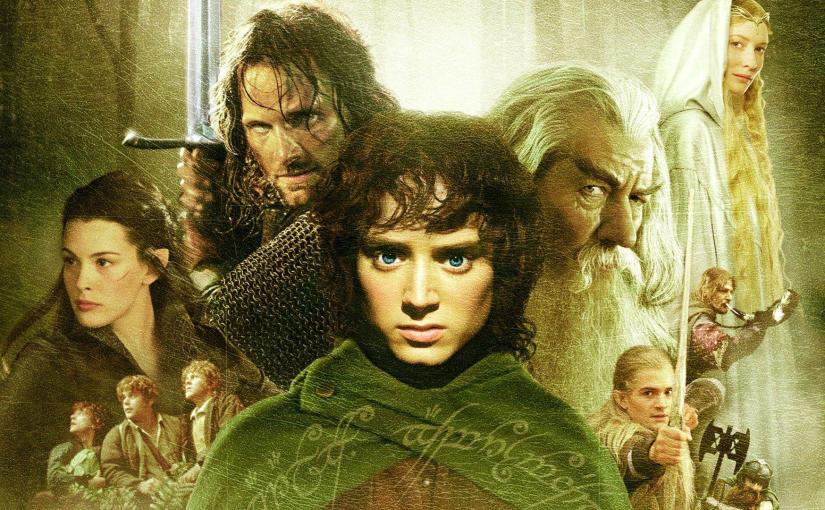
THE LORD OF THE RINGS: THE FELLOWHSHIP OF THE RING

By Marc S. Sanders

JRR Tolkien was one of the 20th Century’s greatest fantasy writers. The Lord Of The Rings series was a dense, sweeping epic inspired by the torn European climate during World War II and its conflict with the Axis nations, particularly Hitler and his organized Nazi Germany.

Peter Jackson found the opportunity to adapt Tolkien’s works. In 2001, The Fellowship Of The Ring amazed audiences with its epic landscape of Middle Earth, Isengard and Mordor where the fiery Mount Doom is located and the evil eye of Sauron waits for a resurgence of overthrow.

Much happens in each three hours plus Rings films. Tolkien’s story is not so much plot, but moreover a journey from one adventure to another. What’s special is that the main hero is a small, kind Hobbit named Frodo Baggins (Elijah Wood) who has been tasked with carrying the dangerously powerful “One Ring To Rule Them All” back to Mount Doom and destroy it. He is aided by eight fellows, three other Hobbits and four representatives of various nations and backgrounds to protect and escort him. The most significant member is the wise wizard Gandalf The Grey played by Ian McKellen in an Oscar nominated performance. The other characters’ significance become more established in later films.

This first installment is my favorite of the series because it is the most absorbing. I believe in the all but sinister and deadly value of Tolkien and Jackson’s MacGuffin, the Ring. Jackson does well of posing the threat of danger each time Frodo dons the Ring for the sake of invisibility while the Orc army of Saruman, Sauron’s Wizard henchman played by Christopher Lee, bears down on the Fellowship. The film shows one battle after another but the suspense is heightened each time as we become more familiar with Jackson’s digital world. It’s also quite dramatic to see Frodo become consumed in fear and a kind of sickness as the possession of the Ring weighs upon him. To precisely show that transition requires a three hour film, and Elijah Wood is up to the task, always appearing quite angelic and unsure of his assignment. Wood is quite the underrated actor.

There are a multitude of character descriptions in The Fellowship Of The Ring and a number of them come into play when centered around the viewpoint of the Ring. Backstories for others are really not necessary but Jackson attempts to cram as much of Tolkien’s narrative as possible. Beyond Frodo, and maybe Gandalf, the other most interesting character here is that of Boromir played by Sean Bean, often playing a variation of a hero in his films, but quite good at not being worthy of endless accolades. Boromir is a great character to show how the temptation of the Ring can cloud and poison the mind. Bean evokes that of one who might be a weak addict, needing a quick fix of the Ring’s power. There’s a complexity to his performance. Boromir is likable but Sean Bean makes the character quite shocking as well. He’s not a villain but his internal weakness presents a conflict for Frodo and his band. Sean Bean never got enough recognition for his role here.

Peter Jackson is the real hero though. This series is a massive cinematic accomplishment. Everything feels gratefully familiar. Perhaps that is from reading Tolkien’s visually descriptive books, or maybe even the animated film from the seventies. There’s something to see in every corner of the screen. It’s a world come alive in leaves, creatures on land or in the sky, sorcery and swords, flames and even saloons of overflowing drink and large platters of food. The Shire where Frodo lives with his uncle Bilbo (an excellent and jovial Ian Holm) comes off as a happy utopian village of farming and Hobbit celebrations of laziness and relaxation from any outside elements. Jackson contrasts this beautifully against the majesty of Rivendell and the hell of Mordor. It’s a nuanced universe.

Again, for me this first installment remains the best as it is cinched up tightly in its exposition and narrative. Later films are just as grand but maybe sidestep away from themselves a little.

I never got that impression with The Fellowship Of The Ring. Everything I see belongs in the film.

LONG SHOT (2019)

By Miguel E. Rodriguez

Director: Jonathan Levine
Cast: Charlize Theron, Seth Rogen, June Diane Raphael, O’Shea Jackson Jr., Bob Odenkirk
My Rating: 8/10
Rotten Tomatometer: 81% Certified Fresh

PLOT: Secretary of State Charlotte Field (Theron) hires an out-of-work journalist (Rogen) as a speechwriter; when romance unexpectedly occurs, complications ensue.


So, yeah, based on that plot summary, this is not exactly new territory.  We essentially have a gender-swapped The American President, except the President is now a Secretary of State, and Annette Bening is now Seth Rogen, whom the Secretary of State used to babysit in high school.  Sounds kinda kooky, but still nothing earth-shattering, right?

Except that the filmmakers have found a way to take a plot as old as Pretty Woman itself, and as recent as She’s Out of Your League, and inject it with astonishing humor, topical and situational, so that I found myself laughing or grinning through nearly every second of Long Shot.  And that was WITH Talky McTalkerson sitting next to us commenting to himself on the action.  (“How are you gonna say no to that face? … Oh, no, they’re stoned! … Oh, no, he doesn’t understand her!”)  But that’s another story…

I enjoyed so much in this movie, it’s hard to pick it apart for a review.  I’m not sure why.

I liked the gender-bending aspect of it.  It was cool to see a high-octane actor like Charlize Theron deliver the kind of speeches normally reserved for male romantic leads.  And it wasn’t done in an obvious way.  It’s something that only occurred to me after the scene was over.  Most of the time.

I liked the topical aspect.  Seth Rogen’s character is a high-minded reporter working for a liberal newspaper that has just been bought out by a multi-media conglomerate with a reputation for spewing propaganda.  (“Not the good kind, like ours!  The BAD kind!”)  The conglomerate is owned by Parker Wembley, an obnoxious billionaire whose influence extends all the way to the White House.  (I wouldn’t dream of revealing who plays Wembley, but it was a treat once I realized who was under all that makeup.)

The not-so-thinly veiled jabs at Fox News were a nice touch.  Wembley has his own news network, and one of the newscasts asks the question, “Are women smart enough to be in positions of power?  We’ll ask our panelists, Chris Brown, Jeremy Piven, and Brett Ratner.”  (In a movie full of funny lines, that might be the funniest.  Sorry I spoiled it for you.)

I also LOVED a scene between Seth Rogen and his best friend that gets a LITTLE political, but which really made me think about my own attitudes towards people with different political beliefs than mine.  I don’t want to spoil the scene with too many details, but I bring it up just to emphasize how much this movie has going for it besides the obligatory big laughs.

And it has some BIG laughs.  Rogen is an old hand at physical and raunchy comedy, but who knew that Charlize Theron would be able to keep pace with him?  It’s not that she does the same kind of mugging that Rogen does.  It’s the way she underplays her reactions to his behavior, and tries to keep her attraction to him low key for all sorts of reasons that make sense at the time.

Plus, Theron does get her moment in the comic spotlight when, after a hard day at work, she whispers to Rogen, “I want to smoke a molly.”  What follows is something I never thought I’d see: Charlize Theron getting wasted on drugs and dancing at a rave.  I can die happy.

(Trust me, I’m not spoiling too much, because this scene has an AMAZING comedy payoff that had me almost screaming with laughter.)

Long Shot covers some very old territory in very new ways.  There are some amazing insights into the cultural landscape of the late “20-teens” that are fresh and funny and surprisingly thoughtful.  If I had to change one thing about it, I might have tried to come up with a SLIGHTLY different ending, maybe one that didn’t tie everything up QUITE so neatly, but what am I saying?  It’s a romantic comedy.  Like they’re gonna make a rom-com where the girl DOESN’T get the guy, right?

(Yes, wiseguys, I know there are precedents – Roman Holiday among them – but that’s REALLY rare.)

KING KONG (2005)

By Miguel E. Rodriguez

Director: Peter Jackson
Cast: Naomi Watts, Jack Black, Adrien Brody, Andy Serkis (as Kong)
My Rating: 10/10
Rotten Tomatometer: 84% Certified Fresh

PLOT: In 1933 New York, an overly ambitious movie director (Black) coerces his cast and crew to travel to the mysterious Skull Island, where they encounter Kong, a giant ape who is immediately smitten with leading lady, Ann Darrow (Watts).


A cheesy screenplay, stupendous visual effects, breathtaking action sequences…James Cameron’s – sorry – Peter Jackson’s epic remake of THE classic monster movie may not have been the movie that anyone was clamoring for, but I, for one, am glad it was made.  To me, it’s one of the great monster movies of all time, and one of the greatest adventures since Jackson’s own epic adaptation of the Lord of the Rings trilogy.

To make things easier for myself, I’m just going to tick off the highlights.

  • The screenplay lacks any semblance of subtlety, but the dialogue is not exactly the point here.  It serves its purpose.  In fact, the best scenes that approach any emotional depth are the virtually wordless interactions between Ann Darrow and Kong.
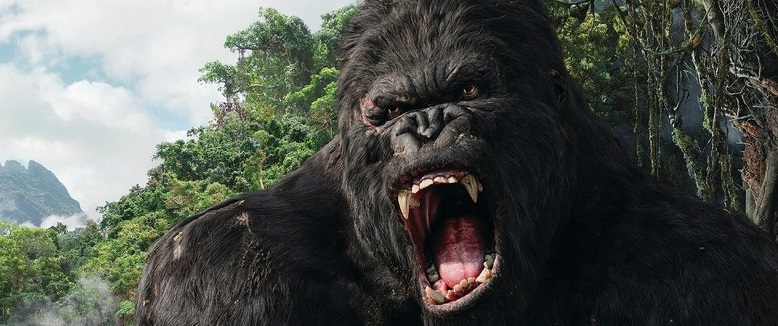
  • The visual effects are stunning.  Even putting aside the spectacular action sequences, Kong himself is one of the great triumphs of modern CGI wizardry.  Building on the technology used to bring Gollum to life, Kong’s movements and facial expressions are based on the motion capture performance by the man who really pioneered this new branch of acting, Andy Serkis.  To watch Kong expressing, not just red fury, but also puzzlement, melancholy, happiness, even (for the briefest of moments) fear…to watch it happen, and to feel the character come to life, is awe-inspiring.  You look in his eyes, and you see the mind behind them, working things out.
  • The sequence that begins with Ann’s encounter with Skull Island’s version of the T-Rex, and which ends with Kong in single battle with said beastie, is the kind of thing we go to the movies for, or at least the kind of thing we go to these movies for.  It’s pure blockbuster gold, and mostly without any music in the background.  Blu-Ray/DTS bliss.
  • Okay, yes, Adrien Brody would not be the obvious choice for the hero if the movie.  But hey, in the film someone actually says something like, “Real heroes have lousy haircuts and a skin condition.”  Or something like that.  Which makes Brody, by that definition, hero material.
  • True story: the first time seeing the movie in the theater, there were sniffles in the audience as poor Kong expires and falls to his death.  (Did I ruin that for you?  How did you THINK it would end?)
  • The extended cut is not quite as good as the theatrical version.  With the additional animal attacks, the movie would have been just too exhausting in theaters.  (On home video, though, it’s cool to watch.)
  • Now that you’ve seen the remake, find and watch the original.  You’ll be amazed at how much of the original found its way into this new version.

In summary, King Kong is modern thriller moviemaking, with director Peter Jackson in peak form.  Sadly (at least so far), he hasn’t reached this pinnacle again.  But one can hope.