THE APARTMENT

By Marc S. Sanders

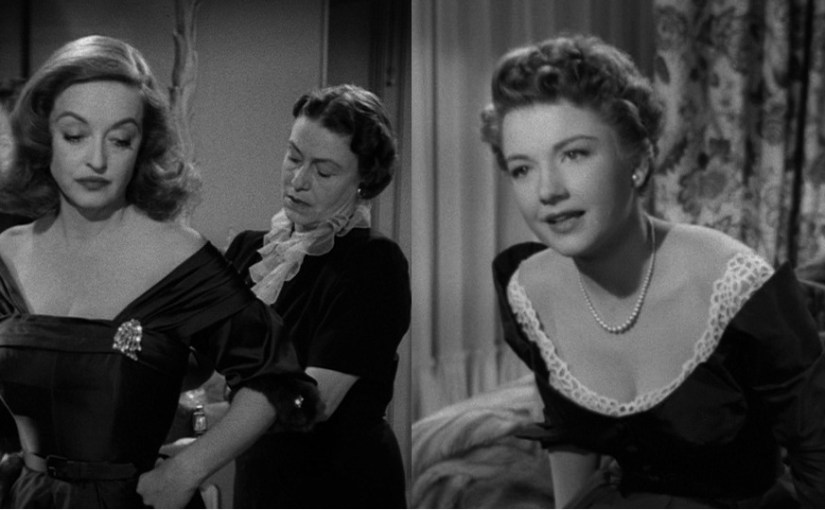
You ever come across a film that begins as sweet screwball, and then segues into serious sensitivity?  If you have, then maybe you have seen Billy Wilder’s classic film The Apartment.  Beyond the film being an Oscar Best Picture winner, Wilder’s film demonstrates that there is a screwball mentality in all of us, but we also know when the party must end.

Jack Lemmon plays C.C. Baxter, one of over 31,000 people who works for Consolidated Life in a Manhattan high rise.  He’s a likable fellow who happily does his work with a typewriter amid a sea of other desk jockeys on a floor that seems to expand beyond the architectural limits of the building.  When his eight hour day comes to a close, he’s normally the last one to leave for home because it is likely his apartment located outside of Central Park is occupied with one of the company big wigs that liberally uses his pad to entertain a lady friend beside their respective wives.  Baxter has been relegated to a door mat who holds out hope that any one of these ranking supervisors may one day promote him to an executive position with a private office and a view of the city.  Promise finally opens up when the President of the company, Jeff Sheldrake (Fred MacMurray), summons Baxter to his office to commend him on the positive feedback from the other men in the office and to request some time with the apartment himself.  Sheldrake would like to have some time away from his wife and children to host Fran Kubelik (Shirley MacLaine), the building’s elevator operator.  If Baxter had the availability to his own apartment and a little bit of bravery, he may have asked Fran for an evening out together on another occcasion.

The Apartment begins almost like a farce or sitcom as the revolving door of Baxter’s apartment welcomes one new executive after another.  You may be expecting confusion and misunderstandings that’ll lead to outrageous laughter.  However, poor Baxter is the victim to all of this coming and going by even surrendering his home to Joe Dobisch (Ray Walston) who calls unexpectedly at eleven o’clock at night requesting the place for an hour.  Baxter takes shelter on a park bench in the December cold. The humor of this arrangement is not so funny any longer.  After Sheldrake’s regard for Fran is more apparent, then it’s more clear that these characters are not spawned from the happy home life scenarios of 1950’s television programming.  Sheldrake is only charming to an adorably likable woman like Fran for as long as he cares.  Some might say he’s not terribly cold hearted though.  After all, though he forgets to shop for a Christmas gift for Fran, he offers her a hundred dollar bill from his wallet instead.  Up until this midway point, Shirley Maclaine has been so good at maintaining a cheerful disposition that suddenly her self worth seems a whole lot less than a hundred dollars following Sheldrake’s latest disregard.  Surprisingly, Fran overdoses on a bottle of sleeping pills.  When Baxter discovers her in his bed, he races to revive her with the aid of a doctor neighbor.  Baxter does not give up on helping Sheldrake make this right, while tending to Fran’s recovery on Christmas Eve.  Yet for Sheldrake, this is all an inconvenience and now without even looking for a better way to live, Baxter finds an opportunity to allow his own personal strength to come through against the executives at the office, as well as Mr. Sheldrake, and most importantly with the woman he cares for, Fran.

Jack Lemmon has a energetic method to his performance, as I find he does with most of the roles in his career.  He plays men who never break to sit and breathe.  They are always on the go.  They almost never sleep.  So, his fast paced delivery and flirtation with Shirley MacLaine let Wilder’s film perform at a fast pace.  The range of both Lemmon and MacLaine really work for The Apartment, because they can be naturally funny and intensely serious when the moment calls for it.  Lemmon can sell me as a guy who will use a tennis racket to strain his spaghetti while at the same time standing up for his convictions when life can not allow humor for a moment.  MacLaine can portray a woman with a menial job like an elevator operator and yet still be considered valued and recognized as genuinely hurt when disregarded.  For Fred MacMurray, I think it’s fair to say he actually makes for an effective villain, someone you love to hate, with his portrayal here.  I knew of MacMurray with his television program My Three Sons before I ever saw The Apartment.  What a departure the two roles are.  Here, he is a charming fellow on the outside with a hollow mentality inside.  He’s a man who only cares for his immediate needs.  He can not be inconvenienced with someone else’s feelings whether it is Baxter’s inconvenience or Fran’s despair.  Nothing else matters.  No one else matters.

The film may be called The Apartment, but office politics seems more at play here. Billy Wilder’s film is surprising but it’s honest too.  I doubt many of us would ever surrender our own home night after night to the more powerful and influential.  However, many of us, with a drive to climb a corporate ladder likely have compromised our ideals to get to a higher plateau at one time or another.  Personally, I have to shamefully admit that I have committed such an act.  The Apartment questions when enough is enough.  What’s special about Wilder’s film is that C.C. Baxter must discover if he lives to work or works to live.  

MAN OF STEEL

By Marc S. Sanders

The first time I saw Zack Snyder’s Man Of Steel, I was disappointed.  Very disappointed.  It was only after a second viewing about a year later that I realized I was simply biased and unfair with my perception of the film.  I grew up with the Richards’, Donner and Lester, films that featured Christopher Reeve in the role of Superman/Clark Kent.  Nothing could violate what was done in those films from the ’70s and ’80s. 

My impression of Man Of Steel now is that it is a marvelous film.  It’s an exploration of a stranger in a strange land questioning how to adapt to a living environment that he is not from, nor where anyone around him is genetically built like him either.  Henry Cavill fills the role of the title character.  What’s especially important is that he is not attempting to do what Reeve memorably did before him.  Actually, David S Goyer’s script really doesn’t allow for the hijinks of the prior films.  Clark Kent is not portrayed as a goofy and lovable klutz this time around.  Instead, the boy from Smallville, Kansas is challenged to limit his abilities at the behest of his Earthling father, Jonathan (Kevin Costner).  It’s dangerous for Clark to show all that he is capable of from his super strength to his heat vision.  Clark’s Earth mother, Martha (Diane Lane), is more protective of her son.  A really powerful scene occurs when young Clark is in the classroom and he has a bout with sensory overload of super hearing and super x-ray vision.  He can’t get the encompassing sounds and sights out of his head.  One of many CGI effects in the film come with Snyder showing the skeletal insides of Clark’s classmates and teachers.  It’s frightening; even to an innocent alien boy from another world.  This is good conflict.  Does the world need Clark Kent?  Would Clark Kent be better off someplace else?  Can he manage to live with daily life drowning out his sensibilities?

Another dilemma opens the film on Clark’s home planet of Krypton where he was born with the name Kal-el.  His father, Jor-el (Russell Crowe) has insisted to the governing body that the planet is expected to self destruct soon, and civilization needs to be relocated to another planet.  The politicians refuse to accept his theory.  Jor-el’s friend, the military leader General Zod (Michael Shannon) sides with his opinion.  Though his approach is violent insurrection of the Kryptonians.  Zod is punished for his crimes and sentenced to an eternal prison known as The Phantom Zone before baby Kal-el is shipped away, and the planet implodes with all its inhabitants.

Following this opening, Snyder cuts his film with flashbacks and forwards showing Clark in various different roles as either a fishing boat crewman or a bartender trying his best to remain undercover even when the temptation for use of his powers repeatedly shows itself.  Clark reflects on moments from his childhood when he and his Earth parents questioned how to present himself.  

Superman’s known love interest eventually shows herself, Pulitzer Prize winning reporter for the Daily Planet, Lois Lane (Amy Adams).  She’s following up on an alien ship that has been discovered in the arctic after 20,000 years.  Clark and Lois connect at this moment.  Of all the Superman angles that are familiar to so many of us, this is where Goyer and Snyder perhaps do not focus enough.  Man Of Steel is a satisfyingly long film, but there’s a lot of material and drawn out action to cover as well.  So the Lois and Clark relationship is somewhat sacrificed and not as nuanced as we have experienced in other iterations.

Zod arrives on Earth requesting that Kal-el reveal himself along with the intent to destructively turn Earth into a new Krypton at the sacrifice of the planet’s human population.  Naturally, a city wide battle will ensue. and lemme tell you reader you wanna talk about destroying the village just to save it….well…that’s what happens here.  When New York got destroyed in Marvel’s The Avengers or Ghostbusters, those pictures looked like spilled milk compared to what Superman and Zod do here.

Man Of Steel is the best film of the new Warner Bros/DC universe.  It might be Zack Snyder’s best film as well.  The assembly of the picture is masterful.  Hans Zimmer’s score has these great build ups as Clark discovers more of his capabilities.  It especially lends to when the character dons the cape and costume for the first time ready to leap in the sky and fly.  Snyder shows the efforts needed for Superman to carry out this talent.  The flying doesn’t come easy.  It looks like work on the super hero.  Zimmer’s score starts out quiet and then advances to these powerful notes as Superman soars higher and higher.  The boy from Kansas is making himself into something greater that he has no familiarity with.

Michael Shannon plays another of many kinds of villains and antagonists on his resume.  I’m not sick of this guy’s antics yet.  It’s time he become a James Bond villain.  He plays Zod with an uncompromising determination and disregard for anything else but to rule.  It’s all very sci fi like but I love how unforgiving he is with the role.  Much less Shakespearean than when Terrance Stamp played the part so well with Reeve as the hero.  Shannon is more direct and bloodthirsty.  Michael Shannon just knows how to be scary on film. This kind of personality would work great in a silly comedy from the Farrelly brothers as well.

Amy Adams is fine as Lois, but there’s not much here to work with honestly.  More details of her relationship with Superman come through in later films.  However, this story development soured me on my initial viewing.  The iconic irony of Superman pathos is that as sharp a reporter as Lois Lane is, she can not realize that the guy wearing the glasses who is working right next to her is actually Clark Kent?!?!?! Readers and viewers were always thankfully in on the joke.  On follow up viewings of Man Of Steel, I understand that Goyer and Snyder were never aiming for irony.  Lois knows who Clark really is from the get go. What was once an unforgivable departure for me, no longer is a concern.  There are deeper angles to question in Man Of Steel, like a purpose to others and the freedom to force a change because it can be done.

Snyder and Goyer broach on the well known Christ allegory with Superman.  The film takes place in Clark’s thirty third Earth year.  Jor-el is slain with with a stabbing to his rib.  There’s also the crucifixion  pose on a number of occasions.  I must admit, as a Jew raised conservatively with just the Old Testament, I am not very educated on the texts of Jesus Christ.  However, the basics are explored in Man Of Steel.  Is Superman a savior?  Snyder wisely even has Clark visit with his Smallville priest to question his obligations to Earth and to Zod’s calling, with window artwork of Christ in the background.  

One vice I have with Snyder’s picture is the shameless plugging.  How overt must signage from Sears, U-Haul, 7-Eleven and IHop be?  Granted, all of these summer blockbuster films have the inserts of brand labels going all the way back to the original Superman films.  Here though, the corporate advertising is a true eyesore.  Superman being thrown into the dining area of an IHop is not as memorably funny as when Zod’s underling, Non, crashed into New York’s famed Coca-Cola sign back in 1981.

The seemingly endless battle consuming about forty five minutes of the third act of the film are over the top outrageous.  I might normally be saying I’ve seen enough while casualties are never considered as buildings literally topple over into mushroom clouds of concrete dust.  Still, the cast keeps these moments alive.  Shannon and Cavill, along with Laurence Fishburne as Perry White, the Daily Planet editor, and Amy Adams, actually show risk and fear amid all of this bombastic action.  Still, Snyder is insistent on his freedom to go crazy with CGI effects.  It’s more than a bit much, but the characters up to this point keep me engaged with the film all the way through.  Later DC films in this franchise don’t do it so much for me, but that’s another column altogether.  

Again, what I especially like about Man Of Steel is how Snyder cuts back and forth with the film.  Heroic moments occur and then are reflected back to times in Clark’s childhood with Jonathan and Martha.  With Zimmer’s score, it seems to allow Clark to consider conversations and moments from his past as meaningful to what he is experiencing in the present.  When Zack Snyder stays on this trajectory it makes Man Of Steel more than just another comic book movie for summer box office.  There’s depth from Goyer’s script that Snyder wisely does not disregard.  

Man Of Steel is a new and unfamiliar kind of Superman, but its a very welcome Superman too.

BATMAN V. SUPERMAN: DAWN OF JUSTICE

By Marc S. Sanders

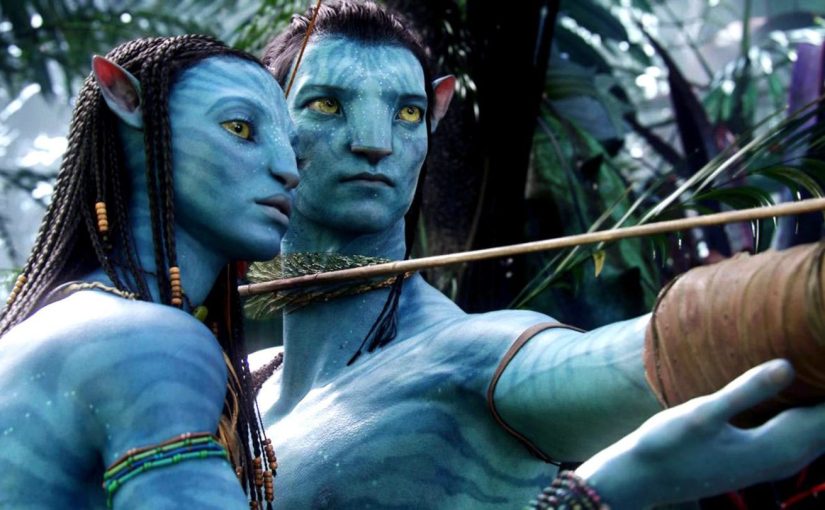
Zack Snyder may have been indulging in too many cookies from the jar when he made Batman v Superman: Dawn Of Justice.  I can not deny how ambitious this film is, but did it ever need to be this ambitious?  There are too many storylines, too many characters, and not enough thought provoking dialogue to really make any sense of the gobblety gook that’s splattered all over the screen.

Reader, my favorite super hero of all time is Batman.  Nearly any variation of Batman (including moments from the dreadful Joel Schumacher films) contains an element that I just love about the character.  Ben Affleck is cast as The Dark Knight here.  He’s fine in the role.  I knew since he had done Daredevil, that he could pull off this part.  He might be too long in the tooth, and too busy an actor/director, for a new series of super hero films, but I digress.  That being said, the movies have gone into overkill on the Batman character.  It’s time the Gotham crusader hide in his cave for a little while and let some of the other super heroes out to play.  Snyder’s film proves my theory.  After all, the true highlight is neither title character in this movie.  

Actually Wonder Woman (Gal Godot) making her big screen debut is the draw above anything else here.  Even that is problematic, though.  I’ve seen this film twice now.  Can anyone tell me why Wonder Woman aka Diana Prince even makes an appearance in this film?  From a story perspective, what justifies Diana creeping into this film, other than to plaster her picture on DVD covers and merchandise a new action figure?

Events begin right after Snyder’s stellar Superman film, Man Of Steel.  An older and experienced Bruce Wayne is dubious of the benefits that Superman (Henry Cavill) can serve on Earth.  After all, his bout with the Krypton villain, General Zod, practically leveled Metropolis.  Heaven forbid if one day this powerful alien with the red cape goes out of control.  Bruce, as well as politicians led by Holly Hunter, ask a wise question.  Who on earth could ever stop him?  So Bruce, with assistance from Alfred (Jeremy Irons playing the well known sidekick more as a strategist, than a polite butler) begin preparing for a seemingly inevitable battle to eliminate the Kryptonian. 

Meanwhile, a young, brainy Lex Luthor (Jesse Eisenberg) is planning for his own undoing of both of these super heroes by living up to the film’s title; pitting the Bat of Gotham against the God of Metropolis; mano y mano.  Like most iterations, Luthor plays with defying the odds of nature.  In this case, he is experimenting with a green element sourced from Krypton which we all know is Kryptonite, as well as extracting blood from the corpse of Zod to create his own monster movie.  That last part feels like a side gig for the supposedly genius villain.

In addition, a mysteriously exotic and beautiful woman is turning up on various occasions.  Somehow, only Bruce seems to take notice of her.  Why?  I don’t know.  There’s really no purpose for him to scope out this person amid a sea of other extras attending a Luthor gala. 

There’s also Lois Lane (Amy Adams) and Martha Kent (Diane Lane).  There’s a retread of Bruce Wayne’s origin story that we’ve seen countless times before.  There’s a bitter and disabled former employee of Wayne Enterprises.  There’s a dream sequence showing vague plague like foreshadowing to come.  There’s an arms dealer/terrorist sequence in the desert for Lois to investigate, and another figure for Bruce to track.  There’s the eventual gladiator battle between the two heroes, and then there’s another battle thereafter for the two guys to team up with the the woman who carries a magic lasso to defeat a Doomsday monster; likely rejected sketches from the Harry Potter and Star Wars franchises.  Oh yeah.  There’s also some teaser material for what’s yet to come in the DC cinematic universe.

Do you see where I am going with all of this?  There’s just too much stuff here.  Eventually it all gets tedious.  A laundry list of storylines with little to no connection with one another feels burdensome.  I wish the screenwriters, Chris Terrio and David S Goyer, finished writing a script before starting another script.  As lengthy as all of these stories feel, they also seem unfinished, and, I can’t understand why.  

Forgive me.  It’s easy to compare the DC Comics film adaptations to the Marvel Comics films that Disney now owns.  The latter franchise seems well structured and outlined.  The former franchise helmed by Snyder seems rushed to catch up to everything that Marvel has already accomplished.  If the intent was to have a huge franchise of films, then why smash all of your material together in one sitting?

That gets back to my viewpoint on Batman.  Why Batman, all over again?  Snyder and the producers really aced it with the casting of Gal Godot.  She is Wonder Woman.  Snyder also struck gold on Man Of Steel with Cavill as Superman.  I wanted more exploration of that guy.  So why make this a Superman and Batman film?  We’ve seen enough Batman through the last thirty years.  Let’s give someone else a chance.  Much could have been accomplished had this installment been a Superman and Wonder Woman team up with maybe a teaser ending of a new Batman yet to come.  This Batman shows me nothing I hadn’t already seen.  There’s a new car and gadgets and cables to swing from.  It’s all been done before.  Lemme see some of what this Wonder Woman can do.  As well, if Wonder Woman is here, then tell me why she is here.  Again, she just comes out of nowhere and never explains why she’s there.  My wife and daughter tried to explain it to me.  Apparently, she wants to acquire a photograph of her with her war comrades from the first World War, and Lex Luthor is in possession of it.  Really?  That’s it?  She just needs to get a sentimental photograph back?  By the way, why does Lex have this photo, and how did she know he has it anyway?

Good stories always answer questions with more questions until it’s eventually tied off at the end.  Moments in Batman v Superman: Dawn Of Justice seem to begin in the middle of their stories with questions that did not answer questions that likely came before, and by the end of the picture, there’s no ending or answers in sight.

I had already reviewed Wonder Woman, and in that column I specifically noted that DC films with Warner Bros always seems to come close, but never gets it completely right.  This film boasts an impressive cast, and all are good in their respective roles.  My approach to this Lex Luthor from Eisenberg might have been different if I were in charge; make him more like a Steve Jobs kinda guy rather than a slight variation of the actor’s other famous role as Mark Zuckerberg.  Still, it’s not good enough and it’s hardly forgivable for what the filmmakers churned out with this picture.  The writers have an infinite wealth of source material to select from.  Pick up a comic book, guys!!!!  They have the funds and opportunity to divide up the best moments of these outstanding characters for the next ten years of film installments.  Nevertheless, they don’t take the time to think strategically, and flesh out the environments and the characters that inhabit these settings.  

Batman v Superman: Dawn Of Justice is just a sloppy mountain of peas, carrots, corn and green beans, with lumpy mashed potatoes and covered in lots of over seasoned gravy.

I, TONYA

By Marc S. Sanders

The will to commit wrongdoing must stem from somewhere; an outside influence or perhaps a genetic makeup, or both.  I think I, Tonya suggests it’s central character suffered under the former possibility. Outsiders put former Olympic figure skater Tonya Harding where she is today with a reputation forever scrutinized and forever tarnished.

Margot Robbie was unjustly denied of the 2017 Academy Award that went to a been there, done that Frances McDormand for the horrible Three Billboards Outside Ebbing, Missouri.

Margot Robbie is one of the most beautiful and talented actresses working today. This film puts her into the stratosphere.  Robbie is unrecognizable beneath the punishing white trash persona of the infamous Tonya Harding.  She is unrecognizable in caked on makeup,  awful periodic perm haircuts, chain smoking, excess drinking and terrible dietary habits that include a shameless plug for Dove chocolate bars.  

Harding is forever notoriously linked to the knee bash heard round the world victimizing her Olympic competition, Nancy Kerrigan.  Margot Robbie does not hold back in displaying Harding’s lack of class and elegance expected in the sport of women’s figure skating.  It’s what Tonya Harding lacks that blocks her from the fame and success expected to come with being a champion athlete. Robbie is fantastic about surrendering her character’s talents for short tempered flare ups, crass behavior and a filthy mouth.  Her facial expressions are shocking.  Stretched fake, Cheshire Cat grins with bulging eyes pull at the pressure Tonya suffered under a hateful mother’s thumb, and an equally abhorrent, stupid husband.  She is forever naïve to how the judges never put her above the competition in points.  I mean this is the only woman to ever successfully accomplish the triple axle!!! 

Equally astonishing is Allison Janey as Tonya’s mother LaVona Harding, an incredibly cruel woman hell bent on making sure Tonya skates for the sole opportunity to endlessly torment her only daughter physically and, even worse, mentally.  Janey joins the exclusive club of cinematic great villains.  This is an unsympathetic woman with no drive to be better at anything except increasing her abuse upon Tonya.  It’s a shocking performance.  Janey appears so comfortable in the cruel insults, offensive language, and non stop smoking all the while her pet parrot sits atop her shoulder.  LaVona is uncompromising in how she punches, throws plates or even tosses a steak knife at her hated daughter.  What a horrible person, and what an amazing performance. You’ll be hard pressed to find a better antagonist in a film these days.

Sebastian Stan chose wisely to accept the role of Jeff Galooley.  It’s a great departure from the Marvel superhero films.  Jeff is a dumb, needy, abusive husband to Tonya; the man who admitted to being the orchestrator of the knee bash (though the movie will tell you it’s not that simply explained).  Stan should have been nominated at least.  It’s not easy to play such a dumb, real life moron, and he excels in the role. What an asshole Jeff Galooley was; what a dumb asshole actually.   He, along with his conspirators, have great chemistry in idiotic planning.  Stan really shows his best moments when he’s being reckless with his rag doll wife, Tonya.   The physical domestic fights are so well edited amid rock ballads from Fleetwood Mac, Laura Brannigan, ZZ Top, and Supertramp. 

Director Craig Gillespie follows the breakneck formula of Martin Scorsese with character interviews, racing steady cams that convinced me that Robbie is as talented a skater herself as Harding was.  She has so many levels of erratic fear, insecurity and tempers.  The method of filmmaking here seems like a slight nod to Raging Bull.  Gillespie takes advantage of all that Robbie brings to the camera.  It’s a perfect marriage of director and actor; as perfect as DeNiro & Scorsese or DiCaprio & Scorsese.  I hope Robbie & Gillespie will be teaming up again soon.

Once again, I have to ask.  How in the hell does that piece of celluloid waste called Three Billboards Outside Ebbing, Missouri get a Best Picture nomination when as far as I’m concerned, I, Tonya clearly stands much higher above it in terms of craft, writing, performance and filmmaking?????  It astounds me.

I, Tonya is without a doubt one of the ten best films of 2017.  I can’t wait to see it again.  It’s unbelievably good.  

Footnote: Do I think any differently or sympathize with Tonya Harding now that I’ve seen this depiction? I don’t think so.  She is clearly a woman who was never given a fair chance at a happy life. She was destructive to herself as much as those that surrounded her.  Yet, she had to also accept responsibility for her actions and behavior.  Any of this could have gone differently.  If only these people were not so stupid or irresponsible.  These people, Tonya Harding included, all had choices to make.  They could have chosen a different option time and again.  Despite some of the positions Craig Gillispie’s film takes, I truly believe Tonya Harding could have opted for a different path while combating her inner and outer demons.  

AFTER HOURS

By Marc S. Sanders

If L. Frank Baum’s classic fantasy The Wizard Of Oz were adapted in a setting of say 1985 New York City in the So Ho section, beginning sometime after 11:30 at night, then it would be a fair argument to change the name of his story to After Hours.  The story would no longer be whimsical. Instead, it would be screwball, with a disturbingly demented narrative from the brilliant but unsettling camera work of Martin Scorsese.  The protagonist would be a lonely yuppie named Paul (Griffin Dunne) who encounters one odd woman after another when all he intended to do was meet up with a kind and attractive young lady named Marcy (Rosanna Arquette) who offered the opportunity of obtaining one of her roommate’s specialty crafts of Parisian bagel & lox paperweights.  (Yes.  You read that description correctly.  Don’t overthink it.)  Unlike Dorothy from Kansas though, the oddballs that Paul meets up with become challenging to him even if they insist on welcoming him into their arms.  These women are not the comfort conveniences of a scarecrow, tin man or lovable lion.

How odd that this film from Scorsese would follow his masterpieces, Raging Bull and Taxi Driver; a major departure from themes of mental disturbance exhibited by characters like Jake LaMotta and Travis Bickle.  Here, the disturbance hinges on paranoia that eventually develops; not seeded in place at the start.  The film relies on absurd situations where Paul inadvertently gets in over his head when all he wants to do is return home and sleep. It quickly dawns upon Paul that it is likely not a good idea to go out after hours when a whole other kind of community is awake, that is uncustomary to his lifestyle.  I was waiting for the film, written by Joseph Minion, to tell me it’s all a dream.  My foolhardy mistake though.  Scorsese would never resort to such a tired, cliché.  If he is going to direct a film of the utmost ridiculous, then he’ll make certain Paul’s unfortunate outcomes are believable…even if they are hard to be believed.

If you’ve seen at least three of Scorsese’s films prior to After Hours, you’ll likely just fall in love with this picture based on his craft with the camera partnered with his always trusty editor, Thelma Schoonmaker.  Cinematographer Michael Ballhaus has his first collaboration here with Scorsese (before Goodfellas and Casino).  Conversations in offices or diners or apartments or bars occur, only they are more exciting than countless other exchanges of dialogue. You will be watching a film that does not sit still and always strives for your attention.  So, while Arquette’s character describes an ex-boyfriend’s obsession with the film adaptation of Oz, your director at play startlingly zooms in on her performance monologue and then circles back to Dunne, her listener on the other side of the table.  No standard quick cuts.  The camera circles and surrounds the players.  A set of keys dropped from a balcony straight down directly towards Dunne’s waiting face below gives an eye opening zoom thanks to Ballhaus’ techniques.

The developments that quickly fall upon Paul are not fair for him.  He loses his only twenty bill that he can rely on, gets caught in torrential downpours of rain, uncovers a suicide, becomes trapped in a punk rock club that wants to give him a tortuous mohawk, and a modern-day pitchfork mob equipped with flashlights and an ice cream truck are hungry for his head because they believe he’s a serial neighborhood burglar.  The poor guy can’t even make a phone call because a ditzy Catherine O’Hara revels in breaking his concentration to remember a phone number.  Teri Garr also appears with a bee hive hairdo as a waitress at an all-night gay diner vying for attention that Paul just can’t afford to give at three o’clock in the morning.  Paul just wants some basic help from anyone who can offer a simple gesture. None of it is that simple however, and the problems build upon one another until they are compounded upon his shoulders so much so that at one point, he literally cannot move out of the physical circumstance he ends up in.  Forgive my vagueness, but I wouldn’t dare spoil what that literally means.  You owe it to yourself to watch the film and find out for yourself.  My first instinct was to go “Come on!!!  Really!!!” Yet, then I remembered this is a film of daring escapes.  Still, Minion’s script and Scorsese’s film turn those breathless escapes into deeper depths of a So Ho hell, as the film proceeds to its inevitable sunrise.

After Hours might have been a subpar John Hughes comedy, only vaguely remembered from the decade of excess, the 1980s.  In Martin Scorsese’s hands though, it’s comedy pathos and yet frightening at times.  Only Scorsese can show us funny, yet bleak.  That’s okay.  It’s different.  I’ve seen the standard slapstick unfortunate circumstances of School Principal Ed Rooney in Ferris Bueller’s Day Off, and countless copycats thereafter.  Scorsese offers up a different, inventive, and very twisted approach for a typical victim of circumstances beyond his control.  

My recommendation for a double feature:  watch Neil Simon’s The Out Of Towners with Jack Lemmon and Sandy Dennis.  Then watch After Hours.  You may begin to understand how New York City can be a vicious and unforgiving beast with enough chutzpah to attack you, even if you never deserved any kind of punishment.  If you’ve ever found yourself in any kind of metropolitan city throughout North America, you’ll likely nod your head at what this poor guy encounters, and you might not feel so singled out.

EDDIE MURPHY’S RAW

By Marc S. Sanders

There is no way.  NO WAY that Eddie Murphy’s Raw would ever be produced today.  Nearly every sentence is of the highest caliber offense of any modern day societal belief.  Still, Murphy’s expressions and delivery are lightning in a bottle.  You can’t help but at least grin at his close ups and physicality.

This guy is so incredibly bright that only his comedic stand up monologues could actually feel like you are learning from a college professor who offers up what guys like Bill Cosby, Michael Jackson and Mr. T are really like.  At the same time, he’s somewhat frank with how men and women communicate. It’s comedy.  It’s terribly exaggerated like comedy needs to be, but I can’t deny at least some truth in what Murphy talks about.  If there wasn’t even a fraction of validity in his material, then it would never have been funny, and Eddie Murphy’s career would have ended well before the 1980s came to a close. 

PATTON

By Marc S. Sanders

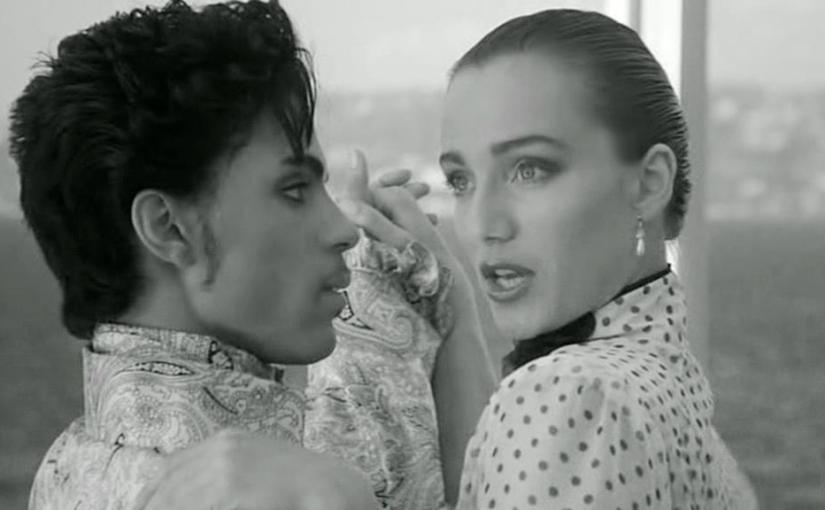
You may find this hard to believe but as I was watching the epic Best Picture winner of 1970, Patton, I was actually thinking of a dreadful film I had seen the day before called Under The Cherry Moon, featuring and directed by Prince.  How in the hell could that be?  Well, both films are laced with the vanity of their films’ main characters to the umpteenth degree.  However, I’ll save Prince’s piece for another column, when maybe I’m out of excuses to avoid death or a root canal.  The point is both films never tire of the close ups of its featured player to enhance the pride, ego and conceit they do not hesitate to thrive off of.  The difference is that director Franklin J Schaffner knew that to really show what motivated General George S Patton you had to drill for the American warrior’s drive, and Patton’s motivation was truly his own self-worth.  (Prince just wanted one more close up on top of one more close up as a means of self service.  Sorry but that’s not enough of a reason for a character to live.)

Patton is portrayed by George C Scott in an Academy Award winning performance.  No one else could have played this role.  No one else should ever play this role again.  Scott and Patton are symbiont in a camera’s lens.  One can not be imagined without the other.  Schaffner’s film opens in front an American flag that fills the entire screen.  Patton steps up in front.   Somehow, his figure seems like a bigger, more prominent figure than the large backdrop of the stars and stripes.  He delivers a monologue that was aimed at the troops fighting in the second World War, but this is really an introduction to the audience of what to expect for close to the next three hours.  He reminds us that the blood and guts of the Nazis will be used to grease down the tread of our tanks and he will be proud to lead his men on any battlefield that calls for the bloodshed of Hitler’s regime.  In the film’s first five minutes, you know that this biographical character will never sway from what he stands for.

The theme of the film tests the egotism of General Patton.  We see him get dressed in his military uniform before heading in to battle.  His subordinates put his military jacket on.  Another one places his helmet upon the great battalion leader’s head, but it is done with great detail.  This helmet will never fall off.  I can promise you that.  Early in the film, the two star general takes it upon himself to decorate his shirt collar with three stars.  He’s reminded that President Eisenhower has not made his promotion official yet.  Patton proudly dismisses that detail.  None of this has to do with the strategist Patton became known for on the battleground.  George C Scott demonstrates that the General knew when to bestow himself with another honor in his proud military career.  No one else, not even the Commander in Chief, would determine when the General was worthy of another star.

In the heat of battle, Patton happily volunteers historical facts about the regions he is fighting on.  He even insists that he knows for sure what happened before.  He, General George S Patton, was there.  He’s not kidding.  He truly believes that.  History did not deliver General George S Patton.  Rather, General Patton delivered history. 

All throughout the film, Patton is seen in moments of great pride.  He’ll be standing as his jeep caravans his military forces through conflicts in Tunisia and war torn Europe.  General Patton loved to lead, but his leadership was specific to sending a battalion into one conflict after another and what was most important was earning the glory for himself.  The British couldn’t have the accolades.  Certainly, his fellow generals couldn’t either.  Patton is who the Nazis feared.  Patton is the towering six foot tall man who must be seen walking off the bow of a ship into battle when the US back home gets film updates. 

Scott’s character is tested however as Ike loses confidence in the great general.  Patton’s mentality on war does not mesh well with the propaganda of the United States with the other allied countries, particularly Russia.  Patton is not interested in making friends with Russia as he is more concerned with anticipating an eventual disagreement with them and thus, we must be prepared for war.

More significantly, Patton only cared for the bravery of his men.  Early on in the film, Patton arrives at the camp site of a US battalion to take over its leadership.  George C Scott’s presence is all that needs to be said as he visits the mess hall followed by an office and then an infirmary.  Men will no longer show up late for breakfast.  If other men are going to sleep, well then that’s fine as long as it is a means to end with an advantage towards military victory.  Doctors will don their helmets even if it means drilling holes in them to continue properly using stethoscopes, and any man who is being treated for self-inflicted gun shot wounds will not be entitled to a bed for healing.  Get those cowards out immediately.  Hospitals are for those soldiers who proudly shed their blood in the name of the United States of America. 

This last detail is further echoed at a pivotal point in the film.  Patton chastises a crying soldier who is simply terrified of the shelling of war.  No man who dons a military uniform should ever be crying in fear.  Following slapping the boy around, Patton orders that the soldier be sent to the front lines.  My question is how useful is this kid going to be on the front line if he is crippled by his own fears.  Patton would have then slapped me around, most likely.  The front line will certainly wake this kid up and load his weapon to spill some enemy blood. 

The other interesting dynamic to the film falls upon the role of General Omar Bradley played with contradictory delicateness by Karl Malden.  The script by Francis Ford Coppola and Edmund H North display Bradley as a man who came up through the ranks of General Patton.  Yet, because of Patton’s controversial nature as a proud war hero and not a politician representing the ideals of Ike’s administration, Bradley is eventually put in charge of the United States’ positions in the War.  By the time this arrives, the film is only approaching the beginning of its second hour and I could only imagine how Patton is going to take this. He’s advised by his friend Bradley to calm his nature and maybe even question his motivations for battle.  Yet, Patton can only see that his apprentice has taken over and he has been grounded or meant to serve as a decoy to Hitler’s armies.  This is a complete misuse of his skills and his pride as an American symbol.  Patton is relegated to delivering speeches to gracious European women.  This is beneath him.  Adding insult to injury, the dog he proudly walks by his side is a fraidy cat when confronted with a woman’s little yappy pup.  The great general’s ego has been terribly bruised.

General Patton might have been controversial but the film serves as a means to show his imperfections ahead of his historical conquests.  When Patton is questioned as to how he can overthrow Hitler’s positions in various parts of Europe within two days of heavy snowfall, Patton is proud to say that he alone has trained his men to overcome any ordeal they are faced with.  His men are killers; killers of Nazis.  The doubt of other military leaders is proven wrong thanks to the General’s insistence.  Sure, the old general might have been a pain in the ass for the United States, but how would the war have really ended for the Nazis if they hadn’t have had to deal with the great leader?  Periodically, during the course of the film we see how the Nazis try to gage what Patton will do next.  It makes no difference how the United States are censoring their general.  The Nazis stare at a proud photograph of him, knowing he is still out there.  Where is Patton leading his forces to, and how will they ever explain it to their Fuhrer? 

George C Scott is truly a great presence here. Schaffner’s work with the camera must also be recognized.  The film is epic because of its scale.  Years before the age of CGI and a great war film like Steven Spielberg’s Saving Private Ryan, this film from 1970 showed vast settings populated with tons of extras and infinite tanks and vehicles, as well bomber planes.  It’s astounding.  How was this all accomplished?  Other films like …Ryan or The Thin Red Line would show more intimate fights among the opposing forces.  Shootouts and one on one grappling.  Patton shows the enormous battles.  Tanks are overturned, bombs are dropped right in the middle of a sea of extras.  The film was also awarded for its art direction and its hard to question why.  It’s unbelievably impressive.

As the film directly says, Patton lives for the love of war.  Therefore, the ending is a little sad.  The war ended.  The Nazis fell to the triumph of Patton, the United States and their allies.  Schaffner simply offers a wide shot of Scott walking alone into a field of no significance.  Other biographical films would resort to a death bed moment.  That’s too easy an escape sometimes.  In a way, the film could be a tear jerker.  Mind you, I didn’t cry at the end of Patton.  However, any film must have a certain sense of sorrow when a character no longer serves any meaningful purpose in life.  The heart might continue to tick, but the soul no longer has anything left to accomplish.  Coppola and North knew that, as well as Schaffner, and George C Scott knew so as well.  Once the war had ended, a proud (very, very proud) man was put out to pasture.  That has to be more meaningful than any physical passing.

THE CINCINNATI KID

By Marc S. Sanders

I never learned how to play poker.  I’ve hardly ever stepped foot in a casino.  I played a slot machine once, at the encouragement of my wife and lost $2.63.  It nearly ended our marriage. I know I can have an addictive personality.  Therefore, I opted to steer clear of the tables and hold on to the funds I earned, thereby respecting my limitations.  Nevertheless, I always get a kick out of watching a gambling movie.  Give me any film set in Vegas or Atlantic City, and I’ll get hooked on watching the actors sitting around the smoke-filled tables while putting down the wildest and craziest hands imaginable.  New Orleans during the Depression also makes for a great setting for Steve McQueen as The Cincinnati Kid.

Norman Jewison took over directing duties following the firing of Sam Peckinpaugh.  Jewison has been more inventive in other films like The Thomas Crown Affair, In The Heat Of The Night or Moonstruck (maybe his best film).  Yet, what he lacks in by the book filmmaking, he makes up for in embracing his colorful collection of actors beyond straight man McQueen.  Joan Blondell is exceptionally fun as the buxom drag smoking, card dealing Lady Fingers. Karl Malden is fine as the weak sidekick/would have been mentor to The Kid, Rip Torn is a good behind the scenes villain looking to fix a high stakes game to make himself whole, while getting some vengeance.  The one player you love to watch though, is Edward G. Robinson as The Man to beat; strike that, call him The Man that anyone would love to sit at a table if only to just play his game.  He is the regally clad Lancey Howard and he’s the elder one, The Number One, to beat.  Confident with street swagger, Steve McQueen leads this film as the kid who knows he can beat Lancey, but he’s got to beat him fairly.  No help from anyone who is looking to fix the match for their own personal stake in the game.

Two women also highlight this film wonderfully, Ann Margaret and Tuesday Weld.  Both have a sexy style to them, but their performances vary based on their character backgrounds.  McQueen is positioned between them.  Margaret portrays Melba, as Malden’s dame on the side.  She’s the gal who likes to go to the cock fights and hop in bed with an available man nearby.  Weld aptly plays the innocent farm girl, Christian.  I like to view the red head and the blond as angel and devil on the shoulders of the protagonist.

Again, there’s nothing so eyepopping here, but the cast is entirely engaging.  It’s the film’s second act that lays on the excitement as The Kid, Lancey and a host of other players, like a sloppy card shark played by Jack Weston and an elegant Cab Calloway participate in a binge til your broke stud game in a smokey hotel room.  Bills are tossed into the center of the green velvet covered table.  The smoke gets thicker.  The ties get looser, and the fun is watching everyone else get undone while McQueen and Robinson maintain their cool.  The hands that are played are always the biggest, most unlikely hands to match one another, over and over again, but then again in a movie there’s really nothing fun about a club, spade, heart and two diamonds of different denominations.  The suspense builds in Hal Ashby’s editing of the one-on-one climatic match as thousands upon thousands are nonchalantly tossed in the pot before that fifth card on each side of the table is ultimately revealed.  Will The Kid reign supreme or will Lancey uphold his reputation?  This is what going to the movies are all about. You’ll appreciate the ending to The Cincinnati Kid is not all that obvious as you get closer and closer to its finish.

TERMS OF ENDEARMENT

By Marc S. Sanders

Acclaimed television writer James L Brooks’ first feature film was the 1983 Best Picture Winner Terms of Endearment.  The movie succeeds in more ways than one because of its varied relationships among the characters.  You have Aurora Greenway (Shirley MacLaine) and her daughter Emma Greenway-Horton (Debra Winger).  There’s Emma and her husband Flap Horton (Jeff Daniels).  There’s Aurora and Flap, and then there is Aurora and her neighbor Garrett Breedlove (Jack Nicholson).  Sounds like a lot to take in for a two hour picture, and yet Brooks manages to adapt a script from Larry McMurtry’s novel that smoothly covers realistic depth and dimension among these characters, and how they connect with one another.  Brooks is at least an incredibly efficient writer/director.  Honestly, I’m not complimenting him nearly enough.

Shirley MacLaine provides one of the best female performances to ever grace the silver screen.  She doesn’t have to utter a word of dialogue to say so much about how Aurora feels.  One of her greatest facial expressions is when she is addressed by her grandson as “Grandma!”  This moment is so utterly hilarious that the studio selected it to close out the original theatrical trailer.  If anything is going to get you in the seat at the theatre it’s this moment.  Aurora is a widow who can be difficult to please, judgmental and always conscious of her part in the world-even while she is hosting multiple gentlemen suitors in her Houston, Texas home.  This character is so powerful that it is hard to understand why Hollywood really never followed suit with presenting more films focused on the middle age woman or man.  There are still interesting things to be found in being a widow and dealing with ageism, motherhood and a resurrection of sexuality.  Think about The Golden Girls which dominated television sets on Saturday nights for most of the decade.

Aurora disapproves of Emma marrying Flap.  Flap has no imagination or drive and is as devoid of affection as his name suggests.  Best he can do for Emma and their three children is find whatever college professor job he can muster and uproot his family from one mid-western state to another.  Emma knows of her mother’s disdain for Flap, and can’t disagree with her.  She knows Flap is a loser, but if it means aggravating her mother then it is worth it at least to marry him.  Early in the film it amuses Emma to frustrate her mother a little more and a little more.  Contrary to Aurora’s instincts, Emma is naively unaware that life settles in soon enough and the happy nuptials fade away.

Still, Aurora and Emma have a strong mother/daughter relationship where numerous phone calls each day happen between them.  These conversations consist of Emma reluctantly telling her mother that she may be pregnant, yet again, or that Aurora is proud to let her guard down and approach the boorish, drinking next door neighbor astronaut, Garrett, played with a devil may care seductiveness from Jack Nicholson.  Aurora’s serene peacefulness in her beautiful backyard garden and home is always disrupted by Garrett’s loud bellow before diving into his swimming pool.  Still, she can’t help but be attracted to him while putting on a façade of disapproval in his presence.  The first lunch date that Aurora and Garrett share must be one of the best dates ever depicted on film.  The scene might have been written and staged by Brooks, but it is thankfully hijacked by Nicholson and MacLaine.  One of the funniest moments to ever come out of 1980s cinema for sure.  There’s much reason that MacLaine won Best Actress and Nicholson won Best Supporting Actor.  These actors easily stage a scene of realistic comedic chemistry while later expressing deep rooted drama and affection with one another.  Not easy to do all in one film.

Brooks masterfully writes these characters with such authenticity that you find yourself legitimately laughing at a scene or a piece of dialogue, while the person sitting next to you might embrace the dramatic element of the very same moment.  Both responses to random moments in Terms Of Endearment allow varied reactions like that.  When Emma suspects Flap of committing adultery, pay attention to the dialogue and the performance from Winger and Daniels.  Emma allows Flap to dodge a lie he’s about to tell by warning him that he may have just lost his senses, but if he continues down a wrong path, then he will end up worth less than he already is.  He doesn’t fight her on that observation.  Hard to explain here but listen to the vocabulary Brooks applies to Emma’s dialogue and watch how Winger traps Daniels.  You may nod with a smirk, or you may feel frightened for Emma and her marriage. 

I always say Terms Of Endearment is a comedy first and a drama second.  The film steers towards a frightening fate for the Aurora and Emma.  However, before that third act sequence there is so much to treasure, love and laugh at in the film.  When a cloud of imminent loss feels like it may approach, that is when the dramatic elements step forward.  To truly feel loss, you had to treasure wonderful moments with a loved one or a friend.  You had to value something important in your heart and soul to feel so terribly frightened and mad and hysterical when days might seemingly appear numbered.  James L Brooks and Larry McMurtry remind us of that.  Every person on the planet is destined for this feeling at one point or another.  What happens when the inevitable arrives is what sustains Terms Of Endearment to it’s satisfying end.  A character may appear on a hotel staircase to reconnect with support.  A hug goes a little longer than expected, and for the first time the one who normally lets go first actually tries to keep the moment frozen in time.  A gift from long ago is recovered to touch someone emotionally.  Brooks includes all of these moments in his film and that’s what I embrace most importantly.  Cinematically speaking, these points in the film are heightened by a memorable soundtrack of quirkiness and passage of life from composer Michael Gore.  His music is so effective that it has been used countless times over to enhance trailers for other films marketed at audiences that this picture was catered for.

Yes, after numerous viewings, Terms Of Endearment never fails to me put me in tears.  Like ugly crying!  I prefer to watch it alone actually, because I connect with the characters differently than most people I know, including my wife.  It’s a very personal film for me.  It reminds me of loss that I have felt and experienced.  More importantly though, it reminds me of all I’ve had, and all I continue to hold on to.  Terms Of Endearment is one of my favorite films.

SCHOOL TIES

By Marc S. Sanders

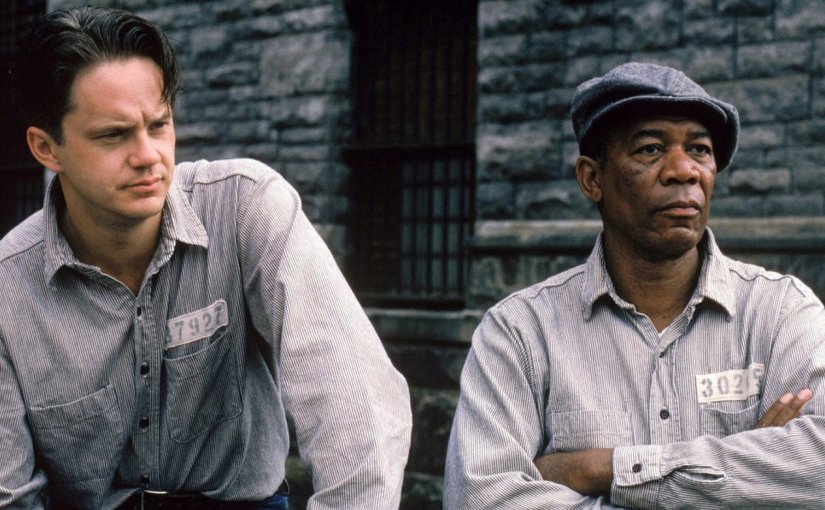
Robert Mandel’s adaptation of a story from Dick Wolf might be regarded nearly 30 years later as the film with the next generation of up-and-coming brat packers, but School Ties remains an underrated and topically important film nonetheless.  Just as it is still a problem of today, victimized by ignorance and unfounded bigotry, anti-Semitism was an issue that spread like a social disease within the confines of a prep school New England community in the 1950’s.

Brendan Fraser is David Greene, a high school senior awarded a scholarship at the school in order to usher in a championship football season as their quarterback.  David is well aware of his ultimate purpose for his scholarship and he brushes that aside as just one year of attendance will ultimately lead to acceptance at an Ivy League school.  He’s just like any other handsome boy attending the school, and he’s immediately accepted among the masses.  He’s hilarious at mischievous horseplay with the French teacher.  The beautiful girl (Amy Locane) at the nearby girls’ school is taken with him.  His football skills are applauded.  It may be a little surprising that he stems from the blue-collar town of Scranton, Pennsylvania and he buses the tables at dinner time, but David is an all-around okay guy who can knock over a linebacker while passing exceptional touchdown passes.  Amid this environment of different Christian denominations and WASP culture, however, David knows that he will stand apart if he reveals he is Jewish.  Therefore, he tolerates the casual jokes and accepts that it’s best to hide his Star of David necklace. 

The most important relationship occurs between David and his back up quarterback, Charlie (Matt Damon, before he became a superstar, but already looks like he’ll be a superstar).  Charlie begrudgingly accepts that David got to cut in line to be the star player.  As David becomes more of the celebrity on campus, Charlie is proud to be by his side.  Yet, Charlie has his own pressures to live up to as the fifth in line of his esteemed family who must carry on the legacy at the school followed by attending Harvard the following year. 

The roadmap of School Ties is easy to navigate.  You know when each note of the script is about to be played.  There will be a swastika that will shockingly appear.  Fist fights will happen.  The blue blood parents and faculty will interfere preaching their own “codes of honor” and the school’s storied 193 year history.  Yet, the film works very, very effectively.  The dialogue isn’t hokey and nothing feels like what could have been an after school special. 

No debate among the viewers.  Anti-Semitism is evil and thoughtless without merit or justification.  Questions appear where is it right to ask if David should have hidden his Jewishness or was he even lying about being Jewish, when in fact he just wasn’t even asked.  Is it right that David confronts his problems with his fists first?  Yet, Wolf’s script, apparently based on personal experience, delves further into the mounting pressures of these prep school kids who are primed from birth to be the latest model churned out from the respective family lineage for greatness in academics and athleticism.  Much of the material is devoted to the horror of actually not acing a class, and I appreciate that it’s not diminished to a standard line of “my parents are going to kill me.”  Raw emotion and stress are legitimized among these students.

The third act comes with no foreshadowing as a cheating scandal is suddenly introduced. Collectively the boys must debate who is the guilty party and why are they the guilty party.  Is it because one is Jewish, or is it because one actually cheated?  Good dialogue, good debate, but this also may be where the standard stuff spills over a little too much.  As such, the ending hinges on the third act, when it should have embraced more of the film as a whole.

The cast is made up of, at the time, soon to be superstars like Fraser, Damon, Chris O’Donnell, and Ben Affleck.  School Ties should be regarded as a winning audition for these guys’ careers that were only just on the horizon.  Their respective performances here are just as good as any of their most well-known roles, and they are happy to hide in the background as extras or step up for a camera shot.