DIRTY DANCING

By Marc S. Sanders

Dirty Dancing was a major surprise at the box office. For me, it is such an eye opener because of how good it actually is, and how well it still holds up. It’s energetic and fun and a different kind of escape from the endless supply of action films and gross out comedies.

Here’s a film with a no name director, Emile Ardolino (I’m sorry, who????) and produced by…excuse me…Vestron Video???? It did not carry a cast with box office clout either, the tallest guy from The Outsiders and the older, bratty sister from Ferris Bueller’s Day Off. Yet, the film wins out in the end.

“Baby” Houseman (Jennifer Grey) arrives with her family to a Catskills like vacation resort during the summer of 1963. Usually costumed in whites, Baby is as virginal as her moniker suggests. Eventually, she gets taken with the entertainment staff who spend their off hours dancing in, shall we say, a non-conservative manner. Particularly, she falls for the gorgeous head dance instructor, Johnny Castle (macho name, dressed in macho cool blacks with macho cool shades) played by Patrick Swayze.

Every development of their relationship is telescopic. Yes! We know they’re gonna fall in love despite coming from two different worlds. They’re gonna sleep with each other. Then they’re gonna argue. Then they’re gonna make up and then they’re gonna have the big dance to close out the film with one huge extravaganza. However, it’s the material within that grabs me, and much of that is thanks to the chemistry of Swayze and Grey.

The leads dance beautifully together, and when a music montage comes up, it is adoring to see the frustration of the dance instructor with his giggling student. It’s also charming to see them work it out as well. Reader, I’ve seen this stereotypical “chick flick” many times and I still get caught up in it. The movie comes alive in their puppy love with music and dance. Hey, I got a sensitive side to me. What can I say?

The subplots of the film are lacking though. An abortion storyline really is not necessary to assemble all these characters together. Jewish high income guests meet rebellious, but mostly kind hearted, staff members. There are a couple of distracting jerks too. Something more substantial could have been here. Perhaps, a more meaningful acknowledgment where the two parties favor or do not favor each other, and why. Abortion is a heavy subject matter that does not blend well with the rest of this film, though. The fact that the script never even utters the word “abortion” tells me that the film isn’t even sure of itself with this side story.

As well, when one dancer friend (Cynthia Rhodes) needs emergency medical help, couldn’t Baby’s doctor father (Jerry Orbach) just stop to listen for the explanation? Guess not. He just chooses to stop speaking to his daughter. Thus, making it hard for Baby to hang with Johnny. This could all be resolved with a quick sentence of dialogue. As my colleague Miguel suggests however, then there’d be no movie!!! It’s called the idiot plot, I guess.

A third sub plot involves a pick pocket thief and the reveal comes ridiculously out of nowhere. It’s here to give reason for Johnny’s reputation to be threatened one more time, while Baby defends him. Now this storyline has next to no purpose of existing. Johnny’s reputation in the boss’ eyes was tarnished enough already. This is cutting room floor material.

Dirty Dancing is a film that is merited in its special talents, but not necessarily its whole story. The consistently good soundtrack of oldies mixed with some anachronistic 80s tunes work so well. The setting is completely absorbing with its mountainous camp getaway cabins and intermittent calls for entertainment activities like with its social director (played deliberately corny by comedian Wayne Knight). It feels authentic and escapist. Therefore, I look past those silly plot developments that scotch tape one enthralling moment of dance, sex appeal and music for another.

This most recent time of watching the film was especially fun as I got to witness my twelve-year-old daughter seeing it for the first time. Nothing shows how special a movie, any movie, can be than to see your daughter slap her face when Baby chickens out from doing “the lift” with Johnny during a dance performance. Later, when she finally accomplishes that feat, my daughter sat up with a huge smile on her face. If you ever ask me why movies are so special, I might just have to reiterate this experience when I watched Dirty Dancing with my Julia.
STAR TREK VI: THE UNDISCOVERED COUNTRY

By Marc S. Sanders

I got the urge to watch Star Trek VI: The Undiscovered Country after seeing the compelling HBO miniseries Chernobyl. The Star Trek franchise succeeds best when it applies current and true-life events to its fictional future set in the 23rd century.

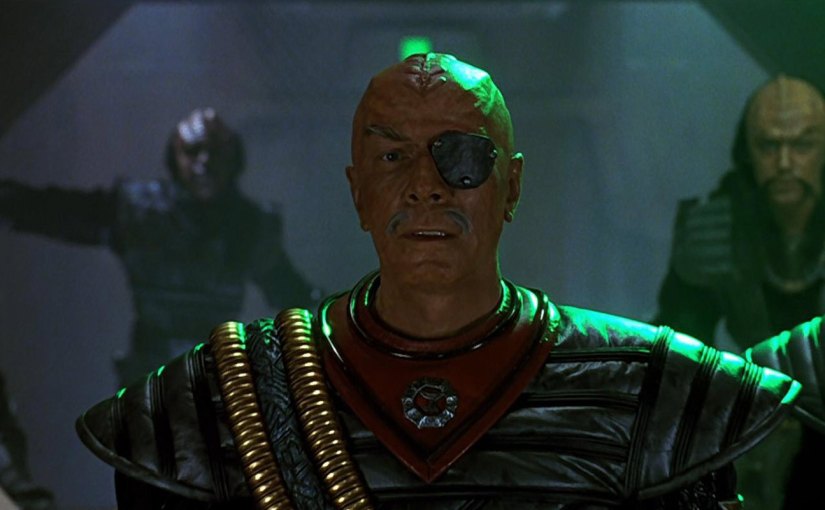
Like the USSR, the savage Klingon empire suffers a terrible accident at one of their most powerful energy planets, that spirals them into possibly having only fifty years of life left to survive. Therefore, Klingon Chancellor Gorkon (David Warner) reaches out to representing Ambassador Spock of Starfleet (Leonard Nimoy) to begin peace talks that will help prolong the alien race’s survival.

Captain Kirk (William Shatner) however, is not so keen on the idea, especially after he blames them for the murder of his son. It turns out many other factions are not enthused either, as Gorkon is assassinated and Kirk and McCoy (DeForrest Kelley) are sentenced to an ice like Siberian prison planet.

There’s much to think about in the original Star Trek cast’s final film together. Beyond the sentiments of the crew retiring and the Enterprise being put out to pasture so to speak, there’s an interesting story to ponder about how we map out the future for upcoming generations when we are still living with the past that we’ve grown accustomed to. It’s telling, considering much of the real-life events happening twenty-two years into our new century with historical statues being removed and minorities fighting for fairness among their communities.

As well, is one country or people too proud and always wanting to be at odds with another by relishing in being a super power? Can we think beyond that nature? I think that’s maybe where the curious title, The Undiscovered Country, stems from. We just haven’t seen the possibility that could be truly within our reach, if we all wanted it that way.

Christopher Plummer plays Klingon General Chang who vows revenge for the assassination. Plummer is spectacular; a villain not recognized enough on all of those on line top 10 lists of bad guys. Plummer brings his theatrical training to the role as he relies on Shakespearean quotes to take in the scene at hand. He’s at least as good as Ricardo Montalban’s Khan is remembered.

The crew is adored as usual. The supporting cast are given their fair share of lines and moments in the spotlight. Kim Cattrall joins as a Vulcan Federation Officer who’s helpful to uncover the true criminals at play.

Director Nicholas Meyer contributed to the best of the Star Trek films, and this is a perfect example of his strength within the franchise. The story was partly conceived by Nimoy with Meyer credited on the screenplay. Cold War politics really lend to this film. It’s interesting to see how the Klingons are initially in denial of assistance or the desperate problem they face which is similar to Russia’s response following the horrifying nuclear accident at their power plant in Chernobyl. I just love how the ideas within The Undiscovered Country parallel the world’s response and effects of what was happening just a few years prior to this film’s release, in 1986.

Never let it be said that movies can’t teach you anything.

SEARCHING FOR BOBBY FISCHER

By Marc S. Sanders

In a game of chess, if your queen is taken, it might mean a permanent loss of what was thought to be a god given talent. Seven year old Joshua Waitzkin does not realize that, and thus it allowed him to become the greatest chess champion in the country.

Josh (Max Pomeranc) is not a chess player. Josh is a boy who plays chess, as well as baseball. He also builds Legos, plays Clue and does just about anything else including fishing with his dad. He knows this about himself. The problem is the adults in his life only see chess, and nothing else. Writer/Director Steve Zaillian assembles a film that turns the world’s most historic board game into a means of recognizing self-worth and the limits of talent with its correlation to identity.

Josh gains influence from a cutthroat formal chess instructor named Bruce (Ben Kingsley) who doesn’t just teach chess but also offers guidance in manners of contempt and dislike for your opponent. It helps that he recognizes Josh’s talent but is Bruce coaching with the best intentions?

Contrary to Bruce is a city park speed player named Vinnie (Laurence Fishburne) who reminds Josh to always play on offense. Play the board, not the opponent. Josh’s father (Joe Mantegna) only sees victory through beautiful trophies. When Josh loses interest in champion accomplishment, his father only sees nothing but failure. His mother (Joan Allen) sees the boy losing his boyhood.

These are all good people and necessary for Josh. The conflict lies in the clash of their different ideals. I love that. There isn’t a villain here. There’s a debate.

Zaillain devotes time to footage of renowned champion Bobby Fischer who eventually went into seclusion probably due to the lack of any worthy challenger beyond himself. The worry of the film lies in whether Josh will end up with the same sad fate of Fischer. Everyone is on the hunt for the next Bobby Fischer. Does everyone want to be the cruel, cold and isolated Bobby Fischer, though; a man with talent yet also hates his talent?

Zallian films very effectively in a majority of close ups, hardly showing the surroundings of the settings. He wants his camera to maintain a tunnel vision to only allow Josh, and those that discover and observe him, per se, to see what’s directly in front of him. Nothing else. Nothing but the chess pieces on a board and how many moves until check mate arrives are all that matters.

The film edits beautifully in sound as the speed play pounds the chess pieces in an aggressive music accompaniment. Pieces are KNOCKED onto the board, and when a queen is taken it is SLAMMED on to the table. A person has ultimately been disabled and weakened. When check mate eventually comes, the king piece weakly drops over.

Josh is not proud of his ability to conquer. He’s proud of his ability to play.

CAPTAIN AMERICA: CIVIL WAR

By Marc S. Sanders

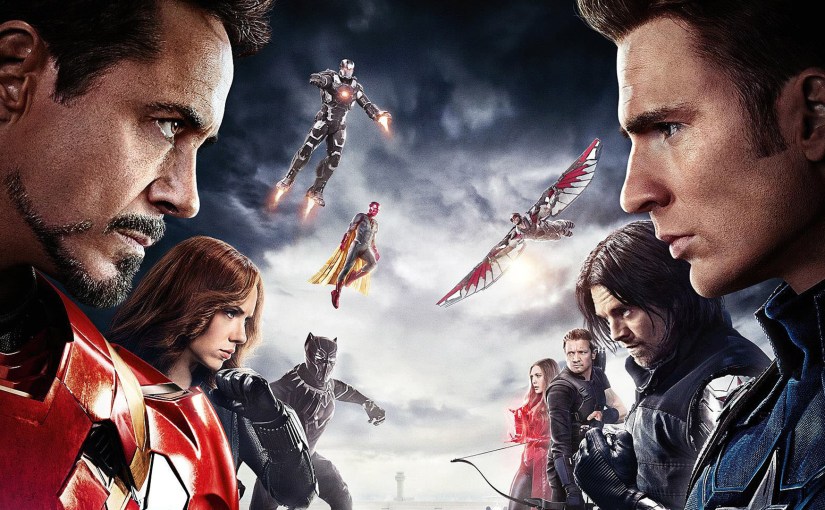
I think the Civil War chapter must be one of the best installments in the Marvel Cinematic Universe. The action ranging from fight scenes to car chases to shootouts and explosions are so well executed and edited.

This film lives up to what makes each Marvel character special in their own way, and while most of the attention is naturally focused on Chris Evans’ Captain America and Sebastian Stan’s Winter Soldier (aka Bucky), the large cast is respectively given numerous moments to shine individually with well-conceived backgrounds and traits beyond just their superpowers.

Interestingly, until the late scene where all the characters collide against one another, the film was very shy of any intentional humor and focused more on what is morally correct in this fantasy world. There was a debate to grapple with, and a threat to both sides of the moral compass. All good layered dimensions, my favorite vice of effective storytelling.

Anyone who says popcorn movies like Avengers are nothing more and simply brainless would fail at recognizing good analysis and dimension. More often than not the MCU succeeds at setting up a dilemma to keep a viewer hooked. Once they are taken…then the storytellers will do something bold like destroy the headquarters, or an airport, or a whole city or Iron Man’s armor, and on and on. Too many other franchises (Transformers, Fast/Furious or DC) bring the buildings down before the cement is dry and the windows are Windexed. That’s when story is neglected for showmanship. There’s no weight to the loss. What do I care who died? You just destroyed the village in order to save it. Disney and Marvel know this and steer clear of those habits.

The cast is so perfectly assembled in Civil War. They interact very well with line exchanges, debates and fisticuffs.

Much of this film was a blur during my first viewing. These are Marvel movies. There are so many now, the scenes all seem to blend together. Yet now I see this particular film is special. Good set pieces, costumes, makeup, visual effects and great performances lead to a great, fun presentation. I’m sold.

STAR WARS EPISODE III: REVENGE OF THE SITH

By Marc S. Sanders

Star Wars Episode III: Revenge Of The Sith is the best installment in George Lucas’ prequel trilogy of his epic space opera saga. However, that is where the line is drawn.

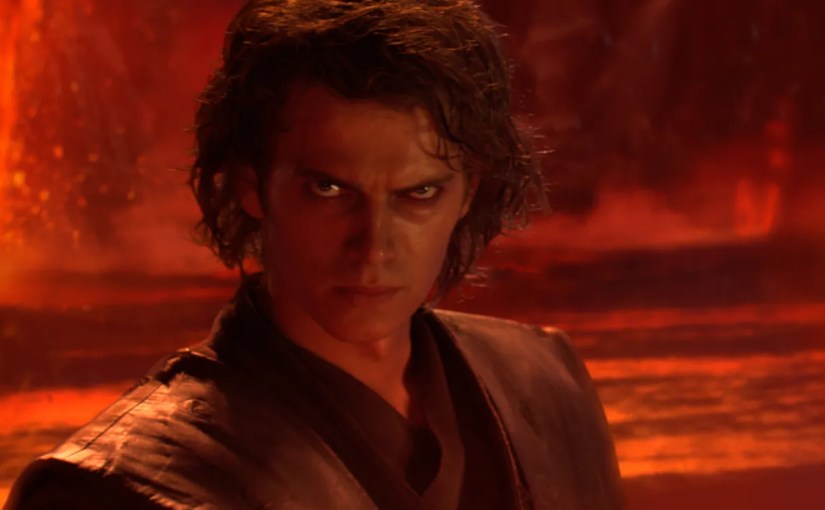
It carries a heightened drama thanks primarily to Ian McDiarmid as the eventual Emperor Palpatine. Shakespeare might have been proud of the character and performer. Much like Alec Guinness received an Oscar nomination for his portrayal of Ben Kenobi, so should McDiarmid have been honored playing an antithetical influence (of Kenobi) on the student and Jedi in Training, Anakin Skywalker (Hayden Christensen in a much more improved performance).

War within the galaxy is rampant and there’s no end in sight. The Jedi Order is overwhelmed. Anakin is used as a pawn to spy on his new mentor Palpatine who in turn insists that the young Jedi occupy a chair in the Jedi Council to spy on them. In addition, it’s hard for Anakin to come to grips with his secret wife Padme (Natalie Portman) dying from childbirth as his nightmares continue to remind him. A deal with the devil himself in Palpatine is offered as an option. Can a manipulation in the Force rescue Padme from death?

There’s a lot of weight on Anakin here. Sith departs from the politics discussed in the prior entries as it focuses primarily on Anakin’s personal struggles. The film really needed to take this direction. After all, it’s time to witness Anakin’s transformation into Darth Vader. Everyone has been dying to see that.

George Lucas’ scene set ups work on occasion. A great performance of dialogue occurs in an alien opera box between Palpatine and Anakin. This is where McDiarmid really comes through. He’s subtle and deliberate in his influence. Fortunately, Christensen just needs to listen mostly.

Later however, a scene works only so much when Samuel L Jackson as Jedi Master Mace Windu duels with Palpatine, having just revealed his secretly evil Sith side. Through all three of these films, Mace Windu has been one of Jackson’s least exciting roles. He’s bland and never doing much. Christensen comes upon this scene and doesn’t give me the genuine anguish I was hoping for. McDiarmid, again, is hitting home runs in surprise and development. This turning point scene is not as strong as it should have been thanks to Lucas’ stilted direction and writing, along with Jackson and Christensen lacking any true depth.

Episode III also has a handful of so what moments that continually frustrate me in this trilogy. We have to watch Yoda and Obi Wan watch a video of what Anakin has done. Why? We’ve seen this already. Bail Organa (Jimmy Smits; I wish he had a larger role) needs to be informed of an upcoming meeting. Honestly, I don’t need an update on a character’s calendar. Just make sure he arrives on time. Moments like these don’t drive towards anything.

Natalie Portman is not served well as a pregnant Padme. Her dialogue is worse than ever, and it hinders her performance. Padme is torn between her affection for Anakin and her passions for democracy. We see next to none of the latter. How does an intelligent woman like Padme suddenly become so unaware? Ironically, opportunity for her political nature was filmed but remains only as deleted DVD features. These scenes would have enhanced the movie as they imply the foreshadowing of the upcoming Rebellion, while a petition attempt is mounted to usurp the Emperor’s administration. Here, Padme is trying to be instrumental in Luke & Leia’s (her own children) future. Really good material here. Nevertheless, George Lucas opted to leave it all on the cutting room floor. Oh well! I’m still holding out hope for a “special edition” cut one day, inclusive of this storyline.

Lucas’ lava planet, Mustafar, is quite grand as the arena for the much-anticipated dual between evil Anakin and noble Obi Wan. Still, again, it could have been better. There’s too much CGI and flashing lightsabers that hide the acting among the swordsmen. Compare this to the duals in Empire and Jedi and you see what I mean.

I know my commentary on the prequels is quite pessimistic, but I do have an (maybe a biased diehard fan) appreciation for the films. The stories work. The execution falls short however in dialogue, performances and visual artificialness.

George Lucas had all the right make up for a trilogy as epic as his original films that began in 1977. Maybe because he didn’t have the monies and technology at that time, his imagination had to work overtime back then. In these later films, however, his hubris got in the way of his craft. So, we have to settle for his next great technological discovery in CGI efficiency. Therefore, we get cartoons with no depth like Jar Jar Binks, General Grievous, and lame, clicking battle droids.

Lucas always defended the position of his writing by insisting these films are aimed for kids. No. I don’t accept that. Star Wars was aimed for kids and the kids that remain in all of us as we continue to grow into adulthood. George Lucas needed to write with that in mind.

STAR TREK V: THE FINAL FRONTIER

By Marc S. Sanders

Leonard Nimoy is an actor who can also direct himself.  Man o’ man, he accomplished amazing feats with Star Trek III & IV, didn’t he? On the other hand, William Shatner is just an actor.  Look at Star Trek V: The Final Frontier and you’ll see what I mean. 

(Mind you, I’m not being fair, because actually Shatner is a very good literary author.  Read his TekWar series to understand what I mean.)

What a terrible shame that this fifth film in what was mostly a successful and beloved film franchise descended so poorly in craftsmanship, writing, direction and performance.  The lesson to be learned when committing to a plot that has your cast of characters meeting with the Lord, Almighty God is…I guess you’ll always come up short.  Someone will be there to say, “Well that’s not my God!” or “God?  Who is this God, you speak of?”

The behind-the-scenes story goes that Shatner agreed to return for the fourth film on the condition that he direct the fifth installment.  Producer Harve Bennett and Paramount agreed, and Shatner got to writing.  What set this film up to fail from the get go is what a skeptical producer later recounted.  If you have a film where the crew of the Starship Enterprise meets up with God, it’s never going to please everyone.  Someone-a lot of someones-are going to be disappointed.  Talk about hindsight. 

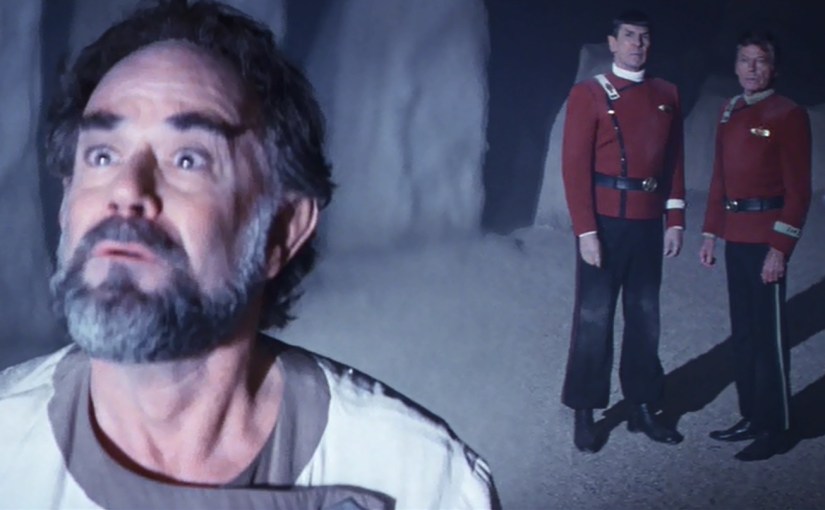
Shatner’s other mistake was offering up a shocking new development for the franchise’s most treasured character.  Spock (Nimoy) has a long-lost step brother.  Yes.  Of course, use your film installments for big moments like this, but not this way.  Sybock (a dumb sounding, uninspired character name, played Laurence Luckenbill) is a crazed Vulcan heretic who brainwashes people by easing what pains them the most.  He arrives on a planet in the neutral zone (between Klingons and the Federation) and rounds up a posse masking them as hostages to bait Captain Kirk and the Enterprise to arrive, thereby hijacking the starship.  Next stop a mythical Eden, where God presumably resides.  This is supposed to be Spock’s brother????

When the veil is pulled off on who Sybock is, Shatner’s scene set up is kind of anti-climactic.  He portrays Kirk in a silly kind of comedic frustration against the no nonsense Spock for not sharing this news.  Lines like “Aha…. See?  See what I mean?” creep in.  It’s kind of sophomoric and hokey, like a failing stand up comic.  Spock doesn’t even find Sybock’s arrival very fascinating. (In case you aren’t aware, Spock exudes enthusiasm by declaring something fascinating.)  Instead, it’s just matter of fact.  So, why should the audience raise an eyebrow at any of this, if Spock won’t even make the effort?

The Final Frontier fails miserably on its visual effects.  The renowned Industrial Light & Magic was not available for this picture.  Shatner and company resorted with another contractor and the lack of substance in space travel and models shows terribly.  At one point Sulu (George Takei) must fly a shuttle transport into the hull of the Enterprise.  Reader, I’ve orchestrated better crash landings with my GI Joe toys.  This is one of the few science fiction films where I can literally tell that miniature models are being used.  The ships are not filmed to appear large and carrying vast amounts of crew members.  The scale of it all seems off.  God is just a holographic face in strobe blue light.  Why did the Paramount production team allow this to happen on such a valuable commodity as Star Trek?  After the enormous success of the last three films, especially Star Trek IV: The Voyage Home, you would think that the filmmakers would be especially protective of their money maker. 

I guess I answered my own question, though.  The title Star Trek sells itself, like Batman, James Bond, Jurassic Park or Marvel or Star Wars.  So, let’s not kill ourselves with money and effort.  Is that the idea?  If audiences came in droves for the last picture, surely, they’ll want more and naturally return for the next one, no matter what’s plastered on the screen.  It’s terrible corporate hubris that happens all too often though, and it’s not right.

Star Trek always succeeds when each adventure is a reflection on our world histories and/or our current events.  The Voyage Home relied on the cause of environmental preservation.  The Undiscovered Country (the next film in the series) sprung from the Cold War politics that ended terribly for Russia with the Chernobyl disaster.  I like to believe The Final Frontier was aiming for religious doctrine, but ended up being a betrayal on a level of cult status, perhaps in the direction that Scientology or NXIUM have been suspected of taking.  A zealot will brainwash you into the illusion of immediate relief from what personally ails you. Then you will follow this so-called leader on a tour to meet the almighty, himself (“God” in this film is portrayed by a man, actor George Murdock.)  It’s regrettable, because nothing was gained from this.  Characters ranging from McCoy to Uhura, Chekov and Sulu all become followers of Sybock under his hypnosis.  Yet, Shatner’s story and direction never provide a relief from what overtakes them.  Were they ever deprogrammed?  Cults do exist and sadly people have to be reverted back from the mind control that’s overtaken them.  I’d argue science fiction could allow for a more economical and immediate relief, but even that is not offered here.  So, again nothing is gained or absorbed from Star Trek V.

Film Critic Gene Siskel made a simple and wise observation about the Star Trek films as a whole.  We like these movies because we like these characters and they like each other.  William Shatner offers a simple life approach to Kirk, Spock and McCoy as they camp out on shore leave in Yellowstone National Park.  They sing “Row, Row, Row Your Boat.”  It has its charm as Spock is dumbfounded by the illogical lyrics of the song.  You smirk along with Kirk and McCoy.  However, it has nothing to do with the crux of the film.  This moment reintroduces the characters at the start of the film and then it is bookended to close out the movie.  But why?  What was proffered from this?  It goes back to William Shatner spit balling as a writer/director.  In other films, before the meat of the story would begin, the characters would reflect on Shakespeare or Charles Dickens for example, and somehow it weaved nicely into the adventure or the outcome later on.  A campfire song has no relevance that I could determine with a quest for God.

Star Trek V: The Final Frontier was just aimless telling, and it bothers me to this day.  By the time this film arrived in 1989, the cast was already starting to wind down.  Their age was showing, and they only had so many more voyages to travel on.  Kind of sad that their second to last exploration was dull, short sighted and massively insignificant.

SPIDER-MAN: HOMECOMING

By Marc S. Sanders

Spider-Man: Homecoming makes some enormous strides with the most recognizable of all the Marvel Corporate Mascots. I’m just not sure I care for the approach.

The Web Slinger has always been best written when he learns from his mistakes such as grappling with his lack of responsibility that leads to the murder of his beloved Uncle Ben, or washing his red and blue suit with the whites.

In director John Watts film, episodes like these are never discussed. Instead, we witness Spidey foil an ATM robbery. It’s a fun scene straight out of the Saturday morning cartoon, but it ends with a beloved neighborhood mom and pop store going up in flames. The scene plays like a great house party until the parents arrive home early from their out-of-town trip. Now it ain’t so fun anymore. There are a few moments like this in the film that kinda suck the air out of a what’s supposed to be lighthearted script.

Tom Holland as the hero, Peter Parker, aka the high school genius with insecurity, is suitably cast in the role. He looks much more like a kid than his predecessors and he’s got great comic delivery of one liners. Tom Holland is right for the MCU fraternity. He plays well with others.

So Holland really makes sure every action scene is fun but Watts and his screenwriting team of 8 (EIGHT!?!?!?) people pull the rug out because they must insist that the Web Head screw up again and again. Problem is the screw ups are not fun, and they spoil the thrilling set pieces including a well done sequence within the elevator shaft of the Washington Monument. Same goes for a Staten Island Ferry attack. I just kept asking myself, why we can’t we celebrate Spider-Man. Must we be so hard on the guy? Even Tony Stark (Robert Downey Jr) disapproves. It doesn’t seem fair, I guess.

There is a moment during the 3rd act that salutes a very popular comic issue that truly conveys the hero that Spider-Man must become. As a comic nerd, I was grateful for that. The filmmakers didn’t forget its roots.

Michael Keaton is scary good as Adrian Toomes, the winged villain called The Vulture. He’s not even playing for laughs. Rather he’s playing for fear. I liked it. Keaton is just good in almost anything.

Supporting players are all good as well featuring Marisa Tomei, Jon Favreau, Jacob Batalon (an especially amusing sidekick pal for Peter), Zendaya and Robert Downey Jr because a little Iron Man/Tony Stark interaction can go a long way.

However, this installment is huge step up from the Andrew Garfield clunkers but not as solid as Sam Raimi’s first two films which remain the best and most loyal to the original vision of the pop culture favorite. Raimi has no difficulty displaying the super hero’s every day faults and mistakes. What he did was make us feel sad about Peter’s errors in his ways, and we cheered when he overcame his obstacles. In Spider-Man: Homecoming, I shake my head with disappointment at the carelessness of Peter, not the mistakes he’s made.

See, to be reckless is not the same as human error. Watts’ interpretation is judged with disdain. Raimi’s is simply empathetic and relatable. That’s the difference in the two interpretations.

PS: My hat off to a great gag with Captain America as a lesson reminder in safety and well-being. It’s not as well remembered that Chris Evans has been hilarious in other films before his superhero days. That’s all brought back with great material for Cap to use. Really smart thinking here.

HACKSAW RIDGE

By Marc S. Sanders

“Please Lord. Help me get one more.”

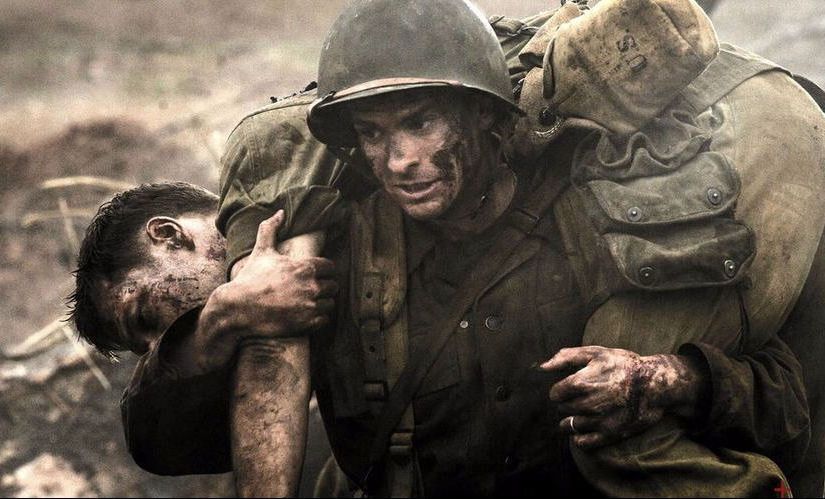
Desmond Dawes rescued 75 American soldiers during the assault on Hacksaw Ridge in Okinawa, Japan following the United States’ entry into World War II, and he did it without ever lifting a weapon.

War pictures have become somewhat boring to me lately. The battle scenes all blend together. The main characters seem to be the same each time. They all have a different heritage (Polish, Jewish, Italian). There’s the soldier who is the bully. The one who’s brother died in battle so he enlisted. The platoon leader has to bark orders to such a degree that audience must hate him, only to love him later on when he makes the ultimate sacrifice. It’s become all the same.

Mel Gibson’s Hacksaw Ridge overcomes those tropes for most of the picture but at times it still suffers from that curse of sameness. It’s only when he returns to focus on his lead actor, Andrew Garfield, who plays Dawes, that we see something special. Dawes’ reasons for not lifting a weapon are vastly explored and they are convincingly justifiable when his domestic life is depicted under the tyranny of an abusive, alcoholic father suffering from his own demons of war. Hugo Weaving is Desmond’s father. Why isn’t he getting any accolades for his performance? He’s fantastic.

Garfield is very good in the role even if he really doesn’t have to shape a character arc for himself. His performance is all about maintaining his character’s convictions. He doesn’t change. Rather, the men he serves with do.

Teresa Palmer plays his wife, Dorothy, and she’s good as well. She’s not wasted in the script (like I found Michelle Williams in Manchester By The Sea or Rooney Mara to be in Lion.). I only wish Gibson showed one last scene between the characters before the film closed out.

Vince Vaughn was an issue for me, miscast as the platoon’s drill sergeant. He’s been pigeonholed in too many comedic roles I guess that he failed to convince me of his authority here. Maybe that’s my problem. I dunno.

Hacksaw Ridge is another very good picture from 2016, but it is weighted down by graphic battle scenes, all well played out, mind you, but all done before. It’s not until late in the film that Garfield steps up to show why Dawes was so special to this particular moment in history. That’s when the emotion of the film kicks in and the interest heightens itself.

STAR WARS EPISODE II: ATTACK OF THE CLONES

By Marc S. Sanders

Star Wars Episode II: Attack Of The Clones is a vast improvement on the prior installment of George Lucas’ prequel trilogy from a galaxy far, far away. Lucas made an attempt to bring his characters out of their shell a little bit. I mean at least they laugh among each another. You need that if you are to believe that Jedi In Training Anakin Skywalker and Padme Amidala (Hayden Christensen and Natalie Portman) are to fall madly in love. So at least have them romp around in a Naboo meadow.

There’s some curious political intrigue in Clones; delving deeper than what Episode I only began to imply. As stilted as some of the dialogue may be, there are ingredients here that allow to me correlate with real life government powers and to date current events. That’s a compliment, but it’s also a shortcoming.

Ian McDiarmid remains the MVP of this trilogy as Chancellor Palpatine, the puppet master with a faux innocent exterior. Anytime he’s on screen you sit up in your chair with a little more focus. He’s brilliant as the manipulator who keeps a short distance on Anakin, the supposed chosen one, while also pushing Padme away from government interference, and yet still managing to prevent the Jedi Order from detecting his true nature. It takes a heck of an actor to pull this off.

At the same time though, the politics take up a large amount of the entire trilogy. While it holds my interest, I still question if this is what a Star Wars film should be comprised of. Where’s the force, and where’s a more defined explanation of what “the chosen one” is to offer, or what the “balance of the force” really means? Some heavy vocabulary in this terminology, maybe, but is there any dimension to any of this? Regrettably, the answer is no.

New characters and planets are introduced. Jango Fett (Temura Morrison), an armored bounty hunter, is the initial antagonist who is part of an assassination attempt on Padme, followed by a revelation that he is the source of a new discovered clone army on a secret water planet known as Kamino. (As a diehard franchise fan, I have a lot of issues with Jango and his pre-teen son Boba, but that is for another discussion.)

Eventually, the antagonism shifts to Christopher Lee as the former Jedi Count Dooku, found to be keeping conference on another secret planet known as Geonosis, where life size dragonflies reside. Lee was legendary by the time this film was released in 2002, but he’s not exactly aggressive enough for me. He was an old man with little convincing agility to be engaged in a lightsaber fight with a very bouncy Master Yoda. In Lord Of The Rings, he commanded from the perch of his tower. Here, Lee is in the mix of the action and he’s a far cry from Ray Park’s appearance as Darth Maul.

Yoda is another issue. Now friends will be quick to remind and tease me over how excited I got when I saw Yoda engage in a climactic lightsaber dual for the first time. My tune has changed though. As The Empire Strikes Back showed way back in 1980, Yoda was convincingly powerful without ever having to prove how powerful he ever was. Here, it comes off gimmicky to me as an excuse to draw a crowd or make a new kind of toy to sell. Just Yoda’s appearance alone should be enough. Now, he’s just like the rest of them. Yoda’s greatest feature was his philosophy, never his combat skills.

I don’t take much issue with the romantic dialogue between Anakin and Padmé. An actor like Leonardo DiCaprio or Billy Zane would sell the “sand monologue” into the stratosphere. Remember, those guys performed James Cameron’s hammy Titanic script. Hayden Christensen could not do that though. His temper, which Anakin is regarded for at this age, is never convincing. It’s terribly overacted. He screeches his dialogue. Darth Vader never had to yell or scream or screech. So why is Anakin? This is also partly Lucas’ fault. Where’s the misuse of the force with Anakin? At one moment, Anakin is upset and throws an object? Why throw an object? Why not “force throw” an object? Anakin demands answers from a captive bounty hunter by screaming at her? Why only scream? Why not “force choke her” or mentally torment her? Don’t you think these ideas, these familiarities we’ve seen with Vader would have held much more dramatic weight and depth?

Lucas stretched himself further than he did on The Phantom Menace. Still, he just didn’t take his second episode far enough. It’s as if he opted not to apply too much effort. There are no twists to Attack Of The Clones. No surprises. We easily have a general idea of where all of this is going long before the opening crawl even begins. So, like its predecessor, Episode II lacks a wow factor that placed the original three films into the greatness they still hold.

There still needed to be more in these films. I’m not gonna even talk about CGI. I’m talking about story, and what makes a saga a Saga. So… WHERE’S THE SAGA?????

THE UNBEARABLE WEIGHT OF MASSIVE TALENT

By Marc S. Sanders

I’m looking forward to seeing a film that pokes fun at the life and career of actor Nicolas Cage.  After seeing his new film, The Unbearable Weight Of Massive Talent, I’m still waiting.

The title is the best thing about this film.  In fact, it might be the best title of any film to come out this year. 

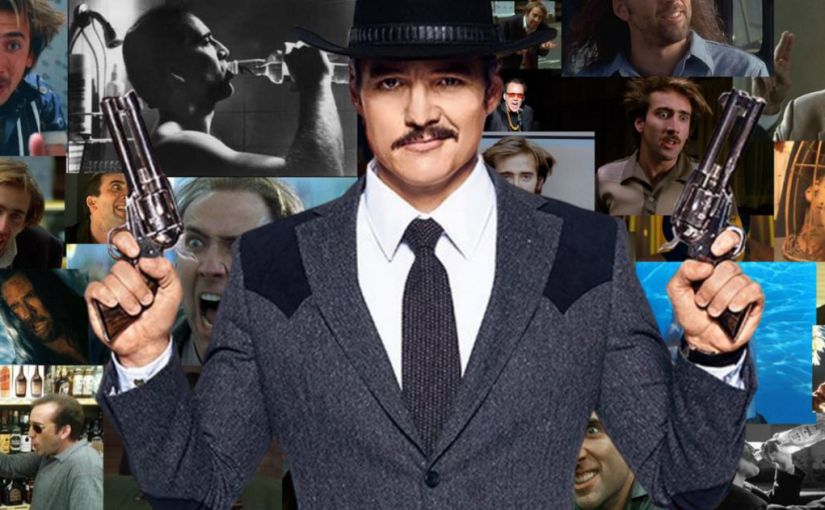
Cage portrays an account of himself, Nicolas Cage.  His career in Hollywood seems to always be scraping the bottom of the barrel and he comes up desperate for the next film that will financially sustain him.  Look actors gotta work too!  He’s so anxious for a part that he’ll recite a monologue with a dreadful Boston accent to a Hollywood producer as he’s waiting for the valet.  Alas, no roles are coming his way and he’s over $600,000 in debt.  Best that his agent (Neil Patrick Harris) can do is get him a million-dollar paycheck to spend a weekend at a supposed super fan’s island chateau.  Javi Gutierrez (Pedro Pascal) is that fan. 

As Nicolas’ stay commences, somehow, he finds himself caught up in a real-life action-packed story.  The CIA inadvertently recruits him to stay on top of Javi as they suspect he’s kidnapped the daughter of a foreign country’s President.  Yet, Javi doesn’t seem to give off any clues.  He’s only enthusiastically concerned with entertaining his celebrity guest and selling the adventure screenplay he’s written with Cage in mind.

I gave up on this film after the first fifteen minutes.  If I laughed three times during the course of the picture it was a lot.  The oversight that I think occurred here is that it never felt like a spoof of the actor Nicolas Cage.  Cage has a lot of suspect material in his past.  He’s a die-hard Superman fan.  After all, he named his son Kal-el.  Who does that?  As well, he’s infamously known to have recorded himself in a terrible looking Superman suit for Batman director Tim Burton to consider for a film revival with Cage in the superhero role.  Cage has also been married multiple times, including to Elvis Presley’s daughter at one point.  I believe his most recent marriage lasted all of three days.  He has his odd collection of film roles, and he’s a member of the famous Hollywood family, the Coppolas (as in Francis Ford and Sofia).  Yet, none of this material that comes to me off the top of my head makes its way into The Unbearable Weight Of Massive Talent.  The title seems to scream Nicolas Cage and yet this film is hardly about Nicolas Cage.

Instead, this film directed by Tom Gormican, who also co-wrote it, opts to actually turn the second half of the film into an actual shoot ‘em up adventure with clumsy comedy scraps.  Cage and Pascal scream amidst the bullets and car chases, but none of it is funny.  It certainly doesn’t reach the heights of Lethal Weapon fanfare.

I think back to a film called This Is The End which features the Judd Apatow fraternity of actors (James Franco, Seth Rogen, Jonah Hill and Jay Baruchel).  Earth is coming to an end and the celebrities play themselves.  The inside jokes were abundant with nods to their film careers, their penance for smoking weed and various gossip stories.  If Nicolas Cage is truly playing himself and this new film is selling itself on that message, then show me Nicolas Cage.  If you are just going to show an unfunny Pedro Pascal and clumsy gun fire galore, then you can easily swap out the celebrity at the center of it all and replace him with any other well-known actor.  Don Knotts could have been inserted here, or Charles Nelson Reilly.  Kim Kardashian could have had opportunity with this script.

Sure, there are some salutes to Cage’s film credits.  Javi’s secret man cave of all things Nicolas Cage is a little fun for the short while we are there.  Yet, what’s so relatable with a forgettable film like Guarding Tess?  It’s actually a good movie with Shirley MacLaine in the title role.  How many people actually saw it though, much less remember it?  Face/Off gets a nod but nothing great beyond the gold-plated prop guns he used.  Gone In Sixty Seconds is mentioned in one sentence of dialogue.  Con Air hearkens back to the bunny in the box for a beat.

Other than one well known celebrity cameo for a blink and you miss close up, the Hollywood populace doesn’t even turn up to roast the film’s star.  Imagine if Francis Ford Coppola made an appearance.  “Nic, stop embarrassing the family.”  Consider Sean Penn having a beer with Nicolas to reminisce about Fast Times At Ridgemont High (Nicolas’ first film appearance as a stoner dude, when his surname was Coppola).  There’s not even a mention about his Oscar winning turn in Leaving Las Vegas.

I am happy to admit that Nicolas Cage has a very storied career and life behind him, and yet hardly anything is touched upon in this film.  Instead, we are distracted with a kidnapped young woman that I don’t recall has even one line of dialogue in the picture.  If she did, it happened when I dozed off.

One avenue seems so obvious for a film intending to spoof this actor.  Walk with me for a second.  Nicolas Cage did the film Con Air with actor John Malkovich.  There’s already a much better film called Being John Malkovich that had a little fun at the expense of that real life actor.  It was written by Charlie Kaufman and directed by Spike Jonze.  Know what else Kaufman & Jonze wrote and directed?  A film called Adaptation with Nicolas Cage.  See where I’m going here?  This stuff writes itself.  I’d love to have watched a scene where Malkovich walks in and says “I know what you’re going through Nic.  I really do. Charlie and Spike never let up.”  There’s much to play with here. 

Yet instead, we are belabored with the unbearable weight of this unfunny film.