THE TAKING OF PELHAM 1 2 3 (2009)

By Marc S. Sanders

While the remake of The Taking Of Pelham 123 is not the best of the Tony Scott directed/Denzel Washington headlining thrillers, it’s still a good time. I’m a sucker actually for most of their films, though as of this writing I’ve yet to see Man On Fire. Washington and Scott made several action pictures together. You depend on Scott to work in all the fast cuts to wake up your pulse and allow Washington to form a variety of characters. Denzel Washington didn’t have to appear like the macho tough guy with the ripped muscles. In Pelham, it could not be more evident.

Washington plays Walter Garber (first name salute to Walter Matthau of the original film), a dispatch operator for the New York City subway line with years of experience in all facets of operation and management. However, he’s been demoted due to an ongoing investigation that he has accepted bribes. Now let me say that I like this angle. He’s not a typical alcoholic or drug addict that we might have seen a Bruce Willis guy do one too many times. This is something different and unexpected. Washington also appears with a pot belly, glasses and no fashion sense. He’s not a decorated war veteran. This is not an action hero. Screenwriter Brian Helgeland got it just right, with this character at least.

John Travolta is your bad guy known as Ryder, and I’m afraid he’s cut from similar cloths of his other career bad guys. He screams in the same way. He has the psycho meltdown attempts at hilarity. So he’s more of the same really.

Ryder and his crew hijack one car off the subway line that comes out of Pelham Bay, NY. Garber answers the call from Ryder with his demands for money within the hour or a hostage will get killed minute by minute after the deadline.

Now Helgeland and Scott are very aware of the absurdity going on here. When the apathetic Mayor (a welcome James Gandolfini) agrees to pay the cash, it has to be transported all the way from the bank reserve in Brooklyn. This requires Scott’s signature moves of racing police cars and bikes through congested New York City to get it to Ryder before the deadline. Only midway through this long sequence which gobbles up tons of the film’s running time, does someone ask why they just didn’t use the helicopter. Cue my colleague Miguel E Rodriguez: “Then there wouldn’t be a movie!!!!”

As much as I like the action shots, because I’m a guilty pleasure sucker for that stuff, I have to insist that there still could’ve been a movie; a better movie. Helgeland’s script wasn’t imaginative enough, or the producers insisted on more car crashes and things blowing up real good. The original with Walter Matthau and Robert Shaw maintained tension for its two hour running time. This remake could have learned a little more from its ancestor. Two great actors are at your disposal, and you might have gotten some good dialogue like that of Clarice & Hannibal, perhaps.

Still, the conversations between Washington and Travolta are serviceable on at least one side with most credit going to Washington. Surprises into the Garber character keep the film interesting. Travolta? Well, I saw this guy in Face/Off and Broken Arrow and Swordfish and on and on.

The Taking Of Pelham 123 always had my attention. Yet, I wish it showed me even more new things than just its unlikely hero. Denzel Washington shouldn’t have to be the only one putting in overtime.

STAR TREK II: THE WRATH OF KHAN

By Marc S. Sanders

I was only a mild fan of the original Star Trek television show. Some storylines were flat and simply a bore. It had some thrilling moments though, including episodes that I’ve watched on repeat. (The Squire Of Gothos was always my favorite.) Unfortunately, the first big budgeted Trek film followed suit of the weaker, less interesting aspects of Gene Roddenberry’s series. Thankfully, Paramount Pictures with producer Harve Bennett had enough faith to try once more and get it right. Star Trek II: The Wrath Of Khan is one of my favorite science fiction films of all time.

Bennett invested time in rewatching the entire series looking for the return of a formidable foe against the crew of the famed Starship Enterprise, and he settled on the power mad muscled genius, Khan (played with gravitas and impressive pecs by Ricardo Montalban) from the series episode Space Seed.

Khan, along with his wife and crew were left marooned by Captain James T Kirk (William Shatner) on a barren planet for their crimes. Fifteen years have passed and Chekhov (Walter Koenig) along with his Captain (Paul Winfield) unexpectedly come upon the villain’s vessel. Now Khan has taken control of their starship with a vow for revenge upon Kirk.

Caught in the middle of this conflict is a new age device called “Genesis” which has the potential to create life from non life. Find a planet devoid of any living organism and allow the device to go to work. In Khan’s hands though, it could serve as a terribly destructive weapon.

Regardless of its ending, The Wrath Of Khan offers the best performance by Willam Shatner with his memorably storied character. There’s more depth than ever in Kirk. He is now ranked as an Admiral who in turn is denied of directly commanding a starship, his greatest career accomplishment. He’s fearful of aging as his birthday approaches. He also meets up with a past flame whom he shares a son with. There’s plenty of dimension devoted to Kirk, and it all works. None of it feels mired down. This is a story devoted primarily to Shatner’s character with the others in tow. He looks so comfortable in the role as he walks the halls of the Enterprise. Because he always looks like he knows where he’s going, so does the audience. He’s very casual in his manner. The setting of the starship has life when Kirk is populated within it.

Furthermore, the friendship he has with Spock (Leonard Nimoy) feels solid. When Spock gifts Kirk an antique copy of Charles Dicken’s A Tale Of Two Cities, you feel cozy in the history of these two people. It’s further noted in Kirk’s relationship with Dr. McCoy (DeForest Kelly). It’s important to realize that this film is only the second film following three seasons of an episodic television show that more or less just showed villains of the week. We never had an opportunity to really get inside Kirk’s head before. So despite the vastness of Star Trek, it’s main players were arguably still quite green.

Director Nicholas Meyer (the best one of all the films), turns two sea captains upon one another amid an ocean of space as they play battleship. You get a strong idea of the tactician that Khan is. Montalban is great as a Captain Ahab seeking to destroy his Moby Dick, suitably relying on quoting Melville’s classic novel. Meyer is so good at drawing from the best of both sides. The adversity between Khan and Kirk works very effectively that you hardly realize that Shatner and Montalban never appear on the same set together. Both primarily work from their Captain’s chairs. The set ups play with much strategy and good back and forth dialogue as they communicate by screen images. Call it their “Zoom Session” if you must. Ultimately, this film demonstrates that how a movie is only as strong as its villain.

The Enterprise setting also looks superb with its elevators, curved and endless hallways, engineering platforms & alcoves and submarine like doors. The command bridge looks realistically functional too. Everything on the Enterprise seems like it has a working purpose. When crew members are running towards something or climbing a ladder, Nicholas Meyer makes it feel like you know where these people are going and what they are trying to do.

Composer James Horner also needs a good amount of credit. At times, his music comes off frightening. As Khan makes various approaches with his ship, Horner has this claw like thunder clap cued in to the danger. His more upbeat tempos feel like proud militaristic marches for the Starfleet characters. You get that feeling especially in the opening credits. During a sequence where the two ships are flying blind through a nebula, the music is eerily string like and quiet. Horner studied this film to get the absolute best notes.

The ending is heartbreaking and suitable to the character arc that Kirk experiences. While it is surprising, it’s also pleasingly foreshadowed, wrapping up the internal dilemma that Kirk grapples with over the course of the film.

I would argue that Star Trek II: The Wrath Of Khan turned out to be the most vitally important chapter in the famous franchise’s history. It succeeded in acting, writing, effects, setting, score and direction. Had this film not generated a response from audiences, I have to wonder if any more of Star Trek would ever have been seen again.

One thing for sure, you don’t have to be a die hard fan to really appreciate a great film like The Wrath Of Khan.

PAYBACK

By Marc S. Sanders

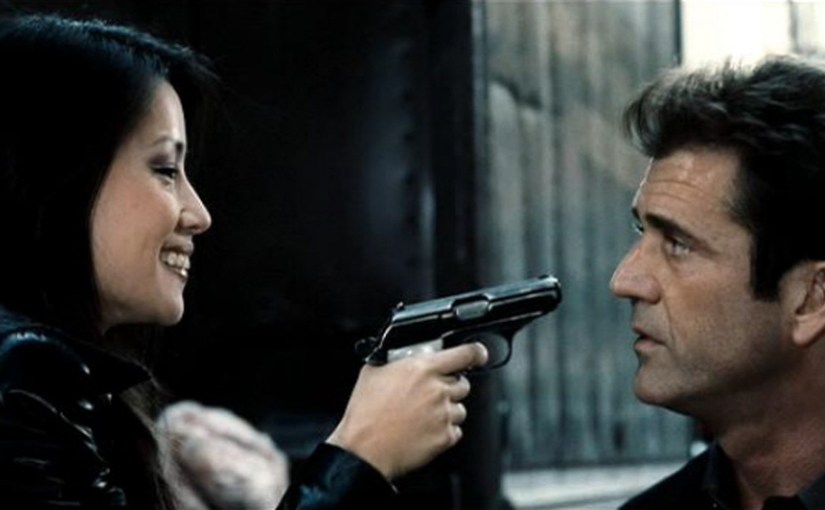
Mel Gibson is Porter. No first name given. He’s just recovered from three bullet holes in the back and all he wants is the $70,000 that he was ripped off after pulling off a heist. Nothing more. Just his seventy grand.

In Brian Helgeland’s film Payback, the idea is to root for the bad guy. Then again in this film, they’re all bad guys. So you are cheering for the best of the best bad guys, I guess. Porter catches up to Val (Gregg Henry), the partner who double crossed him which then leads to Val’s well established crime syndicate that he’s a member of headed by William Devane, James Coburn and Kris Kristofferson. Great surprise character actors for a picture like this. Porter also crosses paths with a professional dominatrix played Lucy Liu (credited here as Lucy Alexis Liu and primed for Quentin Tarantino material). She’s worth every penny you pay for her services.

Helgeland salutes the gritty, urban crime dramas of the seventies featuring the likes of Charles Bronson and Clint Eastwood. The language was more raw during that period. The city was filthy. The violence was even more unforgiving. The film feels quite modern but the cars don’t and the phones are all rotary dials. There’s a washed out grey hue to the cinematography of Payback, and its all very welcome. It’s a well made thriller only deliberately not as glossy.

The run on joke is that Porter is only interested in his seventy thousand dollar stake. The thugs he encounters might insist on not giving him a higher amount but as much as Porter gets tormented, he insists it’s all about just the seventy thousand. So, great responses come from that motif, especially Coburn as the fashionista gangster with the alligator skin luggage.

A film like Payback is simple in its story. The scenes are all about set up. How does Porter evade a drive by shooting? How does Porter handle a couple of dirty cops looking for a piece? How does Porter outwit a bomb in his apartment? The variety of characters that give Porter a rough time each come off like bad guys of the week in a Quinn-Martin television series. It’s just entertaining to watch Gibson as Porter get out of one situation after another.

Payback is a great Charles Bronson film, without Charles Bronson.

UNFORGIVEN

By Marc S. Sanders

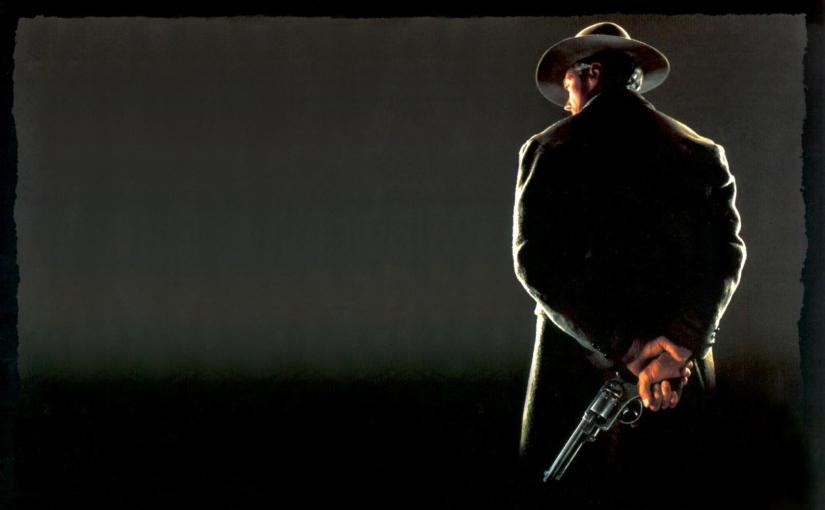
Unforgiven is a crowning achievement for director/actor/producer Clint Eastwood. It’s really a movie and screenplay from David Webb Peoples (the scribe behind Blade Runner) designed only for Clint Eastwood. After a long career of portraying quiet men with violent means, Eastwood transitions to anti-violence that would thematically dominate the next chapter of his filmography with In The Line Of Fire, A Perfect World, Mystic River, Million Dollar Baby, Gran Torino, and Letters From Iwo Jima. (WOW!!!! What a list!!!!!)

The character of William Munny is now a failing pig farmer haunted by a past of gunslinging murder and mayhem. His past returns when he’s offered a large bounty to murder two cowboys who disfigured a prostitute with a knife. He recruits his former partner Ned (another likable character for Morgan Freeman) to accompany him, and they join a kid who presumes he’s ready to kill but is really only fooling himself.

Meanwhile two other stories collide when the cruel, torturous Sheriff Little Bill Dugget (Gene Hackman in an Oscar winning role) meets with a gleeful celebrity in his own mind, gunfighter English Bob played by Richard Harris. Character actor Saul Rubinek plays Beauchamp, a reporter eager to document and dramatize these legends of the quickly expiring period of the Old West. Beauchamp will soon realize the heroes he envisions are nothing but pipe dreams.

Little Bill outlaws weapons in his town, and for the offense? A brutal beating or a painful whipping. Hackman is great at looking like his motivations make sense. Maybe they do. He sets an example and maybe it casts a preventative measure, albeit with a brutal arm of the law. Little Bill is happy to beat someone in the street, only to return happily to building his home along the river.

Unforgiven doesn’t make the violence easy for its characters. It’s harder to kill. It’s harder to listen to a dying victim beg for water. It’s just as hard to mount a horse. Most importantly, it’s hard to accept how cold blooded you can be when pushed to a point.

To watch Unforgiven almost requires at least a little experience of Eastwood’s first half of his career. The Man With No Name and Dirty Harry surmise a history for Munny where it was easy to draw the revolver, point and shoot. This film shows that defiance of scruples doesn’t last forever.

It’s a 1992 Film (Best Picture Oscar Winner) that still carries an important message responding to the questions of bearing arms and Wild West violence that recklessly surfaces in what is expected to be a more civilized society today.

Watch Unforgiven for its many moments of symbolism, changes in attitude among practically every character, and for the well executed direction of another classic from the great filmmaker, Clint Eastwood.

This is one of the best pictures of the last 30 years.

(Would love to hear commentary from others on this film. This is one worthy of extensive discussion. I also recommend you read Roger Ebert’s “Great Movie” review; here – https://www.rogerebert.com/reviews/great-movie-unforgiven-1992Ebert initially gave Unforgiven a thumbs down. This was one of those few instances where he changed his mind.) 

KRAMER VS KRAMER

By Marc S. Sanders

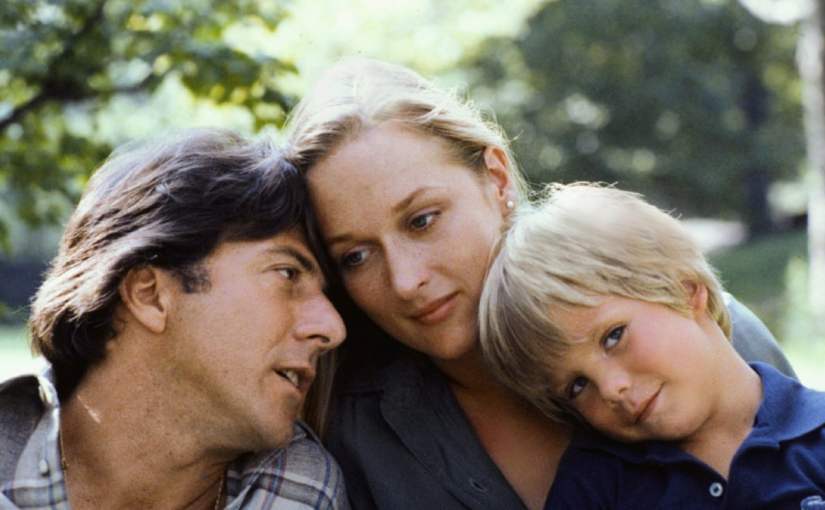
Probably the most personal film for me, the one that I watched for the first time with adult eyes even though I was only age 8 or 9 at the time, was writer/director Robert Benton’s 1979 Best Picture winner Kramer vs Kramer.

Though my parents never divorced, somehow I recognized the character of Ted Kramer, an extremely busy New York City advertising executive who could be having a great day while staying flirtatious but then also having an outburst of frustration when things are not going his way. My father was a busy man and a hard worker. He was a man who was always very proud of his work. He loved his work so much that he wasn’t as present in my life during my adolescent years. My mother on the other hand was my best friend who could make me laugh and demonstrated unconditional and very natural love for me. I learned about humor and love from my mother during those early years. I learned about responsibility from my father and some of his own humor later on. So, as I reflect on this film I imagine what life could have been for me had my mother walked out with no notice, leaving my father to tend to my needs while having to suddenly make sacrifices with his work.

On countless occasions, I’ve written about the importance of a character arc where a protagonist will start out one way and completely change through the middle and end of the film. In Kramer Vs Kramer, the arc is not focused on a character but rather a relationship between father and son. When Billy (Justin Henry in an Oscar nominated performance) at age 6 wakes up to discover mommy is not there, he sees how lost daddy is with waking up and trying to make coffee much less crack an egg properly for french toast. Ted and Billy have been blindsided and without any warning they need to adjust to one another very quickly.

Later, Benton does an insightful tracking shot of their apartment as they wake and we see they’ve grown accustomed to a routine together of getting each other up, setting the table and reading their newspaper and comic books side by side while never uttering a word. Benton realized that the comfort of living with each other does not have to be evoked with dialogue. This routine is offered one last time at the end when an inevitable and unwanted conclusion has befallen Ted and Billy. Again, no dialogue because now as a viewer I’ve become comfortable with this special relationship. Truly, I envisioned my father and I in these three moments.

Meryl Streep is the other Kramer, Joanna. She won the Best Supporting Actress Oscar and its well earned. Benton opens the film on her sad expression in a quiet darkness. When Ted finally comes home with good news from work, Streep is really good at holding her firm stance at leaving the household permanently. It doesn’t matter that Ted has gossip to share of a co-worker’s suicide or that he got a huge promotion. She just up and hurries for the elevator despite Ted’s resistance in allowing her to leave.

Benton follows afterwards with a good long portion of the film to display the struggles that Ted and Billy need to overcome, and in a second act finally has Joanna return stating her desire for Billy to live with her. Ted will not allow that to happen. For a real actor’s showcase, it’s important to watch the scene when they meet for the first time in 18 months. The conversation is cordial and they appear pleased to catch up with one another. Seconds later, the opposite sides on what’s best for themselves, and more importantly Billy, surface and the back and forth is so perfectly timed. Streep and Hoffman have those stutters and talking over one another that seem so natural. The scene ends with a broken glass that was not rehearsed and fortunately Streep’s shocked expression remains before the scene is cut.

Hoffman is extremely good in his role. He runs a gamut of emotions to bring humor, sadness, anger, warmth and love to this part. Another powerful scene is when he desperately must find a new job within three days before Christmas. Benton makes sure that Ted appears completely strong in a disarming situation when he squeezes in a four o’clock Friday afternoon interview during a raucous office Christmas party. I love how Benton focuses a still camera on Ted sitting quietly in a lobby chair amid partiers while waiting to hear if he gets a job offer. This is determination of a very full degree. Nothing will allow Ted to lose his little boy during this custody hearing.

Kramer vs Kramer is a simple and brisk film. It moves with a fast pace, and I believe the reason for that is it takes place in a home with a father, a child and a mother. So, I like to think it was very open to relating to viewers of all ages including my preteen self. There are many different and recognizable facets to Kramer vs Kramer. Billy compares Ted’s rules to what “all the other mothers” do. There’s the school play. Ted running late for work and picking up Billy from a birthday party complete with a goody bag. Of course, there’s also the heightened drama of the courtroom custody hearing. It’s like watching stage work monologues from Streep and Hoffman. It’s brilliant.

I especially took a scene very personally where Billy falls off the monkey bars, and Ted rushing through the streets of New York to get him to the emergency room for stitches. I had a door slammed in my face once that required stitches in my bottom lip. Just like in the film there was blood all over my clothes and there was a terrible fear for this 8-year-old kid who now still feels a bump in that area. Billy’s anguish and Ted’s terrible fear and guilt seem so genuine.

I find it interesting that this film won Best Picture in 1979. A year prior it was The Deer Hunter and Patton was a few years before that. In 1980, Robert Redford’s Ordinary People won the award and in 1983 it was Terms Of Endearment. Hollywood didn’t forget the impacts of hellish war and combat films. However, with the 1980 Reagan years of much decadence and pop culture positivity, a middle-class domestic life was becoming more honest and apparent. These films were not just Father Knows Best. Films like Kramer Vs Kramer were ready to show the hard parts of living a yuppie life. Things seem so normal on the outside when really there’s a struggle to love and live on the inside.

Cinderella like films showed my eight year old eyes that if a prince and princess finally meet and dance together all will be well in the kingdom. However, Kramer Vs Kramer told me that marriage and family life do not equate to happily ever after. Don’t mistake me. I’m not being pessimistic here. What I learned at that young age is that the story really only just begins after the prince and princess fall in love with one another. Thereafter, the conflicts settle in and the happy ending arrives only when the characters adjust to the evolution of their futures together, or if necessary, without one another.

TENET

By Marc S. Sanders

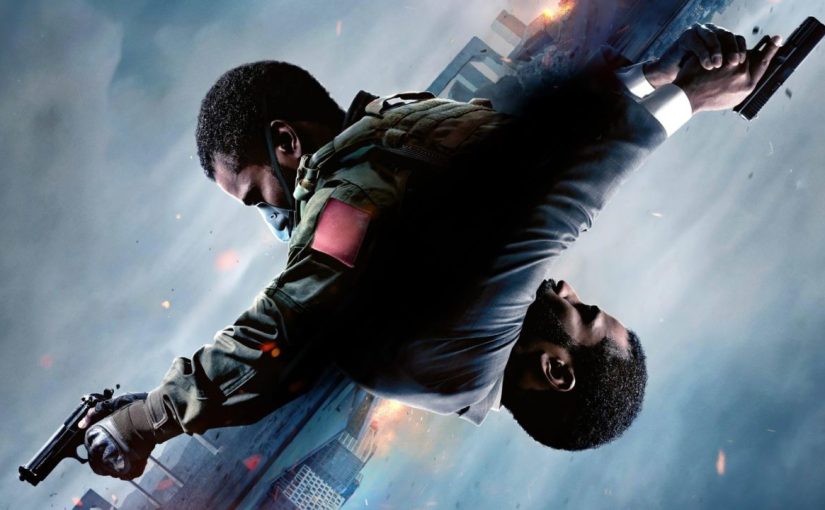
Christopher Nolan is certainly the most imaginative director working today. Films like Inception and Interstellar welcome new kinds of science fiction dissimilar from most any other films. He is an incredibly inventive filmmaker. He’s so inventive, in fact, that I think he might have carried himself too far with his much anticipated sci fi spy thriller Tenet, featuring John David Washington and Robert Pattinson along with Kenneth Branagh in a James Bond villain role. Actually, there’s a lot of Bond inspirations here. Not surprising, as Nolan is a devoted fan with much admiration for The Spy Who Loved Me, in particular.

It’s hard to describe Tenet because it’s hard to fully comprehend Tenet. I don’t even have to worry so much about revealing spoilers because I likely wouldn’t know what I’m unveiling.

Washington is a good leading actor. This film along with BlackKklansman prove that. He plays The Protagonist (no name revealed) who is extracted from a hostage mission that opens the film at an opera house. Apparently the CIA liked how he handled himself in the field and now they want to assign him to the concept known as Tenet where time moves inversely with itself.

Try and stay with me here. If you fire a bullet out of a gun, the bullet can also be pulled back into the pistol if you are moving through time on a backwards trajectory. Sounds very Nolan, right? Sounds very cool as well and when the science of this is simplified early on it looks cool too. However, as the film moves on and objects and time traveling get more complicated Christopher Nolan seems to lose his way.

There’s a bomb out there made of technology that is unfamiliar yet. Why? Because that tech was perhaps invented in the future and brought backwards through time inversely to be detonated and literally destroy the world. The Protagonist has to prevent this from happening and so he’s partnered up with Neil (Pattinson) who is a handler with more knowledge about this mission and Washington’s character than he should know.

Tenet has some spectacular edits and footage of dazzling camerawork. It’s a contender for an amazing car/truck chase. Washington and Pattinson are good together. Branagh is fine as a vicious wealthy industrialist with a penchant for abusing his beautiful wife (Elizabeth Dibecki). CGI thankfully seems very limited as well. All of the gorgeous locales and vehicles are here. Warner Bros holds so much faith in Nolan’s works that his budget seems to not exist. There’s boats, yachts, helicopters, trucks, a fire engine and a BMW. There’s also a real life jumbo jet crash. It’s a gorgeous looking film and every dollar seems well spent. However, it’s not a well assembled film.

This is the first time I would NOT recommend seeing a movie in a Dolby theatre. The sound is obnoxiously loud. The musical score from Ludwig Göransson is POUNDING bass; so loud that I couldn’t even decipher any semblance of a tune. Much of the sound edits seem that way as well. It’s a headache to sit through this film. A terrible soundtrack and sound edit for sure. To watch Tenet on a technical level is to park your automobile next to that rebuilt Oldsmobile with the new gold rims and the maxed out speakers that shake your car while you’re at a red light. It’s terribly distracting and overly annoying.

Nolan also does not demonstrate his science very well here either. It’s hard to understand when someone is traveling normally through time versus inversely. Somehow it just occurs at times and you lose your way as to when it began. If you consider Inception, Nolan explains the tactical strategies of approaching someone’s mind by means of dreams and in sleep mode. Everything was spelled out nicely. You want to learn more and see more of the tricks. Tenet doesn’t leave you with that curiosity.

I didn’t hate Tenet. My wife did, however. There are close ups of arbitrary things early on that circle back later. So it kept me engaged when I uncovered some significance here and there. Still, it’s not enough.

Nolan conceived another brilliant and brainy idea. I only wish his delivery and the construction work of his crew, especially his sound and music staff, were more up to par.

ANNIE HALL

By Marc S. Sanders

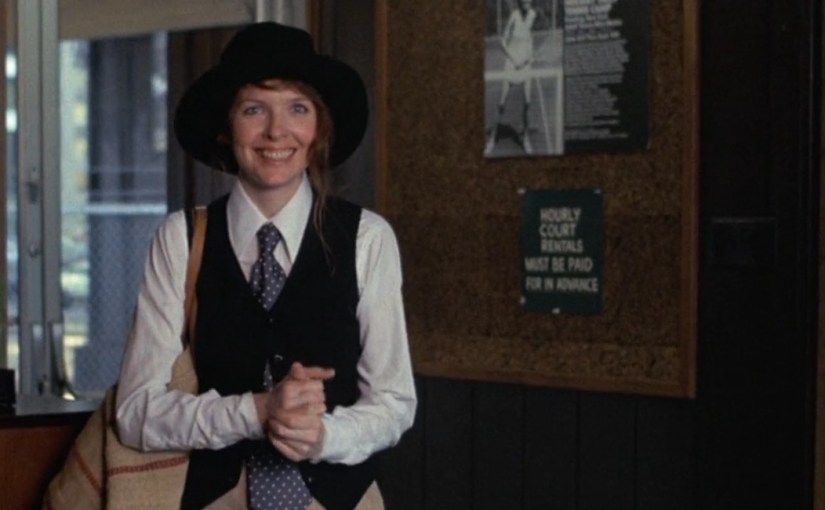
Some of the best comedy comes from watching the suffering of others. One of the best examples of this is Woody Allen’s Best Picture winner Annie Hall. Allen directs and stars in the film, and the suffering his character Alvy Singer endures is by his own mindset. Alvy could never be happy unless he is finding another opportunity to be unhappy. At one point he marries a terrific girl played by Carol Kane. Yet that doesn’t work out. As a child, he finds an allegorical reason to live his life as he does by riding the bumper cars where his father works on Coney Island. Alvy just sees life as one crash after another.

Neurotic doesn’t even begin to describe what Alvy puts himself through. Most especially he becomes insecure with himself as he dates Annie Hall (Diane Keaton, who won her Best Actress Oscar for arguably her best career role). Annie is fun loving and a little flighty. Still, there’s nothing not to love about Annie. She wants to be a singer and Alvy showers her performance with compliments despite a very rough bar crowd. However, when Annie gets reassurance of her talent from others, Alvy is not so encouraging to advance a promising future for Annie.

We see a handful of women that Alvy dates, but most of the ninety minute film focuses on Alvy’s relationship with Annie. Woody Allen penned the script with Marshall Brickman as a loose interpretation of the real life relationship he had with Diane Keaton.

Alvy is a mess. As a child he frustrated his mother with the idea of world ending events yet to come, and thus not much reason to apply himself for a fulfilling life. As an adult, he can’t even wait patiently in a line for a movie because the gentleman standing behind him is aggravatingly wrong on his viewpoint of the films of Marshall McLuhan. The best response to a hilarious scene like this is realized by actually welcoming the real life McLuhan into the frame of the picture to tell off the snobbish jerk standing behind Alvy. I must admit I never heard of Marshall McLuhan myself. Still it’s the idea of running through with a depicted scene like this that’s so dang hilarious. Wouldn’t it be so satisfying to any of us to just have our heroes interrupt a conversation to shamelessly put down our enemies?

That’s what makes Annie Hall a much more special romantic comedy than anything before or thereafter really. Woody Allen breaks the fourth wall at times. He welcomes his adult self into his childhood classroom to debate with his elementary school teachers. Later, he tries to provide a source to his neuroses by bringing both Annie and his best friend Rob (Tony Roberts) into his home to see the relatives Alvy grew up with. These intrusions into scenes of Alvy’s childhood are daringly funny and like nothing I’ve ever seen.

Alvy’s neuroses are so intense that he’ll randomly stop people in the middle of New York to inquire about their sexual experiences. He even unloads his endless dialogue of some of the greatest wit on a horse being ridden by a police officer.

Keaton is perfect for Allen to play against. There’s the hilarious moment of the two of them trying to boil live lobsters. Just between the two of them they are going to be cooking SIX LOBSTERS. Why six? Who cares? The point is to demonstrate a hilariously loving memory at being surrounded by creatures they are both terrified to handle. One lobster even crawls behind the refrigerator and that’s an amusing problem. Annie takes advantage of getting action photos of Alvy with the lobsters. Later in the film, we see that Annie has displayed a collage of this moment on her wall.

Alvy and Annie know they don’t belong together. Yet, it’s hard for them to live without one another too. Annie feels no choice but to call Alvy over at three in the morning to get rid of a spider in her apartment. Alvy obliges without hesitation to leave the bed he’s sharing with his current girlfriend to rush right over to Annie’s aid.

The trying misery they have within themselves is what keeps Annie Hall alive. Interestingly enough is that Allen and Brickman write in a conclusion for the relationship between Alvy and Annie, and show their respective aftermaths. Alvy is a professional stand up comic. Annie dreams of being a singer. What comes of their destinies is refreshing.

I don’t think I could be a close friend to Alvy or Annie. I’d get tired of their ongoing kvetching. That certainly doesn’t mean I don’t like them. I love them actually, and I want them to be happy. Maybe Annie ends up being happy following the events of Annie Hall. For Alvy, I know for sure he’ll be happy so long as he continues to be miserable, and that’s completely fine with me, and I’m certain that’s completely fine with Alvy too.

AVATAR

By Marc S. Sanders

James Cameron is the guy with the ambitious talent, and yet he more often than not has a missing link in his widening imagination. It never surprised me that Titanic was nominated for a slew of Oscars and still the one thing that was not recognized was Cameron’s overly melodramatic screenplay. That shortcoming carries over to Avatar from 2009.

As a naysayer of 3D viewing who is giving you this review, I was initially so impressed with this picture featuring tall blue people with tails and big ears that I saw film twice. Still, I couldn’t get past the simplicity of the story. Avatar is Pocohontas. Avatar is Dances With Wolves. Avatar is Ferngully. (Okay. That last one I only heard from Miguel and his girlfriend Penni. I’d never seen Ferngully.)

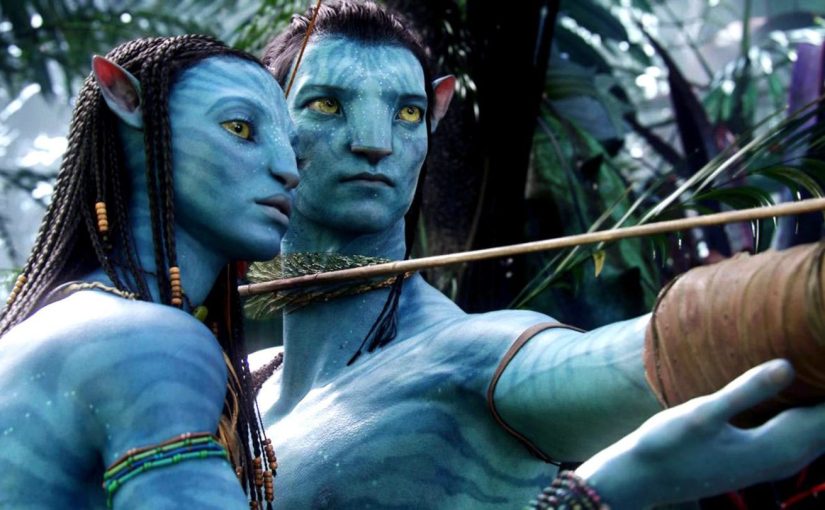
Jake Sully (Sam Worthington) is a Marine now confined to a wheelchair and recruited to replace his deceased soldier brother on a mission to meld his mind with an “avatar” body of a native of the neon jungle planet known as Pandora. The actual Greek meaning of the name Pandora is never considered for any kind of thought provoking significance. Jake is assigned to learn about the natives known as the Na’Vi and expose a tactical weakness in their fighting skills and weaponry. Jake works alongside the scientist known as Grace (Sigourney Weaver) to connect with the people. The evil military corporation led by a mean grunt named Colonel Miles Quaritch (Stephen Lang) is in need of collecting a valuable mineral known as “unobtainium.” Grace’s priority is not the mineral. She’s more concerned with connecting and peacefully studying the people. On Jake’s first tour into the wild, he ends up stranded overnight. Gradually, his mission for the means of the military and corporation dwindle as he bonds with a Na’Vi named Self (Zoe Saldana). Soon, he identifies only with aiding the Na’Vi declaring his will to defend their planet against the greedy humans.

Much of Cameron’s near 3 hour film is a travelogue of the fictional Pandora and the customs and behaviors of the Na’Vi along with the creatures they share the planet with like oversized dog looking animals and winged dragon variations that the natives can ride on their backs. Neon plant life is shown in excess. Rivers and streams as well. Wide open skies too. It’s amazing to look at for sure, but eventually the novelty wears off. More or less, a lot of these trees are just glowing palm trees.

Because the film’s central storyline is so simplistic and familiar it’s not very gripping. When a Na’Vi dies or a precious worship tree tumbles at the behest of the military’s destruction, the Na’Vi wail in their own way. It just didn’t hold me so much because I didn’t feel a connection to the sci fi the film presents. James Cameron can paint a picture like no other. Somehow though, his prints are devoid of much emotion. The dialogue is clunky or cheesy in its nature. Regrettably, this has always been his problem going back to films like The Abyss or even the original Terminator. All BIG IDEAS, but weak development.

Avatar enchanted audiences back in 2009 thanks to its 3D. It was positively immersive and you felt surrounded by the nature of it all. At home, that effect is sorely missing and so you are left dazzled during the film’s exposition, but worn out on its long winded and simple storytelling.

Apparently, James Cameron is filming the next three sequels back to back to back. Three more movies of this? Really? Look, the guy has a great track record and has mostly defied the pessimists over the years when his budgets go through the roof, but I can’t see another nine hours of this material to hold me interested or thirsting for more of either Pandora or what the blue people still have yet to offer.

ALL ABOUT EVE

By Marc S. Sanders

Today’s actresses can lobby and vie to be Wonder Woman or Black Widow or Jane Bond. Yet, what so many filmmakers and actors fail to recall are the powerhouse performances of yesteryear that didn’t require guns and magic lassos. Movies shouldn’t simply be super heroes and villains in spandex and leather. No movie is a better example of this argument than Joseph L Mankiewicz’ 1950 Best Picture winner All About Eve.

This is also the only film in history to have four actresses nominated for acting awards – Bette Davis, Anne Baxter, Celeste Holm and Thelma Ritter. What an accomplishment!!!

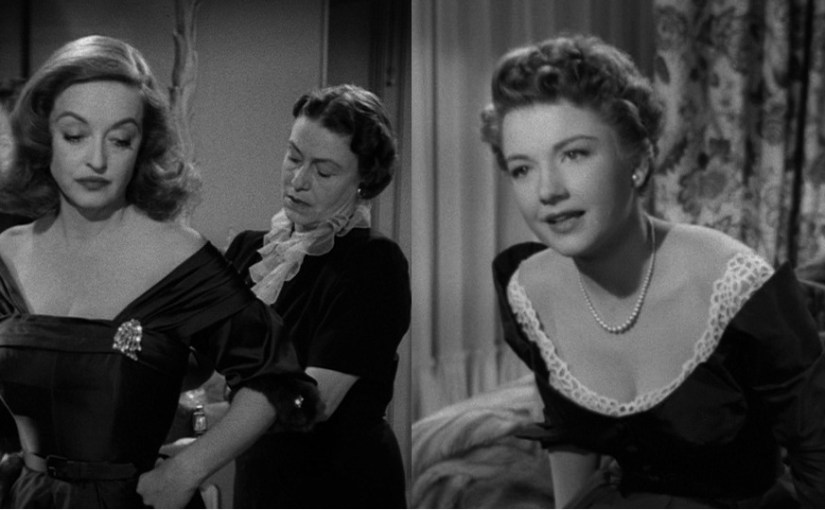
Davis is Broadway legend Margo Channing, a sexy, tough, cigarette smoking broad who grew up and keeps her social life within the limelight. She’s a warrior among the Hollywood and New York elite. When her friend Karen Richards (Holm) welcomes a mousy young girl in a raincoat backstage to meet the famous Miss Channing, it becomes more than just a quick hello. This girl is Eve Harrington who proudly admits to following Margo’s career from San Francisco all the way to Broadway waiting outside the theatre on each performance night for that opportunity to meet the legend in person.

Upon introduction, Eve shares her tragic story of growing up poor and losing her husband in the war. Margo and Karen are taken with Eve, and now the young ingenue has wielded her way into the upper crust life among the pomp and circumstance. Margo’s test of her own celebrity seems to come unexpectedly as it occurs to her and her smarmy personal assistant Birdie (Ritter) that maybe Eve is angling for a way to fill Margo’s big shoes along with her wardrobe and stage costumes.

The elite are intruded upon by this outsider. Karen’s friendship to her playwriting husband Lloyd (Hugh Marlowe) and her friendship to Margo is tested by Eve’s surprising manipulations. As well, Eve is making herself more aware to Margo’s younger lover and stage director Bill (Gary Merrill). Eve also finds ways to build an acting career on the shoulders of these show biz upper class by eventually winning the opportunity to be Margo’s understudy.

The outsider who narrates these developments is the famed theatre critic, Addison DeWitt (a charming and cultured George Sanders who won the Oscar). DeWitt might not get welcomed to every exclusive black tie party in town as he’s “the critic” but that’s fine for it’s how he survives in his career. He’ll recruit a young naive actress like a newcomer played by Marilyn Monroe to maintain a stay within the social circle, and soon he’ll ride along on Eve’s journey for personal gain.

Mankiewicz’ script is brilliantly witty, absolutely biting and sharp. One of the best moments in film belongs to Bette Davis wearing a gorgeous dark evening gown designed by the legendary costumer Edith Head, and used as Margo’s armor ready for social battle. Davis declares “Fasten your seatbelts. It’s going to be a bumpy night.” No line could be so forthright in what to expect of a film like “All About Eve.”

This picture is ranked at the top of many “greatest film” lists. As it should be. This is not a sweeping biographical epic. Rather, it’s a lot of story branches that begin at the introduction of one character and expand in various directions among a handful of others who become disarmed by her ongoing presence. It’s not even that simple as Mankiewicz writes about Eve’s duplicity and how she manages to collide one piece of her destruction with another kind of destruction elsewhere, and the victims are simply blindsided.

Anne Baxter certainly had me fooled as Eve. She’s sweet and innocent on the surface and soon an inner and more evil shell emerges. Bette Davis looks spectacular and delivered one the best female performances of the last hundred years. She can carry herself and keep her guard up and authority in place. There’s a rich and commanding history about Margo that seems easy to believe. She is the queen of Broadway at the film’s beginning. Yet, for a moment her guard is let down and Mankiewicz gives us that window of time for his showcase.

Mankiewicz effectively opens his picture with Eve winning a very exclusive show biz award. She graciously approaches the podium to accept and deliver her speech. However, there are a select handful of individuals who withhold their applause of celebration. Then he flashes back to how we’ve come to this particular moment. It’s a great opening leaving me curious with a bunch of why questions. To watch this sequence the first time leaves you curious. To watch it on a second or third time is to be in on Addison DeWitt’s exclusive story of show biz scheming and diva one-upmanship. I only wonder if Joseph L Mankiewicz was as keen as George Sanders’ character to foresee how much life will come from Eve Harrington’s intrusion upon the lives of Margo & Bill and Karen & Lloyd. Before the age of desperate “if it bleeds, it leads” gossip rags, All About Eve was the real storyteller. 

UNDER THE CHERRY MOON

By Marc S. Sanders

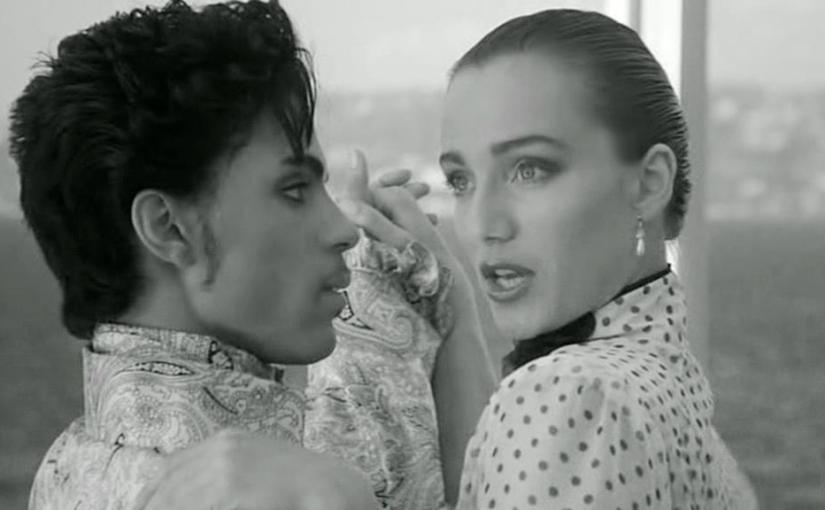
Prince!  The vanity on this guy!!!!!  Watching his second film, Under The Cherry Moon, is to indulge in Prince’s pride, Prince’s ego, Prince’s conceit, Prince’s vanity.  The Purple One, of which I’m an admitted fan of his music, directs his own picture here in beautiful black and white cinematography, compliments of Michael Ballhaus.  That is where the accolades end though.

The film is set along The French Riviera.  Prince never speaks French in the film, nor does anyone else.  So why are we in France again?  He plays a kid named Christopher and along with his best pal, Tricky (musician Jerome Benton) spend their days glorifying Christopher (or Prince as Christopher) and swindling wealthy heiresses as they continue to live a life decadence in outrageous outfits, high heels and a modicum of makeup to especially keep Prince-I’m sorry-Christopher looking gloriously sexy, pretty and handsome.  At night, while putting on music acts in various drinking establishments, they seek out their female prey. 

When Christopher notices Mary (Kristin Scott Thomas, in her feature film debut), he and Tricky go to work.  Somehow Tricky falls instantly in love with Mary.  (I think.  The two hardly have a scene alone together.  Prince monopolizes most of the space.)  Chris plays the “Prince Adonis” with teasing flirtations, ridiculous get ups and so on.  Later, he will fall in love with Mary.  We are supposed to believe Mary falls in love with Chris too.  But let’s come down to reality here, please.  Tricky grows angry and blah blah blah.  You’ve seen this tripe in better fare from the minds of Looney Toons shorts.  A side story character is Mary’s wealthy possessive father, Isaac (Steven Berkoff, playing the same kind of villain he did in Rambo and Beverly Hills Cop).  What do you think he’s here for?  Right!!!!!  He disapproves of Christopher and refuses to let Mary see him.

Beyond the terrible acting of this piece with vomit inducing kissing scenes involving Prince and Thomas, the film is an annoying, pesky love letter from Prince to Prince.  It’d be impossible for me to count how many close ups he does of himself.  Prince is a poet and a brilliant lyricist as well.  However, the script is littered with expressions and slang that feels like they popped into Prince’s head at one time or another.  He must have jotted it down on napkins, and then he passed it all on to the credited screenwriter, Becky Johnston,  instructing her to work this stuff into the dialogue.  Things are uttered out of nowhere, for no reason.  Conversations don’t make sense at times.  Certain words feel like the have a good rhyme.  So, make it work Becky! Mmmkay!

On other occasions, Prince and Kristin Scott Thomas will share scenes together just sitting there with nothing to say, as if it is a director’s (Prince’s) own artistic choice.  Prince is no Terrance Malick.  The gaze and the pose (of Prince!) says it all.  Calvin Klein commercials have more depth.  A phone call scene between the two goes on for a good three minutes.  They never speak into the phone.  They just hold it to their ears.  The edit goes back and forth on them and again…they don’t speak!  Prince makes it exciting by chewing on a cracker.  In another film, this would’ve been cutting room floor material.  You would think this is behind the scenes stuff and the actors were waiting for the sticks to snap and “Action!” to be called out.

Samples of Prince’s music are peppered throughout the movie.  The sounds are good for the most part, but that’s all they are.  Just random sounds.  Most of the music is not complete and seem like samples that were experimented on in a kid’s garage.  The music does not cue up anything.  None of it heightens any developments or drama or comedy.  At times the tunes will obnoxiously interrupt a scene, much like a mariachi band may intrude on an intimate dinner at a quiet restaurant.  Prince loves his music though.  So, he wakes up and tells his film/sound editors to put this and this and this into the film.  Context man.  Context!!!!!!!  What about the context?????

Under The Cherry Moon is an immature film, made by an immature filmmaker with a very mature photographer (Ballhaus).  It’s tripe of the most shamelessly vain kind.  It’s been three days since I saw the picture, and I have yet to think of another film more ridiculously conceited and egotistical.  My Cinephile colleague, Anthony, is a proud Prince fan.  He has a wealth of knowledge on the famed musician.  He’s learned to be forgiving of this film’s shortcomings.  I assured him when we sat down to watch this that I was going in with an open mind, especially when the gorgeous black and white shows up on the screen.  When the movie was over, however, I explained that this might have become something with an admirable B movie cult following, had Prince at least agreed to welcome another director to oversee the picture.  Someone needed to be watching the one in charge and humble the poor guy because if I want to look at various captions of Prince, all I need to do is lay out his album covers on my bed and pick up a Rolling Stone magazine.  I did not have to subject myself to Under The Cherry Moon.