
by Miguel E. Rodriguez
DIRECTOR: Robert Eggers
CAST: Lily-Rose Depp, Nicholas Hoult, Bill Skarsgård, Aaron Taylor-Johnson, Willem Dafoe
MY RATING: 8/10
ROTTEN TOMATOMETER: 85% Certified Fresh
PLOT: The true OG vampire movie gets a fresh coat of paint in this gothic tale of obsession between a haunted young woman and the terrifying vampire infatuated with her.
Allow me to begin, as so many great films do, with a couple of flashbacks.
2018: The indie band Weezer records and releases their polarizing cover of Toto’s stone-cold classic “Africa.” While recorded and produced with all the modern techniques at their disposal, fans of both bands say, correctly, that this new version is virtually identical to the original…so what was the point? Couldn’t they have put some kind of new spin on it, like (for better or worse) UB40 and their cover of “Can’t Help Falling in Love”? Why bother?
1991: Orion Pictures releases The Silence of the Lambs, an adaptation of Thomas Harris’s terrifying psychological thriller. It goes on to win the coveted “Big Five” at the Oscars: Best Picture, Director, Actor, Actress, and Screenplay (Adapted). Having devoured the book during one summer vacation, I go to a screening expecting to be wowed. But…because the filmmakers stuck SO closely to the book (with some minor exceptions), there is little to no suspense for me. While I am genuinely floored by how well-made and well-acted the film is, I do not experience any of the thrills and chills felt by those viewers who had NOT read the book. I knew ahead of time what they would find in the corpse’s throat in the funeral parlor, how Lecter would escape from the courthouse, and how Starling would stumble upon Buffalo Bill’s house. Don’t get me wrong, it’s a stellar movie. But it was never truly scary for me.
Which brings me to Robert Eggers’s long-gestating remake of THE original vampire movie, Nosferatu. Based on the immortal silent classic of the same name from 1922, directed by F.W. Murnau, the story will be familiar to any serious film/horror buffs, especially since Murnau “borrowed” liberally from Bram Stoker’s novel, Dracula, without first obtaining legal permission from Stoker’s estate. How liberally? Here’s a quote from IMDb: “All known prints and negatives were destroyed under the terms of settlement of a lawsuit by Bram Stoker’s widow.” The only way the film survived was via 2nd-generation copies from other countries around the world. Plagiarism? Or homage? I would normally say here, “You be the judge,” but the courts seem to have answered that question pretty definitively.
I mention this because every version of the Dracula mythology, starting with Nosferatu all the way through the semi-campy Hammer films to Coppola’s famous “low-tech” version and beyond – all of them tell the same story with only minor changes. Consequently, the thing I look for in those films is not WHAT they’re telling me, but HOW they’re telling it. Any student of pop culture knows Bruce Wayne’s origin story, so Batman Begins [2005] holds no surprises there, but the story is told extremely well, and so you roll with it, you know what I mean?
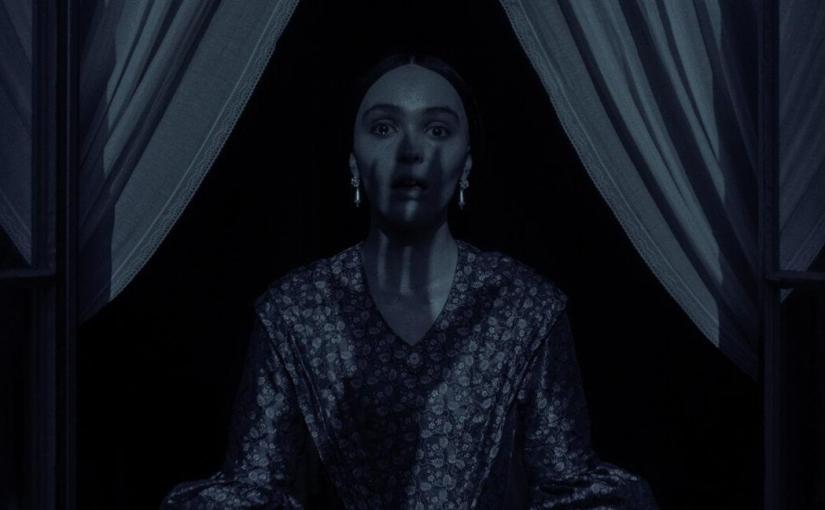
With Eggers’s Nosferatu, the production values on display are magnificent. Eggers gets the mood and tone of a genuinely gothic horror story exactly right, as I knew he would, based on his previous films, especially The VVitch [2015]. The colors are muted to recreate the vibe of a black-and-white film, which paradoxically makes some of the scarier scenes even scarier. The performances all around are top notch. Poor Nicholas Hoult is saddled with the thankless Thomas Hutter role, stuck in straight-man mode the entire film; but Lily-Rose Depp had me thunderstruck with her performance as Ellen, Thomas’s wife, and the dependable Bill Skarsgård delivers the goods as Count Orlok, with a proper Transylvanian moustache (right out of the history books, haters) and an accent thick enough to tar ten miles of a country road with.
But let’s think about this for a second. Those of you unfamiliar with the story of Nosferatu might be thinking to yourselves, “Who’s Thomas Hutter? Who’s Ellen? Don’t you mean Jonathan Harker and Mina?” Well, naturally, those are the names the vast majority of filmgoers are going to be familiar with, not Thomas and Ellen and Count Orlok (which for my money is a much creepier name than “Dracula,” but I digress).
And therein lies part of the problem with this film. I was so thoroughly familiar with the Dracula story that, even though this new film is a wonder to behold, it held very little suspense for me, since I knew exactly what was going to happen next, beat for beat. There are, of course, cosmetic differences here and there: Thomas’s visit to a Romani village before he arrives at Orlok’s castle…Orlok’s straight-up possessions of Ellen…the highly effective jump-scares with the dogs here and there. But I’ve seen it all before, MANY times.
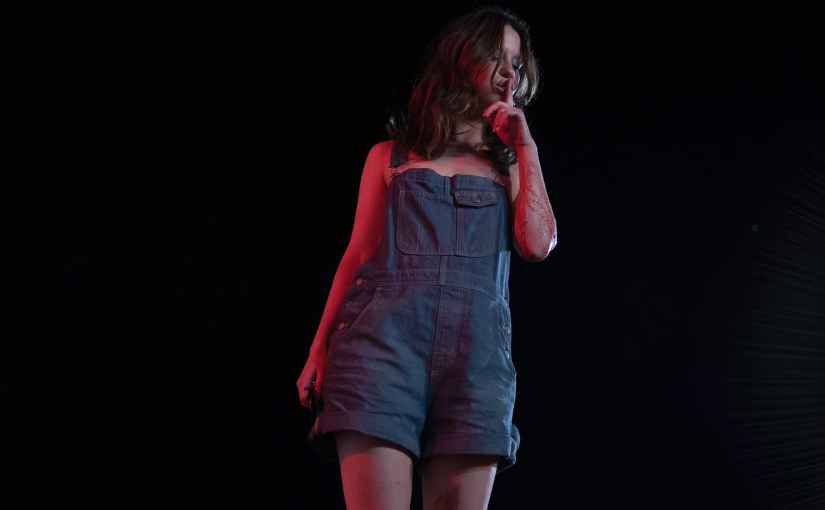
(By contrast, I just recently watched one of the greatest slasher movies I’ve ever seen, X [2022], and it has virtually every slasher-movie-trope imaginable, and yet it somehow managed to transcend its own genre and become some kind of crazy masterpiece.)
In fact, in a very unexpected twist, there actually were two genuinely scary/creepy moments for me, and neither of them featured Count Orlok himself, at least not in the flesh. They both involved Ellen, Thomas’s new wife, who becomes literally possessed by Orlok’s influence in scenes that legitimately give The Exorcist [1973] a run for its money. Ellen thrashes about, rolls her eyes into the back of her head, speaks in an unnaturally guttural croak, bends backwards impossibly far – is Lily-Rose Depp a contortionist on the side? – and generally scares the bejeezus out of her husband and the audience. On the strength of these two scenes alone, in addition to the general excellence of filmmaking craft on display, I would have no hesitation in recommending Nosferatu to moviegoers.
So, yes, despite my disappointments at the story level, given there were virtually no surprises plot-wise, I still give the movie a favorable rating just because it’s so well made. If it had been created in a vacuum, if there had never been a vampire movie before this one, I believe I would have been creeped out to a much greater degree than I was, and this would have been hailed as an instant masterpiece. But it is darkly beautiful to look at and wonderfully moody; there are many shots that are very nearly duplicates of shots from the original, which I enjoyed on a film-geek level. I look forward to Robert Eggers tackling purely original material again. He knows what he’s doing.
 2 UNPAID MOVIE CRITICS!!!!