FLOW (Latvia, 2024)

by Miguel E. Rodriguez

DIRECTOR: Gints Zilbalodis
MY RATING: 10/10
ROTTEN TOMATOMETER: 97% Certified Fresh

PLOT: Somewhere deep in a forest wilderness, a solitary Cat barely survives a cataclysmic flood by clambering into a boat with an assortment of other animals; their survival will depend on their ability to help each other.


Nearly twenty-five years ago, Disney released an animated film called Dinosaur [2000] that was touted as being an industry game-changer.  The premise was revealed in a stunning, epic-length teaser trailer that fired my imagination.  Some of you may remember it.  Using state-of-the-art CG animation, and with no spoken dialogue, we watched as a dinosaur egg on prehistoric Earth was flipped out of its nest, carried away by scavengers, dropped into a river, swallowed and regurgitated by a fish, then plucked out of the water by a pterodactyl that soared over magnificent real-world vistas and plains before being dropped accidentally into a jungle canopy where the egg was discovered by a family of, I think, prehistoric lemurs.  A reminder: all with no spoken dialogue.

I remember thinking, wow, Disney is going to attempt the impossible: create a feature-length animated movie with no spoken words.  I was stoked.  What an experiment!  Hasn’t been done since Fantasia [1940]! And if anyone can pull it off, it’ll be Disney, right?  Imagine my disappointment when I went to see the movie, the opening scene plays out exactly as shown in the teaser, the lemurs peek through the foliage at the fallen egg, and one of the lemurs opens its mouth…and talks.  Not just human speech, but with a New York-Brooklyn-esque accent that almost sounded like Bugs Bunny.  Dreams shattered.

I mention that story because Flow, the recent winner of the Golden Globe for Best Animated Motion Picture, promised the same thing in its trailer: an animated film without words, starring only animals on a perilous journey.  I was skeptical.

Until I watched the movie today.  Not only does it deliver on its promise (making Dinosaur look shallow and childish by comparison), it sets some kind of crazy bar for mystical, awe-inspiring visuals that I would put on the same level as Avatar [2009] or Dune [2021].  Yes.  They’re that good.  And, according to IMDb, it was all created using only Blender, a free, open-source animation software tool.  Flow is a remarkable accomplishment.

The story opens with Cat wandering a forest.  None of the animals are named, of course, nor were they named by the animators.  They were all referred to simply by their species or breed: Cat, Whale, Bird, etc.  After being chased by some dogs, including a friendly Retriever, Cat curls up in the top floor of an abandoned, expensive-looking forest cabin with nary a human in sight.  Where are all the people?  No answer is given.

With ominous abruptness, a cataclysmic flood sweeps through the forest, leaving Cat and Retriever stranded at the cabin as the waters steadily rise.  Retriever hops into a passing rowboat occupied by the other dogs from an earlier scene, but Cat understandably passes on this opportunity and eventually finds itself sharing a second boat occupied by a grunting, monosyllabic Capybara.

…but this simple plot summary doesn’t begin to do justice to the experience of simply watching this film.  I am super glad I saw it on the big screen first, 3rd row back, so the screen filled my field of view.  The whole movie reminded me of the best oceanic scenes in Finding Nemo [2003], crammed with detail, lavishly rendered, so that you sort of fall into the world.  There are hints to indicate that the forest and the lands beyond, now flooded, were once populated by humans, but they have all disappeared.  Statues of animals.  Top floors of houses still untouched by water, but not for long.  And, on a distant hilltop, a massive statue of a cat, on which Cat must find refuge at one point.

The look of the film is something I’m not going to be able to describe very well.  Partnered with the smooth CG animation itself, the main animal characters nevertheless have a hand-painted quality to their coats and fur.  The virtual camera moves as if being held by a real cameraman, reminiscent of the best scenes in the first Avatar.  There is a magical, spiritual sequence towards the end of the film (you’ll know the one I mean) that took my breath away and rivals anything from Pixar or Studio Ghibli.  I may not know precisely what it means, but to be honest, I didn’t care then, and I don’t care now.  I just know that it is a spectacular scene.  There are subtle hints that this world may not even be Earth as we know it, or when we know it.  Mystery abounds!  I love it.

I must give special mention to the animation of the lead character.  Cat has moments of cat behavior so specific and real that, even if you’re not a cat person or watched umpteen cat videos on YouTube, you will recognize it as being 100% authentic.  For that matter, the same could be said of all the animals in the film.  I must be honest and report that there are times when, viewed through a lens of “is-this-realistic”, the animals behave in a way that does not compute with reality.  I highly doubt a capybara would be able to figure out how to work the rudder of a sailboat…and yet, in this movie, it does, and it’s fine.

Which brings me to the one problem I can imagine some folks might have with the film: the ending.  I can’t tell if the right descriptor is “elliptical” or “open-ended” or “inconclusive.”  Perhaps it’s a plea from the filmmakers for cooperation and teamwork in an age where uncontrollable outside forces are doing their best to prevent it; like these animals, we’re all in the same boat.  Or maybe that’s not the message.  The beauty of Flow is that the ending is subject to interpretation, thanks to the lack of dialogue simply telling us what it means.

Frankly, I’m not too fussed about extracting the message from Flow.  I am too grateful that a film like this even exists to lose sleep over its Deeper Meaning.  It is a film constructed out of wondrous sights that harken back to the days of Pinocchio and Fantasia [both 1940], when animators and filmmakers gave equal weight to story and visuals, and it’s one of the best animated films I’ve ever seen.

CARMEN JONES (1954)

by Miguel E. Rodriguez

DIRECTOR: Otto Preminger
CAST: Harry Belafonte, Dorothy Dandridge, Pearl Bailey, Brock Peters, Diahann Carroll
MY RATING: 8/10
ROTTEN TOMATOMETER: 75% Fresh

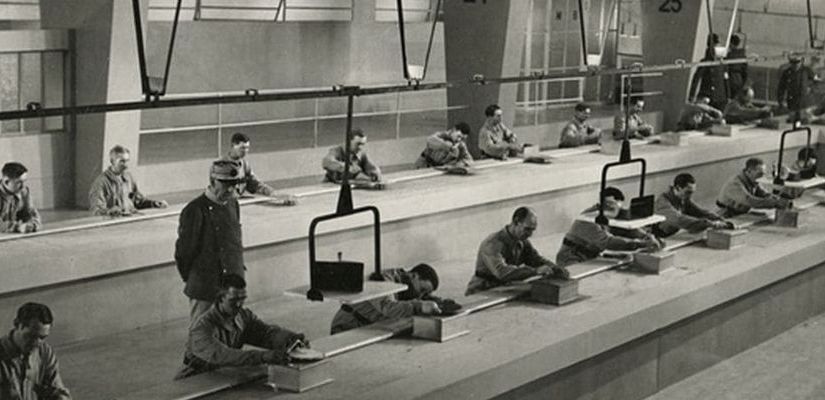
PLOT: The Bizet opera Carmen is translated into a modern-day story (with an all-black cast) of a sultry parachute factory worker and a GI who is about to go to flying school during World War II.


Otto Preminger’s Carmen Jones will be (or OUGHT to be) remembered for many things, but the thing I will remember it for the most is the dynamic presence of the sexy, sultry Dorothy Dandridge in the titular role.  She may not have done her own singing – nearly all the major characters’ singing voices were dubbed by opera singers – but, by God, she knew how to own a role.  In the first five minutes, she steals the movie lock, stock, and barrel when she performs that first aria in the mess hall.  It’s like watching a Marilyn Monroe film: everything around her pales in comparison to her sheer magnetism, although with Dandridge (at least with the character of Carmen), you can see an intelligence behind the sexiness.  Dandridge thoroughly deserved her Oscar nomination.  A quick Google check shows she had some stiff competition that year: Grace Kelly, Judy Garland, Audrey Hepburn, and Jane Wyman…although how Kelly pulled out a win over Dandridge AND Garland will forever remain a mystery to me.

ANYWAY.

In this modern retelling, Carmen Jones is a factory worker during World War II, making parachutes for the war effort.  During the opening aria, she sets her sights on Joe (Harry Belafonte), a naïve GI in love with a country girl, Cindy Lou, from his hometown.  If I’m being completely honest, nothing in the film matches the simmering sexual energy of this opening number.  Carmen slinks from table to table in the mess hall, modestly dressed, but with complete knowledge of exactly how to work with what’s available.  She flirts shamelessly with Joe, right in front of Cindy Lou.

Later, Carmen gets in a knock-down, drag-out catfight with Frankie (Pearl Bailey, the only principal actor whose singing voice WASN’T overdubbed) and is arrested by the MPs.  Joe, who was just about to elope with Cindy Lou, is ordered to drive Carmen to a town some 50 miles away, since the Army can’t put civilians in jail.  This sets up another opportunity for Carmen to flirt with Joe, as she does everything but unbutton his pants during their drive.  The more he resists, the more she wants him.

…but I don’t want to simply summarize the plot, which was a mystery to me since I have never seen a production of Carmen.  (The ending is mildly pre-ordained, because, hello, it’s an opera.)  I want to express my admiration of this film, particularly for its ambition.  I’m no film scholar, but I’m prepared to bet that in 1954, there weren’t an awful lot of big studio films being directed by A-list directors featuring an all-black cast.  The fact this film exists at all is, I think, a minor miracle.  I won’t attempt to put words in the mouth of anyone in the black community, but at that time in cinematic and American history, I have to believe this was seen as a giant leap forward, AND a giant risk.  (There is probably MUCH more to this story, but I do not want to turn this article into a research paper.)

Otto Preminger’s directing style in Carmen Jones also deserves recognition.  A factoid on IMDb trivia states: “This film contains just 169 shots in 103 minutes of action. This equates to an average shot length of about 36 seconds, which is very high, given the 8-10 seconds standard of most Hollywood films made during the 1950s.”  This is important because those longer shots create, in many places, an illusion of watching a stage performance.  For instance, if I remember correctly, that opening aria that I keep going on about – Dandridge is SMOKING – runs for about 4-5 minutes and has only three total shots.  Towards the middle of the film, there’s an astonishingly long take that travels from a bar across the room to a table, following a group of five people, all singing simultaneously at multiple points.  The shot lasts just under five minutes, but it feels much longer.  It’s a brilliant piece of work.

The tragic arc of Carmen Jones may seem inevitable, as I said before, but it remains an entertaining watch.  You can see the dominos falling, and you bemoan the choices Joe makes as he falls under Carmen’s spell, but I mean, LOOK at her.  There’s a scene that I’m sure would bear the Tarantino stamp of approval as Carmen paints her toenails and coyly asks Joe to blow on them for her so they can dry faster.  Dayum.  Show me a straight man who wouldn’t fall for that kind of treatment from a woman who looks like Dorothy Dandridge and I’ll show you a dead man.

If I wanted, I could get nitpicky about Carmen Jones.  Has it aged well?  Not exactly.  Does it feature great acting aside from Dandridge?  Not exactly.  Does it look natural to hear an operatic tenor burst forth from Harry Belafonte’s mouth?  Not exactly.  But Carmen Jones is a landmark of black cinema in an era when schools and government buildings still had segregated water fountains and restrooms.  Based on that fact alone, I consider Carmen Jones to be a vital step in Hollywood’s painfully slow racial evolution. (It is also a painful reminder of a career that might have been; Dandridge died 11 years later at only 42.)

MONTE WALSH (1970)

by Miguel E. Rodriguez

DIRECTOR: William A. Fraker
CAST: Lee Marvin, Jeanne Moreau, Jack Palance, Mitchell Ryan
MY RATING: 7/10
ROTTEN TOMATOMETER: 89% Fresh

PLOT: An aging cowboy realizes that the West he knew and loved will soon be no more – and that there will be no room for him, either.


Based on this film, Monte Walsh, and the other two films he directed, A Reflection of Fear [1972] and The Legend of the Lone Ranger [1981], I think it would be charitable to say that William A. Fraker’s best films are the ones where he served instead as director of photography, such as Bullitt [1968], WarGames [1983], and Tombstone [1993], among many other notable movies.  Am I saying Monte Walsh is a bad film?  No, but it’s certainly not as bad as Gene Siskel’s 1-star rating, nor is it as stellar as Roger Ebert’s 4-star rating.  I give it a 7-out-of-10 on my scale because of the way the second half of the film builds and builds so that the outbursts of violence feel earned and motivated instead of cliched.

Monte Walsh (Lee Marvin, grizzled as ever, even with a handlebar moustache) and his friend and partner, Chet (Jack Palance in a rare non-villainous role), come down off a mountainside after a rough winter keeping watch on Mr. Brennan’s herd of cattle, only to get news that Brennan’s ranch has been purchased by a corporate entity, Consolidated Cattle.  Brennan offers them a steady job, which they reluctantly take, but deep inside they know this means their prairie-roaming way of life is coming to an end.  Chet is prepared to accept this, but Monte chafes at the idea.  “I ain’t doing nothing I can’t do from a horse,” he warns Brennan.

We get entertaining glimpses of the ranch hand life, complete with the saloon fights and the stinky cook.  Monte dallies with a French madame, Martine (played by the exotic Jeanne Moreau).  At one point, Monte and Chet ride out and meet a weathered old ranch hand who is “riding fence,” or inspecting every foot of fence around the ranch for repairs…the only work he’s cut out for anymore.  “Looks like his life is over with,” they say, and you can tell they’re looking into their own future.

The thrust of the film is one I’ve seen in many other westerns before this one: “The old West is changing, and there’s no place in it for people like us anymore, so we’d better evolve or die.”  This theme is present in Once Upon a Time in the West [1968], Butch Cassidy and the Sundance Kid [1969], and especially The Wild Bunch [also 1969]…seemed to be a trend for westerns at the turn of the decade, for some reason.  Monte Walsh handles it in an episodic format, kind of like another Lee Marvin film, The Big Red One [1980].  It doesn’t quite tell a straightforward plot with a pre-determined story arc.  It skips around a little bit, painting a picture without telling a conventional story.

There can be a sense of freedom in this kind of storytelling.  Unshackled by traditional story beats – at least for the first half – the movie is laid back, asking the viewer for a little patience as it slowly lays down building blocks for the finale.  However, I must report that I found this section of the movie a little slow.  I grew impatient.  I felt I was being set up for something, but pretty soon I just wanted the movie to get on with it.  Butch Cassidy sort of works that way, but you had two of the most photogenic stars who ever lived as the two leads.  I struggled to care the same way for Jack Palance as I did for Paul Newman.

But then an unexpected scene of violence occurs, setting into motion a series of events that culminate in a tragic series of deaths that, I must admit, had me glued to the screen as they unfolded.  Because of the gangbusters nature of this section, I am inclined to forgive the film’s shortcomings in its first half.  Here, we see, yes, Monte must evolve or die, and even if it’s never in any real doubt what he will choose, it’s entertaining to watch him make that choice.

If not for the second half of the picture, I might not even be writing about Monte Walsh.  I didn’t care for the opening song (even if it WAS sung by Mama Cass), some of the movie felt ripped off from several other westerns, and I was borderline bored for the first half.  But if you stick with Monte Walsh until the end, I think you’ll agree it’s worth a look.