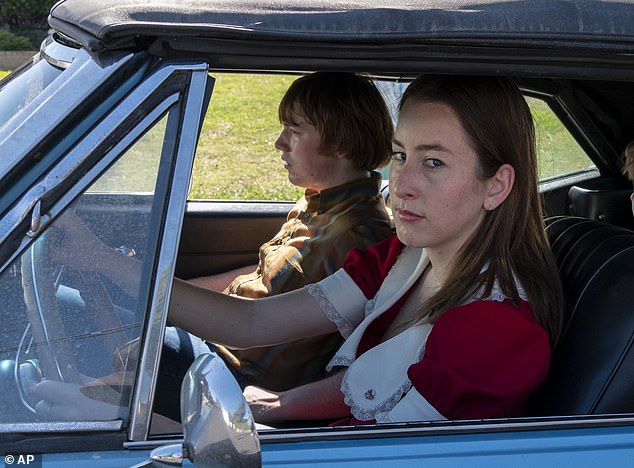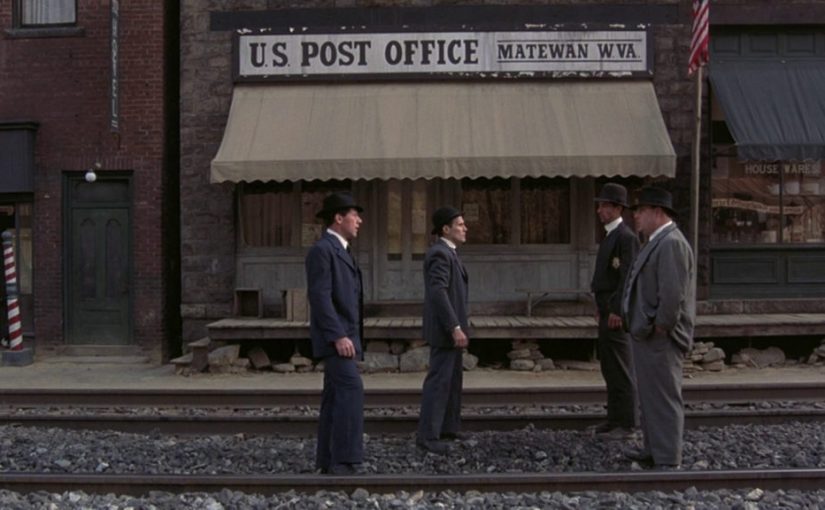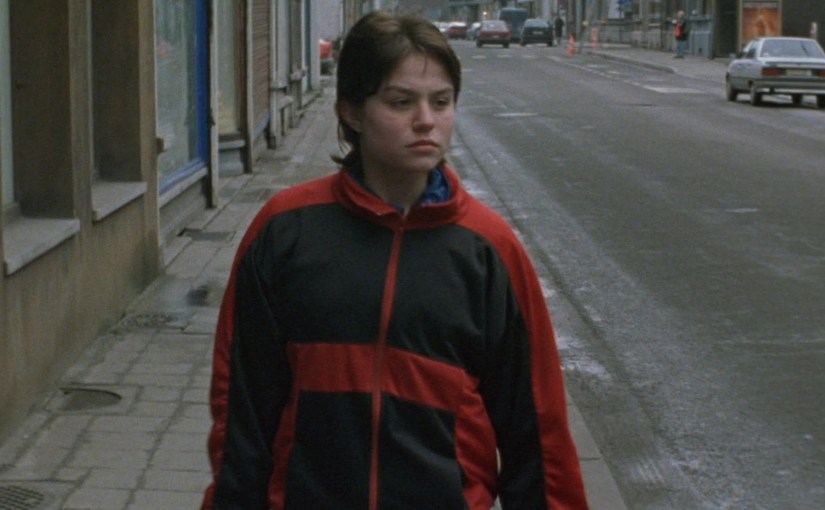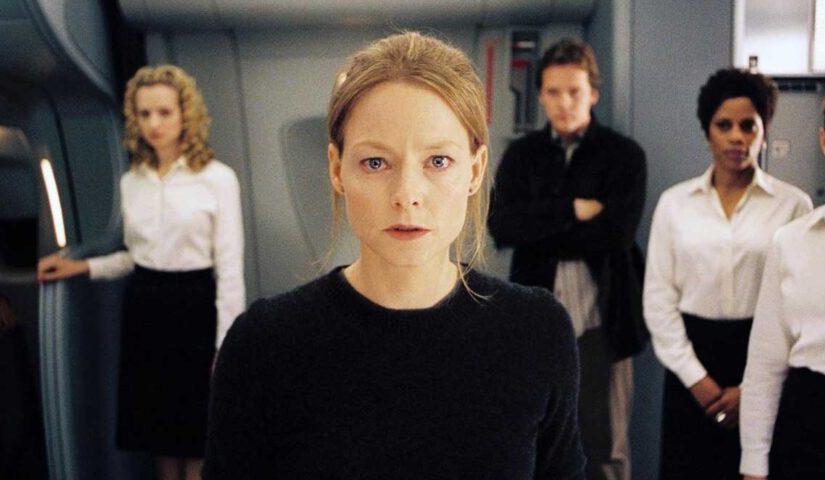
MIDNIGHT SPECIAL (2016)

by Miguel E. Rodriguez

Director: Jeff Nichols
Cast: Michael Shannon, Joel Edgerton, Kirsten Dunst, Adam Driver, Sam Shepard
My Rating: 10/10
Rotten Tomatometer: 83% Certified Fresh

PLOT: Two men go on the run with a child in tow, pursued by federal agents and by members of a cult who believe the child has special powers.


The general concept of “mystery” in a film is a subtle art.  Not enough mystery, and people will say they’ve seen it all before.  Too much mystery, and people will wonder why they’ve spent good money to be confused for two hours.

Every now and then, though, a movie comes along that shows everyone else how it’s done.  It manages to plunge the viewer headlong into the story with little to no exposition, provides just enough clues to keep things intriguing without giving the game away, and supplies a climax that is not just satisfying, but revelatory.  Prometheus is one of those movies.  So is Freaks (2018).

And so is Midnight Special, from director and screenwriter Jeff Nichols (Take Shelter, Mud).

This movie grabs you right from the opening minutes.  Two men appear to be holed up in a hotel room with a young boy wearing blue swim goggles.  Cardboard and duct tape cover the windows.  A news broadcast on the TV reports on the young boy’s kidnapping.  However, he does not appear to be distressed in any way.  One of the men may or may not be his father.  He goes willingly when they vacate the room and hit the road.

In another part of the country, a pastor watches the same newscast with concern.  He later leads a church service, but the scripture reading consists of non-sequiturs and random numbers.  The FBI interrupts the service and hauls each and every church member in for questioning about the missing boy.

What the deuce is going on here?  How is this church connected to the boy?  Where are the two men taking the boy?  What’s with the blue goggles?  What is so important about this boy that the two men with him would be willing to kill for him?

These are all very good questions.  Whenever the movie takes the time to answer one of the questions, two more spring up in its place.  And I may as well tell you now: not every question will get an answer.  But instead of feeling frustrated, I just got more and more involved in the film.  I felt like I was an active participant in figuring out the story, along with the characters.  There’s nothing quite like feeling involved in a movie, rather than simply watching a movie.

When the revelations arrive about where the men are headed with the boy, why they’re headed there, and why the FBI is interested, I’m not gonna lie, I was gobsmacked.  In retrospect, I suppose I should have seen some of the plot points coming a mile away.  But that’s the beauty of the screenplay and the direction.  I wasn’t interested in trying to second guess what surprises were in store.  As a result, when the surprises arrived, I was constantly in a state of jaw-dropping amazement.

I would also like to point out the great restraint used by the filmmakers when it came to the few scenes that required CGI enhancement.  There are a hundred ways these scenes could have gone wrong, resulting in a shot that completely takes you out of the movie.  They avoided all those pitfalls and instead created scenes of startling beauty, even when things seem to be going wrong…or when they at last go right.

This is a movie that deserves to be seen with as clean a slate as possible.  It didn’t exactly make a dent in the pop-culture zeitgeist, so it’s not likely you’ll see any spoilers on the internet without Googling the movie, but why would you want to do that?  Keep an open mind, don’t ask how it ends, and find a way to see this movie.  You won’t be disappointed.

LOOK WHO’S BACK (2015, Germany)

by Miguel E. Rodriguez

Director: David Wnendt
Cast: Oliver Masucci, Fabian Busch, Christoph Maria Herbst
My Rating: 10/10
Rotten Tomatometer: No score [never released in the U.S.]

PLOT: Without a single word of explanation, Adolf Hitler materializes in modern-day Berlin and, thanks to an unscrupulous TV station, begins to once again take the world by storm.


In the comedy documentary The Aristocrats, scores of comedians tell different versions of the same hilariously dirty joke.  In one scene, the staff of the parody website The Onion gets together in a room and tries to construct the perfect Aristocrats joke by combining every known shocking and taboo subject into their version.  Nothing is off the table: religion, politics, graphic sexual acts, nothing.  We never hear their version of the joke, but their discussion is hilarious by itself.  Look Who’s Talking, a shocking comedy from Germany, feels like someone took all the notes from that meeting, pulled out all the Hitler material, and put it all in this one movie.

…this has happened to me before.  I started a review of this movie earlier this week and abandoned it after I realized I had written over 1,500 words of mostly summaries of the action and plot.

I think the reason is because the plot and the comedy in Look Who’s Back are so outrageous and shocking that I felt I HAD to give context to my reactions.  And the only way to do that was to summarize this scene and that scene and the next.

I simply am unable to put my feelings about this movie into words, at least none that would do justice to this stunning, effective, supremely disturbing satire.

The story: For reasons that are never explained, Adolf Hitler materializes in modern-day Berlin…well, Berlin in October, 2014.  After some initial confusion, he marches to the Brandenburg Gate and tries to get some answers from the crowds of people regarding his situation.  No one will answer his questions…but a bunch of people take a second for a quick selfie with this crackpot in a Hitler costume.

At first, Hitler concerns himself with short-term goals.  After befriending a newsstand vendor, he is informed that he smells.  He needs to get his uniform laundered.  And if you don’t think the sight of Adolf Hitler trying to communicate with a laundromat clerk, who doesn’t speak German very well, about when he can pick up his dry cleaning is hysterical, this movie may not be for you.

The story expands.  A TV producer on the skids at work discovers Hitler at the newsstand and convinces his bosses to allow him to take Hitler on a road trip across Germany.  (They’re convinced because a short video of him railing against German politics has gotten a TON of views on social media.)  Then he lands a spot on a live TV show, and things REALLY start to snowball.  He writes a book.  The book is optioned for a movie.  And so on.

I assure you, this is just the bare bones of the story.  I haven’t even gotten into the innumerable scenes that made me laugh like a hyena on acid.  But I can’t describe those scenes in detail, because I don’t want to get banned from the internet.

Here is a list of the scenes that struck me as the funniest or the most disturbing.  Usually both at the same time.

  • The dog.
  • The discussion about rap music.
  • The “hand puppet.”
  • Hitler drawing sketches (badly) in a public square to earn some money.
  • The TV host in blackface.
  • The scene at the soccer stadium.
  • When Hitler visits a pro-Nazi demonstration.
  • When Hitler compares the TV network manager to Leni Reifenstahl

…and on and on and on.

The true horror/comedy of the movie comes when you realize that, for the VAST majority of scenes where Hitler interacts with people on the street, those are real people having real reactions, not actors. The things that come out of the mouths of some of these people is beyond belief. One guy tells Hitler point blank that he had the right idea about concentration camps. A shop vendor says he had the right ideas about how to run the country economically, and she’d support him if he ran for office. All on camera.

There are other genuine laughs, to be sure. The sequence where Hitler discovers the internet for the first time is worth the rental/streaming fee. But by the time the movie is over, I was left with a distinct feeling of unease. The movie depicted the sinister way in which someone with extreme views can manipulate popular opinion and catapult themselves into a position of power. And it’s not so hard to imagine what it must have been like in the 1930s when Hitler did it all the first time.

The film closes with Hitler being driven down a public street in a convertible, saluting random people as they go by. Most people are shocked. A lot of them flip Hitler the bird. But there are some who give the Nazi salute as he drives by. Are they joking?

This is one of the most effective, provocative satires ever made, and it was never released in the U.S. due to the controversial nature of some of its funniest scenes. If you can stream this somewhere, you won’t regret it. Then ask yourself: could it happen this easily today? This movie provides its own answer. Compare and discuss.

THE BABADOOK (2014)

by Miguel E. Rodriguez

Director: Jennifer Kent
Cast: Essie Davis, Noah Wiseman
My Rating: 10/10
Rotten Tomatometer: 98% Certified Fresh

PLOT: A widowed mother and her precocious but troubled young son experience some strange goings-on at home after reading a disturbing pop-up book about a malevolent spirit called The Babadook.


All due respect to the classics of the ‘70s and ‘80s, but some of the greatest and scariest horror movies have been released in the 21st century.  Paranormal Activity, The Descent, Hereditary, A Quiet Place, The Cell, It, and many, many others, including, of course, The Babadook.

However, The Babadook stands out because, not only does it achieve its scares with an ingenious less-is-more approach, but it’s actually about something.  Only the best horror films can say that.  And it’s not about some corny love-conquers-all theme.  It’s very specifically about people who have experienced a great personal loss, what that loss does to those people, and how a healing process can hopefully begin.

Amelia (Essie Davis) is a struggling single mother who was widowed on the day her son, Samuel (Noah Wiseman), was born.  Samuel is now six.  He loves his mother, but he does a lot of acting out…the kind of acting out that earns judgmental stares from other parents.  He builds crude but working weapons, including a catapult he can wear on his back.  (Assuming he lives to see college, this kid’s going to be an engineer.)

Amelia appears to be hovering on the edge of a breakdown.  She loves Samuel, but she’s painfully aware that his behavior, and her inability to control it, is causing problems at school and with other family and friends.

One night, he chooses a book to read as a bedtime story.  Amelia doesn’t recognize the book – where did it come from?  It’s a pop-up book about a nightmarish creature called The Babadook.  (For the record, the last syllable of “babadook” rhymes with “book.”)  In the annals of film history, few books are creepier and more disturbing than this freaking book.  I want one.

After reading the book, the mother starts hearing noises in the house.  Sam believes The Babadook is real.  He has nightmares.  Amelia tears the book to pieces and throws it in the garbage outside.  The next morning, there’s a knock at the door…and the book is sitting on her doorstep.  The pages have been re-assembled and pasted together…except now there are new passages at the end that include some troubling visuals of her, her son, and their dog.

Even without the subtext I mentioned earlier, this is some seriously scary s**t.  If the movie had been stripped of all its intelligence and insight, this would still be a horror classic.

The performance by Essie Davis as Amelia is as horrifying and memorable as Jack Nicholson’s in The Shining.  She’s that good.  She convincingly portrays a woman slowly descending into madness, faced with making impossible decisions while trying to shut away the crippling grief she still feels over the death of her husband.  In her mind, the best way to move on with her life is to pack all of her husband’s belongings, pictures, and clothes into the basement and keep it all locked up.  One interesting clue to her true mindset is that Samuel is not allowed to celebrate his birthday on his actual birthday, since his father died that same day.

Things get worse.  Amelia finds shards of glass in her porridge.  She discovers a hole behind her fridge with…things coming out of it.  Samuel becomes so terrified that he has a fit.  Amelia starts to see quick glimpses of what may or may not be the Babadook itself.  After one particularly horrific encounter, Samuel becomes afraid of his mother.  She seems to be changing…

It all comes together in a final sequence that includes some of the most terrifying scenes I’ve seen since The Exorcist.  (Fair warning: it’s not graphic, but some violence is perpetrated on a four-legged animal.)

What elevates The Babadook is the aforementioned underlying message of the story.  It provides a glimmer of hope for anyone who has suffered the kind of loss Amelia has suffered.  It reminded me of a famous poem by Stephen Crane, “In the Desert.”

          In the desert
I saw a creature, naked, bestial,
Who, squatting upon the ground,
Held his heart in his hands,
And ate of it.
I said, “Is it good, friend?”
“It is bitter—bitter,” he answered;
“But I like it
“Because it is bitter,
“And because it is my heart.”

At this point, everything else I want to say about The Babadook would involve giving too much away about the climax.  I am just amazed at how well this movie combines genuinely frightening material with an insightful look into correcting destructive human behavior, and not just in some general way, but very, very specifically.  It’s a modern masterpiece.

UNDER THE SKIN (2013)

by Miguel E. Rodriguez

Director: Jonathan Glazer
Cast: Scarlett Johansson
My Rating: 9/10
Rotten Tomatometer: 84% Certified Fresh

PLOT: A beautiful, mysterious young woman seduces lonely men in Scotland and takes them to her home, where something very strange indeed happens to them…


Under the Skin captivated me in a way that I did not expect.  It is a sci-fi mystery that stubbornly refuses to supply neat and tidy answers, and yet is spellbinding to watch. How director Jonathan Glazer accomplished this is no less mysterious to me than the origins of the movie’s main character, a solitary young woman played by Scarlett Johansson in a bravura performance that must have required a great deal of courage and trust in her director.

After a cryptic opening sequence involving some trippy visuals accompanied by an eerie musical score, Johansson’s character (listed only as “The Female” in the credits) gets down to business.  With the help of a mute motorcyclist (???), she acquires a van and trolls the streets of Scotland for young men on their own in the city.  She lures them into her van with pleasant conversation and a smile, which is easy enough to do when you look like Scarlett Johansson.  She then takes the men back to a deserted house in the country where I wouldn’t DREAM of revealing what happens.

The appeal of this movie is not the story, although that is obviously a big part of it.  It’s the storytelling.  Director Glazer works from a script that has the bare minimum of dialogue, usually when The Female is convincing men to get in her van.  Everything else depends on visuals.  It’s the kind of movie my friend Marc would enjoy, as it uses the camera to tell the story much more so than the soundtrack.  It shows us images and challenges the viewer to put two and two together to figure out what’s happening.

This visually-heavy strategy is a tightrope walk.  One false step and, instead of a mind-bending masterpiece, you get a head-scratcher that leaves you feeling cheated.  Under the Skin manages it.  There is one specific visual sequence that sealed the deal for me, a scene that provides a more detailed explanation of what happens to the men once they’re inside The Female’s house.  The real genius of the scene is that it provides information without fully answering the questions going through your head.  What is that black liquid?  Are the men hypnotized?  Their behavior would make it seem so.  And exactly how big is that house?

I’m being deliberately obscure because the delight of the film comes from discovering the thread of the story and following it along with The Female.  Her discoveries were just as interesting and scary to me as they were to her, because I felt really in tune with her character while I was watching the movie.  The closest I can get to describing it is…a long, LONG time ago, there was a computer game called Hacker that I got for my Commodore 64.  It came with literally no instructions beyond putting the disk in the drive and loading the game.  Then your screen went blank and it just displayed: “LOGON”.  And that was it.  As the gamer, it was up to you to figure out what to do in order to keep playing.  As you discovered more clues to the object of the game, you became more and more involved.

That’s how I felt watching Under the Skin.  Those opening visuals start you off thinking, “What the f@#k???”  Then the movie progresses, and the wheels start turning, and you realize what’s happening, and what The Female is attempting, and the discoveries she’s making about herself, and before you know it you’re as wrapped up in the story as she is.

I remember there was a lot of talk when this movie came out, but I never really hear anyone discuss it any more, outside of movie-centric blogs and Facebook pages.  If I can convince just one person who hasn’t seen it that this movie is worth their time, I will be happy.  Under the Skin deserves to be seen, discussed, and puzzled over.

P.S.  Under the Skin is, in fact, mildly famous because, yes, Scarlett Johansson gets naked.  But don’t get too excited.  Her nude scenes are utterly drained of any sexuality or eroticism whatsoever, due to their context.  You’ll see what I mean when you watch it.

SIDE EFFECTS (2013)

by Miguel E. Rodriguez

Director: Steven Soderbergh
Cast: Jude Law, Rooney Mara, Catherine Zeta Jones, Channing Tatum
My Rating: 10/10
Rotten Tomatometer: 83% Certified Fresh

PLOT: A young woman’s world unravels when an anti-depressant prescribed by her psychiatrist has unexpected side effects.


Side Effects is a rare creature indeed: a movie released during the first two months of the calendar year that is not only good, it’s stunningly good.  It’s too bad almost no one even remembers this movie exists.

Steven Soderbergh’s film tells the story of a young woman, Emily (Rooney Mara), who suffers from depression after her husband returns home from serving a prison term for insider trading.  After a series of events where she apparently tries to harm herself, she sees a psychiatrist, Dr. Banks (Jude Law) who prescribes a brand new anti-depressant called Ablixa.  While it is effective, it also comes with some side effects, including sleepwalking.

One day, Dr. Banks gets a call: Emily has stabbed someone to death, and she did it while sleepwalking, which was caused by the Ablixa.  Banks interviews her; she remembers nothing of the incident.  But now the doctor’s professional and personal life is in turmoil as well.

What we have here is a classic Hitchcockian story…actually, two stories for the price of one.  You’ve got Emily, the wrong woman in the wrong place at the wrong time.  She didn’t ask for any of this.  She just wanted to feel better, be a better wife, be a better person.  And the drugs were working: she was feeling better, doing better at work, doing better with her husband…but now, thanks to this drug and its unintended side effects, people think she’s crazy.

And you’ve got Dr. Banks, the wrong man also in the wrong place at the wrong time.  He was doing his job, prescribing medication that he felt would help…and it WAS helping.  But thanks to this unforeseeable tragedy, his practice dries up.  Who wants to see a psychiatrist whose patient killed someone due to medicine he prescribed?  This creates problems in his personal life: he just bought a new apartment, but now his income is severely diminished.  He and his wife fight more than they used to.  And so on.

…and that’s where I’ll leave it because, like all the best films, it’s better if you watch Side Effects cold, not knowing what to expect.  No doubt there are people out there who saw the various twists and turns coming, but I am not one of them.  I was utterly hoodwinked, and I loved it.

We are a culture of pills and quick fixes, the quicker the better.  Side Effects is remarkably even-handed in presenting us with both sides of the worst-case scenario involving this culture.  (Or I guess one of the worst-case scenarios, but I don’t want to get sidetracked.)  Not only is this strategy effective in providing mental fodder while watching, but it’s also a great storytelling device.  Whose side should we be on?  Historically, “Big Pharma” has been one of the handiest movie villains since the Nazis.  The public perception of mega-corporations with billions of dollars at their disposal, dollars that are used to cover up embarrassing media stories and pay off corporate whistle-blowers, is just too perfect not to use in movies.  But Side Effects gives us the other side of that coin, the dedicated physicians and psychiatrists who are committed to helping people using the best available methods.  If a pill can help people, who would blame a doctor for wanting to prescribe it?  …unless the side effects turned out to be a little extreme?

That conundrum is at the heart of the movie.  But on the surface, it’s just a fantastic mystery/thriller.  Soderbergh directs with restraint, using very few camera moves.  Everything we see is presented with a minimum of flash and maximum impact, so when you’re watching the third act of the movie, you can remember everything you saw in the first two acts with great clarity.

It’s a little bit like a Gene Kelly dance routine.  You know he must have worked for hours to get those moves down, but when you see him in action, he barely looks like he’s working at all.  That’s what Side Effects feels like.  The film is telling a complicated story, but it doesn’t feel like it’s working hard.  It’s just gliding along, showing you this scene, showing you that scene, ho-hum, pay attention now, all leading to the fantastic payoff at the end.

I don’t know if Side Effects is available to stream or not, but I heartily recommend it regardless.

CLOUD ATLAS (2012)

by Miguel E. Rodriguez

Directors: Lana Wachowski, Lilly Wachowski, Tom Tykwer
Cast: Tom Hanks, Halle Berry, Jim Broadbent, Hugo Weaving, Jim Sturgess, Doona Bae, Ben Whishaw, Keith David, Susan Sarandon, Hugh Grant
My Rating: 10/10
Rotten Tomatometer: 66%

PLOT: An exploration of how individual lives impact one another in the past, present, and future, as one soul is shaped from a killer into a hero, and an act of kindness ripples across centuries to inspire a revolution.


Okay, faithful readers, I hope you’re comfortable.

Cloud Atlas is one of those movies like Baraka that leaves me with the urgent need to tell people how amazing it is.  It’s visually spectacular, thought-provoking, and hopelessly optimistic about love and the good side of human nature, even in the face of the worst humanity has to offer.

Based on a critically acclaimed novel by David Mitchell, the movie tells six separate stories, linked by the fact that a core group of actors plays all the principal roles in each story, and by the fact that at least one actor in each story carries a curious birthmark shaped a bit like a comet or a shooting star.  Each story is separated from the others by decades or centuries, taking place in the years 1849, 1936, 1973, 2012, 2144, and an apparently post-apocalyptic 2321.

I cannot imagine the lengths to which the filmmakers, and the film editor in particular, went to make this movie work.  The film jumps freely from one story to another, forward, back, forward, and back again, somehow maintaining a clean flow and keeping each storyline absolutely clear.  Although the stories are unique, the editing keeps the idea of connection alive for nearly three hours.  Just based on the editing alone, that makes Cloud Atlas kind of exhilarating to watch, especially when things heat up in the 2144 segment.

Let me see if I can quickly summarize each story, without giving too much away:

  • 1849 – An American lawyer visits property holdings overseas and witnesses the brutal whipping of a slave, who stows away on the lawyer’s ship returning to San Francisco; meanwhile, an unscrupulous doctor has plans to steal the lawyer’s gold en route.
  • 1936 – A struggling composer, Robert Frobisher, is hired as an amanuensis (a fancy word for a music stenographer) to another aging composer, which allows Frobisher to compose his own masterpiece, The Cloud Atlas Sextet. The aging composer demands credit for the piece and threatens to expose Frobisher’s bisexuality, including his deep, unconditional love for a gentleman named Rufus Sixsmith.
  • 1973 – An investigative reporter stumbles onto a conspiracy at a nuclear power plant, thanks to a whistle-blowing report written by none other than Rufus Sixsmith, now in his sixties.
  • 2012 – An author on the run from hooligan creditors takes refuge in what he thinks is a hotel, but is in fact a nursing home, to which he has inadvertently committed himself.  He and three other residents plan a daring jailbreak.
  • 2144 – Set in a vastly futuristic New Seoul, a renegade “fabricant” is brought in for questioning by the ruling government known as Unanimity.  The fabricant, known only as Sonmi-451, spins a tale of oppression, liberation, and horrific realization as she becomes the voice of a revolution that will ripple across centuries.
  • 2321 – In a post-apocalyptic Hawaii, peaceful Valleysmen live in constant fear of attacks from vicious cannibals, the Kona tribe.  They also receive periodic visits from Prescients, a highly advanced society that apparently lives offshore.  One day, a Prescient, Meronym, asks a Valleysmen leader to guide her to a remote mountain peak where she hopes to send an SOS signal to off-world colonies.

Confused yet?  Don’t be.  The editing keeps everything crystal clear.

But that’s just the clinical description of the movie.  What catapults Cloud Atlas into the stratosphere is how the fancy editing and visual effects occasionally take a back seat to a really deep philosophical question that leaves me with a sense of awe.  It’s really a what-if question, one of the greatest what-if questions of human existence.

What if…death isn’t the end?

I know that countless other movies have asked this question. We all have our own answers and beliefs.  I am not suggesting that Cloud Atlas has somehow figured out THE answer to this question, or that the answer it provides somehow trumps your own beliefs. But of all the movies I’ve seen on this topic, Cloud Atlas is the only one that really, genuinely, truly left me in awe of the possibilities it proposes.

I mentioned earlier that key roles are played by the same actors over and over again in each of the stories.  While that was initially distracting, I realized that the filmmakers were actually making a genius move.  It was nothing more than a simple way of illustrating the concept that a life in one era is echoed in another, decades or centuries later.  Heavy makeup is used to indicate how one person’s life as an Asian woman could, in theory, be echoed in the life of a Mexican woman in another era.  Or perhaps the life of a British man might be echoed later as a British woman.

And then there’s the question of that recurring birthmark.  One key character from each storyline bears a birthmark that resembles a shooting star.  So many people (including me the first time around) wanted to attach some kind of conventional story-based meaning to that birthmark.  Did it mean these characters were all somehow blood-related?  Was it a prophecy of some kind?  Something mentioned in the book, perhaps, that had to be left out of the film for pacing reasons, or some such thing?  No.  It’s just another visual reinforcement of the idea of recurrence, or reincarnation.

And that’s where I get awestruck by the movie.  Reincarnation is not a new concept in films, but Cloud Atlas really got under my skin.  Imagine.  What if…the person you love, your soulmate, the one you’ll love until the day of your death…what if, centuries hence, you’ll meet each other again?  Maybe you’ve walked down the street, or been eating in a restaurant, and for a fleeting second you lock eyes with a total stranger across the room, and you think, “I KNOW that person,” but the moment passes and life goes on.  What if that happened because you have met in some past life?

Or maybe you go on a date, and it goes phenomenally well, as if you’ve known each other for ages?  Well…maybe you have.  It’s your destiny to meet and love this person because you’ve already done it before.

I know I’m getting a little woo-woo/touchy-feely here.  It’s not a new idea.  It’s just that Cloud Atlas presents the idea so well that my breath gets taken away when I think about its implications.

I just have to bring up the stunning visuals again.  There’s a scene where the composer, Frobisher, is writing to his lover, Rufus Sixsmith, and there’s a passage where, in his mind, he meets Sixsmith in a china shop.  In a wonderfully poetic moment, they start smashing the china in slow motion as Frobisher’s composition plays in the background.  Then, just as the music reaches a crescendo, the two of them stop in place, and hundreds of china vases and plates rain down from the ceiling in slow motion, hanging in space, descending slowly to the ground like gigantic snowflakes.

I’m at a loss.  I’ve come to the end of whatever I can discuss about this movie without repeating myself endlessly.  I want to reiterate that I don’t believe this movie has THE answer to what lies beyond death.  But it has a truly lovely hypothesis, one that leaves me awestruck with its implications.

So let me just end with a line from the movie that makes my heart swell every time I hear it.

“I believe there is another world waiting for us, Sixsmith. A better world…and I’ll be waiting for you there. I believe we do not stay dead long. Find me beneath the Corsican stars, where we first kissed.”

PROMETHEUS (2012)

by Miguel E. Rodriguez

Director: Ridley Scott
Cast: Noomi Rapace, Michael Fassbender, Charlize Theron, Idris Elba, Guy Pearce, Logan Marshall-Green
My Rating: 10/10
Rotten Tomatometer: 73%

PLOT: A deep-space research vessel arrives at a distant moon, searching for clues to the origins of mankind.  What they find instead threatens their lives and the lives of everyone back on Earth.


I am at a loss to explain the mediocre Tomatometer score for Prometheus, Ridley Scott’s long-awaited return to the universe he created in Alien [1979].  Intellectually, I can hear the arguments:

  • “Where’s the Xenomorph?”
  • “So did the ‘Engineers’ create humans or what?”
  • “Is that planet at the beginning supposed to be Earth?”
  • “Where’s the Xenomorph?”
  • “Why did that idiot scientist approach the snake-looking creature?”
  • “How is the android able to break almost all of Asimov’s Laws of Robotics?”
  • “What’s with the open-ended ending that provides no resolution?”
  • “WHERE’S THE XENOMORPH???”

I get it.  You hear Ridley Scott is making a prequel to Alien and you build up a lot of expectations, especially after watching some of the sorrier sequels that piled up after Aliens [1986].  When you go into a movie expecting one thing and get another, people get hacked off.  I feel you, bro.

But to those people who dismissed Prometheus because it didn’t deliver what they expected to get, all I can say is: your loss.  Because Prometheus is one of the greatest sci-fi movies of all time, in my humble opinion, and it’s mostly for the very same reasons that people disliked it in the first place.

After a brief prologue set in an unknown time in an unknown place, we jump to the year 2093, when a deep-space research vessel arrives at a far distant moon, searching for clues to the origin of mankind.  Dr. Elizabeth Shaw (Noomi Rapace) says they were led to this specific moon by “Engineers”, humanoid beings who are visible in ancient cave drawings from across the globe.  She believes the Engineers can provide an answer, THE Answer, to Life, the Universe and Everything. (Apologies to Douglas Adams.)

Instead of Engineers, Dr. Shaw and her expedition discover miles of underground caverns and a room full of canisters that turn out to contain a horrifying contagion that attack the body at a cellular and/or genetic level, creating painful mutations that, if they don’t kill the host outright, turns them incredibly violent.  We also get a glimpse of the famous “space jockey”, the fossilized alien creature seated in some kind of contraption inside the spaceship in Alien.  So at LAST we’re in familiar territory.

But still no Xenomorph.

The story progresses, the shipboard android turns out to be less than trustworthy, people die in creative and horrifying ways, an Engineer actually turns up, we get a couple more visually spectacular tie-ins to the first Alien…but by the time we get to the end, what gives?  The movie’s obviously over, but we haven’t gotten any answers to the burning questions: Who are the Engineers?  If that was an Engineer in the prologue, was that supposed to be Earth?  If it WASN’T Earth, why even HAVE that prologue?  And don’t try to tell me that was a Xenomorph at the end…

Well, here’s my two cents.

First, of all, expectations are tricky.  They can color and compromise your entire movie-watching experience.  When I went to see Prometheus, I did have my own set of expectations, but as the movie settled in and it became clear that the movie had other designs, I had to consciously shake myself loose of my expectations and embrace what was being presented to me.

Second of all, the visuals are stunning.  I happened to see this in 3-D, and it’s one of a handful of movies where the technology was used PERFECTLY.  No gimmicky shots of spears or harpoons or whatever being pointed out of the screen.  It was used as it should always be used: as a tool to further immerse you into the world of the film without overloading you or being ridiculously obvious.  The gorgeous landscapes during the prologue and during our heroes’ descent to the surface are awe-inspiring.

And then, the story.  I was completely okay with the open-ended nature of the story, and I’ll tell you why.

There are some films out there that play Prometheus’s game of asking questions and not answering them.  One of the most famous examples is Stanley Kubrick’s adaptation of 2001: A Space Odyssey [1968].  If you’ve never read the book, I defy you to provide a concise explanation of the last thirty minutes of that movie.  But that didn’t bother people, because the goal was to get the viewer to ask questions, to provoke discussions about the movie that would eventually get around to some of the same questions asked in Prometheus: Why are we here?  What is our purpose?

And then there are other films that play that open-ended game and fail.  The one that comes immediately to mind is Darren Aronofsky’s The Fountain [2006].  By the end of that movie, my head was locked in a tilted position like a cocker spaniel hearing a strange noise.  If I had been a cartoon character, the word balloon over my head would have been all question marks.  I once read a full description of what was really going on in that film, but to the degree that I understood it, I simply didn’t care.  If I have to go that much work to “get” a movie, the movie didn’t do its job.

There are those who say that’s what Prometheus did, throwing us in the deep end and making us do some mental heavy lifting with no payoff.  But I disagree.

I think, for me, it has to do with the very nature of the questions Prometheus is asking.  “If we could discover the answers to the riddles of our existence, to what lengths would we go, or should we go, to get those answers?  And do we even want to know the answers?  Are we better off NOT knowing?”  These are questions that, almost by definition, can’t be answered in any satisfying way.  So Prometheus presents a possible answer, but then teases it away so there is still some mystery in the story.  If the characters in Prometheus had discovered some kind of document that laid out the Engineers’ plans in detail, I would have felt cheated.  It would have been woefully anticlimactic.  I liked it better that the biggest questions went unanswered, so I could formulate my OWN theories about the Engineers, their plans, their methods, their history, their future, etcetera.  It’s much more stimulating to let my imagination run riot.

(Granted, some of those questions are answered in Alien: Covenant [2017], but that movie still had the guts to leave some things to the imagination by the end.)

Prometheus couches deep philosophical riddles about our very existence within a crackling good thriller with spectacular visuals from beginning to end.  It stands tall as one of the best prequels ever made…Xenomorph or no Xenomorph.

THE ARTIST (2011, France)

by Miguel E. Rodriguez

Director: Michel Hazanavicius
Cast: Jean Dujardin, Bérénice Bejo, John Goodman, James Cromwell, Penelope Ann Miller, Missi Pyle, Malcolm McDowell
My Rating: 10/10
Rotten Tomatometer: 95% Certified Fresh

PLOT: A hugely popular silent film idol must adjust to culture shock when “talkies” suddenly invade the movie business.


Is there a movie more in love with the First Golden Age of Hollywood than The Artist?  I can’t think of one.  Sunset Blvd. comes close, but that was a caustic commentary on the heartless tendencies of studio executives to reject the Old and embrace the New.  The Artist covers the same ground, but in a much more comic fashion.

Not to say The Artist pulls its punches.  Not at all.  It tells the story of a silent film idol, George Valentin (Jean Dujardin), who has a meet-cute with a fan, Peppy (the stunning Bérénice Bejo), outside of a movie theatre.  Long story short, she becomes a bit player in numerous silent films and eventually becomes a superstar when the talkies take over Hollywood.  And George?  He struggles, as so many other silent actors did, to acclimate himself to a brave new world where faces and title cards aren’t enough anymore for an audience who is always looking for something new.

And, oh, yeah, did I mention The Artist is itself a silent film?  Shot in black and white?  Filmed in the old 1:33 aspect ratio?  Yeah.  It’s actually pretty cool.  It takes a little while to get used to seeing modern actors moving their mouths and not hearing their voices, but after a while, my brain acclimated itself to this “new” way of watching a movie.

As I was saying, The Artist doesn’t pull its punches in exposing Hollywood’s appetite for the New (in ways I don’t want to give away here), but it is still far more whimsical and audience-friendly than Sunset Blvd.  I’d compare it more to Singin’ in the Rain, if I had to compare it to anything at all.  But The Artist is a singular achievement, and well worth the Best Picture Academy Award for 2011.

There are two scenes in particular that elevate The Artist. In one, Peppy, who has always adored George from afar, finds herself alone in his dressing room.  She spots one of his jackets hanging on a coat rack and embraces it, imagining his arms inside it.  She then slips one of her own arms into the jacket, and voila!  She has a brief love scene where it really feels like she’s interacting with another person’s arm.  It’s a little hard to describe, but the effect is magical.

The second scene is one of my favorite scenes of all time.  George has just gone to see one of Peppy’s new films, a talkie.  The audience loves it, but he is still resistant to the idea.  He retreats to his dressing room, but something bizarre happens.  Remember, up until now, the movie has been completely silent (except for a musical score).  But this time, when he puts a glass down on a table…it clinks.  He stares.  What the heck was that???  He does it again.  Clink!  What’s going on???  He picks up a comb and drops it.  Thunk!  What the hey?!!  He opens his mouth to yell…but nothing comes out!

It’s a wonderfully comic moment, and a perfect way to demonstrate George’s anxiety at what this new technology will mean for him.

The more I think about The Artist, the more I’m realizing that the only way to properly discuss it is to go almost scene by scene, and I certainly don’t want to go down that road, especially for anyone who may not have seen it.  I mean, there’s the dog, George’s butler, the release date for one of his movies (October 24th, 1929, oh dear), the auction, the fire, and the deliriously happy ending, the kind of ending that tends to only exist in movies.

That’s really all The Artist is.  It’s an efficient engine designed to pull at our heartstrings and deliver a feel-good ending after teasing us with darker possibilities here and there.  The fact that it’s black-and-white and silent is a bonus, especially for film buffs.  It may not be realistic, but when it comes to Hollywood’s Golden Age…I mean, who really cared about realism back then?  (Back then, they didn’t need words, they had faces.)

MONEYBALL (2011)

by Miguel E. Rodriguez

Director: Bennett Miller
Cast: Brad Pitt, Jonah Hill, Philip Seymour Hoffman, Robin Wright, Chris Pratt
My Rating: 9/10
Rotten Tomatometer: 94% Certified Fresh

PLOT: The general manager of the Oakland A’s attempts to assemble a winning team on a lean budget by employing computer-generated analysis to acquire new players.


On paper, Moneyball should not work as a movie. What have you got?  A feel-good sports story about the 2002 Oakland A’s utilizing the science of statistics to assemble the right combination of players to get them into the playoffs.

I mean, really?  Specifics aside, a Cinderella story about an underdog sports team trying to make it to the big game is one of the oldest, most predictable tropes in film.  Shall I count them off? Major League, The Bad News Bears, Bull Durham, The Mighty Ducks, Little Giants, Cool Runnings, Hoosiers…need I go on?

And in Moneyball, we barely even get to see any baseball action itself.  The movie is more concerned with the behind-the-scenes action, beating the trade deadline, shaking up the scouting crew, trying to get the manager to believe in the new system.  We don’t really see any major baseball action until we get close to the finale.

[SPOILER ALERT…unless you’re a HUGE baseball fan, in which case you were already aware of this.]

And let’s talk about that finale, while we’re at it.  The A’s make it to the 2002 ALDS elimination game, and what happens?  They LOSE.  Say what???

So why, oh why, does Moneyball work the way it does?

…no, really, I’m asking.  Because I’m not 100% sure myself.  Let me just tick off my thoughts as they occur to me here.

  1. There’s the screenplay.  Here’s some good advice: when you want to make a movie about a potentially dry subject, get both Steven Zaillian AND Aaron Sorkin to write your script.  The pace of the movie is stately, even sedate, but the dialogue is crisp, clean, and precise, getting to the point as efficiently as possible without being flashy.  In one memorable scene, someone walks up to the General Manager’s office and says just one word: “Peña,” and then walks away.  The GM takes it in, says, “Okay”, and calmly stands and flips his desk over.  The whole thing is over in 15 seconds.  I can imagine another movie wasting a lot of time with extra words or edits, but not “Moneyball.”  (SPARTAN.  That’s the word I’m thinking of.  The dialogue is spartan.)
  2. There’s the editing.  The dialogue is sleek and uncluttered, but there is a lot of information that has to be conveyed to those audience members who may not know what a box score is, or what a DH is, or why Billy Beane (the GM, played by Brad Pitt) doesn’t CARE whether his new first baseman can even field the ball properly, as long as he gets ON BASE when he’s batting.  Rather than use flashy editing to generate false suspense or excitement, the Oscar-nominated editors use more of that spartan vibe, with occasional jumps to real-world film clips of the actual team or individual players.  This is especially helpful when the film’s middle section details the woeful first half of the season under the new statistics-based system.  Again, not flashy, but effective.  Very hard to pull off, and deservedly recognized.
  3. There’s the structure…which I guess points back to both the screenplay and editing, but I’m just saying.  As I said, it’s a classic, well-worn trope.  Good guys get knocked down for the count – the A’s flat-out suck for the first half of the season – but then they suddenly start winning games and crawling back into contention.  As many of these films that I’ve seen, I still found myself unwittingly getting caught up in the spirit of the comeback.  In actual fact, the 2002 season is the one where the real Oakland A’s threatened to break the American League record for longest winning streak.  And it all comes down to one at-bat in the bottom of the ninth.  Because of COURSE it does.
  4. …and that sort of brings up another point.  Is there another sport that has as much innate mythology as baseball?  Sure, football has its share of comeback stories, and so does hockey and everything else.  But with baseball…lemme tell you.  A few years ago when the Chicago Cubs were on the verge of winning their first World Series in a hundred-and-eight years, I watched Game 7, rooting for the Cubs.  For those Cubs fans who watched as well, you’ll recall: that game was unmerciful.  The Cubs blew a three-run lead, they ended nine innings in a 6-6 tie, and then there was a RAIN DELAY before the 10th inning started.  But I will never forget that moment when the Cubs made the final out, and they wound up winning 8-7.  It was glorious.  …well, watching Moneyball, watching that section when the A’s are creeping up to winning twenty games in a row, I found myself grinning and laughing spontaneously, without even realizing I was doing it, and I remembered what it was like to watch the Cubs win.  And a big part of it has to do with that unexplainable psychic connection we have to the game itself, that sense of the romantic when someone clobbers a game-winning homer, or makes a dramatic catch to save a no-hitter, or when a relief pitcher retires the side with bases loaded.  I’m not a true baseball fan, I’ll admit…but I know good drama when it happens.  Moneyball gets that aspect of the game just right.

(I haven’t even mentioned the sterling performances from the principal actors, particularly Jonah Hill, who nabbed an acting nomination for one of the most underplayed characters in history.)

In the end, Moneyball is exactly like the Oakland A’s in the film.  It’s an unlikely combination of talent that generated surprising results and was critically acclaimed, gathering six Oscar nods.  It failed to win a single Oscar…much like the A’s were eventually eliminated from the playoffs in 2002.

But in the end, it’s not the shutout at the Oscars that I remember.  It’s the fact that this is still one of the best sports movies I’ve ever seen, and definitely one of the top 2 or 3 baseball films I’ve ever seen.

MIDNIGHT IN PARIS (2011)

by Miguel E. Rodriguez

Director: Woody Allen
Cast: Owen Wilson, Rachel McAdams, Marion Cotillard, Kathy Bates, Adrien Brody, Tom Hiddleston, Alison Pill, Léa Seydoux, Michael Sheen
My Rating: 10/10
Rotten Tomatometer: 93% Certified Fresh

PLOT: A nostalgic screenwriter travels with his fiancée’s family to Paris where, every night at midnight, he inexplicably finds himself going back in time to the 1920s.


The best of times is now / As for tomorrow, well, who knows?
La Cage Aux Folles

It’s currently 11:05 at night on a Sunday evening.  I’m getting older, so if I’m smart, I should get off to bed, owing to the fact I have to get up early tomorrow to get ready for work.

But I can’t.  I have just re-watched Woody Allen’s Midnight in Paris for only the second time in my life, and I have revised my original rating of 9 up to a 10.  And I am just bursting to write about how wonderful this movie is.  I’m hoping that I can reach someone who has not seen it before, so I can convince them that, even if they’ve never seen a Woody Allen movie before, this is the one they should start with.  Yes, even over Annie Hall or Manhattan or even Match Point.  In my mind, Midnight in Paris captures the voice of the artist as he is reaching a certain age and has something important to say about nostalgia, and how sometimes it’s not always what it’s cracked up to be.

Gil Pender (Owen Wilson) is a Hollywood screenwriter trying to complete his first novel.  He and his fiancée, Inez (Rachel McAdams), travel to Paris with her family so he can perhaps get inspired by one of the all-time great cities of the world.  He is immediately smitten with the atmosphere of the place; the movie opens with a wordless montage of static shots of Parisian cafés, streets, museums, statues, apartment buildings, and, of course, the Eiffel Tower.  The sequence sounds simple on paper, but the effect is – I don’t know how to describe it.  It captures the ineffable romance of the place.  More so than any other movie set in Paris, Midnight in Paris really, REALLY makes me want to go there.

Gil and Inez seem happy enough, but he is a little more antisocial than she is.  He is star-struck by Paris, but Inez is not incredibly fond of it.  They bump into an old friend of Inez’s, a pleasant enough man who turns out to be a bit pedantic; during a museum tour, he presumptuously corrects the tour guide on details of the life of Auguste Rodin.  This is not the kind of guy I would want to be stuck with on an elevator.

One night, Gil goes walking by himself on the Paris streets and gets a little lost.  Long story short, he inexplicably finds himself transported back to Paris of the 1920s, when the cafés were full of American expats and frequent visitors like Ernest Hemingway, F. Scott and Zelda Fitzgerald, Cole Porter, Gertrude Stein, T.S. Eliot, Pablo Picasso, Salvador Dalí, etcetera.  As a writer, Gil is over the moon; it just so happens his unfinished novel is about a man who runs a “nostalgia shop”, so this pleasant turn of events is a welcome tonic to his vaguely unhappy days back in the present.

Watching the scenes of Gil rapturously conversing with Hemingway, or goggling at Cole Porter playing the piano, I was swept away by the audaciousness of this movie.  It’s illogical and steeped in fantasy and seems to be begging not to be taken too seriously.  But it is a pure joy to watch.  I immediately identified with Gil.  I found myself imagining how I would respond if I were somehow transported back to a time and place when some of my own idols walked the Earth: Hollywood, the 1940s, walking around and conversing with Orson Welles, Alfred Hitchcock, Jimmy Stewart, Katharine Hepburn.  Or even not so far back: the 1970s, having lunch with young Spielberg and Coppola and Lucas, and Pacino and Streep and DeNiro, discussing film and life and getting insight into their inner workings.

From our perch in the present, it’s easy for us to look back at the past and say, well, those were the days.  Just earlier today, I was having an online discussion about the difference between CGI and practical effects in movies like Star Wars or The Lord of the Rings and even Honey, I Shrunk the Kids.  We tell each other that older movies felt more real because the effects were made with real props occupying real space, whether they were miniatures or matte paintings or what have you.  And we say, “Man, they just don’t make them like that anymore.  They knew what they were doing back then.”

That’s Gil.  He looks around at the shimmering jewel of Paris in the 1920s and he’s convinced that this is “where it’s at.”  What can today’s world offer in comparison to sitting in a café and discussing art with Salvador Dalí and Luis Buñuel?  Or the pleasure at hearing Ernest Hemingway tell you he’ll hate your book, even if it’s good, because that would make you a better author than him?  Or getting constructive notes on your novel from Gertrude Stein?

The story progresses.  Gil becomes infatuated with a beautiful woman from the past, Adriana (a luminous Marion Cotillard), and it becomes harder and harder for him to go back to his own present each night.  Inez’s father gets suspicious and hires a private detective to follow Gil during his midnight strolls.  You may ask how a private detective can follow someone who is traveling back in time.  Well, my friend, that is an EXCELLENT question, one which the movie answers in satisfying and gut-busting fashion in the final reel.

But the heart of the movie lies in the touching, revealing segment when Gil and Adriana go even further back in time, this time in a horse-and-carriage, back to the Belle Époque, the “Beautiful Age” of Paris, which lasted from about the 1870s to the 1910s.  Adriana, who lives — lived — in the ‘20s, is entranced with this even more bygone era.  She feels about the Belle Époque the way Gil feels about the ‘20s.  To her, the ‘20s are slow-paced, a drudge.  But, oh, to be back in the 1890s!  Dinner at Maxim’s, the Moulin Rouge, meeting Toulouse-Latrec and Gauguin and Degas!  How wonderful those days must have been compared to the Boring Twenties!

And there’s the message of the movie.  We can grouse and grumble about the modern world all we want.  The movies are dime-a-dozen.  The books even more so.  The music is crap.  Cell phones have turned us into tiny-screen junkies.  But, oh, to be back in the good old days of the 1980s, when the music was gnarly, and the movies were iconic, and the books were amazing, and everything was just better.

But we forget that, in the ‘80s, people were grousing and grumbling about THAT era, and they longed for the more sedate and rosy era of the 1950’s.  And in the ‘50s, people said the ‘30s were the BEST.  DECADE.  EVER.  And so on and so on.

It’s human nature for us not to realize what we’ve got going for us until it’s gone.  We are living in glorious times.  (Coronavirus and politics notwithstanding…gimme a break, I’m trying to make a point here.)  Look around.  Really SEE it.  Embrace it.  We don’t need a time machine to go back to our glory days.  We’re IN our glory days.  Just wait.  In 20 years, you’ll look back on the 2010s and say, “Man, wasn’t that a time?”

If you take nothing else away from the above review, remember this: Midnight in Paris is pure charm, is laugh-out-loud funny, and is the best Woody Allen film since Match Point.  So if you haven’t seen it, you really, really, REALLY need to make a point to do so.