

By Marc S. Sanders
I never yearned for a sequel to The Shining. Yet, color me surprised at how well I took to Mike Flanagan’s adaptation of Stephen King’s return to psychic Danny Torrance and the haunting baggage he carries as a middle-aged adult in Doctor Sleep. This is a time jump sequel that is nearly forty years in the future.
The film version of this story had a tricky challenge. King notoriously despised Stanley Kubrick’s horror classic adaptation of The Shining. Several important details were not consistent between his book and the movie. So, what was Flanagan to do? Well, he got his blessing from the author to move ahead as a sequel to Kubrick’s interpretation because he also ensured that he would not veer too far away from how the novel was edited. The director reasoned with King that more people are familiar with Kubrick’s product than what’s in King’s pages. Mike Flanagan found the right balance to please not only Stephen King, but also the respective fans of the novels and Kubrick’s unforgettable film.
Danny is played by Ewan McGregor. He’s often reflecting on his childhood following his survival from his stay at the haunted Overlook Hotel in the snowy mountains of Colorado, where his delirious and murderous father terrorized him and his mother Wendy with an axe. Now Danny is making efforts to recover from alcoholism as he takes a job as a hospice orderly in a small New Hampshire town. It keeps him isolated while the ugly hauntings that he shines on stay contained in his mental lockboxes. He also uses his gift to allow patients to peacefully carry over to the other side. Danny becomes known as Doctor Sleep.
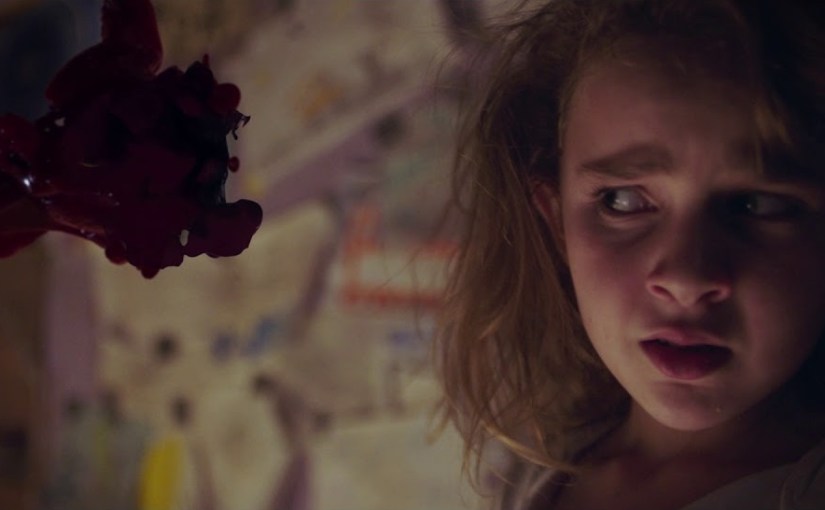
Elsewhere in the country there is a traveling cabal of people who devour the energies off of young children with similar shining abilities like Danny. This small cult is known as The True Knot and their leader is the charming Rosie The Hat (Rebecca Ferguson). The presence of one very special child is Abra (Kyliegh Curran). Flanagan gets very creative in showing how Rosie, Abra and Danny locate and communicate with one another from faraway points. Rosie’s technique is reminiscent of an amusing sequence in The Big Lebowski, though as you might expect the mood is altogether different in Doctor Sleep.
Doctor Sleep is a longer picture than it needed to be. The exposition goes on for quite a while where three separate stories are proceeding, and it becomes cumbersome to see how the dots are connected. Yet, the movie eventually finds its way as things become more simplified. Flanagan works some action scenes and neat visuals into the picture, but he does not neglect Stephen King’s penchant for nauseating and grotesque horror either. Normally, I feign at seeing victimized children in deadly peril for the sake of escapist entertainment. Here, it is repulsive on more than one occasion, but the moments serve the story and enhance the motives of the villains.
The payoff of the film is the third act where this adaptation relies on much of Kubrick’s treatment of The Shining. As the book was entirely different with its ending, Flanagan had to take a chance with some creative liberties. Amazingly, his efforts score very well. I’m not the biggest fan of Stanley Kubrick’s film (read my review on this site), but I had to cheer as more developments gradually unfolded. There’s much to explore through the eyes of Ewan McGregor as Danny.
Mike Flanagan’s craftsmanship with a cast of supporting actors, including Henry Thomas (E.T.: The Extra-Terrestrial) assuming Jack Nicholson’s role, are quite uncanny and lend to the argument to not depend on AI or “de-aging” visuals to recapture what once was. Carl Lumbly effectively takes over for Scatman Caruthers and Alexandra Essoe does a very good pick up from Shelley Duvall’s performance as Wendy – a little flighty, melancholy and zany. The little ticks and inflections in these newly cast actors are mimicked quite well without going over the top.
Set pieces etched into anyone’s subconscious who has seen The Shining are impressively recreated by Flanagan’s team, from stained walls, big curtains and chandeliers to that very familiar orange, brown/black sectional pattern on the carpet of The Overlook. At one point in film, Danny goes for a job interview and the office he sits in is an exact recreation of when his father Jack met with the managers of the hotel at the beginning of Kubrick’s film. This kind of attempt at consistency has to be saluted. It’s really amazing. Mike Flanagan shows his painstaking efforts at recapturing Kubrick’s designs. I do not look at these efforts by Flanagan as commemorations so much as I see an omnipotence that observes Danny like it did to his father Jack before him. Danny might have survived, but the demons of his past and the sins of his father remain. He can never escape where he came from even if he relocates to New Hampshire, or wherever he goes.
Doctor Sleep offers the disturbing imagery you’d expect from Stephen King. I’ve never been the author’s biggest fan. Still, I really appreciate the creativity he lent to his sequel nearly a half century later. It makes sense to have waited this long for the writer to pick up where he left off with some of his most well-known characters and locations.
This dark fantasy works for its collection of heroes and their villains.
NOTE: I viewed the Blu Ray Director’s Cut which Miguel informed me is the better way to watch the film. I agree. There are more nods to Stanley Kubrick’s original film, and the outline of the picture performs in chapter sections like you might expect in Stephen King’s novel. Mike Flanagan never lost sight of either storyteller’s accomplishments. Doctor Sleep is an undervalued achievement in film. A very worthy sequel.




 2 UNPAID MOVIE CRITICS!!!!