BATMAN (1989)

By Marc S. Sanders

If Warner Bros was to abandon the campy familiarity of the Adam West TV series, Tim Burton was the best candidate to deliver The Dark Knight into the macabre gloominess of a bustling crime ridden Gotham City.  Burton is proud of his grotesque weirdness which is what this famed comic book character demands.  

Despite a story that always teetered on flimsy to me, this close-out picture of the decadent 1980s, has so many elements that work. It begins with the marquee cast to the richly deserved Oscar winning hell on Earth art designs from Anton Furst to silly pop/funk samples from Prince and the orchestral score from Danny Elfman.  This is truly the film that put Elfman on the map.

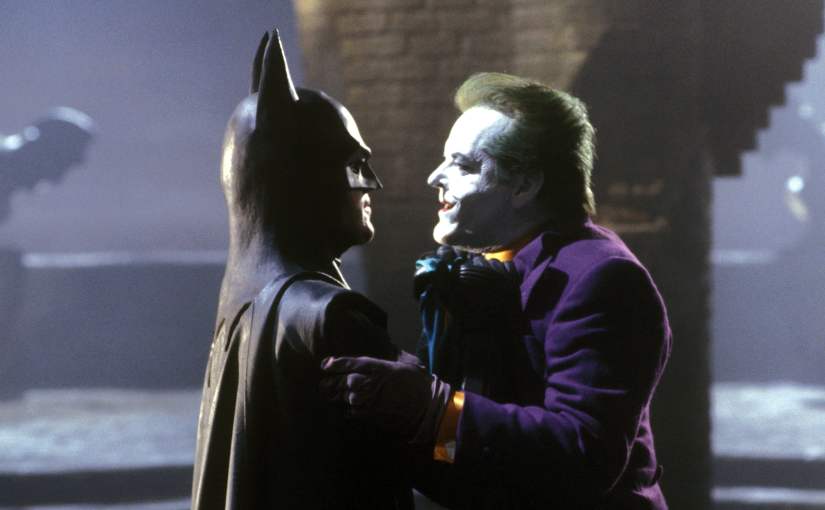
Jack Nicholson collected buckets and buckets of cash to bring Batman’s arch nemesis Joker to life.  He earned every penny.  There’s been copycat attempts (Hello Jim “Mr. Shameless” Carrey) to a handful of other interpretations of the psychotic clown, and still no one has overshadowed what Nicholson brought to the role.  His performance seems like a combined amalgamation of previous celebrated career roles from Easy Rider to …Cukoo’s Nest.  Prince served as his cheerleading entourage to compliment the purple and green color schemes.  This Joker is a perfect antithesis to the famed title character superhero.

Batman is portrayed by Michael Keaton.  Let the record show that when news broke of Mr. Mom occupying the part, I was not a skeptic.  I had seen the dark and dramatic side of the former standup comic a year prior (Clean And Sober, my review is on this site).  I knew he could pull it off.  His quiet pondering as either billionaire Bruce Wayne, whose parents were gunned down in front of him as a child, to the Batman under the cape and mask work on the opposite spectrum to Nicholson’s uncompromising insanity and hyperactivity.  

Keaton against Nicholson are a defined Yin and Yang.

The supporting cast have good moments too including the loyalty of Bruce’s butler, Alfred.  Michael Gough brings Wayne Manor alive and Burton, with a script from Sam Hamm, welcomes several spotlights from the expected council of the trusty character.  Kim Basinger is photojournalist Vicki Vale, Bruce’s love interest.  Frankly she has better scenes to share with Robert Wuhl as Gotham’s reporter.  The Batman fan in me stops short at Pat Hingle as Commissioner Gordon.  It’s not the actor’s fault however that the film offers little for him to do on screen.    Hingle never had much material to play with in the four films he occupied.  That’s regrettable.

The best supporting character is the setting of Gotham City.  With Burton’s penchant for a Vincent Price characterization, he relies on Anton Furst to bring the towering midnight blue steel, skyscraper pillars to enormous heights, reaching into the blackness of heaven.  Every street, alleyway, balcony, puddle, garbage can or mugger, policeman and cabbie that circumvent this city lend life to this hopeless, criminal world.  It’s astonishing how well constructed this Gotham is.  Designs go just as far with Wayne Manor, the underground Bat Cave and a chemical plant designed in hot steam,  with enormous barrels of rainbow, acidic liquids and rickety platforms. Even Vicki Vale’s apartment is gorgeous to look at as both Bruce Wayne and the Joker compliment it as having “lots of space.” Tim Burton and Anton Furst make certain the people who roam these environments are entirely aware of what they occupy.

Sam Hamm’s script doesn’t appear as solid as everything else on screen.  There’s never a cohesive beginning to end trajectory and a lot of the film feels like short story episodes.  Joker takes over the localized mob.  There’s that story.  Joker somehow concocts a chemical poisoning amid the various hygiene products.  Yet it only spreads to the local newscasters.  Gordon, Alfred, Vicki Vale, and certainly not Bruce Wayne ever gets exposed.  Once that storyline begins, it’s quickly disposed.  A little attention focuses on Batman’s beginnings.

The irony of Batman is that unlike other superhero films, this one does not hinge on an origin story for the good guy dressed in black.  That angle is devoted mostly towards Joker, and Nicholson makes the most of his large amount of screen time.  A favorite, sinister scene that maybe Edgar Allen Poe might have approved of is Burton’s invention for Joker to gradually reveal himself beneath the darkness.  He’s depicted sitting in a dirty office basement with an underground cosmetic doctor who witnesses a transformation in the gangster turned madman.  I just like it.  It’s hair raising.  The moment plays like Poe writing a new version of The Mask Of The Red Death.

For me, this is likely Tim Burton’s best film, just below his passion for detail in Ed Wood.  Batman offers up a lot of variety ranging from the darkness of the character to the disruptions revealed in the antagonistic, loudly dressed, Joker.  

There’s no denying how visually memorable the film remains and how quotable it is as well.  In 1989, when superhero movies were not the event release commodities they are today, the endless hype only enhanced the experience of finally seeing the movie on the big screen.  Over a year ahead of release, t- shirts, caps, action figures and costumes were of the highest demand among kids, teenagers and adults.  I actually miss the marketing blitz that overtook the finished film product.  Everyone you encountered was embracing Batman and Joker.  These might be pop culture phenomena, but they created a commonality among the masses of the world.  Batman was worthy of all its swag and endless mania.  It was a celebration of movies for people of all ages to take seriously.

Fortunately, the first half of the 1989 promotional partnerships were never squandered on a decidedly terrible movie.  The end product was immensely satisfying.

Tim Burton upheld his dedication while still a young director in a cutthroat and competitive industry.  As the later films, from a careless Joel Schumacher, demonstrated, it takes an endearing kind of passion to pull these eccentrics off on a silver screen.  Fanboys will happily toss that Bat logoed t-shirt away if they feel betrayed by the movie, they couldn’t wait to sink their teeth into.

An enormous sigh of relief came across the entire pre-internet world.  Keaton is great.  Nicholson of course.  Check out the Batmobile and Bat Jet as well!!! Prince’s music videos served as free commercialization to see the movie over and over again.  A separate record was released to highlight Danny Elfman’s work.

Rightly so!

The grand scheme of delivering Batman and Joker to audiences, was worth every second of the wait.

An astounding achievement of near perfect filmmaking, this Batman film was never overshadowed even with a better, leaner Dark Knight interpretation to arrive nearly two decades later.

Right this way Mr.  Nolan.  Your table is ready for you.

BORN ON THE FOURTH OF JULY (1989)

by Miguel E. Rodriguez

DIRECTOR: Oliver Stone
CAST: Tom Cruise, Kyra Sedgwick, Raymond J. Barry, Jerry Levine, Frank Whaley, Caroline Kava, Willem Dafoe
MY RATING: 7/10
ROTTEN TOMATOMETER: 84% Certified Fresh

PLOT: A biography of Ron Kovic, a fiercely patriotic Marine who fights in Vietnam, is paralyzed in battle, and experiences a dramatic turnaround upon his return home.


I can already tell this is going to be a difficult review to write.

There is nothing overtly wrong with Oliver Stone’s Born on the Fourth of July.  It is expertly directed, and the pacing never flags.  Tom Cruise’s Oscar-nominated performance is deservedly legendary; he leaves nothing in the tank, a fierce rebuttal to critics who thought he was nothing but a pretty face.  But even though there is much to admire, when the closing credits rolled, I felt oddly detached.  The movie kept me at arm’s length from really engaging with the lead character.  Or maybe I kept the movie at arm’s length.

Could it be that I simply don’t care for Vietnam films anymore?  Not likely.  One of my absolute favorite films is Michael Cimino’s masterpiece The Deer Hunter.  In fact, the opening scenes of Born on the Fourth of July are reminiscent of that earlier film in that it takes its time establishing the main character, Ron Kovic, as a young man in the early-to-mid 1960s at the dawn of the Vietnam War.  Born and raised in Massapequa, New York, his strict Catholic upbringing and his devotion to high-school wrestling instill a strong sense of right and wrong in the world.  A point is made about how America had never lost a war up to that time.  Kovic’s wrestling coach exhorts him and his teammates as if he were a Marine drill instructor.  “I want you to kill!  You hear me?! …You got to pay the price for victory, and the price is sacrifice!!”  It’s not very subtle, but Stone is making it clear that, in those days leading up to the Vietnam quagmire, the American credo was, “Winning isn’t everything, it’s the ONLY thing.”

Kovic enlists, sees combat, and during two horrific sequences, he experiences: an unintended massacre of Vietnamese civilians, the accidental shooting of a fellow soldier (with Kovic himself behind the trigger), and a fateful gun battle during which a bullet went through his right shoulder, collapsing a lung and severing his spinal cord, paralyzing him from the waist down.  These scenes are appropriately skittish and terrifying, putting us in Kovic’s boots and making us feel the unimaginable stress of fighting a war where half the time you weren’t sure who or what you were shooting at.  Kovic is shipped stateside…and here, as they say, is where his troubles REALLY began.

If the scenes set at the VA Hospital during Ron Kovic’s convalescence weren’t based on his actual experiences, I would denounce them as sensationalistic and manipulative.  Rats roam free among the beds.  (A nurse provides spectacularly unhelpful advice: “You don’t bother them, they ain’t gonna bother you.”)  Orderlies spend their down time getting high on marijuana or worse.  Unchecked catheters get backed up.  When a vital blood pump malfunctions, a doctor has to go to the basement to “rig up a substitute.”  And through it all, Ron Kovic does everything in his power to prove to the (correctly) pessimistic doctors that he will walk again, even re-injuring himself in the process.

(It’s futile, I know, to critique a film for what it’s not instead of what it is, but I can’t help wondering if I might have developed a more emotional reaction or attachment to the film if the entire film had focused on Kovic’s tenure at the VA hospital…although I will admit that would be a thoroughly depressing film.  Also, it might have developed some unintentional similarities to One Flew Over the Cuckoo’s Nest.  Who knows.)

The rest of the film details Kovic’s return home to his family, his emotional swings between the lowest kind of depression (“Who’s going to love me, Dad?  Who’s ever going to love me?”) and angry shouting matches with his parents and occasional bar fights.  Eventually, Kovic has a revelation: he still loves his country, but he can’t stand the government that sent him and his friends halfway around the world for a cause he no longer understands.  After a short hiatus in Mexico (I won’t get into too many details about that plot point because it’s the one section of the film that borders on boring), he returns home and dedicates his life to speaking up for the men and women who returned from Vietnam to a country that, at worst, hated them, and at best, simply didn’t care about them.

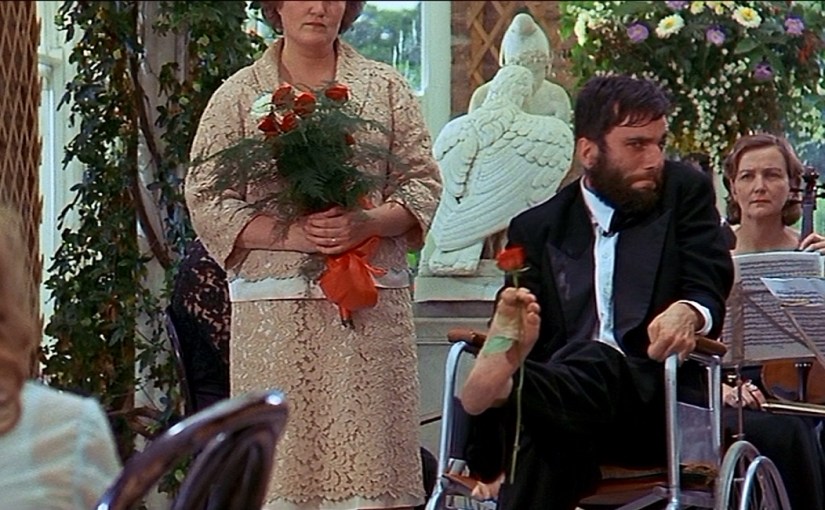
Again, the film is a stirring portrait of a man and a life.  However, as much as I want to, I can’t pin down what it is about the movie that failed to reach me at the kind of emotional level that other biographies have done before.  I just recently watched My Left Foot, with Daniel Day-Lewis’s towering performance at its center.  Another film biography, another main character confined to a wheelchair, a character who comes to terms with himself and how the world responds to him and comes up with a way to respond to the world.  But My Left Foot made my heart soar in a way that Born on the Fourth of July never achieved.  I watched the movie intently, focusing on every plot development and every nuance.  But it just didn’t grab me.  I am at a loss to explain why.

Could it be because of the presence of Tom Cruise in the lead role?  He showed these kinds of acting chops again ten years later in Magnolia, giving another Oscar-nominated performance.  In that movie, he completely disappeared into the role, despite having one of the most recognizable faces on the planet.  Perhaps the younger Tom Cruise (only 27 at the time) emits the kind of wattage that overshadows those around him?  So that you’re aware of the face first and the character second?  Maybe.  So why doesn’t the same thing happen in Magnolia or even The Last Samurai?  Perhaps it took him ten years to find a way to modulate or customize his performance so that, when it counts, the character comes first and the Cruise persona second.

I’m speculating.  The bottom line is, Born on the Fourth of July is a worthy addition to the resumes of both Oliver Stone and Tom Cruise.  It knows the story it wants to tell and resolutely sticks with it the whole way.  There are no sidetracks at any time, not even when he becomes an activist.  The focus is always on Ron Kovic, not the cause.  Stone and his screenwriters trusted that the story of Ron Kovic would draw enough attention to the cause on its own.  That approach would work with just about any other film.  This time, it had the effect of diluting the emotional experience while still holding my attention all the way through.  I would still recommend it to anyone who hasn’t seen it, if for nothing else to see Cruise play a role where he gets to sound notes he rarely got to play in his early career.  Would I watch it again?  Maybe.  I think the story is important enough for me to try to see what I might have missed this time around.

DEKALOG (Poland, 1989-1990)

by Miguel E. Rodriguez

DIRECTOR: Krzysztof Kieslowski
CAST: A host of Polish actors unknown to me
MY RATING: 8/10
ROTTEN TOMATOMETER: Not Rated

PLOT: Director Krzysztof Kieslowski presents ten short films, each related in one way or another with one or more of the biblical Ten Commandments.


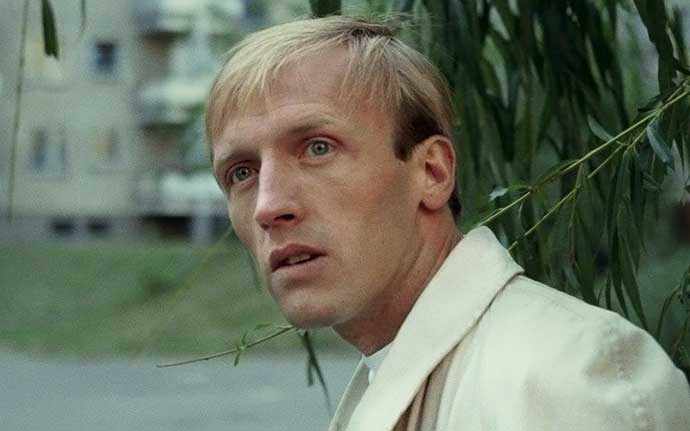
Nearly every review or description I’ve ever read of Kieslowski’s Dekalog states that the ten 1-hour films in this ambitious cycle are each based on one of the biblical Ten Commandments.  Not so.  I also assumed that each film would somehow be a moral tale ending with an unequivocal statement about right and wrong.  Also not true.  These films are the most mature and literate explorations, not of morals, but of ethics, that I’ve ever seen.  We believe we know what’s right and what’s wrong, and that we would have the ethical fortitude to do what’s right, given the option.  Dekalog argues that, in today’s world, whether it’s late-1980s Poland or present-day America, the moral absolutes dictated by the Ten Commandments are unachievable.  All we can do is choose what we believe is the right thing and hope for the best.

Kieslowski, much better known perhaps for his Three Colors trilogy, seems to have written these films, along with Krzysztof Piesiewicz, as case studies or thought experiments for ethical quandaries.  In Dekalog Two, a woman has a semi-comatose husband.  She approaches the doctor with a dilemma: she is pregnant with another man’s child, so she must know whether her husband will recover or if he is beyond hope.  If the doctor says he will recover, she will get an abortion.  If the doctor says he will die, she’ll keep the baby.  Now the doctor has two lives in his hands.

In Dekalog Four, a young woman’s father is away on business.  She discovers a letter, hidden by her father, from her dead mother, that says, “Open after my death.”  She opens it (dishonoring her father’s obvious wish that it not be found), and what she finds could radically redefine her relationship with her father, along with resolving some sexually ambiguous feelings she’s been having lately.

I could go on and on.  For the curious, a full synopsis of each film in the cycle can be found online.  But you get the idea.  Each self-contained story is a “what would you do” scenario where your answer may tell you more about yourself than you anticipated.  They seem more inspired by the format of Jesus’ parables instead of Moses’ tablets, just without the neat and tidy ending.  (Well, Dekalog Ten’s ending is cut-and-dried, but that’s all you’ll get out of me in terms of endings.)

For me, the weakest of the ten films was Dekalog Two, despite its sensational premise.  It gets a little too mystical for its own good at one point.  But setting that one aside, I was amazed at how enthralled I was while watching each chapter.  Kieslowski begins each film almost as if you were walking into the middle of the story instead of starting cleanly at the beginning.  Characters are introduced who appear to have no connection whatsoever, and you must be a little patient as the story develops.  At first, I found this approach a little discombobulating, but as I got more accustomed to it, I thought I could see its purpose.  This is real life, not the kind of storytelling we are accustomed to from Hollywood and (let it be said) elsewhere.  The stories we remember and retell from our lives don’t begin with a lovely credit sequence and stirring music.  It’s usually something like, “So there I was, at the doctor’s office, and he told me I was impotent…”

This method also had the effect of sharpening my attention as each film began.  Since I wasn’t being spoon-fed the story, I paid close attention to each shot, trying to memorize a face or recall a name.  And each story had this remarkable ability to lure me into complacency or banality, and suddenly BANG, a monkey gets thrown into the wrench, reshaping everything you just saw, or what you thought you were going to see.  I’m thinking especially of Dekalog Four, with the dead mother’s letter; Dekalog Seven with the ostensible kidnapping with hidden motives; and Dekalog Ten where a father’s death brings two estranged brothers together for one last surprise in his heavily secured apartment.

Because I was watching so carefully, there were several things I noticed that carried over from one seemingly unrelated tale to the next:

  • REFLECTIONS: Every film makes liberal use of reflections for some compositions, whether it’s a scene shot in a mirror or a pane of glass or a puddle or even just reflections on the lens of the camera.  I am not enough of a film scholar to elaborate what that could mean, aside from the obvious: these films are intended to elicit self-reflection from the viewer.  Passive viewing of these films simply will not do.
  • CAMEOS: All ten films take place mostly in or around the same imposing apartment complex in Warsaw.  (Look closely at the structures and the beams for the outside porches resemble church crosses.)  As such, characters from one chapter will “bleed” into at least one of the others.  The father in Dekalog One appears near the beginning of Dekalog Three.  The pregnant wife in Dekalog Two is trying to catch a cab in Dekalog Five.  The impotent husband in Dekalog Nine shows up in reverse order as a bike rider in Dekalog Six.
  • EXTERIORS: I cannot recall more than two or three shots in all ten films that showed an unambiguously sunny day.  Daytimes in Dekalog are invariably overcast and gloomy.  If we are meant to interpret that as a symbol, and the apartment complex is the world we all inhabit, then Kieslowski seems to be saying that the world is a dark and dreary place, indeed.  Is there any hope at all in this gray cycle of films?  I think so.  Many of the films end on, if not exactly a happy note, then at least a hopeful note.  For myself, I watch the credits roll on each one and I imagine the characters making peace with their choices, because…well, that’s what I have to do daily.  If I can do it, they can do it.  Or vice versa.
  • THE WATCHER: There is one actor who appears in nine of the ten films in Dekalog.  He never speaks, is never named (on IMDb, he is credited simply as “Young Man”), and never directly interacts with any other character.  I took to calling him The Watcher, after the Marvel Comics character who is doomed to spend eternity witnessing human history without the ability to help in any way.  What does he represent?  Is he an angel, in keeping with the cycle’s biblical name?  He seems to appear whenever a main character is about to make a choice of some kind; in one instance, he gives an almost imperceptible shake of the head as if to say, “Don’t do this.”  If you ask me, I would say the Young Man is the embodiment of guilt, a warning stare from some cosmic force that is saying, “Can you live with what you’re about to do?”  The main characters make their own choices, deciding what they can or can’t live with.  Discuss.

I hope all this mumbo jumbo hasn’t deterred you from seeking out this series and giving it a go.  All the same, as much as I do recommend Dekalog, I’m a little stuck on who exactly I would recommend it to.  All told, it’s a 9-hour-34-minute excursion into the kind of ethical dilemmas that could occupy an entire semester at a film school…and probably has.  On the other hand, with streaming popularity at an all-time high (depending on who you ask), one can think of it as a 10-part HBO miniseries…in Polish.  After all, that’s how it was originally envisioned anyway, as a limited series for Polish television. Take a chance.  Find a copy to buy online.  Or stream it if anyone is offering it.  I promise, you will be mulling over these films long after the latest Venom movie has faded from memory.  (Sorry, cheap shot, couldn’t resist, but you know I’m right.)

MY LEFT FOOT (Ireland, 1989)

by Miguel E. Rodriguez

DIRECTOR: Jim Sheridan
CAST: Daniel Day-Lewis, Brenda Fricker, Fiona Shaw
MY RATING: 10/10
ROTTEN TOMATOMETER: 98% Certified Fresh

PLOT: Christy Brown, born in 1932 with cerebral palsy, learns to paint and write with the only limb under his full control – his left foot.


For so many years, I have admired Daniel Day-Lewis as an actor, especially his performance in There Will Be Blood, which is the only performance I’ve seen on screen that has ever really motivated me to be a better actor myself.  However, I never got around to seeing his breakout movie, My Left Foot, until just recently.  All I can say is: WOW.  I had always assumed (big mistake) that this film would be a long, dark journey of the soul leading finally to an uplifting climax, but not after a lot of scenes of heartbreak and pathos and general gloom.  I could not have been more wrong.  There is as much heartwarming joy in My Left Foot as it’s possible to contain in any film, and it’s balanced by acknowledgement of Christy Brown’s condition and his down days and his struggles.  It’s a brilliant high-wire act, flawlessly performed both in front of and behind the camera.

Christy Brown is born with cerebral palsy in Ireland in 1932 to a Catholic family that grows in number almost through the entire film.  In a day and age that was simply not equipped to handle disabled children, Christy’s father is blunt: “He’ll go in a coffin before any son of mine will go in a home.”  While his motives were probably more about saving face in his community than anything altruistic, it’s this attitude that most likely saved Christy’s life.  Christy is brought home where his parents and his many sisters and brothers acknowledge and learn to work around his condition, but they refuse to treat him as anything other than a “normal” playmate and sibling.  Some of the happiest scenes in the film are when the children push Christy around in a wheelbarrow, racing up and down their street, as much for his enjoyment as for theirs.

Christy’s mother (Oscar-winner Brenda Fricker) patiently learns how to interpret young Christy’s unintelligible grunts and constantly shifting facial expressions, so it seems as if they’re communicating with each other in a secret language.  When young Christy shocks the family by picking up a piece of chalk with his left foot and writing “MOTHER” on the floor, the father’s response made me smile and smile: he carries Christy to the local pub and announces, “This is Christy Brown!  My son!  Genius!”  If this didn’t happen in real life, it bloody well should have.

(I also loved the bit where the older Christy plays soccer with his friends.  As a very capable goalie, no less.  When the time comes to take a penalty kick, his brothers line him up carefully on the ground so he can use his deadly left foot to rip the back of the net.  Or storage shed, whatever.)

I mention all these moments and interactions between Christy and his family because they are at the core of what makes this movie special.  Yes, Day-Lewis’s performance is the stuff of legend, there’s no denying that.  But the screenwriters are very careful to let us see that, despite his literally crippling affliction, Christy never lacked an unshakeable support structure.  I found myself wondering if I had the kind of fortitude, not to persevere like Christy, but to go all in on supporting a sibling or any loved one, loving them, and always being there for them.  It’s easy enough to say I am willing to do things like that.  I only hope, if I were ever faced with that kind of challenge, that I would meet it with the same kind of unconditional grace and love exhibited by the family of Christy Brown.  Here endeth the introspective portion of this review.

I can’t tell you enough how enthralling and well-balanced this film is.  In my experience, most movies about characters with terminal illnesses tend to wallow too deeply in the grief and sorrow associated with that illness.  My Left Foot makes a conscious decision to establish the illness, lay down the boundaries, and then move forward as if the main character weren’t ill at all.  In a sense, that is the case with Christy Brown in the first place.  As brilliantly portrayed by Day-Lewis, you can always see the mind at work behind the uncontrollable gestures.  There is nothing at all wrong with his mind, only his body, which betrays him and frustrates him.

There is one specific scene that seems to stick in the mind of everyone who sees the film.  Christy has been taken under the wing of a doctor, Eileen Cole (Fiona Shaw) who specializes in treating his condition.  His speech improves, his painting improves.  He falls in love with her.  In an agonizing scene, he confesses his love to her in a restaurant while several other associates look on.  She mistakes his declaration of affection and informs him of her engagement to another man at the table.  After a stunned silence, Christy uses his loudest speaking voice and carefully and very slowly says, “Congratulations.”  Director Jim Sheridan points the camera, not at Christy, but at the horrified and embarrassed dinner guests at the table, and at the other restaurant patrons who stop and stare in disbelief at the noises Christy is forcing into the air.  He has some other choice words regarding platonic love, and the scene ends with him pulling the tablecloth off the table with his teeth.

The emotions on display in this scene were so raw and honest and painful that I found myself covering my eyes a bit.  I felt every bit as embarrassed as those dinner guests.  But I also felt enormous empathy for Christy.  He is raging, not only at Dr. Cole and her rejection of his affection, but at the fates that locked his soul away in a body that was a constant reminder of his “differentness.”  Later scenes show us that he was able to make peace to a much greater degree in later life, but these scenes and others reveal the unimaginable conflict in his sharp mind.

I’m rambling, I think.  I don’t feel I have successfully conveyed how joyous My Left Foot truly is.  I had a goofy smile on my face for the first half hour of the movie.  I laughed out loud many times, especially at Christy’s father’s wake, a scene I vividly remember seeing at the Oscars that year.  Christy Brown was not a perfect man, and the movie does not pretend that he is.  But the movie does end on a wonderful high note that would be crushingly melodramatic in almost any other film.  My Left Foot earns it by showing us his journey, completely, concisely, and with enormous understanding.

SANTA SANGRE (Mexico, 1989)

by Miguel E. Rodriguez

DIRECTOR: Alejandro Jodorowsky
CAST: Axel Jodorowsky, Blanca Guerra, Thelma Tixou, Sabrina Dennison, Adan Jodorowsky
MY RATING: 9/10
ROTTEN TOMATOMETER: 86% Certified Fresh

PLOT: In Mexico, the traumatized son of a carnival knife-thrower and trapeze artist bonds grotesquely with his now-armless mother.


In years past, whenever I read articles or reviews that evoked the name of Alejandro Jodorowsky, it always seemed to be with the reverence and awe befitting a living saint, or at least a holy fool.  He was mentioned alongside words like “fever dream” and “visionary” and “madman.”  His name pops up a little more frequently these days due to the huge popularity of the new Dune films; he was slated to direct his own version of Frank Herbert’s sci-fi masterpiece, but it stalled in the planning stages around 1976, after $2 million had already been spent in pre-production.  (Storyboards of his intended visions for Dune boggle the mind…Google them some time if you’re unfamiliar.  One of the sticking points was that he wanted the movie to be between 10 to 14 hours long.)

I mention all this because it has taken me this long to finally get around to seeing one of Jodorowsky’s films, Santa Sangre, and I can honestly say that all the hyperbole surrounding his name is justified.  It’s not a perfect film, because how could it be?  It’s a film that tells a straightforward story, but the emotions driving the storyteller are on full display, not necessarily his technique.  Or maybe his technique is flawless because the film conveys such raw emotional power.  I don’t know.  I may be unqualified to break this movie down into its component parts to critique it effectively.  All I can say is, if you ever find yourself starved for new images in cinema, Santa Sangre will satisfy you for months, if not years.

A prologue shows us a naked man in a Mexico asylum who apparently believes he is an eagle.  As orderlies dress him, we flash back to the man as a young boy, Fenix, who performs as a magician in a third-rate travelling circus.  His fat father, Orgo, is the ringmaster and a knife-thrower.  His mother, Concha, is a trapeze artist, but she is also the leader of a bizarre sect of Catholicism that worships the figure of a girl who lost both her arms to vicious rapists.  We also meet a young deaf-mute girl, Alma, and her ostensible mother, The Tattooed Woman (she is never called anything else), who seduces Orgo by letting him throw knives at her.  From the documentary on the very loaded Blu-Ray, I learn that the actress playing The Tattooed Woman volunteered to be the “target” while a professional knife-thrower threw real knives at her…including one that lands in an outrageously small space between her thighs.  Crazy.

Later, when Concha discovers them in bed together, she throws acid on Orgo’s genitals.  Enraged, Orgo takes two of his throwing knives and literally disarms Concha.  He later staggers out of his tent and meets an ignominious end by his own hand.  Concha’s son, Fenix, has witnessed most of this while locked inside one of the circus trailers, which PROBABLY influenced his current state of insanity.

In between these two events, we have seen Fenix despair over one of the circus elephants that is clearly dying, blood trickling out of its trunk as his caretaker looks on sorrowfully.  What follows is a scene depicting a funeral procession for the elephant, but the procession is nothing compared to how the elephant and its massive coffin are disposed of.  This and many other circus scenes feel like Fellini by way of David Lynch.

Back in the present…after an outing with other patients at the asylum (played by real Down syndrome patients) goes bad (they are hijacked by a pimp who offers them cocaine), Fenix escapes and reunites with his now-armless mother.  She co-opts him to be her arms in a vaudeville act and at home, where he sits or stands behind her everywhere and manipulates his arms so effectively the illusion of his arms being her arms is complete.

…but I’m just giving you lists.  There is much more to discover in Santa Sangre that I do not want to spoil.  It is a singular experience, lending itself to many and varied interpretations and certainly not appealing to everyone.  Jodorowsky is okay with that.  He says in an interview that he does not make films to make a living.  He only makes a movie when he has something to say.

So…what is he saying in Santa Sangre?  There are elements of domineering motherhood with Concha virtually subsuming the grown Fenix and his arms.  Later developments show us that she has become the most fearsome mother figure since Mrs. Bates.  Is Jodorowsky exorcising some psychic demons from his childhood?  You tell me.

The strange cult led by Concha features in its temple a large pool of blood, supposedly the blood of the disfigured saint that never evaporated.  There is a lot of blood in Santa Sangre…naturally.  There’s the dying elephant, the death of Orgo, a splatter house murder that looks inspired by Sam Raimi’s The Evil Dead, a hallucination where Fenix imagines he is bleeding out like the circus elephant, and more.  Blood is a central element in the Catholic and Christian faiths.  Is Jodorowsky making a grand statement about the inherently gruesome nature of organized religion, where something that is worshipped on one hand is off-putting and hideous on the other?  You tell me.

Jodorowsky cast three of his own sons in the film (one of them, in a small role as the aforementioned pimp, died shortly after the film was completed).  There are no honorable father figures in the film.  Was the movie intended as some kind of cinematic apologia for his failures as a father?

One scene features a man who spies the older version of Alma, the deaf-mute girl from the circus, on a street at night, and holds her with his gaze.  Then he reaches up to his right ear and slowly performs an act that was only hinted at in Reservoir Dogs.  What is Jodorowsky trying to say with this scene?  Jodorowsky helpfully answers this question in an interview: he doesn’t know.  He just heard about this guy who literally pulled a “Van Gogh” and was able to do this weird little trick, so he drafted him into the movie on the spot.  The scene is only there because Jodorowsky thought it looked cool.  Chew on that.

Based on that “explanation”, how much of the rest of the movie may we infer is there just for the sake of being there?  If everything is a symbol for something else, couldn’t we also argue that nothing is a symbol?  For the sake of argument, let’s say that the whole movie doesn’t really symbolize anything aside from Jodorowsky’s overpowering need to put these visions on the screen.  Why can’t it just be, as I mentioned before, a fever dream, a movie composed entirely of images that are not concerned with placating any Hollywood demographic or studio focus groups?  I am reminded of a line from The Adventures of Huckleberry Finn: “Persons attempting to find a motive in this narrative will be prosecuted; persons attempting to find a moral in it will be banished; persons attempting to find a plot in it will be shot.”

That’s not to say Santa Sangre is plotless, not by a long shot.  There is a definite story arc with clearly established characters, surrounded by phantasmagorical imagery.  If Jodorowsky’s motives or morals are not clearly defined, I’m okay with that.  I just know that I’ll be mentally chewing over some of that imagery for a very long time.

[Note: I must point out that the making-of documentary on the Blu-Ray is one of the most informative and entertaining behind-the-scenes docs I’ve ever seen.  From it, I learn that the film was inspired by, among other things, a rehabilitated real-life serial killer that struck up a conversation with Jodorowsky at a bar one day.  That The Tattooed Lady was unable to shower properly for seven weeks due to the fragile nature of her fake tattoos.  That the deaf-mute Alma was played by a real deaf-mute girl.  That for the older Fenix to walk perfectly in step with Concha to be her arms as she walked around, the actress playing Concha would reach behind her and grab him by his testicles.  It’s one of the few making-of docs that I would consider required viewing after watching the movie itself.]

TRUE BELIEVER (1989)

by Miguel E. Rodriguez

DIRECTOR: Joseph Ruben
CAST: James Woods, Robert Downey Jr., Margaret Colin, Yuji Okumoto, Kurtwood Smith
MY RATING: 7/10
ROTTEN TOMATOMETER: 96% Fresh

PLOT: A cynical former civil liberties attorney, now reduced to “specializing” in defending drug dealers, becomes transformed by an eight-year-old murder case.


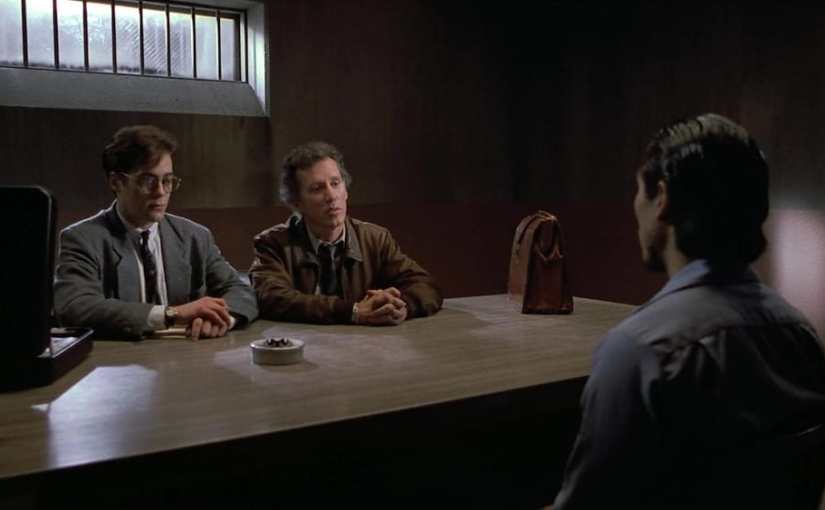
I don’t know if True Believer counts as a “forgotten” film in today’s world, but it’s certainly not a movie that I hear mentioned anymore.  Directed by genre-hopping journeyman Joseph Ruben, whose films are more recognizable than he is (Dreamscape, The Stepfather, Sleeping with the Enemy), and anchored by James Woods and Robert Downey Jr., True Believer is a solid entry in the crime/courtroom drama/thriller arena, at least in broad strokes.  However, there are momentary lapses of logic that strain credulity, and despite the momentum of everything around them, they were enough to affect my opinion/impression of the movie.

After a flashback and prologue that introduces us to his future client, we meet Eddie Dodd (James Woods), a fiery former civil liberties attorney who once defended Black Panthers and other social revolutionaries in the 1960s.  Now, at the tail end of the ‘80s, in the waning days of the “Me Generation”, he specializes in defending drug dealers and/or distributors under the guise of painting the government’s use of wiretaps and undercover agents as invasions of privacy…a shabby attempt at investing his sleazy client list with some sort of social nobility.  Into his life comes an aspiring attorney, Roger Baron (future Oscar-winner Robert Downey Jr., looking fresh and innocent during what must have been one of his infamous rough patches).  Roger idolizes the old Eddie Dodd, the idealist, and is severely disillusioned by the current Eddie, the opportunist.

Things change, though, when a Korean mother and daughter track Eddie down and ask him to defend their son and brother, Shu Kai Kim (Yuji Okumoto, The Karate Kid Part II, Better Off Dead), who is eight years into a prison term for a murder they say he didn’t commit.  The daughter says she tracked him down by going to all the courthouses: “They all speak of you, and they all say the same thing…you do cases cheap.”  He dismisses them with a vague promise to “review the material,” but after some predictable prodding from Roger, his new conscience incarnate, he takes the case.

What follows is a well-directed, well-paced mystery-slash-courtroom thriller.  It’s not fancy or especially slick, but it held my interest, which is all I ask of a mystery where I’m expected to keep track of a lot of information.  And there is a lot of information to keep track of.  Eddie and Roger, with the assistance of their P.I., Kitty (the invaluable Margaret Colin), uncover inconsistencies in witness accounts, inconsistencies from their own client, the involvement of the Aryan Army, a bona fide conspiracy theorist who believes the phone company killed Kennedy, and a possible link to an 8-year-old drug bust.  (That’s about all I can say about the plot without ruining the surprises of the evidence chain.)

As I said before, the movie is solid, but they made one major misstep: casting the talented Kurtwood Smith as opposing counsel, D.A. Robert Reynard.  From his first scene, no matter how nicely he smiles or how friendly he seems, he is obviously the bad guy, because it’s Kurtwood Smith.  Because of his mere presence, you know he’s not to be trusted and must be brought low, no matter how logical his courtroom arguments are.  He is clearly the villain, even if he’s not doing anything truly wrong.  So right away, any possible objectivity about who’s right and who’s wrong is skewed.  It would have been more interesting if the ostensible bad guy had been cast by someone who is at least a little ambiguous.  Just my two cents.

There are other issues.  As the investigation progresses, there is an anguished speech from Eddie to Shu Kai Kim that spells out exactly where the title of the movie comes from and ends with some tortured dialogue that must have looked good on the page, but just doesn’t feel right coming out of James Woods’s mouth.   In another scene, Eddie walks away from two armed men who have every reason to shoot him in the back but inexplicably choose not to, presumably due to a sudden attack of conscience.  Given what these two men had done just previously, this inaction seemed wildly improbable.  Then the D.A., whom we have seen is highly intelligent, allows himself to get cornered in the courtroom when he absolutely should not have.  Not the actions of a smart man…but certainly the actions of the clear villain, because it’s Kurtwood Smith.

Because of these inconsistencies, True Believer will probably never be mentioned in the same breath with Jagged Edge or The Verdict or any other great courtroom thriller.  But the performances from the leads are more than adequate (despite James Woods’s incongruous ponytail), and the mystery is fun to unravel, and Joseph Ruben’s direction is competent if not splashy.  In other words, it’s your slightly above-average ‘80s genre movie.  (And I am sometimes a sucker for ‘80s nostalgia, so…there you go.)

SEA OF LOVE

By Marc S. Sanders

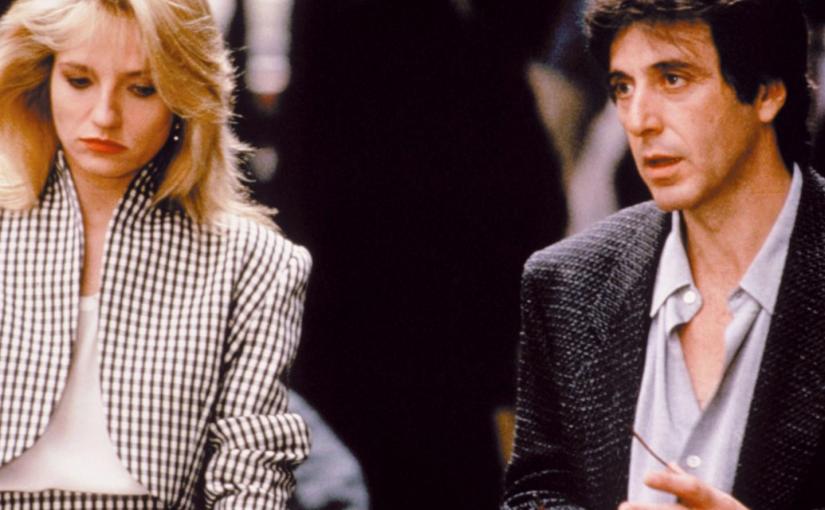
Al Pacino is a twenty-year veteran New York City cop, working out of Manhattan, on the trail of a serial killer in Sea Of Love.  The profession is nothing new to Pacino’s repertoire of roles, but the portrayal is unique thanks to a smart and suspenseful script from Richard Price and intense directing from Harold Becker.

The killer leaves a calling card.  A 45 LP record of Phil Phillips ’50s classic crooner, “Sea Of Love,” spinning on the turntable.  The victims are naked men lying face down in bed with a bullet to the head.  Turns out that a cop from another precinct played by John Goodman has uncovered a similar crime scene in Queens.  So, the two team up.  They believe the murderer is a woman.

All the victims have posted a Lonely-Hearts Club blurb in a magazine. The invitation for a date stands out because the text rhymes.  The detectives decide to post their own ad in the same kind of format, meet the women who respond and hope to nab the killer.  It gets complicated when Pacino encounters a breathtaking and sultry woman played by Ellen Barkin. 

Pacino’s cop is a smart guy.  He’s got instincts.  Yet, perhaps due to his constant drinking, insomnia, and the bitterness he carries now that his partner (Richard Jenkins) has hooked up with his ex-wife, he’s also quite vulnerable.

The mystery is strong, and the tension builds as Sea Of Love moves on.  Barkin has Pacino and the audience convinced that she’s the prime suspect.  Still, he lets his defenses down because he’s easily getting seduced by her advances.

Whether you’re watching Al Pacino share scenes with John Goodman or Ellen Barkin, the execution is fantastic.  Great performances from the three.  Pacino and Goodman have a natural exchange with one another. Often humorous, but the guys always talk like cops.  When Pacino admits to tossing away a fingerprinted glass from Barkin, Goodman suggests lifting the prints from something- ahem – more personal of his.  A cute wink and nod exchange.

More important to the film is the erotic chemistry between Barkin and Pacino.  Harold Becker uses a late-night supermarket visit in the vegetable aisle to evoke the risky and irresistible nature the two characters develop for one another.  Other scenes build well on the relationship between these two lonely strangers who’ve only recently met. 

Moments of isolation and drunken stupors also work towards fleshing out Pacino’s burned out cop.  He’s got a schleppy posture to him and an exhausted expression with his sullen eyes and shaggy black hair.  At the same time, his character’s twenty years of experience seem to uphold his alertness.  This cop knows he’s letting his guard down. Without any dialogue, you see the internal struggle Pacino has with what should be done against what he is deliberately neglecting.

This film was Ellen Barkin’s breakthrough role.  She received rave reviews as someone who takes care to uphold a New York City trendy appearance by day as a shoe salesperson in contrast to a woman looking for some carefree lust in the evening.  For Pacino, Sea Of Love reinvigorated a career slump following a series of poorly reviewed films.  Together, they make for a sexy yet untrusting pair.

Circumventing this relationship is the mystery.  Is Barkin the culprit? She seems to have a dark way about her that may not surprise you.  Price, Barkin and Becker designed the character quite well for her to at least have the potential to be a killer of men.  Is she setting Pacino up to be the next victim?

New York City from the late 1980s looks great, even though interiors were shot in Toronto.  Trevor Jones offers a nail-biting soundtrack to keep the suspense heightened at just the right beats of the picture with Becker’s camera pointing down dark hallways or when new clues are discovered.

I’ve seen Sea Of Love a few times and even with knowing the surprise ending, the film still holds up thanks to the performances from its three stars, along with its taut editing, well-paced writing, and smart direction. 

This is a good erotic murder mystery.

FIELD OF DREAMS

By Marc S. Sanders

Fantasy can be a real challenge.  The audience must convincingly accept what could never possibly be real.  The Wizard Of Oz from 1939 will always be the best of all fantasy films.  The most visually significant element was bookending the film in black and white, with illuminating color in the center for the Land of Oz to come to life.  You feel transported.

Phil Alden Robinson’s screen adaptation of W.P. Kinsella’s novel, Shoeless Joe, had a big challenge.  The film became known as Field Of Dreams.  How would any of us believe that an Iowa corn crop farmer hears voices and gets the inspiration to throw all common sense out the window and build a baseball field in the middle of his property?  It’s absurd.  Maybe only Kevin Costner, a modern-day innocent Jimmy Stewart of the time in the late 1980s, would convince any of us that this is something that needs to be accomplished.  Robinson’s script offers no logic that any of this should be done.  Re-watching the film, I was still skeptical of accepting the outrageousness.  Then again this is Kevin Costner in his mid-thirties with a toothy grin on his face, chestnut hair, beat up jeans, and an adorable 8-year-old Gaby Hoffman for a daughter and a spitfire Amy Madigan for a wife.  I can’t explain it any more than Ray can explain to his wife why he needs to tear down acres and acres of valuable crops for a baseball field that’ll run him into enormous debt. You just gotta roll with it, I guess, even if your suspension of disbelief isn’t there. 

Thankfully, the authenticity of the fantasy welcomes itself as Field Of Dreams moves on. 

Costner plays Ray Kinsella who had a very estranged relationship with his father who only briefly played in the minor leagues before aging quickly and working himself towards a premature death.  Ray went on to Berkeley in the ‘60s and got caught up in the hippie movement leaving his father’s baseball heroes of Ty Cobb, Rusty Miller and “Shoeless” Joe Jackson behind. 

After Ray builds the beautiful field and waits months and months for something, anything, to happen, the ghost of “Shoeless” Joe Jackson, (Ray Liotta) donned in his White Sox uniform, appears.  Jackson was part of the infamous Black Sox scandal and was denied of ever playing professional baseball again, following being caught accepting bribes to fix games with seven other teammates.  Ray spends the evening with Joe pitching and fielding together.  Now, whatever hasn’t made sense to the viewer suddenly presents some light on this outrageous feat we’ve been witnessing.  Dorothy has met the Scarecrow.

Ray has dreams to find a recluse author named Terance Mann (a superb James Earl Jones who should’ve gotten an Oscar nomination; just an astonishing actor).  Later, he meets a ball player who only played one inning in the major leagues, Archie “Moonlight” Graham – portrayed charmingly by an elderly Burt Lancaster and a spry Frank Whaley.  How they both play the role is a surprise I’ll withhold from this write up.

I share this summary because Field Of Dreams improves itself as it progresses.  The ghosts, the fantasy, and the sheer nerve that Robinson (director and writer) grants to Costner and the cast send you into the imaginary.  You’ll be twenty minutes into the picture and ready to give up.  Thankfully, the storyteller who made the film introduces something unworldly that encourages us to learn more and more.  That’s what happens every time you watch The Wizard Of Oz.  Not just the color, but the décor and strangely adorable munchkins draw you in with curiosity and you want to discover more about this place you’ve never visited before. 

With Field Of Dreams, you don’t have to know anything about baseball.  What you need to understand is that people of a past enter Ray’s life when he never expected them. Now, he’s destined to aid them in fulfilling what they were denied of during a time gone by. 

We all wish to take advantage of our dreams gone by.  Fantasy makes that possible.

Perhaps Ray Kinsella was denied an experience, as well.  You’ll have to watch Field Of Dreams to find out.

PARENTHOOD

By Marc S. Sanders

Once you’re a parent, you’re always a parent.  You’re also always a child to someone.  No matter if you are close with your mom and dad, or estranged and not on speaking terms, or your parents have passed on, you are always a child to someone.  Parenthood from 1989 demonstrates that you never clock out from being a parent or a child.

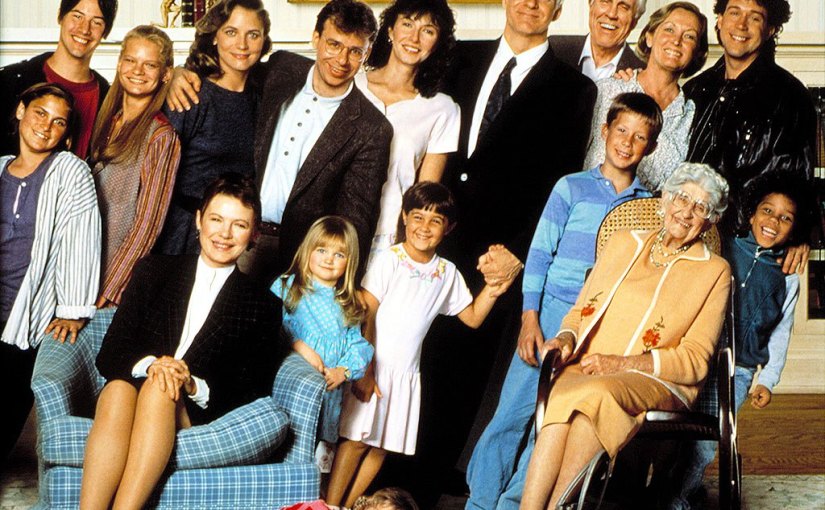
The Buckmans consist of four adult children portrayed by Steve Martin, Dianne Weist, Harley Kozak and Tom Hulce. They all got little ones to tend to with respective partners (Martin with Mary Steenburgen, Kozak with Rick Moranis and the other two are currently on the single status).  Their parents are portrayed by Jason Robards and Eileen Ryan and even the generation before them is represented by Helen Shaw.

With a cast of characters this large, there are various storylines and dynamics of raising and supporting children to go around.  Each child, or in other words, each parent has daily struggles to deal with.  The nuclear family of Steve Martin and Mary Steenburgen’s is given the most attention when it is uncovered that their eldest child of three is struggling with anxiety.  Elsewhere, Robards finds himself trying to rescue his immature, lying twenty-seven-year-old son, Hulce, from gambling addiction and debt.  Weist is doing her best to survive a sexless life after her letch of an ex-husband has left her to deal with a daughter (Martha Plimpton) pregnant and married to a stock-car racing airhead (Keanu Reeves) and a quiet, distant teenage son (Leaf, later known as Joaquin, Phoenix).  Kozak’s storyline really belongs to Rick Moranis as her genius, nerdy husband determined to raise their three-year-old daughter as a virtuoso prodigy.  Kafka is a bedtime story.

Wow, that’s a lot of baggage to unload in two hours’ time.  Yet, it works so efficiently in a film directed by Ron Howard.  I’ve used this compliment before, but it bears repeating.  You can write a full-length screenplay about any one of these characters.  I guess that is the goal you strive for when you produce a film featuring an all star cast filling the slots of a large collection of characters.  A film like Boogie Nights and Love, Actually accomplishes this feat so well.  Parenthood just the same.

Favorite moments for me occur with Jason Robards’ character.  It is evident that he was not the best father, particularly to Martin’s character, and his admiration is likely misdirected towards the kid who hasn’t made the best choices in life, played by an aloof Tom Hulce.  I really like the story arc of Robards and Hulce’s relationship when the truth rests like an ugly slime on the surface that just can’t be filtered away.  Suddenly, a man prepared for retirement and rest, has to acknowledge that his adult son needs help but is he worthy of support and love any longer?  This movie is arguably not even the highlight of Jason Robards career, but you can not deny what a gifted actor he was.  His timing and delivery are so recognizable as a hard-edged retiree parent.

Dianne Weist, the only cast member to be nominated for an Oscar for this film, has a couple of good storylines as well.  Much of her performance stems from all too common drama where a spouse leaves her and abandons any relationship he had with their children.  It’s so unfair for the child.  It’s hard on the mother who has to maintain a career while raising teenagers who are entering a new phase with regards to love and sex.  Plimpton gets into an argument with Reeves, her boyfriend, and Weist starts to swat him away.  Then Plimpton unexpectedly announces they just  got married and Weist turns to swatting Plimpton.  Weist is funny while the material holds dramatically.  It’s a real nice balance.  

Steve Martin has a good storyline as well.  He’s a hard working white collar executive who wants to prioritize attention for his son though it kills him to lose out on a promotion he knows he’s entitled to.  At the same time, he battles with how his own father (Robards) treated him at a young age.  He makes sure that his son’s birthday party is the best.  He encourages the boy to play second base on the little league team.  He attempts to do everything denied of his own childhood for his son, now.  Still, it’s not enough.  Parenthood can often feel like a winless battle. 

Martin also has good scenes with Steenburgen, and they remind me of my relationship with my wife.  She’s the sensible one.  I’m the one who gets trapped in insecurity and anxiety and low self esteem as a worker, a friend, a husband, and especially as a parent to our teenage daughter.  I excel at taking care of the bills though. 

Why am I making this personal all of the sudden?  Well, perhaps it is to call out the true nature of family and marriage that exists within the script for Parenthood, written by Babaloo Mandell, Lowell Ganz and Ron Howard.  There are some moments where Martin’s character daydreams of scenarios for his son.  One time the boy becomes a valedictorian with a speech offering complete recognition towards his father.  In another moment, he’s a rooftop sniper blaming dad for making him play second base and missing the game winning out.  When I get trapped listening to the thoughts in my head, I envision what could be.  More often than not I’m predicting dread, which almost never arrives.  Yet, I believe parents yearn to raise the perfect child that they never were.  It’s an impossible stretch.  I write that here and now, and still, I’ll try and try.  So what, though! While I’m working for perfection and absolute happiness for my daughter, I must remind myself that my efforts are contributing towards a successful path for her full of fulfillment and happiness.  More importantly, while at least half of my efforts could lead in failure on my part, my intentions are always done with absolute love and care for her.  That’s what I see in the here and now.  I’m blessed. My whole family is blessed.  So many families have it so much worse and I wish them well.  I have to remind myself not to take what I have for granted.

Ron Howard’s film is not entirely perfect.  I could have done without some of Steve Martin’s recognizable schtick from his stand-up routines.  I always like his material.  I just think some of it doesn’t belong here, the same way Robin Williams would let his known antics creep into some of his films.  Some scenes are also spliced into the film jarringly, like when a dentist’s office is suddenly vandalized.  Thematically, these break away moments should have remained on the editing floor.  Fortunately, the movie isn’t anchored by these plot points for too long.

There’s much to relate to with Parenthood.  Kids who gleefully sing about diarrhea, to parents mired in regret and doubt.  Teenagers who think they have found love to the absence of father figures.  Grown-ups who just haven’t grown up and parents who are just getting a little too ambitious in their child’s upbringing.  This is not a film, necessarily about the love a parent has for a son or daughter.  Rather, I appreciate how it questions the role these characters serve towards their fathers, mothers and children. 

Love is only one dynamic in fatherhood, motherhood, and childhood.  Parenthood focuses on everything else.

WHEN HARRY MET SALLY…

By Marc S. Sanders

Two years after my family and I moved from New Jersey to Florida, I was age 16 and still felt lonely. Very lonely.  I was not prepared for the culture shock of leaving a primarily Jewish community and transitioning into a mixed bag of different cultures and mentalities.  I couldn’t adjust and the only people I could understand in 1989 were Batman, Indiana Jones and Harry & Sally.

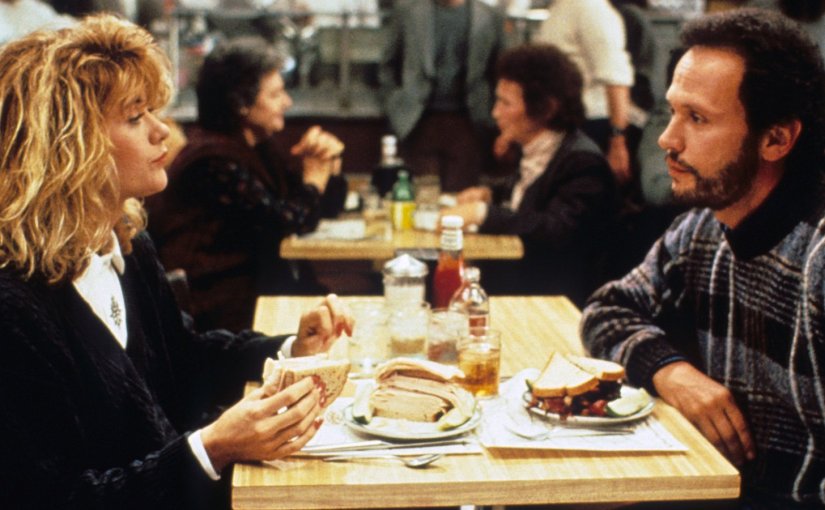
The script written for When Harry Met Sally… focuses on the title characters adjusting to life in the decade following college graduation, where their paths cross periodically and they debate the aftermath of Casablanca, as well as what it means to sleep with someone or not.  More importantly, they are often returning their attention to whether a man and a woman can be friends without any temptation for love or intimacy, no matter how attractive they find each other to be.  Boy oh boy, that’s a loaded observation, isn’t it?  It is so consuming that as close as Harry (Billy Crystal) and Sally (Meg Ryan) become with one another as best friends, no matter how many people they date, they still couldn’t be any lonelier.  At the time, I could understand their dilemma.  I had a terrible crush on a girl at school. We were close friends who could laugh with each other.  Yet, I never took it to the next step.  I should have asked her to the homecoming dance in our sophomore year.  I really should have.  The risk, though, is the change in the comfortable dynamic we had.  I didn’t want to lose that.  Harry and Sally are attractive to one another.  Rob Reiner includes great close ups of the two actors looking at each other, wondering who is going to make the first move.  Will they bring this relationship to a new level?  It may never happen.  It didn’t for the girl I thought I could fall in love with.  At least Harry and Sally had each other’s shoulders to cry on. I adore this film, directed by Rob Reiner, because I yearned for what they had in friendship first, and as a relationship second.

Sally and Harry couldn’t be any different.  He is of the mindset that any woman he encounters is destined to be slept with, or more simply put, men and women could never be friends because at the bare minimum, men are thinking about sleeping with every woman they come across.  Sally can’t understand that, but when Harry shares his philosophy with her the first time they meet, while on an 18-hour drive from the University of Chicago to New York City, she can’t help but suspect that it just might be possible.

The two depart from one another to start their new lives in the big city, and come across each other five years after that on a flight they inadvertantly share, and then another five years later when they are given an opportunity to catch up on their relationship status.  In present day, 1988, Sally has just broken up with her longtime boyfriend.  Harry has gotten a divorce.  Ephron has written these characters to ultimately need one another.

When Harry Met Sally… is certainly a comedy, but more than likely it’s because Billy Crystal’s quick wit and delivery comes off familiar from his other career accomplishments.  Meg Ryan works beautifully as a scene partner that debates Harry’s cynical view of people with Sally’s natural positivity.  Their mentalities go in opposite directions, but the film continues to imply that these two couldn’t be more perfect for one another.  Chalk that up to Meg Ryan and Billy Crystal’s chemistry.  They are one of the all-time great on-screen couples.  These two actors are my friends.  I want it to work out for them.  When I saw the film three times in the theatres, I wanted to experience what they experienced.  Their story has bumps in the road.  They get mad and upset with each other.  They debate with one another, but they amuse one another too, and what a romantic adventure they share together.

A terrific novelty of Reiner’s film is when he cuts away to elderly couples with rich histories of how they met and stay together for decades after.  We weren’t there to see these wonderful people kindle their relationships, but we’ll see how Harry and Sally come together.  I remember long ago, that my father told me that when you get married, make sure you are marrying your best friend.  He said love is important, but you have to like each other first.  I did marry my best friend and I like her.  I love her too.  We drive each other crazy.  We have very different interests.  We even live in our home differently, that we share with our daughter and dog, but we want to be with each other and no one else.  No one else factors.  When you watch When Harry Met Sally… you see why two people continue to be with each other, first as friends, and maybe as lovers later.  When you have a best friend in your life there’s no one else you want to laugh with or cry with more often than that person.  There’s no other hand you want to hold.

A brilliant midway scene in the film occurs when Harry and Sally have the misguided idea of setting up their other best friends with each other.  Harry’s buddy Jess (Bruno Kirby) may be a good fit for Sally.  They are both writers, after all.  Sally’s girlfriend Marie (Carrie Fisher) has a keen interest in conquering married men, not far off from how Harry routinely proceeds with one relationship after another by sleeping with the women he dates.  He’s not in love with them, but of course he’ll sleep with them.  The irony comes when both Harry and Sally could never fathom that Jess and Marie find each other attractive, not the ones they were originally intended for.

There’s much heightened romanticism to When Harry Met Sally… I won’t claim it to be very realistic with how life works out for many of us.  Look at the famous deli scene where Meg Ryan demonstrates for Crystal’s character that a woman can convincingly fake an orgasm.  It’s a hilarious scene.  One for the ages.  However, a scene like that wouldn’t happen.  If a scene like that did occur in real life, the woman would be asked to leave the premises immediately.  It’s not the point though. 

Love and happiness should consist of elevating ourselves to a delightful fantasy of joy, affection and laughter.  Love should also guide us to carry our best friends through sadness and frustration.  We can’t survive this challenge, we call life, alone.  I realized that first hand when my innocent, naïve and unsure teenage self watched the movie for the first time all those years ago at the Mission Bell movie theatre in Tampa. 

People need someone to grow with.  We need someone to continue to teach us while we teach them in return.  Most importantly, as it becomes a running theme in When Harry Met Sally…, we need someone to kiss at midnight every New Year’s Eve.