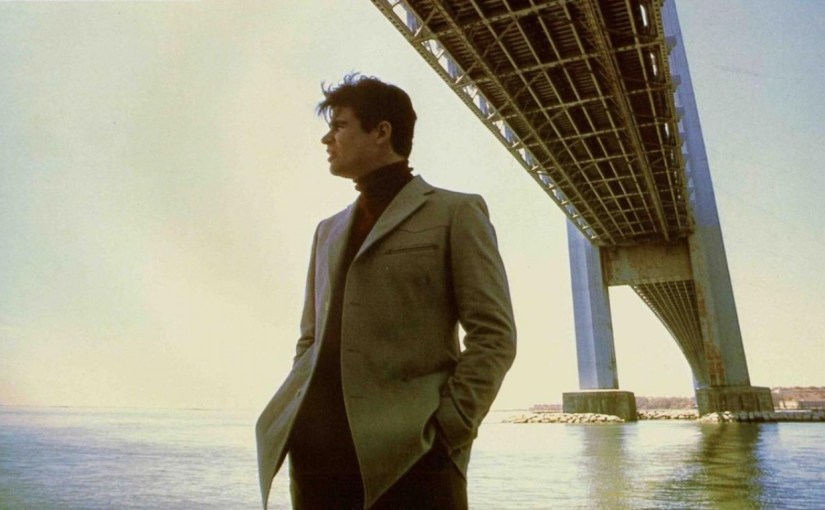
BLOW OUT

By Marc S. Sanders

Brian DePalma’s Blow Out is an inventive approach to the political conspiracy thriller.  In 1981, following a mask of innocence the United States lost with the assassination of President Kennedy, later his brother Bobby, plus the drunken, liable carelessness of their brother Ted, and then finally the Watergate scandal, DePalma capitalized on newsworthy incidents to make a paranoid thriller of present day while incorporating what he likely knows much about which is sound effects editing.  Despite the cheesy music soundtrack that is highly intrusive and poorly composed, Blow Out is a good blend of hysteria and suspense.

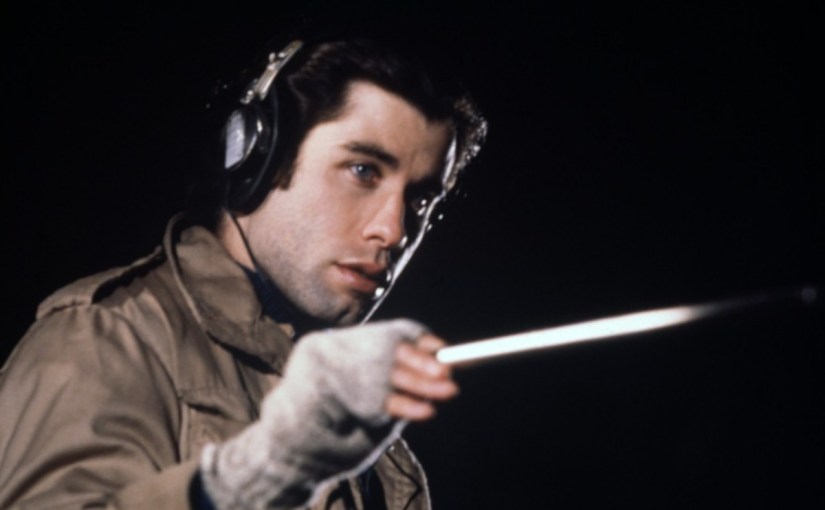
John Travolta plays Jack Terry, a Philadelphia sound effects recording artist for b-grade schlock horror movies.  One night, while out in a park trying to pick up sounds of outdoor nature, he witnesses a car suffer a blown-out tire and crash into a nearby river.  Jack is able to rescue a woman named Sally (Nancy Allen) but cannot save the Pennsylvania governor who was driving the car.

As he is about to leave the hospital, he is specifically instructed to never speak to Sally nor acknowledge to anyone about any of his own involvement in this incident.  However, Jack cannot help but recount the sequence of events in his head and as new details come to light, he knows that there is a cover up at play.

Blow Up operates like a how-to kind of picture.  The expertise of a sound effects recording artist is demonstrated as Jack replays every sound that his equipment picked up. Later he’s able to manufacture his own film by assembling a series of published photographs that also captured the crash.  Sync up the sounds with the sights and a new theory surfaces.  Other mysteries change the course of the riddle through dialogue.  This character has to work by himself using the skills he’s acquired to learn the truth.  He hardly has anyone to commiserate with.

John Travolta is convincing within this occupation that’s not as common as a cop or a private eye.  I like how I can pick up how he uses his recording equipment and even the minute details like labeling what he has preserved within his inventory.

It took a little bit of patience to get used to Nancy Allen’s damsel in distress who plays it up like Judy Holliday or Jean Hagen with the squeaky, dingbat voice.  When we first meet her, she is in an intoxicated stupor that goes on a little too long. Nevertheless, I came around because the tension of the film builds quite well.

John Lithgow is the sadistic adversary – a serial killer and assassin rolled into one.  He’s got the weird, unwelcome appearance like any bad guy in a Hitchcock film.

DePalma is known for his split screen cuts that he offered in Carrie and later in Mission: Impossible.  More well known is his reliance on bringing a character in zoom close up, while in the same frame, another object will be zoomed out at a distance.   During an outdoor evening in the park, an owl hoots and stares us down while John Travolta is far in the background standing on a bridge. Within this same moment, DePalma does it again with a toad ribbiting up close with the actor again positioned out. It’s a disorienting approach that works well at maintaining the perplexity of his story.

I think the final act of Blow Out falls apart a bit.  Travolta is on the heels of rescuing Sally by rampaging his jeep through a crowded parade.  The scene is shot so aggressively that it was hard for me to believe he would survive much less not run down a cop, spectator, or the entire marching band.  DePalma could have tightened this up a bit.

Blow Out ends on a bleak irony that’s quite surprising and definitely against formula.  There’s a running gag for Jack and a film director as they edit a silly problematic issue for a new slasher flick.  I guessed early on how this was going to resolve itself.  Though I was right, I didn’t expect how the conclusion arrived at my predication.  

As well, there are some notable questions left unanswered.  I had to roll back and see if I missed something.  I didn’t.  DePalma’s script neglects some key points with unfinished resolutions. So, I was not entirely satisfied. Still, the how-to procedures along with the pursuit of the truth, while also evading demise, are very engaging.

When I conduct workshops on playwriting, I always recommend keeping up with the news.  An unending wealth of ideas are there to be discovered.  As a sincere compliment to Brian DePalma, it could not be more apparent where his creativity took off with this film.  As a skilled and educated filmmaker, he also writes what he knows.  

Blow Out is very close to being a smart nail biter that echoes the sad truths of political rule breaking by means of savage crime. I wish modern films would be as risky today.  There are so few of these kinds of thrillers being made anymore.
DAS BOOT (GERMANY)

By Marc S. Sanders

Wolfgang Peterson demonstrated how much suspense he can squeeze out of the tightest of movies when he embarked on filming one of the most realistic and famous submarine movies of all time, Das Boot (translated as The Boat).

During World War II, a German U-Boat is assigned to carry out missions of war within the deep Atlantic.  The purpose is simply for attack and never to question motivations or reasons.  Because these Nazi sailors have no concept of the politics or the totalitarianism behind the Führer, it is not hard to empathize with their plights at sea.  Life on a submarine is no party.

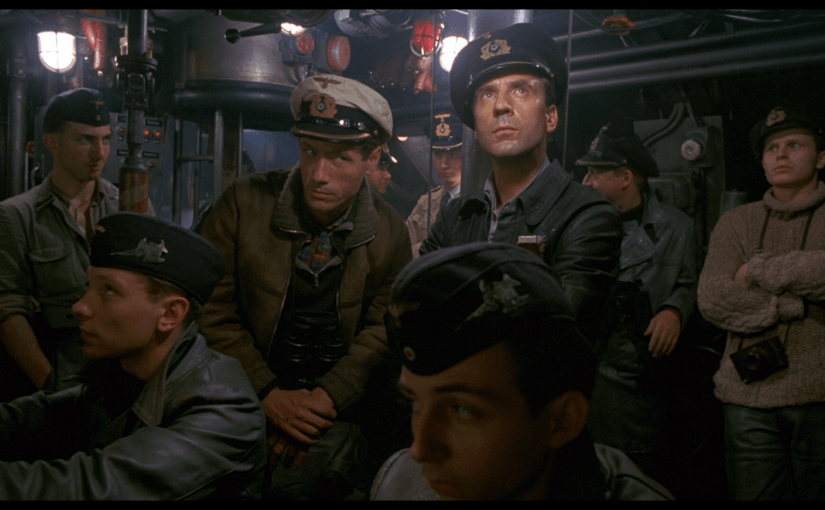
The Captain of the vessel is played by Jürgen Prochnow, the only recognizable actor in the whole cast.  However, all of these men are working just to get by one more day within the very narrow confines of the sub.  In fact, the main character is the submarine.  Rarely has a setting been so evident.  I was told that Peterson used miniature cameras, rare for use in the late 1970s when the film was shot.  He would tightly hold the projector and pursue his cast of shipmates down one galley way after another.  He’d put the camera right up against their face and profiles.  The concentration of these actors to ignore the filming is astounding.  Wolfgang Peterson provides a very clear documentary style to the piece.  Herbert Grönemeyer portrays a war correspondent, easily used within the context of the story to accept Peterson’s approach of simply witnessing the activities and claustrophobia aboard a boat that is primarily under hundreds of feet of ocean water.

To my knowledge, Das Boot is a fictional story loosely based off of accounts from an actual military journalist who was aboard a similar cruiser during the war.  I suppose the film could have been told from an Allies perspective rather than the Axis German superpower.  However, the film works and as a viewer, as you become more engrossed in the picture, you become blinded to the fact that these men served Adolph Hitler.  There’s hardly a swastika in the film.  So, I’m seeing men like any other cadets and officers serving a military branch, working to survive while completing the assignments bestowed upon them.

The torment comes in all forms.  The controls are old and clunky.  It gets very dark at times.  The vessel does not move at a comfortably smooth pace.  They have no choice but to eat rotten food.  It is so bad that the bread turns blue or green.  The men are unbathed and you can practically smell the stench of their body odor and the raw sewage that remains behind.  Sleeping quarters are cramped and are never efficient.

There is such miniscule space available for these people to carry on. The top officers get their exclusive table, but they must get up and move out of the way during dinner, while seamen pass them by on their way to different stations.  Luxury is not afforded for anyone.  The beards of the men become longer.  Wolfgang Peterson shot the film in sequence to accurately show the progression of their beards.  It maintained proper continuity as their sojourn of the boat carried on. 

Most agonizing is when the submarine attacks back at the crew.  A long sequence of suspense occurs following a surprise attack from the air.  The boat has dive into the depths of the ocean, but their controls are malfunctioning and they just continue to sink and sink.  Nuts and bolts pop out of nowhere like ricocheting bullets as the water pressure gets heavier.  My car or my smart phone is more technologically developed and capable than this sub, and I question how this clunker can even withstand the compression.  To maintain balance and direction, the men have to race to the front or back of the ship applying their body weight to work like a scale. 

Imagine the boat coming to a rest on a rocky perch hundreds of feet deep underwater.  There is no propulsion or engine power.  No communications either and the crew has less than a few hours left to survive among the carbon monoxide flooding the ship.  It’s a helpless scenario and at multiple points during the movie, I was convinced this is how it will all end.  Often, I was prepared not to be surprised how this all wrapped up at any given period of time.  Das Boot is a long film. The special edition is over three and a half hours. So, you get a vibe of how stretched out this crew has been away, cramped in these quarters.  Because Peterson stages these challenging scenarios to be extensive, you easily relate to the stress of these men. 

War is hell, even for the Nazis.  The Captain agonizes over a successful attack he’s accomplished when he takes out an American naval destroyer.  He’s done his job well, but he’s angered as he witnesses the aftermath through his binoculars.  Crewmen are set ablaze as they fall off the ship and into water below, and he wonders where the rest of their convoy has gone.  Shouldn’t they be rescuing their men?  This Captain is not a Nazi.  He’s a pawn on a chess board, not assigned to think of the fallen, but rather to do what he is told, absent of questions or emotions.

I do not want to spoil the ending but I cannot recall feeling so much anguish for a collection of Nazi officers before.  Another submarine movie was bold enough to say that the only true enemy in war is war itself and having watched Das Boot, I can clearly see the meaning behind that perspective.  This is not a war picture where one side torments and personally tortures individuals before brutally killing them with gunshots to the head.  In a submarine, the crew is somewhat blind to what they must attack. They are only aware of the environment that troubles them. The men of Das Boot don’t curse the Americans or the British, or the Jews.  They show no prejudice.  That’s not their mentality.

When I see them overcome one daunting challenge after another, I’m relieved for these Germans.  They survived.  They made it. 

However, after watching for over three and a half hours, the final sequence and frame send me a cold, all to real reminder of what occurred during that terrible world war less than eighty years ago and it the film’s ending is the only way this picture could have ended.

Das Boot is a masterpiece of filmmaking.

MEPHISTO (Hungary, 1981)

by Miguel E. Rodriguez

DIRECTOR: István Szabó
CAST: Klaus Maria Brandauer, Rolf Hoppe, György Cserhalmi, Karin Boyd
MY RATING: 9/10
ROTTEN TOMATOMETER: 80% Fresh

PLOT: In early-1930s Germany, a passionate, prominent stage actor must choose between an alliance with the emerging Nazi party or a life of obscurity in exile.

[Author’s note: this is another in a series of movies I’ve watched lately whose subject matters have intimidated me.  There are topics at play in Mephisto that are beyond my ability to analyze in coherent prose.  I must advise you, this is a BRILLIANT film, even if my review below does not convey that fact…]


Watching Mephisto reminded me of the early days of Covid-19.  As the infection spread and restaurants and other businesses voluntarily closed their doors, I was still naively hopeful that it would all just go away.  A friend asked me, “When will you take this seriously?”  I blithely said, “When all the McDonald’s restaurants close, that’s when I’ll know there’s a problem.”  Not long afterwards, that’s exactly what happened.  Then I was indefinitely “furloughed” from my job, and soon after that, the government shutdown occurred.  In hindsight, I was foolish.  The signs were all there.  Had I paid more attention, I might have been better prepared for the stressful days that followed.

This situation is echoed in director István Szabó’s Mephisto, the first Hungarian film to win the Academy Award for Best Foreign Film.  Mephisto tells the story of a popular actor in 1930s Germany, shortly before and after Hitler rose to power.  Hendrik Höfgen (Klaus Maria Brandauer) is a hot-headed, passionate stage actor who throws himself into his performances with abandon.  We watch him evolve from an actor/director to the leading force behind a “revolutionary” theater company that exhorts its audience to acknowledge the plight of the everyman in their society.  He marries (for money more than anything else), but keeps a mistress on the side, a black German woman named Juliette Martens (Karin Boyd) who doubles as his private dance instructor.  He rails at his wife for riding horses before breakfast – the ultimate in bourgeois behavior – but engages in frantic frolicking with his mistress between dance lessons.

Brandauer plays Hendrik as a man who only feels like himself when he’s pretending to be someone else.  Onstage or when directing his cast, he’s filled with boundless energy, dancing with the chorus line or leaping across the stage with abandon.  Offstage, he is quiet and self-effacing, unless he’s socializing with other cast members.  Mention is made several times of his “limp” handshake, a direct contradiction to the strong characters he portrays, especially his most famous role: Mephistopheles in Faust, a role that brings him even more fame and prominence within the theater community.  The imagery of Hendrik is striking: He covers his face in white makeup like a kabuki player with sharply angled black eyebrows and red lips, the ultimate in being able to disappear inside a character.

But something is happening in the background that Hendrik is reluctant to acknowledge.  A fellow cast member almost gets into a fistfight with him when he criticizes another actress because of her associations with a member of the Nazi party.  His wife warns him about the dangers presented by this man who was just elected Chancellor.  [Interestingly, the name of Adolf Hitler is never once mentioned onscreen.]  She tells Hendrik that many of his friends are leaving Germany, fearing for their livelihoods, if not their lives.  But Hendrik refuses to panic:

“There is still the opposition, no?  They’ll make sure he doesn’t get too big for his boots.  And even if the Nazis stay in power, why should it concern me? … On top of that, I’m an actor, no?  I go to the theater, play my parts, then go back home.  That’s all. … I’m an actor.  You can design sets anywhere or buy antiques.  But I need the German language!  I need the motherland, don’t you see?”

Hendrik is so wrapped up in his profession that he simply cannot accept the fact that his freedoms are about to come crashing down around him.  He would rather formulate a far-fetched scenario based on nothing but hope so he can just stay where he is and keep performing.

(I have to be honest: when we took our first steps out of the Covid lockdown, I felt the same way.  Local theaters announced auditions for shows again, and I assured myself and my girlfriend that I would take the utmost precautions and wear masks at rehearsals and disinfect and wash my hands and I wouldn’t get sick.  And, of course, I eventually got sick.  I recovered, but you can probably imagine my disbelief when I tested positive that first time.  “ME?  But I was so careful!”)

Hendrik stays in Germany.  His wife moves to Paris.  Fellow actors either disappear outright or are arrested by the Gestapo in full view.  Hendrik accepts an offer to direct the official state theater, despite his past affiliations with liberal/Bolshevik causes, because of his prestige in the theater world.  A character known only as the General (probably intended to be Hermann Göring) gives him his marching orders as theater director.  He witnesses several Nazis beating a man on the street and walks in the other direction…best not to get involved.

So, what we have here is an actor willing to trade away his soul and his conscience in exchange for the opportunity to remain in the limelight, performing as Mephisto or Hamlet.  The metaphor is not exactly subtle, but director Szabó manages to land the message in such a way that it never feels like preaching.  It’s a masterpiece of storytelling that lands somewhere between satire and Kafka.

An especially telling scene has Hendrik explaining to an attentive crowd of Nazi journalists that his production of Hamlet will portray the lead character as “a hard man…an energetic, resolute hero”, rather than as a neurotic, “pathetic” revolutionary.  Hendrik tells them exactly what they want to hear so he can stay in the limelight.  He’s made his own deal with the devil.  I will not reveal whether Hendrik’s bill comes due during the film, but I will say the finale evokes the landmark documentaries of Leni Riefenstahl.  I’ll leave it at that.

As I said, watching the film reminded me of the Covid lockdown…but it also made me think about all those many, many times in the past that actors and other celebrities have been criticized for voicing their political opinions in public.  “Shut up and play/act!” is the usual cry.  Many people would prefer their favorite actors to behave more like Hendrik: just keep your head down and let everything blow over, don’t make waves, it’s not your place, etcetera, etcetera.  Mephisto argues that keeping silent in the face of injustice or tyranny is not an option, especially not for people in the spotlight.  Those who do so risk suffering Faust’s fate.  Or Hendrik’s, whose last words in the film are brilliantly contradictory.

SUPERMAN II

By Marc S. Sanders

It’s time for the man in the red cape and blue tights to fall in love with Lois Lane, but wouldn’t you know it?  Three Krytonian criminals possessing the same powers as our hero have arrived on Earth with a means to dominate the planet and exact revenge on the son of their jailer.  Superman II picks up where Richard Donner’s original 1978 smash left off.  It remains a fantastically fun and breathless sequel.

Richard Lester (A Hard Day’s Night) gets the directing credit on this film following one of Hollywood’s most infamous behind-the-scenes stories.  While I’m a big admirer of Donner’s body of work, I think it was a blessing that Lester finished the job.  I’ve seen what Donner was intending to do on a special Blu Ray cut, and it just does not work. The characters make odd choices that seem inconsistent with how they were perceived in the first film.  That’s all I need to say about that comparison right now, though. 

In the original theatrical release, the story expands on the relationship between Superman & Lois (Christopher Reeve, Margot Kidder) as well as Clark Kent and Lois.  Eventually, both relationships intersect with one another, and Lois realizes the man she’s been admiring and the one she hardly takes notice of are one and the same.  The problem for Superman, known by his krypton name Kal-El, son of Jor-El, is if it is acceptable to be intimate with an earthling. 

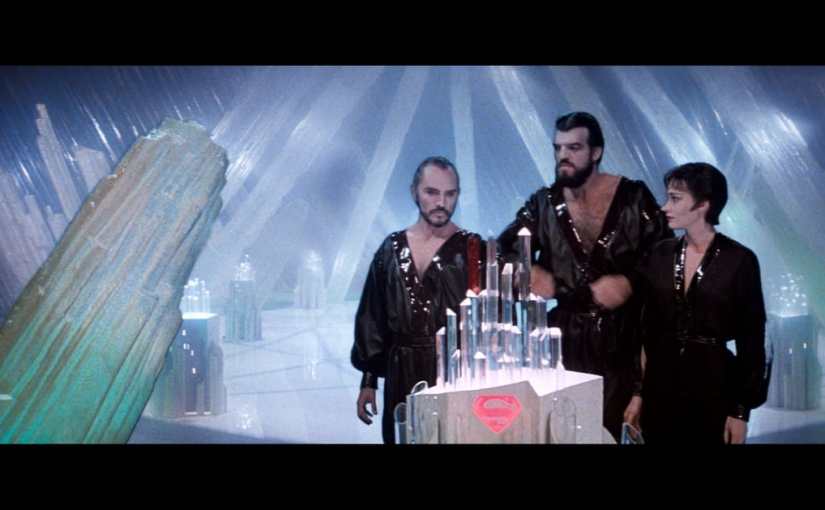
Meanwhile, Lex Luthor (Gene Hackman) has escaped prison to entice three villains from Krypton into a partnership that will allow them to take over the Earth and destroy Superman.  The trio is led by General Zod (Terence Stamp) with the wicked Ursa (Sarah Douglas) and the mindless and mute Non (Jack O’Halloran).  Following their attack on Houston, or as they call it the “Planet Huuston,” and the White House, it is on to Metropolis in search of Kal-El.

I’ve offered up quite a bit of what Superman II provides and I am not even close to sharing all it’s adventurous features and character dynamics.  This is a solid picture all the way through, and it begins with the casting.

I’ll be bold by declaring that Christopher Reeve as Clark Kent/Superman is one of the best casting decisions in film history.  Think about this for a moment.  As good as Henry Cavill was in Zach Snyder’s films, thirty years later, and how well some of the WB iterations have been, the contrary point that most people make is that none of them are Christopher Reeve.  From the smile, his handsome face, clear voice with perfect enunciation and even the signature hair curl over the forehead, no one has looked as good as a superhero come to life better than Mr. Reeve.  When he’s flying, even with outdated visual effect backgrounds, you are still convinced that Christopher Reeve knows exactly how to fly.

Following the director shake up on this picture, it is said Gene Hackman refused to shoot some scenes or do follow up edits.  You can tell when there is a double in place for him and you can hear the different vocal sound bites from Lex Luthor.  Nevertheless, what survived from Hackman’s participation is silly and twisted like you would expect from a modern-day, dastardly villain or as he declares himself to be “the greatest criminal mind of our age.” Some of these lines look hokey on paper, but Hackman invests his showmanship once again in the character.  I love it.  On all of those top ten lists, Gene Hackman as Lex Luthor is the one that everyone is regrettably forgetting about.

Margot Kidder is just as committed.  Lois Lane is best when she is the go-getter and Kidder is thoroughly convincing at not just being seen in the stunts and action but actually performing through Lois’ fears, sense of daring, and adoration for the love of her life.  Near the beginning of the film, there’s a great close up of Kidder looking up into the heights of the Eiffel Tower as Superman flies a hydrogen bomb out of danger.  No dialogue, but you can read it all over Margot Kidder’s face.  There goes my hero.  Watch him as he goes.  Few love interests in superhero films have ever matched what Margot Kidder accomplished in these pictures.

The action scenes are great set ups.  I get a chill down my spine every time I watch the showdown in Metropolis between the three baddies against the man in blue and red.  However, Richard Lester never neglects the acting throughout the whole two hours, particularly by the leads, as well as the Shakespearean maniacal performances from Stamp and Douglas.  Furthermore, the extras throughout Metropolis, Houston and even in Niagara Falls are performing very well and therefore turning the various settings into characters themselves.  Just as the fight over Metropolis is to begin, a cabbie declares “Man, this is gonna be good!”  Isn’t that guy speaking for the audience?  I remember the room applauding in the theater at that line.  When Superman rescues a child in Niagara Falls, a woman utters “What a nice man!” Clifton James, from a couple of James Bond movies, resurrects that redneck persona and it works better here as the guy who clashes with the imposing new visitors.  All of these walk on characters further shape the purpose of the visitors from space.  None of it depends on B-movie tripe like declaring “Peace!”  The personality of the folks meet the strangers from a strange land.  Sometimes it is done for means of slapstick, but it is always very entertaining.

Superman II is a perfect complement to the original film thanks especially to the cast.  Reeve gives multiple performances of Clark and Kal-El that could not be more different.  Kidder takes her character in new directions upon learning the surprises the script has in store for Lois.  Hackman is doing the same routine, but fortunately it’s welcome because I can not get enough of his antics.

This sequel really set the bar high and the next installments for Reeve came nowhere close. Though I actually have an affection for Superman III with that internal struggle depicted in the junk yard scene; one for the ages. 

The first two movies are legendary and Warner Bros/DC films realize they still have not superseded what was done over forty years ago.  The studios are not trying hard enough. However, more to the point, the filmmakers back then got it absolutely perfect, and you cannot beat Superman, nor can you beat perfection.

SMASH PALACE (New Zealand, 1981)

by Miguel E. Rodriguez

DIRECTOR: Roger Donaldson
CAST: Bruno Lawrence, Anna Maria Monticelli, Greer Robson-Kirk, Keith Aberdein, Desmond Kelly
MY RATING: 8/10
ROTTEN TOMATOMETER: 100%

PLOT: After the break-up of his marriage, a racing driver sets out to get back his daughter – at any cost.


Since last night, I’ve been trying to figure out what to compare Smash Palace to, and I finally came up with something: John Sayles.  Smash Palace resembles the best films of John Sayles, in that they are concerned with nothing more than character and plot.  The performances and camerawork do not strive for effect or bias, and the plot, while it proceeds with perfect logic, remained a mystery to me right up to the final scene.  I can’t quite vouch for its re-watch value, but any movie that can keep me guessing until the credits roll gets its due in my book.

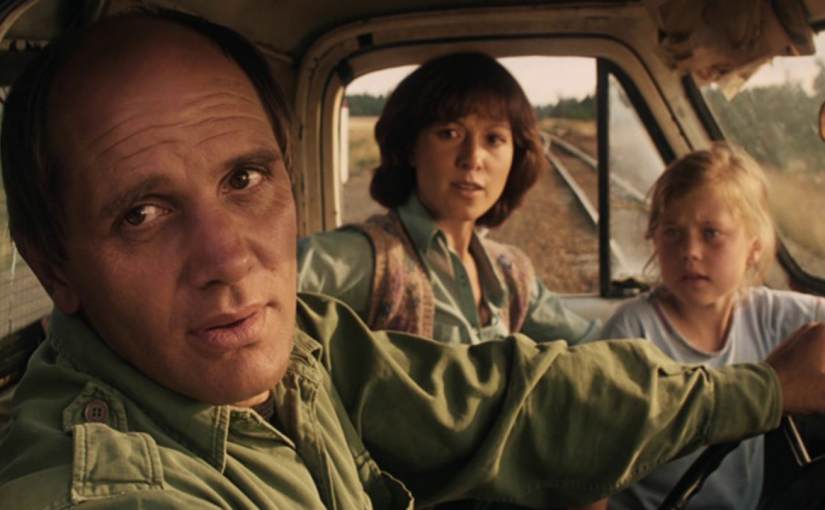
Alan (Bruno Lawrence) is a once-famous Grand Prix racer who has semi-retired to a sprawling auto junkyard, the titular Smash Palace, with his fragrant wife, Jacqui (Anna Maria Monticelli), and their 7-year-old daughter, Georgie (Greer Robson-Kirk).  The fact that these actors were all unknown to me created an atmosphere of reality that would have been more difficult to reproduce with established names and faces.  The movie opens with a spectacular single-car crash on a lonely road and establishes Alan’s job: to haul away totaled cars to his junkyard for scrap.  The size and scope of his automotive graveyard is shown in a shot that astonished me.  (I was even more astonished when I learned in the Blu Ray special features that this graveyard is an actual location that still operates today.)

We watch as Alan tinkers in his garage with a racing car he plans to drive in an upcoming race.  He’s also restoring an older car (from the ‘20s, maybe?  I’m not an expert) for his best mate, Ray (Keith Aberdein), a local policeman.  These opening scenes establish everyone’s relationship: Alan loves his wife and daughter, Jacqui loves their daughter but has become exasperated with Alan’s unwillingness to sell Smash Palace and move out of the sticks, and Georgie loves her mum and dad and enjoys helping Dad with his repair jobs.  When Jacqui wants to go to a party, Alan demurs, citing work.  Jacqui then says she won’t go at all, and Alan does what he thinks is the right thing: offers to drive her to the party, and Ray can drive her home.  Alan’s perfect logic completely ignores the crumbling state of his marriage, much to Jacqui’s dismay.  Even young Georgie questions his decision-making when Alan tucks her in that night.

Jacqui winds up driving herself to the party.  At the party, Ray, Alan’s cop friend, finds it necessary to drive Jacqui home when she is drunk and claims her car won’t start.  On the way home, a moment passes between Ray and Jacqui.  We are teased with the possibility that either something or nothing happened.  The next morning when Ray drives out to pick up the stranded car, he finds no trouble and the car starts with no problem.  Curious…

As the song says, one thing leads to another.  Alan and Jacqui get into a quasi-violent argument at home while Georgie retreats to her room, sucks her thumb, and turns a flashlight on and off, on and off, a precisely observed scene that brought back strong memories of when my own parents had their fair share of arguments leading up to their eventual divorce.  We get a deeper sense of Alan’s emotional depth, or lack thereof, when his idea of making everything all right is apologizing to his wife while she cries on the bed, then having rough makeup sex.  In the afterglow of their “lovemaking”, Jacqui calmly informs Alan she’s leaving him.  His nearly wordless response is worth the ticket price.

I don’t want to reveal too much of what happens next, because while it may seem like we’re heading into soap opera territory, and we kind of are, it’s important that I convey a peculiar emotional tug-of-war that occurred as I watched.  There are scenes of violent emotions getting the best of Alan.  I’m not talking about physical violence or beating his wife or anything like that; this movie is too smart to tip its hand in that direction so quickly and obviously.  But, for example, at one point, Alan points a shotgun at someone while he yells at his daughter to “get in the truck!”  Now, speaking as a rational person, there is obviously no situation, ever, in which pointing a shotgun and essentially kidnapping your own daughter would ever be justified.  I think we can all agree there.  But the subtle genius of Smash Palace is that, while the scene unfolded, I could so clearly see why Alan was doing what he did that, yes, in the moment, I sided with him.  It wasn’t until the scene was over that I found myself wondering, wait, that’s not cool what he did.

But then, was it “cool” for Jacqui to file the New Zealand equivalent of a restraining order against Alan when he had taken her hunting without informing her after they were separated?  Was it “cool” for her to almost immediately take up a relationship with Ray, Alan’s best mate, a move that would almost certainly enrage Ray even further?  Well, what difference does “cool” make?  Jacqui is doing what she feels is best for her and her daughter in the face of a loveless marriage to a man who would rather bury himself in the hood of a car than face up to his responsibilities as a husband.

That’s the beauty of Smash Palace.  We may not agree with what these people do, but we can clearly see the why at every turn.  The movie takes the trappings of a soap opera and turns it into a crystallized character study that explains why a man with limited emotional resources would point a shotgun at someone’s face because he believes that’s his last remaining option.  Alan’s shortcomings have trapped him, and while we audience members know he’s in the wrong, we sigh and commiserate with him: “That poor, dumb bastard.”  And the same applies to Jacqui.  We know she’s doing the right things by moving out and taking Georgie with her, but because we know how shortsighted Alan is, and we know SHE knows it, too, we feel the same kind of regret when her actions force Alan’s hand.  An old family friend, Tiny, even tries to warn her of the consequences of her actions, but she will not be deterred.  Poor, dumb bastard.

Smash Palace may infuriate some viewers who have been programmed by Hollywood convention to see clearly defined boundaries between heroes and villains, especially in domestic dramas involving custody of a child.  This movie denies them that.  Instead, it invites viewers to probe their own psyches and wonder about themselves: what would I do to get my daughter back?  What would I do to keep her safe?  How far am I prepared to go to be happy in this world?  The characters in Smash Palace supply their own answers to those questions in ways that had me rooting for both sides simultaneously.  Now that’s hard.

THE ROAD WARRIOR

By Marc S. Sanders

An Australian post-apocalyptic desert wasteland is the setting of George Miller’s B movie classic The Road Warrior.  It’s a film deliberately short on depth, but big on mash ‘em up, bash ‘em up high-speed hot rods, muscle cars, motorcycles and one big rig truck.

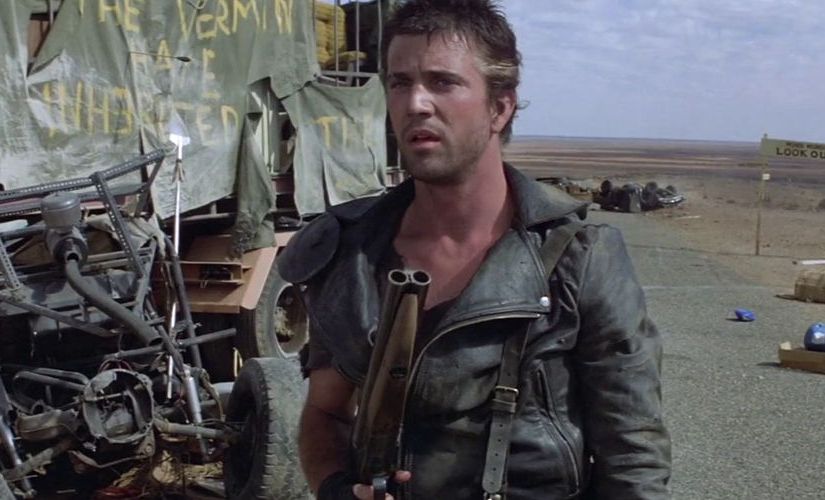
Mel Gibson returns as Mad Max, the leather wearing drifter driver who patrols the endless roads.  A brief narrative at the beginning recaps some of the events of Miller’s first film in this series, Mad Max, explaining that the governments worked against one another, riots ensued, and a nuclear holocaust left little of the population to survive with a shortage on the most precious commodity, fuel.  Max was a policeman whose wife and child were slaughtered by the way, but that’s not relevant here.

The center of the film focuses on a small community of people dwelling in maybe the last known functioning oil refinery.  However, barbarians led by The Humungous (Kjell Nillson) who wears a hockey mask and S & M straps over his bare body are intent on taking over the precious area.  The Humungous’ second in command is a red mohawked freak named Wez (Vernon Wells).  Everyone else in the gang is dressed in the same thematic sex play costume wear with their ass cheeks on display. 

Following some episodes of havoc, Max, along with his dog named Dog, form a contract with the oil refinery dwellers to get the big rig, fuel it up and attach it to a tanker for a journey across the wasteland towards a paradise of ocean blue oasis.

Max has sixteen lines in the whole film.  I’ve expounded on this movie more than he ever could.  In fact, Dog has more dialogue. George Miller knew he wasn’t writing anything of multi dimension or fleshed out characterizations.  You can hardly understand anything that The Humongous has to say or bellow.  It doesn’t matter.

What’s important is the demolition derby footage contained in The Road Warrior.  It’s thrilling.  Bodies get bashed by metal and caught in barbed wire.  Explosions go off in huge fireballs against a scorching sun.  Max fires his sawed-off shotgun at these gonzo gangsters.  They fire crossbow arrows in return.  Some of them use inventive gladiator kinds of weapons with sharp blades and spikes. 

Miller’s frames per second accelerate the various chases.  Multiple collisions end up in a sand dune or turning someone’s ugly sunburned face into hamburger.  The editing of these scenes is magnificent.  Every crash is pieced together cohesively.  Zoom in close ups are spectacularly orchestrated and the cinematography holds up for welcome daylight action where you can easily make out who is who and what is where. 

The inventions of these junk machine jalopies are quite fun too.  Syd from Toy Story must have taken inspiration from this movie when he assembled his freakazoid toys that tormented poor Woody.  Other than Max’s black muscle car and some motorbikes, everything else looks drilled and fused together for relentless mayhem.  Sedans, SUVs, and station wagons would never survive.

George Miller’s world may seem a little prophetic these days.  It’s not that there’s such a rarity of gas, but the need among the masses to hoard fuel is there considering the inevitable price hikes spread around the globe.  Oil will always be a precious dependent.  Environmentalists, I feel for your crusade but be damned. Oil powers so much in and out of this planet.  Electric cars and the few power-up stations are not the dominant alternative yet and won’t be for a while.  Their longevity has not been proven.  Even the disposal of their expired parts has not yet been considered.  So don’t hate me Elon Musk.  I’ll happily eat my words one day, though, I’m sure.

As thin as the storyline may be, George Miller created this dystopian era for Mad Max to drift through and I commend the imagination of the MacGuffin.  Oil is what we rely on, and the setting of The Road Warrior may not be so far-fetched if it ever came to be that we were short on it.  However, I’m not running out to get my masochistic leather body armor just yet.

Wez, The Humungous and their bandit barbarian warlords may be fearless nut jobs, but I get their motivation.  You never know when rush hour may rear its ugly head in a post-apocalyptic age.  So, you better fuel up your Harley, BMW and Toyota because the boss is still gonna want you sitting at your desk by nine.

PRINCE OF THE CITY

By Marc S. Sanders

Sidney Lumet made an outstanding career of bringing attention to corruption within the halls of police precincts, amid the offices of politics and the inside the hallows of cherrywood courtrooms with manipulating lawyers and unsympathetic judges. His films are spellbinding with difficult conundrums for his protagonists to overcome and survive.  Prince Of The City is a perfect example.

A handsomely young Treat Williams stars as Danny Ciello.  He’s a famed cop working for the New York City Special Investigative Unit.  He’s part of a squad of partners who are also his best friends.  Jerry Orbach is the standout among the gang.  They make a huge difference in the big busts they accomplish.  In fact, some of them were part of the famed French Connection cocaine takedown.  Their celebrated careers lend to their monikers.  Danny is an especially accomplished “prince of the city.”  Proudly, they march into a crowded courtroom with a packed audience to announce another huge indictment with the criminals handcuffed together in a line.  However, these officers are also immoral in their daily practice. 

A bust of illegal immigrant drug dealers is made early in the film where over ninety-two thousand dollars is uncovered, and the team agree to share half among themselves.  A little later, Danny gets a desperate call in the middle of the night from one of his informants and to appease him he rips some heroin off another street user to give to the other one.  It’s a necessary evil to ensure progress as an accomplished detective.  The snatching of the monies? Well, as his brother frustratingly points out, that’s so he and his partners can live comfortably in furnished homes with nice clothes and jewelry. Yet perhaps all of this is no longer sitting right with Danny.

None of this is unusual for Danny but considering that an internal investigator (Norman Parker) has approached him about going undercover to reveal corruption that’s rampant throughout the police force, his conscience is weighing on him.  Danny agrees to go to work on this assignment.  However, he lays out one important condition. He’ll never give up his partners, including wearing a wire in their presence.  He lives with his wife, but he loves his partners.

Prince Of The City is a long film, but its running time is necessary because there are so many facets to Williams’ character.  Also, the residual effects of Danny’s work branch off in so many directions.  More than once, Danny is warned not to perjure himself.  Legal authorities find it hard to believe that Danny only broke his ethical code just three times in eleven years.  However, Danny insists that’s all there is.  He’s warned over and over it better be.  Otherwise, those that are working with him will later work against him.

Lumet is very good at showing realistic settings.  An abandoned post office is designated as a secret locale to store evidence and wiretap records that Danny collects.  In the beginning, the joint is empty, but over a progression of five years’ time, the shelves fill up quickly and a large staff is assembled, equipped with computers, typewriters and stuffed file cabinets.

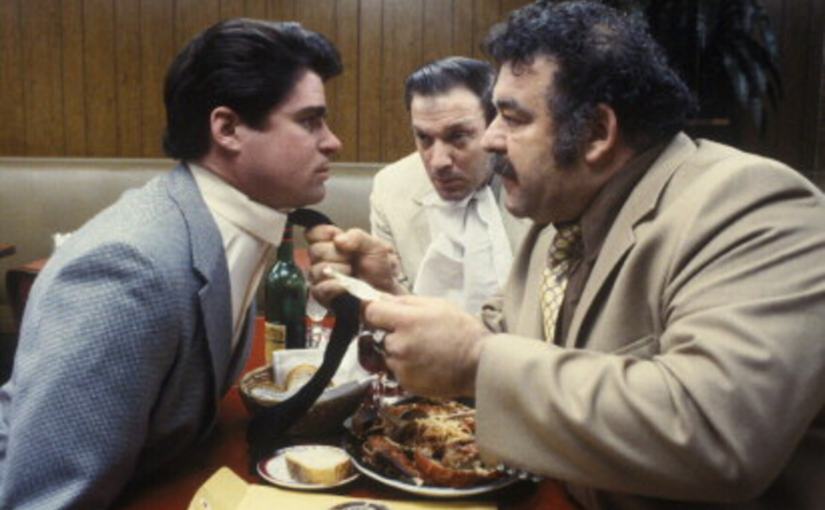
Danny catches cops on the take.  He gets a crooked lawyer on tape.  He’s also taking big risks that amplify his stress.  Lumet showed the increasing agony of a cop against a police department in Serpico with Al Pacino.  I thought the actor was a little overdone in that film.  Here, Treat Williams could not be more authentic, and the transition from cocky detective to paranoid informant, working against his colleagues, comes through much more subtly as the film carries on.  Danny gets caught in a diner sting wearing his wire.  His quick instincts save him, but only after his shirt is torn open showing the wire, and a gun comes out of nowhere.  The sloppy struggle that ensues with a broken glass door and overturned tables loaded with food and dishes is frighteningly realistic.  Lumet shoots the moment with a documentary kind of feel.  Deliberately, there’s no special effect to the camera work here.  It’s all in Williams’ performance and the actors he shares the scene with.

Treat Williams performance is so wired that I am very surprised it did not lead to more recognizable and stand out roles later in his career.  Williams was unknown at the time of this film’s release in 1981, but his lead in this picture is as welcome as Ray Liotta in Goodfellas.

Danny Ciello is a fictional character based on the real-life narcotics detective known as Robert Leuci.  Leuci had a checkered background dating back to when he became an undercover cop informant.  Neither Danny or Robert wears the white hats of pure honor and loyalty.  That is what makes these men so challenging.  Because they are somewhat impure, there is a tipping scale to how they should be regarded. 

A marvelous part occurs in the last act of the film.  Danny’s transgressions as well as what he’s accomplished have all been laid out.  The costs of his partners’ careers have been considered.  The risks and dangers that Danny and his family with two young children have encountered are given their due attention.  Now, as the film is concluding, Lumet along with his co-writer Jay Presson Allen, assemble close to twenty prosecutors and district attorneys in a dark, slightly sunlit office to debate whether Danny Ciello should be charged for violations of perjury.  One prosecutor threatens to resign if Danny is prosecuted.  Another one cannot see how a police officer can be granted pardons for violating the very laws he’s been sworn to uphold. No one is right or wrong in this argument. The collection of actors in this scene is amazing. 

The Oscar nominated script from Lumet and Allen do not provide a straight answer as to whether Danny is a hero or a criminal.  Prince Of The City is never spoon fed to its audience.  Different perspectives and receptions have likely been generated from the picture.  I’d love to hear other people’s viewpoints.

Once again, I commend the running time of Lumet’s film.  Danny Ciello is a complicated man who sacrifices so much that the cost of everything needs to be acknowledged.  The rampant corruption that is uncovered among his colleagues is so extensive that the turnaround response must be depicted.  Some men committed suicide for their crimes.  Some swear they’ll never give themselves up or even Danny.  Danny is expected to do the same in return.  Danny lost friendships and trust over the assignments he accepted. His children and his wife (an excellent Lindsay Crouse) were undeservedly forced to live in fear for their lives, and upend their household, ironically feeling obligated to accommodate those assigned to protect them.  At one time, Danny is relying on men who are heading the investigation, promising to abide by his conditions and guarantee his safety.  Later, these men accept promotions that pull them away to other departments, leaving Danny to deal with people he cannot count on going forward, and who may work against him or refuse to honor original promises.

It’s quite unfair for Danny as he continues to make headway.  An uncaring portrayal by Bob Balaban (really good in everything he does) as a federal prosecutor forces Danny into uncompromising positions where he’s squeezed into offering up everything with little to no options.  Because Danny is no longer the conceited prince that he once considered himself to be, these authorities keep him beholden to his commitments, no matter the cost of his career, his partnerships or how it affects the lifestyle of himself and his family.

Prince Of The City is a very heavy film with much to address.  If this were to be remade, without the guidance of Lumet’s expertise, it could only work as a miniseries.  Though I doubt it would ever compare to Treat Williams’ performance or Sidney Lumet’s specialty in covering the complexities that organically stem from police corruption.  This is a fascinating film that I’m looking forward to watching again.  Because the weight of the material is so thick, I’m certain I’ll discover something new in a repeat viewing.  This is one of Sidney Lumet’s best films.

PRINCE OF THE CITY (1981)

by Miguel E. Rodriguez

DIRECTOR: Sidney Lumet
CAST: Treat Williams, Jerry Orbach, Bob Balaban, Lindsay Crouse
MY RATING: 8/10
ROTTEN TOMATOMETER: 92% Fresh

PLOT: A New York City narcotics detective reluctantly agrees to cooperate with a special commission investigating police corruption, and soon realizes he’s in over his head, and nobody can be trusted.


Sidney Lumet’s Prince of the City is based on a true story, and it never lets you forget it.  In a good way.  The film is defiantly ambiguous when it comes to the main character, Danny Ciello (Treat Williams), who is onscreen in virtually every scene, so we get to see every detail of his epic, tragic fall from a revered cop in the NYPD’s Special Investigations Unit to a glorified stool pigeon for the feds.

…ah, but see what I did there?  Without even realizing it, I’m already sort of siding WITH Ciello, who participated in many, MANY counts of outright theft, evidence tampering, bribery, and so on and so on.  But…in a very Dirty Harry way (but much more realistic), he was helping to cut through the frustrating red tape that would otherwise enable career criminals to get around the system.  But…he had to break the law to do so, and his fellow officers in the SIU were all complicit, some to greater degrees than others.  Their unbreakable code: never rat out your partners.  Ciello has a revealing line at one point: “I sleep with my wife, but I LIVE with my partners.”

This somewhat misguided code of honor is central to Prince of the City.  The film opens as Ciello’s unit makes a lucrative drug bust, confiscates some or most of the cash, and parades the captured criminals into a ramshackle courtroom, whereupon the assorted drug dealers are immediately sent back to Central or South America, bing, bang, boom, no muss, no fuss.  Meanwhile, a special commission, the Chase Commission, has begun questioning officers about police corruption.  Ciello is naturally resistant to cooperating at first, but a feisty conversation between him and his ne’er-do-well brother puts doubts in his mind.  “Look at you in your big house and your two-car garage!  You think I don’t know where this all comes from?  You think I’m stupid, Danny?!”

Ciello’s conscience finally gets a hold of him, and he agrees to cooperate with the commission.  This includes the unbelievably dangerous practice of wearing a wire to meetings between himself and assorted mob-affiliated tipsters.  I’ve seen numerous other films involving wires and mobsters, but Lumet does something different here, and it carries throughout the entire film.  Instead of punching up the suspense with crazy edits or inserts or spooky music, he simply explains the danger and lets the scene play out with as little movement as possible.  In its simplicity, there is as much suspense there as in anything by Hitchcock, accomplished with much less cinematic “pizzazz.”

This simple style pays off in two incredible scenes.  One is where a mobster is dead sure Ciello is wearing a wire and searches him thoroughly…but Ciello’s sixth sense warned him earlier to leave the wire at home.  Another comes when Ciello unthinkingly hands over some evidence to the mobster…wrapped in a post-it that basically says, “From the desk of the State Attorney’s Office.”  Because everything has been presented in such a straightforward style leading up to this moment, this scene has an astonishing effect on the viewer.  There is real danger here, an almost documentary-like feel to it.  The resolution of this scene, including the unexpected appearance of a gun at the worst possible moment, is one of the emotional highlights of this nearly three-hour film.

The casting of Treat Williams in the lead role of this crime epic was also a key to its success.  In the early ‘80s, there were any number of leading men that might have been a much more natural choice for this part: Pacino, De Niro, Hoffman, Beatty, even Travolta.  Putting a relatively unknown, but VERY talented, actor in such a prominent role was a calculated gamble that paid off.  Since he had no major previous roles, Williams was essentially a blank slate.  He hadn’t been typecast as either a villain or a hero yet, so that supports the film’s foundation of maintaining a neutral stance toward the lead character.  The movie isn’t going to come out and tell you if it’s for or against Ciello.  The audience has to make that decision for themselves.

For myself, I would in no way condone his corrupt behavior.  But I admire his decision to at least try to do the right thing.  Despite his adamant stance that he will never, ever turn in his partners, it becomes abundantly clear that the various feds, attorneys general, prosecutors running his case will have no qualms whatsoever about putting him in jail the second he refuses to play ball.  As a result, he winds up being forced to provide crucial evidence that generates indictments for several of his partners.  The aftermath of those indictments varies from partner to partner.  Ciello is being eaten alive by remorse.  He believes he’s doing the right thing, but he can’t stand watching his partners go down one by one.  It’s a fascinating conundrum, manifest at every turn, even in the very last scene of the movie.

In one great scene, a group of prosecutors meet to decide whether to formally indict Ciello and pursue a prison term, even after he has provided them with information that led directly to countless arrests and indictments.  They are divided.  One prosecutor threatens resignation if charges are filed.  But another prosecutor’s argument stuck with me:

“I’ve never known a lawyer to risk his livelihood to expose the crooks in his profession.  And where’s the doctor who ever exposed Medicaid fraud?  Or unnecessary and botched operations?  Or even dope, for that matter?  What doctor ever came in?  Dan Ciello came in, and I don’t care why.  To me, Danny Ciello’s a hero…and we’re trying to decide whether to put him in jail or not.”

For me, that sealed the deal.  The movie is admirably restrained in providing its own standpoint on Ciello, but I would side with those calling him a hero instead of a villain.  I found myself thinking back to Sunday School and the parable of the prodigal son.  After the prodigal forsakes his father and his family, he returns, contrite and humble, begging forgiveness.  The loyal son can’t understand why his father rejoices upon the prodigal’s return, to which the father replies, “We have to celebrate, because your brother was dead and is alive again; he was lost and is found.”

Ciello is that lost soul who desperately wants redemption, no matter how it might hurt himself or his literal partners in crime.  For that, I consider him a hero, not a villain.  Perhaps he’s no longer a prince of the city, but he is at least back on the side of the angels.

STRIPES

By Marc S. Sanders

A trifecta of talent was widely received when Bill Murray, Harold Ramis and Ivan Reitman came on the Hollywood scene. With films like Meatballs and Animal House, they were toeing the line of B movie T&A material. Audiences, however, responded to the wisdom in the comedic potential of disregarding the authoritative party. That is especially true in their R rated army romp from 1981, Stripes.

Stripes is arguably not their most memorable film of any of their careers, but for me it is probably my favorite; more than Caddyshack or Ghostbusters. The comedy was spot on, and the timing was perfect. When John Winger and Russell Zisky (Murray & Ramis) decide to enlist in the army on a spur of the moment, their basic training experience is actually believable. It could happen. I could relate. If I was as big a guy as John Candy, playing the lovable “Ox,” and I was running the obstacle course, yeah…I might run off course uncontrollably into the outer woods. All these guys are completely out of shape. There’s no way we were ever gonna see Rambo here.

Bill Murray might be the leader of this rag tag gang of miscreants, but his own material is just very, very funny. Few comedies have such a hilarious opening scene as he does while he escorts a snobby woman to the airport in his cab. He has enough of her, and so everything is put out on the table. The Three Stooges would have smacked a pie in this woman’s face. John Winger decides to terrify her with some action photos while he drives. To date, no one has ever come close to duplicating this scene.

Winger continues with his rebellion against his Drill Sargent played by Warren Oates who is terrific in his own right. Oates convincingly comes off as straight army material amid all of these nitwits. He can give a facial expression that says a thousand words.

John Candy is a huge highlight in perhaps his breakthrough cinematic performance. Ramis and Reitman wrote a great character in Ox. I think it’s hilarious that a fat guy thinks the most ideal way to lose weight is to join the army because it’s free with a six to eight week work program. We all love to see that it eventually occurs to Ox that basic training in the Army is not exactly a weight watchers program. A major highlight is when Winger rushes Ox into a mud wrestling ring at an adult club. Pure slapstick fun. You can’t help but laugh.

I’m surprised to see that many took issue with the film’s second half. I loved it as the platoon has to pursue Winger and Ziskey who have a special puke green colored RV that the army has engineered with more weaponry than a James Bond car. Eventually, this leads to a ridiculous rescue within a Russian occupied Czechoslovakian outpost. It’s a great blend of action and comedy that holds up nearly 40 years later. What’s not to like?

I’ll be honest. I saw Stripes when I was 10 or 11, and it actually gave me an education on the current life of what it’s like to be in the Army. Having never enlisted, I’m nevertheless convinced that Warren Oates was an accurate interpretation of what a hard driven Drill Sargeant was like. Because it seemed so genuine. It seemed only fitting that a great comedy could be drawn from resisting that kind of authority. The material in Stripes didn’t come off silly or Looney Tunes like. It all seemed natural. The jokes just came alive amid the challenges of entering the Army life.

Stripes remains a favorite comedy of mine.

SCANNERS

By Marc S. Sanders

David Cronenberg’s Scanners, from 1981, is part of the Criterion DVD collection. So is Michael Bay’s Armageddon from 1998. Why? Beats the hell outta me, but what does that truly say about Criterion?

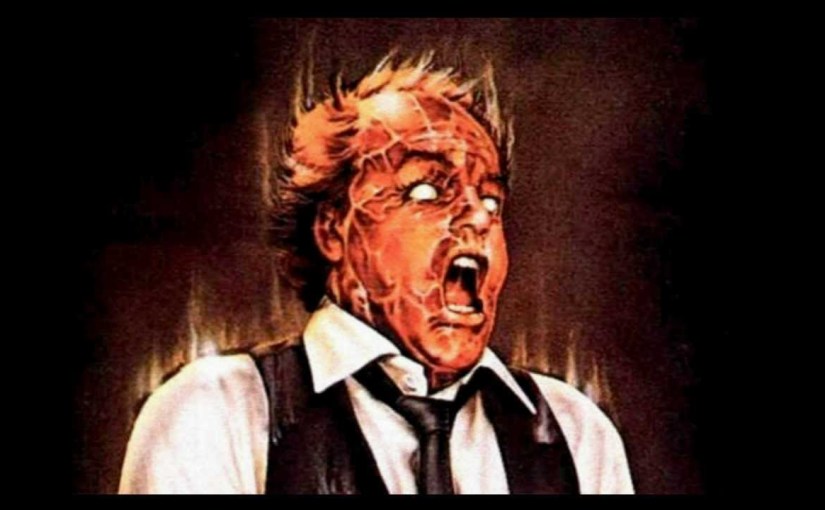
Scanners tells the story of people who are capable of mind controlling others. Some use this ability so powerfully that they can actually make a person’s head explode into what looks like what can happen when you leave a hot dog in the microwave too long. It’s likely how they achieved this visual effect, actually.

Well known cinematic henchman (with the cool voice) Michael Ironside plays a nasty scanner named Revok. In 1981, the best and most cheap way to display “scanning” was for Ironside to distort his face, roll his tongue back as well as his eyes and shake like he’s having a seizure or contending with intolerable constipation. Maybe in 1981, this would amaze and terrify me. In 2020, I wanna say “Michael, knock it off. Pick your toys up off the floor, and brush your teeth.”

There’s also Cameron Vale (Stephen Lack), a good guy scanner. He does the same kind of weird contortions though not as spastic as Revok. He’s been hired by some soft spoken scientist, Dr. Paul Ruth (Patrick McGoohan) – no, not THAT Dr. Ruth – to stop Revok from, I think, taking over the world. McGoohan, plays the role of mentor like he’s failing miserably at his audition for Obi Wan Kenobi.

A scan causes faces to convulse and squirt out blood that looks like Kool Aid. Maybe even your hands would catch fire. That’s about all Cronenberg offers here. Just a lot of schlocky, hamburger meat gore centered around Vale catching up to Revok. Eventually, we learn how a scanner became a scanner. It’s not very eye opening. The final frame does offer a twist but the credits roll too quickly thereafter to really relish that moment.

I can only envision that Scanners was one of those cheapie, mindless, B movie horror flicks on USA Up All Night with Rhonda Shear, during the late ‘80s & ‘90s.

Certainly mindless at least, and that’s the irony. A film about performing mind control and yet it doesn’t have a brain cell in its mix.