DOCTOR SLEEP

By Marc S. Sanders

I never yearned for a sequel to The Shining.  Yet, color me surprised at how well I took to Mike Flanagan’s adaptation of Stephen King’s return to psychic Danny Torrance and the haunting baggage he carries as a middle-aged adult in Doctor Sleep.  This is a time jump sequel that is nearly forty years in the future.

The film version of this story had a tricky challenge.  King notoriously despised Stanley Kubrick’s horror classic adaptation of The Shining. Several important details were not consistent between his book and the movie.  So, what was Flanagan to do?  Well, he got his blessing from the author to move ahead as a sequel to Kubrick’s interpretation because he also ensured that he would not veer too far away from how the novel was edited.  The director reasoned with King that more people are familiar with Kubrick’s product than what’s in King’s pages. Mike Flanagan found the right balance to please not only Stephen King, but also the respective fans of the novels and Kubrick’s unforgettable film.

Danny is played by Ewan McGregor.  He’s often reflecting on his childhood following his survival from his stay at the haunted Overlook Hotel in the snowy mountains of Colorado, where his delirious and murderous father terrorized him and his mother Wendy with an axe.  Now Danny is making efforts to recover from alcoholism as he takes a job as a hospice orderly in a small New Hampshire town.  It keeps him isolated while the ugly hauntings that he shines on stay contained in his mental lockboxes.  He also uses his gift to allow patients to peacefully carry over to the other side.   Danny becomes known as Doctor Sleep.

Elsewhere in the country there is a traveling cabal of people who devour the energies off of young children with similar shining abilities like Danny.  This small cult is known as The True Knot and their leader is the charming Rosie The Hat (Rebecca Ferguson).  The presence of one very special child is Abra (Kyliegh Curran).  Flanagan gets very creative in showing how Rosie, Abra and Danny locate and communicate with one another from faraway points.  Rosie’s technique is reminiscent of an amusing sequence in The Big Lebowski, though as you might expect the mood is altogether different in Doctor Sleep.  

Doctor Sleep is a longer picture than it needed to be.  The exposition goes on for quite a while where three separate stories are proceeding, and it becomes cumbersome to see how the dots are connected.  Yet, the movie eventually finds its way as things become more simplified.  Flanagan works some action scenes and neat visuals into the picture, but he does not neglect Stephen King’s penchant for nauseating and grotesque horror either.  Normally, I feign at seeing victimized children in deadly peril for the sake of escapist entertainment.  Here, it is repulsive on more than one occasion, but the moments serve the story and enhance the motives of the villains.  

The payoff of the film is the third act where this adaptation relies on much of Kubrick’s treatment of The Shining.  As the book was entirely different with its ending, Flanagan had to take a chance with some creative liberties.  Amazingly, his efforts score very well.  I’m not the biggest fan of Stanley Kubrick’s film (read my review on this site), but I had to cheer as more developments gradually unfolded.  There’s much to explore through the eyes of Ewan McGregor as Danny.

Mike Flanagan’s craftsmanship with a cast of supporting actors, including Henry Thomas (E.T.: The Extra-Terrestrial) assuming Jack Nicholson’s role, are quite uncanny and lend to the argument to not depend on AI or “de-aging” visuals to recapture what once was.  Carl Lumbly effectively takes over for Scatman Caruthers and Alexandra Essoe does a very good pick up from Shelley Duvall’s performance as Wendy – a little flighty, melancholy and zany. The little ticks and inflections in these newly cast actors are mimicked quite well without going over the top.

Set pieces etched into anyone’s subconscious who has seen The Shining are impressively recreated by Flanagan’s team, from stained walls, big curtains and chandeliers to that very familiar orange, brown/black sectional pattern on the carpet of The Overlook.  At one point in film, Danny goes for a job interview and the office he sits in is an exact recreation of when his father Jack met with the managers of the hotel at the beginning of Kubrick’s film.  This kind of attempt at consistency has to be saluted.  It’s really amazing.  Mike Flanagan shows his painstaking efforts at recapturing Kubrick’s designs. I do not look at these efforts by Flanagan as commemorations so much as I see an omnipotence that observes Danny like it did to his father Jack before him. Danny might have survived, but the demons of his past and the sins of his father remain. He can never escape where he came from even if he relocates to New Hampshire, or wherever he goes.

Doctor Sleep offers the disturbing imagery you’d expect from Stephen King.  I’ve never been the author’s biggest fan.  Still, I really appreciate the creativity he lent to his sequel nearly a half century later.  It makes sense to have waited this long for the writer to pick up where he left off with some of his most well-known characters and locations.  

This dark fantasy works for its collection of heroes and their villains.

NOTE: I viewed the Blu Ray Director’s Cut which Miguel informed me is the better way to watch the film. I agree. There are more nods to Stanley Kubrick’s original film, and the outline of the picture performs in chapter sections like you might expect in Stephen King’s novel. Mike Flanagan never lost sight of either storyteller’s accomplishments. Doctor Sleep is an undervalued achievement in film. A very worthy sequel.

THE EXORCIST (1973)

By Marc S. Sanders

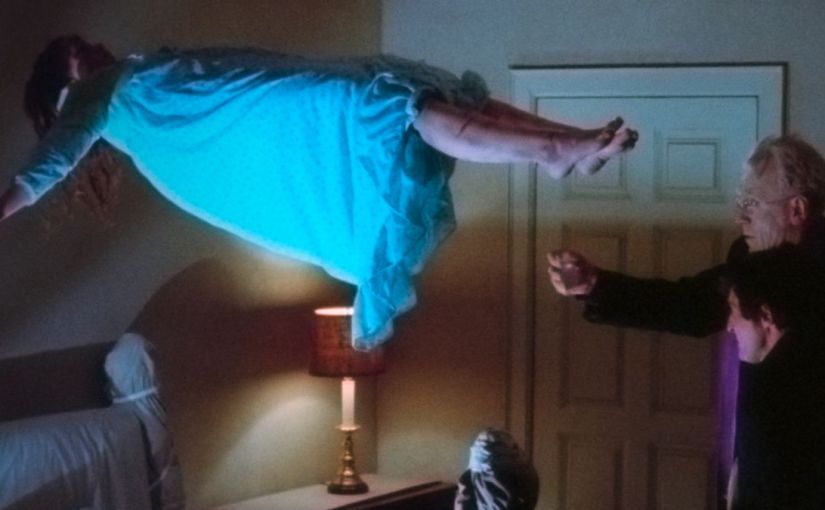
Perhaps it is my Jewish upbringing or the fact that I’m not a spiritual person anymore, but what many consider to be the scariest movie of all time really does not alarm me that much.  William Friedkin’s The Exorcist is a superb demonstration in horror though.  Disturbing? Yes.  Unsettling? That’s an understatement.  Scary? A little bit. 

It’s not so much the threat of a random demon or the possibility of Satan on earth that chills me.  It’s this poor, sweet girl who has been unfairly taken advantage of that makes me shudder. 

William Peter Blatty adapted his best-selling novel into his Oscar winning screenplay and it succeeds so well because amidst all of the terror, there’s an education to be had.  Do any of us truly know or have witnessed someone who has been demonically possessed by an entity of pure evil?  I’ll be the first to come clean and say no.  Therefore, I’m intrigued as Friedkin’s film proceeds to observe how the decision to exorcise a demon from the shell of a pre-teen girl arrives.  Nevertheless, to me it is all fantasy.  I might just hold more faith in the Jedi practice of the Force than I do in the ideas of holy water, devilish idols or even what can befall you by flippantly using the name of Christ in vain.

Famous film star Chris MacNeil (Ellen Burstyn) is on location in Georgetown shooting her latest picture.  She resides in a furnished home with her twelve-year-old daughter Regan (Linda Blair), along with an assistant and a butler servant.  Regan is a fun-loving kid and adored by her mom.  Strange behaviors begin happening and all too quickly, the daughter is beyond control with patterns of activity that are anything but recognizable.  I can’t even describe most of the imagery.  I could never do it justice.

Doctors are quick to attribute Regan’s afflictions to a lesion resting on the cerebellum of her brain.  Yet, extreme procedures and x-rays show no medical disruption or disturbances.  I recall Friedkin’s director cut from 2000 inserted the questionable practice of dosing the girl with Prozac.  Before the supernatural is ever considered, the merits of science and medicine must be explored.  

Nevertheless, it is unbelievably bold how this personification puppeteers young Regan with vile actions of vomiting, uttering the ugliest vocabulary and committing terrible bodily harm and atrocities with a crucifix.  Blatty could have drawn the line with the slaps and punches Regan delivers to the doctors and her own mother.  The point would have been clear.  Yet only something that has to be tangibly real with no question of a joke or side humor, has to go this far.  It’s often sickening and demoralizing to the worst degree, but reality never compromises.  The drivers of this fiction wish to move this as far away from what’s not valid. It’s evident how convincing all the footage is within the film.

Following the mysterious death of Chris’ film director, along with an unheard-of recommendation from a physician, the idea of committing an exorcism to release whatever’s possessing the girl is suggested.  The problem is there is no expert on the subject of exorcism.  It seems absurd, and the Catholic Church is never quick to endorse the procession.  

During the first hour of the picture, a second story covers the personal conflict of Father Karras (Jason Miller).  One of his first scenes shows him arriving home to his ailing mother and removing his collar.  It’s a visual sign that the minister is questioning his own faith as he undoes his garb.  Karras may be a priest, but he also specializes in the study of psychology for his parishioners.  As he encounters Regan in her bedroom, he’s gradually assured that he is speaking with the demon who knows too much about himself.

A third story, which actually opens Friedkin’s film, occurs in Iraq where Father Merrin (Max von Sydow) is excavating through an archeological dig.  He doesn’t have much to say but his stoic expression tells us that his discovery of a medallion buried in the rubble, along with particular statue, spell dread.  It’s no accident that Friedkin places this scene often against the backdrop of a sun sparked, blood red sky.  

Eventually, all three stories intersect within the coven of Regan’s upstairs bedroom, where this demon taunts, cackles, teases and defies the power of the Bible and the Catholic faith.  This third act is impossible to take your eyes off.  Every second of imagery builds upon the power of the supernatural from moving furniture that charges forward like monsters on the attack, to ceilings and doors that split open.  The bed rumbles.  Demonic imagery appears out of the cold darkness.  It’s such a well-crafted sequence of events that is completely atmospheric.  

On what I believe is only my second viewing of the film, there are few things I noticed.  Chris is not a religious character.  So, when she evokes frustration, first at her ex-husband over the phone, and then at doctors and priests who lack explanations, she’s apt to shout “For Christ’s sake,” or “Jesus Christ.”  Variations of the word fuck is also adjacent to this dialogue.  Chris’ language could be a close second to the abhorrent verbiage coming from her monstrous daughter.  Blatty and Friedkin seem to imply how the son of God and the potential of Satan are so easily taken for granted.  Chris may be corrupted, but it is the innocent, young Regan who is trifled with.  There is nary a thing more disturbing in film than watching a child in peril.

Friedkin’s direction with Father Karras is consistently interesting as well.  Often, he positions his camera on a ground floor or at least pointed up to a level above to witness Karras’ ascents.  His faith is clearly shaken.  So, all he can do is rise and rise again, closer to a heaven that may still be welcoming.  Karras climbs flights of stairs or walks up sidewalk hills, to approach a vile intruder seeking to disrupt the purity of angelic youth.  

Only after I watched the film did I read that Linda Blair’s unforgettable performance was not the only contributing factor to Regan’s demonic possession.  Oscar winner Mercedes McCambridge who originally was not credited, supplied the scratchy, tormented and taunting voice of the demon.  It’s an unbelievable embodiment of a powerful villain.  Linda Blair was Oscar nominated for this role, but because she did not entirely own the performance, she likely lost to another child actor, Tatum O’Neil (Paper Moon).  The craft of Blair’s makeup all the way to her changes in eyes is a gut punch to the psyche.  Regardless, this is one of the most uncompromising and effective child performances I’ve ever seen in a film.

Max von Sydow donned aging makeup on his youthful forty-four-year-old complexion, and he looks straight out of another famous role from later in his career (Minority Report).  Richard Pryor and Saturday Night Live did a hilarious spoof on The Exorcist and for this nonbeliever I related to Pryor’s antics.  Yet, Max von Sydow takes what could have looked like utter silliness and convinces me that the ritual of exorcism is incredibly trying and exhaustively repetitive accompanied with the robes he dons to the holy scripture he reads from.  Merrin specifically instructs Karras not to directly respond to the demon.  Don’t even talk to it.  Merrin sticks to that practice.  Karras, the younger and less experienced sidekick, is drawn into the monster’s personal jibes.

Despite my position on religion and faith, I do not frown on what others value.  People find solace in their perceptions of God, the biblical stories, and the figures who teach. Religion often bestows a fulfilling life cycle.  Religion offers comforts through pain, loss, love and hope.  That’s okay. Everyone must follow their own path towards salvation. I tend to turn towards my personal psyche which I speak to daily.  

I watched The Exorcist off of a 4K streaming print found on HBO MAX, and the picture is positively striking.  Aside from dated fashions and cars of the early 1970s, the picture looks incredibly modern.  The themes of the film remain strong.  Hardly anything has ever matched the horror of The Exorcist.

I value everything in The Exorcist that Father Karras and Father Merrin heed to.  I believe in this story wholeheartedly.  Friedkin and Blatty, plus the cast enhance the authentication of demonic possession and how it operates.  This work of fiction, which Blatty claims to have been inspired by from an account of possession of a young boy during the 1940s, is a thousand percent genuine.  Within the moment and inside the confines of this picture this demon lives by overtaking young Regan.

How much did I believe it? Before bed last night, I made sure my little night light was on and I never walked into a dark room.   Every single light in the whole house was practically turned on.  

It’s not about the fear of God or the Devil.  It’s the fear I had for young Regan.

THE MIST

By Marc S. Sanders

I’m tough to satisfy when it comes to monster movies.  Too often they all look the same, or they behave with similar instincts and motives.  There’s a new dinosaur movie coming out this year where they apparently stalk a military unit.  So!  I’ve seen seven Jurassic Parks.  About the only monster that still gets under my skin are the acid pumping, knives for teeth xenomorphs of the Alien franchise.  Everything else is been there, done that, and this includes the insect like pests found within the mist of Steven King’s The Mist, directed by Frank Darabont.  Fortunately, there’s a better and much more engaging attraction to this eat ‘em up blood fest.

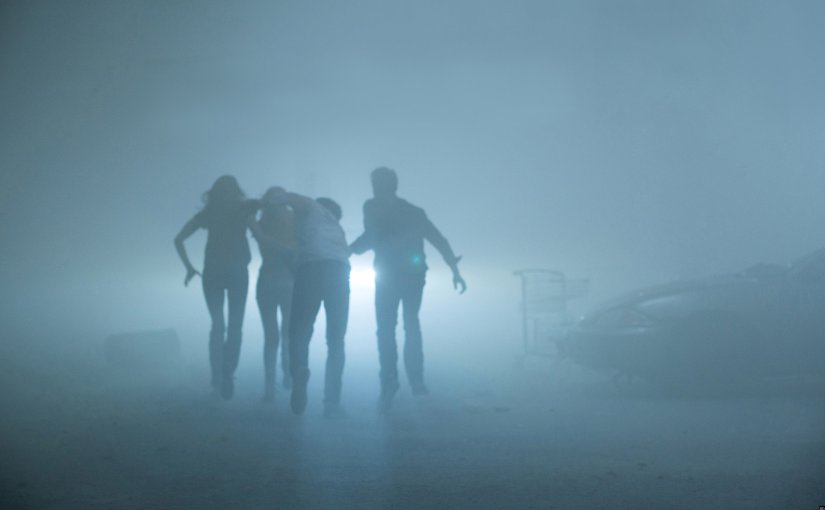
Within another small fictional town in Stephen King’s version of Maine, a dark and stormy night kills the power within the area.  The next morning large fallen trees appear to have damaged the homes of David Drayton and Brent Norton (Thomas Jane, Andre Braugher).  Phones and power remain out, but a curious cloud of mist grows over the lakeside area.  

The gentlemen decide to go into town for supplies with David’s son Billy (Nathan Gamble) in tow.  The checkout line of the supermarket is crowded with tourists and residents when a similar mist envelopes the building and clouds up the expansive front window of the shop.  An elderly man runs through the parking with a bloody nose and urges the shoppers to lock the doors because there are things within this unwelcome mist that are terrifying and bloodthirsty.  I’ll spoil this for you. The old coot is right.  The creepy crawlies are thirsty for blood and hungry for flesh.

You’ve seen much of what Darabont’s screenplay adapts from King’s novella in similar iterations of horror.  The wheel is not reinvented here and though an explanation of this mist and the organisms it conceals is spelled out, nothing is jaw dropping.  Seems similar to how King’s The Stand opened.  The cast of this B movie is what needs to be talked about.

Sure, there are doubters of things terrorizing the community just before the blood is spilled.  Some characters make hard decisions despite the urging of others not to leave the store.  Yet, when these flesh eaters become evident, then the end of days gospel of Mrs. Carmody (Marcia Gay Harden) permeates through the populace of the supermarket.  That’s when The Mist grows a brain to demonstrate the power of fear, threat, and especially influence.  The disturbing Mrs. Carmody exaggerates the purpose of this phenomenon with select biblical scripture both documented and I believe conjured on the fly by her.  Now I am reminiscing back to tenth grade English when I studied Lord Of The Flies.  A tribe forced to live together will ultimately divide.

Darabont so wisely reads a collection of different walks of life forced to either work together or work against each other, both sides with desperate means to survive.  William Sadler is a dimwit mechanic who goes through three different modes of purpose during the film.  He starts with a tough guy mentality, then on to timid fear and regret, and lastly, he’s reawakened to echo the call of Marcia Gay Harden’s religious zealot.   Truly insightful because I often wonder how any person can so easily succumb to the influential beliefs of someone else.  I mean you would have to be dense to allow that to alter your mindset, right? Well Stephen King and Frank Darabont remind me that there’s more dense people on this planet than wise.  A dread of cabin fever only exacerbates to succumb to what someone will tell you. Therefore, let’s observe how the morons respond to the dominant personality.

The action for the sake of jump scares and expected horror does not disappoint too much.  There’s screaming. There’s lots of blood. There’s lots of running too, and monsters and webs and teeth and claws.  A sneak away trip to the pharmacy next door is neat centerpiece, but you’ve seen stuff like this so many times before. Frances Sternhagen gets the opportunity to use a makeshift, bug zapping, flame thrower that made me laugh and cheer.  

The jump scares are not very effective, though.  One bug thuds against the window pane. Otherwise, there’s monster stuff to absorb like tentacles, claws, teeth and webbing. I don’t go for slasher flicks and endless bloodletting gore like most movie makers of this genre attempt to achieve.  Too much blood is boring and a sign of a lack of story.

I was invested in uncovering why this all started.  I was taken with how a small group of people quickly engages in a mob mentality because their individual desperations refuse to satisfy. What instincts will undo people when hope dwindles and your companions turn on you?  Darabont presents some effective moments for these questions. However, once the exposition was out of the way, I didn’t care who lived or died.  My concern was knowing how whoever survives gets out of this dilemma.

The answers come and there is an unexpected ending tacked on by Darabont that is not recounted in King’s work.  Trust me when I say I’ll never forget the conclusion of The Mist.  Same as I’ll never forget the ending to The Sopranos.  That’s not necessarily a compliment though because I think Frank Darabont was only adding unnecessary insult to injury. He resorts to using a terrible psychological epidemic for one last twist of his gleeful, mischievous knife in my back.  I am not spoiling anything for you dear reader, but James Cameron went this route during a sequence in Aliens and it made much more sense, while offering convincing justification.

While you might like the chills and thrills of The Mist, be warned that it’s the ending that’ll leave you angered for days and nights thereafter. I had a furious urge to throw my popcorn at the screen.  

Popcorn can be found on aisle 5 by the way.  Bug spray on aisle 9.

MISERY

By Marc S. Sanders

The worst thing that could have happened to Paul Sheldon is that Annie Wilkes saved his life.

Rob Reiner breaks away from innocent romantic comedy to deliver a violently cruel kind of intimacy. He directs his second Stephen King adaptation, Misery.  (His first was based off King’s novella The Body, which became Stand By Me.)  With next to no prior record with horror or disturbing psychosis, Reiner achieves greatness with this film.  Much like Martin Scorsese, he focuses quite a bit on props that offer no dialogue but say so much.  A cigarette, a match, a champagne flute, a bottle, a beat-up briefcase, a clunky Ford Mustang, along with a gun, a two by four block of wood, a portable grill, a knife, a syringe, a sledgehammer, and a porcelain penguin.  Barry Sonnenfeld is the cinematographer offering brilliant clarities of color for mundane and endless discomfort.

Before leaving his mountainous Colorado cabin, Paul has smoked his cigarette and savored his glass of 1982 Dom Perignon.  He has just completed a new manuscript; a big departure from his best-selling series of novels focusing on his beloved heroine Misery Chastain.  Lady Misery is not how Paul wants to be entirely defined as an author.  

Unfortunately, on his way back down the snowy mountain, he veers off the road and lands upside down in his Mustang, buried within a blizzard.  A hulking figure carries him back to a peaceful, isolated cabin in the woods.  When he awakens two days later, he meets Annie who has already begun to nurse him back to health following two very damaged legs and a popped shoulder blade.  By his grogginess, he might have had a concussion too.  Lucky for Paul because apparently, he cannot reach a hospital or get a call out to his family or literary agent (Lauren Bacall) due to the harsh weather conditions.

It’s also convenient that Annie is quite the fan of Paul’s work, particularly his series of Misery novels.  She has a maternal bedside manner, but oddly enough she becomes irascible at any given moment.  After honoring Annie’s request to read his untitled manuscript, Paul realizes that might have been a mistake.  Annie can easily get unhinged to say the least, and that temper…

Paul Sheldon is portrayed by James Caan, and he was one name on a long list of leading actors considered for the role including Warren Beatty, Robert Redford, Harrison Ford, Robert DeNiro, and Jack Nicholson.  Any one of these guys could have done the part.  However, I can now only see James Caan.  He beautifully plays stationary vulnerability as he’s anchored to a bed for most of the film.  Ironically, for a writing master of words, Caan’s dialogue is not even half of the script that belongs to his counterpart.

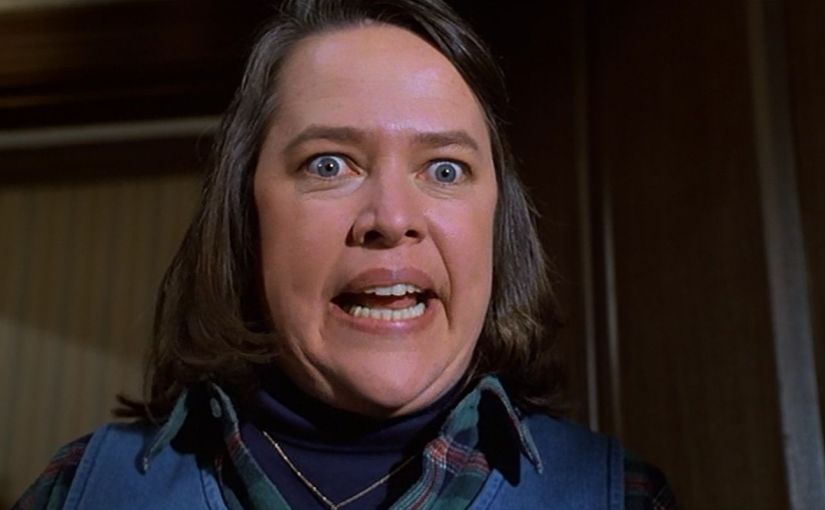
Kathy Bates was deservedly awarded the Oscar and a slew of accolades for her role as Annie Wilkes.  This role put Bates on the map.  Her portrayal is timed so authentically with changes in tempo from childlike enthusiasm to demented rage that she only makes Stephen King seem like that much better of an author than he already was at the time.  Actually, I’d argue that before Misery hit theaters, the Stephen King factory of film adaptations was churning out subpar products like Cujo, Firestarter, Christine, and his own film that he directed Maximum OverdriveMisery elevated the author’s brand back to when it was celebrated with Brian DePalma’s Carrie and Stanley Kubrick’s unforgettable interpretation of The Shining.

I believe what helps is that of all the varieties of horror the author was delivering, Misery did not hinge on the supernatural.  Annie Wilkes is a very real embodiment of capable terror and disturbing psychological handicap.  Kathy Bates effectively demonstrates byproducts of schizophrenia and obsessive, compulsive disorders.  Living alone in the woods with the subconsciousness of an author speaking to her through the pages of his fictional hardcover novels only feeds the beast that she’s become. 

I’m not a big fan of Stephen King’s works.  Often, I find his material of gore stretches too hard for shock value, and hardly ever achieving insightful originality.  To the best of my recollection, I’ve only read Misery, The Stand and It.  That’s enough for me.  I read that as he was writing Misery, he was emoting his alcoholic demons that left him obsessively challenged.  Annie Wilkes developed into that tangible, physical fiend.  This story takes a far step away from the macabre world that built his literary empire.

Rob Reiner does not go for any kind of novel inventions with his film.  He’s simply telling a story with the tools provided by celebrated screenwriter William Goldman (The Princess Bride, Butch Cassidy & The Sundance Kid, All The President’s Men) and his wise adjustments from King’s piece.  Goldman and Reiner wisely cut out a lot of King’s gory schlock.  (That foot scene, for example.  Either way?  YEESH!!!) Smart move, because Annie Wilkes is such force of power personified by the hulking physicality (by choice of Reiner’s lens) and range of Annie Wilkes.  Even though Kathy Bates is short, she is a hulking menace here. Kathy Bates is doing stage work in front of a camera.  I’d argue her performance inspired the idea of eventually converting Misery into a Broadway play that featured Laurie Metcalf and Bruce Willis in the roles.  I wish I could have seen that. 

Goldman wisely allows the picture to move on with another perspective in the form of two characters that were not part of King’s story.  A perfect casting of Richard Farnsworth and Frances Sternhagen as the local sheriff and wife advance the curiosity of Paul’s absence from the world.  They speak for the surrounding areas that don’t reveal what is beneath the blankets of snow where few clues remain, and not even a missing 1965 Ford Mustang can show itself.  They’re funny, quirky, and unusual, almost like a combination of Jessica Fletcher or Miss Marple seeking to resolve the mystery.

Props like a gun and a knife along with visuals like uncontrollable fires and fight scenes are nothing new.  However, it’s when these scenarios are paired with Kathy Bates to victimize a small, weakened James Caan that these items become well filmed properties of Rob Reiner.  So again, I focus on the inanimate objects of Misery because Reiner lends a lot of footage to all of these working pieces.  This revolver suddenly has dialogue of its own through one of Annie’s personalities.  The knife works like a guard dog for Paul.  The aluminum can of lighter fluid sadistically squirts itself to tickle or tease an extreme point for Annie.

The cigarette and champagne flute emote those small, cheating, harmless vice escapes from commitment that awards Paul. 

The sledgehammer puts its foot down.

The match plays both sides of the duality during different points of the film.

Misery is that film that works with a small cast, but with a wide population of environment, in a snug, confined space.  I describe the picture this way because like Annie Wilkes, this exploration in psychological terror operates without fair balance.  When an animal cannot control and subdue its instincts, there’s no telling what to expect, and an unpredictable Annie Wilkes might be one of the scariest personifications any one of us could ever encounter.

THE CHAMBER

By Marc S. Sanders

Having recently read John Grisham’s fifth novel, The Chamber, I opted to watch the film adaptation directed by James Foley. 

First, allow me to say that Grisham’s novel is primarily stale and boring.  That’s only because his nearly five-hundred-page best seller is occupied with a lot of legal procedurals and tactics necessary to get a convicted, racist murderer off of death row before his scheduled date of execution.  Grisham permits moments where his characters can bond, become forgiven or get even more revolting with each other.  In between though are efforts of appeal after appeal.  It’s likely how it works.  A motion is carried out.  It’s rejected.  On to the next in line.  In fiction though, this is terribly redundant. 

James Foley’s film does not work that way, however.  In fact, it’s a much worse experience.

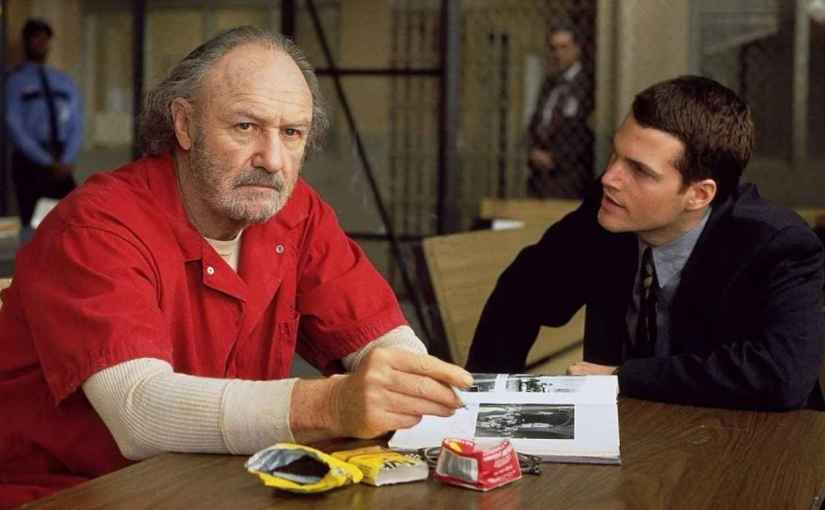
A grey bearded Gene Hackman with oily, stringy hair and tobacco-stained teeth is Sam Cayhall.  He’s a former member of the Ku Klux Klan who is sentenced to the gas chamber for the murder of two young Jewish boys who accompanied their father, a Mississippi civil rights attorney in 1967.  The father lost both legs and years later he took his own life.  Sam is considered solely responsible for bombing the lawyer’s office building. 

Chris O’Donnell plays Adam Hall, a twenty-six-year-old attorney eager to take on Sam’s case and get him off death row.  Sam will finally meet his grandson but he won’t be very welcoming.  Adam is adamantly against capital punishment and he’s repulsed by his grandfather’s past, but that is not enough to send the old man to the chamber.

IMDb trivia documents that screenwriter William Goldman (Butch Cassidy And The Sundance Kid, The Princess Bride) walked away from the film after six drafts.  Another credited screenwriter used a pseudonym to keep his name disassociated with this picture.  John Grisham considers The Chamber the least favorite of his film adaptations thus far.  I can imagine the suffering with trying to assemble something compelling on film.  Frankly, I don’t think it could ever be accomplished.  This stuff is either boring or ugly or both.  Try and project it on a screen and it will not deliver a message like Schindler’s List or Do The Right Thing.

Gene Hackman suffers the most from this film.  His character is clearly there, but the script and directing and even his primary scene partner, Chris O’Donnell, are not up to par.  Hackman puts in the energy with an old man white trash dialect.  He has the expected hateful outbursts of a Klansman.  His appearance is convincing too.  However, nothing he has to say is important.  He’s actually not hateful enough, even if he’s freely uttering the N-word or being derogatory towards the Jewish people who run the legal firm that Adam works for.  As well, the script does not offer empathy for him or enough remorse of his past sins. 

Chris O’Donnell is supposed to be the idealized grandson in the mid-1990s who feels shame for his family’s history of Klan participations and crimes going all the way back to his great, great grandfather.  Hardly any opportunity is offered for the young actor to feel this way.  He barely gets angry or empathetic when he shares scenes with Hackman.  Instead, his moments are wasted with a young staff member of the Governor, played by Lela Rochon. She has too large a role, especially when Gene Hackman could be doing more. The two prattle on about topics that result in no consequence. 

Faye Dunaway plays Hackman’s daughter, now a wife to a Southern aristocratic banker.  She’s a recovering alcoholic, which is assumed to be a residual cost of her father’s misdeeds.  Dunaway, this once great actress, has no connection to either Gene Hackman or Chris O’Donnell.  It’s as if she is not listening or properly responding to either of them when she appears.  Then again, O’Donnell is not lending his best towards Hackman either.  He’s very flat, very plain.  His character from Scent Of A Woman went on to legally represent his racist grandfather.  His Robin, the acrobatic DC superhero, has more personality and drive than this guy.

Thematically, John Grisham builds his thrillers off of what southern American law mandates.  Precedents become obstacles for his protagonists to overcome, or the characters have to learn to embrace what’s at their disposal.  However, it’s tempting to hinge on racial divides to serve as antagonism.  That’s tricky because if you emulate the hate and racism too much, then it looks glamourized. 

James Foley provides many exterior shots of uniformed modern-day Nazis and Klansmen marching outside of Sam’s penitentiary.  Others are there to applaud the death penalty for the old coot.  These are just visuals though.  They say nothing except enhance the image and platforms these sects stand for.  If a film is to bring prejudice to the forefront, then the screenplay or book better have something important to say.  Let’s study the science of hate and where it stems from.  Let’s focus on those who fight against such cruelty.  The Chamber just marches itself towards an inevitable conclusion with nothing gained in the process.

Fortunately, the author’s novel uses its five hundred pages to span the last four weeks before Sam Cayhall is to be executed, and in that time his grandson learns more of what transpired in the convict’s past.  Then the author delves into how Adam grapples with what he learns.  James Foley’s film only flashes back to one very ugly incident.  From there, it’s hardly discussed and it is definitely not focused on enough.  Foley stages the murderous events but his film has nothing to say about any of these things afterwards.  Adam hardly ever gets disgusted or even a little angry.  Sam never regrets or even champions what he’s responsible for.  These are just scenes from a book reenacted for a Hollywood film, and devoid of any emotional weight.  Do something guys!!!!!  Shock me!!!!

I have to credit what Gene Siskel and Roger Ebert observed about the film.  The racist, former Klan member, Sam Cayhall, steps out of his cell and walks down the hallway. A series of hands belonging to African American prisoners shake Sam’s hand through the bars, and they pump their fists in allegiance for their fellow prisoner.  In what world would this happen where the black occupants applaud the cellmate racist buddy?  Forgive the term, but I’d expect they would lynch this guy for what he did before entering this prison.  This kind of staging is an insult to the intelligence of what hate stands for in this country, where it was back in 1996, or nearly thirty years after the movie was released.  Why is The Chamber whitewashing what really happens? 

I was not fond of either the novel (a boring drag of a read) or the film (an insult lacking insight or sensitivity), but at least John Grisham did his homework. Racism is not to be sugar coated for what is genuinely ugly in this world.

SILKWOOD

By Marc S. Sanders

As the 1980s were setting its stride, Silkwood might have been one of the earliest in a line of films to focus on the union worker who fights back at the billion-dollar corporation.  Some might unfairly regard the movie as The China Syndrome, Part II. Other well-known pictures of this mold are even more familiar to me like Michael Mann’s The Insider.  However, director Mike Nichols, working with a first screenwriting effort from Nora Ephron who partnered with Alice Arlen, showcases the aggravation on not just Karen Silkwood, the real life potential whistleblower, but also her friends and co-workers in a one factory town just outside of Oklahoma City.

Karen (Meryl Streep) lives with her boyfriend Drew (Kurt Russell) and her best friend Dolly (Cher) in a run-down house in the middle of nowhere.  They ride to work together at the local plutonium manufacturing plant where they dress in scrubs and gloves. Punch in, punch out kind of days, and often they are expected to work double shifts and weekends.  Karen works an assembly line where she places her hands in rubber gloves and assembles dangerous combinations of chemicals in an enclosed box.  It’s also routine that before you leave your station you wave your hands over a sensor to ensure you have not been exposed to radiation.  There’s even sensors you walk through as you enter and leave the plant.  When those sensors go off, a calm kind of film seemingly turns into a horror movie.  The last thing anyone could ever want is to get “cooked.”

Karen does not live a perfect life.  Her three kids reside with their uncompromising father in Texas.  Money is not ideal.  Dolly is a slob and has also invited her girlfriend to live with them.  Karen can manage with all of this, but when she observes some unconventional activities around the factory she gets up the nerve to head the union for better protection and working conditions.  However, the further she goes looking at files and photos, jotting down notes of what people say and do, plus taking trips to Washington DC, and getting phone calls from attorneys at night, she becomes more and more isolated from Dolly and Drew, along with the rest of her close-knit workers.  Karen is not just risking her job, but everyone else’s jobs and worse her own life.

The attorneys lay it out to the townsfolk and the union of the horrifying statistics that go along with radiation exposure.  The tiniest fraction of a miniscule of exposure to the smallest crumb of chemicals could increase a human’s bearable limit towards radiation and cancer.  The sad irony is that the more that is learned, the more the people of this area smoke and smoke some more.  Granted, this story takes place in the early 1970s, though.    

The company is primarily represented by an intimidating Bruce McGill.  He’s great in everything he does and is worthy of an Oscar nomination somewhere.  M Emmet Walsh has no lines but his presence is enough to shake you; the slimy guy you easily recognize from every other movie you have seen.  While the company’s overbearing intrusion is shown plenty, the script for Silkwood focuses more on how these working people get by.  They are treated unfairly and in dangerous working conditions, but they also know this is the only place that offers steady income in the area.  Without this factory, the whole town would be left in dire straits.  Karen is repeatedly told or implied to leave well enough alone.

Meryl Streep notches another harrowing performance on her resume and bears such a departure from more sophisticated characters found in Sophie’s Choice and Kramer Vs Kramer.  Karen Silkwood is not educated and she bears an unmistakable white trash dialect but she’s also not stupid and the more progress she makes at exposing the plant’s shortcomings the more unfairly she is treated with department transfers and workplace shake ups that she is indirectly blamed for.  Potential threats on her life begin to build, but she only upholds a bravery.  You really observe the strength of Meryl Streep.  She’s at the top of an elite class of actresses at this time that also included Sally Field, Jessica Lange and Glenn Close.

Cher plays Dolly in her first on screen role.  The variety act performer probably subjected herself to a bigger departure than Streep.  She was not a professionally trained actress at the time.  Mike Nichols insisted on no makeup along with her hair unkept and flat, while dressed in green chino pants and baggy sweatshirts.  The new actress carries herself so well without the usual glitz that accompanies her.  Her scenes with Streep are workshops in acting technique. 

Kurt Russell delivers another understated performance.  One of the best actors out there who has never been enough of a critical darling.  Drew is likable and Kurt Russell plays him as a settled in match for Streep’s portrayal of Karen.  Watch how they tangle up in each other’s arms in bed or when he snaps at her as she carries on her crusade while he’d rather things be left alone.  His timing is perfect for the script.

Mike Nichols keeps his film calm, except when the go by the numbers narrative must be disturbed.  A radiation cleanse with high pressure hoses will make you wince.  The factory alarms will terrify you.  Meryl Streep accepts the physical taxations necessary for this setting.  Nichols gets in close with his camera to show how cleansers dressed in scrubs and masks rub Streep down until her skin is a burning red.  I distinctly remember how her right ear appears in this scene, getting flushed by something just short of a fire hose, and the aftermath of her sitting in a chair is so discomforting while a company doctor assures her that there’s not much to worry about as long she brings in her urine samples daily.  In fact, soon all of the employees are tasked with delivering their urine samples.  What kind of place is this?

While Silkwood is based on a true story with a burning question left behind, I do not want to reveal too much.  Many have seen Silkwood since it was released over forty years ago, but as the third act begins, the fallout only becomes more disturbing and Mike Nichols directs a horrifying sequence built primarily on the pealing of old wallpaper.  That’s all I want to suggest. 

Karen Silkwood was a very unlikely crusader.  She probably never envisioned what she would become and what she would fight for.  Yet, she uncovered horrible truths that should not have been occurring under the eye of billion-dollar corporate America.  After watching Silkwood, I can only imagine what else was there to turn over.

NOTE: Another good reason to watch Silkwood is to discover early performances from some amazing character actors who were either just starting their careers or continuing to hide in the crowd. 

Scavenger hunt for Anthony Heald, James Rebhorn, David Strathairn, Ron Silver, Fred Ward, Diana Scarwid, Bill Cobbs, M Emmet Walsh, Craig T Nelson, Tess Harper, Will Patton, Richard Hamilton and Josef Sommer.

MISSION: IMPOSSIBLE THE FINAL RECKONING

By Marc S. Sanders

The blessing behind Mission: Impossible The Final Reckoning is that it opts not to follow the uninspired routine that was settled for with the previous entry, Dead Reckoning Part I.  With myself included, that film was poorly received overall (look for my review on this page). It performed way below box office expectations as well.  After its release, writer/director Chrisopher McQuarrie and producer/star Tom Cruise were in a quandary.  The hanging thread of a magical key/MacGuffin and the answer to destroying the omnipotent Entity were left unresolved.  A new film had to be made, despite an empty storyline.  Money had to be spent.  So, the guys needed to invest it wisely.  For the most part, the finances were used quite well as the pair learned what worked. More importantly they steered away from what didn’t.

What this movie improves upon is a hearkening back to some of the favorite elements of almost all of the prior films in the series, now on its eighth chapter.  Naturally, some citations cover what occurred in the last film to drive the continuous thin story of Final Reckoning. There are references made to the mysterious Rabbit’s Foot from the third picture, a favorite of mine.  Most notably, is the return of a long-lost character that no one would ever expect to turn up again. The best thing is that he truly serves the mission.  He’s not just a cameo blink and miss it.  Ghostbusters: Frozen Empire repeated that terrible grievance over and over.  The return of this particular guy actually makes you smile, laugh and cheer.  Yes, believe me when I tell you that marketing for Final Reckoning thankfully do not share every detail.  There’s more here than Tom Cruise running and running some more. 

Miguel and I took advantage of an IMAX presentation, and for two guys who normally favor Dolby, this action/adventure should only be seen on IMAX.  Probably the best film I’ve ever seen in this medium and I saw Dead Reckoning Part I this way, but that did not measure up to what’s offered this time.

Tom Cruise is absolutely nuts.  He’s over sixty and he’s doing some of the most daring stunts he’s ever accomplished.  The insurance bill to cover his safety must be at least half the budget to make the movie.  The famed biplane scenes that you likely caught in trailers, even on the marquee poster, is so much more impressive on IMAX.  You are seeing every limb of the actor’s body stretch to their breaking points to hang on to first a red plane and later a yellow plane.  Cruise’s facial muscles stretch against the G-force that is giving him resistance at ten thousand feet in the air.  McQuarrie makes sure to cover every inch of these flying machines from the cockpit to the wings and the tail rutters and the landing wheels underneath.  Cruise’s superspy, Ethan Hunt, has to climb all over these things as they go up and down and upside down and right side up on top of bursting into flames.  This scene is not even over in ten minutes.  It feels like a good twenty-five minutes and it looks like it’s no easy feat for Mr. Hunt.

Midway through the film finds Ethan Hunt deep sea diving to a shipwrecked submarine.  This sequence might rely more on set design, but I was convinced the entire time that Cruise was actually that deep below the surface of the water.  Memories of James Cameron’s The Abyss come to mind, but McQuarrie’s craft of this middle sequence within his three-hour film is so well edited and designed.  On IMAX you feel yourself submerged with the weight of the ocean above you.  The film will cut to the outside of the sub to show it drifting as Ethan Hunt shifts from one side of the interior to the other.  Whatever action the guy takes, the sub works against him leaving you wondering if the vessel is going to topple over an ocean floor cliff to even greater and unescapable depths. 

I will never like this movie as much as when I saw it in the IMAX screening.  It’s impossible to feel the same way on a large in-home flat screen.  This is a giant movie.

Grand set pieces with the sub or the planes had me thinking that Christopher McQuarrie should get a Best Director nomination.  I know it won’t happen but not everyone can accomplish what’s offered in Final Reckoning.  Could Martin Scorsese or Francis Ford Coppola?  I question that, because this is an altogether different kind of beast.

McQuarrie must have done a polish on the violations he committed with the last film.  The story remains to be nothing but a chase with countdown digital clocks and the urgency for all of these tasks to be accomplished by Ethan and his team at the exact same second (a repeat M:I staple), but the dialogue does not drive in literal circles of similar vocabulary this time.  Terms like “the key” and “the entity” are not so exhaustingly uttered over and over in this film.  Esai Morales, as the conniving Gabriel, is much more interesting.  In the last movie he was terribly boring.  No charm.  No anger.  No brattiness.  Here, he at least gleefully laughs at Ethan’s demise.  He’s still far from a great villain and totally forgettable, but at least he’s given something more to do than just stand menacingly behind Tom Cruise. Morales is not just donning a dark tan and a salt and pepper goatee. 

Most of Ethan Hunt’s team is given something to do, particularly Ving Rhames as Luther and Simon Pegg as Benji, always reliable.  Hayley Atwell was the best feature of the last movie and she’s great here too as the pickpocket, and now supposedly a quick learning kick ass superspy.  Kind of—No-VERY ridiculous but I stopped asking questions.  Atwell deserves a franchise series of her own.  She’s charming and lights up the screen.  Great actor too.

Pom Klementieff as the dangerous assassin Paris is now a good guy and other than speaking eloquent French she’s regrettably become a ho hum element.  There are other unnecessary characters including Kittridge (Henry Czerny) and those two guys who were chasing Ethan in the last movie.  One carries a stupid secret that’s more like an unwelcome surprise.  The other joins Ethan’s team to shoot a gun and look panicked. 

It will only frustrate you to follow when Ethan or Gabriel has the upper hand.  Christopher McQuarrie fleshes out his overly long three-hour picture playing games like that, and I stopped trying to pass his impossible SAT exam.  The attractions are a few of the characters who work with Ethan and the great feats of strength that the hero attempts to overcome. 

It is not the best in the series.  It is a huge improvement over the last picture, though.  What’s most significant is that Mission: Impossible The Final Reckoning is a gorgeous, mind blowing and breathless visual opus.

SEE IT ON THE IMAX before it self-destructs on your flat screen in five seconds.

THE HOT ROCK

By Marc S. Sanders

I’m a sucker for a good caper.  Capers play like strategy games.  An object (Hitchcock called them MacGuffins) needs to be acquired.  It doesn’t matter so much what the object is.  The importance falls within the pursuit. 

William Goldman wrote The Hot Rock, adapted from a novel by Donald E Westlake who penned a series of books focusing on the ex-convict John Dortmunder and his further adventures.  In the film, he’s played by Robert Redford. 

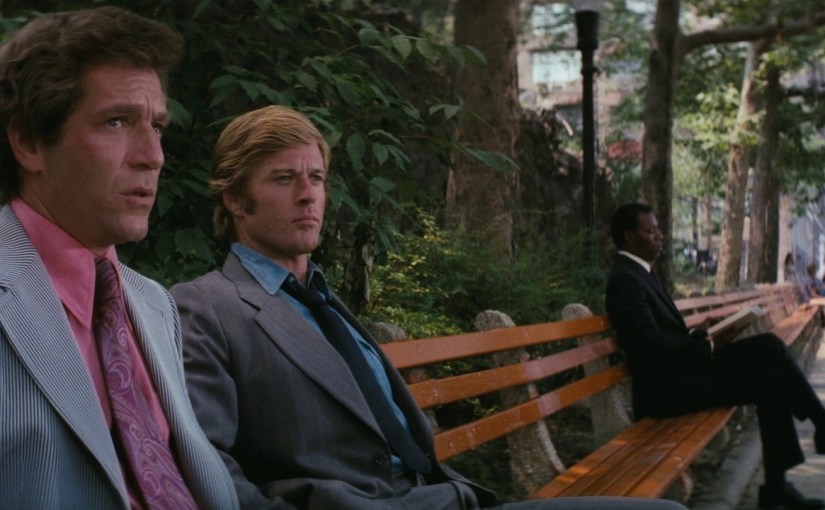
On the day that John is released from a New York state prison he’s picked up by his inept brother-in-law Kelp (George Seagel) who escorts him to Central Park.  Kelp wants John to be the fourth member of a team and steal a priceless diamond.  A man by the name of Dr. Amusa (Moses Gunn) sits about five feet away from them on a park bench.  Amusa breaks it down for the men, but they get interrupted by an elderly woman who sits between them to feed the pigeons.  This is what you can expect from The Hot Rock, a film structured under one pesky inconvenience after another.

This rock is currently on display at the Brooklyn Museum, on loan by an African country who has no business having possession of the valuable.  The stone belongs with Amusa’s country and he’s ready to pay Kelp and his crew $25,000 each to pull of the heist.  He’ll also, reluctantly, front some funding monies ahead of the theft for preparations. 

Like in all of these kinds of movies, John is ready to do one last job.  Then he’s out for good.  However, one last job turns into four last jobs.  Without spoiling too much, the rock gets relocated from one place to another.  So, a late-night heist at the museum turns into a break in a prison, and then it’s somewhere else and somewhere else after that.

As Hitchcock describes, you never care about the MacGuffin.  For movie purposes, you see it on display in its majestic glory, encased in a glass box right in the center of the museum, but so what.  The question is to uncover how the guys are going to get it out of there.  The Hot Rock doesn’t work nice and neatly like Ocean’s 11 or The Score.  In those movies, there are things that don’t go according to plan.  In The Hot Rock, nothing goes the way it should. Honestly though, it should be funnier than it really is. 

I recall there was a movie called Quick Change with Bill Murray doing his best to get out of New York City following a bank robbery.  It was comedic all the way through and maybe that’s because it was Bill Murray of Caddyshack and Ghostbusters fame, not to mention Saturday Night Live.  Robert Redford is the rugged actor of the time in 1972, though.  Not a comic and he plays Dortmunder like a serious kind of thief, even with his famous blond locks and toothy grin.  George Segal along with Ron Leibman and Paul Sand are bumbling chatter mouths, but are they funny?  Segal’s character steals a car to pick up John and we see him trying to figure out how to drive the dang thing, nearly running over Redford.  I never believed he did not know how to not drive the car. 

BY THE WAY: Ever notice in movies that they’ll show someone does not know how to drive a car by having them accidentally turn on the windshield wipers?  That’s all that is done.  That and having the car drive in S shape patterns as if the steering wheel suddenly took on a life of its own.  Then the scene comes to a halt with a startling slam on the brakes.  Never fails.  This happens over and over again in the movies.

Zero Mostel appears as the father/attorney for Paul Sand’s character.  It’s Zero Mostel, but Goldman’s script doesn’t give him much material to play with.  It’s not a silly caper flick because suddenly Zero Mostel of The Producers makes an appearance.  Look at Ocean’s 11, and see what Carl Reiner is doing.  There’s an organic affection for Reiner’s character that Mostel never achieves here. 

Peter Yates directed The Hot Rock a couple of years after the car chase thriller, Bullitt with Steve McQueen.  He impressed audiences with what two cars pursuing one another across the hilly streets of San Francisco could accomplish.  In this film from the early 1970s, Yates attempts to dazzle the audience with a few more speeding car stunts but they just don’t cut the corners.  Everything on screen looks like Yates and his crew are trying too hard.  There’s a helicopter sequence and much time is devoted to seeing how the chopper flies low over the Hudson River and then soars above the Twin Towers, still under construction at the time.  Look everyone!  Ron Leibman is flying a helicopter and Robert Redford and the rest look woozy about it all.  Thing is that James Bond movies were already doing this kind of schtick (with special effects) year after year by this time.  Peter Yates just doesn’t offer up anything that looks like a new sensation.

I’m actually surprised The Hot Rock has not been remade like Ocean’s 11 or The Italian Job.  In this film, the tools and skills are left to the guys and their cons. There’s no computer overrides or laser sensors to assist them.  Today, all of the techno stuff would be there with lots of closeups of fingers tapping away on a keyboard and then data entries appearing on a monitor.  In between, would be the comedy and would you believe of all people, I thought Will Farrell would be the guy to play the straight man and lead the charge.  The comedy of the situations would remain, but the thieves would be nerdy geniuses, each having their unique abilities and quirks. 

The set up is there for a remake.  Who you cast and what is done with it is up to the filmmakers. 

GHOST

By Marc S. Sanders

For a perfect blend of the supernatural, suspense, mystery, drama, romance and comedy, the first film that will always come to mind is the surprise hit film Ghost from 1990.  One of the zany Zucker brothers, Jerry to be more precise, who introduced the world to slapstick spoof (Airplane!, The Naked Gun) directed this film turning Demi Moore into a ten-million-dollar actress, placing Patrick Swayze ahead of his Dirty Dancing looks and earning Whoopi Goldberg a very well-deserved Academy Award.  Ghost was a film for all kinds of movie goers.

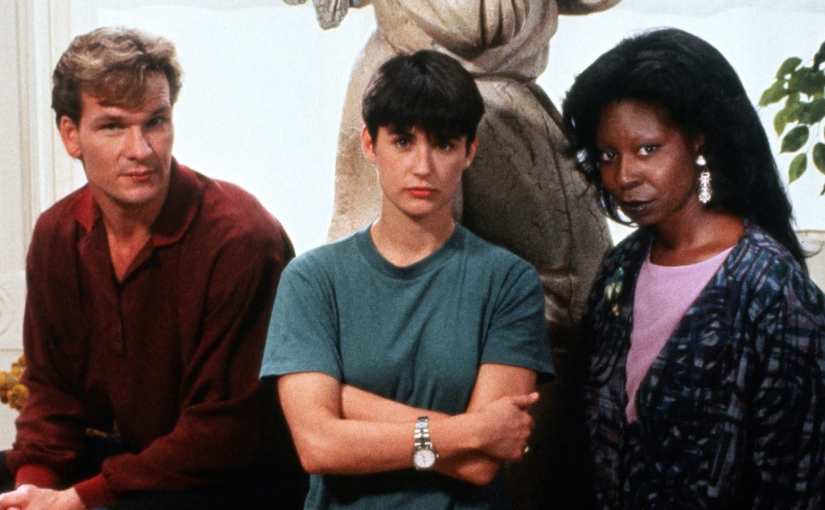
Sam Wheat (Swayze) is an up-and-coming New York City business executive who loves his new live-in girlfriend, Molly (Moore) even if he can only say “Ditto!” when she tells him she loves him.  Shortly after the picture begins Sam is gunned down following an evening at the theatre.  Unbeknownst to Molly and anyone else living on earth, Sam’s spirit lives on though, and he realizes that he was not the victim of some random mugging/murder.  Now, Sam must find out who arranged to have him killed and why, while also protecting Molly from becoming a victim.

Along the way, Sam crosses paths with a phony con artist, working as a medium, named Oda Mae Brown (Goldberg) who turns out to be the real thing when she can actually hear Sam’s voice and communicate with him.  Sam must recruit Oda Mae to be a go between for him with Molly and everyone else necessary to follow up on in order to resolve the mystery of his sudden death.

Ghost succeeded in every category of filmmaking.  Rewatching the film decades later, I believe Demi Moore should have gotten an Oscar nomination.  Her close ups on camera with beautiful, muted colors from Adam Greenberg’s cinematography are masterful.  Greenberg should have been nominated too.  He’s got perfect tints of pearl whites both on the cobble stone streets of New York with the outer architecture of the apartment buildings, as well as within the studio apartment where the couple lives.  He strives for an ethereal look with his lens. Gold often occupies Molly’s close ups with dim lighting.  Blues and blacks and steel glinting shines follow Sam’s trajectory. 

Look at the lonely scenes that Moore occupies in the couple’s apartment.  There’s a haunting image of isolation with no dialogue capturing the young actress at the top of a staircase when she eventually rolls a glass jar off the top and it shatters below.  It’s one of the moments that defines a sorrowful character, and not many cry on screen better than Demi Moore.  Later, Sam is engaging in a pursuit through the subway system and races down a steep blue escalator in the dead of night.  Zucker places Greenberg’s camera at the bottom of the escalator to show the depth of hell that Sam may be risking continuing his chase.  The images and transitions of this whole movie from scene to scene are stunning.

I mistakenly recall Whoopi Goldberg as just a comedienne doing her stand up schtick in this film.  Not so.  Goldberg looks radiant on film and while she starts out comically as the script calls for, she eventually resorts to sensitive fear of what her paranormal partner demonstrates as real within this fantasy.  There are so many dimensions to this character.  She’s silly.  She’s exact in her nature for what’s at stake and the dialogue handed to her from Bruce Joel Rubin’s Oscar winning script compliments the actress so well. Goldberg never looks like she’s working for the awards accolades. Yet, she earned every bit of recognition that followed her.

Patrick Swayze makes more out of the straight man role than what could have been left as simple vanilla.  His spirit character uncovers more and more about his afterlife and what happened to him as the film moves along. With each discovery, you’re convinced of Sam’s surprises and what he becomes capable of as a ghost.  Long before superhero films became the novelty, Sam Wheat operates like one who has to learn of his origin and then acquire his new talents and powers to fend off the bad guys.

Jerry Zucker, working with Rubin’s script, Greenberg’s photography and Oscar nominated editing from Walter Murch, along with haunting yet sweet scoring from Maurice Jarre, builds a near perfect film.  The narrative of Ghost shifts so often from comedy to crime to drama to romance and the various natures of the piece hinge so well off each other.  That’s due to storytelling and the editing necessary to smooth out any wrinkles.  You become absorbed in Jerry Zucker’s direction, especially with the movie’s most famous scene where Demi Moore and Patrick Swayze are sensually doing pottery together accompanied by Bill Medley’s rendition of “Unchained Melody.”  Watch that scene with someone you love or take it in on a late Saturday night by yourself with no one to distract you with cackles and eye rolls.  You’ll see how effective Zucker’s work is along with Swayze and Moore upholding the scene in a dark, empty apartment.  Take it as seriously as the scene was originally constructed.  (Then go watch Zucker’s Naked Gun 2 ½ for a chuckle.)

The mystery of Ghost works well with surprises if you are watching it for the first time.  You build trust with a character only to realize it is a ruse for something else.  I do not want to give too much away.  For viewers who have never seen the film, maybe you’ll see an early twist as soon as the film begins.  Maybe not.  Either way, Ghost performs very naturally, unlike a forced kind of twist that M Night Shyamalan too often relies upon.  I do advise that you not watch the trailer that was used for Ghost as I believe it deals out too many of the film’s secrets.

There are movies that I watch over and over again because I love to relive the special moments they offer.  Ghost has those kinds of gifts and yet I have not seen it in ages.  I’m glad.  To experience the picture again was such a treat.  While I recalled all of its secrets, this time I was able to take in the various technical achievements and the assembly of the piece, along with outstanding performances. 

I have no problem saying that Ghost possesses the best performances within the vast careers of Demi Moore, Patrick Swayze and Whoopi Goldberg.  Ghost still holds up. It deserves a rewatch and an introduction to new generations.

JACOB’S LADDER

By Marc S. Sanders

When a movie works beyond formulaic conventions, it takes risks.  A storyteller will either really impress their audience, or they will leave them feeling shortchanged.  You’ll either get a “Whoa!  Now that’s cool.” (The Usual Suspects, The Sixth Sense, but I did call that ending when I saw it in theatres.  Ask my wife if you don’t believe me.) On the contrary, you’ll arrive at “That’s it?” (The Happening, Signs or any other M Night Shyamalan reach for the rafters but come up foul kind of flick.)

A movie like Adrian Lyne’s Jacob’s Ladder is anything but standard and it asks you to trust in its ambiguity in order to arrive at its big payoff.  For most of the picture it is unclear what you’re watching.  What keeps you engaged is Lyne’s approach to atmospheric indicators, like dark tunnels, dim bulbs, distant echoes and a disturbingly scared and depressed Tim Robbins.  The creepier the film looks and the more ominous it feels, then perhaps it will lead to a conclusion that will leave you satisfied.  Jacob’s Ladder functions like an M Night Shyamalan film where you just want to arrive at the twist.  When it finally reached its destination though, I was ready to turn the car around and go home.

Tim Robbins is Jacob Singer, a Vietnam veteran.  The picture opens up with Jacob returning from the dense jungles to reunite with his squad after what was his like hundredth bowel movement, it seems.  The squad jokes about with men’s locker room talk and then a disturbing occurrence takes place.  The next scene, thereafter, has Jacob dressed in a mailman uniform awakening from a nightmare aboard a New York subway train.  He gets off at his stop, but then he cannot find his way out of the subway station and then he encounters unsettling images like perhaps a demon or two on board a train that just misses running him down.

Much of Adrian Lyne’s film sets up sequences like this where the unexplainable cannot be explained.  Jacob now lives with a girlfriend, Jezzie (Elizabeth Peña), who is growing frustrated with Jacob’s unusual behavior.  It seems he suffers from PTSD following his time in the war, but also he mourns the death of one of his three sons (Macaulay Culkin) from his first marriage.

Robbins is especially good at not going for big moments in his role.  He’s a quiet, cheerless individual working with very little dialogue.  That’s impressive but it’s also a little boring, especially considering that for most of the film it’s near impossible to decipher what is going on, nor what is the exact story to uncover in Jacob’s Ladder.  My patience was trying, up until a stand at attention moment that came from nowhere.  Still, not much arrives thereafter. 

Jacob receives a call out the blue from one of his old army buddies.  When they meet up, it dawns on Jacob that his friend is encountering similar kinds of feelings.  When he reunites with the rest of the squad it occurs to them to sue the United States government for experimental drug treatments that were administered to them while serving in the war.  They turn to an attorney played by Jason Alexander in a role far off from his Seinfeld sitcom days to later come in his career.  This lawsuit may uncover a link for Jacob.  Unfortunately, I think it diverts away from Adrian Lyne’s intended lack of clarity for another kind of movie altogether.  The movie goes in this detour with Alexander’s attorney role and then finds its way back on the main road for the third act.  Hardly any new mileage was to be gained from this rerouting though.

This new development may give a more literal understanding into Jacob’s psyche and condition. However, I think the film fails to pounce on a new opportunity to attack a topical storyline that had become suspect during the actual timeline of the war.  As the film arrives at its conclusion, the script seems to rush to the surprise ending it wanted to garner.

Frankly, an early conversation with a Jacob’s chiropractor (Danny Aiello) easily spelled out the twist for me.  Alas, perhaps that took me out of the film early on. 

There are good ideas and good performances to be had in Jacob’s Ladder.  Yet, I don’t think the film entirely works because of Adrian Lyne’s attempt to push it’s vagueness.  Demons that come out of nowhere during Jacob’s hallucinations should be scary and have a fright shock to them, but instead these moments come off like abstract art that only frustrated me. 

I always thought I knew the ending, and I was right for the most part, but why does a runaway car have to chase Jacob down an alleyway to deliver the point?  Arguably, a boogeyman like Freddy Krueger might have done a better job at disturbing a threat of death than what was ever going on in Jacob’s Ladder.