TOM JONES

By Marc S. Sanders

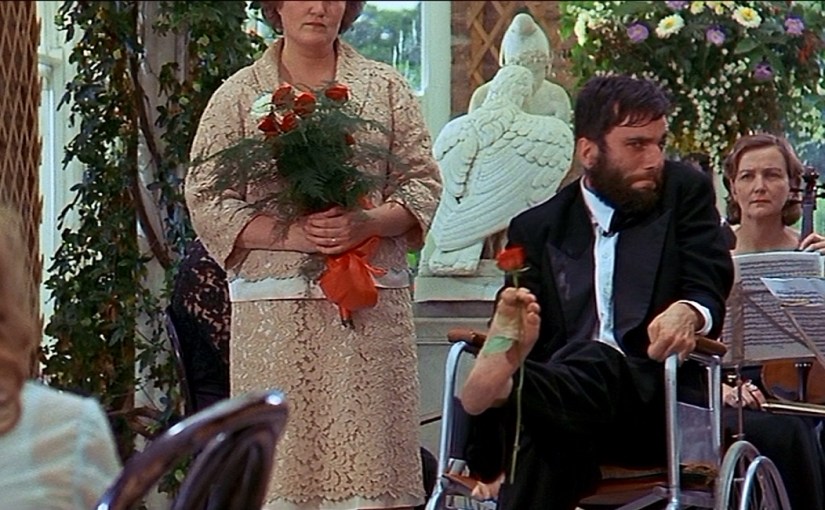
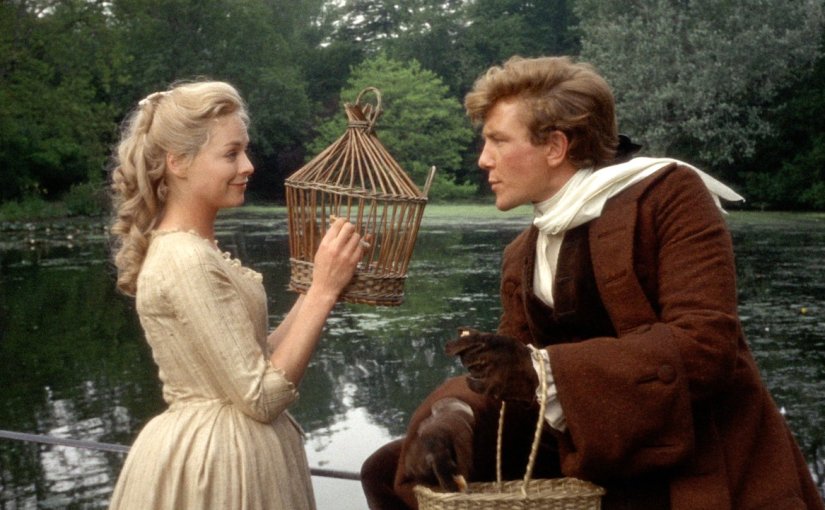
Watching Tom Jones I wondered if the Monty Python troupe took inspiration from producer/director Tony Richardson’s film.  It’s all quite madcap.  With Albert Finney as the lead title character, there’s a zany quality to this eighteenth century piece adapted from Henry Fielding’s novel The History Of Tom Jones, A Foundling.

The film opens like a silent movie with title cards being used to emote dialogue.  The Squire Allworthy (George Devine) returns to his estate and upon retiring for bed, he discovers newborn Tom beneath the blankets.  Allworthy decides to raise the child. 

The film transitions to a talkie picture and Tom grows up to be portrayed by Albert Finney.  The orphan man gets himself into all kinds of predicaments, notably with an assortment of women but his true affections are directed towards Sophie (Susannah York), the daughter of the neighbor Squire Western. The cad known as Blifil (David Warner, in his very first film role) convinces Allworthy that Tom is a villain and thus he’s excised from the estate with cash to seek out his own fortune.  Interactions lead to unexpected circumstances for Tom, including being robbed penniless, crossing paths with the butler who was presumed to be his father, and being sentenced to death for murder after he rescues an endangered maiden from the assault of a British red coat (Julian Glover).

Tom Jones takes unexpected turns in its narrative, and it leads to big laughs.  Upon discovering that his wallet is stolen, Albert Finney breaks the fourth wall seeking the viewers assurance that he is not making it up.  Other characters are depicted in freeze frame silliness as they eavesdrop on Allworthy.  There’s lots of running around escapades as Tom flees from being caught with a couple of mistresses.  I was waiting for the Benny Hill music to cue in, though John Addison’s score suffices well to keep it all lighthearted during such times when the film speeds up with a Keystone Kops kind of pace.

A film like Tom Jones is not what I normally gravitate towards.  Going back and forth, there’s lots of screaming banter and deep English dialects that swallow the words being uttered.  Drunken debauchery is relied upon for Hugh Griffith as Squire Western; he was one of five actors nominated for the film.  At one point, Griffith falls off his horse and the animal lands on top of him.  Apparently, this was not stunt work as Griffith notoriously showed up drunk each day on set and the horse easily overtook him.

Albert Finney, though, is a comedy gem as he innocently portrays Tom with no ill intent.  Watching him here in his youth, he’s adorable with an occasional prince and pauper romantic interpretation of his performance. A memorably hilarious scene involves Tom and a lady mistress seducing one another from both sides of the table as they gorge themselves with a bevy of food including pheasant, pears, potatoes and so on. Without Finney’s fearlessness in leading this sloppy, drooling scene, I’m not sure it would have worked as well. Richardson elongates the moment between the two to build the laughter.

I’m impressed with much of the filmmaking from Tony Richardson.  Cameras must have been mounted on horseback to get up close pursuit during a sporting hunt of a deer that also included a large number of rabid dogs.  Still, I was a little queasy in the follow up scene when the deer is slaughtered amid the canines barking for a portion. Technically speaking though, the film works on many levels.

As well, I could not help but consider that a modern filmmaker like Yorgos Lanthimos (Poor Things, The Favorite) adopted some of Richardson’s comedic approach.  Tom Jones is proudly weird and obscure just like Lanthimos’ storytelling.

Yet, I cannot comprehend the praise awarded to this movie, including Best Picture and Director as well as the nominations in cast performances by critics, Oscars and BAFTAS.  I’m convinced of the period timing and what the script and actors lend to the film, but I’ll never say any of it left me enraptured in the novelty.  It’s a cute story, but that’s all.  Kind of like Arthur with Dudley Moore, where the innocent man child happily lives within his sophomoric mentality while uncovering who he truly loves.  There is likely more to take away from Tom Jones, but I didn’t recognize it.

If anything, as I continue my trek towards watching and reviewing every Best Picture winner in Oscar history, I’m at least glad I got Tom Jones checked off my list.  At times, it’s delightful and it’s also proudly oddball in its execution.  What constitutes it as the best film of 1963? Reader, I’m just not sure.  Yet, it is at least entertaining with much praise for Albert Finney and cast.

CALL ME BY YOUR NAME (Italy, 2017)

by Miguel E. Rodriguez

DIRECTOR: Luca Guadagnino
CAST: Armie Hammer, Timothée Chalamet, Michael Stuhlbarg
MY RATING: 10/10
ROTTEN TOMATOMETER: 94% Certified Fresh

PLOT: In 1980s Italy, romance blossoms between a seventeen-year-old student and the older man hired as his father’s research assistant.


Call Me by Your Name is remarkable because it tells a heartbreaking first-love story that could have easily devolved into cheap melodrama.  I mean, look at the plot description above.  It has “soap opera” written all over it.  But because director Luca Guadagnino (Bones and All, the 2018 remake of Suspiria) applies restraint, and because the screenplay by James Ivory (of Merchant Ivory fame) sticks to realism as opposed to predictable scripted nonsense, and because of the fearlessness of the film’s two leads, Call Me by Your Name becomes one of the best films about the thrill and heartbreak of first love I’ve ever seen.

The story takes place in the summer of 1983, in Italy.  The Perlmans are on vacation at their villa in the Italian countryside.  Mr. Perlman (Michael Stuhlbarg) has hired an American, Oliver (Armie Hammer), to assist him with research over the holiday.  Elio (Timothée Chalamet), Mr. Perlman’s 17-year-old son, appears to take an instant dislike to Oliver, but we later see this is a maneuver designed to disguise his real, and scary, crush on Oliver.

…but I don’t want to write a full synopsis of the story, because I guarantee it would read like someone’s Twilight fan-fiction or something similar.  What happens is reasonably predictable and has been seen in countless movies from Douglas Sirk to Nora Ephron.  What makes this movie special is how it happens.

There is not a single scene or shot in the movie that feels routine.  Or, not “routine”, that’s not the right word.  The whole movie feels authentic.  Nobody talks in screenplay-ese (except for a sensational speech from Mr. Perlman near the end, which I will forgive because it works).  Whatever happens, whenever it happens, feels spontaneous and precisely observed.

Here is at least one moment that captures what I mean.  Elio’s crush on Oliver has gotten deeper, but he’s kept it to himself.  One night, the two of them and a bunch of Elio’s friends visit a local bar with an outdoor dance floor.  Oliver starts dancing with a pretty girl.  Elio’s friends get up to dance, but Elio stays behind, eyeing Oliver and the girl, and you can almost hear the gears turning over in Elio’s head.  He finally does get up to dance, but watch his movements carefully: he starts dancing with a girl, but surreptitiously moves closer to Oliver for a moment.  Oliver turns to Elio, and Elio abruptly turns away and pulls a little move and slide, pretending not to notice Oliver while also trying to impress him a little.  Elio turns back, sees that Oliver is no longer looking, and quickly moves back towards him.  This kind of behavior is so specific, and yet universally recognizable.  There was no dialogue, but I knew everything going through Elio’s head in every second of that scene.

I also admired the scene, done in one take, where Elio finally reveals his feelings to Oliver, but it’s all done in this marvelous code, where Elio never actually says precisely what he’s talking about, but Oliver is smart enough to decipher the code.  (“Are you saying what I think you’re saying?”)  I’ve seen so many films where the Oliver character is written as an otherwise adult person but has to be incredibly dumb in order to prolong the “idiot plot.”  How refreshing to be confronted with characters with working brains.

Guadagnino also appears to be a great fan of Japanese films, particularly those of Yasujiro Ozu.  Throughout the movie, there are many scenes that are divided, almost like chapter headings, by a series of stationary shots, held for several seconds, of ordinary items: a window, or a staircase, or the still waters of a lake, or an apricot tree.  Ozu was known for doing the same thing in his films; they were called “pillow shots,” because Japanese poetry utilizes the same device, using words instead of shots, to separate thoughts or ideas.  These “pillow shots” lend a sense of poetry or…I don’t know what, exactly, to the film.  It may look (and sound) a little pretentious, but trust me, it works.  It made the movie feel as if there were great currents of significance rumbling below the surface.

Alert readers may notice I haven’t even mentioned the sex scenes yet.  Going into this movie, I remembered that there was some hoopla about the graphic nature of those scenes, but I get the feeling they’re like the ear scene in Reservoir Dogs: everyone thinks they remember seeing the ear actually getting cut off, but we don’t.  Tarantino tactfully moves the camera up and away and leaves the dismemberment off-camera.  Same thing here.  Guadagnino leaves no doubt as to what is about to happen, but then moves the camera away, or cuts to the next scene, or expertly positions the camera so the naughtiest actions are never actually seen.

This is shrewd filmmaking.  If the film had been filled with NC-17-worthy content, the message would have been lost.  It would have become a movie about the sex instead of being about the turmoil and ecstasy of being in love with someone who loves you back, even if it’s only for a short time.

I should also mention the roles of Elio’s parents.  I can see how some people might watch the movie and imagine that his parents are far too forgiving, especially given their religious upbringing.  However, this was another welcome departure from the realms of unnecessary melodrama.  Instead of scenes where the furious parents make unreasonable demands or deliver intolerant lectures, we are given a father and mother who know enough about parenting, and about their son, to realize when it’s time to lecture and when it’s time to just let things happen.  I’m not suggesting they would ever willingly allow their son to go into harm’s way.  But they’re smart enough to know how important it is that Oliver and Elio take a little sabbatical together before Oliver’s final departure.

(They also know when a small lie is sometimes necessary at the appropriate moment.  After Mr. Perlman’s wonderful speech at the end of the film, Elio asks him, “Does mother know?”  Mr. Perlman hesitates, then delivers a very tactful answer.  To me, this was his way of protecting his son at a time when he desperately needed comfort.  I suppose it could be interpreted either way, but since Mr. Perlman knows his wife, I believe it was a perfectly timed lie.  Just a small one.  It’s a magnificent button to the scene.)

Call Me by Your Name deservedly won the Academy Award for Best Adapted Screenplay that year.  It’s a masterpiece of storytelling by osmosis, without using signal flags or hokey dialogue.  It recalls with perfect precision how it feels to be uplifted and crushed emotionally, and how one must decide how to deal with those feelings.  I was never the 17-year-old son of a professor with romantic feelings for his assistant, but I understood and identified with Elio nearly every step of the way during the movie.  I would imagine many others can, too.

CASABLANCA

By Marc S. Sanders

I’ve always struggled with Casablanca.  It just does not have that hold on me that so many cinema lovers acquire upon viewing the celebrated film.  In the past, I’ve called it overrated, a bore, underwhelming, and plenty of other negative connotations.  Don’t worry reader.  I’ve been stabbed in the heart, back and eyes a thousand times over with the eyerolls, the verbal gasps, and the room exits from friends when I contribute to a discussion on this overall favorite.  I’ve tried.  Believe me, I’ve tried to love Casablanca.  Now, on this fifth viewing, or call it the sixth because I had to stop in the middle when my mind was wandering last week, I sincerely developed a semblance of appreciation for the picture.  Now be patient with me.

To absorb the classic film about Rick Blaine (Humphrey Bogart), the saloon keeper who keeps to himself, crossing paths with his long-lost love Ilsa Lund (Ingrid Bergman), I allowed myself to envision watching it in a movie house in 1942, when World War II was occurring on another side of the world and people were being forced to relocate or suffer captivity at the hands of the vile Nazi regime.  Casablanca, Morocco was the last hopeful exit to Lisbon, and then on to the Americas.  I had to embrace the setting and the time period in order to relate to the Oscar winning film. 

Rick runs the Café Americain near the airport of Casablanca.  All walks of life come through the doors each night to drink, gamble, smoke, flirt, and sing along with Sam the memorably charming piano player (Dooley Wilson). Most importantly, some patrons hope to score the necessary papers for passage out of this tiny desert port area that has yet to be Nazi occupied.  Rick is the expatriate who runs this gin joint and he has no interest in aiding anyone with an escape, nor with assisting the Nazis in rounding up their usual suspects they believe are enemies of the state.  He could care less about anyone’s cause or politics.  He just wants to run a respectable bar.

However, the past circles back on Rick when Ilsa arrives with a wanted Frenchman named Victor Laszlo, great name, played by Paul Henreid.  Victor has escaped the concentration camps and he is making efforts to reach the states so that he can continue his underground campaign of exposing the treachery and threats of the Nazis.  Rick has already been warned if Victor should make an appearance he must not be permitted to leave Casablanca.  The bar manager would rather not be involved.  Yet, it’s hard for him to resist thinking about his past love, Ilsa. Flashbacks soon reveal their time spent in Paris when they fell madly in love only for her to suddenly abandon him as they were trying to board a train exodus before the Nazis seized the territory.

Casablanca has a very simple plot and that lends to the strength of its finished product.  The love triangle of three good people, Rick, Ilsa and Victor, is where the complexity lies and there is no denying how memorable the main players are in their roles.  However, I can only surmise that the legendary status of the film tainted my open mindedness for an admiration of the piece.  The hype has always been too much for me, I guess.

Reader, I don’t think I am a big fan of Humphrey Bogart.  I’m very sorry.  It could be The Big Sleep or The Maltese Falcon.  Too often, I think he is quite bland in his signature, unforgettable caricature. No matter which film he’s in, Bogart is unique.  There is still no one like him with his chiseled face, dark hair and deep voice.  I’m not sure that’s even a fair description.  It’s hard to find the right adjectives for Bogie.  He was one of a kind.  However, there was little range to the star.  (I know.  I’ve seen The African Queen; great movie.) Rick is so closed off and predominantly on the same plane of emotions whether I am seeing him at the beginning of the film or at the end when he delivers his final speech to Ilsa before the plane departure.  He’s too one note for me. He’s just a boring guy and if I was at a table drinking alongside him, I would have to excuse myself very quickly.  Even to play chess with Rick would be excruciating.

Paul Henried is charming though.  He plays Victor as the adventurer or the daring swashbuckler, aware of his threat to the Nazis, but fearless in whatever he faces.  He just knows he serves a greater purpose to the world.  The loose knit, white suit and hat compliment his relaxed stature.  Even the scar over his right eye seems to tell a story.  In Casablanca, I find myself more concerned with what will happen to Victor Laszlo than anyone else.

Ingrid Berman is strikingly beautiful.  You can just recognize her exuberance through the black and white photography.  She was an actress that the camera loved and her performance is sensational as the woman caught in the middle, who mourned what she thought was the loss of a husband, only to find new love. Then the unexpected interfered with her desire for a promising new future.  Her best scene is when she stands up to Rick, no matter the stakes, to get him to help her rescue her husband Victor.  If it is not pleading, then she will use other means.  Frankly, I had forgotten what she tried next in this scene, which I will not spoil.  So, when the camera cuts back to her following another speech from Rick, my eyes went wide.  Ilsa is not just some pretty dame.  She knows she must be more than that, even more than a one night stand or some gentleman’s true love.

For so many years, I would hop on The Great Movie Ride at Disney/MGM studios and come across the famous final scene.  I heard Rick’s speech so many times, a hundred times more than I have watched Casablanca.  Take a scene like that out of context, and it waters down the power of the celebrated film.  What a difference it makes after you learn why Rick and Ilsa could not stay together following Paris, and why you learn their fates are destined for different paths perhaps.  “Here’s lookin’ at you kid!” has a deeper connotation when watching the film as a whole.  I know I’m pointing out the obvious.  Yet, I embraced Bogart’s improvised line that much more in addition to so many other well-known pieces of dialogue.  Other films have those special moments where you can isolate a scene on a work break and just take it in.  I know snippets of Casablanca are viewed that way, but there’s an emptiness to watching these scenes in that fashion.

In 1942, following the Japanese attack on Pearl Harbor, as Jews and gypsies and every other race or nationality or demographic were being bullied at the hands of an unforgiving Nazi regime, audiences must have regarded Victor, Ilsa and Rick as heroes.  True heroes!  They must have been considered the heroes who don’t amount to a hill of beans in this crazy, mixed-up world, but must therefore sacrifice what they hold so dear and personal.  It makes me wonder if Michael Curtiz’ film would have had the same kind of impact if it was released at later time in the century like the 1960s, long after the war was over and the Axis armies, particularly the Nazis, were wiped out.  In 1942, perhaps I would have had more of an appreciation for Rick and Ilsa if I watched the film then. 

My attention especially perked up during the competitive nature of the French and Moroccan patrons singing the anthem La Marseillaise against the Germans’ rendition of Die Wacht am Rhein.  It’s a scene that demonstrates promise during a very frightening and confusing period in time.  I imagine audiences applauded and cheered during this scene.  On the other hand, maybe they were afraid and apprehensive to do so during such a confusing time.  The fiction found in the Oscar winning script from twin brothers Julius and Phillip Epstein was daring enough to defy the power of Hitler’s fast rising influence.  Modern films from the likes of Spike Lee and Adam McKay attempt to circumvent their stories to present day crises and dare to footnote their films with real life news footage.  It’s admirable at times.  Sometimes their efforts are divisive.  Yet, they do not feel as meaningful as what the Epstein brothers and Curtiz accomplished.  For me, this moment near the conclusion of Casablanca is my favorite scene of the picture.  The slaphappy regulars of Rick’s Café  Americain were enthusiastic to join Sam for a rousing rendition of Knock On Wood, but when reality intrudes upon their escapism, another dimension to the people does not hesitate to stand up for a purpose.

So, it’s always been tough to win me over with Casablanca.  Still, I marvel at the picture for the absorbing settings of Rick’s Café along with the crowded Moroccan streets occupied with refugees and pickpockets under the authority of a party who threatens to stake its claim.  Sam turns the bar into a regular evening atmosphere to bond and escape while the drinkers yearn to be on the next plane to safety and freedom.  Tricks are turned where travel papers are the most sought-after commodity, and ultimately, beyond Rick Blaine, there are people who may strive for safe passage and will also unite against a tyranny if enough will take up their swords, people like Victor Laszlo. This is what I treasure from Casablanca

The cast consists of a colorful bunch including Claude Rains, Sydney Greenstreet, Peter Lorre and Conrad Veidt.  Plus, Rick and Ilsa will always have Paris, but that was always a tough relationship for me to connect with.  What is more meaningful is the harbor that Casablanca and Rick’s Café Americain offered those who were fleeing, hiding and surviving amid their desperations.

This will not be the last time I watch Casablanca.  For a film to have this much staying power after more than eighty years, there must be something else I have yet to uncover, and I cannot wait to find it.

I’ll play it again for old time’s sake. 

FARGO

By Marc S. Sanders

The seeds of a crime begin in the dead of winter, in a saloon, located in Fargo, North Dakota.  A car salesman requests two thugs kidnap his wife so that they can demand an eighty-thousand-dollar ransom from his wealthy father-in-law.  The salesman will split the monies with the crooks and all will be well.  Hold on there!  It’s not as simple as it looks.

The Coen Brothers (Joel and Ethan) completed some of their most legendary work when they opted to “adapt” a supposedly true story that sheds blood over the snow-covered plains of northern Minnesota when all of the characters involved choose not to cooperate with one another.  The unpredictable is what keeps their film Fargo so engaging.  With each passing scene, you ask yourself “What next????”

Jerry Lundegaard (William H Macy, in my favorite role of many good ones from him) is the salesman who gets in over his head.  This cockamamie scheme of his stems from a need to land a get rich quick investment, but he doesn’t have the money and his father-in-law Wade Gustafson (Harve Presnell) certainly won’t lend it to him.  Steve Buscemi and Peter Stormare are the hired criminals, Carl and Gaere.  As quick as the agreement is made, Jerry wants to call off the arrangement, but things are already set in motion.  The kidnapping occurs, albeit sloppily, and a late-night pullover on a dark, snow covered back road leads to the bloody shootings of three people. 

Marge Gunderson (Frances McDormand, in her first Oscar winning role) is awoken early in the morning.  Her sweet husband makes her a quick breakfast and she’s off in a jiff to inspect the crime scene of the three murders.  She is seven months pregnant, but she’s got a job to do.

Murder, kidnapping, fraud, and embezzlement piece together the Coens’ Oscar winning script.  What makes Fargo special though is how out of frame it all seems among these odd and quirky characters.  The Minnesotan dialects and vernacular (“You betcha!!” “You’re darn tootin’!” “Oh, for Pete’s sake!!!”) from Marge and Jerry do not seem standard in a story like this.  Even their names – Lundegaard and Gunderson – seem totally out of place here.  However, the pregnant, sweet natured police officer should not be underestimated, and the puppet master behind this plot should have known better.  In fact, other than Marge, no one should be doing what they’re doing, and yet that’s exactly what spins everything off the rails.

The Coens humanize the characters of their film.  Marge must stop inspecting the grisly crime scene because her morning sickness is about to overtake her.  “No, I think I’m gonna barf!” It is not the blood or the cold winter that’s holding her back.  Natural pregnancy gets in the way.  When clues lead her to Minneapolis for an overnight stay, she takes advantage of meeting with a high school friend.  Their meet-up has nothing to do with the central plot, but the writers insist on showing Marge during her off hours.  It’s a hilarious scene and Frances McDormand’s timing is naturally comedic with a guy who just has an overenthusiastic way about himself.  Marge is not just a smart cop.  She’s got a life outside of her career as a loving wife, friend and soon to be mother.

As well, Jerry insists to Wade not to contact the police and let him deal directly with the kidnappers when they call.  Wade isn’t just going to sit by for long though.  He got to the top of his powerful pyramid by taking things head on.  Jerry just doesn’t have the instinct to realize this is how the cards will fall.  Wade was not to be involved, under any circumstances.  Yet, that’s exactly what is happening.  This is not good Jerry.

Carl and Gaere (These names!!!!  I’m telling ya.), as crooked hoods, have no honor among themselves.  One might betray the other and that could lead to another gory, very gory, yet inventive moment. 

Other than Marge, either no one is particularly smart in Fargo, or they are just not seeing the possible outcomes all the way through.  Still, even the dumbest of folk can make a turn of events gone awry so fascinating.  When one tiny detail gets out of place, then the players improvise. That only twists several other expectations to go off kilter and the dominoes begin to tumble.  Very quickly, as everything has unraveled, it is any wonder how this all began in the first place. 

Fargo demonstrates that crime is hardly committed with a perfect plan.  Fortunately, the imperfections are at least as entertainingly curious as the perfections found in so many other films.  Oh, you betcha!!!!! 

JERRY MAGUIRE

By Marc S. Sanders

Writer/Director Cameron Crowe loves all of the characters he creates.  He loves them so much that I bet he’s got volumes of background histories on each one ranging from a nanny – sorry Au Pair – to a cute seven-year-old kid to a brash, hot shot professional sports agent like Jerry Maguire.  Everyone, absolutely EVERYONE, in Crowe’s films has to have a substantial amount of dialogue to bring them attention.  Often it works.  Yet, it’s also his Achille’s heel. 

Roger Ebert called Jerry Maguire a very busy picture and I could not agree more.  Do not mistake me.  I’m quite fond of the film, but yeah, Cameron Crowe unloads a lot in its over two-hour running time.  The title character, played by Tom Cruise in one of his best roles, is the superstar agent who has everything going for him.  He’s engaged to a beautiful talent scout named Avery (Kelly Preston), he has a knack for negotiating the best contracts for the greatest up and coming athletes, and he’s loved – strike that…adored by everyone.  Well…not everyone.  A hockey player’s kid tells him to eff off after his dad suffers his fourth concussion and can barely recognize his family or remember his own name.  It’s only then that he has a revelation in the middle of the night to document a multi-page memo inspiring his colleagues to sidestep the need to make more money. Less clients, and more personal attention to the ones you represent.  Call for everyone in his firm to get behind him in this mentality.  Jerry Maguire will be their martyr.

Well, that gets him fired, and ultimately he’s deemed a loser which is something that poor Jerry cannot learn to live with comfortably.  His one last hope at redemption lies in a promising wide receiver named Rod Tidwell (Cuba Gooding Jr – in a still very memorable role, likely the greatest of his career).  Rod remains committed to sticking with Jerry, but that is not going to make it easy.  He’s often uncooperative.  His pregnant wife, Marcy (Regina King) will not stand for any BS.  Rod is more concerned with obtaining the million-dollar contract, and it takes every last breath of Jerry’s to convince his client that it starts with getting back to just loving the game.

There is also another chance for Jerry to try his hand at love.  Wait, is it love, or is it that Jerry cannot handle being alone?  The test will lie in his relationship with his assistant Dorothy (Renee Zellweger in her breakthrough role), a twenty-six-year-old widow with the cutest kid (Jonathan Lipnicki, impossible not to fall in love with) for a son and a divorced sister named Laurel (Bonnie Hunt) who only has the support of her crying, pessimistic divorced wives support group.

Are you catching on yet to what Roger Ebert was trying to say?  There’s a lot of ingredients to make this stew.  Fortunately, all of it is good material with a great cast, but they are all distractions for one another as well.  At times there seems to be three movies going on at once.  Jerry the agent needs to get back on the horse.  Rod needs to humble himself and listen to his agent.  Dorothy needs to decide if this handsome guy who is the spitting image of Tom Cruise is best for her while she’s trying to be a single mother with a seven-year-old. 

The kid’s Au Pair has ten pages of dialogue.  Marcy has fifteen.  Avery has maybe five, but that’s quite a lot too.  It feels like Laurel and her divorced wives group have fifty pages.  Then there is the jerky antagonist who fired Jerry played Jay Mohr.  There’s just a lot of stuff here.

Jerry Maguire is a well-made film with a natural, feel-good comedic approach.  Cameron Crowe has feelings for all of his characters.  I think he doesn’t even want the Jay Mohr character to get hurt.  Crowe just wants to cradle everyone and kiss them goodnight and give them all a big part in the school play.  It’s a blessing the cast has terrific chemistry.  Anyone sharing a scene with Tom Cruise is doing brilliant work, especially Renee Zellweger and Cuba Gooding Jr.

Crowe’s dialogue might feel schmaltzy during the love story aspect, but it’s captivating.  Cuba Gooding Jr performs like he wrote the character, not Crowe.  He must have invented more to his Oscar winning portrayal of a cocky wanna be football star than the writer could have ever imagined.  “Show me the money!!!!” is still hailed as an all time great scene, chartered by the actor. 

As a director, Cameron Crowe is doing some of his best work.  I recently watched the movie with my Cinemaniac pals and noted to them how much lighting is pointed at the handsome faces of the cast.  It could be Cruise making a negotiation with a promising football star and his no nonsense dad (Jerry O’Connell, Beau Bridges) around a coffee table, or it could be a seductive scene between the romantic leads on a porch.  You never saw so many faces with flawless complexions and the photography of the film looks great from beginning to end.

As overstuffed as Jerry Maguire is, the film ultimately belongs to Tom Cruise, and he delivers Cameron Crowe’s character arc beautifully.  It is such a dynamic portrayal with a lot for Jerry to redeem, learn from and surmise.  The conceit I expect from Cruise is evident.  Sure!  However, it is still a well-constructed portrayal. 

This movie makes me yearn for Tom Cruise to seek out those roles that would come from nowhere and with surprise.  The roles that on the surface never seem like he should be occupying.  Think about this for a second.  This guy has played the seductive Vampire Lestat which was initially poo poo’d by Anne Rice.  He was crippled Vietnam War veteran/protestor Ron Kovic, soon after he played fighter pilot Maverick.  He played the cruelly extreme chauvinistic motivational speaker Frank TJ Mackey amid another crowded cast of exceptional talents and characters. He’s also portrayed Jerry Maguire.  The range of this actor’s talent can only be stretched further and further.  I’d rather know what wonderous role Tom Cruise has in store next, rather than what ridiculous stunt he wants to accomplish for another Mission: Impossible set up. 

Jerry Maguire is a gluttonous picture, but fortunately every entrée is served with heart, genuine emotion, and relatable caricatures.  It’s one of Cameron Crowe’s best films.

THE HOLDOVERS

By Marc S. Sanders

Alexander Payne’s The Holdovers plays like a modern-day Christmas Carol.  Paul Giamatti is the Scrooge of the story set during mid-late December in 1970.  He’s an arrogant, unforgiving and unlikable teacher at Barton Academy, an all-boys Massachusetts boarding school.  Two other Scrooges round out the headlining cast.  Da’vine Joy Randolph is a cafeteria cook at the school.  Dominic Sessa is senior student – very bright, but also a troublemaker.  With uninvited circumstances facing the trio, they are the holdovers at the snow-covered school campus during the Christmas break, and they’ll have no choice but to get along or at least tolerate one another.

Alexander Payne often specializes in bringing attention to sad sack lonely souls like in Sideways, The Descendents, and About Schmidt.  His films begin with the characters seeming to accept their fates which lack a desire to smile and be cheerful.  Death or abandonment are common sources for their conditions.  Yet, with each of his wonderful films, it’s always fresh and new.  After an endless series of superheroes, I’m glad I get an occasional reminder of the humanity that can be found and treasured within entertaining films like The Holdovers.

Giamati is Paul Hunham.  Paul is disliked by everyone including his colleagues, the dean of the school (who was a former student of his), and especially the students.  Sessa is Angus who has a discipline problem but normally gets good grades. It’s most impressive that his B+ in Mr. Hunham’s class is leagues ahead of his classmates.  Randolph is Mary who recently lost her son, a recent graduate of Barton, after his entry in the Vietnam War.  These very different individuals have to share their lonesome disregard for one another.  Eventually though, their shields will whittle away and perhaps a couple of viewings of The Newlywed Game will open themselves up to each other.

I would be doing a great disservice to spoil the character backgrounds of these three who stem from different worlds and have nothing in common.  However, a theme found especially in Angus, and surprisingly in Paul, is a tactic of lying and exaggerating.  Within the context of the script written by David Hemingson, the untruths his characters tell work because it opens up further revelations that color in Paul, Angus and Mary’s current states.  The goal of The Holdovers is to scrape away the dirt on the surface in order to uncover the likable or sad nature hidden within. During a trip to Boston, Paul and Angus visit a museum and the irascible teacher finds an opportunity to remind his student that we do not study the past to only see what once was.  Paul tells Angus “…history is not simply the study of the past. It is an explanation of the present.” If The Holdovers were to have a mission statement, this is what the film stands upon.  Angus, Paul and Mary may all be a variation of a Scrooge, but this story explores what precisely added up to their respective states of misery.

The performances in The Holdovers are perfection.  Dominic Sessa offers one of the best film introductions in history.  This actor looks as if you have seen him before and it’s surprising that his only experience ahead of this picture were school plays, he’s done at his own Massachusetts prep school where he was discovered by the filmmakers who were scouting locations for this film.  He ranks up there with the debut performances of Whoopi Goldberg in The Color Purple and Lukas Haas in Witness.  Da’Vine Joy Randolph is heartbreaking, yet lovable as a grieving, chain smoking widow and mother.  Having also watched her bring out her acerbic funny side in Only Murders In The Building, she’s now one of my favorite eclectic character actors working today.  She is wonderful with either natural comedy and drama or just broad, satiric humor.  Arguably, Paul Giamatti occupies the best role ever written for him.  He finds the right beats during different plot points in the movie.  He’s positively unlikable but there’s an understanding to be found amidst the carnage of his past and present.  The sensitivity of Mr. Hunham eventually shines through, but Giamatti keeps it blended with the angry grouch he’s introduced as in the first few scenes of the film.  It’s a dynamic portrayal.

Alexander Payne reminds me once again that everyone we encounter in life is going through some form of turmoil and suffering.  Some of us can hide it well.  Others have given up concealing what’s not attractive or pleasing to our peers.  If we only take the time to look beyond what’s in front of us then maybe a person’s past will justify their present heartache, and we can either grieve, lend support or simply listen.  Payne will have you convinced to do anything except give up on a person.

As I write this last particular paragraph, I recall when Da’Vine Joy Randolph’s character prepares to attend a Christmas Eve party.  She lays out a nice dress.  She does her hair up attractively.  She puts on makeup.  She brings fresh baked brownies and gives them to the hostess with a welcome smile.  A few minutes later though, poor Mary is breaking down in the kitchen and Paul and Angus are seeing a colleague at her weakest when she was doing her best to uphold a semblance of strength.  Mary’s past defines her present to both Angus and Paul.

Alexander Payne is a genius storyteller of the human heart.  He’s already been quoted as saying The Holdovers is not a Christmas movie and he despises the reference.  Mr. Payne will simply have to forgive me though.  His Oscar nominated piece is a wonderful film to watch ritually during the year-end holidays.  Christmas and New Year’s may be a time to celebrate with our loved ones and the fact that we’ve lived through another year gone by.  However, it is also the loneliest for many of us who can no longer celebrate with a family or friends.  It’s important to acknowledge the pain that comes with living under that circumstance.  Fortunately, Payne, with David Hemingson’s screenplay, finds the humor needed for these souls to shed their agony and proudly reveal the faults they carry and the suffering they had no choice but to endure.

The Holdovers is funny, touching, insightful and it’ll leave you embracing a new collection of characters that will not soon be forgotten within the enormous lexicon of memorable movie roles.  

This film will likely win Oscars for screenplay, supporting actress and actor.  A shame that Dominic Sessa was not nominated as well.  There could never be too many accolades for this picture.  It’s marvelous.

The Holdovers is another wonderful film.  Another best of 2023.

ANATOMY OF A FALL

By Marc S. Sanders

Was Samuel Maleski pushed or did he commit suicide? It appears he fell from the balcony of the French chalet he shares with his wife Sandra Voyter (Sandra Hüller) and their blind son, Daniel (Milo Machado Graner).  That is the focus of Anatomy Of A Fall, one of the films to be recognized in several Oscar categories for 2023 including Best Picture, Best Director for Justine Triet, Screenplay, Editing and an acting nomination for Hüller.

Triet’s film kept my attention right from the start because this newsworthy story has all the elements many would look for in a Netflix documentary or a Dateline program.  New details are introduced in nearly every scene whether it stems from conversations that Sandra has with her attorney Vincent (Swann Arlaud) or as part of the witness interrogations during the thrilling trial scenes that take place a year after she has been indicted for causing her husband’s death.

Sandra is German.  Samuel (Samuel Theis) is French.  To stay on a common ground, they speak to one another in English.  We learn this as the film flashes back to conversations and arguments the pair have prior to the deadly scene that occurs soon after the film begins.  The inconsistency in how they communicate as a married couple will have one ponder how pertinent it is when Sandra is considered a prime suspect in her husband’s death.  Also, it’s curious that Samuel suddenly decided to record a number of their disputes.  More evidence is revealed as the story carries on.

On the surface, the story plays like a typical Law & Order episode.  However, there’s a fresh quality to this kind of supposed crime drama.  A large portion of Triet’s screenplay (co-written with Arthur Harari) takes place in a French courtroom and it’s interesting to see how the procedures of witness questioning varies from what American audiences are accustomed to.  For example, an expert on blood splatters gives testimony and conclusion. While he is still on the stand awaiting further questioning, the Procureur will divert questions directly at Sandra, the accused, for explanations. 

The material witness for both sides is Daniel. After returning from a nature walk with the dog, Snoop, he comes upon his deceased father lying in the snow with blood gushing from the side of his head.  The blind son is thoroughly questioned about if he could hear arguments coming from his parents while loud music was blasting from his father’s upper-level workspace.  He’s probed about his parent’s relationship and how he got along with his mother and his father respectively.  Daniel is also put to the test of reenactments on the day in question.  While he is outside with Snoop, could he hear the argument his parents were having over the loud volume of the music from 50 Cent playing.

A sort of competition between Sandra and Samuel is also noted, as she is a published author. He has been insecure of becoming a writer himself after giving up his job as a literature professor and moving the family into the mountains to restore this chalet as a personal project. 

The performances in Anatomy Of A Fall are outstanding, especially from its lead Sandra Hüller, whose role was specifically written with her in mind.  Of the many great dramatic moments, there’s a specific flashback scene introduced as evidentiary recording.  It is a telling argument between Sandra and Samuel in the kitchen.  Justine Triet directs this long scene as a common occurrence among most marriages but then it begins to elevate.  Just when you think the two spouses are winding down, the intensity cranks back up again only it goes from a lower pitch to a much more aggressive state very quickly.  Their quarrelling becomes erratic, and while we are watching the flashback, it cuts away the moment it gets physical. Triet wisely returns the film to the courtroom observing Sandra listening to her memory all over again while the packed audience focuses.  In particular is the boy Daniel who is learning more about what weighed on his father and mother both individually and as a married couple.  When the argument gets physical the viewer of the film is in the same position as everyone in the courtroom, or more specifically blind Daniel, left to only imagine who breaks what dish and who slaps who.

Vincent, Sandra’s attorney, reminds his client early on that there is the truth and then there is what a jury and a court of public opinion will believe.   Swann Arlaud is not an actor I’m familiar with.  (Actually, I’m not familiar with anyone involved in this film.)  Arlaud is a standout though.  I like how he listens and asks well timed questions of Sandra as she recounts what occurred the day of the incident; where Samuel was and what he was doing along with where she was, interviewing someone about one of her books, on the floor below.  Swann Arlaud has a dubious expression as he absorbs all the information.  Even he knows this could have gone several different ways.  Maybe Samuel did intentionally jump to kill himself.  Perhaps the aggravation that Sandra endured of her husband motivated her to push him over or to hit him bluntly on the head causing his fall over the balcony railing.  There’s evidence to suggest a number of different outcomes. 

Anatomy Of A Fall succeeds on the examination of a crime and how it is tried, particularly in a French court of law.  Fortunately, the script does not offer many definitive answers when it concludes.  There are hanging threads left to consider and wonder.  Yet, it goes in depth with analysis so that when the verdict arrives, I could accept either decision of guilt or innocent.  It’s unfair, but in a murder trial, especially if there’s a possibility that the accused is not guilty, then the victim is somewhat put on trial as well.  Anatomy Of A Fall lends a case for either party.  This film deserves its accolades for its fair and thought-provoking writing as well as the performances of the cast which include a main character that you might or might not find believable.

MILLION DOLLAR BABY

By Marc S. Sanders

Clint Eastwood has one of the most remarkable careers in Hollywood history.  As his appearance has aged, so have the roles he’s occupied. He’s got these long lines that run down his cheekbones and across his forehead that compliment his signature scowl and white hair.  These facial features lend to a background in many of the characters he’s portrayed over the last thirty years ranging from a “Frank” in In The Line Of Fire to a “Frank” in Million Dollar Baby, his second film to be a recipient Oscars for Best Picture, Best Director, and Best Supporting Actor.  A Best Actress Oscar was also garnered for Hilary Swank. 

Swank won her second Oscar as Maggie Fitzgerald, a backwoods product of a hillbilly upbringing, who only lives for one dream and that is to be a championship boxer.  When she’s not waitressing to collect coins and singles for tips, she is spending every waking moment at Frank’s boxing gym, The Hit Pit.  Maggie keeps to herself by punching a bag, but she is persistent at convincing a closed off Frank to become her trainer.  Frank has no interest in training a girl, but maybe there’s more to why he’s reluctant to take her on.  The lines on Eastwood’s face seem to metaphorically hint at a challenging past.

Frank’s best friend is Eddie, or otherwise known as “Scrap Iron,” played by Morgan Freeman in a very long overdue Oscar winning role.  Some may argue that Freeman was bestowed with an award for such an illustrious career.  That’s fine.  I still believe that this performance is just as worthy as his other celebrated works (Driving Miss Daisy, The Shawshank Redemption).  Eddie lives in a small room in the gym and manages the place by day.  Frank is a crank towards Eddie, but they’re the best of pals. Frank carries the responsibility for Eddie losing an eye in the ring while under his coaching. 

Frank also suffers from the loss of a relationship with a daughter.  He writes her but the letters come back “return to sender.”

Million Dollar Baby is a boxing movie but the film, written by Paul Haggis, serves a much deeper and intimate purpose.  Eastwood, as director, gives beautiful and sensitive focus towards a relationship between Maggie and Frank.  Maggie has an ungrateful family with a mother (Margo Martindale) who spits the gift of a purchased home back in Maggie’s face.  Hilary Swank offers silent, yet agonizing hurt at the rejection and Haggis writes a simple line for her to share with her coach by asserting “You’re all I have, Boss.”  In turn, without his daughter, Maggie is all Frank has.  Their commonality is “Scrap Iron” who is there to offer insight into what Maggie needs from Frank, and what Frank needs from Maggie.  As well, Scrap even suggests that Maggie seeks out another manager to salvage both of their souls.

Haggis and Eastwood go even further with the setting of The Hit Pit.  A mentally disabled kid who proudly identifies himself as Danger (Jay Baruchel) relies on the gym for his own personal glorification.  Danger is a kid with no experience and no business being a boxer, but he glorifies himself as the next all-time great champion while the other boxers (Anthony Mackie, Michael Pena) tease and jeer him.  Frank hems and haws at Scrap Iron to get rid of him.  Danger doesn’t belong here.  Scrap Iron just lets the kid come and go.  The two old guys are both protecting Danger.  One doesn’t want to see another kid get permanently injured, but the other is well aware this kid has nowhere to go.

Million Dollar Baby is a film of acceptance when every other direction leads to rejection for its characters.  Every main character is destined to serve a purpose for another character.  The surprisingly heartbreaking third act is an ultimate test for a dare-to-dream fighter and her coach, however. 

A grizzled old trainer like Frank will laugh in the face of one of God’s ministers with his daily visits to Mass to hide the guilt he feels responsible for, while a girl boxer who wasn’t even much of a fighter until Frank reluctantly accepted her is forced to question how useful she is for herself or Frank or Scrap Iron after she’s been trained to be an elite.

There is so much to appreciate of the sins and curses that weigh on Frank, Scrap Iron and Maggie.  Accompanied with their anguish is a quiet, tearful piano soundtrack composed by Clint Eastwood, himself.  To complete the picture is the dark shadowed cinematography from Tom Stern.  So often, Eastwood with Stern shoots the cast in silhouette. A narrow beam of white light points down on Maggie punching the bag with earnest, but no rhythm.  It could also be Scrap Iron looking from a window upon his friends who accept the pain they live with.  The characters show only a small portion of profile while they are involved in their character.  You’ll catch a glimpse of Frank’s chiseled lines, or Maggie’s black eye and broken nose, or the rough texture of Scrap Iron’s dark complexion.  Other moments, Eastwood follows himself walking through the front door of Frank’s home to find another letter on the floor coming back to him, unopened, returned to sender.  The pain never gets numb.  The darkness of Stern’s photography is haunting, and yet it’s blanketed as comfort for these lonely souls.

Morgan Freeman as Scrap Iron narrates this bedtime story, and we eventually learn who he’s actually speaking to.  It’s the last element of the picture needed to complete Million Dollar Baby.  Freeman is the best candidate for any kind of voiceover.  He only draws attention to these people, in this beat-up old boxing gym, who never acquired acceptance from who they once thought should matter most in their lives. 

This film takes place in and out of a boxing ring.  However, it’s not so much about the sport as it is about surviving through personal battles that’ll never be won. 

Million Dollar Baby is one of the best films Clint Eastwood directed as well as performed in, and it belongs at the top of Freeman and Swank’s career best as well.  It’s just a beautiful piece.

AMERICAN FICTION

By Marc S. Sanders

Cord Jefferson directs his first film and it’s a winning combination of Tootsie with the prose of Alexander Payne.  

American Fiction follows author/literature professor Thelonius Ellison, otherwise known as Monk (Jeffrey Wright).  He’s encouraged by his university to take some time off as his patience with the mindset of students and colleagues has reached its tipping point.  Upon his return to visit his mother (Leslie Uggams) and sister Lisa (Tracee Ellis Ross), he realizes that mother is beginning to suffer from Alzheimer’s disease.  An unexpected tragedy also strikes, and now Monk has to figure a way to afford round the clock care for mother.

A side story also gnaws at Monk. His literary agent, Arthur (a hilarious John Ortiz) encourages him to write a book about “black life,” much like the current bestselling novelist Sintara Golden (Issa Rae).  Her book is celebrated, particularly by the middle/upper class white demographic, for its “authenticity” in urban black dialect and situations.  Monk is disgusted by this kind of reception.  He may be black, but he’s simply a novelist. Best to take his hard cover novels out of the African Studies section at the bookstore.

After a drunken binge of adopting Sintara’s approach, Monk writes a book, under a gang like pseudonym, as simply a gag to demonstrate how foolish consumers and the top publishers can truly be.  Arthur submits the manuscript to potential publishers and immediately fortune finds him.  A publisher is so moved by the book’s plight, she wants to gear it as a summertime bestseller and Hollywood wants to adapt the story.  It’s also a serious contender for a literary award, of which Monk is on the judging panel.  To Monk’s reluctance, he must don a persona of a fugitive criminal author, unwilling to disclose his identity or location.  White consumerism eats all of this up.  At best, all of this hoopla is covering the cost of his mother’s care. Otherwise, he despises being a part of this charade in front of his new girlfriend, Coraline (Erica Alexander) and his family which also includes his gay, undependable brother, Cliff (Sterling K Brown, another winning actor in this outstanding cast). 

American Fiction works on several levels, but the balance is between satire and relatable drama.  There’s a past that defines Monk’s character.  It defines what irritates him as a black man who is encouraged to digress from the sophisticated intelligence and formal education he possesses.  No one encourages him to live up to his disposition as simply a good writer.  Because he’s black, he can only be regarded as a black writer.   

Jeffrey Wright breaks free of his well-known character actor performances (James Bond films for example) to lead this stellar script adapted from a novel called Erasure by Percival Everett.  He wears multiple hats in this film, which include tender moments shared with Erica Alexander and Leslie Uggams, as well as more challenging debates with the sibling characters while addressing a common family problem of dealing with an elderly parent’s care.  His siblings sardonically address him as “Detective Dictionary” when engaged in a debate. As well, Wright’s comedy works as he’s the irascible author who is flabbergasted at how seriously his little prank takes him so far.  It disgusts him that this novel, this deliberate smack in the face to what readers embrace as black literature, generates a sensation. The further it’s regarded in hype, the deeper Monk has to hide as that urban gangster fugitive.

Thelonius “Monk” Ellison is one of the best characters to come out of 2023.  Ironically, the first film I saw this year was a dreadful comedy called You People with Eddie Murphy and Jonah Hill.  That film attempted to poke fun at what presumed were the stereotypes of blacks and Jews when in fact it had no discernible concept.  American Fiction explores how black life and culture is perceived by a white populace only to genuinely demonstrate an unfair delusion, and it works perfectly.  It’s a very smart script with intelligent and likable characters, and the dialogue is never pandering but absolutely forthright.  

American Fiction pokes fun at perceptions.  How Hollywood addresses black history and culture and a sad truth of what garners attention for fiction with black characters and storylines.  For black actors and authors, like any of their industry peers regardless of race/demographic, there’s more than just stories focusing on life in the ghetto or on a southern plantation.

Cord Jefferson’s screenplay reveals a midlife crisis for Monk that allows a provocation to consider what is genuine in black and white people.  At the same time, while Monk only wants to reveal a false delusion, he also has to live up to unwanted responsibilities as a son, a brother and a boyfriend.  Jeffrey Wright is worthy of an Oscar nomination for his role.  

Nearly every scene in Jefferson’s film can prompt you to hit pause and think about what was just said or demonstrated.  This movie is also very, very funny in its honest truth of what consumers absorb.  Yes! I do believe Hollywood would likely make a revenge slasher horror picture on a Louisiana cotton plantation, complete with Ryan Reynolds as a slave owner getting beheaded by an Afro blade.  

American Fiction is one of the ten best films of 2023. 

FUNNY GIRL (1968)

by Miguel E. Rodriguez

DIRECTOR: William Wyler
CAST: Barbra Streisand, Omar Sharif, Kay Medford, Walter Pidgeon
MY RATING: 7/10
ROTTEN TOMATOMETER: 94% Certified Fresh

PLOT: Barbra Streisand elevates this otherwise rote musical melodrama with her ultra-memorable star turn as real-life stage performer Fanny Brice.


There is nothing wrong with Funny Girl that couldn’t have been fixed by the film not taking itself so seriously.  With its widescreen compositions and scores of extras and lavish stage productions featuring flocks of Ziegfeld girls in the most extravagant costumes imaginable, this should have been a romp, even with the serious bits in between.  Instead, the movie sinks under the weight of its pretentiousness, short-changing the funniest bits and wallowing in pathos way more than is necessary.  Thank goodness Barbra Streisand is there, giving a debut performance for the ages that is part Groucho Marx, part Debbie Reynolds, but mostly just Barbra.  Come for the spectacle, stay for the songs.

The story begins with Fanny Brice (Streisand) walking backstage at a theater and delivering her immortal opening line to a mirror: “Hello, gorgeous.”  From there, the rest of the movie is a flashback to the rise and rise of Fanny Brice, a plain-ish vaudeville chorus girl who is discovered by a roguish playboy, Nick Arnstein, played by Omar Sharif, who looks like a man whose last name would be anything BUT Arnstein.  He cleverly gets her boss to raise her pay to $50 a week (about $800 in today’s dollars, so not bad), and in the process captures Fanny’s heart.  Shortly after that, she’s invited to join Florenz Ziegfeld’s legendary troupe of dancing girls, where she manages to tweak his authority in probably the funniest number in the movie, “His Love Makes Me Beautiful.”

It’s in this number where the first tonal tug-of-war takes place between Streisand’s playfulness and the movie’s urgency to look “important.”  There is an earlier number, “I’m the Greatest Star”, that really showcases Streisand, but the movie never gets that tone right for the rest of the movie.  In “His Love Makes Me Beautiful”, she has these wonderful glances and occasional throwaway lines, but most of them are lost in medium or long shots that emphasize the extravagant Ziegfeld costumes and the expensive-looking set dressing.  It’s like watching a play where the lights are shining everywhere except the stage.

Arnstein comes and goes, sometimes for weeks or months at a stretch, always making sure to see Fanny when he’s in town but repeatedly pointing out that he doesn’t want to be tied down by a relationship.  Their “courtship” lasts through “People”, a song most people know without knowing what it’s from, and a curious number where Arnstein invites her to dinner in a private room upholstered entirely in red velvet, and we know and Fanny knows what’s going to happen, and she has a funny argument between her lust and her manners in “You Are Woman, I Am Man.”  The song also contains a duet with Arnstein, and brother, if you haven’t seen Omar Sharif crooning, you haven’t lived.

Everything comes to a head at the finale of Act One when Fanny learns Arnstein is sailing to Europe and decides to join him instead of going to the Ziegfeld girls’ next port of call.  Here is where Streisand really pours it on, proving her virtuosity with the classic “Don’t Rain on My Parade”, belting out note after note and ending on the iconic shot of her standing on a tugboat as it passes the Statue of Liberty.  If anyone ever doubted she was the real thing before that moment and this movie, their doubts were certainly erased by intermission.

Alas, all good things come to an end, and Act Two falls into a predictable series of economic rises and falls as Arnstein’s volatile income stream finally goes south permanently, while Fanny’s career continues arcing upwards without looking back.  It’s here where the pretentious sensibilities of the filmmakers finally take over for good.  In a second number that could have been downright hilarious, “The Swan”, the movie once again keeps its distance from Streisand’s (appropriate) mugging, asides, and pratfalls…although, being a ballet, it is interesting to see her doing all the dancing herself.

I found myself committing a critical sin by comparing this movie to another widescreen, elaborate movie musical from around the same era, My Fair Lady.  Here’s a movie shot on a grand scale with huge sets, lavish costumes, and big musical numbers, but instead of feeling ponderous, there is a lightness to it.  It zings along, even during the long stretches between songs, thanks to its crackling pace, and gives us just enough pathos to appreciate why we need glee and glamour.

Everything that’s wrong with Funny Girl could have been fixed by just lightening the mood, man.  You’ve got a star-making performance by an experienced theatre actress (Streisand is actually reprising the role she played on Broadway), you’ve got one of the most legendary directors of the time at the helm, William Wyler (Ben-Hur, Roman Holiday), and you’ve got some above-average songs that people can still hum over fifty years later.  Why cloak everything in this gloomy overcoat of affectation and heavy-handed emotional beats that we can see coming a mile away?

When all is said and done, Funny Girl is by no means a bad film.  Streisand is too good at what she does to let this movie fall by the wayside without recognition.  But without her, it’s easy to imagine this movie sinking into near-obscurity, yet another maudlin melodrama that crams 100 minutes of story into a 2-hour-and-35-minute film.  So, rather than mourn what could have been, let’s instead give thanks for what we’ve got: one of the last of the old-fashioned Hollywood musicals with a 24-karat-gold star at its center and a handful of memorable songs.  I suppose it could have been worse.  [insert shrug emoji here]