THE BRUTALIST

By Marc S. Sanders

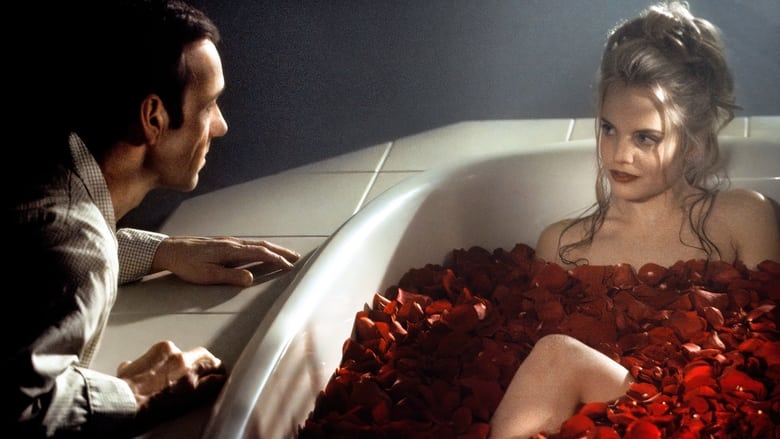
Before I started writing this article, I had to marinate on my impression of Brady Corbet’s magnum opus film, The Brutalist.  It has the makings of a biography but it’s fiction.  It indulges practically every inch of a Holocaust survivor’s life after immigrating to America.  It takes daring approaches in its photography particularly since it was filmed using an antiquated 35 mm print in Vista Vision. (The director found it appropriate to use the filming methods that were available during the mid-century decades when most of the film takes place. Wise and insightful choice.) Despite using questionable AI techniques, two of the leads use impressive dialects and fluently speak in Hungarian and Hebrew as well.  Set designs, score, sound, visuals.  It’s all here.  Yet, I don’t feel I wholeheartedly enjoyed the experience of watching the picture, and this is coming from a guy who had the entire AMC auditorium #16 to himself on a chilly Thursday afternoon at 4:45pm.  Not a cell phone lit in my line of sight or a crying baby within earshot.  The theater was my oyster.  The Brutalist was not.

Adrien Brody won his first Oscar at age 29 for Roman Polanski’s The Pianist.  He earned his accolades for a heartbreaking performance.  He arguably works even harder as a visionary architect named László Tóth.  This nuanced creation from Brady Corbet is a most convincing historical character…of fiction, that is.  

László arrives on Ellis Island, separated from his wife and niece by concentration camp assignments during the war.  The ladies remain in captivity while he reunites with his brother, Atilla (Alessandro Nicola) and Christian sister-in-law who reside in Philadelphia, operating a custom furniture and carpentry shop.

Enter a raving mad and wealthy industrialist named Harrison Lee Van Buren (Guy Pearce) who arrives home to find out his son Harry Lee (Joe Alwyn) has hired the carpenters to redo a library as a big surprise.  Harrison is outraged at the finished product and denies payment for the job, thus causing a permanent rift between László and Atilla.  László is kicked out of his brother’s home following an accusation of making a pass at the wife, and he can only find refuge within a church shelter.  

Harrison has a change of heart however when his socialite friends take a special liking to the new room.  He tracks László down, pays him for the work, invites him to a Christmas party and subsequently insists he stay on the property while also connecting the Hungarian with an attorney who will make efforts to reunite him with his wife and niece who remain overseas.  

Meanwhile, an ambitious Harrison conjures up big plans right off the top of his head.  He wants to commission László to design an enormous building consisting of a library, a gymnasium, theatre and a chapel on a wide expanse of Pennsylvania land nearby his grand estate.  The building will be erected in honor of his loving mother’s memory.  A humble László accepts the assignment though he’s funding a heroin addiction with the monies given to him by Harrison.  

Though The Brutalist is fiction, I believe it should still be considered a lesson in north eastern American history.  As building gets underway, a perfectly timed intermission in the middle of the film arrives when we learn of Pennsylvania state’s aggressive campaign to manufacture and build with the precious commodity of US steel.  Fictionally speaking, we have Harrison Lee Van Buren and László Tóth to thank for these newly created jobs of construction and commodity developments.

There is a whole lot of story to tell in this three-and-a-half-hour picture that traverses through decades.  Brady Corbet’s depiction of his main character, László, runs the gamut of so many circumstances.  He’s a stranger in a strange land, even towards his newly Americanized brother who has shed his Jewish identity for prosperity.  The Anglo Christian mentality of Harrison Lee Van Buren, along with his family and fellow socialites, curiously study László as the alienated man he appears to be.  Loneliness is not a direct message that Corbet offers in the film, but how can László not feel lonely in this new land without the sensibilities of a wife to help him mind his boundaries and stay away from the poisons of heroin or personal betrayals that will challenge him?

The second half of The Brutalist oversees László growing accustomed to reuniting with his wife, Erzsébet (Felicity Jones), who has drastically changed in her physicality since they were last together.  Their primarily mute niece, Zsófia (Raffey Cassidy), has arrived as well.  The problem is that László has had opportunity to shed his weakness of being a Holocaust prisoner while taking charge of his most mesmerizing architectural design yet. His family’s arrival does not feel conducive with his new way of life, both intimately and religiously. The Brutalist covers a lot of conflicts while also showing massive progress for Harrison’s grand investment and László’s treasured work.  

After providing all of this exposition for the film, I think I’m ready to deliver my point.  It’s too much.  There’s so much story here that some of it feels unwelcome.  László’s heroin addiction never seems to add up or intrude effectively enough.  Because of the long running time of the movie, there are long sections where any reference to his yearning for heroin feels neglected.  This man of energetic and artistic passion is hardly ever weighed down by his vice and I questioned just how important it was for the drug addiction to be included in the film.  The script goes in so many different directions at times, it feels like it forgot about this important monkey that should be on László’s back.

László also gets challenged by Harrison’s American business and architectural partners which is one more conflict.  Unexpected fallbacks also occur that affect both László and Harrison’s years-in-the-making plans.  Then there is László’s friendship with an assistant who started as a fellow drug addict.  Finally, there is László and Erzsébet and the problems they face intimately and as common partners. The reunification of the married couple has new, unexpected dynamics to face.

It’s a lot.  While I never minded the running time of The Brutalist, all of these layers of storytelling become exhausting.  

Guy Pearce actually impressed me the most.  I loved his character and the shrewdness he exhibits to everyone he shares a scene with.  His gruff dialect with a pencil thin mustache, slicked back hair and perfectly tailored suits are distinct, but his presence in a room is always felt even when the camera is not on him or if he has nothing to say.  His stature gave me an impression of Rockefeller, a man with the appropriate and seemingly out of reach dreams that will deliver a future of advanced American building and development.  I may have loved Harrison Lee Van Buren’s story more than László Tóth’s.

However, I got angry with the film as the story was beginning its descent towards the end. Harrison commits a truly unexpected and heinous act that arrives out of nowhere.  This is a fictional story. So, I feel comfortable with my stance that what Brady Corbet opts for Pearce’s character seems wrong and unjust; a downright inappropriate take that did not add up for me.  Guy Pearce is giving a career high performance, but I did not care for how his character’s trajectory concluded.

Felicity Jones is a powerhouse actress as Erzsébet.  She appears so confident within the skin of her character as a defiant woman, unhinged by any sort of attempted intimidation from her husband or the Van Burens.  

Adrien Brody is the sure front runner to win a Best Actor Oscar, though I wish Ralph Fiennes would finally get his due recognition for Conclave.  There are so many directions that László Tóth is pulled in.  This is a very challenging personification for an actor to belabor.  For this one character alone, The Brutalist feels like five different movies are being played at once.  If you have read my reviews before then you may know that I’m a big admirer of multi-dimensional characters.  It’s hard to find a character this nuanced.  Michael Corleone is a comparison that comes to mind.  As I write this review, it astounds me how much depth I’m reflecting on within Corbet’s script and Brody’s performance.

I told a friend who has also seen the film that The Brutalist feels like a marriage between Paul Thomas Anderson’s There Will Be Blood and Milos Foreman’s Amadeus.  While these characters are considered audacious, great artists beyond comparable realms, they are never the most powerful people in the room.  The power belongs to those with the resources of wealth and those who proudly carry the rank and titles bestowed upon them.  For the artists, men of power stand in the way of the achievements they strive for, forcing them to vent their frustrations with self-harm and abuse towards the ones closest to them.

Everything I saw in Brady Corbet’s film is interesting.  Beginning with the arrival on Ellis Island and the Statue of Liberty towering over a lost László, all the way to a visit at the seemingly unreachable mountains of Italy where beautiful, white porcelain exists in the highest reaches of nature.  You feel like you have traveled to places uncharted by most people of this Earth.  It’s breathtaking.  

The Brutalist follows the trajectory of a man arriving in America to accomplish his dreams and obtain a destiny he feels worthy of.  Only there are obstacles that will divert his path and thus a different outcome may arrive. 

Visually and with Brady Corbet’s ambition for this picture, The Brutalist is often astonishing to absorb.  Still, at least on my one and only viewing thus far, the film was overwhelmingly abundant, and I could not feel comfortable with all of it coming at me once.  Then again, that is likely how László and Erzsébet Tóth felt upon their arrival in the land of the free.

REBECCA

By Marc S. Sanders

“The suspense is killing me!  I hope it’ll last!”

                                      – Willy Wonka

Even if the outcome does not amount to much, the journey into mystery is often all that is needed for an effective film.  Mood and eeriness, plus unsettling foreboding are reliable tools for engaging storytelling.

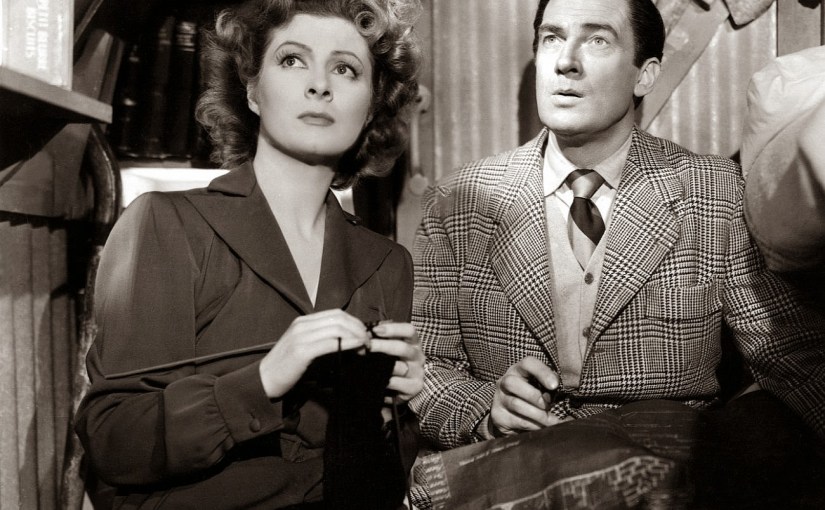
The one film in Alfred Hitchcock’s career to win Best Picture is 1940’s Rebecca, and if you’re a fan of the director, you’ll quickly fall in love with his deliberate shots of shadow and the panning explorations his camera gravitates towards.  Close ups of his actors have an unsettling haunt, and large hand-crafted doors are intimidating to an aristocrat’s new wife who carefully enters one room after another.  Other than a few pertinent differences, Hitchcock, with David O Selznick as producer, remain faithful to the eerie themes of Daphne de Maurier’s novel.  

Joan Fontaine works as an attentive helper to a wealthy and brutish snob (Florence Bates) who is on holiday in Monte Carlo.  There, she encounters a dashing aristocrat by the name of Maxim de Winter (Laurence Olivier).  The helper is shy and reserved but somehow Maxim allows her into his world even though she first encounters him as he seems to be stepping off into the rocky ocean depths below, looking like he’s about to end his own life.  Every day she sneaks away to be with Maxim and all too quickly, just as she is about to head off back to the States, he proposes allowing her to be relieved of her obligation to the haughty dowager she’s been serving.

Once married, Maxim brings the new Mrs. de Winter to his regal European estate famously known as Manderley.  It is here that Fontaine’s character will learn details about the mansion and Maxim’s enigmatic and deceased first wife, Rebecca, who drowned during a sailing accident a year earlier.  

Rebecca’s monogrammed R is embroidered in handkerchiefs and bed sheets throughout the house.  Her address book in her drawing room remains at the desk where she ritually wrote her letters. The cornered off west wing of the house is supposedly preserved with Rebecca’s furnishings.  Most disturbing is Manderley’s housekeeper, Mrs. Danvers (Judith Anderson), who is far from comforting or welcome to the new Mrs. de Winter.

Rebecca is quickly engaging because of Hitchcock’s haunting exposition that persists until the final act of the film.  Following the opening credits, he shoots his camera through a distant wooded drive that eventually arrives at the decrepit ruins of Manderley, with Fontaine’s voiceover guiding the viewers towards flashback.  Then we see Olivier, performing rather cold and isolated, apart from his sudden interest in Fontaine’s shyness. After the nuptials, the bulk of the film turns Manderley into a off putting locale, not ready for Maxim to have a new wife living within its confines.

Most effective is Mrs. Danvers.  Judith Anderson lends a spectral presence to a creepy individual dressed in black with a most evident paler complexion, even under the black and white photography.  Reading about the making of the film, Hitchcock wanted to make sure Mrs. Danvers hardly ever entered a scene walking into a room.  He’d cut away to a close up of Anderson simply being there, as if Mrs. di Winter or the viewer never knew she existed in the frame.  It lends to that haunted house kind of tension.  

Mrs. di Winter never feels like she belongs.  That signature letter R is a constant reminder of Rebecca occupying this home’s past.  Her wardrobe, personal bedroom and belongings remain behind too.  Maxim travels out of town often leaving his new wife alone with no family or companionship of her own.  A charming but odd cousin of Rebecca’s named Favel (George Sanders) appears outside the window of the reading room to remind the new Mrs. di Winter that Maxim is not especially fond of him.  Hitchcock left me wondering why Mr. Favel didn’t arrive by the front door.  It’s deliberately odd; certainly strange.  There’s a miser who roams around a small cottage near a beach path that Maxim insists his new wife stay away from.  These are elements to uphold Hitchcock’s penchant for unnerving his protagonist’s senses.  Delirium works to the director’s advantage time and again.

In addition to full sets tall staircases and vast, castle size rooms, a miniature model of Manderley was constructed for the film.  The background of this setting is so dense that every piece of artwork or window curtain or book seems to have a history for Mrs. di Winter to uncover in this cold and unwelcome house.  The gigantic doors to new rooms against Fontaine’s petite figure are disconcerting.  Maxim’s staff of servants may cater to his new wife’s needs, but it is Mrs. Danvers who appears to desaturate any joy or ease from this home’s new guest, and it is reasonable to consider that the housekeeper seeks to disrupt the wife’s adjustment at Manderley.

Joan Fontaine’s mousy, insecure performance works especially well next to the confident and cool tempered strength expected from Laurence Olivier.  Fontaine is also an exact opposite to Judith Anderson’s eerie persona.  How can she ask for anything of this housekeeper who maintains a fierce loyalty for Rebecca, the first Mrs. di Winter?  George Sanders also has a sense of self confidence but with his wide smile and that distinct English dialect, how can anyone feel like they can trust him? I guess it doesn’t help that he’s a car salesman, no less.

I actually thought back to Ari Aster’s Midsommer. In that film, Florence Pugh’s character no longer has a family and the only companionship she is left with is a boyfriend and two friends who she travels with to a mysterious, but intriguing destination.  Like Fontaine’s character, Pugh’s character is alone feeling helpless to turn to anyone for aid.  How can someone in a scenario like this ever feel secure or eventually rescued?  The loneliness for these women in these two broadly different films is what gives me shivers.  It leaves me shaken and terrified.  Is there anyone who would even notice they are missing or unaccounted for?  Just give them someone to trust and talk to!!!! PLEASE??????  ANYBODY????

Answers behind the puzzles found in Rebecca eventually arrive, and while the explanations add up, I did not believe they were especially sensational.  There are some twists.  The story veers off in different directions and Olivier and Fontaine drive the script quite well to a conclusion.  Though the ending is not the greatest strength of Rebecca, it is the journey that’s appealing, especially when you are seeing the film for the first time and have no knowledge of where the story is going.  Hitchcock’s trajectory is the real thrill.  

I pointed out to Thomas and Anthony, two of my Cinemaniac comrades, that in this whole expansive house we never once see a photograph of Rebecca, the first Mrs. di Winter, and then with their input I realize that’s the intended point.  Each viewer has their own design of what the mysterious Rebecca must have looked like based on what’s left behind with her husband, her devoted housekeeper, her cousin, her wardrobes and belongings, and her enormous, hidden dwelling known as Manderley.  Like Steven Spielberg committed to with concealing the driver of his terror truck in Duel or his great white shark in Jaws, Hitchcock applied to a phantom of a past, and her name was Rebecca.  

With a film like Rebecca, Alfred Hitchcock didn’t really need a knife or a gun to rattle your senses.  It’s his approach with mood that will keep you alert and unsettled.  You want to know more and see more and uncover more and more and more.  

Yet, that housekeeper suddenly appears, and those giant double doors are most unwelcoming.

A BEAUTIFUL MIND

By Marc S. Sanders

The genius was always easier than living with the monsters in his mind.  So was the dilemma that consistently plagued Nobel Prize winning Professor John Nash.

Ahead of seeing A Beautiful Mind for the first time, what you don’t know about Professor Nash is what will dazzle you the most when Ron Howard uncovers the mysteries he lived with during graduate school and on through his fellowship at MIT and with his enduring and loving marriage to his wife Alicia (Jennifer Connelly in an Oscar winning role).  John Nash is masterfully portrayed by Russell Crowe in a celebrated, nominated performance.

Dr. Nash comes off like a genius savant when Howard’s film introduces him in 1947 at Princeton University.  The director adopts a technique of presenting much of Nash’s depths and highlighting patterns and numbers in magazines or on chalk boards or even within the reflections that appear before his eyes in bright sunlight.  On a clear night, see if you can find an umbrella within a starry sky. 

For many of us, I presume it’s hard to decipher what it means to live the life of a mathematical genius. Ron Howard with Akiva Goldsmith’s hailed adapted screenplay does not expect anyone to comprehend formulas or equations.  The filmmakers simply ask you to witness how discovery is processed.  Nash writes endlessly on his dorm room windows.  He fills up every inch of the chalk boards at his disposal.  He tears apart articles in magazines and wallpapers his room and office with them.  Even when he is not writing, he is computing how situations will end up best towards his and his peers’ advantage. There’s one curvaceous, blond woman standing in the center of a bar for one of the men to hopefully have a tryst with, but then who will be left to pair with the dark-haired ladies that surround her?  Nash finds the logic in all of the men abandoning the blond.  The genius realizes what none of us can see.  Go for what no one would ever expect to have occurred.

Despite the professor’s odd ticks, unwelcome vernacular and his lack of social skills, a well-established livelihood works out for him.  He falls in love with a former student that he marries, Alicia, and he obtains a fellowship for himself and two Princeton comrades to practice out their theories at MIT.  Personal companionship arrives with his former roommate, Charles (an energetic Paul Bettany), and his niece.  On the other hand, John has also been recruited to become a code decipherer for the government and he must answer to a mysterious gentleman named Parcher (Ed Harris) who is using John to stay a step ahead of the Soviets.   John’s work must remain top secret and as his clandestine activities become more threatening and intense, so does the paranoia get increasingly overwhelming.

I’ve only covered the first act of A Beautiful Mind because when the truth of John Nash’s purpose and how he is regarded is revealed, this biography becomes something much further from how it began.  Akiva Goldsmith’s trickery in his script is capable of surprising an audience when some veils are lifted for both the primary subject of this piece and those who come in and out of John Nash’s life.  This is a true story but it’s incredibly surprising that a mathematical wizard like John Nash could be living a whole other life that makes little sense at first.

Ron Howard is doing some fine work here reaching for material that might feel familiar with other cinematic geniuses in film ranging from the fictional Will Hunting to more recently real-life figures like Mark Zuckerberg. Characters like these stand out for their quirkiness and oddities.  With Russell Crowe’s brilliant characterization of awkwardness in his uneven walk and how he carries his papers and briefcase, it is not hard to adapt to the man on film.  What he says and how he speaks would leave any one of us to roll our eyes at his behavior.  You’d likely chortle at John just as his Princeton classmates do.  Later though, you understand how valuable his accomplishments are to a greater good, and at the same time you become alarmed at how Dr. Nash is being used both from his own perspective as well as by those figures who unexpectedly enter his life and will not just leave.

Jennifer Connelly’s role does not amount to much at first.  With her alluring looks that have graced other films in her earlier career, she initially comes off as a token spouse to the main character and you remind the person sitting next to you that is actress Jennifer Connelly who got her start in Labyrinth with David Bowie, and Once Upon A Time In America with Robert DeNiro.  Yet, as more dynamics are revealed about her husband does the character Alicia show through, and she has no choice but to survive with her spouse’s torment.  Connelly has a scene that will crush you when she must unleash her frustrations in the middle of the night as well as sporadically throughout the film. She has to be carefully observant of her husband’s behavior for the safety of their child and herself.  Ron Howard sets up scenes that haunt Alicia only, and his wide camera work is absolutely eye opening as it lends to her personal performance.

It’s fascinating to observe John Nash’s willpower as he persists to live with personal demons while upholding the demands of his genius.  This film works on so many levels of enhanced editing and perspective, but without unforgettable work from Russell Crowe, Jennifer Connelly, and a supporting cast of character actors like Christopher Plummer, Josh Charles, Judd Hirsh, Ed Harris and Paul Bettany it could not sustain its staying power. 

A Beautiful Mind is a thoroughly effective biography.

ON THE WATERFRONT

By Marc S. Sanders

Terry Malloy innocently calls up to his friend Joe’s window and tells him to go to the roof of his apartment building to check on the pigeons.  Only what happens to Joe when he gets there is not what Terry expected setting off a complex dilemma of morality and preservation of life.

In one of Marlon Brando’s most famous roles, Terry Malloy is an ex-prize fighter who now carries out menial tasks for the New Jersey mob bosses that have a foothold over the longshoremen and their union contracts.  Terry listens to what his mobster brother Charley (Rod Steiger) tells him to do.  As long as he keeps his mouth shut, he’ll be selected each day on the dock for work and he’ll never have to lift a finger.  Just let things be and keep quiet.

Charley’s boss is Johnny Friendly (Lee J Cobb), who is ruthless with his control over the area. The guys have to surrender to the demands of Johnny and his toughies because it is no secret what really happened to Joe and who was responsible.  The cops can investigate and ask questions, but they’ll get nowhere.  It’s up to Father Barry (Karl Malden) to talk some sense into the fellas, and considering Terry was one of the last guys to see Joe alive, he’s the best option to overthrow Johnny’s reign.  If Terry shows up for a subpoena, it could put Johnny and his goons out of business.

Another conflict of interest for Terry is that he has taken to Joe’s sister Edie (Eva Marie Saint) who also knows of Johnny’s corruption.  She just has not realized that Terry might have been indirectly responsible.

Marlon Brando looks everything like a movie star should.  His slicked back hair and dark eyes shadowed by his thin eyebrows and the way he carries himself in a plaid winter coat is held in a permanent memory just as James Dean and later pop culture figures like Fonzie, or Tom Cruise and Brad Pitt evolved.  It sounds silly but there’s a reason Madonna lends recognition to the classic actor in her club song Vogue, and this is one of many films in his early career to reference for the honor. 

Eva Marie Saint is wonderful as the young woman in pain and confusion following the death of her brother.  Edie is as least as conflicted as Terry due to her immediate attraction to the tough guy’s charms while still bent on discovering who had her kind brother killed and why.  Brando and Saint have a magnificent scene together when the truth comes out and Leonard Bernstein’s music comes to a halt of silence.

On The Waterfront has an irony of life imitating art.  Mind you, I’m not here to provide a history lesson and wallow in political divisions.  I find it interesting that Terry Malloy’s dilemma is whistle blowing the corruption that occurs, while also being intimidated to keep quiet.  Patterned similarly is what director Elia Kazan infamously became known for when he testified during the Joseph McCarthy hearings against people in Hollywood suspected of having communist ties.  A Union community is designed to protect its members, but sometimes the dynamics lead to just one who is singled out to expose what is not cooperating legally and accordingly.  (Some of the actors were against working on this film because of what Kazan committed but they were bound by studio contracts.)

I am aware of how much On The Waterfront is hailed as a perennial classic.  The cast is an outstanding collection of actors beginning of course with Brando, Malden, Steiger and Cobb.  Following television appearances, this was Eva Marie Saint’s first film, and there are other uncredited actors who had not made their mark yet including Martin Balsam, Michael V Gazzo, and Fred Gwynne.  The film boasts Oscar nominations for five actors (two wins, for Brando and Saint respectively) as well as wins for Best Picture, Director and Screenplay.  All that being said and yet I cannot say I felt invested in the film. 

The characters’ plights and pains simply did not connect with me.  Actually, while I believe I’m expected to yearn for Terry Malloy’s pain and regret where he declares he “…coulda been a contender…,” I felt sorrier for his brother Charley. 

In that well-known scene between the two brothers in the back of the cab, it is Charley who is really torn.  Charley is tied to his mob boss, Johnny Friendly, but he has to convince his brother to do what is best to protect the mob he’s committed to, or it could get both of them killed.  That famous scene is owned more by Steiger than Brando.  An interesting fact is that Rod Steiger had to perform most of that scene without Marlon Brando there.  The lead actor would leave the set at 4pm sharp each day, leaving Steiger to do his half of the scene with a stand in reading Brando’s lines.  It caused a bitter rift between the two actors.  Yet, the next time you catch the film, have a look at who is really doing the heavy lifting.

I might have gotten trapped trying to understand the way the union operates and how the mob manipulates everything to their advantage.  I’m lost in some of the early dialogue and how people go about doing what they do.  Maybe what I should have done is relax my train of thought and take in how the protagonist is pulled in many different ways, none of which seem like a winning solution. 

Out of context there is a selection of great scenes on display.  Karl Malden is magnificent when he urges the longshoremen to stand up to the brutality and intimidation they are under.  His concentration is amazing as he is pelted with trash while holding his composure.  This scene won him his Oscar nomination.

Lee J Cobb is a memorable antagonist. The concluding scene between his Johnny Friendly and Terry stands as a final battle between hero and villain and the residual effects of what was shot of that bout have been honorably repeated in many films thereafter. 

There’s an obvious influence that stemmed from On The Waterfront.  Clearly, much of the material had an enormous influence on future filmmakers like Lumet, Scorsese and Coppola.  Perhaps that’s the reason it did not grab me.  Those future directors turned the motifs that Kazan provided into flashier segments of color and trick camera work.  Even the inclusion of harsh language in those grittier, later films left me with a more convincing authenticity.  Then again, I was shocked to see Terry Malloy tell Father Barry to go to hell.  Pretty bold for 1954, and still somewhat shocking within the context of the piece.

On The Waterfront is actually based on fact from happenings at the docks off of Hoboken, NJ where most of the film was shot.  To watch it today is to look back at what high stakes dramatization and dilemmas of ethics surrounded by death and crime must have looked like.  It does feel outdated to me, showing a period that is long past, but it paints its truth very, very well. 

GONE WITH THE WIND

By Marc S. Sanders

Gone With The Wind is probably the first of the sweeping epic.  It spans a transitional period in history from the American Civil War and through the aftermath known as Reconstruction.  Contained within these historical contexts are the prominent Georgian Southern Plantation residents. They court and romance one another ahead of the war. They celebrate with welcome glee, ready to fend off the horrible Yankees of the North who desire to put an end to black slavery.  Nearly ninety years later Victor Fleming’s film, based on Margaret Mitchell’s bestseller, is an impressive piece of movie making with set designs and shots that remain superior to many modern films of today. 

At the top of the character pyramid is young Scarlett O’Hara (Vivien Leigh), the spoiled Southern Belle of a wealthy Irish plantation owner.  Her spoiled livelihood pines only for the noble and dashing Ashley Wilkes (Leslie Howard).  Yet, he has committed himself to his cousin and Scarlett’s best friend Melanie (Olivia de Havilland).  Enter Rhett Bulter (Clark Gable), a self-made wealthy prospector who is taken with Scarlett. She gives him the coldest of shoulders as she waits for Ashley to leave Melanie and have him all to herself. 

Before the soap operas of radio and television arrived, there was Rhett and Scarlett in a competition of romantic swordplay. As you watch Gone With The Wind, you see how the relationships change with marriages and children, along with death as a cost of war.  If it wasn’t for how well this collection of actors perform, all of this storytelling would feel quite hammy by today’s expectations.  Yet, Clark Gable is undeniably handsome and confident as Rhett.  His stature is so impressively consistent with that pencil thin perfect mustache to enhance his proud grin.  He doesn’t wear the costumes of 1860 regality.  The costumes wear Clark Gable.  If the film were ever to be remade, no one could match what Gable delivered.  Vivien Leigh is also unforgettable.  Scarlett is hard to like, though amusing in how she holds to her convictions of rejecting Rhett’s advances while still obsessing over Ashley.  Sometimes you want to shake this spoiled brat down to reality.  Yet, as the film demonstrates, reality shellshocks the young lady as the war overcomes and she must learn to fend for herself and those closest to her.  Viviene Leigh is radiant, and she epitomizes this character amid the vibrant colors of her dresswear and her piercing eyes that focus on what is important to her.  Whether it is schoolgirl flirtations or determined survival, Viviene Leigh is always focused on Scarlett’s stubborn strengths, which at times are also her weaknesses.

The construction of Gone With The Wind is what stays with me most.  Knowing what we know of our country’s bloody history, it’s surprising to see how excited the men of the South are to enlist in the Confederate Army, defending their ways of Southern gentility and slave ownership.  Yet, even for a film, Victor Fleming does not shy away from the atrocities of war.  Before Oliver Stone demonstrated the false heroism that a man like Ron Kovic expected to find in Vietnam (Born On The Fourth Of July) or even what could be found in the first acts of All Quiet On The Western Front, Gone With The Wind was there to flip the coin first.  The same men who bucked their horses and fired their pistols in celebration of going off to fight either never returned or they came back to a thinly spread, elderly doctor ready to sever their limbs. 

The most unforgettable shot of this film occurs when naïve Scarlett traipses across a long block of wounded men to find the doctor and insist he tend to Melanie who is about to deliver a child.  The number of extras and the amount of detail and design in this one scene is astounding.  It’s truly a walk back in time and it never glamourizes an unforgiving history.  You cannot help but be marveled at this wide shot; one of the best I’ve ever encountered.

Following this moment, Scarlett is forced to grow up as Sherman’s forces advance through Atlanta and Savannah burning everything in sight, including what’s most precious, her plantation home known as Tara.  The art design of Tara should be studied in film school.  Victor Fleming’s crew show a beautiful expanse of land and prominence to open the film, just ahead of the Civil War, then it is followed by a pillaged and burn stained remnant of invasion that could not be fended away.  Fleming also captures stunning silhouettes of Scarlett and others with the foreground bathed in a burnt orange sunset or a grey and gloomy sky.  An unleafed oak tree is off to the side lending to the foreground and implying a current barrenness of what was once a luxurious South.  Just ahead of the film’s intermission, Victor Fleming completes his canvas on film showing a defiant Scarlett with a raised fist delivering her self-sworn testimony to reviving Tara for a new day.  It’s just another unforgettable moment in all of film history.

The length of Gone With The Wind feels overwhelming clocking in at just under four hours.  Still, the picture moves and progresses through historical landscapes and the developments of young Scarlett as she moves from her unquestioned reliance from Mammy, her house servant (Hattie McDaniel, the first African American to win an Oscar) and on to her courtships and marriages.  During her transitions, she must contend with lack of food, money and resources for herself and the slaves she’s grown up with at Tara, as well as the other plantation widows and wives.  Scarlett also must grow up quickly to find ways to fend off tax demands of Union Carpetbaggers.  All of these character developments hold my interest much more than the battle of the sexes engaged between her and Rhett.  These characters are wonderful.  Pure cuts of cinema grandeur.  However, I was caught up more in their recoveries following an undeniable defeat at the hands of war and what little was left behind.

When the film returns to the soap opera chapters, it is not so much that I am admiring Vivien Leigh, Clark Gable, Olivia de Havilland or Leslie Howard.  I am much more engaged in the backgrounds they occupy.  The rubble of carnage followed by the grand reconstructions that remedied their new situations.  Rhett and Scarlett fight for common ground in their eventual marriage, have a child and then emotionally toy with one another.  It’s nothing boring.  However, it is a lot of same old, same old and Margaret Mitchell’s sweeping epic finds sad resolutions to their dilemma of uncommon grounds with each other.  Arguably, these resolves in the storylines are a little too convenient as the story works to draw your tears while keeping you engaged in the drama.  Gone With The Wind is so legendary though, and still one of the biggest revenue earning films of all time. It is likely had I seen this film at the end of the 1930s when technicolor films were rare treats, that anything put on the screen would take me away in the splendor and heartache.  I reflect on the film after watching it for a second time and I still do not like Scarlett.  However, I admire what she endures and how she persists.

In 1939, Victor Fleming directed both The Wizard Of Oz and Gone With The Wind, two films with only the commonality of technicolor achievements.  They remain two of the greatest cinematic triumphs of all time and will always carry that honor.  I’d argue that Fleming was a Francis Ford Coppola, or a James Cameron or George Lucas of his time.  A pioneering and aggressive filmmaker looking to invent a new way to absorb moving images on a screen, accompanied by grand instrumental soundtracks and actors who complimented zoom ins and outs with his camera.  Victor Fleming is a director who truly remains unmatched.  When you watch these two films, you are carried off into unfamiliar times and places. You are forced to observe beyond what appears closest to you.  The immediate stories do not stop with Dorothy or Scarlett.  Look at Munchkinland or war-torn Savannah as far as your eye can take it. Fleming has something all the way back there, that far out, for you to see and collect in your consciousness.

Today, Gone With The Wind is accepted as a piece with an asterisk next to its title.  The treatment of African Americans in the film along with their dialects and appearances is held into question.  Should these people be depicted in this manner?  Ahead of the film, streaming on MAX currently, there is a warning label of what some may consider inappropriate content even though the film remains preserved in its original final edits.  It should be.  How blacks were cast in films and how blacks were treated in history can not be changed and if we are to improve on our future of filmmaking and the histories that have yet to come, then the worst thing we could ever do is disregard the errors of our ways and whitewash over how any people were regarded and what our perspectives looked like.  Hattie McDaniel’s character may be the most beloved and memorable character in Gone With The Wind.  She’s a scene stealer whenever Gable or Leigh share a moment with her.  It speaks volumes that she could win the Oscar during a time when overt prejudice was never subtle. She was not even permitted in the theatre to accept her trophy. Clark Gable almost didn’t attend the ceremony in protest of her restriction.  McDaniel held that he go in honor of the film.  Still, Ms. McDaniel insisted that she’d rather play a maid on screen a hundred times over than live the life of a real maid fulfilling the servitude of someone else’s demands. 

Ahead of the challenging progress that came over twenty years later with the civil rights movement, McDaniel demonstrated a need for people of color to connect and relate to any kind of movie watcher.  Gone With The Wind would not have the reputation it has always held without Hattie McDaniel or Butterfly McQueen (as Prissy, another house servant).  To wit, these actors upheld what was being fought for within the Civil War and how those of the deep south lived and treated one another.  While we should be sensitive to how blacks were treated at this time, I am also grateful for their contributions into a historical depiction of a violent and unfair period.

Gone With The Wind takes commitment to watch.  Yet, it is such an important masterpiece in filmmaking.  It carries an immense significance that I believe it is one of a select number of films that must be watched in everyone’s lifetime.  I expect to still be breathing when the film reaches its one hundredth anniversary, and while some critics and skeptics poke at its shortcoming in sensitivity, I also hope that those who wish not to censor or erase an often-cruel history will give the picture its ongoing salutes and applause.  I’ll be at that Fathom event in the movie theater for that one hundredth anniversary.  This film was made to last a full century after its debut and then to last another hundred years thereafter.

It’s a masterful, epic and unforgettable piece of movie making.

BLACK ORPHEUS (France, 1959)

by Miguel E. Rodriguez

DIRECTOR: Marcel Camus
CAST: Breno Mello, Marpessa Dawn, Lourdes de Oliveira
MY RATING: 8/10
ROTTEN TOMATOMETER: 88% Certified Fresh

PLOT: The Greek myth of Orpheus and Euridice is translated into a modern-day story (with an all-black cast) set in during Carnaval in Rio de Janeiro.


In the first two-thirds of Black Orpheus, there are scarcely more than 2 minutes strung together at a time without some kind of music or sound effects thumping away in the background.  This gives the film a subtle real-world backdrop, which is good, because Black Orpheus is a fantasy through and through.  Critics, now and at the time of its release, complained that French director Marcel Camus ignored the reality of the Brazilian favelas, or slums, in favor of depicting Rio as a non-stop party.  This is a valid point.  However, I believe that, in this movie, reality has no place.  This is a love story, a myth, a tragedy, and a travelogue all rolled into one.  Reality must take a back seat in movies like this.

(And, heck, somebody must have liked it because it won both the Palme d’Or at Cannes AND the Best Foreign Film Oscar that year, a rare feat.  True, there were extenuating circumstances [numerous French critics had problems with the emerging French New Wave], but let’s not turn this into a classroom, shall we?)

If you’re familiar with Greek mythology, then the plot of Black Orpheus is nothing new.  Orfeu (Breno Mello, a non-professional actor) is a streetcar conductor engaged to the sexy, vivacious Mira, but he is not exactly thrilled about it.  Meanwhile, Eurydice (Marpessa Dawn, who actually hailed from Pittsburgh, not Brazil) gets lost in the city on the way to visit her cousin, Serafina, who lives in a ramshackle favela neighborhood.  She asks Orfeu and his boss, Hermes, for directions, and for Orfeu it’s love at first sight.  The rest of the movie will involve Orfeu wooing Eurydice, who worries about a strange man who might be following her, while trying to ditch Mira, with Serafina’s help.  Also assisting Orfeu, while acting as a Greek chorus in miniature, are two street urchins, Benedito and Zeca, who envy Orfeu’s lovely guitar playing, which Orfeu claims is what makes the sun rise every morning.

Apart from the story itself, the things I noticed at the outset were the presence of riotous colors in the costumes and the Brazilian countryside, and the music.  Lots and LOTS of music, but not a great deal of songs.  Black Orpheus is billed as a musical, but I’d have to say it’s a quasi-musical.  In a standard musical, characters break out into song, and no one notices because otherwise we’d be watching a play.  In Black Orpheus, every song is diegetic…someone asks Orfeu to play a song on his guitar, for example, or the Carnaval participants sing a rousing song while on parade or at a huge dance.  And I want to mention again that, while Orfeu is singing a quiet song to Eurydice, the constant percussion of the Carnaval pulses behind it, completely at odds with his song.  You would think it would become a cacophony, but it doesn’t.  It makes his quiet song much quieter, which may sound counterintuitive, but it works.

The mythic tone of the story keeps the film from flying off into ridiculous territory amid all the revelry.  Without mythology, Black Orpheus would be a soap opera.  A pivotal scene occurs during a massive dance contest, as Eurydice has disguised herself as her cousin, Serafina, so Mira doesn’t recognize her.  But Mira sees through the disguise and threatens to kill Eurydice.  Mira chases her, and unseen by anyone else except Eurydice, a man dressed all in black wearing a skull mask follows them both.  This is Death.  Earlier he had nearly chased Eurydice off a cliff, but Orfeu had saved her.  “I am not in a hurry,” he said, “we shall meet soon.”  With that in mind, his presence during this second chase is tinged with suspense.  It’s a very Hitchcockian element, the threat of danger juxtaposed with a dance or a party.  Good stuff.

So, it’s fair to say I enjoyed this movie a little more than I expected to.  But the bonus features on the Blu-ray brought up an interesting point.  Detractors of the film pointed out that, despite taking place mostly in a slum, the actual reality of those slums (both then and now) is anything but festive, no matter how much bossa nova music you play or how many songs you sing.  It’s highly unlikely these people would have had the wherewithal to create such stylized, colorful costumes while having to deal with the reality of poverty, all while looking down the mountainside at the distant concrete high rises of the higher classes.

Does Black Orpheus ignore reality?  Well…yes, it does.  Myths, by definition, have little to do with reality in the first place.  Would it have been possible to tell this mythical story, retaining its coincidences and absurdities and supernatural elements [especially towards the end], while also keeping its feet firmly on the ground and making a socially conscious statement about the horrible living conditions in Brazil?

I don’t think so.  Or, if you did, it wouldn’t be held together very well.  Black Orpheus is simply re-telling a very, VERY old story and re-imagining it as if the Greek gods had lived atop Sugarloaf Mountain instead of Olympus.  When you start with that kind of premise, reality goes out the window.  You have to focus on the story’s emotional beats, the pleasant assault on the senses and, occasionally, logic.

This opens a whole separate argument: is it a film’s responsibility to BE authentic, or just to FEEL authentic?  For example, Titanic [1997] feels authentic to me, a layman, but I’m sure historians and other experts could point to any number of things that were simply not true in the film.  Fair enough, but that doesn’t affect my enjoyment of the film as it was presented to me.  It FELT authentic, and that’s enough for me.  The only way to make a movie like that 100% authentic would be to turn it into a documentary.

Black Orpheus FEELS emotionally authentic to me, a layman, who is not a social anthropologist.  I look at the colors and vibrancy on display, visually and in the story itself, and while a small part of me acknowledges, “This isn’t real life”, another part of me says, “Well, if I wanted real life, I wouldn’t be watching a movie, would I?”

WHIPLASH

By Marc S. Sanders

It’s impossible to find absolute perfection.  I don’t care if it’s in the field of medicine, law, mathematics, art or even music.  No one is THE ONE.  Yet, if you are determined to partake in that hunt, it’s likely you’ll scream with frustration.  You might think you’re on to something but still it’s not quite the one.  Maybe, however, you will force your search for the one if you throw a chair at your gifted student, scream some of the ugliest obscenities, impose threats, slap him, allow the tears to run, force a literal blood draw, or sweat them into numbing exhaustion.

Whiplash is the name of a piece of jazz music originally composed by Hank Levy.  It is also the title of Damien Chazelle’s brilliant first film, and the best to come out of 2014. Allegorically speaking, the term takes on a harsher connotation.   The word whiplash gives me an image of torn skin and hot, dripping blood.

Andrew (Miles Teller) attends the Shafer Conservatory in New York.  He’s a jazz drummer who gets hand picked by the esteemed conductor Terence Fletcher (J.K. Simmons, in a well deserved Oscar winning role) to join his elite class.  Mr. Fletcher is cordial at first and a little instinctive as he’ll stop his musicians short of getting past one note before asking them to start again.  A hand gesture with a headshake and a wince.  Now go again.  Another gesture.  Go again.  One more gesture.  Again. Now an outburst of violent rage.

Individually, Andrew and Terence are determined with unhealthy mindsets to obtain levels of achievement that appear impossible to grasp.  The boy wants to get to where his drummer idol Buddy Rich plateaued.  The teacher wants to find the next Charlie “Bird” Parker.  These men of different generations are terribly talented.  Terribly I say because their passion for music is their self-imposed and cruel undoing.

Chazelle has much respect for the field of contemporary jazz.  I like jazz but I know nothing about how a piece is assembled so rhythmically among an assortment of instruments from the drums to the harp to the cello to the 88 keys and the various horns.  Put them all together, and there’s an atmospheric magic to what’s churned out.  It’s beautiful and bewildering.  Complicated, yet mesmerizing.  In Whiplash though, the music may be the worst antagonist because the frustrations that arrive with trying to become a master are unforgiving.

A late scene in the film shows Terence Fletcher, an altogether tyrant of a teacher, playing melodic nightclub piano in a bar.  He’s applauded and appreciatied as he presses down on the final key.  He thanks his audience with a nod.  Nevertheless, J.K. Simmons shows a different level of frustration.  Up to this point, the actor’s character has been a series of screaming eruptions.  In this moment, the man looks like he wants to cry.  No matter what he plays or how well loved he is, Terence Fletcher knows it could have been better.  So, if he lives with his suffering, then he will teach his best students to suffer through music as well.

Andrew is on the cusp of living his own life.  With a mother no longer in the picture, he still shares movie times with his father (Paul Reiser) perhaps so his father can still be a father, or maybe it is to remain a child to someone.  He’s starting a what could be a promising relationship with a girl named Nicole (Melissa Benoist), but his need to be a better drummer interfere and the only way he’ll know he’s at least as good as Buddy Rich is if he satisfies his teacher.  That’s the only sure sign.  

Does Terence turn Andrew into a monster, or is it the music?

This will always be one of Miles Teller’s best roles.  He’s got that innocent, quiet way about him, but as he gets “mentored” by this new composer, he changes.  He becomes devoid of care for Nicole and rebellious towards the lack of respect he receives from family and fellow students.  Like a chess champion, the art of drumming turns the drummer into an unloving creature soaked in blood and sweat.  This ongoing trajectory might make him a better musician but it will also bring him to an end result that matches his teacher.  

Beyond the energy of the music, Damien Chazelle steers a thrilling duo.  Simmons is an outstanding villain as a guy you can only hate until you see the motivations he’s only trapped himself into.  Only then you might just sympathize. Teller is circling the waters of a dangerous relationship with music.  Chazelle allows his picture to swim towards defiance with bloody and painful persistence. The epilogue of the film demonstrates precisely what these two men are searching for.  It’s only when you arrive at the end of Whiplash do you realize and empathize with the internal and physical pains these people choose to weigh on themselves.

To my ears, music is a beautiful, universal language.  

For the scribes, it’s an agony they choose to bear.

CONCLAVE

By Marc S. Sanders

conflict

noun

  • 1.
    a serious disagreement or argument,

conclave

noun

con· clave ˈkän-ˌklāv 

Synonyms of conclave

1

a private meeting or secret assembly

especially  a meeting of Roman Catholic cardinals secluded continuously while choosing a pope 

2

a gathering of a group or association

As I watched Edward Berger’s new film, Conclave, the word “conflict” came to mind based simply off of the same prefix the two terms share.  This picture does not just depict a sequestered assembly to elect a new Pope for the Roman Catholic Church.  It goes further because nothing goes as expected for the Dean of the Conclave, Cardinal Lawrence (Ralph Fiennes, doing Oscar caliber work).  

Now that the Pope has passed away, the various cardinals assemble, and all seem to have their own impressions of who should take the reins.  Cardinal Bellini (Stanley Tucci, man I love this guy) is the liberal candidate, tolerant and supportive of the gay population and accepting of women in authoritative positions.  Cardinal Tedesco (Sergio Castellitto) is on the conservative side believing the position should rightly return to an Italian with restrictions and containments of liberal ideals that have diminished what the church used to stand for.  There is also Bishop Tremblay (John Lithgow) who has an abundance of support to no one’s surprise. A few others earned some votes during the initial balloting, but it’s seemingly of no big consequence. Still, over the course of the film, multiple votes will have to be counted until the minimum majority necessary for a new Pope is collected.

The men of God convene in a formality of faith, swearing their handwritten votes before the Almighty.  Yet, Lawrence, as a dean of ethics and morality, is becoming apprised of some questionable irregularities among his peers.  While some of these men are earning more and more support with each passing tally, new developments present themselves forcing Lawrence to question if there should be some investigations to determine if some of these men are qualified to acquire the Papacy beyond an election.  Hence, the conclave is getting gravely interrupted by an overwhelming number of conflicts for Lawrence to consider.

I must stop there with my summary of Berger’s film, based on the novel by Robert Harris.  This is a top notch drama helmed by an outstanding cast.  At the very least the adapted screenplay by Peter Straughan will win the Oscar.  The dialogue is aggressive and forthright when it needs to be.  An institution like the Roman Catholic Church operates on secrecy.  However, it’s so interesting to see these devout men of God challenge one another. Just because they are the highest priests does not constitute them beyond sin or even corruption.  As Stanley Tucci’s character demonstrates, they might not be polite either.  Simply honest when their personal stance is challenged.  

The script is also quietly ponderous.  Ralph Fiennes shows an internal conflict between his duties to the church and how he truly characterizes some of his peers.  He even begins to wonder if he should continue as a priest. Has his faith remained uncompromised? Frankly, how can a priest of the highest order live satisfyingly knowing that no person is of an upmost perfection even if they swear by their faith? Still, the strict expectations of a widespread religion will demand contexts of that notion.

Constructively, Conclave has a gripping energy.  The performances from especially Fiennes, Tucci and Lithgow are magnetic as soon as they enter the piece.  Isabella Rossellini delivers an under-radar performance as a nun who works with a necessary audaciousness to her character.  She knows things that should never have occurred.  Yet, how will she confront these intimidating, stark, red-robed figureheads?  Does she even have a right or authority to speak?

The music from Volker Bertelmann could belong in Hitchcock thriller if Bernard Hermann wasn’t available.  It keeps you alert and never anchors your feelings as new developments come to light.  The composition only enhances the weight of the drama.  

Edward Berger is an observant director.  Ahead of the conclave he reminds you that even telephones are not permitted inside and tossed in a heap outdoors.  The priests are smokers. Personally, I find that surprising as cigarettes almost seem like a mild narcotic and a contradiction of how I envision a Catholic priest should behave.  Nevertheless, Berger also gives you a close up of a pile of cigarette butts tossed on the ground just ahead of being sequestered. These men turn off the world outside to focus on this important election. It’s as if they live in a submarine below the surface.

Conclave wil be a very divisive film.  Politically, it’s apparent that it favors one side (liberal vs conservative) over another.  In addition, it is not shy about showing its characters with their assortments of fault.  I am not educated in Catholicism.  Though I am well aware of the value it holds across its worshippers.   For many, their faith is held above all else and those people will find a discomfort with this picture.  I might even be understating that assessment.  Some folks of the Catholic order, and maybe other denominations of Christianity, will even take grave offense to this fictionalized depiction.

Conclave is truly conflicting.

Because I do not hold any value in Catholicism, much less any religion anymore (just a shred for the Judaic customs I was raised on), I did not hold any bias or objections to Edward Berger’s film. Rather I was engaged in how difficult it is to balance yourself as a Catholic priest.  For Cardinal Lawrence, Ralph Fiennes is neither likable nor unlikable but I certainly felt his character’s frustrations and the challenges he is obliged to navigate.  

Who is judging these Cardinals? 

God?  

Or is it each one of them?  

Conclave is built on one believable, yet shocking, surprise after another.  Still, when the big twist at the end arrives, it is completely blind siding and Straughan’s script leaves his audiences with a new question that’s practically impossible to contend or compromise.  

Again, Conclave is very, very conflicting.

Nevertheless, this is one of the best films I have seen in a very long time.  So much so, that I cannot wait to see it again.

Conclave is one of the best films of the year.

DJANGO UNCHAINED

By Marc S. Sanders

Quentin Tarantino’s scripts have never been shy with using the N-word or any other colorful terminology.  He turns harsh and biting vocabulary into rhythmic stanzas of dialogue.  When he films these scripts, he’s not bashful with the buckets of blood splashed all over the set either.  His interpretation of violence works in a kind of slapstick fashion among his seedy one-dimensional characters.  Normally, I never get uneasy with his approach.  I know what to expect of the guy.  Yet, as well cast, written and formulated his Oscar winning film Django Unchained may be, I wince at both his word play and physical carnage.  I think Tarantino gets a little too comfortable with his slave era storylines and the African American actors he stages in his set ups.  A good portion of this Western may be thrilling, but it’s also cringy like watching a drunk uncle at a three-year old’s birthday party, and I defy viewers not to squint at the movie if they so much as live day to day with even the smallest shred of kindness in their hearts.

Django Freeman (Jamie Foxx) is released from slavery by the former dentist now bounty hunter, Dr. King Schultz (Christoph Waltz, in his second Oscar winning performance cast by Tarantino).  Django is a good man, though uneducated and mostly illiterate.  Once he assists the doctor with locating and collecting a bounty, the two make an arrangement to stick together through the winter collecting further ransoms.  In return for the former slave’s help, Dr. Schultz will assist in rescuing Django’s wife, the German speaking Broomhilda (Kerry Washington).  She is believed to be held at the infamous Mississippi slave plantation known as Candyland, owned by the ruthless Calvin Candie. He is played by Leonardo DiCaprio in one of his best roles while also delivering one of his most unforgiving portrayals.  Calvin Candie is a mean son of a bitch slave owner who has too much fun with investing in slaves for brutal Mandingo wrestling matches that don’t finish until the loser is dead in bloody, bone cracking fashion.  

All of these figures belong at the top of Quentin Tarantino’s list of sensational character inventions, particularly Django.  He has more depth than most of the writer’s other creations.  This guy goes from an unkempt, nearly naked, tortured and chained slave to a free man proudly wearing a bright blue court jester costume on horseback.  His third iteration places him in a gunslinger wardrobe comparable to a Clint Eastwood cowboy and when the conclusion arrives, Django is meaner, more confident and instinctively wiser, glamorously dressed (purple vest with gold inlay designer seems) like a graphic novel superhero ready to take on an endless army of redneck slave abusing outlaws.  Django is taught everything he needs to know from Doc Schultz.  Christoph Waltz and Jamie Foxx stand as an impressionable mentor/student pair.  They are the spine of Django Unchained.

The villainy of the piece belongs to DiCaprio and his head slave in charge, known as Steven, played by the director’s go to player for happy street slang and N-word droppings, Samuel L Jackson.  Steven is Jackson’s best career role because as an old, decrepit and frightening individual it’s this portrayal which looks like no other part the actor has ever played.    Both actors are funny, and you can’t take your eyes off of their unlimited grandstanding, but they will leave you feeling terribly uncomfortable.

I think what is most unsettling about Django Unchained is that the cruelty persists for nearly the whole three hour run time, and it is more so at a shameless attempt of comedic, pulpy entertainment, rather than just insight and education.  A Schindler’s List finds no glee in the torment that kept the Holocaust alive.  Tarantino didn’t even go to great heights with Inglourious Basterds because that film featured ongoing grisly heroics with his assortment of vengeful protagonists.  The Nazis were never celebrated in that film at the cost of innocent Jewish lives that faced peril and threat.

In Django Unchained, it’s hard to watch the Negro characters and extras getting brutally whipped while bound by inescapable chains.  Kerry Washington’s nude character is yanked out of a sweat box on the Candyland plantation and while I’m watching it, I ask myself if I’m too much of a prude.  No.  I don’t think I am.  This teeters on torture porn. The N-word is now being used way too freely to stab at the slaves for gleeful poetry. It grows tiring and, yeah even for a Quentin Tarantino picture downright ugly and offensive. I imagine Tarantino grinning behind the camera every time DiCaprio or Jackson happily drop another N-bomb.

Quentin Tarantino has been applauded time and again for his excessive abuse and tortuous murders committed by his characters.  Because he’s courageously gone so far before, the line of acceptance is either pushed out farther or maybe in the case of Django Unchained it is entirely erased.  

My compliments to a well-known humanitarian like Leonardo DiCaprio for energetically acting through this bastard of a role that requires a twisted pleasure in watching two husky black bruisers beat the bloody tar out of each other in a formal drinking parlor.  Later in the picture, a weeping slave is shredded to pieces by ravaged, bloodthirsty dogs.  These fictional scenes staged by Tarantino and his filmmakers come off a little too real and even by the director’s standards much too over the top for the temperature of this film’s narrative.  

What could these extras cast to play these slave and Mandingo roles have really been thinking while shooting this picture?  Did these men recognize the racially poetic humor in Tarantino’s verbiage? Did they find a commitment to demonstrate a once historic atrocity for a lesson learned? I doubt it. Did these actors simply succumb because they needed the work?  Believe me.  I empathize.  Yet, Tarantino took this film to a very uncomfortable extreme for a movie intended on following his reputable and always admired lurid material.  Here, despite my reverence for his work, I think Quentin Tarantino goes unnecessarily over the line.  The whippings and dog torture are quite uneven from what The Bride commits in Kill Bill when a Crazy 88 henchman gets spanked with a sword and there’s nothing to compare to whatever sick, graphic novel atrocities occur in his later western, The Hateful Eight – both are PG rated compared to what is offered in Django Unchained.

Much of Tarantino’s signature comedy works.  The Ku Klux Klan of the late 1850s are represented with brilliant stupidity by a cameo appearing Jonah Hill and a racist, foul speaking, plantation owning charmer played by Don Johnson, known by what else but Big Daddy.  The filmmaker turns these guys into bumbling stooges who can’t even wear their hoods properly. And yes, they also freely drop the N-word in cruel like fashion. I get it, Mississippi and Southern Plantation owners were not the Mickey Mouse sort, and I’m not asking for whitewashing what the real-life despicable characters stood for or how they carried themselves. Still, when all of this compounded together, it goes too far. In a drama like 12 Years A Slave, I see an authenticity to an ugly slave era. In Tarantino’s world, I see a kid who learned a bad word and dad said go ahead son, play with the machine gun but make sure the vocabulary ammo will riddle the entire script to pieces.

Django Unchained is a gorgeous looking picture.  Tarantino goes to the outdoor plains following the interiors of Pulp Fiction and Jackie Brown.  Jamie Foxx and Christoph Waltz’ cowboy antics look marvelous riding on horseback or even simply camping by the fire as well written exposition is revealed on cold moonlight evenings.  

I can watch this western on repeat and feel a free-spirited energy when Django steps out in his cowboy outfit with boots, spurs, the hat, and a brand-new saddle to ride off on his steed while Jim Croce’s uplifting “I Got A Name” cues into the picture.  I love how Jamie Foxx appears as a super heroic action star, especially in the final act of the movie.  I can absorb the sadism of DiCaprio’s downright mischievous evil, particularly when he uses a bone saw and skull prop to make a point.  I feel like I’ve gained a comforting friend in Christop Waltz’ kindly sensible Doc Schultz, and I welcome a very funny and altogether different Samuel L Jackson that finally arrives.  

It’s the filling within these strong moments and characterizations that is very hard to swallow.  Django Unchained is that great picture that still should have been made but with a modicum of caution. Perhaps one of the Weinsteins, or maybe even these powerhouse, marquee actors who led this piece should have shared some constructive input with the writer/director.

Django Unchained is fun, but it’s not entirely fun.

AIRPORT

By Marc S. Sanders

Burt Lancaster described his participation in what would become the first of a batch of 1970s all-star disaster epics as the worst picture he’s ever done.  He declared it “the worst piece of junk ever made.”  Perhaps because of this assessment we were eventually blessed with the Airplane! spoofs a decade later.  

Airport is a sudsy soap opera drama from novelist Arthur Hailey.  It’s an indiscreet invitation to make fun of it, but I doubt it was meant to be regarded that way in 1970.  Then, Airport was likely celebrated as that new kind of picture like The Godfather, Jaws and Star Wars would pioneer in their own rights.   

The film was a box office smash for Universal Pictures, garnering an acting Oscar for kindly old Helen Hayes along with nominations for Best Picture, Cinematography and Screenplay.  It spawned three more films following its success.  Yet, it’s terribly cornball, drowning in floods of cheese, and coated in the thickest of sap.  You better swallow that Maalox now.  This airport is all backed up!

Lincoln International Airport is getting blanketed in one of the treacherous, most blinding snowstorms imaginable.  So naturally it’s the right time to launch passenger airlines into the night sky while also welcoming jets to land.  Were harsh weather conditions not so alarming fifty years ago for air travel?

Well, this blizzard is going to be the first of several problems starting with a plane stuck in the snow right in the middle of the airport’s major runway.  Burt Lancaster is Mel Bakersfield, Lincoln’s Controller, who once again puts aside his family and his troubled marriage to oversee the matter.  He recruits the grizzled, cigar chomping Joe Petroni (George Kennedy) to clear that runway.  Mel firmly believes Joe is the only man who knows what the hell to do.  (Best I could tell is that Joe picks up a shovel like everyone else.) Mel’s other issue is that his pesky wife is disrupting his happy affair with Tanya Livingston (Jean Seberg), the no nonsense, yet perky appearing, blond airline executive with the mini uniform dress hemline.

Further upholding the proud chauvinism of this picture is everyone’s favorite lounge singing lizard Dean Martin as Vern Demerest.  These names!!!! If this movie wasn’t taking place at an airport, I’d swear it was a news station.  Vern also has an inconvenient marriage now that he’s learned his cutie stewardess Gwen Meighen (Jacqueline Bisset) is pregnant.  Cue the squeaky violin music as Vern offers to cover the abortion.  Shocking!!!! Gwen might want to have the child, but she’s gracious enough not to make it an obligation for Vern.  She’s gonna let her dreamboat wonder of a man be, so he remains a doting husband on the side.

So we got melodrama for the airport staff, the pilot, the stewardess… Hmmm…Oh yeah!  The passengers!!!!

A mentally ill, down on his luck man (Van Heflin) spends six dollars cash on a life insurance plan for his wife Inez (Maureen Stapleton) before boarding Vern & Gwen’s plane with a dynamite bomb in his briefcase.  Can Inez warn Mel, Tonya and everyone in time before the plane takes off?

Of course, this kind of stressful tension requires some adoring comic relief, and Helen Hayes as kindly old Mrs. Ada Quonsett delivers an Oscar winning performance.  She takes pleasure in being a habitual stowaway on one flight after another.  Gosh darn it if Tonya is going to make sure to put a stop to this lady’s shenanigans.  

The Cinemaniacs (Miguel, Thomas, Anthony and I) watched this together and Mig pointed out the cinematography first.  It’s dull like straight out of a Sunday night TV movie.  Thomas reminded us that this was in the same vein as most of Arthur Hailey’s material, like Hotel – the book that became a movie that became a TV series.  The soap opera occupies the first two thirds of the picture.  Then a potential threat of disaster occurs, and you work to guess who lives and who dies.  

Directors George Seaton (also screenwriter) and Henry Hathaway work to get the audience invested in these people first while trying to educate us on the most up to date operations in a fully functioning airport.  If George Kennedy’s character is not shoveling snow on a runway and giving it all he’s got in the stuck plane’s cockpit, he’s telling the others what to expect from a potential bomb explosion aboard a jet.  And Look!!! There’s telephones in Mel and Vern’s cars.  Push button ones too.  All over the airport are red phones next to white phones.  There’s luggage.  There’s blankets and pillows for everyone on board the plane. There are also unsuspecting women wearing minks and smuggling jewelry into the country, but the seasoned custom security guard has got a good eye. He can see everything, except for the guy with the bomb. And there’s snow.  Lots and lots of snow but the cabs make it to the airport in the nick of time.  There’s also a message about the need for updating construction on our country’s airports with the most sophisticated traffic controls and operations imaginable.  Should the money be spent?  On top of all this, how are Mel and Vern’s wives and families holding up?

Maybe it’s unfair.  It’s hard to embrace Airport when I have already grown up watching the ZAZ team brilliantly spoof the picture with the Airplane! films.  Yet, I’m confident that had I seen Airport upon its initial release, I likely would not hail the romances of Lancaster, Seberg, Martin and Bisset as the next iterations of Rick and Ilsa.  The dialogue and scenarios are eye rolling at best.  The chemistry sputters as soon as we see the characters for the first time.  The men are twenty five years older than the women, but the love is supposedly passionate?

The extras who are granted snippets of dialogue look like they are reading cue cards and the major players truly look bored.  Watch the cast when the bomb goes off on the plane (like you didn’t think it wouldn’t happen).  There’s no adrenaline from Dean Martin.  He looks lost without his signature scotch and cigarette. The passenger extras never got the memo that they are supposed to be on board a plane with a gaping hole in the rear lavatory.  The priest on board slaps the guy next to him, but I need more convincing of the panic that is supposed to persist.

Fifty years later, the legacy of Airport hinges on only one purpose and that is to give it the ol’ Mystery Science Theater 3000 treatment.  More importantly, once you finish watching it, about all you want to do next is watch Airplane! 

“The cockpit!  What is it?”

“It’s the little room at the front of the plane where the pilots sit, but that’s not important right now.”