HAIL, CAESAR! (2016)

by Miguel E. Rodriguez

DIRECTORS: Ethan Coen & Joel Coen
CAST: Josh Brolin, George Clooney, Alden Ehrenreich, Ralph Fiennes, Scarlett Johansson, Tilda Swinton, Channing Tatum
MY RATING: 7/10
ROTTEN TOMATOMETER: 86% Certified Fresh

PLOT: A movie studio “fixer” in 1950s Hollywood faces his biggest challenge yet when the star of the studio’s most prestigious film in production is kidnapped by a shadowy organization calling itself, “The Future.”


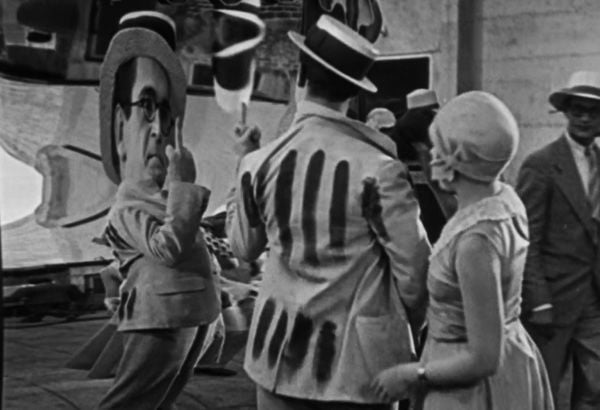
The word “idiosyncratic” feels like it was invented for the Coen Brothers…or maybe vice versa.  Their 2016 film Hail, Caesar! is yet another case in point.  Packed with the kind of early Hollywood detail we wouldn’t see again until 2022’s Babylon, this film is a love letter to the 1950s studio system that produced such classics as All About Eve, Stalag 17, The Bridge on the River Kwai, and Ben-Hur.  However, the comic story surrounding this love letter is a bit rambling and disjointed.  About halfway through, I found myself wondering if maybe the movie wouldn’t have been better if the filmmakers had just ditched the comedy and made a straight-up drama.  But then we got to the climax, and I realized, no, comedy is better for serving up the kind of silliness we get at the end.  It’s no Raising Arizona, but it’ll serve.

In classic film noir fashion, a narrator (Michael Gambon) informs us that Eddie Mannix (Josh Brolin) is head of production at the fictional Capitol Pictures, which is in the middle of shooting its most ambitious picture ever, an epic Biblical tale called Hail, Caesar!  (Think Ben-Hur with a lower budget and an outright plagiarized screenplay.)  However, their leading man, the improbably handsome and incredibly dumb Baird Whitlock (George Clooney), abruptly goes missing when he is kidnapped by a couple of lurking extras.  Mannix must deal with finding Whitlock while also figuring out what to do about:

  1. DeeAnna Moran’s (Scarlett Johansson) unexpected pregnancy.
  2. Hobie Doyle’s (Alden Ehrenreich) inability to deliver lines without a cowboy accent, which infuriates his director, Laurence Laurentz (Ralph Fiennes).
  3. Two persistent gossip columnists (both played by Tilda Swinton) who are running stories on Whitlock’s disappearance and/or salacious rumors about Whitlock’s past.
  4. A lucrative job offer from Lockheed.
  5. His promise to his wife (Allison Pill in a tiny role) to quit smoking.

Whew!  And I haven’t even mentioned the singer/dancer Burt Gurney (Channing Tatum) or the mysterious group of academics who have apparently kidnapped Whitlock, a group calling itself, “The Future.”  …spooky…

As in many other of the Coen Brothers’ films – not ALL of them, but many of them – the story itself is not really the point.  It just serves as an excuse for Ethan and Joel to present the viewer with scene after scene demonstrating their immense affection for a bygone era of filmmaking.  When Scarlett Johansson’s character, DeeAnna, is introduced, for example, we don’t just get a line or two about what she does (she’s an aquatic star modeled after Esther Williams).  We’re treated to an elaborately choreographed scene with dozens of bathing beauties, ScarJo diving from a great height wearing a mermaid tail, and a mechanical whale complete with a spouting blowhole.

At one point, Mannix visits the chief film editor for the studio, C.C. Calhoun (Frances McDormand), to see how Mr. Laurentz’s film is shaping up.  This scene in particular is lovingly presented, as we get a quick-cut sequence of Calhoun unspooling the film in the dim editing room, re-threading it, punching a button, flipping a switch, click-clack, click-clack, and Mannix watches the opening sequence of “Merrily We Dance” on the tiny Moviola as the projector whirs in the background.  I would bet real money that Martin Scorsese really, REALLY loved this scene.  (Plus there’s a nice little comic button at the end of the scene that is an excellent demonstration of Edna Mode’s immortal dictum in The Incredibles: “No capes!”)

The whole movie is like that.  It’s one of the most nostalgic homages to old Hollywood that I’ve ever seen.  But the movie can’t seem to make up its mind about what it’s about.  George Clooney puts on a clinic of how to play dumb as the clueless Baird Whitlock.  (In fact, this movie serves as the conclusion to the unofficial “Idiots” cycle of films from the Coen Brothers films, which also includes O Brother, Where Art Thou?, Intolerable Cruelty, and Burn After Reading, all of which star Clooney in a lead role…playing an idiot.)  Alden Ehrenreich is pretty convincing as a young star with a pretty boy face and limited acting ability, which I’m sure is far from the truth, but he pulls it off.  His scene where he tries to wrap his Texas accent around the simple line, “Would that it were so simple”, with his director patiently trying to coach him, is hilarious on its own.  But it runs on a little too long, as does the aforementioned scene in the editing room.  The subplot with the gossip columnists feels tacked on, almost as of the Coens were trying to pad the running time.  There’s a magnificently choreographed scene where we watch Channing Tatum’s character do some tap dancing dressed as a sailor for another movie being filmed, but even THAT runs a little too long.

Ultimately, Hail, Caesar! feels more like an intellectual exercise instead of an emotional one.  I hate to keep bringing this movie up by comparison, but Babylon, for example, managed to capture a nostalgia for Old Hollywood AND kept me emotionally involved for its entirety.  There was an energy that kept things moving.  Hail, Caesar! lacks that energy, but I can’t quite bring myself to call it a “bad” movie because I connected with its affection for the monolithic, flawed system that managed to create so many diamonds amid SO many lumps of coal.  (Just like today!)

AMERICAN SNIPER (2014)

by Miguel E. Rodriguez

DIRECTOR: Clint Eastwood
CAST: Bradley Cooper, Sienna Miller, Luke Grimes, Jake McDorman
MY RATING: 9/10
ROTTEN TOMATOMETER: 72% Certified Fresh

PLOT: Real-life Navy S.E.A.L. sniper Chris Kyle becomes the most lethal sniper in American history during four tours of duty in Iraq, but he finds it difficult to leave the war behind when he finally returns home.


I once called Katherine Bigelow’s award-winning The Hurt Locker the Deer Hunter for the Iraq War generation.  Having just seen Clint Eastwood’s masterful American Sniper for the first time, I must now amend my statement.  American Sniper presents its story concisely, almost tersely, states the facts of the matter, and leaves the audience to draw its own conclusions when the credits roll.  For myself, I was once again struck by the sacrifices of those men and women who have ever made, and will ever make, the choice to serve their country, for whatever reasons.

Chris Kyle’s reasons are made clear at the outset.  30-year-old Kyle (Bradley Cooper) is a skilled cowboy and rodeo rider when he decides to enlist in the military after seeing footage of the embassy bombings in 1998.  In a marvelously edited prologue (resembling a Scorsese film), we see Kyle’s father impress upon a school-age Kyle how people are either sheep, wolves, or sheepdogs.  Wolves attack the sheep, and the sheepdogs protect the sheep.  Kyle has lived his entire life with a sheepdog mentality and badly wants to do his part to protect his country against what he feels are the forces of evil.

Kyle enlists in the Navy S.E.A.L.s and, after a brutal training process, becomes a skilled sniper.  Shortly after graduation, he meets and falls in love with Taya (Sienna Miller).  The abbreviated exposition of their courtship and marriage contains little details that give a ring of authenticity that even The Deer Hunter lacks at times.  (After their first meeting in a bar, for example, Taya has to run outside and throw up after doing one too many shots.  Kyle follows and discreetly holds her hair back, as every gentleman should.  It’s the kind of scene you would normally see in a mid-level rom-com, but it feels as real as an autobiography.)

Kyle’s and Taya’s relationship at home is an important factor in the film, but the bulk of the story shows us Kyle putting his unique skills to use in Iraq, where he is sent shortly after the 9/11 attacks.  These scenes belong in some kind of war movie Hall of Fame.  Kyle’s first kills occur when he has to make a command decision whether or not to shoot a young Iraqi boy holding a grenade and running towards a US convoy.  The scene takes on an even more horrific dimension when the mother tries to pick up where her young son failed.  This horror is echoed in triplicate in a later scene when an even younger boy approaches an abandoned rocket launcher and appears ready to fire it at American troops.

Kyle goes on to much more “conventional” warfare later on (including a virtual duel between himself and another similarly skilled enemy sniper), but it’s scenes like the ones I mention above that elevate American Sniper into a masterpiece.  Watching them, I could not help but remember that this movie is based on a real person who went to real war zones during his lifetime.  I have no idea whether Kyle really did make those choices in real life, but the idea remains: whether Kyle did or not, it’s a foregone conclusion that someone had to make similar decisions at one time or another, not just in the Iraq War, but in other wars, many wars, ALL wars.  (I was perversely reminded of another superior war film, also based on fact, Jarhead, where the main character is also a sniper, except he never gets to fire his weapon in combat.  My respect for that character is no less profound.)

Speaking for myself, I don’t know if I have it in me to make that kind of call.  I have nothing but admiration and respect for those people who are making those calls every day in wartime, who are asked to put their lives and mental health on the line and do their duty no matter what.

Kyle’s compulsion to be a protector leads to his decision to become part of the teams “clearing” houses on the ground, as opposed to being the “overwatch” who protects them from the rooftops.  He sees too many squads being cut down by enemy soldiers inside the houses where he can’t see them from above.  “If I can’t see them, I can’t shoot them.”  One of his comrades disagrees with this decision.

“All these guys?  They know your name, and they feel invincible with you up there.”
“They’re not.”
“They are if they think they are.”

His decision puts him in even greater danger than before, but he can’t help himself.  Every death that he feels he could have prevented haunts him.  In another echo of another shattering war film, I was reminded of Oskar Schindler’s last scene in Schindler’s List when he breaks down thinking of how many more Jews he could have saved, instead of focusing on the ones he did save.  It’s impossible to say exactly how many lives Chris Kyle may have saved with his actions in Iraq, but in his mind, he was just doing the right thing, not the heroic thing, so he never felt comfortable accepting the title bestowed upon him by his grateful comrades: “The Legend.”

American Sniper is also very careful to depict the cost Kyle faced as the result of his job.  For one, the Iraqi insurgents put a $180,000 bounty on his head, making his job even more dangerous than it already was.  For another, he witnesses some things firsthand that would give Quentin Tarantino nightmares.  At one point, he tracks down an Iraqi enforcer nicknamed “The Butcher” who uses a drill to punish anyone who collaborates with American soldiers.  When Kyle raids his compound, he finds a freezer full of the Butcher’s “souvenirs.”  This is all on top of the various times he sees his teammates cut down by enemy fire, sometimes right in front of him.

The other cost comes during the brief periods at home between tours.  He loves his wife and children, but he finds it impossible to share the details of what happened to him in Iraq.  This reticence threatens his marriage to the point where Taya tells him flat out: “If you leave again [for another tour of duty], I don’t think we’ll be here when you get back.”  This kind of plot point is hardly new, but again, there is a ring of truth to it in this movie that makes it much more poignant than it normally is.  Kyle’s internal code can’t allow him to let someone else go to a war zone and do a job that he is eminently more qualified than anyone else to do.  “I have to serve my country.”  And that’s that.

(The film does have one drawback that compels me to score it as a “9” instead of a “10.”  There are scenes later in the film depicting more of Kyle’s troubles at home and as he speaks to a psychiatrist who recommends he go down to the VA and meet with disabled veterans as a way of “saving” soldiers without being in combat.  While these scenes are invaluable in terms of shedding even more light on Kyle’s character, even this late in the film, I did feel like there could have been a little more time spent with Kyle and those veterans so we could flesh that issue out just a little more.  There’s much more to it than could possibly be explored in just the last fifteen minutes of a movie.  I’m not saying it should have become Coming Home, but…that’s my opinion.)

In the event you don’t know Chris Kyle’s ultimate fate, I won’t spoil it here.  I had forgotten about it, and when the movie sprung it on me, it was as surprising as any other plot twist I can think of.  American Sniper proved to me, as if it needed proving again, that the people in our armed forces, especially those in combat zones, face unthinkable decisions, sometimes on a daily basis.  The morality of those decisions can, and will, be debated from now until such time (God willing) that armed forces are no longer necessary in this world.  This movie doesn’t pass that kind of judgement.  It merely says, “Here is what happened.  What do you think about it?”  How you answer that question is what the movie was really about.

ASTEROID CITY (2023)

by Miguel E. Rodriguez

DIRECTOR: Wes Anderson
CAST: More Actors Than You Can Shake a Stick At
MY RATING: 5/10
ROTTEN TOMATOMETER: 76% Certified Fresh

PLOT: In the mid-1950s, a roadside motel in a fictional mid-Western flyspeck plays host to a junior stargazing event that unexpectedly escalates, changing everyone’s world view forever.  …sort of.


Asteroid City, Wes Anderson’s latest film, feels like a collector’s edition box of Cracker Jack with no prize inside.  Or a cake that has prize-winning decorations, but it’s hollow inside.  It looks phenomenal; one of my fellow cinephiles, Anthony, predicts it will be nominated for cinematography and production design, and I agree with him.  But where the heart of the film should be is simply a crater like the one around which the fictional town of Asteroid City was built.  This is yet another star-studded cast for Wes Anderson, but Anderson has given them very little to do other than wear colorful costumes, look solemnly into the camera, and speak in very precise phrases.

This strategy has served him very well…no…EXTREMELY well in the past.  Moonrise Kingdom (2012) and Grand Budapest Hotel (2014) spring immediately to mind.  But some crucial piece of machinery is missing from Asteroid City.  The characters are colorful and quirky, but at the end of the day, I simply didn’t care about what they did or said.  (Well…except when actress Midge Campbell [Scarlett Johansson] decides to rehearse her nude scene for her next-door neighbor…I did care about that.)

The film opens with a pillarboxed segment in black-and-white.  Our host (Bryan Cranston) explains that we’re about to watch a staged presentation of the newest play from author Conrad Earp (Edward Norton), who proceeds to lay out the “set” for us.  “Upstage right is the crater…upstage left are the motel cabins”, etc.  Then the screen expands to full letterbox and we are treated to eye-popping Kodachrome desert landscapes as we follow a 165-car freight train as it passes by Asteroid City.  Well, “City” should be in quotes…the population is officially listed at eighty-seven.

This is some wacky city.  It’s as if Wes Anderson watched every Coen Brothers film set in the Midwest, from Raising Arizona to No Country for Old Men, and filtered them through a Looney Tunes cartoon written by Charlie Kaufman.  Vending machines on the porch of the rental office sell everything from snacks and drinks to martinis and parcels of local real estate.  (Cost for the real estate parcels: forty quarters…they’re not big parcels.)  An abandoned highway overpass lurks on the outskirts.  Periodically, a police chase roars down the otherwise empty highway, guns firing and sirens blaring.  The residents say nothing about this phenomenon.  And every now and then, the town shakes from nuclear testing being done hundreds of miles away, but close enough that the mushroom clouds are visible.

Man, I love this kind of thing.  The stage is set for one of the all-time great satires, or maybe just a flat-out fairy tale.  We meet the cast of characters who have congregated here to honor young geniuses who have invented everything from rocket packs to particle guns to a projector strong enough to project an image on the moon.  A full rundown of all these characters would wind up being a novella, but if you’re acquainted with Anderson’s work, they will all be familiar to you in one way or another.  (Not least because many of them have worked on Anderson’s other films.)  They have also gathered to witness a rare astronomical event: a solar ellipse.  Not an eclipse.  An ellipse.  The mechanism required to view an ellipse without damaging your retinas looks like something out of Brazil.

Again, I normally love this kind of stuff, really, I do.  But…okay, look, first of all, the film intermittently takes a break from the movie itself to yank us out of the story and show us an event in the playwright’s life that led to the casting of Augie Steenbeck.  Or to show us a rehearsal where an acting coach (Willem Dafoe) encourages the actors – that we’ve already been watching perform in the movie/play – to improvise what it’s like to wake up by first falling asleep.  There’s even a moment where the host shows up where he really shouldn’t be.  And when one of the actors has a moment of existential crisis concerning the character he’s playing, he simply walks off the set, goes backstage and asks the director (Adrien Brody) why he’s doing what he’s doing.

…I mean…what IS this?  Conceptually, I get it, even if it’s a little heavy-handed.  (“What’s my motivation?”  “You’ll have to figure it out as you go along.”  “That’s too hard!”  “Well, that’s life.”)  But…why is it here?  Anderson worked with non-linear structure before in Grand Budapest Hotel, and it worked marvelously.  Here, it feels indulgent.  In fact, many of the scenes in the movie feel that way.  There’s a moment where an army general (Jeffrey Wright) announces he’s going to deliver a speech he’s prepared for the occasion of the “ellipse.”  But this is no ordinary speech.  It’s practically beat poetry, delivered with the kind of conviction that only Jeffrey Wright’s magnificent voice can provide, but…but…why is it here?  Even in this weird, cotton-candy, retro-fever-dream of a movie, this “speech” felt out of place and just plain goofy.  In fact, quite a lot of the scenes between characters felt less like story and more like the kind of dialogues you find in source books for actors.  (101 Scenes for Two and Three Actors…that kind of thing.)

I will provide full disclosure and say the movie did deliver some decent laughs and chuckles.  There is an event that occurs during the ellipse (I’ll have to tread carefully here) that may not be entirely unexpected, but it’s executed and timed so well that I laughed pretty much through the whole scene.  It’s the kind of thing I imagine Buster Keaton and Charlie Chaplin would have thoroughly enjoyed, if I may be so bold.  There is also the problem of the disposition of a Tupperware container holding a valuable, ah, keepsake.  Oh, and that roadrunner was awesome.

But by the time Asteroid City rolled credits, I didn’t feel like I had seen one of Wes Anderson’s best films.  (The Royal Tenenbaums remains his best film, in my opinion.)  This almost felt like a movie made on a whim, kinda like, “Hell, I don’t know if this’ll work, but if I get enough star power behind it, this may turn out to be something.”  Alas, it did not.

HOBSON’S CHOICE (Great Britain, 1954)

by Miguel E. Rodriguez

Director: David Lean
Cast: Charles Laughton, John Mills, Brenda de Banzie
My Rating: 7/10
Rotten Tomatometer: 92% Fresh

PLOT: A widowed bootmaker in 1880s England with three unmarried daughters is thrown when his eldest daughter announces her intentions to marry his best cobbler and start her own business.


From Wikipedia: “A Hobson’s choice is a free choice in which only one thing is actually offered. … The most well-known Hobson’s choice is ‘I’ll give you a choice: take it or leave it’, wherein ‘leaving it’ is strongly undesirable.”

Ask ten cinephiles about their favorite David Lean films, and I’ll bet dollars to doughnuts not more than two of them will even know Hobson’s Choice exists.  It’s one of only two comedies Lean ever directed (the other being Blithe Spirit in 1945), and it’s one of the last smaller-scale movies he would direct before 1957’s The Bridge on the River Kwai made his name synonymous with big-budget cinematic spectacles.  Hobson’s Choice oozes charm from every frame, has many well-earned laughs, and features a brilliant performance from the great Charles Laughton.  I just wish it had a better ending.  I’ll try not to spoil it for you, but…dang.

Henry Hobson (Laughton) is a widowed bootmaker in late 19th-century England with three unmarried daughters.  The eldest daughter, Maggie (Brenda de Banzie), keeps house, manages the books, and essentially runs the business, leaving Henry free to drink himself silly at the local pub every night and come home drunk as a skunk.  Being of an undesirable age – 30 years old – Maggie is also considered unmarriable.  But she’s no dummy.  See, one of Henry’s employees is a cobbler named William (John Mills, a legendary, prolific British actor), and Maggie notices when a rich patron praises William’s boots as the best she’s ever owned.  So, Maggie hatches a plan that will accomplish three things: get herself married, steal her father’s prize employee, and start her own business with the best bootmaker in town.  Hobson, of course, will have none of it, for various reasons…one of which is that, as the father, he is expected to pay a handsome dowry to the bridegroom, and he’ll be damned if he’ll give hundreds of pounds to a lowly cobbler, nor will he allow his “uppity” daughter to get the best of him.  Comedy ensues.

There is a lot to like in Hobson’s Choice.  First, there is the clever skewering of the class system, both socio-economically and along gender lines.  Hobson is reluctant to pay anything to William other than his barely-livable wages.  When circumstances force him to treat William as if he were a member of the same middle class as he, Hobson, is, he becomes enraged because…he simply has no choice.  The idea of all men being created equal is alien to him.  This same principle applies to his treatment and perception of his daughters.  He may genuinely love them in his heart of hearts, but all we ever hear from Hobson is how bothersome and loud and “uppish” they are.  To him, their sole purpose is to keep things neat and tidy and have dinner ready when he demands it.  It never once occurs to him that Maggie, the eldest, would be capable of putting her plan together, let alone actually pulling it off.

I also enjoyed how a good chunk of the story parallels Shaw’s Pygmalion, at least in broad strokes.  Will, Hobson’s prize cobbler, is as low-class as you can get, and has been treated as such his entire life.  Part of Maggie’s plan is to get Will to behave and dress more genteelly, and her method is nothing short of brilliant.  Rather than follow Henry Higgins’s approach – bullying with a heavy hand – Maggie very gently points Will in the right direction, stepping in with a firm hand only when necessary, as when it becomes necessary to deal with Will’s landlady, one of the funniest bits in the movie.  At first, Will is taken aback by Maggie’s directness, but it’s fun watching how gradually he gets turned around.  He may not be the spitting image of a member of the royal family after all is said and done, but his transformation is unmistakable.

Another great factor is the blustery performance by Charles Laughton in a role that, in my opinion, deserves more attention from film fans.  He’s most commonly associated with Quasimodo or Captain Bligh or the barrister in Billy Wilder’s Witness for the Prosecution (1957), but in Hobson’s Choice, he convincingly plays a man who is painfully aware he’s being driven towards a specific decision he does not want to make.  He’s been lord of the “manor” his entire life, and the idea that he might be forced to bow to his daughter’s whims is unbearable.  He is the most fun person to watch in the film…although John Mills is a close second.  I love his borderline incomprehension as Maggie patiently explains her plans and orders him about.

As I said, there is a lot to like in Hobson’s Choice.  But, man, did that ending let me down.  I was reminded oddly of David Cronenberg’s most recent film, Crimes of the Future (2022), which rolls the closing credits at the EXACT moment it becomes the most interesting.  I have no theatrical knowledge of the play on which Hobson’s Choice is based (other than the fact it ran for over 130 performances), but if the play ends the way the movie does, and I had been a member of the audience at a performance of that play, I would have rolled up my program and chucked it at the curtain.  I don’t want to give too much away, but its abruptness is breathtaking.  In my mind, it leaves far too much unresolved, unless there’s something I missed in that final scene/conversation.  I kept waiting for Hobson to make his eponymous choice, and for a second it LOOKED like he did, but it also looked like he had a devious plan of his own, and then…credits.

Oh, well, no matter.  There is more charm in a single frame of Hobson’s Choice than there is in any two Will Ferrell rom-coms.  I found it thoroughly enjoyable, even if it did let me down at the end.  Since Lean directed my favorite movie of all time, I’m inclined to forgive it.  I’ve seen most of Lean’s other films, and none of them committed this same blunder, so…c’est la vieHobson’s Choice is still worth seeking out.

THE LOST WEEKEND (1945)

by Miguel E. Rodriguez

DIRECTOR: Billy Wilder
CAST: Ray Milland, Jane Wyman, Phillip Terry, Howard Da Silva
MY RATING: 8/10
ROTTEN TOMATOMETER: 97% Certified Fresh

PLOT: The desperate life of a chronic alcoholic is followed through a four-day drinking bout.


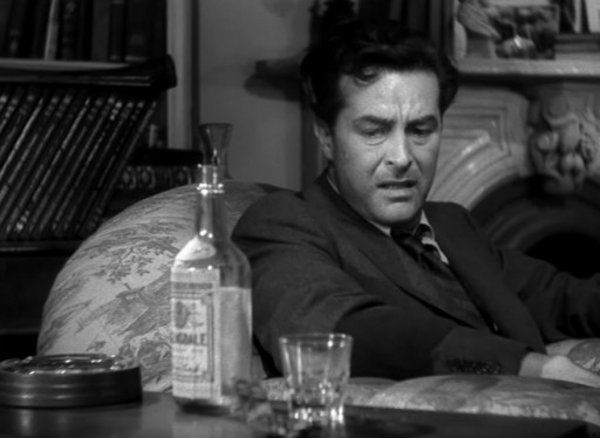
I don’t drink.  Like, at all.  I’ve never taken drugs, and I’ve never smoked a cigarette.  Luckily, I have never been gripped in the throes of a crippling addiction, unless collecting movies counts as an addiction, in which case I plead the fifth.  I say this, not to brag, but because a lot of my first impressions of Billy Wilder’s The Lost Weekend are tinted by the fact that I don’t know the first thing about being drunk or what it means to suffer from an addiction so crippling that it would force me to hang a liquor bottle outside my window to hide it from my brother.

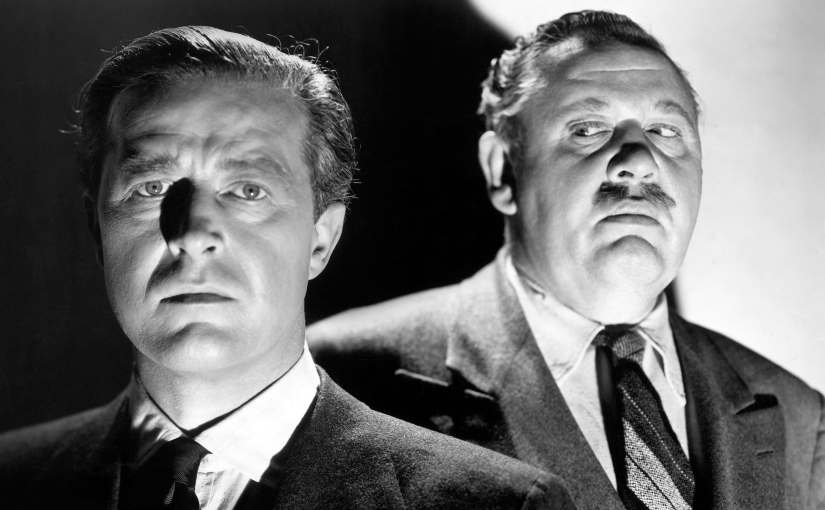
As it happens, Don Birnam (Ray Milland) DOES suffer from this kind of mid-to-late-stage alcoholism.  We first meet Don as he and his brother, Wick (Phillip Terry), are packing for a long weekend to get away from everything and everyone, including alcohol.  Don is a would-be author who needs a break from…something.  (Whatever he went through is never specified, only hinted at: “It’ll be good for you, Don, after what you’ve been through.”)  Don’s plan to surreptitiously pack the hidden bottle of liquor falls through after the arrival of his almost unbelievably good-hearted girlfriend, Helen (Jane Wyman).  No matter.  He still has a plan, which he confides to the long-suffering but increasingly annoyed bartender, Nat (Howard Da Silva).  He’s bought two bottles of rye.  He’ll hide one badly in his own suitcase and another in his brother’s suitcase.  When Wick discovers the badly hidden bottle in Don’s suitcase, he’ll chew Don out, Don will act suitably contrite, and Wick won’t think about searching his OWN suitcase for a second bottle.  What could go wrong?

During these first few scenes, when Don lies and lies and drinks shot after shot in a bar and winds up missing the train for his getaway weekend, I found it difficult to sympathize with him.  Oh, he’s clever and loquacious when he’s either about to drink or while he’s drinking.  He has enough knowledge to quote Shakespeare at the right times and wittily proposes to Nat the bartender: “I wish I could take you along, Nat.  You and all that goes with you.”  Under the right circumstances, Don is a fun guy, always good for a laugh…until his seventh or eight or ninth shot of bourbon.  Then the other Don shows up, Don the drunk, Don the liar, the Don who gets so desperate for cash that he’ll walk 70 or 80 New York City blocks trying to find an open pawn shop so he can hock his typewriter for drinking money.

For some reason, it was harder for me to empathize with Don Birnam than it was to empathize with any of the main characters in Darren Aronofsky’s Requiem for a Dream (2000).  In that film, not a single leading character escapes the ravages of addiction, and yet even as they made their mistakes, I empathized with them and grieved when their bad decisions made things worse and worse.  With Don Birnam, however, every bad decision he made just made me like him less and less.  I remember thinking at one point, “He’s brought this all on himself, he deserves what he gets.”  Not a very Christian attitude, but I’m not gonna lie about it: that’s what I felt.

And his girlfriend, Helen…wow.  It’s almost like she needs as much of an intervention as he does.  She loves Don so unconditionally it’s almost unbelievable.  What’s the attraction?  Perhaps it’s symptomatic of the era in which The Lost Weekend was made.  She discovers Don’s alcoholism late in their 3-year dating relationship.  (What did people think in 1945 of someone who dates a man for 3 years?)  Instead of breaking up with him or giving him ultimatums, she devotes herself to “fixing” Don.  Not precisely the course of action I would recommend myself in today’s world, but there you have it.

Director Billy Wilder presents this first half of the movie in a very uninflected tone with little-to-no comic relief.  This flat tone becomes very effective at simply presenting the information without directly commenting on it one way or the other.  There are moments up to this point where the movie seems to side with Don (his struggle to find a bottle whose hiding place he’s forgotten is particularly pathetic), but it’s still not really passing judgment or giving him a pass.

And then…the turning point.  Don accidentally falls down a flight of stairs and knocks himself out after finagling some drinking money out of a young lady he flirts with at his favorite dive.  When he wakes up, he’s lying in a bed in the Alcoholic Ward of the local hospital, face to face with one of the strangest characters I’ve ever met in a Billy Wilder movie, and that’s saying something.  He’s a nurse.  “Name of Nolan.  They call me Bim.  You…can call me Bim.”  The closest I can get to describing Bim’s weirdness is to imagine an evil Waylon Smithers from The Simpsons as a male nurse.  On quaaludes.  To Don’s slowly increasing discomfort, Bim lovingly describes what Don is in for during his stay on the Alcoholic Ward, giving the inside scoop on the various repeat offenders and what to expect during his D.T.’s: “You know that stuff about pink elephants?  That’s the bunk.  It’s little animals.  Little tiny turkeys in straw hats.  Midget monkeys coming through the keyholes.”  This Bim…he has NO bedside manner, man.  “Prohibition…that’s what started most of these guys off.  Whoopee!”  (Nice little social commentary there…classic Wilder.)

Don manages to find his way home once again, having not had a drink for almost a day-and-a-half, if my memory is correct.  And it’s at this point that the movie, Billy Wilder, and Ray Milland finally got me in Don Birnam’s corner.

SPOILER ALERT, SPOILERS COMING.

Don finally has a bout of the D.T.’s.  It’s not turkeys or monkeys or elephants, though…it’s a rat.  A single rat chewing its way out of the wall in front of him.  Then, out of nowhere…a bat finds its way into the apartment and flutters around the room.  Don is understandably distressed.  But then the capper: the bat swoops down to where the mouse’s head is poking through the hole, there is a terrible squealing sound, the bat sort of trembles and scuffles…and a stream of thick blood starts to dribble out of the hole where the bat is presumably chewing the rat’s head off or something.

To say I was surprised is an understatement.  Don starts screaming his head off…and at long last I finally empathized with Don’s situation, and I no longer wanted him to wind up penniless and/or alone and/or dead.  I wanted the movie to find a way to fix him, like Helen tries desperately to do through the entire picture.  From then on, I was on his side, or Helen’s side, or whoever’s side, it didn’t matter, as long as he figured out a way to get out from under the disease that was slowly killing him.

I would not dream of revealing exactly how the movie ends.  It might go the way of Leaving Las Vegas (1996).  Or it might go the way of the vastly underseen Duane Hopwood (2005), featuring David Schwimmer as an alcoholic father on a path of self-destruction, but who manages to turn things around.  (Sorry if I spoiled that for you, but I’m betting it’s not a movie most people will want to seek out.)  I will say that it’s the ending of The Lost Weekend that really showcases the era in which it was made more than anything else.  But it could just as easily have gone the other way and still been just as successful.

The Lost Weekend cleaned up at the 1945 Oscars, winning awards for Best Picture, Best Director, Best Actor, and Best Adapted Screenplay (it was based on a novel).  At the time, it was the most unglamorous movie ever made about alcoholism.  Up to that point, drinking in movies rarely if ever led to hangovers and the D.T.’s and spending the night in the Alcoholic Ward.  It certainly belongs to be mentioned with Wilder’s greatest films.  But you’re gonna wanna watch something a little lighter afterwards.  Stalag 17, maybe.  Or Some Like It Hot.  A laughter chaser.

PRINCE OF THE CITY (1981)

by Miguel E. Rodriguez

DIRECTOR: Sidney Lumet
CAST: Treat Williams, Jerry Orbach, Bob Balaban, Lindsay Crouse
MY RATING: 8/10
ROTTEN TOMATOMETER: 92% Fresh

PLOT: A New York City narcotics detective reluctantly agrees to cooperate with a special commission investigating police corruption, and soon realizes he’s in over his head, and nobody can be trusted.


Sidney Lumet’s Prince of the City is based on a true story, and it never lets you forget it.  In a good way.  The film is defiantly ambiguous when it comes to the main character, Danny Ciello (Treat Williams), who is onscreen in virtually every scene, so we get to see every detail of his epic, tragic fall from a revered cop in the NYPD’s Special Investigations Unit to a glorified stool pigeon for the feds.

…ah, but see what I did there?  Without even realizing it, I’m already sort of siding WITH Ciello, who participated in many, MANY counts of outright theft, evidence tampering, bribery, and so on and so on.  But…in a very Dirty Harry way (but much more realistic), he was helping to cut through the frustrating red tape that would otherwise enable career criminals to get around the system.  But…he had to break the law to do so, and his fellow officers in the SIU were all complicit, some to greater degrees than others.  Their unbreakable code: never rat out your partners.  Ciello has a revealing line at one point: “I sleep with my wife, but I LIVE with my partners.”

This somewhat misguided code of honor is central to Prince of the City.  The film opens as Ciello’s unit makes a lucrative drug bust, confiscates some or most of the cash, and parades the captured criminals into a ramshackle courtroom, whereupon the assorted drug dealers are immediately sent back to Central or South America, bing, bang, boom, no muss, no fuss.  Meanwhile, a special commission, the Chase Commission, has begun questioning officers about police corruption.  Ciello is naturally resistant to cooperating at first, but a feisty conversation between him and his ne’er-do-well brother puts doubts in his mind.  “Look at you in your big house and your two-car garage!  You think I don’t know where this all comes from?  You think I’m stupid, Danny?!”

Ciello’s conscience finally gets a hold of him, and he agrees to cooperate with the commission.  This includes the unbelievably dangerous practice of wearing a wire to meetings between himself and assorted mob-affiliated tipsters.  I’ve seen numerous other films involving wires and mobsters, but Lumet does something different here, and it carries throughout the entire film.  Instead of punching up the suspense with crazy edits or inserts or spooky music, he simply explains the danger and lets the scene play out with as little movement as possible.  In its simplicity, there is as much suspense there as in anything by Hitchcock, accomplished with much less cinematic “pizzazz.”

This simple style pays off in two incredible scenes.  One is where a mobster is dead sure Ciello is wearing a wire and searches him thoroughly…but Ciello’s sixth sense warned him earlier to leave the wire at home.  Another comes when Ciello unthinkingly hands over some evidence to the mobster…wrapped in a post-it that basically says, “From the desk of the State Attorney’s Office.”  Because everything has been presented in such a straightforward style leading up to this moment, this scene has an astonishing effect on the viewer.  There is real danger here, an almost documentary-like feel to it.  The resolution of this scene, including the unexpected appearance of a gun at the worst possible moment, is one of the emotional highlights of this nearly three-hour film.

The casting of Treat Williams in the lead role of this crime epic was also a key to its success.  In the early ‘80s, there were any number of leading men that might have been a much more natural choice for this part: Pacino, De Niro, Hoffman, Beatty, even Travolta.  Putting a relatively unknown, but VERY talented, actor in such a prominent role was a calculated gamble that paid off.  Since he had no major previous roles, Williams was essentially a blank slate.  He hadn’t been typecast as either a villain or a hero yet, so that supports the film’s foundation of maintaining a neutral stance toward the lead character.  The movie isn’t going to come out and tell you if it’s for or against Ciello.  The audience has to make that decision for themselves.

For myself, I would in no way condone his corrupt behavior.  But I admire his decision to at least try to do the right thing.  Despite his adamant stance that he will never, ever turn in his partners, it becomes abundantly clear that the various feds, attorneys general, prosecutors running his case will have no qualms whatsoever about putting him in jail the second he refuses to play ball.  As a result, he winds up being forced to provide crucial evidence that generates indictments for several of his partners.  The aftermath of those indictments varies from partner to partner.  Ciello is being eaten alive by remorse.  He believes he’s doing the right thing, but he can’t stand watching his partners go down one by one.  It’s a fascinating conundrum, manifest at every turn, even in the very last scene of the movie.

In one great scene, a group of prosecutors meet to decide whether to formally indict Ciello and pursue a prison term, even after he has provided them with information that led directly to countless arrests and indictments.  They are divided.  One prosecutor threatens resignation if charges are filed.  But another prosecutor’s argument stuck with me:

“I’ve never known a lawyer to risk his livelihood to expose the crooks in his profession.  And where’s the doctor who ever exposed Medicaid fraud?  Or unnecessary and botched operations?  Or even dope, for that matter?  What doctor ever came in?  Dan Ciello came in, and I don’t care why.  To me, Danny Ciello’s a hero…and we’re trying to decide whether to put him in jail or not.”

For me, that sealed the deal.  The movie is admirably restrained in providing its own standpoint on Ciello, but I would side with those calling him a hero instead of a villain.  I found myself thinking back to Sunday School and the parable of the prodigal son.  After the prodigal forsakes his father and his family, he returns, contrite and humble, begging forgiveness.  The loyal son can’t understand why his father rejoices upon the prodigal’s return, to which the father replies, “We have to celebrate, because your brother was dead and is alive again; he was lost and is found.”

Ciello is that lost soul who desperately wants redemption, no matter how it might hurt himself or his literal partners in crime.  For that, I consider him a hero, not a villain.  Perhaps he’s no longer a prince of the city, but he is at least back on the side of the angels.

THE IMPOSSIBLE (Spain, 2012)

by Miguel E. Rodriguez

DIRECTOR: J.A. Bayona
CAST: Naomi Watts, Ewan McGregor, Tom Holland, Geraldine Chaplin
MY RATING: 9/10
ROTTEN TOMATOMETER: 81% Certified Fresh

PLOT: The story of a tourist family in Thailand caught in the destruction and chaotic aftermath of the 2004 Indian Ocean tsunami.


The Impossible, directed by J.A. Bayona (The Orphanage, Jurassic World: Fallen Kingdom), is one of the best true-to-life survivor stories I’ve seen since Touching the Void.  No doubt some liberties were taken here and there at the screenplay level, as always happens with movie adaptations, but while the film played out, the story was as gripping as any book by John Krakauer.

It’s 2004, and the Bennett family is on Christmas vacation in Thailand, at a beautiful beachside resort that has only been open for a week.  (In a nice little detail, we see that the protective plastic film has not yet been removed from their light switch panels.)  Henry (McGregor) and Maria (Watts) enjoy Christmas Eve and Christmas day with their three sons, Thomas, Simon, and Lucas (Tom Holland in his cinematic debut, already doing cartwheels and backflips on the beach).  On the morning of December 26th, an unthinkable catastrophe occurs when a tsunami, triggered by a massive seaquake offshore, slams into the beach.  The visual effects during this sequence are as convincing and terrifying as anything I’ve ever seen.  As the wave sweeps over everything in its path, the Bennett family is separated.  Maria and her son Lucas manage to find each other in the immediate aftermath, but there is no sign of Henry and her other two sons.

What follows is a story that gives new meaning to the words “hopeless” and “hope.”  While the outcome is somewhat predictable – SOMEONE survived to tell this story, after all – the filmmakers have managed to put together a film that generates suspense and cheers despite what we may or may not know about this family.  There are scenes of people missing each other in hospital hallways by seconds.  In a lesser film, it might have been comic.  In THIS movie, those scenes generated groans of empathetic frustration from the audience (that is, me).  By that time, we had followed various Bennett family members through many highs and lows, and I desperately wanted the right people to be found at the right time.  It was unexpectedly effective.

That sentiment applies to the movie as a whole, not just that one scene.  I have seen so many disaster movies that I was primed to expect certain cliches and tropes, even though this movie was highly rated and recommended when it came out.  To be fair, this movie does indulge in those tropes.  I mean, by nature, it HAS to.  The difference with The Impossible is that these stereotypical events and scenes all felt way more real than expected.  Credit to the screenwriter and director for molding these cliches into something more compelling than yet another reworking of The Day After Tomorrow.  When the finale of The Impossible arrives, it feels uplifting and inspirational instead of hackneyed and obvious.  It’s a neat little magic trick that I wish I could explain better.

An interesting self-reflective thought occurred to me during this movie.  There is a scene where Henry, the father, is huddled with a group of English-speaking survivors in a bus station.  Someone offers Henry his cellphone, even though he is trying to save his battery in case his own family tries to reach him.  Henry reaches someone in England, but because he still cannot find his wife, he breaks down and hands the phone back to the stranger.  The stranger looks at Henry, looks at his phone, and hands it back to Henry: “You can’t leave it like that.  Call him back.”

My entire life, my favorite sub-genre of science fiction has been anything dealing with an apocalypse or set in a post-apocalyptic future, like The Matrix or World War Z or the superlative HBO series The Last of Us.  One of the things many of the movies in that genre have in common is the inherent tendency for humans to turn on each other or behave selfishly when the chips are down.  You know what I’m talking about, right?  Somebody finds water in the desert, and instead of helping mankind, they sell it to the highest bidder.  Or someone discovers that the invading aliens will give them preferential treatment if they help round up more humans themselves.  That kind of thing.

Well, here is The Impossible, based on a true story, and here is a man who desperately needs to save the battery power on his cellphone, but whose compassion will not allow him to let Henry’s short conversation go unfinished.  “You can’t leave it like that.”

I have no way of knowing if this moment really happened or if it was manufactured.  All I can report is that scene, in a movie full of hard-hitting emotional beats, is probably my favorite scene.  Here is an apocalyptic situation in the truest sense of the word.  Here is a person who could have been justifiably selfish, but his empathy won’t allow him to turn his back on someone who is suffering.  It even got me wondering: would I do the same?

If this scene was taken from real life, then maybe all those post-apocalyptic movies got it wrong.  Maybe, when the chips are down, people are inherently good.  Is it possible?  I’d like to think so.  I’d like to think I’d do the same.

Long story short: The Impossible takes you on an unforgettable ride made even more remarkable due to it being based on a true story.  It’s full of great performances and astonishing visuals, but you may never want to stay at a beach resort again…

P.S.  According to the real-life woman played by Naomi Watts, the biggest “lie” in the movie was the color of the ball her children were playing with just before the tsunami struck…it was yellow, not red.  Do with that information what you will.

MARTHA MARCY MAY MARLENE (2011)

by Miguel E. Rodriguez

DIRECTOR: Sean Durkin
CAST: Elizabeth Olsen, Hugh Dancy, John Hawkes, Sarah Paulson
MY RATING: 10/10
ROTTEN TOMATOMETER: 90% Certified Fresh

PLOT: Haunted by painful memories and increasing paranoia, a damaged woman struggles to re-assimilate with her family after fleeing an abusive cult.


My feelings about Martha Marcy May Marlene are all over the map right now.  It angered me, shocked me, mesmerized me, saddened me, and thrilled me, all at once.  A despicable cult lies at the center of it, and having recently watched the second season of HBO’s The Vow, I noticed it shared many similarities with NXIVM, an even MORE despicable cult, which just angered me even more.  The movie’s saving grace is Elizabeth Olsen’s character, Martha, who escapes the cult after the opening credits and tries her best to adapt into real life after being brainwashed for two years.  But even with Martha as the star (and it’s a terrific performance from Olsen, by the way), Martha Marcy May Marlene dances recklessly on the verge of being a movie featuring people so abhorrent that I wanted to turn it off.

I’m glad I stuck with it, though, don’t get me wrong.  It’s a powerful, provocative film that asks lots of questions, and had me wondering about myself.  If my sister disappeared for two years, then wandered back into my life with no money and no home, then behaved erratically and sometimes dangerously around my friends and loved ones…how much of that could I take before I started making inquiries about psychiatric institutions?

Martha’s sister, Lucy (Sarah Paulson), does her dead level best to make Martha comfortable and keep the peace between Martha and her husband, Ted (Hugh Dancy), who does his best, but resents her for “invading” his 2-week vacation.  Lucy knows Martha is hiding something, but she senses it’s unwise to try to drag it out of her.  But every time the opportunity arises for Martha to give some insight, she either backs away or turns it into a verbal attack.

This was one of the things that infuriated me during the film.  I even paused the movie and asked Penni about why it made me so mad, thinking I needed a woman’s point of view.  Why, oh, WHY does this young woman, who has clearly been traumatized in some way, not implicate the people who mistreated her for so long?  Clearly, I’m not a psychiatrist.  I’m sure someone would be able to provide me with a concise answer that makes Martha’s behavior understandable.  The movie, however, does not provide such an answer.  Ultimately, that’s one of its strengths.  If it had ended with a Psycho-style expository monologue that gave clear-cut reasons for everything Martha does, it would have felt anti-climactic.

Patrick (John Hawkes), the cult’s leader, is not movie-star handsome by any stretch of the imagination, but he possesses that innate, infuriating ability to say exactly the right things at the right time.  One trick is to give all the women new names; he re-names Martha “Marcy May” the first time he meets her.  As a result, every woman in the compound is devoted to Patrick.  How devoted?  Whenever a new female member is introduced to their “family”, one of the first things the older members do is feed her a shake with a sleeping pill blended into it.  Then, when the new girl falls asleep, Patrick can come in and rape her while she sleeps.  The word “disgusting” doesn’t begin to approach this tactic.  But the fact that the women will talk with the new member after that first encounter, and convince the newbie that it’s all good, it’s all fine, we wouldn’t be here if it was bad, you’re sooo lucky…I mean, if I had popcorn, I would have thrown it at the screen, I was so mad.

Martha Marcy May Marlene is not just about the rage it instilled in me, though.  It asks us to empathize with Martha, and it succeeds, even when she behaves unpredictably.  One night, Martha crawls into Lucy’s bed…while Lucy’s having sex with Ted.  Lucy and Ted are understandably freaked out, but Martha seems dazed by their anger.  “Why would you do that, Martha?!”  Her reply: “I couldn’t sleep.”  At that point, I could clearly see both sides of the situation.  Lucy and Ted had every right to be angry, but Martha simply didn’t know any better.

The flashbacks to Martha’s days with the cult start out fairly normal, but as the movie progresses, we finally start to see some of the other incidents that finally drove her to run away.  One particularly ominous scene shows Martha and another girl having target practice with one of the other young men in the cult.  Patrick shows up with a live cat in a sack and abruptly tells Martha to shoot the cat.  When she refuses, he tells her to shoot the young man.  The man starts to walk away, and Patrick, in a voice raised ever so slightly, tells him, “Don’t you walk away from me.”  And he stops.

The cult members practice periodic home invasions to gather needed supplies, since the farm they’re working on isn’t fully functional yet, and you can only get so much money by selling blankets in town.  They do their utmost to avoid contact with the residents, but sometimes, things just…don’t work out the way you want them to, you know?

Martha Marcy May Marlene qualifies as a great film because it simply presents the facts of the story and doesn’t editorialize, doesn’t preach.  I can report that it’s a stunning character study/thriller, and I can tell you that the performance from Elizabeth Olsen is superb (her movie debut, by the way).  I can say that the filmmaking strategy is on point – kudos to director Sean Durkin.  And I congratulate it on eliciting the kind of emotional response from me that I’ve only felt once in my entire life.  It may not be the same for you.  But there you have it.

SEVEN PSYCHOPATHS (Great Britain, 2012)

by Miguel E. Rodriguez

DIRECTOR: Martin McDonagh
CAST: Colin Farrell, Sam Rockwell, Woody Harrelson, Christopher Walken, Tom Waits, Abbie Cornish, Olga Kurylenko
MY RATING: 7/10
ROTTEN TOMATOMETER: 83% Certified Fresh

PLOT: A struggling screenwriter inadvertently becomes entangled in the Los Angeles criminal underworld after his oddball friends kidnap a gangster’s beloved Shih Tzu.


I wanted to like Seven Psychopaths more than I ultimately did, but it is still a fun, mostly unpredictable ride.  My biggest hangup was that it felt too similar, in broad strokes, to other “meta” movies.  To other BETTER movies, unfortunately.  I always try to review the movie in front of me instead of comparing it to other films, but in this case that guideline proved impossible.  But I did try.

The story involves Martin (Colin Farrell), a struggling screenwriter in Los Angeles; Billy Bickle (Sam Rockwell), his best friend who also runs a dog-napping racket with HIS friend, Hans (Christopher Walken); and Charlie (Woody Harrelson), a dog-loving gangster whose favorite pet is a Shih Tzu named Bonny…whom, as it happens, the dog-nappers have stolen.  We get an idea of just how much Charlie loves his dog during a scene where he interrogates the dog-walker who lost her.  When a man is willing to shoot someone over a dog, I’d be the first in line to give it back, but Billy has other plans.

See, his friend Martin is trying to write a screenplay.  He’s under a deadline, but all he has so far is the title: Seven Psychopaths.  He doesn’t even know who all the psychopaths are yet.  So, Billy tells him a couple of stories about psychopaths that he’s heard about here and there, and the characters slowly start to take shape.  Meanwhile, Hans makes periodic visits to his cancer-stricken wife at the hospital.  Also, a serial killer is on the loose, but he only kills mafia and yakuza hitmen.  ALSO also, Billy puts an ad in the paper advertising for psychopaths to reach out to him and Martin so their stories can be used in Martin’s screenplay.  That’s how they wind up meeting Zachariah (Tom Waits), an odd little man who carries a rabbit wherever he goes and spins a tale of how he and HIS wife would hunt…but I’m getting ahead of myself.

As you see, there’s a lot of story going on.  And, as I mentioned before, most of it is unpredictable.  The concept of a killer who only targets hitmen is unique, at least in my mind.  But when the story focused on Martin’s screenplay and how it was being put together, that’s when I started having cinematic déjà vu.

Example: Martin isn’t sure how he wants it to end.  He’s a pacifist, so he doesn’t want it to end in a cliched shootout.  Billy spins a tale of how HE would end the film, with a bullet-ridden, blood-soaked shootout in a cemetery, featuring the return of Martin’s ex-girlfriend for no reason and a supporting cast of all seven of the psychopaths reuniting, also for no reason.  At that moment, I instinctively thought, “Well, clearly this movie is going to end in a shootout.” And it does. Sort of.

Martin hears Billy out and disagrees.  “They should all just go to the desert and talk their issues out instead of shooting each other.”  Again, I realized, “Okay, so they’re going to wind up in the desert.” And they do.

And so it went, over and over again.  A character would pitch an idea for Martin’s screenplay, and later in the film that idea would suddenly be manifested.  Martin gets criticized because his screenplay doesn’t feature enough women and doesn’t give them anything meaningful to do or say…in the middle of a movie where the women don’t do or say anything meaningful.

Don’t get me wrong, I like meta movies.  But despite the dark comedy and the typical awesomeness of Chris Walken and the other elements that weren’t so predictable (the reason behind Hans’ cravat, for example), I just couldn’t shake the feeling of “it’s all been done before, and better.”  I’m thinking specifically of Kiss Kiss Bang Bang (no screenwriter, but same vibe) and Adaptation, a movie where the lines between reality and the screenplay get so blurred as to be non-existent.  Seven Psychopaths feels like it’s trying to get to that level, but it never quite gets there.  On that level, it’s not quite a success.

However, I will say it’s worth a watch for any movie fans.  There are enough satirical elements that make it worthwhile.  (“But his rabbit gets away, though, because you can’t let animals die in a movie…just the women.”)  Walken’s performance is, as always, the stuff of legend, even in a smaller role like this one.  Late in the movie, he has a marvelous scene between himself and a button man with a shotgun.  If that vignette is not mentioned during the tribute video when he eventually passes away, I would be extremely disappointed.

A PROPHET (France, 2009)

by Miguel E. Rodriguez

DIRECTOR: Jacques Audiard
CAST: Tahar Rahim, Niels Arestrup, Adel Bencherif
MY RATING: 9/10
ROTTEN TOMATOMETER: 96% Certified Fresh

PLOT: A new arrival in a French prison is recruited by the ruling Corsican gang to carry out hits and traffic drugs. Over time, he earns the gang leader’s confidence and rises in the prison ranks while secretly devising plans of his own.


The French film A Prophet, winner of the Grand Prix at the 2009 Cannes Film Festival, plays like the origin story of an alternate-universe version of Tony Montana.  A young, uneducated criminal, Malik (Tahar Rahim), arrives at a French prison and is almost immediately recruited by the ruling Corsican gang and their leader, César (Niels Arestrup), to kill another prisoner, an Arab, who could testify against César.  César’s method of guaranteeing Malik’s participation is ingenious: “Now that you know the plan, if you don’t kill him, we kill you.”

Malik will spend the rest of the film learning the ins and outs of criminal activity within the prison walls and occasionally outside as well, a process explained with great attention to detail.  For instance, for Malik’s first hit, he must seduce his male target into lowering his defenses while they’re alone.  However, since he knows he’ll be frisked first, he must hide the only lethal weapon he can find, a razor blade, in the only place it won’t be found AND be readily available: tucked inside his mouth between his teeth and cheek.  Ouch.

A Prophet doesn’t rush.  It takes its time with its plot development and character building.  It seems to me that the best films set in a prison adopt this strategy, or they should.  The deliberate pacing gives us time to settle into the world of the prison and the prisoner.  It creates the sensation that time is passing a little more slowly, which is exactly what any prisoner must feel every day.  The Shawshank Redemption comes to mind.

Malik’s slow conversion from timid newbie to trusted assistant in César’s gang to eventual dangerous adversary is never less than captivating, but in a weird way…like watching a hungry tiger stalk its prey.  The filmmakers are careful to give Malik human foibles.  At one moment, we watch Malik carrying out a task for César.  The next, he’s studying French in an adult literacy class because he never learned to read.  Or we see him alone in his cell where he occasionally has matter-of-fact conversations with the ghost of his first kill.  I particularly liked the scene where the ghost would predict random events in the courtyard outside of Malik’s prison window.

The idea is to make sure we never lose sight of the fact that, whatever Malik is becoming, he was and is a real person.  There are questions being asked in A Prophet about the efficacy of a prison system that, instead of rehabilitating criminals, seems to embed them deeper into a criminal lifestyle by the time they’re released.  Sure, Malik is a character in a movie, but how many other convicts just like him are chewed up and spit out of the prison system?  I was reminded of a scene in another prison film, Brute Force (1947), when a prisoner is working in the prison mechanic shop working on a car.  Someone asks him, “What have you learned?”  The prisoner says, “I’ve learned that, when I get out, I don’t wanna be a mechanic.”

As A Prophet works its way towards its Godfather-esque ending, Malik’s chilling evolution reaches the point where, with the help of his contacts with former inmates, he can orchestrate the kidnapping and beating of a rival drug dealer outside the prison walls who threatens his own plans for getting out.  Nothing Malik or César did seems outrageous or implausible in any way.  It’s scary how easily they can pull the strings of so many people inside and out.

I am rambling, but I’m simply at a loss to efficiently explain how effective this movie is in its portrayal of the rise and rise of an eventual crime boss.  In the final scene, as a caravan of black vehicles follows a key character as he walks out of the prison for the last time, a chill came over me as I realized the implications.  It’s a brilliant final curtain on a character every bit as chilling as Michael Corleone or Tony Montana.