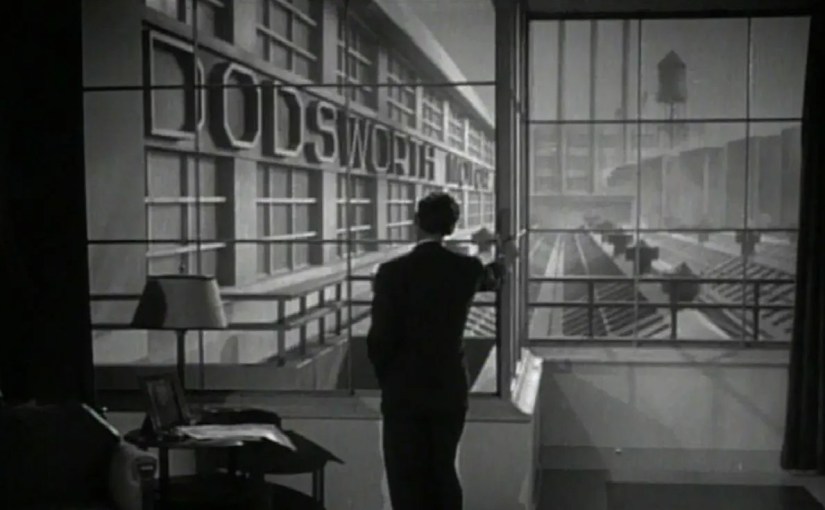
THE LEOPARD (Italy, 1963)

by Miguel E. Rodriguez

DIRECTOR: Luchino Visconti
CAST: Burt Lancaster, Claudia Cardinale, Alain Delon, Paolo Stoppa
MY RATING: 9/10
ROTTEN TOMATOMETER: 98% Certified Fresh

PLOT: The Prince of Salina, a noble aristocrat of impeccable integrity, tries to preserve his family and class amid the tumultuous social upheavals of 1860s Sicily.


Visconti’s intimate epic The Leopard evokes the spirit of so many other films, in all the best ways, that it’s hard to know where to begin.

It’s epic in scope and intimacy, like Doctor Zhivago.  The opulent costumes reminded me of Amadeus, and the lush scenery reminded of Barry Lyndon.  The final ballroom sequences must have influenced the wedding party in The Deer Hunter.  The literate screenplay refining tons of background exposition resurfaces in movies like JFK and Nixon.  The theme of a grizzled older man facing his own obsolescence is echoed in scores of Westerns from The Wild Bunch to Unforgiven to Butch Cassidy and the Sundance Kid.

In short, The Leopard takes bits and pieces of many of my favorite films and consolidates them into an absorbing movie that held my interest from beginning to end, despite its esoteric setting: Italy during the tumultuous years of the “Risorgimento,” when the aristocratic ruling classes were faced with extinction as the middle classes rose up, rebelled, and created a democratic Italy.

We first meet Prince Don Fabrizio Salina (Burt Lancaster) as he and his extended family are attending vespers in an upstairs room of their palatial mansion.  Their ritual is interrupted by sounds of commotion and argument coming from outside the room; turns out the dead body of a soldier has been found in the garden.  (In retrospect, this seemed to me an elegant metaphor for the entire rest of the film: a family’s stability and comfort in ceremony and formality being interrupted by outside forces intent on tearing down the old order in favor of the new.)

The dead body is forgotten very shortly amid the return home of a beloved nephew, Tancredi Falconeri (the dashing Alain Delon).  His return is short-lived as he intends to leave and join the middle-class army under General Garibaldi.  Meanwhile, Prince Salina comprehends the way the wind is blowing in his country and befriends a man, Don Calogero Sedara (Paolo Stoppa), who USED to be in a lower class, but who is now on the same social footing as the Prince himself.  As the newly instated supervisor of elections, Sedara wields considerable power in the imminent new society on the horizon, and the Prince knows what must be done, despite his misgivings.

From there, The Leopard evolves into a vivid tapestry of life in the rustic Italian countryside, set among some of the most beautiful Tuscan/Sicilian backdrops I’ve ever seen.  Some of the exteriors, showing seas of wheat or olive groves with peasant workers in the foreground, looked like museum-quality oil paintings.  Some soapy material is introduced, but it never panders, never descends into schmaltz.  For example, Tancredi falls in love with Don Sedara’s daughter, the luscious Angelica (Italian knockout Claudia Cardinale), at the expense of breaking the heart of Concetta, one of Prince Salina’s daughters.  We watch as the Prince boldly strides into a seedy quarter of town to visit the rundown apartment of his mistress.  When his priest rebukes him for this transgression against his wife, the Prince explodes: “What do you want from me?  I’m a vigorous man.  I can’t be content with a woman who crosses herself before hugging me!  …I had seven kids with her.  You know what?  I never saw her navel!”

While this dialogue is both funny and not, it highlights the way the Prince has always viewed himself: as a man of noble birth whose behavior is no one’s business but his own, regardless of morality or social niceties.  But this same man is intelligent enough to know which way the wind is blowing and how to modify his behavior accordingly.

Everything concludes with a magnificent ball held by a neighboring nobleman, attended by “anybody who’s anybody” including the Prince, his family, Tancredi and Angelica, and literally hundreds of others, decked out in some of the greatest costumes I’ve ever seen on film.  During this lavish party, some final decisions are made, and the Prince contemplates what will happen to him and his family, and his entire class, after his death.  The live orchestra plays several waltzes and dances by the one and only Nino Rota, the scorer for Coppola’s The Godfather and numerous Fellini films.  As a result, yet another great film is evoked: as the celebrants dance in a line and weave their way throughout the great house, I was reminded of the famous ending of Fellini’s [1963] and its conga line of circus performers.

Some time ago I read Donna Tartt’s Pulitzer-prize winning novel The Goldfinch.  While it didn’t deliver breathless thrills like a Crichton technothriller, it was nevertheless engrossing.  The language of Tartt’s prose transported me into the world of her hero and his morally complex journey like few other books had before or since.  That’s exactly what happened with The Leopard.  I expected it to be a “spinach” movie [good for you, but yucky taste], so my expectations were a bit low, despite its massive reputation in film circles.  But, like the other Visconti film that I’ve seen [Rocco and His Brothers, 1960], it breaks free of the mold I had created for it and becomes something grand and operatic.  I have a slight issue with the very final scene (I was hoping for something a little less open-ended), but if you have the patience for it – and if you don’t mind watching Burt Lancaster overdubbed into Italian – The Leopard is a treasure worth digging for.

CAPTAIN PHILLIPS

By Marc S. Sanders

“You had thirty thousand dollars, and a way to Somalia. It wasn’t enough?”

– Captain Richard Phillips

Paul Greengrass is a director with a documentary style technique.  Look no further than his salute to the hero hostages of United flight 93 on 9/11.  United 93 depicted an ordinary Tuesday of people going about their business on commercial airlines and in working in radio towers. Eventually, it was nothing but ordinary.  Greengrass reminded us of the day the world permanently changed.  He applied the same technique to his film Captain Phillips when a commercial cargo ship was hijacked by Somali pirates looking for a large amount of American dollars to bring back to their tribes. 

Tom Hanks is Captain Rich Phillips, an Irish American Naval captain residing in Vermont.  When the film starts, the captain is packing up one last bag and signing off his computer.  The screen shows a trajectory course that he will command the American cargo ship Maersk Alabama around the horn of Africa and make do on his delivery of hundreds of corporate cargo containers.  Though he’s well aware, he is given official warnings to be mindful of Somali pirates in the area.  When he rides with his wife (Catherine Keener) to the airport though, it is not international threats that concern him.  Rather it is whether their son is going to start taking his life seriously with grades and aspirations.  Whatever Captain Phillips does faces professionally is simply routine.  No matter how dangerous, it’s his family back home that concerns him most.

Even in this opening throw away scene, Greengrass looks like he’s shooting reality TV with a cameraman placed in the back seat of the characters’ SUV, getting shaky side shots of the husband and wife taking a drive to the airport.  The handheld technique will carry over the course of the film and sometimes it will relax itself when caution is of utmost importance.  Other times, it will emote frenzied chaos when desperation and time have overloaded the senses.

The film allows time for the Somali pirates led by an unknown, but eventual Oscar nominated actor named Barkhad Abdi to assemble a group of four to lead a charge into the deep waters seeking out a target to hijack and pillage.  They are armed with machine guns and foolish gusto, which will be hard to negotiate.  After one day’s failure, the pirates manage to overtake the ship and then Captain Phillips must subvert the pirates away from the majority of his crew hidden within the confines of the large engine room of the ship. 

As the second half of the film takes over, it becomes a claustrophobic encounter aboard a small lifeboat.  The pirates have taken Phillips as their hostage along with thirty thousand dollars in cash and their plan is to return to the shores of their country and negotiate with the United States for the Captain’s release.

With no navigation for the pirates to follow, the Navy intercepts the lifeboat with a battleship and an aircraft carrier in nearby waters. Now it becomes a strategic plan for Phillips to stay alive while the armed services try to peacefully end this conflict with no harm to the hostage.

The length of Captain Phillips is close to two and a half hours and you realize it because that is the point.  The main subject at the heart of this true story was held in this tiny boat with limited vision of what was occurring outside, fighting rough seas while constantly being berated in a foreign language by his captors.   It’s also never easy for any authority to negotiate with powers that are operating with dizzying confusion and helplessness.  The only advantage these pirates have is to hold on to their prized captive.  There is nowhere to run, or swim, or much less spread out in this tiny ocean vehicle that lacks any kind maritime direction or security.  Paul Greengrass makes sure you know this as he often points his camera upwards from tiny crevices on the floor, lining up at the pirate players along with Barkhad Abdi and Tom Hanks.  Sometimes a cameraman must have been standing and pointing a handheld down at Hanks watching his captors while he tries compute his next move.  Within these cramped quarters, you can smell the body odor and feel the desperate need for a shower, a drink of water or a morsel of food as these people remain contained within this floating box.

Elsewhere, I’m especially impressed with how Paul Greengrass observes the routines of the Navy and US Seals who are doing their best to end this situation.  The Seals, who are also sharpshooters, covertly parachute on to the nearby aircraft carrier, gear up and position themselves.  It’s so routine even though I know they are being especially careful.  Some tactics for easy movie narration are likely adopted here.  The commander makes clear that they need green targets, not red.  I’m sure it is more complex than that. How these military men speak and carry stoic expressions like it is another day at the office works in converse to the chaos occurring in the tiny boat that everyone has their eyes set upon.  Yet, Greengrass’ documentarian strategy remains consistent in both environments.  You are getting a “You Are There” experience to uphold the film’s authenticity.

Tom Hanks is great and easy to rely on as usual.  However, his performance does not seem so impressive until you finally witness his sensible and alert demeanor deteriorate and crumble to pieces.  You might know the ending to this heart pounding story, but I won’t spoil it here. A final scene bears the right side of an equal sign to all the hysteria you watched add up before. Tom Hanks’ penchant for improvisation is what strengthens the epilogue of the film, following a harrowing climax.  It might just be his best scene ever on film.  Knowing his celebrated career, I gave that declaration quite a bit of thought.

Captain Phillips is a taut, sensational thriller where common sense cannot easily win against irrational thinking. Still, that is exactly what took place. You involuntarily hold your breath until the film suddenly goes quiet, the director’s camera stops in place, and a sharp order is given.  Only then do you finally exhale and slowly sit back in your seat.  Paul Greengrass is a master at timing out the tension.

A BEAUTIFUL MIND

By Marc S. Sanders

The genius was always easier than living with the monsters in his mind.  So was the dilemma that consistently plagued Nobel Prize winning Professor John Nash.

Ahead of seeing A Beautiful Mind for the first time, what you don’t know about Professor Nash is what will dazzle you the most when Ron Howard uncovers the mysteries he lived with during graduate school and on through his fellowship at MIT and with his enduring and loving marriage to his wife Alicia (Jennifer Connelly in an Oscar winning role).  John Nash is masterfully portrayed by Russell Crowe in a celebrated, nominated performance.

Dr. Nash comes off like a genius savant when Howard’s film introduces him in 1947 at Princeton University.  The director adopts a technique of presenting much of Nash’s depths and highlighting patterns and numbers in magazines or on chalk boards or even within the reflections that appear before his eyes in bright sunlight.  On a clear night, see if you can find an umbrella within a starry sky. 

For many of us, I presume it’s hard to decipher what it means to live the life of a mathematical genius. Ron Howard with Akiva Goldsmith’s hailed adapted screenplay does not expect anyone to comprehend formulas or equations.  The filmmakers simply ask you to witness how discovery is processed.  Nash writes endlessly on his dorm room windows.  He fills up every inch of the chalk boards at his disposal.  He tears apart articles in magazines and wallpapers his room and office with them.  Even when he is not writing, he is computing how situations will end up best towards his and his peers’ advantage. There’s one curvaceous, blond woman standing in the center of a bar for one of the men to hopefully have a tryst with, but then who will be left to pair with the dark-haired ladies that surround her?  Nash finds the logic in all of the men abandoning the blond.  The genius realizes what none of us can see.  Go for what no one would ever expect to have occurred.

Despite the professor’s odd ticks, unwelcome vernacular and his lack of social skills, a well-established livelihood works out for him.  He falls in love with a former student that he marries, Alicia, and he obtains a fellowship for himself and two Princeton comrades to practice out their theories at MIT.  Personal companionship arrives with his former roommate, Charles (an energetic Paul Bettany), and his niece.  On the other hand, John has also been recruited to become a code decipherer for the government and he must answer to a mysterious gentleman named Parcher (Ed Harris) who is using John to stay a step ahead of the Soviets.   John’s work must remain top secret and as his clandestine activities become more threatening and intense, so does the paranoia get increasingly overwhelming.

I’ve only covered the first act of A Beautiful Mind because when the truth of John Nash’s purpose and how he is regarded is revealed, this biography becomes something much further from how it began.  Akiva Goldsmith’s trickery in his script is capable of surprising an audience when some veils are lifted for both the primary subject of this piece and those who come in and out of John Nash’s life.  This is a true story but it’s incredibly surprising that a mathematical wizard like John Nash could be living a whole other life that makes little sense at first.

Ron Howard is doing some fine work here reaching for material that might feel familiar with other cinematic geniuses in film ranging from the fictional Will Hunting to more recently real-life figures like Mark Zuckerberg. Characters like these stand out for their quirkiness and oddities.  With Russell Crowe’s brilliant characterization of awkwardness in his uneven walk and how he carries his papers and briefcase, it is not hard to adapt to the man on film.  What he says and how he speaks would leave any one of us to roll our eyes at his behavior.  You’d likely chortle at John just as his Princeton classmates do.  Later though, you understand how valuable his accomplishments are to a greater good, and at the same time you become alarmed at how Dr. Nash is being used both from his own perspective as well as by those figures who unexpectedly enter his life and will not just leave.

Jennifer Connelly’s role does not amount to much at first.  With her alluring looks that have graced other films in her earlier career, she initially comes off as a token spouse to the main character and you remind the person sitting next to you that is actress Jennifer Connelly who got her start in Labyrinth with David Bowie, and Once Upon A Time In America with Robert DeNiro.  Yet, as more dynamics are revealed about her husband does the character Alicia show through, and she has no choice but to survive with her spouse’s torment.  Connelly has a scene that will crush you when she must unleash her frustrations in the middle of the night as well as sporadically throughout the film. She has to be carefully observant of her husband’s behavior for the safety of their child and herself.  Ron Howard sets up scenes that haunt Alicia only, and his wide camera work is absolutely eye opening as it lends to her personal performance.

It’s fascinating to observe John Nash’s willpower as he persists to live with personal demons while upholding the demands of his genius.  This film works on so many levels of enhanced editing and perspective, but without unforgettable work from Russell Crowe, Jennifer Connelly, and a supporting cast of character actors like Christopher Plummer, Josh Charles, Judd Hirsh, Ed Harris and Paul Bettany it could not sustain its staying power. 

A Beautiful Mind is a thoroughly effective biography.

ON THE WATERFRONT

By Marc S. Sanders

Terry Malloy innocently calls up to his friend Joe’s window and tells him to go to the roof of his apartment building to check on the pigeons.  Only what happens to Joe when he gets there is not what Terry expected setting off a complex dilemma of morality and preservation of life.

In one of Marlon Brando’s most famous roles, Terry Malloy is an ex-prize fighter who now carries out menial tasks for the New Jersey mob bosses that have a foothold over the longshoremen and their union contracts.  Terry listens to what his mobster brother Charley (Rod Steiger) tells him to do.  As long as he keeps his mouth shut, he’ll be selected each day on the dock for work and he’ll never have to lift a finger.  Just let things be and keep quiet.

Charley’s boss is Johnny Friendly (Lee J Cobb), who is ruthless with his control over the area. The guys have to surrender to the demands of Johnny and his toughies because it is no secret what really happened to Joe and who was responsible.  The cops can investigate and ask questions, but they’ll get nowhere.  It’s up to Father Barry (Karl Malden) to talk some sense into the fellas, and considering Terry was one of the last guys to see Joe alive, he’s the best option to overthrow Johnny’s reign.  If Terry shows up for a subpoena, it could put Johnny and his goons out of business.

Another conflict of interest for Terry is that he has taken to Joe’s sister Edie (Eva Marie Saint) who also knows of Johnny’s corruption.  She just has not realized that Terry might have been indirectly responsible.

Marlon Brando looks everything like a movie star should.  His slicked back hair and dark eyes shadowed by his thin eyebrows and the way he carries himself in a plaid winter coat is held in a permanent memory just as James Dean and later pop culture figures like Fonzie, or Tom Cruise and Brad Pitt evolved.  It sounds silly but there’s a reason Madonna lends recognition to the classic actor in her club song Vogue, and this is one of many films in his early career to reference for the honor. 

Eva Marie Saint is wonderful as the young woman in pain and confusion following the death of her brother.  Edie is as least as conflicted as Terry due to her immediate attraction to the tough guy’s charms while still bent on discovering who had her kind brother killed and why.  Brando and Saint have a magnificent scene together when the truth comes out and Leonard Bernstein’s music comes to a halt of silence.

On The Waterfront has an irony of life imitating art.  Mind you, I’m not here to provide a history lesson and wallow in political divisions.  I find it interesting that Terry Malloy’s dilemma is whistle blowing the corruption that occurs, while also being intimidated to keep quiet.  Patterned similarly is what director Elia Kazan infamously became known for when he testified during the Joseph McCarthy hearings against people in Hollywood suspected of having communist ties.  A Union community is designed to protect its members, but sometimes the dynamics lead to just one who is singled out to expose what is not cooperating legally and accordingly.  (Some of the actors were against working on this film because of what Kazan committed but they were bound by studio contracts.)

I am aware of how much On The Waterfront is hailed as a perennial classic.  The cast is an outstanding collection of actors beginning of course with Brando, Malden, Steiger and Cobb.  Following television appearances, this was Eva Marie Saint’s first film, and there are other uncredited actors who had not made their mark yet including Martin Balsam, Michael V Gazzo, and Fred Gwynne.  The film boasts Oscar nominations for five actors (two wins, for Brando and Saint respectively) as well as wins for Best Picture, Director and Screenplay.  All that being said and yet I cannot say I felt invested in the film. 

The characters’ plights and pains simply did not connect with me.  Actually, while I believe I’m expected to yearn for Terry Malloy’s pain and regret where he declares he “…coulda been a contender…,” I felt sorrier for his brother Charley. 

In that well-known scene between the two brothers in the back of the cab, it is Charley who is really torn.  Charley is tied to his mob boss, Johnny Friendly, but he has to convince his brother to do what is best to protect the mob he’s committed to, or it could get both of them killed.  That famous scene is owned more by Steiger than Brando.  An interesting fact is that Rod Steiger had to perform most of that scene without Marlon Brando there.  The lead actor would leave the set at 4pm sharp each day, leaving Steiger to do his half of the scene with a stand in reading Brando’s lines.  It caused a bitter rift between the two actors.  Yet, the next time you catch the film, have a look at who is really doing the heavy lifting.

I might have gotten trapped trying to understand the way the union operates and how the mob manipulates everything to their advantage.  I’m lost in some of the early dialogue and how people go about doing what they do.  Maybe what I should have done is relax my train of thought and take in how the protagonist is pulled in many different ways, none of which seem like a winning solution. 

Out of context there is a selection of great scenes on display.  Karl Malden is magnificent when he urges the longshoremen to stand up to the brutality and intimidation they are under.  His concentration is amazing as he is pelted with trash while holding his composure.  This scene won him his Oscar nomination.

Lee J Cobb is a memorable antagonist. The concluding scene between his Johnny Friendly and Terry stands as a final battle between hero and villain and the residual effects of what was shot of that bout have been honorably repeated in many films thereafter. 

There’s an obvious influence that stemmed from On The Waterfront.  Clearly, much of the material had an enormous influence on future filmmakers like Lumet, Scorsese and Coppola.  Perhaps that’s the reason it did not grab me.  Those future directors turned the motifs that Kazan provided into flashier segments of color and trick camera work.  Even the inclusion of harsh language in those grittier, later films left me with a more convincing authenticity.  Then again, I was shocked to see Terry Malloy tell Father Barry to go to hell.  Pretty bold for 1954, and still somewhat shocking within the context of the piece.

On The Waterfront is actually based on fact from happenings at the docks off of Hoboken, NJ where most of the film was shot.  To watch it today is to look back at what high stakes dramatization and dilemmas of ethics surrounded by death and crime must have looked like.  It does feel outdated to me, showing a period that is long past, but it paints its truth very, very well. 

THE WILD ROBOT (2024)

by Miguel E. Rodriguez

DIRECTOR: Chris Sanders
CAST: Lupita Nyong’o, Pedro Pascal, Bill Nighy, Stephanie Hsu, Ving Rhames, Mark Hamill, Catherine O’Hara
MY RATING: 10/10
ROTTEN TOMATOMETER: 97% Certified Fresh

PLOT: An intelligent helper robot winds up stranded on an island populated only by wild animals.  To survive its new environment, it adjusts its programming, with unexpected results.


Just days after watching Flow [2024], a dialogue- and human-free animated film about animals struggling to survive after a cataclysmic flood, I watched The Wild Robot, also human-free, also starring mostly animals, and also about the struggle for survival, but it adds conventional dialogue and an intelligent robot in search of its purpose.  In broad, REALLY broad strokes, they are similar, but don’t bother asking me which one is better.  I give them both a ten-out-of-ten, each for different reasons from the other.  Flow may be literally unique, at least in my experience, but The Wild Robot tames its genre and bends it to its will, creating one of the most heart-tugging movie experiences since Wall*E [2008].  If you’re prone to crying during a movie, this is a three-hanky film, at least.  (Penni went through five, herself.)

On a dark and stormy night, a mysterious container washes up on the shores of an uninhabited island.  Inside is Rozzum 7134, an intelligent helper robot with exceptional physical capabilities and the speaking voice of Lupita Nyong’o.  Hope she gets her royalty checks.  Upon escaping her would-be watery coffin, Rozzum searches the island for the one thing that will give her existence meaning: a task to complete.  The opening scenes get us off to a hilarious start as she tries to complete tasks for various animals, to no avail.  In an intelligent bit of screenwriting, she powers down for a couple of days and, through passive listening, effectively learns the language of the animals around her.  In a lesser movie, this feat might have been handled with the push of a button.  I liked the fact the writers went for something a little easier to swallow, science-fiction-wise.

Through circumstances which I will not reveal, Rozzum winds up as the guardian for a newly-hatched gosling, and as the unlikely friend of a fox named Fink (Pedro Pascal, whose voice was utterly unrecognizable; I thought it was Matthew Broderick).  The gosling imprints on Rozzum, which she finds bothersome.  A helpful mom opossum, Pinktail (Catherine O’Hara), warns Rozzum that the gosling must learn to feed itself, swim, and fly by the next fall so he can migrate with the other goose; otherwise, it will starve during the harsh winter.  Presto…a task!

Eventually, Rozzum is shortened to Roz and she names the gosling Brightbill (Kit Connor).  As she undertakes her task of raising the gosling, Roz’s programming…evolves.  She starts to actually care for the little guy.  She starts asking questions that robots aren’t supposed to ask.  She exhibits all the early warning signs of helicopter-momism.  And all the while, she debates whether to activate the internal beacon that will let her makers know where she is…

Because the plot is so dependent on tugging those heartstrings, that’s all I’ll say about it.  Let me talk instead about Wild Robot’s visual style.  The backgrounds and characters are gorgeous, sumptuous, evocative of oil or acrylic paintings.  I could mention two or three specific shots right now that contain some of the most beautiful animated imagery I’ve seen since Pinocchio [1940], but I don’t want to give anything away.  (Hint: butterflies and geese.)  In this way, among others, it shares a lot of DNA with Flow, whose backgrounds and characters also resembled hand-painted objects.  I don’t even want to think about how long it took to create such a painterly style and make it look so effortless and organic.

I also liked the way Wild Robot used its story to make a pointed commentary, but not in the direction I thought it would go.  From the trailers, I assumed it would be yet another paint-by-numbers story about preserving nature or life, which was already covered as well as it possibly could be covered by Brad Bird’s The Iron Giant [1999].  Instead, Wild Robot makes some eloquent statements about the terrifying task of parenthood.  At one point, Roz, who is programmed to solve problems, discovers the task she’s undertaken – raising a gosling, i.e., being a parent – is a task that could potentially never end.  She experiences the fear of almost losing a child.  The joy of watching Brightbill learn to fly, while at the same time realizing that means he will one day migrate.  As I list the plot points here, it sounds like the movie is composed of cliches, but I can assure you, it’s not.  All of these nuances, and many more, are allowed to occur organically without the slightest hint of being nudged along by the screenplay.

DreamWorks has created possibly their best animated film since…gosh, I’ll go all the way back to The Prince of Egypt [1998].  It’s a crowd-pleasing adventure with a point, which is a hallmark of only the best science-fiction movies/stories.  There are real stakes on the line.  There are some actual deaths in the story, which surprised me for some reason, but there you are.  It looks sensational.  It’s smart.  I can’t say enough about it.  The Wild Robot was one of my most favorite films of 2024.

THE LAST SHOWGIRL

By Marc S. Sanders

I dunno.  Maybe we grow up twice in our lifetime.  

Growing up is hard to do.  As a kid I loved playing with all my Star Wars, He-Man and GI Joe toys.  Now that I’m in my 50s, I see pictures of those toys online that are long gone, and I tell my wife how I wish I could escape back into that comfortable universe of limitless imagination.  Often, I miss being a child.

Beyond a boring desk job, as an adult I’ve moved on to acting to maintain my sanity, now going on close to 35 years.  Only, I do not memorize lines as well as I used to and there are fewer roles for an over middle-aged guy.  I miss many of my favorite parts that I portrayed on stage in my earlier decades.  I direct more often now, staying off the stage, and I guide actors to a point where I imagine how I would have portrayed the role.

Leaving these periods of my past behind is hard to accept and as I watched Gia Coppola’s The Last Showgirl, I could deeply relate to the anguish felt by Shelly (Pamela Anderson, in a gut-wrenching performance).  I believe anything we are good at, or that we have complete self confidence in is hardest when we are stripped of our talents.  Arthritis can mar a concert pianist, a unreliable memory can weaken an actor, bad knees can curse an athlete, and for Shelly who has been a Las Vegas showgirl for over thirty years, aging is working against her preservation.  Even worse is knowing that your performance niche carries no interest with audiences any longer.  Shelly’s show is being closed down in two weeks and an updated high-flying circus will occupy the venue.  

Coppola’s present day film appears to be shot on an 80’s camcorder.  The colors and sparkles of Vegas entertainment are glitzy only from the costume wear of Shelly and her fellow performers.  Otherwise, the cinematography is as colorless and burned out as an old home movie.  

Jamie Lee Curtis is unrecognizable at first. She plays Annette who is casino cocktail waitress and out of the showgirl business for a number of years now.  He complexion is craggily and overly tan.  Her hair is damaged, likely from years of hairspray treatments.  Her makeup is overdone in deep blue mascara and rouge.  She’s probably thirty pounds heavier and this has aged her out of her dancing career.  This is hard.  She’s a friend to Shelly, but she’s deeply mad at her newfound reality that will never match what she once was.  Total Eclipse Of The Heart could not be a more appropriate needle drop during a crushing scene among the slot machines of a busy casino.

Pamela Anderson plays Shelly as innocently naive and sweet to the younger performers (Brenda Song, Kiernan Shipka) who still have the youthful looks that will grant them opportunities after their show closes.  Shelly is affectionate and attendant to the younger girls’ insecurities.  She’s a maternal hen the young ladies pay attention to.  On the other hand, Shelly no longer looks like a blond babe who came out of the TV show Baywatch.  That is why casting Pamela Anderson in this role is so smart.  The actor ran the beaches in bathing suits while being an 80s rocker tag along with the drummer from Motley Crue.  Now she’s in her 60s and must adjust her talents and physical assets of wrinkles and crow’s feet to portray a lost soul like Shelly, a girl thrust into an immediate future of no purpose, no need and a lot less hope.  Who can Shelly turn to when her insecurity attacks?

Anderson is definitely up to the task of this role.  Her squeaky voice with a detectable girly lisp fights to uphold an optimistic extrovert.  This girl must have been a Marilyn Monroe of this industry at one point. Inside though, Shelly is in terrifying pain and Coppola’s script allows for several different scenes where her fear explodes organically.  One time it’s on a date with her stage manager Eddie (Dave Bautista, looking like a muscle head that you’d find in Vegas, but not in a showy superhero movie).  Later, Shelly has to pour her regrets out to her estranged college age daughter (Billie Lourd) who resents being placed below a risqué cheesy showgirl act while she was growing up.  

The most heartbreaking moment occurs when Shelly auditions with an unnatural and unsure toothy smile to become club dancer.  The director is unsubtle and apathetic at deteriorating whatever Shelly has left to grasp. Finally, Shelly the former, lovable showgirl must release the pain of her new reality that she’s been stabbed with.  Within a career mostly highlighted with buxom beach running and bathing suit footage, Pamela Anderson delivers her best dramatic scene anyone will ever encounter from her.  This is not just some cheapo dancer draped in stiletto heels, feathers and plastic bling with gigantic headdresses to balance.  This is a real person who has become extinct of her normalcy.  She could’ve performed elsewhere, but she’s three decades older now and on the surface, to the superficial folk of the nightlife scene, she’s not the T & A that people desire anymore.

The Last Showgirl explores the challenges of transition.  Change confronts all of us eventually.  We get older and maybe less healthier.  We are not as flexible and we move slower.  We become less intuitive and analytical too.  We also become displaced and replaced.  

Gia Coppola’s film, written with touching sensitivity by Kate Gersten, opted to follow a career that hinges primarily on aesthetics, but also on a culture that has outlived its shelf life.  Glitz and blingy glamour are not what’s sought after anymore.  Las Vegas has partly become a tourist attraction on a level of amusement park scale with nifty rides, concerts and family fare like circuses.  Shelly and Annette no longer fit in this newer design.  Yet they are not cars or buildings you demolish and replace.  These women have lives that were never prepared to be spit out and discarded.

The Last Showgirl shows a harsh reality.  The performances from its cast of current younger generations to the older material carried by Bautista, Curtis and especially Pamela Anderson are grounded in a range of reactionary authenticity.  Change arrives for each of these people.  Yet, the effects run a spectrum of differing perspectives, and the most hopeless and complex circumstance is delivered affectionately by a surprising Pamela Anderson in a heartbreaking performance.  Her work is so well done in this film. 

NIGHTBITCH (2024)

by Miguel E. Rodriguez

DIRECTOR: Marielle Heller
CAST: Amy Adams, Scoot McNairy, Jessica Harper
MY RATING: 7/10
ROTTEN TOMATOMETER: 59%

PLOT: A woman pauses her career as an artist to be a stay-at-home mom, but her domesticity takes a surreal turn.


[SPOILER ALERT…if you plan on seeing Nightbitch, avoid this review.  This movie, like most movies, works best on the viewer if they have no idea what’s happening or what’s about to happen.  Consider yourself Spoiler-warned.]

Nightbitch shoots out of the starting gate like a thoroughbred – or a greyhound, if you will – but about halfway through, it runs out of narrative steam.  I felt like a gambler watching a horse race, watching my horse lead the pack around the first turn, already spending the winnings in my head, and then my horse fades a bit, then a bit more, and by the time we get to the finish line, I’m tearing up my ticket in frustration.  I needed a WIN, not a PLACE.  There goes my trifecta.

Amy Adams plays an unnamed Mother who has put her promising career as an artist on pause to be a stay-at-home mom while her also-unnamed Husband (Scoot McNairy) pursues his career as a…um…well, whatever it is, he has to travel a lot, leaving Mother at home with, you guessed it, Son (played by adorable twins Arleigh and Emmett Snowden).  Referred to throughout the movie as “my guy” and “sport” and “little buddy,” Son is a typical toddler in the throes of the terrible twos: cute for long stretches, maddeningly frustrating for longer stretches.  [Ed. Note: the author is not a father, has no plans on becoming a father, and will never possess the immense dedication it takes to rear a child, so don’t expect him to embrace the chaos of toddler-hood because it ain’t gonna happen.]

Mother is going through an identity crisis, set up in a brilliant opening scene where Sally, the woman who assumed Mother’s job at an art gallery, asks her, “Do you just love getting to be home with him [Son] all the time?”  Mother answers the question with a little more honesty than Sally or anyone had a right to expect, including this tidbit: “I am deeply afraid that I am never going to be smart, or happy, or thin ever again.”  I am a straight Hispanic cisgender male, so I’m here to tell you, I will never understand that mindset, but I am reasonably certain there are untold millions of moms out there who, if they listened to Mother’s opening statement, would say, “AMEN, sister.”

A little later, Mother delivers an internal monologue where she reflects that, as a mother, you can squeeze someone into the world “who will one day pee in your face without blinking.”  Again, I’m not a parent, but I know that’s truth in cinema right there.

After a few more establishing scenes of Mother interacting with Son, who absolutely REFUSES to go to sleep at night or eat anything for breakfast except, apparently, hash brown patties fried in butter, some odd things start to happen.  At the playground, some stray (?) dogs approach her as if she’s their best friend.  Mother notices her sense of smell has become much more acute.  Son helpfully points out that her back is hairy.  And, in a creepy Cronenberg-y moment, she notices a lump growing at the base of her spine just above her rump.  Curiosity gets the best of her.  She heats a needle, lances the lump, and…well, if you remember the title of the film, you have an idea of what pops out of that lump.

This was all wonderfully thrilling stuff as a movie lover.  I’m thinking, “My god, this is a Spike Jonze movie told from a woman’s perspective!  I’ve never seen anything like this!  This is gonna be GREAT!”  Mother starts to enjoy eating a lot of meat.  She starts to play “doggie” with Son, growling and barking at each other like two puppies.  The two of them eat their lunch at a deli with no silverware…or hands, to the consternation of other diners.  Son doesn’t sleep at night, so Mother, in a genius parenting move, buys a dog bed and gets Son to play “doggie” and sleep in the dog bed at night.  Presto, problem solved!

And more and more dogs start showing up at her door, at night, sometimes bringing gifts: small dead animals.  One night she walks outside, starts digging around, and an astonishing transformation takes place…

I know, I know, SPOILERS, I get it.  But it’s important to get across just how brilliantly original the first act of the film is, because the second act is, alas, all downhill.  I am not saying that the film’s message is unimportant, not at all.  I admire the film because of its message, and because it was being delivered in such an original way.  But then we get into conflict with Husband, who is desperately trying to understand why their 2-year-old is now sleeping in a dog bed on the floor, or why their cat suddenly turned up dead on the front porch, or why his wife suddenly wants a separation.  It must be said, Nightbitch is remarkably even-handed with the Husband’s dialogue.  He is not reduced to a 2-dimensional sitcom husband.  When she lays into him for not supporting her career, he fires back with a well-reasoned argument.  Their dialogue could be turned into a first-rate play.

But instead of exploring the surreal nature of Mother’s new condition, the movie settles into soap-opera territory, with only the occasional nod to the mystical incidents in the first act.  I distinctly remember, in the middle of the second act, feeling as if a balloon had deflated in the plot.  I imagine defenders of the film might say, “Well, the second act is where the weird stuff has to take a back seat to deal with the real issues at hand.”  Okay, maybe that’s true from a real-world perspective, but to me, it felt as if the filmmakers were on the verge of showing us something mindboggling, then backed away from the precipice at the last minute.

Does that make me guilty of critiquing a movie for what I wanted as opposed to what I got?  I guess it does, as much as I dislike that tendency in myself.  I feel there are so many different ways the movie could have gone in act two, could have leapt gleefully over the edge of convention and truly broken the mold with this movie.  When it became clear what they were doing instead, my elation evaporated.

I give Nightbitch a generally favorable score, though, based on the mad inventiveness of the first act and the plot in broad strokes, and also on the incredibly brave performance from Amy Adams, who maybe has two scenes in the entire film where she seems to be wearing any makeup.  She also appears to have to put on some weight for the role, which is not something I can ever recall seeing a female actor do.  Male actors have turned that kind of thing into a cottage industry, but when was the last time you saw a woman do it?  That took guts.  Watch Nightbitch for Amy Adams’ performance and for the story, even if the movie doesn’t follow its own plot to a satisfying conclusion.

GONE WITH THE WIND

By Marc S. Sanders

Gone With The Wind is probably the first of the sweeping epic.  It spans a transitional period in history from the American Civil War and through the aftermath known as Reconstruction.  Contained within these historical contexts are the prominent Georgian Southern Plantation residents. They court and romance one another ahead of the war. They celebrate with welcome glee, ready to fend off the horrible Yankees of the North who desire to put an end to black slavery.  Nearly ninety years later Victor Fleming’s film, based on Margaret Mitchell’s bestseller, is an impressive piece of movie making with set designs and shots that remain superior to many modern films of today. 

At the top of the character pyramid is young Scarlett O’Hara (Vivien Leigh), the spoiled Southern Belle of a wealthy Irish plantation owner.  Her spoiled livelihood pines only for the noble and dashing Ashley Wilkes (Leslie Howard).  Yet, he has committed himself to his cousin and Scarlett’s best friend Melanie (Olivia de Havilland).  Enter Rhett Bulter (Clark Gable), a self-made wealthy prospector who is taken with Scarlett. She gives him the coldest of shoulders as she waits for Ashley to leave Melanie and have him all to herself. 

Before the soap operas of radio and television arrived, there was Rhett and Scarlett in a competition of romantic swordplay. As you watch Gone With The Wind, you see how the relationships change with marriages and children, along with death as a cost of war.  If it wasn’t for how well this collection of actors perform, all of this storytelling would feel quite hammy by today’s expectations.  Yet, Clark Gable is undeniably handsome and confident as Rhett.  His stature is so impressively consistent with that pencil thin perfect mustache to enhance his proud grin.  He doesn’t wear the costumes of 1860 regality.  The costumes wear Clark Gable.  If the film were ever to be remade, no one could match what Gable delivered.  Vivien Leigh is also unforgettable.  Scarlett is hard to like, though amusing in how she holds to her convictions of rejecting Rhett’s advances while still obsessing over Ashley.  Sometimes you want to shake this spoiled brat down to reality.  Yet, as the film demonstrates, reality shellshocks the young lady as the war overcomes and she must learn to fend for herself and those closest to her.  Viviene Leigh is radiant, and she epitomizes this character amid the vibrant colors of her dresswear and her piercing eyes that focus on what is important to her.  Whether it is schoolgirl flirtations or determined survival, Viviene Leigh is always focused on Scarlett’s stubborn strengths, which at times are also her weaknesses.

The construction of Gone With The Wind is what stays with me most.  Knowing what we know of our country’s bloody history, it’s surprising to see how excited the men of the South are to enlist in the Confederate Army, defending their ways of Southern gentility and slave ownership.  Yet, even for a film, Victor Fleming does not shy away from the atrocities of war.  Before Oliver Stone demonstrated the false heroism that a man like Ron Kovic expected to find in Vietnam (Born On The Fourth Of July) or even what could be found in the first acts of All Quiet On The Western Front, Gone With The Wind was there to flip the coin first.  The same men who bucked their horses and fired their pistols in celebration of going off to fight either never returned or they came back to a thinly spread, elderly doctor ready to sever their limbs. 

The most unforgettable shot of this film occurs when naïve Scarlett traipses across a long block of wounded men to find the doctor and insist he tend to Melanie who is about to deliver a child.  The number of extras and the amount of detail and design in this one scene is astounding.  It’s truly a walk back in time and it never glamourizes an unforgiving history.  You cannot help but be marveled at this wide shot; one of the best I’ve ever encountered.

Following this moment, Scarlett is forced to grow up as Sherman’s forces advance through Atlanta and Savannah burning everything in sight, including what’s most precious, her plantation home known as Tara.  The art design of Tara should be studied in film school.  Victor Fleming’s crew show a beautiful expanse of land and prominence to open the film, just ahead of the Civil War, then it is followed by a pillaged and burn stained remnant of invasion that could not be fended away.  Fleming also captures stunning silhouettes of Scarlett and others with the foreground bathed in a burnt orange sunset or a grey and gloomy sky.  An unleafed oak tree is off to the side lending to the foreground and implying a current barrenness of what was once a luxurious South.  Just ahead of the film’s intermission, Victor Fleming completes his canvas on film showing a defiant Scarlett with a raised fist delivering her self-sworn testimony to reviving Tara for a new day.  It’s just another unforgettable moment in all of film history.

The length of Gone With The Wind feels overwhelming clocking in at just under four hours.  Still, the picture moves and progresses through historical landscapes and the developments of young Scarlett as she moves from her unquestioned reliance from Mammy, her house servant (Hattie McDaniel, the first African American to win an Oscar) and on to her courtships and marriages.  During her transitions, she must contend with lack of food, money and resources for herself and the slaves she’s grown up with at Tara, as well as the other plantation widows and wives.  Scarlett also must grow up quickly to find ways to fend off tax demands of Union Carpetbaggers.  All of these character developments hold my interest much more than the battle of the sexes engaged between her and Rhett.  These characters are wonderful.  Pure cuts of cinema grandeur.  However, I was caught up more in their recoveries following an undeniable defeat at the hands of war and what little was left behind.

When the film returns to the soap opera chapters, it is not so much that I am admiring Vivien Leigh, Clark Gable, Olivia de Havilland or Leslie Howard.  I am much more engaged in the backgrounds they occupy.  The rubble of carnage followed by the grand reconstructions that remedied their new situations.  Rhett and Scarlett fight for common ground in their eventual marriage, have a child and then emotionally toy with one another.  It’s nothing boring.  However, it is a lot of same old, same old and Margaret Mitchell’s sweeping epic finds sad resolutions to their dilemma of uncommon grounds with each other.  Arguably, these resolves in the storylines are a little too convenient as the story works to draw your tears while keeping you engaged in the drama.  Gone With The Wind is so legendary though, and still one of the biggest revenue earning films of all time. It is likely had I seen this film at the end of the 1930s when technicolor films were rare treats, that anything put on the screen would take me away in the splendor and heartache.  I reflect on the film after watching it for a second time and I still do not like Scarlett.  However, I admire what she endures and how she persists.

In 1939, Victor Fleming directed both The Wizard Of Oz and Gone With The Wind, two films with only the commonality of technicolor achievements.  They remain two of the greatest cinematic triumphs of all time and will always carry that honor.  I’d argue that Fleming was a Francis Ford Coppola, or a James Cameron or George Lucas of his time.  A pioneering and aggressive filmmaker looking to invent a new way to absorb moving images on a screen, accompanied by grand instrumental soundtracks and actors who complimented zoom ins and outs with his camera.  Victor Fleming is a director who truly remains unmatched.  When you watch these two films, you are carried off into unfamiliar times and places. You are forced to observe beyond what appears closest to you.  The immediate stories do not stop with Dorothy or Scarlett.  Look at Munchkinland or war-torn Savannah as far as your eye can take it. Fleming has something all the way back there, that far out, for you to see and collect in your consciousness.

Today, Gone With The Wind is accepted as a piece with an asterisk next to its title.  The treatment of African Americans in the film along with their dialects and appearances is held into question.  Should these people be depicted in this manner?  Ahead of the film, streaming on MAX currently, there is a warning label of what some may consider inappropriate content even though the film remains preserved in its original final edits.  It should be.  How blacks were cast in films and how blacks were treated in history can not be changed and if we are to improve on our future of filmmaking and the histories that have yet to come, then the worst thing we could ever do is disregard the errors of our ways and whitewash over how any people were regarded and what our perspectives looked like.  Hattie McDaniel’s character may be the most beloved and memorable character in Gone With The Wind.  She’s a scene stealer whenever Gable or Leigh share a moment with her.  It speaks volumes that she could win the Oscar during a time when overt prejudice was never subtle. She was not even permitted in the theatre to accept her trophy. Clark Gable almost didn’t attend the ceremony in protest of her restriction.  McDaniel held that he go in honor of the film.  Still, Ms. McDaniel insisted that she’d rather play a maid on screen a hundred times over than live the life of a real maid fulfilling the servitude of someone else’s demands. 

Ahead of the challenging progress that came over twenty years later with the civil rights movement, McDaniel demonstrated a need for people of color to connect and relate to any kind of movie watcher.  Gone With The Wind would not have the reputation it has always held without Hattie McDaniel or Butterfly McQueen (as Prissy, another house servant).  To wit, these actors upheld what was being fought for within the Civil War and how those of the deep south lived and treated one another.  While we should be sensitive to how blacks were treated at this time, I am also grateful for their contributions into a historical depiction of a violent and unfair period.

Gone With The Wind takes commitment to watch.  Yet, it is such an important masterpiece in filmmaking.  It carries an immense significance that I believe it is one of a select number of films that must be watched in everyone’s lifetime.  I expect to still be breathing when the film reaches its one hundredth anniversary, and while some critics and skeptics poke at its shortcoming in sensitivity, I also hope that those who wish not to censor or erase an often-cruel history will give the picture its ongoing salutes and applause.  I’ll be at that Fathom event in the movie theater for that one hundredth anniversary.  This film was made to last a full century after its debut and then to last another hundred years thereafter.

It’s a masterful, epic and unforgettable piece of movie making.

PEARL (2022)

by Miguel E. Rodriguez

DIRECTOR: Ti West
CAST: Mia Goth, David Corenswet, Tandi Wright, Emma Jenkins-Purro
MY RATING: 10/10
ROTTEN TOMATOMETER: 93% Certified Fresh

PLOT: In 1918, a young Texas woman on the brink of madness pursues stardom in a desperate attempt to escape the drudgery, isolation, and lovelessness of life on her parents’ farm.


I originally gave Pearl a rating of 9 out of 10 because it was not quite as terrifying as its predecessor, X [2022], but I have decided to amend that to a 10 out of 10 based solely on the performance by Mia Goth in the title role.  If her performance had appeared in anything other than an indie horror film, I firmly believe she would have been nominated for an Oscar, or at least a Golden Globe.  But I’ll get to that in a second.

Pearl is a prequel to the acclaimed horror flick X, in which most of a porno film crew is stalked and murdered by an insane old woman, Pearl, and her equally insane old husband, Howard, in Texas in 1979.  It starred Mia Goth as Maxine, a stripper who was convinced she was meant for bigger and better things.  This time, in the prequel, Goth plays Pearl as a young woman growing up in Texas, but this time it’s 1918.  World War I is on the verge of ending, but the Spanish Flu pandemic is in full swing; folks in town don’t go anywhere or do anything in town without wearing a cloth mask over their nose and mouth.  (Sound familiar?)

Pearl’s home life is not quite functional.  In her first scene, over a lush score that sounds as if it were imported from the 1940s, Pearl dances in the barn and talks to a cow and a goat and a horse, like Snow White, about how she’s going to become famous and leave town, and everyone will know her name.  Then a goose waddles in from outside and interrupts her conversation; Pearl gets an odd look in her eye, grabs a pitchfork, sidles up to the goose, aaaand you can probably guess the rest.  (The gator from X makes a nice cameo shortly thereafter.)  Meanwhile, that ‘40s musical score punctuates the action like a Disney movie.  The effect is profoundly odd, but compelling.

We learn more about Pearl’s home life with her invalid father and domineering mother, Ruth (Tandi Wright).  She married young, but her husband, Howard, was called off to war in Europe, leaving her alone with her less-than-ideal parents.  She dreams of fame, but Ruth, with her strong German accent, sternly reminds Pearl of her responsibilities to her father and the farm.  One day, Pearl rides her bicycle to town to buy medicine for her father (sounds like the beginning of a fairy tale) and decides to go to the movies, which were very different in 1918.  She meets the strikingly handsome projectionist (David Corenswet, aka the new Superman) who encourages her to take the time to live her own life before it’s too late.  On her way home, Pearl stops in a cornfield, finds a scarecrow, and engages in a charming little song and dance with him…until her mind plays tricks on her and the encounter turns into something altogether different.

The whole movie is like that.  Shot in vivid colors and featuring an evocative soundtrack, it alternates between The Wizard of Oz and Joker.  (In fact, IMDb trivia notes that female fans of this movie call it “the female Joker.”)  It keeps you off balance in all the best ways, threatening to fly apart, but Ti West’s direction and Mia Goth’s performance manage to hold everything together in a satisfying, but disturbing, whole.  As with X, I can acknowledge the achievement, but I’m damned if I can explain how it was done.

There are many highlights in Pearl: her audition for a traveling dance show.  Pearl wheeling her father to the edge of the lakeside dock.  The scarecrow.  The tipping point between Pearl and her mother.  The pig on the porch.  (Gross.)  The look on her father’s face when Pearl dresses him up for a gentleman caller.  But the pièce de résistance of the entire film is, without question, Pearl’s monologue.

In a movie in which Mia Goth teeters on overkill in several scenes, the screenplay (co-written by Goth and Ti West) provides Pearl with a heart-rending soliloquy that should be more famous than it is.  Pearl’s sister-in-law, Mitsi (Emma Jenkins-Purro), sensing that Pearl is troubled, encourages her to indulge in a little play-acting: “Pretend I’m Howard.  What do you want to say to me?”  What follows is a 7-minute speech, most of it captured in an unbroken 5-minute take that must be seen to be believed.  In it, Goth expresses virtually every emotion imaginable as she unburdens herself, purges herself of all her repressed rage at her husband for leaving her alone, at her mother for holding her back from her dreams, at her father for having the temerity to fall ill and causing her to remain home for his sake.

Does this speech excuse her violent behavior?  Not at all.  But it explains it as well as any other serial killer movie I’ve ever seen.  I was reminded a little bit of Charlize Theron in Monster [2003], who also played a woman who committed terrible crimes, yes, but who was pushed into making those choices by her family and a society who little noticed or cared about her situation.  That’s how stirring Goth’s performance is, that I would compare it to one of the greatest performances ever captured on film.  In a movie that flirts with parody a couple of times, this last speech grounds it and the main character firmly in the real world.  It’s truly astonishing.

I’m almost sorry I saw Pearl AFTER watching X.  Almost.  It kind of makes me want to go back and watch X again, armed with all this new information on Pearl’s backstory.  It also solidifies the psychic connection between Pearl and Maxine, which was touched on several times in X, and which I imagine will be revisited in some way in Maxxxine [2024]…but I’m just speculating.  Pearl is good enough to stand with any of the best serial-killer-origin stories ever made.

(P.S.  As with X, you’ll want to make sure you watch the credits, except this time you want to stay with it until the last image fades to black…you’ll know what I mean.  IMDb informs me this crazy, creepy moment happened because after the last line, director Ti West refused to yell “Cut” and just let the camera run, and the actor in question, being a professional, simply stayed in character.  It’s remarkably unsettling.)

FORCE OF EVIL (1948)

by Miguel E. Rodriguez

DIRECTOR: Abraham Polonsky
CAST: John Garfield, Beatrice Pearson, Thomas Gomez, Marie Windsor
MY RATING: 8/10
ROTTEN TOMATOMETER: 100% Fresh

PLOT: A crooked lawyer working for a numbers-running “combine” nevertheless tries to get his older brother to quit the racket himself when an even bigger combine tries to move in.


On the surface, Force of Evil looks and feels like a B-movie: low production values, populated by talented bit players elevated into larger roles [John Garfield being the exception, naturally], and looking like it was shot on the fly by a television crew.  Of course, reading that sentence back to myself, I realize I could also be describing Hitchcock’s Psycho [1960], but Force of Evil feels even more low rent than that.  There are shadows present in brightly lit rooms that could only be caused by stage lights behind the camera.  Oddly timed edits draw attention to themselves and threaten to take the viewer out of the movie.  The female roles are literal representations of the so-called “Madonna-Whore” complex, limited to expressions of fluttering tension or full-on seduction.  The dialogue, at least near the beginning, is filled with legal and financial jargon that had me rewinding a couple of scenes to try to digest what the characters were saying.

And yet, Force of Evil exudes a strange power through its unique use of language and the borderline-Shakespearean nature of its tragic story, involving a crooked lawyer (John Garfield) who works for a numbers racket, but nevertheless tries to convince his older brother to quit the business when a larger “combine” threatens to take over.

John Garfield, God love him, was no Brando or Bogart, but in this movie, the screenplay provides him and everyone else with dialogue that feels lifted out of a stage play that was translated into English from some foreign language.  Here’s a line from Leo Morse (Thomas Gomez) to his younger brother, Joe (Garfield):

“Do you know what that is, Joe?  Blackmail!  That’s what it is!  Blackmail!  You’re crazy!  You’re absolutely crazy mad!”

Another example:

“All right.  I am sensible.  I am calm.  I’ll give you my answer calmly and sensibly.  My final answer.  My final answer is finally NO.  The answer is no – absolutely and finally no, finally and positively no!  No, no, no!  N – O!”

To call that kind of language “stylized” is an understatement.  The repetitive words, the broken-up clauses…tilt your head and it could almost read as poetry.  In fact, in Martin Scorsese’s introduction on the Force of Evil Blu-ray, he relates a story where a critic watching a screening of the film exclaimed, “My god, it’s written in free verse!”

While I acknowledge the screenplay’s poetic form, I found an even more contemporary comparison: David Mamet.  I semi-recently watched his film Homicide [1991] and wrote in my review that “…Mamet’s signature word choices…suggest an almost Shakespearean construction, as if the words are being shoehorned into a buried structure or pattern that operates subconsciously…trying to create a mood reminiscent of Greek tragedy…”  Those words apply equally well to Force of Evil’s screenplay by director Abraham Polonsky and Ira Wolfert.  I got a distinctly Mamet-esque vibe from the dialogue in this 1948 film, with just a dash of Aaron Sorkin, perhaps.

(Ebert once said that Pulp Fiction [1994] is a movie that he could watch with the picture turned off, just so he could listen to the crackling dialogue.  Force of Evil could just as well fit that mold, in my opinion.)

There’s even a Mamet vibe to Garfield’s acting style, as he rarely cracks a smile or any other expression for the entire film; we only sense changes in tone by the volume of his voice, not by the expression on his face…much like the lead actors in Mamet’s House of Games [1987].  That stylization sets Force of Evil apart from many of its film-noir counterparts.  To be sure, other noirs have their share of stylized dialogue and characters, but this movie sets some kind of stylization bar that must be heard to be believed.

The story can be summarized easily (see the top of this review), but it is powerful in its simplicity, at least when it comes to the interplay between Joe and his older brother.  As for the female characters, they are sadly stuck in placeholder roles that are there either as eye candy (Marie Windsor, a film-noir regular in her first major role) or as the young woman, Doris (Beatrice Pearson), helpless before the wiles of a wicked smooth-talking man like Joe Morse.  No Ida Lupones or Barbara Stanwycks or Lauren Bacalls here.  However, there is an interesting conversation between Joe and Doris that gives us an interesting insight into Joe’s character, as well as hiding a discussion of moral relativism in plain sight.

Joe is doing the ‘40s film equivalent of “putting the moves” on Doris, telling her baldly that she WANTS him to be wicked to her, “because you’re wicked, really wicked…you’re squirming for me to do something wicked to you – make a pass for you, bowl you over, sweep you up, take the childishness out of you, and give you money and sin.  That’s real wickedness.”  In so many words, he’s telling her that she’s ASKING for it.  This is not a nice man.  He goes further.  He tells her:

“If I put my hand in my pocket and gave you a ruby, a million-dollar ruby for nothing, because you’re beautiful and a child with advantages and because I wanted to give it to you without taking anything for myself – would that be wicked?”

In Joe’s mind, charity isn’t just for suckers, it’s downright evil.  Doris mounts a good defense, telling Joe how she hasn’t been fooled by magicians or smooth-talking men since she was a little girl.  Joe keeps following his path of logic, but an interesting thing happens.  He incriminates himself, and at the end of the scene he seems to realize it:

“To go to great expense for something you want, that’s natural.  To reach out to take it, that’s human, that’s natural.  But to get your pleasure from not taking, from cheating yourself deliberately like my brother did today, from not getting, from not taking…don’t you see what a black thing that is for a man to do?  How it is to hate yourself and your brother, make him feel that he’s guilty, that…that I’m guilty?”

There’s that free verse in action again, with those repetitive phrases.  His own amoral code trips him up, and the camera lingers on Joe’s haunted face for a moment before we fade into the next scene.  I mention this exchange because it’s so atypical of even some of the greatest noirs, which are usually full of hard-boiled dialogue about heaters and button men and glamorous dames.  In Force of Evil, we’re invited to turn inwards with our anti-hero and compare our definition of evil with his, as Doris does later in the film.

The film ends with several scenes of shocking violence, including a murder that looks inspired by Battleship Potemkin [1925] and a three-way shootout in a darkened office.  There is a remarkably evocative shot as Joe hurries down a staircase, and it appears as if he is making his own descent into hell.  Force of Evil has recently been critically re-evaluated; after years of being dismissed as nothing more than an assembly-line noir thriller, it was recently restored by UCLA and the Film Foundation and was also selected to the National Film Registry.  It’s not the greatest film noir I’ve ever seen, but if you’re a fan of the genre, you owe it to yourself to hunt down a copy and give it a look…or more appropriately, a listen.