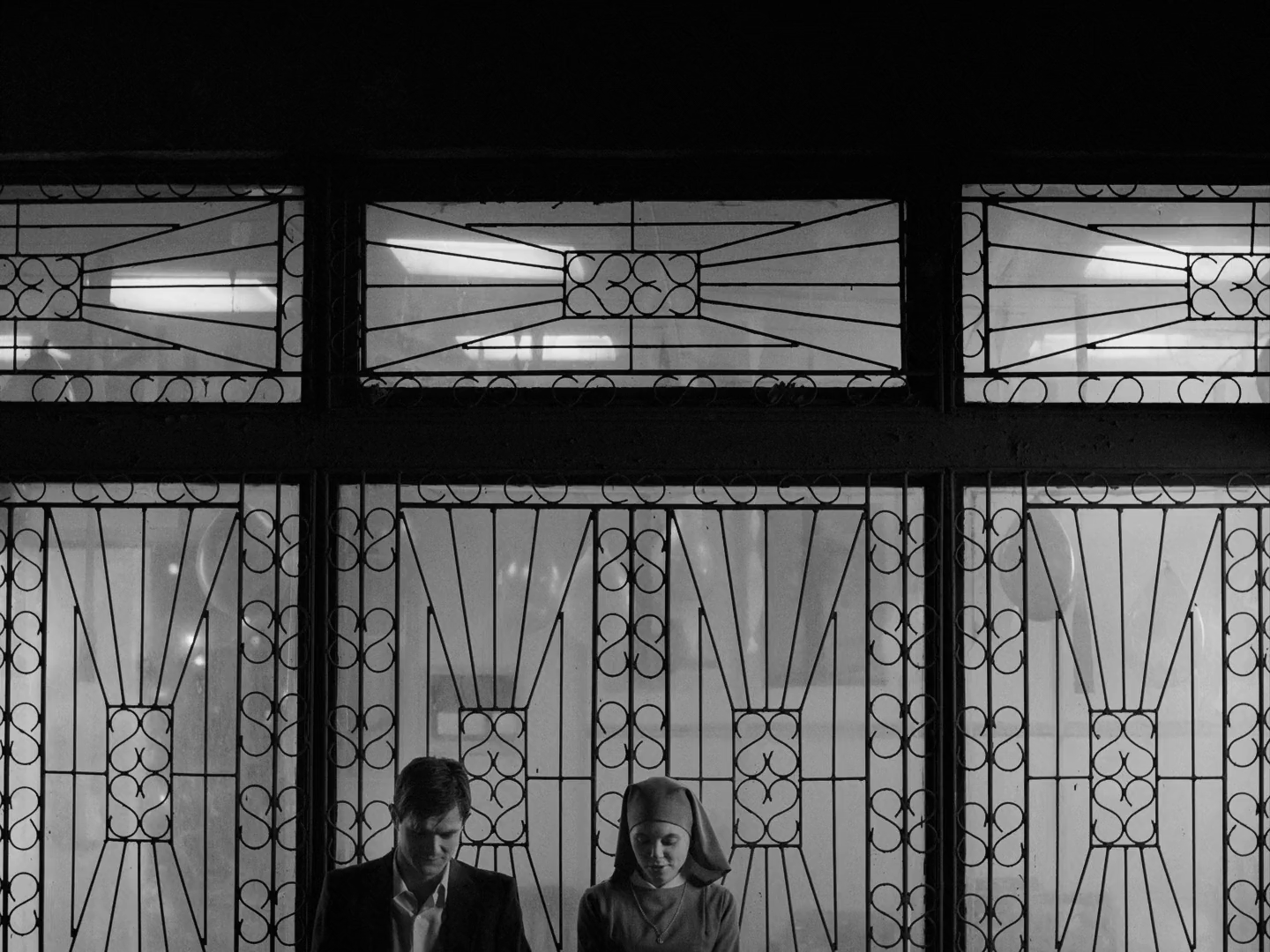
A SEPARATION (2011, Iran)

by Miguel E. Rodriguez

Director: Asghar Farhadi
Cast: Payman Maadi, Leila Hatami, Sareh Bayat, Shahab Hosseini
My Rating: 10/10
Rotten Tomatometer: 99% Certified Fresh

PLOT: A married couple in Tehran are faced with a difficult decision – to improve their daughter’s life by moving to another country or to stay in Iran and look after a deteriorating parent who has Alzheimer’s disease.


The above plot description, paraphrased from IMDb, is rather brilliant because it is misleading in all the right ways.  When I read it, I assumed I would be in for a depressing domestic drama, a la Marriage Story or Kramer vs. Kramer.  It won Best Foreign Film at the Oscars that year, so that only strengthened my belief that it would be a fine film, but also a bit of a slog.

Boy, was I wrong.  That plot description covers just the opening four or five minutes of the movie, an incredibly nuanced, brilliantly acted, uncut take of the two spouses, Nader (husband) and Simin (wife) arguing in front of a judge.  Simin wants to move out of the country so their daughter, Termeh, can have a better quality of life.  Nader has no problem with them leaving, per se, but he cannot go because he must stay and take care of his elderly father who suffers from Alzheimer’s.  If Simin wants to go so bad, let her go, he says, but he won’t give permission for Termeh to go with her.  And Simin won’t leave without Termeh.  It’s a pickle.  (For her part, Termeh wishes to stay with her father, but Simin says that’s only because she doesn’t know any better…how depressingly typical of parents going through a separation.)

After this brilliant scene, I was ready for the movie to settle into a series of one scene after another showing Nader and Simin arguing over custody of Termeh.  Instead, the script ingeniously takes a bit of a left turn and focuses on the woman Nader has hired, Razieh, to be caretaker for his sick father, because Simin, in a move unexpected by me, packs up and moves out.  Razieh wears a traditional chador, and so Nader is unable to tell she is pregnant, which might have affected his decision to hire her.

Razieh does her best with Nader’s father, but the long commute and the difficult work takes its toll.  One day, Nader comes home from work and discovers his father has fallen out of bed, with one hand tied to the bedpost with a piece of cloth, and Razieh is nowhere to be found.  He also discovers some money is missing.  When Razieh returns, she is cagey about why she left, but she insists she stole no money.  Nader is furious and tries to throw her out of his house.  When she insists she be paid for the day’s work and continues to maintain her innocence of the theft of the missing money, Nader loses a little control and pushes her out the front door of their third-floor apartment and onto a staircase.  She walks away, but later winds up in the hospital – she has suffered a miscarriage.

What follows is one of the most engrossing social dramas I’ve ever seen in my life.  I suspect part of my insane interest in the story was the fact that it takes place in a country thousands of miles away, in a culture that is utterly alien to me, and yet the people there are just like any parents and children and husbands and wives we meet every day here in the States.  Razieh’s husband, Hodjat, even has a line: “Why do you think we beat our wives and children like animals?  I swear on this Qur’an, we’re humans just like you!”  He’s talking to his accuser, but he was also talking to me.

The film is shot with mostly handheld cameras, a technique that works extremely well by making everything feel like a documentary.  It makes things feel more real in a story that only works the more you empathize with the characters.  I empathized a great deal, not because I am a husband or a father, but because I recognized their situation, faced with an impossible decision where each person is right and wrong simultaneously.  In the ensuing plot developments, which I will not disclose here, I was so wrapped up in the lives of these people that I found myself reacting the way old school sit-com housewives might respond to watching their favorite soap operas while folding laundry.  “No WAY did he just say that!  …oh my god, lady, you’re just making things WORSE!  …jeez, this guy is CRAZY…!”

This was an unexpected reaction for me.  In years past, I have tended to shy away from foreign dramas after watching one called 4 Months, 3 Weeks, and 2 Days about women in ‘80s-era Romania forced to seek illegal abortions due to their country’s ban on the practice.  I’m not denying that film’s power, but it was so insanely depressing that I swore off foreign films for a while.  It’s only in the last couple of years that I’ve started to come back around to giving films like A Separation a chance.  It hasn’t always paid off, but I’m happy to say it did this time, in spades.

I should note that the story is also extremely revealing in terms of the legal system in Iran.  I can’t vouch for its accuracy, of course, but it all feels very authentic.  In a governmental system so intertwined with religion, it’s easy to see how decisions that are made based on religious statutes may be technically correct without being just.  Just another dimension to the film that makes it even more compelling to watch.

But there is another aspect of A Separation that I believe is even more profound than the engrossing domestic drama.  I’m not even sure if it was intended by the filmmaker.  I’ve read snippets of reviews from other top critics, and none of them seem to have touched on my theory.

[SPOILERS FOLLOW]

In my opinion, A Separation could be interpreted as an allegory of the impossible choices faced by anyone living in such a country or circumstances who yearn for a better (or at least different) life elsewhere, but whose ties to their roots and traditions make such a decision extremely difficult.

Look at the husband in the story, Nader.  He states repeatedly that he has no problem with his wife leaving.  If his father weren’t sick, he would be more than happy to go with her.  But his father needs constant care, and so his familial connection dictates his decision.  There is a telling moment when Nader is bathing his father by hand, while the father sits in a wheelchair, virtually oblivious to his surroundings.  Nader dutifully rinses his father’s body and leans him forward to so he can reach the bottom of his back…and he abruptly stops and starts to weep.  Is he weeping for his father?  Or himself?  It’s one of the film’s many “fill-in-the-blank” moments that we must interpret for ourselves.  For me, I believe it was over the fact that his decision to stay, motivated by love and duty, has resulted in years of caretaking.  He’s committed to it.  But it’s also profoundly sad.

Now look at the wife, Simin.  She believes her daughter, Termeh, will be better off in another country where she doesn’t have to worry that some man might take out his anger on Termeh while at school or walking home from school.  But Termeh insists on staying with her father.  Simin’s choices are to stay and be unhappy, or leave…and be unhappy without her daughter.  She adopts a middle ground by simply moving to her mother’s apartment while she works on convincing Termeh to come with her.  In the grand scheme of things, as a function of the allegory I have in mind, she represents the person who wants to leave and is held back, not by duty, but by the fact she won’t leave her daughter behind.  There’s a piece of her in this place, and she’s free to leave it if she wants, but she’ll never be the same.

How many people in other countries and other circumstances are faced with similar choices?  How many people in our own circles are stuck in marriages or family situations where leaving appears to be the best option on one hand but an impossibility on the other?  I could say that I’ve had similar situations in my own past with such a decision, but it was certainly nothing on the level of leaving my roots behind and moving to another country.  I can’t imagine the struggle and conflict for anyone facing that kind of choice.

A Separation takes that struggle and wraps it up in a movie that, even if it weren’t so perfectly symbolic, could stand on its own with any other film from any other country.  At the end of the film, the daughter is asked, point blank, which parent she would rather live with.  In what would ordinarily be a frustrating moment, we are not shown what she chooses.  It is left to us to imagine her choice.  Or maybe not.  Maybe we are meant to see what it’s like to be faced with an impossible choice, when neither option is better than the other and someone will get hurt either way.

The question isn’t, “What will she choose?”  The question is, “What would you do?”

THE PRINCE OF EGYPT (1998)

by Miguel E. Rodriguez

Directors: Brenda Chapman, Steve Hickner, Simon Wells
Cast: Val Kilmer, Ralph Fiennes, Michelle Pfeiffer, Sandra Bullock, Jeff Goldblum, Danny Glover, Patrick Stewart, Helen Mirren, Steve Martin, Martin Short (whew!)
My Rating: 10/10
Rotten Tomatometer: 80% Certified Fresh

PLOT: Egyptian Prince Moses learns of his identity as a Hebrew and, somewhat reluctantly, realizes his destiny to become the chosen deliverer of his people.


I sat down to watch The Prince of Egypt for the umpteenth time today, ostensibly in honor of Passover, but really it’s just an excuse to watch it again.  In the 24 years since its release, it’s become one of my favorite animated films.  I started out thinking it was a gimmicky cash grab.  Then I realized how majestic the score and songs were (by Hans Zimmer and Stephen Schwartz, respectively).  Then I came to appreciate how effectively it humanizes the Exodus story, so it becomes something more than just an excuse for some crazy visual effects.  Then I looked more closely at those visual effects and realized how magnificent they are, too.

So now it’s a treat when I watch it.  But something rare and unexpected happened to me when I watched it today.  Before I get into that, though, for anyone who may still be unfamiliar with this marvelous film…

Moses (Val Kilmer), a prince of Egypt, younger brother to Rameses (Ralph Fiennes) and son to the great Seti (Patrick Stewart), is comfortable with his place in the world.  One day, he comes across Miriam (Sandra Bullock), a Hebrew slave who boldly informs him he is not Egyptian.  He is, in fact, the son of a Hebrew slave woman who set him adrift on the Nile River to spare him from the bloody purges ordered by Seti, the man he calls father.  Disturbed and conflicted, Moses unthinkingly kills an Egyptian slave driver in a heated moment and leaves behind the only family he’s ever known to face his fate in the desert.

There he meets Tzipporah (Michelle Pfeiffer), a Midianite girl on whom he showed mercy earlier, and her family.  Embracing his new Hebrew identity, he marries Tzipporah and becomes a shepherd.  Time passes.  One day, Moses is searching for a lost sheep when he is confronted with a strange sight: a bush that appears to be, not burning, but covered in cold white flames, nevertheless.  To his shock, a voice speaks from the bush.  It is the God of his ancestors, and He is displeased with how His people are being treated in Egypt.  He commands Moses to go to Egypt and tell the pharaoh to let His people go…

Need I go on?  The staff, the plagues, the blood, the angel of death, the pillar of fire…it’s all presented here in spectacular fashion.

When DreamWorks first announced plans to make what basically amounts to a musical version of The Ten Commandments, I was skeptical to say the least.  I even remember what theatre I saw it in: the Ybor Centro movie theater in 1998.  I sat through the movie, and I allowed my skepticism to color my entire viewing experience, right up until the sensational Red Sea parting, which even now is one of the great animated sequences of all time.  But aside from that, I felt The Prince of Egypt was all flash and no substance, a way for an upstart movie studio to get people into theaters with an overabundance of star power and little else going for it.  But after watching it on home video repeatedly…I mean, REPEATEDLY…I started to analyze it a little more.

The first thing that really renewed my interest and appreciation for the film was the humanization of the main characters, particularly the relationship between Moses and Rameses.  Moses is no movie idol in this film.  He’s just a man.  Kind of a scrawny man, too, not classically handsome like his brother, Rameses.  Where Moses looks a little spindly and frail, Rameses looks like he lifts weights, or whatever folks did back then on “arm day.”  I also like how the movie allows these two men to behave and relate to each other like real brothers might.  They race chariots down city streets, needle each other, call each other names, play pranks on the high priests, the whole nine yards.  It’s a dynamic the two men surely must have shared as brothers growing up, but it never gets addressed in other interpretations of the story.  Because we get to see how much they love each other, the scene where Moses reluctantly turns his back on Rameses carries so much more weight than we might be accustomed to seeing.

This dynamic comes full circle when Moses returns to demand freedom for the Hebrew slaves.  Rameses is now pharaoh, and laughs at Moses’ demands, wondering what his “angle” is.  And then, when the plagues are visited upon Egypt and the city has nearly crumbled, the two men share a scene of astonishing power.  Rameses sees his city in ruins, but ruefully remembers how Moses used to get him out of trouble when they were younger.  It’s a wonderfully human moment.

The second element of the film that sparked my renewed interest was the music.  At the end of the opening number, which is itself emotionally powerful on several levels, a solo female voice sings out, “Deliver us!” right at the end of the song.  I can no longer remember a time when that moment didn’t give me goosebumps.  The score by Hans Zimmer is magnificent.  There is one particular motif of a choir of voices that we hear whenever we are in the presence of something holy or mystical, and even that gives me goosebumps.  Another moment that deservers recognition is during the big number, “When You Believe,” as the Hebrews are flowing out of Egypt.  At one point, the song is replaced by a Hebrew folk song, “Ashira L’Adonai,” sung by a little girl.  Her voice is joined by several others, and then a few more, and then a whole choir, and then the whole orchestra comes in for a reprise of the chorus, and if you don’t get goosebumps at that moment, you need a vacation.

The third element that keeps me coming back to this movie is the visuals.  True, the CGI visuals are relatively primitive compared to what was going on at Pixar around the same time.  The chariot race between Moses and Rameses features CG chariots which you may notice have wheels that don’t always turn while the chariot is moving.  This was an aspect of the film that led to my early dismissal of it.  But then came the Angel of Death scene, with a hole literally torn in the sky and sinister tendrils pouring out of it and into the village streets.  And then came the eye-popping Red Sea sequence.  More so than any other version I’ve seen, The Prince of Egypt made me feel in my bones that, yes, THIS is what it would have looked like if uncountable tons of water were parted down the middle, clearing a path large enough for the entire Hebrew nation to walk across.  (Depending on who you ask, that number could have been up to two million people, so we’re talking about a WIDE path.)  As they walk between the two massive walls of water on either side, lightning flashes illuminate sea life swimming alongside them, including some really large fish.  Now THERE’S something you don’t see every day.

So, yeah, the movie is amazing.  People may quibble about its historical inaccuracy, or the liberties it may take with certain religious beliefs.  But that does not diminish its power in the slightest bit.

Which brings me back to what I mentioned in the opening paragraph:

I sat down to watch the movie today, and for reasons I can’t explain, the opening scenes were bringing a lump to my throat.  That solo female voice singing “Deliver us!” nearly brought a tear to my eye.  And it nearly happened again after a wedding song.  And again, when Moses is leading the Hebrews out of Egypt to the strains of “When You Believe.”  And when Moses slams his staff into the shallow waters on the banks of the Red Sea, and those waters shot up into the air and kept going and going…my God, man, I nearly lost it.  I was one thread of self-control away from going full-on blubber-fest.  I mean, I grabbed my chest like a Victorian lady reading a Jane Austen novel.  In the middle of my emotional experience, I kept asking myself, “What is WRONG with me?!”

The answer is, of course, nothing is wrong with me.  I was just in exactly the right frame of mind to have a borderline religious experience while watching a movie.  It’s the same when I watch the finale of Fantasia 2000, when the sprite erupts from the ground in a gesture of pure joy.  Or when Riley learns the importance of experiencing sadness at the end of Inside Out.  Or any number of other transcendent films that can put me right in the middle of the story emotionally.  The Prince of Egypt does exactly that through a well-managed mixture of story, visuals, and music.  It may not be perfect from a technical standpoint, but it gets me where it counts, and that’s all that matters.

WITNESS

By Marc S. Sanders

Recently, I viewed The Last Emperor and one issue I had was that it was challenging to comprehend the in-depth culture of the people it depicted. I really wanted to learn and pass the final exam with flying colors. Sadly, this was an AP class that I just wasn’t qualified for.

Now that I have watched Witness for the first time in many moons, I can honestly say there is an approach where you can get absorbed in a thrilling crime drama while also appreciating the core values of the community the film focuses on, namely the Amish who reside in the state of Pennsylvania. It’s a much easier film to learn from. That’s for sure.

Peter Weir directed Harrison Ford to his only Oscar nomination to date. Ford plays police officer John Book, opposite Kelly McGillis as Rachel Lapp, a widowed Amish mother traveling by train from home to visit family. At a layover stop in Philadelphia, her young son Samuel (Lukas Haas, in one of the best child performances I’ve ever seen, so bright, observant and wide eyed) witnesses a murder committed by a decorated narcotics police officer (Danny Glover). When Book gets wind of who the cop is, all three of their lives are in danger and they are forced to flee and hide back at the Lapps’ home among the Amish community. Book, however, has taken a gun shot wound following an attempt on his life. The Amish see no choice but to heal him, especially at Rachel’s insistence.

Weir, with a marvelous script by Earl & Pamela Wallace and William Kelley, shows the intersection of two extremely different ways of life where an “Englishman’s” belief in aggressive tactics conflicts with the peaceful nature of people looking to never get involved with any other culture. A romance may seem inevitable between the two leads but it’s a difficult one to embrace. It’s truly forbidden, not simply by the elder Amish and their respective code, but both Book and Rachel know it can’t happen either.

Because we are aware of this forbidden romance that seems to break through anyway, there’s a terrific dance scene at night lit only by headlights within the barn. Ford and McGillis really shine through in this scene as it is the first escape from the fear they have for their lives and the code they honor and are reluctant to violate. It’s the best scene in the whole film. It presents possibilities for different people to interact despite the barriers that prevent such feelings and actions. They laugh and swing naturally. It’s a different kind of moment for Harrison Ford, unconventional when compared to a large majority of the action film roles he’s widely recognized for.

With a biting soundtrack of suspense from Maurice Jarre, Peter Weir also focuses on the theme of intrusion. When the climactic and certainly expected shootout sequence on the farm is to begin, it’s frightening and disturbing to actually see men in suits holding shotguns amid an unarmed society. There’s a masterful shot at dawn of the three men marching down the hill quickly approaching the farm. These aren’t cops being covert. These are cops storming a palace of peace and tranquility. It’s hard to watch because of the stain it leaves.

Josef Sommer is the lead dirty cop and he plays a great villain, truly an uncelebrated bad guy character, as the years have gone on. He’s a decorated officer who comes off with an intent that looks like it’s noble, until nobility will no longer work and intimidation has to set in. Weir shoots Sommer at a lower angle to give him an imposing height.

Ford is terrific. You see some of the Han Solo vibe in the character. He’s a tough cop after all, but then he transitions into an awakened man healed by the more primitive methods of the Amish and their drive to simply build and nurture. Another good moment occurs when Book contributes to building a barn with the other men. He shares lemonade with them. Assists with lifting the framework and hammering along. Two communities are no longer clashing. They are now blending.

McGillis is also very good in her role. She is determined to honor her background, but questions if she is capable of sin and defends her position later.

Witness gives an in depth look into the daily life of the Amish, literally how they farm, build and dress. Book wakes up with them before sunrise to milk the cow and he experiences what they endure from pesky tourists looking for photo ops. It makes for some funny moments as well as an opportunity to cheer for the stand he eventually takes.

Another funny moment is when Ford dons the Amish attire for the first time; it doesn’t exactly compliment him well at first. Book’s adaptability to his new community is awkward to grasp.

Witness presents a bird’s eye view into a very private way of living, and I saw a very large picture.

Beyond that, it’s also a crackling, good thriller.

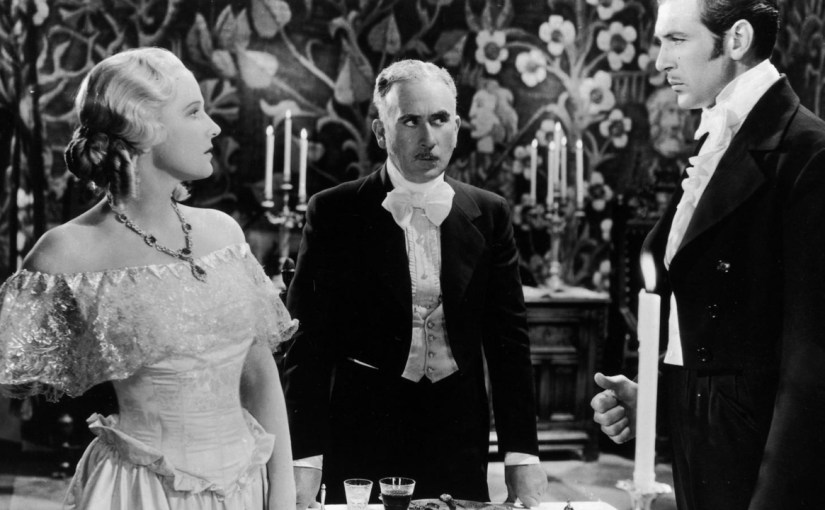
PETER IBBETSON (1935)

by Miguel E. Rodriguez

Director: Henry Hathaway
Cast: Gary Cooper, Ann Harding, Ida Lupino
My Rating: 9/10
Rotten Tomatometer: No rating

PLOT: A successful architect who longs for the love of his childhood friend is delighted to discover that the Duchess who just hired him is in fact his long-lost beloved.  This being melodrama, there is of course much more to the story.


[SPOILERS FOLLOW]

Peter Ibbetson plays like a long-lost Dickens novel, full of melodramatic flourishes and convenient plot contrivances designed to play the audience like a grand piano.  Is it shameless?  Yes.  Is it maudlin?  Yes.  Do I normally like movies like this?  No.  But there is something about this film and its story that got around my defenses and into my heart and soul.  I’ll try to elaborate on that as much as I can, but I don’t know how well I’m going to do.  Good luck.

The story opens, as the title card helpfully explains, in the middle of the last century, which would make it somewhere around the 1850s.  Somewhere in a well-heeled French countryside, two children from neighboring British families play and quarrel with each other, Mimsey and Gogo.  (I am not making that up, though why parents felt the need to inflict those names on their children is utterly beyond me.)  Gogo, the boy, cruelly teases the girl, Mimsey, who nevertheless gives as good as she gets.  Unfortunately, Gogo’s mother dies after a long illness, and when a distant uncle arrives to take Gogo back to England, he realizes he doesn’t want to leave his precious Mimsey.  Together they try to run away and hide, but it’s no use.  The sight of poor Mimsey weeping in the branches of a tree as Gogo is finally taken away was one of the scenes that started to chip away at my armor of cynicism.

Time passes, and Gogo changes his name to Peter and takes his mother’s last name, Ibbetson.  He becomes a successful architect and a valuable asset for his employer.  (In a very Dickensian touch, Peter’s employer is blind…wholly unnecessary to the plot, but that specificity makes it feel even more realistic amid all the other melodrama.)  Peter is successful, yes, but he is unhappy.  He is a bachelor, and when a very pretty girl more or less hits on him at a museum back in France, he takes her for a drink as a matter of courtesy, not out of any real attraction.  His heart still belongs to the lost love of his childhood, you see.  Mimsey is the touchstone of his past, his Rosebud, his green light at the end of the pier, and she will not be easily eradicated.

Initially, I was unsympathetic to the adult Peter.  How can anyone get on with their life if they’re stuck in the past?  It didn’t work for Kane or Gatsby.  If there’s anything the last thirty or so years of my life has taught me, it’s that the past will only weigh you down if you let it.  I’m not suggesting one should literally forget history, but had I been one of Peter’s associates in the film, I would have been constantly reminding him about being grateful for the present rather than bemoaning the mistakes or regrets of the past.  That way lies madness.

Before I get into more story details, I should mention the style of the film and the acting, which is so mannered and stylized that it feels as if it were a silent film that had a soundtrack added as an afterthought.  Gary Cooper may be a legend, but in this film…let’s be blunt, he is no Cary Grant.  Every sentence feels as if it’s been dragged out of him by way of torture.  His charisma is based solely on his imposing height and his dashing good looks, NOT his speech.  (Sorry, I calls ‘em like I sees ‘em.)  The women are not much better acting-wise, though the Duchess of Towers does have some interesting moments.  However, one of the movie’s highlights are the cinematography and subtle visual effects, especially in the late stages of the film.  Look at that scene involving the peculiar qualities in the bars of the jail cell and explain to me 100% how that was accomplished.  It’s so understated and effective that it took me completely by surprise.  I believe it would raise eyebrows with TODAY’S audiences.

I mention all of this about the style and my mindset because I believe that it all contributes to the reaction I had to the film, at which I’m still perplexed.

One day, Peter is contracted to rebuild the stables of an aristocratic family, the Duke and Duchess of Towers.  When Peter first meets Mary, the Duchess, he experiences an unexplainable connection.  His contract requires him to live in the Towers house for several months.  One day they share a conversation and discover that they shared a dream.  This isn’t a case of two people dreaming about the same thing coincidentally.  They actually shared a dream, Inception style, but without the machinery.  How can this be?

By now, any breathing audience member has already deduced that the Duchess is Mimsey and they are destined for each other.  Alas, Peter and Mary are not as quick on the uptake as we are, and their moment of recognition is delayed until after the peevish Duke confronts them at the dinner table, in a conversation laden with Hays-Code-era double-speak.  “Well, Mr. Ibbetson, are you to be congratulated again?” the Duke asks.  Later, during a second confrontation, the Duke points a gun at Peter and Mary and explains that they will not make love behind his back.  He raises his gun and says, “Get into your lover’s arms.”  Whoa.  Daring stuff for 1935.  It’s during this second confrontation that something goes horribly wrong, and Peter is sent to jail for life.

MORE melodrama?  Hasn’t this movie already had more than its fair share?  Children tearfully separated?  An equally tearful reunion?  Outrageous coincidences?  Shared dreams, for crying out loud?  Oh, you ain’t seen nothing yet.

It’s in the film’s third act, when our hero is in prison, that Peter Ibbetson really started to get to me at some primal level.  Peter and Mary, after being reunited against all odds, are now separated even more cruelly than before.  Peter is so distraught he goes on a hunger strike, chained to his “bed,” which is little more than a wide wooden beam.  (Look at it from a certain angle and he might almost appear to be on a cross, but don’t worry, it’s not that kind of movie.)  When one of his fellow prisoners makes a joke at Mary’s expense, Peter goes a little crazy and starts to throttle him.  Miles away, at the same time, Mary suddenly senses something is wrong.  In the jail, guards use force that’s a tad too excessive to restrain Peter, and at the same exact moment Mary screams.  The two are connected in a mystical way that transcends walls or distance.  They continue to share dreams in which they laugh and walk and talk as if nothing bad had ever happened.  In one dream, he points to a castle in the distance that he has built for his beloved.  I was reminded instantly of the scenes in Inception where Cobb and his wife Mal build entire cities for themselves in their own shared dream.

I’ve already given away too much, far too much than I usually care to.  As much as I want to, I can’t describe the one scene that got me to literally yell, “NO!” at the TV screen.

What fate eventually befalls Peter and Mary, I leave for you to discover.  What remains for me is to try once again to summarize how I felt after the movie was over.  Intellectually, I can see its shortcomings.  The acting is wooden, despite some pretty sharp dialogue.  The music is overwhelmingly romantic and dramatic, commenting on a lot of action unnecessarily, as was the custom back then.  There are one or two odd cuts.  But on an emotional level, the experience of watching Peter Ibbetson was like watching one of Shakespeare’s tragedies.  The only other movies that ever made feel these precise emotions, although not to the exact same degree, are The Remains of the Day and Atonement.  If you know those movies, you know what I’m talking about.

The movie’s final shot is as shamelessly manipulative as these things get.  It’s unabashed romanticism at its best AND its worst.  But you know what?  This movie earns it, and it works.

THE ACCUSED

By Marc S. Sanders

Jodie Foster won her first of two Best Actress Oscars for playing Sara Tobias, a victim of a barroom gang rape in The Accused, directed by Jonathan Kaplan and written by Tom Toper.

Kelly McGillis portrays prosecutor Katherine Murphy. Murphy initially makes a deal with the three men accused of the rape. An agreement is made for a lighter conviction “reckless endangerment,” rather than “rape,” and a trial is avoided. What happened to Sarah is never put on public record.

Circumstances thereafter motivate Katherine to go another step further and prosecute the men in the bar that encouraged and cheered for the rape to continue. Her own office questions if it will be worth it though and demand she walk away from this seemingly no win scenario.

Kaplan’s film is more or less paint by numbers until it reaches the moment a material witness takes the stand to testify on the exact sequence of events that actually occurred in the back room of a neighborhood bar. Foster is hard to watch at times and that’s the point. There’s nothing glamorous in a film centered on a rape victim, and she puts out all the ugly parts of her character first physically, and then with temper, habitual drinking, and the sense of a poor upbringing. Toper does equip his character with likability though. Sarah tries to get through the tough exterior of Katherine’s no nonsense lawyer ideology with her interests in astrology. Through the film, Katherine shows no interest but we all know that’ll change. Nothing is shocking in the developments of Toper’s story.

What is jaw dropping though is how Kaplan depicts Sarah’s post rape examination. Deep cuts and bruises are shown in various parts of her body. She is propped on stirrups for evidence retention (hair, skin and semen samples for example), even the annoyingly repetitive click and flash of a Polaroid camera are disturbing. You can’t help but be concerned or taken aback.

No. A movie will never measure up to what victims endure following incidents like this. Still, the footage early on in The Accused certainly got me emotional.

The big shock is towards the end when the re-enactment of the rape is presented. Kaplan doesn’t hold back with his crew of extras playing the bar mates. Drinks are abundantly consumed, then a song in the jukebox, some weed, pinball, a wink, then a sexy dance, and suddenly Sarah’s skirt is lifted to reveal her panties and she’s propped on a pinball machine with her arms restrained and her mouth covered by a hand. Then the woo hooing is disturbingly brought on.

Why do I document all of this? I want to show how subtle Kaplan is with the rape scene. Innocent laughs and drunken play can suddenly turn on any one of us, man or woman. A song plays. People are stoned and drunk, and before any of us realize it, there’s a sexually assaulted victim, and a rapist, or three rapists actually. Moreover, there are those who wish for this moment to last and egg it on. For one woman, none of it is fun anymore.

Again, the storyline development of The Accused is nothing we haven’t seen before. It’s step by step, connect the dots within the courtroom and law offices. The crimes (rape for one, cheering & persuading – a crime for another) are terribly shocking though, especially when we see it first-hand.

Every man and woman should watch The Accused. It’s important we remember that we are capable of subjecting ourselves or being subjected.

More so, regardless of our age or experience, we all have something to learn about what a rape victim endures. I imagine this film doesn’t come close, but it’s a solid start.

DO THE RIGHT THING

By Marc S. Sanders

inally, after 30 years, I’ve caught up to a film that has eluded me, Spike Lee’s masterpiece Do The Right Thing. Here is a film from 1989 that really could have been made in 2019. At the very least, it should be rereleased in the theatres. We desperately need this film right now.

My view of Spike Lee has gradually changed over just the last year. It must be due to the current political and socioeconomic climate. I’ve become terribly sensitive to what I see in the news these days.

Following seeing BlacKkKlansman and now this film, Lee really is aware of how low humanity can go. Do The Right Thing offers just a little push that leads to an endless fall, however.

Lee’s film was shot on location in the Bedford-Stuyvesant neighborhood in Brooklyn. The story takes place on a day where the heat wave has reached a record high, so the predominantly black community has turned on the fire hydrant and Sal’s Pizzeria is open for business. Sal is played by Danny Aiello in an Oscar nominated performance. The main character that everyone knows is Mookie, Sal’s trusted delivery guy, played by Spike Lee. Mookie is well aware of Sal’s mild prejudices towards his customers; mild compared to Pino’s blatant racism (John Turturro), Sal’s older son who works for him along with Vito, the other son.

The film is a day in the life when it appears the same daily routines occur yet again. Mookie delivers pizzas while getting chastised by his son’s mother (Rosie Perez’ debut) for not making more of himself. The middle age men sit on the corner talking about anything random. The kids roam up and down the street goofing off and teasing. Da Mayor (Ossie Davis) seems a little crazy even if we can recognize a life of experience as he’s sipping on a bottle while trying to charm Mother Sister (Davis’ real life wife Ruby Dee) who stays perched on her window sill, and Radio Raheem (Bill Nunn) and Buggin Out (Giancarlo Esposito) are on their own mission to make sure black celebrities appear on Sal’s wall along with the Italian Americans, and “Fight The Power” is rightfully blasting on the boom box.

Each scene in the film plays like a vignette and Lee often times will be as direct as possible with his characters to honestly show what they stand for, whether they are racist or intrusive or even naively annoying. The heat index is nicely displayed through the random commentary from the local DJ portrayed by Samuel L Jackson, and it’s easy to grasp that the temperature serves as a threatening metaphor for what we fear will eventually happen. Our communal mentality is about to boil over.

I easily saw the still controversial ending coming. What’s sad is that it is no longer surprising in today’s era. It’s probably one of the best endings to a film that I’ve ever seen. That’s a bold statement but having watched the film just a week ago, I’ve repeatedly had an internal argument with myself. Who is right? Who is justified? Who is wrong? Why do these activities continue to happen? If I’m still turning this film over in my head after a week, then I can’t deny the impact Spike Lee accomplished. I’m angry. I’m annoyed. I’m sad. Don’t get me wrong. I was also entertained with the film. It’s a great script and a great cast.

Beyond the messages of Do The Right Thing, the film is an assortment of bright colors in costumes and backdrops within the neighborhood. Bedford-Stuyvesant really looks like a beautiful area. It looks clean and the residents really never appear terribly intimidating. Lee finds qualities in all his characters to like, even Pico the most racist of all. Mookie even tries to make a point to Pico about just how racist he seems. It’s a great conversation about the status quo of a black celebrity vs simply another “N-word” who walks into Sal’s for a slice of pizza. I found charm among most of the various conversations in the film. So much so that I said to myself, this is a film that truly could be adapted into a musical or a stage play. There’s so much to tell and so many ways to say it. I wouldn’t be surprised if Lee likely had a hundred more pages of dialogue and a dozen more characters that never made it into the final product.

In 1989, and all the years thereafter, I dismissed this film. I never cared for Lee’s commentary during public interviews. I can’t stand his response to certain issues, and admittedly I just do not like hip hop and rap music. I also may have naively thought that Spike’s viewpoints were a little over the top. I still do, at times. Nevertheless, I was blind, Reader. I truly was.

There’s a terrible truth to Do The Right Thing. A frightening truth. We are very, very far out of reach of racial harmony.

We learn best, only when we fall. Spike Lee’s film shows the shortcomings of the human spirit. Spike Lee’s film makes you think and debate. You have no choice but to question a moral compass.

Whether you have already seen it or not, watch Do The Right Thing today. More importantly, watch it with your children.

BELFAST

By Marc S. Sanders

Within the first three minutes of Kenneth Branagh’s Belfast, there is impactful transition that goes reverse in time.  Van Morrison supplies the music to the film and it opens in bright color capturing glimpses of the thriving city.  There are well paved highways with ongoing traffic.  Fresh painted construction cranes stand in front of a blue sky with a warm sun.  Buildings have beautiful architecture.  There are pieces of eye-popping art within the city.  It looks like the most gorgeous vacation destination.  Even the opening credits are stenciled in nice gold font.  Then Branagh’s camera lifts up over a wall and the screen reverses back in time to August, 1969 where it’s depicted in black and white.  A sweet blond-haired boy named Buddy (Jude Hill) is holding a stick and a trash can lid as he slays an imaginary dragon, but then reality dawns upon him and violent riots erupt on the street he lives on. Cars are set on fire, windows are smashed, bricks are thrown, and Molotov cocktails burst into flames.  What we see as prosperity now, had a history at one time, and history is not always something to embrace.  Belfast reminds us that it was ugly before it got better.

Belfast, Ireland in the late 60s/early 70s is shown through the eyes of Buddy.  Branagh never has Buddy be forced to grow up so fast, despite the inflamed conflicts between Protestants and Catholics living in Ireland.  He plays in the park.  He watches Star Trek on TV.  He does his math homework with his Pop (Ciaran Hinds). He’s a little bit of a troublemaker as he pockets chocolate from the local candy store.  He also escorts his grandmother (Judi Dench) to the movies and live theater.  He’s a happy little kid, but he’s also wise to the new world thrust upon his doorstep.  It’s hard not to see the make shift barrier walls of junk at the end of the block and the sometimes-questioning policemen.

His Pa (Jamie Dornan) leaves for two-week trips for work, but when he’s home, Buddy eyes upon his Pa’s childhood friend intimidating him to join the cause to rid the area of Catholicism.  His Pa is put into an “either you’re for us or you’re against us” dilemma.  Pa does not sway so easily. 

His Ma (Catriona Balfe) tries to keep things as normal as possible.  A surprising moment occurs when Buddy gets swept up in looting a grocery store with the rioters.  He runs home with a box of laundry detergent.  Ma will not stand for that and escorts him back to the store to return the item.  Ma gets a full account at this moment of what’s become of their hometown when all she wants to do is properly discipline and raise her child.

As tensions rise over the coming months, Ma debates with Pa about whether to leave Belfast for a new life in the United Kingdom.  I think this becomes more traumatic for Buddy than the random violence he periodically witnesses.  He’d have to leave his grandparents and his school and his friends.  As well, he’s been working so hard to keep his grades up so that he can sit at the front of class, next to the young girl he pines for.  They are working on a science project that recounts the historic first trip to the moon.

Belfast is a rather short film, but Branagh’s script offers much.  It focuses on a piece of mid-twentieth century European history that I was never familiar with.  The film gives you the minimum details through conversations and sound bites from news broadcasts.  That’s fine, but my attention span was waning at times.  It’s not fair for me to criticize the picture this way.  I just couldn’t relate to the culture of the community, and so I just was not engaged on this one and only viewing.

It’s clearly well-made, and Branagh presents a convincing depiction primarily of this one residential block that this family lives on.  While Buddy’s exploits are endearing and there are especially good performances all around, the riot violence is scary with harsh sound editing of screams and shattering window panes.  The cinematography is strong, especially when it contrasts with color.  The choice is made to depict a live performance of A Christmas Carol in color while the seated audience with Buddy and his grandmother stays in black and white.  Branagh does a cool effect by having bright orange stage lights reflect in Dench’s eye glasses which remain in monochrome.  When the family goes to see Chitty Chitty Bang Bang, the movie screen is in color like the film they are watching.  The characters of Belfast remain in black and white, though.  This family and others like them, remember these tumultuous times in a dull, gray perspective.  It was a non-celebratory and often harsh way to live.  The escapism they partake will always be preserved in promising and welcome colors, however.  This is a fantastic storytelling device.

As Kenneth Branagh wrote and directed the piece, it’s clear that he strove for his exact vision and he has a personal achievement he should be proud of.  There doesn’t appear to be any compromise to his picture.  It’s very well directed with its cast performances, the town extras and the technical choices made.  Yet, the film never grabbed me emotionally.  Belfast exists to simply to show how this family survived day to day with turmoil surrounding them.  If anything, at least I learned something new within the confines of Ireland from fifty years ago.

BEN-HUR (1959)

by Miguel E. Rodriguez

Director: William Wyler
Cast: Charlton Heston, Jack Hawkins, Haya Harareet, Stephen Boyd, Hugh Griffith
My Rating: 9/10
Rotten Tomatometer: 86% Certified Fresh

PLOT: After a Jewish prince is betrayed and sent into slavery by a Roman friend in 1st-century Jerusalem, he regains his freedom and returns for revenge.


For my money, 1959’s record-setting production of Ben-Hur would be a better pick for an annual Easter flick over C.B. de Mille’s overblown The Ten Commandments.  Certainly, Commandments shows the actual story of Passover and might lay claim to more special effects sequences, but Ben-Hur feels grander AND more intimate at the same time.  Plus it actually shows Christ and the crucifixion at the end, and what better symbols could you ask for in an Easter film?

Then, of course, there’s that chariot race.  Game, set, and match.

Ben-Hur was created in an era when Hollywood was watching its profits dwindle because of the advent of television, which was keeping more and more people glued to their sets at home instead of paying for a ticket at the box office.  One way to get people back into theaters was to take the “bigger-is-better” approach: do things that were impossible on a TV budget.

Consider these statistics: Three hundred separate sets were built for Ben-Hur.  The chariot race alone required 15,000 extras on 18 acres of backlot at Cinecitta Studios in Rome and took 10 weeks to shoot.  Over a million props were needed, and it took two years to amass them all before shooting.  Approximately 1.25 million feet of expensive 65mm film was exposed and developed at a cost of roughly a dollar per foot.  The budget for the film ballooned to nearly $15 million, equivalent to over $146 million in today’s dollars, an unthinkable amount in the late 1950s.

But when it was released, Ben-Hur made history by being the first film to win eleven Academy Awards, including Best Picture, Best Director, Best Actor, and Best Supporting Actor.  It remains the only film to date to win Best Picture and Best Visual Effects.  At the box office, it raked in $75 million ($731 million when adjusted for inflation), making it one of the most profitable films in Hollywood history at the time.  It remains popular today, ranked in the IMDb’s top 250 most popular movies and listed as the #2 epic film of all time by the American Film Institute.  (#1 is Lawrence of Arabia, naturally.)

How does a 63-year-old film, with a running time of 3 hours and 42 minutes, with a blatantly religious plotline culminating in the crucifixion of Christ and a shamelessly manipulative miracle, and featuring some of the hammiest acting this side of Bollywood, remain as popular as it is?  Because despite its shortcomings, it does what every film should do, long or short, sacred or secular: it tells a rollicking good story, and it does it extremely well.

After a solemn prologue depicting the first Nativity, we jump forward 26 years and meet Judah Ben-Hur (Charlton Heston), a wealthy Judean prince who enjoys a reunion with his old friend, Messala (Stephen Boyd).  They grew up together but went their separate ways, and now Messala is a Roman tribune assigned to keep the peace in Judea.  Poor Judah realizes just how far they’ve grown apart when an accident leads Messala to arrest Judah and his mother and sister, to demonstrate his power and loyalty to Rome.  Judah vows vengeance and is sentenced to die as a galley slave.  But fate intervenes in the form of Quintus Arrius (Jack Hawkins), a Roman general whose life Judah saves in battle.  Arrius befriends Judah and officially adopts him as his own son, giving Judah the means to return to his homeland, wreak his vengeance upon Messala, and rescue his mother and sister from prison.

…and that’s just Act One.  Act Two focuses heavily on Judah’s revenge in the form of one of the greatest set pieces in Hollywood history: the chariot race.  Or, more properly, The Chariot Race.  If you’ve never seen it, Google/YouTube it.  Even viewed as a stand-alone scene, it is as breathtaking and thrilling as any car chase ever filmed.  It’s so good that George Lucas cribbed many of its beats for the pod-race sequence in Star Wars: Episode I – The Phantom Menace.  The crashes you see during the race were planned, but they were performed with real stuntmen in real danger.  Note especially one sensational stunt where a 2-wheeled chariot drawn by four horses, at full gallop, approach a crashed chariot in their path.  The horses leap the chariot, then the chariot dangerously rolls over the crash itself, hurling the stuntman so high into the air he nearly topples head over heels over the front of his own chariot.  I am at a loss to imagine how they could possibly accomplish this same scene today without the use of visual effects.

Peppered throughout the story are brief scenes featuring Jesus of Nazareth, although we never hear Him speak, and we never see His face.  In Act One, He offers water to Judah as he is being marched to the galleys, a compassionate act that will resonate through the years.  Later He is glimpsed from a distance delivering the Sermon on the Mount.  And later still, we see His trial, His journey to Golgotha, and His crucifixion.  Everyone involved in those scenes show the appropriate and expected levels of awe and sadness, while the score plays a mournful dirge.  It’s a little ham-handed by today’s standards, especially when compared to modern films like The Passion of the Christ, but it is still effective.

The movie’s highest level of filmmaking, apart from The Chariot Race, is on its best display in the first half of the movie.  Nearly two-and-a-half hours fly by, thanks to superb editing.  It’s never boring or soapy.  (Well…ALMOST never soapy.  The requisite love scenes between Judah and the slave girl Esther, played by the lovely Haya Harareet, are not as easy to watch as the rest of the film, but thankfully there aren’t that many of them.)  Every event and every scene feels crucial to the story.  There’s never a moment that drags.  Like the best epic films, watching Ben-Hur makes me feel like I’m reading a richly detailed novel.

If the film has a major downfall, it’s the story that follows The Chariot Race.  The movie doesn’t exactly grind to a halt, but it doesn’t offer the viewer any kind of climactic punches that can match the visceral effect of Judah’s capture, escape, and victory in the race.  (Sorry if I spoiled that for you, but if you seriously thought he lost that race, seek help.)  Sure, there’s the capture and crucifixion of Jesus and the miraculous aftermath, but while that satisfies the true arc of the story, I still, to this day, feel like the film deflates a little at the end.  There’s simply nothing it can offer that could possibly follow up that damn Chariot Race.  The race is the payoff.  Everything that follows feels anti-climactic.

That quibble aside, Ben-Hur is still as captivating as it ever was, with “old” Hollywood’s full power brought to bear to bring audiences a cinematic experience unlike any other at that time.  No matter where you might stand when it comes to its religious overtones, you can’t deny that the movie is exactly as respectful as it needs to be for this story.  And ultimately, the message of the film isn’t “An eye for an eye.”  It’s “Love thy enemy as thyself.”  It takes Judah Ben-Hur a little while to get there.  But he gets there.

IN THE HEAT OF THE NIGHT

By Marc S. Sanders

In 1967, just before the assassination of Dr. Martin Luther King Jr, Norman Jewison’s film In The Heat Of The Night won five Academy Awards including Best Picture, Best Actor for Rod Steiger and Best Adapted Screenplay by Sterling Silliphant.  While it is easy to classify the movie as a crime drama/murder mystery/detective story, the setting and themes of racial prejudice overshadow who the killer is or the motive.  As the film progressed, I grew less curious of who bludgeoned white businessman Philip Colbert to death and why.  It was much more important to understand exactly why Steiger’s Mississippi Police Chief Gillespie is so quick to believe that a well dressed and cooperative black man who was simply apprehended for waiting at a train station would be the culprit.  The black man is Virgil Tibbs (Sidney Poitier), a Philadelphia police detective.

After Tibbs has an opportunity to identify himself, Gillespie shamelessly requests his services in solving the crime.  Murder doesn’t happen often in Sparta, Mississippi.  Tibbs’ supervisor speaks highly of his officer’s capabilities.  Tibbs knows how to look for signs of rigor mortis on the deceased.  He knows how to identify that the killer was right-handed and he knows that when another suspect is quickly brought in, that he can’t be the killer either.  Still, many of the heated conversations between Gillespie and Tibbs are the same.  Their back and forths even become redundant at times.  Gillespie, nor the deputies and other residents of Sparta, are apt to listen to a “colored” person.  At one point, Tibbs is put in a cell for not agreeing with Gillespie’s conclusions.  He’s also ordered on two or three occasions to get out of town.  Tibbs is not so willing to surrender though, even if he’s regarded with racial disdain.  The impression is that this murder will not be so challenging for Tibbs to solve, if only he had a little more time and cooperation.  So, the riddle of the crime is not the overall conflict of In The Heat Of The Night.  More so, it is the racial hatred that a deep south Mississippi town has for an educated and skillful black man from up north.  

I read that the film was shot primarily in Sparta, Illinois.  Poitier made that request for his own safety while a tense period within America was occurring against the backdrop of the civil rights movement.  Jewison’s film is quite brave.  In the face of racial divide within the United States, this film still got made.  Yet, it had to be produced with an abundance of caution. 

A telling scene happens in the middle of the picture.  Tibbs requests Gillespie escort him to a wealthy cotton plantation owner’s home.  As they drive up to the home, they pass by the black cotton pickers collecting the crops under the hot sun.  They meet in the estate green house with a Mr. Endicott, who comes off very cordial to Tibbs at first.  However, when a slight accusatory question comes from Tibbs, Endicott slaps him across the face.  Tibbs responds with a slap right back at him.  In Mississippi, a black man better know his place, even if the prime suspect of a murder is a wealthy white man, or more simply just white.  It’s a classic moment in film history.  However, it remains an important scene and maybe its significance should be all the more heightened in modern day 2022 with the Black Lives Matter mentality at the forefront; where police/African American race relations are being tested. 

Three white men were recently sentenced to life in prison without parole for the hate crime killing of a black jogger named Ahmaud Marquez Arbery in the state of Georgia.  All that Mr. Arbery was doing was jogging through a neighborhood.  He didn’t have a weapon.  He hadn’t come in contact with anyone to even slightly suspect a threat.  He was noticed by these three criminals, and because he didn’t belong in that area, he was brutally murdered for the color of his skin.  Evidence would reveal where these men stood with regards to black people as a history of various texts that were clearly racial in nature were later uncovered.  If it wasn’t going to be Mr. Arbery who was murdered, it was eventually going to be another black person who would fall victim to these men. 

Though Dr. King was murdered shortly after the release of In The Heat Of The Night, I’m cautiously optimistic that racial hatred has lessened and the generations that followed learned from the misgivings of their ancestors.  Still, the term “hate crime” is often used in news reports today.  The debate of the Confederate flag and its argument for keeping it flying still has to be pondered.  Fifty years later, I cannot understand why, though. 

I will never forget a vacation I took with my family to Stone Mountain in Georgia back in 2005.  It was fourth of July and we were picnicking on the lawn next to a couple of teenagers while waiting for the fireworks.  I struck up a conversation with a local teenage girl and the flag and the confederacy along with the carving of Confederate leaders (Stonewall Jackson, Robert E. Lee and Jefferson Davis) on the rock sight were brought up.  Her defense of these topics was “It’s history.  Not hate.”  I became much wiser in that moment.  I was just a naïve Jewish guy who was raised in New Jersey.  I was not aware enough.  Much still hadn’t been learned and a whole lot needed to be unlearned.  History is not a reason to celebrate.  History is not meant to honored.  History is meant to be remembered for our rights, and especially our wrongs.  Much of history should not be repeated, and yet that’s what happens all too often.

In The Heat Of The Night is another example of the power of films.  So much is debated about what is taught in our schools.  A proposal of law for “Don’t Say Gay” is likely to be passed in Florida where it’s deemed impermissible to discuss homosexuality in elementary schools.  Books are continuing to be restricted from availability in libraries.  So, if our institutions of learning are being censored, then we have to rely on other mediums.  Movies like Schindler’s List or In The Heat Of The Night or Do The Right Thing offer those opportunities.  Films open a window to view love and hate as well as tolerance and prejudice.  We can never afford to look at our world with rose colored glasses.

THE LAST CASTLE

By Marc S. Sanders

Robert Redford, James Gandolfini and Mark Ruffalo go to sleep in The Last Castle, a prison movie of no consequence directed by Rob Lurie.

They go to sleep. So naturally, I go to sleep.

Redford plays Three Star General Eugene Irwin (a real tough guy name!) sentenced to a military prison. It’s where we have to accept that Gandolfini as a “ruthless” Colonel Winter controls his inmates with an iron fist. (Iron? Aluminum Reynolds Wrap is more like it.). That’s what the Netflix or TV guide description might tell you.

Watch the film however, and you’ll nary see anything terribly harsh from Gandolfini, much less will you see anything triumphant from a run of the mill Redford. Exactly what is the problem these two guys have that motivate the General into a forever-to-get-there uprising against the prison? These guys never appear to be enduring much of a harsh reality.

Amid the concrete walls, basketball is played with glee, rocks are carried to and fro and bets for cigarette winnings are proffered. I don’t get it. What’s wrong with this, and why is Gandolfini regarded as such a dick about it? This Colonel Winter is no Tony Soprano. That’s for sure.

I think it’s in Redford’s contract that dirt must never grace his boyhood good looks and his neat blond hair style remain preserved even when he’s running through 7 foot flames to rescue Ruffalo from a downed helicopter. (Psst, that’s the most exciting—that’s the only exciting—part of the film.)

The Last Castle is not a good movie.

As the allegorical chess play between the opposing leaders carries forth, much flexibility is offered to both sides to plan accordingly for the final battle. This is too neat and too pretty for a prison mutiny uprising. It’s real convenient that there are only rubber bullets in the guards’ rifles. That way it’s safe for everyone to play in the sandbox a little longer past curfew.

Don’t believe me about all this? Then answer me this question:

Where in the hell did Redford’s band of prisoners find the time, resources and covert opportunity to construct a building tall SLING SHOT STRAIGHT OUTTA BRAVEHEART OR LORD OF THE RINGS to chuck boulders with? I mean how the hell would you even hide such a thing when you are locked in a prison? It ain’t under the mattress. That’s for sure.