WHAT EVER HAPPENED TO BABY JANE? (1962)

by Miguel E. Rodriguez

DIRECTOR: Robert Aldrich
CAST: Bette Davis, Joan Crawford, Victor Buono, Maidie Norman
MY RATING: 9/10
ROTTEN TOMATOMETER: 92% Certified Fresh

PLOT: A delusional former child star torments her paraplegic sister in their decaying Hollywood mansion.


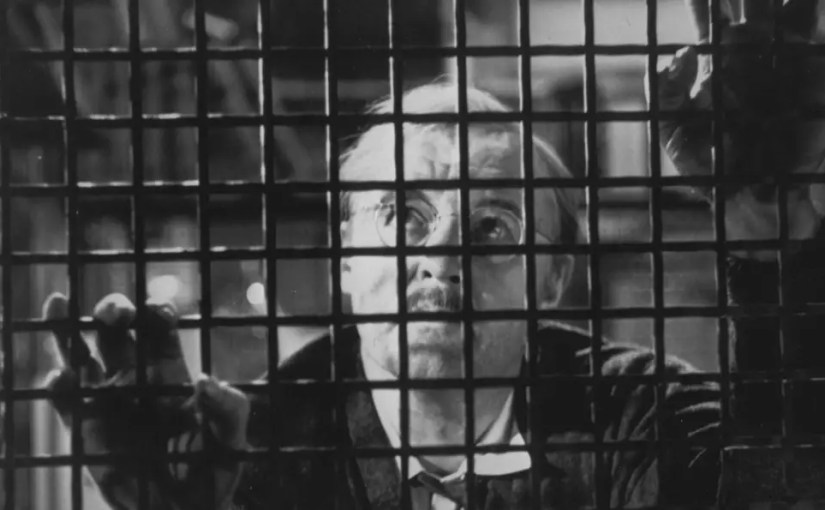
I have heard of this movie by reputation almost my entire life, and only now, near the end of my 52nd year on Earth, have I finally sat down to watch What Ever Happened to Baby Jane?, a movie that has been called a camp classic, a horror film in the guignol tradition, and a showcase for two of the greatest bitches in the history of cinema.  And let me tell you, it was worth the wait.  Bette Davis’s performance as Baby Jane Hudson is the stuff of legend: evil, despicable, vile, and impossible to look away from.  She doesn’t just chew the scenery, she purees it.

And yes, before faithful readers get up in my grill, this is one of the slowly growing list of films where the main character is an absolute douchebag, and I not only tolerate it, I celebrate it.  It’s impossible not to.  Like Christian Bale or Jack Torrance, Davis hypnotizes viewers by so perfectly embodying the character that it becomes impossible to imagine anyone else playing it.  It’s been said that at one point, Joan Crawford was going to play Baby Jane, but as talented as Ms. Crawford was, I can’t imagine her improving on Davis’s fearless performance.  This is the very definition of “commit to the bit.”

If you’re like me before I watched the movie, you know the bare bones of the story.  Back in the heyday of vaudeville, Baby Jane Hudson with her golden curls was the darling of the stage, entrancing audiences with her heartbreaking rendition “I’ve Written a Letter to Daddy.”  Her slightly older sister, Blanche, was ignored by her talented sister and, tragically, her father.  But karma is a bitch, and in the early-to-mid-1930s, Blanche becomes a Hollywood superstar, while Baby Jane toils in obscurity, clearly an inferior talent to her celebrated older sister.

One night, there is a terrible “accident” in front of their house (an old Hollywood mansion that once belonged to Valentino), and Blanche is paralyzed from the waist down.  For the next thirty years, Blanche is confined to a wheelchair on the second floor of their mansion, while the delusional Jane, who in her late sixties still wears her Baby Jane makeup and curls, dutifully brings up Blanche’s meals and verbally abuses her.  Their part-time maid, Elvira (Maidie Norman, unknown to me, but quite good in a pivotal role), discovers a trove of Blanche’s fan mail…opened and discarded by Jane.

How to describe these scenes of emotional and verbal abuse?  The words that come out of Jane’s mouth are as harsh as you can get in a movie from 1962.  (In one scene, watch her mouth carefully, and you can see her call Blanche a “bitch” just as a buzzer drowns out her voice.)  But because Blanche, with the patience of a saint, puts up with it, we the audience are forced to accept it.  I mean, I wanted to punch Jane in the face about 30 minutes into this two-plus-hour movie, but I had to tough it out because Blanche is toughing it out.  At that point, I just wanted to see what kind of karmic fate awaited this intolerable harridan.  I wanted her to get trampled by horses while being drawn and quartered by four tractors.

But this is just summary.  I’m not doing the movie justice.  For a 61-year-old movie, it felt just as tense and thrilling as anything I’ve seen in theaters this or any year.  The term “camp” I absolutely disagree with when applied to this movie.  Camp occurs when someone genuinely believes they’re making a great film, and the result is so laughably bad it’s good.  Ed Wood is camp.  Reefer Madness is camp.  Troll 2 is camp.  But NOT What Ever Happened…  Director Robert Aldrich knew what a casting coup he got with Davis and Crawford in the leads, two actresses whose well-known feuds were constantly reported.  All he had to do was turn them loose on the script and keep the cameras rolling.  Rather than getting a movie that got overcooked by hammy histrionics, Aldrich got a top-notch thriller that keeps audiences off-kilter right up to the last five minutes.  That’s not an exaggeration.  As such, this cannot qualify as “camp” because the result was not a bad movie, but a brilliant one.

The different ways in which the screws get turned in such a claustrophobic thriller are ingenious.  Blanche has a pet parakeet that flies away while Jane is cleaning the cage…so she says.  Jane serves dinner to Blanche one day, always with a covered dish, and just as she walks out, she casually mentions there are rats in the basement.  Blanche and we look with horror at the covered dish waiting on her table.  Blanche tries to send a distress signal to their next-door neighbor; the way THAT scene plays out would have warmed the cockles of Hitchcock’s heart.  Blanche discovers that Jane has been practicing forging Blanche’s signature…UH oh.  One day the maid, Elvira, sees too much, and I found myself yelling at the screen when it becomes apparent her life is in danger.

The whole movie works on you like that.  I did a lot of yelling at the screen, just like your stereotypical rude audience member.  At one point, Jane has lied and lied and dug a hole so deep she can’t find a way out, and she pleads to Blanche, “Help me, Blanche, I don’t know what to do!”  The things I yelled at the screen at that point, I will not repeat here, but they involved words that rhymed with “witch”, “ducking”, and “blunt.”  That’s how well the movie got under my skin, in a good way, I should hasten to add.

What Ever Happened to Baby Jane? is one of the finest thrillers I’ve ever seen.  I hesitate to call it a horror film because, in a way, I guess it transcends the horror genre.  It includes some occasional horrific imagery, but the movie is too complex, too rooted in real-world physics and situations for me to see it as a horror film.  It’s a domestic thriller that flirts with self-indulgence, but the performances are so good, we forgive it when, for example, Jane performs her old Baby Jane number, her voice croaking on the high notes like a frog on helium.  In any other movie, I can imagine people would shake their heads and mutter, “Oh, brother…”  In this movie, we still shake our heads, but in awe of an utterly unafraid actor.

As for why I give it a “9” instead of a “10”…ask me after watching it yourself and I’ll tell you.

SEVEN DAYS IN MAY (1964)

by Miguel E. Rodrigugez

DIRECTOR: John Frankenheimer
CAST: Burt Lancaster, Kirk Douglas, Fredric March, Ava Gardner, Edmond O’Brien, Martin Balsam
MY RATING: 9/10
ROTTEN TOMATOMETER: 91%

PLOT: United States military leaders plot to overthrow the President because he supports a nuclear disarmament treaty, and they fear a Soviet sneak attack.


Barely two years after The Manchurian Candidate shocked audiences, director John Frankenheimer delivered the goods again with a political conspiracy thriller that is the equal of Candidate in almost every way.  Were it not for some overcooked sermonizing during a transitional scene, I would almost call Seven Days in May a perfect example of the genre.  I’m frankly a little surprised it’s not mentioned more often in the same breath with other similar thrillers like Fail Safe, The Parallax View, and Three Days of the Condor.

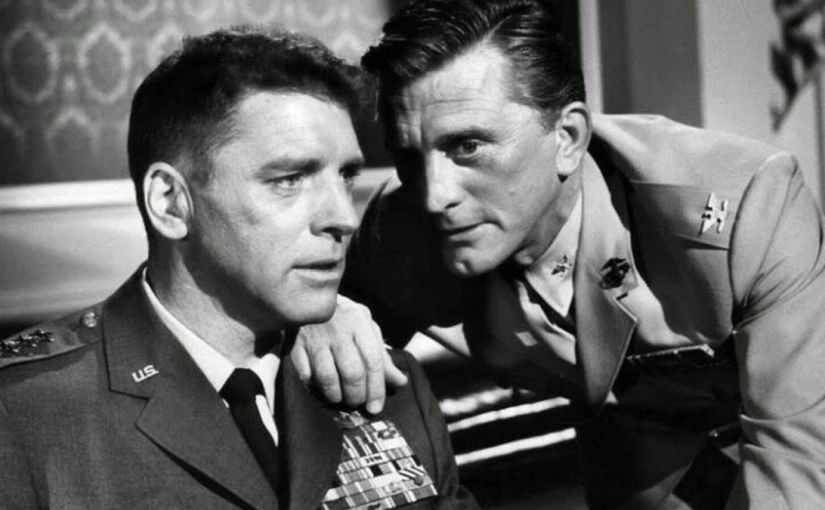
The action starts on a Monday and, predictably, spools out over the next seven days.  We learn that the current American President, Jordan Lyman (Fredric March) has just signed a nuclear disarmament treaty with the Soviets, this being the height of the Cold War in the early 1960s.  His actions have brought his approval ratings to a record-setting low, and demonstrators outside the White House express their desire to see someone else in the Oval Office: General James Scott (Burt Lancaster), a hawkish individual who sees no evidence the Russians will ever honor such a treaty.  General Scott’s aide is Colonel “Jiggs” Casey (Kirk Douglas), a soldier who disagrees with Scott’s views privately, but who knows his duties and performs them admirably.

Over the next couple of days, Casey picks up scraps of conversations from senators and other generals critical of the President.  There is talk of the President attending an “alert”, or an exercise in which armed forces are scrambled in a drill; uncharacteristically, he’s attending alone – no press.  A friend of Casey’s mentions something called “ECOMCON”, a secret Army base in El Paso, and a mysterious “Site Y.”  A Pentagon messenger relays a teletype message from General Scott to other members of the Joint Chiefs about who’s placing bets in the Preakness pool…then gets transferred to Pearl Harbor.  Casey wonders why questions about a horse race would be broadcast over Top Secret channels…

Watching Casey piece the clues together is one of the pleasures of this movie.  It never talks down to the audience, depending on them to follow Casey’s line of reasoning while he draws his own conclusions.  Once he brings his suspicions to the President, and the President elects not to attend the alert, things start happening very fast.  It’s here where the height of suspense occurs, as three men are sent in different directions to accomplish three separate fact-finding missions.  As each man got closer to achieving their goal, there was a feeling in the air, a vibe, a tone that felt like disaster was just around the corner, knocking on the next-door window.  A man drives his car into the desert in search of the secret base in El Paso, and I half-expected the sands to just open up and swallow him whole.

Frankenheimer always was an expert at that kind of suspense generation.  Second only to Hitchcock among his contemporaries, he was a genius at creating tense situations with a minimum of flash, depending on strength of story and screenplay, and his actors, to generate a nervous tension in his viewers.  Those powers are on full display here.

It’s odd…Seven Days in May is a political thriller that doesn’t have any real action scenes or sequences.  A plane crash is referenced but never seen, as opposed to today’s films that would make room in the special FX budget to show audiences the crash.  At least in this film, it’s far more effective when it’s revealed but never seen.  That’s pretty gutsy.  There are no pumped-up chase scenes between a guy with crucial evidence and the shadow forces trying to keep it a secret.  It’s all handled very simply, which makes everything more plausible…and, as a further result, much more suspenseful.

I haven’t mentioned Ava Gardner’s character yet, Eleanor Holbrook, a former lover of General Scott’s.  How she figures in Casey’s plans to uncover evidence of Scott’s treason leads to a devastating scene involving old love letters and mistaken assumptions.  It’s some brilliantly incisive writing, and another example of how the movie achieves plausibility through simplicity.

Any further discussion would necessarily involve spoilers, so I’ll stop here.  Seven Days in May is a prime example of a good story told well, with hardly any bells or whistles.  It reminded me, for some reason, of some of those classic ‘80s thrillers where their only reason for existence was to turn up the tension without getting bogged down in subtext (Body Heat, No Way Out, Blow Out).  There is that one sermonizing speech, as I mentioned before, and I cringed a little when it happened, but it’s a minor quibble.  This is a superior thriller that deserves to be seen.

MAESTRO (2023)

by Miguel E. Rodriguez

DIRECTOR: Bradley Cooper
CAST: Carey Mulligan, Bradley Cooper, Matt Bomer, Sarah Silverman, Maya Hawke
MY RATING: 8/10
ROTTEN TOMATOMETER: 80% Certified Fresh

PLOT: This love story chronicles the lifelong relationship of conductor-composer Leonard Bernstein and his wife, actress Felicia Montealegre Cohn Bernstein.


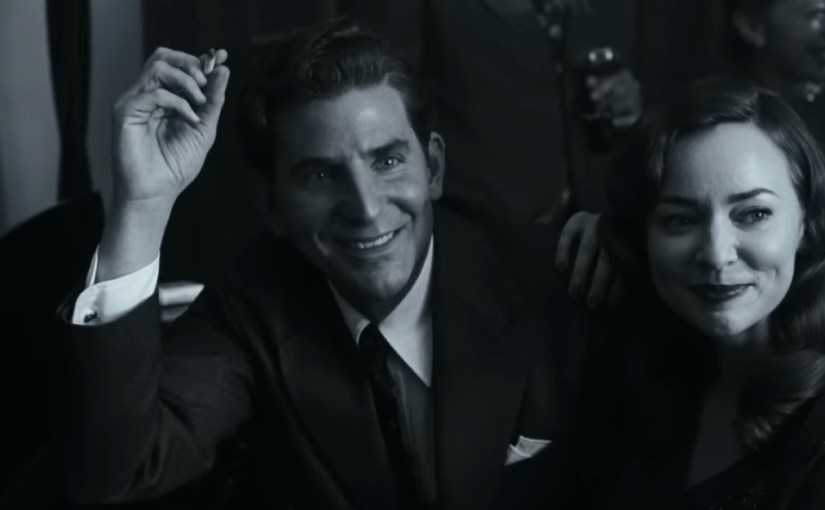
Bradley Cooper’s Maestro is a film of scope and depth and tremendous technical artistry, both in front of and behind the camera.  The performances from the two leads contain some of the best acting I’ve ever seen, especially their argument during a Thanksgiving Day parade.  But I cannot deny that, for reasons I’ll try (and probably fail) to explain, I did not feel emotionally invested in the story until the final two or three reels, when something occurs that, if it were fiction, could easily be dismissed as a shameless attempt at Oscar-baiting.  The fact that this really happened lends these final scenes an emotional weight that was missing from everything that came before.

The story is straightforward, but beautifully told, visually.  After a brief prologue, we meet a young Leonard Bernstein (Bradley Cooper), in bed with his male lover (hope that’s not a spoiler), as he gets an early morning phone call that will change his life forever.  This opening scene sets the visual tone for the first half of the film: standard 1:1.33 framing as opposed to widescreen to give it a classic feel, as well as gorgeous black-and-white cinematography.  Indeed, this opening shot alone looks like it could hang in a museum of modern art and not look out of place.

Everything proceeds breathlessly from there, with some conversations held at speeds that would make the Gilmore Girls dizzy.  After a series of early musical triumphs, he meets the woman that will become the polestar of his personal life: actress Felicia Montealegre Cohn (Carey Mulligan, in a performance that will almost certainly win her an Oscar nomination).  After some verbal sparring/flirtation, it becomes clear to them, and to us, that they are meant for each other, despite his later dalliances with male fans and hangers-on.

I especially liked a scene during this early section where Felicia and Lenny – as his friends and family called him – dine with some older friends (or family? I can’t quite remember), and an older gentleman gives him some advice: “They’ll never give Leonard Bernstein an orchestra in America.  But Leonard S. Burns…”  I loved that scene because I loved how Bernstein’s entire career is a rebuke to that well-meant but wrong-minded sentiment.

This gentleman advises Bernstein to give up writing scores for musicals, but Felicia disagrees.  That sets up a wonderful sequence where Felicia and Lenny watch a rehearsal of the stage musical On the Town, with sailors leaping balletically, and then in a fantasy reminiscent of The Red Shoes, Bernstein himself becomes one of the sailors, and the dance becomes a micro-miniature of their relationship and his early successes.  It’s a thrilling little cutaway that had me grinning the whole time.

From there, the movie jumps forward chronologically in leaps and bounds, giving only a cursory glance at the 1960s before settling more or less for the rest of the film in the mid-to-late 1970s, with Bernstein’s face becoming the craggy icon that I personally remember from my own youth, while Felicia Bernstein somehow looks just as beautiful as she did thirty years and four children ago.  I would blame that on movie magic, but I mean, we are talking about Carey Mulligan here, so they get a pass.  And then the last act of the film arrives and we get a glimpse perhaps of why Mulligan receives top billing over the actor-star-director Cooper.  And that’s all I’ll say about that.

As I said, the movie looks amazing.  Obviously the period décor and costuming are all spot on, but the cinematography and direction – what theatre or film studies majors would call mise-en-scène – are just incredible to behold.  Another shot that stands out in my mind is a scene where Bernstein is conducting, and we get an angle where we are looking into the wings, but his undulating shadow looms large, and standing in that shadow, but still illuminated, is Felicia.  Verbal descriptions won’t do them justice, just see for yourself.

But as I mentioned, I just wasn’t invested in the story from an emotional standpoint.  I felt like I was watching an extremely inventive and ingenious exercise in moviemaking.  I suppose I could compare it to the recent sci-fi film The Creator, if that doesn’t get me accused of hyperbole.  Both films show supreme confidence in staging, cinematography, and direction.  But like The Creator, Maestro feels like something is missing where its heart should be for the first 75% of its running time.  Things happen, arguments take place, children are born, Lenny gets a little sloppy with his paramours, but I never felt like any of it really meant anything to me as the viewer.

I tried asking myself, “What statement is the film making?”  And I couldn’t answer that question, aside from fulfilling its purpose in presenting the facts of a story in almost documentary-like fashion.  But the performances and cinematography are so stunning that I must acknowledge that fact with a higher rating than I would normally give a film that doesn’t really grab me emotionally.  (EXCEPT for the last 25%, I mean…I don’t want to give anything away, but the last reels are heart-tugging.)

So, do you want to see this movie?  Well, certainly not if you are an absolute acolyte of Leonard Bernstein.  You’ll see some pretty cool stuff musically, but Maestro does not paint an altogether flattering picture when it comes to his personal life.  But if you want to see one of the best-acted, best-directed, best-LOOKING films of the year…Maestro is your ticket.

LEAVE THE WORLD BEHIND

By Marc S. Sanders

Anxiety and the unknown are the themes of Sam Esmail’s apocalyptic Leave the World Behind.  Actually, I can’t even be sure it’s apocalyptic or not until the end arrives.  Even then I wasn’t so sure.  

A family (Julia Roberts, Ethan Hawke as the parents, Farrah Mackenzie, Charlie Evans as the kids) make an impromptu getaway from New York City and rent a luxurious upstate air B & B for the next five days.  Upon arrival they are quickly relaxed amid all the amenities and beautiful outdoor pool.  A visit to the beach is refreshing until an oil tanker arrives from the deep ocean waters and drifts upon the shore with no warning.  Strange, but okay.  No need for that to ruin the vacation.

Then other unexpected occurrences happen.  A charming gentleman dressed handsomely in a tuxedo and his formally dressed daughter appear on the doorstep of the home in the middle of the night.  They are played very well by Mahershala Ali and Myha’la.  The man claims that he’s the owner of the house and while attending a concert in the city, they needed to make a quick exit and the best place to hold up was at this house.  Conveniently, he does not have any ID to prove his identity along with no specific personal items in this home he claims to own, not even the title ownership papers.  No photos of family tucked away anywhere.  He does have a key to the liquor cabinet, however.

Quickly, the scene is set where the internet goes down.  Federal blue screen warnings appear on every television channel.  Cell phones don’t work.  Deer, lots and lots of deer, appear in the backyard and then disappear.  Pink flamingos wade in the pool.  Elon Musk’s white Tesla cars have a stand out scene.  Roberts then recalls seeing a grizzled Kevin Bacon collecting an abundance of supplies when she made an earlier shopping trip in the local town.  

The paranoia starts to set in beginning with Julia Roberts’ character Amanda.  Amanda declares early on that she fucking hates people.  Hawke’s husband character, Clay, is not ready to hit any panic button and is happy to accommodate the strangers on the doorstep and just wait for the internet to be restored with a logical explanation.  Ali’s character, known as G.H., lends a welcome smile but it’s clear he’s not sharing all that he’s thinking or maybe what he knows.  

Sam Esmail’s film wants to provide a demonstration of how people respond when they don’t know all that’s going on, particularly when modern technology fails us.  A more relatable inconvenience is suggested as Mackenzie’s character Rose is frustrated that her streaming channel shut down just as she was starting to watch the final episode of the sitcom, Friends.  I felt her anguish immediately as my daughter consumes the trials and tribulations of Ross and Rachel on a repetitive cycle.  Ironically, streaming goes down and now the girl can’t watch Friends.  Netflix is the distributor of this film.  Yet, I think they just gave a ringing endorsement for a dying medium.  If only this girl collected the DVDs.  

My problem with Leave the World Behind is the slow pace of it all.  This is one of those movies where its triumphs hinge upon the final five minutes or so.  Either you applaud what sums up the last two and a half hours you invested, or you roll your eyes at where the picture drops you off with the urge to throw your popcorn at the screen.  

Watching Leave the World Behind brought back experiences of shows like Lost or The Walking Dead.  The set ups are brilliantly intriguing from one development to another.  The follow through on each new happening amounts to nothing or at least not anything where I can suspend my disbelief.  Questions are answered with questions.  It’s like calling an insurance company for information following a car accident.  You just want to slam the phone down.

When Ali’s character chooses to check on a neighbor, he sees a watch embedded in the sand nearby.  He picks it up only to get a fright that makes us jump.  The viewer sees nothing else and we are led to believe that Ali sees nothing else, until Esmail goes to a wide overhead shot showing the massive wreckage of a commercial airplane crash, complete with black smoke and flames and endless amounts of luggage and debris.  It’s hard for me to buy a scene like this.  G.H. doesn’t smell any burning fire nearby?  He doesn’t hear anything? He doesn’t see any other debris left mere inches away from the wristwatch only until Esmail’s direction goes from closeup to wide?  I cannot accept the character’s tunnel vision.  My eyes would go towards the crashed plane before I’d ever discover a wristwatch.  It’s just eerily quiet.  The director’s manipulation is a set up shock for me, the viewer, to grab my attention.  Yet, it backfires because it’s completely implausible.  There are many moments like this in the film.

Other than Marhershala Ali (who I still insist should be considered a viable candidate for the next James Bond or a 007 adversary), the rest of the cast is not dynamic enough.  Julia Roberts is working a little too hard.  Ethan Hawke is not working hard enough.  The dialogue is often boring arriving at no conclusions.  Thankfully, most scenes are enhanced by unusual camera angles from Esmail’s artistic freedoms with his lens.  It’s reminiscent of the deliberately weird structure that Stanley Kubrick often did with The Shining.  Nevertheless, it’s exhausting after a while.

Sam Esmail’s work is no doubt shown through long ponderous imagination.  I certainly felt Julia Roberts’ frustration on display, but still, I got the point.  I see no reason to repeat the same lines at higher volume.  I got the point of a lack of trust between the two parties being brought together.  However, I just got tired of the act.  The racial elephant in the room is even suggested.  Though I wish it wasn’t. People quickly forget that George Romero’s Night Of The Living Dead steered clear of any racial factor, and just look at the legacy of that film from the era of the Civil Rights Movement.

The ending that arrives seems inevitable.  Without revealing anything literal, it is doom and gloom.  However, I might have had more appreciation if suddenly the TV and internet got restored and these odd occurrences all just happened to be one big nothing.  At the very least, then I’d understand that this whole freaking planet would just go nuts without their You Tube, Instagram and Netflix.  

You might have had a conversation at one point in the last decade or so that began as “How did we ever manage to survive before the internet?”  The truth is we did just fine.  The adults in Leave the World Behind never stop to remember that though. 

MAY DECEMBER

By Marc S. Sanders

A blaring piece of pounding piano music from Marcelo Zarvos hearkens awake the silent opening few seconds of Todd Haynes’ May December against that of a caterpillar/butterfly terrarium.  I don’t like the music and I’m immediately reaching for the volume control on my remote.  It’s only as the film progresses, however, that I develop a grateful appreciation for the often-disruptive soundtrack.

Julianne Moore and Charles Melton are Gracie and Joe Yoo, the relationship referenced in the film’s title.  Twenty years prior, Gracie, at age 36 who already had children and a husband of her own, had an affair with Joseph, a 13-year-old seventh grader at the time, in the storage area of a Savannah GA pet shop where they worked together.  Gracie went to prison for the crime of statutory rape and delivered their baby while serving her sentence.  Once her term was finished, the two continued their relationship and got married, bearing a set of twins, a boy and girl.

As the twins are approaching graduation, a television actress named Elizabeth (Natalie Portman) has arrived in town to do observational research and interviews to prepare for her portrayal of Gracie in a made for TV account of what occurred.  On the surface, all seems calm with the past put behind everyone.  Townsfolk will say that Gracie and Joe are so appreciated and loved in the community, and they love each other.  However, the script from Samy Burch will reveal otherwise as Elizabeth develops different kinds of connections with Gracie and Joe, respectively, as well as others she speaks with in town, including Gracie’s attorney, her ex-husband, the pet shop owner, and Gracie’s now adult son from her first marriage.  His name is Georgie (Cory Michael Smith) who was close friends with Joe until the affair was revealed, and now let’s everything hang out avoiding any kind of subtlety.  He’s even candid about what he believes occurred in Gracie’s childhood that could have dictated why she committed her act.

Todd Haynes’ picture is a complete character study of a story that many would regard as sordid or seedy trash material to talk about over dinner with friends.  People like Gracie and Joe may seem real to any of us who live in another part of the country.  We will never have any kind of relationship with them.  They are meant for cover stories in People magazine and The Inquirer.  It’s soap opera junk or trashy romance novels brought to reality.  It’s easy to judge the kind of person Gracie in particular is because what she has done is wrong and disturbing.  All these years later and they are still receiving packages on their doorstep that contain feces.  Gracie committed a terrible crime, but what does an act like this say about someone who would go to that length, so many years later? 

The performances in this film are astounding.  Charles Melton especially.  Samy Burch writes a disturbing and well-drawn character with Joe.  He’s thirty-six years old now, in 2015 when this story takes place, and as his children are graduating and are about to make their home an empty nest, he seems so much more immature than them.  A telling scene occurs when his son takes out a joint and practically instructs Joe on how to use it.  Joe coughs uncontrollably.  He gets ill, and it is his son who is calming him down.  Gracie also appears to treat Joe like the child she bedded all those years ago, instructing him to straighten up the house and put away his butterfly garden, or not to get into bed because he reeks of the BBQ he used earlier in the day.  Joe lives in an adult body, but he skipped his progressive years to go straight into marriage and fatherhood, and therefore he has not had an opportunity to grow up.

Julianne Moore plays delusional all too convincingly.  She might have confessed guilt to her crime.  She served her time, but as her attorney and Georgie will imply, none of that means anything if she still believes she did nothing so terrible.  She’s now married to Joe, who is now well past legal age and has had a twenty-year relationship with him, as well as the children they share.  Gracie happily accepts her new role as a baker in the community.  Yet, it doesn’t even occur to her that some acquaintances merely place orders just to keep her occupied.  Either Gracie chooses to wear blinders or she’s truly unaware of how she’s considered; still remaining a pariah within her social circle.  It’s devastating when someone cancels a cake order, tells her to keep the money that was paid for the work, but is also told that the cake no longer needs to be baked.  Especially now, as her children from her second marriage are leaving the home for college, she is realizing that she has no worth or value to anyone anymore.  No one even wants to sample her cake any longer.  Part of me wants to say it serves her right, but with Julianne Moore’s performance, it’s also terribly heartbreaking.  There are acts we commit in our lives that we will never, ever recover from.

Natalie Portman adds another accomplished performance to an outstanding resume.  Todd Haynes assists with demonstrating how manipulative and subtle Elizabeth, the starlet actress, is supposed to be.  When she first arrives at the couple’s home for a summer barbecue, Haynes captures Elizabeth with no jewelry on and wearing a hat and sunglasses that she never takes off.  Gracie, Joe and the others come to greet her and offer her a hot dog, but Elizabeth doesn’t reveal herself.  She keeps herself hidden.  She’s begun a camouflage as she initiates her observations.  As the story moves on, we get to see how perhaps a Julliard trained method actor prepares.  She begins to apply her makeup just like Gracie would.  Elizabeth dresses like Gracie.  She wears her hair like Gracie.  Elizabeth duplicates Gracie’s hand gestures captured in news articles.  Most significantly, she develops a bond with Joe, just like Gracie did.  A crumpled-up letter from Gracie that Joe has held on to since they began their affair twenty years ago, is reintroduced later in the film that Elizabeth pounces on.  Todd Haynes captures an unbroken take of Portman reciting the letter in a mirror and it’s an eye-opening moment for the character.  Suddenly, I don’t see Elizabeth anymore.  I see Gracie, and Natalie Portman is playing the predatory sex deviant.

By 2015, this story is a been there/done that.  The general public has stopped caring.  Only a few still carry an anger with those packages that are left on the doorstep.  Otherwise, there’s nothing left to share or care about.  Yet, May December does a fine job of showing the residual detritus of what’s come from such an illicit affair.  Gracie’s husband before the affair will say he’s over the betrayal and humiliation, but clearly he’s not.  Gracie now has two families.  The first family from a standard marriage with adult and teen children she greets as if they are neighborhood kids.  She’s on the outside of what she used to have as a mother. Then there is the second family consisting of the college age daughter she delivered while in prison and the twins that came thereafter.  An awkward moment occurs in a restaurant when the two families run into one another.  No one is well recovered from Gracie’s transgressions, even if she served her time.

Reflecting back on the music, I wondered why it made such a presence in this intimate, quiet drama.  It literally pounds at you every time it is reintroduced.  I believe it first serves as an abundance of the cheesy melodrama that naturally spawns from an unwell story like this.  Elizabeth is set to appear in a television movie adaptation of this ripped from the headlines account, much like a Lifetime movie of the week which shamelessly thrives on this kind of gossip trash.  The music seems to tell me to “LOOK AT WHAT SHE DID!!!!!!”  Later though, Marcelo Zarvos’ composition seems to remind me that this is not just “another story” as Elizabeth freely dismisses it when talking to Joe during a personal crisis of insecurity.  Joe immediately snaps back at her that this is not just some story.  “This is (his) life!!!!!” 

Before Todd Haynes’ film begins, terrible acts have occurred.  During the course of the movie, we see that terrible results remain.  The narrative of May December is kept interesting because we don’t learn everything at once.  There is exposition to uncover as soon as the film begins all the way to the very end where Gracie undoes all of Elizabeth’s prep work with a curveball truth.  Then, we witness Elizabeth do one take after another on a soundstage with a pet shop prop snake twisting around her arms as the seduction of a young, teenage boy is reenacted.  I don’t think Elizabeth got a convincing grasp on what makes Gracie and Joe tick, and now she questions what she invested in and what she sacrificed of herself in order to learn about the character she committed to portraying.

It’s disturbing what Gracie did.  Perhaps it’s at least as ominous that it is now being duplicated for the sake of entertainment in front of a worldwide audience.

NAPOLEON

By Marc S. Sanders

I never knew much about Napoleon Bonapart.  He was short.  He’s French of course. There’s that famous painting with his right hand tucked into his tunic. Or was it his left?  The big hat. I’d heard he was kind of a brat.  Ridley Scott’s latest period piece, Napoleon, confirms most of what I recall.  The painting was nowhere in sight though.

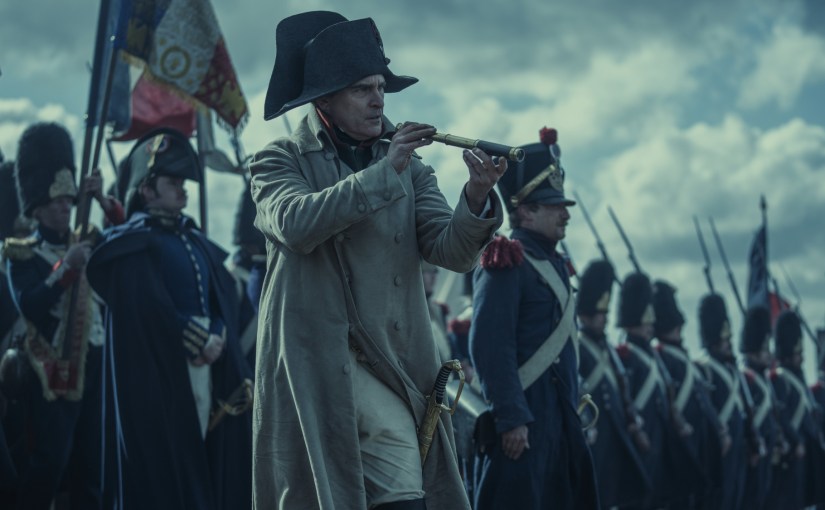
Joaquin Phoenix portrays General Bonapart, and he surely had a great challenge ahead of him. I cannot say that I was bored with any part of the film, but I did find Napoleon to be quite bland during the first act of the film.  Phoenix, doing his best with a script by David Scarpa, seems to be a stand in with nothing of much consequence to say.  It is only when the Captain all but invites a promotion upon himself to the rank of General, following the guillotine beheading of Marie Antoinette, that his arrogance begins to show.  Thereafter, he takes it upon himself to force the hands of the governing council to resign from their positions, a very entertaining sequence for sure.  Then Napoleon sees no other purpose but ongoing conquest. 

With each passing scene in Napoleon, the ego of the title character grows and grows and that is the underlying theme of Scott’s picture.  We journey to the pyramids of Egypt to witness Napoleon lead his armies towards further conquest.  Alternatively, we also trek through the raw winters of Russia and on to a blazing Moscow.  Who set the Russian city alight is a question that history may contradict of the General’s claim.

Napoleon is sure to get a slew of Oscar nominations.  However, it will likely not be in any of the major categories.  The numerous battles are outstanding in whatever setting Ridley Scott offers.  Whether it is in the desert or murky winter grounds, I could not tell if the armies were physical extras or CGI.  It all looked seamless in its construction.  David Lean would be proud.  Sound editing was also perfectly in sync.  The set designs of the many scenes throughout are exemplary from bedrooms to halls and the wallpapers, furnishings and floors and even the outdoor landscaping of the French estates.  Even Napoleon’s tent on one battlefield after another are absorbing.  The costuming always makes a statement.  Every stitch and distressed shade of blues, reds and whites tell a story.  Yes, it’s all very impressive.  However, I did not go to Napoleon to grade a college project assignment in fine arts.  Overall, it has to be the movie itself that grabs me.

Unfortunately, Ridley Scott’s film suffers from shortcomings that cannot be forgiven.  I have to lend credit to my wife who pointed out flaws that did not come to my attention until I heard her input, and thus could not deny.  There are topics brought up in the film that are either not followed through clearly or are left with questions. 

One moment in particular occurs when Napoleon opts to marry the daughter of a leader. Do not ask me to remember which leader. Characters leave the picture just as quickly as they enter.  One daughter is of proper age.  The other daughter we are told is only age fifteen and Napoleon turns down the idea of the latter, but in the scene afterwards it appears that he actually did choose to marry the fifteen-year-old.  The girl certainly looked like a teenager.  So, how did that come to be? 

A storyline I really took an interest in was Napoleon’s marriage to Josephine (Vanessa Kirby).  The widow of a dead soldier, with three children, he marries her for love.  Then he leaves to conquer some more and more around the world.  Yet, the general returns when he realizes she is happily having affairs in his absence.  The bruised egotistic response of Napoleon is very well played out. Joaquin Phoenix has his best moments in the storyline he shares with Vanessa Kirby.  However, while I thought I understood, my wife pointed out that the film does not clearly explain how the relationship continues.  There’s animosity at first but then there is a mutual love between the couple and how exactly did that flourish and change?  When was the mutual affection eventually sparked?  What works best is how the two are unable to bear a child together.  Napoleon is nothing but forceful in his moments of sex with Josephine.  He will damn well force a pregnancy even if it means he has to thrust harder and harder inside of her.  Yet, no results come of his efforts. An heir must carry on the Bonapart legacy.  Since one does not appear, it taxes heavily upon the powerful leader.

Later in the film, following the couple’s dissolution of marriage, a child is born but who exactly carried the offspring?  Details like these seem to be glossed over.

Few directors are as skillful at showing grand scenes of battlegrounds with sharp, clear edits of how the fighting progresses.  Ridley Scott demonstrates that over and over again with one scene after another.  He accomplishes fare like this so well in other films like Gladiator and his interpretation of Robin Hood.  The dark hazy cinematography works beautifully on a big screen.  However, I’m not sure if it will be as effective on a sixty-inch flat screen where there’s a risk of intrusive glares in your living room.  These magnificent scenes need to be watched on a big screen.

Unfortunately, the attention to detail is not lent to the story as effectively. Napoleon’s mark in history did not just happen in a period of a few years.  For a brief window of time, France was a superpower ahead of the likes of Egypt, Britain, Austria, Prussia and even Russia.  Two hours and forty minutes may seem like a long film and yet Napoleon likely needed at least an additional hour to serve a complete historical recount.

If you want to see Napoleon, now is your chance while it plays in theaters.  Again, I do not believe it will have the same effect at home.  Regrettably, the film does not offer enough on the plate.  No one in the cast is doing anything of Oscar caliber accomplishments.  Ridley Scott comes up short of end of the year award considerations for not inviting tighter storytelling, and that also goes for David Scarpa’s script. 

The visual marvels of this period piece are what is to behold.  Watching Napoleon, I certainly felt like I was there amid the glorious costumes, set designs and cinematic photography.  Nevertheless, while I may have been in the room, the hosts of the picture were not sharing their entire conversation with me around the dinner table.  Alas, at times, I was left to stand in the corner, feeling like an unwelcome guest.

THE LEGEND OF BILLIE JEAN

By Marc S. Sanders

Growing up as a teenager, in the dog days of summer, and living in a new town with few friends at the time allowed a lot of binge watching of movies on Showtime.  Top Gun must have been shown twelve times a day.  So was Back To School.  The other movie on constant repeat was The Legend Of Billie Jean – a movie of few merits and yet the heroic sweep of the fugitive rebel on the run with her trailer park gal pals and her little brother was addicting.  It’s a brisk ninety-minute film, but each time I’d watch the movie it felt like the title character raised even more awareness and support for her cause than the last time I watched, which was likely four hours earlier in the day, during breakfast.

Helen Slater is Billie Jean.  Her younger brother is Binx played by Christian Slater, in his first film.  NO RELATION!!!! 

Under a hot sun-drenched setting in Corpus Christie, Texas, the siblings are bullied by Hubie (Barry Tubb).  Binx gets beat up.  Even worse, his shiny maroon motor scooter is stolen and trashed.  When Billie Jean approaches the bully’s father, Mr. Pyatt (Richard Bradford), to collect the six hundred dollars for the cost of the bike, she narrowly escapes a rape after Binx shoots the scumbag in the shoulder.  Now the kids are on the run with Ophelia and Putter (Martha Gehman and Yeardley Smith – eventual voice of Lisa Simpson).

A firestorm starts to spread with a loyal underground following for Billie Jean and her band, and they receive assistance from the District Attorney’s (Dean Stockwell) son Lloyd, played by Keith Gordon.  The cop on their trail is played by Peter Coyote.  Wait!  I’m not being fair.  This cop is never on their trail.  Somehow every kid in the state of Texas can find and help Billie Jean, except the cops.  Even with the DA’s son in tow, these fugitives cannot be located by one single, solitary police cruiser.  Yet, the kids on the playgrounds make no effort to find Billie Jean, Binx and the others.  Yes.  You shake your head at the whole thing.  When you are age fourteen though, you get caught up with Helen Slater, one of your first celebrity crushes, and the accompanying soundtrack of Pat Benatar’s rebellious anthem “Invincible.”

The Legend Of Billie Jean is a stupid movie.  I don’t think anyone can argue with me.  I mean think about this for a second.  Peter Coyote’s cop finds their getaway car with Putter and Ophelia.  Still, he doesn’t choose to search the vehicle for a significant clue to the hero’s whereabouts until the next day.  Isn’t this sloppy investigative fieldwork?  As well, during the climax a brushfire is started by Billie Jean and no one runs or calls for a firetruck.  The DA, the cops, the kids – they all just stand there watching in deep thought like they were directed.  I can only imagine the director with his megaphone yelling out the command to stare straight ahead at the growing flames.  Mind you, this isn’t a control burn firepit.  This is a BRUSH FIRE with hay and wood and clothes as accelerants.

Nevertheless, the movie is an only slightly embarrassing guilty pleasure.  It’s not as hokey as it looks on the surface.  The acting isn’t terrible because the young cast is embracing the absurdity of the whole situation.  It stands, albeit wobbly, on the same plotline of an eventual and exceedingly better film called Thelma & Louise.  More importantly, Helen Slater makes for a good lead role and heroine.  When she tells Mr. Pyatt “No,” and cries her anthem of “Fair is fair” you root for her.  Slater’s performance is far grander than the script she is working with. 

The Legend Of Billie Jean performs like an afterschool special without dubbing out the cursing. The cause of these kids’ plight enhances as the film progresses.  What starts out as a simple bullying story and a demand for monetary damages of only six hundred dollars turns into a fight for respect and honor from the adult males within a small, southern local community.  However, there is little to feel inspired by, and I’m afraid Billie Jean’s supposed legend unfolds into only a slightly miniscule smidgen of Legendary

MISHIMA: A LIFE IN FOUR CHAPTERS (1985)

by Miguel E. Rodriguez

DIRECTOR: Paul Schrader
CAST: Ken Ogata, and a host of Japanese actors unknown to me
MY RATING: 8/10
ROTTEN TOMATOMETER: 79% Fresh

PLOT: Director Paul Schrader and executive producers George Lucas and Francis Ford Coppola present a fictionalized account of the life and shocking death of celebrated Japanese writer Yukio Mishima.


It’s hard for me to know where to start with this review.  I had heard of Mishima: A Life in Four Chapters by reputation for years, mostly because of Roger Ebert’s rave review and also the film’s inclusion in the Criterion Collection AND in the invaluable compendium 1,001 Movies You Must See Before You Die (ed. Steven Jay Schneider).  I finally got a chance to watch Mishima recently, and in my opinion, if it does not quite succeed as Entertainment, I believe it is worthy of consideration as a genuinely artistic achievement.  Mishima is an elegant rebuttal to anyone who doesn’t believe cinema can be Art.

The lives of artists are notoriously difficult to translate to film, especially when it comes to the life of a writer.  Who wants to watch two hours of an author typing, in a fit of inspiration?  Paul Schrader came up with a rather brilliant method of getting over that hurdle by breaking up Mishima’s life story into four distinct acts, with each act featuring three separate storylines that coil around each other: the last day of Mishima’s life, flashbacks to Mishima’s earlier years, and scenes from his semi-autobiographical books that parallel events from those flashbacks.

If that sounds confusing, it’s not.  Each story thread has its own easily distinguishable color scheme.  If it’s black-and-white, it’s a flashback to Mishima’s real life.  If there is muted color and a mostly hand-held camera, we’re watching the events of his last day on earth.  If the colors are brilliant and saturated, we’re watching a scene from one his books.

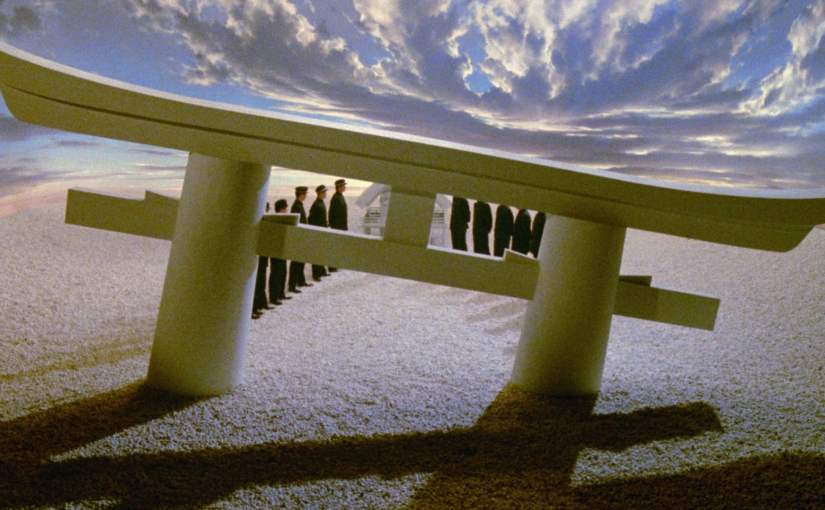
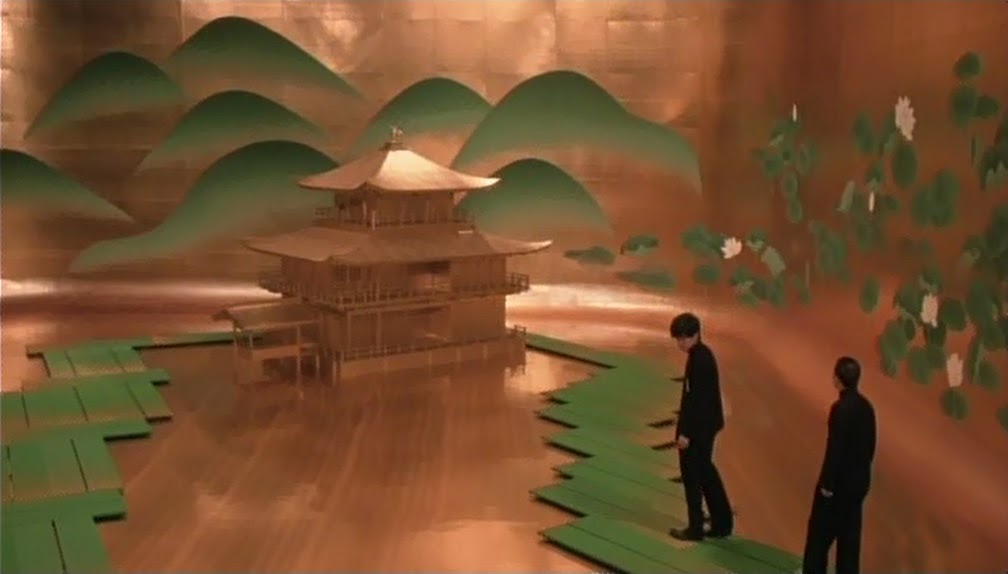
What sets Mishima apart are those sequences featuring scenes from his books…and right about here is where my powers of description may fail me, but I’ll try anyway.)  It would be easy to just call them dreamlike, but that’s both true and reductive.  To me, they look like a cross-between highly stylized opera and a David Lynch film.  In the first segment, based on Mishima’s Temple of the Golden Pavilion, the set was built with lavish golden walls and accented with green lily pads, while the temple itself is a detailed miniature that at one point splits down the middle.  The second segment, based on Kyoko’s House, is awash in garish pink lights and walls (production designer and Oscar winner Eiko Ishioka describes the scene as being highly informed by American “bad taste”…trust me, she means it in a good way).  The third segment is only slightly more realistic than the first two, with breakaway walls, representational jail cells, and a ritual act that is echoed in Mishima’s real life.

Each segment is not just visually cool to look at; they are also extremely theatrical.  In one scene, we watch a wall get pulled away from a character lying on the ground, and we can clearly see the tracks on which the wall is rolling.  In another scene, a conversation at a roadside noodle stand is staged – literally on a stage – with the restaurant on a turntable turning clockwise, while groups of actors walk in a circle around the restaurant counter-clockwise.  The effect is both simple and convincing, despite its obvious theatricality. (In fact, the visual aspects of the film are solely responsible for taking this movie up from a “7” to an “8.”)

Those scenes by themselves are reason enough for me to recommend the film to viewers.  I am an unabashed fan of superhero films (the GOOD ones), but it seems as if we’re living in an age where, instead of finding different ways to tell the same story (which is bad enough), filmmakers are telling different stories, but doing it all the same way.  For example, I know, intellectually, that Black Widow and Shang-Chi were made by different directors, but is there anything in either movie that bears the imprint of their respective directors?  Nothing springs immediately to mind.  However, here is Mishima, a film that is nearly 40 years old, which may not feature countless CGI battles, but which gave me more visual surprises than any two Iron Man movies combined.  I don’t mean to pick on the MCU (which I do love, full disclosure), but you see what I’m saying.  It’s refreshing to come across a truly original work of art.

The film also asks some serious philosophical questions.  Throughout his life, Mishima believed in and advocated the bushido, which literally translates as “the way of the warrior.”  He was unashamedly right-wing, advocating the restoration of the Japanese Emperor to power, as opposed to Japan’s governmental policies of democracy and globalism.  In the film, he several times mentions “Harmony of Pen and Sword,” a philosophy in which one’s writings are nothing unless they are backed up by action.  Mishima espouses this belief so fiercely that he ruthlessly follows it to its logical conclusion in the closing passages of the film.

What is director Paul Schrader trying to tell us here?  Should we consider Mishima as a hero?  He is certainly one of Japan’s most famous and celebrated writers, but he remains controversial for his right-wing views.  (If you’re wondering how right-wing he was, in 1968 he wrote a play called “My Friend Hitler,” an event omitted from the film.)  Does Schrader consider him heroic for following through on his beliefs, even when it became, shall we say, EXTREMELY inconvenient for him to do so?

That could be one interpretation, but I don’t see it that way.  I came away from Mishima with the knowledge that, once, there lived a man who lived and died by a code.  I did not agree with his beliefs, but they were defiantly his, and no one could take that away from him.  I was reminded of one of my favorite lines from A Man for All Seasons: “But what matters to me is not whether it’s true or not, but that I believe it to be true, or rather not that I believe it, but that I believe it.”

At the end of the day, while I think Mishima’s moral stance was questionable, and while Mishima itself is less entertainment and more museum piece, the experience of watching Mishima was nevertheless time well spent, especially when considering the astonishing visuals.

(Oh, crap, I’ve gotten to the end of the review and just realized I never mentioned the phenomenal score by Philip Glass, parts of which are quoted at the finale of The Truman Show…if you’re a fan of the movie, you’ll know which parts I’m talking about.)

KILLERS OF THE FLOWER MOON

By Marc S. Sanders

Killers Of The Flower Moon reflects on a period in Oklahoma history that I imagine has hardly been told.  In the early 1920s, the Native American residents, consisting of four tribes, came into a blessing of wealth when oil was discovered on the land they occupied in Osage County.  Almost immediately, white folk from all over the country migrated to this area and built up an infrastructure of capitalism that included private practices, pool halls, movie houses, law enforcement, pharmaceuticals, and even cab drivers.  However, they didn’t want to just stop at developing the area.  They wanted to seize it and they proceeded to do so by wiping out the Native American residents.  Family lineages were all but erased as the whites married into the race and gradually found ways to kill and bring about surprising deaths that would ultimately allow them to legally inherit what was rightfully owned by the Indian people.

Director Martin Scorsese has introduced a new kind of historical education with a film that I believe will be my favorite picture of the year.  I was mesmerized by every photographic shot, closeup, edit, and musical accompaniment contained in this movie.  Everything works so well. 

Robert De Niro reunites with the director for the tenth time; an amazing legacy of a partnership spanning fifty years.  He portrays William “King” Hale.  King is a kindly old fellow on the surface, but his intelligence shows as he strategizes how to take over more and more of this area.  He oversees a control of the white gentlemen folk, leading them into quick marriages with the young women of the tribes.  From there, they have children and over time will gradually purify the bloodline.  It’s a ruthless and scheming tactic and it successfully works thanks to how taciturn Mr. Hale is.  De Niro might win his third Oscar for this role.  This character joins that exclusive fraternity of the best villains in cinematic history, ranking up there with The Wicked Witch, Harry Lime, Norman Bates, Darth Vader, Joker, Daniel Plainview and Hannibal Lecter.

Early on in the epic film, The King’s nephew, Ernest Burkart (Leonardo DiCaprio) has returned from the war to work under his uncle.  Ernest starts as a cab driver and meets Molly (Lily Gladstone), the Native American woman he will take as a bride and establish residence together.  DiCaprio does some of his best work following a very boastful career of roles.  He’s also sure to get at least an Oscar nomination.  This is already his sixth film with Scorsese.  Ernest is not very bright, but with The King’s guidance and instruction he’ll also come to own much of this territory.

Mysterious deaths of unexpected natures occur within the tribes of Osage County, particularly in Molly’s family.  Over the course of the film, one relative after another perishes until what’s left of her bloodline is practically only herself.  The children she bears are a mix of Molly and Ernest.  Molly knows something is amiss.  She is starting not to feel well, and her suspicions speak to her.  Others in the community are also suffering peculiar deaths following doctor’s visits or evenings of drunken binging.  An investigation is warranted before it becomes too late.

Lily Gladstone will become a surprise hit at Oscar time as well.  A breakthrough role where her feared silence and bravery matches well against the deceit emanating from the King and even the poorly hidden conniving of her husband Ernest.

Scorsese builds his film with suspense and shock.  A quiet beat of instrumental music haunts certain scenes.  Who will be the next target of the King’s bidding?  The King hides behind his empathy for loss by attending funeral services and allowing the survivors to cry into his shoulder.  On another side, he instructs Ernest to carry out an assignment to some flunky to make a murder appear like a suicide.  A shot in the back of the head will not send a convincing cause and effect though, and the King and Ernest must make up for that. 

The King is everyone’s friend in Osage County, but he’s also a puppet master Grim Reaper.  With the circular rim glasses that DeNiro wears along with his peaceful beige suits, it’s a wonder that this man is an executioner using the hands of others to carry out his bidding.  He dances in the middle of town during festive gatherings.  It even amuses the Sheriff’s office when he voluntarily offers himself up following a warrant for his arrest.  At the risk of getting politically sided, DeNiro was recently interviewed during a press junket for the film.  His animosity towards President Trump is no secret.  I was in the audience at Radio City Music Hall when he led a unified roar of “Fuck Trump” during the Tony Awards.  Still, the skilled actor said he used the enmity he harbors to his advantage for this role.  In the latter half of the film, William “The King” Hale preaches in a similar approach to Trump.  There are figures in our history who just know what buttons to push and absorb massive amounts of influence while earning respect through fear. 

Killers Of The Flower Moon covers a wide berth of its period in history.  Scorsese takes an inspired approach by cutting away on occasion with black and white footage and photographs of the Native Americans coming along with their good fortune and then on to how the white “immigrants” of this area enter this land and assume a daily life within the community, whether they were welcomed or not.  All is depicted from how Osage County quickly changed following the discovery of “black gold,” to how Ernest becomes wise to the advantages of power. 

Leonardo DiCaprio has a great undertaking.  Ernest is not very bright.  He can hardly read.  He’s not subtle with his approach like his uncle.  Yet, the actor maintains an expression of no choice to abide by but what he’s been told is right.  DiCaprio does this incredible expression with long frowned lips and a fat chin that stands out from beneath his nose.  It almost seems like a barrier to finding the humanity he may have once had when he was an infantryman fighting with the allies in Europe.  It is just a haunting performance.

The third act picks up with J Edgar Hoover’s newly established Bureau of Investigation entering the story to investigate the odd happenings in Osage.  Jesse Plemons again plays that guy that you have seen somewhere before.  Often, he occupies similar kinds of roles, and still, I like what he contributes to this picture as Investigator Tom White.  Screenwriter Eric Roth lends the character simple, plainly worded questions for Plemmons to work with and it seems to come off as nothing intimidating.  Rather, the presence of Tom White on Ernest’s doorstep, with Molly mysteriously sick in the bedroom, is enough to rattle Ernest, the King, and the whole county.

It’s no secret that Killers Of The Flower Moon has a long running time at nearly three and a half hours.  However, it is necessary.  This widespread crime is not done in just minutes.  How it is gradually orchestrated needs to be seen, followed by those that uncovered how sinister it became.  Then attention needs to be given to how biased the trials of Ernest and The King had become.  Men who conspired with the King and Ernest serve on the jury.  A lot of unfair wrongs occurred during this time spanning what I believe was at least a decade and a half. 

Roth and Scorsese bring the conclusion of the film with a welcome invention.  In a time where Netflix, Dateline, 20/20 and ABC News thrive off true life crime documentaries that become so addicting, the filmmakers resort to a radio show to sum up what happened to the main players of this devastating episode in twentieth century American history with the director making a cameo to offer his final words for the main victim of the piece, Molly Burkhart.  This bookend to the film has stayed with me since I finished watching the movie, and I applaud Scorsese and Roth for their execution.  Newsmakers of today go for the most sensationalized crimes that have occurred; the ones that leave the most shock and awe and even audaciousness.  What happened in Osage County is unforgivable.  Likely a genocide of bloodlines that were unjustly ceased so that what was rightfully theirs to own could be seized.

Killers Of The Flower Moon is a drama that had to be told because the motivations that led to the series of crimes happens not only to Native Americans, but to practically any other demographic across the globe.  This is a captivating story and one of the best films Martin Scorsese has ever made.

Again, this will likely be my favorite film of the year and Oscars are deserved for DeNiro, DiCaprio, Gladstone, Roth, Scorsese and for Best Picture of the Year. 

NOTE: As I watched this movie, I could not help but think of the film August: Osage County, the motion picture adapted from Tracy Letts’ Pulitzer Prize winning play.  There is one Native American character in the film who is hired to serve the white family living on a wide expanse of land in present day 2013 (2007 for the play).  The first time I watched the movie, I could not recognize the purpose of the character.  On a second viewing, following a conversation among the dysfunctional family of characters about Native Americans, it was much clearer.  Having now watched Scorsese’s film, this picture serves as a great companion piece to watch afterwards.  I’ll be directing a stage production of this soon and much of what I learned from both films will be incorporated into my interpretation.  Even the architectural designs of the homes in both films, interior and exterior, are uniquely similar. 

Look for my review of August: Osage County (featuring Julia Roberts and Meryl Streep) on this site as well.

CLOSER

By Marc S. Sanders

Mike Nichols is a director for those actors who really grind their teeth into the craft of performing with crackling dialogue.  Often, he goes for what makes a person drive awkwardness into a moment.   Equally he focuses on those folk who sustain the discomfort so apparent in a room.  Prime examples are his classic films Who’s Afraid Of Virginia Woolf? and The Graduate.  There’s even some of instances in his slap happy comedy, The Birdcage. Towards the end of his career, Nichols adapted Patrick Marber’s biting play, Closer, into a film.  

Closer carries a four-pronged approach in the shapes of Jude Law, Natalie Portman, Julia Roberts and Clive Owen.  Law plays Dan who catches the eye of Alice (Portman), an alluring stripper who gets hit by a car on the streets of London.  Beginning with playful flirtation in the hospital waiting room, they develop a relationship mostly based on sex for the following year.  Later, Dan gets distracted by a beautiful, much more mature photographer named Anna (Roberts).  She rejects Dan’s horny advances and by some manipulation with online anonymous sex talk, he sways a sex starved doctor named Larry into meeting Anna at an aquarium.  Then, to Dan’s surprise, Anna and Larry get married. There’d be nothing more to discuss if these four lived happily going forward.  What follows, however, is a manipulative chess match of lies and deceit among the four.  

One after the other disarms somebody who they valued and thought they could live with at any given time.  Alice leaves Dan after he reveals an affair with Anna.  Larry has a regretful one-night stand with a woman in New York. Anna doesn’t mind because she’s been having an illicit affair with Dan.  Larry is miserable but begs Alice the stripper to justify his torment, assuming she’s also anguishing over being betrayed by Dan. Not likely the case as she erotically teases him in a private stripping room. This scene with Natalie Portman in control establishes as the best actor in the film.

The four players on the game board all start in their respective corners, only to go around the perimeter or advance diagonally across and pounce on what they don’t have. At any given moment someone is drawing the top card or rolling the dice, and it’ll have a direct effect on one of the other three or all of them at once.

Patrick Marber’s script gets more layered as the partners change hands, but it’s his dialogue that keeps you engaged.  Alice believes “Lying is the most fun a girl can have without taking her clothes off – but it is better if you do.”  An angry Larry confronts Anna by asking about Dan.  “What does it taste like?”  Anna’s reply: “Like you, only sweeter.” Ooooo!!!! Lines like these sting, and I’ve never met someone in real life who can think that quick on their feet with such savviness.

Just as in other scripts like Steel Magnolias and Glengarry Glen Ross, I think the characters in Closer (initially a stage play) speak a little too instinctively.  They’re just so quick with their hurtful insults, comebacks and seething expressions.  Therefore, should I like plays that perform on a higher, smarter plane; plays that work quicker than most minds can register with what to say next?  Well, I appease myself with a constant reminder that a piece like Closer is more performance art than truly authentic. These four characters are so quick with a verbal jab, while engaging in some foolhardy actions that promises to make their circumstance appear worse. How can they be so smart with a comeback while acting so stupid at the same time?

The cast of four are so sharp, alert and precise.  Most of the scenes in Nichols’ film are performed in different combinations of pairs.  Every one of them is expertly rehearsed and Roberts, Law, Owen and Portman are of course the strongest assets in the production.  However, Nichols wisely uses his lens in zoom close ups, practically justifying the quirky title of Patrick Marber’s work.  I never trusted a single character was entirely genuine in Closer.  How should anyone? They’re always stabbing one another in the back. However, when an actor leans in and Nichols meets their expression halfway, I’m being ordered to look that person straight in the eye.  Still, I won’t know what to believe, but that’s the point.  

Dan, Alice, Anna and Larry move the scenes along with question after question because every answer is so dubious.  You’ll likely never get a more skeptical response when a common inquiry such as “Do you love him?” is asked.  It can be frustrating, but thanks to the cat and mouse play of Mike Nichols’ stage direction, on film, I wanted to dig deeper into the bottomless rabbit hole.

You might conclude there is a surprising twist at the end of the film.  I don’t know if it holds much weight to what I learned during the course of the story.  Nevertheless, it reinforces the theme of Closer.  Being bad can be fun, offering an immediate high, and part of being bad is lying and betraying, and maybe the ending reveals who actually won this board game with four players at the table.

Look Closer and tell me what you think.