GOLD

By Marc S. Sanders

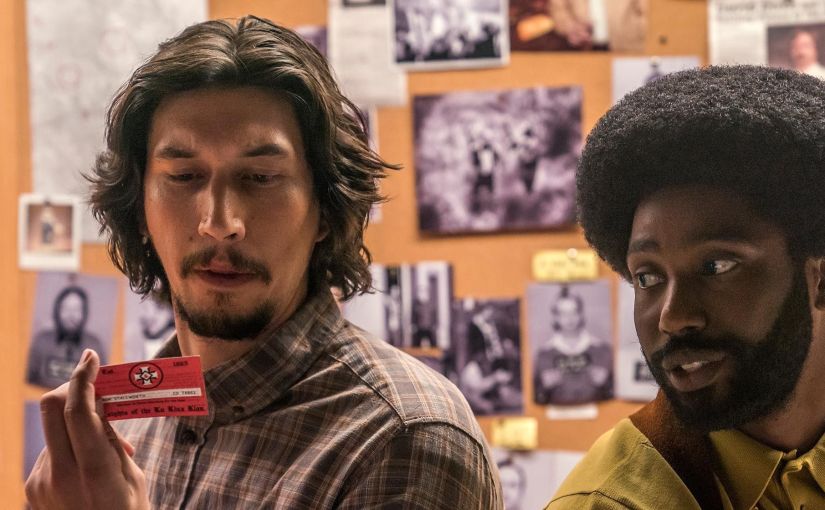
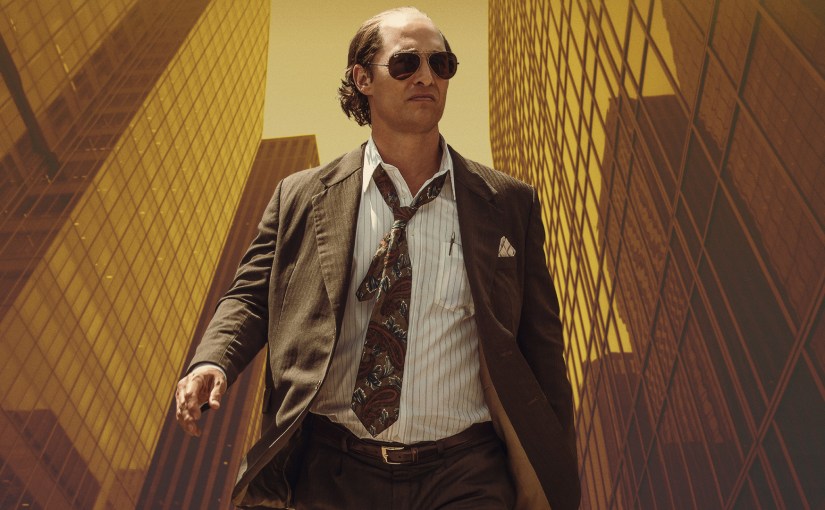
Fantastic find on Netflix with Matthew McConaughey doing his best chain smoking, hard drinking, pot bellied method acting.

Stephan Gaghan directs a patchwork film that zig zags from the sleazy get rich quick offices of Reno, NV, to the wet, mud strewn Indonesian jungles,and on to the steely ice nature of white collar New York City.

What is depicted is the hunt for the most precious metal, and when it is found how best to capitalize on it while maintaining your name and growing your fortunes. Yet any sudden development could crash it all in what seem like seconds.

I had no idea what to expect from this movie. Early on for about 15 minutes, it seemed to be moving too slow but then it picks up because the true life story is mired in twists I never saw coming. Great acting. Great script. Great direction.

Fantastic movie. McConaughey doesn’t get enough credit for his fantastic career of performances. He’s just a top notch actor in so many ways.

This is so worth checking out.

THE SILENCE OF THE LAMBS

By Marc S. Sanders

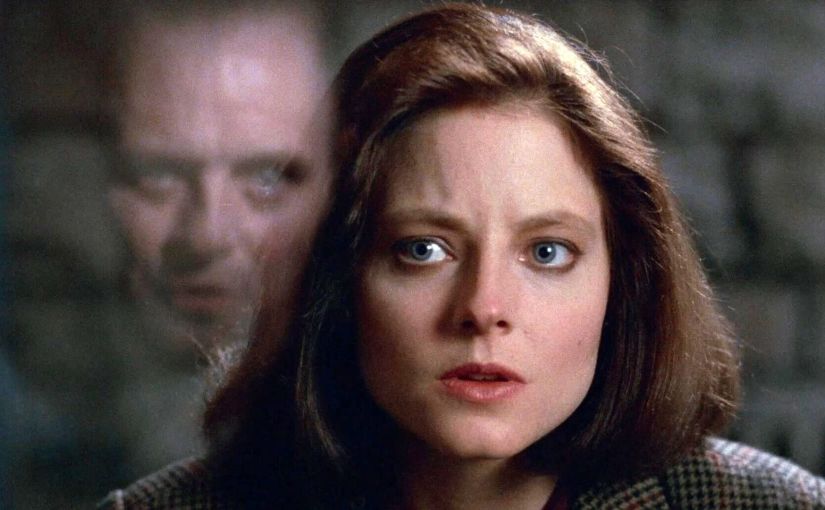
Everyone remembers Anthony Hopkins’ memorable turn as the infamous Dr. Hannibal Lecter in The Silence Of Lambs.  He was “Hannibal The Cannibal;” a renowned and brilliant psychiatrist who was eventually captured for being the one who ate his victims with sophisticated glee.  The real attraction, though, is how director Jonathan Demme delivers the film adaptation of Thomas Harris’ best selling novel through a lens that only finds one strong heroine amid a sea of intimidating men.  The heroine is the intuitive, but petite Clarice Starling.  The men are nearly everyone else cast in the film, and I mean everyone all the way down to the extras; the extras, here, are a perfect example how necessary they are towards any film’s palette.

Ever since the film was released in 1991, the dialogue of Ted Tally’s script is worthy of repeating and mimicking in social circles.  Lecter remains spoofed in nearly every pop culture medium.  Hopkins’ character is unforgettable and he’s been ranked among the greatest film villains of all time with the likes of Darth Vader and Harry Lyme.  It’s a worthy honor.  His timing is subtle and mischievous while he remains silently dangerous.  You can’t take your eyes off the actor and you can’t erase the devilishly fun and evil character from your sub conscious.  Opposite this performance though is Jodie Foster in a top billing role as an FBI trainee named Clarice Starling, assigned to interview and maybe study Lecter as a means to a solid lead in finding a serial killer that has been identified in the media as “Buffalo Bill.”  Bill has been skinning and killing girls with large physicalities, around the east to mid-west portion of the United States.

So, there is a detective story at play here as Hannibal aids Clarice in her search for the killer, but only under his rules.  Demme paints the film with Clarice ably performing her job no matter the towering strength or perverted fantasies found in nearly any man.  An outstanding image early on shows her small frame entering an elevator.  She has been summoned to her supervisor’s office from the outdoor obstacle course.  She is sweaty, and looking tired.  The elevator is full of a dozen men in red uniform polo shirts that hug every muscle; they are strong, fit and healthy.  Clarice stands front and center and she has no reluctance to stand among this exclusive group.  Later in the film, Clarice is invited by her supervisor, Jack Crawford (Scott Glenn in a deservedly dark and quiet performance), to investigate one of Bill’s victims that turned up in the swampy waters of West Virginia.  The coroner’s examination room is filled to the max with sheriffs who believe they serve a purpose to stay there to witness what’s uncovered.  The strength of Clarice is really shown here as she shoos them away.  The men’s facial expressions tell us they don’t care for this request, but Clarice isn’t going to allow them to remain.  Most importantly are her encounters with the head of the Baltimore psychiatric ward that houses Lecter.  He is known as Dr. Chilton played by Anthony Heald.  Chilton – a great character name that clearly colors in the twisted perversion of this guy.  Chilton is happy to boast of his prized attraction, Lecter, as if he’s a rare tiger and he has no reluctance to hit on Clarice when she comes to visit with Lecter.  Always, Clarice will not allow herself to be succumbed, patronized or victimized by any of these towering figures of masculinity in what is unfairly regarded as a man’s world in law enforcement, crime or psychiatry.  Starling easily reminds Chilton that she was a student at the University of West Virginia, not a charm school.  With Tally’s script, Jodie Foster uses these deflective techniques of her character without effort.  Her methods of fencing with these men are a natural ability.  Even when she’s in film transition periods of training at the Academy, Clarice can maintain her stance against a hard-hitting male boxer pounding away at her boxing shield.  She just won’t fall over. As well, she doesn’t wince as the male students give her a glance from behind when she’s jogging on the grounds. 

Demme is an outstanding director who uses these interpretations of this woman to drive his film.  This very same year, 1991, Ridley Scott directed Thelma & Louise.  In that film, the title characters had to realize that they didn’t have to take any shit from a man.  They started out weak, though, and had no choice but to eventually get stronger.  Here, it’s already part of the woman’s instinctive nature. 

Hannibal Lecter is shown to be well versed in the finer things of art, literature, music and, forgive me, cuisine.  At one point, Demme focuses on a picture Lecter has sketched depicting Clarice in an almost angelic nature.  I’ve never forgotten that image.  Nearly all of the settings in The Silence Of The Lambs include stairways that always lead us in the down direction, to an assortment of various hells.  Clarice, the pure angel with nary a fault beyond limited experience as an FBI agent peels the onion away on her quest for a killer by entering into the treacherous depths beneath her; pits of hells.  The opening shot of the film has Clarice pulling herself up with a rope on an obstacle course as if she is ready to enter the heavens, ready to stand above everything, but then she is summoned to Crawford’s office located at the Department of Behavioral Sciences at the FBI.  She has to take an elevator down and then various stairways further down into a labyrinth of claustrophobic offices with no windows, surrounded by cinderblock and populated with men in uncharacteristic suits that don’t appear warm or cuddly.  Crawford may seem like her ally, but really, he’s using her as a sacrificial pawn on a chess board putting her in an arena with psychotically dangerous prisoners, in particular, the worst of them all, Hannibal The Cannibal. 

When Clarice goes to visit Hannibal, she is escorted by Dr. Chilton, who relishes in describing how careful he handles his prized thing, and willingly shows what this monster is truly capable of by providing an unwelcome photograph of how Lecter brutalized a female nurse.  This conversation is played upon a much more frightening descent of unlimited stairways and bars that clang loudly and are painted red and rusted, eventually leading to a stone walled dungeon for these unimaginable beings of death and perversion.  Clarice is left all alone to navigate her way down a long corridor until she reaches Lecter’s cell.

Yet, an even more frightening third descent into hell occurs in the final act as Clarice’s pursuit leads to Buffalo Bill.  Bill’s home is dark, lurid, filthy and maze like; but always seeming to go down further and further into one doorway after another and down one staircase after another, including a deep well where his latest victim is kept.  Like the other descents, Clarice uses her femineity as a tool of strength to survive.  I can claim without any hesitation that Clarice Starling is one of the greatest heroines in the history of film. 

The one man who rattles her, and weakens her, though is Hannibal Lecter.  Watch their tete a tete when they meet for the first time.  Starling demonstrates some overconfidence against Lecter’s seemingly polite demeanor.  With her white trash Virginia dialect, she even gets a little smarmy with the Doctor, but then he disarms her immediately with a comeback that shakes her very core.  Demme’s reliance on close ups for both characters serve this scene and others so well.  Clarice’s encounters with Hannibal are the most important and vital moments in the film because they are the only opportunities for Jonathan Demme and Ted Tally to show the main character’s weakness.  Every hero has to have a weakness if they are to remain compelling.  Clarice is not, in fact, undefeatable. 

The film could have simply worked as a basic detective story.  Put up the clues and the narration of the picture will eventually assemble all together for a resolution where the bad guy is captured.  Yet, Thomas Harris’ character creation uses Hannibal as a defiant obstacle blocking the path for Clarice.  Hannibal lacks much stimulation in a cold, specially designed prison cell.  He’s maybe only honored with impenetrable plexiglass to contain him as opposed to traditional bars.  He needs to be enthralled.  On the surface, Clarice appears as a frail prey that he can take his time munching on.  He’s happy to help Clarice catch Buffalo Bill with the case files she provides, but in exchange he wants to uncover what haunts her psyche.  Such a strong character Clarice is, but she has to be willing to weaken and expose herself to desperately find a dangerous killer.  Can she do it?  She’s never allowed herself to do that before.  And thus, we come to comprehend the obscure title of this film and the book it stems from.  (Anthony Hopkins actually thought it was a children’s fantasy when he was sent the script to read over.)

This write up is not necessarily a review, but a means to honor the careful film and storytelling technique that Jonathan Demme strives for with The Silence Of The Lambs.  You might say, yeah, there’s a lot of walking in this picture, but pay attention to the direction of the walking.  Always going down, somewhat reminiscent as Little Red Riding Hood entering a dark and spooky forest and encountering the biggest and baddest wolf.  Jodie Foster might be in a company of men here, but the film works as a dual of femineity vs masculinity.  It’s strange to believe that Demme actually had Michelle Pfeiffer in mind for the Starling role initially, a more than capable actress, but one who at the time was more glamourous (The Fabulous Baker Boys and The Witches Of Eastwick).  Beyond the silly Disney films, Foster was known for lurid pieces like Taxi Driver and her first Oscar winning role as a rape victim in The Accused.  Clarice Starling is a character beyond a pop culture appearance of the time, and Jodie Foster emanates that portrayal.

The writing of The Silence Of The Lambs is so intelligent.  There’s a witty, yet deliberately poor taste, of sarcasm to Hannibal Lecter as he thrives off his superior intellect over Jack Crawford and the FBI.  It’s only enhanced when he’s dealt a lowly, formally white trash female student to play with.  Ted Tally offers precise timing in the dialogue with Clarice and Hannibal.  Thomas Harris’ drive to further a cameo appearance of Lecter in a prior novel (Red Dragon) with this book is a gift to readers and eventually movie watchers.  The Silence Of The Lambs doesn’t follow formula with a Law & Order technique of ballistics and witness interviews.  It drives into other directions to feed its development. 

Jonathan Demme’s film is pioneering.  I recall seeing it in theatres with other high school friends.  I was not enthused to see it.  The title was too odd.  The picture was primarily a talking piece.  There were gross and unwelcome images within the film.  It’s very ugly at times.  I was frankly accustomed to the likes of Dirty Harry and Lethal Weapon films for my cops pursuing the robbers ideals.  I recall not even liking the film when we left, and I couldn’t comprehend its appeal that followed for the remainder of nearly an entire year, all the way up to when it was awarded the five main categories of Oscar wins (Actress, Actor, Screenplay, Director and Picture).  I definitely wasn’t accustomed to a strong character like Clarice.  Later that year, I saw Thelma & Louise and fell in love with their eventual triumph.  I needed to be spoon-fed their initial weaknesses at first.  Who was this Clarice in this picture, though?  I could not identify her strength that displayed right from the get go.  I wasn’t even 18 years old at the time and now I can say I just wasn’t mature enough for this film back in 1991.  Now, it’s thankfully clearer, though I still appreciate its subtlety so much. Jonathan Demme had such a clear vision of where he was taking this film and because it’s not dated, The Silence Of The Lambs stands as thriller, and an intelligent thought provoking piece that stays with you for a long time after each viewing.

GOODFELLAS

By Marc S. Sanders

Goodfellas is my favorite film by Martin Scorsese. It’s a fast-paced roller coaster narrative of Irish street kid Henry Hill’s experience in the mob, dramatized from his real life as part of the Gambino crime family of New York.

“How am I funny?,” the Lufthansa heist, Spider takes it in the foot and then in the chest, Morrie’s Wigs, the piano montage from Derrick And The Dominos, Billy Batt’s demise followed by an early morning breakfast stopover at mom’s, and Henry’s helicopter paranoia. All of these elements are assembled to depict the perceived glamour and undoing of street level hoods, proud to steal and dress in the finest threads while bedding dames behind their wives’ backs.

Scorsese along with Nicholas Pileggi uncovered something special when they adapted Wiseguy (Pileggi’s book) for the screen. I think they struck a nerve because they showed these guys as men doing a routine living. There was a process to their deeds. Give a cut of your theft to the man above and keep the rest for yourself. Above all else, stay off the fucking phone. Get out of line and get whacked, unless you’re a “made guy.” This is all code, normal to Henry and his cohorts (Robert DeNiro as Jimmy Conway; Joe Pesci as Tommy DiSimone).

Moreover, the wives understood this behavior as well. Henry’s wife Karen (Lorraine Bracco) knew these guys were not 9 to 5 husbands and the more it occurred, the more normal it all seemed. Including when the FBI presented a warrant to search the premises. Just let them in and go back to rocking the baby to sleep while watching Al Jolson on the box.

Scorsese took the best approach by not judging the actions of these raw criminals. They dressed well, but they weren’t reluctant to draw blood if an insult was tossed their way. Pesci, in an Oscar winning best performance, represents that philosophy. Scorsese, with his regular editor, Thelma Schoonmaker, are not shy about the violence. Watch how Jimmy and Tommy beat up a “made guy.” DeNiro just stomps his dress shoes into the guy’s face over and over. Pesci pistol whips him, but before he can shoot him, he breaks the gun…on the guy’s face. The romance of gangster life quickly undoes itself in moments like this. As Henry notes, your friends come at you with smiles before they whack you.

Ray Liotta is Henry, the primary narrator and centerpiece of the film. Most of the story is from his perspective. I’m sorry that Liotta didn’t get much award recognition. He really deserved it. His voiceover narration is superb. It gives a feeling like I’m talking to Henry in a bar with his tales of Mafia code and life in the criminal underworld. His voiceover is conversational. He’s also got great expressions of disregard, anger, and intense, raging fear on screen. When Henry is at his worst, his eyes are dry red, and his skin is pale and craggily. None of that is just makeup at work. That’s Ray Liotta performing with an exhausted energy in character. Watch the scene following his 3rd act incarceration where he argues with Karen over the last of their drug supply being flushed down the toilet. It’s not so much a party anymore. The manic response couldn’t feel more real as he slams his hand against the wall and then crouches up into a weeping ball of helplessness in the corner, on the floor.

Liotta and Bracco have sensational chemistry together in scenes of their courting nature when they first meet, followed by the ongoing, bickering abuse that enters their married life. There’s a great hysteria to them. Bracco got a nomination for her role. She deserved it.

Scorsese is a master at filming basic gestures as well to show the nature of these mob guys and their crimes. A key folded in a paper is then inserted into a knob and a stash is walked off with. A blood-soaked revolver is placed in a tin box and then Schoonmaker cuts over to the customary stomping of a glass at a Jewish wedding. Every prop and detail are connected.

Even better is Martin Scorsese depicting the wise guys’ incarceration midway through the film. Watch how the head mob boss Pauly (Paul Sorvino) slices onion with a razor for dinner complete with steaks broiling, pork sauce bubbling and even lobster ready to be boiled. Scorsese and Pileggi found it important to depict how attractive this life could be, despite a stretch in the joint or the violence that might come. Pay off the right guys and you could live like kings.

The master director doesn’t stop there. His selection of doo wop and rock period music paints the historical palette of the 50s through 80s. Music was being played and life was happening all the while an underhanded way of crime and violence occurred.

One of the best blends of film and song occurs during the classic one-shot steady cam where Henry escorts Karen through the back way of the famed nightclub, Copacabana. It’s one of the greatest scenes ever in movies. The walk journeys downstairs, through the kitchen, past wait staff, cooks, bouncers, people necking and to a front and center table to see Henny Youngman’s stand-up routine. The sequence is accompanied by the song “And Then He Kissed Me.” It’s a great character description to display a young guy, proud of his gangster image, with a whole world ahead of him and everyone offering their respects while he hands out twenty-dollar bills like gift coupons. This young guy had power, and the girl holding his hand couldn’t be more impressed.

Goodfellas is one of the greatest mob movies ever made. It’s one of my favorite films. It’s genuine in its grit and language. Every F-word uttered is necessary to translate the regard for code, or the blatant disregard for the law, loyalty within a crew, or even the ethics of marriage. It astounds me that it didn’t win Best Picture in 1990, losing to Dances With Wolves. Perhaps it got cancelled out with fellow mob nominee The Godfather Part III.

Regardless, the film struck a chord and pioneered a new way of showing criminals in celebration of themselves while sometimes encountering the inconvenience of the law or the women in their lives or worse, the betrayals among themselves. At any given moment you might rat on your friend and not keep your mouth shut.

Without Goodfellas, The Sopranos might not have been as welcomed into the pop culture lexicon. Maybe even the films of Quentin Tarantino or Guy Ritchie or Paul Thomas Anderson, or even other Scorsese projects yet to come.

Goodfellas is an electrifying film of unabashed humor, realistic and shocking violence, and authentic culture within a well established crime syndicate.

Goodfellas is a must see film.

THE STING

By Marc S. Sanders

Find me a better combination of script, cast, direction, score, art direction and costume and I guarantee it’ll take you some time and effort.

The Sting, directed by George Roy Hill and written by David Ward, is the kind of movie where you uncover something new every time you watch it. It’s because the film is all in the minute details to assemble the beginning to the middle to the end. The film is wisely edited in step by step chapters; The Set Up, The Wire, The Shut Out and eventually on to the satisfying The Sting.

The audience is even set up but you’ll have to watch to see how. I dare not spoil it.

Cars, trains, drug stores, diners, a carousel, dames, gangsters, Bunko Cops, Grifters; all are elements needed for the best confidence men superbly played by Robert Redford and Paul Newman, along with a supporting cast like no other, Eileen Brennan, Harold Gould, Charles Durning, Ray Walston, Jack Kehoe and the best villain, or rather “mark,” Robert Shaw.

This is one of my favorite movies. When I first saw it, I was probably age 10 or 12. I understand next to nothing of what was going on. It was the music that drew me in first followed by the sharp suits designed by the legendary Edith Head. The movie’s script is its greatest asset but visually it is just as fun. The 1930s Chicago setting is a character in and of itself. Newman cheats beautifully at poker against a temperamental Shaw, and gets him!!! “You owe me 15 grand pal.” When I first saw it, I didn’t know what he was doing or how he did it. How did he switch hands? I was enamored with the hands that were dealt and the poker chips on the table, but I loved it when the better cheat won out.

The second iteration of the Hill/Newman/Redford trifecta (following “Butch…& Sundance…”) is just plain fun. It was the fun that earned it a Best Picture Oscar.

No other film has come close to duplicating it. Maybe the Clooney/Pitt/Damon version of “Ocean’s 11”? I don’t know. However, if you love that film, you owe it to yourself to watch “The Sting.”

The Sting is…”the quill!”

SIDE EFFECTS (2013)

by Miguel E. Rodriguez

Director: Steven Soderbergh
Cast: Jude Law, Rooney Mara, Catherine Zeta Jones, Channing Tatum
My Rating: 10/10
Rotten Tomatometer: 83% Certified Fresh

PLOT: A young woman’s world unravels when an anti-depressant prescribed by her psychiatrist has unexpected side effects.


Side Effects is a rare creature indeed: a movie released during the first two months of the calendar year that is not only good, it’s stunningly good.  It’s too bad almost no one even remembers this movie exists.

Steven Soderbergh’s film tells the story of a young woman, Emily (Rooney Mara), who suffers from depression after her husband returns home from serving a prison term for insider trading.  After a series of events where she apparently tries to harm herself, she sees a psychiatrist, Dr. Banks (Jude Law) who prescribes a brand new anti-depressant called Ablixa.  While it is effective, it also comes with some side effects, including sleepwalking.

One day, Dr. Banks gets a call: Emily has stabbed someone to death, and she did it while sleepwalking, which was caused by the Ablixa.  Banks interviews her; she remembers nothing of the incident.  But now the doctor’s professional and personal life is in turmoil as well.

What we have here is a classic Hitchcockian story…actually, two stories for the price of one.  You’ve got Emily, the wrong woman in the wrong place at the wrong time.  She didn’t ask for any of this.  She just wanted to feel better, be a better wife, be a better person.  And the drugs were working: she was feeling better, doing better at work, doing better with her husband…but now, thanks to this drug and its unintended side effects, people think she’s crazy.

And you’ve got Dr. Banks, the wrong man also in the wrong place at the wrong time.  He was doing his job, prescribing medication that he felt would help…and it WAS helping.  But thanks to this unforeseeable tragedy, his practice dries up.  Who wants to see a psychiatrist whose patient killed someone due to medicine he prescribed?  This creates problems in his personal life: he just bought a new apartment, but now his income is severely diminished.  He and his wife fight more than they used to.  And so on.

…and that’s where I’ll leave it because, like all the best films, it’s better if you watch Side Effects cold, not knowing what to expect.  No doubt there are people out there who saw the various twists and turns coming, but I am not one of them.  I was utterly hoodwinked, and I loved it.

We are a culture of pills and quick fixes, the quicker the better.  Side Effects is remarkably even-handed in presenting us with both sides of the worst-case scenario involving this culture.  (Or I guess one of the worst-case scenarios, but I don’t want to get sidetracked.)  Not only is this strategy effective in providing mental fodder while watching, but it’s also a great storytelling device.  Whose side should we be on?  Historically, “Big Pharma” has been one of the handiest movie villains since the Nazis.  The public perception of mega-corporations with billions of dollars at their disposal, dollars that are used to cover up embarrassing media stories and pay off corporate whistle-blowers, is just too perfect not to use in movies.  But Side Effects gives us the other side of that coin, the dedicated physicians and psychiatrists who are committed to helping people using the best available methods.  If a pill can help people, who would blame a doctor for wanting to prescribe it?  …unless the side effects turned out to be a little extreme?

That conundrum is at the heart of the movie.  But on the surface, it’s just a fantastic mystery/thriller.  Soderbergh directs with restraint, using very few camera moves.  Everything we see is presented with a minimum of flash and maximum impact, so when you’re watching the third act of the movie, you can remember everything you saw in the first two acts with great clarity.

It’s a little bit like a Gene Kelly dance routine.  You know he must have worked for hours to get those moves down, but when you see him in action, he barely looks like he’s working at all.  That’s what Side Effects feels like.  The film is telling a complicated story, but it doesn’t feel like it’s working hard.  It’s just gliding along, showing you this scene, showing you that scene, ho-hum, pay attention now, all leading to the fantastic payoff at the end.

I don’t know if Side Effects is available to stream or not, but I heartily recommend it regardless.

JOKER (2019)

by Miguel E. Rodriguez

Director: Todd Phillips
Cast: Joaquin Phoenix, Robert De Niro, Zazie Beets
My Rating: 10/10
Rotten Tomatometer: 68%

PLOT: In early-‘80s Gotham City, mentally-troubled comedian Arthur Fleck, disregarded and mistreated by society, embarks on a bloody downward spiral of crime and social revolution.


Most comic book movies, by default, require at least a little pre-existing knowledge of the universe inhabited by these characters, in order for the stories to make sense.  There are precious few exceptions.  Batman Begins (2005) is one.  Superman (1978) is another.  And now we have Joker, an origin story like no other, presented to the viewer as if no previous Batman movies existed, as if the Joker was a creature as new and original as Hannibal Lecter was nearly thirty years ago.  (Or, dare I say, Travis Bickle, over FORTY years ago…)

It’s incredible, if not impossible, to believe this film was directed by a man (Todd Phillips) whose most famous movies to date have been the Hangover trilogy and Old School.  There is nothing in this gritty psycho-drama that bears any resemblance to anything Phillips has directed before.

And I haven’t even mentioned Joaquin Phoenix’s performance yet.  More on that later.

The story: Arthur Fleck (Phoenix) is an everyman, your average nobody, living in Gotham City in the early ‘80s, a time of garbage strikes, graffiti-riddled subways, and a porno theater on every downtown corner.  He lives with his invalid mother and pays the bills as a clown-for-hire, doing everything from entertaining bedridden children to sandwich-boarding on the street.  His real dream is to be a stand-up comedian and appear on a late-night talk show hosted by Murray Franklin (Robert De Niro), whom he idolizes like a long-lost father.

(The similarities of this plot point to The King of Comedy [1983] have been well-documented and need not be explored here; that would require a whole separate article.)

So far, this is really heavy material, a real downer.  But then the screenplay strikes gold.  It turns out Arthur suffers from an unsettling, but very real, affliction, although it’s never quite named in the film: Pathological Laughter or Crying (PLC). Also known as the pseudobulbar effect, it is a neurological condition defined by episodes of uncontrolled laughter or crying.  People with PLC often laugh out loud or cry for no apparent reason.

In other words, Arthur simply bursts out laughing for no reason, and often, as we’ll see, at the most inopportune or inappropriate moments.

To me, this was genius.  It gives a legitimate grounding for the Joker’s iconic laugh.  What would normally be comic-bookish or hammy in previous incarnations becomes a little sad.  I felt empathy towards this guy whenever his affliction overcame him, especially in the scene on the bus when he’s amusing a little kid by pulling goofy faces, and the kid’s mom tells him to stop bothering her child, and he starts laughing despite his obvious disappointment.  The empathy for me came when I could see through the laughter, could see Arthur’s face contorting with genuine sadness and misery even as he guffawed helplessly.  It was touching.

The real turning point of the movie comes when he is accosted by three drunken yuppies on a subway, and he starts laughing uncontrollably, and the yuppies start beating him up…but they don’t know about the gun he’s carrying for protection.

But that’s enough of the plot.  I think I’ve described only the parts of it that you might have guessed anyway from the trailers.  The sensationally well-told story, not to mention the complexity of the story itself, is only one half of the movie’s greatness.

The other half, it must be said, is Joaquin Phoenix’s performance.  The trailers don’t do it justice.  A lot of the performance has to do with his tortured facial expressions when he has a laughing fit.  There are a couple of extraordinarily long shots where Arthur SHOULD be crying, but is instead laughing, and his agony is evident.  He WANTS to cry properly, but he can’t.  I don’t know how he pulled it off, but you can see both emotions on his face at the same time.  It’s a masterstroke.

Another remarkable factor at work in his performance is his subtle nods to previous Jokers in movies, and even TV.  If you watch really carefully, you’ll notice a quick reference to Mark Hamill’s celebrated voice work as the Joker in the Batman animated series and films; Cesar Romero’s eccentric dance moves from the ‘60s television series; and Heath Ledger’s hair.  (If there’s a reference to Nicholson, I must have missed it.)  I just thought it was a brilliant touch to bring in all of those influences and incorporate them into this newest incarnation, as if to acknowledge the pop-culture roots of this character, while still breaking new ground.

Joker is the comic-book movie for people who don’t like comic-book movies (even Deadpool).  It’s The Dark Knight crossed with Se7en and Taxi Driver.  It’s utterly unlike any comic-book movie I’ve ever seen, and I doubt anyone will ever be able to make another one like it without comparing it to this one.

TRANSSIBERIAN (2008)

by Miguel E. Rodriguez

Director: Brad Anderson
Cast: Woody Harrelson, Emily Mortimer, Ben Kingsley, Eduardo Noriega, Kate Mara
My Rating: 9/10
Rotten Tomatometer: 93% Certified Fresh

PLOT: An American couple takes a trans-Siberian train ride across Russia, but things take an odd turn when they meet another mysterious young couple.


One of the reasons I like writing about movies is that it gives me the opportunity to talk up great movies that I’ve discovered off the beaten track.  Movies like the stunning stop-motion film Mary and Max (2009), or Sunrise (1927), hands-down the greatest silent film I’m ever likely to see, or Wild Tales (2014), an Argentinian anthology film that plays like The Twilight Zone crossed with Quentin Tarantino.

Or Transsiberian, a virtually unknown film from 2008 that is one of the finest examples of Hitchcockian suspense in the modern era.  It was an international co-production of – get this – Germany, the UK, Spain, and Lithuania.  It was co-written and directed by Brad Anderson, a man who’s directed a LOT of episodes of various television shows, and so has a good sense of efficiency and economy in his style and pacing.  It has yet another stunning Ben Kingsley performance as a Russian narcotics detective.  And it turns the screws on the heroine of the story in such a way that you can tell exactly why she’s doing what she’s doing, when every good instinct says she should be doing the exact opposite.

After a brief prologue involving a police investigation in Vladivostok, we meet Roy and Jessie (Woody Harrelson and Emily Mortimer), a married couple traveling home from China after a faith-based missions trip.  They decide to take a 6-day train trip across the Russian continent because Roy feels it would be nice to take an adventure…plus, he LOVES trains.  He’s one of those enthusiasts who don’t realize when they’re boring you with talk of gauges and coal-burners and cow-catchers. (Sheldon Cooper would have loved this guy.)  Jessie seems like a nice woman, but she seems to be keeping this adventure at arm’s length; you can tell she’d rather be flying coach than spending six days in a double-berth cabin.  I empathized with her right away.  They make a good couple, even though he wants kids and she doesn’t, she smokes and he’d like her to quit, he drinks and she doesn’t, et cetera.  Pretty normal.

A little while into their trip, Roy and Jessie meet the couple they’re sharing a cabin with, Abby and Carlos (Kate Mara and Eduardo Noriega).  Abby seems much younger than Carlos, but Jessie lets that slide, especially because Carlos seems to take an immediate interest in Jessie, and he doesn’t seem too concerned about hiding it.  Abby seems annoyed, but says nothing.  Roy is too jazzed about being on trains and interacting with the locals to really notice.  Carlos also seems to be pretty cagey about the souvenirs he’s carrying around in his suitcase.

At one of their scheduled stops, both couples leave the train to stretch their legs.  When the train leaves for the next leg, Jessie suddenly realizes something: Roy’s not on the train.  She didn’t see him get back on.  In fact, no one can recall seeing Roy re-board the train.  The movie plays a little by making us think one thing has happened, when it may or may not have…we can’t be sure.

And then, in true Hitchcock fashion, things start to spiral into one unexpected development after another, until the movie becomes about something entirely different than what you thought it was going to be.  Without getting into too many other details, Jessie finds herself trapped in a lie that she absolutely cannot back out of, no matter how much she wants to, because doing so would cause more harm than good.  Even when she’s presented with a life or death situation, she still can’t go back on it, and the story is constructed so tightly that it’s never for a moment unclear on her motivations.  You always see the “why” to her actions.

This other level to the movie is what separates it from the pack and places it in a higher weight class.  The screenplay is a masterpiece of suspense.  There’s a scene involving her camera that had me yelling, “Oh, NO!” at the screen…and I’ve SEEN the movie before.  You won’t believe the amount of suspense that will be generated with a slightly-open camera bag, or the fact that there’s never a garbage can around when you need one, or just the absence of a train stewardess.

This movie stands apart in its genre because the characters behave EXACTLY as they should, with perfect logic, and it never feels forced.  The bad guys are never too stupid, and the good guys are never too smart.  (They get pretty lucky a couple of times, but what are you gonna do?)  I don’t think I’m giving anything away by saying that, by the end, some characters are happy and others are not quite so much, but I don’t think you’ll be able to guess who will last that long.

This is a treasure of a film to be sought out and…uh, treasured.

RUNNING SCARED (2006)

by Miguel E. Rodriguez

Director: Wayne Kramer
Cast: Paul Walker, Cameron Bright, Vera Farmiga, Chazz Palminteri
My Rating: 8/10
Rotten Tomatometer: 41%

PLOT: A low-ranking thug (Walker) is entrusted by his boss to dispose of a gun that killed corrupt cops, but things spiral out of control when the gun somehow winds up in the hands of his neighbor’s son (Bright).


So…okay.

First of all, this is most assuredly NOT a remake of the quintessentially ‘80s comedy thriller of the same name, starring Billy Crystal and Gregory Hines, who, although they were very funny, were two of the most unconvincing street cops since…ever.

No.  This is one of the most twisted, sordid, blood-soaked retelling of a Grimms-esque fairy tale I’ve ever seen.  Like someone kidnapped Quentin Tarantino and force-fed him only moonshine and methamphetamines for a week, then told him to sit down and re-write the story of Hansel and Gretel, but to make it take place in modern-day lower-middle-class New Jersey, and don’t forget the guns, Russian thugs, and brief, um, cunning linguistics.

Yeah.  It’s that kind of movie.

I haven’t read the negative reviews of this film, so I couldn’t tell you what turned so many people OFF.  I can only report what turned me ON.

A big part of it is the energetic storytelling at work: lots of digitally enhanced camera tricks, the occasional rewind, tilting the camera when you really didn’t have to, sudden speed-ups…very stylistic.  Tony Scott did a bit of the same thing in Domino, released a few months earlier, and Oliver Stone sort of pioneered this kind of thing with the wildly weird Natural Born Killers.  So it’s not like I haven’t seen this before, but it really works with this lurid material.

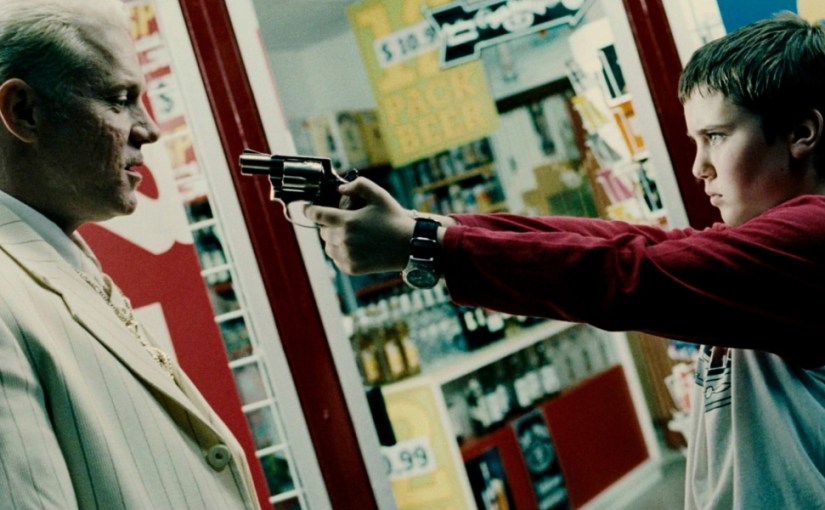
Which brings me to another big part of why I like this movie: the story.  On the surface, it’s your standard kid-in-peril, race-against-time thriller.  Paul Walker absolutely, positively HAS to get his hands on the dirty gun that Cameron Bright manages to steal and go into hiding with.

But tilt your head and squint your eyes, and you can see the whole thing is basically a guns-blood-and-broads version of a classic fairy tale, where a young innocent traverses the unforgiving countryside while being pursued by deadly forces.  On the way, he meets up with various colorful characters, who aren’t all bad, but they’re certainly not all good.

In this case, instead of trolls and ogres, our innocent character encounters, not necessarily in this order: the Russian mafia, a hooker with a heart of gold, her vengeful pimp, a creepy homeless guy, crooked cops, his own abusive father, and, in the movie’s squirmiest moment, a creepy married couple who show an inordinate amount of compassion for, and interest in, this lost child, and who seem to have the most nefarious motives of anyone else in the film.

And that’s just the “B” story.

The “A” story revolves around Paul Walker’s character trying to retrieve the gun Bright has stolen.  He bounces around like a pinball with his own son in tow, spewing profanity like it’s going out of style, beating up lesser thugs, lying to superior thugs, always just one step behind Bright who is sure Walker is going to kill him.

I dunno, for me, the dynamic camerawork and the shocking subject matter all worked.  It’s a fun, trippy ride, with just desserts getting served all around.  I’m sure people have an issue with the ending, but what would they have preferred when it comes to a popcorn movie like this?

After all, how do MOST fairy tales end?

JOHN WICK: CHAPTER 3 – PARABELLUM (2019)

by Miguel E. Rodriguez

Director: Chad Stahelski
Cast: Keanu Reeves, Halle Berry, Ian McShane, Laurence Fishburne, Anjelica Huston
My Rating: 9/10
Rotten Tomatometer: 89% Certified Fresh

PLOT: Picking up precisely where John Wick 2 left off, legendary assassin John Wick (Reeves) must fend off wave after wave of bounty hunters intent on collecting the $14 million bounty on his head.


You gotta love how John Wick: Chapter 3 – Parabellum starts.  About 30 seconds of opening credits, and then bang, the action picks up exactly where John Wick: Chapter 2 ended.  Wick is on the run through New York City, trying to find safe haven for himself (and his dog, aptly named “Dog”) before he becomes “excommunicado”.  At that point, a global network of assassins will make him their target and kill him.

Well…they’ll TRY to kill him.

Let’s be blunt: you’re either a fan of the John Wick franchise, or you’re not.  These films are not for the casual moviegoer.  There’s just enough story to hang the fight scenes on, no more.  Everything we need to know about the John Wick character, we’ve gleaned from the first two films, and even that is minimal.  There’s no subtext, no neo-modern, meta-textual considerations to be discussed in terms of the screenplay.  The movie has but one purpose: to show off spectacularly choreographed fight scenes in which the good guy obliterates a crapload of bad guys.

I think I read somewhere there are eleven separate fight scenes in the film.  As such, the filmmakers were careful to make the fight scenes as distinctive as possible, especially when it comes to the weapons that are used.  Among these weapons are (let me see if I can remember them all): fists, knives, swords, axes, pistols, shotguns, machine guns, several thick books, a chisel, a couple of pissed-off attack dogs, and a belt.

Watching this movie was exhilarating for me.  The action scenes tapped into that teenaged part of me that used to love watching Enter the Dragon or The Good, the Bad and the Ugly.  I mean, I still love those movies, but for some reason, during Parabellum, I was positively giddy.  There was a sense that the filmmakers were attempting to provide us with the ULTIMATE action movie, the zenith, the ne plus ultra.  And I’ve gotta say, the last time an action movie gave me those kinds of vibes was The Matrix Reloaded during the freeway car chase.

There’s not much more to say about the movie.  Like I said, it has one purpose, and it does it extremely well.  If you love great fight scenes, congratulations, Christmas came early.

THE FRENCH CONNECTION

By Marc S. Sanders

Popeye’s in town.

“You been picking yer feet in Poughkeepsie?”

One of the first gritty crime dramas.

With modern cinema offering huge bravura performances a la Daniel Day Lewis or Christoph Waltz these days, it’s any wonder that today’s generation of movie goers would be puzzled that Gene Hackman won the Best Actor Oscar for this film, The French Connection, which also happened to win Best Picture. His character has no big monologues, no huge crying scenes. In fact for most of the film, he’s slamming guys up against a wall or following them up and down the dirty Brooklyn streets. Yet, his accolades were nothing short of deserved.

Watch as Hackman’s Popeye Doyle gradually exhausts himself in pursuit of “Frog 1.” His character starts out as a thrill seeking detective only to find his limits pushed against a better cat and mouse player. Dialogue isn’t sophisticated here to show his state of mind, but rather his expressions offer everything. Simply look at his close up following the extensive car search (an incredibly satisfying scene for me as a viewer).

If that’s not enough, the car/foot chase through Brooklyn is one that still has not been matched. See how it was done before CGI.

A simple drug deal is plotted perfectly from Marseille to New York, and best of all, it is all true (well mostly).

What’s most curious is the film provides one of the oddest and most unforgiving endings in a film ever. Perhaps you’ll agree (????). But, remember…THAT IS HOW IT HAPPENED!!!!

This was a film from 1971 that was raw in its language, gritty in its setting, spiteful and unafraid of the image it would leave, and that is why it won Best Picture, Best Director and Best Actor.

Bottom line, it would never have been made today. Never!

(Word of advice, ignore the sequel. A prime example of Hollywood shamelessly cashing in.)