CAN’T BUY ME LOVE

By Marc S. Sanders

I’m ashamed of myself. All the hours I wasted in my adolescence watching the 1980s teen flick, Can’t Buy Me Love. Now, having watched it again with my 12-year-old daughter, what was I thinking?

The overall problem with Can’t Buy Me Love is that literally every single character is drowning in depths of despicable shallowness. There’s not one redeeming character. Truly. I couldn’t stand to watch most of the film. Over and over again I asked myself what could I have been thinking? These are not likable people. Did I just repeatedly return to the film during Friday nights on HBO because I couldn’t take my eyes off actress Amanda Peterson?

Lawn mower nerd Ronald Miller (Patrick Dempsey) pays $1,000 to popular high school cheerleader, Cindi Mancini (Peterson) to be his girlfriend at the start of their senior year. The plan will be once Ronald’s reputation is established among the jocks and preppy valley girl cheerleaders, that Cindi and Ronald will break up. In other words, boost Ronald’s image so that he can live by that image. (I can’t believe I just clarified this movie with a sentence beginning with “In other words,…” A movie this stupid should not need additional clarification by means or words or even crayon sketches.)

It’s obvious what’s going to happen. Beware the idiot plot!!!! They fall in love, but both are too stupid to realize that they have fallen for one another. So, they are just cruel instead. Their friends are cruel too in their own superficialities.

I don’t find much to be proud of anymore with Can’t Buy Me Love. Maybe it reminds me too much of high school, which by and large I don’t look back on very fondly. High school in a film like this is all about impressing the greater mass with the car you drive, how much mousse you drown your hair in, or the sunglasses you wear.

John Hughes’ teen films looked at material with more substance like status quo and social class with a picture like Pretty In Pink or The Breakfast Club. No one was trying to impress anyone with the latest trendy look. The characters stayed secure in their appearance and yet found a personality to be attracted to, not an outfit. The challenge was in keeping to yourself while stepping into territory where you didn’t feel welcome.

Can’t Buy Me Love adheres to the observation that “he went from totally geek to totally chic.” Thanks for the limerick. I appreciated Pretty In Pink for a sobbing scene where the main character is embarrassed to show where she lives to the rich guy whose genuinely interested in her. There’s a consciousness to Pretty In Pink that Can’t Buy Me Love lacks.

If anything, Can’t Buy Me Love introduces us to The African Ant Eater Dance. So, as a plus, at least it’s got culture and diversity going for it.

WEDDING CRASHERS

By Marc S. Sanders

Owen Wilson and Vince Vaughn make a perfect comedy pair close to the same vein as Bill Murray and Harold Ramis. Close, but not as legendary, and nowhere near the statures of Newman and Redford.

Wedding Crashers was the the first of their two collaborations to date. The movie works as it charges forth in its raunchiness and unabashed thrust to not hold back. Fortunately, a guy named David Dobkin directed a script from Steve Faber and Bob Fisher long before the age of “Me Too.” What a denial of a great idea we would have, had this film been made later. Reader, Wedding Crashers was never intended to be politically correct. If it even thought about it for a second, the entire production would have failed.

Just go with this. Wilson and Vaughn are John and Jeremy, practicing marital law mediators (I said go with it!), who relish in debauchery by crashing weddings as an opportunity to score one babe after another. Dobkin and crew assemble a fantastic early montage of various nuptials to show how well John and Jeremy play this field of formality. We get to see them in action in all of the different methods. At one time they are charming the parents. They are telling sob stories and crying false tears. They are making balloon animals for the youngsters as a means to catch the attention of a beautiful bridesmaid caught up in the sanctum of love. One after the other a braless gal pal is tossed onto a bed ready for John and/or Jeremy. Call it refreshing, but at least these players are equal opportunists; Jewish, Irish, Italian, Indian. Every kind of wedding ceremony imaginable is given attention. These guys are so fine-tuned at what they do that there is even a rule book, which you can reference on IMDB, or on the Blu Ray extra.

When Secretary Cleary’s (Christopher Walken with not nearly enough to do) daughter is getting married, one last hurrah before wedding season closes is upon them. John immediately becomes attracted to the bride’s sister, played spiritually by Rachel McAdams, while Jeremy oversteps himself with the youngest and overly clingy sister who makes sadomasochism seem G rated. She is played by Isla Fisher. To my surprise, following the success of this film, Fisher never really became more mainstream. She’s the scene stealer. When she begs Walken to let the men stay for the weekend at their New England island home, I lost it. I was dying at her antics. Fisher is so good. She had to have invented some of this material herself. An amazing comedienne. The stomping feet. The poutiness. This is comedy. Fisher never holds back in every scene she’s in and because of her, Vaughn as her lustful prey is all the better in his tormented state.

Another scene stealer is Bradley Cooper, playing McAdams bullying boyfriend. Cooper probably made this character bigger than the script intended. Again, I lost it as the family and guests warm up for a friendly game of flag football. Cooper is in his own element apart from the others as he goes through regiment drills of what equates to an unhinged Marine. He’s cruelly brutal but he’s terribly funny. Later in the film his part might get too sadistic though as he punches Wilson bare knuckled which truly sounds like a crack of his skull. There’s nothing really funny there. This is beyond a Three Stooges slap or eye poke. Sometimes less is more. Blame that on Dobkin.

Other parts are wasted though they start out promising like Jane Seymour as Walken’s wife and Fisher & McAdams mother, who serves as a sex craved Mrs. Robinson. She’s given a presence, though her story never really delivers. As well, there’s a resentful gay brother (Kier O’Donnell) who dresses in black and bears a striking resemblance to Gru from Despicable Me. The character makes a good entrance but is primarily there to further torment Vaughn in a quick bed hop scene. Then there’s not much else.

McAdams plays meet cute just fine with Wilson. Though with much interference from the rest of the characters during the course of the weekend you really don’t get a sense of how McAdams falls for Wilson as well as why Wilson goes against his Crasher Code and obsessively falls for her. Not much beyond dream like gazes at each other across the room. For the romance to really work, these characters have to talk with each other a whole lot more than just a token wave crashing beach scene.

The 3rd act is expected. The boy loses the girl. He takes lonely walks down the street, he becomes a slob and he makes one failed effort after another to win the girl back. For a raunchy comedy that was moving with lightning hilarity, this 3rd act really slows the movie down. It ran way too long.

Still, Wedding Crashers is a great comedy most especially thanks to the concept of taking advantage of what can typically happen at any wedding reception, and the uncompromising comedy of both Isla Fisher and most of Bradley Cooper’s material.

Put your morals aside and RSVP to the event.

THE UNBEARABLE WEIGHT OF MASSIVE TALENT

By Marc S. Sanders

I’m looking forward to seeing a film that pokes fun at the life and career of actor Nicolas Cage.  After seeing his new film, The Unbearable Weight Of Massive Talent, I’m still waiting.

The title is the best thing about this film.  In fact, it might be the best title of any film to come out this year. 

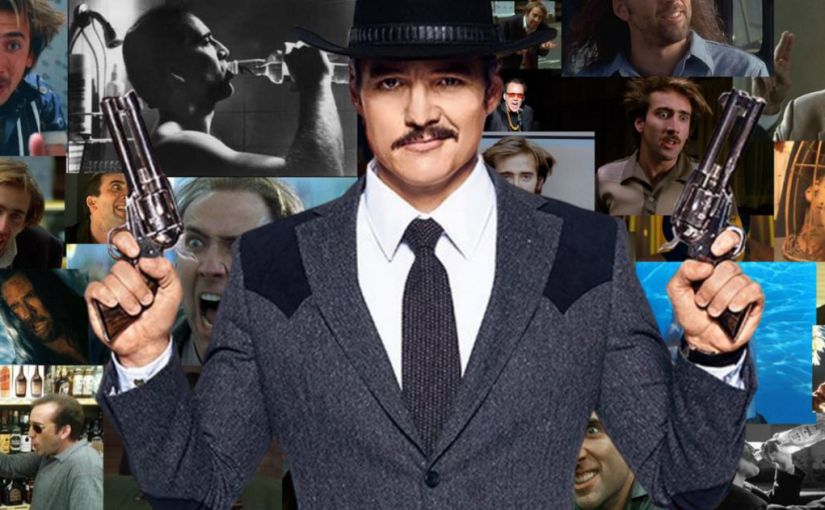
Cage portrays an account of himself, Nicolas Cage.  His career in Hollywood seems to always be scraping the bottom of the barrel and he comes up desperate for the next film that will financially sustain him.  Look actors gotta work too!  He’s so anxious for a part that he’ll recite a monologue with a dreadful Boston accent to a Hollywood producer as he’s waiting for the valet.  Alas, no roles are coming his way and he’s over $600,000 in debt.  Best that his agent (Neil Patrick Harris) can do is get him a million-dollar paycheck to spend a weekend at a supposed super fan’s island chateau.  Javi Gutierrez (Pedro Pascal) is that fan. 

As Nicolas’ stay commences, somehow, he finds himself caught up in a real-life action-packed story.  The CIA inadvertently recruits him to stay on top of Javi as they suspect he’s kidnapped the daughter of a foreign country’s President.  Yet, Javi doesn’t seem to give off any clues.  He’s only enthusiastically concerned with entertaining his celebrity guest and selling the adventure screenplay he’s written with Cage in mind.

I gave up on this film after the first fifteen minutes.  If I laughed three times during the course of the picture it was a lot.  The oversight that I think occurred here is that it never felt like a spoof of the actor Nicolas Cage.  Cage has a lot of suspect material in his past.  He’s a die-hard Superman fan.  After all, he named his son Kal-el.  Who does that?  As well, he’s infamously known to have recorded himself in a terrible looking Superman suit for Batman director Tim Burton to consider for a film revival with Cage in the superhero role.  Cage has also been married multiple times, including to Elvis Presley’s daughter at one point.  I believe his most recent marriage lasted all of three days.  He has his odd collection of film roles, and he’s a member of the famous Hollywood family, the Coppolas (as in Francis Ford and Sofia).  Yet, none of this material that comes to me off the top of my head makes its way into The Unbearable Weight Of Massive Talent.  The title seems to scream Nicolas Cage and yet this film is hardly about Nicolas Cage.

Instead, this film directed by Tom Gormican, who also co-wrote it, opts to actually turn the second half of the film into an actual shoot ‘em up adventure with clumsy comedy scraps.  Cage and Pascal scream amidst the bullets and car chases, but none of it is funny.  It certainly doesn’t reach the heights of Lethal Weapon fanfare.

I think back to a film called This Is The End which features the Judd Apatow fraternity of actors (James Franco, Seth Rogen, Jonah Hill and Jay Baruchel).  Earth is coming to an end and the celebrities play themselves.  The inside jokes were abundant with nods to their film careers, their penance for smoking weed and various gossip stories.  If Nicolas Cage is truly playing himself and this new film is selling itself on that message, then show me Nicolas Cage.  If you are just going to show an unfunny Pedro Pascal and clumsy gun fire galore, then you can easily swap out the celebrity at the center of it all and replace him with any other well-known actor.  Don Knotts could have been inserted here, or Charles Nelson Reilly.  Kim Kardashian could have had opportunity with this script.

Sure, there are some salutes to Cage’s film credits.  Javi’s secret man cave of all things Nicolas Cage is a little fun for the short while we are there.  Yet, what’s so relatable with a forgettable film like Guarding Tess?  It’s actually a good movie with Shirley MacLaine in the title role.  How many people actually saw it though, much less remember it?  Face/Off gets a nod but nothing great beyond the gold-plated prop guns he used.  Gone In Sixty Seconds is mentioned in one sentence of dialogue.  Con Air hearkens back to the bunny in the box for a beat.

Other than one well known celebrity cameo for a blink and you miss close up, the Hollywood populace doesn’t even turn up to roast the film’s star.  Imagine if Francis Ford Coppola made an appearance.  “Nic, stop embarrassing the family.”  Consider Sean Penn having a beer with Nicolas to reminisce about Fast Times At Ridgemont High (Nicolas’ first film appearance as a stoner dude, when his surname was Coppola).  There’s not even a mention about his Oscar winning turn in Leaving Las Vegas.

I am happy to admit that Nicolas Cage has a very storied career and life behind him, and yet hardly anything is touched upon in this film.  Instead, we are distracted with a kidnapped young woman that I don’t recall has even one line of dialogue in the picture.  If she did, it happened when I dozed off.

One avenue seems so obvious for a film intending to spoof this actor.  Walk with me for a second.  Nicolas Cage did the film Con Air with actor John Malkovich.  There’s already a much better film called Being John Malkovich that had a little fun at the expense of that real life actor.  It was written by Charlie Kaufman and directed by Spike Jonze.  Know what else Kaufman & Jonze wrote and directed?  A film called Adaptation with Nicolas Cage.  See where I’m going here?  This stuff writes itself.  I’d love to have watched a scene where Malkovich walks in and says “I know what you’re going through Nic.  I really do. Charlie and Spike never let up.”  There’s much to play with here. 

Yet instead, we are belabored with the unbearable weight of this unfunny film. 

COMING TO AMERICA

By Marc S. Sanders

Now Coming To America is a special kind of film. It’s rare movie where you’ll find a G rated story wrapped in R rated material and ultimately that is what Eddie Murphy and director John Landis brilliantly achieved.

Murphy plays Prince Akeem living a privileged life in the country of Zamunda where he has his own personal butt wipers and concubines who ensure him the royal penis is clean. He is now of the age where he is ready to meet his bride who has been groomed since birth to accommodate every need and preference the Prince has. However, Akeem is mature enough to realize that he wants to be married to someone who likes him for who he is, and not his wealth and stature. So with his best friend Simi (Arsenio Hall) in tow, they travel to Queens, New York under the guise of poor, humble people to find Akeem’s true love.

The story is Disney like and very simple. The gags are what has allowed Coming To America to hold on to its beloved longevity over thirty years later. It is one of Murphy’s last great films before he resorted to a lot of silly kiddie tripe like Daddy Day Care. This is a film that does a 180 flip on the Beverly Hills Cop storyline. In Cop, Murphy was the loudmouth offensive stranger in strange land. In this film, he remains a stranger, only this time the setting is full of loudmouths; this is Queens after all. Akeem is a lovable guy with good intentions and sensitivity. When he meets Lisa (Shari Headley) the daughter of a McDonald’s rip off franchisee (a hilarious John Amos), he becomes enamored and approaches with care despite her dating a jerk (Eriq La Salle) who inherited his family’s “Soul Glo” hair product enterprise.

The best attraction of the film however are Murphy and Hall’s various other characters they portray like Murphy as Randy Watson, lead singer of the band Sexual Chocolate (you know him as Joe the Policeman from the What’s Going Down? episode of That’s My Momma) and Hall as Reverend Brown who believes “There is a god someWHERE!!!” Not to mention the barbers who hang out beneath their apartment. Murphy and Hall are such a skilled pair of chemistry together. Why didn’t they do more films together? Harlem Knights? Ahem…let’s just not talk about that.

Landis was a good comedy director, a staple of the 1980’s films who would let the talents play for the camera and not try to reinvent the wheel. His approach here is the same as when he directed Murphy with Dan Aykroyd in Trading Places, or when he helmed Michael Jackson’s legendary Thriller music video. He knew these guys knew what they were doing. So, he just positioned the camera and let them go. Coming To America does run a little too long in some moments. I’m impressed by Paula Abdul’s choreography of tribal dancers, but I didn’t need to see all three minutes of it. A few of those moments run long, when all I want to do is get to the next gag or story development.

Still, if you are not a prude, I recommend Coming To America for a family viewing with your pre teen kids. I showed it to my daughter who is at the age when the sheer utterance of a curse word is hysterical; that’s a rite of passage in childhood as far as I’m concerned. The film contains no overt sexually active scenes, but there is some female nudity, and so what? My daughter knows what she is looking at. Bottom line Coming To America is a sweet Cinderella story that kids will love and adults will laugh at, over and over again until they know every line by heart.

MEATBALLS

By Marc S. Sanders

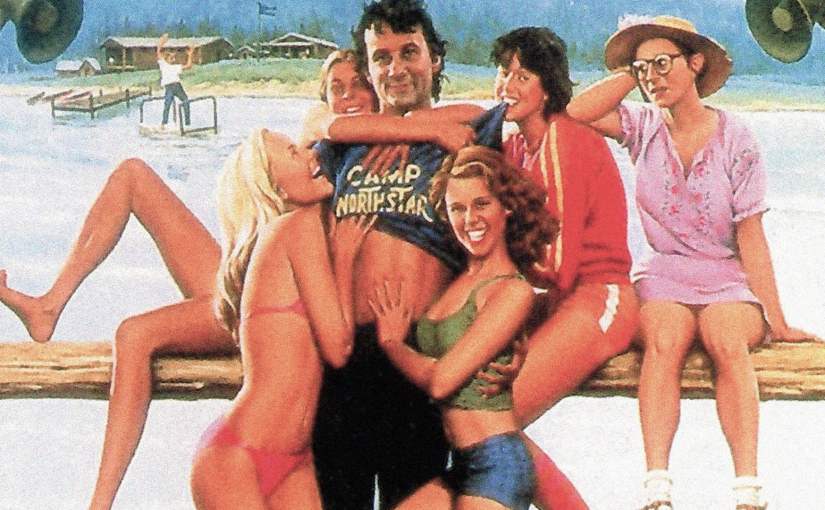
Director Ivan Reitman with Bill Murray and writer Harold Ramis made a fantastic team. Their summer camp comedy, Meatballs, from 1979 is not one of the all-time greats but it’s still a fun romp through the life of young campers peddled off under the supervision of teen counselors for eight weeks.

Meatballs works as an excuse to allow Bill Murray to break free from his SNL restraints and allow his off the cuff humor to improv its way through. As the head counselor named Tripper, Murray gives hilarious loudspeaker announcements about the cafeteria lunch or daily activities. He also uses his CITs, with names like Spaz, Crockett and Fink to carry Morty (“Hi Mickey!”) the camp manager who’s sleeping in his bunk out into the woods, or the lake or high up in a tree for his morning wake up surprise. This is all Animal House lite.

A touching secondary story involves a lonely teen camper named Rudy (Chris Makepeace) to bond with Tripper. Though I enjoyed my summer camp days, I was much like Rudy, not an athlete. I was a fast runner though, and Tripper with the Bill Murray personality builds Rudy’s confidence during the film leading up to the climactic inter camp big race. It’s not necessarily a well-rounded storyline. It tidies itself up pretty neatly by the end, but it’s a break from the material shenanigans, in between. Look, even a film like Meatballs needs some semblance of story somewhere.

The fun comes in brief skits with Meatballs. There’s sing along songs like “Are You Ready For The Summer?” and the campfire favorite “We’re The North Star CITs!” There’s the hot dog eating contest, Spaz’ spoon water relay and the basketball game against the wealthy, neighboring camp who can’t keep their shorts up.

Meatballs is a movie that would be shot with better quality on an iPhone today, but the dated camp days of the late ‘70s remain cherished here, before we became reliant upon technology. It’s a time where we depended on the outdoors, without mom and dad, and getting into harmless trouble while making new friends and discovering our freedom and ourselves.

The original Meatballs still has some material that’s worth a watch, and it still makes me yearn for my cabin bunk days. It’s nice to reminisce and it’s all just fun.

THE FORTUNE COOKIE (1966)

by Miguel E. Rodriguez

Director: Billy Wilder
Cast: Jack Lemmon, Walter Matthau, Ron Rich, Judi West
My Rating: 5/10
Rotten Tomatometer: 96%

PLOT: A crooked lawyer persuades his brother-in-law to feign a serious injury.


Billy Wilder’s The Fortune Cookie reminds me of what it might be like to watch Jerry Lee Lewis play “Chopsticks.”  You sense it’s being done as well as it possibly can be done, but you wonder why it’s being done at all.  C’mon, man, let’s hear “Great Balls of Fire!”

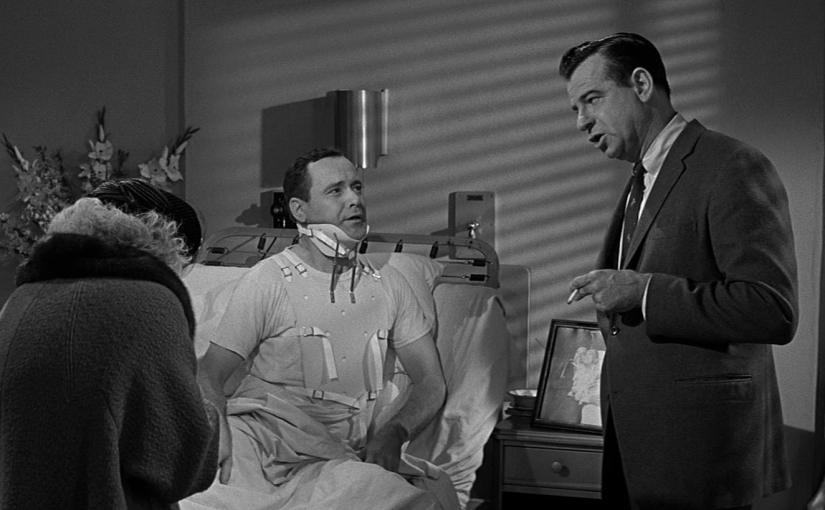
Notable for being the first of twelve films Jack Lemmon and Walter Matthau starred in together, The Fortune Cookie tells the story of a hapless TV cameraman, Harry Hinkle (Lemmon), who is covering a Cleveland Browns football game from the sidelines.  A burly punt returner accidentally runs him over during a play and knocks Harry out cold.  While he recuperates in a hospital bed, his thoroughly unscrupulous brother-in-lawyer, Willie (Matthau), concocts a very modern-sounding plan: Harry will fake serious injuries in the hospital so Willie can work his magic with the insurance company and get a big payout.  Harry demurs at first but is enticed to go along when he finds out his ex-wife, for whom he still carries a torch, is very interested in assisting with his recuperation from his “serious” injuries.

Meanwhile, the poor football player who knocked him down, Luther (Ron Rich), is wracked with guilt over the damage he thinks he’s caused.  He pitches in to buy Harry a motorized wheelchair and offers to assist with his rehab back at home.  This gnaws at Harry’s conscience.  Things don’t get any better when he’s brought a lunch of Chinese food at the hospital, and the fortune inside his fortune cookie bears a grim warning…

There’s nothing wrong with The Fortune Cookie that a rewrite or some editing couldn’t have fixed.  That might be considered sacrilege, considering the script was penned by Wilder himself and his legendary writing partner, I.A.L. Diamond, but in watching the film, I was struck by how many scenes involved a semi-static camera just watching people talk, and talk, and talk.  I don’t mind a lot of dialogue in a scene when the characters have something to say, or when the story is being driven forward.  But here, we usually get a five-minute scene when a two-minute scene could have done the job just fine.

Take one scene in particular that almost had me literally nodding off, when Harry’s ex-wife, Sandy (Judi West), has returned home to help with Harry’s rehab.  Harry is still feeling guilty about the sham he’s perpetrating, but he’s so besotted with Sandy that he’s willing to keep up the pretense just to keep her around.  They catch up a little, blah blah blah, he says he never threw away his ring, blah blah blah, she dumps out her purse looking for her ring, blah blah blah, he puts on a little music, he’s happy, she’s happy, and <snoorrrrrrre.>

I could list any number of films, including some of Wilder’s other films, where other characters talked for even longer than Harry and Sandy, but they were so much more interesting!  What happened here?  What went wrong?  Even in the scenes where Willie, the huckster, is rattling off his grand plans and needling the insurance company attorneys, Matthau just comes off as a two-bit hack that no sane person would pay any attention to.

I’m not saying he must be likable, that dreaded word.  There are movies that are very, very good and that contain nothing BUT unlikable characters. (Anyone wanna watch The Godfather?) But here, something is off with the tone.  When I wasn’t bored, I was inflamed with distaste for what Harry was being forced to do, both by Willie and by his own hormones.

The movie does have one saving grace.  The comeuppance, when it, er, comes up, is brought about with the kind of shock comedy scene that Mel Brooks might have loved.  I don’t want to spoil it, but it features the kind of language that would have been right at home in Blazing Saddles.  When I got over the shock of what I had just heard, I sat back in admiration and smiled, and thought to myself, a little ruefully, “Now what would this movie have been like if it had been this nervy all the way through, instead of just here at the end?”

But The Fortune Cookie even mucks up the ending with an “epilogue” scene that’s so gratuitously manipulative, I wouldn’t be surprised if it had been tacked on by the studio who demanded a happy ending, or at least a happier ending.  If the movie had earned it, I’d have been on board, but everything that came before was so humdrum that it felt super-cheesy.

Billy Wilder’s résumé reads like the Pixar catalog: one hit after the other with only a couple of rare misses.  Double Indemnity.  The Lost Weekend.  Sunset Boulevard.  Ace in the Hole.  Stalag 17.  Sabrina.  Witness for the Prosecution.  Some Like It Hot.  The Apartment.  Even One, Two, Three, which may not exactly be his finest moment, but at least it had James Cagney to liven things up.  I ask again: what happened here?  Where is the dynamite chemistry between Lemmon and Matthau that would become legendary in later films?  Where is the zaniness of Some Like It Hot or the earned pathos of The Apartment or the edginess of Ace in the Hole and Stalag 17?

According to the trivia section on IMDb, the opening football game sequences were filmed during an actual Vikings-Browns football game, which the Browns lost, at home, 27-17.  After watching this movie, I felt like those Cleveland fans must have felt: always glad to see my boys play, but man, it would have been WAY cooler if they had won.

WEIRD SCIENCE

By Marc S. Sanders

John Hughes, as a writer, stretched his imagination far at times. Really far!!!!! You’d have to, to build up your confidence to make a ridiculous comedy like Weird Science come to life. The movie is blatantly absurd, outrageous, a little crude and outright nonsensical. It’s Frankenstein meets Pretty In Pink. It’s alive!!!!!

Double, maybe quadruple, Uber Nerds Gary and Wyatt (Anthony Michael Hall, Ilan Mitchell-Smith) spend their Friday night in front of the computer to create the hottest woman ever. With the help of a Barbie doll and some Playboy centerfolds, nothing on earth will compare to this creation for the XX chromosome community. They give her a brain as well by scanning in photographs of Albert Einstein, of course. From there, “Lisa” (Kelly LeBrock), with the toned body that SCREAMS SEX, plots out the boys’ weekend at a blues club, then the mall and later a party at Wyatt’s house where the boys’ reputations are enhanced almost as well as Lisa’s chest.

Lisa helps Gary and Wyatt overcome their insecurities with their popular girl crushes and teaches Chet, Wyatt’s idiot green beret brother, to lay off. Chet is played by Bill Paxton. Can you imagine anyone else playing Chet?

There’s a cuteness to Weird Science. However, the slapstick gags are what really wins. Either you like this silliness or you don’t. I get amused watching all the furnishings of Wyatt’s house, including the Baby Grand piano, get sucked out the chimney along with a half-naked girl. I love it when Lisa freezes the blue blood grandparents in the pantry closet or when she erases the memory of Gary’s father. I also like how Chet is reduced to a big blob of literal shit. Then there’s the nuclear missile that rises out of the floor, up through the roof.

Take off your cap of sophisticated maturity, and just appreciate silly, sophomoric comedy for a change. It’s all harmless, anyway. Lisa makes sure everything is back in its place by the end, only now it’s better and funnier than before.

NOTTING HILL

By Marc S. Sanders

Notting Hill written by Richard Curtis (Love, Actually) and directed by Roger Michell is a pleasant surprise of a romantic comedy. It’s not a perfect film but it certainly loves every one of its quirky supporting characters, as well as its two straight romantic leads played by Julia Roberts and Hugh Grant.

Grant plays Will Thacker who lives in the Notting Hill district of London where every proprietor is a charming little shop of some form or other; a quaint street where merchants appear on the sidewalks during the weekends selling their art or homemade jams or coffee products. Will owns a travel book shop located across the street from his flat that is whimsically recognized by its big blue front door. His wife left him for another man and now he’s relegated himself to living with a roommate called Spike (character actor Rhys Ifans doing a British equivalent of Cosmo Kramer, Seinfeld’s neighbor).

One day the superstar celebrity Anna Scott (Roberts) simply strolls into Will’s store. They have a quiet moment and he sells her a travel book about Turkey that he didn’t recommend she purchase. Moments later they run into each other down the street when Will spills orange juice all over Anna. From there, a meet cute relationship begins to unfold. It’s not so simple for the pair though as Anna’s enormous celebrity is hard to negotiate; hard for Anna, not hard for Will.

Anna is at ease when she can have a quiet dinner to celebrate Will’s sister’s birthday with his friends or when she can escape her turbulent life of gossip magazines and paparazzi by taking shelter at Will’s flat, even if grungy looking Spike walks in on her taking a bath.

I like Notting Hill. However, the quiet moments shared between Grant and Roberts sometimes carry on too long. Oh my gosh!!!! Will someone say something already????? Hugh Grant has made characters that trip over their words and stumble with what to say into a master craft. Julia Roberts is one actress that a camera loves especially when she’s distressed. A crying moment in any one of her films will milk the scene for every blush, or glassy eye or tear and whisper she can offer. She’s a terrifically skilled actress in almost any film she does. Eventually, we have to move on from all of this though. My patience for some scenes were just running way too long for me at times. Kiss already!!!! Make love already!!!! Scream at each other already!!!!

Fortunately, there’s much escape to be had with the supporting cast, especially Ifans as Spike who is the most absent minded, lovable, dirty underwear wearing and sloppy prig imaginable. Emma Chambers is just as fetching with her scarlet pigtailed haircut as Will’s sister, Honey. Tim McInnery, Gina McKee, James Dreyfus and Hugh Bonneville round out this madcap collection. The birthday dinner party is a great scene for this ensemble as a comedic but relaxed chemistry blends nicely during a competition to see who is suffering the most to earn the last brownie on the dessert plate. The group is unsure how to include a movie star like Anna in their simplicity but Julia Roberts pulls off a trick that even had me fooled. Simply put, for the whole cast, there’s just that much more life and vibrancy when they are all together and it’s not just relegated to only Roberts and Grant in a scene.

Another special moment occurs later when the couple have split up once again. To depict time fleeting by, Roger Michell offers up a transition of Will wearing one outfit but walking through the hustle and bustle of Notting Hill as the weather and seasons seamlessly change all around him from sunlight to rain to snow and spring sunlight again. You even get a glimpse of Honey starting a flirtatious relationship at the beginning of the sequence and by the time it’s over a minute later Honey is breaking up with the guy. It’s a wonderful moment of wordless narration to show Will’s struggle with moving on as time continues to pass by. More importantly, it allows the titled setting to be a character of its own. This is a great example of showing a lovesick character unable to move on while life has no patience to wait for him to catch up.

I like Hugh Grant and Julia Roberts whether it’s in Notting Hill or one of their many other fine movies. I can’t deny the chemistry they have in this film. It works. I only wanted a little more life to the material that was handed to them. Still, Notting Hill is charming and simply a very sweet romantic comedy.

THE LOST CITY

By Marc S. Sanders

Sandra Bullock’s film The Lost City is nothing more than rollicking fun at the movie theater.  A popcorn movie.  You can simply focus on gorging yourself with endless amounts of popped kernels and large fizzy drinks and you’ll never find yourself lost in a complex plot.  It’s a screwball adventure in the same vein of Romancing The Stone.  What I appreciate is that it is not a duplicate blueprint of Romancing The Stone.  Maybe just the opening scene, but no matter.

Bullock is Loretta, a reclusive romance novelist, who knows that her books are nothing more than cheesy pulp material to the umpteenth degree.  Her agent Beth (Da’Vine Joy Randolph) keeps a positive attitude as she encourages a book tour to promote Loretta’s newest installment in a series that follows the adventures of Loretta’s fictional swashbuckler.  That hero is preserved on the covers of her novels in the image of fashion model, Alan (Channing Tatum) – a Fabio inspiration.  Alan dons the gorgeous blond locks wig with the beefcake chest and the fans seem to go wild for him more than they do for Loretta’s work.  Even the glittery purple jumpsuit with stiletto heels that Loretta dons for an appearance at a book fair doesn’t deter the screaming fans away from Alan’s muscular build and chiseled chin.

When Loretta is captured by a spoiled brat of a villain known as Abigail Fairfax (Daniel Radcliffe), she finds herself having to research the location of a lost city on a remote island rumored to possess treasures beyond anyone’s wildest dreams.  Somehow, within Loretta’s fiction she implied the actual location of this place.  Abigail needs her to delve even further towards the destination.

This all sounds cliché.  It is, actually.  So what!

What saves The Lost City is the screwball comedic approach to the film.  Bullock and Tatum are nearly twenty years apart in age.  Yet, they make a great pair in the same way that Hepburn and Grant did in Bringing Up Baby.  I could care less about the actual lost city and whatever treasure was there.  The symbols etched on an old piece of parchment that Loretta attempts to decipher never mattered to me.  Two days after seeing the movie, I don’t even remember what the lost city revealed when they eventually got there.  I did like the endless pratfalls of Tatum and Bullock, however. 

Channing Tatum looks like the adventurer of a romance novel.  Yet, he’s nothing more than a pretty boy or a “mimbo” as Jerry Seinfeld might describe him.  He’s actually got a crush on Loretta and upon determining that she’s been kidnapped, he recruits the legendary problem solver Jack Trainer (who could only be encapsulated in the form of a gorgeously blond, tan and muscular Brad Pitt) to rescue Loretta.  It’s important to Alan, though, that he gets recognized as the savior.  So, he kind of learns as he goes. 

Adventures in the jungle abound.  There are bad guys on motorcycles.  Guns, of course.  Fires within Alastair’s luxury SUV. Rock climbing.  Rivers with leeches.  Dark caverns and on and on and on.  Yeah.  I’ve seen this all before.  Again, I say so what!  It’s just a fun time at the movies that brought me back to the fast-paced escapades found in the 1980’s films I grew up on.  Yet, it has its own spin thanks to the relationship of Alan and Loretta.

Daniel Radcliffe and his beard are also great characters.  It’s a nice departure from the shoe horned role that’ll never leave him as a certain boy wizard who will not be named here.  He just brings out his fun bratty side.  His beard seems to wink along with him.

A better side story could have come with Da’Vine Joy Randolph though.  As the agent goes from one traveling step to the next as she attempts to find Loretta herself, Randolph just doesn’t look comfortable in the role with her sky-blue pant suit and big breasted physique that is intentionally in your face.  Where’s the slapstick that should be accompanying her?  She’s specifically made up to look like diva luxury and you’re waiting for one disaster after another to befall her. Beyond having to fly on a puddle jumper plane carrying farm animals, she simply survives her trek unscathed.  Either this storyline should have been excised all together, or it should have been rewritten to be just as silly as what Bullock and Tatum are delivering.  A flop in the mud or a slip in the river would have helped this plotline. 

The Lost City is just a cute film for Sandra Bullock and Channing Tatum to look…well…cute together, and in a world where celebrities are slapping each other silly on live television, isn’t this a much better escape on a Saturday afternoon?

BULL DURHAM

By Marc S. Sanders

How Susan Sarandon did not even get nominated for an Oscar for Ron Shelton’s Bull Durham, I’ll never know. Shelton writes the character of the lustrous, Annie Savoy with grace, wisdom and silky sex appeal. It remains one of the best female characters to ever appear on a screen and no one else could have played the part other than Sarandon.

Shelton’s sensational script opens with Annie’s declaration that she believes in the “church of baseball” and from there it waxes poetic on the sport’s religion and traditions as Annie uses her charm to seduce the Durham Bulls’ newest talent, dim witted pitcher Eppy Calvin “Nuke” Laloosh (Tim Robbins) leaving the team’s experienced catcher Crash Davis (Kevin Costner) wanting more. That is until Annie realizes that she’s the one who wants more.

Davis is recruited to groom Nuke for the big leagues. Nuke has got a million dollar fast ball arm but he “…fucks like he pitches. Sort of all over the place.” Crash is the frustrated player with talent but the sun is setting on his opportunity for the big leagues. Dumb Nuke has a future that just doesn’t seem fair to Crash. Annie is no help when she chooses Nuke over Crash to hook up with for the season.

Shelton explores so many dimensions in his script. It does not solely focus on the three primary characters. The screenplay stirs in a mixture of what it’s like to serve on a minor league team with bats and gloves that are cursed, the urge for a rain out game or what present to get Bobby and Millie for their wedding. A call to the mound might settle some of these things.

Shelton directs his script with a very natural approach. Watch Crash and Annie flirt in a batting cage. Costner and Sarandon don’t even flinch as the balls whiz between them. Baseball is a part of these characters. They live and breathe baseball and they relish sex.

Shelton’s last 15 minutes of film offer a celebration of sexual release that appears pleasant, fun and somewhat religious as the chemistry between Costner and Sarandon remains strong. They rattle the whole house it seems and the kitchen will never be the same.

Robbins is great with his idiocy. He wasn’t as well known when this film was released in 1988. His surprise appearance of stupidity is so lovable and welcome. When he tries to think he gets himself in trouble. When he listens to his coaches, Annie and Crash, he excels. The pains he goes through upon their advice is ridiculously hilarious. Don’t forget to breathe through your eyelids, Nuke.

I also gotta recognize Robert Wuhl and Trey Wilson as the managers of the team. They are hilarious but not overt. Wuhl is great as he bellows out encouraging but incomprehensible cheers from the dugout. Wilson looks on with tired facial expressions.

This cast is invested in the cloth of America’s pastime. They know the batting averages. They read the signs. They play for the crowds. It’s as if Shelton moseyed into the town of Durham, North Carolina, put his camera up and watched how another season all played out. His lens could have been working with a documentary mindset.

Bull Durham is one of the best scripts ever written full of brilliant one liners and philosophies that I might not entirely understand what any of it is referencing. Yet when Annie or Crash carry on, I can’t help but suddenly get interested.

Bull Durham is the best baseball film ever made performed by an outstanding cast led by a director with a clear, wide-open vision.

Play ball!!!