STAR WARS EPISODE I: THE PHANTOM MENACE

By Marc S. Sanders

22 years after the first Star Wars film made a ginormous cultural impact on the world, George Lucas finally returned to the franchise to make the first film of a new prequel trilogy with Star Wars Episode I: The Phantom Menace. It was hyped beyond measure, and it sold gazillions in ticket sales but was nevertheless a letdown for diehard fans and pretty much everyone else. I don’t think it’s a terrible movie. I just don’t understand how necessary the film is.

There’s a lot of irrelevant moments here. Early on two Jedi step off a ship, and a droid introduces herself to them and says “this way please,” and the three figures literally walk out of frame. This takes up time that I don’t understand. Why couldn’t the three just end up in the room they were supposed to be in? There are a lot of “so what?” moments in The Phantom Menace, and it all weighs the film down, hindering a story.

Listening to an audio commentary a number of years ago, one of the visual effects makers pats himself on the back of a shot midway through the film that consists primarily of CGI characters and sets. That was when I realized the conception of The Phantom Menace was completed with a short-sighted intent. Sure the scene might have been a technical breakthrough in 1999, but where’s the story? Fact is, there is no story and little regard for the celebrated franchise in Episode I. Lucas and his team were more concerned with shooting new CGI discoveries blended with human interaction. They offered next to no regard for intelligent plot and storytelling. The film suffers because of Lucasfilm’s hubris.

Consider the pod race. There’s a moment where young Anakin’s (Jake Lloyd) racer falls apart at high speed and he’s gotta get it back together. He uses a magnetic tool to get a cable plugged back in. If this child is “the chosen one” and potentially “dangerous,” why not show the child potentially use the force to bring the cable back in place? Why not show moments where unexplainable power emits from Anakin, to what would imply the inevitablity we are aware will eventually happen?

Lucas is also all over the place in his storytelling and characters. From the Shakespearean manipulator, Senator Palpatine, to the immature cartoon like Jar Jar Binks. I think they all serve a purpose to entertain. Yet while adults and die hard fans will relish the return of Ian McDiarmid (a terrific actor) they’ll be bored to death with actor Ahmed Best in the Jar Jar role. This I expect happens in vice versa with 8 year olds seeing their toy figures come to life. There is a silly charm to Jar Jar, but what 8 year old wants to pay attention or even comprehend debates among galactic senators over taxation and trade? It’s as if Bugs Bunny entered the halls of Congress, or Othello walked in on a pie throwing melee among the Three Stooges. At almost every point in The Phantom Menace something doesn’t belong or seems out of place.

The film moves far away from the tradition of the original trilogy. For the first time the human characters are enormously flat. Liam Neeson, Natalie Portman, Ewan McGregor…all flat, all bland. There’s no snarkiness to them. No sarcasm. Before The Phantom Menace when was it ever said that the Jedi order was so formal in their ways? It doesn’t feel very fun to be a Jedi, like it did for Alec Guinness and Mark Hamill before.

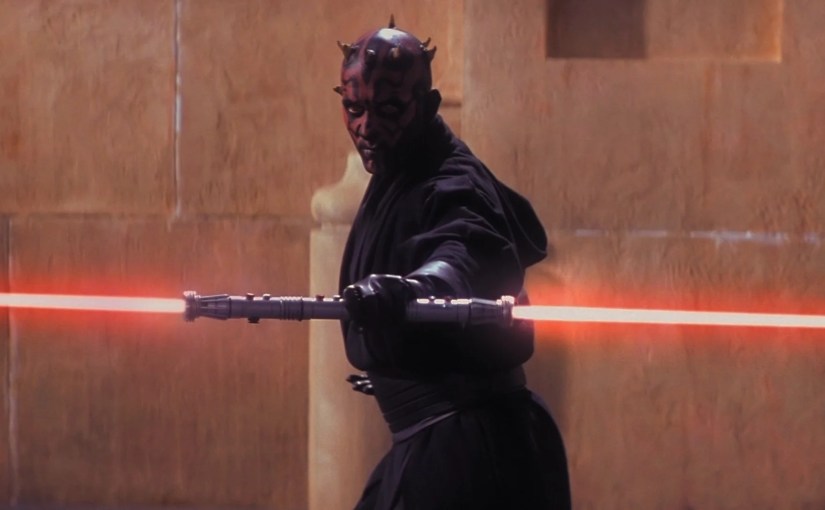
The two redeeming qualities of this film belong to the pod race which is thrillingly edited in sound and visuals. There’s some fun shots of each racer, the pit droids, the crowds in the stands and even Jabba The Hutt. The film really comes alive here much like the memorable cantina scene from the original Star Wars. The other best feature is the villain, the apprentice to the phantom menace, the red and black tattooed Darth Maul played by the agile martial artist Ray Park.

Lucas didn’t use Park enough in the film. With his double bladed lightsaber, the two on one dual Park has with the Jedi characters towards the end is one of the greatest sword fights in film. I would’ve welcomed an additional five minutes of this scene. Shamefully, this would be Ray Park’s only appearance in the film franchise, as well as Darth Maul. This was a great blend of actor and character. Lucas abandoned a good thing too soon.

Yes! I have much to complain about The Phantom Menace. Yet it is not all bad as a whole. I love the political trickery that McDiarmid displays and the senate meeting among the delegates is a nice foreshadowing for what we know will come of it. Visually, it’s a treat as well. (Again, though, what kids are going to be entertained by all of that?) The pod race and lightsaber dueling are masterful as well. There’s some good material here. There just could’ve been a whole lot more….and a whole lot less overall.

COMING TO AMERICA

By Marc S. Sanders

Now Coming To America is a special kind of film. It’s rare movie where you’ll find a G rated story wrapped in R rated material and ultimately that is what Eddie Murphy and director John Landis brilliantly achieved.

Murphy plays Prince Akeem living a privileged life in the country of Zamunda where he has his own personal butt wipers and concubines who ensure him the royal penis is clean. He is now of the age where he is ready to meet his bride who has been groomed since birth to accommodate every need and preference the Prince has. However, Akeem is mature enough to realize that he wants to be married to someone who likes him for who he is, and not his wealth and stature. So with his best friend Simi (Arsenio Hall) in tow, they travel to Queens, New York under the guise of poor, humble people to find Akeem’s true love.

The story is Disney like and very simple. The gags are what has allowed Coming To America to hold on to its beloved longevity over thirty years later. It is one of Murphy’s last great films before he resorted to a lot of silly kiddie tripe like Daddy Day Care. This is a film that does a 180 flip on the Beverly Hills Cop storyline. In Cop, Murphy was the loudmouth offensive stranger in strange land. In this film, he remains a stranger, only this time the setting is full of loudmouths; this is Queens after all. Akeem is a lovable guy with good intentions and sensitivity. When he meets Lisa (Shari Headley) the daughter of a McDonald’s rip off franchisee (a hilarious John Amos), he becomes enamored and approaches with care despite her dating a jerk (Eriq La Salle) who inherited his family’s “Soul Glo” hair product enterprise.

The best attraction of the film however are Murphy and Hall’s various other characters they portray like Murphy as Randy Watson, lead singer of the band Sexual Chocolate (you know him as Joe the Policeman from the What’s Going Down? episode of That’s My Momma) and Hall as Reverend Brown who believes “There is a god someWHERE!!!” Not to mention the barbers who hang out beneath their apartment. Murphy and Hall are such a skilled pair of chemistry together. Why didn’t they do more films together? Harlem Knights? Ahem…let’s just not talk about that.

Landis was a good comedy director, a staple of the 1980’s films who would let the talents play for the camera and not try to reinvent the wheel. His approach here is the same as when he directed Murphy with Dan Aykroyd in Trading Places, or when he helmed Michael Jackson’s legendary Thriller music video. He knew these guys knew what they were doing. So, he just positioned the camera and let them go. Coming To America does run a little too long in some moments. I’m impressed by Paula Abdul’s choreography of tribal dancers, but I didn’t need to see all three minutes of it. A few of those moments run long, when all I want to do is get to the next gag or story development.

Still, if you are not a prude, I recommend Coming To America for a family viewing with your pre teen kids. I showed it to my daughter who is at the age when the sheer utterance of a curse word is hysterical; that’s a rite of passage in childhood as far as I’m concerned. The film contains no overt sexually active scenes, but there is some female nudity, and so what? My daughter knows what she is looking at. Bottom line Coming To America is a sweet Cinderella story that kids will love and adults will laugh at, over and over again until they know every line by heart.

TRUE ROMANCE

By Marc S. Sanders

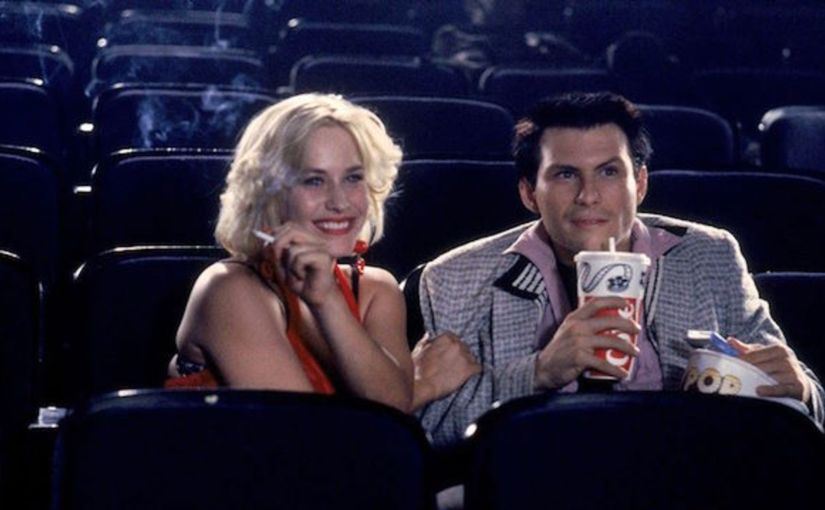
The structure built into the script for True Romance by Quentin Tarantino, directed by Tony Scott, is like the trunk of a solid oak tree with strong, sturdy branches representing its collection of seedy characters in off color scenes. Tarantino sets it up – an Elvis infatuated boy meets a rookie call girl (Christian Slater, Patricia Arquette). Boy marries girl, and then boy & girl find a suitcase filled with a fortune in uncut cocaine. A simple storyline that now allows a bunch of fun, short vignettes to be played out, all leading to one moment after the other within this universe of outlandish, lurid debauchery.

What works so well in True Romance is that literally from beginning to end, you are always meeting a new and incredibly interesting character. Each scene welcomes someone else into the fold. For that, you need an all-star cast. Gary Oldman, Samuel L. Jackson, Christopher Walken, Val Kilmer, Conchata Farrell, Dennis Hopper, James Gandolfini, Brad Pitt, Bronson Pinchot, Saul Rubinek, Michael Rapaport, Tom Sizemore, Chris Penn, Ed Lauter, Elvis & martial arts master Sonny Chiba. The list goes on and on. It should be noted that some of this cast were hardly bankable stars before this film, which flopped at the box office in 1993. Before the movie became a cult B movie obsession on home video and cable, it was blazing the trail of well-established careers for much of its talent.

Nearly every character can have a story of their own written about them. Take Gary Oldman in one of his best roles as the vicious looking pimp named Drexel, a white guy adopting a Jamaican gangsta accent with dreadlocks, gold caps on his teeth, a blind eye and wickedly curved scar down the side of his face. His appearance alone makes me beg to know this guy’s background in a whole other movie. Drexel’s introduction comes early when he pumps a shotgun into two hoods. Shortly thereafter he’s conversing with Clarence Worley (Slater), and we know who’s in charge of this scene. Oldman is only given about 10 minutes of screen time, but it’s hardly forgettable.

The same goes for Walken, as a well-dressed mafia don interrogating Clarence’s father (Hopper). This scene has become legendary for film lovers, and it carries into a stratosphere of intelligence and timing in performance duality. It remains one of the best scenes Tarantino ever wrote as we learn a probable origin of Sicilians from a doomed Dennis Hopper. This is an acting class at its finest.

Jeffrey L Kimball filmed the piece showing contrasts of a wintery cold and dirty Detroit versus a sun-soaked Los Angeles. It’s sharp photography of gorgeous colors schemes.

Hans Zimmer scored the soundtrack, deliberately saluting Terrance Malick’s Badlands where we followed a similarly young criminal couple played by Martin Sheen and Sissy Spacek. Zimmer’s fun, melodic tones to celebrate Arquette and Slater’s adventures is perfectly in tune with the two-dimensional charm of their new and happy relationship. Most of Tarantino’s script is not taken seriously. Zimmer was the right device for that.

A few spare moments are played with dread, though. Slater and Arquette are truly in love. So, Tarantino & Scott threaten what the film treasures. Arquette as a call girl named Alabama Worley is incredible throughout the film. She’s a silly, adorably cute Southern belle dressed in secondhand store accessories, such as a cow spotted patterned skirt with neon blue sunglasses, and red cowgirl boots. This is not someone you’d hire to manage your accounting firm or run a library. However, Arquette’s emotional range really comes through during a brutal beating scene with Gandolfini. It pains a viewer to watch the moment, but it comes long after we’ve grown to love her.

Later, towards the end, our favorite couple is again endangered during a three way Mexican standoff. It’s hilarious, and way off kilter, but then it also gets downright scary.

That’s the beauty of True Romance. It’s a well-organized mess of emotions from comedy to drama to violence and silliness. Tarantino has great set pieces put together in a connect the dots rhythm.

It’s an endlessly quotable film. It’s a visual film. It’s a literal roller coaster of dangerously amusing storytelling told with affection and gratuity. It’s also quite sweet.

True Romance remains one of my favorite films of all time.

AVENGERS: AGE OF ULTRON

By Marc S. Sanders

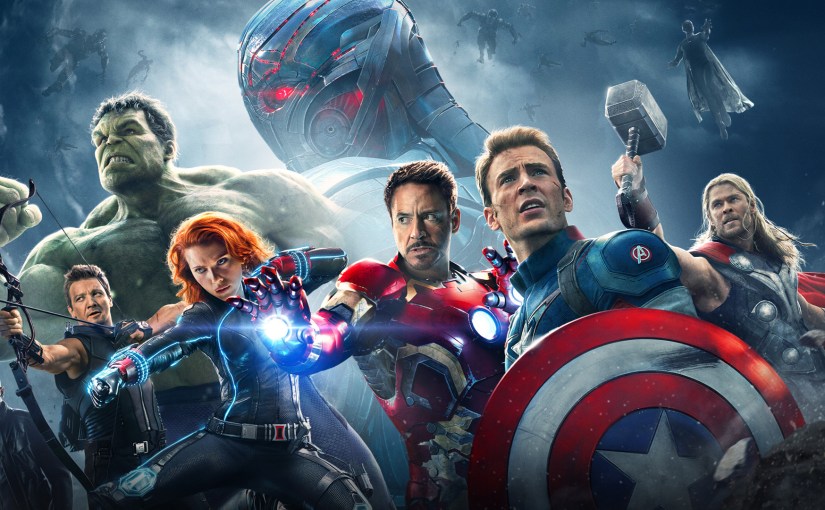
The character of Ultron, a terrorizing cyborg, has been a favorite Marvel Comics villain of mine ever since I discovered him in 1984 during the Secret Wars 12 issue limited run. He looked sinister with a devilish face in the shape of a metallic claw. His sonic blasts appeared more destructive than anything else ever drawn on the page. Ultron was a badass!!! (“Language!”). That being said, the cinematic interpretation is quite different, yet he’s modeled on a much more grown up sculpt.

Ultron is still a terrorist bent on utter destruction, but now he has a disregard for man. He’s written quite inventively as a direct contradiction to arguably the favorite of all the Marvel cinematic characters, Iron Man aka Tony Stark. How fitting that James Spader is cast opposite his former brat pack cast mate (Less Than Zero), Robert Downey, Jr. It is really uncanny how the dialect of Spader’s limitless Ultron can sound just like Downey’s genius Stark but with a means of annihilation; “All of you against all of me.” Ultron is smart first, powerful second. He’s not just a monochromatic android. There’s a means to his end and an inventive science to his purpose; uproot a country high in the sky and then DROP IT BACK DOWN INTO THE PLANET, like an anvil flattening Wile E. Coyote. It’s actually more novel than I’m giving it credit for.

Most Marvel afficianados from the blogs, and fellow colleagues as well, do not care much for this chapter in the MCU. I have yet to understand why. Again, each character is really drawn out beautifully by Joss Whedon with a respective storyline. Finally, Jeremy Renner’s Hawkeye is given some oomph to his back story. So is Paul Bettany as the other cyborg, Vision, formerly J.A.R.V.I.S, the artificial intelligence.

Vision/J.A.R.V.I.S. outshines Data (“Star Trek: TNG,” apologies to my friend, Jim Johnson), but will never top C-3PO. I like how he’s introduced as an amalgamation of all of the film’s main characters’ abilities. Bruce Banner and Tony Stark, Thor, Ultron, Scarlet Witch, some brilliant doctor friend, and even the nation of Wakanda. They all have a piece of themselves in Vision. It’s a better story than the comics ever suggested. Maybe I’m biased having grown up on these stories, but the Vision element makes me want to clap every time I see it. So inventive and economically told for a two-hour film with a ginormous cast. Vision’s introduction is one of the best scenes in all of the Marvel Cinematic Universe.

A great device to unhinge most of the Avengers comes through by means of Elizabeth Olsen’s Scarlet Witch (identified as Wanda Maximoff) who cripples them with mind control. How else should a sorceress take out a whole lotta muscle? It works and it gives Olsen conflict to play with. The visual effects surrounding her are also pretty cool. Sure, it might be just some neon red mist, but the cinematography and CGI surrounding her look gorgeous.

This installment also serves as neat set up for what’s to come. Quick Easter Egg in Age Of Ultron: Tony Stark Name drops the term “Endgame.” Oooooooo!!!!!!

It is really admirable what Marvel and Disney have done with the MCU, and especially watching this film. It’s ironic how filmmaker James Cameron made a statement hoping for “Avengers fatigue” so the phenomenon can die down in movie houses, etc. Funny! For me, seeing all of Ultron’s toys and wit seemed to outshine quite a bit of the residuals spawned from Cameron’s Terminator franchise.

Whedon wrote and directed a film with much more intelligence, wit, at least as much action, and threat than I ever got from Cameron’s reputation of clunky dialogue and plot hole time travel storytelling. It would do Mr. Cameron well to maybe not throw stones at the glass Avengers towers. I’m skeptical that his upcoming FOUR Avatar films will carry the smirk inducing cues the MCU has used to its advantage.

DO THE RIGHT THING

By Marc S. Sanders

inally, after 30 years, I’ve caught up to a film that has eluded me, Spike Lee’s masterpiece Do The Right Thing. Here is a film from 1989 that really could have been made in 2019. At the very least, it should be rereleased in the theatres. We desperately need this film right now.

My view of Spike Lee has gradually changed over just the last year. It must be due to the current political and socioeconomic climate. I’ve become terribly sensitive to what I see in the news these days.

Following seeing BlacKkKlansman and now this film, Lee really is aware of how low humanity can go. Do The Right Thing offers just a little push that leads to an endless fall, however.

Lee’s film was shot on location in the Bedford-Stuyvesant neighborhood in Brooklyn. The story takes place on a day where the heat wave has reached a record high, so the predominantly black community has turned on the fire hydrant and Sal’s Pizzeria is open for business. Sal is played by Danny Aiello in an Oscar nominated performance. The main character that everyone knows is Mookie, Sal’s trusted delivery guy, played by Spike Lee. Mookie is well aware of Sal’s mild prejudices towards his customers; mild compared to Pino’s blatant racism (John Turturro), Sal’s older son who works for him along with Vito, the other son.

The film is a day in the life when it appears the same daily routines occur yet again. Mookie delivers pizzas while getting chastised by his son’s mother (Rosie Perez’ debut) for not making more of himself. The middle age men sit on the corner talking about anything random. The kids roam up and down the street goofing off and teasing. Da Mayor (Ossie Davis) seems a little crazy even if we can recognize a life of experience as he’s sipping on a bottle while trying to charm Mother Sister (Davis’ real life wife Ruby Dee) who stays perched on her window sill, and Radio Raheem (Bill Nunn) and Buggin Out (Giancarlo Esposito) are on their own mission to make sure black celebrities appear on Sal’s wall along with the Italian Americans, and “Fight The Power” is rightfully blasting on the boom box.

Each scene in the film plays like a vignette and Lee often times will be as direct as possible with his characters to honestly show what they stand for, whether they are racist or intrusive or even naively annoying. The heat index is nicely displayed through the random commentary from the local DJ portrayed by Samuel L Jackson, and it’s easy to grasp that the temperature serves as a threatening metaphor for what we fear will eventually happen. Our communal mentality is about to boil over.

I easily saw the still controversial ending coming. What’s sad is that it is no longer surprising in today’s era. It’s probably one of the best endings to a film that I’ve ever seen. That’s a bold statement but having watched the film just a week ago, I’ve repeatedly had an internal argument with myself. Who is right? Who is justified? Who is wrong? Why do these activities continue to happen? If I’m still turning this film over in my head after a week, then I can’t deny the impact Spike Lee accomplished. I’m angry. I’m annoyed. I’m sad. Don’t get me wrong. I was also entertained with the film. It’s a great script and a great cast.

Beyond the messages of Do The Right Thing, the film is an assortment of bright colors in costumes and backdrops within the neighborhood. Bedford-Stuyvesant really looks like a beautiful area. It looks clean and the residents really never appear terribly intimidating. Lee finds qualities in all his characters to like, even Pico the most racist of all. Mookie even tries to make a point to Pico about just how racist he seems. It’s a great conversation about the status quo of a black celebrity vs simply another “N-word” who walks into Sal’s for a slice of pizza. I found charm among most of the various conversations in the film. So much so that I said to myself, this is a film that truly could be adapted into a musical or a stage play. There’s so much to tell and so many ways to say it. I wouldn’t be surprised if Lee likely had a hundred more pages of dialogue and a dozen more characters that never made it into the final product.

In 1989, and all the years thereafter, I dismissed this film. I never cared for Lee’s commentary during public interviews. I can’t stand his response to certain issues, and admittedly I just do not like hip hop and rap music. I also may have naively thought that Spike’s viewpoints were a little over the top. I still do, at times. Nevertheless, I was blind, Reader. I truly was.

There’s a terrible truth to Do The Right Thing. A frightening truth. We are very, very far out of reach of racial harmony.

We learn best, only when we fall. Spike Lee’s film shows the shortcomings of the human spirit. Spike Lee’s film makes you think and debate. You have no choice but to question a moral compass.

Whether you have already seen it or not, watch Do The Right Thing today. More importantly, watch it with your children.

CAPTAIN AMERICA: THE WINTER SOLDIER

By Marc S. Sanders

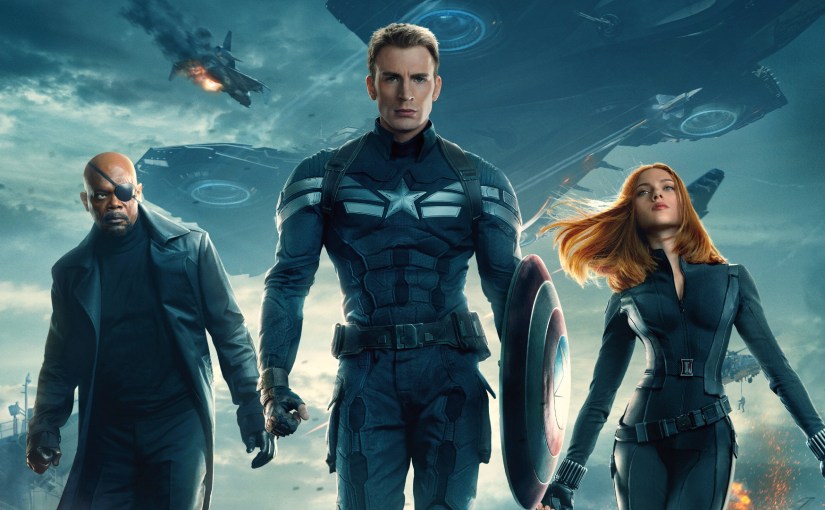
Anthony and Joe Russo direct one of the best action pictures of the last 20 years as they pit the heroic patriot against weaponized SHIELD planes, trap him in an elevator with 15 strong arm men to take on singlehandedly, and most especially the dude dressed like the American flag goes up against a mysterious figure that possesses a highly weaponized steel arm. Best yet, none of these sequences pertain to the story so much as they frame it.

Chris Evans returns as Steve Rogers aka the first title character, and he’s even better this time around. Captain America: The Winter Soldier hearkens back to the thematic 1970s conspiracy theory features like The Parallax View with Warren Beatty and Three Days Of The Condor with Robert Redford as Cap first finds himself on one side of an important debate for our modern times. When is too much warfare enough? How far must we go to serve as a means of protection? Evans appears as if he’s researched the strong position held by his character, and he’s believable in his mindset. Is the motive out of fear, or power, or could it actually just all be for protection? He’s convincing in his character’s argument. Naturally, if he can’t agree with the powers that be, he’ll find himself on the run with allies like Scarlett Johansson as Black Widow and Anthony Mackie as the supercool Falcon.

Johansson is given much more to work with as she trades “Buddy Cop Movie” wits with Evans as well as helping him with his dating scene. She also offers up some sharp intelligence to a promising complex former KGB/spy. It’s about time she get her own film in the series. She’s overdue. (Well…now we all know how that turned out.)

It’s especially appropriate that Redford himself is recruited as Secretary Alexander Pierce. Redford plays puppet master for a film that offers the biggest altering twists the MCU has offered up to this point. To handle the role requires an actor with a history to his career and since Redford has dabbled in films of this nature, he fits right in. He must have been especially pleased to accept this role recognizing the layered angles to a script provided by Christopher Markus & Stephen McFeeley.

Sebastian Stan returns with an astonishing turn as his character Bucky. When all the surprises are revealed by him, your pulse will likely not have come down following a thrilling highway shootout.

Lastly, credit must be given to Samuel L Jackson. This film offers the most for his Nick Fury character to play with. Fury finds himself on the wrong end of an argument that leads to a shocking betrayal and sabotage. Jackson’s roles often fall into the same routine of timing and delivery, screaming “mother effing” frustrations. It’s often lovingly joked about but it gets tiring too. Here however, he’s given a chance to be the victim of a brutal attack and deal with an aftermath. It’s the best material written so far for the Nick Fury character.

The Russo brothers, not normally known for big budget extravaganzas, surprised audiences with a well-executed film that offers suspense, extensively choreographed action sequences and great characterizations all around. They have identified Captain America as the soldier of morals, but moreover they recognize where he stems from. The Brothers certainly haven’t forgotten that he’s really a 95-year-old man at the time of this story. That sets up some good laughs. The adventure of the picture is top notch and thankfully it primarily all takes place in daylight where nothing is strategically hidden and appearing as shortsighted work in dark photography. The Russos know how to pinpoint exactly where Cap needs to throw his shield, what it should bounce off of, and how the hero should get it back. Everything here is top notch.

Captain America: The Winter Soldier only gets better with repeat viewings, and you really don’t even need the other MCU films to follow its trajectory. It’s worth watching at any given moment.

MENACE II SOCIETY

By Marc S. Sanders

Sometimes I’ll come across a movie that I will not like until the very, very end; until literally the last 60 or 90 seconds. The Hughes Brothers’ film Menace II Society is one such movie.

There’s great skill at work here. I saw that from the film’s explosive beginning and then all the way through. This is a story centered in the California ghetto known as Watts, following the 1965 riots through the drug trafficking 70s and then quickly transitioning into present day 1993 when the film was originally made. Rodney King was fresh in the country’s psychosis.

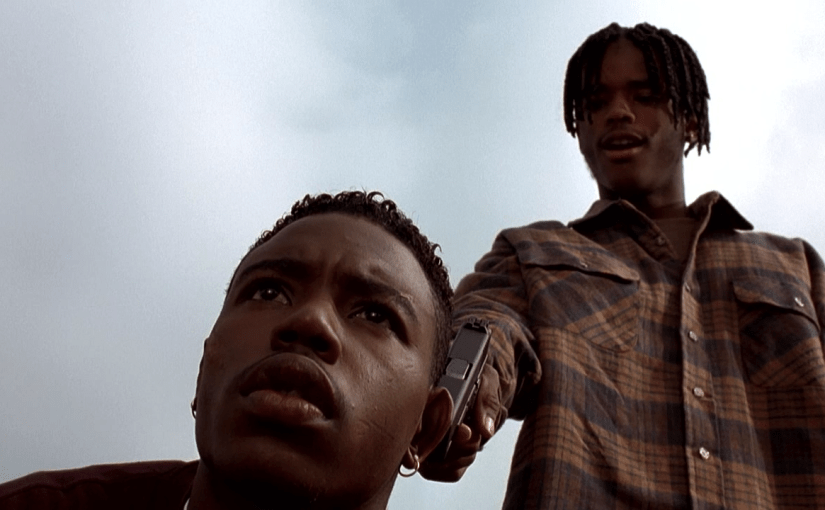
A kid named Caine (Tyrin Turner at the adult stage) is the central character. We see him at age 10 witness his father murdering a friend by shooting him across the kitchen table. (If you’re keeping score, that’s another Samuel L Jackson cameo.) Caine’s mother eventually dies from an overdose; his father we are told dies in a deal gone wrong. Caine is blessed to move in with his grandparents. He befriends a young woman with a 5-year-old, along with another friend who tries to influence the teachings of Islam, as well as a kid with a football scholarship. Then there are those who see no other way to live except to always be strapped and ready for a drive by or to rip off a car. Caine’s closest friend, O-Dog (Larenz Tate) will be more than happy and carefree to fire his pistol at anyone who says something disagreeable.

So what didn’t I like? Well, maybe it’s me, but I normally look for a transition in a main character. That special moment where a kid’s life will change; where it will occur to him to make a change. That doesn’t happen for Caine, and it frustrated me. He is impulsive to beat up someone, steal a car, get a girl pregnant, continue to deal and continue to disregard those that try to rescue him from the threat of living in the hood. Opportunities are offered and yet Caine never considers them as better alternatives.

Maybe that’s how it is in the hood. I will not even presume to understand. My upbringing was more advantageous to me and I’m not an authority on the despair and violence that exists in that world. Sad that it still must persistently exist at all.

So the film is quickly approaching its end, and STILL I’m asking what is the point if Caine is the same here as he was in the beginning. He’s no better. He’s no worse. He’s just the same with no change.

But, then…THEN…Caine’s last voiceover kicks in with some telling words accompanied by The Hughes Brothers’ wise choice to accompany it with some quick flashbacks, and now I fully understand and realize that what I watched was an insightful piece of shoestring budget filmmaking that left me thinking.

Second chances are fleeting. Life can easily be taken for granted with no reason to hold any value for it. There will be casualties and collateral damage because of your recklessness. Yeah, it’s all a recognizable “After School Special” but it still holds power here.

Forget it!!!!! Don’t even ask me to spoil what that epilogue literally recited or its relevance. Come back to me after you’ve watched Menace II Society. Then we’ll talk.

MARVEL’S THE AVENGERS

By Marc S. Sanders

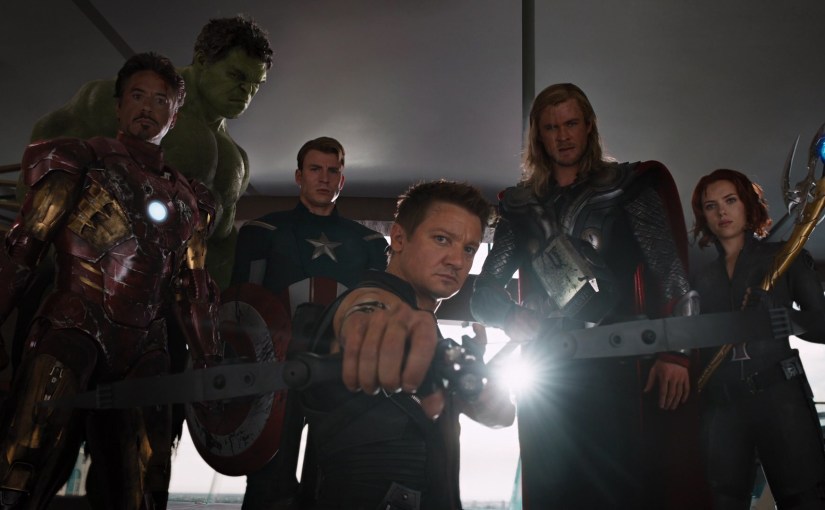
Phase One of the Marvel Cinematic Universe concludes with Marvel’s The Avengers. This is a real treat and a feast for the eyes. It’s not my favorite of all the Marvel films because it gets a little too Saturday morning cartoon like at times, but it’s enjoyable to watch for good escapist popcorn fun.

Movie goers were salivating for the year 2012 to arrive which would finally assemble Thor, Iron Man, Captain America and the Hulk on screen. Thanks to writer/director Joss Whedon that wish had finally come true and Whedon does not try to reinvent the wheel. When you assemble a team of heroes, you pit them against a large army and watch every variation imaginable of how the Hulk can smash, or what Iron Man’s armored suit can launch.

By now, you all know how I feel about the actors portraying their respective roles. Best to just say the chemistry works among them. They find reasons to squabble and Whedon provides moments for them to use their given talents against one another. So you get to see what happens when Thor smashes his hammer against Cap’s shield.

The actor who finally gets his moment in the sun is Samuel L. Jackson as Nick Fury, the orchestrator behind this team up. Jackson is more subdued than his other well known characters from the Tarentino films or Snakes On A (Mother effing) Plane. He does get to say “stupid ass idea” at one point and there’s the Samuel L. Jackson we all know and love! In comics, the Nick Fury character was reinvented before any of the films to harbor the appearance of Jackson. This film proves why the writers went that route. He’s great. He’s fun to watch. He makes for a great leader of the secret agency SHIELD. In tow with him is Clark Gregg as Agent Phil Coulson, a welcome cameo guy before this film, Gregg gets in a few scenes that show his endearment, and offer some dramatic weight as well. The guy could be waiting on hold while Black Widow takes out a couple of thugs, and you are cracking up at Gregg as Coulson, not necessarily Black Widow. He’s so likable that well…heck…he should get his own Marvel TV show….wait….nevermind….I digress.

Again, however, the women of the MCU are not drawn well for the screen. Scarlett Johansson makes her second appearance as Black Widow. She’s got a great, funny early fight scene while tied to a chair in a sleek black dress, but that’s all for show. She hints at a checkered past but this film does not offer much to expound on that. I understand. There’s a lot going on here. So there’s not much here for her to do. It’s time she got a film of her own, however. I’ll sign the petition. Wait! Nevermind! Colbie Smolders is a waste as Agent Maria Hill. She is nowhere convincing as a bad ass agent. Her line delivery seems forced. Her role seems unnecessary. Her scenes should have been on the deleted floor. It would have allowed more time for Johannson to play up her character. How is Maria Hill different from Black Widow in this film, anyway? She’s not. Therefore, cut out Maria Hill.

Jeremy Renner is given nothing to do but shoot arrows as Hawkeye, and work against the Avengers while under a spell from Loki.

Speaking of Loki, the great Tom Hiddleston is back. Hiddleston just elevates the Marvel films to more than just a comic book movie. His glee as the God of Mischief is different than say any version of the Joker’s. Pay attention Syndrome (from The Incredibles)!!! When Hiddleston monologues, you want to listen, unless you are the Hulk.

Whedon does an awesome job with the action scenes as he gradually destroys an aircraft carrier when chaos takes hold among the various heroes, and then later he destroys New York City in a fun amusement park like battle through the streets, subways and skyscrapers. It’s a little reminiscent of Richard Donner’s (or Richard Lester’s) Superman II, and Ivan Reitman’s Ghostbusters. It’s fun to watch the Hulk run through a building only to come out the other side and leap upon the head of a gigantic, flying centipede to bring it down on to the top of a building. Who cares how this all gets cleaned up? The greatest city in the world always figures out a way.

Whedon sealed the pop culture significance of superheroes in the early 21st Century. He’s done what guys like Michael Bay beg to do with other toy/comic book franchises. Marvel’s The Avengers stands out as an important impact in cinematic filmmaking. It’s not best picture worthy, but it is nonetheless important to how blockbuster films are conceived and created. Sadly, some people still don’t get it right, all these years later.

CAPTAIN AMERICA: THE FIRST AVENGER

By Marc S. Sanders

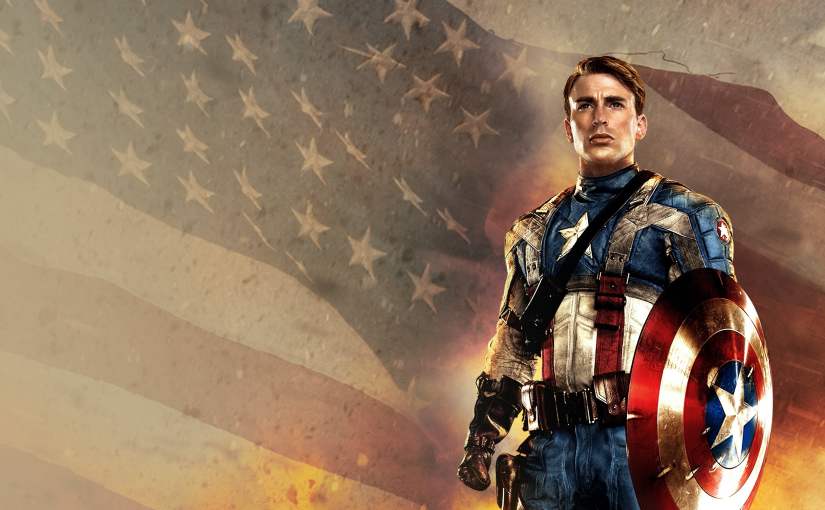
Admittedly, as a kid I read about the star-spangled hero, Captain America, on a frequent basis. In the ‘80s, to me he was nothing special; a guy with a shield, dressed like the flag who was very agile. Not many surprises were left for him to discover on the page. However, in his first MCU installment, Chris Evans, as Steve Rogers the weakling yearning to join the US Army during World War II and kill Nazis, is inspiring.

Director Joe Johnston ably introduces a character before revealing all the goodies. A fantastic special effect of downsizing Evans to a gaunt 95 pounds allows the motivation to become a hero all the more convincing. Following a series of being bullied and being rejected for service, Rogers is given the opportunity to become a lab rat for a “Super Soldier” experiment that will award him with instant fighting skills and strength. Stanley Tucci plays the doctor looking for the right candidate. Why Rogers? Because he sees he has the heart of a man only wishing to do well unto others. The experiment is a success before it becomes sabotaged, but Tommy Lee Jones, representative of the Army, is not entirely convinced. So, Cap only elevates himself to the role of a character logo, forced to sell the idea of buying war bonds across the country and entertaining the troops overseas. A rescue mission finally comes calling, and the boy in blue dons the shield and shows the world who he is and what he stands for.

Chris Evans is great in this part as a guy always on a path of “do good.” Never emoting cockiness, never in service for himself and never one to surrender to illogical and immoral mindsets. This is how Captain America should always be portrayed, a man who stands for the good of country and as the MCU films continue on, the good of the world and, well heck, lets just say the good of the galaxy. With his perfect haircut and clean shaven face, Evans never shies away from that platform.

Tucci is so good in a role that will never define his career. His brief appearance shows no hint of him being in a comic book movie. That’s a huge compliment. He takes the role of a German doctor seriously. He’s the scientist, but the film allows a nice scene for him with Evans showing that he is more so a friend. When his part exits the film, you miss him.

Finally, the MCU gets the female role right following the dismissive nature of characters like Pepper Potts (Iron Man), Betty Ross (The Incredible Hulk) and Jane Foster (Thor). Special Agent Peggy Carter played by the awesome discovery of Hayley Atwell makes the role her own. She plays the part like it is written, never relying on the title character for her cues. Atwell shows determination to stand out as a woman among a sea of men and never regarding herself as any different from those said men. She has some great scenes with Tommy Lee Jones debating the purpose and importance of Rogers. By the end of the film, you are not just paying attention to the fate of Evans’ character, but Atwell’s as well. Peggy Carter is written so well, you could write a TV series about her. Wait….hold on…. anyway I digress. Hayley Atwell remains the best female character of the MCU above those we’ve seen already at this point, as well as ahead of those to come in future installments.

The villain is really just a villain with Hugo Weaving as the Red Skull. The character looks great; looks just like the source material. He’s one bad dude, but not much to him. He stands to be more powerful than Hitler, yada yada yada.

Joe Johnston directs a film with a salute towards director Steven Spielberg. Try to convince me that the opening scene is not reminiscent of the opening to Close Encounters of the Third Kind. Indiana Jones seems to sprinkled about as well. Johnston doesn’t try to get cute with experimental camera shots and blurry CGI action. I think because he follows a paint by numbers approach to this film, it is all the better. He offers lots of good back story to Steve Rogers role, he gives a large cast of characters their own moments to stand out (like Bucky Barnes and the Howling Commandos) and he keeps Captain America likable and a guy to cheer for; a guy to be thankful for.

So, let’s give it up for Captain America!!!!

GOODFELLAS

By Marc S. Sanders

Goodfellas is my favorite film by Martin Scorsese. It’s a fast-paced roller coaster narrative of Irish street kid Henry Hill’s experience in the mob, dramatized from his real life as part of the Gambino crime family of New York.

“How am I funny?,” the Lufthansa heist, Spider takes it in the foot and then in the chest, Morrie’s Wigs, the piano montage from Derrick And The Dominos, Billy Batt’s demise followed by an early morning breakfast stopover at mom’s, and Henry’s helicopter paranoia. All of these elements are assembled to depict the perceived glamour and undoing of street level hoods, proud to steal and dress in the finest threads while bedding dames behind their wives’ backs.

Scorsese along with Nicholas Pileggi uncovered something special when they adapted Wiseguy (Pileggi’s book) for the screen. I think they struck a nerve because they showed these guys as men doing a routine living. There was a process to their deeds. Give a cut of your theft to the man above and keep the rest for yourself. Above all else, stay off the fucking phone. Get out of line and get whacked, unless you’re a “made guy.” This is all code, normal to Henry and his cohorts (Robert DeNiro as Jimmy Conway; Joe Pesci as Tommy DiSimone).

Moreover, the wives understood this behavior as well. Henry’s wife Karen (Lorraine Bracco) knew these guys were not 9 to 5 husbands and the more it occurred, the more normal it all seemed. Including when the FBI presented a warrant to search the premises. Just let them in and go back to rocking the baby to sleep while watching Al Jolson on the box.

Scorsese took the best approach by not judging the actions of these raw criminals. They dressed well, but they weren’t reluctant to draw blood if an insult was tossed their way. Pesci, in an Oscar winning best performance, represents that philosophy. Scorsese, with his regular editor, Thelma Schoonmaker, are not shy about the violence. Watch how Jimmy and Tommy beat up a “made guy.” DeNiro just stomps his dress shoes into the guy’s face over and over. Pesci pistol whips him, but before he can shoot him, he breaks the gun…on the guy’s face. The romance of gangster life quickly undoes itself in moments like this. As Henry notes, your friends come at you with smiles before they whack you.

Ray Liotta is Henry, the primary narrator and centerpiece of the film. Most of the story is from his perspective. I’m sorry that Liotta didn’t get much award recognition. He really deserved it. His voiceover narration is superb. It gives a feeling like I’m talking to Henry in a bar with his tales of Mafia code and life in the criminal underworld. His voiceover is conversational. He’s also got great expressions of disregard, anger, and intense, raging fear on screen. When Henry is at his worst, his eyes are dry red, and his skin is pale and craggily. None of that is just makeup at work. That’s Ray Liotta performing with an exhausted energy in character. Watch the scene following his 3rd act incarceration where he argues with Karen over the last of their drug supply being flushed down the toilet. It’s not so much a party anymore. The manic response couldn’t feel more real as he slams his hand against the wall and then crouches up into a weeping ball of helplessness in the corner, on the floor.

Liotta and Bracco have sensational chemistry together in scenes of their courting nature when they first meet, followed by the ongoing, bickering abuse that enters their married life. There’s a great hysteria to them. Bracco got a nomination for her role. She deserved it.

Scorsese is a master at filming basic gestures as well to show the nature of these mob guys and their crimes. A key folded in a paper is then inserted into a knob and a stash is walked off with. A blood-soaked revolver is placed in a tin box and then Schoonmaker cuts over to the customary stomping of a glass at a Jewish wedding. Every prop and detail are connected.

Even better is Martin Scorsese depicting the wise guys’ incarceration midway through the film. Watch how the head mob boss Pauly (Paul Sorvino) slices onion with a razor for dinner complete with steaks broiling, pork sauce bubbling and even lobster ready to be boiled. Scorsese and Pileggi found it important to depict how attractive this life could be, despite a stretch in the joint or the violence that might come. Pay off the right guys and you could live like kings.

The master director doesn’t stop there. His selection of doo wop and rock period music paints the historical palette of the 50s through 80s. Music was being played and life was happening all the while an underhanded way of crime and violence occurred.

One of the best blends of film and song occurs during the classic one-shot steady cam where Henry escorts Karen through the back way of the famed nightclub, Copacabana. It’s one of the greatest scenes ever in movies. The walk journeys downstairs, through the kitchen, past wait staff, cooks, bouncers, people necking and to a front and center table to see Henny Youngman’s stand-up routine. The sequence is accompanied by the song “And Then He Kissed Me.” It’s a great character description to display a young guy, proud of his gangster image, with a whole world ahead of him and everyone offering their respects while he hands out twenty-dollar bills like gift coupons. This young guy had power, and the girl holding his hand couldn’t be more impressed.

Goodfellas is one of the greatest mob movies ever made. It’s one of my favorite films. It’s genuine in its grit and language. Every F-word uttered is necessary to translate the regard for code, or the blatant disregard for the law, loyalty within a crew, or even the ethics of marriage. It astounds me that it didn’t win Best Picture in 1990, losing to Dances With Wolves. Perhaps it got cancelled out with fellow mob nominee The Godfather Part III.

Regardless, the film struck a chord and pioneered a new way of showing criminals in celebration of themselves while sometimes encountering the inconvenience of the law or the women in their lives or worse, the betrayals among themselves. At any given moment you might rat on your friend and not keep your mouth shut.

Without Goodfellas, The Sopranos might not have been as welcomed into the pop culture lexicon. Maybe even the films of Quentin Tarantino or Guy Ritchie or Paul Thomas Anderson, or even other Scorsese projects yet to come.

Goodfellas is an electrifying film of unabashed humor, realistic and shocking violence, and authentic culture within a well established crime syndicate.

Goodfellas is a must see film.