THE SOCIAL NETWORK

By Marc S. Sanders

Power and knowledge can be a dangerous thing for a kid who is not necessarily as mature as his IQ would suggest. Mark Zuckerberg reinvented the way an entire planet functions from his Harvard dorm room. In the process, he couldn’t have cared less about the antagonism he was generating.

David Fincher’s The Social Network, with a brilliant screenplay by Aaron Sorkin captures kids with too much opportunity to seize, and the hubris they carry when they discover money, jealously, pride, and greed through a winning societal experiment.

The film features one of the best casts ever assembled, at least definitely within the confines of the 21st Century. Andrew Garfield, Justin Timberlake (should’ve been nominated), Armie Hammer (one of the best twin brothers’ portrayals in film), Rooney Mara, Brenda Song, and of course Jesse Eisenberg. Sorkin wrote the dialogue. It’s another thing to deliver it.

These people talk before they think, and it’s likely what caused them the aggravations of their own success and discovery. Watch the first scene between Eisenberg and Mara, as Zuckerberg and his girlfriend, Erica. Zuckerberg is already too smart for his own good. His failure with dating Erica is destined to be his undoing. He’ll never recover from this moment. Never! This is a kid with his hand on the nuclear button and he can’t stop pushing it. The other characters are all the same. Harvard geniuses with so much to gain, but how much will they lose?

Mark Zuckerberg, Cameron & Tyler Winklevoss (the self-absorbed twins of prestige and legacy), and Sean Parker (inventor of Napster) are prophets of a bigger picture. They foresaw the basic human desire for attention. People’s needs to be noticed are the commodities to monetarily profit from. These kids knew that better than anyone else. Ironically, Zuckerberg’s best friend and financial partner, Eduardo Saverin (Andrew Garfield), didn’t know it until he realized he was a large step behind. It cost a lot of money. Ironically, in the process of creating a new means of connecting with friends, it suffered the cost of a friendship, as well.

The Social Network will always be one of my ten favorite films. (Talk about huge Oscar upsets…excuse me The King’s Speech for Best Picture????) I’m always amazed at these kids with power. The knowledge they possess is bigger than anything within the confines of our historical governments, and yet they bicker and steal and betray like toddlers in a sandbox. Switch out “Facebook” for a Nerf football or a Barbie doll, and you can still apply this fast-paced wit of words. Sorkin pounced on that dichotomy. We’ve seen civil lawsuits on film with grand disputes and long speeches in front of arbitrators. We had yet to see college students dominate tables full of lawyers with crackling dialogue exchanged to prove their worth over one another. Amazingly enough, Sorkin used much of the dialogue from recorded transcripts he accessed. These guys actually spoke like this with each other. These technological pioneers gave the planet’s people the attention they wanted. Yet, what ultimately mattered to them was the credit for what they felt entitled to.

I’ll never tire of watching The Social Network, even if listening to Mark Zuckerberg is as exhausting as talking with a stair master.

One of best films ever made.

LIFE ITSELF

By Marc S. Sanders

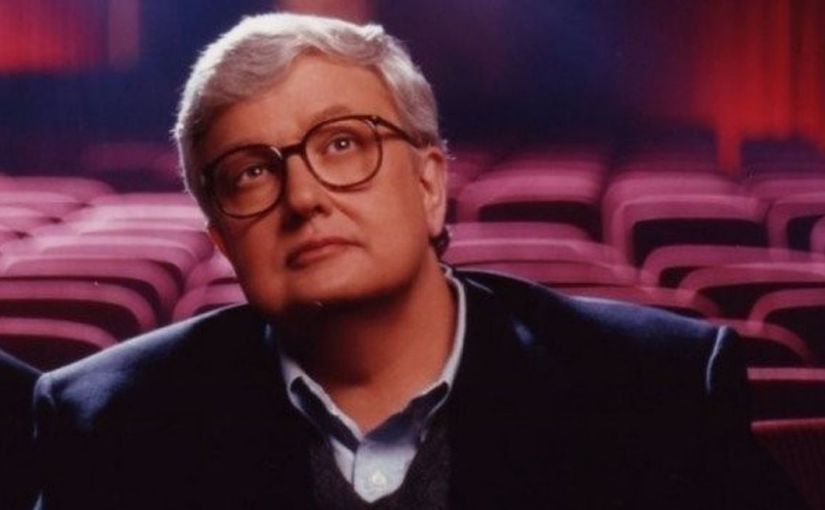
Gene Siskel and Roger Ebert’s television program was a show that I religiously watched growing up. They both taught me how to argue, how to agree, how to observe and how to appreciate; most especially when it came to the subject of movies which I continue to have an incredible passion for.

To watch Steve James’ documentary Life itself, which focuses on Ebert’s colorful and pioneering life, as the most popular film critic in the world, is a mind-blowing experience. James along with commentators such as Chaz Ebert (Roger’s wife), Martin Scorsese, Werner Herzog and A.O. Scott (film critic for the New York Times), paint a picture of what drove this man to continue his greatness all the way down to his last breath.

James alternates between the moments of struggle for Roger and Chaz during his final six months of life and his past which celebrated his annual visits to the Cannes Film Festival, his sparring matches with Siskel, his friendships, his moments of joy with Chaz and her family and his master talents of words on the page, and on the television screen.

As director of this incredible documentary, Steve James holds no filter in any of the material he shows. Roger is described as arrogant and competitive at times, sometimes acting like a bratty child. He is shown in his deformed state without a bottom jaw, and as a recovering alcoholic. He is also presented as a most valued opinion, a dear friend, a loving husband, a brave, young newspaper editor, a sensational film critic, and a man with exceptional resilience to the cruelty of thyroid cancer, deformity, and deterioration.

There was an incredible dynamic to Siskel and Ebert’s relationship where the surface would reveal animosity, but James’ documentary uncovered true loving brotherhood.

I continue to read Roger’s columns as a ritual following a viewing of a movie. His reviews are a conversation to me. They are personal to me. Roger always personally speaks to me. I’ve never felt as much a connection to any other writer. I continue to seek out clips of Siskel and Ebert’s programs on You Tube, to laugh, reflect, relate and uncover different points of view.

There will never be another Gene Siskel. There most especially will never be another Roger Ebert. I recall reflecting on his legacy during a trip to Chicago. I walked in front of the Chicago Sun Times and Roger seemed to say hello to me. I even met a local film critic there who knew Roger, attended his funeral, and somehow, I felt that I finally met Roger himself after so many years.

I especially recall missing him as the latest Transformers installment was released during that time. He savagely hated the prior two films in the franchise I think even more than me, and for that he wrote two of his best reviews. I only wished he was still alive so that I could return to that kind of review one more time for this picture as well. I didn’t see the movie, but I know he would have hated it and I would have loved the article all the same.

Roger is one of the most influential people I have encountered and Life itself was one of the best movies from 2014.

Catch this movie on demand if you can. You won’t regret it.

Thumbs up for me!

NIGHTMARE ALLEY (2021)

by Miguel E. Rodriguez

Director: Guillermo del Toro
Cast: Bradley Cooper, Cate Blanchett, Toni Collette, Willem Dafoe, Rooney Mara, David Strathairn
My Rating: 6/10
Rotten Tomatometer: 80% Certified Fresh

PLOT: An ambitious carny with a talent for manipulating people with a few well-chosen words hooks up with a female psychiatrist who is even more dangerous than he is.


No good movie is too long; no bad movie is short enough. – Roger Ebert

Nightmare Alley is director Guillermo del Toro’s longest film to date at exactly two-and-a-half hours.  Going by Ebert’s dictum above, I have to say that it was too long by maybe a half hour or more, but that doesn’t make it a “bad” film.  Just a poorly edited one.

The story revolves around a Depression-era drifter with a troubled past who becomes a carny with the kind of flea-bitten traveling circus that tours all the urban hotspots of Iowa and Kansas, and which is almost all sideshows: a psychic (Toni Collette), a giant (played by del Toro regular Ron Perlman), a rubber man, a girl impervious to electrical currents (Rooney Mara), and a geek show, among other things.  What’s a geek show, you ask?  Why, that’s where people pay two bits to watch a man bite the head off a live chicken.  We are shown one such performance in the opening minutes of the film.  It’s hard for me to believe people were entertained by this, no matter how long ago it was.  I mean, the geek did not look like he was having much fun…although he did seem to be having more fun than the chicken.

Anyway, to make a long story short, the carny, named Stanton (Bradley Cooper), befriends the psychic and her husband (David Strathairn) and reveals that he has always been a student of human behavior, and with a few quick observations, he can make factual statements about someone that boggle the mind.  One thing leads to another, and eventually he leaves the carny behind, with the electrical-current girl, Molly, in tow.  Soon he is headlining nightclubs and posh bars with his mind-reading act, with Molly as his assistant.  One night a beautiful psychiatrist with a level-headed gaze (Cate Blanchett) sees one of his performances and suggests a con: she will provide detailed information about her rich and powerful patients on the sly, and he will do command performances for these elites, making them both rich.  What happens next, I leave for you to discover.

(I must be honest: this is not the kind of film I was expecting from del Toro.  A character study of tragic greed and hubris?  Where are the monsters?  The supernatural nightmares of the title?  But I’m always telling people to criticize the movie the filmmakers made, and not the movie you wish they had made.  I press on.)

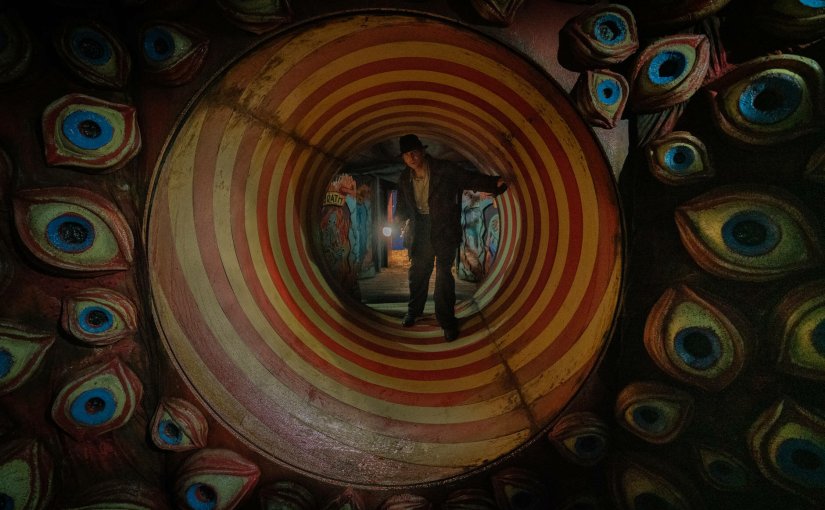
I’m finding it hard to summarize my thoughts here.  The movie looked great.  I mean, it looked amazing.  At one point, Stanton runs into the carnival’s funhouse looking for someone, and it’s filled with the kind of over-the-top prop demons and fake ghosts that made me hope we would get a later sequence where these things came alive in some horrifying way.  But no, it’s just intended as throwaway scenery, glimpsed once and never seen again.

There is an extended sequence where Stanton tries to revamp Molly’s act as the “Electric Girl”, coming up with new costumes, new props, new patter (patter is important with sideshows), and it’s a relatively lengthy sequence which felt like it was setting something up.  And, yeah, there’s kind of a payoff, but not the kind I felt it was building towards.

The movie left me with a vague sense of frustration throughout.  We are fed gobs of information about the tricks used by sideshow psychics, the sad ploy used to hire the geeks, the psychic’s husband looms large in the story and then abruptly becomes a non-factor, and it just went on and on and on.  Then in the “riches” part of the rags-to-riches story, Stanton has become insufferable, a believer of his own press releases, willing to put his livelihood (and his life) in jeopardy for that one last big job.

This is all very intriguing stuff, on paper.  But as executed and written, there seemed to be unnecessarily long scenes with loads of information being dumped on us with nothing moving the action forward.  I would pay money to watch Cate Blanchett read a Denny’s menu, but even her extended “therapy” sessions with Bradley Cooper felt interminable.  I felt like those random crowds in Monty Python and the Holy Grail periodically yelling, “GET ON WITH IT!”

To be fair, the Stanton character does eventually get his comeuppance, in literally the final ten minutes of the film.  Full disclosure, I will say without spoilers that it is very gratifying, it had me and some random dude behind me exclaiming loudly in the movie theater, and it features some of the best acting Bradley Cooper has ever done.  But…it came long after I had started shifting in my seat and wondering if I would miss anything important if I ran to get some more candy.

I give Nightmare Alley a 6 out of 10, mainly because it looks so damn good.  del Toro has yet to make a movie that doesn’t look masterful (yes, even Blade II is a beauty to behold).  Also, the acting all around is top notch.  There’s talk Cooper may get an Oscar nod, which wouldn’t surprise me.  But it boils down to a very, VERY long drive for an all-too-short day at Denouement Beach.  A ninety-minute movie crammed into 150 minutes.  Alas.

DANCES WITH WOLVES

By Marc S. Sanders

The western motif of filmmaking really comes alive with the 1990 winner for Best Picture, Dances With Wolves starring Kevin Costner in his astounding directorial debut. Until now, this film eluded me. I just never got around to seeing it. Watching it now is to recognize the parallels of current events in the year 2020. A Native American Facebook friend of mine recently lauded the takedown of a statue of Christopher Columbus. At the risk of sounding like I’m taking political side (I insist that I’m not!), I think understand her position a little more. I’m not saying I agree or disagree with this topic. I’m just saying I understand.

After committing what was seemingly an act of suicide, but instead is recognized as heroic in the eyes of the Union army during the Civil War, John Dunbar (Costner) is offered the pick of location for his next post. He opts for Fort Sedgwick because he wants to witness the frontier out west before it will likely be taken over by the white Americans. As Dunbar waits for fellow infantrymen to arrive, he gets the old fort into shape with his trusty horse Sisco. He also encounters companionship in a lone wolf he names Two Socks. The wolf only gradually learns to trust Dunbar, but that’s a project for the infantryman to occupy himself with. That, and keeping his personal journal.

Shortly after he’s settled in, he comes upon a Sioux Indian named Kicking Bird (an excellent Graham Greene). He and Dunbar are the first to develop trust with one another. Eventually, Dunbar’s good nature allows him the opportunity to rescue a white woman who lives with the Sioux tribe known as Stands With A Fist (Mary McDonnell). She has attempted to kill herself following the death of her husband. As the film continues, she becomes the translator between Dunbar and the other Indian leaders, allowing the story and relationships to move along.

The script by Michael Blake is fascinating simply because we are granted plenty of opportunities for the tribespeople to speak in their native tongue. Forgive me, I thought for a little about Hollywood’s most famous Indian, Tonto, and his laughably limited English. Here, language is instead limited for the white man as Costner does his best charade of buffalo to find initial common ground with the tribe’s holy man played by Greene.

Hollywood westerns seem to equate American Indians as savages, the bad guys of the films, complete with tomahawks and bow and arrows and bellowed battle cries for expression. Not here. Dunbar’s loneliness at the fort without another white man in sight does not allow for the ease of prejudice to interfere. Instead, he is a character who must learn to be accepted by the greater populace. When he is, he realizes that his true name is Dances With Wolves and not John Dunbar. That’s a fascinating character arc of change. The setting and the community within that location change the character. I was really moved by it.

As well, there is struggle and disagreements among the Indian population. Perhaps it truly is in the nature of humanity to be that way. The Sioux tribe must contend violently with the Pawnee tribe in a struggle to protect their territory and their food and supplies. Yet, that is wholly different from what drives the war that Dunbar has heroically served in. It’s not until Dunbar fights alongside his Sioux friends that he realizes he’s not an infantryman. This is another example of Costner effectively directing himself to find a new and enriching identity for his character.

A third example of character change stems from the eventual and expected love story that unfolds between Dunbar and Stands With A Fist. It’s something I’ve seen in countless other films. However, Mary McDonnell is quite good as the white woman whose English is close to being entirely replaced by the Native American tongue. She seems so indoctrinated within the Sioux tribe that when she first comes on the screen I questioned if she was a natural born Indian or an actual white woman.

Costner’s film is full of magnificent imagery. Gorgeous landscapes of the filming locations of South Dakota are like perfect paintings of open fields and endless blue sky. The blu ray transfer I watched was eye popping.

One of the greatest moments was a sequence involving a buffalo stampede. Costner with cast all on horseback ride within, as well as parallel to the animals and if ever a widescreen shot should be appreciated, this is a moment to turn to. The score moves beautifully with the pounding of the horses and buffalo stampeding across the open plains.

A personal sidenote is in regards to John Barry, the film’s music composer. I know this is an unfair criticism but at times his score is so strikingly similar to his work on various James Bond films that it was a distraction for me. Other times, Barry’s work lent well in some of the action scenes.

Nonetheless, what an incredible achievement that Costner commanded. He gives a terrific performance, but his direction is what truly stands out. Particularly, with the battle scenes and animal footage, I questioned how he managed to accomplish all of it. It’s just spectacular.

Dances With Wolves is certainly worthy of the accolades it attained and the reputation it still holds. The production value is easy to admire and unforgettable. Beyond that though, is the converse nature the film adheres to as a Hollywood western. The culture of a Native American tribe never seemed so authentic to me as it does here, accompanied with their sense of humor or even their temptation at playful gossip when observing the central love story between Dunbar and Stands With A Fist. We see what the Sioux tribe does to survive, yes. Still, we also see how they interact with one another and converse, as well as how they respond to a new neighbor, for example.

Dances With Wolves is an authentic masterpiece of a modern western. It’s a must-see film.

THOR

By Marc S. Sanders

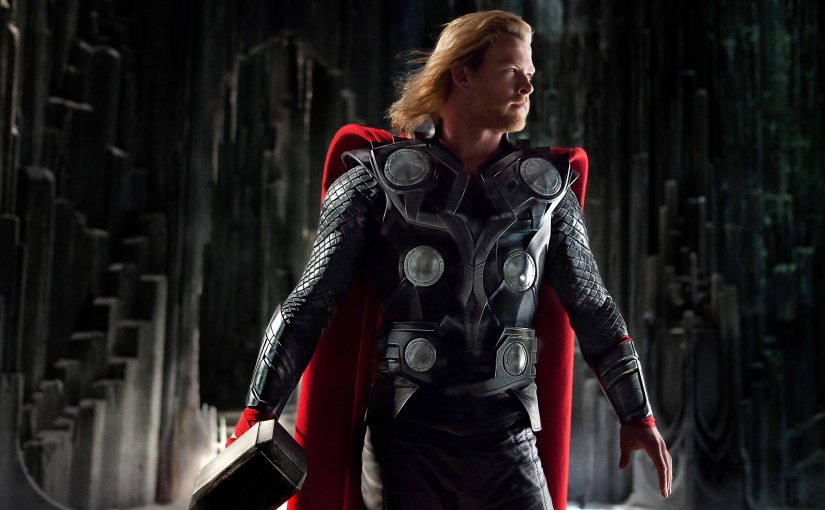
Chris Hemsworth is the God of Thunder who must learn to grow up if he is to inherit the throne over the land of Asgard from his father Odin (a welcome Anthony Hopkins), and more importantly become worthy of lifting his mighty hammer. Hemsworth is great; full of cocksure assuredness, humor and heroics. Chris Hemsworth makes you believe he’s the only guy who could play Thor.

Thor’s adversary is the God of Mischief, Loki played by one of Marvel’s best actors, Tom Hiddleston. This is a guy who plays so many different levels. If one didn’t know the story of Thor and Loki, I’d argue they might be shocked at some of the turn of events Hiddleston masterfully orchestrates with simple facial expressions and passiveness that progressively switch over to madness, obsession, jealousy, envy and deceit. Hiddleston effectively spins all the plates perfectly.

Natalie Portman plays the love interest carrying the torch of least significance that Liv Tyler and Gwenyth Paltrow held in prior Marvel films. That’s a pattern the Marvel films will begin to improve upon with the next film in line.

Director Kenneth Branagh is the right guy for this movie. Inspired Shakespearean settings and dialogue overlap with modern day America. Branagh brings a nice balance to it, and he also directs his actors well. A great exchange of dialogue and performance occurs midway through between Hiddleston and Hemsworth. Branagh gets good close ups of both actors as the conniving villain manipulates the naive hero. The camera angles move at a slant almost evoking a necessary confusion between what is true and what is a lie. Moments like this allow Thor to be more than just an action film. There are nice opportunities for acting as well, and because of that Hiddleston especially has become quite treasured among loyal fans.

Compliments must also go towards the setting of Asgard. I normally frown on immersive CGI normally. Not here though. Asgard is as regal as anything Peter Jackson offered in his Tolkien films, complete with a striking rainbow bridge and towering structures. I want to tour through that whole land. It’s that spectacular. Characters also work well with the CGI, especially the fire breathing, metallic Destroyer.

Thor is a great introduction to the legendary comics character. The film offers a character arc of change much like what was captured with Tony Stark in the first Iron Man. The character must grow and learn about his identity over the course of the film in order to have legs for future installments. This film accomplishes that feat, and thus Chris Hemsworth has become a box office draw while his most popular character to date has become a screen favorite.

THE UNTOUCHABLES

By Marc S. Sanders

Brian DePalma directed the very loose cinematic adaptation of Eliot Ness’ squad of treasury agents during the 1930s prohibition era. The movie is The Untouchables, based on the famed TV show starring Robert Stack. It’s a gorgeous picture with incredible set designs, props, and Georgio Armani costume wear. It’s also bloody as hell.

Kevin Costner solidified his leading man status as the righteous Eliot Ness who swears by the law he promises to uphold, while making efforts to topple Al Capone’s (a convincing looking Robert DeNiro) massive Chicago empire that thrives on the buy and sell of illegal alcohol. Capone controls the city on all levels, from government officials down to the police force. His power is unlimited, but he has not filed his tax returns in four years. It’s crazy, but that just might bring him down.

Ness teams up with veteran beat cop Jimmy Malone played by Sean Connery, in one of the most celebrated and winning roles the Academy Awards ever bestowed. Malone knows where the underground liquor operations are located. He knows who accepts the bribes and kickbacks too. The question is how involved does he want to get. He’s the grizzled Irish mentor for Ness, and his timing is perfect for David Mamet’s script.

Memorable additions to the team also include a young and tough Andy Garcia and nerdy Charles Martin Smith as the IRS agent happy to pick up a shotgun for the cause.

DePalma’s film carries the epic look. There’s much splendor in the art direction of the film. It’s a glamorous piece of film, but it’s also just a movie.

Mamet’s script takes lots of liberties against the actual occurrences that came through historically. I do not recall hearing that The Untouchables ever took down a deal while riding horseback alongside the Canadian Mounties, for example. A villainous henchman for Capone is Frank Nitti (a happily slimy Billy Drago), always dressed in bad guy white and putting on the bad guy charm. His demise in the film never happened and most certainly not so adventurous or violently, but DePalma and Mamet clearly don’t care. This is lean entertainment for action sequences set in a gorgeous gangster period. The Untouchables is a slick looking gangster flick and nothing more.

A real star of the film is the Oscar nominated score of the film from The Maestro, himself, Ennio Morricone. His opening piece of drum beats with quick piano keys during the credits will get your pulse going. He also has great horn sections that capture the four heroes in tight shots of shining cinematography from Stephen H Burum. For me personally, this is my favorite soundtrack of Morricone’s massive career.

Costner is well cast. He has the handsome hero look to him. Garcia became a well-known and sharp looking tough guy. Smith did not move on to more celebrated material beyond this. He was remembered comedically here, just as he was in American Graffiti. He also directed since this film. As a team though, Costner, Garcia, Smith and Connery have wonderful chemistry together.

DeNiro actually took a step back from the spotlight here. His Al Capone is not so much a character as he is an every so often antagonizing appearance with a couple of well paced lines from Mamet’s famed dialogue. He’s got a memorable moment with a baseball monologue that convinces you of Capone’s strong arm, but his villain does not get too personal with the hero.

The Untouchables holds a special place in my heart. It was the last film I saw before my life changing move from New Jersey to Florida in 1987. Because the move was hard on me from a teenager’s perspective, I found great escape with this film as I memorized the lines of the enormously colorful characters along with getting absorbed by the violence and emotional variety of tones in the score. Having watched the movie many times since it was released, it’s become a kind of therapeutic experience for me. I take in the gorgeous craftsmanship of the film, the humor and the surprise moments many of the beloved characters face.

The Untouchables is not a perfect film I thought it was at age fourteen. It’s almost proud of its admitted inaccuracies, but it remains a favorite and very personal piece for me. I still love the film, all these years later.

THE WOLF OF WALL STREET

By Marc S. Sanders

When a person carries on with his/her life knowing full well that practically every action is illegal, immoral and harmful, it’s a story that must be told. Jordan Belfort, The Wolf Of Wall Street is such a person.

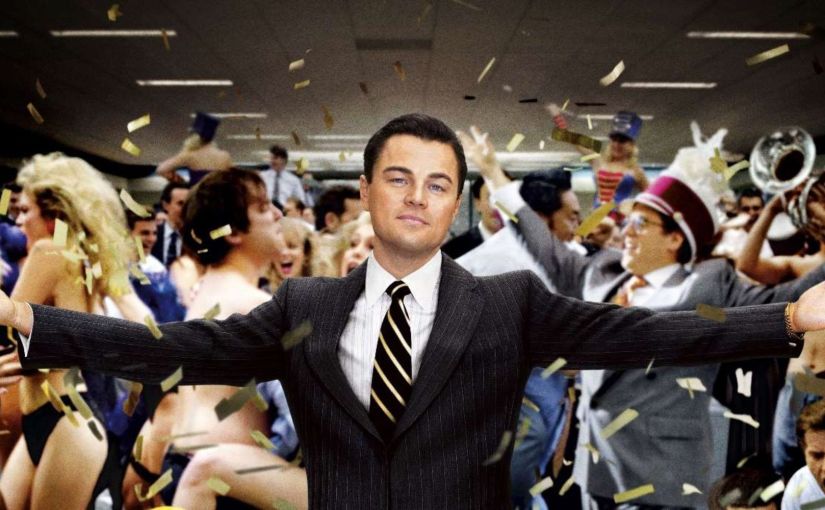
Leonardo DiCaprio explodes with rages of drug use, drinking, more drug use, banging prostitutes, even more drug use and pink slip stock trading along with some drug use. To get this manic, this wild, and this crazy requires a certain kind of energy to perform. The real Jordan Belfort must have had a massive amount of stamina to live this life. After all, he’s still alive today. DiCaprio, portraying the on-screen persona, throws himself into it. There’s no way he got to this pinnacle of hyperactivity on cue, with director Martin Scorsese’s call for action. DiCaprio had to thrust himself into this debauchery. It takes a certain skill to not let up on this. Pay attention to a hilarious scene where his quaaludes have paralyzed him to the point where he can’t even crawl to, much less open the door to his car. It’s a hilarious display of crippling physicality. DiCaprio maxed out on his Belfort portrayal, thereby earning his Oscar nomination. I thought he should have won that year. He lost to his cameo co-star, an excellent Matthew McConaughey for Dallas Buyers Club.

DiCaprio is so good that he yanks the entire cast into comparable craziness as well. Jonah Hill plays Jordan’s sidekick Donny: a buffoon of a guy who’ll whip out his member at inopportune times for attention and display. Hill doesn’t hold back either in his earned second nomination as well.

Scorsese, with a script by Terrance Winter based on Belfort’s book, is not concerned with necessarily showing a story arc where characters question their actions. Instead, he focuses on the hubris of all of this. Crashed helicopters, crashed cars, crashed planes and crashed luxury yachts not to mention endless office orgies, including one in first class on a commercial flight to Switzerland. It’s filmed very well, and while it is one over the top thing after another, it is nonetheless very funny and very entertaining.

The nerve of this guy, right? Yet that’s the thing about The Wolf Of Wall Street. Right from the get-go, Belfort is strongly urged to let up as the FBI easily closes in, and he doesn’t. It’s kinda crazy, really. Belfort put himself in an unwinnable situation and his addiction to money, drugs, ridiculous sex, and the ease by which he does it all calls to him to stay in the game until the lights just turn off.

This film marked the highly visible introduction of Margot Robbie as Jordan’s wife. She’s excellent with a New York accent (Robbie’s Australian) who loves the money and glamour but is not so stupid. Following up with a nominated role in I, Tonya (which she should have won against an aggravating Frances McDormand in Three Billboards…) and offering the best moments of Suicide Squad, it is easy to believe that she could go toe to toe with DiCaprio here. They have great arguments on screen together; funny but true.

Scorsese offers up his signature narrative voiceover from DiCaprio just as he did before in Goodfellas and Casino. His editor Thelma Schoonmaker is great at keeping the energy alive by taking advantage of the legendary director’s quick cuts and great music samplings.

The cast is just right with memorable moments from Jon Bernthal as Jordan’s tough guy friend and errand boy, Brad. (Bernthal is a great character actor all together. Check him out in Baby Driver, too.). Kyle Chandler is the modest element as the FBI agent who brings it all down. He knows he doesn’t have to exert himself too much. Belfort is doing all the work for him. Still, he spells it out harshly and honestly. No bullshit. He just cuts to the chase.

Other great appearances include Rob Reiner, Jon Favreau, Jean Dujardin, Joanna Lumley and I have to recognize Stephanie Kurtzuba. She offers a scene not widely recognized, as a disciple of Belfort’s team who is full of pomp, and confidence that far exceeds any of the guys alongside her. It occurs midway through and it’s an important moment because it really shows the power of influence Belfort had with his stockbrokers. He made them criminal millionaires overnight and to them he’s a Messiah. When Kurtzuba’s moment occurs, she solidifies the power of Belfort’s misdeeds.

It’s very easy to succumb to this lifestyle. Scorsese and Winter show how easily and quickly lots of unclaimed cash can be made at the expense of innocent people. It’s really fascinating. There’s no dimension to Belfort and his cronies of losers who would follow him anywhere despite the cost and the damage. That’s okay for me here. Simply because it fascinates me that he had the chutzpah to continue on with this immoral trajectory.

The Wolf Of Wall Street is a no holds barred, great film.

CLOSE ENCOUNTERS OF THE THIRD KIND

By Marc S. Sanders

Close Encounter of the First Kind – Sighting of a UFO.

Close Encounter of the Second Kind – Physical Evidence.

Close Encounter of the Third Kind – Contact.

Music is the most universal of all languages.  Steven Spielberg’s Close Encounters Of The Third Kind demonstrates that claim. 

I appreciate how Spielberg’s script, along with his direction, opens the film.  It takes place during a sun swept sandstorm in New Mexico.  At first, hardly anything but sand blowing can be seen, along with the high volume of wind breezing about inconveniently.  You are not even sure what you are looking at.  Then, headlights from a vehicle appear and a group of men assemble.  We come to find the main character of this scene is a French scientist named Lacombe (Francois Truffaut).  He only speaks French and hardly understands any English.  He is in need of an interpreter (Bob Balaban) to translate to American men who are accompanying them.  After we’ve established French and English are in the fold, we then realize that Spanish must enter the conversation amidst the overwhelming winds from the blinding storm.  An occurrence must have happened here recently, because Lacombe and crew interview some of the locals who are trying their best to define what took place the night before.  An elderly man is mysteriously sunburned on only one side of his face.  Thereafter, a grouping of bi-planes last seen flying over the Bermuda Triangle nearly forty years earlier come into focus.  No matter how you learn, communicate or understand, the confusion depicted is a perfect match for each of the men occupying this space.

A parallel story begins after this opening in the state of Indiana.  Sightings by airline pilots, as well as residents, are discovered in the skies above.  Blackouts occur everywhere.  The experiences of two residents, a young boy named Barry, and a utility worker named Roy Neary (Richard Dreyfuss), are who Spielberg uses to guide us through these strange episodes of phenomena.  They are being drawn towards a calling or an image and they become entirely focused upon what has happened to them.  Barry’s mother, Jillian (Melinda Dillon), while trying to reign her son back home has also been delivered a message from unusual spectacles in the skies. 

Soon after, these people cannot help but focus on a shape that they know they’ve seen before but can not place it.  Roy sculpts the shape in his shaving cream and his mashed potatoes.  He becomes neglectful of his work, his three children and his wife, Ronnie (Teri Garr), who refuses to take him seriously.  Barry’s young age allows him to avoid understanding the meaning of any this.  So, when the blinding “lights,” of whatever these entities could be, come towards his home in the middle of the night, he happily welcomes them, and willingly accompanies them back to wherever they came from.

I know this science fiction film is a highly regarded classic.  It’s earned the right to be considered as such, and so many have seen it.  Yet, I also know that I appear vague in my description of the film here.  I choose not to expound on everything going on in Close Encounters…  Steven Spielberg would want it that way, and I hate spoiling any movie.  A movie not seen is new to any of us. 

The residents of Indiana insist to higher governmental and military authorities that they have witnessed unidentified flying objects.  What those UFOs are, or where they came from, or why they visited their home state is unexplainable.  Spielberg intentionally avoids definitively explaining what’s occurred.  After all, if aliens are visiting our planet Earth, then who’s really to say we understand what they want or why they’ve come here?  Like the rest of the countries of the world, it’s fair to say that inhabitants of another planet in our galaxy would likely have their own way of communicating or speaking that’s entirely different from English, or French, or Spanish.

Spielberg goes even further to distance any understanding among ourselves or with these new entities that we are encountering.  A cargo sea vessel appears out of nowhere in the most unlikely place, the Gobi Desert of Mongolia.  Why?  How?  The people of a village within the continent of India are harmonizing a tune over and over again, in unison.  Lacombe along with his interpreter, and their American crew, attempt to decipher why these episodes have occurred as well.  The harmony must mean something.  What’s the message?  The world must learn to communicate with one another if they are to understand why these strange happenings continue.

Once Spielberg introduces the Indian village’s response to their experience, oddly enough Barry becomes obsessed with the tune as well.  Lacombe believes he’s recognized the tune as a means to speak with the visiting entities.  Again though, what is the message within the song?  In addition, Roy and Jillian are beginning to understand their obsession of the shape.  “This means something.  This is important.”  The script for Close Encounters… does not take for granted the repetitive significance of this line.  It is uttered a few times at different moments, by both Roy and Lacombe.

Close Encounters Of The Third Kind functions as a riddle, and yet it all makes sense in a breathtaking ending that occupies the last 30-40 minutes of the picture.   I hope there will be readers of this column who have yet to see this film.  It is better to go into it by knowing as little as possible.  Only then can you truly experience the maternal frustration that Jillian has for her young son’s insistence on going towards the lights, or Roy’s obsession with what dwells in his mind following his encounter.  With knowing as little as possible, can you become all the more curious at Lacombe’s pursuit.  When Spielberg gradually pulls the curtain away, it is such a satisfying relief and a feeling of fulfillment to have taken the journey with these characters. 

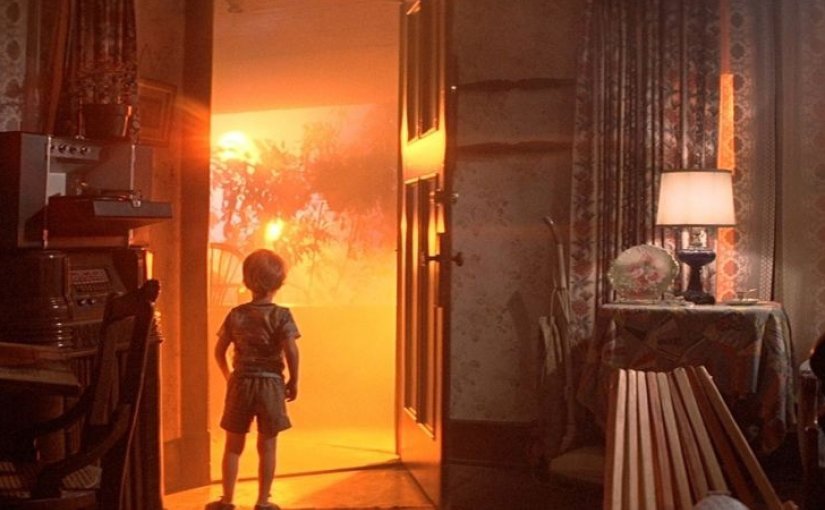
The construction of Spielberg’s first of many sci-fi films is magnificent.  It performs as if it is operating with real world science and language.  Yet, I have to draw attention to a scene that arrives in the middle of the picture.  Barry’s innocent, but youthful obsession, is tested within the home, beside Jillian’s fear.  Spielberg uses every prop and device available within the set of this scene.  Battery operated toys come alive.  The record player goes off.  The stove turns on. The dishwasher opens and closes. Blinding lights bleed through the curtains, chimney and keyholes.  The echoing sounds become overpowering.  What’s come to the house can’t be explained.  However, one person is thrilled by it while another is terrified.  It is such a well edited scene of terror at the unknown, that for me still remains as one of the most suspenseful moments in film history.  Steven Spielberg is bringing life to a “boogie man.”  When I showed my daughter this picture during a re-release in a Dolby movie theatre, I held her 11-year-old self in my lap concerned she’d become frightened of the scene.  It’s as thrilling as going on an unpredictable roller coaster for the first time.  The scene occurs out of nowhere, with no convenience of foreshadowing.  Once again, as he did with Jaws and somewhat implied with Duel, Steven Spielberg does not show you the terror or the invasive entity.  He allows the viewer’s subconscious to draw its own conclusion.  This is master craftsmanship.

Close Encounters Of The Third Kind remains as one of the best science fiction films of all time.  Nearly forty years later, despite its fiction, it still feels like it’s real.  It all feels like it means something.  It still feels like its important. 

THE DEPARTED

By Marc S. Sanders

Martin Scorsese finally won his Best Director Oscar with the 2006 Best Picture The Departed, from a script written by William Monahan. The film is a remake of a Hong Kong crime drama called Infernal Affairs.

Also known as the one film in Scorsese’s library with a linear plot, The Departed depicts the stories of two guys who grew up in the south end of Boston and joined the police academy to serve. Only difference is one is recruited to go undercover within the Irish mob, while the other is recruited by the same mob to become a highly respected police officer and supply an unlimited wealth of information to his criminal boss.

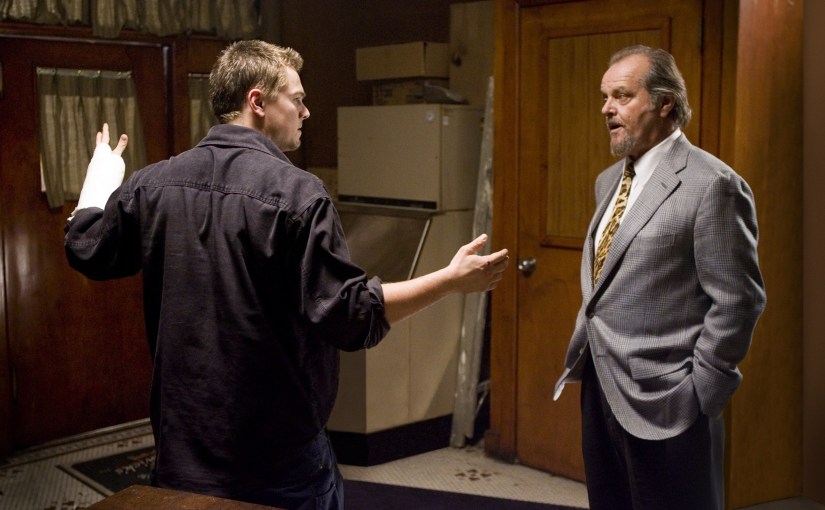
Leonardo DiCaprio is the undercover cop Billy Costigan. Matt Damon is the criminal cop Colin Sullivan. Jack Nicholson is the Irish mob boss in the middle, Frank Costello.

The Departed works because Scorsese and Monahan allow the audience in on every deceit playing against the characters. Pleasantly surprising is that there are even twists to this layered story, and cellular flip phones assist all the players with trying to remain in hiding or hoping to one up and trap the other. However, because everyone is getting tipped from their own respective sources, people are either not ending up dead, or arrested or caught red handed. As Costigan builds his case against Costello, Sullivan is worming his way to protecting his cover in the police force while also tipping off his true boss.

Performances from DiCaprio, Damon and Nicholson are what you’d expect. Nicholson is chewing the scenery again appearing like the devil incarnate while hamming up the facial expressions. Damon is great at playing it like the Boy Scout cop in well-tailored suits, clean shaven and flirtatious within his department and earning respect among his peers, that is until it all seems to unravel. DiCaprio is wired as the cop who needs to show he’s a dangerous hood to be trusted among the mob cohorts. However, he’s getting more paranoid and unwound at the risk of being made.

Thelma Schoonmaker (one of my favorites) does a balanced approach edit to showing a parallel among the cops. She will insert a happening of Costigan for a snippet and then segue to Sullivan appearing to do honest police work, or reaching out to Costello with a warning of what’s coming for him.

Great support also comes from Ray Winstone as Costello’s right hand man, and Alec Baldwin, Anthony Anderson and Martin Sheen, all within the police department.

Ironically, the one Oscar nominated performance was bestowed upon Mark Wahlberg and I grew tired of his presence quickly as the cop who berates Costigan endlessly with yelling and fast one liners that involve someone’s mother. Could we just move on from this please?

I also found Vera Farmiga as a police psychologist to be mostly unnecessary until a contrived ending point needed to arrive. Her character naturally has affairs with both Damon and DiCaprio, who also attend her office for sessions. Of course they do! Whenever the film sidetracks to one of them with Farmiga, The Departed stalls for a moment. Her character carries no stake in the plot line and offers no further dimension to DiCaprio and Damon’s characters.

The film works best as the complications compound on each other. A great moment occurs between the cops when one of them picks up a bloody cell phone to dial back the most recent call. Silence on both ends of the line, and the moment just plays out until someone speaks or hangs up.

Moments like that is suspense similar to when a man is intruding in a dark house. However, this is suspense delivered by Martin Scorsese, and Martin Scorsese will film suspense that is anything but typical. Martin Scorsese’s suspense leaves you breathless.

IRON MAN 2

By Marc S. Sanders

Iron Man 2 is a Frankenstein’s Monster of a film. Director Jon Favreau returns, but not with the same insight he invested into the first Iron Man. This loud, headache inducing sequel is an assemblage of cutting room floor scenes taped together to mask itself as a cohesive narrative brought to life. The movie exists. Yet it has no brain.

Six months have passed since the events of the first film, and Tony Stark (Robert Downey Jr) is ready to open his peace parade Expo in New York. The problems begin here. Stark, who redeemed himself as a born-again, eyes open martyr at the end of the first film, reverts to an obnoxious jerk full of brash, rude cockiness. Downey goes so over the top with his improvisational one liners that you can hardly stand Tony Stark, and this is all before he gets drunk and pees in the Iron Man suit.

Stark is experiencing rapid blood toxicity from the suit and he is unable to find a solution. I might have been concerned at first but after the film is over, the convenient remedy just made me feel cheated. Poor writing offers a convenient get of jail free card.

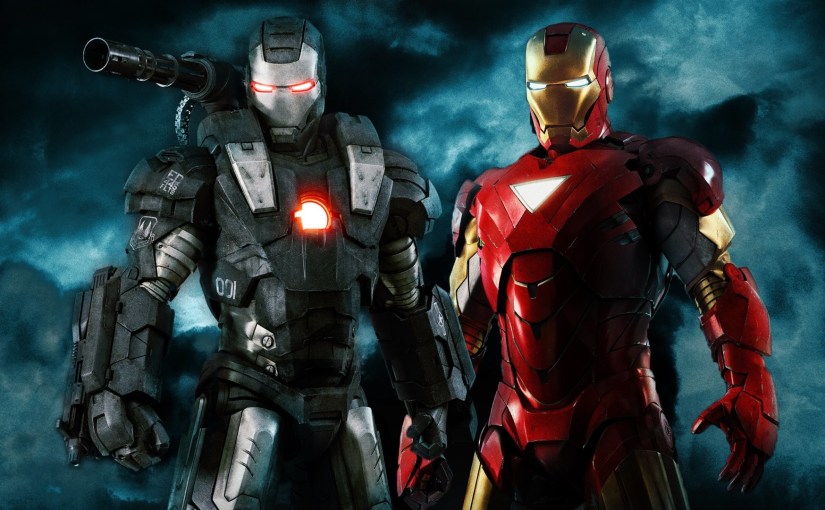
Then there is Stark’s relationship with his friend Rhodey (Don Cheadle). Cheadle shows potential in the part he resumed from Terrance Howard, but he really only serves two sole purposes, to have an armor throw down with Tony throughout the mansion (a stupid fight by the way), and to wear the new War Machine armor. That, I’ll say is pretty cool in charcoal black with red eyes and a shoulder resting machine gun.

Gwenyth Paltrow is back as Pepper Potts, and she just kvetches a lot. Paltrow and Downey’s chemistry are all but gone. Not really the actors’ fault though. More so, it’s the dumb screenplay by Justin Theroux who I guess found it adorable for the two players to squabble amid the action scenes. It’s rather annoying actually.

Theroux makes a lot of misfires here. The great Mickey Rourke appears to have fleshed out a great villain known as Whiplash. A Russian physicist with a grudge against Stark. Rourke offers a scary appearance of long hair, gold teeth and a tattooed muscular body. Oh, and he has a cockatoo as well. Mustn’t forget that. Too much of this film is devoted to this bird that does nothing. Whiplash is insufficiently written. He has a mid-film battle with Stark at the Grand Prix in Monaco, then following a prison escape, he’s harbored by Stark competitor, Justin Hammer, in a factory where he does nothing but build robots. None of this is interesting.

Sam Rockwell plays Hammer as a whiny kid in nerdy glasses and even nerdier three piece suits. He’s not a villain you ever love. He’s a Frank Burns, but his stupidity against Stark and Rourke’s character offers no humor from the stooge that he is.

Side stories focus on anticipation towards the first Avengers film with Samuel Jackson as Nick Fury and Scarlett Johansson’s Black Widow, yet not much is offered. They have nothing to do with anything else going on in this hodgepodge. Johansson finally gets a good fight scene during the climax, but it remains brief.

So there’s really nothing in Iron Man 2. It’s just a mix of things smashed together. The Iron Man suit only has three scenes, one to open the Expo (no fight there), one to have drunk Tony Stark fight with Rhodey while wrecking his house (Belushi did it better in Animal House, as well as the cast of Sixteen Candles), and then finally in a climactic ending against Hammer’s military robots and Rourke’s Whiplash who hardly participates in the moment.

Iron Man 2 is likely my least favorite of all the MCU films. (Actually, Eternals took that top honor, recently.) It offers one redeeming quality and that’s its end credit scene, maybe my favorite of that particular category.

Otherwise, Iron Man 2 is pointless, dumb, ignorant of its product, and flat out obnoxious.

Stan Lee Cameo: Was that Larry King? Really?