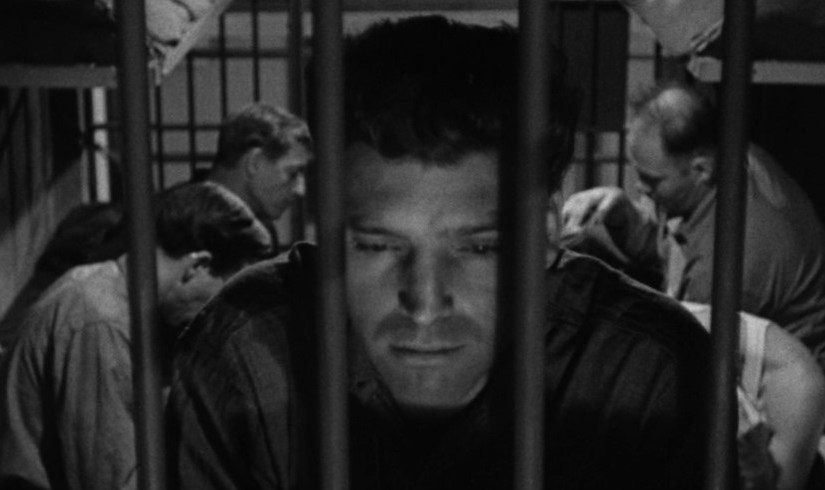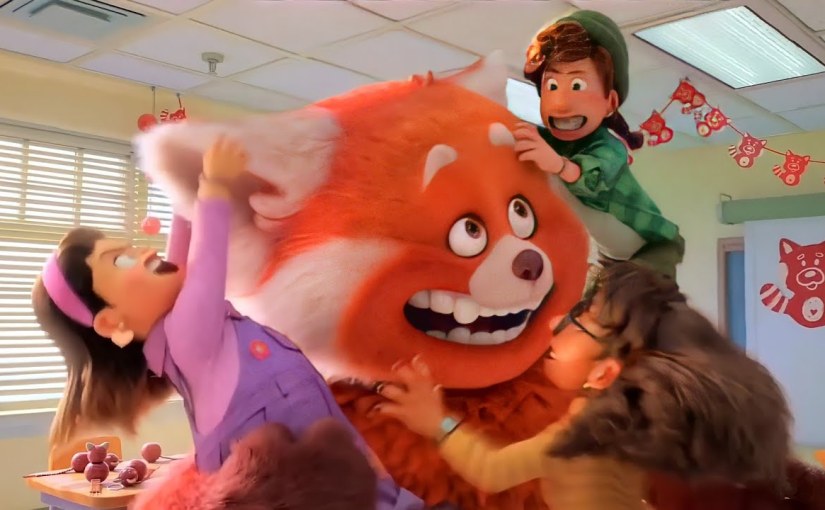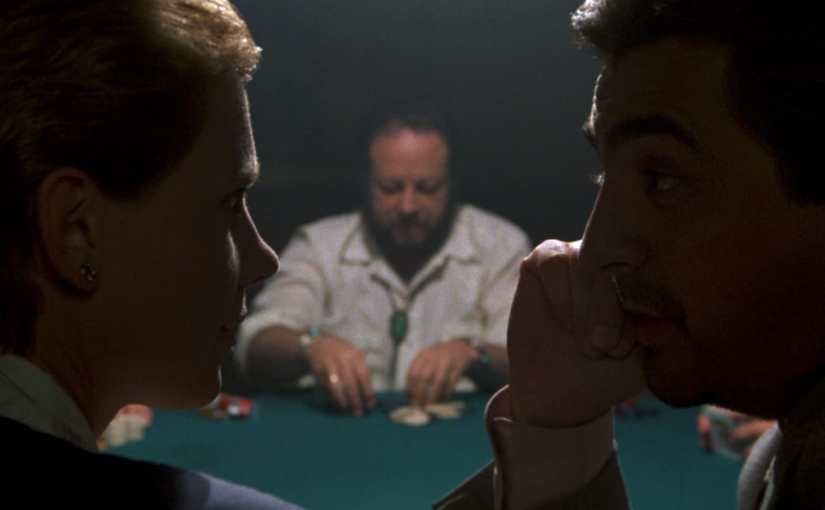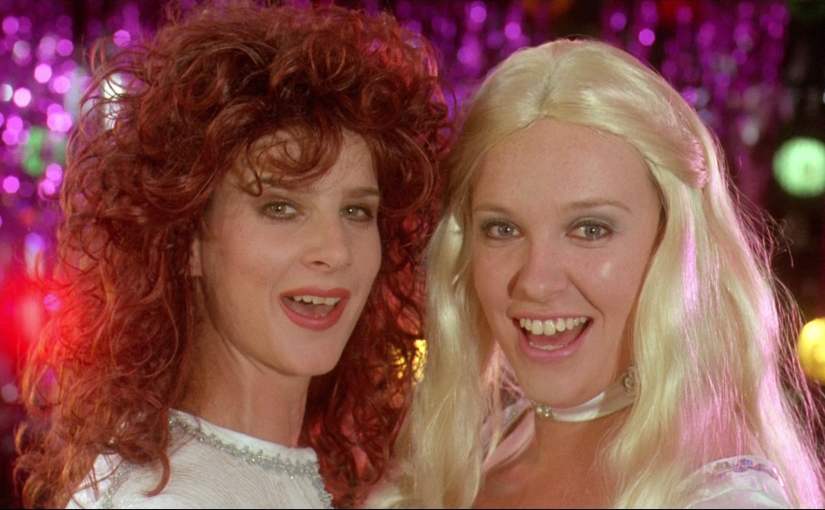
LICORICE PIZZA (2021)

by Miguel E. Rodriguez

Director: Paul Thomas Anderson
Cast: Alana Haim, Cooper Hoffman, Sean Penn, Tom Waits, Bradley Cooper
My Rating: 7/10
Rotten Tomatometer: 92% Certified Fresh

PLOT: The story of Alana Kane and Gary Valentine growing up, running around and going through the treacherous navigation of first love in the San Fernando Valley, 1973.


You know that old saying, “You’ll either love it or hate it”?  I’m afraid that doesn’t apply to Paul Thomas Anderson’s latest film, Licorice Pizza.  At least not for me.

The plot: Gary, an impossibly precocious and business-savvy 15-year-old child actor, still in high school (the movie opens with him getting his yearbook pictures taken), develops a crush on Alana, a 25-year-old production assistant, and pursues her – and pursues her and pursues her – while she wrestles with her own emotions and the fact that, dude, he’s fifteen years old.  He calls a shaky truce on his emotions so they can remain friends, and in the process they…let me see if I can remember it all…go on several auditions, help Gary’s mom with her public relations business, open their own business selling waterbeds, fly to Texas (?) and back, fall in and out of “like” with each other several times by attempting to form physical relationships with people their own age, meet an actor who is clearly meant to be William Holden, and by the end of the movie they finally seem to be mutually in love with each other.  Sort of.  Maybe.  It depends on your point of view.  But moving on…

For all its faults, Licorice Pizza did keep me grinning for virtually all of its longish running time, and it also made me laugh out loud many times.  Only in a Paul Thomas Anderson – or maybe also a Tarantino movie – could you have a scene where a mixed-race couple (white husband/Asian wife) have a conversation in which the white husband speaks the most atrociously absurd, cringeworthy pidgin Japanese to his wife, and it gets an earned laugh for the sheer audacity of the scene.  Is it offensive?  Certainly, if this happened in real life, the husband would be cancelled faster than an all-Latino sitcom.  (Ba-ZING.)  But I’ve gotta be honest, that was one of the great belly-laughs in the film.  I found it funny in the same way that Robert Downey Jr. in blackface in Tropic Thunder was funny, in that the people committing the offenses are clearly dumber than sacks of sand and so have absolutely no idea they’re being morons.  But I’ll leave the Theory-of-Comedy discussion for another review…

In true P.T. Anderson fashion, the dialogue is as sharply written as anything by Sorkin or Mamet.  Not a second is wasted on unnecessary exposition or explanation.  (Although, to be fair, a LITTLE more explanation would have been preferred…more on that later.)  Each scene gets to the point, either directly or indirectly, with surgical precision.

There are some editing jumps that will keep a viewer on their toes.  The movie shows a scene of Gary testing a waterbed for the first time, then jumps to him hawking them at a “Teen Fair”, then suddenly he has his own storefront, sales reps, and a bank of telephone operators.  We can only assume that he had the capital, the licenses, and the business logistics to not only make this happen but to clearly be successful at it, at least for a while.  I mean, he is fifteen years old, so why wouldn’t he know how to do all this, right?

[Actually, now that I think about it, there IS a precedent for this plot: Rushmore, Wes Anderson’s 1998 film about another precocious 15-year-old boy who falls in love with a much older woman and spends most of the rest of the film attempting to woo her while she wrestles with her emotions and her desire for a relationship with someone who was born in the same decade as she was.  Do with that information what you will.]

When the age gap between Gary and Alana was explained very clearly at the beginning of the film, I was pretty sure the two of them could never be in a relationship, and I was taken out of the movie a little.  However, as the movie progressed, the film’s charm and effortless wit made me forget how far apart they were.  Gary behaves in such a way that I forgot just young he’s supposed to be, and I forgot just how old Alana is supposed to be.  The film expertly took me by the hand and got me rooting for them to be together, despite how – let’s not mince words – illegal it would be for them to be together.

SPOILER ALERT, SPOILER ALERT, SPOILER ALERT, YOU HAVE BEEN WARNED.

SPOILER ALERT.

So the movie does its job, that I’ll grant you.  But when the film ends, and Gary and Alana kiss and go running off screen together, and Alana finally says, “I love you, Gary”, and the credits started rolling…I stared at the screen, raised my arms in supplication to the scrolling credits, and said, “Say WHAT…?”  Because it was at that point, after the abrupt ending, that I started to have questions.  Lots and lots and LOTS of questions.

If Gary is a high school student – and he is a high school student – when did he ever go to class?  The film never shows us.  One could make the case of, well, you have to ASSUME he’s going to class.  Okay…but when?  In between auditions and plane flights to a live taping of a musical number in front of a live audience and opening not one but two small businesses where his employees seem to be composed entirely of his school-age buddies?  And one of these businesses involves him buying a large quantity of pinball machines to start an arcade.  Where is this money coming from?!  His acting paychecks?  He’s not a major star.  He’s a minor bit player, at best.  And yet, not only can he finance two small businesses on his own (he has a mother, but we only meet her twice), but the maître d’ at a local restaurant knows him by name and treats him like Hollywood royalty – he even has his own table at this place.

And let’s talk about that ending.  She says, “I love you, Gary”, and they run off screen.  What does this mean?  Does this mean she’s about to embark on a physical relationship with an underage boy?  One could say, “Well, of COURSE she’s not going to start going steady with him or anything.  She’s twenty-five and he’s fifteen!  The idea’s absurd and icky!  No, there’s no way anything like that can happen between the two of them, so this ending is just her affirming her love for him in a platonic way because that’s all they will ever be able to be to each other: devoted friends.”

Yeah, but…are we just supposed to make that assumption out of thin air?  The entire movie has been working on getting these two characters together, and it ends (quite suddenly) with that happening, and…we’re just supposed to think, “Yeah, but they’re not TOGETHER-together”?  If that’s the case, I feel there should have been a little more information to make that clearer.

I’m reminded of something I read where a college professor is teaching film students about Hal Ashby’s prescient film Being There.  MORE SPOILER ALERTS, kind of unavoidable here…but the film ends with a humble gardener with an IQ in the double-digits walking serenely out onto the surface of a lake.  The professor asks his students what this final scene means.  And the students say, well, there’s a sunken pier just out of sight under the water, or the water is quite shallow, or they even theorize that the scene isn’t really happening, it’s just in the gardener’s mind.

The professor pounds on his desk and says, “No, no, NO!  What you see is what you get.  The guy is literally walking on water.  Nothing in the film mentions a sunken pier or low water levels, and we’ve never seen any of his dreams before now.  Any explanations you’re giving for why he’s walking on water, aside from his ability to actually do it, is just you bringing something the scene that isn’t there.

That’s what I think about the ending of Licorice Pizza.  It’s problematic because, to me, it doesn’t matter what I think happens at the end when she proclaims her love and they run off.  The movie is clearly indicating they DO wind up in a relationship.  We can infer all we want about what may have happened after the cameras cut, but we are left with what the film has presented to us.  And that left me feeling weirdly uncomfortable.

To be sure, there are movies out there, acknowledged masterpieces, that depend heavily on the viewer doing some heavy lifting.  The one that comes to mind the most for me is 2001: A Space Odyssey, a film whose ending is suitably awesome and beautiful…but what in the Sam Hill does it MEAN?  Do enough reading and analysis and there are conclusions to be made that make sense and which elevate that film.

But Licorice Pizza is no 2001.  This is just not the kind of movie that lends itself to that kind of theoretical dissection.  If there are buried truths to be discovered, fair enough, but how much digging am I expected to do?  As the great man once said, “If you have to ask what something symbolizes, it doesn’t.”

First impressions are very important. And my first impression of Licorice Pizza is that, while it’s solidly acted and directed, and the dialogue is pitch perfect, the story itself leaves something to be desired.

[P.S.  A friend of mine said that if you were to switch the genders in this movie, it would never have been made.  I might agree, were it not for the fact that there have already been several films already made about that very topic, that is, an adult man in an inappropriate relationship with a much younger or underage woman.  American Beauty, Lolita, Lost in Translation, etcetera.  Maybe Lost in Translation is not the best example, as both characters are legal adults, but you get my point.  Frankly, I thought the gender switching in Licorice Pizza was kinda refreshing…up to a point.]

MATEWAN (1987)

by Miguel E. Rodriguez

Director: John Sayles
Cast: Chris Cooper, Mary McDonnell, David Strathairn, James Earl Jones
My Rating: 9/10
Rotten Tomatometer: 94%

PLOT: The (mostly) true story of a West Virginia coal town where the local miners’ struggle to form a union rose to the pitch of all-out war in 1920.


A few nights ago, I watched Matewan for the first time.  I haven’t seen many of director John Sayles’ films, but I’d venture to say it’s one of his best.  With loving authenticity and a keen ear for dialogue and music, Matewan depicts a nearly forgotten chapter of American history when coal miners in 1920 West Virginia attempted to unionize, the big corporation that owned the mine attempted to suppress and intimidate the workers, and everything came to a head one fateful day on the train tracks leading in and out of town.

I can’t pin down exactly why, but I haven’t been able to stop thinking about this movie.  When I was watching it, I tried to stop so I could go to bed and finish it in the morning.  But when I tried to sleep, my mind wouldn’t stop racing, thinking about the film, its message, its look, the SOUND of it.  I had to get back out of bed and finish it to the end before I was finally able to sleep.

The plot is nothing new, at least in broad strokes.  Small town locals take on corporate America and show them what for.  Seen it once, seen it a hundred times.  But for some reason, when this film showed scenes of company men evicting miners from their homes, or humiliating dinner guests at the boarding house where they’re staying, or spreading lies about union organizers, even employing a spy…I got mad.  I wasn’t just upset at the bad guys in a knee-jerk way, like disliking Nazis in a World War II film.  I was genuinely angry.  And I stayed angry for days whenever I thought about the movie.

Maybe it’s the thought of this particular kind of injustice depicted in Matewan that fueled my anger.  Here are people, poor people, desperate people, who lost their land, their homes, their dignity, and their lives so other men hundreds or thousands of miles away could report a six percent increase in profits at the next stockholder’s meeting.

There’s a powerful but terrible scene when the mining boss is introducing a group of new employees to the mine and its rules.  They are presented with tools…but they’re loans from the company, and their cost will be deducted from their first paycheck.  Miners can sharpen the tools with the company’s tool sharpeners…for a monthly fee.  The company provides a doctor…for a monthly fee.  The train ride to the mine was provided by the company…cost to be deducted.  The men are paid in company “script”, redeemable only at the company store.  Purchase any items available at the company store from an outside merchant…and you’re fired.

I remember thinking, this is literally slave labor.  How could anyone live like that, day after day, going down into a hole in the earth where the very real possibility of death, sudden or protracted, loomed over you every moment you’re down there?  And then to hear that the company could make conditions safer, but it’s just too expensive?  No WONDER they wanted to unionize.

Anyway.  Like I said.  It stuck with me.

Leaving aside the story, the film is extremely well made, especially considering the filmmakers were working within an extremely limited budget.  They employed the services of Haskell Wexler, one of the gods of movie cinematography, whose credits include Who’s Afraid of Virginia Woolf? (1966), In the Heat of the Night (1967), and One Flew Over the Cuckoo’s Nest (1975).  He employed a lot of low-light and natural-light photography, and as a result, even though Matewan was released in 1987, the movie looks and feels like a classic ‘70s movie.  It’s so precisely of a particular time and place that it’s a little jarring to see contemporary actors like Chris Cooper and Mary McDonnell in scenes that look like something out of Barry Lyndon or McCabe & Mrs. Miller.

The music choices are also out of this world, especially in a scene where musicians from three separate ethnic communities start riffing on each other’s music.  It’s an eloquent symbol of the kind of community and camaraderie that was needed for the miners to succeed in their task.

The story moves onward.  The miners first rally around Joe Kenehan (Chris Cooper), who came to town with the specific goal of unionizing the mine.  Then things go sour when company enforcers arrive.  The local sheriff (David Strathairn) makes a bad first impression, but later reveals his true nature in immensely satisfying style.  Guns are fired.  Lives are lost.  A spy is discovered.  And everything leads to a final showdown between powerful men with the might of corporate America backing them up and a few desperate miners who just want to be treated like men instead of so much dry goods.

If you’re anything like me, Matewan will stay with you long after it’s over.  Maybe not for the same reasons, but its memory will definitely linger.

LET THE RIGHT ONE IN (2008, Sweden)

by Miguel E. Rodriguez

Director: Tomas Alfredson
Cast: Kåre Hedebrant, Lena Leandersson
My Rating: 9/10
Rotten Tomatometer: 98% Certified Fresh

PLOT: A bullied schoolboy makes friends with the new neighbor, a girl about his age who doesn’t leave her apartment during the day and has some alarming eating habits…


A little while ago, I reviewed a movie called Klaus, a film that took an age-old pop culture trope (the origins of Santa Claus) and turned it on its ear.  I wasn’t sure when I would find another movie that would be able to do that so effectively.

Well…here it is.  Let the Right One In, a Swedish film from 2008, made huge waves at the time of its release.  Critics called it a film with “magnificent emotional resonance.”  “One of the great horror films of recent years.”  “One of the real finds of 2008.”  “A spectacularly moving and elegant movie…a remarkable film.”

Too good to be true, right?  Well, I’ve just finished watching it earlier tonight, and I can tell you, the hype is real.  While the very ending brought up more questions than it answers (where is the train going?  where are the parents?), the ride getting there was phenomenally good.  Calling it simply a “vampire movie” is almost insultingly reductive.  It poses questions about vampire lore that I had never really thought about, and it provides immensely satisfying answers.

For example, one of the most well-known rules about vampires is they cannot enter your home unless you invite them inside.  At one point in the film, a vampire hesitates at a doorway because she hasn’t been invited, and the boy asks her, “Well, what happens if you come in anyway?  Is there something in the air?”  So, she goes inside without being invited.  What happened next was totally unexpected, and it made perfect sense.  I remember thinking, “So THAT’S what they’re afraid of…”

But I’m jumping ahead.  Let the Right One In tells the story of a bullied pre-teen schoolboy, Oskar, who fantasizes about knifing his tormentors.  One day, new neighbors move into the apartment next door, an older gentleman and a preteen girl.  He meets the girl one evening out on the snowy playground in front of their apartment building.  (Her first appearance is one of the great entrances in cinema.)  She tells him her name is Eli (pronounced “Elly” in Sweden).  He says she smells funny.  She tells him they cannot be friends, even though she seems eager to make friends with Oskar.  Her eyes seem to be abnormally large, almost like a character in a Miyazaki anime.

We’ve already seen the older gentleman who moves in with her botch a food-gathering run, so it’s obvious from the get-go what exactly Eli is, and what she needs to survive.  This is all done within the film’s first fifteen minutes or so, so I promise I’m not giving anything away.

What happens after those establishing moments, I’ll leave for you to discover.  You may already be remembering countless other vampire films like Fright Night or Interview with the Vampire and thinking, “I’ve seen all this before.”  But I can assure you, you haven’t.  Not like this.

The relationship between Oskar and Eli never gets sexual (they’re both too young for that…well, Oskar is), and is handled with remarkable sensitivity and keen observation.  At one point, he buys her a snack from a vendor.  She refuses it.  He feels hurt.  So she takes one anyway and eats it.  Seconds later, she’s sick to her stomach.  What does Oskar think about this?  He’s surprised, but he takes it in stride and apologizes.  There’s something so clever about this approach, about making it between an old soul and a child, that feels fresh and new to me.  Oskar knows the term “vampire,” but clearly hasn’t seen enough movies to recognize the signs of one standing right in front of him.

Eli is forced to make a kill periodically to survive.  These attacks are done with a minimum of gore but are incredibly effective and horrifying.  There’s something instinctively creepy about seeing a little girl jump – or drop – from the shadows, clamber onto the back of her victims, and latch onto their necks with an animalistic growl.  The fact these attacks are stitched together with quiet moments, like Oskar teaching Eli morse code, creates a unique atmosphere that is impossible for me to describe satisfactorily.

(Another detail: when Eli is hungry, it’s not depicted as it is in other vampire movies, where the overpowering urge to feed makes her go mad and wide-eyed.  Her stomach rumbles.  True, it’s a little louder than when it happens to a normal person, but it feels…right.  Of course her stomach rumbles…she’s hungry.)

There is more to the story, of course, about Oskar’s bullies and Eli’s incompetent roommate and the suspicious bar regular whose friend was killed, and so on.  Better to leave the rest as a surprise.  And there are LOTS of cool surprises here.  This feels like the kind of movie Guillermo del Toro might have made if he had gotten there first.  (Oh, wait, he did make Cronos…I stand corrected.)

ROSETTA (1999, Belgium)

by Miguel E. Rodriguez

Directors: Jean-Pierre Dardenne, Luc Dardenne
Cast: Émilie Dequenne, Fabrizio Rongione, Olivier Gourmet
My Rating: 9/10
Rotten Tomatometer: 90%

PLOT: A poor young woman, teetering on the edge of desperation, struggles to support herself and her alcoholic mother.


The word “neo-realist” is used several times in other reviews or movie blogs where this little Belgian film is discussed. I’m not a film scholar, so I can’t claim to know precisely what that term describes. Without searching for the dictionary definition, I think it refers to a film in which the predominant theme or tone is that of real life, happening to real people. A favorite method of creating this tone is to use non-professional actors in all the key roles, so one never gets a sense of acting from a performance, only reality.

If I got that right, then Rosetta is definitely a neo-realist film, and I typically do not like neo-realist films. I have seen Bicycle Thieves (1948) a couple of times, and while I acknowledge its place in cinema history and its craftsmanship, the appeal of the film (commonly called a masterpiece of Italian neo-realism) eludes me. It’s not my favorite genre and/or time period.

But Rosetta undercut my preconceived notions of the genre and had me riveted from its opening moments to its severely unconventional ending, ninety short minutes later.

The determining factor is the camerawork, at least at first. We immediately follow this young girl, Rosetta (a gutsy, award-winning performance by Émilie Dequenne), maybe 16 or 17 years old, who is walking briskly through a factory floor, though we’re not sure why at first. As she walks, the camera follows her, hand-held, unsteady, very queasy-cam, but it lends a sense of immediacy to the shot. The camera is almost running just to keep up with Rosetta, and I was instantly curious. Where is she going? Why is she walking so fast? Is she about to punch someone out?

But no, she’s about to be fired for being late, and when her boss intercepts her, she refuses to go quietly, to a point where security has to be called and chases her through the entire building. Why so desperate? Aren’t there other jobs to be had for someone her age out there?

Apparently not. This will be a theme throughout the film: her constant hustle to get a paying job. At one point, someone offers to hire her and pay her under the table, but she refuses: “I want a real job.”

Wherever she goes, the handheld camera follows right behind her, like a paparazzo who won’t give up. We only get a handful of long shots, like when she crosses a busy street after getting off a bus. Virtually every other shot is right behind her or right next to her. The effect creates the idea that Rosetta’s life is composed mostly of sleep and hustling to make that next dollar, or franc. In between, she maintains her trailer home with her alcoholic mother, a woman who is so pitifully down the road of addiction that she demeans herself with the landlord of their trailer park to pay for their water, just so she can keep the money to pay for more liquor. Rosetta ruthlessly tries to keep her mother in check, constantly berating her for her behavior, their familial positions clearly reversed.

Rosetta is not a happy film. How can it be? It simply follows this girl’s life from one crisis to another. But I was totally engrossed in a way that reminded me, for some reason, of another movie, Noah Baumbach’s The Squid and the Whale, which was also shot and filmed in such a way that the actors (most of them recognizable and famous) didn’t feel like actors, and as such felt more real than many other films.

So…what is the takeaway from this movie? Is Rosetta a good person? She has noble intentions, I believe, but she is forced to be strong and calculating as a way of keeping her and her mother afloat. At one point, she meets a young man, might even like him, but at one point, on the shore of a small lake, he falls in and appears to be drowning…and Rosetta takes an awfully long time to decide whether to help him or not. After all, if he dies…she might be able to take his place at work.

I just watched a video essay on Netflix about how it’s not always necessary for you to like a character in a movie in order for it to be enjoyable. Overall, I’d agree with that assessment, especially with Rosetta (though What About Bob? is the CLEAR exception). This film was both dazzling and simple, a neat trick, involving a character I didn’t always agree with, but who I believed made the only choices she could make in her situation. I found myself asking what I would do in her place. Left to fend for myself with no steady job and an alcoholic parent, how would I fare in this world? How would you? Rosetta answers that question in a way that makes sense for the lead character. Her answers may differ from yours. Discuss.

FLIGHTPLAN (2005)

by Miguel E. Rodriguez

Director: Robert Schwentke
Cast: Jodie Foster, Peter Sarsgaard, Sean Bean (who, miraculously, does NOT die in this film)
My Rating: 8/10
Rotten Tomatometer: 37%

PLOT: A bereaved woman (Foster) and her daughter are flying home from Berlin to America. At 30,000 feet, the child vanishes, and nobody will admit she was ever on the plane.


I get it. Flightplan strains at the leash of credibility. A lot. In order for the plot to work, the audience has to believe that a number of people would have to be involved in a massive conspiracy, a cacophony of coincidences that screams “CONTRIVED” to any sane moviegoer.

But, as ridiculous as it seems, the movie still works incredibly well, even upon repeat viewings. Director Robert Schwentke has not exactly distinguished himself since this film (credits include R.I.P.D., Red, and the last two Divergent movies), but Flightplan displays a surefire command of tone, creating a claustrophobic atmosphere while keeping the camera free to move around the plane along seemingly impossible paths.

This film is a classic example of what Roger Ebert called a “locked room” puzzle. A girl is missing on an airplane – admittedly a very LARGE airplane, but still. There are only so many places she can be. The plane is searched, but she’s nowhere to be found, leaving only two possibilities: she was never there to begin with, or someone’s lying. But who? And why? She thinks she recognizes an Arab passenger on the plane…was he staring in her apartment window the previous night? Is she going crazy, or has there been an actual kidnapping? That’s the central mystery, and it carries the movie for most of its brief running time.

(There’s a neat section where Foster’s character (who, coincidentally, helped design the plane they’re on), monkeys around with the plane’s electronics and gets the oxygen masks to fall, to create a diversion for herself. Tell you what, that would get MY attention.)

The final resolution is…well, let’s say it answers all the questions of what happened without addressing HOW it happened. A lot of folks found that unsatisfactory (thus the 37% on Rotten Tomatoes), but the movie is so well-made and executed that, by the time the credits rolled, I didn’t mind it so much. But, you know…that’s just me.

A CHRISTMAS CAROL (1984)

by Miguel E. Rodriguez

A CHRISTMAS CAROL (12/17/1984)
Director: Clive Donner
Cast: George C. Scott, David Warner, Joanne Whalley, Edward Woodward, Susannah York
My Rating: 10/10

PLOT: In 19th-century London, a bitter old miser who rationalizes his uncaring nature learns real compassion when three spirits visit him on Christmas Eve.

——————————

[SPOILER ALERTS! (For anyone whose souls are so dead they have never seen or read A Christmas Carol before…)]

The TV version of A Christmas Carol that first aired on CBS in 1984, starring the legendary George C. Scott as Ebenezer Scrooge, is the best version of Charles Dickens’ story that I’ve ever seen.

Oh, but let me tell you why.

Without exception, every other version I’ve ever seen, including live theatre versions, have made humor and lightness their prevailing mood. The musical Scrooge (1970) does have its share of dark moments towards the end, but the darkness is derailed by an unnecessary detour into cartoonish humor (while in the depths of Hell, no less). I’m not saying that making the story fun is wrong, necessarily. After all, it’s a Christmas story, with a strong message of redemption, so why shouldn’t it be a joyous experience? Right?

Ah…but this 1984 version takes a novel approach. It realizes what I’ve always known all along: that this is, above all, a ghost story with a Christmas message. And not all ghost stories are merry and bright.

Take the Ghost of Christmas Present, for example. In this version, he’s played by Edward Woodward, with a deep booming voice, an absurdly hairy chest, and hidden stilts making him upwards of 7 feet tall. His eyes twinkle, but something about his grin and hearty laughter gives you the sense of a cat toying with a mouse. There are moments when he berates poor Scrooge for his vices, and his voice becomes intense, and the smile vanishes from your face, and he tells Scrooge that his life may be worth less than MILLIONS of other souls like Tiny Tim, and…it’s quite a moment. It reminds you that this is a morality tale.

Another example, of course, would be the ever-popular Ghost of Christmas Yet to Come. In every other version I’ve seen, this specter doesn’t speak, just points, usually with some kind of musical flourish. This version is no different, except the filmmakers ingeniously use an intensely creepy sound effect whenever this Ghost points or nods. It’s like someone pulling a violin bow across a huge piece of sheet metal. The effect is not comic or melodramatic. It’s deeply unsettling.

Of course, yet another reason to love this version is the towering performance from George C. Scott as the proto-Grinch, a man for whom Christmas is just an “excuse for picking a man’s pocket every twenty-fifth of December.” He injects moments of sly humor if you watch carefully (to the mute Ghost of Christmas Yet to Come, he mutters, “You’re devilishly hard to have a conversation with”), but for the most part he plays the character completely straight with nary a grin to be seen except on the rarest occasions. This is an aspect missing from every other version. The prevailing wisdom seems to be to amplify and overdo the character of Scrooge, so he’s not as unlikable, I guess. Not this time. Scott creates a mean, heartless, ruthless businessman who would as soon bankrupt you as say two words to you. Even Albert Finney’s interpretation in Scrooge, as completely as he disappears into the role, is not as dark and merciless as George C. Scott’s version.

It’s that darkness that appeals to me here. Yes, yes, the ultimate scenes of happiness and redemption are all there – the boy on the street, Scrooge skipping around his room, “giddy as a drunken man”, the massive turkey – but I love this version because it remembers its roots. This is a gothic ghost story, and as far as I’m concerned, any version of A Christmas Carol would do well to remember that.

KLAUS (2019)

by Miguel E. Rodriguez

KLAUS (2019)
Directors: Sergio Pablos, Carlos Martínez López
Cast: Jason Schwartzman, J.K. Simmons, Rashida Jones, Norm MacDonald, Joan Cusack
My Rating: 10/10
Rotten Tomatometer: 94% Certified Fresh

PLOT: The origin story of a certain jolly fellow in a red suit is told with beautifully enhanced hand-drawn animation in a film that deserves to be ranked with the best holiday classics.


I was not prepared for this.

Netflix’s Klaus from 2019 is one of the most beautiful, magical, and relentlessly original holiday films I’ve ever seen.  And heart-rending.  There are emotional beats in Klaus that rival anything in Pixar’s catalog, from the opening sequence of Up to the finale of Inside Out.

Short review: Go. Watch it now. Why are you still reading this?

Long review:

It starts an unspecified number of years ago somewhere in what appears to be Scandinavia, but it could be anywhere.  Or nowhere.  Jesper (Jason Schwartzman) is the ne’er-do-well son of the postmaster general, or something like that.  Determined to make a man out of his son, Jesper’s father assigns him a task: start a post office in a remote northern village on a desolate island and generate 6,000 letters in a one-year period or get cut off from his family’s substantial wealth.

The visuals in this forbidding village could warm the surrealist cockles of Tim Burton’s heart.  Rooftops aren’t so much pointed as sharpened.  Wide-eyed children make snowmen that would give Calvin nightmares.  A generations-long feud between two families on either side of town seems to be their only purpose for staying in town in the first place.

(So far, I’m thinking, okay, kinda weird, not sure where they’re going with this…is this scrawny dude gonna be Santa?)

One thing leads to another and Jesper travels to the other end of the island to visit the isolated house of someone known locally only as the woodsman.  Here he discovers shelves and shelves of handmade toys, gathering dust.  One of these toys finds its way into the hands of a child back in town who wrote a letter asking for a toy…

And here is where the story’s streak of inspired originality really took off.  Virtually every aspect of the legendary Santa Claus is given its own special origin story, from the reindeer to the sleigh to the concept of a Naughty List, right down to getting coal in your stocking instead of a present.

Aha, you say, but this has already been done!  I liked it better when it was called Santa Claus is Comin’ to Town, on TV in 1970, with Fred Astaire, Mickey Rooney, and Keenan Wynn!

True enough.  But Klaus ups the ante by imagining this tale in a way I’ve never seen before.  I’m finding it difficult to express my admiration without giving away key aspects of the film that make it such a delight.  It’s all done so organically, so naturally, that something happens, and you think, “Well, of course they think reindeer can fly, after seeing that!”  I found myself laughing out loud due to the sheer ingenuity on display.

I think it’s a great companion piece to that much-maligned holiday classic, The Polar Express.  Both films approach the Santa legend from different angles, but neither one talks down to its intended audience.  Here is a mystical figure, possessed of magical abilities beyond mortal man.  Both films treat him with the kind of childlike reverence he deserves, and if he’s a little scary sometimes, well…he is always watching…

But none of that would be enough to achieve perfection on its own.  What makes this movie perfect are the heart-rending emotional beats that come as complete shocks to the viewer.  You may notice that I haven’t mentioned Mrs. Klaus, nor is she listed on IMDb.  There’s a very good reason for that, but you won’t get it out of ME.  You may also be asking yourself, well, if this hermit woodsman turns into Santa Claus, what’s the deal with the postman?  Great question!  Watch the movie and find out.

(Pay attention to the wind…that’s all I’ll say.)

These and other surprises pop up here and there, like searching through old clothes and finding folding money in the pockets.  The finale might make you cry like a baby if you’re not careful.  You’ve been warned.

Klaus is buried treasure, lost amid the hubbub of many other films from that year that have been forgotten.  This one does not deserve to be forgotten.  It belongs on any list of classic holiday films, old and new.  If you’ve made it this far in the review, congratulations, thanks for reading, but now it’s time to GO WATCH THIS MOVIE.

Now available on Netflix.

HOUSE OF GUCCI (2021)

by Miguel E. Rodriguez

Director: Ridley Scott
Cast: Lady Gaga, Adam Driver, Jared Leto, Al Pacino, Jeremy Irons, Salma Hayek
My Rating: 5/10
Rotten Tomatometer: 61%

PLOT: An outsider marries into the Gucci family, and her unbridled ambition triggers a downward spiral of betrayal, revenge, and violence.


Watching Ridley Scott’s House of Gucci was a curious experience.  I could see glimmers of a great entertainment through bars of slow pacing, a meandering story, and unanswered questions.  The performances are top-notch, no question, but they are at the service of a movie that doesn’t seem interested in meeting their level of passion.

Inspired by true events, the movie tells the story of Patrizia Reggiani, a young woman from humble beginnings who meets and eventually marries Maurizio (Adam Driver), one of the heirs to the Gucci fashion empire.  Patrizia is played with fury and fire by Lady Gaga, who seems destined for another Oscar nomination.  Her character is portrayed as a latter-day Lady Macbeth, someone who sees through the deceptions of her new husband’s business associates and manipulates people and events for her family’s benefit.  In true tragic form, her ambitions threaten to derail everything she loves.

Adam Driver plays Maurizio as a rather slow fellow who disinherits himself so he can marry Patrizia but finds a way back into the fold via his uncle, Aldo (Al Pacino), who sees Maurizio as a good substitute for his own disappointing son, Paolo.  Paolo is played by Jared Leto, in another of the film’s performances destined for Oscar recognition.  Buried underneath flawless makeup and a skin cap, Leto portrays Paolo as a self-deluded buffoon whose fashion designs aren’t so much daring as unfortunate.  (Apparently, pastels and brown were never meant to mix…who knew?)

I mention the performances because they are the sole highlights of the film.  For two-and-a-half hours, these performances play against a backdrop of one dreary scene after another. Sure, the performances are fun to watch, but at the end of the day, if they don’t have anything interesting to say, it gets a little boring.  We get behind-the-scenes intrigues and betrayals that seem to owe more than a little to earlier crime epics by Scorsese and Coppola, but there was nothing to get really excited about.  Nothing grabbed me.

Ridley Scott’s films are normally way more imaginative than this.  They look better.  The cinematography is usually more inspired.  I’m not talking about his action or sci-fi epics, either.  I mean his small-scale triumphs like Matchstick Men or Thelma & Louise.  What happened here?  Was he not inspired by the story?  There is great material here, more than enough back-stabbing and lying and cheating to go around.  Yet everything is subdued, and plods, and inspires more yawns than anything else.  I didn’t experience any kind of excitement or passion one way or the other for any of the characters, or for the story.  It just didn’t make me care.

By the time House of Gucci is over, we’ve seen betrayals, marital infidelity, divorce, back-stabbing business deals, sex, and murder.  I have a friend who wrote a stage play that has almost all of those things, and it was WAY more entertaining than this film.

HAPPINESS (1998)

by Miguel E. Rodriguez

Director: Todd Solondz
Cast: Jane Adams, Jon Lovitz, Philip Seymour Hoffman, Dylan Baker, Lara Flynn Boyle, Louise Lasser, Ben Gazzara, Camryn Manheim, Molly Shannon
My Rating: 8/10
Rotten Tomatometer: 81% Certified Fresh

PLOT: Various characters, some linked, some not, struggle with the search for happiness in their lives.


A little history:

Todd Solondz’s film Happiness was so controversial that the Sundance Film Festival actually refused to screen it.  It was originally financed by October Films, but upon seeing the final product, October’s owner, Seagrams, dropped the film like a hot potato.  Happiness initially received an NC-17 rating, which would have immediately limited distribution opportunities, as well as created advertising difficulties.  Therefore, it was released unrated, uncut, and unaltered.

I remember reading about this movie years ago in Roger Ebert’s four-star review; he eventually labeled it one of the top ten movies of 1998.  I got curious, so, since this was in the days before Netflix – and I’m not sure Netflix would have made it available anyway – I snapped up the first DVD copy I could find and watched it.

And…um…oh my.  There are dark comedies (Pulp Fiction), and there are Dark Comedies (Dr. Strangelove).   And then there are DARK COMEDIES.  Happiness is a DARK COMEDY.

Remember that scene in Pulp Fiction when Marvin gets shot in the back of the car?  Remember the blood that covered the rear windshield and the blood and pieces of flesh and skull that were peppered all over John Travolta and Samuel L. Jackson?  Horrific, right?  But it was such a shocking moment that I remember laughing hysterically for the first few seconds after the incident, so that I missed the next few lines of dialogue from Vincent and Jules.

Happiness is like that.  You’re watching scenes of emotional devastation, but the circumstances under which they’re happening are…kinda funny.  Or at least funny in that shocked kind of way.  Your brain can’t quite believe what your eyes and ears are feeding it, and so you laugh.  At least, I did when I recently re-watched it with my girlfriend last night.  She didn’t do a lot of laughing, for the record.

The plot: We meet three sisters, Joy (Jane Adams), Helen (Lara Flynn Boyle), and Trish (Cynthia Stevenson).  Joy is an aspiring 30-something songwriter who still lives at home and has just broken up with her boyfriend in a scene that’s right at the top of the film and sets the appropriate mood: somewhere between funny and discomfort.  Helen is a moderately successful writer who has written a bestselling collection of poems about childhood rape.  Cynthia is a mother of two boys, married to a successful psychiatrist named Bill (Dylan Baker).  She seems to be the happiest of the three sisters, but she’s that kind of person who says things like, “You know, we all thought you would never amount to much, but NOW look at you!”

Cynthia’s husband, Bill, has a dark secret, one which I will not divulge here, but it’s revealed fairly early in the film.  He is a man so desperately in search of happiness that his efforts to fulfill his desires dance on the edge of farce.  He is so compelled to be happy (or at least what passes for happy in his mind) that he is, at one point, reduced to, um, “interfering with himself” in the backseat of his own car in broad daylight, risking discovery at every second by passers-by.

I haven’t even mentioned the part where he drugs the tuna fish sandwich.  Or ditches the PTA meeting for an impromptu “rendezvous.”  Or has a conversation with his 11-year-old son about why length doesn’t matter.  But enough about Bill for now.

Helen, the author, feels like a faker because she was, in fact, never raped as a child, so her happiness and success is built on lies.  She wishes her work could have more immediacy or legitimacy.  Then she could be REALLY happy.  And she might have a way: Daryl (Philip Seymour Hoffman), her next-door neighbor, is so obsessed with her that he finds it impossible to talk to her in person.  So he starts making obscene phone calls to her while he’s at work.  He gets the shock of his life when, after one call, she star-69s him and says, “I want to see you.”

And Joy…poor, ironically-named Joy.  Her trials and tribulations in the movie are more relatable than the others I’ve mentioned previously, so I’ll leave them alone for now.

Now, the subject matter of the movie has sparked controversy, as I mentioned earlier.  Are we, as an audience, expected to empathize with these characters?  Speaking as a guy who has had his fair share of heartbreaking crushes, I’ve gotta say I did empathize a bit with Daryl, the phone pervert.  I certainly don’t condone his behavior, but I was achingly aware of his thought processes as he stood in the elevator next to the object of his desire, desperate to talk to her, certain that she represents true happiness, but eternally unable to do anything about it.

I also identified a little with Kristina, played by Camryn Manheim.  She lives a couple of doors down from Daryl and is always knocking on his door to deliver tidbits of news.  (“Our doorman was found bludgeoned to death in his apartment this morning…supposedly his penis was missing.”)  She is clearly crushing on Daryl, but Daryl is oblivious in the face of his own crush.  Their relationship, or lack thereof, pays off in a scene set in a diner during which a secret is revealed that sees the Marvin scene from Pulp Fiction and raises.

But what about Bill, Cynthia’s husband with the dark secret?  While I can relate to characters like Kristina and Daryl and Joy, what is this distasteful nonsense doing in this movie?  Let’s make no bones about it: Bill is a monster, enslaved to desires he can’t understand; he can only bend to their will.  Does that make him an object of sympathy?  SHOULD that make him an object of sympathy?  There’s an excruciating scene where Bill’s son asks him very, VERY specific questions about his compulsion, and to our amazement, instead of shying away from them, Bill tearfully answers them honestly and directly, including that last question that I had completely forgotten was in the movie.  Does this honesty make Bill honorable?  Previous scenes have shown that Bill is always honest with his son, and he makes the decision not to break that streak, even when the answers are shameful and, probably for some, gag-inducing.

My take: Bill’s crimes and desires have made him irredeemable, in my book.  But…BUT…he did the right thing by being honest with his son.  In that ONE sense, I have to give the character props.  If I were in his place, I’m not sure I would have done the same thing.

Geez, I just realized I haven’t even mentioned another subplot about the parents of the three sisters who have relocated to Florida and are undergoing a separation (NOT a divorce!), even though they’re still living in the same house.  Eh, I’ll leave that one alone, too.

So anyway.  Whenever I read a review that gets this long-winded, I always find myself asking the question, “Yeah, but is it any GOOD?”

Yes, it is.  It’s literate, compelling, and funny, but you may hate yourself for laughing afterwards.  That’s the genius of the movie.  It creates these situations that you laugh at, but when you try to describe the scene to your friends, they just stare at you in abject horror.

(I give it an 8 instead of a higher score just on the basis of the “icky” feeling I get when watching some of the scenes.  You’ve been warned.)

LA LA LAND (2016)

by Miguel E. Rodriguez

Director: Damien Chazelle
Cast: Ryan Gosling, Emma Stone, John Legend
My Rating: 9/10
Rotten Tomatometer: 91% Certified Fresh

PLOT: While navigating their careers in Los Angeles, a jazz pianist (Gosling) and an actress (Stone) fall in love while attempting to reconcile their aspirations for the future.


SPOILER ALERTS! MULTIPLE SPOILER ALERTS!


La La Land was greeted by the American public in one of two ways.  There was no middle of the road.  You either loved it or hated it.

Critics loved it.  It broke records at the Golden Globes that year and was the odds-on favorite to win Best Picture at the Oscars (Moonlight took the prize instead, and deservedly so).

When it came to the viewing public, people were immediately divided into opposing camps, with each trying to convince the other they were wrong.  “It’s homage!” cried one camp.  “It’s derivative and sad!” cried the other.

Me?  I’m part of the “loved-it” camp.  And after re-watching it tonight, for the first time since seeing it in theatres, I have no plans to change my mind.

I once wrote that there is no movie more in love with “old Hollywood” than The Artist.  Well, La La Land is more in love with classic movie musicals, specifically, than any other modern movie in recent memory.  It opens with an astonishing musical number, “Another Day of Sun”, set on a Los Angeles overpass.  In a breathtaking feat of choreography and cinematography, scores of dancers perform nifty moves in and around a traffic jam, incorporating a live band inside what looks like a UPS truck, in one single take…or at least what LOOKS like one single take.  Could be some CG in there.  Who cares?  It’s awesome, and it sets the tone right away: this will be like one of those old musicals where people break into song and dance without warning.  You can stay where you are or you can leave now, but this is what’s happening.

After that, we settle in to a tried and true story of boy (Sebastian [Ryan Gosling], a jazz pianist who wants to start his own jazz club) meets girl (Mia [Emma Stone], an aspiring actress looking for a break).  This part of the story was old when Mickey Rooney and Judy Garland did it in countless other films, so yeah, I get it.  I can see why some folks called it derivative.

But that criticism neatly dismisses the underlying subplot about the Old vs. the New.  Sebastian desperately wants to start a jazz club that plays the greats – Monk, Coltrane, Davis – because, as he says in a passionate speech to Mia, jazz is dying.  Nobody wants to hear it anymore.  It’s old.  (He decries a nearby club that combines jazz, samba, and tapas, or some such nonsense.)  “They worship everything and value nothing,” he laments.

But Keith, a fellow musician (played by John Legend) tries to get him to see sense.  (“How are you gonna be a revolutionary if you’re such a traditionalist?”)  History is written by the people who strike out in a new direction.  Sebastian himself uses this philosophy with Mia, who has gotten tired of auditioning for the same teachers and doctors and coroners over and over again.  He tells her to do something different if you’re tired of the same old/same old.  She takes his advice and starts writing a one-woman play about her life.

And here’s where it gets cool.  While the characters in the movie are urging each other to embrace new concepts, La La Land still has one foot firmly in the past, i.e., the grand musical traditions of Gene Kelly and Fred Astaire and Cyd Charisse, etcetera.  Two later numbers stick out in my mind.  One is a twilight duet between Sebastian and Mia, shot on location in the Hollywood Hills when the sky is that perfect shade of somewhere-between-pink-and-purple.  They sing a little and then they do a beautiful dance together, but they’ve just met, so they’re careful to dance ALONE together…watch it and you’ll see what I mean.  Right out of Vincente Minnelli.  (Let’s be clear…Gosling and Stone are not exactly Fred and Ginger, but they do a damn sight better than I could do myself, so I give them props.)

Another number with classic-musical overtones is set during the first giddy months of their relationship.  With little or no singing (can’t remember which), we follow Sebastian and Mia as they tick off Los Angeles landmarks, finishing at the famous Griffith Observatory.  They enter the planetarium, and in a gloriously giddy moment of cinematic fantasy, they rise into the air and dance among the stars and galaxies before falling perfectly into their seats and sharing a kiss.  I no longer remember what I did the first time watching this movie, but this time around, I watched that whole sequence with a goofy grin on my face.  If you can’t enjoy watching people dancing in the stars, well…

At one point, Sebastian tells someone, “You say ‘romantic’ like it’s a dirty word.”  I like that.  This movie is, above all, romantic, in spite of how it ends.  It’s romantic in the sense that it revels in the unreasonable, illogical hope that everything will work out okay in the end.  Sometimes it does, sometimes it doesn’t, but that doesn’t mean you can’t still dream.  (There’s even a song about this exact thing, sung by Emma Stone in a sequence near the end that oozes romance and heartbreak.)

But all of this is nothing…nothing…compared to the emotional roller-coaster of the last thirty minutes of the movie.  It’s here that La La Land gets all serious in the middle of the fluff, because it explores the nature of success and what is necessary to achieve it.  Sebastian is touring with a band that pays well…but it’s not exactly a jazz ensemble.  Mia is just about ready to give up acting…until a casting agent gives her an opportunity to star in a movie shooting in Paris for four months.  These two characters, for whom the audience has been rooting for the previous 90 minutes, are on a downward spiral, and the only way to save their relationship would be for one or the other to completely give up on their dreams.  But neither of them would ask that of the other.  So they go their separate ways.

WHAT?  After all this they don’t wind up together?  Well…what would you have preferred?  An ending that awkwardly keeps them together, with him, say, playing jazz in a French club while she shoots a movie in Paris during the day?  Enjoying success together?  Having kids?  Sure, that kind of ending is POSSIBLE.  (In fact, in one of the many highlights of the movie, you even get a tease of what that might have been like.)  But, hey.  Isn’t that just the traditionalist way of looking at things?  Why not strike out in a different direction?  Do something no one’s doing.  End your movie where each character gets what they’ve always wanted their entire lives…even if that means they don’t get each other.

Boy, that last sentence sounds harsh.  But that’s what this movie’s about, and I think the film’s detractors simply couldn’t get past the grand tradition that demands the two leads wind up together.  They wanted Singin’ in the Rain, and instead they got the musical equivalent of The Remains of the Day.  (Maybe not quite that extreme, but I trust the point is made.)

ANYWAY.  Like I said, I just finished watching this a couple of hours ago, and I am no less convinced of its greatness.  Even though it’s a wrench watching their relationship head towards the rocks, the movie makes up for it at the end with half an hour of glorious, emotional catharsis that left me feeling wrung out, but in a good way.  It’s not quite a tragedy, but not quite a comedy.  Like life itself, it falls somewhere in between.