QUANTUM OF SOLACE (2008)

by Miguel E. Rodriguez

Director: Marc Forster
Cast: Daniel Craig, Olga Kurylenko, Mathieu Amalric, Judy Dench, Gemma Arterton, Jeffrey Wright, David Harbour
My Rating: 5/10
Rotten Tomatometer: 65%

PLOT: Super-spy James Bond investigates a mysterious organization that seems intent on cornering Bolivia’s water supply.  Yes, you read that right.


The trivia on IMDb for Quantum of Solace (Bond #22, for those keeping track) contains this revealing nugget:  “Editing this movie was so stressful that co-editor Richard Pearson was brought in to assist Matt Chesse, to speed up editing. Director Marc Forster only had five weeks to edit the entire movie. In his previous movies, Forster would take an average of fourteen weeks to edit.”

Right there.  That’s the biggest problem with Quantum of Solace, the reason it’s ranked among my least favorite Bond films.  The stunts are there, the wordplay is there, the Bond girls are there…I was going to add “good villain” to the list, but more on him later.

Anyway, most of the important elements are there, but the movie never really makes us CARE about what’s going on.  We do get the barest bones of a connection to Casino Royale from two years earlier, but that’s still not enough to bring this up to the level I’ve grown accustomed to with Bond films.  This film feels more like one of Vin Diesel’s old XxX movies.

One of the biggest problems is the aforementioned editing issue.  In Casino Royale, the fight scenes were clearly defined and visually exciting.  (Remember that fight in the stairwell?  BRILLIANT.)  In Quantum of Solace, the fight scenes are cut so rapidly I’d swear they were from a Michael Bay movie.  Rather than make the scenes more exciting, this had the effect of making the scenes feel like the trailer for the movie, rather than the movie itself.  It was distracting, and lessened the tension for me.

Another problem that kept me from caring what happened is the plot.  Dominic Greene (Mathieu Amalric) is the villain this time around, and I’m sorry, but he does not exactly come across as a dangerous fellow.  He’s a little on the shorter side, he doesn’t dress impeccably (except when attending the opera), and his hair looks…greasy.  This is not a villain; this is a sidekick looking for a villain.

And his evil plot?  Using an environmental advocate organization as a front to…corner the Bolivian water supply.

The water.  In Bolivia.  After decades of James Bond stopping villains who wanted to do everything from steal nuclear submarines to kill literally every human on Earth, it seems to me this particular mission could have been left to the varsity squad.

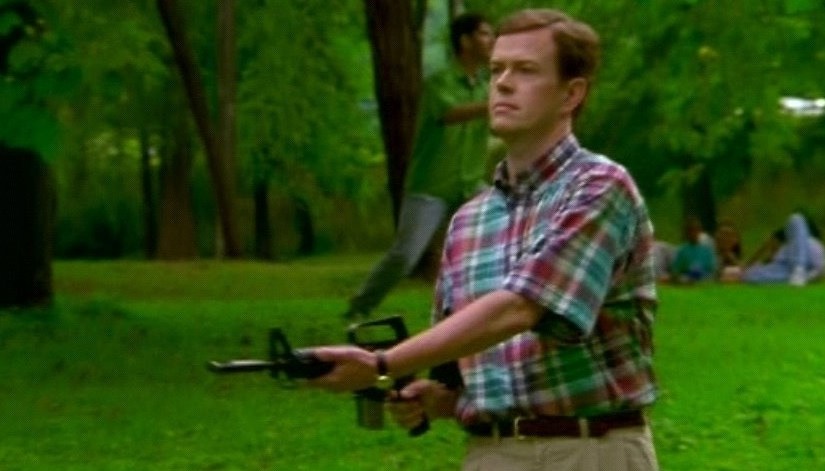
There are other elements that were distracting.  David Harbour makes an appearance as a CIA agent whose character serves no real purpose other than to be the stereotypically obnoxious American.  One scene takes place during a beautifully staged outdoor production of Tosca that looked so amazing, I almost wished I could have left the movie just to finish watching the opera.  Gemma Arterton plays Agent Fields (first name Strawberry…get it?), another in a very long line of female characters in Bond films whose sole purpose is to sleep with Bond and/or get killed…or both.  Usually both.  (In an interesting first for the franchise, Bond actually does NOT sleep with the main Bond girl…go figure.)

The movie’s showdown takes place in a location that looked very real, but was ALSO distracting.  What is a four-star hotel doing in the very middle of the Bolivian desert?  We get a clumsy exposition line about the hotel running on “fuel cells” that are apparently poorly protected indeed, given the building’s incendiary tendencies during the climax.

I’m making the movie sound like a BAD movie.  It’s not truly BAD, but it just feels so slipshod in comparison to its predecessor, Casino Royale.

So what happened here?  Well, another tidbit on IMDb quotes Daniel Craig as saying this is the last time he’d work on a Bond movie without a finished script.  I guess THAT’S what happened here.  Shooting a movie without a finished script can sometimes end well, but not usually.  It’s like building a 30-story skyscraper using plans that only go up to the 15th floor, with couriers bringing new blueprints for the floors already under construction as well as the unbuilt floors.

But…BUT.  There is one overwhelmingly bright spot in the film: the THEME SONG.  Performed by Jack White and Alicia Keys, it marked the first (and, so far, only) Bond song to be performed by a duet.  It’s called “Another Way to Die”, and it is a SCORCHER.  Words fail me.  It’s down, dirty, mean, and growling, complete with the occasional staccato brass flourishes so evocative of John Barry’s score from earlier Bond films.

Too bad the rest of the movie is unable to live up to the promise of its title song.  Alas.

BARAKA (1992)

by Miguel E. Rodriguez

Director: Ron Fricke
Cast: N/A
My Rating: 10/10
Rotten Tomatometer: 81% Certified Fresh

PLOT: The rhythms of life and time are explored in this wordless montage of spectacular filmed images from around the globe, set to a haunting, ethereal score.


Some time ago, I wrote a post on Facebook about movies with an extremely rare quality: transcendence.  Movies that are so good that mere genre definitions are not enough to quantify them.  I’m not talking about perfect examples OF a genre (Aliens, Unforgiven, Young Frankenstein, et al.)  I’m talking about movies that wind up being more than the sum of their parts and take on a haunting, spiritual quality.

Film is an extremely subjective medium, so my list of such “transcendental” movies will likely differ wildly from your own.  For example: Breaking the Waves (1996), a meditation on the capacity for human suffering, forgiveness, and the definition of belief.  Or Cloud Atlas (2012), a mind-bending journey that poses the greatest “what-if” question of our existence.  Or Fearless (1993), a mainstream drama concealing life-altering truths at its core.

And then there’s Baraka, a 1992 film that premiered in Canada on the festival circuit before receiving its American release a year later.  I suppose it would have to be classified as a documentary, since it consists entirely of wordless images edited together into a feature-length music video.  It was directed by Ron Fricke, who had previously worked with director Godfrey Reggio on Koyaanisqatsi (1982), a groundbreaking film, similar in structure to Baraka, that introduced time-lapse photography to the mainstream; it’s hard to believe, but there was a time when time-lapse was a novelty.

But this clinical description doesn’t nearly do justice to the religious experience that is Baraka.  This is one of those movies that begs for the best viewing conditions possible, on the biggest screen and with the best sound system you can afford.  The cinematography simply defies belief.  There are monumental shots of Himalayan mountain ranges, ancient temples, an enormous graveyard of decommissioned B-52 bombers, the interior of a spectacular cathedral where the walls appear to be inlaid with millions of tiny mirrors.

The film’s score is credited to Michael Stearns, but it also includes existing musical pieces that lend certain sequences an exotic, global feel.  These music choices are absolutely essential to Baraka’s success. 

In particular, a musical piece called “Host of Seraphim” by Dead Can Dance brings unbearable sadness and pity to a sequence in which we see Indian families picking through massive garbage dumps, searching for food or God knows what.  The sequence shifts to showing homeless people, families, sleeping on city streets, next to sewer grates, under makeshift shelters, and there is an overwhelming sense of mourning that this kind of thing is happening today, right now, all over the world.

In addition to the sequence above, there are also sequences depicting members of various religions worshiping in their own unique way.  And oceans of clouds swirling and flowing over and around mountaintops.  And the horrible abandoned camps at Auschwitz and in Cambodia.  And majestic waterfalls.  Oil fires in Kuwait.  A vast, still lake that perfectly mirrors the sky above it.

Every time I watch this film (this marks at least the 9th or 10th time I’ve seen it), I am left at the end feeling hopeful, expansive, with the urgent need to show this film to other people.  Is this what they mean by religious fervor?  I felt this same way after watching Parasite (2019), for example, but for very different reasons.  Parasite is thrilling.  Baraka is transcendent.  It pierces through my sometimes cynical expectations of what a movie should be and presents me with a showcase of the human experience.  It makes me feel, however temporarily, more connected to the global population as we travel through the cosmos on our huge (and also tiny) planet.  It gives me a shiver of comprehension when I look at the ruins of ancient temples on the screen and realize the people who built them many thousands of years ago were just…people.  Like you and like me.  Humans on this uniquely life-sustaining chunk of space rock, hurtling through the universe.

You may disagree with my assessment.  You may hunt it down on Netflix or Amazon or wherever, and you may give it a shot, and you may turn it off after 15 minutes, thinking, “What was he THINKING???  This is boring as hell!”  I suppose that’s the beauty of this movie.  It’s like a Rorschach test.  It doesn’t tell a story, per se.  It’s more like a tone poem, where certain images are juxtaposed with completely different images, but which are nevertheless similar.  This kind of moviemaking doesn’t always work.  (See, for example, Naqoyqatsi (2002), also directed by Reggio, part of his vaunted Qatsi trilogy, but which I find insufferably cryptic.)  But when it does work, it’s quite literally magical.

So, if you can, go ahead and see if this is available somewhere.  Check your television’s settings so you get the optimal picture.  Turn your speakers up as loud as you can get before the neighbors call 911.  And open yourself up to the possibility that a picture truly is worth a thousand words.

PARASITE (2019)

by Miguel E. Rodriguez

Director: Bong Joon Ho
Cast: Kang-ho Song, Sun-kyun Lee, Yeo-jeong Jo
My Rating: 10/10
Rotten Tomatometer: 99% Certified Fresh

PLOT: Ki-taek and his family, all unemployed, take peculiar interest in the wealthy and glamorous Parks, as they ingratiate themselves into their lives one by one.


Watching Parasite reminded me of the first time I saw Pulp Fiction.  I told my friends that it was like being on a roller-coaster at night wearing a blindfold: you have no idea where you’re going or what’s coming, but the ride is exhilarating.

That’s Parasite.  The hype is real.  This is one of the best movies I’ve ever seen, and if you plan on seeing it, I would highly recommend you do so BEFORE reading further.  I have no plans to spoil ANYTHING, but the less you know about the movie before going in, the better.

(You’ll have to bear with me, I’m writing this shortly after seeing the movie myself, it’s currently 11:14 PM, and I’m starting to get a little tired, but I want to get this all down before I pass out, so it may get a little “rambly” for a while.  You’ve been warned.)

Parasite is many things.  It’s a social commentary, a black comedy, a family drama, and a Hitchcockian thriller all rolled into one delicious Korean dish.  (The film and filmmakers are Korean.)  The beauty of the movie is that it manages to be all those things without losing track of itself.  I can’t count how many movies I’ve seen that attempted a tonal shift in the middle or at the end, and it just falls flat.  Where lesser movies failed, Parasite succeeds.

The plot involves a nuclear family, the Kims (father, mother, college-aged son and daughter), living in near-poverty in a sub-basement.  They fold pizza boxes to make a little cash.  They steal wi-fi from a shop next door.  When fumigators spray outside their street-level window, they open it wide to take advantage of the free pest control.  They aren’t starving, but they are desperate.  Yet they don’t appear to be beaten down by their condition.  They’ve become a family of hustlers, not in any criminal manner, but in ways that enable them to get by on the bare minimum until one of them can get a leg up.

Opportunity knocks one day when a friend of the son, Ki-woo, gets him a job as an in-home tutor for the high-school daughter of a wealthy family, the Parks.  Ki-woo changes his name to Kevin, then suggests to Madame Park that her 7-year-old son could use an art tutor.  This gets his sister, Ki-jung hired.  She changes her name to Jessica and finds a creative way to get her father hired as Mr. Park’s personal driver.  Then the Parks’ long-time housekeeper somehow has to be eliminated so the MOTHER can get hired.

Before long the entire family is working for the Parks, though it’s important to note the Park family has no idea their new employees are all related.  This is all done with great humor, not in a farcical way (that will come later), but in such a way that you find yourself rooting for this down-on-its-luck family of con artists to finally get a taste of the good life.

There’s a long scene where the Parks have gone camping, and the Kims gather in the enormous living room of the Parks’ lavish home and just sit and eat and drink and talk and get drunk.  This is the family drama/social commentary part of the movie.  There’s something a little sad about seeing these people who are like any other people, who seem no less deserving than the Parks, but their best-laid plans have come to nothing, and the highlight of their lives is to get hammered in somebody else’s house.  Suppose Kevin falls in love and decides to marry the girl he’s tutoring, when she’s a little older.  Who will they get to be his parents?  Will they need to hire actors?

Trust me, I haven’t spoiled ANYTHING.  Swearsies.  This movie is brilliantly, ingeniously split into two parts.  The first half is prologue.  The second half is genuinely, literally breathtaking.

Something happens that forces the Kim family to examine and re-evaluate their life choices up to the present.  It also forces them to do some very fast thinking indeed, which is where some of the funniest and darkest comedy takes place.  This is where the movie really takes off, where it had me reminiscing about the twists and turns in Pulp Fiction.

And nothing…nothing can prepare you for the finale.  About which I’m saying nothing.  Again.

From a cinephile’s perspective, Parasite is miraculous.  It manages to be several different things all at once, allowing you to savor every individual aspect of it without any one part of it overpowering the other parts.  The screenplay is unbelievably inventive.  The direction is sure-footed and masterful.  The acting is pitch perfect throughout.  It made me think, it made me laugh, it made me cringe, it made me say, “Oh S#i+!” MANY times, and it made me bring my hand to my mouth like a shocked Victorian-era woman many, MANY times.

I say again.  The hype is real.  You owe it to yourself to see this movie whenever you can.

[Ed. note: the Criterion blu-ray of Parasite contains an interesting experiment: a black-and-white version of the film, which is apparently how the director originally envisioned the film, and which might account for its stark imagery in places.]

1917 (2019)

by Miguel E. Rodriguez

Director: Sam Mendes
Cast: Dean-Charles Chapman, George MacKay, Colin Firth, Mark Strong, Benedict Cumberbatch
My Rating: 10/10
Rotten Tomatometer: 89% Certified Fresh

PLOT: Two British soldiers during the First World War are given an impossible mission: deliver a message deep into enemy territory that will stop 1,600 men, including one of the two soldiers’ brothers, from walking straight into a deadly trap.


Bear with me for a second…I promise I’ll actually get to the movie in a second.

I’m not a professional movie critic.  I write reviews simply because it amuses me to do so, and because one of my friends made it possible for him and I to post our reviews in an online forum.  For about two months, though, I haven’t written a single review.  I pondered this with Marc a little while ago, and the only reason I could come up with was that I didn’t feel INSPIRED to write something.

Not that I haven’t seen good movies in those two months. Waves, Uncut Gems, Star Wars: The Rise of Skywalker, Jumanji: The Next Level, Frozen 2, Little Women, Bombshell, maybe one or two others – they were all good, even great.  (In the case of Uncut Gems and Waves, I’d even call them “must-see” events.)  But I never felt compelled to run home and put pen to paper, or fingers to keyboard.  I simply felt that I had nothing to contribute where those movies were concerned.

Well, tonight I saw 1917, and now I have to say, this is a different case altogether.

For anyone who’s not quite aware of why this movie is so special, aside from it just being really good, 1917 was hyped as being told in one single shot with a camera that follows two soldiers through battlefields and countrysides as they attempt to deliver an important message to a distant company of English soldiers.  No cuts to different angles, no cuts at all, in fact.  (Actually, there IS a single cut, but more on that later.)

While I originally felt it was a bit of a stunt to get it noticed at Oscar time (remember Birdman [2014]?), after seeing the movie it was abundantly clear that this was no mere trick to dazzle an audience with.  This specific story is particularly suited to this specific method of filming.  It forces the audience to empathize with these two soldiers immediately, and only them.  I was reminded for some reason of Saving Private Ryan, and a line spoken by Tom Sizemore: “This time the mission is a man.”  Well, this time, the men are the mission, and the mission is paramount.  The single-take strategy has the uncanny ability to put us in the shoes of these soldiers more so than many other war films.  You feel like you’re right there in the mud with the empty artillery shells and the corpses and the rats.

And that’s the supreme achievement of the movie: its ability to put us there and KEEP us there for two hours without ever calling attention to the fact that, “Hey, we haven’t cut yet and it’s been over a half hour!”  A lot of that has to do with camera placement and movement and, of course, the actors’ ability to keep us engaged.

But one thing that I kept noticing throughout the movie was the small details.  I’m not going to remember them all, but they included:

  • At one point, the British soldiers walk through an abandoned German bunker.  In a throwaway detail, the name “KLARA” is seen scrawled on one of the walls.  The camera doesn’t focus on it, but it just passes by.
  • We encounter a group of British soldiers, and of them is a Sikh.  The other soldiers are doing bad impressions of their superior officers, but the Indian’s impression is clearly better than the other Englishmen, with proper diction, upper-class accent, everything.
  • In the British trenches, various sections have unique names.  The one I remember most clearly is “Paradise Alley.”
  • As they walk, one of our two heroes notices cherry trees, and he quickly rattles off several different varieties of cherries.  He knows them because his family has an orchard back home.
  • An intense scene where someone has to literally wade through dozens of corpses.
  • In one remarkable scene, the movie pauses to listen to a song. Fighting is imminent, death may arrive at any moment, but for a brief moment, everything stops. It’s a brilliant moment…almost holy.

Little things like that.  The reason I bring them up is because some of them seemed unnecessary to the story, but they colored the story so that it felt more real than most.  And the closing credits reveal that this movie is based on stories told to director Sam Mendes by his grandfather, who served in World War One.  So many, if not all, of those little details were probably one hundred percent REAL details, the kind of details that could only be remembered by someone who was there.

Another reason the movie is so suspenseful is because we’ve become subtly programmed to believe that, in a war movie, the ending can’t be too Hollywood; otherwise, it’s not real enough.  The soldiers must deliver a message.  Will they even survive long enough to deliver the message?  Assuming they do, will the officers receiving the message even follow the order?  A civilian appears at one point…will they live?  They engage in combat…who will live and who will die?  I was on edge the whole movie because I never really felt “safe”, which was EXACTLY the kind of feeling you want when you’re watching a war movie.  In my opinion.

Now, about that whole single-shot thing.  There actually IS one cut, a SINGLE cut, during the whole movie.  You’ll know it when it happens.  But when you’ve seen as many movies as I have, you’ll also notice “invisible wipes”, where the camera passes by something in the foreground – a pillar, or a rock, or a tree – that comes in between the camera and the person/object being filmed.  Using clever editing and lighting, you can cut two shots together using that pillar/rock/tree as the splicing point.  And there is a LOT of that going on in this movie.

I’m not taking anything away from the achievement of the film, it’s spectacular.  It’s just something I noticed that I could not UN-notice for the duration of the film.  A minor quibble, nothing more.

1917 is definitely a top contender for Best Picture of 2019.  I have only seen a handful of World War I movies, but this is certainly one of the very best.  I’d rank it up there with Kubrick’s Paths of Glory any day.

DOCTOR SLEEP (2019)

by Miguel E. Rodriguez

Director: Mike Flanagan
Cast: Ewan McGregor, Rebecca Ferguson, Kyliegh Curran
My Rating: 9/10
Rotten Tomatometer: 76% Certified Fresh

PLOT: Nearly forty years after the events of The Shining, an adult Danny Torrance makes contact with someone else who can “shine”, and is soon drawn into a war with a band of people who hunt gifted people like himself.


If you had asked me a year ago to list movies will never get a sequel, Stanley Kubrick’s 1980 adaptation of The Shining would have been near the top of that list.  As adaptations go, it has its share of fans and detractors, but as a stand-alone horror movie, it’s a stone-cold masterpiece that has never been equaled.  When I heard that they were actually making a sequel based on Stephen King’s own sequel to The Shining, I was extremely skeptical.  The last time someone made a follow-up to a Kubrick film was 2010 (1984), and while that film was a decent sci-fi flick, it didn’t come close to the spectacle of Kubrick’s 2001: A Space Odyssey (1968).  So my expectations were, as they say, tempered.

After watching Doctor Sleep earlier tonight, I can say, unequivocally, that while the film is not perfect, I could not have asked for a better sequel to The Shining.  It’s a treasure trove for fans of the original, and also for fans of the extended universe that King has created for his novels, starting with the Dark Tower series forward.  (For those particular fans, you’ll be glad to see a very specific two-digit number making a conspicuous cameo…)

To begin with, the story is classic King.  Danny Torrance has grown into an irresponsible adult with a drinking problem, marking an unfortunate parallel with his father, Jack.  He hits bottom and takes up residence in a sleepy New Jersey town, joins AA, and works as an orderly at a local hospice.  Up to now, he has done everything in his power to keep his “shine” in check, but he finds a pragmatic use for his gift working with terminal patients, with the help of an inscrutable cat who can sniff out which patient is going to die next.

Eventually he comes into contact with a young girl named Abra, who lives in another part of New Jersey, but who can “shine” like he can.  And then there’s this nomadic group of people, calling themselves The True Knot, who are apparently hunting down other people with the “shine” for their own nefarious purposes.

It all wraps and weaves into a thrilling tale that skillfully retains the feel of Kubrick’s film.  Doctor Sleep works on its own merits, but the more you know about The Shining, the more thoroughly you’ll enjoy this new film.  Sharp-eyed cinephiles will be amazed at how many times, and in how many different ways, Kubrick’s style is echoed and referenced in this sequel.  These include liberal use of fade transitions, lots of static shots, Steadicam shots, use of natural lighting, those shots with the axe (!), even the aspect ratio that the film was shot in.  I got a giddy little swoop every time I saw how carefully the director, Mike Flanagan, was working the master’s craft into his film.  It was like watching a very subtle Kubrickian version of Ready Player One.  And it never comes off as plagiarism…it’s definitely homage, not theft.

Another aspect I really enjoyed was how the movie doesn’t rush through anything.  It’s two-and-a-half hours long, longer than average these days, which is yet another echo of The Shining.  When it works, that kind of pacing and running time gives the viewer the luxury of settling into the rhythm of the characters, makes them feel more like real people instead of cardboard cutouts hurrying from one milestone to the next.  For example, there’s a scene where one character performs a kind of astral projection to find someone.  There is a rather long series of shots showing her traveling through space that I can easily imagine would have been truncated in a lesser film.  Doctor Sleep, instead, gives us a good long look at her journey, to really feel the distance involved.  It’s quite a beautiful sequence, in fact.

This was a much better movie than I anticipated, which is good, because I never believed it was necessary.  It’s a relief to see that the continuation of Danny Torrance’s story has been handled in such a respectful manner, both towards the first film nearly 40 years ago and towards the viewers and fans.  It’s not perfect (I could pick nits about one particular aspect of the finale if I wanted to), but it’s a worthy successor to Kubrick’s masterpiece.  This belongs on the list of the best Stephen King adaptations along with It (2017), The Green Mile, and The Shawshank Redemption.

P.S. The blu-ray edition of Doctor Sleep contains a director’s cut that extends the running time by thirty minutes, adds more details about Abra’s powers, among other things, and inserts “chapter breaks” that almost make it feel like a miniseries.

JOKER (2019)

by Miguel E. Rodriguez

Director: Todd Phillips
Cast: Joaquin Phoenix, Robert De Niro, Zazie Beets
My Rating: 10/10
Rotten Tomatometer: 68%

PLOT: In early-‘80s Gotham City, mentally-troubled comedian Arthur Fleck, disregarded and mistreated by society, embarks on a bloody downward spiral of crime and social revolution.


Most comic book movies, by default, require at least a little pre-existing knowledge of the universe inhabited by these characters, in order for the stories to make sense.  There are precious few exceptions.  Batman Begins (2005) is one.  Superman (1978) is another.  And now we have Joker, an origin story like no other, presented to the viewer as if no previous Batman movies existed, as if the Joker was a creature as new and original as Hannibal Lecter was nearly thirty years ago.  (Or, dare I say, Travis Bickle, over FORTY years ago…)

It’s incredible, if not impossible, to believe this film was directed by a man (Todd Phillips) whose most famous movies to date have been the Hangover trilogy and Old School.  There is nothing in this gritty psycho-drama that bears any resemblance to anything Phillips has directed before.

And I haven’t even mentioned Joaquin Phoenix’s performance yet.  More on that later.

The story: Arthur Fleck (Phoenix) is an everyman, your average nobody, living in Gotham City in the early ‘80s, a time of garbage strikes, graffiti-riddled subways, and a porno theater on every downtown corner.  He lives with his invalid mother and pays the bills as a clown-for-hire, doing everything from entertaining bedridden children to sandwich-boarding on the street.  His real dream is to be a stand-up comedian and appear on a late-night talk show hosted by Murray Franklin (Robert De Niro), whom he idolizes like a long-lost father.

(The similarities of this plot point to The King of Comedy [1983] have been well-documented and need not be explored here; that would require a whole separate article.)

So far, this is really heavy material, a real downer.  But then the screenplay strikes gold.  It turns out Arthur suffers from an unsettling, but very real, affliction, although it’s never quite named in the film: Pathological Laughter or Crying (PLC). Also known as the pseudobulbar effect, it is a neurological condition defined by episodes of uncontrolled laughter or crying.  People with PLC often laugh out loud or cry for no apparent reason.

In other words, Arthur simply bursts out laughing for no reason, and often, as we’ll see, at the most inopportune or inappropriate moments.

To me, this was genius.  It gives a legitimate grounding for the Joker’s iconic laugh.  What would normally be comic-bookish or hammy in previous incarnations becomes a little sad.  I felt empathy towards this guy whenever his affliction overcame him, especially in the scene on the bus when he’s amusing a little kid by pulling goofy faces, and the kid’s mom tells him to stop bothering her child, and he starts laughing despite his obvious disappointment.  The empathy for me came when I could see through the laughter, could see Arthur’s face contorting with genuine sadness and misery even as he guffawed helplessly.  It was touching.

The real turning point of the movie comes when he is accosted by three drunken yuppies on a subway, and he starts laughing uncontrollably, and the yuppies start beating him up…but they don’t know about the gun he’s carrying for protection.

But that’s enough of the plot.  I think I’ve described only the parts of it that you might have guessed anyway from the trailers.  The sensationally well-told story, not to mention the complexity of the story itself, is only one half of the movie’s greatness.

The other half, it must be said, is Joaquin Phoenix’s performance.  The trailers don’t do it justice.  A lot of the performance has to do with his tortured facial expressions when he has a laughing fit.  There are a couple of extraordinarily long shots where Arthur SHOULD be crying, but is instead laughing, and his agony is evident.  He WANTS to cry properly, but he can’t.  I don’t know how he pulled it off, but you can see both emotions on his face at the same time.  It’s a masterstroke.

Another remarkable factor at work in his performance is his subtle nods to previous Jokers in movies, and even TV.  If you watch really carefully, you’ll notice a quick reference to Mark Hamill’s celebrated voice work as the Joker in the Batman animated series and films; Cesar Romero’s eccentric dance moves from the ‘60s television series; and Heath Ledger’s hair.  (If there’s a reference to Nicholson, I must have missed it.)  I just thought it was a brilliant touch to bring in all of those influences and incorporate them into this newest incarnation, as if to acknowledge the pop-culture roots of this character, while still breaking new ground.

Joker is the comic-book movie for people who don’t like comic-book movies (even Deadpool).  It’s The Dark Knight crossed with Se7en and Taxi Driver.  It’s utterly unlike any comic-book movie I’ve ever seen, and I doubt anyone will ever be able to make another one like it without comparing it to this one.

FREAKS (2019)

by Miguel E. Rodriguez

Directors: Zach Lipovsky and Adam B. Stein
Cast: Emile Hirsch, Bruce Dern, Lexy Kolker
My Rating: 9/10
Rotten Tomatometer: 87% Certified Fresh

PLOT: A sheltered young girl (Kolker) discovers a bizarre, threatening, and mysterious new world beyond her front door after she escapes her father’s protective and paranoid control.


In the tradition of one of my very favorite sci-fi films, Midnight Special (2016), Freaks is a sci-fi mystery that doesn’t pander, doesn’t spoon-feed (except when it HAS to), and doesn’t insult my intelligence.  It premiered in 2018 at the Toronto International Film Festival, was picked up by a distributor two days later, and surfed the festival circuit for over a year, winning multiple awards, before finally getting a US/Canada release in 2019.

The story opens with a young girl, Chloe (a brilliant performance from Lexy Kolker), who lives with her father in a ramshackle house with covered windows and locked doors.  She takes a peek out the window through curtains that have been duct-taped to the windowsill and sees an ice cream truck outside; in the sky above she spots birds that seem to be…frozen in place?  Hm.  THAT’S weird.

As the opening section unfolds, we learn that the father is doing everything in his power to keep his daughter safe from something dangerous in the world outside their front door.  (She has never set foot outside.)  The movie is cagey at this point about explaining exactly what that something is, and immediately I thought, “Aw, man…is this gonna be another rip-off of A Quiet Place?”  The father walks around the house performing maintenance on drapes and boards and locks, and constantly reminding her daughter how dangerous it is outside, and how he’s doing all this to keep her safe.  Shades of Stranger Things, right?

So the first couple of acts of the movie felt like rip-offs of…sorry, homages to previous contemporary sci-fi entertainments.  The girl portraying Chloe delivers a fantastic, natural performance, but that wasn’t enough for me to shake that feeling of, “Man, I’ve seen all this before.”

At random intervals, Chloe starts to see things.  People in her room, in her closet.  Sometimes these people talk to her, and she talks back.  Are they ghosts?  We’ve learned that Chloe’s mother is dead…could one of these visions be her mother?  And what’s the story with that weird ice cream truck at the beginning, with the creepy, smiling old man who seems to know more than he’s letting on?

These are all threads that make you THINK you know where the story is headed, and you may or may not be right.  You may already think you know what the rest of the movie’s about just based on my description above.  Fair enough.

As for me, I was bamboozled when the true nature of the girl, her father, and the world outside her house was revealed.  I’m not talking about a Sixth Sense kind of reveal that’s kept a secret until the last 5 minutes of the movie.  This movie makes its “reveal” with about an hour left (I’m guesstimating), so I basically felt like I got two movies in one.  Or maybe two episodes of an EXCELLENT cable miniseries.  Once the “reveal” is, well, revealed, the movie shifts into high gear and doesn’t ease off until literally the final frame.

The joy of Freaks is that reveal at the halfway point, and what they do with it afterwards, so it’s extremely hard to know what else I can say without spoiling the fun of discovering it for yourself.  I could mention the visual effects, which are relatively minimal, but EXTREMELY effective, especially during the finale.  I could mention the screenplay’s deliberate attempts to make certain plot points analogous to the current immigration debate.  (I’m gonna mangle this, but one of the lines goes something like, “If you attempt forced relocation, that will only force them underground.”)  I could mention the way certain clues are hidden in plain sight, once you get to the endgame of the movie.

But you won’t get another word from me about the story.  You deserve to discover this one yourself.  I cannot recommend this highly enough.  It’s not quite a PERFECT film, but what are you gonna do, they can’t all be Midnight Special.  I never saw one trailer, not one Facebook ad or YouTube video about Freaks.  I only saw it by pure luck tonight because the showing was at a better time than Ready or Not.

I’m telling you.  Seek this one out. It’s a winner.

TRANSSIBERIAN (2008)

by Miguel E. Rodriguez

Director: Brad Anderson
Cast: Woody Harrelson, Emily Mortimer, Ben Kingsley, Eduardo Noriega, Kate Mara
My Rating: 9/10
Rotten Tomatometer: 93% Certified Fresh

PLOT: An American couple takes a trans-Siberian train ride across Russia, but things take an odd turn when they meet another mysterious young couple.


One of the reasons I like writing about movies is that it gives me the opportunity to talk up great movies that I’ve discovered off the beaten track.  Movies like the stunning stop-motion film Mary and Max (2009), or Sunrise (1927), hands-down the greatest silent film I’m ever likely to see, or Wild Tales (2014), an Argentinian anthology film that plays like The Twilight Zone crossed with Quentin Tarantino.

Or Transsiberian, a virtually unknown film from 2008 that is one of the finest examples of Hitchcockian suspense in the modern era.  It was an international co-production of – get this – Germany, the UK, Spain, and Lithuania.  It was co-written and directed by Brad Anderson, a man who’s directed a LOT of episodes of various television shows, and so has a good sense of efficiency and economy in his style and pacing.  It has yet another stunning Ben Kingsley performance as a Russian narcotics detective.  And it turns the screws on the heroine of the story in such a way that you can tell exactly why she’s doing what she’s doing, when every good instinct says she should be doing the exact opposite.

After a brief prologue involving a police investigation in Vladivostok, we meet Roy and Jessie (Woody Harrelson and Emily Mortimer), a married couple traveling home from China after a faith-based missions trip.  They decide to take a 6-day train trip across the Russian continent because Roy feels it would be nice to take an adventure…plus, he LOVES trains.  He’s one of those enthusiasts who don’t realize when they’re boring you with talk of gauges and coal-burners and cow-catchers. (Sheldon Cooper would have loved this guy.)  Jessie seems like a nice woman, but she seems to be keeping this adventure at arm’s length; you can tell she’d rather be flying coach than spending six days in a double-berth cabin.  I empathized with her right away.  They make a good couple, even though he wants kids and she doesn’t, she smokes and he’d like her to quit, he drinks and she doesn’t, et cetera.  Pretty normal.

A little while into their trip, Roy and Jessie meet the couple they’re sharing a cabin with, Abby and Carlos (Kate Mara and Eduardo Noriega).  Abby seems much younger than Carlos, but Jessie lets that slide, especially because Carlos seems to take an immediate interest in Jessie, and he doesn’t seem too concerned about hiding it.  Abby seems annoyed, but says nothing.  Roy is too jazzed about being on trains and interacting with the locals to really notice.  Carlos also seems to be pretty cagey about the souvenirs he’s carrying around in his suitcase.

At one of their scheduled stops, both couples leave the train to stretch their legs.  When the train leaves for the next leg, Jessie suddenly realizes something: Roy’s not on the train.  She didn’t see him get back on.  In fact, no one can recall seeing Roy re-board the train.  The movie plays a little by making us think one thing has happened, when it may or may not have…we can’t be sure.

And then, in true Hitchcock fashion, things start to spiral into one unexpected development after another, until the movie becomes about something entirely different than what you thought it was going to be.  Without getting into too many other details, Jessie finds herself trapped in a lie that she absolutely cannot back out of, no matter how much she wants to, because doing so would cause more harm than good.  Even when she’s presented with a life or death situation, she still can’t go back on it, and the story is constructed so tightly that it’s never for a moment unclear on her motivations.  You always see the “why” to her actions.

This other level to the movie is what separates it from the pack and places it in a higher weight class.  The screenplay is a masterpiece of suspense.  There’s a scene involving her camera that had me yelling, “Oh, NO!” at the screen…and I’ve SEEN the movie before.  You won’t believe the amount of suspense that will be generated with a slightly-open camera bag, or the fact that there’s never a garbage can around when you need one, or just the absence of a train stewardess.

This movie stands apart in its genre because the characters behave EXACTLY as they should, with perfect logic, and it never feels forced.  The bad guys are never too stupid, and the good guys are never too smart.  (They get pretty lucky a couple of times, but what are you gonna do?)  I don’t think I’m giving anything away by saying that, by the end, some characters are happy and others are not quite so much, but I don’t think you’ll be able to guess who will last that long.

This is a treasure of a film to be sought out and…uh, treasured.

DEATH RACE (2008)

by Miguel E. Rodriguez

Director: Paul W.S. Anderson
Cast: Jason Statham, Joan Allen, Ian McShane
My Rating: 7/10
Rotten Tomatometer: 42%

PLOT: Ex-con Jensen Ames (Statham) is forced by the warden (Allen) of a notorious prison to compete in the post-recession world’s most popular sport: a car race in which death-row inmates can kill each other on the road to victory.


I’m in the middle of watching movies from 2008, so why am I passing up the chance to write about such gems as Hellboy II: The Golden Army, The Hurt Locker (made in ’08, RELEASED in ’09), or The Dark Knight, in favor of this drek?

Because there’s a great quote from famed movie critic Pauline Kael: “Movies are so rarely great art, that if we cannot appreciate great trash, we have very little reason to be interested in them.”

I do not always appreciate trash, I have to be honest.  The appeal of most of Adam Sandler’s early films escapes me.  I have seen only one, repeat, ONE, Fast and Furious movie.  I think Cruel Intentions should be mocked mercilessly and at every opportunity.

On the other hand, I think Wild Things is an underappreciated neo-noir classic.  (And no, it has nothing to do with the sex scenes.  …fine, it has very little to do with the sex scenes.)  I can remember plunking down good money to go see Freddy vs. Jason at the AMC Veterans.  The trailers promised a great fight scene between the two, and as those of you who saw that trashy masterpiece will remember, there were not one, but THREE fight scenes between those two horror titans.  Money well spent.

And so it is with Death Race.  The trailers promised fast cars, machine guns, and stuff getting blowed up real good.  And brother, this movie makes good on that promise.

Not only that, but with the exception of, perhaps, Scott Pilgrim vs. the World, this is the closest I’ve ever seen a movie get to recreating the ineffable vibe of a video game, particularly driving games like “Flatout”, the “Need for Speed” series, and even “MarioKart.”  In the world of the film, drivers (convicted criminals on death row) hurtle around a closed oval track for three laps.  The track is built in and around a prison that looks it was built on the bones of an old factory that made, well, who knows what, there’s just rusty metal and big empty warehouses and smokestacks everywhere.  Drivers have to maneuver in and around these obstacles.  Look carefully, and you can take a shortcut if you’re agile enough…just like in “Flatout.”

They’ve even found a way to utilize power-ups.  All cars are equipped with defensive and offensive measures: machine guns, napalm, smoke, oil, etcetera.  But they can only be activated by driving your car directly over special panels embedded in the track, and only when those panels are lit.  Drive over a sword, your guns are activated.  Drive over a shield, your smokescreen is activated.  Drive over a “Death’s Head”…well, you can imagine.

The action during the race is filmed with lots of quick cuts, a lot of shaky-cam, and is best played at full volume so by the time it’s over you’ll wonder if there was ever a time you couldn’t hear machine-gun fire and V8 engines.  But I gotta say, it is effective.  On that primal, reptile-brain, teenage boy level, I get juiced watching all that Detroit metal drifting around a grimy industrial track, guns blazing, explosions booming, engines roaring, and the occasional spectacular crash involving lots of fire and lots of airborne cars, flipping through the air in absolute defiance of the laws of physics.  It’s glorious.

When it comes to the script, well, what can I say?  The script exists as the nail on which to hang the adrenaline-fueled portrait of bad-ass car races.  If you think it’s possible to create a movie pitched at the level of a video game with an Oscar-winning screenplay, well, my friend, I’d love to see you try.  Expecting great dialogue from a movie like this is like going to Five Guys and getting pissed off at the chef for not including lobster thermidor on the menu.  You want fine dining?  Go to Ruth’s Chris.  You want a great big burger that’ll stick to your ribs for three days?  Five Guys is the place.  *GRATUITOUS PLUG.*

Speaking of chefs, director Paul W.S. Anderson’s filmography is a veritable cornucopia of trash, some great, some not-so-great.  Here are the, I guess, highlights: Mortal Kombat (1995), Event Horizon (1997), Soldier (1998), Resident Evil (2002), AVP: Alien vs. Predator (2004) – that’s one of the great-trash ones. You get the idea.  He’ll never win awards, but he knows his audience, he knows what he’s good at, and he’s made more feature-length films than Stanley Kubrick.  (I don’t know what that last bit means exactly, but it sounds good.)

I totally understand the hate for Death Race.  It’s loud, obnoxious, incredibly basic, and (something I haven’t touched on yet) completely wastes the talents of acting legend Joan Allen.  Fair enough.  But when it comes to cars and guns and women (forgot about the women, too) and explosions and more guns and more cars…I can honestly say that this great trash delivers what it promises.  Not every film has done that.

SCENT OF A WOMAN

By Marc S. Sanders

When it comes to Thanksgiving films, majority turn to that John Hughes road picture.  However, there’s another film that is just as meaningful to the spirit of the holiday and that is Martin Brest’s Scent Of A Woman which features Al Pacino’s Oscar winning Best Actor performance; at last!!!!

Before Chris O’Donnell became Robin in some tired Batman movies or a tough guy on NCIS, he was the staple prep school achiever (see also School Ties).  Here he plays Charlie, a student attending a prestigious boarding school in New Hampshire.  He does not have the wealthy background of his classmates and without the funds to go home for Thanksgiving, he opts to accept a weekend job tending to retired Lt. Col. Frank Slade, U.S. Army (Pacino).  Frank is a frightening lost soul with Pacino’s signature outbursts.  What’s even more challenging is that Frank has been plagued with blindness following a reckless accident with a hand grenade.  Unbeknownst to Charlie, Frank assumes control once his niece’s family leaves town for the weekend and sends himself with Charlie in tow to New York City.  Frank plans to enjoy a pleasant stay at the famed Waldorf Astoria, have a nice meal, crash his older brother’s holiday dinner, get a new tailored suit, bed a beautiful girl and drive a Ferrari.  Afterwards, he’s going to blow his brains out in full dress uniform.

This is not a problem Charlie needs to be dealing with right now.  The pressure is on the young man to identify the students of a prank that occurred just before the holiday break.  The Dean of Students (James Rebhorn) has given Charlie and another student, the privileged George Jr. (Phillip Seymour Hoffman, in a very early role) the weekend to ponder how they should respond.  Charlie, however, seems to face expulsion and likely an opportunity to miss out on admittance to Harvard.  George Sr., a former student and benefactor, will likely save his son.  Frank has predicted this outcome, and Charlie can’t deny that it is likely the truth.  Charlie’s dilemma is in his own morals as a man.  He’s not a snitch who will sell out his future to satisfy the esteemed integrity of the prep school and the ego of the Dean.

I miss the director, Martin Brest.  He has some magnificent films on his resume (Beverly Hills Cop, Midnight Run & Scent Of A Woman).  His other two popular films are broader in action comedy.  Here he is much more sensitive, and he uses the legacy of Pacino’s craft to the highest level.  He allows Al Pacino the freedom to be intimidating and frightening and intrusive.  A most uncomfortable Thanksgiving dinner at Frank’s brother’s house begins with awkwardness and ends in terrifying fear for Frank and all at the dinner table. 

Brest also lives up to the title of the picture.  There’s really not a main female character in the picture.  However, the camera captures a woman entering the frame at random times for Frank’s heightened senses to kick in.  If Frank is going to end his life soon, then he will at least absorb the finest things the world has to offer and that is a beautiful woman.  Charlie doesn’t realize this yet, having spent most of his days at an all-boys private school.  Martin Brest does such good work.  He’ll position his close up on Pacino doing his work and then a brown-haired young lady will enter from behind.  The scene will shift gears from morose to eye opening. Simple, yet great technique at play here.

Pacino may have won the Oscar, where some debate this was not his finest material and that it was a more likely a long-time coming career award at this point.  The portrayal has also become spoofed so many times over since the release of the film (Seinfeld) and “Hoo Ahh!”.  Still, look at the individual scenes on display here.  There are so many different angles to this guy.  Frank Slade is a lonely man who doesn’t directly identify his sorrow, but rather masks it with drill sergeant persona.  Yet, Frank is also a charming man who graciously does a sensual tango in the middle of a dining room with a beautiful young girl (Gabrielle Anwar).  Reader, if you are a regular subscriber to my write ups, then you know I adore a dance scene that occurs within a non-musical.  Scent Of A Woman may feature the number one ranked scene in that category.  Try not to grin or smile during this marvelous centerpiece.  How fortunate for Anwar – the one woman who got to do a tango on film with the great Al Pacino.  I’m thankful it is cemented in my consciousness for eternity.  It’s an amazing scene; one that can be taken out of context from the film and adored on You Tube, many times over.

Pacino and O’Donnell have brilliant chemistry together and it makes sense that the story takes place during the Thanksgiving weekend.  These are two men from very different backgrounds and neither realizes how much they need to be rescued by one another.  Charlie will have to literally save Frank’s life, no matter how intimidating he appears.  Frank will have to save Charlie’s future against an established school that’s offered up some of the country’s most brilliant minds.  Poor Charlie from Oregon, without the coat tails of a legacy to ride upon doesn’t fit the mold for the next President or championship football coach.  Both issues have insurmountable odds of being overcome, and yet these two are the only ones who plow through the challenges.

Scent Of A Woman has delightful moments to simply watch, such as a blind Frank driving a Ferrari through So Ho district and of course that tango scene, but this is an actor’s piece for sure.  The climax confirms that distinction.  The holiday weekend has come to an end and Charlie must face his peers and the Dean and confirm what he will do, but Frank will make sure to attend this makeshift trial. Then the opportunity is given for an outstanding monologue performance that only confirms one simple notion.  Al Pacino is one of the greatest film actors in history. I imagine the dialogue for this wrap up scene is quite something to read on a page.  However, to watch Pacino bring it to life is something else entirely. 

Therefore, on this Thanksgiving, I’m thankful for Al Pacino and Chris O’Donnell and Martin Brest, along with the tango, and I’m especially thankful for Scent Of A Woman.