THE MUMMY (2017)

By Marc S. Sanders

The Universal logo comes up with that familiar music across the blue globe. Then it goes in reverse and turns black and gold to introduce a new franchise known as the Dark Universe.  This is the first installment.  The problem is of all the famed monsters in the studio’s library, they probably shouldn’t have started with The Mummy.  Brendan Fraser’s attachment to this mythical Egyptian horror is still widely accepted, and Tom Cruise is no Brendan Fraser.

This reinvention begins much like the 1999 film by telling of a Pharoh’s daughter who believed she was the sole heir to the kingdom.  Yet, betrayal happens and the beautiful princess is mummified into eternity, buried deep under the desert and laid with vengeance on her mind.  Elsewhere, another tomb is discovered under the streets of London. Could there be a connection? A dagger with a red stone might have the answers.

Jump to present day and Tom Cruise is back with another character who can run very fast.  He is Nick Morton and with his partner he clumsily runs and jumps over rooftops in the Egyptian desert while closely evading military air strikes from above.  Why the military is dropping bombs is apparently irrelevant.  Tom Cruise just needs something to run away from.

A massive crater opens up and the pair along an expert archeologist named Jenny Halsey (Annabelle Wallis) come upon a tomb.   Nick mistakenly frees the Egyptian princess buried within and they transport her, still contained in her coffin, back to London aboard a cargo plane.  Only now Nick is seeing visions of what once was and becoming familiarized with an ancient language with which he had no prior knowledge.  Nick has been chosen.

When you place Tom Cruise on board a military cargo plane, what do you think happens? It doesn’t have to be called Mission: Impossible to be a seemingly impossible mission. The crashing airplane sequence is impressive, not the best, but I’ve seen this stuff already. I’ve seen this stuff already with Tom Cruise. I do not need to see it again. 

The Mummy cannot decide what it wants to be.  It has some good ideas but just when I think I’m watching another Brendan Fraser swashbuckler with a monster, Tom Cruise must pound it over my head that this is a stunt filled trajectory.  

Russell Crowe is a mysterious character offering voiceover narration during a prologue. He later reveals his identity to Nick.  I will not spoil who he turns out to be.  Let’s just say it is likely you heard of this guy.  It’s hard to believe that Nick has not, and Mr. Cruise does not play dumb very well. This man has an interesting laboratory that contains relics and possessions that belonged to other well-known cinematic monsters.  Frankly, this picture should have exclusively belonged to Crowe’s character who comes off very dynamic and fresh while setting up a whole – forgive the pun – universe for a long line of films to come.  

Alas, Tom Cruise sets the stage.  He’s okay in the role, but between his temptation to be Ethan Hunt while adopting a Robert Downey Jr sarcasm and the imperfect Brendan Fraser/Indiana Jones hero, it all gets muddied. I just didn’t like this guy.  Cruise delivers what each chapter of the script demands of him and none of it is consistent. Near the end of the film during the final battle, Cruise offers up a one liner that comes nowhere near as close to what Downey, Fraser or even Arnold Schwarzenegger could have accomplished.

The only clarity I find in the visual effects is that they look rushed for final print towards a summer blockbuster release.  The Mummy Princess (Sofia Boutella) unleashes her monster minions to pursue Nick and Jenny while they are escaping in a clumsy looking ambulance.  As the creatures attack the top and both sides of the vehicle they are shaken off, thrown into trees, or run over.  They all look like monster vomit accompanied by loud hissing to startle your hearing.  

This iteration of The Mummy is partly assembled by the guys who made the Transformers movies where the robots look like metallic throw up mush.  Guys like Robert Orci and Alexander Kurtzman, the director, are poor artisans at the sci-fi/adventure/horror genre.  They know how to helm movies like this about as well as I do.  I don’t know shit, but I do know the visuals here are pure junk while being an enormous step back from the Fraser films of twenty-five years ago.  

The Mummy ends like the Marvel movies with the hanging threads of what we should expect.  I’m game!  Only, don’t do it like this.  Anything but this, please.  

Sadly, as quick as the Dark Universe got started it all got canceled.  This film was poorly received and did not generate the box office bonanza the studio was counting on.  I recall a fascinating publicity photo that assembled Cruise, Crowe, Boutella, along with Javier Bardem, and Johnny Depp. All were publicized to occupy upcoming installments of this new franchise.  The potential was so strong to see the likes of The Mummy, the Invisible Man, the Bride of Frankenstein, the Creature From The Black Lagoon, The Wolfman, Dracula and Jeckyl/Hyde sharing the screen together.  This could have been the antithesis to The Avengers and Justice League with gags of gore to delight audiences.

I swear when I saw that Dark Universe logo at the beginning, I was ready to love this movie.  I really was.  Unfortunately, The Mummy works hard to be a Tom Cruise actioner with his preserved thirty something looks adhered to an assortment of unfinished and indecipherable special effects.  Its script from David Koepp (Jurassic Park) is exhaustingly incoherent.  

The Mummy was a long-term investment by a million-dollar corporation.  It’s too bad the wealth went into junk bonds though. I urge Universal to try again. There is something to be made here, and it cannot get worse than this.
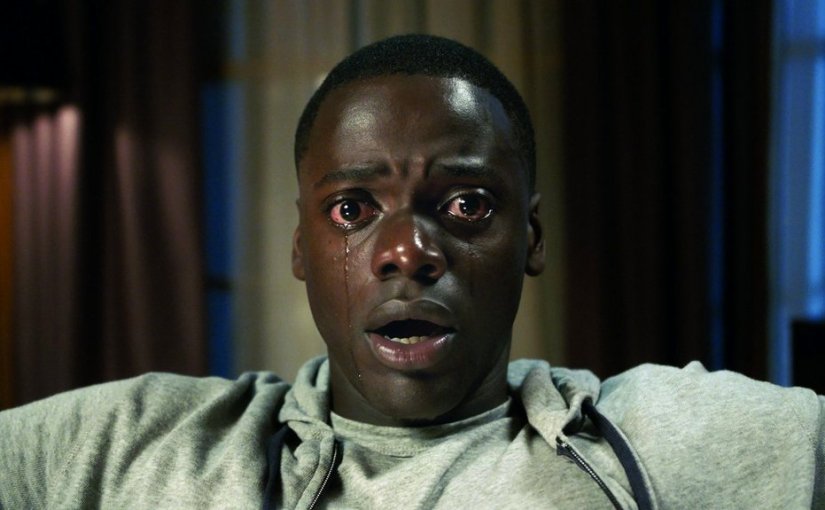
GET OUT

By Marc S. Sanders

Consider this for a second.  You’re an African American thirty year old who has recently begun a promising relationship with an affectionate, loving Caucasian woman.  As she attempts to ease your apprehension about meeting her parents for the first time she tells you her dad would have voted for Obama if he could have run for a third term.  When you arrive at their upstate home, one of the first things dad tells you is that if he could, he would have voted for Obama for a third time.  Exactly why is that so important to say?  From her?  And later from him?  Why is it necessary for an audience to hear the statement twice within a span of less than fifteen minutes? While it should sound assuring, it feels anything but trusting.  That’s how smart Jordan Peele’s debut horror/thriller is.  He has a way of delivering two different perspectives with one simple statement.

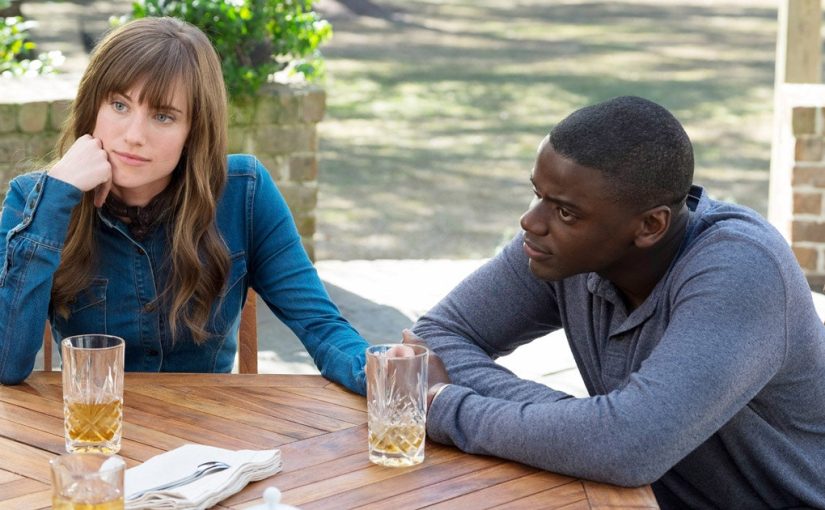
In Get Out, Daniel Kaluuya is Chris.  His girlfriend is Rose played by Allison Williams.  These actors are a perfect pair on screen but that’s about all I want to share with you considering their relationship.  

Chris is meeting Allison’s family at their home for their weekend.  It’s a beautiful, quaint estate off the beaten path from any intrusive neighbors.  Burrowed within the woods, this is a place to escape the stresses of city life.  Just like with any horror film though, the characters do not know they are operating inside a horror film.  The audience always does, and the best filmmakers find those frequent moments to get their viewers to squirm in their seat, tuck their knees under their chin, clench the butt cheeks maybe and say, “Don’t do that!,” “Don’t go in there,!” or maybe they’ll urge you to “GET OUT!!!!”

Nevertheless, the storyteller finds it important to bring up Barack Obama on more than one occasion???? 

Before they even get out of the car, the landscaper, a black gentleman, seems curious to Chris.  Friendly handshakes and welcoming hugs on the porch segue into the furnished home and there’s the maid, a black woman, who is as intriguing as the first black person to be seen.  Wouldn’t you know it but over lunch, you learn that tomorrow there’s the annual party gathering of friends.  Oh my gosh, was that this weekend?  

Jordan Peele doesn’t turn on the creepy music you may expect.  He relies on his visuals and while you are being as observant as Chris, you just might be alarmed and less sensible than he is.  That credit goes to Kaluuya, giving a reserved, contained performance.  This guy does not look like a hero in the least because he has instincts but seems to never look for a fight or a debate or the need to set an example.  An unexpected stop on the drive over demonstrates where Chris stands in a topsy turvy world of political divides in the twenty first century.  He just wants to make life easy.  So, he also will not make waves when that groundskeeper runs directly at him in the middle of the night.  This is just too freaky, but Chris tells us to just get through the weekend.

Rose’s brother seems like a weirdo from a Judd Apatow comedy, but he’s not being a clown.  Dad (Bradley Whitford) is a successful surgeon always ready with a relaxing tone and an open hug.  Mom (Catherine Keener) has done well as a psychiatrist performing hypnosis on her patients.  Yet, a late-night encounter with her leaves Chris feeling uneasy. Visually, it’s disturbing when he reflects on what he thinks he experienced with her.  However, he tries to give the family the benefit of the doubt especially when he shares his concerns with Rose.  Allison Williams is quite good with being convincingly dismissive.  I trust her, and I like her too. 

Then there’s the party the next day.  All the guests, primarily white, arrive exactly at the same time in a convoy of tinted black sedans and SUVs.  Chris doesn’t hide himself despite feeling awkward, and he doesn’t initiate the odd conversations with these middle age WASPs, but he politely keeps engaged with them.  Ironically, the strangest conversation he experiences is when he approaches a fellow black guest who is oddly dressed inconsistently compared to everyone else while his demeanor looks like he’s in a trance.

For comedic effect, Jordan Peele incorporates a best friend for Chris to confide in with opportune cell phone calls.  Lil Rey Howery is Rod and I can say, unequivocally, he is the best endorsement for the TSA. I do not recall seeing Howery in other films of late, but this actor deserves a long career for making a big splash in Peele’s busy picture.  Get Out would never be as inventive if Howery’s role is edited out.  Rod is the only other guy who, from a distance, can tell something is not right, here.

Get Out closes on an airtight ending.  Explanations for everything that is questionable is provided.  Yet, on both occasions that I’ve watched the movie, I think about it long after it’s over.  It takes some of the best elements you might uncover from The Twilight Zone, plus what you might have seen in the original Texas Chainsaw Massacre, and builds new ideas off of those circumstances.  

It is especially fun to read the IMDb trivia about the film to uncover a wealth of appropriate symbolism that does not jump directly at you.   You’ll appreciate how clever Jordan Peele is as a writer.  Froot Loops without milk in a bowl says much about a character.  Another character is engorged with the antler of a taxidermic deer head.  One character scrapes cotton stuffing out of an armchair.  Jordan Peele approaches his scary fiction with an educated eye.  

This movie is inventive.  Its horror does not seem redundant and thankfully the monsters are not vampires and zombies all over again.  There are new tactics at play.  There are fresh approaches to victimize the heroes, and there are creative ways to surprise the audience.  

Get Out is amazing the first time you watch the film.  On a second viewing, Jordan Peele’s story works like a class experiment in social standards while it still has fun by keeping you in triggering suspense.

ALIEN: COVENANT

By Marc S. Sanders

I imagine it would take a defiant personality to become a God and bearer of life.  That individual would most likely have to be beyond human to follow through on such an endeavor.  In cinematic fiction, to occupy such a role would require an exceptional actor with a calm yet powerful command.  It is fortunate that in Ridley Scott’s follow up to his Alien prequel, Prometheus, that he was able to recruit Michael Fassbender in the role of David – the android invested in discovering new amalgamations of life from unknown sources within a very deep universe.

I understand Alien: Covenant left many fans and critics divided and that it was not the box office success many were hoping for.  In addition, a follow up chapter to this film seemed more unlikely following Disney buying out 20th Century Fox.  Nevertheless, none of these occurrences dismiss one of best dual role performances I have ever seen, compliments of Michael Fassbender. 

The actor first appears in a prologue as David discussing challenging questions with his maker, the wealthy industrialist Peter Weyland (Guy Pearce), a younger looking iteration than from the prior film.  David has met his maker.  However, he questions who created his own maker.  No satisfying answer comes from the conversation and thus it ends with Weyland commanding his “child servant” to a menial task of serving him tea.  David, we learn, will resent humans who opt to subject his incredible capabilities to menial tasks.  He is destined for greater achievements than servitude.  David is meant to be a God.

The film diverts to a period eleven years after the events of Prometheus.  A massive ship known as The Covenant is embarking on a journey to a paradise where the cryo-sleeping colonists and the hundreds of human embryos in storage will set up a new civilization for themselves.  They have just over seven years left of their journey.  The crew of fifteen who command this expedition are also sleeping while an android named Walter (Fassbender in another role) oversees operations.  Following a collision with a storm-like phenomena in space, the crew is violently awakened and the captain (James Franco) does not survive. A reluctantly nervous replacement named Oram (Billy Crudup) now must lead, and it appears fortunate that Covenant has come upon another nearby planet sending a signal source in the form of a John Denver song.  Why John Denver????? I guess the Beatles and Rolling Stones were too expensive. This locale might suit the colonists’ needs and save them another seven years of travel and unexpected risk.

Oram and the former captain’s wife, Daniels (Katherine Waterston), lead a team down to the planet.  A wheat field is surprisingly found.  There’s beautiful blue sky and mountain ranges.  Water is found.  Still, there’s a disturbing realization. Not a single animal or life form is anywhere.  No insects, no birds, no wildlife, nothing.  Like prior installments in the franchise, it is not long before some crew members get ill, very, very rapidly.  Then the first of several terrifying episodes begins.  All of that is visual and not necessary to recap here.

David makes an “Obi Wan Kenobi” like appearance amid the mayhem and calms everything down.  The highlight of Covenant is when Fassbender as Walter (a down to earth American interpretation of an android) encounters Fassbender as David (a refined English example). Upon entering David’s habitat, it is clear he has been busy over the last decade since he and Dr. Elizabeth Shaw (Noomi Rapace, from Prometheus) arrived on this uncharted planet that was once populated by The Engineers, also from the first film.

At the risk of mild spoilers, I offer the following observations, because the thought provoking aspects of Ridley Scott’s third monster movie, are worthy of insightful conversation. 

Walter and David are undoubtedly the most interesting characters of Alien: Covenant.  They possess two totally opposite mindsets.  Almost like they are the angel and devil figures found on a person’s shoulders.  They regard the value of people differently.  Walter holds humanity in high esteem, ready to assist while they continue explorations of great beyonds.  David is prepared to dismiss them, though they serve a valuable purpose in his own selfish discovery to harbor a new breed of creature – one considered to be a perfect organism.  Experimentation has been David’s sole focus.  Now he may have finally uncovered precisely what he needs for his masterpiece of creation.

There are staple moments and happenings that are no longer surprising in Alien: Covenant because there’s a formula that traditionally worked in the long gestating franchise before.  Nevertheless, the film is far from stale.  The story offers up a well-conceived history to the origins of the alien breed, known as Xenomorphs from other films.  Why and how they came to exist are provided.  Hey, I’ll happily say this is more definitive than the Old Testament.

To witness one actor on both sides of a debate discussing the purpose of human preservation and what value people serve from this point is really a thrill.  Both Walter and David are artificial intelligence.  They are so advanced that they have usurped humans as the greatest thinkers in the universe.  It’s not farfetched in this age of smart phones and an over reliance on technological innovations to incorporate this into a monster movie.  It only enhances and improves upon a tired old Godzilla cliche.  Movies are sometimes quite prophetic.  So, it’s not even ridiculous to categorize a film like Network with a bloody sci-fi horror film like Alien: Covenant or even a couple of Tom Clancy political thrillers.

Alien: Covenant boasts a good cast particularly with Katherine Waterston, Billy Crudup, and an unusually serious Danny McBride as a good ol’ boy pilot named Tennessee.  McBride does well with the drama and horror to come.  He’s not a novelty act.  While these actors may be playing well developed characterizations, I know they are only here for the body count and to keep David and the aliens busy.

Again though, the film especially belongs to Michael Fassbender.  A brilliantly inspired casting choice for the first film in this more recent resurgence of the franchise.  It’s only a huge blessing that he returned, and this next film pounced on his capabilities to balance the two roles on opposite ends of the spectrum.  Regardless of whether he’s playing Walter or David, Alien: Covenant only gets more interesting when Fassbender occupies a scene. 

An especially telling moment is so wisely written with a kind of seductiveness between the androids while one teaches the other to play the flute.  Humans no longer need to program computers.  The computers can work it out themselves, and even develop an intimate attraction for one another.  What’s most delightful is again, I remind you, that Michael Fassbender is the only one working in scenes like this.  How often has an actor gone in for a kiss in another role that he is playing in the same scene?  He hides so well in Walter and David, that you lose sight of the fact that you’re watching only one performer doing all the work.

The final scene of the picture caters beautifully to what Fassbender offers in his two roles.  The story’s conclusion will leave you thinking and wondering what comes next.  Intentional or not, I regard the ending of Ridley Scott’s picture as an homage to other great films like The Silence Of The Lambs and The Usual Suspects.  You may feel shockingly haunted as the end credits roll.

Overall, Alien: Covenant is a chilling, mind-bending masterpiece of science fiction horror and what-if prophecy.

GET OUT (2017)

by Miguel E. Rodriguez

Director: Jordan Peele
Cast: Daniel Kaluuya, Allison Williams, Catherine Keener, Bradley Whitford
My Rating: 10/10
Rotten Tomatometer: 98% Certified Fresh
Everyone’s a Critic Category: “Watch a Low-Budget Blockbuster” [Budget: $4.5 million.  Worldwide Gross: $255 million.]

PLOT: A young African American visits his white girlfriend’s parents for the weekend, where his simmering uneasiness about their reception of him eventually reaches a boiling point.


Many years ago, I attended a wedding in New York.  After the ceremony was over, I stepped outside to watch it snow.  After a couple of minutes of me standing outside alone wearing a tux, a very polite man walked up to me, held out his keys, and said something like, “The blue Buick in the second row, please.”  After I explained to him that I was not, in fact, the valet, he apologized profusely and went back inside, clearly embarrassed.  (I’ve always regretted what I should have done: just taken the keys, gotten in the car, and driven it out of the parking lot while waving goodbye. Yes, I would have returned it, but imagine the look on that guy’s face…!)

I have been lucky and, yes, privileged enough that, in fifty-one-and-a-half years of living on planet Earth, that is only the second time I have ever been the target of overt racism, intentional or not.  I will never ever know what it’s like to have to think twice before walking alone at night while wearing a hoodie.  I’ll never know what it’s like to literally fear for my life when a cop signals me to pull over.  The beauty of Jordan Peele’s Get Out is that it addresses the issue of what it’s like to be African-American today in a way that is so entertaining that the subtlety of the screenplay is only apparent when you watch the movie a second or third time.  Unless you’re African-American, in which case the symbolism and sly satire is not so subtle.

After a brief terrifying prologue, we meet Chris Washington (Daniel Kaluuya in his breakout role) who is about to visit his girlfriend’s parents for the first time.  His girlfriend, Rose (Allison Williams), is white.  He wonders if her parents are aware he’s black: “I don’t wanna get chased off the lawn with a shotgun.”  Rose casually dismisses his concerns: “First of all, my dad would have voted for Obama a third time if he could’ve.”

On the drive to her folks’ house, a startling and intensely creepy incident/accident occurs followed by a tense moment involving a white police officer asking to see Chris’s driver’s license even though he wasn’t driving.  Rose valiantly tells the officer off for profiling, and he lets them off with a warning.  This is just one of the many ways the screenplay probes and exploits the inherent fears of the average viewer.  Even if Chris had been white, it would still be a foreboding scene.  Because of the additional racial tension, the scene crackles with suspense.

Things get progressively weirder from there.  Chris meets Rose’s parents, Missy (Catherine Keener) and Dean (Bradley Whitford), along with their groundskeeper and maid, Walter and Georgina, both of whom are black.  Walter and Georgina’s behavior is just plain odd.  Their sole purpose seems to be to make Chris (and the audience) say, “What the f**k” repeatedly.  Dean directly addresses Chris’s apprehension: “I know what it looks like: a white family with black servants.”  His explanation of why they’re there answers Chris’s questions without really answering them if you follow me.

It would be unfair of me to describe any further plot details.  I’m sure those of you who’ve seen the movie would agree.  But I will issue a SPOILER WARNING for the remainder of the review.  Consider yourself warned.

Get Out is one of the most original, most effective modern horror films I’ve seen since The Descent (2005) and The Babadook (2014).  I have rarely been so glued to a screen.  The way director Jordan Peele ratchets up the creepiness levels is virtually unparalleled.  Here is a first film that rivals M. Night Shyamalan’s The Sixth Sense (1999) in terms of how to manipulate an audience.  Look at the moment when Chris sneaks out of the house for a cigarette, looks around, and suddenly spies Walter, the groundskeeper, running towards him in the night.  No, not running…sprinting.  Silently.  When I watched this for the first time on my own, I literally said, out loud, “What the s**t…???”  I can’t remember when I’ve seen anything like that in a suspense film.

Take the moment when Chris gets involved in a late-night discussion with Missy (Rose’s mom) that turns into an impromptu therapy/hypnosis session.  When Missy calmly says, “Sink,” and Chris actually does, and we see him floating in some kind of limbo, I felt the same kind of transfixed curiosity that I felt while watching Under the Skin (2013).  I had absolutely no clue what was happening or why, and I couldn’t wait until I could get answers.  When those answers come, they are both gratifying and suitably horrific.  Remember those old commercials for the American Negro College Fund?  The tagline was, “A mind is a terrible thing to waste.”  You will never think of that line the same way again after watching Get Out.

Peele was wise enough to include some comic relief in the form of his best friend, Rod (Lil Rel Howery), who works for the TSA and ironically gets closer to the truth of what’s going on at Rose’s house than he or anyone else realizes.  If the movie has a single weak spot, though, this might be it.  Rod is so comic it feels as if he was lifted directly from a romantic comedy.  Sometimes his delivery and dialogue feel a little too much like he’s trying for laughs rather than just being himself.  This is a minor quibble, though…he is funny as hell, especially during a phone conversation between him and Rose.

The bottom line, as if you couldn’t tell, is that Get Out is a sensational movie, containing more levels than “Super Mario Bros.” and more food for thought than a Judd Apatow dramedy.  It’s one of those movies where, if I hear anyone hasn’t seen it, not only do I recommend it unreservedly, but I immediately ask if I can watch it while they watch it for the first time.  Just to see their reactions.


SELECTED QUESTIONS FROM EVERYONE’S A CRITIC

  1. Do you feel a larger budget would make this film better or worse?
    …that’s a tough question.  As you can see from my 10/10 rating, the movie is just about perfect as it is.  What might change with a larger budget?  A more realistic-looking deer corpse?  A wide-angle shot of…something…burning?  Maybe they wouldn’t have gone with Daniel Kaluuya, or maybe Rose would have been played by, I dunno, Emmy Rossum or Lily James.  So, I guess my answer is, a bigger budget would make this film worse.  The filmmakers made the choices they made because of their limitations, and those choices resulted in a masterpiece of the genre.  It’s like Salieri says in Amadeus when describing Mozart’s music: “Displace one note, and there would be diminishment. Displace one phrase, and the structure would fall.”
  2. Were you surprised by the ending?  What would you do differently?
    Because of how the very ending of the film is structured, yes, I was surprised by the ending.  In fact, on the blu-ray, we can see the original filmed ending, and it’s what I feel might have been a more realistic ending.  As it is, the new ending is very satisfying on an emotional level, but I will always wonder how that original ending might have been received by general audiences.  Probably not well.  Imagine putting your hero up a tree, story-wise, then setting the tree on fire…but instead of getting him out of the tree, firemen chop the tree down and the hero is falsely arrested for arson.  Something like that can work – look at Body Heat (1981) and the original director’s cut of The Descent.  But Get Out provides a much more cathartic resolution and gets a smile on your face when you walk out the theater instead of shaking your head ruefully.


On the next “episode” of Everyone’s a Critic: “Watch a Film Starring Animals.”  I’m leaning towards The Black Stallion, but stay tuned…

MOLLY’S GAME

By Marc S. Sanders

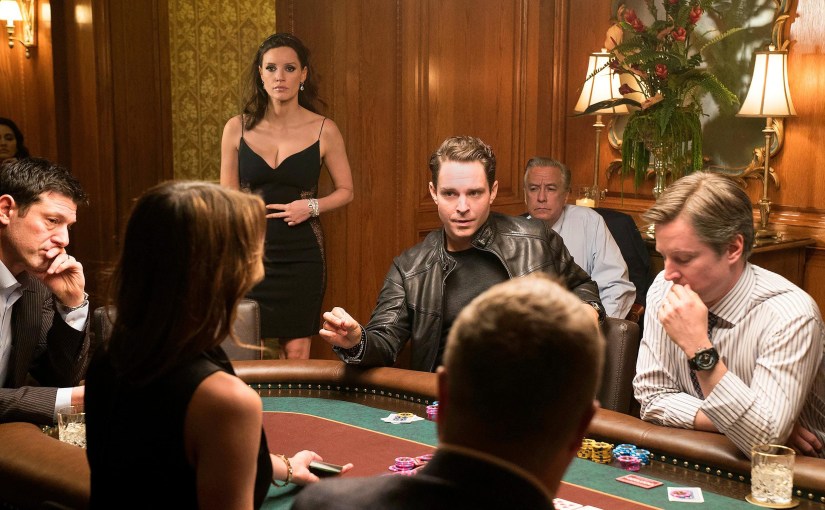
Despite being a little distracted by a drunk patron sitting next to me, I thought Molly’s Game was very good. It doesn’t measure up to The Social Network, and I feel justified in comparing the two because the sharp, fast dialogue follows what appears to be an intentionally similar narrative from writer, and here director, Aaron Sorkin.

Sorkin in his directorial debut uses great techniques for film editing to match the beats of his dialogue.  His opening voiceover of Jessica Chastain as Molly describing the ultimate worst sports experience will get your heartbeat racing.  It draws you into the film right away.

Chastain is good, but maybe a little over the top.  I needed a little more convincing that she was actually this brilliant, inventive and resourceful woman who was also considered one of the world’s greatest skiers.  Can’t put my finger on it but something was missing with her playing the Molly Bloom role.  Was she really holding her own against these high stakes guys who take big risks in her personally constructed poker ring?  I’m just not sure.

Felt the same about Kevin Costner in the role of her father.  He’s supposed to be an incredibly brilliant psychologist and an intimidating patriarch.  Yet Costner doesn’t fit that mold for me here.  Couldn’t feel the pressure from Dad on his daughter.  Someone else might have been stronger.

Michael Cera too.  I think he is playing a combination variation of Tobey Maguire & Leonardo DiCaprio, two of the most famous celebs that participated in the real Molly Bloom’s underground poker games, but Michael Cera?  Really?  He doesn’t carry the weight or looks of guys like that.  There just was not enough power or presence from him.

None of these actors were the worst options for this cast, I just think the film could have used more appropriate performers. There was more appropriate talent out there, I’m sure.

Idris Elba is great, however.  He’s blessed with an awesome Sorkin monologue in the 3rd act of the film, and he hits every note.

A great script.  A great story worthy of being a big screen film and it’s got me interested to learn more about the real Molly Bloom, including reading her novel.

THOR: RAGNORöK

By Marc S. Sanders

Thor’s third adventure in the Marvel Cinematic Universe, subtitled Ragnarök, is altogether fun, silly and primarily very campy. Sure, Cate Blanchett looks wickedly theatric as Thor’s evil older sibling Hera, but even she is not taking any of this too seriously.

There’s not much to evaluate within this film. Chris Hemsworth and Tom Hiddleston return as brothers at odds, Thor & Loki, and get sidetracked on a gladiator battle planet where they encounter a lighter, more tender and funnier Hulk care of Mark Ruffalo. The camp also comes to the forefront by way of Jeff Goldblum as the Gamemaster, a role obviously engineered to cater to his dialect idiosyncrasies.

The film is lots of neon colors of CGI and set piece junk helmed by director Taika Waititi. I commend Marvel Studios for recruiting these (at the time) unheard of directors with insightful visions. While most every Marvel film to date has its own unique appearance, Thor: Ragnarök is a balance of the prior Thor films, banking on the humorous success of the Guardians Of The Galaxy films.

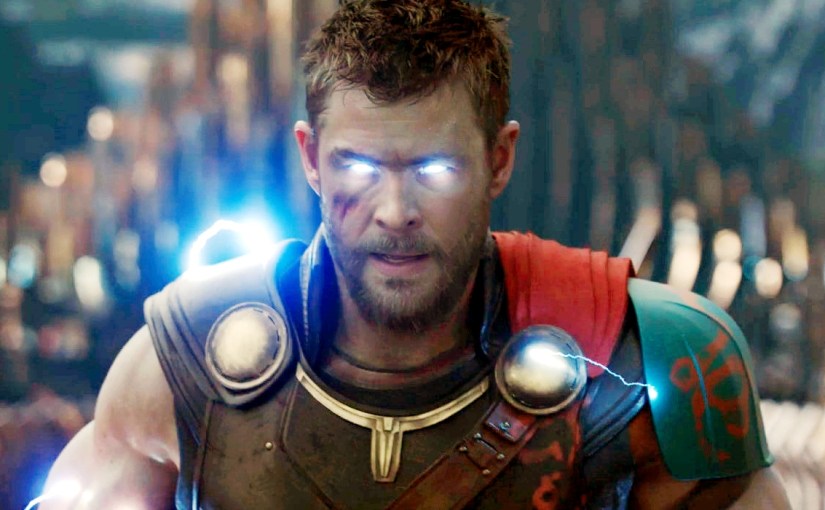
The gem this film offers is combining Led Zeppelin’s “Immigrant Song” with a fierce lightening powered one eyed Thor to fend off a few baddies. Compliments also to a bad ass, and sometimes drunk, Tessa Thompson as the Asgardian known as Valkyrie.

A favorite moment is an encounter with Benedict Cumberbatch as Dr. Strange. Good editing and direction offer an inspired Three Stooges routine where Thor is unexpectedly thrust about down a staircase or through a room. Plays like a great cartoon short.

Ragnarök has some shocking moments in its ending, but the weight of drama or story is none too burdensome.

It’s nothing special of a film, but it is amusing and gleeful, especially when Thor is forced to a chair while Willy Wonka’s “Pure Imagination” plays like annoying elevator music. That is sure to make the God Of Thunder irritable, and we the audience only gain from it.

Thor: Ragnarök is really a fun family movie of adventure, good character design and laughs.

SPIDER-MAN: HOMECOMING

By Marc S. Sanders

Spider-Man: Homecoming makes some enormous strides with the most recognizable of all the Marvel Corporate Mascots. I’m just not sure I care for the approach.

The Web Slinger has always been best written when he learns from his mistakes such as grappling with his lack of responsibility that leads to the murder of his beloved Uncle Ben, or washing his red and blue suit with the whites.

In director John Watts film, episodes like these are never discussed. Instead, we witness Spidey foil an ATM robbery. It’s a fun scene straight out of the Saturday morning cartoon, but it ends with a beloved neighborhood mom and pop store going up in flames. The scene plays like a great house party until the parents arrive home early from their out-of-town trip. Now it ain’t so fun anymore. There are a few moments like this in the film that kinda suck the air out of a what’s supposed to be lighthearted script.

Tom Holland as the hero, Peter Parker, aka the high school genius with insecurity, is suitably cast in the role. He looks much more like a kid than his predecessors and he’s got great comic delivery of one liners. Tom Holland is right for the MCU fraternity. He plays well with others.

So Holland really makes sure every action scene is fun but Watts and his screenwriting team of 8 (EIGHT!?!?!?) people pull the rug out because they must insist that the Web Head screw up again and again. Problem is the screw ups are not fun, and they spoil the thrilling set pieces including a well done sequence within the elevator shaft of the Washington Monument. Same goes for a Staten Island Ferry attack. I just kept asking myself, why we can’t we celebrate Spider-Man. Must we be so hard on the guy? Even Tony Stark (Robert Downey Jr) disapproves. It doesn’t seem fair, I guess.

There is a moment during the 3rd act that salutes a very popular comic issue that truly conveys the hero that Spider-Man must become. As a comic nerd, I was grateful for that. The filmmakers didn’t forget its roots.

Michael Keaton is scary good as Adrian Toomes, the winged villain called The Vulture. He’s not even playing for laughs. Rather he’s playing for fear. I liked it. Keaton is just good in almost anything.

Supporting players are all good as well featuring Marisa Tomei, Jon Favreau, Jacob Batalon (an especially amusing sidekick pal for Peter), Zendaya and Robert Downey Jr because a little Iron Man/Tony Stark interaction can go a long way.

However, this installment is huge step up from the Andrew Garfield clunkers but not as solid as Sam Raimi’s first two films which remain the best and most loyal to the original vision of the pop culture favorite. Raimi has no difficulty displaying the super hero’s every day faults and mistakes. What he did was make us feel sad about Peter’s errors in his ways, and we cheered when he overcame his obstacles. In Spider-Man: Homecoming, I shake my head with disappointment at the carelessness of Peter, not the mistakes he’s made.

See, to be reckless is not the same as human error. Watts’ interpretation is judged with disdain. Raimi’s is simply empathetic and relatable. That’s the difference in the two interpretations.

PS: My hat off to a great gag with Captain America as a lesson reminder in safety and well-being. It’s not as well remembered that Chris Evans has been hilarious in other films before his superhero days. That’s all brought back with great material for Cap to use. Really smart thinking here.

GUARDIANS OF THE GALAXY VOL. 2

By Marc S. Sanders

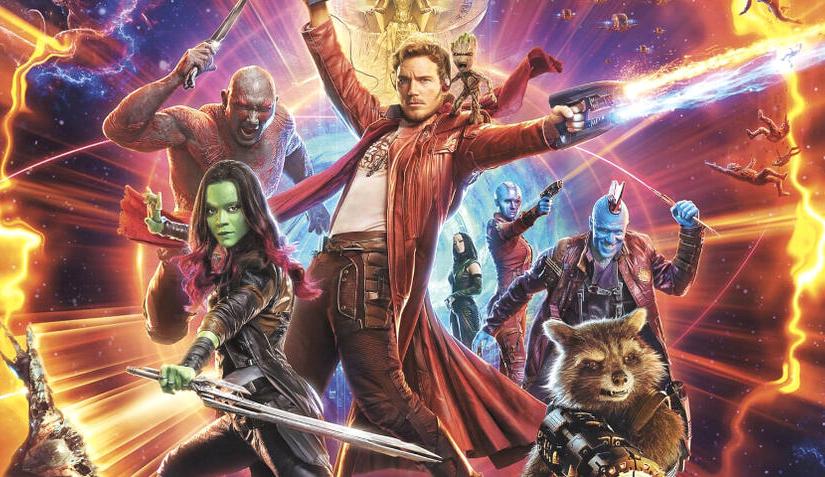
James Gunn continues his Looney Tunes odyssey helming Guardians Of The Galaxy Vol. 2. The silliness is grander, the story is weirder and the characters are now comfortably fleshed out.

Vol 2 is probably not better than the first installment. However, it is more inventive as Gunn takes his film along the hanging thread left over from before. Peter “Star Lord” Quill (Chris Pratt) meets his father at last in the persona of Kurt Russell who goes by the moniker Ego. This is all enthralling to Quill, though his love interest, Gamora (Zoe Saldana) sees beyond the facade.

Ego has invited them to his planet that he created. It pops with colors, serenity and cheer. This plays for a good story; maybe as a better and more developed Star Trek episode.

What differentiates this film from other Marvel films comes out in the third act. This does not consist of just space battles, laser swords and shootouts. The end is something else, something new, entirely. Thus, you are given the film’s greatest strength. I found it to be very imaginative.

Gunn however falls a little bit into his own trap along the way. There are too many relationships and characters that work as filler for side stories. Gamora vs her bitter sister Nebula. Drax (Dave Bautista) with a new, weird antenna on the head character named Mantis and Rocket Racoon and his big mouth with Yondu (Michael Rooker, in a bigger more significant role this time). Oh yeah! There’s also Yondu vs Sylvester Stallone (huh? why? how?) and Yondu vs his mutinous army, The Ravagers. It’s all a little too much for an already busy looking film.

I found it funny that The Ravagers reminded me of the motorcycle gang, The Black Widows, from Clint Eastwood’s Every Which Way… bare knuckle comedies. Those guys were much funnier than these Ravagers. Gunn overstays their welcome as they randomly cackle and heckle poor Baby Groot, the toddler tree thing. That gets old quickly.

Gunn approaches a special kind of humor here. Repeatedly, because these are outer space characters, it’s apparently funny to lend them explaining the punchline of a gag. So if Drax realizes that Peter has the hots for Gamora, he’ll belly laugh and explain literally how Peter feels and do it bigger and louder. Variations of that gag occur quite often among most of the characters. Sometimes it works. Sometimes it gets old.

GOTG Vol 2 is a fun watch. I don’t foresee this installment carrying the legendary status the first one did or even standing out among the best of the Marvel series, but I will give props to the outcome of what Ego truly is and what his intent depends on. (I won’t spoil that here, of course.)

The cast is great. Saldana is one of the stronger female characters in the MCU. She captures a background to Gamora that is blatantly absent from other Marvel ladies. Bautista has become a great character actor as well. He’s a smart guy with good timing. With his extensive child and adult film resume Kurt Russell is perfectly cast as Pratt’s father. Their personalities lend to some good chemistry.

James Gunn owns the Guardians films. No one else can capture his blend of humor and pop culture salutes. Yet, he overreaches a little trying to incorporate so much story and so many gags into one film. His vision is well defined, though.

Plus, Gunn stages another dance scene for Pratt and Saldana, and it’s great. As I noted in my Vol 1 review, that’s how you get to a viewer’s heart. Everyone loves to dance.

As well, Gunn accompanied his sequences with some tunes both fresh and familiar from Fleetwood Mac, Electric Light Orchestra and George Harrison to name a few.

James Gunn was always going to make sure never to take his films seriously. So, when you see a baby tree groove along while trying to detonate a bomb, I defy you to be so serious as well.

PHANTOM THREAD

By Marc S. Sanders

I remember how much I loved Anderson’s 90s films Boogie Nights and Magnolia as well as the hauntingly genuine There Will Be Blood. (Let’s not talk about Punch Drunk Love.) Still, I never expected to like Paul Thomas Anderson’s Phantom Thread, but as soon as it began, I fell in love with it.

Daniel Day Lewis plays a perfectionist dressmaker adept at using women at his behest to sustain and elevate his craft. He’s a ruthless, maybe bipolar, villain and he will remain as one of cinema’s best actors for at least the next hundred years.

Anderson doesn’t just show his characters. He shows their specialties whether it’s dressmaking, porn, show biz or oil. The industry is its own character. Here he masterfully depicted the industry of clothes making.

Anderson offers a convincing education in dress design and fabric construction with the details and measurements it requires. Swatches of fabric never looked sexier amid a mid 20th century European backdrop. The dialogue is uncompromising in its humor, craft and cruelty both from and to its characters.

The ending was very obscure and strange though. Thankfully it happens quickly and is not dragged out, otherwise my opinion might be different.

This Best Picture nominee from 2017 is definitely worth a look.

THE SHAPE OF WATER

By Marc S. Sanders

I love fantasy and science fiction for one simple rule. A writer/director’s imagination can be limitless. Rules for a good fantasy are normally established in the exposition, and as long as those rules are not violated, a viewer will accept the narrative all the way to the end. The Shape Of Water is loyal to its set up.

Director/Co-Writer, Guillermo Del Toro continues his reputable streak of very adult (yet playful) fantasy. In 50 years, I would not be surprised if Disney/Pixar remade this film and Pan’s Labyrinth for younger PG audiences simply because the roots of the stories are so well played out.

Here is a Cold War love story between an alien and a good soul played by Sally Hawkins doing her best mute. Hawkins is bright eyed and wonderful. She’s a character that doesn’t judge and only recognizes despair for salvation. I thought she was great at conveying her performance through the limits of only facial expression, sign language, sex and self pleasure in a bathtub. Try to avoid snickers at that last description. It really is an honest, necessary reflection of a lonely innocent woman. I appreciated the writing and performance there.

Michael Shannon is back on screen playing a frightening villain…again. The reasons for his ruthless intentions were never clear to me, but either Shannon is that good an actor or he’s gotta be like this in real life. This is not a guy I’d ever want to cut in line at Starbucks, much less audit his books. He’s scary good.

Didn’t find much point to Richard Jenkins lonely neighbor except to drive a van, eat pie, be unemployed and be a token homosexual. Same with Octavia Spencer. Was she channeling a more subtle Whoopi Goldberg from Ghost? Don’t get me wrong. Jenkins and Spencer are fine actors here, and their characters are likable, but they don’t add much to the story except to be Hawkins’ sidekicks. Too much story was devoted to them though unnecessarily. Del Toro and his co-writer might have used them for too much filler.

Del Toro doesn’t stop with the new material as the two hours swim on by at a nice pace. We are treated to a wonderful Busby Berkeley song and dance moment that is just inviting to be spoofed by the Wayans or Zucker brothers, sensual nudity is there, not for perversion, but to send home the message that though this relationship is weird, it’s also the real deal. I bought it all the way through. Racism and gay prejudice are perhaps unnecessary in a film like this but there is key lime pie. Cats are consumed. Cold War espionage is on hand with Russian spies, dirty American government politics is there too, and oh yeah, there’s an amphibious alien who seems like any one of Spielberg’s extra-terrestrials we’ve seen before. Yet, I’ll take this one as well because he’s narrated into a very mature love story that is hard not to like.

As quick as the movie begins, you know how it is going to end. Again I don’t mind. Most of the execution rescues the story’s predictability.

Del Toro won Best Director and the film was awarded Best Picture at the Oscars. It’s not what I would pick, but there could be worse choices from that year’s selections.

I liked The Shape Of Water. Most of it at least.