DJANGO UNCHAINED

By Marc S. Sanders

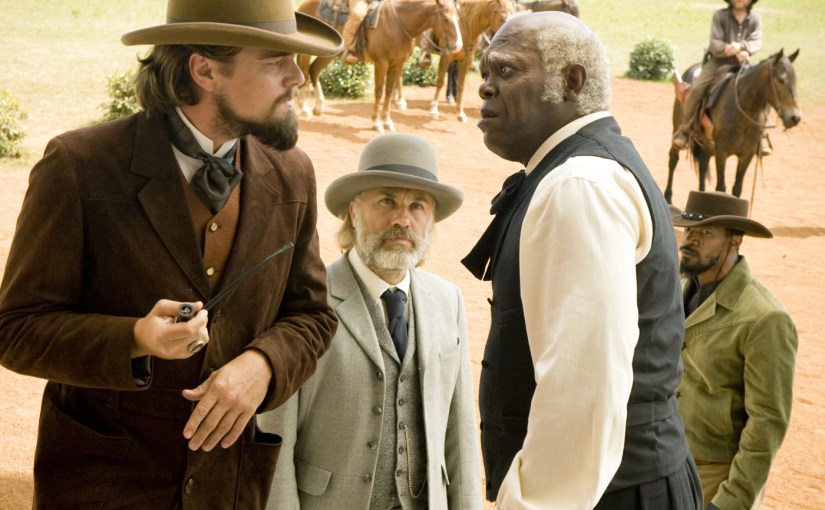
Quentin Tarantino’s scripts have never been shy with using the N-word or any other colorful terminology.  He turns harsh and biting vocabulary into rhythmic stanzas of dialogue.  When he films these scripts, he’s not bashful with the buckets of blood splashed all over the set either.  His interpretation of violence works in a kind of slapstick fashion among his seedy one-dimensional characters.  Normally, I never get uneasy with his approach.  I know what to expect of the guy.  Yet, as well cast, written and formulated his Oscar winning film Django Unchained may be, I wince at both his word play and physical carnage.  I think Tarantino gets a little too comfortable with his slave era storylines and the African American actors he stages in his set ups.  A good portion of this Western may be thrilling, but it’s also cringy like watching a drunk uncle at a three-year old’s birthday party, and I defy viewers not to squint at the movie if they so much as live day to day with even the smallest shred of kindness in their hearts.

Django Freeman (Jamie Foxx) is released from slavery by the former dentist now bounty hunter, Dr. King Schultz (Christoph Waltz, in his second Oscar winning performance cast by Tarantino).  Django is a good man, though uneducated and mostly illiterate.  Once he assists the doctor with locating and collecting a bounty, the two make an arrangement to stick together through the winter collecting further ransoms.  In return for the former slave’s help, Dr. Schultz will assist in rescuing Django’s wife, the German speaking Broomhilda (Kerry Washington).  She is believed to be held at the infamous Mississippi slave plantation known as Candyland, owned by the ruthless Calvin Candie. He is played by Leonardo DiCaprio in one of his best roles while also delivering one of his most unforgiving portrayals.  Calvin Candie is a mean son of a bitch slave owner who has too much fun with investing in slaves for brutal Mandingo wrestling matches that don’t finish until the loser is dead in bloody, bone cracking fashion.  

All of these figures belong at the top of Quentin Tarantino’s list of sensational character inventions, particularly Django.  He has more depth than most of the writer’s other creations.  This guy goes from an unkempt, nearly naked, tortured and chained slave to a free man proudly wearing a bright blue court jester costume on horseback.  His third iteration places him in a gunslinger wardrobe comparable to a Clint Eastwood cowboy and when the conclusion arrives, Django is meaner, more confident and instinctively wiser, glamorously dressed (purple vest with gold inlay designer seems) like a graphic novel superhero ready to take on an endless army of redneck slave abusing outlaws.  Django is taught everything he needs to know from Doc Schultz.  Christoph Waltz and Jamie Foxx stand as an impressionable mentor/student pair.  They are the spine of Django Unchained.

The villainy of the piece belongs to DiCaprio and his head slave in charge, known as Steven, played by the director’s go to player for happy street slang and N-word droppings, Samuel L Jackson.  Steven is Jackson’s best career role because as an old, decrepit and frightening individual it’s this portrayal which looks like no other part the actor has ever played.    Both actors are funny, and you can’t take your eyes off of their unlimited grandstanding, but they will leave you feeling terribly uncomfortable.

I think what is most unsettling about Django Unchained is that the cruelty persists for nearly the whole three hour run time, and it is more so at a shameless attempt of comedic, pulpy entertainment, rather than just insight and education.  A Schindler’s List finds no glee in the torment that kept the Holocaust alive.  Tarantino didn’t even go to great heights with Inglourious Basterds because that film featured ongoing grisly heroics with his assortment of vengeful protagonists.  The Nazis were never celebrated in that film at the cost of innocent Jewish lives that faced peril and threat.

In Django Unchained, it’s hard to watch the Negro characters and extras getting brutally whipped while bound by inescapable chains.  Kerry Washington’s nude character is yanked out of a sweat box on the Candyland plantation and while I’m watching it, I ask myself if I’m too much of a prude.  No.  I don’t think I am.  This teeters on torture porn. The N-word is now being used way too freely to stab at the slaves for gleeful poetry. It grows tiring and, yeah even for a Quentin Tarantino picture downright ugly and offensive. I imagine Tarantino grinning behind the camera every time DiCaprio or Jackson happily drop another N-bomb.

Quentin Tarantino has been applauded time and again for his excessive abuse and tortuous murders committed by his characters.  Because he’s courageously gone so far before, the line of acceptance is either pushed out farther or maybe in the case of Django Unchained it is entirely erased.  

My compliments to a well-known humanitarian like Leonardo DiCaprio for energetically acting through this bastard of a role that requires a twisted pleasure in watching two husky black bruisers beat the bloody tar out of each other in a formal drinking parlor.  Later in the picture, a weeping slave is shredded to pieces by ravaged, bloodthirsty dogs.  These fictional scenes staged by Tarantino and his filmmakers come off a little too real and even by the director’s standards much too over the top for the temperature of this film’s narrative.  

What could these extras cast to play these slave and Mandingo roles have really been thinking while shooting this picture?  Did these men recognize the racially poetic humor in Tarantino’s verbiage? Did they find a commitment to demonstrate a once historic atrocity for a lesson learned? I doubt it. Did these actors simply succumb because they needed the work?  Believe me.  I empathize.  Yet, Tarantino took this film to a very uncomfortable extreme for a movie intended on following his reputable and always admired lurid material.  Here, despite my reverence for his work, I think Quentin Tarantino goes unnecessarily over the line.  The whippings and dog torture are quite uneven from what The Bride commits in Kill Bill when a Crazy 88 henchman gets spanked with a sword and there’s nothing to compare to whatever sick, graphic novel atrocities occur in his later western, The Hateful Eight – both are PG rated compared to what is offered in Django Unchained.

Much of Tarantino’s signature comedy works.  The Ku Klux Klan of the late 1850s are represented with brilliant stupidity by a cameo appearing Jonah Hill and a racist, foul speaking, plantation owning charmer played by Don Johnson, known by what else but Big Daddy.  The filmmaker turns these guys into bumbling stooges who can’t even wear their hoods properly. And yes, they also freely drop the N-word in cruel like fashion. I get it, Mississippi and Southern Plantation owners were not the Mickey Mouse sort, and I’m not asking for whitewashing what the real-life despicable characters stood for or how they carried themselves. Still, when all of this compounded together, it goes too far. In a drama like 12 Years A Slave, I see an authenticity to an ugly slave era. In Tarantino’s world, I see a kid who learned a bad word and dad said go ahead son, play with the machine gun but make sure the vocabulary ammo will riddle the entire script to pieces.

Django Unchained is a gorgeous looking picture.  Tarantino goes to the outdoor plains following the interiors of Pulp Fiction and Jackie Brown.  Jamie Foxx and Christoph Waltz’ cowboy antics look marvelous riding on horseback or even simply camping by the fire as well written exposition is revealed on cold moonlight evenings.  

I can watch this western on repeat and feel a free-spirited energy when Django steps out in his cowboy outfit with boots, spurs, the hat, and a brand-new saddle to ride off on his steed while Jim Croce’s uplifting “I Got A Name” cues into the picture.  I love how Jamie Foxx appears as a super heroic action star, especially in the final act of the movie.  I can absorb the sadism of DiCaprio’s downright mischievous evil, particularly when he uses a bone saw and skull prop to make a point.  I feel like I’ve gained a comforting friend in Christop Waltz’ kindly sensible Doc Schultz, and I welcome a very funny and altogether different Samuel L Jackson that finally arrives.  

It’s the filling within these strong moments and characterizations that is very hard to swallow.  Django Unchained is that great picture that still should have been made but with a modicum of caution. Perhaps one of the Weinsteins, or maybe even these powerhouse, marquee actors who led this piece should have shared some constructive input with the writer/director.

Django Unchained is fun, but it’s not entirely fun.
PROMETHEUS

By Marc S. Sanders

In 2012, Ridley Scott was well established as an elite film director that I’d argue could pick and choose what projects he would want to work on.  So, the question is was it worth the opportunity to return to the Alien franchise that had been established back in 1979?  Following its just as magnificent sequel, Aliens helmed by James Cameron, none of the other subsequent installments (including the Predator mish mash stuff) lived up to the first two films. Not even close.  So, was it worth another go at exploring the world of Alien under Ridley Scott’s leadership?  Yes.  I believe it was worth every effort exhausted into making the prequel/side story picture known as Prometheus.

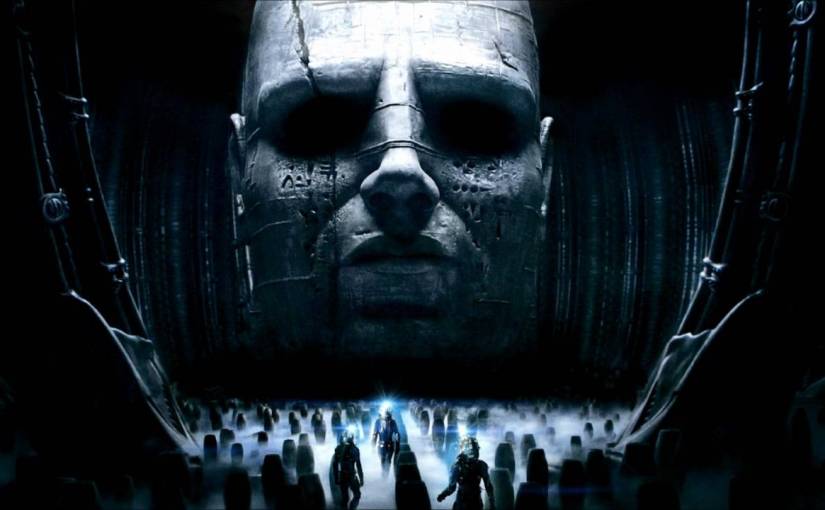
The movie begins with an odd prologue where an unusual looking strong man consumes a black liquid while standing at the precipice of a wild waterfall, while an unidentifiable shadow looms above, darkening a blue sky.  Shortly after his drink, the man seems to violently implode, and a graphic of his DNA strand explodes apart while what is left of him descends into the bottom of the falls.  The natural waters are now contaminated.

Afterwards, in the year 2089, an exploration crew of scientists uncover a hieroglyphic on the wall of a cave in Scotland, and then the film follows Prometheus, a large technologically advanced spaceship (a very cool looking spaceship I might add), on a trajectory into deep space four years later.  An elderly man named Weyland (Guy Pearce) is uploaded on a video and describes the mission to the ship’s crew.  He explains that he is now dead and that the lead scientists, Shaw and Holloway (Noomi Rapace, Logan Marshall-Green), have discovered a link between what they found in Scotland to similar hieroglyphics uncovered in other parts of Earth.  Coordinates lead to this particular planet where Prometheus will make its landing.  Their goal is to research what made them–the human race in other words.

Prometheus works like a sci-fi/monster fest of course, like the other Alien films.  However, I admire the intelligent questions it asks even if it is all based on fiction.  For example, I look at the film as continuously testing whether technology can overcome man, or religion, or even the theory of Darwinism.  A significant character in the piece is an android known as David (Michael Fassbender, doing an uncompromisingly sterile performance).  As the ship embarks on its four-year journey, with the crew resting in cryo-sleep, David continues to collect data including studying the film Lawrence Of Arabia and looking over visuals of Dr. Shaw’s dreams.  Both sources seem to offer a tolerance to live (“The trick…is not minding that it hurts.”) and die.  The latter option depicts a pre-adolescent Shaw inquiring of her father about the death of her mother.  David is a mechanical creation that never stops pursuing advancement even beyond what the science of humanity allows.

Upon arrival on the mysterious planet, the crew enthusiastically approaches a structure to explore.  Finally, they will receive answers to life’s greatest mysteries.  It’s not hard to realize that things will not go as planned, however.  It’s also not worth detailing everything that happens within the confines of this column.  I’ll let you absorb the imaginative visual feast of horrors and effects for yourself.  Most interestingly is that Dr. Shaw shares with her lover/scientist partner that the strong men, which they identify as “Engineers,” possess the same DNA as humans.  That’s an interesting observation.  Is it disappointing though?  Should it be grander for this long hike into outer space?

In many films like Prometheus or Alien, not everything cooperates as the characters expect.  None of that is surprising but it is welcome for the entertainment of suspense and thrills.  However, what I took away from the picture is where technology duals against religion and biology.  A pertinent blink and miss moment occurs following a traumatic event for Shaw.  David the android removes the cross around her neck.  Is there sound reason any longer to believe in God or the biblical teachings she was raised on if Shaw found the origin of herself and fellow humans?  Is her faith now a moot point?

On a scientific level, we learn Shaw is incapable of bearing children.  Yet, through a set of circumstances David informs her that she is suddenly three months pregnant.  The high-tech invention of David may have had a hand in this development by the way, and this is not some normal kind of pregnancy either.  Technology lends to a horrifyingly memorable scene where Shaw “delivers” her offspring. 

I’m sure we all question our beginnings.  Did it begin in six days by God, with Adam and Eve, as initial products?  Was there a big bang that just started it all?  I’d argue these questions will likely never be answered in our lifetimes.  Thus, the debates rage on because we have nothing better to do with our lives.  Cynical, right?  Well movies like Prometheus try to offer suppositions on possibilities.  In fact, there’s one pessimistic crew member on the ship who questions Shaw and Holloway’s goals of undoing a century of Darwinism on some distant planet, billions of miles away from Earth.

As the film reaches its climax, I found it even more interesting that Shaw puts on her cross necklace again, and David asks her if its even necessary at this point. 

The visuals of Ridley Scott’s film are impressive, though the planet surface and space travel doesn’t look any more creative than other science fiction films.  Frankly, it doesn’t need to reinvent the wheel.  The cast is quite diverse in personalities from a space pilot captain portrayed by Idris Elba, to a nothing but business professional played by Charlize Theron.  Other cast members are there for the casualty line up.

How Prometheus relates to the universe of Alien is fun, but the film still stands on its own. This movie does not require knowledge of the other films to follow this storyline.  Yet, if you’ve seen the other pictures, it is fun to uncover a few wink and nods here and there.

Jon Spaihts and Damon Lindelof (writer of the TV series Lost) deserve more credit for the construction of Prometheus because of the subtle debates ingrained in the monster movie themes of the picture.  Would an emergency C-section be considered a natural way of giving birth?  Would a belief in an “Engineer” supersede someone’s faith in a higher God-like power?  Should technological advancement overcome what’s destined for humanity?

As I close this article, you know what?  I’m going to say yes to all those questions.  Whatever put people on the planet Earth to live and occupy, granted us the capabilities to find alternatives to biological functionality.  Alternatives of religion preach a variety of different content that all humans choose to believe (yes even atheism, because if it’s got a name then it is some form of belief).  The science and engineering capability of technology did not arrive and develop without tests and experimentation, and it will forever proceed that way.  Dr. Frankenstein toyed with invention that did not go as expected.  Ridley Scott’s film suggests that the characters of Prometheus had a similar experience.  The point is we never advance unless we try and unless we fail before we hopefully succeed.

THE HUNGER GAMES

By Marc S. Sanders

Some of the worst atrocities in history have often spawned some of the greatest stories.  I’d expect it would at least leave us feeling melancholy, but I hope it shapes a future that learns from humanity’s worst offenses.  That’s what came to mind as I watched the film adaptation of Suzanne Collins’ dystopian best-selling novel The Hunger Games.

In what was once a supposed North America, the continent is now called Panem and it is divided into twelve districts, with each specializing in some means of living.  Districts 1 and 2 are the upper-class wealthy.  Districts 11 and 12 are the starving destitute.  To maintain a semblance of order, President Snow (a chillingly older Donald Sutherland) oversees the nation’s Annual Hunger Games where a boy and a girl from each district is selected to compete in a dangerous competition of being the last one to outlive their competitors.  May The Odds Be Ever In Your Favor!  In the 74th edition, expert hunting archer Katniss Everdeen (Jennifer Lawrence in her most celebrated role) volunteers herself from District 12 to spare her younger sister from danger and selection.  She is paired up with the District 12 boy, Peeta Malark (Josh Hutcherson). 

Like any sporting competition, Collins’ story takes time to hype up the event.  The youths are fashioned up in the most glamourous adornments and interviewed for television by Caesar Flickerman portrayed by a delicious, yet unsung Stanley Tucci in bright blue hair and sparkly suits, doing his best Griffin, Carson, Letterman, Leno, and O’Brien.  With every white molar revealed in Tucci’s broad smile, he appears even more sinister in the purpose he serves for the Games, Panem, and President Snow.

Jennifer Lawrence gives a faithful portrayal to the Katniss character found in the pages of Collins’ series of young adult novels.  A new hero has been conceived – the rebel who stands along other well knowns like Luke Skywalker, Robin Hood and Harry Potter.  Katniss is not looking to be a savior but with influence from a prior Hunger Games champion (Woody Harrelson, doing his drunken best) and a calm, but humble fashion designer (Lenny Kravitz) she finds herself elevated towards a promising future.  Katniss Everdeen inherits the moniker known as “The Girl On Fire” with a three finger salute and a somber three note battle cry harmony.

I’ve likened the setting of The Hunger Games to the Holocaust and the early twentieth century European Nazi occupation.  (It seems more apparent in the next film, Catching Fire.)  If I had to compare the real-life period to this fictional one, then they are not anywhere close.  Yet, Suzanne Collins and director Gary Ross’ film depict hardship and oppression from a ruling upper class gleefully using their young for savage sport entertainment, while being forced to dwell in concentration camps with no permission to escape or run free, lest they suffer terrible punishments for themselves or those they care most about.

The Hunger Games values the themes of sacrifice while some characters inadvertently become heroes for a people against a domineering force.  It’s fantasy.  It’s adventurous.  It’s sprinkled with romanticism for Katniss and the triangle she’s pitted within for her care of Peeta but also her loving affections for another District 12 resident named Gale (Liam Hemsworth).   Frankly, the romance angle is a little weak in the films and books.  Ultimately though, it is harsh for the young characters in the story, which is why my wife refuses to invest her time.  I empathize with her position.  However, I find the story inspiring.  It’s also a hell of a thriller.

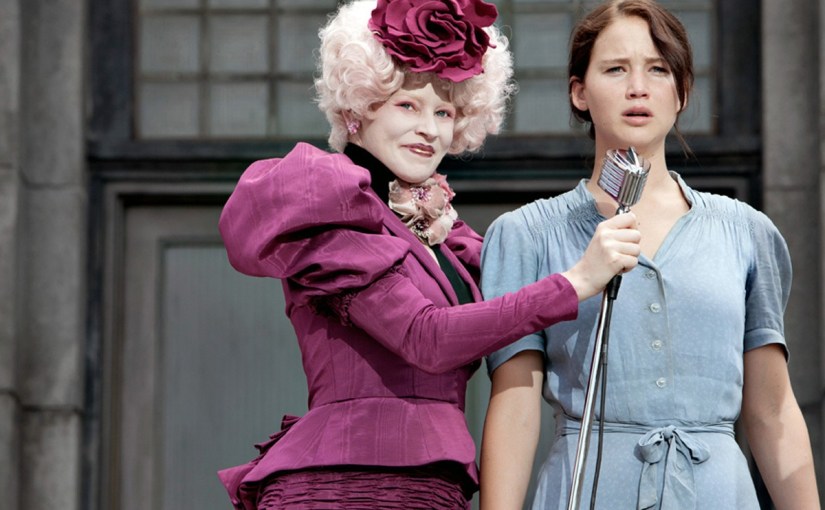
As a film, Gary Ross assembled a strong and alive production of gaudy, bright colors within the capital against morose grays found in District 12.  The clash of the two settings is no more apparent than when squeaky Effie Trinkett in her garishly loud facial makeup and wardrobes arrives in District 12 to host the Reaping, also known as the selection of the child contestants.  So many actors in this cast are memorable.  An unrecognizable Elizabeth Banks is no exception.  As Effie, her personality that publicly represents a hesitant Katniss and Peeta is deliberately inappropriate and further demonstrates how demonically twisted the mentality of The Hunger Games truly is. 

When it is time to finally arrive at the manufactured arena where the contestants will do battle to the death, Gary Ross effectively incorporates the inventive surprises offered by Collins’ source material.  Some competitors are brutal in their combative skills, but environmentally speaking the forest like jungle is dangerous as well.  Especially notable is a hive of stinging tracker jackers that’ll leave the viewers shaken. 

Suzanne Collins’ first installment of her series persists in leaving its ending completely questionable.  Will all these children, some of them who are noble and good, actually die?  Could a good soul like Katniss follow through with what the Games demand of her like killing Peeta for example?  I appreciate the imagination that went into the ending, leaving a subsequent tale to be told beyond this film.  

My one complaint is common in action films.  Gary Ross does really well with the edits and filming of his movie.  However, one of the last scenes develops into a hand-to-hand combat moment taking place in darkness with very shaky camera work and uneven grunts, punches, and kicks.  I abhor when filmmakers go this route.  It’s lazy work.  I can’t tell who is hitting who or where.  I’m just supposed to accept the final struggle that the hero is having with the bad guy and feel a sense of urgency and suspense as they supposedly cast a harsh blow to their enemy and fall over. I might as well close my eyes during moments like this because it’s all just blurry streaks in midnight blackness with sound editing filtered into the sequence.  This tiring approach happens so often in movies, and it becomes a let down for me time and again.   I love a well-made, thought-provoking thriller but the filmmaker hacks it all up near the end and it looks like he’s got to meet a deadline for the final print to get out to the theaters.

There’s much to discuss and think about in The Hunger Games.  Suzanne Collins’ idea stemmed from how television viewers soaked up the drama found in reality tv shows like Survivor and Big Brother.  It’s not so much the fate of the contestants that we care about, but how do they serve the producer’s crafted storylines.  Even American Idol steers the drama of the kids who get their shot at Hollywood fame.  The Super Bowl will position a star player like Tom Brady as a focus with questions of whether this is his final season, and how the championship games affect his marriage and family.  Does he get along with his coach?  None of this has anything to do with the points on the board.  Is all of this about the games, or is it about those tasked with playing the games, and for whose benefit of control, wealth, and power?  In this fantasy film, do the people of Panem cry at the drama spurned from the horrifying death of a child they got to know from Caesar’s colorful interviews, or are they in despair at the loss of another young life?  Whether it is real or fictional, is the drama of these gladiator games and competitions focused in the right direction?

The cast and production team under Gary Ross have put together an effective dystopian and bleak future reliant upon what the world focuses on more than anything beyond who they truly love or what they stand for.  The Hunger Games might seem inconceivable, but it is frighteningly relatable. 

THE IMPOSSIBLE (Spain, 2012)

by Miguel E. Rodriguez

DIRECTOR: J.A. Bayona
CAST: Naomi Watts, Ewan McGregor, Tom Holland, Geraldine Chaplin
MY RATING: 9/10
ROTTEN TOMATOMETER: 81% Certified Fresh

PLOT: The story of a tourist family in Thailand caught in the destruction and chaotic aftermath of the 2004 Indian Ocean tsunami.


The Impossible, directed by J.A. Bayona (The Orphanage, Jurassic World: Fallen Kingdom), is one of the best true-to-life survivor stories I’ve seen since Touching the Void.  No doubt some liberties were taken here and there at the screenplay level, as always happens with movie adaptations, but while the film played out, the story was as gripping as any book by John Krakauer.

It’s 2004, and the Bennett family is on Christmas vacation in Thailand, at a beautiful beachside resort that has only been open for a week.  (In a nice little detail, we see that the protective plastic film has not yet been removed from their light switch panels.)  Henry (McGregor) and Maria (Watts) enjoy Christmas Eve and Christmas day with their three sons, Thomas, Simon, and Lucas (Tom Holland in his cinematic debut, already doing cartwheels and backflips on the beach).  On the morning of December 26th, an unthinkable catastrophe occurs when a tsunami, triggered by a massive seaquake offshore, slams into the beach.  The visual effects during this sequence are as convincing and terrifying as anything I’ve ever seen.  As the wave sweeps over everything in its path, the Bennett family is separated.  Maria and her son Lucas manage to find each other in the immediate aftermath, but there is no sign of Henry and her other two sons.

What follows is a story that gives new meaning to the words “hopeless” and “hope.”  While the outcome is somewhat predictable – SOMEONE survived to tell this story, after all – the filmmakers have managed to put together a film that generates suspense and cheers despite what we may or may not know about this family.  There are scenes of people missing each other in hospital hallways by seconds.  In a lesser film, it might have been comic.  In THIS movie, those scenes generated groans of empathetic frustration from the audience (that is, me).  By that time, we had followed various Bennett family members through many highs and lows, and I desperately wanted the right people to be found at the right time.  It was unexpectedly effective.

That sentiment applies to the movie as a whole, not just that one scene.  I have seen so many disaster movies that I was primed to expect certain cliches and tropes, even though this movie was highly rated and recommended when it came out.  To be fair, this movie does indulge in those tropes.  I mean, by nature, it HAS to.  The difference with The Impossible is that these stereotypical events and scenes all felt way more real than expected.  Credit to the screenwriter and director for molding these cliches into something more compelling than yet another reworking of The Day After Tomorrow.  When the finale of The Impossible arrives, it feels uplifting and inspirational instead of hackneyed and obvious.  It’s a neat little magic trick that I wish I could explain better.

An interesting self-reflective thought occurred to me during this movie.  There is a scene where Henry, the father, is huddled with a group of English-speaking survivors in a bus station.  Someone offers Henry his cellphone, even though he is trying to save his battery in case his own family tries to reach him.  Henry reaches someone in England, but because he still cannot find his wife, he breaks down and hands the phone back to the stranger.  The stranger looks at Henry, looks at his phone, and hands it back to Henry: “You can’t leave it like that.  Call him back.”

My entire life, my favorite sub-genre of science fiction has been anything dealing with an apocalypse or set in a post-apocalyptic future, like The Matrix or World War Z or the superlative HBO series The Last of Us.  One of the things many of the movies in that genre have in common is the inherent tendency for humans to turn on each other or behave selfishly when the chips are down.  You know what I’m talking about, right?  Somebody finds water in the desert, and instead of helping mankind, they sell it to the highest bidder.  Or someone discovers that the invading aliens will give them preferential treatment if they help round up more humans themselves.  That kind of thing.

Well, here is The Impossible, based on a true story, and here is a man who desperately needs to save the battery power on his cellphone, but whose compassion will not allow him to let Henry’s short conversation go unfinished.  “You can’t leave it like that.”

I have no way of knowing if this moment really happened or if it was manufactured.  All I can report is that scene, in a movie full of hard-hitting emotional beats, is probably my favorite scene.  Here is an apocalyptic situation in the truest sense of the word.  Here is a person who could have been justifiably selfish, but his empathy won’t allow him to turn his back on someone who is suffering.  It even got me wondering: would I do the same?

If this scene was taken from real life, then maybe all those post-apocalyptic movies got it wrong.  Maybe, when the chips are down, people are inherently good.  Is it possible?  I’d like to think so.  I’d like to think I’d do the same.

Long story short: The Impossible takes you on an unforgettable ride made even more remarkable due to it being based on a true story.  It’s full of great performances and astonishing visuals, but you may never want to stay at a beach resort again…

P.S.  According to the real-life woman played by Naomi Watts, the biggest “lie” in the movie was the color of the ball her children were playing with just before the tsunami struck…it was yellow, not red.  Do with that information what you will.

SEVEN PSYCHOPATHS (Great Britain, 2012)

by Miguel E. Rodriguez

DIRECTOR: Martin McDonagh
CAST: Colin Farrell, Sam Rockwell, Woody Harrelson, Christopher Walken, Tom Waits, Abbie Cornish, Olga Kurylenko
MY RATING: 7/10
ROTTEN TOMATOMETER: 83% Certified Fresh

PLOT: A struggling screenwriter inadvertently becomes entangled in the Los Angeles criminal underworld after his oddball friends kidnap a gangster’s beloved Shih Tzu.


I wanted to like Seven Psychopaths more than I ultimately did, but it is still a fun, mostly unpredictable ride.  My biggest hangup was that it felt too similar, in broad strokes, to other “meta” movies.  To other BETTER movies, unfortunately.  I always try to review the movie in front of me instead of comparing it to other films, but in this case that guideline proved impossible.  But I did try.

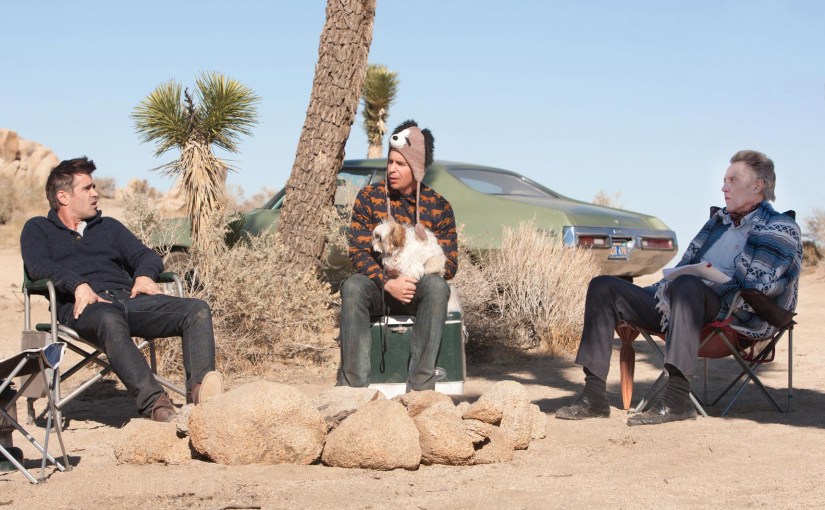
The story involves Martin (Colin Farrell), a struggling screenwriter in Los Angeles; Billy Bickle (Sam Rockwell), his best friend who also runs a dog-napping racket with HIS friend, Hans (Christopher Walken); and Charlie (Woody Harrelson), a dog-loving gangster whose favorite pet is a Shih Tzu named Bonny…whom, as it happens, the dog-nappers have stolen.  We get an idea of just how much Charlie loves his dog during a scene where he interrogates the dog-walker who lost her.  When a man is willing to shoot someone over a dog, I’d be the first in line to give it back, but Billy has other plans.

See, his friend Martin is trying to write a screenplay.  He’s under a deadline, but all he has so far is the title: Seven Psychopaths.  He doesn’t even know who all the psychopaths are yet.  So, Billy tells him a couple of stories about psychopaths that he’s heard about here and there, and the characters slowly start to take shape.  Meanwhile, Hans makes periodic visits to his cancer-stricken wife at the hospital.  Also, a serial killer is on the loose, but he only kills mafia and yakuza hitmen.  ALSO also, Billy puts an ad in the paper advertising for psychopaths to reach out to him and Martin so their stories can be used in Martin’s screenplay.  That’s how they wind up meeting Zachariah (Tom Waits), an odd little man who carries a rabbit wherever he goes and spins a tale of how he and HIS wife would hunt…but I’m getting ahead of myself.

As you see, there’s a lot of story going on.  And, as I mentioned before, most of it is unpredictable.  The concept of a killer who only targets hitmen is unique, at least in my mind.  But when the story focused on Martin’s screenplay and how it was being put together, that’s when I started having cinematic déjà vu.

Example: Martin isn’t sure how he wants it to end.  He’s a pacifist, so he doesn’t want it to end in a cliched shootout.  Billy spins a tale of how HE would end the film, with a bullet-ridden, blood-soaked shootout in a cemetery, featuring the return of Martin’s ex-girlfriend for no reason and a supporting cast of all seven of the psychopaths reuniting, also for no reason.  At that moment, I instinctively thought, “Well, clearly this movie is going to end in a shootout.” And it does. Sort of.

Martin hears Billy out and disagrees.  “They should all just go to the desert and talk their issues out instead of shooting each other.”  Again, I realized, “Okay, so they’re going to wind up in the desert.” And they do.

And so it went, over and over again.  A character would pitch an idea for Martin’s screenplay, and later in the film that idea would suddenly be manifested.  Martin gets criticized because his screenplay doesn’t feature enough women and doesn’t give them anything meaningful to do or say…in the middle of a movie where the women don’t do or say anything meaningful.

Don’t get me wrong, I like meta movies.  But despite the dark comedy and the typical awesomeness of Chris Walken and the other elements that weren’t so predictable (the reason behind Hans’ cravat, for example), I just couldn’t shake the feeling of “it’s all been done before, and better.”  I’m thinking specifically of Kiss Kiss Bang Bang (no screenwriter, but same vibe) and Adaptation, a movie where the lines between reality and the screenplay get so blurred as to be non-existent.  Seven Psychopaths feels like it’s trying to get to that level, but it never quite gets there.  On that level, it’s not quite a success.

However, I will say it’s worth a watch for any movie fans.  There are enough satirical elements that make it worthwhile.  (“But his rabbit gets away, though, because you can’t let animals die in a movie…just the women.”)  Walken’s performance is, as always, the stuff of legend, even in a smaller role like this one.  Late in the movie, he has a marvelous scene between himself and a button man with a shotgun.  If that vignette is not mentioned during the tribute video when he eventually passes away, I would be extremely disappointed.

THE BOURNE SUPREMACY, THE BOURNE ULTIMATUM, THE BOURNE LEGACY, JASON BOURNE

By Marc S. Sanders

Sometimes the same old thing is all we want, right?  It’s like comfort food.  That’s what the Jason Bourne films offer.  The first time (The Bourne Identity) it is original.  The second time (The Bourne Supremacy) it is familiar.  The third time (The Bourne Ultimatum) it is what we expect.  When you get to the fourth and fifth time (The Bourne Legacy and Jason Bourne), well then perhaps you’ve overstayed your welcome.

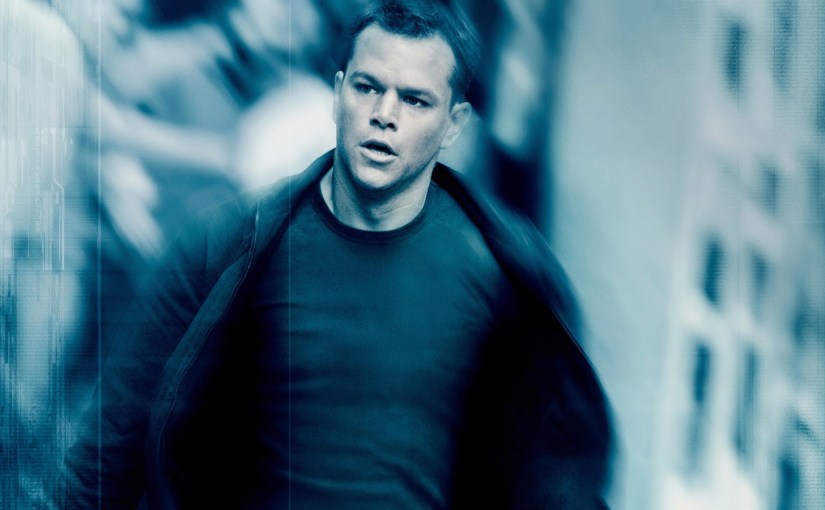
The second and third films in the Matt Damon action series function as one long four-hour film.  They are absolutely gripping in high octane, fast cut editing, pulse pounding music from James Newton Howard, and taut direction from Paul Greengrass.  They work because at least two thirds of the material is shown through the eyes of the former assassin Jason Bourne who is trying to learn of his past and who he worked for and why.  Plus, though he may hide deep undercover on the other side of the world in places like populated India, he only resurfaces when he discovers someone is trying to kill him.

The other third of these two pictures function on the other side of the coin with clandestine departments within the CIA who only consider Bourne being alive as a threat to the integrity of their black operations.  He must be eliminated.  There are great acting scenes with Joan Allen first up against an intimidating Brian Cox, and later she’s going toe to toe with David Strathairn.  If you are not part of the chase for Bourne, then you are engrossed in the cause these three supporting players offer with government politics and debate.  With each passing film, it’s an old, grey haired white gentleman in a suit who is insistent on eliminating Bourne and anyone who he associates with.  This started with Chris Cooper in the first film followed by Brian Cox (my favorite) over to David Strathairn.  The baton is then passed to Albert Finney.  A new film moves over to Edward Norton and then Tommy Lee Jones.  Scott Glenn and Stacy Keach are in the recipe too, but they are not as prominent.  All these guys start to look alike and when you watch the films in succession, one after the other, like I recently did, you start to question when this actor and this actor entered the fold.  Best way to describe it is that it is a ladder climb.  There was one guy in charge, then another above him and so on.

The appreciation for the Bourne series comes mostly from its action and the absolute cleverness of its hero.  Jason Bourne functions with ease about staying one step ahead of those trying to kill him.  They think they have a lead on him, but in reality, he has the lead on them.  Do you know how satisfying it is when he calls these people to talk to them and they play dumb? Jason will simply say “If you were in your office right now, then we would be having this conversation face to face.”  Moments like this are what gets an audience to clap and cheer.  The old white guy has been duped.

The action works because, once again I lay claim to the lack of CGI.  So, the overabundance of car chases seems nerve wracking like they are supposed to.  That door on that car is actually getting bashed in.  That taxi cab is really getting t-boned and turning into a 360 tailspin.  Jason can grab a seatbelt, lie down on his side and when the car careens over the barrier onto the landing fifty below, upside down, I’ll believe he gets out with only just a slight limp and a dribble of blood on his brow.  Only Jason Bourne can drag a wrecked rear bumper on a stolen police car through a busy Times Square and bash an SUV into a concrete barrier.

Fight scenes are not just fight scenes in the Bourne films.  It’s not just fists and punches and karate kicks.  Creatively speaking, the films construct their fight scenes to have the hero arm himself with a ball point pen or a magazine that’s wrapped up ready to wallop an opponent in the nose.  I’ll never forget when my colleague Miguel and I saw Ultimatum in the theatres and witnessed Jason punching a book into the face of a dangerous bad guy.  How many times have you seen a guy get punched in the face?  How many times have a seen a guy punch a book into the face of another guy?  There’s a difference. 

Matt Damon has been quoted as saying he believes the Bourne films carried the least amount of dialogue for him to memorize.  Yeah.  That’s likely true.  These films are visual feasts.  They rely on watching Damon move.  They are paced by how he walks, drives a car or tinkers with props.  Even how he listens and observes move with a kinetic progress. 

The locales are spectacular, spanning the globe from India, to Russia, to London, to Morocco, to the Philippines, and on to New York City and Las Vegas.  Following the first film, Paul Greengrass directed three of the next four.  (Writer Tony Gilroy directed the fourth film, The Bourne Legacy with Jeremy Renner taking the lead while Damon’s character was only talked about.) Each film takes every advantage of the atmosphere, using the overpopulated extras as obstacles and means to hide and weave away from the antogonists while on foot, behind a steering wheel or saddled upon a motorcycle.  Greengrass practically invents the concept of putting the viewer so much within the environment, you can almost smell the diesel or the food trucks within the area.  Zoom in overhead shots offer quick glances of the playground and traffic we are engrossed in.  Approximately twenty-five minutes within the center of The Bourne Ultimatum go by with no dialogue as Jason Bourne pursues a bad guy through a labyrinth of apartment tenements and rooftops, while the bad guy pursues actor Julia Stiles.  Finally, when all three catch up to one another, with a leap through a window, do you let out the deep breath you never realized you were holding on to. 

The first three films in the series (Identity, Supremacy and Ultimatum) work as a tight trilogy.  Each film ends with hanging threads to consider and lend to the next film.  By the time Ultimatum concludes, you feel as if all that needed to be told has been covered.  The next two (Legacy and Jason Bourne) function as cash grabs for the studio.  Legacy is entertaining and it boasts a good cast with Jeremy Renner and Rachel Weisz trying to outrun the government adversaries.  It hinges on operating as parallel material that occurs in the prior Damon installment.  While Jason Bourne is being pursued, this is happening over here.  It’s not unwatchable, but it is also truly unnecessary as it doesn’t advance the universe of the series at all.  A thrilling motorcycle chase closes out the film, but it’s a retread of what we’ve seen before.  It gets old quickly.  The film demonstrates that guys like Jason are trained to become dependent on drug enhancements for their highly trained arts of warfare and instinct.  Renner’s character is just another kind of Jason Bourne.  I was more impressed when I thought Jason was just a highly skilled fast learner to all that he’s capable of.  If you tell me blue and green pills lend to what he’s capable of, well then, he’s not much of a superhero in my eyes anymore.

With the final film, Jason Bourne, Greengrass returned to the director’s chair and Damon agreed to come back (paycheck had to be right, I’m sure), though he was significantly greyer and older than his prior films.  It was a weak return.  Just when we think Bourne has learned everything he needed to know and he could now live comfortably underground as a street brawler for bucks, he is informed that his deceased father knew and did some things for these secret agencies that put Jason on this path of special operations.  It doesn’t hold much weight and the payoff is nothing special.  Another car chase occurs in Vegas that appears nearly shot for shot similar to what we already saw in Damon’s prior installments. 

I wrote in an earlier review of The Bourne Identity, that Matt Damon works so well in the role because he’s such an unexpected surprise.  He’s not the muscle guy like Stallone or Schwarzenegger.  He comes off common.  In the first three films, he’s simply a kid.  When you place him in action or see how he gets the drop on a bad guy who is surveilling him, it is so satisfying.  The Bourne films work best with the locales they choose to shoot from.  Bourne will spy on his pursuers from a rooftop building across the street from where they are.  This is inventive filmmaking not just found in the pages of the script.  Paul Greengrass strategically shoots his players.  Director Doug Liman planted the seeds for this series’ potential (The Bourne Identity), very loosely based on the Robert Ludlum novels with creative adaptations from Tony Gilroy, primarily.   Greengrass enhanced the characters and their motivations by use of scenic locales, skillful shaky cameras to make it look like the audience is running at the same pace of Bourne and his adversaries, and quick cut, real time editing.  He applied this approach to his 9/11 film United 93.  The last two films are good even if they seemingly peter out the series, but overall, the four sequels hold up very well. 

If you’re asking, the best of the series is The Bourne Ultimatum, followed very closely by The Bourne Supremacy.  Either way, no matter which film you’re watching, you’re in for a good time when Jason Bourne shows up on the grid.

WRECK-IT RALPH

By Marc S. Sanders

Walt Disney Studios is the granddaddy of animation. No one questions that. Yet when I watch a film like Wreck-It Ralph, I am enthralled at not just the imagination of story or the eye-popping visuals, but most importantly the made-up science the film’s video game characters interact with.

There are rules in play. All arcade game personalities can schmooze with each other after hours. Cross each other’s paths at “Cross Central Station” where a Pac Man cherry is offered up to a homeless Q-Bert, and even attend a Bad Guys Anonymous Group, moderated by the orange ghost Clyde (infamous rival of Pac Man). That last bit is one of my favorite parts of the movie. So inspired to have a Satan character console a dejected hulking, overalls wearing Ralph, aka Wreck-It Ralph. He’s the villain in the arcade game known as Fix-It Felix.

One rule to watch out for though, if you die in an arcade game you normally don’t inhabit, you can die permanently. When our title character gets overanxious, that’s a threat to not only himself but other important characters like Fix It Felix Jr (Ralph’s adversary), Calhoun (a first person shoot ’em up military woman) and Ralph’s inadvertent best pal Vanelloppe (the unfortunate glitch of a candy land racing game called Sugar Rush).

The jokes are great. The vocal cast of John C Reilly, Sarah Silverman, Jack McBryer, Jane Lynch and Alan Tudyk is perfectly assorted, as if the script was written specifically with these performers in mind.

There’s a lesson to be learned, because this is a Disney movie after all. It’s a pretty good lesson in knowing to love everything about yourself, glitches and all. Thankfully, the film does not patronize and melodramatically bash it over your head.

I love the arcade 80s relatability of the games and the settings of games like Fix It Felix, Heroes Duty, and especially Sugar Rush, looking as if ideas from Willy Wonka were swiped and polished to bring chocolate mud puddles, peppermint stick trees, Nesquik quicksand, and stalactites made of Mentos that drop into a lava like pit of diet cola that molten upon impact.

Soon after Ralph almost broke the arcade, he breaks the internet in a subsequent adventure, and that’s as endlessly hilarious and fun as his feature film debut.

KILLING THEM SOFTLY

By Marc S. Sanders

What did I just watch? A mob movie, or a 2008 Presidential debate where the candidates are no shows, and their respective commercials are aired in their place? Andrew Dominik directs Killing Them Softly, with Brad Pitt who also produces.

Reader, I don’t get the appeal. Maybe it’s the outstanding cast which includes Pitt, as well as James Gandolfini, Ben Mehndelson, Richard Jenkins, Scoot McNairy and Ray Liotta. Sadly, these guys are given next to nothing do of any consequence.

After it is revealed that Liotta’s character, Marky, ripped off his own mob poker game a few years back, an idea is presented to two street addicts played McNairy & Mendehelson to do the same thing because, heck, they’d never be suspected and logic dictates that Liotta must have done it again. So, he’ll be the one to blame and get whacked. The game is robbed and now Brad Pitt’s hitman character is on the job. Simple enough story, almost like a Guy Ritchie picture.

Killing Them Softly is an adaptation of a 1974 novel by George V Higgins. I never read the book, but I’m curious if it contains any kind of relation to Andrew Dominik’s idea of editing recurring speeches and ads, compliments of Obama, McCain and Bush 45. Truly, what was the point of this recurring theme? A two-sentence piece of dialogue finally acknowledges this in the final minute of the film, but I’m still lost on the significance. Somehow Dominik made a dirty, cold, rain-soaked picture that has an omnipotent viewpoint from our most prominent politicians, and I don’t know what one thing has to do with another.

As well, Gandolfini arrives in the story and I never could gather what was his purpose. I think he is a hitman who is washed up, never getting his ass up to carry out the job and just monologues about nothing like the hooker he pays off; topics that Quentin Tarantino might’ve thrown in the editing trash bin.

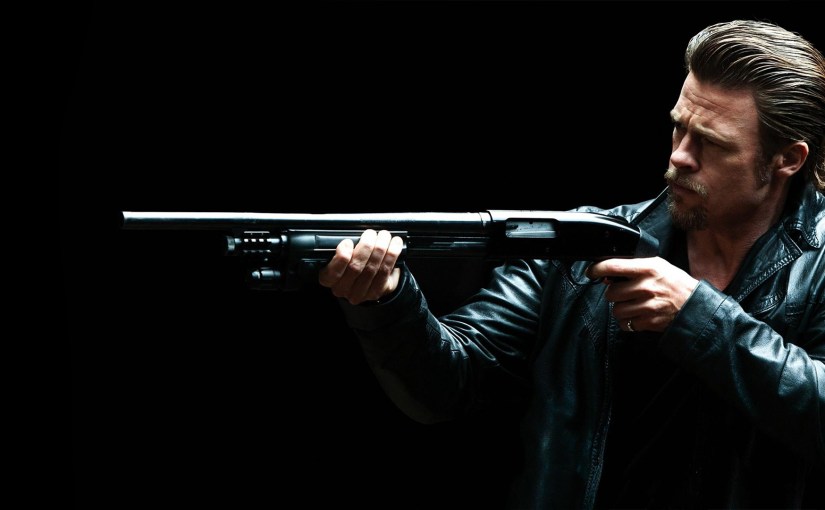
Mendelsohn looks incredibly convincing as an addict living off the streets, yet his storyline has no end. He’s arrested. Then what happens? What does that mean for everyone else? Liotta has a long drawn out sequence of getting the shit kicked out of him by two mob foot soldiers. The scene goes on and on and on. His face cracks and bleeds, and bleeds some more. Brad Pitt? Well, he’s the hitman who just looks cool. Yeah, the black leather jacket he wears looks very cool on him. That’s about it.

There’s no development to Killing Them Softly. No surprise or twist. The guys you expect to get killed, get killed, and there’s no good dialogue.

This film is just an empty void of poorly, uninteresting violence.

TROUBLE WITH THE CURVE

By Marc S. Sanders

Roles for the “aging has been” who is either about to retire or refuses to retire seem reserved these days to Robert Redford or Clint Eastwood.

Back in 2012, Eastwood gave up his director’s chair to star in a little known film about an aging baseball scout in Trouble With The Curve. I’ve seen him play this kind of role many times before like In The Line Of Fire, or Grand Torino.

There’s nothing memorable about Trouble With The Curve, but it does feature some good scenes between Eastwood and Amy Adams as his tough as nails attorney/estranged daughter who forces herself upon his scouting trip to look after him when it seems his health, particularly his vision, is deteriorating. Adams is good as the underestimated baseball expert. She can recognize a 95 mph pitch and she can triumph over you in reciting RBI stats, batting averages, etc. Give her a bat and she can also cream a ball outta the park.

Justin Timberlake is the necessary pretty boy romantic interest for Adams, but he doesn’t offer much to the film in the way of humor or even sex appeal. This guy is a great actor beyond his music. (See The Social Network)

The movie belongs to Eastwood alone.

First time director and regular Eastwood crewman, Robert Lorenz does well with the baseball footage of young prospects and the end is satisfying as the argument weighs whether experience and instinct can still trump the power of technology.

Has baseball truly come to rely on what a computer says is the best first round draft pick? Wow…how sad.

BLANCANIEVES (2012, Spain)

by Miguel E. Rodriguez

Director: Pablo Berger
Cast: Daniel Giménez Cacho, Maribel Verdú, Macarena García
My Rating: 9/10
Rotten Tomatometer: 95% Certified Fresh

PLOT: A re-telling of the classic Snow White, Blancanieves is a beautiful homage to the black-and-white Golden Age of European silent cinema, set in a romanticized 1920s Seville.


If you are one of the 3 or 4 people in the world who have ever wondered what would happen if Terry Gilliam and Guillermo del Toro collaborated on a black-and-white silent film, your prayers have been answered.  Blancanieves is a beautiful anachronism, a black-and-white silent film created as a tribute to the silent films of nearly 100 years ago that gave birth to the motion picture industry as we know it.  The filmmakers have remixed the classic Snow White fairy tale by the Brothers Grimm into a movie that puts all the recent Disney remakes to shame.  THIS is how you pay tribute to your predecessors.

The updated story takes place in Seville during the 1910s through the 1920s.  Antonio, a famous bullfighter, is gored in the ring and paralyzed.  Traumatized by her husband’s injuries, his pregnant wife goes into premature labor and dies after giving birth to a daughter, Carmencita.  Antonio remarries to a scheming nurse, Encarna (Maribel Verdú, whom you may recognize from Y tu mama tambien or Pan’s Labyrinth).  Encarna, who gives gold diggers a bad name, manages to keep Antonio from ever seeing his daughter, who is raised by her grandmother.  But true to Brothers Grimm fashion, Carmencita (and her pet rooster, Pepe) eventually must come to live with her father and her evil stepmother, whose idea of caring for her paralyzed husband is to leave his chair in a sunny spot of the house while she indulges in a little S&M with the chauffeur.  Why didn’t we see THAT in the Disney version?!

If you know the story of Snow White, you know what happens next.  The insane jealousy, the trip into the forest, the attempted murder, her discovery by a group of little men (only six this time, and they’re bullfighter/clowns).  But everything is turned on its head slightly.  For example, she loses her memory, even forgetting her own name.  She remembers the steps to bullfighting, but she doesn’t know why.

We even get a scene with the infamous apple and the “Sleeping Death,” although the resolution to Blancanieves’s predicament is not quite what I was expecting.  It will take you by surprise, too.  I guarantee it.

This was such a charming movie to watch.  It was full of the kind of shots and edits that are typical of silent films of the ‘20s.  I won’t catalog them all here, but their usage really put me into the “vibe” of that bygone era.  I especially liked the liberal use of double-exposure shots to reinforce a state of mind, or to remind the audience of a piece of “dialogue.”  Or, most effectively, when Antonio reminisces about his dead wife.

And the actress who plays the adult Carmencita, aka Blancanieves, is one of the most beautiful actresses I’ve seen in a while.  For the record.  Films are heavily reliant on faces, silent films even more so.  They found the perfect face for this character.  A true beauty.

There were some nice quirks, too, that reminded me of Terry Gilliam more than anything or anyone else.  Among the six dwarves is one named Josefa.  Josefa is either a really ugly woman or a really bad drag queen.  In miniature.  Her name is mentioned, and that’s it.  No explanation given for her appearance.  We move on.

A word of warning: you know those stories you hear about how the Grimm fairy tales have been “cleaned up” or edited over the years either to remove the more gruesome elements or to tack on happy endings for kids?  Yeah.  Keep that in mind.  That’s all I’ll say.

I used to tell people that, if they’ve never seen a silent film before, The Artist (2011) is the place to start.  Having seen Blancanieves, I think I have to update my statement.  The Artist is a great deconstruction of the art of silent films, but it would be even better to start with a great example of the medium itself.  Sure, there’s always Chaplin and Lloyd and Keaton, but for someone who has historically shunned silent films, Blancanieves is an even better entry point.  It’s a little harder to find, but it’s worth the effort.